戻る

日本語

$9,500

 
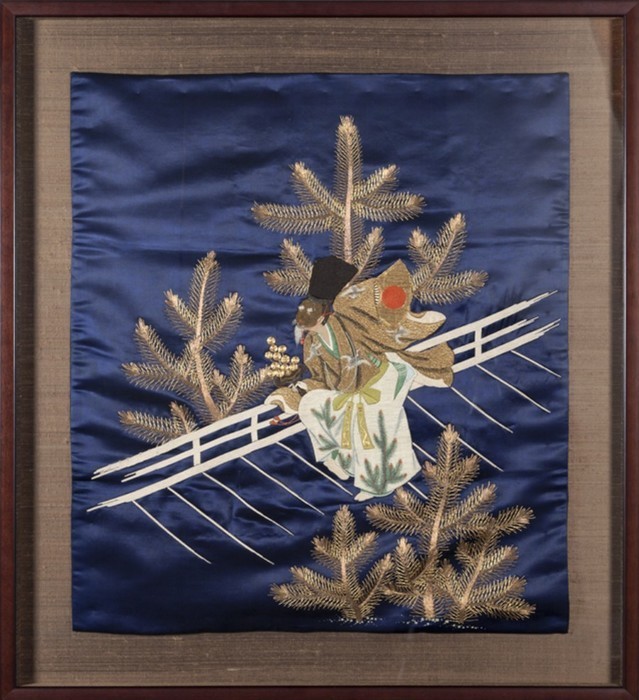
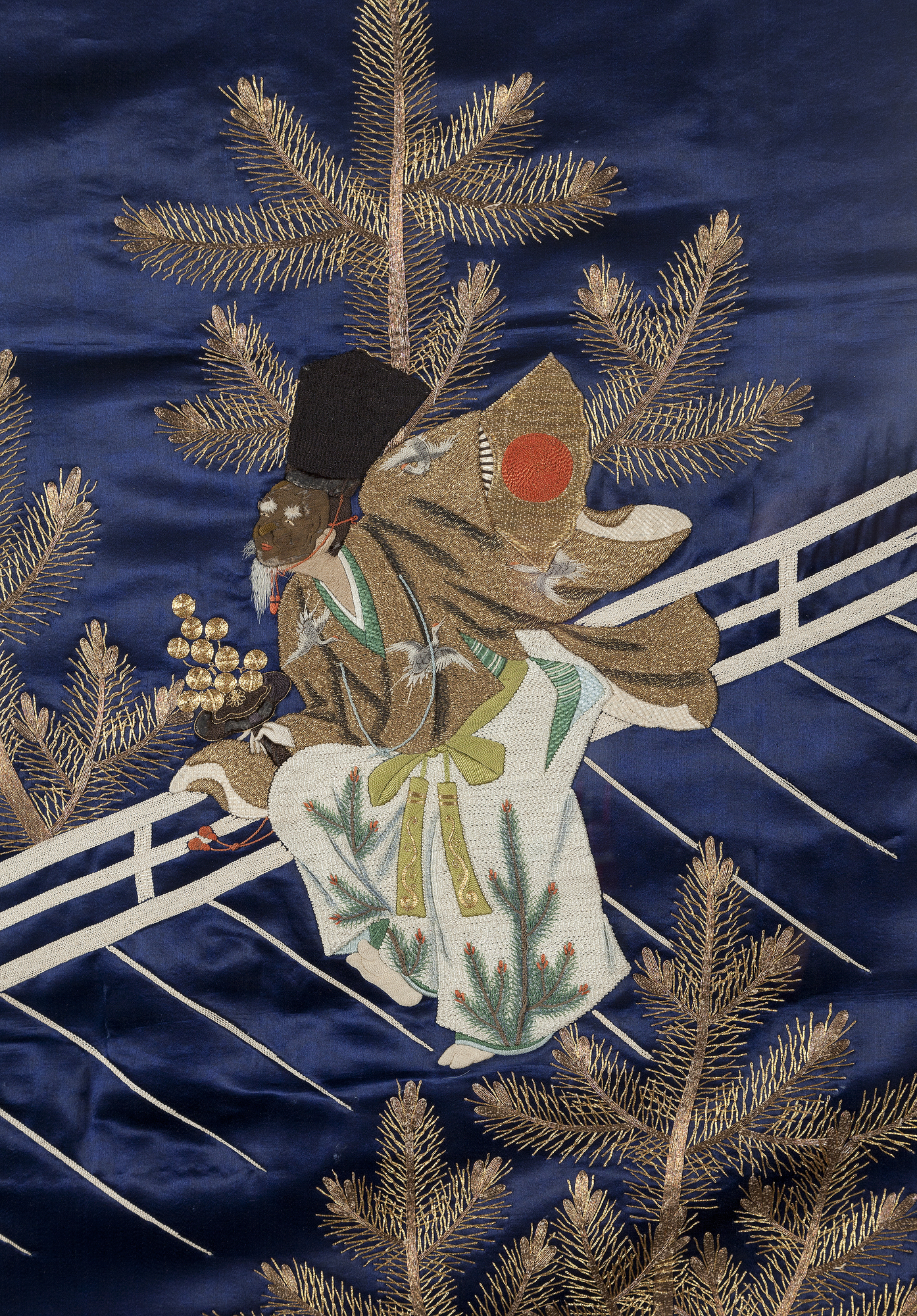
Here, a Noh actor in full costume and mask is crossing the wing of a Noh stage. The stage is flanked by pine trees, and pines are also a motif on his kimono. Typically a pine tree is painted on the back wall of Noh stages to represent the tree through which this theatrical form was, by legend, passed down from heaven to mankind. In Japanese culture, the evergreen pine has come to be an important symbol of longevity and steadfastness.<br><br>The practice of laying fukusa over presents placed on wooden or lacquer trays became wide spread during the Edo period, (17th to 19th century). What begun as a functional practice to protect gifts from the elements, took on a decorative life of its own. Well-to-do families owned large numbers of fukusa and often commissioned famous artists of the<br>time to design exclusively for them. The drawings were then created by such techniques as tie-dying, stenciling, slit embroidery, tapestry, painting with embroidery and combinations of all methods. Each time a fukusa was required, it was chosen not only for the occasion but also for the season, the gift itself, and the status of the donor and the recipient. Fukusa were also part of the brides’ trousseau and could be given on the occasion of a wedding. Fukusa were made of square or oblong pieces of silk, lined and often embellished with tassels, and sometimes bearing the monogram or family crest on the reverse. Etiquette decreed that the fukusa were not usually to be considered part of the gift itself and were to be returned covering a token gift or an acknowledgement of the gift. However, some recipients such as bureaucrats, who accepted gifts from people currying favors, elected to keep the fukusa along with the gifts they covered, thus adding to their own store of gift covers. Here, a Noh actor in full costume and mask is crossing the wing of a Noh stage. The stage is flanked by pine trees, and pines are also a motif on his kimono. Typically a pine tree is painted on the back wall of Noh stages to represent the tree through which this theatrical form was, by legend, passed down from heaven to mankind. In Japanese culture, the evergreen pine has come to be an important symbol of longevity and steadfastness.<br><br>The practice of laying fukusa over presents placed on wooden or lacquer trays became wide spread during the Edo period, (17th to 19th century). What begun as a functional practice to protect gifts from the elements, took on a decorative life of its own. Well-to-do families owned large numbers of fukusa and often commissioned famous artists of the<br>time to design exclusively for them. The drawings were then created by such techniques as tie-dying, stenciling, slit embroidery, tapestry, painting with embroidery and combinations of all methods. Each time a fukusa was required, it was chosen not only for the occasion but also for the season, the gift itself, and the status of the donor and the recipient. Fukusa were also part of the brides’ trousseau and could be given on the occasion of a wedding. Fukusa were made of square or oblong pieces of silk, lined and often embellished with tassels, and sometimes bearing the monogram or family crest on the reverse. Etiquette decreed that the fukusa were not usually to be considered part of the gift itself and were to be returned covering a token gift or an acknowledgement of the gift. However, some recipients such as bureaucrats, who accepted gifts from people currying favors, elected to keep the fukusa along with the gifts they covered, thus adding to their own store of gift covers.
能楽師明治時代(1868-1912)27 1/2 x 25 インチ(69.85 x 63.5 cm) 金糸・絹糸刺繍
出所
ヘザー・ジェームズ・ファインアート (カリフォルニア州)
ここでは、衣装と面を着けた能楽師が能舞台の袖を横切っている。舞台の両脇には松の木が立ち、彼の着物の模様にも松が描かれている。通常、能舞台の奥壁には松が描かれており、伝説によればこの演劇形式が天から人間に伝えられた松の木を表している。 日本の文化において、常緑の松は長寿と不変の象徴として重要な位置を占めるようになった。

木製または漆塗りの盆に載せた贈り物の上に袱紗(ふくさ)を敷く習慣は、江戸時代(17~19世紀)に広く普及した。 当初は贈り物を天候から守る実用的な習慣であったが、やがて装飾的な価値を帯びるようになった。裕福な家柄は多数の袱紗を所有し、当時の著名な芸術家に専属デザインを依頼することも多かった。
 袱紗の図案は絞り染め、型押し、スリット刺繍、タペストリー、刺繍画、あるいはこれら技法の組み合わせによって制作された。 袱紗を使用する際には、その場に応じたものを選ぶだけでなく、季節、贈り物の性質、贈与者と受取人の身分も考慮された。袱紗は嫁入り道具の一部でもあり、婚礼の際に贈られることもあった。袱紗は正方形または長方形の絹布で、裏地が付けられ、房飾りが施されることが多く、裏面には紋章や家紋が入れられることもあった。 礼儀作法では、通常フクサは贈り物の一部とは見なされず、返礼の品や謝礼を包んで返却されるべきと定められていた。しかし、賄賂を受け取る官僚など一部の受取人は、包まれた贈り物と共にフクサを保持することを選択し、自らの贈り物用包み布の備蓄を増やした。
お 問い合わせ