戻る

カミール・ピサロ (1830-1903)

$235,000

 
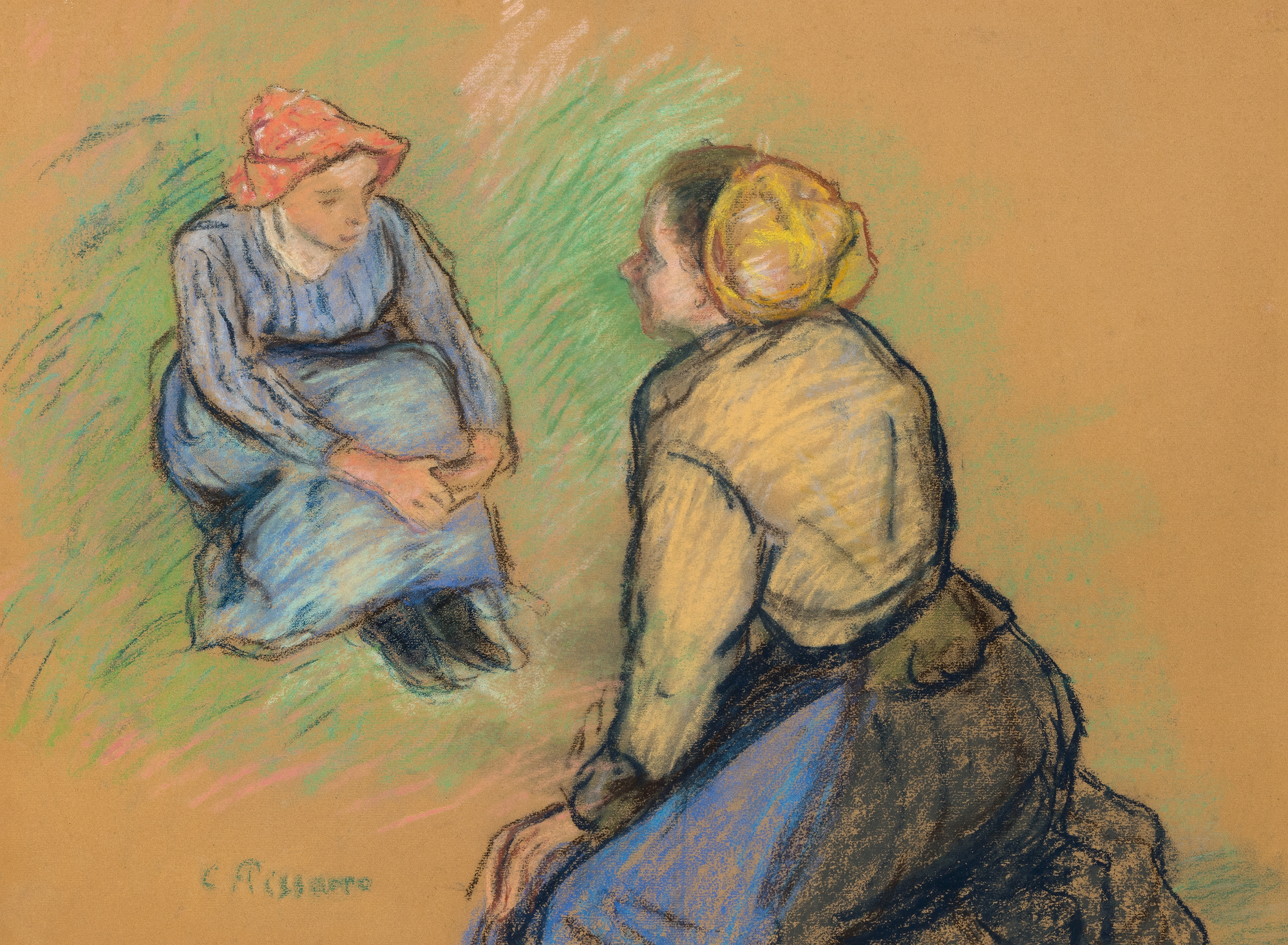
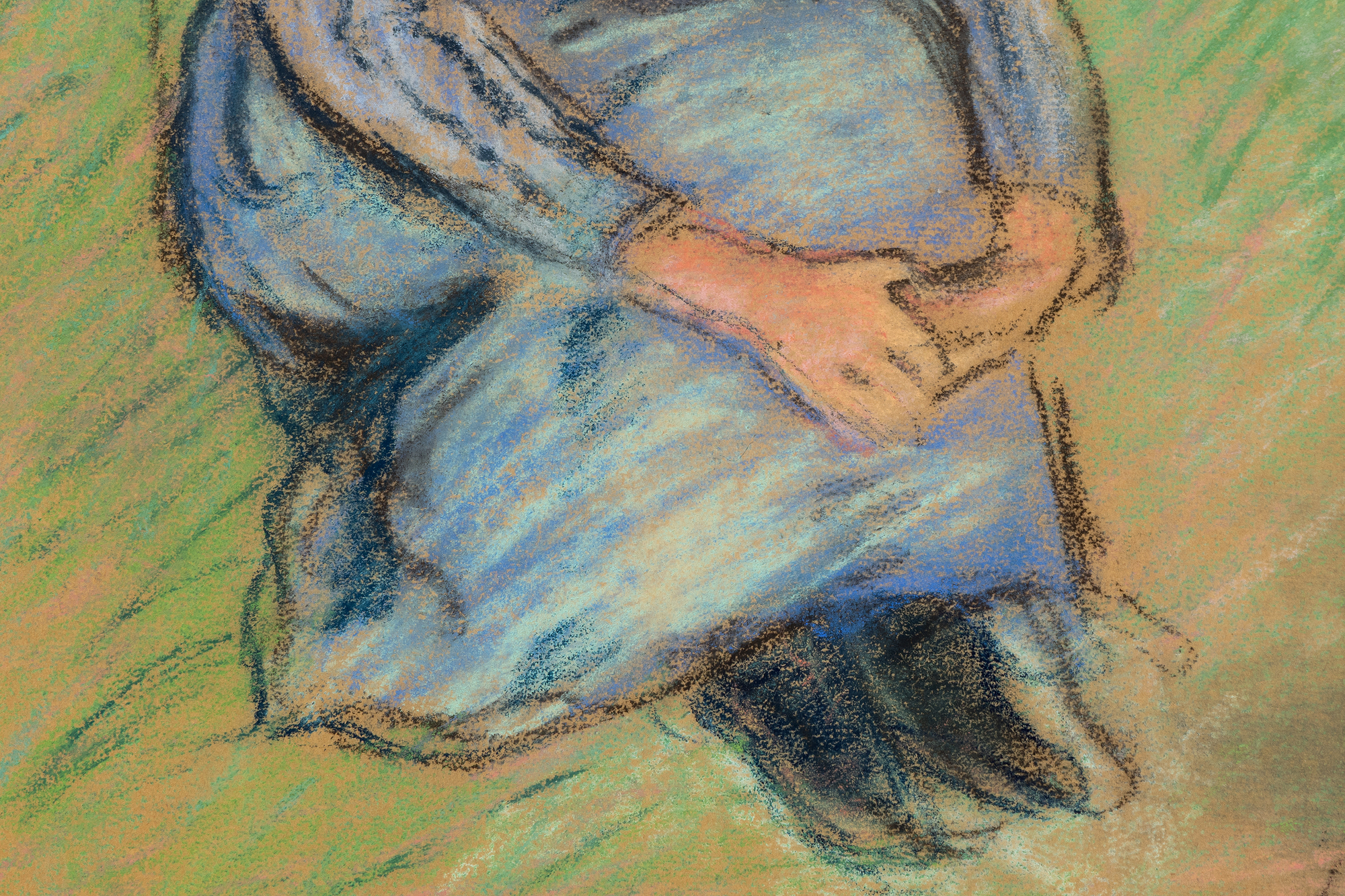
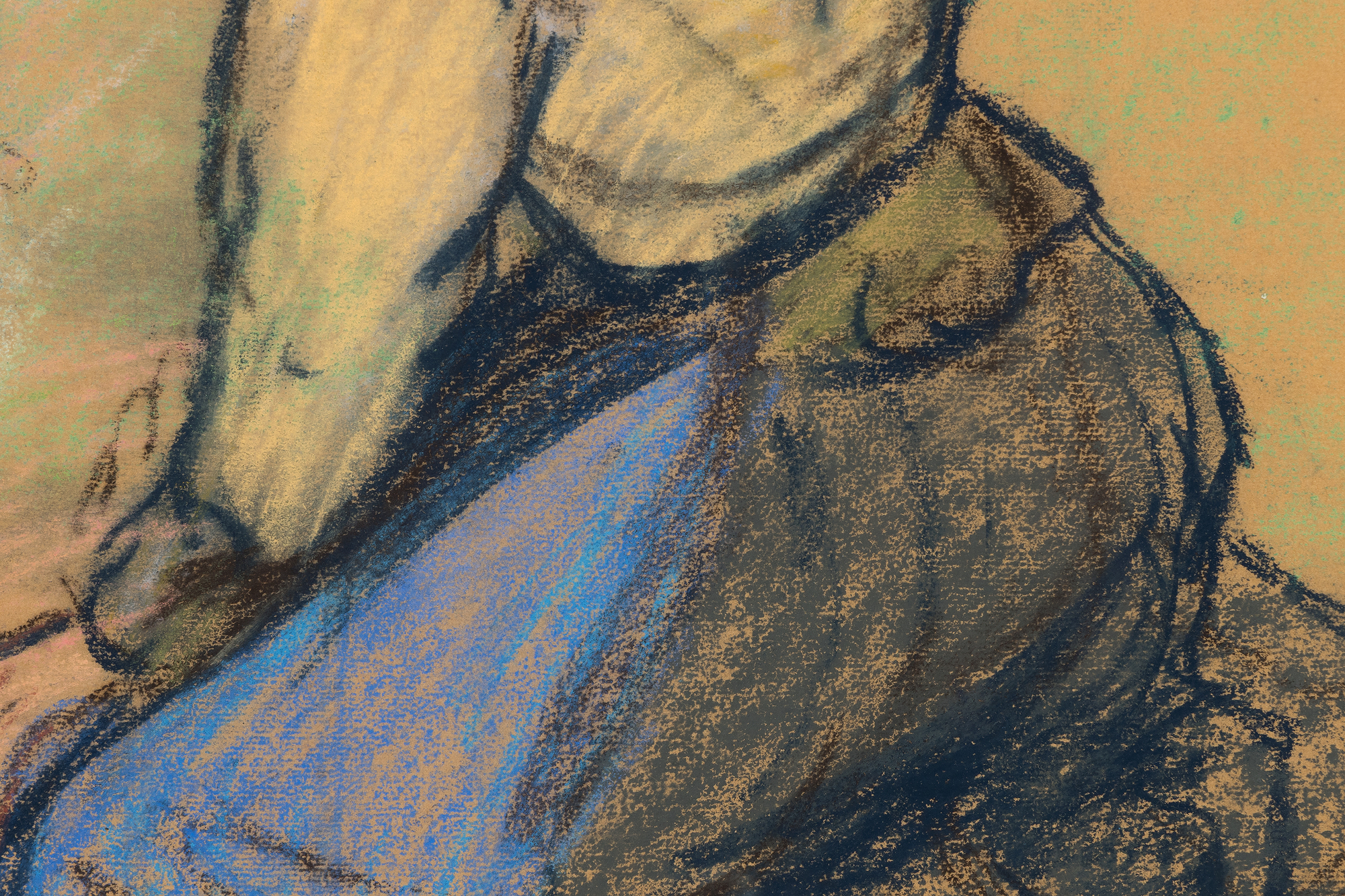
<div>Camille Pissarro’s<em> Paysannes assises </em>(c. 1880) is a richly colored, large-scale pastel that distills the artist’s humanism and modernity into an intimate, everyday encounter. Two peasant women sit in quiet conversation, their bodies described with confident contour and softened planes of color that feel both immediate and tender. The warm tone of the paper becomes an active field, allowing passages of blue, green, and rose to breathe around the figures, while Pissarro’s unmistakably painterly strokes—alternately feathered and emphatic—give the scene texture, light, and lived presence. Bright yet restrained, the work is iconically Pissarro: direct, unsentimental, and deeply attentive to rural life. </div><br><br><div> </div><br><br><div>Often called the backbone of Impressionism, Pissarro was the movement’s most consistent, experimental, and unifying force. He was the only artist to exhibit in all eight Impressionist exhibitions from 1874 to 1886, and his generosity as a mentor shaped the next generation—Cézanne, Gauguin, Seurat, and Signac among them. In pastel, a medium prized for its speed and chromatic intensity, Pissarro found an especially apt vehicle for capturing fleeting effects and the immediacy of observation, without sacrificing structure or psychological nuance. </div><br><br><div> </div><br><br><div>The enduring importance of his work is underscored by recent museum attention, including the Denver Art Museum’s major exhibition positioning him as “the first Impressionist” (<em>The Honest Eye: Camille Pissarro's Impressionism</em>, October 26, 2025 – February 8, 2026), the first significant U.S. survey of the artist in four decades. <em>Paysannes assises</em> also resonates with closely related figure studies in major collections, such as examples at LACMA and The Morgan Library, affirming the centrality of these pastoral subjects within Pissarro’s practice and within Impressionism itself. </div> <div>Camille Pissarro’s<em> Paysannes assises </em>(c. 1880) is a richly colored, large-scale pastel that distills the artist’s humanism and modernity into an intimate, everyday encounter. Two peasant women sit in quiet conversation, their bodies described with confident contour and softened planes of color that feel both immediate and tender. The warm tone of the paper becomes an active field, allowing passages of blue, green, and rose to breathe around the figures, while Pissarro’s unmistakably painterly strokes—alternately feathered and emphatic—give the scene texture, light, and lived presence. Bright yet restrained, the work is iconically Pissarro: direct, unsentimental, and deeply attentive to rural life. </div><br><br><div> </div><br><br><div>Often called the backbone of Impressionism, Pissarro was the movement’s most consistent, experimental, and unifying force. He was the only artist to exhibit in all eight Impressionist exhibitions from 1874 to 1886, and his generosity as a mentor shaped the next generation—Cézanne, Gauguin, Seurat, and Signac among them. In pastel, a medium prized for its speed and chromatic intensity, Pissarro found an especially apt vehicle for capturing fleeting effects and the immediacy of observation, without sacrificing structure or psychological nuance. </div><br><br><div> </div><br><br><div>The enduring importance of his work is underscored by recent museum attention, including the Denver Art Museum’s major exhibition positioning him as “the first Impressionist” (<em>The Honest Eye: Camille Pissarro's Impressionism</em>, October 26, 2025 – February 8, 2026), the first significant U.S. survey of the artist in four decades. <em>Paysannes assises</em> also resonates with closely related figure studies in major collections, such as examples at LACMA and The Morgan Library, affirming the centrality of these pastoral subjects within Pissarro’s practice and within Impressionism itself. </div> <div>Camille Pissarro’s<em> Paysannes assises </em>(c. 1880) is a richly colored, large-scale pastel that distills the artist’s humanism and modernity into an intimate, everyday encounter. Two peasant women sit in quiet conversation, their bodies described with confident contour and softened planes of color that feel both immediate and tender. The warm tone of the paper becomes an active field, allowing passages of blue, green, and rose to breathe around the figures, while Pissarro’s unmistakably painterly strokes—alternately feathered and emphatic—give the scene texture, light, and lived presence. Bright yet restrained, the work is iconically Pissarro: direct, unsentimental, and deeply attentive to rural life. </div><br><br><div> </div><br><br><div>Often called the backbone of Impressionism, Pissarro was the movement’s most consistent, experimental, and unifying force. He was the only artist to exhibit in all eight Impressionist exhibitions from 1874 to 1886, and his generosity as a mentor shaped the next generation—Cézanne, Gauguin, Seurat, and Signac among them. In pastel, a medium prized for its speed and chromatic intensity, Pissarro found an especially apt vehicle for capturing fleeting effects and the immediacy of observation, without sacrificing structure or psychological nuance. </div><br><br><div> </div><br><br><div>The enduring importance of his work is underscored by recent museum attention, including the Denver Art Museum’s major exhibition positioning him as “the first Impressionist” (<em>The Honest Eye: Camille Pissarro's Impressionism</em>, October 26, 2025 – February 8, 2026), the first significant U.S. survey of the artist in four decades. <em>Paysannes assises</em> also resonates with closely related figure studies in major collections, such as examples at LACMA and The Morgan Library, affirming the centrality of these pastoral subjects within Pissarro’s practice and within Impressionism itself. </div> <div>Camille Pissarro’s<em> Paysannes assises </em>(c. 1880) is a richly colored, large-scale pastel that distills the artist’s humanism and modernity into an intimate, everyday encounter. Two peasant women sit in quiet conversation, their bodies described with confident contour and softened planes of color that feel both immediate and tender. The warm tone of the paper becomes an active field, allowing passages of blue, green, and rose to breathe around the figures, while Pissarro’s unmistakably painterly strokes—alternately feathered and emphatic—give the scene texture, light, and lived presence. Bright yet restrained, the work is iconically Pissarro: direct, unsentimental, and deeply attentive to rural life. </div><br><br><div> </div><br><br><div>Often called the backbone of Impressionism, Pissarro was the movement’s most consistent, experimental, and unifying force. He was the only artist to exhibit in all eight Impressionist exhibitions from 1874 to 1886, and his generosity as a mentor shaped the next generation—Cézanne, Gauguin, Seurat, and Signac among them. In pastel, a medium prized for its speed and chromatic intensity, Pissarro found an especially apt vehicle for capturing fleeting effects and the immediacy of observation, without sacrificing structure or psychological nuance. </div><br><br><div> </div><br><br><div>The enduring importance of his work is underscored by recent museum attention, including the Denver Art Museum’s major exhibition positioning him as “the first Impressionist” (<em>The Honest Eye: Camille Pissarro's Impressionism</em>, October 26, 2025 – February 8, 2026), the first significant U.S. survey of the artist in four decades. <em>Paysannes assises</em> also resonates with closely related figure studies in major collections, such as examples at LACMA and The Morgan Library, affirming the centrality of these pastoral subjects within Pissarro’s practice and within Impressionism itself. </div> <div>Camille Pissarro’s<em> Paysannes assises </em>(c. 1880) is a richly colored, large-scale pastel that distills the artist’s humanism and modernity into an intimate, everyday encounter. Two peasant women sit in quiet conversation, their bodies described with confident contour and softened planes of color that feel both immediate and tender. The warm tone of the paper becomes an active field, allowing passages of blue, green, and rose to breathe around the figures, while Pissarro’s unmistakably painterly strokes—alternately feathered and emphatic—give the scene texture, light, and lived presence. Bright yet restrained, the work is iconically Pissarro: direct, unsentimental, and deeply attentive to rural life. </div><br><br><div> </div><br><br><div>Often called the backbone of Impressionism, Pissarro was the movement’s most consistent, experimental, and unifying force. He was the only artist to exhibit in all eight Impressionist exhibitions from 1874 to 1886, and his generosity as a mentor shaped the next generation—Cézanne, Gauguin, Seurat, and Signac among them. In pastel, a medium prized for its speed and chromatic intensity, Pissarro found an especially apt vehicle for capturing fleeting effects and the immediacy of observation, without sacrificing structure or psychological nuance. </div><br><br><div> </div><br><br><div>The enduring importance of his work is underscored by recent museum attention, including the Denver Art Museum’s major exhibition positioning him as “the first Impressionist” (<em>The Honest Eye: Camille Pissarro's Impressionism</em>, October 26, 2025 – February 8, 2026), the first significant U.S. survey of the artist in four decades. <em>Paysannes assises</em> also resonates with closely related figure studies in major collections, such as examples at LACMA and The Morgan Library, affirming the centrality of these pastoral subjects within Pissarro’s practice and within Impressionism itself. </div> <div>Camille Pissarro’s<em> Paysannes assises </em>(c. 1880) is a richly colored, large-scale pastel that distills the artist’s humanism and modernity into an intimate, everyday encounter. Two peasant women sit in quiet conversation, their bodies described with confident contour and softened planes of color that feel both immediate and tender. The warm tone of the paper becomes an active field, allowing passages of blue, green, and rose to breathe around the figures, while Pissarro’s unmistakably painterly strokes—alternately feathered and emphatic—give the scene texture, light, and lived presence. Bright yet restrained, the work is iconically Pissarro: direct, unsentimental, and deeply attentive to rural life. </div><br><br><div> </div><br><br><div>Often called the backbone of Impressionism, Pissarro was the movement’s most consistent, experimental, and unifying force. He was the only artist to exhibit in all eight Impressionist exhibitions from 1874 to 1886, and his generosity as a mentor shaped the next generation—Cézanne, Gauguin, Seurat, and Signac among them. In pastel, a medium prized for its speed and chromatic intensity, Pissarro found an especially apt vehicle for capturing fleeting effects and the immediacy of observation, without sacrificing structure or psychological nuance. </div><br><br><div> </div><br><br><div>The enduring importance of his work is underscored by recent museum attention, including the Denver Art Museum’s major exhibition positioning him as “the first Impressionist” (<em>The Honest Eye: Camille Pissarro's Impressionism</em>, October 26, 2025 – February 8, 2026), the first significant U.S. survey of the artist in four decades. <em>Paysannes assises</em> also resonates with closely related figure studies in major collections, such as examples at LACMA and The Morgan Library, affirming the centrality of these pastoral subjects within Pissarro’s practice and within Impressionism itself. </div> <div>Camille Pissarro’s<em> Paysannes assises </em>(c. 1880) is a richly colored, large-scale pastel that distills the artist’s humanism and modernity into an intimate, everyday encounter. Two peasant women sit in quiet conversation, their bodies described with confident contour and softened planes of color that feel both immediate and tender. The warm tone of the paper becomes an active field, allowing passages of blue, green, and rose to breathe around the figures, while Pissarro’s unmistakably painterly strokes—alternately feathered and emphatic—give the scene texture, light, and lived presence. Bright yet restrained, the work is iconically Pissarro: direct, unsentimental, and deeply attentive to rural life. </div><br><br><div> </div><br><br><div>Often called the backbone of Impressionism, Pissarro was the movement’s most consistent, experimental, and unifying force. He was the only artist to exhibit in all eight Impressionist exhibitions from 1874 to 1886, and his generosity as a mentor shaped the next generation—Cézanne, Gauguin, Seurat, and Signac among them. In pastel, a medium prized for its speed and chromatic intensity, Pissarro found an especially apt vehicle for capturing fleeting effects and the immediacy of observation, without sacrificing structure or psychological nuance. </div><br><br><div> </div><br><br><div>The enduring importance of his work is underscored by recent museum attention, including the Denver Art Museum’s major exhibition positioning him as “the first Impressionist” (<em>The Honest Eye: Camille Pissarro's Impressionism</em>, October 26, 2025 – February 8, 2026), the first significant U.S. survey of the artist in four decades. <em>Paysannes assises</em> also resonates with closely related figure studies in major collections, such as examples at LACMA and The Morgan Library, affirming the centrality of these pastoral subjects within Pissarro’s practice and within Impressionism itself. </div>
座る農婦たち1880年頃16 x 22 インチ(40.64 x 55.88 cm) 紙にクレヨン
出所
エルナ・シュティーベル・コレクション
クリスティーズ、ニューヨーク、1995年5月11日、ロット231(エルナ・シュティーベル遺品より)
パオロ・ダル・ボスコ、トレント、上記オークションにて取得
パンドルフィーニ・カーザ・ダステ:2019年10月29日(火)、ロット00004、再発見された至宝 印象派と近代美術の傑作(個人コレクションより)
個人コレクション、ロンドン、上記オークションにて取得
文学
本作品は近日刊行予定のピサロ作品デジタル総合目録に掲載されます
 
カミーユ・ピサロの『座る農婦たち』(1880年頃)は、豊かな色彩の大判パステル画であり、作家のヒューマニズムと現代性を日常的な親密な出会いに凝縮している。二人の農婦が静かに語り合う姿は、確かな輪郭線と柔らかな色彩面によって描かれ、即座に感じられる温もりと優しさを併せ持つ。 温かみのある紙のトーンが能動的な場となり、青、緑、バラ色の筆致が人物の周囲で呼吸する。ピサロ特有の絵画的筆致——時に羽毛のように柔らかく、時に力強く——が場面に質感、光、そして生きた存在感を与える。明るくも抑制されたこの作品は、ピサロの象徴と言える:直接的で、感傷的ではなく、農村生活に深く注意を向けている。


印象派の支柱と称されるピサロは、この運動において最も一貫した実験精神と結束力を発揮した。1874年から1886年にかけて開催された全8回の印象派展に唯一全作品を出品し、その寛大な指導者としての姿勢はセザンヌ、ゴーガン、スーラ、シニャックら次世代の芸術家を育んだ。 速さと色彩の強度で高く評価されるパステル画において、ピサロは構造や心理的ニュアンスを損なうことなく、儚い効果や観察の即時性を捉えるのに特に適した媒体を見出した。


デンバー美術館が「最初の印象派画家」と位置づけた大規模展覧会(『誠実な眼:カミーユ・ピサロの印象派』2025年10月26日~2026年2月8日)をはじめ、近年美術館が注ぐ関心は彼の作品の不朽の重要性を裏付けている。これは40年ぶりの米国における本格的な回顧展である。 『座る農婦たち』は、ロサンゼルス郡立美術館(LACMA)やモーガン図書館所蔵の作品など、主要コレクションに収蔵される密接に関連する人物画群とも呼応し、ピサロの創作活動および印象派そのものにおける牧歌的題材の中心性を裏付けている。
お 問い合わせ