جاسبر جونز (ب. 1930)

 
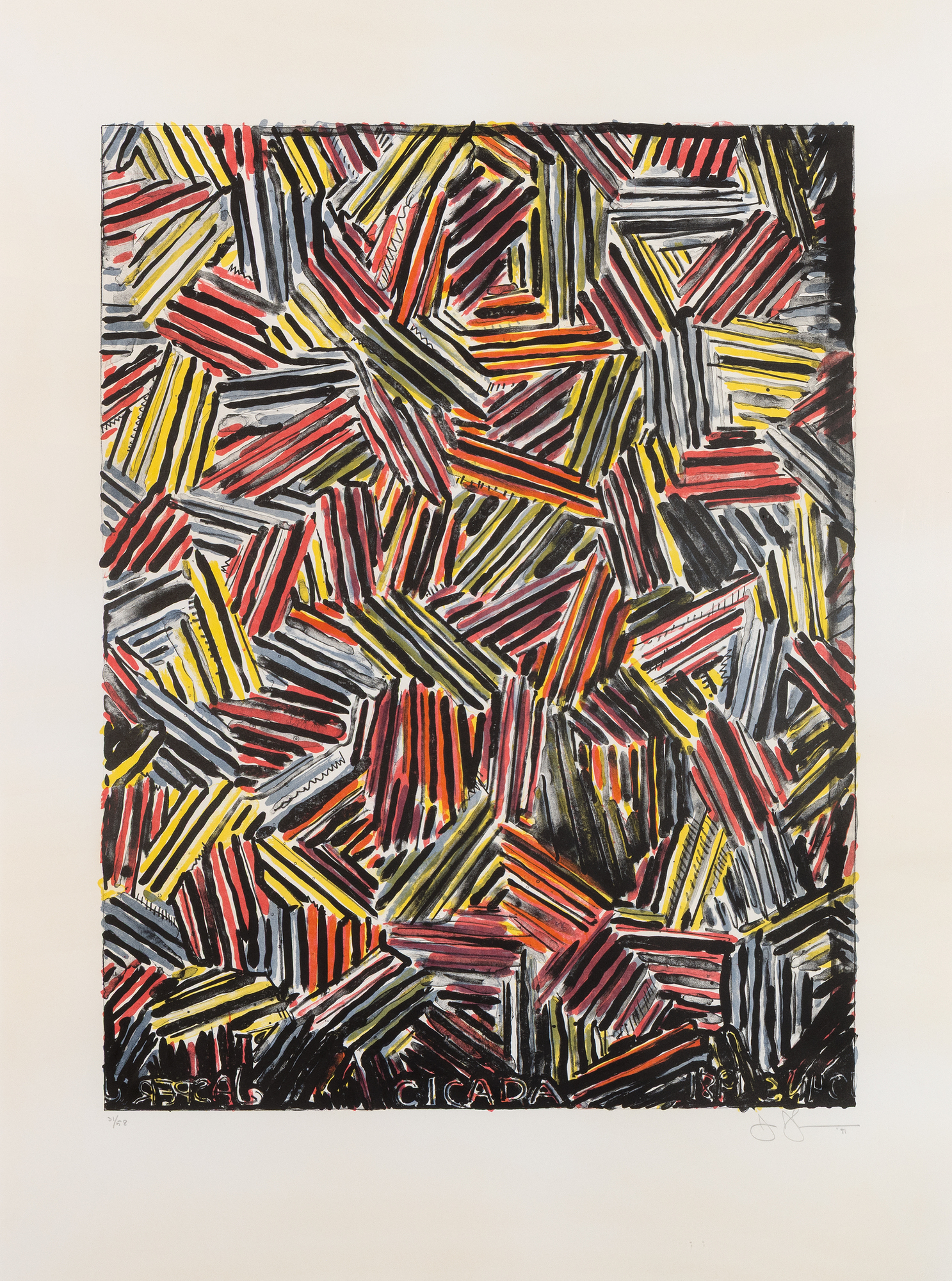
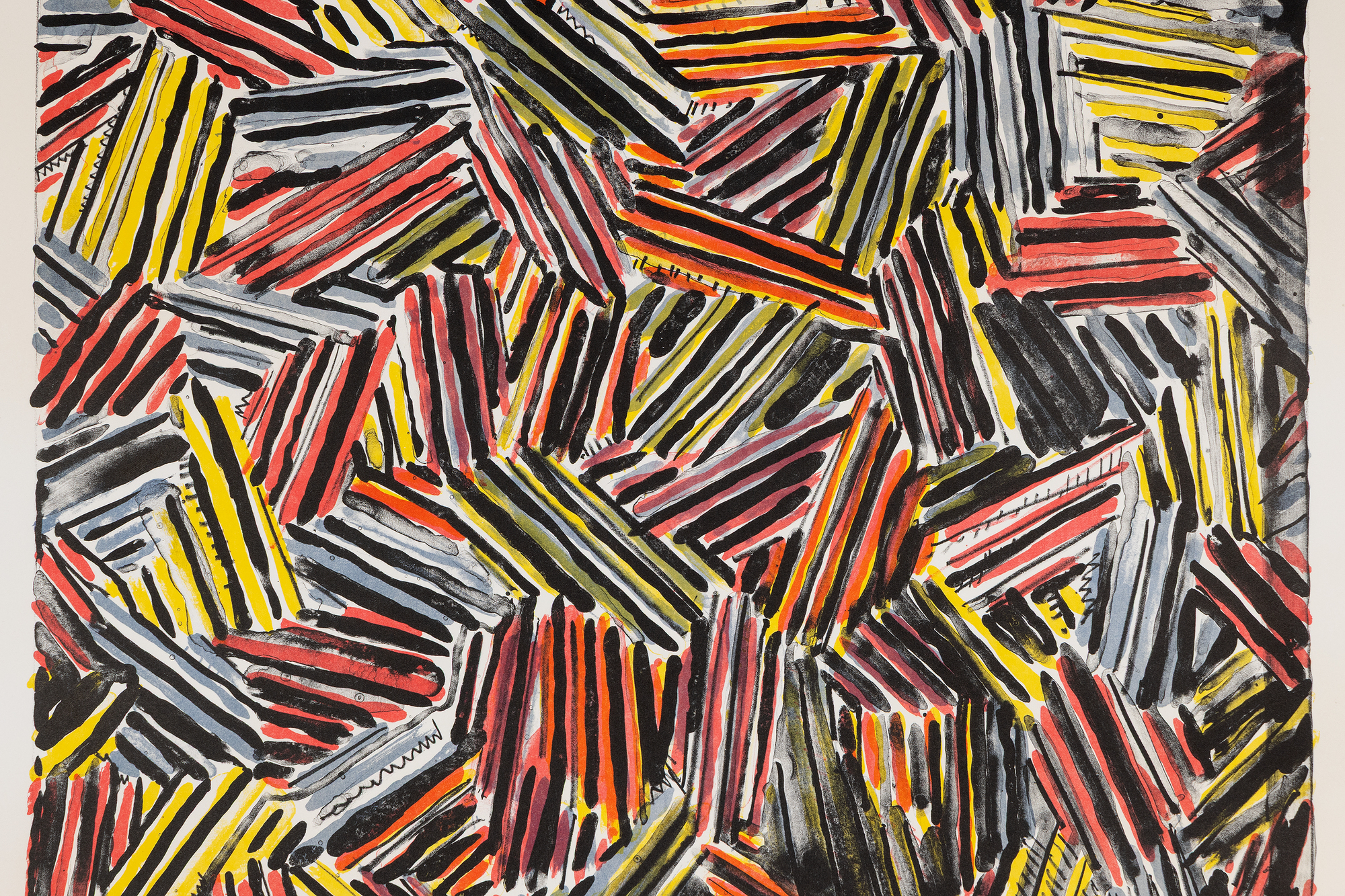
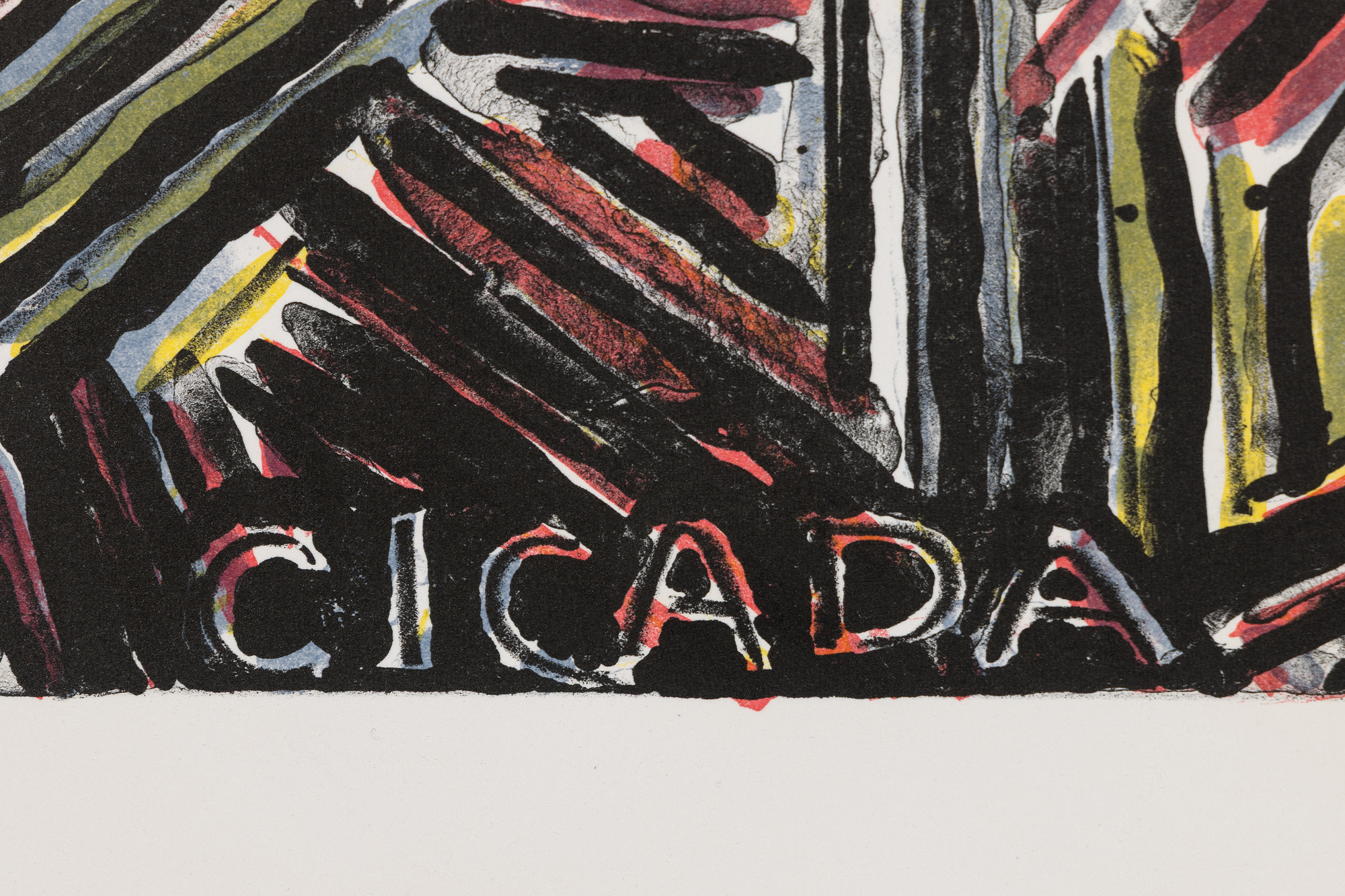
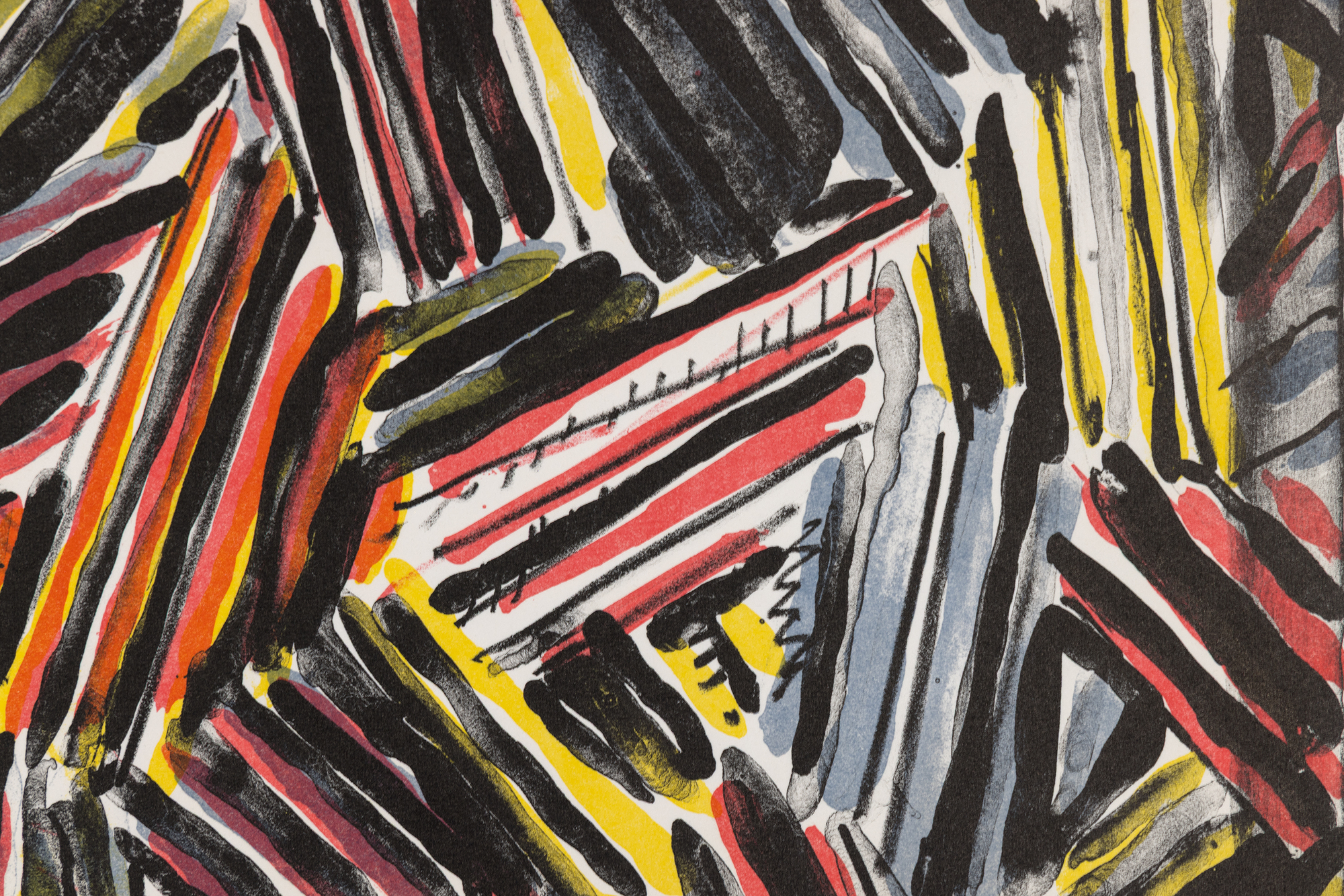
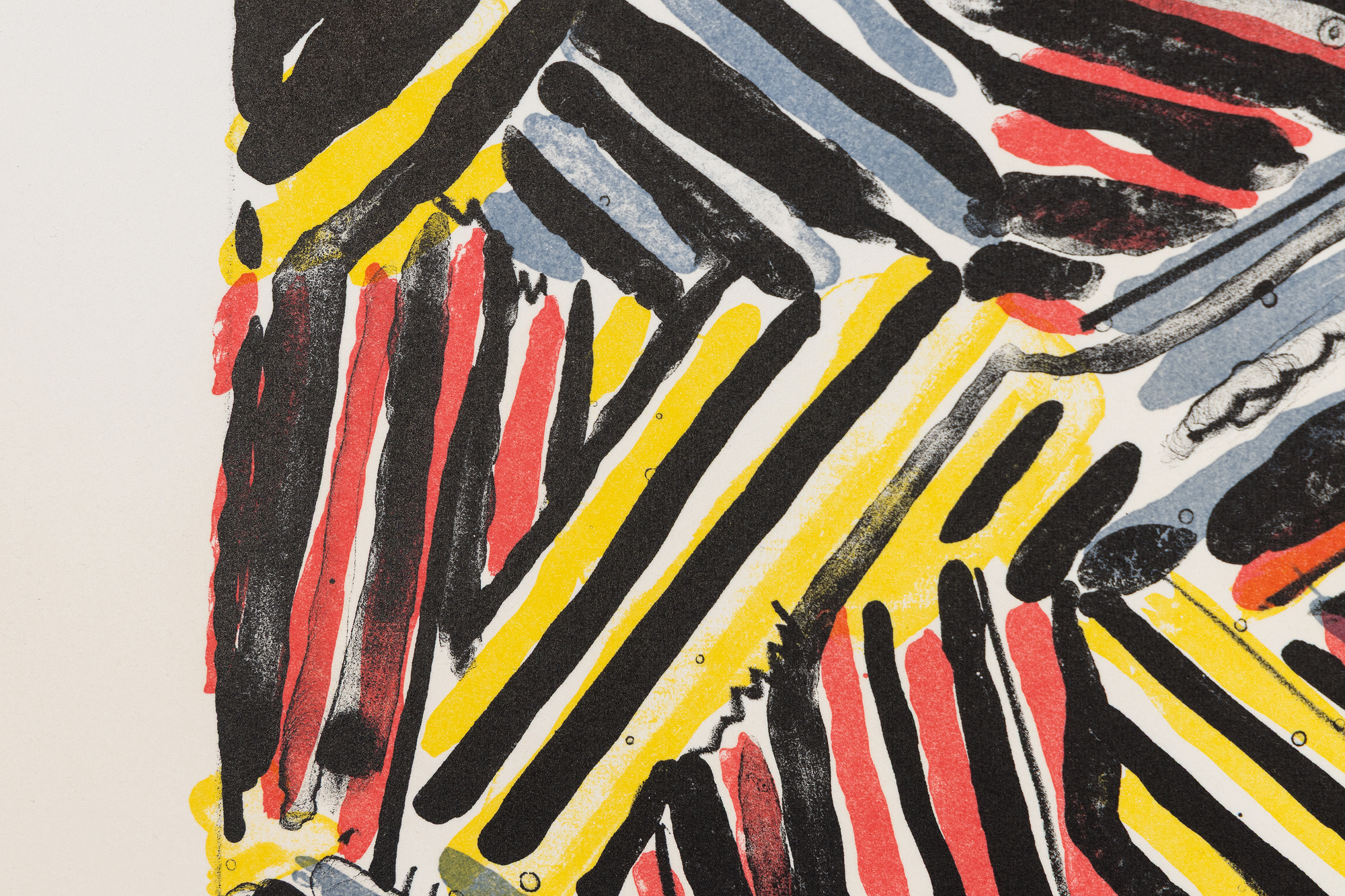
<div><font face=Lato size=3 color=black>Jasper Johns’ <em>Cicada</em> (1981) is a color lithograph published by Gemini G.E.L. in an edition of 58. The title evokes the insect’s cyclical emergence, echoing Johns’s interest in recurrence and transformation.</font></div><br><br><div> </div><br><br><div><font face=Lato size=3 color=black>Created during his “crosshatch” period (1972–83), the work exemplifies his move from flags and targets toward abstract systems of mark-making. Through layered color and texture, Johns explores the possibilities of lithography as a medium of repetition and variation.</font></div><br><br><div> </div><br><br><div><font face=Lato size=3 color=black>Impressions of <em>Cicada</em> are held in the collections of the Museum of Modern Art and the Whitney Museum of American Art, underscoring its importance within Johns’s printmaking practice.</font></div> <div><font face=Lato size=3 color=black>Jasper Johns’ <em>Cicada</em> (1981) is a color lithograph published by Gemini G.E.L. in an edition of 58. The title evokes the insect’s cyclical emergence, echoing Johns’s interest in recurrence and transformation.</font></div><br><br><div> </div><br><br><div><font face=Lato size=3 color=black>Created during his “crosshatch” period (1972–83), the work exemplifies his move from flags and targets toward abstract systems of mark-making. Through layered color and texture, Johns explores the possibilities of lithography as a medium of repetition and variation.</font></div><br><br><div> </div><br><br><div><font face=Lato size=3 color=black>Impressions of <em>Cicada</em> are held in the collections of the Museum of Modern Art and the Whitney Museum of American Art, underscoring its importance within Johns’s printmaking practice.</font></div> <div><font face=Lato size=3 color=black>Jasper Johns’ <em>Cicada</em> (1981) is a color lithograph published by Gemini G.E.L. in an edition of 58. The title evokes the insect’s cyclical emergence, echoing Johns’s interest in recurrence and transformation.</font></div><br><br><div> </div><br><br><div><font face=Lato size=3 color=black>Created during his “crosshatch” period (1972–83), the work exemplifies his move from flags and targets toward abstract systems of mark-making. Through layered color and texture, Johns explores the possibilities of lithography as a medium of repetition and variation.</font></div><br><br><div> </div><br><br><div><font face=Lato size=3 color=black>Impressions of <em>Cicada</em> are held in the collections of the Museum of Modern Art and the Whitney Museum of American Art, underscoring its importance within Johns’s printmaking practice.</font></div> <div><font face=Lato size=3 color=black>Jasper Johns’ <em>Cicada</em> (1981) is a color lithograph published by Gemini G.E.L. in an edition of 58. The title evokes the insect’s cyclical emergence, echoing Johns’s interest in recurrence and transformation.</font></div><br><br><div> </div><br><br><div><font face=Lato size=3 color=black>Created during his “crosshatch” period (1972–83), the work exemplifies his move from flags and targets toward abstract systems of mark-making. Through layered color and texture, Johns explores the possibilities of lithography as a medium of repetition and variation.</font></div><br><br><div> </div><br><br><div><font face=Lato size=3 color=black>Impressions of <em>Cicada</em> are held in the collections of the Museum of Modern Art and the Whitney Museum of American Art, underscoring its importance within Johns’s printmaking practice.</font></div> <div><font face=Lato size=3 color=black>Jasper Johns’ <em>Cicada</em> (1981) is a color lithograph published by Gemini G.E.L. in an edition of 58. The title evokes the insect’s cyclical emergence, echoing Johns’s interest in recurrence and transformation.</font></div><br><br><div> </div><br><br><div><font face=Lato size=3 color=black>Created during his “crosshatch” period (1972–83), the work exemplifies his move from flags and targets toward abstract systems of mark-making. Through layered color and texture, Johns explores the possibilities of lithography as a medium of repetition and variation.</font></div><br><br><div> </div><br><br><div><font face=Lato size=3 color=black>Impressions of <em>Cicada</em> are held in the collections of the Museum of Modern Art and the Whitney Museum of American Art, underscoring its importance within Johns’s printmaking practice.</font></div> <div><font face=Lato size=3 color=black>Jasper Johns’ <em>Cicada</em> (1981) is a color lithograph published by Gemini G.E.L. in an edition of 58. The title evokes the insect’s cyclical emergence, echoing Johns’s interest in recurrence and transformation.</font></div><br><br><div> </div><br><br><div><font face=Lato size=3 color=black>Created during his “crosshatch” period (1972–83), the work exemplifies his move from flags and targets toward abstract systems of mark-making. Through layered color and texture, Johns explores the possibilities of lithography as a medium of repetition and variation.</font></div><br><br><div> </div><br><br><div><font face=Lato size=3 color=black>Impressions of <em>Cicada</em> are held in the collections of the Museum of Modern Art and the Whitney Museum of American Art, underscoring its importance within Johns’s printmaking practice.</font></div> <div><font face=Lato size=3 color=black>Jasper Johns’ <em>Cicada</em> (1981) is a color lithograph published by Gemini G.E.L. in an edition of 58. The title evokes the insect’s cyclical emergence, echoing Johns’s interest in recurrence and transformation.</font></div><br><br><div> </div><br><br><div><font face=Lato size=3 color=black>Created during his “crosshatch” period (1972–83), the work exemplifies his move from flags and targets toward abstract systems of mark-making. Through layered color and texture, Johns explores the possibilities of lithography as a medium of repetition and variation.</font></div><br><br><div> </div><br><br><div><font face=Lato size=3 color=black>Impressions of <em>Cicada</em> are held in the collections of the Museum of Modern Art and the Whitney Museum of American Art, underscoring its importance within Johns’s printmaking practice.</font></div> <div><font face=Lato size=3 color=black>Jasper Johns’ <em>Cicada</em> (1981) is a color lithograph published by Gemini G.E.L. in an edition of 58. The title evokes the insect’s cyclical emergence, echoing Johns’s interest in recurrence and transformation.</font></div><br><br><div> </div><br><br><div><font face=Lato size=3 color=black>Created during his “crosshatch” period (1972–83), the work exemplifies his move from flags and targets toward abstract systems of mark-making. Through layered color and texture, Johns explores the possibilities of lithography as a medium of repetition and variation.</font></div><br><br><div> </div><br><br><div><font face=Lato size=3 color=black>Impressions of <em>Cicada</em> are held in the collections of the Museum of Modern Art and the Whitney Museum of American Art, underscoring its importance within Johns’s printmaking practice.</font></div> <div><font face=Lato size=3 color=black>Jasper Johns’ <em>Cicada</em> (1981) is a color lithograph published by Gemini G.E.L. in an edition of 58. The title evokes the insect’s cyclical emergence, echoing Johns’s interest in recurrence and transformation.</font></div><br><br><div> </div><br><br><div><font face=Lato size=3 color=black>Created during his “crosshatch” period (1972–83), the work exemplifies his move from flags and targets toward abstract systems of mark-making. Through layered color and texture, Johns explores the possibilities of lithography as a medium of repetition and variation.</font></div><br><br><div> </div><br><br><div><font face=Lato size=3 color=black>Impressions of <em>Cicada</em> are held in the collections of the Museum of Modern Art and the Whitney Museum of American Art, underscoring its importance within Johns’s printmaking practice.</font></div> <div><font face=Lato size=3 color=black>Jasper Johns’ <em>Cicada</em> (1981) is a color lithograph published by Gemini G.E.L. in an edition of 58. The title evokes the insect’s cyclical emergence, echoing Johns’s interest in recurrence and transformation.</font></div><br><br><div> </div><br><br><div><font face=Lato size=3 color=black>Created during his “crosshatch” period (1972–83), the work exemplifies his move from flags and targets toward abstract systems of mark-making. Through layered color and texture, Johns explores the possibilities of lithography as a medium of repetition and variation.</font></div><br><br><div> </div><br><br><div><font face=Lato size=3 color=black>Impressions of <em>Cicada</em> are held in the collections of the Museum of Modern Art and the Whitney Museum of American Art, underscoring its importance within Johns’s printmaking practice.</font></div>
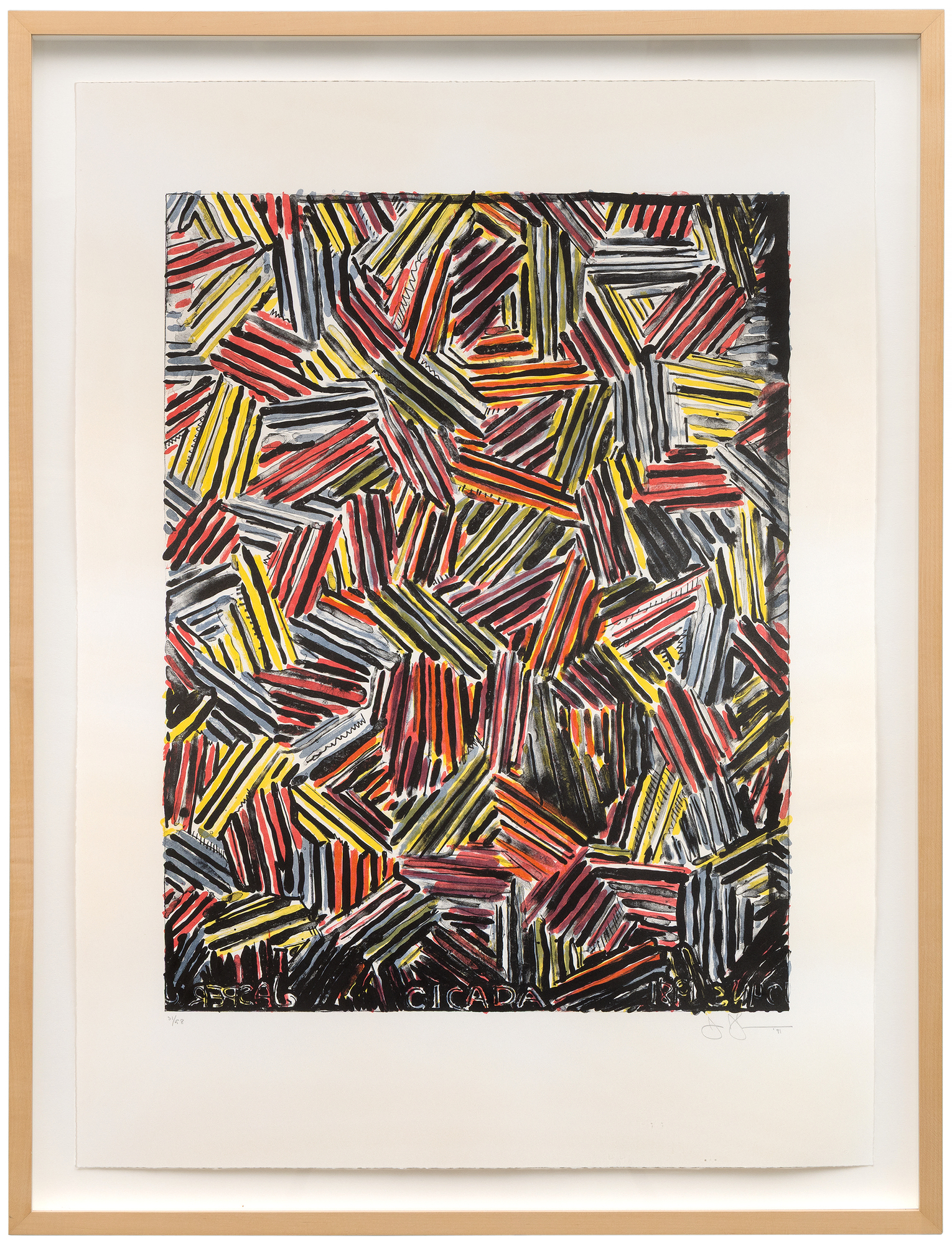
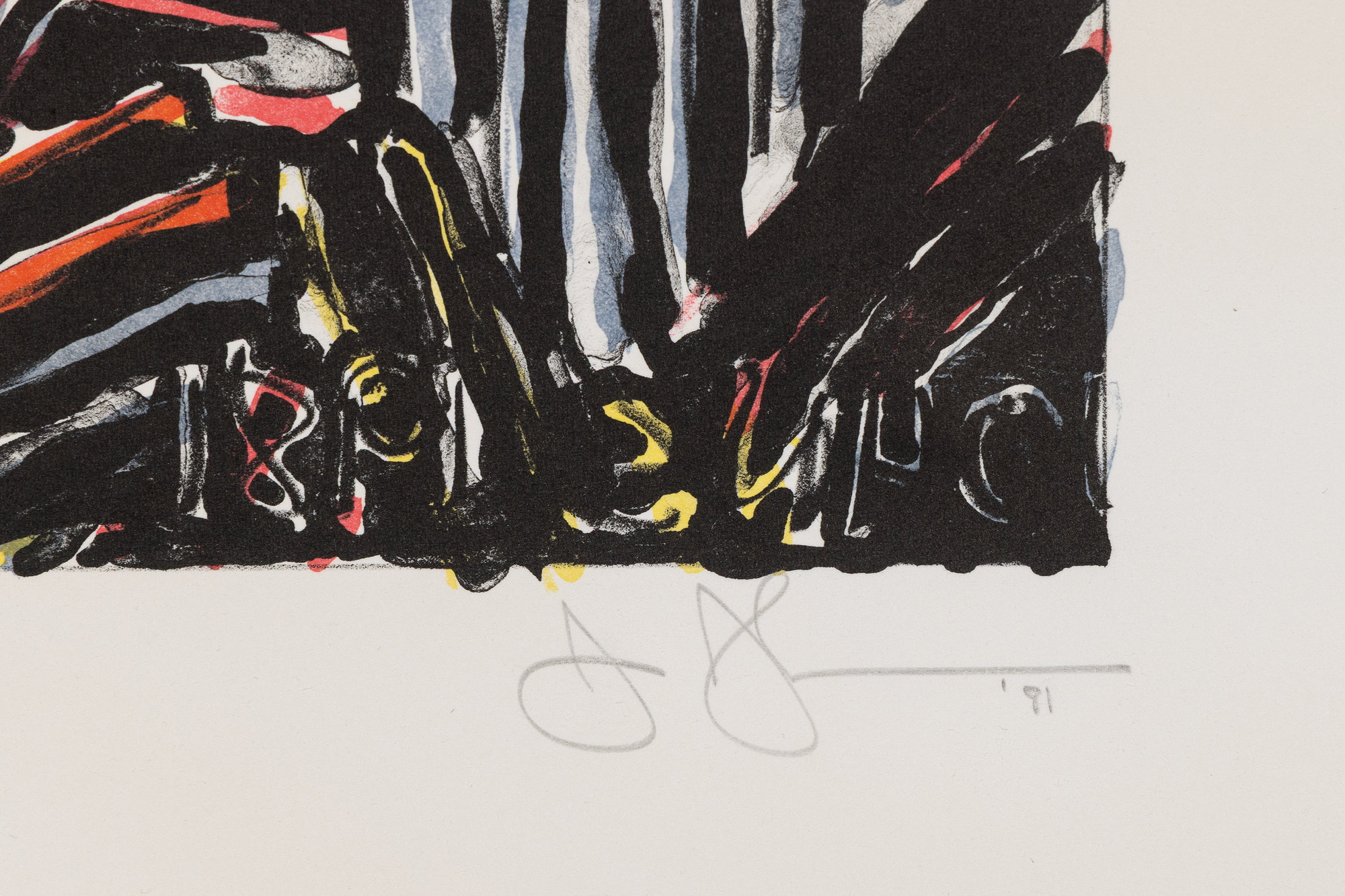
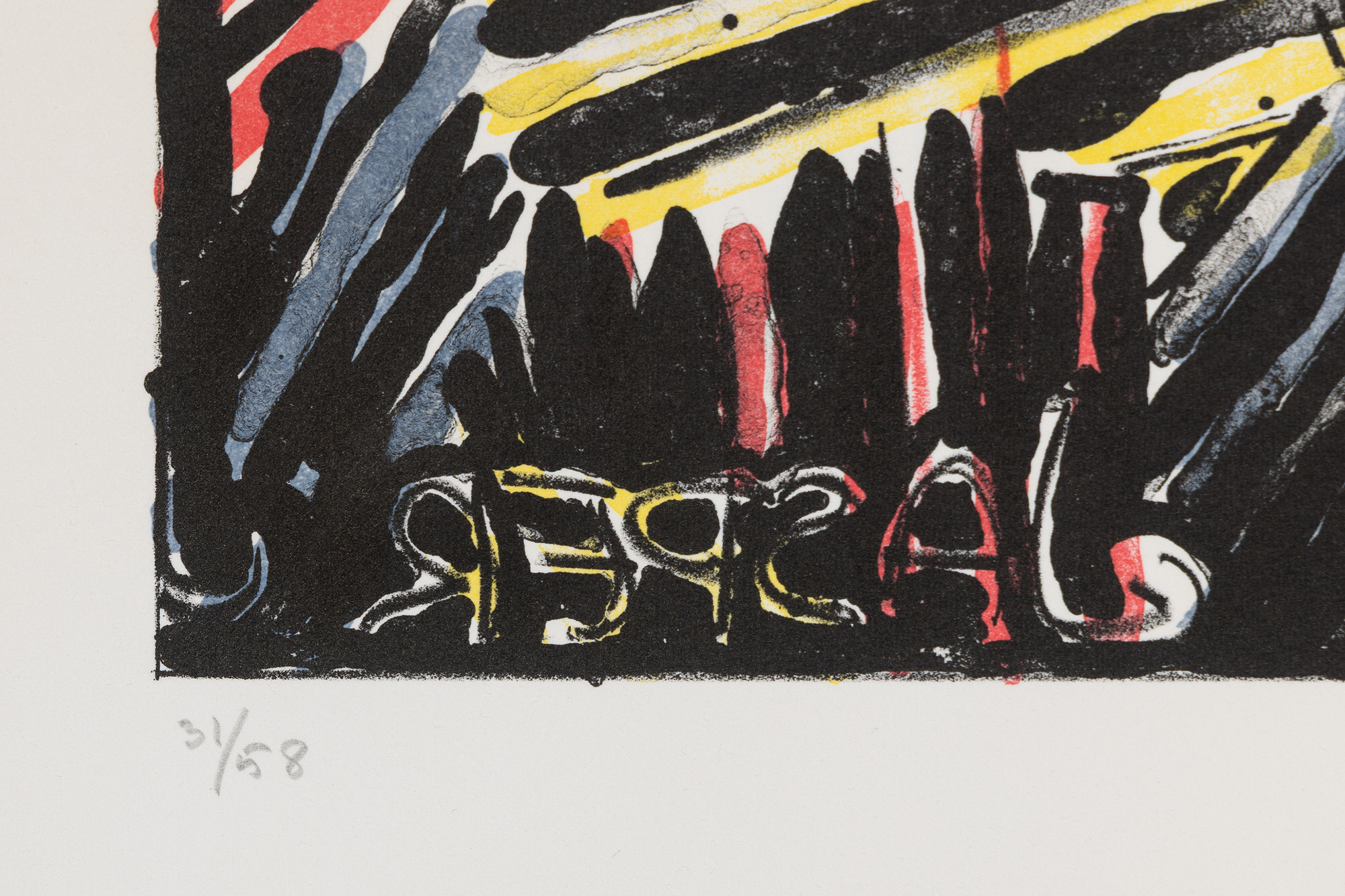
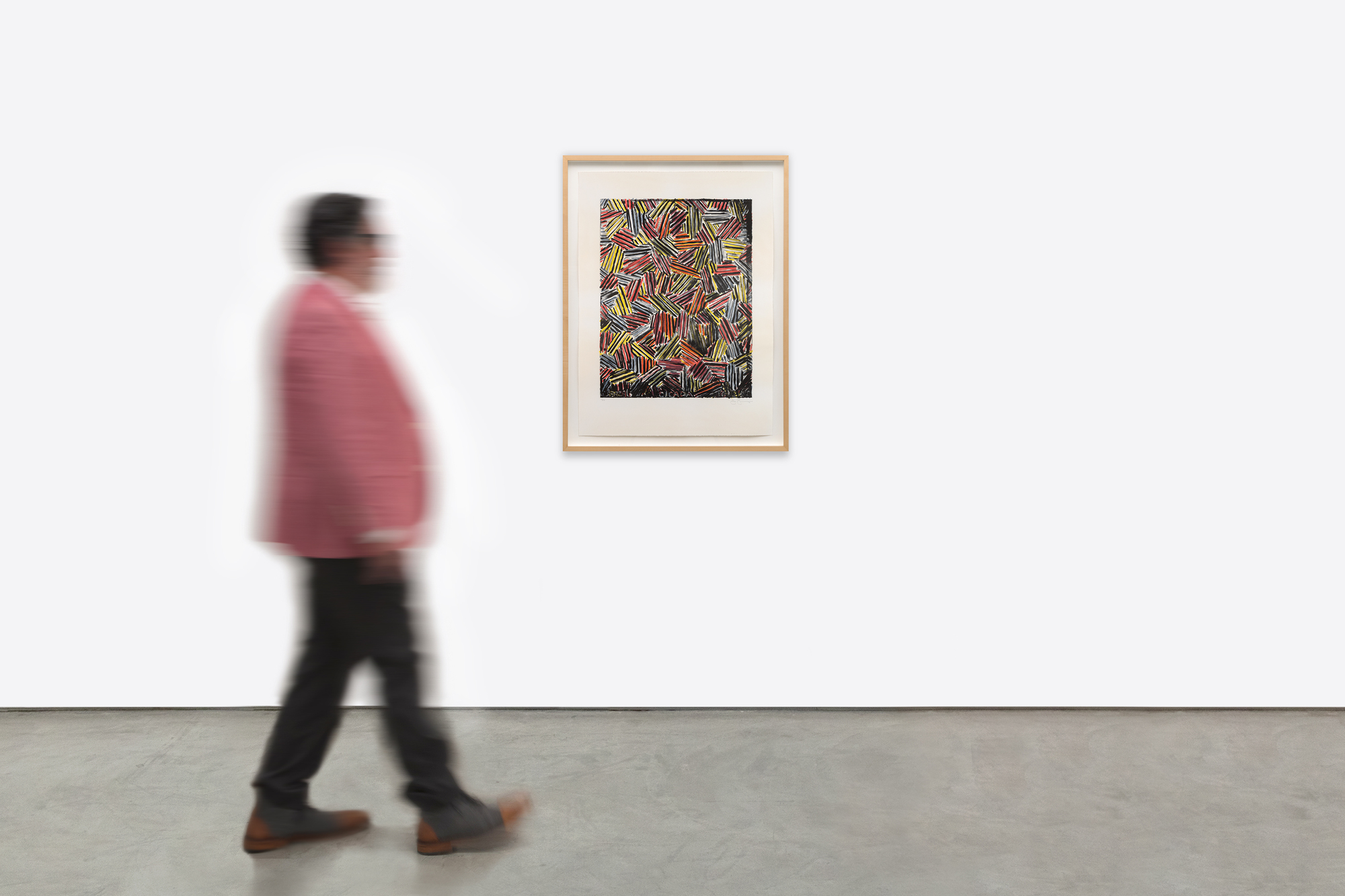
سيكادا198135 × 26 بوصة.(88.9 × 66.04 سم) طباعة حجرية ملونة
الاصل
براين جروس للفنون الجميلة
مجموعة خاصة
هيذر جيمس للفنون الجميلة
لوحة "سيكادا" لجاسبر جونز (1981) هي مطبوعة حجرية ملونة نشرتها دار نشر جيميني G.E.L. في طبعة من 58 لوحة. يستحضر العنوان الظهور الدوري للحشرة، مردداً بذلك اهتمام جونز بالتكرار والتحول.


صُمم هذا العمل خلال فترة "الرقعة المتقاطعة" (1972-1983)، وهو يجسد انتقاله من الأعلام والأهداف نحو أنظمة مجردة لصنع العلامات. يستكشف جونز إمكانيات الطباعة الحجرية كوسيلة للتكرار والتنوع من خلال طبقات الألوان والملمس.


انطباعات سيكادا محفوظة في مجموعات متحف الفن الحديث ومتحف ويتني للفن الأمريكي، مما يؤكد أهميتها ضمن ممارسة جونز للطباعة.
الاستفسار