بول سيجناك (1863-1935)

$3,750,000
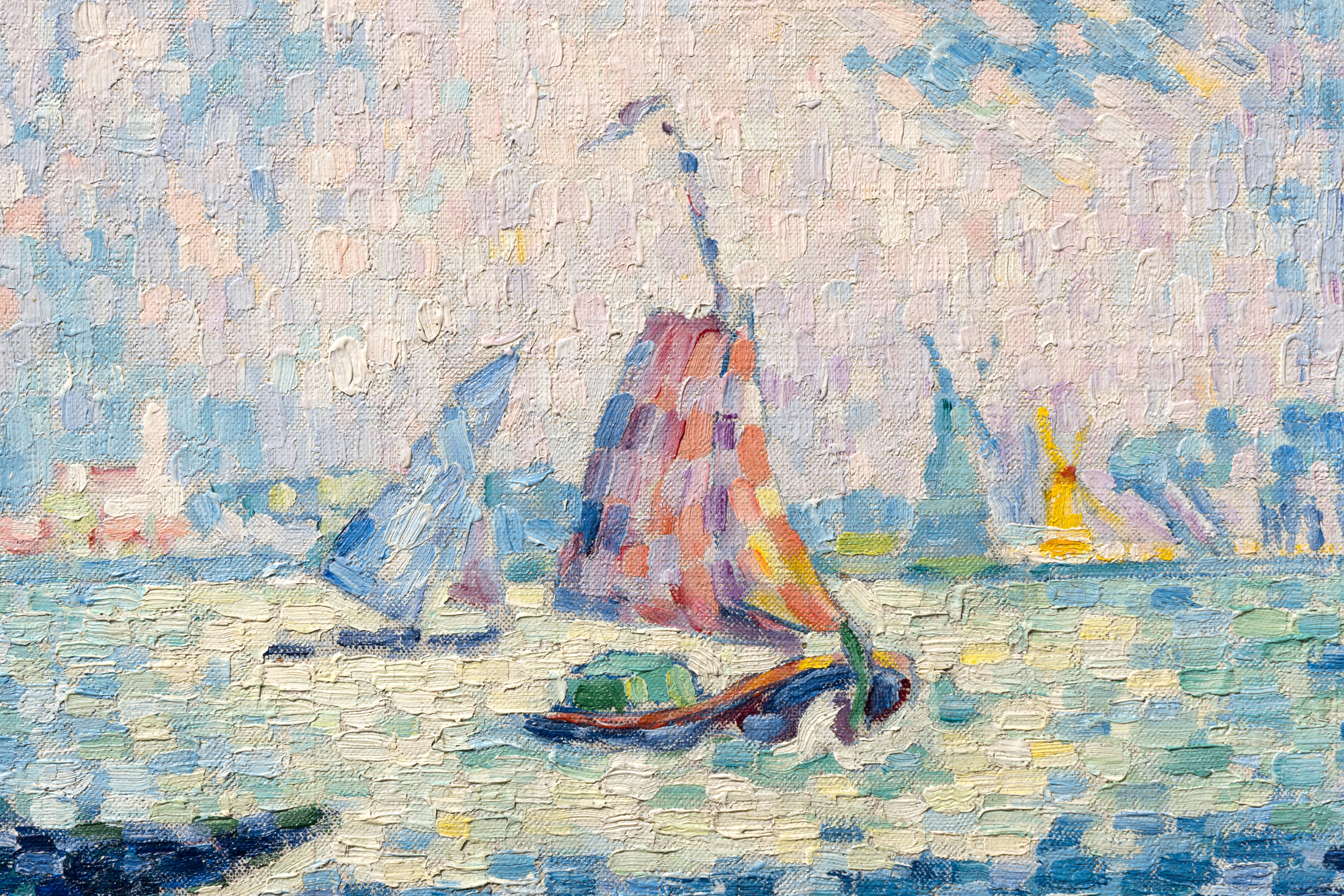
 
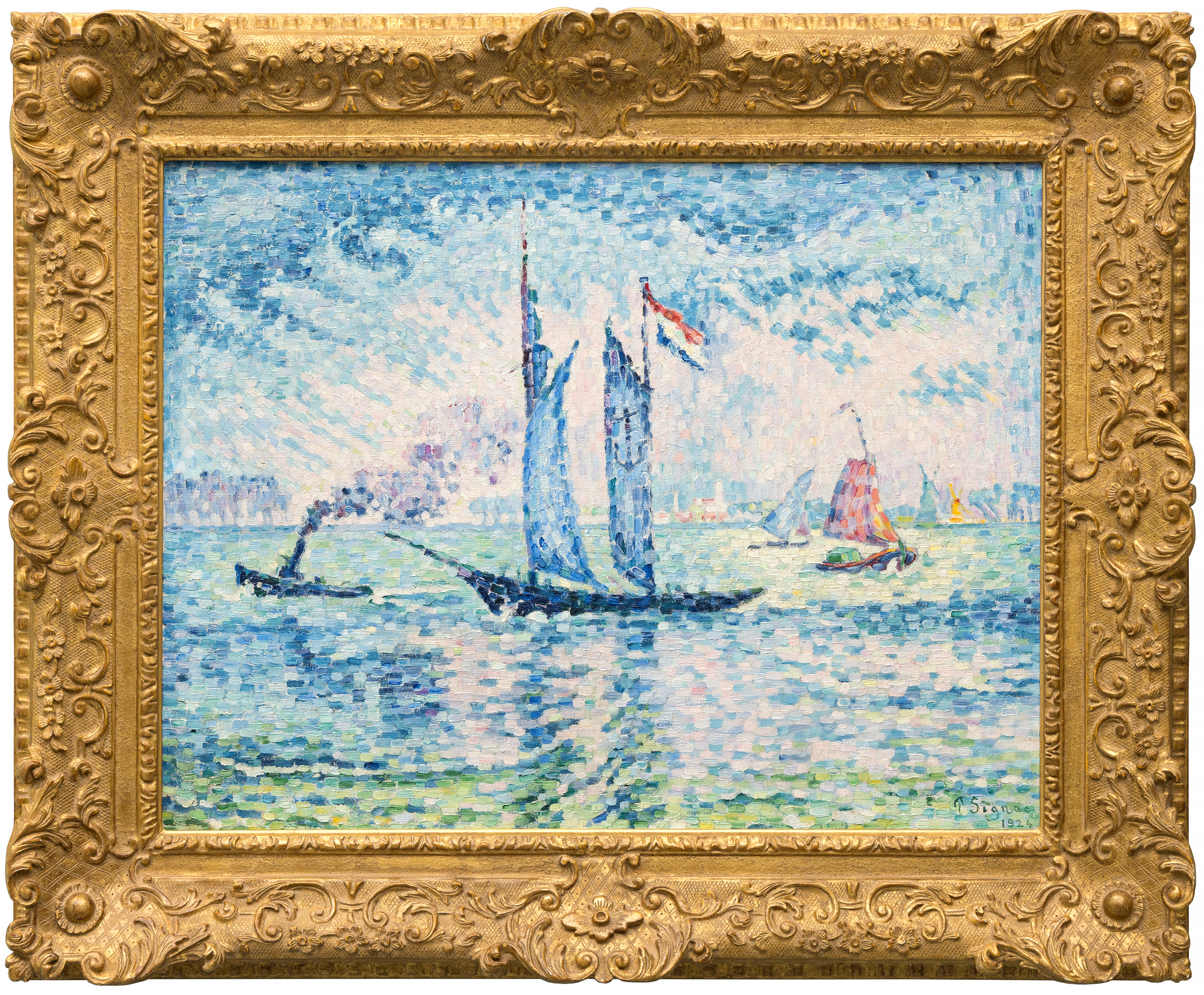
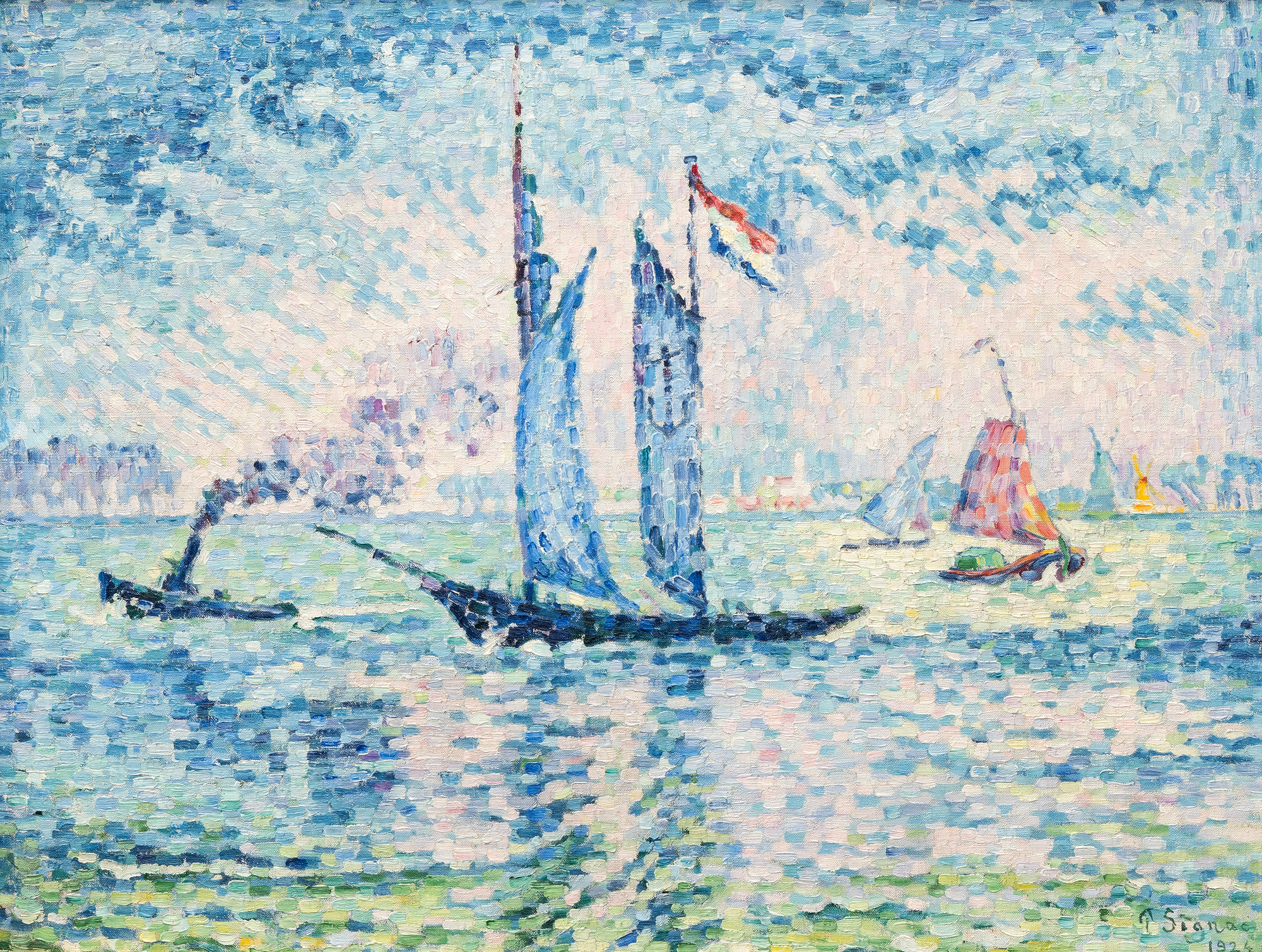
<div>Paul Signac’s "Pilote de la Meuse" (1924) is a refined late masterpiece that unites his devotion to color theory with his lifelong love of sailing. The composition is rigorously constructed around a highly structured framework of verticals and horizontals—the horizon line, the river’s surface, and the upright masts establish a sense of order and clarity. This geometry is gently softened by subtle diagonals: the angled masts, the slanted smokestack of a distant tugboat, and the wind-filled sails introduce movement and visual counterpoint without disrupting the overall balance.</div><br><br><div> </div><br><br><div>Executed in predominantly blue and green tones, the painting exemplifies Signac’s evolved Neo-Impressionist technique. While he and Georges Seurat pioneered pointillism as a scientific, color-theory-driven alternative to Impressionism, Signac’s later works from the 1910s and 1920s mark a decisive shift. Here, the earlier tight dots give way to broader, rectangular “mosaic strokes,” allowing color to carry greater physical presence and expressive freedom. The water in the foreground becomes a vibrant checkerboard of shifting hues, conveying turbulent weather, moving light, and wind-driven currents.</div><br><br><div> </div><br><br><div>A single prominent sailboat dominates the scene, accompanied by a few smaller vessels and the tugboat in the distance, whose swirling smoke animates the sky. This restrained yet dynamic marine subject reflects Signac’s deep personal connection to sailing—he owned 32 boats and traveled extensively by water.</div><br><br><div> </div><br><br><div>Similar maritime scenes from this mature period are held in major institutional collections, including the Minneapolis Institute of Art, The Metropolitan Museum of Art, and the Musée d’Orsay, underscoring the significance of this composition within Signac’s final artistic phase.</div><br><br><div> </div><br><br><div>The painting is accompanied by exceptional archival material: nine typed onion skins by Edmond Sussfeld; three autograph letters signed by Paul Signac; two autograph letters and the original invoice from the merchant Léon Marseille; and a certificate of authenticity from Mrs. Marina Ferretti-Bocquillon, providing outstanding historical context and provenance.</div> <div>Paul Signac’s "Pilote de la Meuse" (1924) is a refined late masterpiece that unites his devotion to color theory with his lifelong love of sailing. The composition is rigorously constructed around a highly structured framework of verticals and horizontals—the horizon line, the river’s surface, and the upright masts establish a sense of order and clarity. This geometry is gently softened by subtle diagonals: the angled masts, the slanted smokestack of a distant tugboat, and the wind-filled sails introduce movement and visual counterpoint without disrupting the overall balance.</div><br><br><div> </div><br><br><div>Executed in predominantly blue and green tones, the painting exemplifies Signac’s evolved Neo-Impressionist technique. While he and Georges Seurat pioneered pointillism as a scientific, color-theory-driven alternative to Impressionism, Signac’s later works from the 1910s and 1920s mark a decisive shift. Here, the earlier tight dots give way to broader, rectangular “mosaic strokes,” allowing color to carry greater physical presence and expressive freedom. The water in the foreground becomes a vibrant checkerboard of shifting hues, conveying turbulent weather, moving light, and wind-driven currents.</div><br><br><div> </div><br><br><div>A single prominent sailboat dominates the scene, accompanied by a few smaller vessels and the tugboat in the distance, whose swirling smoke animates the sky. This restrained yet dynamic marine subject reflects Signac’s deep personal connection to sailing—he owned 32 boats and traveled extensively by water.</div><br><br><div> </div><br><br><div>Similar maritime scenes from this mature period are held in major institutional collections, including the Minneapolis Institute of Art, The Metropolitan Museum of Art, and the Musée d’Orsay, underscoring the significance of this composition within Signac’s final artistic phase.</div><br><br><div> </div><br><br><div>The painting is accompanied by exceptional archival material: nine typed onion skins by Edmond Sussfeld; three autograph letters signed by Paul Signac; two autograph letters and the original invoice from the merchant Léon Marseille; and a certificate of authenticity from Mrs. Marina Ferretti-Bocquillon, providing outstanding historical context and provenance.</div> <div>Paul Signac’s "Pilote de la Meuse" (1924) is a refined late masterpiece that unites his devotion to color theory with his lifelong love of sailing. The composition is rigorously constructed around a highly structured framework of verticals and horizontals—the horizon line, the river’s surface, and the upright masts establish a sense of order and clarity. This geometry is gently softened by subtle diagonals: the angled masts, the slanted smokestack of a distant tugboat, and the wind-filled sails introduce movement and visual counterpoint without disrupting the overall balance.</div><br><br><div> </div><br><br><div>Executed in predominantly blue and green tones, the painting exemplifies Signac’s evolved Neo-Impressionist technique. While he and Georges Seurat pioneered pointillism as a scientific, color-theory-driven alternative to Impressionism, Signac’s later works from the 1910s and 1920s mark a decisive shift. Here, the earlier tight dots give way to broader, rectangular “mosaic strokes,” allowing color to carry greater physical presence and expressive freedom. The water in the foreground becomes a vibrant checkerboard of shifting hues, conveying turbulent weather, moving light, and wind-driven currents.</div><br><br><div> </div><br><br><div>A single prominent sailboat dominates the scene, accompanied by a few smaller vessels and the tugboat in the distance, whose swirling smoke animates the sky. This restrained yet dynamic marine subject reflects Signac’s deep personal connection to sailing—he owned 32 boats and traveled extensively by water.</div><br><br><div> </div><br><br><div>Similar maritime scenes from this mature period are held in major institutional collections, including the Minneapolis Institute of Art, The Metropolitan Museum of Art, and the Musée d’Orsay, underscoring the significance of this composition within Signac’s final artistic phase.</div><br><br><div> </div><br><br><div>The painting is accompanied by exceptional archival material: nine typed onion skins by Edmond Sussfeld; three autograph letters signed by Paul Signac; two autograph letters and the original invoice from the merchant Léon Marseille; and a certificate of authenticity from Mrs. Marina Ferretti-Bocquillon, providing outstanding historical context and provenance.</div> <div>Paul Signac’s "Pilote de la Meuse" (1924) is a refined late masterpiece that unites his devotion to color theory with his lifelong love of sailing. The composition is rigorously constructed around a highly structured framework of verticals and horizontals—the horizon line, the river’s surface, and the upright masts establish a sense of order and clarity. This geometry is gently softened by subtle diagonals: the angled masts, the slanted smokestack of a distant tugboat, and the wind-filled sails introduce movement and visual counterpoint without disrupting the overall balance.</div><br><br><div> </div><br><br><div>Executed in predominantly blue and green tones, the painting exemplifies Signac’s evolved Neo-Impressionist technique. While he and Georges Seurat pioneered pointillism as a scientific, color-theory-driven alternative to Impressionism, Signac’s later works from the 1910s and 1920s mark a decisive shift. Here, the earlier tight dots give way to broader, rectangular “mosaic strokes,” allowing color to carry greater physical presence and expressive freedom. The water in the foreground becomes a vibrant checkerboard of shifting hues, conveying turbulent weather, moving light, and wind-driven currents.</div><br><br><div> </div><br><br><div>A single prominent sailboat dominates the scene, accompanied by a few smaller vessels and the tugboat in the distance, whose swirling smoke animates the sky. This restrained yet dynamic marine subject reflects Signac’s deep personal connection to sailing—he owned 32 boats and traveled extensively by water.</div><br><br><div> </div><br><br><div>Similar maritime scenes from this mature period are held in major institutional collections, including the Minneapolis Institute of Art, The Metropolitan Museum of Art, and the Musée d’Orsay, underscoring the significance of this composition within Signac’s final artistic phase.</div><br><br><div> </div><br><br><div>The painting is accompanied by exceptional archival material: nine typed onion skins by Edmond Sussfeld; three autograph letters signed by Paul Signac; two autograph letters and the original invoice from the merchant Léon Marseille; and a certificate of authenticity from Mrs. Marina Ferretti-Bocquillon, providing outstanding historical context and provenance.</div> <div>Paul Signac’s "Pilote de la Meuse" (1924) is a refined late masterpiece that unites his devotion to color theory with his lifelong love of sailing. The composition is rigorously constructed around a highly structured framework of verticals and horizontals—the horizon line, the river’s surface, and the upright masts establish a sense of order and clarity. This geometry is gently softened by subtle diagonals: the angled masts, the slanted smokestack of a distant tugboat, and the wind-filled sails introduce movement and visual counterpoint without disrupting the overall balance.</div><br><br><div> </div><br><br><div>Executed in predominantly blue and green tones, the painting exemplifies Signac’s evolved Neo-Impressionist technique. While he and Georges Seurat pioneered pointillism as a scientific, color-theory-driven alternative to Impressionism, Signac’s later works from the 1910s and 1920s mark a decisive shift. Here, the earlier tight dots give way to broader, rectangular “mosaic strokes,” allowing color to carry greater physical presence and expressive freedom. The water in the foreground becomes a vibrant checkerboard of shifting hues, conveying turbulent weather, moving light, and wind-driven currents.</div><br><br><div> </div><br><br><div>A single prominent sailboat dominates the scene, accompanied by a few smaller vessels and the tugboat in the distance, whose swirling smoke animates the sky. This restrained yet dynamic marine subject reflects Signac’s deep personal connection to sailing—he owned 32 boats and traveled extensively by water.</div><br><br><div> </div><br><br><div>Similar maritime scenes from this mature period are held in major institutional collections, including the Minneapolis Institute of Art, The Metropolitan Museum of Art, and the Musée d’Orsay, underscoring the significance of this composition within Signac’s final artistic phase.</div><br><br><div> </div><br><br><div>The painting is accompanied by exceptional archival material: nine typed onion skins by Edmond Sussfeld; three autograph letters signed by Paul Signac; two autograph letters and the original invoice from the merchant Léon Marseille; and a certificate of authenticity from Mrs. Marina Ferretti-Bocquillon, providing outstanding historical context and provenance.</div> <div>Paul Signac’s "Pilote de la Meuse" (1924) is a refined late masterpiece that unites his devotion to color theory with his lifelong love of sailing. The composition is rigorously constructed around a highly structured framework of verticals and horizontals—the horizon line, the river’s surface, and the upright masts establish a sense of order and clarity. This geometry is gently softened by subtle diagonals: the angled masts, the slanted smokestack of a distant tugboat, and the wind-filled sails introduce movement and visual counterpoint without disrupting the overall balance.</div><br><br><div> </div><br><br><div>Executed in predominantly blue and green tones, the painting exemplifies Signac’s evolved Neo-Impressionist technique. While he and Georges Seurat pioneered pointillism as a scientific, color-theory-driven alternative to Impressionism, Signac’s later works from the 1910s and 1920s mark a decisive shift. Here, the earlier tight dots give way to broader, rectangular “mosaic strokes,” allowing color to carry greater physical presence and expressive freedom. The water in the foreground becomes a vibrant checkerboard of shifting hues, conveying turbulent weather, moving light, and wind-driven currents.</div><br><br><div> </div><br><br><div>A single prominent sailboat dominates the scene, accompanied by a few smaller vessels and the tugboat in the distance, whose swirling smoke animates the sky. This restrained yet dynamic marine subject reflects Signac’s deep personal connection to sailing—he owned 32 boats and traveled extensively by water.</div><br><br><div> </div><br><br><div>Similar maritime scenes from this mature period are held in major institutional collections, including the Minneapolis Institute of Art, The Metropolitan Museum of Art, and the Musée d’Orsay, underscoring the significance of this composition within Signac’s final artistic phase.</div><br><br><div> </div><br><br><div>The painting is accompanied by exceptional archival material: nine typed onion skins by Edmond Sussfeld; three autograph letters signed by Paul Signac; two autograph letters and the original invoice from the merchant Léon Marseille; and a certificate of authenticity from Mrs. Marina Ferretti-Bocquillon, providing outstanding historical context and provenance.</div> <div>Paul Signac’s "Pilote de la Meuse" (1924) is a refined late masterpiece that unites his devotion to color theory with his lifelong love of sailing. The composition is rigorously constructed around a highly structured framework of verticals and horizontals—the horizon line, the river’s surface, and the upright masts establish a sense of order and clarity. This geometry is gently softened by subtle diagonals: the angled masts, the slanted smokestack of a distant tugboat, and the wind-filled sails introduce movement and visual counterpoint without disrupting the overall balance.</div><br><br><div> </div><br><br><div>Executed in predominantly blue and green tones, the painting exemplifies Signac’s evolved Neo-Impressionist technique. While he and Georges Seurat pioneered pointillism as a scientific, color-theory-driven alternative to Impressionism, Signac’s later works from the 1910s and 1920s mark a decisive shift. Here, the earlier tight dots give way to broader, rectangular “mosaic strokes,” allowing color to carry greater physical presence and expressive freedom. The water in the foreground becomes a vibrant checkerboard of shifting hues, conveying turbulent weather, moving light, and wind-driven currents.</div><br><br><div> </div><br><br><div>A single prominent sailboat dominates the scene, accompanied by a few smaller vessels and the tugboat in the distance, whose swirling smoke animates the sky. This restrained yet dynamic marine subject reflects Signac’s deep personal connection to sailing—he owned 32 boats and traveled extensively by water.</div><br><br><div> </div><br><br><div>Similar maritime scenes from this mature period are held in major institutional collections, including the Minneapolis Institute of Art, The Metropolitan Museum of Art, and the Musée d’Orsay, underscoring the significance of this composition within Signac’s final artistic phase.</div><br><br><div> </div><br><br><div>The painting is accompanied by exceptional archival material: nine typed onion skins by Edmond Sussfeld; three autograph letters signed by Paul Signac; two autograph letters and the original invoice from the merchant Léon Marseille; and a certificate of authenticity from Mrs. Marina Ferretti-Bocquillon, providing outstanding historical context and provenance.</div> <div>Paul Signac’s "Pilote de la Meuse" (1924) is a refined late masterpiece that unites his devotion to color theory with his lifelong love of sailing. The composition is rigorously constructed around a highly structured framework of verticals and horizontals—the horizon line, the river’s surface, and the upright masts establish a sense of order and clarity. This geometry is gently softened by subtle diagonals: the angled masts, the slanted smokestack of a distant tugboat, and the wind-filled sails introduce movement and visual counterpoint without disrupting the overall balance.</div><br><br><div> </div><br><br><div>Executed in predominantly blue and green tones, the painting exemplifies Signac’s evolved Neo-Impressionist technique. While he and Georges Seurat pioneered pointillism as a scientific, color-theory-driven alternative to Impressionism, Signac’s later works from the 1910s and 1920s mark a decisive shift. Here, the earlier tight dots give way to broader, rectangular “mosaic strokes,” allowing color to carry greater physical presence and expressive freedom. The water in the foreground becomes a vibrant checkerboard of shifting hues, conveying turbulent weather, moving light, and wind-driven currents.</div><br><br><div> </div><br><br><div>A single prominent sailboat dominates the scene, accompanied by a few smaller vessels and the tugboat in the distance, whose swirling smoke animates the sky. This restrained yet dynamic marine subject reflects Signac’s deep personal connection to sailing—he owned 32 boats and traveled extensively by water.</div><br><br><div> </div><br><br><div>Similar maritime scenes from this mature period are held in major institutional collections, including the Minneapolis Institute of Art, The Metropolitan Museum of Art, and the Musée d’Orsay, underscoring the significance of this composition within Signac’s final artistic phase.</div><br><br><div> </div><br><br><div>The painting is accompanied by exceptional archival material: nine typed onion skins by Edmond Sussfeld; three autograph letters signed by Paul Signac; two autograph letters and the original invoice from the merchant Léon Marseille; and a certificate of authenticity from Mrs. Marina Ferretti-Bocquillon, providing outstanding historical context and provenance.</div> <div>Paul Signac’s "Pilote de la Meuse" (1924) is a refined late masterpiece that unites his devotion to color theory with his lifelong love of sailing. The composition is rigorously constructed around a highly structured framework of verticals and horizontals—the horizon line, the river’s surface, and the upright masts establish a sense of order and clarity. This geometry is gently softened by subtle diagonals: the angled masts, the slanted smokestack of a distant tugboat, and the wind-filled sails introduce movement and visual counterpoint without disrupting the overall balance.</div><br><br><div> </div><br><br><div>Executed in predominantly blue and green tones, the painting exemplifies Signac’s evolved Neo-Impressionist technique. While he and Georges Seurat pioneered pointillism as a scientific, color-theory-driven alternative to Impressionism, Signac’s later works from the 1910s and 1920s mark a decisive shift. Here, the earlier tight dots give way to broader, rectangular “mosaic strokes,” allowing color to carry greater physical presence and expressive freedom. The water in the foreground becomes a vibrant checkerboard of shifting hues, conveying turbulent weather, moving light, and wind-driven currents.</div><br><br><div> </div><br><br><div>A single prominent sailboat dominates the scene, accompanied by a few smaller vessels and the tugboat in the distance, whose swirling smoke animates the sky. This restrained yet dynamic marine subject reflects Signac’s deep personal connection to sailing—he owned 32 boats and traveled extensively by water.</div><br><br><div> </div><br><br><div>Similar maritime scenes from this mature period are held in major institutional collections, including the Minneapolis Institute of Art, The Metropolitan Museum of Art, and the Musée d’Orsay, underscoring the significance of this composition within Signac’s final artistic phase.</div><br><br><div> </div><br><br><div>The painting is accompanied by exceptional archival material: nine typed onion skins by Edmond Sussfeld; three autograph letters signed by Paul Signac; two autograph letters and the original invoice from the merchant Léon Marseille; and a certificate of authenticity from Mrs. Marina Ferretti-Bocquillon, providing outstanding historical context and provenance.</div> <div>Paul Signac’s "Pilote de la Meuse" (1924) is a refined late masterpiece that unites his devotion to color theory with his lifelong love of sailing. The composition is rigorously constructed around a highly structured framework of verticals and horizontals—the horizon line, the river’s surface, and the upright masts establish a sense of order and clarity. This geometry is gently softened by subtle diagonals: the angled masts, the slanted smokestack of a distant tugboat, and the wind-filled sails introduce movement and visual counterpoint without disrupting the overall balance.</div><br><br><div> </div><br><br><div>Executed in predominantly blue and green tones, the painting exemplifies Signac’s evolved Neo-Impressionist technique. While he and Georges Seurat pioneered pointillism as a scientific, color-theory-driven alternative to Impressionism, Signac’s later works from the 1910s and 1920s mark a decisive shift. Here, the earlier tight dots give way to broader, rectangular “mosaic strokes,” allowing color to carry greater physical presence and expressive freedom. The water in the foreground becomes a vibrant checkerboard of shifting hues, conveying turbulent weather, moving light, and wind-driven currents.</div><br><br><div> </div><br><br><div>A single prominent sailboat dominates the scene, accompanied by a few smaller vessels and the tugboat in the distance, whose swirling smoke animates the sky. This restrained yet dynamic marine subject reflects Signac’s deep personal connection to sailing—he owned 32 boats and traveled extensively by water.</div><br><br><div> </div><br><br><div>Similar maritime scenes from this mature period are held in major institutional collections, including the Minneapolis Institute of Art, The Metropolitan Museum of Art, and the Musée d’Orsay, underscoring the significance of this composition within Signac’s final artistic phase.</div><br><br><div> </div><br><br><div>The painting is accompanied by exceptional archival material: nine typed onion skins by Edmond Sussfeld; three autograph letters signed by Paul Signac; two autograph letters and the original invoice from the merchant Léon Marseille; and a certificate of authenticity from Mrs. Marina Ferretti-Bocquillon, providing outstanding historical context and provenance.</div>
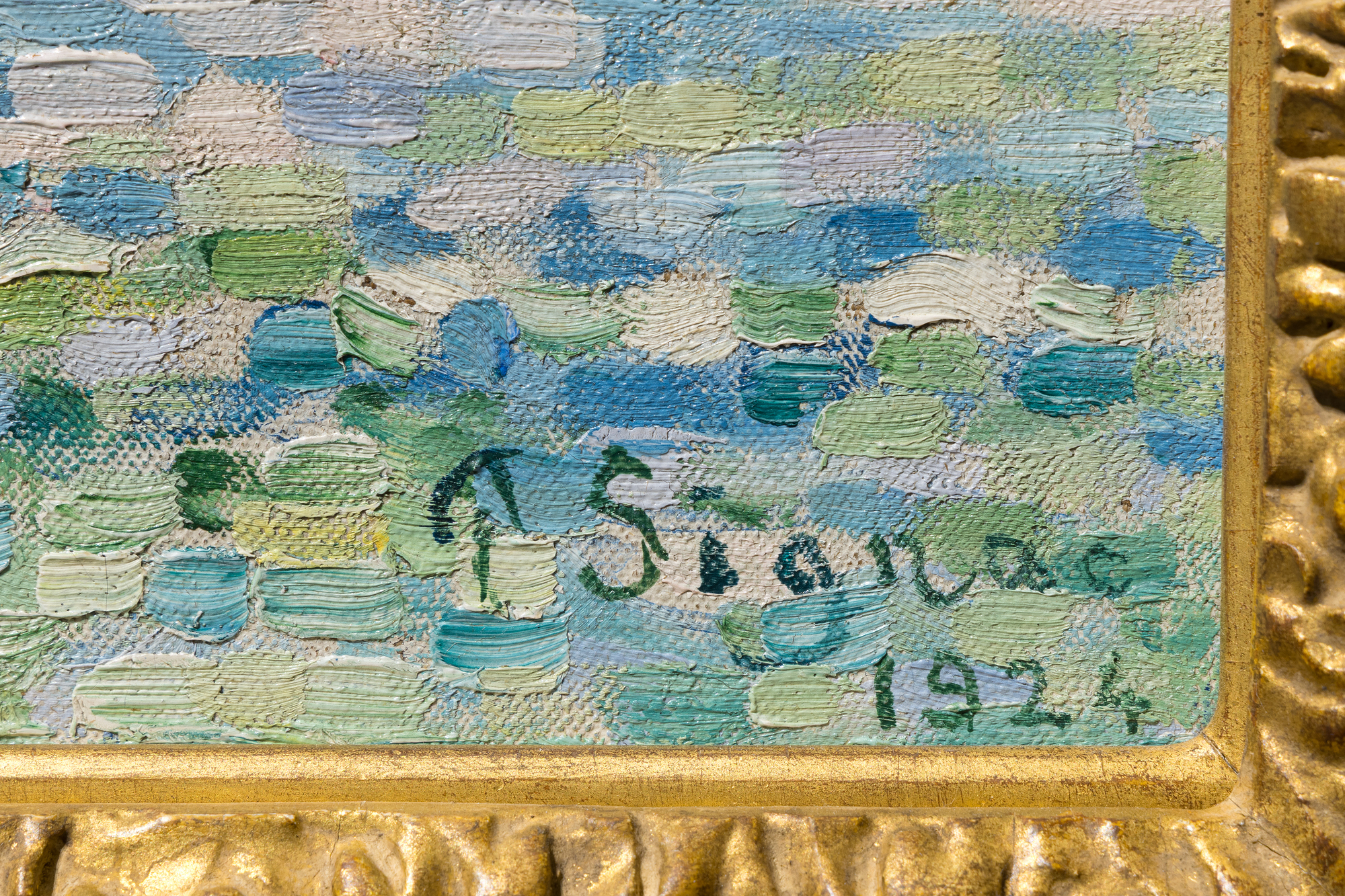
طيار نهر الميز192419 3/4 × 25 1/2 بوصة(50.17 × 64.77 سم) زيت على قماش
الاصل
معرض ليون مارسيليا، باريس
مجموعة إدموند سوسفيلد
مجموعة خاصة، موروثة من المذكور أعلاه
مجموعة خاصة، أوروبا
تقديرات دروو، باريس، 18 نوفمبر 2022، القطعة 00003 (مجموعة إدموند سوسفيلد)
مجموعة خاصة، لندن، تم الحصول عليها في المزاد المذكور أعلاه
معرض
باريس، برنهايم-جون، بول سينياك، 19 مايو-30 مايو 1930، رقم 40
باريس، بيتي باليه، بول سينياك، 1934، رقم 35
فيروفلاي، صالون دو سوفينير دي كورو، المعرض الثالث عشر، 1965
الادب
بيرنهايم-جون، معرض بول سينياك من يوم الاثنين 19 مايو إلى... اكثر... الجمعة 30 مايو 1930، باريس، 1930، رقم 40 (مصورة)
فرانسواز كاشين، Signac: Catalogue Raisonné of the Painted Work، باريس، 2000، رقم 565، ص. 323 (مصورة)
... اقل...
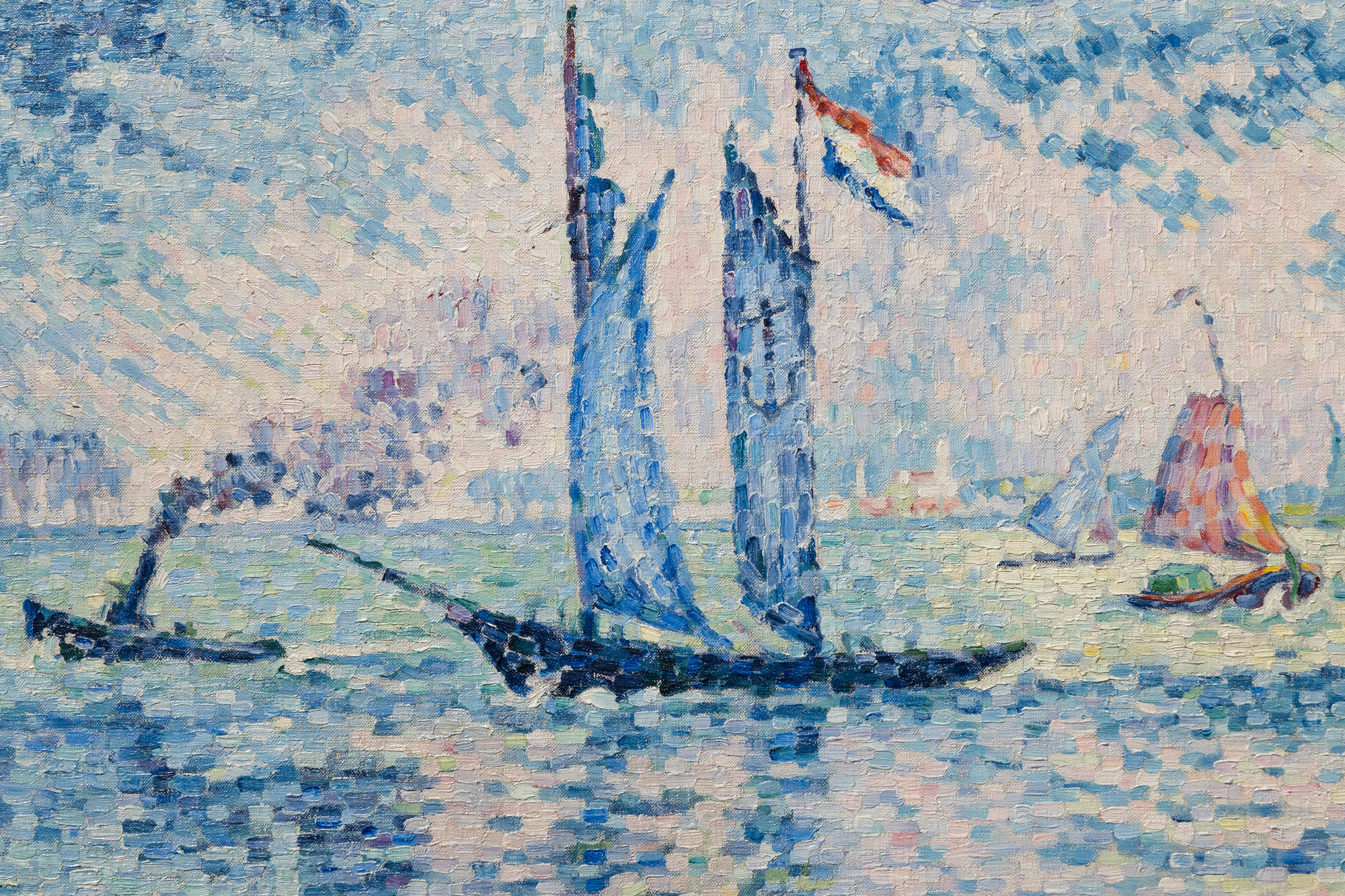
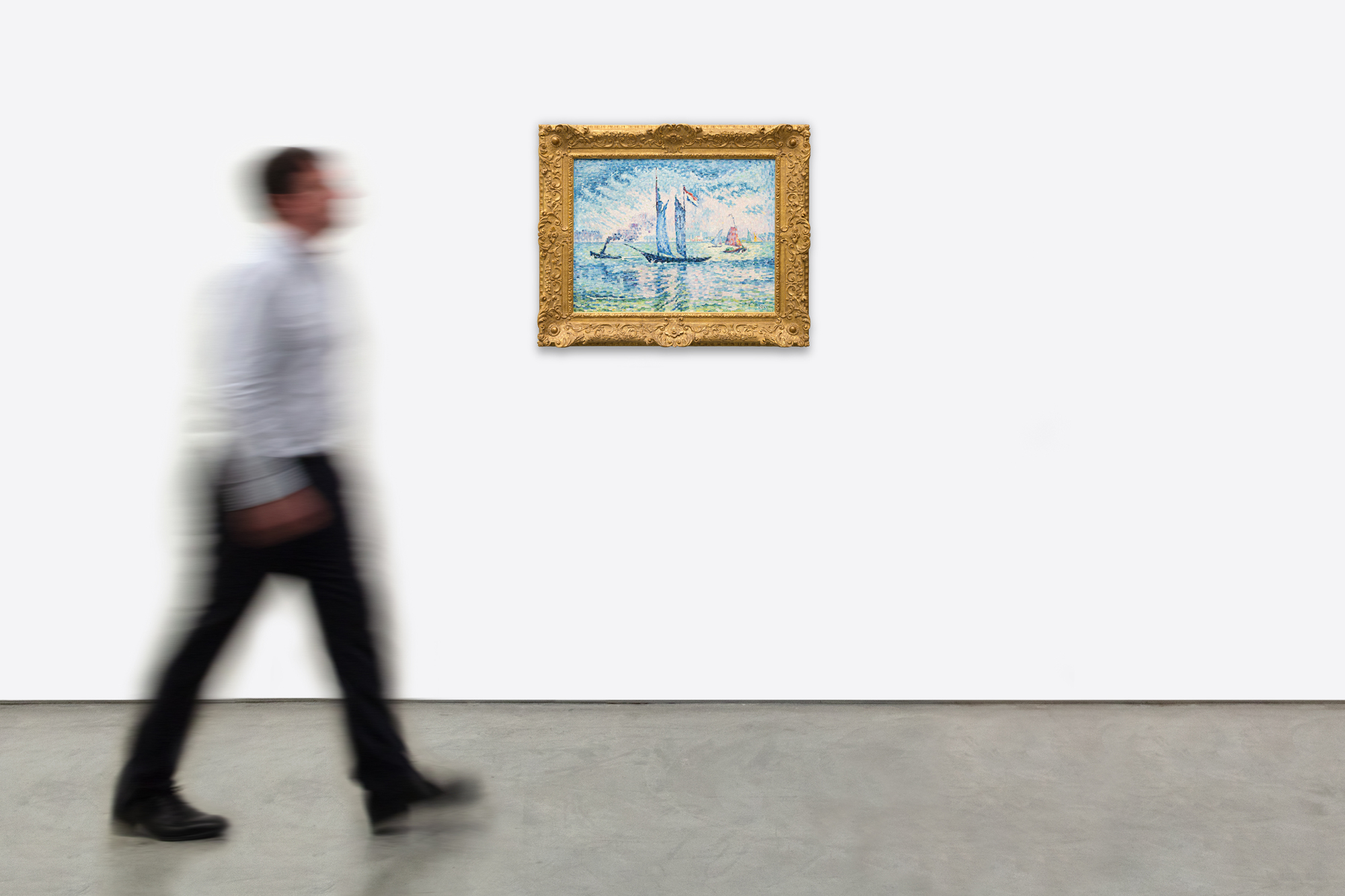
لوحة "Pilote de la Meuse" (1924) للفنان بول سينياك هي تحفة فنية متقنة من أواخر حياته تجمع بين شغفه بنظرية الألوان وحبه الدائم للإبحار. تم بناء التكوين بدقة حول إطار منظم للغاية من الخطوط الرأسية والأفقية - حيث تضفي خط الأفق وسطح النهر والصواري العمودية إحساسًا بالنظام والوضوح. يتم تخفيف هذه الهندسة برفق بواسطة خطوط قطرية دقيقة: الصواري المائلة، والمدخنة المائلة لقاطرة بحرية بعيدة، والأشرعة المملوءة بالرياح تضفي حركة وتوازنًا بصريًا دون الإخلال بالتوازن العام.


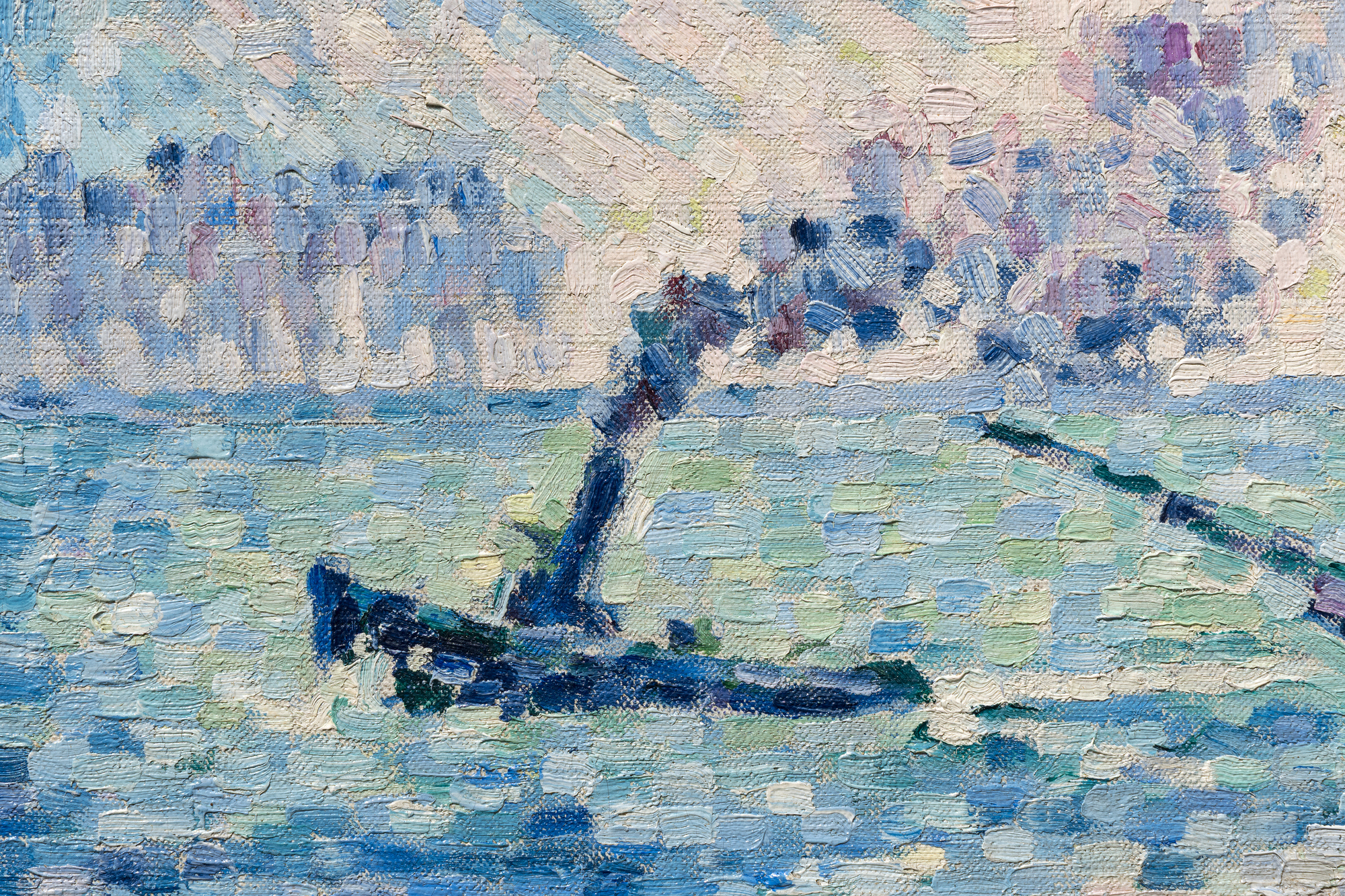
تُجسد اللوحة، التي تم تنفيذها بألوان زرقاء وخضراء في الغالب، تقنية سينيك النيو-انطباعية المتطورة. في حين كان هو وجورج سورا رائدين في استخدام تقنية التقطيع كبديل علمي للانطباعية قائم على نظرية الألوان، فإن أعمال سينيك اللاحقة من عشرينيات وثلاثينيات القرن العشرين تمثل تحولًا حاسمًا. هنا، تفسح النقاط الصغيرة السابقة المجال لـ"ضربات فسيفسائية" مستطيلة أوسع، مما يتيح للون حضوراً مادياً أكبر وحرية تعبيرية أكبر. تصبح المياه في المقدمة لوحة شطرنج نابضة بالحياة من الألوان المتغيرة، تنقل الطقس المضطرب والضوء المتحرك والتيارات التي تحركها الرياح.


يهيمن قارب شراعي واحد بارز على المشهد، مصحوباً ببعض السفن الأصغر حجماً وقاطرة في المسافة، التي ينشط دخانها المتصاعد السماء. يعكس هذا الموضوع البحري المقيد والديناميكي في الوقت نفسه علاقة سينيك الشخصية العميقة بالإبحار، فقد كان يمتلك 32 قاربًا وسافر كثيرًا عن طريق المياه.


توجد مشاهد بحرية مماثلة من هذه الفترة الناضجة في مجموعات مؤسسية كبرى، بما في ذلك معهد مينيابوليس للفنون ومتحف المتروبوليتان للفنون ومتحف أورسيه، مما يؤكد أهمية هذه التركيبة في المرحلة الفنية الأخيرة لسينيك.


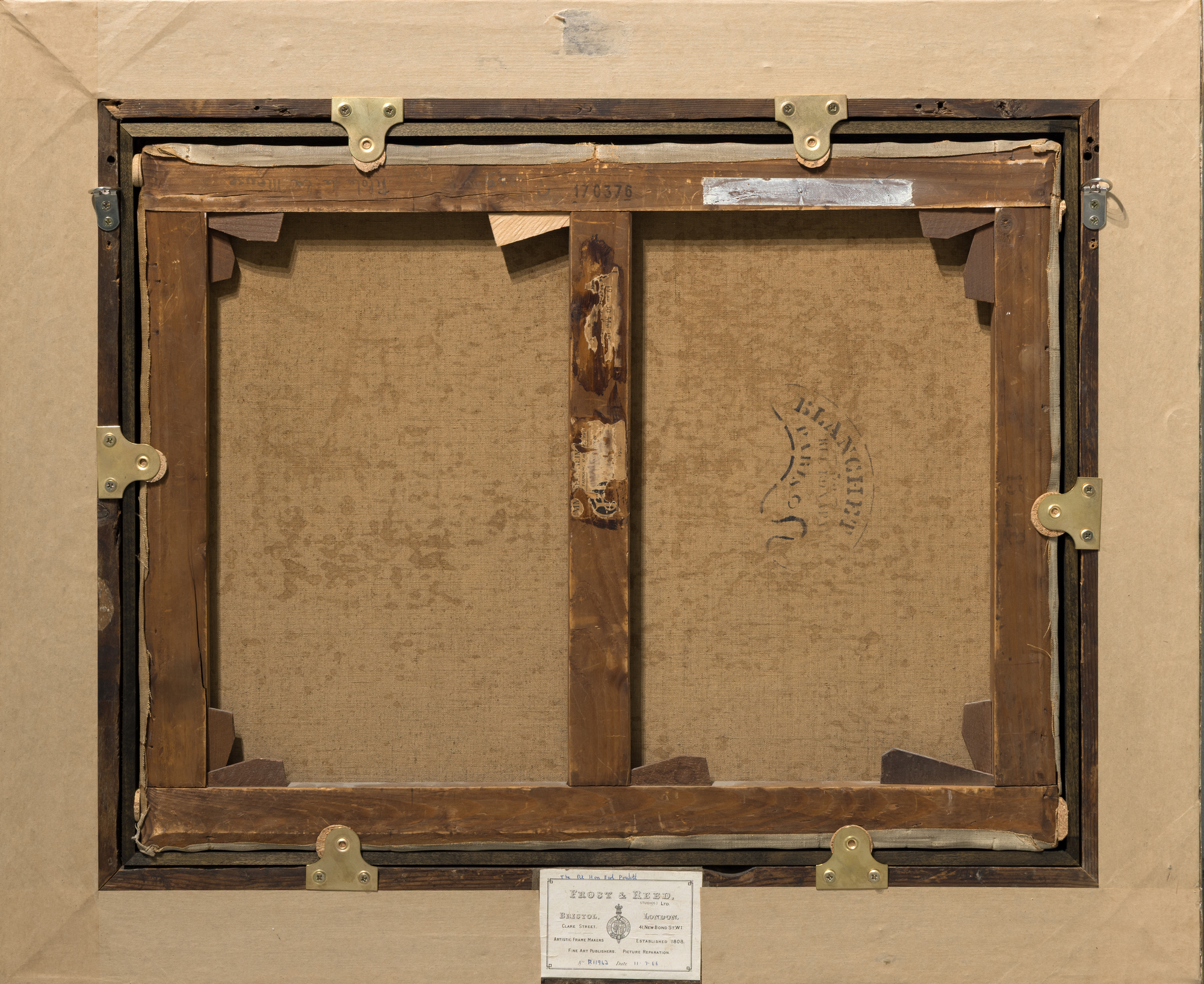
ترافق اللوحة مواد أرشيفية استثنائية: تسعة أوراق مطبوعة بخط اليد من قبل إدموند سوسفيلد؛ ثلاث رسائل موقعة بخط يد بول سينياك؛ رسالتان موقعتان بخط اليد والفاتورة الأصلية من التاجر ليون مارسيليا؛ وشهادة أصالة من السيدة مارينا فيرتي-بوكويون، مما يوفر سياقًا تاريخيًا ومصدرًا رائعين.
الاستفسار