CAMILLE PISSARRO (1830-1903)

 
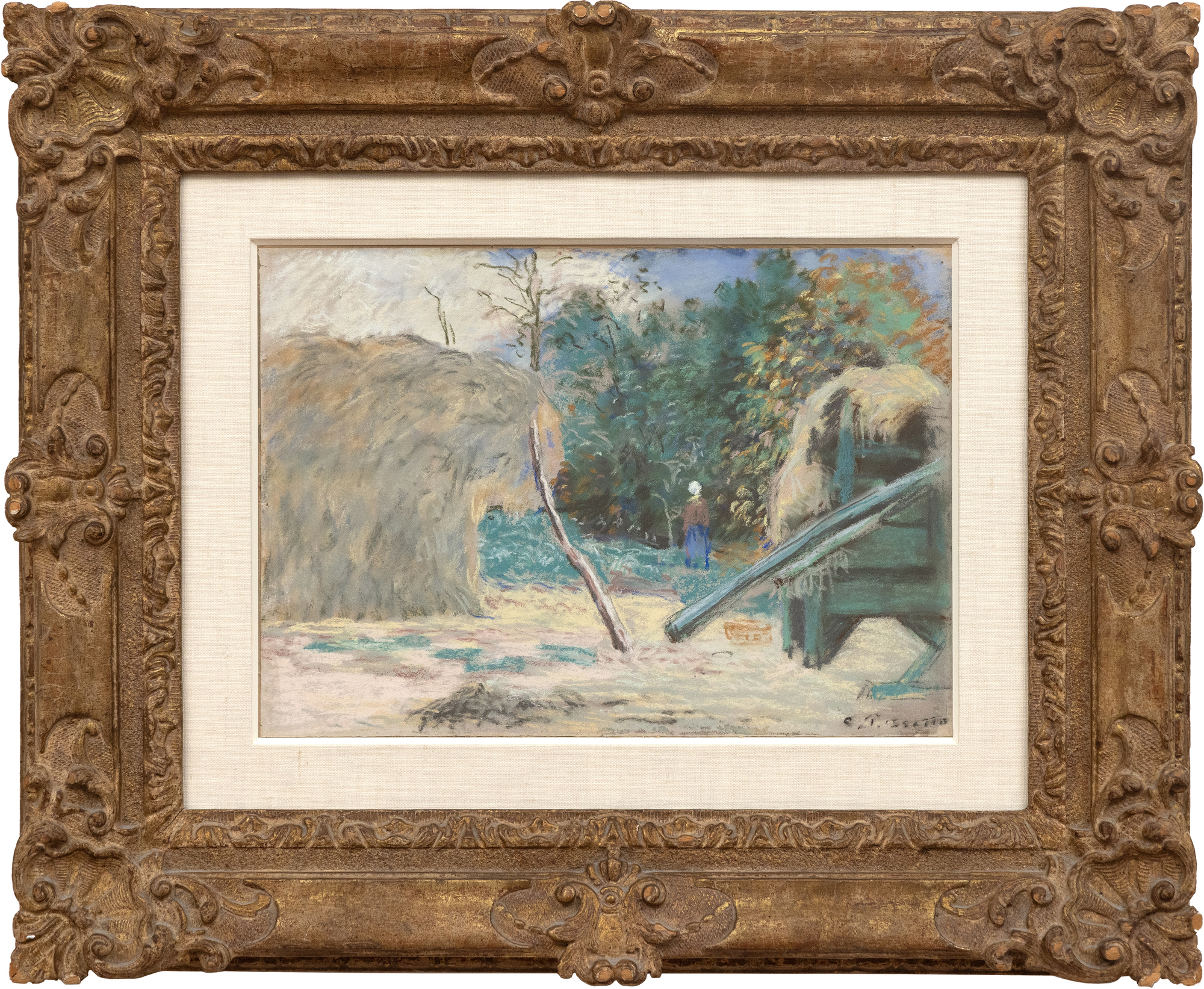
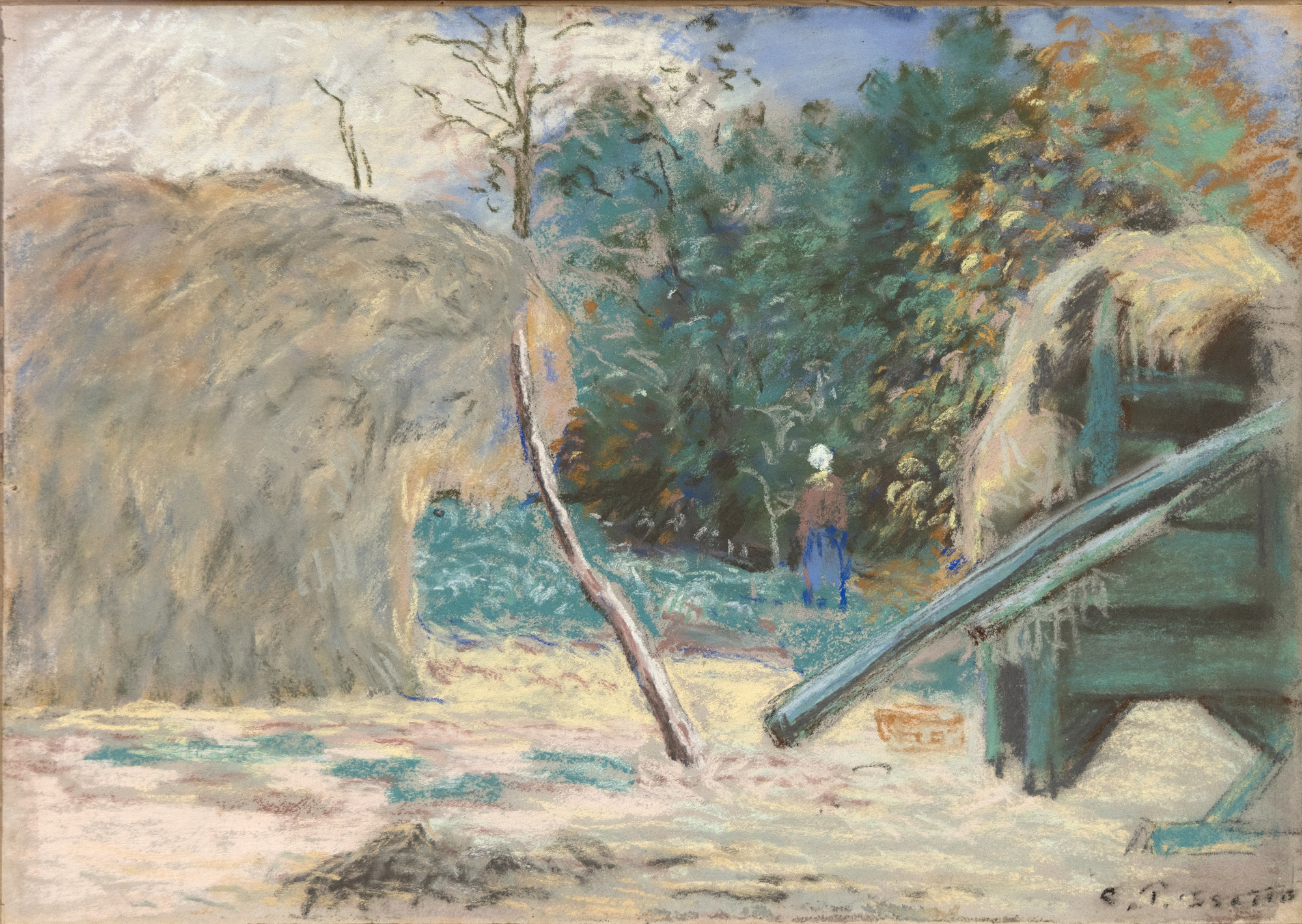
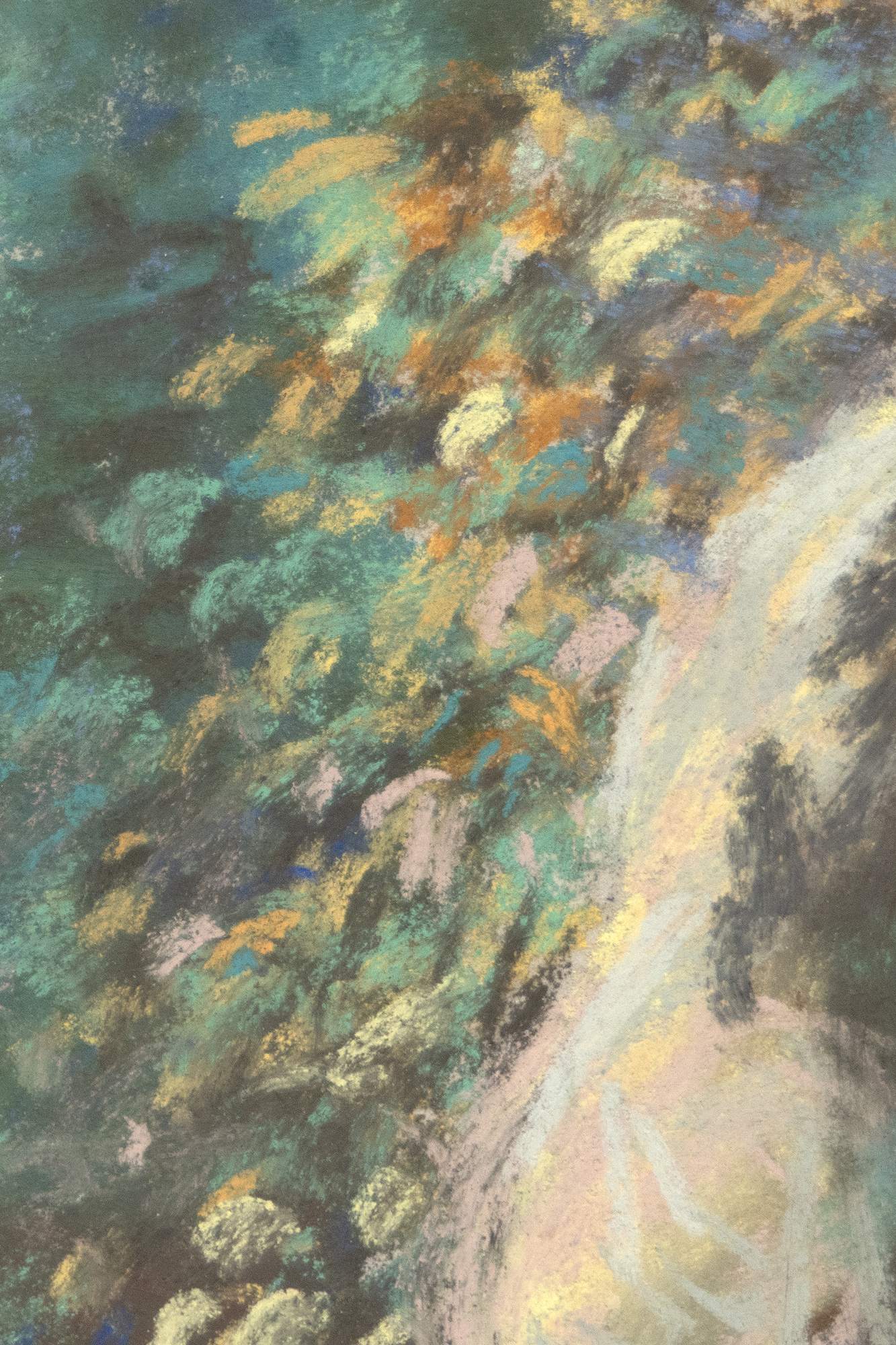
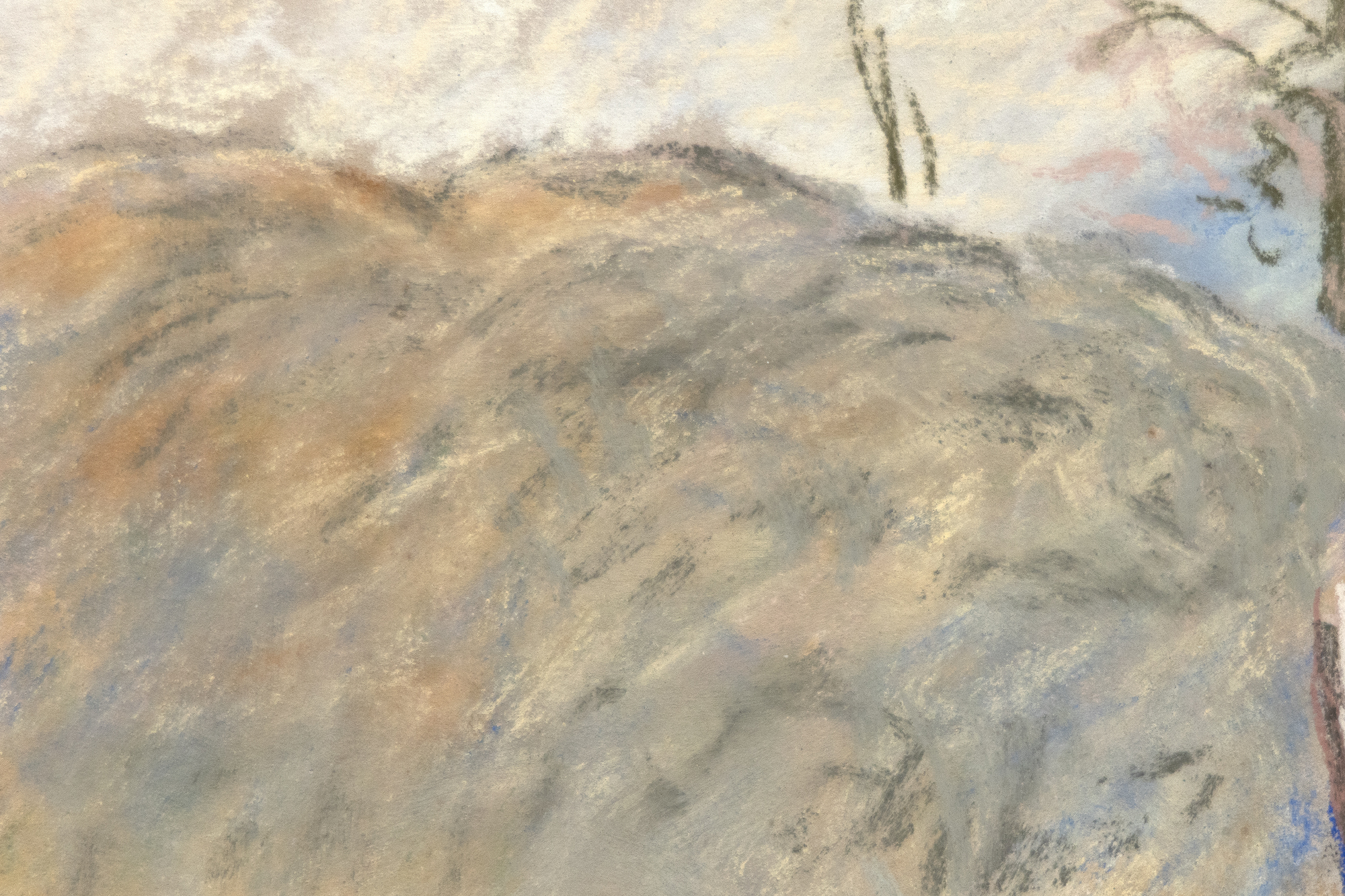
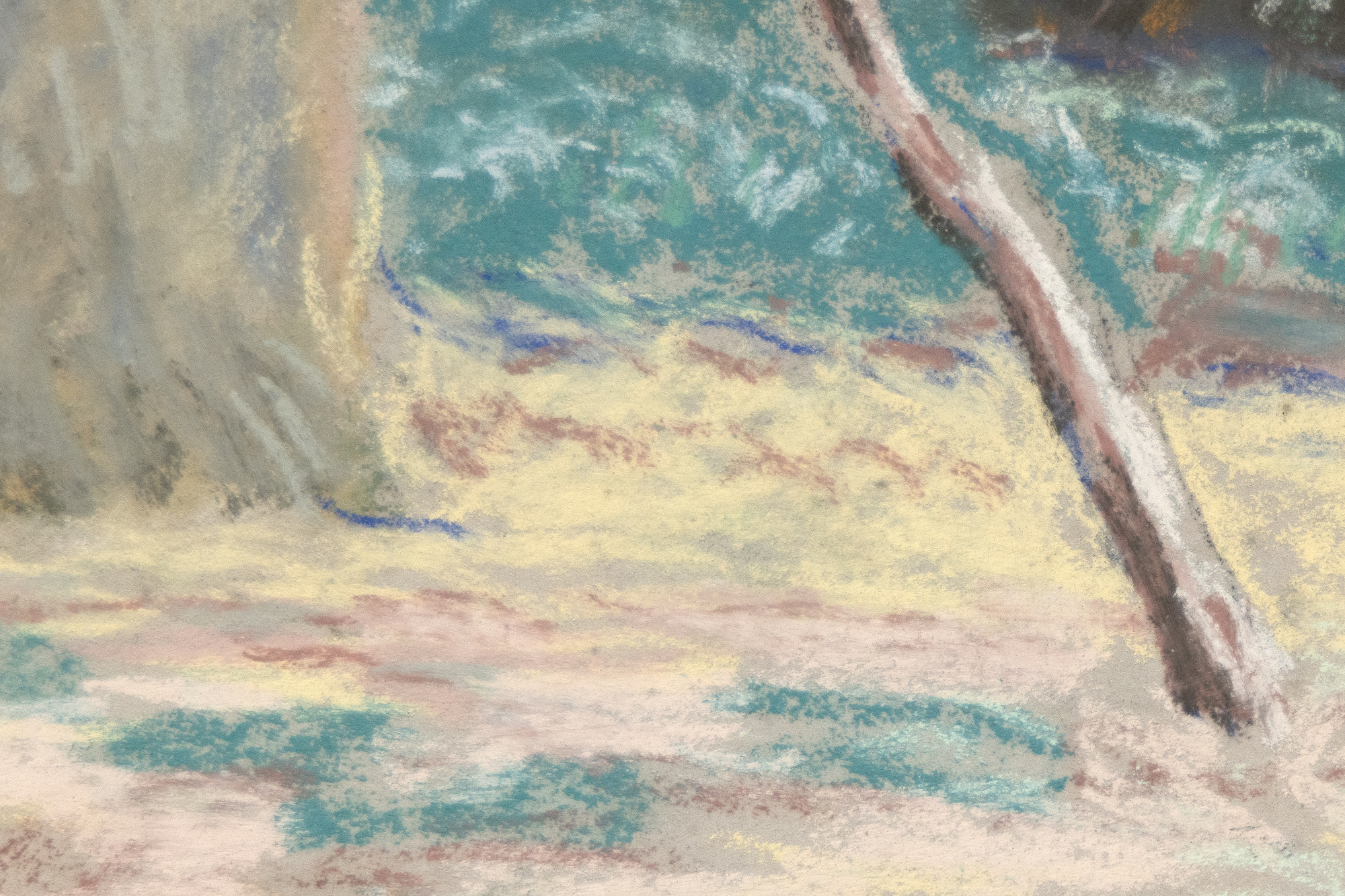
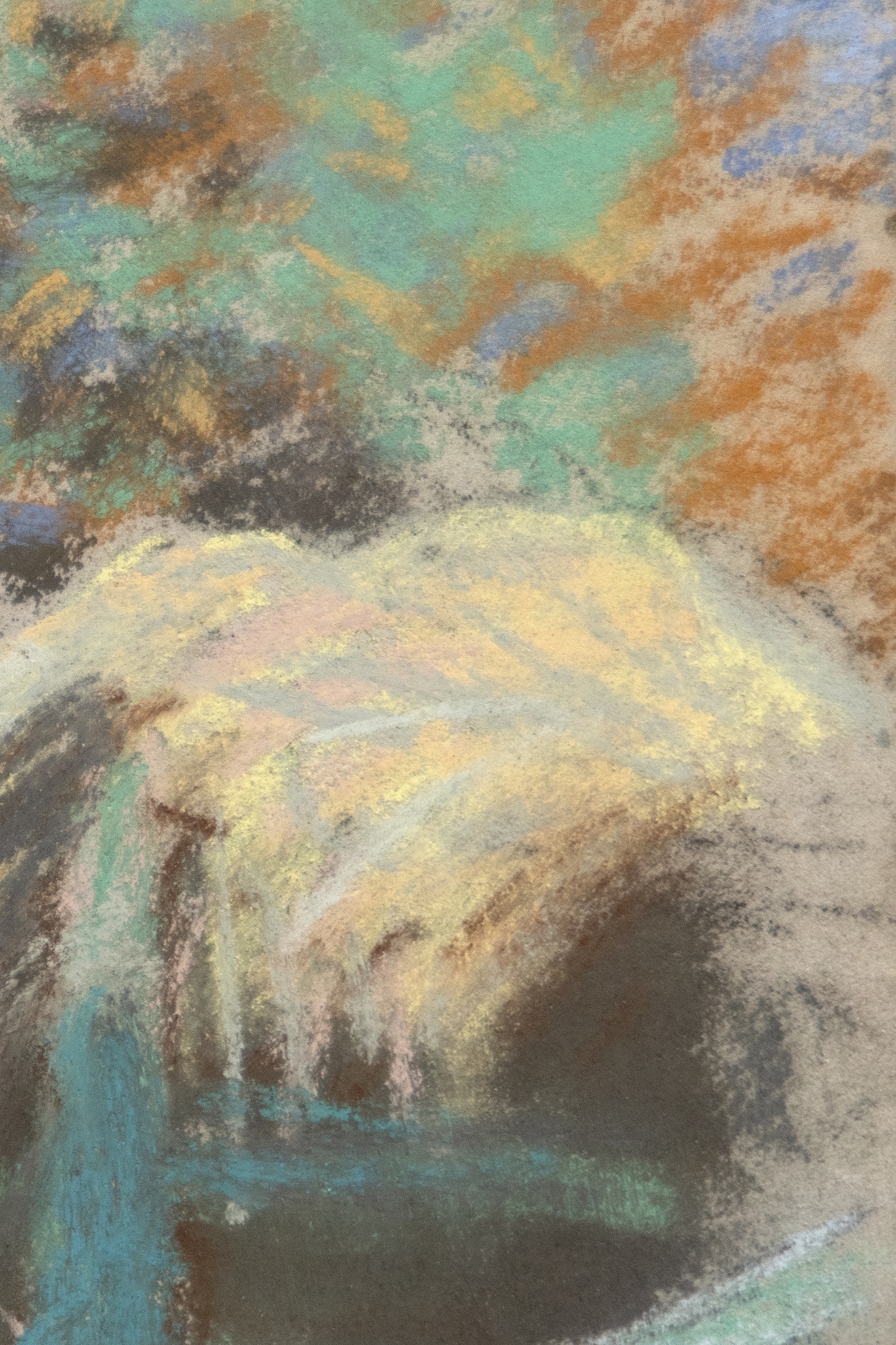
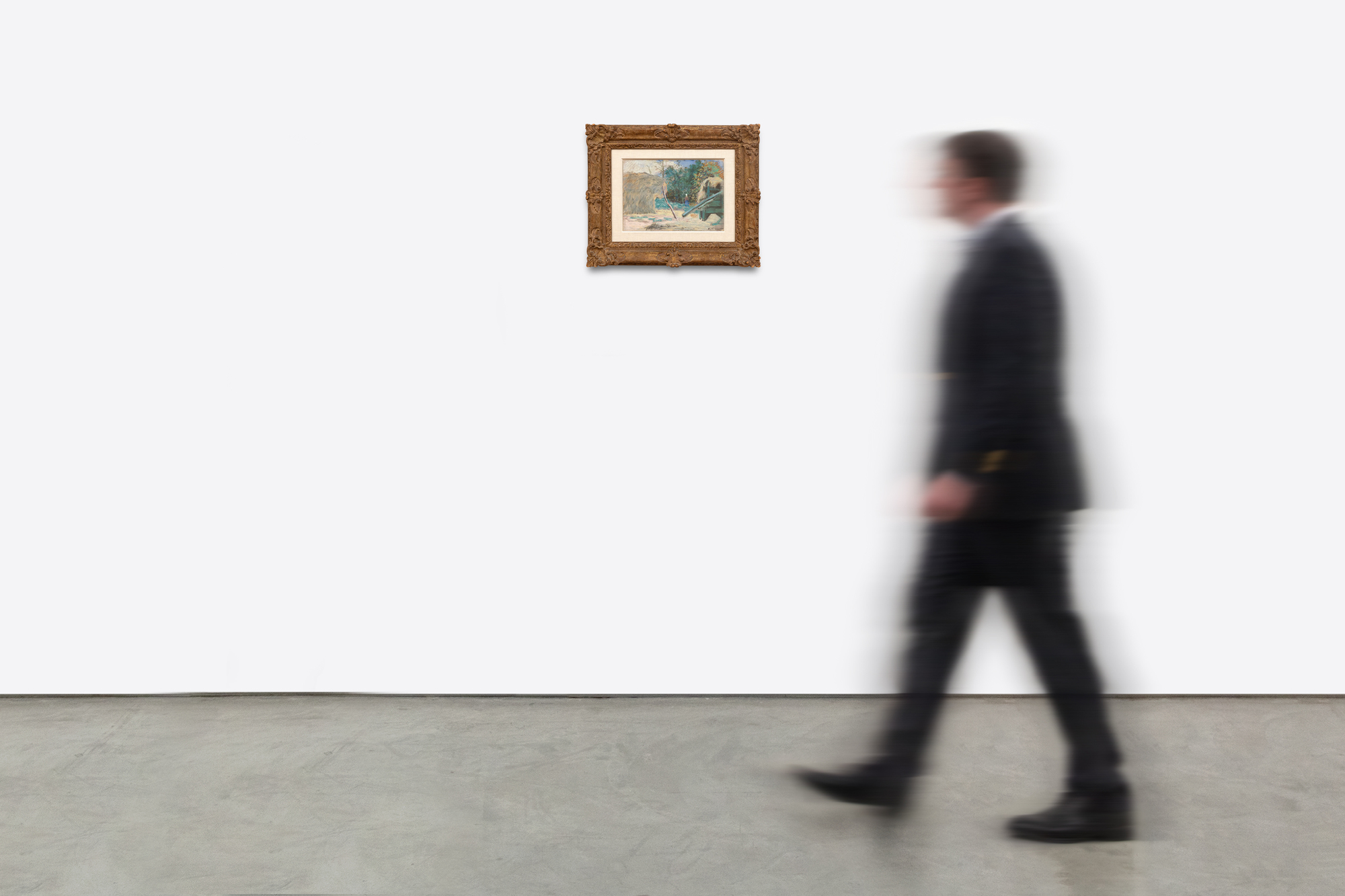
<div>Camille Pissarro’s<em> Paysage avec batteuse à Montfoucault </em>(c. 1875) is an exceptionally vivid pastel that unites the artist’s keen observation of rural life with the Impressionists’ fascination for light, atmosphere, and immediacy. Executed at a moment when Pissarro was deeply engaged with agrarian subjects, the composition centers on a working landscape—haystacks and farm structures set against dense foliage—where a solitary figure anchors the scene in lived experience. The motif is quintessentially Impressionist: an unembellished view of the modern, “seen” world, and a fleeting moment of real life recorded with speed and sensitivity. </div><br><br><div> </div><br><br><div>Pastel, with its directness and chromatic intensity, proved uniquely efficient for Impressionist artists seeking to capture transient light effects and faithful likenesses without the slower procedures of oil. Here, Pissarro exploits the medium’s strengths brilliantly. Soft, powdery passages dissolve edges into atmosphere, while firmer, painterly strokes build structure and texture across the hay, timber, and ground. The surface retains a remarkable freshness, with color that remains luminous and varied—cool blues and greens offset by warm straw, ochres, and sunlit highlights—allowing the viewer to experience the work’s original spontaneity. </div><br><br><div> </div><br><br><div>This work’s significance is underscored by its recent exhibition history: it was shown in 2020 at the J. Paul Getty Museum in<em> Powder and Light: Pastels in Late Nineteenth Century</em>, a focused exploration of how artists of the period embraced pastel as both experimental and modern. Beautifully preserved,<em> Paysage avec batteuse à Montfoucault </em>offers a direct encounter with Pissarro’s touch—each stroke visible, each tonal shift purposeful—capturing the countryside not as an ideal, but as a place of work, weather, and changing light. </div> <div>Camille Pissarro’s<em> Paysage avec batteuse à Montfoucault </em>(c. 1875) is an exceptionally vivid pastel that unites the artist’s keen observation of rural life with the Impressionists’ fascination for light, atmosphere, and immediacy. Executed at a moment when Pissarro was deeply engaged with agrarian subjects, the composition centers on a working landscape—haystacks and farm structures set against dense foliage—where a solitary figure anchors the scene in lived experience. The motif is quintessentially Impressionist: an unembellished view of the modern, “seen” world, and a fleeting moment of real life recorded with speed and sensitivity. </div><br><br><div> </div><br><br><div>Pastel, with its directness and chromatic intensity, proved uniquely efficient for Impressionist artists seeking to capture transient light effects and faithful likenesses without the slower procedures of oil. Here, Pissarro exploits the medium’s strengths brilliantly. Soft, powdery passages dissolve edges into atmosphere, while firmer, painterly strokes build structure and texture across the hay, timber, and ground. The surface retains a remarkable freshness, with color that remains luminous and varied—cool blues and greens offset by warm straw, ochres, and sunlit highlights—allowing the viewer to experience the work’s original spontaneity. </div><br><br><div> </div><br><br><div>This work’s significance is underscored by its recent exhibition history: it was shown in 2020 at the J. Paul Getty Museum in<em> Powder and Light: Pastels in Late Nineteenth Century</em>, a focused exploration of how artists of the period embraced pastel as both experimental and modern. Beautifully preserved,<em> Paysage avec batteuse à Montfoucault </em>offers a direct encounter with Pissarro’s touch—each stroke visible, each tonal shift purposeful—capturing the countryside not as an ideal, but as a place of work, weather, and changing light. </div> <div>Camille Pissarro’s<em> Paysage avec batteuse à Montfoucault </em>(c. 1875) is an exceptionally vivid pastel that unites the artist’s keen observation of rural life with the Impressionists’ fascination for light, atmosphere, and immediacy. Executed at a moment when Pissarro was deeply engaged with agrarian subjects, the composition centers on a working landscape—haystacks and farm structures set against dense foliage—where a solitary figure anchors the scene in lived experience. The motif is quintessentially Impressionist: an unembellished view of the modern, “seen” world, and a fleeting moment of real life recorded with speed and sensitivity. </div><br><br><div> </div><br><br><div>Pastel, with its directness and chromatic intensity, proved uniquely efficient for Impressionist artists seeking to capture transient light effects and faithful likenesses without the slower procedures of oil. Here, Pissarro exploits the medium’s strengths brilliantly. Soft, powdery passages dissolve edges into atmosphere, while firmer, painterly strokes build structure and texture across the hay, timber, and ground. The surface retains a remarkable freshness, with color that remains luminous and varied—cool blues and greens offset by warm straw, ochres, and sunlit highlights—allowing the viewer to experience the work’s original spontaneity. </div><br><br><div> </div><br><br><div>This work’s significance is underscored by its recent exhibition history: it was shown in 2020 at the J. Paul Getty Museum in<em> Powder and Light: Pastels in Late Nineteenth Century</em>, a focused exploration of how artists of the period embraced pastel as both experimental and modern. Beautifully preserved,<em> Paysage avec batteuse à Montfoucault </em>offers a direct encounter with Pissarro’s touch—each stroke visible, each tonal shift purposeful—capturing the countryside not as an ideal, but as a place of work, weather, and changing light. </div> <div>Camille Pissarro’s<em> Paysage avec batteuse à Montfoucault </em>(c. 1875) is an exceptionally vivid pastel that unites the artist’s keen observation of rural life with the Impressionists’ fascination for light, atmosphere, and immediacy. Executed at a moment when Pissarro was deeply engaged with agrarian subjects, the composition centers on a working landscape—haystacks and farm structures set against dense foliage—where a solitary figure anchors the scene in lived experience. The motif is quintessentially Impressionist: an unembellished view of the modern, “seen” world, and a fleeting moment of real life recorded with speed and sensitivity. </div><br><br><div> </div><br><br><div>Pastel, with its directness and chromatic intensity, proved uniquely efficient for Impressionist artists seeking to capture transient light effects and faithful likenesses without the slower procedures of oil. Here, Pissarro exploits the medium’s strengths brilliantly. Soft, powdery passages dissolve edges into atmosphere, while firmer, painterly strokes build structure and texture across the hay, timber, and ground. The surface retains a remarkable freshness, with color that remains luminous and varied—cool blues and greens offset by warm straw, ochres, and sunlit highlights—allowing the viewer to experience the work’s original spontaneity. </div><br><br><div> </div><br><br><div>This work’s significance is underscored by its recent exhibition history: it was shown in 2020 at the J. Paul Getty Museum in<em> Powder and Light: Pastels in Late Nineteenth Century</em>, a focused exploration of how artists of the period embraced pastel as both experimental and modern. Beautifully preserved,<em> Paysage avec batteuse à Montfoucault </em>offers a direct encounter with Pissarro’s touch—each stroke visible, each tonal shift purposeful—capturing the countryside not as an ideal, but as a place of work, weather, and changing light. </div> <div>Camille Pissarro’s<em> Paysage avec batteuse à Montfoucault </em>(c. 1875) is an exceptionally vivid pastel that unites the artist’s keen observation of rural life with the Impressionists’ fascination for light, atmosphere, and immediacy. Executed at a moment when Pissarro was deeply engaged with agrarian subjects, the composition centers on a working landscape—haystacks and farm structures set against dense foliage—where a solitary figure anchors the scene in lived experience. The motif is quintessentially Impressionist: an unembellished view of the modern, “seen” world, and a fleeting moment of real life recorded with speed and sensitivity. </div><br><br><div> </div><br><br><div>Pastel, with its directness and chromatic intensity, proved uniquely efficient for Impressionist artists seeking to capture transient light effects and faithful likenesses without the slower procedures of oil. Here, Pissarro exploits the medium’s strengths brilliantly. Soft, powdery passages dissolve edges into atmosphere, while firmer, painterly strokes build structure and texture across the hay, timber, and ground. The surface retains a remarkable freshness, with color that remains luminous and varied—cool blues and greens offset by warm straw, ochres, and sunlit highlights—allowing the viewer to experience the work’s original spontaneity. </div><br><br><div> </div><br><br><div>This work’s significance is underscored by its recent exhibition history: it was shown in 2020 at the J. Paul Getty Museum in<em> Powder and Light: Pastels in Late Nineteenth Century</em>, a focused exploration of how artists of the period embraced pastel as both experimental and modern. Beautifully preserved,<em> Paysage avec batteuse à Montfoucault </em>offers a direct encounter with Pissarro’s touch—each stroke visible, each tonal shift purposeful—capturing the countryside not as an ideal, but as a place of work, weather, and changing light. </div> <div>Camille Pissarro’s<em> Paysage avec batteuse à Montfoucault </em>(c. 1875) is an exceptionally vivid pastel that unites the artist’s keen observation of rural life with the Impressionists’ fascination for light, atmosphere, and immediacy. Executed at a moment when Pissarro was deeply engaged with agrarian subjects, the composition centers on a working landscape—haystacks and farm structures set against dense foliage—where a solitary figure anchors the scene in lived experience. The motif is quintessentially Impressionist: an unembellished view of the modern, “seen” world, and a fleeting moment of real life recorded with speed and sensitivity. </div><br><br><div> </div><br><br><div>Pastel, with its directness and chromatic intensity, proved uniquely efficient for Impressionist artists seeking to capture transient light effects and faithful likenesses without the slower procedures of oil. Here, Pissarro exploits the medium’s strengths brilliantly. Soft, powdery passages dissolve edges into atmosphere, while firmer, painterly strokes build structure and texture across the hay, timber, and ground. The surface retains a remarkable freshness, with color that remains luminous and varied—cool blues and greens offset by warm straw, ochres, and sunlit highlights—allowing the viewer to experience the work’s original spontaneity. </div><br><br><div> </div><br><br><div>This work’s significance is underscored by its recent exhibition history: it was shown in 2020 at the J. Paul Getty Museum in<em> Powder and Light: Pastels in Late Nineteenth Century</em>, a focused exploration of how artists of the period embraced pastel as both experimental and modern. Beautifully preserved,<em> Paysage avec batteuse à Montfoucault </em>offers a direct encounter with Pissarro’s touch—each stroke visible, each tonal shift purposeful—capturing the countryside not as an ideal, but as a place of work, weather, and changing light. </div> <div>Camille Pissarro’s<em> Paysage avec batteuse à Montfoucault </em>(c. 1875) is an exceptionally vivid pastel that unites the artist’s keen observation of rural life with the Impressionists’ fascination for light, atmosphere, and immediacy. Executed at a moment when Pissarro was deeply engaged with agrarian subjects, the composition centers on a working landscape—haystacks and farm structures set against dense foliage—where a solitary figure anchors the scene in lived experience. The motif is quintessentially Impressionist: an unembellished view of the modern, “seen” world, and a fleeting moment of real life recorded with speed and sensitivity. </div><br><br><div> </div><br><br><div>Pastel, with its directness and chromatic intensity, proved uniquely efficient for Impressionist artists seeking to capture transient light effects and faithful likenesses without the slower procedures of oil. Here, Pissarro exploits the medium’s strengths brilliantly. Soft, powdery passages dissolve edges into atmosphere, while firmer, painterly strokes build structure and texture across the hay, timber, and ground. The surface retains a remarkable freshness, with color that remains luminous and varied—cool blues and greens offset by warm straw, ochres, and sunlit highlights—allowing the viewer to experience the work’s original spontaneity. </div><br><br><div> </div><br><br><div>This work’s significance is underscored by its recent exhibition history: it was shown in 2020 at the J. Paul Getty Museum in<em> Powder and Light: Pastels in Late Nineteenth Century</em>, a focused exploration of how artists of the period embraced pastel as both experimental and modern. Beautifully preserved,<em> Paysage avec batteuse à Montfoucault </em>offers a direct encounter with Pissarro’s touch—each stroke visible, each tonal shift purposeful—capturing the countryside not as an ideal, but as a place of work, weather, and changing light. </div> <div>Camille Pissarro’s<em> Paysage avec batteuse à Montfoucault </em>(c. 1875) is an exceptionally vivid pastel that unites the artist’s keen observation of rural life with the Impressionists’ fascination for light, atmosphere, and immediacy. Executed at a moment when Pissarro was deeply engaged with agrarian subjects, the composition centers on a working landscape—haystacks and farm structures set against dense foliage—where a solitary figure anchors the scene in lived experience. The motif is quintessentially Impressionist: an unembellished view of the modern, “seen” world, and a fleeting moment of real life recorded with speed and sensitivity. </div><br><br><div> </div><br><br><div>Pastel, with its directness and chromatic intensity, proved uniquely efficient for Impressionist artists seeking to capture transient light effects and faithful likenesses without the slower procedures of oil. Here, Pissarro exploits the medium’s strengths brilliantly. Soft, powdery passages dissolve edges into atmosphere, while firmer, painterly strokes build structure and texture across the hay, timber, and ground. The surface retains a remarkable freshness, with color that remains luminous and varied—cool blues and greens offset by warm straw, ochres, and sunlit highlights—allowing the viewer to experience the work’s original spontaneity. </div><br><br><div> </div><br><br><div>This work’s significance is underscored by its recent exhibition history: it was shown in 2020 at the J. Paul Getty Museum in<em> Powder and Light: Pastels in Late Nineteenth Century</em>, a focused exploration of how artists of the period embraced pastel as both experimental and modern. Beautifully preserved,<em> Paysage avec batteuse à Montfoucault </em>offers a direct encounter with Pissarro’s touch—each stroke visible, each tonal shift purposeful—capturing the countryside not as an ideal, but as a place of work, weather, and changing light. </div> <div>Camille Pissarro’s<em> Paysage avec batteuse à Montfoucault </em>(c. 1875) is an exceptionally vivid pastel that unites the artist’s keen observation of rural life with the Impressionists’ fascination for light, atmosphere, and immediacy. Executed at a moment when Pissarro was deeply engaged with agrarian subjects, the composition centers on a working landscape—haystacks and farm structures set against dense foliage—where a solitary figure anchors the scene in lived experience. The motif is quintessentially Impressionist: an unembellished view of the modern, “seen” world, and a fleeting moment of real life recorded with speed and sensitivity. </div><br><br><div> </div><br><br><div>Pastel, with its directness and chromatic intensity, proved uniquely efficient for Impressionist artists seeking to capture transient light effects and faithful likenesses without the slower procedures of oil. Here, Pissarro exploits the medium’s strengths brilliantly. Soft, powdery passages dissolve edges into atmosphere, while firmer, painterly strokes build structure and texture across the hay, timber, and ground. The surface retains a remarkable freshness, with color that remains luminous and varied—cool blues and greens offset by warm straw, ochres, and sunlit highlights—allowing the viewer to experience the work’s original spontaneity. </div><br><br><div> </div><br><br><div>This work’s significance is underscored by its recent exhibition history: it was shown in 2020 at the J. Paul Getty Museum in<em> Powder and Light: Pastels in Late Nineteenth Century</em>, a focused exploration of how artists of the period embraced pastel as both experimental and modern. Beautifully preserved,<em> Paysage avec batteuse à Montfoucault </em>offers a direct encounter with Pissarro’s touch—each stroke visible, each tonal shift purposeful—capturing the countryside not as an ideal, but as a place of work, weather, and changing light. </div> <div>Camille Pissarro’s<em> Paysage avec batteuse à Montfoucault </em>(c. 1875) is an exceptionally vivid pastel that unites the artist’s keen observation of rural life with the Impressionists’ fascination for light, atmosphere, and immediacy. Executed at a moment when Pissarro was deeply engaged with agrarian subjects, the composition centers on a working landscape—haystacks and farm structures set against dense foliage—where a solitary figure anchors the scene in lived experience. The motif is quintessentially Impressionist: an unembellished view of the modern, “seen” world, and a fleeting moment of real life recorded with speed and sensitivity. </div><br><br><div> </div><br><br><div>Pastel, with its directness and chromatic intensity, proved uniquely efficient for Impressionist artists seeking to capture transient light effects and faithful likenesses without the slower procedures of oil. Here, Pissarro exploits the medium’s strengths brilliantly. Soft, powdery passages dissolve edges into atmosphere, while firmer, painterly strokes build structure and texture across the hay, timber, and ground. The surface retains a remarkable freshness, with color that remains luminous and varied—cool blues and greens offset by warm straw, ochres, and sunlit highlights—allowing the viewer to experience the work’s original spontaneity. </div><br><br><div> </div><br><br><div>This work’s significance is underscored by its recent exhibition history: it was shown in 2020 at the J. Paul Getty Museum in<em> Powder and Light: Pastels in Late Nineteenth Century</em>, a focused exploration of how artists of the period embraced pastel as both experimental and modern. Beautifully preserved,<em> Paysage avec batteuse à Montfoucault </em>offers a direct encounter with Pissarro’s touch—each stroke visible, each tonal shift purposeful—capturing the countryside not as an ideal, but as a place of work, weather, and changing light. </div>
Bauernhof mit einer Kuhle in Montfoucaultc. 187510 3/8 x 14 3/4 Zoll.(26,35 x 37,47 cm) Pastell auf Papier, auf Karton aufgelegt
Provenienz
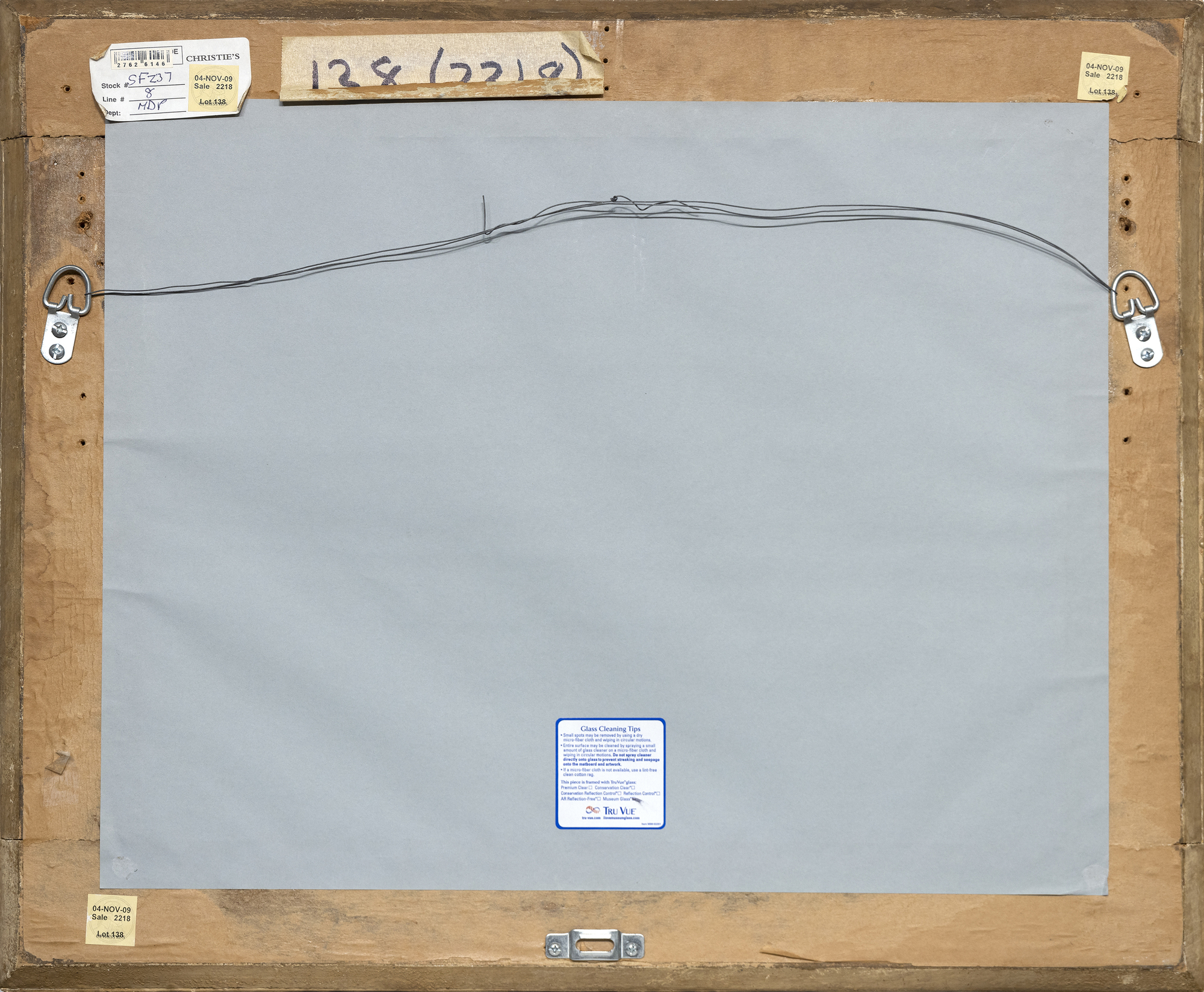
Anon. Verkauf, Hotel Drouot, Paris, 24. Februar 1936, Los 38
Perls Galerien, New York
Erworben vom Vorbesitzer, um 1960
Christie's Live-Auktion 2218, 4. November 2009, Los 138
Privatsammlung, erworben aus dem oben genannten Verkauf
Ausstellung
New York, Perls Galleries, Datum unbekannt, Nr. 84a
J. Paul Getty Museum, Degas: "Russische Tänzerinnen" und die Kunst des Pastells", 3. Mai - 23. Oktober 2016
J. Paul Getty Museum, "Bauern in Pastellen: Jean-Francois Millet und das Pastellrevival, 29. Oktober 2019 - 10. Mai 2020
J. Paul
...Mehr.....Getty Museum, "Puder und Licht: Pastelle im späten neunzehnten Jahrhundert", 28. Juli 2020 bis 31. August 2022
Literaturhinweise
L.R. Pissarro und L. Venturi, Camille Pissarro, Son art-son oeuvre, Paris, 1939, Bd. I, S. 291, Nr. 1529 (illustriert, Bd. II Taf. 294)
...WENIGER.....
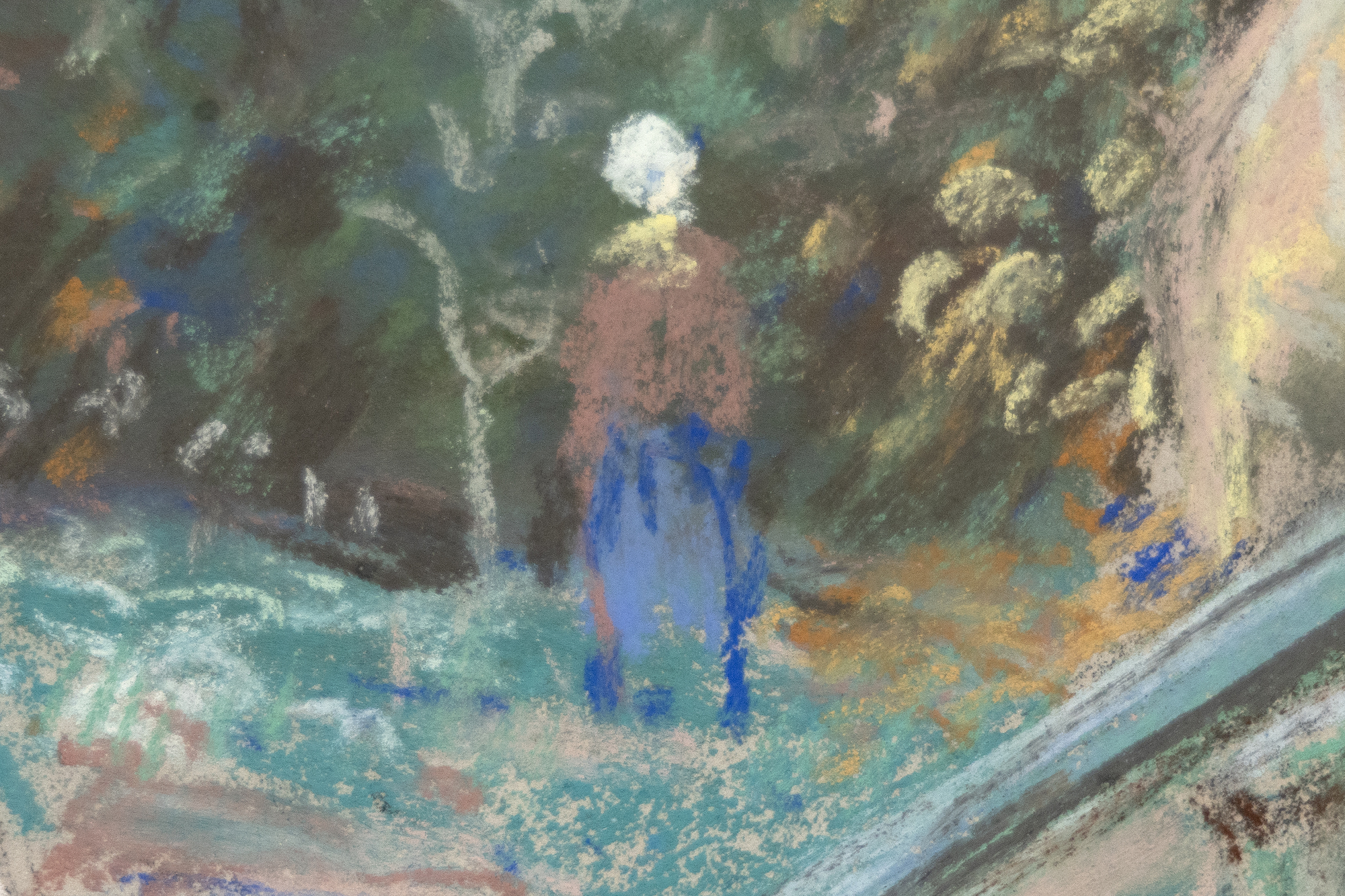
Camille Pissarros „Paysage avec batteuse à Montfoucault“ (ca. 1875) ist ein außergewöhnlich lebendiges Pastellgemälde, das die scharfe Beobachtungsgabe des Künstlers für das ländliche Leben mit der Faszination der Impressionisten für Licht, Atmosphäre und Unmittelbarkeit verbindet. Das Werk entstand zu einer Zeit, als Pissarro sich intensiv mit agrarischen Themen beschäftigte. Im Mittelpunkt der Komposition steht eine Arbeitslandschaft – Heuhaufen und landwirtschaftliche Gebäude vor dichtem Laubwerk –, in der eine einsame Figur die Szene in der gelebten Erfahrung verankert. Das Motiv ist typisch impressionistisch: ein unverfälschter Blick auf die moderne, „gesehene“ Welt und ein flüchtiger Moment des realen Lebens, der mit Schnelligkeit und Sensibilität festgehalten wurde.


Pastellfarben erwiesen sich mit ihrer Direktheit und chromatischen Intensität als einzigartig effizient für impressionistische Künstler, die flüchtige Lichteffekte und naturgetreue Darstellungen ohne die langsameren Verfahren der Ölmalerei einfangen wollten. Hier nutzt Pissarro die Stärken des Mediums auf brillante Weise. Weiche, pudrige Passagen lassen die Konturen in der Atmosphäre verschwimmen, während festere, malerische Striche Struktur und Textur über Heu, Holz und Boden aufbauen. Die Oberfläche behält eine bemerkenswerte Frische, mit Farben, die leuchtend und abwechslungsreich bleiben – kühle Blau- und Grüntöne, die durch warmes Stroh, Ocker und sonnenbeschienene Highlights ausgeglichen werden – und ermöglicht es dem Betrachter, die ursprüngliche Spontaneität des Werks zu erleben.


Die Bedeutung dieses Werks wird durch seine jüngste Ausstellungsgeschichte unterstrichen: Es wurde 2020 im J. Paul Getty Museum in „Powder and Light: Pastels in Late Nineteenth Century“ gezeigt, einer gezielten Untersuchung darüber, wie Künstler dieser Zeit Pastellfarben sowohl als experimentelles als auch als modernes Medium nutzten. Das wunderschön erhaltene Werk „Paysage avec batteuse à Montfoucault“ bietet eine direkte Begegnung mit Pissarros Pinselstrichen – jeder Strich ist sichtbar, jede Farbnuance bewusst gewählt –, die die Landschaft nicht als Ideal, sondern als Ort der Arbeit, des Wetters und des wechselnden Lichts einfangen.
Fragen Sie