ROBERT INDIANA (1928-2018)

 
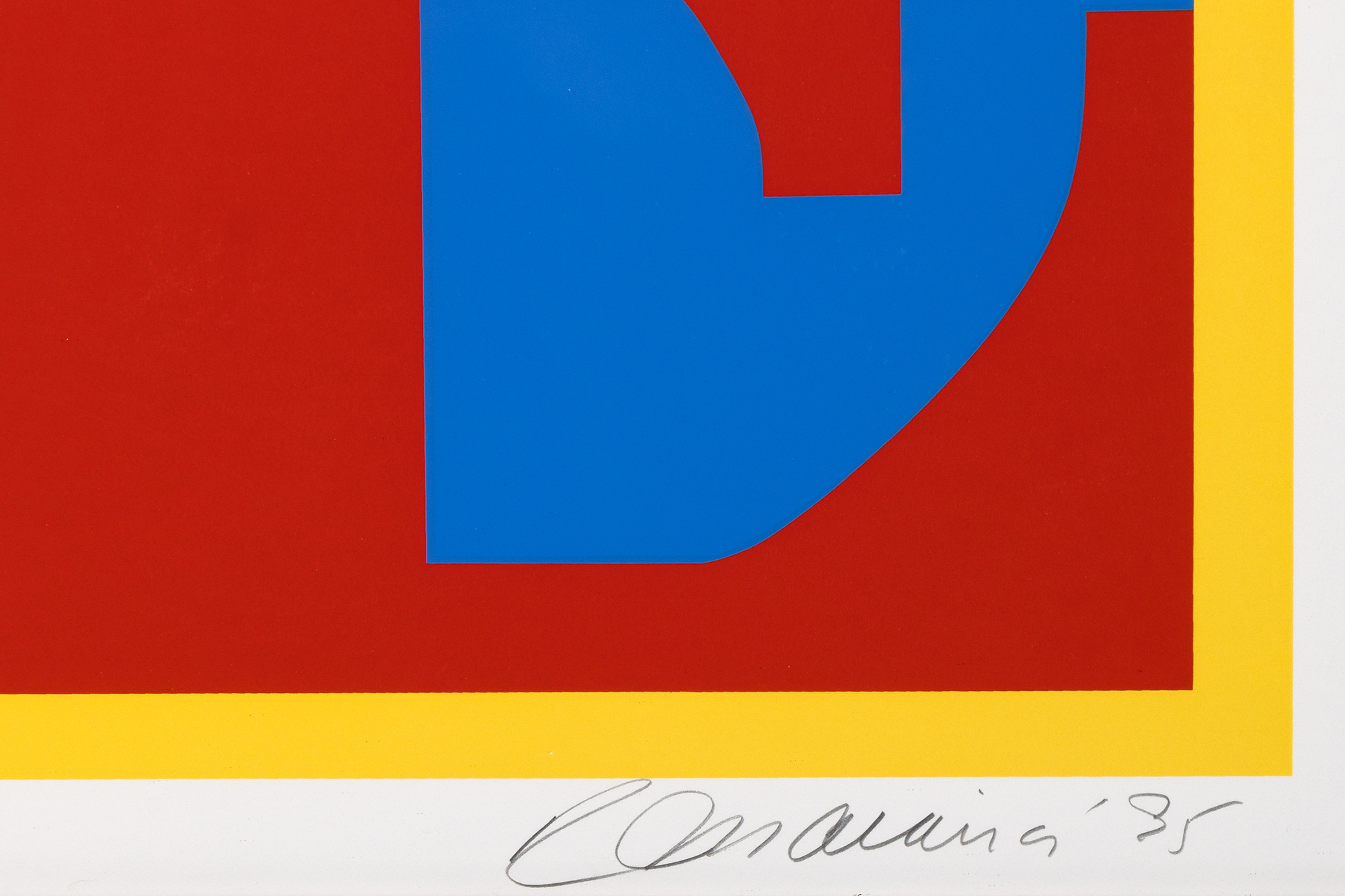
<div><font face=Lato size=3 color="#191919">Robert Indiana’s <em>Heliotherapy</em> reimagines his iconic <em>LOVE</em> motif through a vision of renewal and optimism. Created in 1995, the title refers to sunlight as a source of healing, reflecting Indiana’s desire late in life to revisit his 1960s antiwar symbol with a message of hope and compassion. He enriched the original reds, greens, and blues with radiant bands of yellow, transforming his emblem of love into one of light, warmth, and restoration.</font></div><br><br><div> </div><br><br><div><font face=Lato size=3 color="#191919">The composition echoes Indiana’s celebrated 1965 <em>LOVE</em> Christmas card for the Museum of Modern Art, the image that made him a household name. With its vivid palette and spiritual depth, <em>Heliotherapy</em> stands as a late reflection on love as both universal and curative. Comparable works are held in the collections of the Museum of Modern Art and the Smithsonian American Art Museum, underscoring the enduring legacy of Indiana’s most iconic image.</font></div> <div><font face=Lato size=3 color="#191919">Robert Indiana’s <em>Heliotherapy</em> reimagines his iconic <em>LOVE</em> motif through a vision of renewal and optimism. Created in 1995, the title refers to sunlight as a source of healing, reflecting Indiana’s desire late in life to revisit his 1960s antiwar symbol with a message of hope and compassion. He enriched the original reds, greens, and blues with radiant bands of yellow, transforming his emblem of love into one of light, warmth, and restoration.</font></div><br><br><div> </div><br><br><div><font face=Lato size=3 color="#191919">The composition echoes Indiana’s celebrated 1965 <em>LOVE</em> Christmas card for the Museum of Modern Art, the image that made him a household name. With its vivid palette and spiritual depth, <em>Heliotherapy</em> stands as a late reflection on love as both universal and curative. Comparable works are held in the collections of the Museum of Modern Art and the Smithsonian American Art Museum, underscoring the enduring legacy of Indiana’s most iconic image.</font></div> <div><font face=Lato size=3 color="#191919">Robert Indiana’s <em>Heliotherapy</em> reimagines his iconic <em>LOVE</em> motif through a vision of renewal and optimism. Created in 1995, the title refers to sunlight as a source of healing, reflecting Indiana’s desire late in life to revisit his 1960s antiwar symbol with a message of hope and compassion. He enriched the original reds, greens, and blues with radiant bands of yellow, transforming his emblem of love into one of light, warmth, and restoration.</font></div><br><br><div> </div><br><br><div><font face=Lato size=3 color="#191919">The composition echoes Indiana’s celebrated 1965 <em>LOVE</em> Christmas card for the Museum of Modern Art, the image that made him a household name. With its vivid palette and spiritual depth, <em>Heliotherapy</em> stands as a late reflection on love as both universal and curative. Comparable works are held in the collections of the Museum of Modern Art and the Smithsonian American Art Museum, underscoring the enduring legacy of Indiana’s most iconic image.</font></div> <div><font face=Lato size=3 color="#191919">Robert Indiana’s <em>Heliotherapy</em> reimagines his iconic <em>LOVE</em> motif through a vision of renewal and optimism. Created in 1995, the title refers to sunlight as a source of healing, reflecting Indiana’s desire late in life to revisit his 1960s antiwar symbol with a message of hope and compassion. He enriched the original reds, greens, and blues with radiant bands of yellow, transforming his emblem of love into one of light, warmth, and restoration.</font></div><br><br><div> </div><br><br><div><font face=Lato size=3 color="#191919">The composition echoes Indiana’s celebrated 1965 <em>LOVE</em> Christmas card for the Museum of Modern Art, the image that made him a household name. With its vivid palette and spiritual depth, <em>Heliotherapy</em> stands as a late reflection on love as both universal and curative. Comparable works are held in the collections of the Museum of Modern Art and the Smithsonian American Art Museum, underscoring the enduring legacy of Indiana’s most iconic image.</font></div> <div><font face=Lato size=3 color="#191919">Robert Indiana’s <em>Heliotherapy</em> reimagines his iconic <em>LOVE</em> motif through a vision of renewal and optimism. Created in 1995, the title refers to sunlight as a source of healing, reflecting Indiana’s desire late in life to revisit his 1960s antiwar symbol with a message of hope and compassion. He enriched the original reds, greens, and blues with radiant bands of yellow, transforming his emblem of love into one of light, warmth, and restoration.</font></div><br><br><div> </div><br><br><div><font face=Lato size=3 color="#191919">The composition echoes Indiana’s celebrated 1965 <em>LOVE</em> Christmas card for the Museum of Modern Art, the image that made him a household name. With its vivid palette and spiritual depth, <em>Heliotherapy</em> stands as a late reflection on love as both universal and curative. Comparable works are held in the collections of the Museum of Modern Art and the Smithsonian American Art Museum, underscoring the enduring legacy of Indiana’s most iconic image.</font></div> <div><font face=Lato size=3 color="#191919">Robert Indiana’s <em>Heliotherapy</em> reimagines his iconic <em>LOVE</em> motif through a vision of renewal and optimism. Created in 1995, the title refers to sunlight as a source of healing, reflecting Indiana’s desire late in life to revisit his 1960s antiwar symbol with a message of hope and compassion. He enriched the original reds, greens, and blues with radiant bands of yellow, transforming his emblem of love into one of light, warmth, and restoration.</font></div><br><br><div> </div><br><br><div><font face=Lato size=3 color="#191919">The composition echoes Indiana’s celebrated 1965 <em>LOVE</em> Christmas card for the Museum of Modern Art, the image that made him a household name. With its vivid palette and spiritual depth, <em>Heliotherapy</em> stands as a late reflection on love as both universal and curative. Comparable works are held in the collections of the Museum of Modern Art and the Smithsonian American Art Museum, underscoring the enduring legacy of Indiana’s most iconic image.</font></div> <div><font face=Lato size=3 color="#191919">Robert Indiana’s <em>Heliotherapy</em> reimagines his iconic <em>LOVE</em> motif through a vision of renewal and optimism. Created in 1995, the title refers to sunlight as a source of healing, reflecting Indiana’s desire late in life to revisit his 1960s antiwar symbol with a message of hope and compassion. He enriched the original reds, greens, and blues with radiant bands of yellow, transforming his emblem of love into one of light, warmth, and restoration.</font></div><br><br><div> </div><br><br><div><font face=Lato size=3 color="#191919">The composition echoes Indiana’s celebrated 1965 <em>LOVE</em> Christmas card for the Museum of Modern Art, the image that made him a household name. With its vivid palette and spiritual depth, <em>Heliotherapy</em> stands as a late reflection on love as both universal and curative. Comparable works are held in the collections of the Museum of Modern Art and the Smithsonian American Art Museum, underscoring the enduring legacy of Indiana’s most iconic image.</font></div> <div><font face=Lato size=3 color="#191919">Robert Indiana’s <em>Heliotherapy</em> reimagines his iconic <em>LOVE</em> motif through a vision of renewal and optimism. Created in 1995, the title refers to sunlight as a source of healing, reflecting Indiana’s desire late in life to revisit his 1960s antiwar symbol with a message of hope and compassion. He enriched the original reds, greens, and blues with radiant bands of yellow, transforming his emblem of love into one of light, warmth, and restoration.</font></div><br><br><div> </div><br><br><div><font face=Lato size=3 color="#191919">The composition echoes Indiana’s celebrated 1965 <em>LOVE</em> Christmas card for the Museum of Modern Art, the image that made him a household name. With its vivid palette and spiritual depth, <em>Heliotherapy</em> stands as a late reflection on love as both universal and curative. Comparable works are held in the collections of the Museum of Modern Art and the Smithsonian American Art Museum, underscoring the enduring legacy of Indiana’s most iconic image.</font></div> <div><font face=Lato size=3 color="#191919">Robert Indiana’s <em>Heliotherapy</em> reimagines his iconic <em>LOVE</em> motif through a vision of renewal and optimism. Created in 1995, the title refers to sunlight as a source of healing, reflecting Indiana’s desire late in life to revisit his 1960s antiwar symbol with a message of hope and compassion. He enriched the original reds, greens, and blues with radiant bands of yellow, transforming his emblem of love into one of light, warmth, and restoration.</font></div><br><br><div> </div><br><br><div><font face=Lato size=3 color="#191919">The composition echoes Indiana’s celebrated 1965 <em>LOVE</em> Christmas card for the Museum of Modern Art, the image that made him a household name. With its vivid palette and spiritual depth, <em>Heliotherapy</em> stands as a late reflection on love as both universal and curative. Comparable works are held in the collections of the Museum of Modern Art and the Smithsonian American Art Museum, underscoring the enduring legacy of Indiana’s most iconic image.</font></div> <div><font face=Lato size=3 color="#191919">Robert Indiana’s <em>Heliotherapy</em> reimagines his iconic <em>LOVE</em> motif through a vision of renewal and optimism. Created in 1995, the title refers to sunlight as a source of healing, reflecting Indiana’s desire late in life to revisit his 1960s antiwar symbol with a message of hope and compassion. He enriched the original reds, greens, and blues with radiant bands of yellow, transforming his emblem of love into one of light, warmth, and restoration.</font></div><br><br><div> </div><br><br><div><font face=Lato size=3 color="#191919">The composition echoes Indiana’s celebrated 1965 <em>LOVE</em> Christmas card for the Museum of Modern Art, the image that made him a household name. With its vivid palette and spiritual depth, <em>Heliotherapy</em> stands as a late reflection on love as both universal and curative. Comparable works are held in the collections of the Museum of Modern Art and the Smithsonian American Art Museum, underscoring the enduring legacy of Indiana’s most iconic image.</font></div>
Heliotherapie Liebe199537 x 37 1/2 Zoll(93,98 x 95,25 cm) Farbsiebdruck
Provenienz
mit ArtBrokerage
Privatsammlung, Colorado, erworben von oben genanntem, 2012
Robert Indianas „Heliotherapy“ interpretiert sein ikonisches LOVE-Motiv neu und vermittelt dabei eine Vision von Erneuerung und Optimismus. Der Titel des 1995 entstandenen Werks bezieht sich auf das Sonnenlicht als Quelle der Heilung und spiegelt Indianas Wunsch wider, sich in seinen späten Lebensjahren erneut mit seinem Antikriegssymbol aus den 1960er Jahren auseinanderzusetzen und ihm eine Botschaft der Hoffnung und Mitmenschlichkeit zu verleihen. Er bereicherte die ursprünglichen Rot-, Grün- und Blautöne mit leuchtenden Gelbbändern und verwandelte sein Emblem der Liebe in eines der Licht, Wärme und Erneuerung.


Die Komposition erinnert an Indianas berühmte LOVE-Weihnachtskarte für das Museum of Modern Art aus dem Jahr 1965, das Bild, das ihn bekannt machte. Mit seiner lebendigen Farbpalette und spirituellen Tiefe steht Heliotherapy als späte Reflexion über die Liebe als etwas Universelles und Heilendes. Vergleichbare Werke befinden sich in den Sammlungen des Museum of Modern Art und des Smithsonian American Art Museum, was das bleibende Vermächtnis von Indianas ikonischstem Bild unterstreicht.
Fragen Sie