Zurück

PAUL SIGNAC (1863-1935)

 
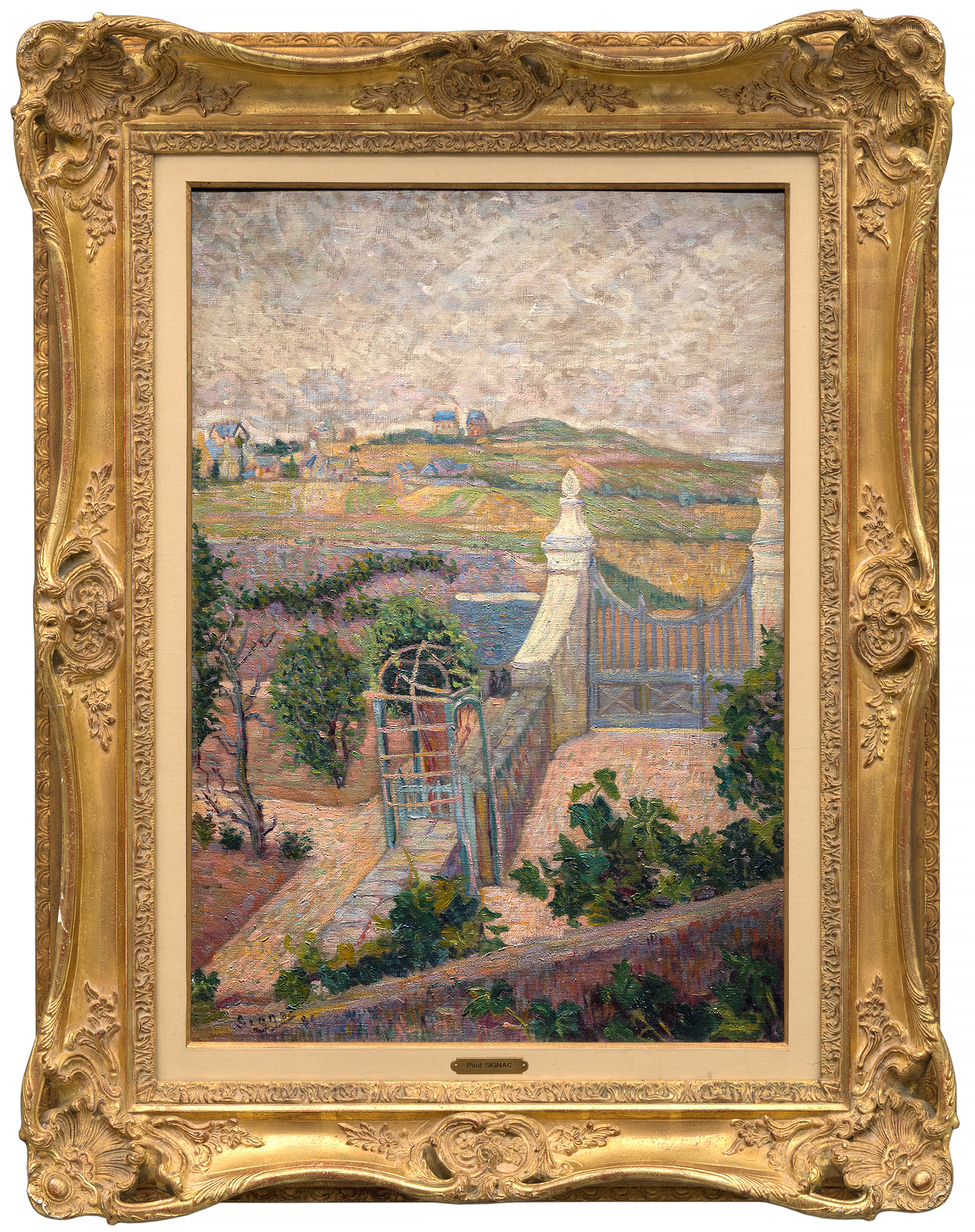
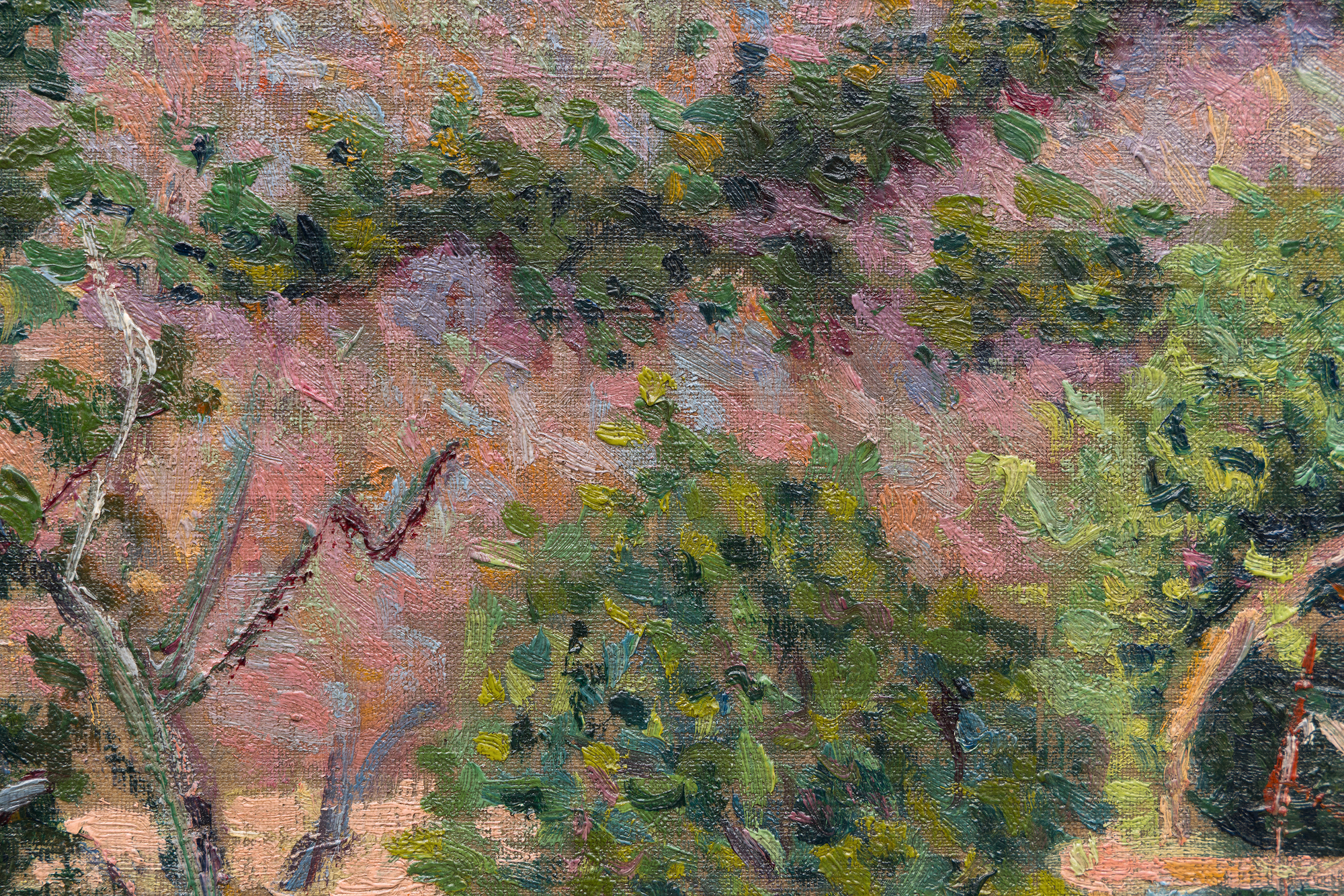
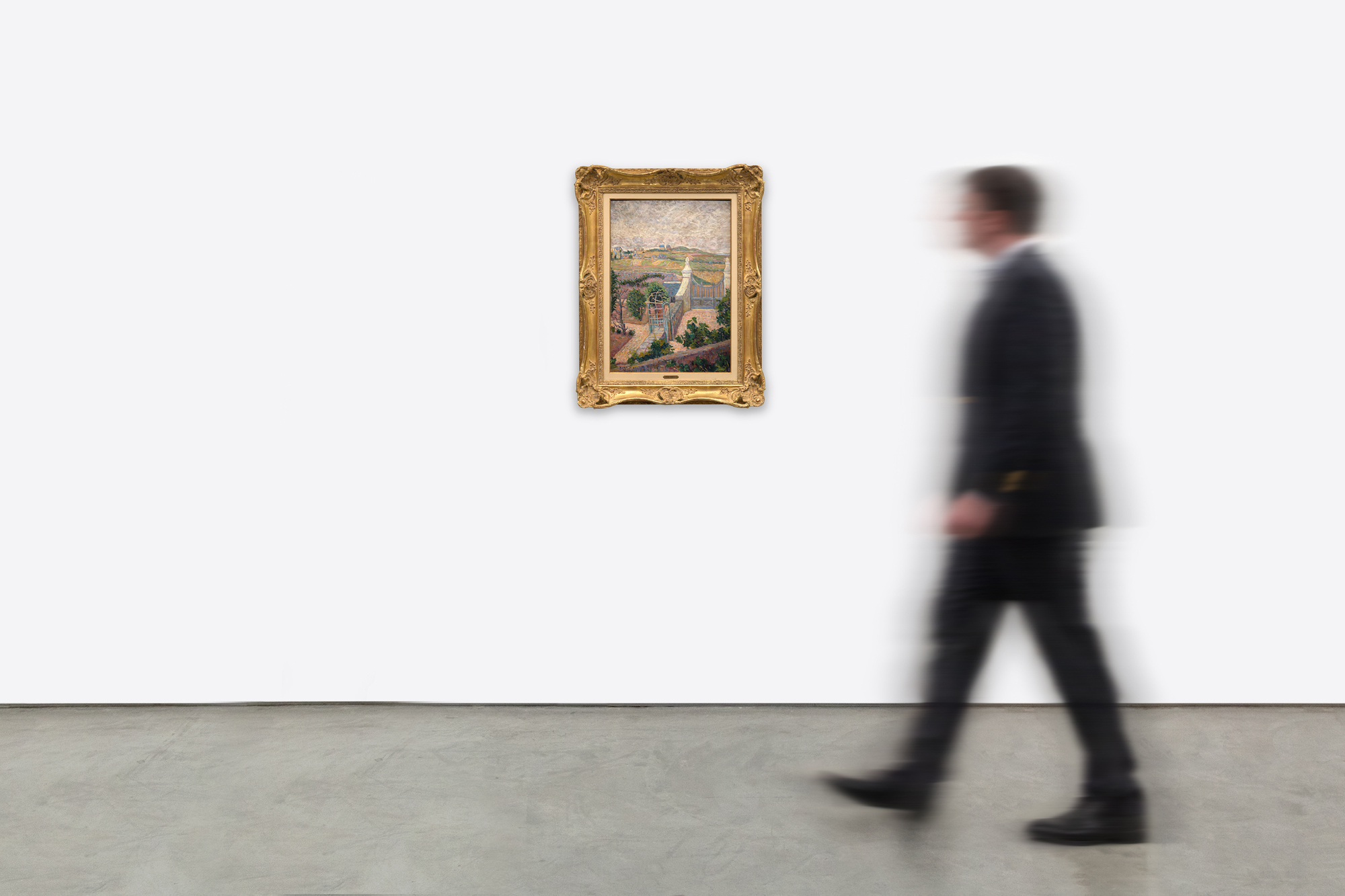
<div><font face=Lato size=3 color=black>Paul Signac’s <em>Saint-Briac. D’une fenêtre</em> (1885) captures the quiet beauty of the Breton landscape at a pivotal moment in the artist’s evolution from Impressionism to Neo-Impressionism. Painted during one of his frequent stays in Saint-Briac-sur-Mer, a coastal village in Brittany, this work reflects Signac’s early fascination with the play of light, color, and atmosphere before his full embrace of </font><font<br>face=HelveticaNeue size=3 color="#191919">Pointilist </font><font face=Lato<br>size=3 color=black>technique. The composition, framed as if viewed from a window, balances structured geometry with painterly spontaneity, suggesting the artist’s growing concern with order and harmony in nature.</font></div><br><br><div> </div><br><br><div><font face=Lato size=3 color=black>The work once belonged to the French composer and conductor Jules Rivière and has been discussed in major art historical texts, including <em>Connaissance des Arts</em> (1956), Sophie Monneret’s <em>L’Impressionisme et son époque</em> (1980), and Françoise Cachin’s <em>Signac: Catalogue raisonné de l’oeuvre peint</em> (2000), where it is illustrated as entry no. 102. Comparable examples from the same Saint-Briac series are housed in the Metropolitan Museum of Art, the Art Institute of Chicago, and the Carnegie Museum of Art. Collectively, these works reveal Signac’s transition toward the structured luminosity that would soon define Neo-Impressionism and secure his place among the leading innovators of modern painting.</font></div> <div><font face=Lato size=3 color=black>Paul Signac’s <em>Saint-Briac. D’une fenêtre</em> (1885) captures the quiet beauty of the Breton landscape at a pivotal moment in the artist’s evolution from Impressionism to Neo-Impressionism. Painted during one of his frequent stays in Saint-Briac-sur-Mer, a coastal village in Brittany, this work reflects Signac’s early fascination with the play of light, color, and atmosphere before his full embrace of </font><font<br>face=HelveticaNeue size=3 color="#191919">Pointilist </font><font face=Lato<br>size=3 color=black>technique. The composition, framed as if viewed from a window, balances structured geometry with painterly spontaneity, suggesting the artist’s growing concern with order and harmony in nature.</font></div><br><br><div> </div><br><br><div><font face=Lato size=3 color=black>The work once belonged to the French composer and conductor Jules Rivière and has been discussed in major art historical texts, including <em>Connaissance des Arts</em> (1956), Sophie Monneret’s <em>L’Impressionisme et son époque</em> (1980), and Françoise Cachin’s <em>Signac: Catalogue raisonné de l’oeuvre peint</em> (2000), where it is illustrated as entry no. 102. Comparable examples from the same Saint-Briac series are housed in the Metropolitan Museum of Art, the Art Institute of Chicago, and the Carnegie Museum of Art. Collectively, these works reveal Signac’s transition toward the structured luminosity that would soon define Neo-Impressionism and secure his place among the leading innovators of modern painting.</font></div> <div><font face=Lato size=3 color=black>Paul Signac’s <em>Saint-Briac. D’une fenêtre</em> (1885) captures the quiet beauty of the Breton landscape at a pivotal moment in the artist’s evolution from Impressionism to Neo-Impressionism. Painted during one of his frequent stays in Saint-Briac-sur-Mer, a coastal village in Brittany, this work reflects Signac’s early fascination with the play of light, color, and atmosphere before his full embrace of </font><font<br>face=HelveticaNeue size=3 color="#191919">Pointilist </font><font face=Lato<br>size=3 color=black>technique. The composition, framed as if viewed from a window, balances structured geometry with painterly spontaneity, suggesting the artist’s growing concern with order and harmony in nature.</font></div><br><br><div> </div><br><br><div><font face=Lato size=3 color=black>The work once belonged to the French composer and conductor Jules Rivière and has been discussed in major art historical texts, including <em>Connaissance des Arts</em> (1956), Sophie Monneret’s <em>L’Impressionisme et son époque</em> (1980), and Françoise Cachin’s <em>Signac: Catalogue raisonné de l’oeuvre peint</em> (2000), where it is illustrated as entry no. 102. Comparable examples from the same Saint-Briac series are housed in the Metropolitan Museum of Art, the Art Institute of Chicago, and the Carnegie Museum of Art. Collectively, these works reveal Signac’s transition toward the structured luminosity that would soon define Neo-Impressionism and secure his place among the leading innovators of modern painting.</font></div> <div><font face=Lato size=3 color=black>Paul Signac’s <em>Saint-Briac. D’une fenêtre</em> (1885) captures the quiet beauty of the Breton landscape at a pivotal moment in the artist’s evolution from Impressionism to Neo-Impressionism. Painted during one of his frequent stays in Saint-Briac-sur-Mer, a coastal village in Brittany, this work reflects Signac’s early fascination with the play of light, color, and atmosphere before his full embrace of </font><font<br>face=HelveticaNeue size=3 color="#191919">Pointilist </font><font face=Lato<br>size=3 color=black>technique. The composition, framed as if viewed from a window, balances structured geometry with painterly spontaneity, suggesting the artist’s growing concern with order and harmony in nature.</font></div><br><br><div> </div><br><br><div><font face=Lato size=3 color=black>The work once belonged to the French composer and conductor Jules Rivière and has been discussed in major art historical texts, including <em>Connaissance des Arts</em> (1956), Sophie Monneret’s <em>L’Impressionisme et son époque</em> (1980), and Françoise Cachin’s <em>Signac: Catalogue raisonné de l’oeuvre peint</em> (2000), where it is illustrated as entry no. 102. Comparable examples from the same Saint-Briac series are housed in the Metropolitan Museum of Art, the Art Institute of Chicago, and the Carnegie Museum of Art. Collectively, these works reveal Signac’s transition toward the structured luminosity that would soon define Neo-Impressionism and secure his place among the leading innovators of modern painting.</font></div> <div><font face=Lato size=3 color=black>Paul Signac’s <em>Saint-Briac. D’une fenêtre</em> (1885) captures the quiet beauty of the Breton landscape at a pivotal moment in the artist’s evolution from Impressionism to Neo-Impressionism. Painted during one of his frequent stays in Saint-Briac-sur-Mer, a coastal village in Brittany, this work reflects Signac’s early fascination with the play of light, color, and atmosphere before his full embrace of </font><font<br>face=HelveticaNeue size=3 color="#191919">Pointilist </font><font face=Lato<br>size=3 color=black>technique. The composition, framed as if viewed from a window, balances structured geometry with painterly spontaneity, suggesting the artist’s growing concern with order and harmony in nature.</font></div><br><br><div> </div><br><br><div><font face=Lato size=3 color=black>The work once belonged to the French composer and conductor Jules Rivière and has been discussed in major art historical texts, including <em>Connaissance des Arts</em> (1956), Sophie Monneret’s <em>L’Impressionisme et son époque</em> (1980), and Françoise Cachin’s <em>Signac: Catalogue raisonné de l’oeuvre peint</em> (2000), where it is illustrated as entry no. 102. Comparable examples from the same Saint-Briac series are housed in the Metropolitan Museum of Art, the Art Institute of Chicago, and the Carnegie Museum of Art. Collectively, these works reveal Signac’s transition toward the structured luminosity that would soon define Neo-Impressionism and secure his place among the leading innovators of modern painting.</font></div> <div><font face=Lato size=3 color=black>Paul Signac’s <em>Saint-Briac. D’une fenêtre</em> (1885) captures the quiet beauty of the Breton landscape at a pivotal moment in the artist’s evolution from Impressionism to Neo-Impressionism. Painted during one of his frequent stays in Saint-Briac-sur-Mer, a coastal village in Brittany, this work reflects Signac’s early fascination with the play of light, color, and atmosphere before his full embrace of </font><font<br>face=HelveticaNeue size=3 color="#191919">Pointilist </font><font face=Lato<br>size=3 color=black>technique. The composition, framed as if viewed from a window, balances structured geometry with painterly spontaneity, suggesting the artist’s growing concern with order and harmony in nature.</font></div><br><br><div> </div><br><br><div><font face=Lato size=3 color=black>The work once belonged to the French composer and conductor Jules Rivière and has been discussed in major art historical texts, including <em>Connaissance des Arts</em> (1956), Sophie Monneret’s <em>L’Impressionisme et son époque</em> (1980), and Françoise Cachin’s <em>Signac: Catalogue raisonné de l’oeuvre peint</em> (2000), where it is illustrated as entry no. 102. Comparable examples from the same Saint-Briac series are housed in the Metropolitan Museum of Art, the Art Institute of Chicago, and the Carnegie Museum of Art. Collectively, these works reveal Signac’s transition toward the structured luminosity that would soon define Neo-Impressionism and secure his place among the leading innovators of modern painting.</font></div> <div><font face=Lato size=3 color=black>Paul Signac’s <em>Saint-Briac. D’une fenêtre</em> (1885) captures the quiet beauty of the Breton landscape at a pivotal moment in the artist’s evolution from Impressionism to Neo-Impressionism. Painted during one of his frequent stays in Saint-Briac-sur-Mer, a coastal village in Brittany, this work reflects Signac’s early fascination with the play of light, color, and atmosphere before his full embrace of </font><font<br>face=HelveticaNeue size=3 color="#191919">Pointilist </font><font face=Lato<br>size=3 color=black>technique. The composition, framed as if viewed from a window, balances structured geometry with painterly spontaneity, suggesting the artist’s growing concern with order and harmony in nature.</font></div><br><br><div> </div><br><br><div><font face=Lato size=3 color=black>The work once belonged to the French composer and conductor Jules Rivière and has been discussed in major art historical texts, including <em>Connaissance des Arts</em> (1956), Sophie Monneret’s <em>L’Impressionisme et son époque</em> (1980), and Françoise Cachin’s <em>Signac: Catalogue raisonné de l’oeuvre peint</em> (2000), where it is illustrated as entry no. 102. Comparable examples from the same Saint-Briac series are housed in the Metropolitan Museum of Art, the Art Institute of Chicago, and the Carnegie Museum of Art. Collectively, these works reveal Signac’s transition toward the structured luminosity that would soon define Neo-Impressionism and secure his place among the leading innovators of modern painting.</font></div> <div><font face=Lato size=3 color=black>Paul Signac’s <em>Saint-Briac. D’une fenêtre</em> (1885) captures the quiet beauty of the Breton landscape at a pivotal moment in the artist’s evolution from Impressionism to Neo-Impressionism. Painted during one of his frequent stays in Saint-Briac-sur-Mer, a coastal village in Brittany, this work reflects Signac’s early fascination with the play of light, color, and atmosphere before his full embrace of </font><font<br>face=HelveticaNeue size=3 color="#191919">Pointilist </font><font face=Lato<br>size=3 color=black>technique. The composition, framed as if viewed from a window, balances structured geometry with painterly spontaneity, suggesting the artist’s growing concern with order and harmony in nature.</font></div><br><br><div> </div><br><br><div><font face=Lato size=3 color=black>The work once belonged to the French composer and conductor Jules Rivière and has been discussed in major art historical texts, including <em>Connaissance des Arts</em> (1956), Sophie Monneret’s <em>L’Impressionisme et son époque</em> (1980), and Françoise Cachin’s <em>Signac: Catalogue raisonné de l’oeuvre peint</em> (2000), where it is illustrated as entry no. 102. Comparable examples from the same Saint-Briac series are housed in the Metropolitan Museum of Art, the Art Institute of Chicago, and the Carnegie Museum of Art. Collectively, these works reveal Signac’s transition toward the structured luminosity that would soon define Neo-Impressionism and secure his place among the leading innovators of modern painting.</font></div> <div><font face=Lato size=3 color=black>Paul Signac’s <em>Saint-Briac. D’une fenêtre</em> (1885) captures the quiet beauty of the Breton landscape at a pivotal moment in the artist’s evolution from Impressionism to Neo-Impressionism. Painted during one of his frequent stays in Saint-Briac-sur-Mer, a coastal village in Brittany, this work reflects Signac’s early fascination with the play of light, color, and atmosphere before his full embrace of </font><font<br>face=HelveticaNeue size=3 color="#191919">Pointilist </font><font face=Lato<br>size=3 color=black>technique. The composition, framed as if viewed from a window, balances structured geometry with painterly spontaneity, suggesting the artist’s growing concern with order and harmony in nature.</font></div><br><br><div> </div><br><br><div><font face=Lato size=3 color=black>The work once belonged to the French composer and conductor Jules Rivière and has been discussed in major art historical texts, including <em>Connaissance des Arts</em> (1956), Sophie Monneret’s <em>L’Impressionisme et son époque</em> (1980), and Françoise Cachin’s <em>Signac: Catalogue raisonné de l’oeuvre peint</em> (2000), where it is illustrated as entry no. 102. Comparable examples from the same Saint-Briac series are housed in the Metropolitan Museum of Art, the Art Institute of Chicago, and the Carnegie Museum of Art. Collectively, these works reveal Signac’s transition toward the structured luminosity that would soon define Neo-Impressionism and secure his place among the leading innovators of modern painting.</font></div>
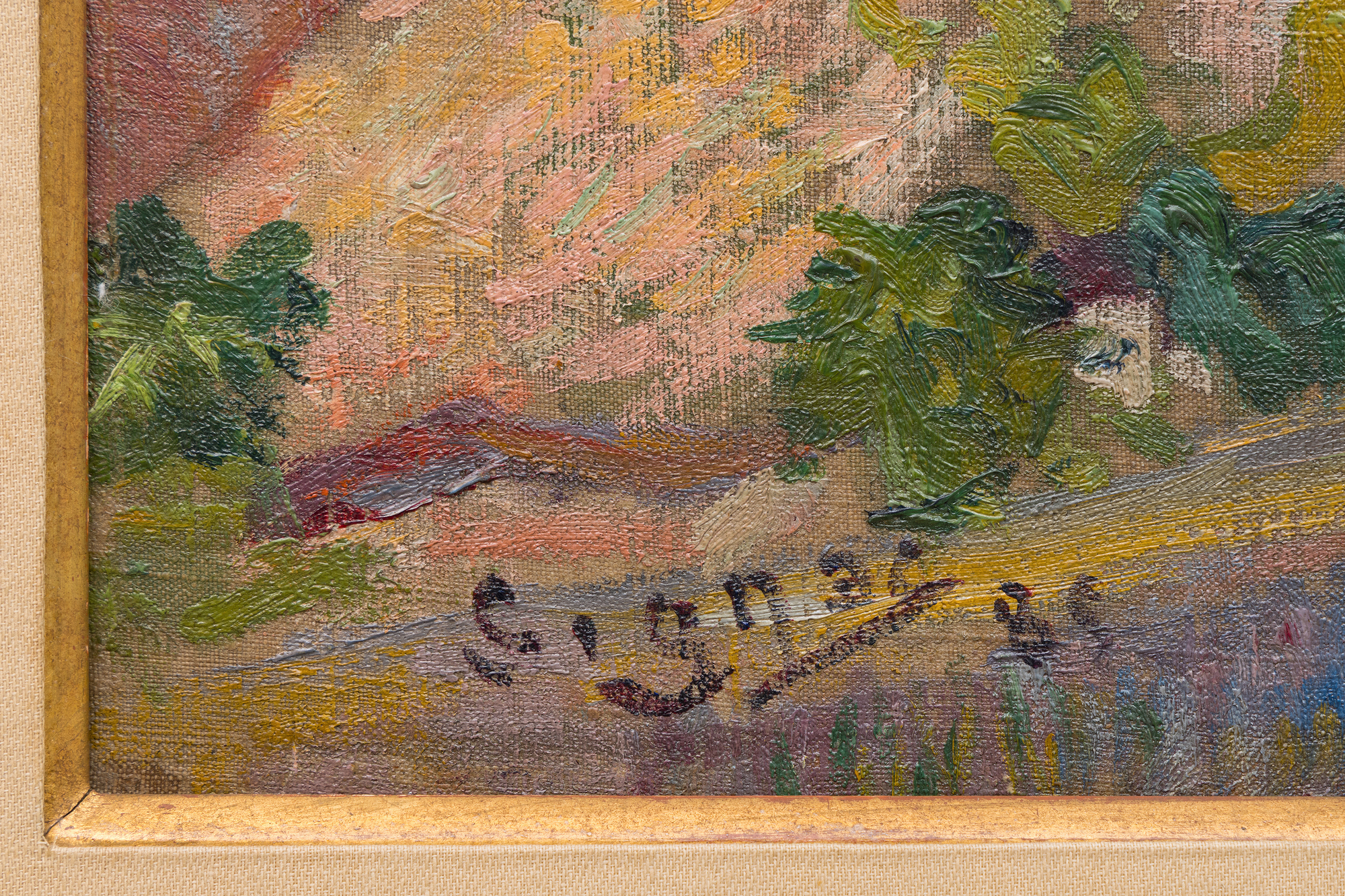
Saint-Briac. D'une fenetre188525 1/2 x 18 1/8 Zoll.(64,77 x 46,04 cm) Öl auf Leinwand
Provenienz
Jules Rivière, Cagnes
Hôtel Drouot, Paris, 23. März 1956, Los 103
Privatsammlung, erworben von der oben genannten Person
Hôtel Drouot, Paris, 19. Juni 1990, Los 130
Privatsammlung, Schweiz
Hampel Kunstauktionen, München, 29. April 2017, Los 6
Privatsammlung, erworben von der oben genannten
Hampel Kunstauktionen, München, 26. September 2018, Los 602
Privatsammlung, erworben von der oben genannten Person
Sotheby's New York: Dienstag, 14. November 2023, Los 306
Privatsammlung, erworben von der
...Mehr.....e oben
Ausstellung
New York, American Art Galleries, Werke in Öl und Pastell von den Pariser Impressionisten, 1886, Nr. 70, S. 18 (mit dem Titel From My Window)
Literaturhinweise
Francis Soar und Hachette, "Connaissance des Arts", Paris, 1956, S. 61
Sophie Monneret, L'Impressionisme et son époque, dictionnaire international, Bd. II, Paris 1980, S. 255
Hôtel Drouot, "La Gazette de l'Hôtel Drouot", Bd. XLIV, Paris, 1990, Nr. 21
Françoise Cachin, Signac. Catalogue raisonné de l'oeuvre peint, Paris, 2000, Nr. 102, S. 169, illustriert
...WENIGER.....
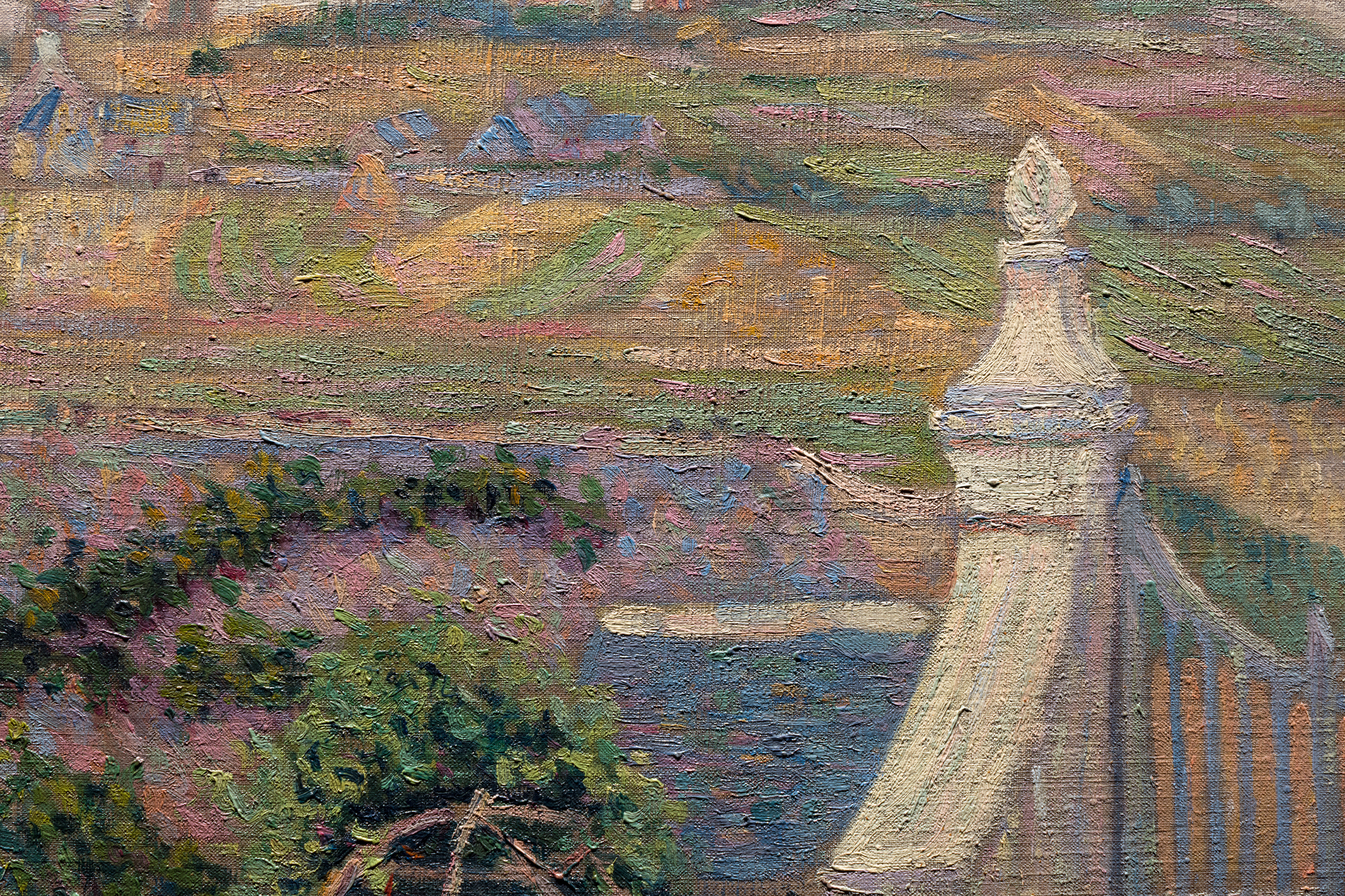
Paul Signacs Saint-Briac. D'une fenêtre (1885) fängt die stille Schönheit der bretonischen Landschaft zu einem entscheidenden Zeitpunkt in der Entwicklung des Künstlers vom Impressionismus zum Neo-Impressionismus ein. Das Gemälde entstand während eines seiner häufigen Aufenthalte in Saint-Briac-sur-Mer, einem Küstenort in der Bretagne, und spiegelt Signacs frühe Faszination für das Spiel von Licht, Farbe und Atmosphäre wider, bevor er sich ganz der pointilistischen Technik zuwandte. Die Komposition, die wie von einem Fenster aus gesehen gerahmt ist, stellt ein Gleichgewicht zwischen strukturierter Geometrie und malerischer Spontaneität her und deutet auf das wachsende Interesse des Künstlers an Ordnung und Harmonie in der Natur hin.


Das Werk gehörte einst dem französischen Komponisten und Dirigenten Jules Rivière und wurde in wichtigen kunsthistorischen Texten besprochen, darunter Connaissance des Arts (1956), L'Impressionisme et son époque (1980) von Sophie Monneret und Signac von Françoise Cachin: Catalogue raisonné de l'oeuvre peint (2000), wo es als Eintrag Nr. 102 abgebildet ist. 102. Vergleichbare Exemplare aus der gleichen Saint-Briac-Serie befinden sich im Metropolitan Museum of Art, im Art Institute of Chicago und im Carnegie Museum of Art. Zusammengenommen zeigen diese Werke Signacs Übergang zu der strukturierten Leuchtkraft, die bald den Neoimpressionismus definieren und ihm seinen Platz unter den führenden Erneuerern der modernen Malerei sichern sollte.
Fragen Sie