Zurück

JULES OLITSKI (1922-2007)

 
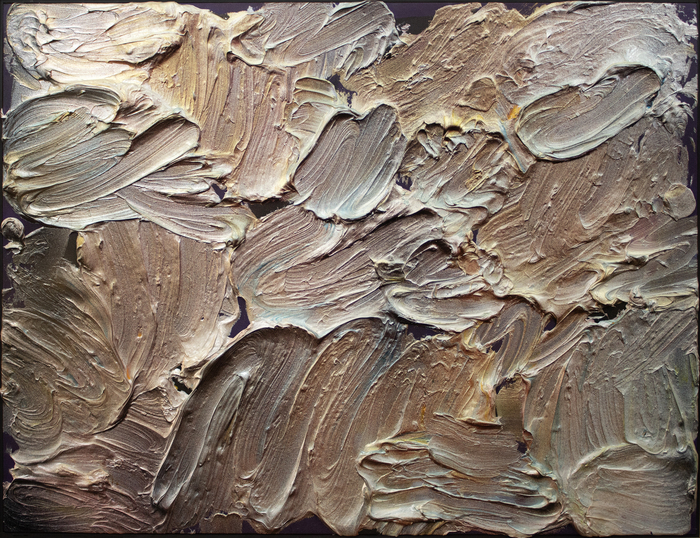
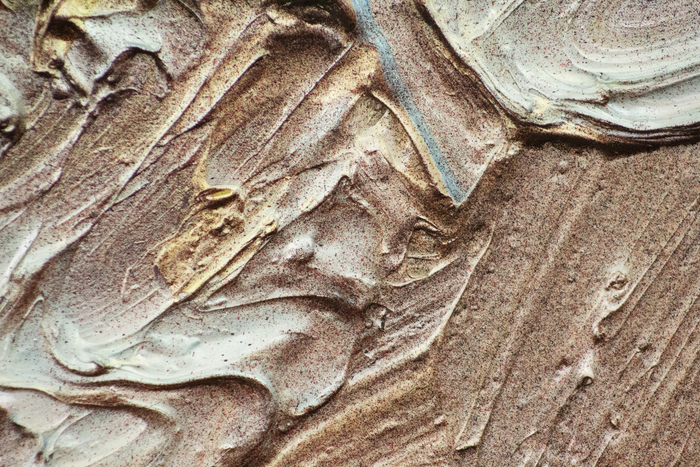
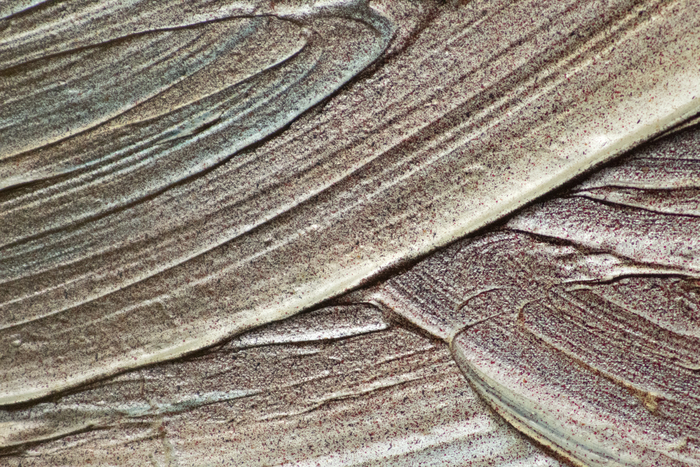
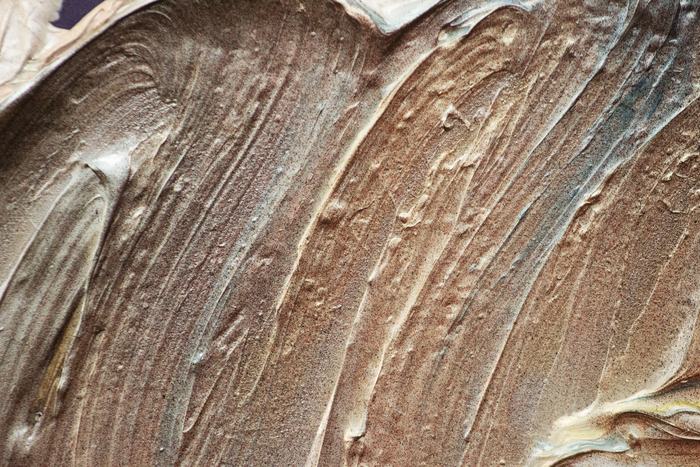
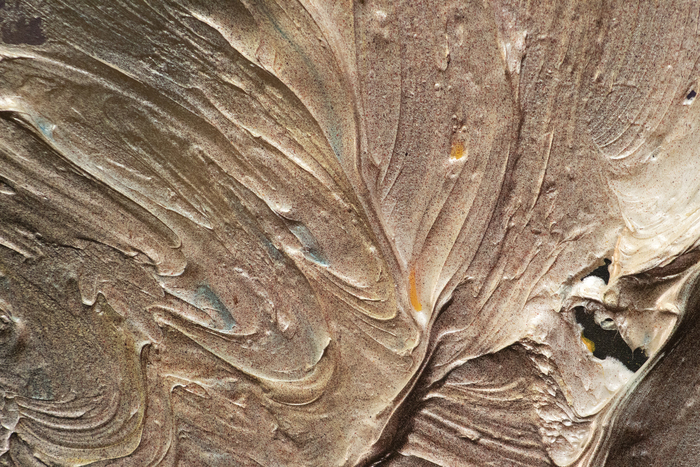
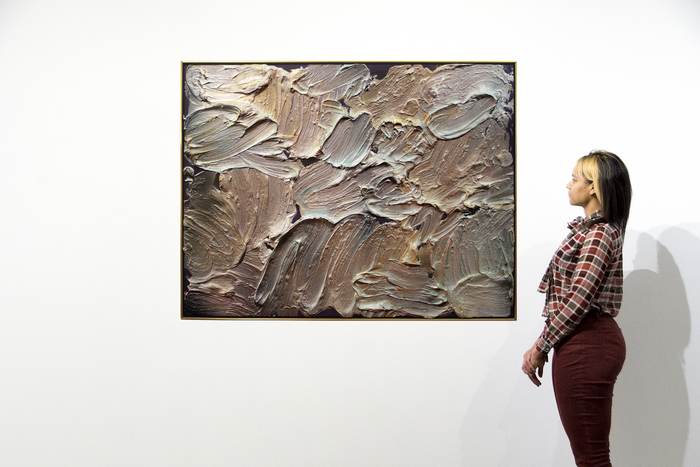
<div><font face=HelveticaNeue size=3 color="#191919">Jules Olitski’s <em>Beauty of Eve</em> (1989) exemplifies the artist’s signature “mitt” paintings, where color field abstraction, gesture, and texture converge into a richly tactile surface. Thick layers of acrylic are applied with expressive movement using unconventional tools such as mitts, brooms, and squeegees to explore the physical depth and material presence of paint. <em>Beauty of Eve</em> captures the height of this experimentation.</font></div><br><br><div> </div><br><br><div><font face=HelveticaNeue size=3 color="#191919">Olitski received major recognition at the Metropolitan Museum of Art in 1969, where he became the first living artist given a solo exhibition at the museum. His work is represented in many major permanent and public collections, including The Boston Museum of Fine Arts, Boston, MA; The Art Institute of Chicago, Chicago, IL; The Hirshhorn Museum and Sculpture Garden, Washington, D.C.; The Museum of Fine Arts, Houston, TX; Tate Modern, London, UK; Toledo Museum of Art, Toledo, OH; The Metropolitan Museum of Art; The Museum of Modern Art; The Solomon R. Guggenheim Museum; and The Whitney Museum of American Art, New York</font></div> <div><font face=HelveticaNeue size=3 color="#191919">Jules Olitski’s <em>Beauty of Eve</em> (1989) exemplifies the artist’s signature “mitt” paintings, where color field abstraction, gesture, and texture converge into a richly tactile surface. Thick layers of acrylic are applied with expressive movement using unconventional tools such as mitts, brooms, and squeegees to explore the physical depth and material presence of paint. <em>Beauty of Eve</em> captures the height of this experimentation.</font></div><br><br><div> </div><br><br><div><font face=HelveticaNeue size=3 color="#191919">Olitski received major recognition at the Metropolitan Museum of Art in 1969, where he became the first living artist given a solo exhibition at the museum. His work is represented in many major permanent and public collections, including The Boston Museum of Fine Arts, Boston, MA; The Art Institute of Chicago, Chicago, IL; The Hirshhorn Museum and Sculpture Garden, Washington, D.C.; The Museum of Fine Arts, Houston, TX; Tate Modern, London, UK; Toledo Museum of Art, Toledo, OH; The Metropolitan Museum of Art; The Museum of Modern Art; The Solomon R. Guggenheim Museum; and The Whitney Museum of American Art, New York</font></div> <div><font face=HelveticaNeue size=3 color="#191919">Jules Olitski’s <em>Beauty of Eve</em> (1989) exemplifies the artist’s signature “mitt” paintings, where color field abstraction, gesture, and texture converge into a richly tactile surface. Thick layers of acrylic are applied with expressive movement using unconventional tools such as mitts, brooms, and squeegees to explore the physical depth and material presence of paint. <em>Beauty of Eve</em> captures the height of this experimentation.</font></div><br><br><div> </div><br><br><div><font face=HelveticaNeue size=3 color="#191919">Olitski received major recognition at the Metropolitan Museum of Art in 1969, where he became the first living artist given a solo exhibition at the museum. His work is represented in many major permanent and public collections, including The Boston Museum of Fine Arts, Boston, MA; The Art Institute of Chicago, Chicago, IL; The Hirshhorn Museum and Sculpture Garden, Washington, D.C.; The Museum of Fine Arts, Houston, TX; Tate Modern, London, UK; Toledo Museum of Art, Toledo, OH; The Metropolitan Museum of Art; The Museum of Modern Art; The Solomon R. Guggenheim Museum; and The Whitney Museum of American Art, New York</font></div> <div><font face=HelveticaNeue size=3 color="#191919">Jules Olitski’s <em>Beauty of Eve</em> (1989) exemplifies the artist’s signature “mitt” paintings, where color field abstraction, gesture, and texture converge into a richly tactile surface. Thick layers of acrylic are applied with expressive movement using unconventional tools such as mitts, brooms, and squeegees to explore the physical depth and material presence of paint. <em>Beauty of Eve</em> captures the height of this experimentation.</font></div><br><br><div> </div><br><br><div><font face=HelveticaNeue size=3 color="#191919">Olitski received major recognition at the Metropolitan Museum of Art in 1969, where he became the first living artist given a solo exhibition at the museum. His work is represented in many major permanent and public collections, including The Boston Museum of Fine Arts, Boston, MA; The Art Institute of Chicago, Chicago, IL; The Hirshhorn Museum and Sculpture Garden, Washington, D.C.; The Museum of Fine Arts, Houston, TX; Tate Modern, London, UK; Toledo Museum of Art, Toledo, OH; The Metropolitan Museum of Art; The Museum of Modern Art; The Solomon R. Guggenheim Museum; and The Whitney Museum of American Art, New York</font></div> <div><font face=HelveticaNeue size=3 color="#191919">Jules Olitski’s <em>Beauty of Eve</em> (1989) exemplifies the artist’s signature “mitt” paintings, where color field abstraction, gesture, and texture converge into a richly tactile surface. Thick layers of acrylic are applied with expressive movement using unconventional tools such as mitts, brooms, and squeegees to explore the physical depth and material presence of paint. <em>Beauty of Eve</em> captures the height of this experimentation.</font></div><br><br><div> </div><br><br><div><font face=HelveticaNeue size=3 color="#191919">Olitski received major recognition at the Metropolitan Museum of Art in 1969, where he became the first living artist given a solo exhibition at the museum. His work is represented in many major permanent and public collections, including The Boston Museum of Fine Arts, Boston, MA; The Art Institute of Chicago, Chicago, IL; The Hirshhorn Museum and Sculpture Garden, Washington, D.C.; The Museum of Fine Arts, Houston, TX; Tate Modern, London, UK; Toledo Museum of Art, Toledo, OH; The Metropolitan Museum of Art; The Museum of Modern Art; The Solomon R. Guggenheim Museum; and The Whitney Museum of American Art, New York</font></div> <div><font face=HelveticaNeue size=3 color="#191919">Jules Olitski’s <em>Beauty of Eve</em> (1989) exemplifies the artist’s signature “mitt” paintings, where color field abstraction, gesture, and texture converge into a richly tactile surface. Thick layers of acrylic are applied with expressive movement using unconventional tools such as mitts, brooms, and squeegees to explore the physical depth and material presence of paint. <em>Beauty of Eve</em> captures the height of this experimentation.</font></div><br><br><div> </div><br><br><div><font face=HelveticaNeue size=3 color="#191919">Olitski received major recognition at the Metropolitan Museum of Art in 1969, where he became the first living artist given a solo exhibition at the museum. His work is represented in many major permanent and public collections, including The Boston Museum of Fine Arts, Boston, MA; The Art Institute of Chicago, Chicago, IL; The Hirshhorn Museum and Sculpture Garden, Washington, D.C.; The Museum of Fine Arts, Houston, TX; Tate Modern, London, UK; Toledo Museum of Art, Toledo, OH; The Metropolitan Museum of Art; The Museum of Modern Art; The Solomon R. Guggenheim Museum; and The Whitney Museum of American Art, New York</font></div> <div><font face=HelveticaNeue size=3 color="#191919">Jules Olitski’s <em>Beauty of Eve</em> (1989) exemplifies the artist’s signature “mitt” paintings, where color field abstraction, gesture, and texture converge into a richly tactile surface. Thick layers of acrylic are applied with expressive movement using unconventional tools such as mitts, brooms, and squeegees to explore the physical depth and material presence of paint. <em>Beauty of Eve</em> captures the height of this experimentation.</font></div><br><br><div> </div><br><br><div><font face=HelveticaNeue size=3 color="#191919">Olitski received major recognition at the Metropolitan Museum of Art in 1969, where he became the first living artist given a solo exhibition at the museum. His work is represented in many major permanent and public collections, including The Boston Museum of Fine Arts, Boston, MA; The Art Institute of Chicago, Chicago, IL; The Hirshhorn Museum and Sculpture Garden, Washington, D.C.; The Museum of Fine Arts, Houston, TX; Tate Modern, London, UK; Toledo Museum of Art, Toledo, OH; The Metropolitan Museum of Art; The Museum of Modern Art; The Solomon R. Guggenheim Museum; and The Whitney Museum of American Art, New York</font></div>
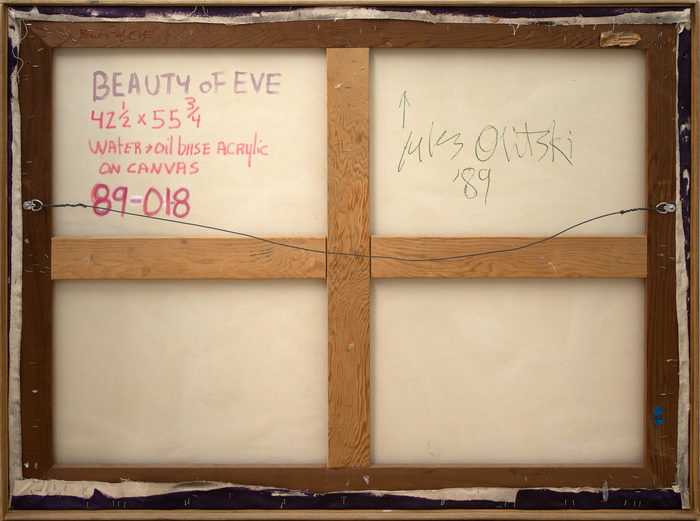
Schönheit der Eva198942 1/2 x 55 3/4 in.(107,95 x 141,61 cm) Acryl auf Wasser- und Ölbasis auf Leinwand
Provenienz
Nachlass des Künstlers
Privatsammlung
Jules Olitskis „Beauty of Eve“ (1989) ist ein Beispiel für die charakteristischen „Mitt“-Gemälde des Künstlers, in denen Farbfeldabstraktion, Gestik und Textur zu einer reichhaltigen taktilen Oberfläche verschmelzen. Dicke Acrylschichten werden mit ausdrucksstarken Bewegungen unter Verwendung unkonventioneller Werkzeuge wie Handschuhen, Besen und Rakeln aufgetragen, um die physische Tiefe und materielle Präsenz der Farbe zu erforschen. „Beauty of Eve“ verkörpert den Höhepunkt dieses Experimentierens.


Olitski erlangte 1969 große Anerkennung im Metropolitan Museum of Art, wo er als erster lebender Künstler eine Einzelausstellung erhielt. Seine Werke sind in vielen bedeutenden permanenten und öffentlichen Sammlungen vertreten, darunter im Boston Museum of Fine Arts, Boston, MA; im Art Institute of Chicago, Chicago, IL; im Hirshhorn Museum and Sculpture Garden, Washington, D.C.; dem Museum of Fine Arts in Houston, Texas, der Tate Modern in London, Großbritannien, dem Toledo Museum of Art in Toledo, Ohio, dem Metropolitan Museum of Art, dem Museum of Modern Art, dem Solomon R. Guggenheim Museum und dem Whitney Museum of American Art in New York.
Fragen Sie