Zurück

FRANK WESTON BENSON(1862–1951)

$150,000

 
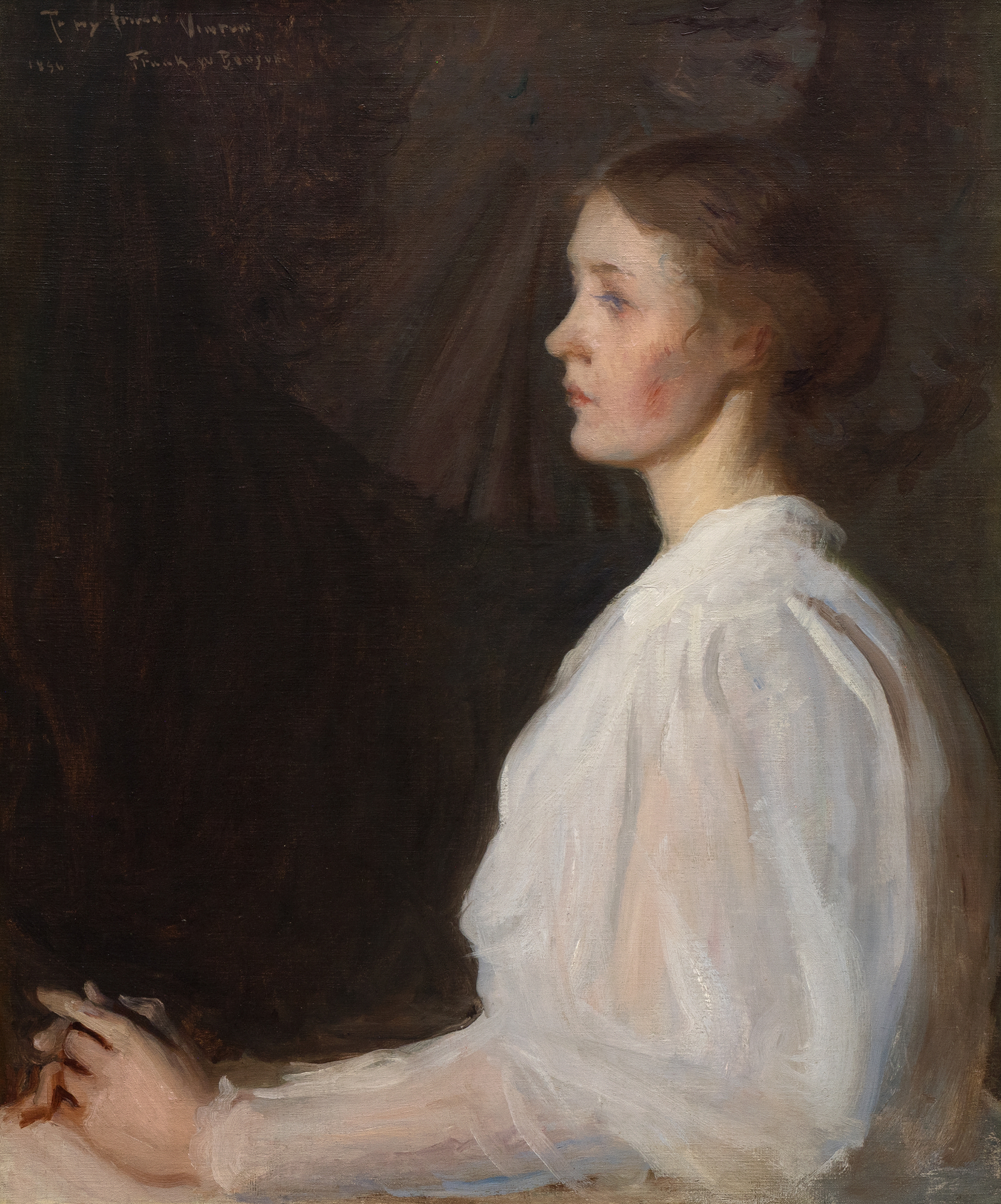
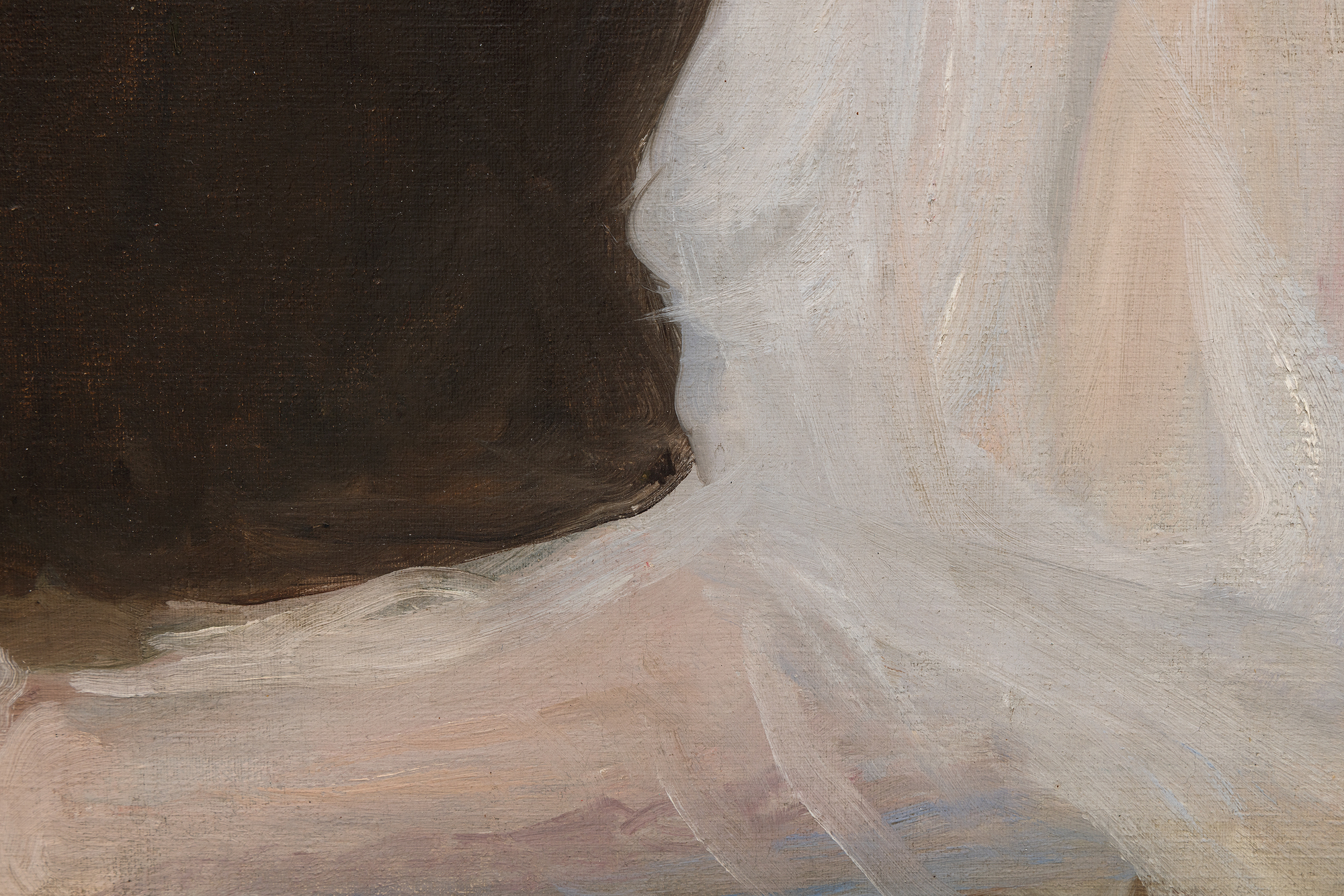
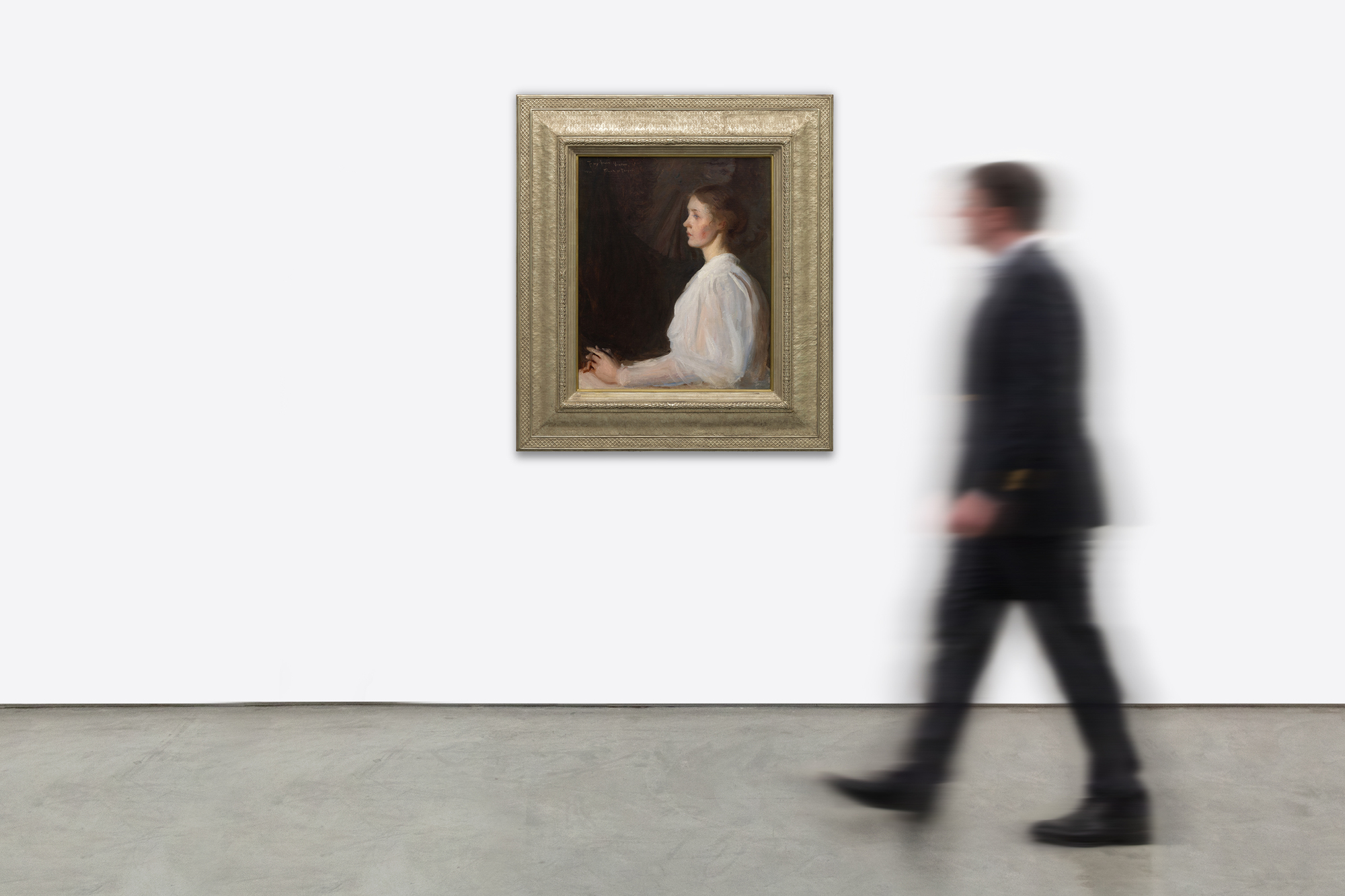
<div><font face=Lato size=3 color=black><em>Girl in White (Seated Figure)</em> from 1896 is an elegant example of Frank Bensons gift for intimate portraiture, rendered with a refined palette and a masterful command of light and texture. The painting was originally a personal gift from Benson to his friend and fellow American artist Frederick P. Vinton, remaining in the Vinton family before later entering the distinguished collection of Paul Magriel, a renowned collector and scholar of American art. This early provenance underscores the works longstanding appreciation among artists and connoisseurs alike.</font></div><br><br><div> </div><br><br><div><font face=Lato size=3 color=black>The portrait relates closely to similar half-figure studies held in major institutional collections, including the Museum of Fine Arts Boston, the Farnsworth Art Museum, and the National Gallery of Art in Washington, D.C., all of which highlight Bensons importance within the American Impressionist tradition. In this work, the sitter is shown in profile against a simple, reduced background that allows the subtleties of color and drapery to command full attention. The warm, luminous modeling of the skin and the delicate, gossamer like fabric of the dress are heightened by Benson's economical use of tone, creating a sense of quiet focus and graceful restraint.</font></div><br><br><div> </div><br><br><div><font face=Lato size=3 color=black>Together, these qualities reveal the depth of Bensons skill during the 1890s and affirm <em>Girl in White (Seated Figure)</em> as a beautifully preserved and emotionally resonant example of his portrait practice.</font></div> <div><font face=Lato size=3 color=black><em>Girl in White (Seated Figure)</em> from 1896 is an elegant example of Frank Bensons gift for intimate portraiture, rendered with a refined palette and a masterful command of light and texture. The painting was originally a personal gift from Benson to his friend and fellow American artist Frederick P. Vinton, remaining in the Vinton family before later entering the distinguished collection of Paul Magriel, a renowned collector and scholar of American art. This early provenance underscores the works longstanding appreciation among artists and connoisseurs alike.</font></div><br><br><div> </div><br><br><div><font face=Lato size=3 color=black>The portrait relates closely to similar half-figure studies held in major institutional collections, including the Museum of Fine Arts Boston, the Farnsworth Art Museum, and the National Gallery of Art in Washington, D.C., all of which highlight Bensons importance within the American Impressionist tradition. In this work, the sitter is shown in profile against a simple, reduced background that allows the subtleties of color and drapery to command full attention. The warm, luminous modeling of the skin and the delicate, gossamer like fabric of the dress are heightened by Benson's economical use of tone, creating a sense of quiet focus and graceful restraint.</font></div><br><br><div> </div><br><br><div><font face=Lato size=3 color=black>Together, these qualities reveal the depth of Bensons skill during the 1890s and affirm <em>Girl in White (Seated Figure)</em> as a beautifully preserved and emotionally resonant example of his portrait practice.</font></div> <div><font face=Lato size=3 color=black><em>Girl in White (Seated Figure)</em> from 1896 is an elegant example of Frank Bensons gift for intimate portraiture, rendered with a refined palette and a masterful command of light and texture. The painting was originally a personal gift from Benson to his friend and fellow American artist Frederick P. Vinton, remaining in the Vinton family before later entering the distinguished collection of Paul Magriel, a renowned collector and scholar of American art. This early provenance underscores the works longstanding appreciation among artists and connoisseurs alike.</font></div><br><br><div> </div><br><br><div><font face=Lato size=3 color=black>The portrait relates closely to similar half-figure studies held in major institutional collections, including the Museum of Fine Arts Boston, the Farnsworth Art Museum, and the National Gallery of Art in Washington, D.C., all of which highlight Bensons importance within the American Impressionist tradition. In this work, the sitter is shown in profile against a simple, reduced background that allows the subtleties of color and drapery to command full attention. The warm, luminous modeling of the skin and the delicate, gossamer like fabric of the dress are heightened by Benson's economical use of tone, creating a sense of quiet focus and graceful restraint.</font></div><br><br><div> </div><br><br><div><font face=Lato size=3 color=black>Together, these qualities reveal the depth of Bensons skill during the 1890s and affirm <em>Girl in White (Seated Figure)</em> as a beautifully preserved and emotionally resonant example of his portrait practice.</font></div> <div><font face=Lato size=3 color=black><em>Girl in White (Seated Figure)</em> from 1896 is an elegant example of Frank Bensons gift for intimate portraiture, rendered with a refined palette and a masterful command of light and texture. The painting was originally a personal gift from Benson to his friend and fellow American artist Frederick P. Vinton, remaining in the Vinton family before later entering the distinguished collection of Paul Magriel, a renowned collector and scholar of American art. This early provenance underscores the works longstanding appreciation among artists and connoisseurs alike.</font></div><br><br><div> </div><br><br><div><font face=Lato size=3 color=black>The portrait relates closely to similar half-figure studies held in major institutional collections, including the Museum of Fine Arts Boston, the Farnsworth Art Museum, and the National Gallery of Art in Washington, D.C., all of which highlight Bensons importance within the American Impressionist tradition. In this work, the sitter is shown in profile against a simple, reduced background that allows the subtleties of color and drapery to command full attention. The warm, luminous modeling of the skin and the delicate, gossamer like fabric of the dress are heightened by Benson's economical use of tone, creating a sense of quiet focus and graceful restraint.</font></div><br><br><div> </div><br><br><div><font face=Lato size=3 color=black>Together, these qualities reveal the depth of Bensons skill during the 1890s and affirm <em>Girl in White (Seated Figure)</em> as a beautifully preserved and emotionally resonant example of his portrait practice.</font></div> <div><font face=Lato size=3 color=black><em>Girl in White (Seated Figure)</em> from 1896 is an elegant example of Frank Bensons gift for intimate portraiture, rendered with a refined palette and a masterful command of light and texture. The painting was originally a personal gift from Benson to his friend and fellow American artist Frederick P. Vinton, remaining in the Vinton family before later entering the distinguished collection of Paul Magriel, a renowned collector and scholar of American art. This early provenance underscores the works longstanding appreciation among artists and connoisseurs alike.</font></div><br><br><div> </div><br><br><div><font face=Lato size=3 color=black>The portrait relates closely to similar half-figure studies held in major institutional collections, including the Museum of Fine Arts Boston, the Farnsworth Art Museum, and the National Gallery of Art in Washington, D.C., all of which highlight Bensons importance within the American Impressionist tradition. In this work, the sitter is shown in profile against a simple, reduced background that allows the subtleties of color and drapery to command full attention. The warm, luminous modeling of the skin and the delicate, gossamer like fabric of the dress are heightened by Benson's economical use of tone, creating a sense of quiet focus and graceful restraint.</font></div><br><br><div> </div><br><br><div><font face=Lato size=3 color=black>Together, these qualities reveal the depth of Bensons skill during the 1890s and affirm <em>Girl in White (Seated Figure)</em> as a beautifully preserved and emotionally resonant example of his portrait practice.</font></div> <div><font face=Lato size=3 color=black><em>Girl in White (Seated Figure)</em> from 1896 is an elegant example of Frank Bensons gift for intimate portraiture, rendered with a refined palette and a masterful command of light and texture. The painting was originally a personal gift from Benson to his friend and fellow American artist Frederick P. Vinton, remaining in the Vinton family before later entering the distinguished collection of Paul Magriel, a renowned collector and scholar of American art. This early provenance underscores the works longstanding appreciation among artists and connoisseurs alike.</font></div><br><br><div> </div><br><br><div><font face=Lato size=3 color=black>The portrait relates closely to similar half-figure studies held in major institutional collections, including the Museum of Fine Arts Boston, the Farnsworth Art Museum, and the National Gallery of Art in Washington, D.C., all of which highlight Bensons importance within the American Impressionist tradition. In this work, the sitter is shown in profile against a simple, reduced background that allows the subtleties of color and drapery to command full attention. The warm, luminous modeling of the skin and the delicate, gossamer like fabric of the dress are heightened by Benson's economical use of tone, creating a sense of quiet focus and graceful restraint.</font></div><br><br><div> </div><br><br><div><font face=Lato size=3 color=black>Together, these qualities reveal the depth of Bensons skill during the 1890s and affirm <em>Girl in White (Seated Figure)</em> as a beautifully preserved and emotionally resonant example of his portrait practice.</font></div> <div><font face=Lato size=3 color=black><em>Girl in White (Seated Figure)</em> from 1896 is an elegant example of Frank Bensons gift for intimate portraiture, rendered with a refined palette and a masterful command of light and texture. The painting was originally a personal gift from Benson to his friend and fellow American artist Frederick P. Vinton, remaining in the Vinton family before later entering the distinguished collection of Paul Magriel, a renowned collector and scholar of American art. This early provenance underscores the works longstanding appreciation among artists and connoisseurs alike.</font></div><br><br><div> </div><br><br><div><font face=Lato size=3 color=black>The portrait relates closely to similar half-figure studies held in major institutional collections, including the Museum of Fine Arts Boston, the Farnsworth Art Museum, and the National Gallery of Art in Washington, D.C., all of which highlight Bensons importance within the American Impressionist tradition. In this work, the sitter is shown in profile against a simple, reduced background that allows the subtleties of color and drapery to command full attention. The warm, luminous modeling of the skin and the delicate, gossamer like fabric of the dress are heightened by Benson's economical use of tone, creating a sense of quiet focus and graceful restraint.</font></div><br><br><div> </div><br><br><div><font face=Lato size=3 color=black>Together, these qualities reveal the depth of Bensons skill during the 1890s and affirm <em>Girl in White (Seated Figure)</em> as a beautifully preserved and emotionally resonant example of his portrait practice.</font></div>
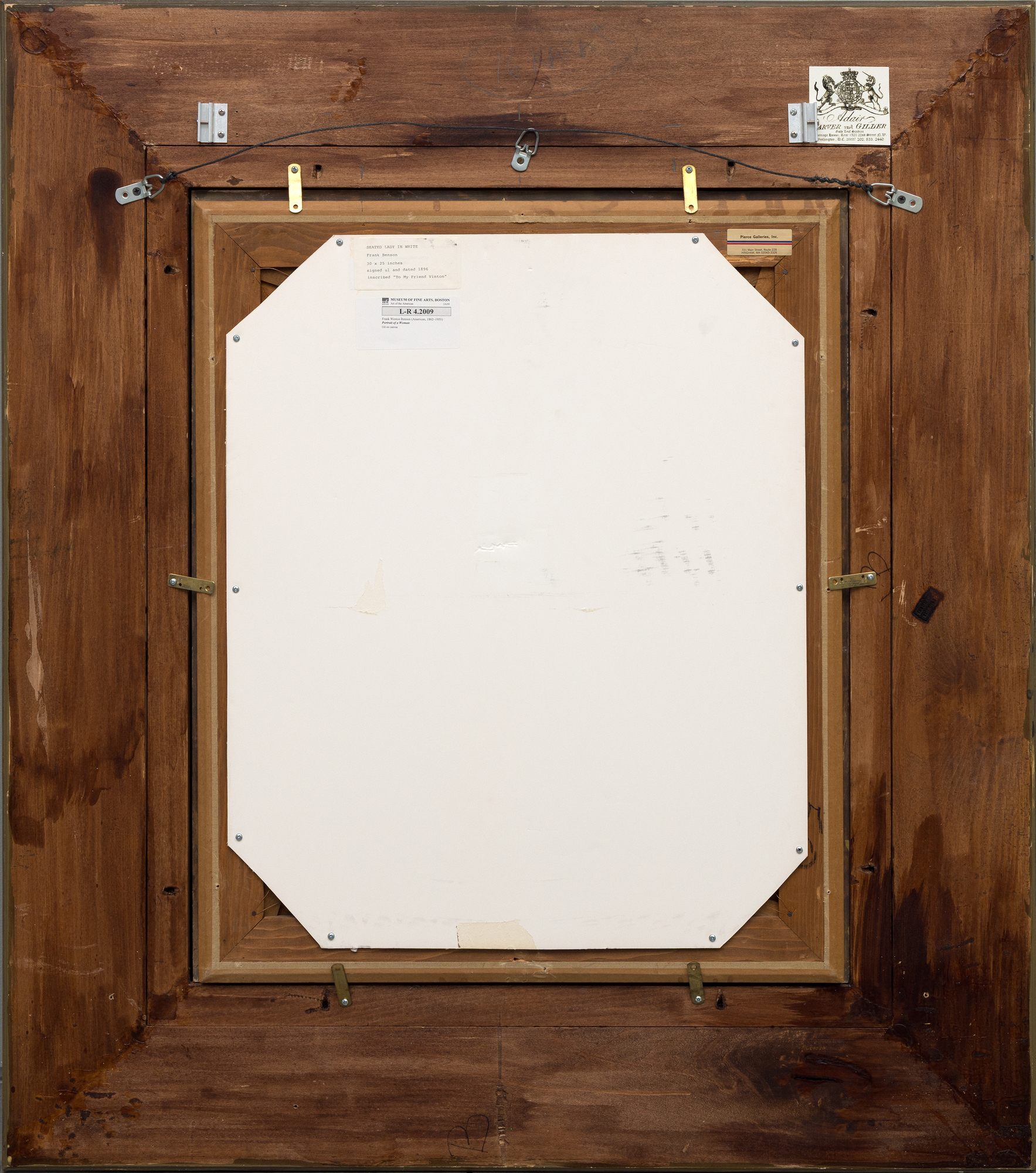
Mädchen in Weiß (sitzende Figur)189630 x 25 Zoll(76,2 x 63,5 cm) Öl auf Leinwand
Provenienz
Frederick P. Vinton (Künstler), Geschenk des Künstlers
Familie Vinton, durch Abstammung von oben genanntem
Sammlung Paul Magriel, New York, New York, bis 1970
Privatsammlung, Massachusetts bis 2001
Privatsammlung
Literaturhinweise
Faith Andrews Bedford, Die Kunst von Frank W. Benson, amerikanischer Impressionist, Salem, Massachusetts, 1999, S. 18, Abb. 5
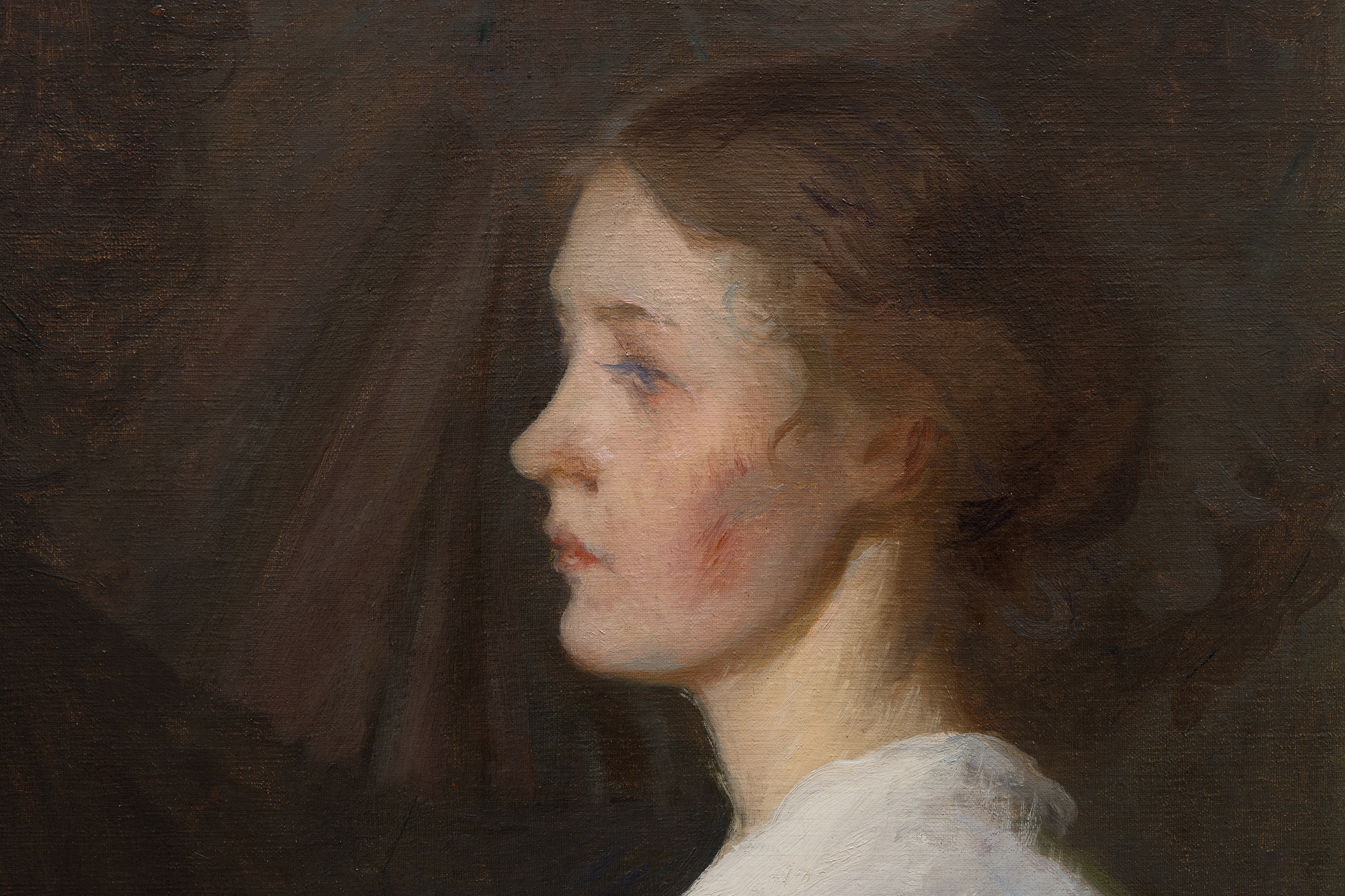
„Girl in White (Seated Figure)“ aus dem Jahr 1896 ist ein elegantes Beispiel für Frank Bensons Talent für intime Porträts, das mit einer raffinierten Farbpalette und einer meisterhaften Beherrschung von Licht und Textur umgesetzt wurde. Das Gemälde war ursprünglich ein persönliches Geschenk von Benson an seinen Freund und amerikanischen Künstlerkollegen Frederick P. Vinton und blieb im Besitz der Familie Vinton, bevor es später in die bedeutende Sammlung von Paul Magriel, einem renommierten Sammler und Wissenschaftler für amerikanische Kunst, aufgenommen wurde. Diese frühe Provenienz unterstreicht die langjährige Wertschätzung des Werks unter Künstlern und Kennern gleichermaßen.


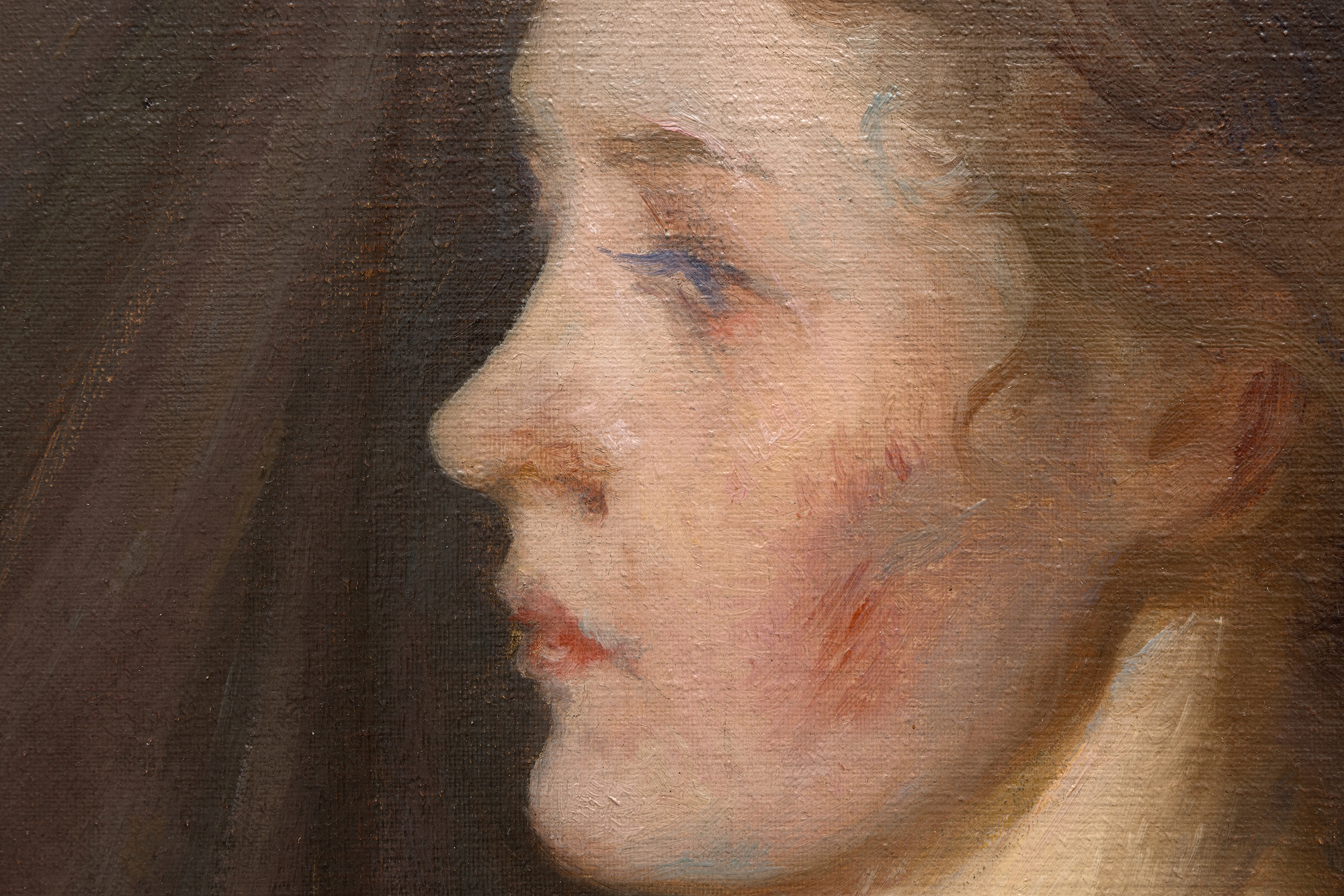
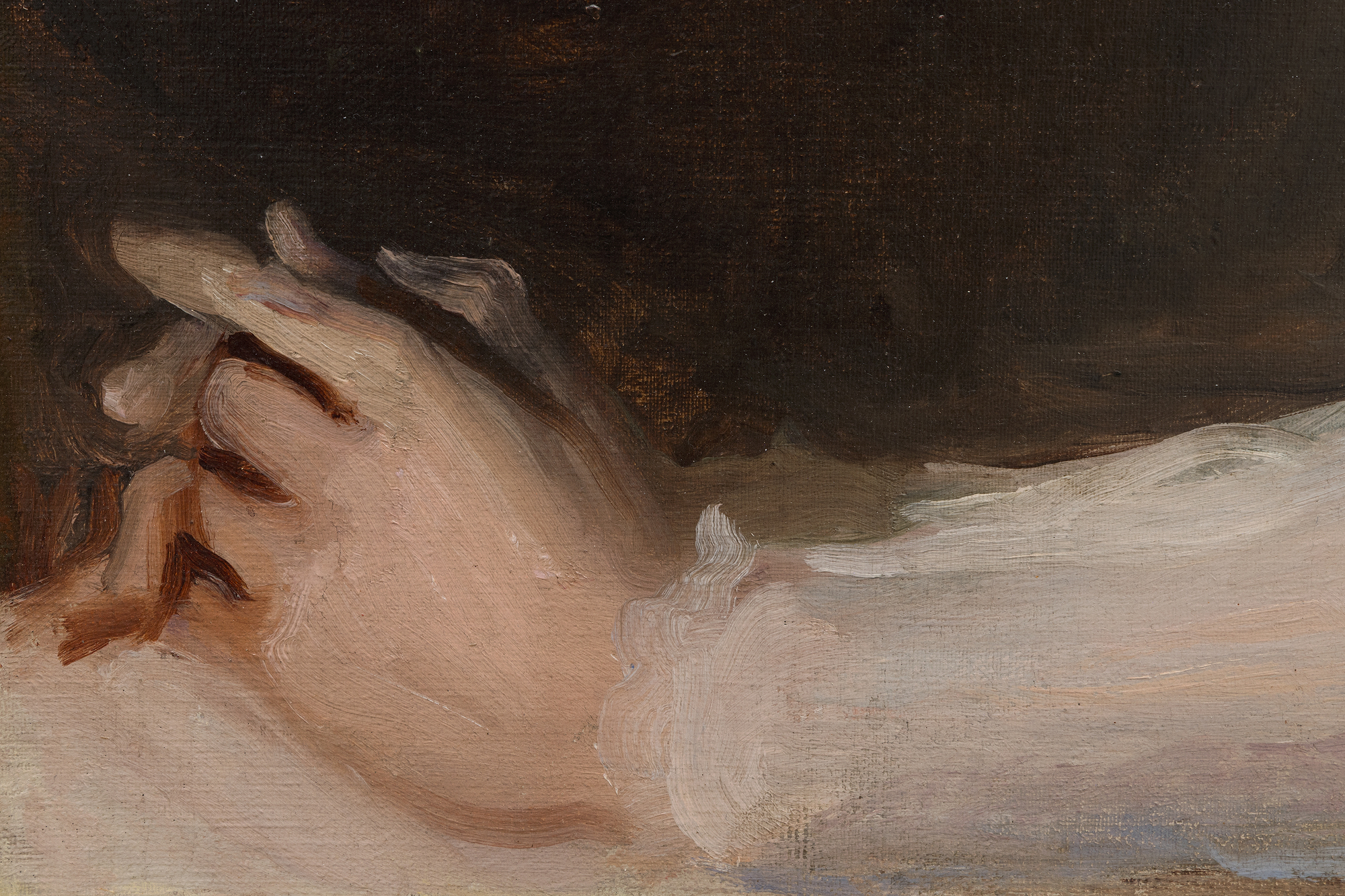
Das Porträt steht in engem Zusammenhang mit ähnlichen Halbfigurenstudien, die sich in bedeutenden institutionellen Sammlungen befinden, darunter das Museum of Fine Arts Boston, das Farnsworth Art Museum und die National Gallery of Art in Washington, D.C., die alle die Bedeutung Bensons innerhalb der amerikanischen impressionistischen Tradition unterstreichen. In diesem Werk wird die Porträtierte im Profil vor einem schlichten, reduzierten Hintergrund gezeigt, wodurch die Feinheiten der Farben und der Stoffdrapierung die volle Aufmerksamkeit auf sich ziehen. Die warme, leuchtende Modellierung der Haut und der zarte, hauchdünne Stoff des Kleides werden durch Bensons sparsamen Einsatz von Farbtönen noch verstärkt und vermitteln ein Gefühl von ruhiger Konzentration und anmutiger Zurückhaltung.


Zusammen zeigen diese Eigenschaften die Tiefe von Bensons Können in den 1890er Jahren und bestätigen „Girl in White (Seated Figure)” als ein wunderschön erhaltenes und emotional bewegendes Beispiel für seine Porträtkunst.
Fragen Sie