Zurück

GEORGE INNESS(1825–1894)

 
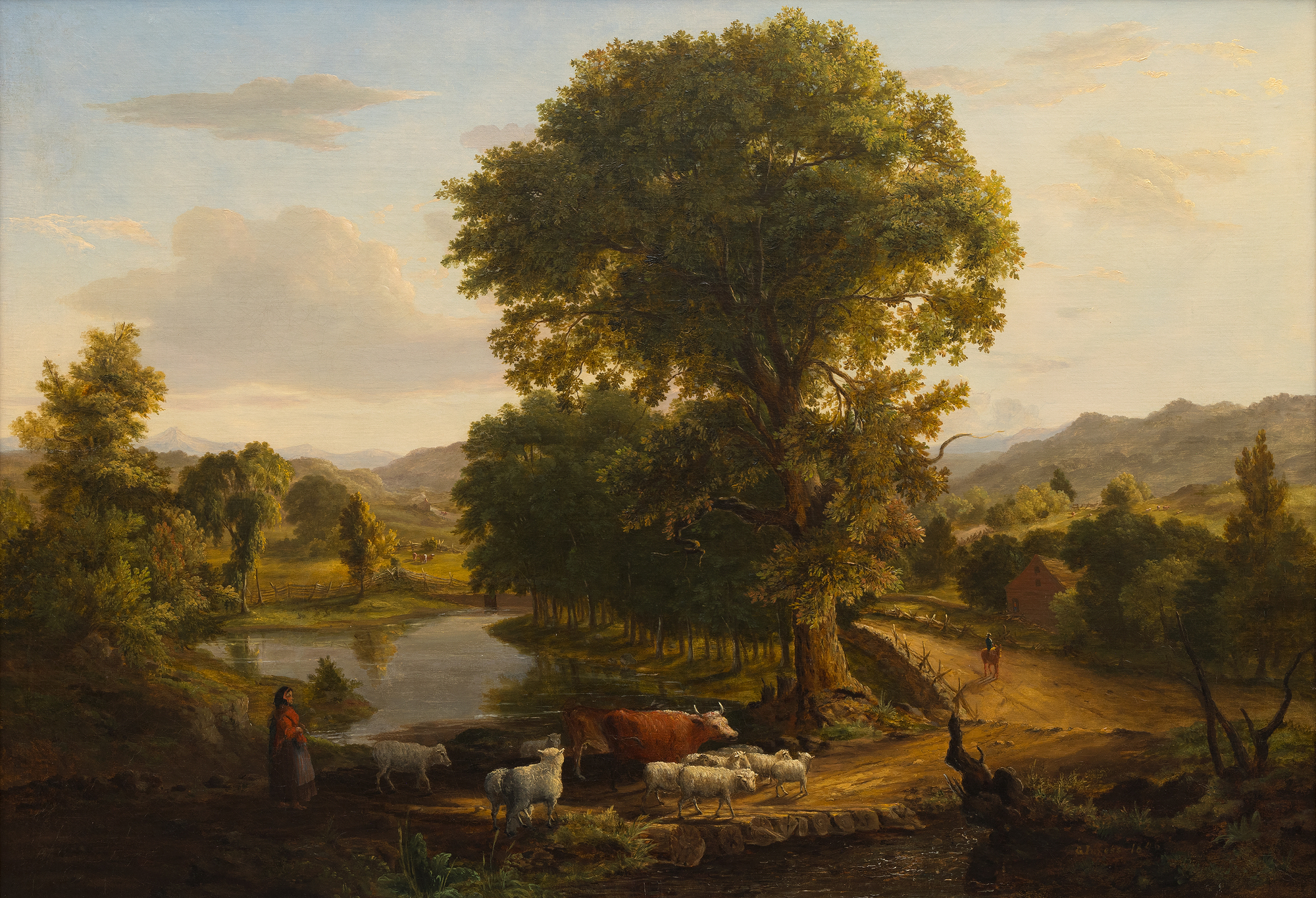
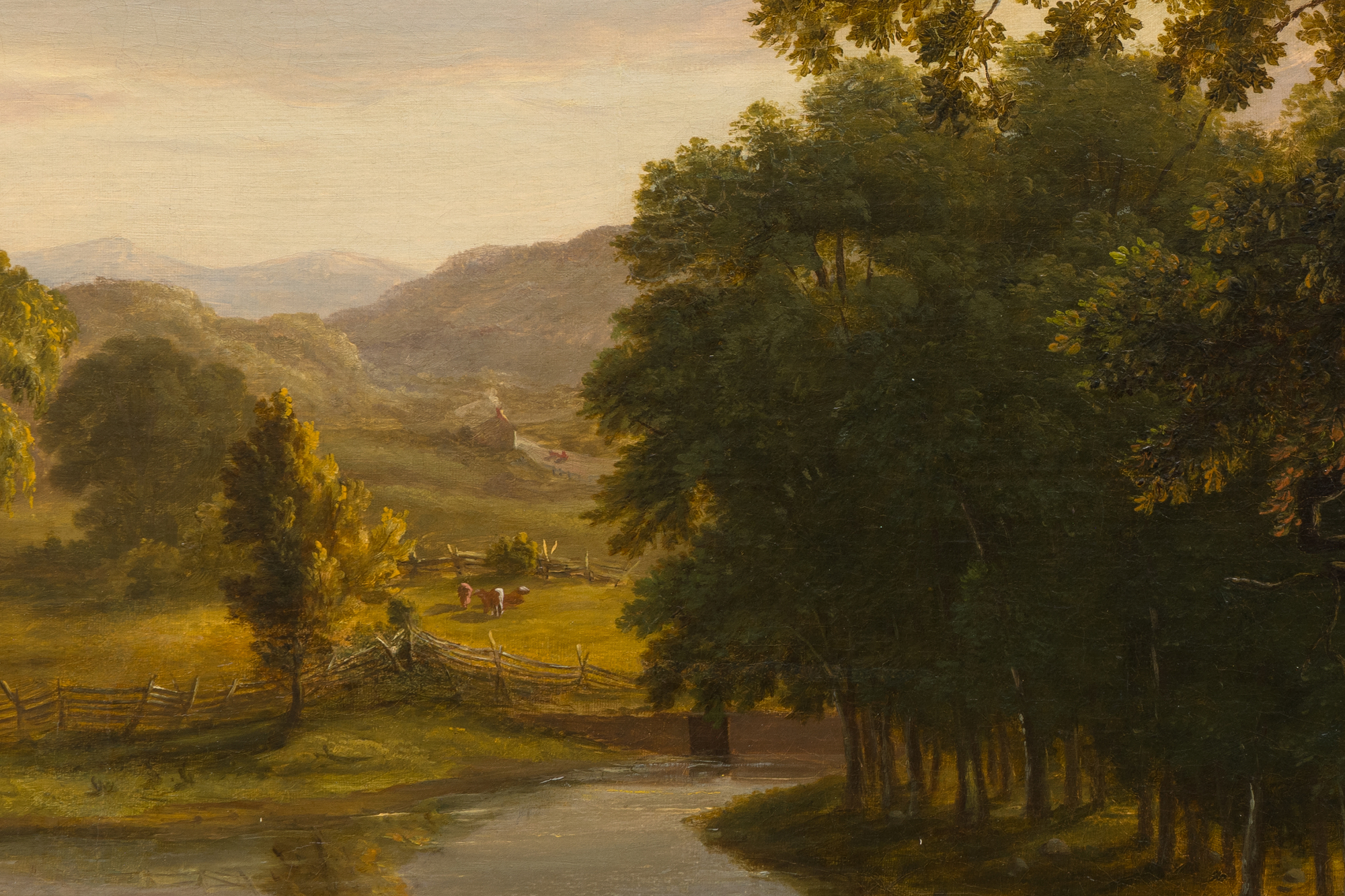
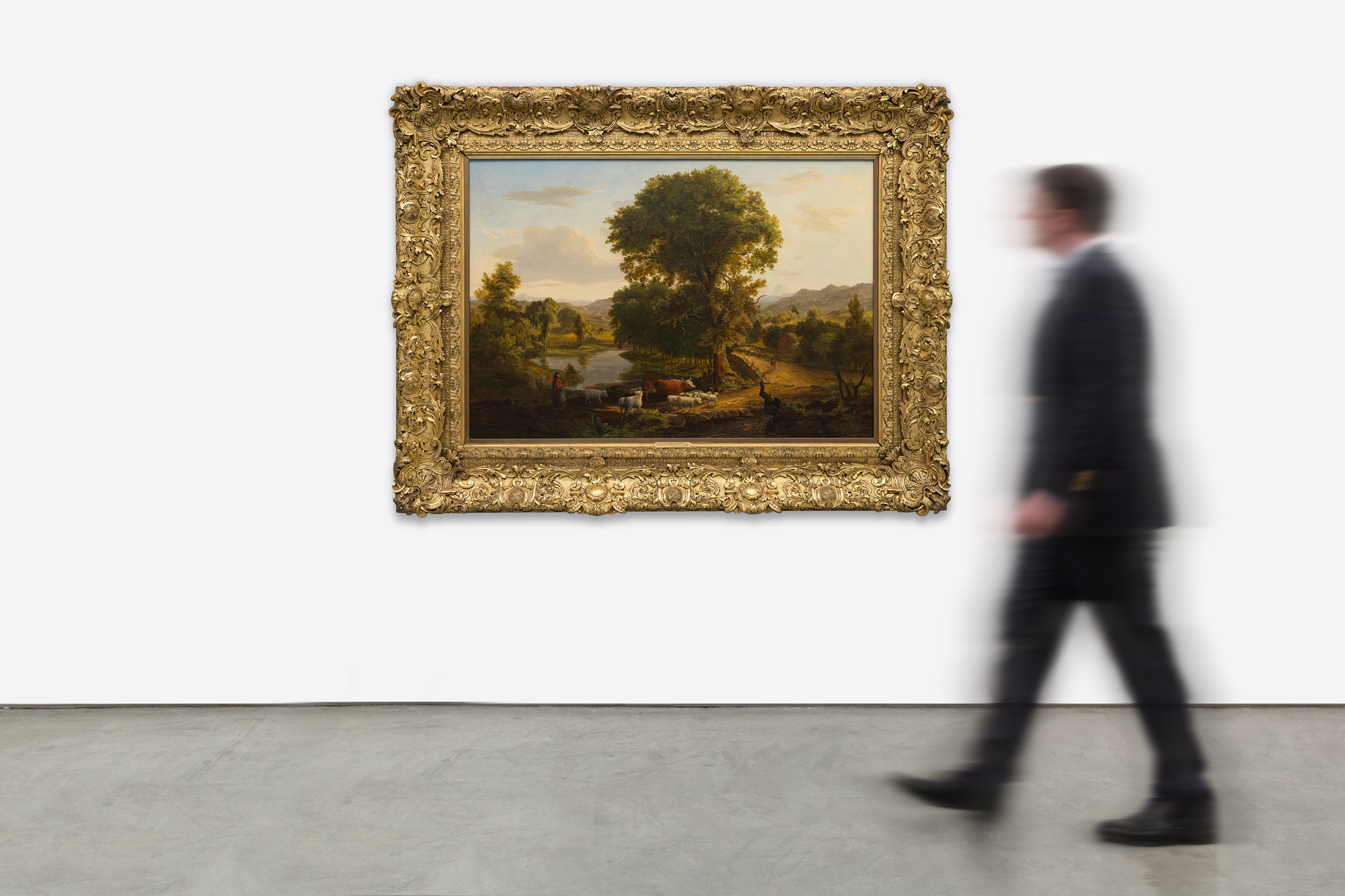
<div><font face=Lato size=3 color=black><em>Afternoon</em> is a rare early painting by George Inness, created when the artist was only twenty one and actively shaping the foundations of his career. Although largely self-taught, Inness was immersed in a transformative period during the mid-eighteen forties, studying at the National Academy of Design in New York where he closely observed the work of Hudson River School painters such as Thomas Cole and Asher Durand. This moment marked his first public exhibitions at the Academy in 1844, followed by the opening of his own studio in 1848, placing <em>Afternoon</em> squarely within the formative years in which his artistic voice began to emerge.</font></div><br><br><div> </div><br><br><div><font face=Lato size=3 color=black>The painting also reflects the subtle influence of French landscaper Regis Francois Gignoux, under whom the young Inness studied before making his first trip to Europe in 1851. This early training helped shape the atmospheric sensitivity and poetic naturalism that would later define his mature style.</font></div><br><br><div> </div><br><br><div><font face=Lato size=3 color=black><em>Afternoon</em> carries distinguished provenance, having passed through the collections of several important nineteenth and early twentieth century New Yorkers, including politician Cornelius Gardiner, financier and philanthropist Emerson McMillian, and later the philanthropist Agnes Ladson Dana. This lineage, combined with the paintings exceptional early date, makes it an especially significant example from the beginning of Innesss enduring contribution to American landscape painting.</font></div> <div><font face=Lato size=3 color=black><em>Afternoon</em> is a rare early painting by George Inness, created when the artist was only twenty one and actively shaping the foundations of his career. Although largely self-taught, Inness was immersed in a transformative period during the mid-eighteen forties, studying at the National Academy of Design in New York where he closely observed the work of Hudson River School painters such as Thomas Cole and Asher Durand. This moment marked his first public exhibitions at the Academy in 1844, followed by the opening of his own studio in 1848, placing <em>Afternoon</em> squarely within the formative years in which his artistic voice began to emerge.</font></div><br><br><div> </div><br><br><div><font face=Lato size=3 color=black>The painting also reflects the subtle influence of French landscaper Regis Francois Gignoux, under whom the young Inness studied before making his first trip to Europe in 1851. This early training helped shape the atmospheric sensitivity and poetic naturalism that would later define his mature style.</font></div><br><br><div> </div><br><br><div><font face=Lato size=3 color=black><em>Afternoon</em> carries distinguished provenance, having passed through the collections of several important nineteenth and early twentieth century New Yorkers, including politician Cornelius Gardiner, financier and philanthropist Emerson McMillian, and later the philanthropist Agnes Ladson Dana. This lineage, combined with the paintings exceptional early date, makes it an especially significant example from the beginning of Innesss enduring contribution to American landscape painting.</font></div> <div><font face=Lato size=3 color=black><em>Afternoon</em> is a rare early painting by George Inness, created when the artist was only twenty one and actively shaping the foundations of his career. Although largely self-taught, Inness was immersed in a transformative period during the mid-eighteen forties, studying at the National Academy of Design in New York where he closely observed the work of Hudson River School painters such as Thomas Cole and Asher Durand. This moment marked his first public exhibitions at the Academy in 1844, followed by the opening of his own studio in 1848, placing <em>Afternoon</em> squarely within the formative years in which his artistic voice began to emerge.</font></div><br><br><div> </div><br><br><div><font face=Lato size=3 color=black>The painting also reflects the subtle influence of French landscaper Regis Francois Gignoux, under whom the young Inness studied before making his first trip to Europe in 1851. This early training helped shape the atmospheric sensitivity and poetic naturalism that would later define his mature style.</font></div><br><br><div> </div><br><br><div><font face=Lato size=3 color=black><em>Afternoon</em> carries distinguished provenance, having passed through the collections of several important nineteenth and early twentieth century New Yorkers, including politician Cornelius Gardiner, financier and philanthropist Emerson McMillian, and later the philanthropist Agnes Ladson Dana. This lineage, combined with the paintings exceptional early date, makes it an especially significant example from the beginning of Innesss enduring contribution to American landscape painting.</font></div> <div><font face=Lato size=3 color=black><em>Afternoon</em> is a rare early painting by George Inness, created when the artist was only twenty one and actively shaping the foundations of his career. Although largely self-taught, Inness was immersed in a transformative period during the mid-eighteen forties, studying at the National Academy of Design in New York where he closely observed the work of Hudson River School painters such as Thomas Cole and Asher Durand. This moment marked his first public exhibitions at the Academy in 1844, followed by the opening of his own studio in 1848, placing <em>Afternoon</em> squarely within the formative years in which his artistic voice began to emerge.</font></div><br><br><div> </div><br><br><div><font face=Lato size=3 color=black>The painting also reflects the subtle influence of French landscaper Regis Francois Gignoux, under whom the young Inness studied before making his first trip to Europe in 1851. This early training helped shape the atmospheric sensitivity and poetic naturalism that would later define his mature style.</font></div><br><br><div> </div><br><br><div><font face=Lato size=3 color=black><em>Afternoon</em> carries distinguished provenance, having passed through the collections of several important nineteenth and early twentieth century New Yorkers, including politician Cornelius Gardiner, financier and philanthropist Emerson McMillian, and later the philanthropist Agnes Ladson Dana. This lineage, combined with the paintings exceptional early date, makes it an especially significant example from the beginning of Innesss enduring contribution to American landscape painting.</font></div> <div><font face=Lato size=3 color=black><em>Afternoon</em> is a rare early painting by George Inness, created when the artist was only twenty one and actively shaping the foundations of his career. Although largely self-taught, Inness was immersed in a transformative period during the mid-eighteen forties, studying at the National Academy of Design in New York where he closely observed the work of Hudson River School painters such as Thomas Cole and Asher Durand. This moment marked his first public exhibitions at the Academy in 1844, followed by the opening of his own studio in 1848, placing <em>Afternoon</em> squarely within the formative years in which his artistic voice began to emerge.</font></div><br><br><div> </div><br><br><div><font face=Lato size=3 color=black>The painting also reflects the subtle influence of French landscaper Regis Francois Gignoux, under whom the young Inness studied before making his first trip to Europe in 1851. This early training helped shape the atmospheric sensitivity and poetic naturalism that would later define his mature style.</font></div><br><br><div> </div><br><br><div><font face=Lato size=3 color=black><em>Afternoon</em> carries distinguished provenance, having passed through the collections of several important nineteenth and early twentieth century New Yorkers, including politician Cornelius Gardiner, financier and philanthropist Emerson McMillian, and later the philanthropist Agnes Ladson Dana. This lineage, combined with the paintings exceptional early date, makes it an especially significant example from the beginning of Innesss enduring contribution to American landscape painting.</font></div> <div><font face=Lato size=3 color=black><em>Afternoon</em> is a rare early painting by George Inness, created when the artist was only twenty one and actively shaping the foundations of his career. Although largely self-taught, Inness was immersed in a transformative period during the mid-eighteen forties, studying at the National Academy of Design in New York where he closely observed the work of Hudson River School painters such as Thomas Cole and Asher Durand. This moment marked his first public exhibitions at the Academy in 1844, followed by the opening of his own studio in 1848, placing <em>Afternoon</em> squarely within the formative years in which his artistic voice began to emerge.</font></div><br><br><div> </div><br><br><div><font face=Lato size=3 color=black>The painting also reflects the subtle influence of French landscaper Regis Francois Gignoux, under whom the young Inness studied before making his first trip to Europe in 1851. This early training helped shape the atmospheric sensitivity and poetic naturalism that would later define his mature style.</font></div><br><br><div> </div><br><br><div><font face=Lato size=3 color=black><em>Afternoon</em> carries distinguished provenance, having passed through the collections of several important nineteenth and early twentieth century New Yorkers, including politician Cornelius Gardiner, financier and philanthropist Emerson McMillian, and later the philanthropist Agnes Ladson Dana. This lineage, combined with the paintings exceptional early date, makes it an especially significant example from the beginning of Innesss enduring contribution to American landscape painting.</font></div> <div><font face=Lato size=3 color=black><em>Afternoon</em> is a rare early painting by George Inness, created when the artist was only twenty one and actively shaping the foundations of his career. Although largely self-taught, Inness was immersed in a transformative period during the mid-eighteen forties, studying at the National Academy of Design in New York where he closely observed the work of Hudson River School painters such as Thomas Cole and Asher Durand. This moment marked his first public exhibitions at the Academy in 1844, followed by the opening of his own studio in 1848, placing <em>Afternoon</em> squarely within the formative years in which his artistic voice began to emerge.</font></div><br><br><div> </div><br><br><div><font face=Lato size=3 color=black>The painting also reflects the subtle influence of French landscaper Regis Francois Gignoux, under whom the young Inness studied before making his first trip to Europe in 1851. This early training helped shape the atmospheric sensitivity and poetic naturalism that would later define his mature style.</font></div><br><br><div> </div><br><br><div><font face=Lato size=3 color=black><em>Afternoon</em> carries distinguished provenance, having passed through the collections of several important nineteenth and early twentieth century New Yorkers, including politician Cornelius Gardiner, financier and philanthropist Emerson McMillian, and later the philanthropist Agnes Ladson Dana. This lineage, combined with the paintings exceptional early date, makes it an especially significant example from the beginning of Innesss enduring contribution to American landscape painting.</font></div>
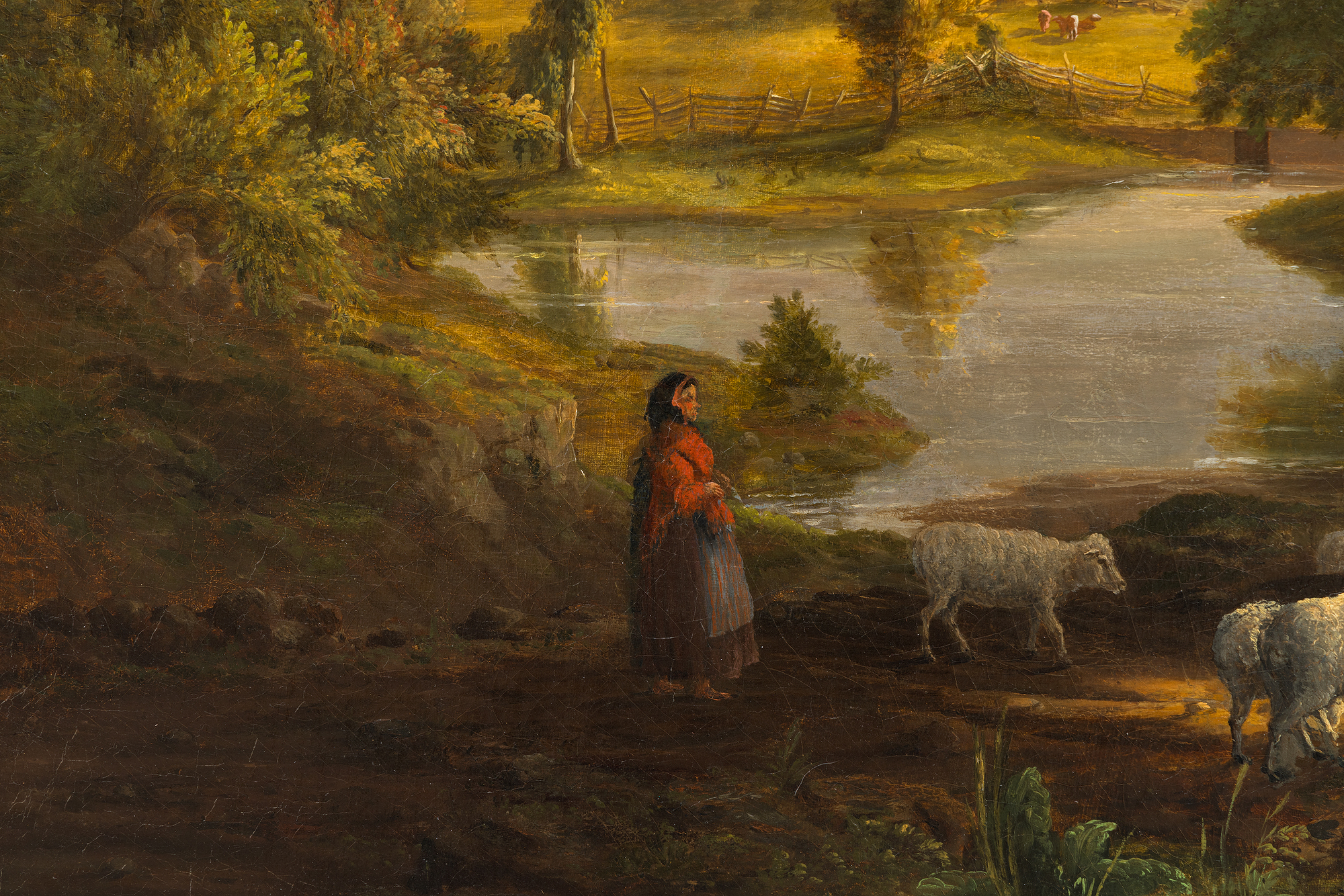
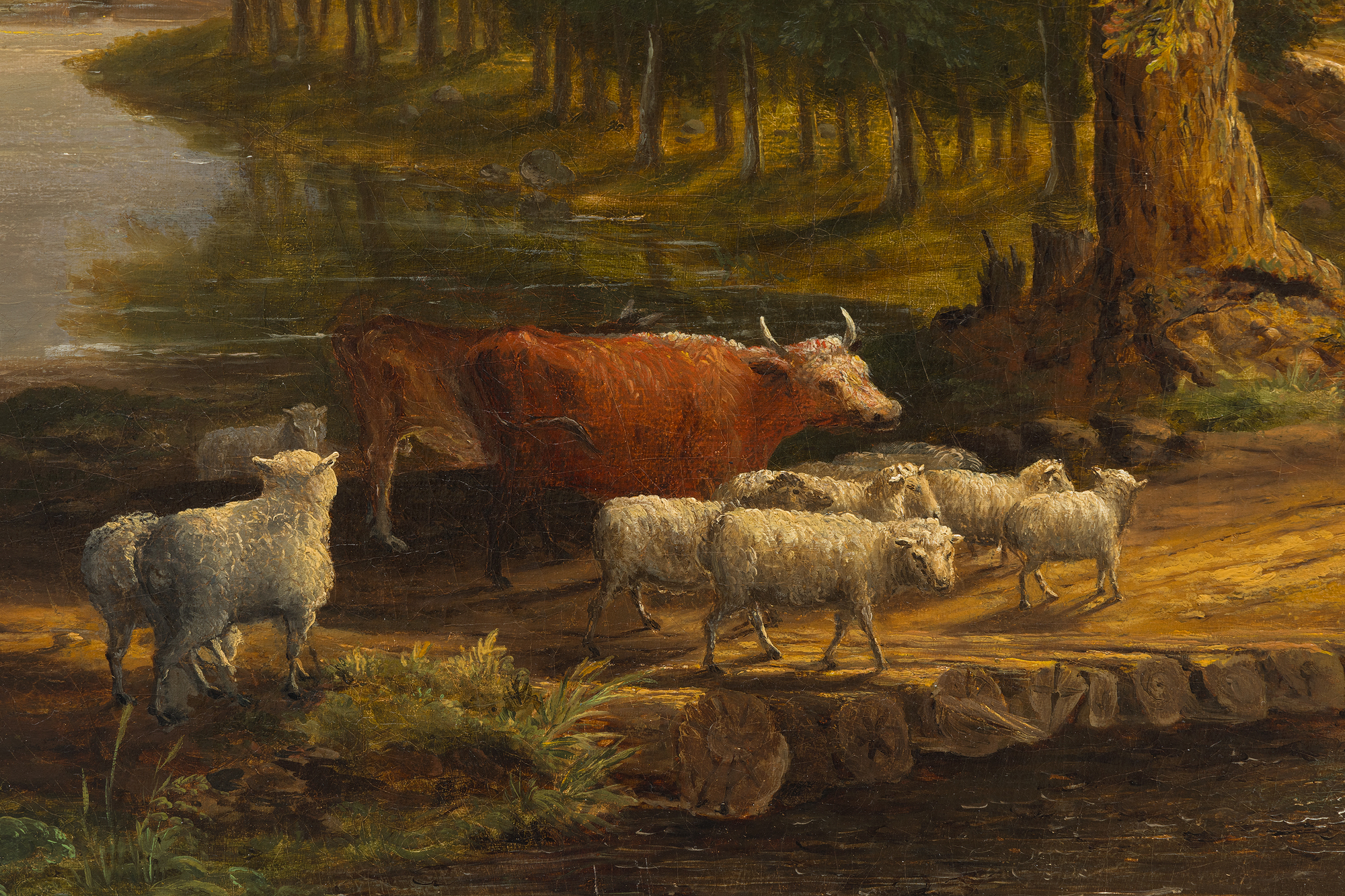
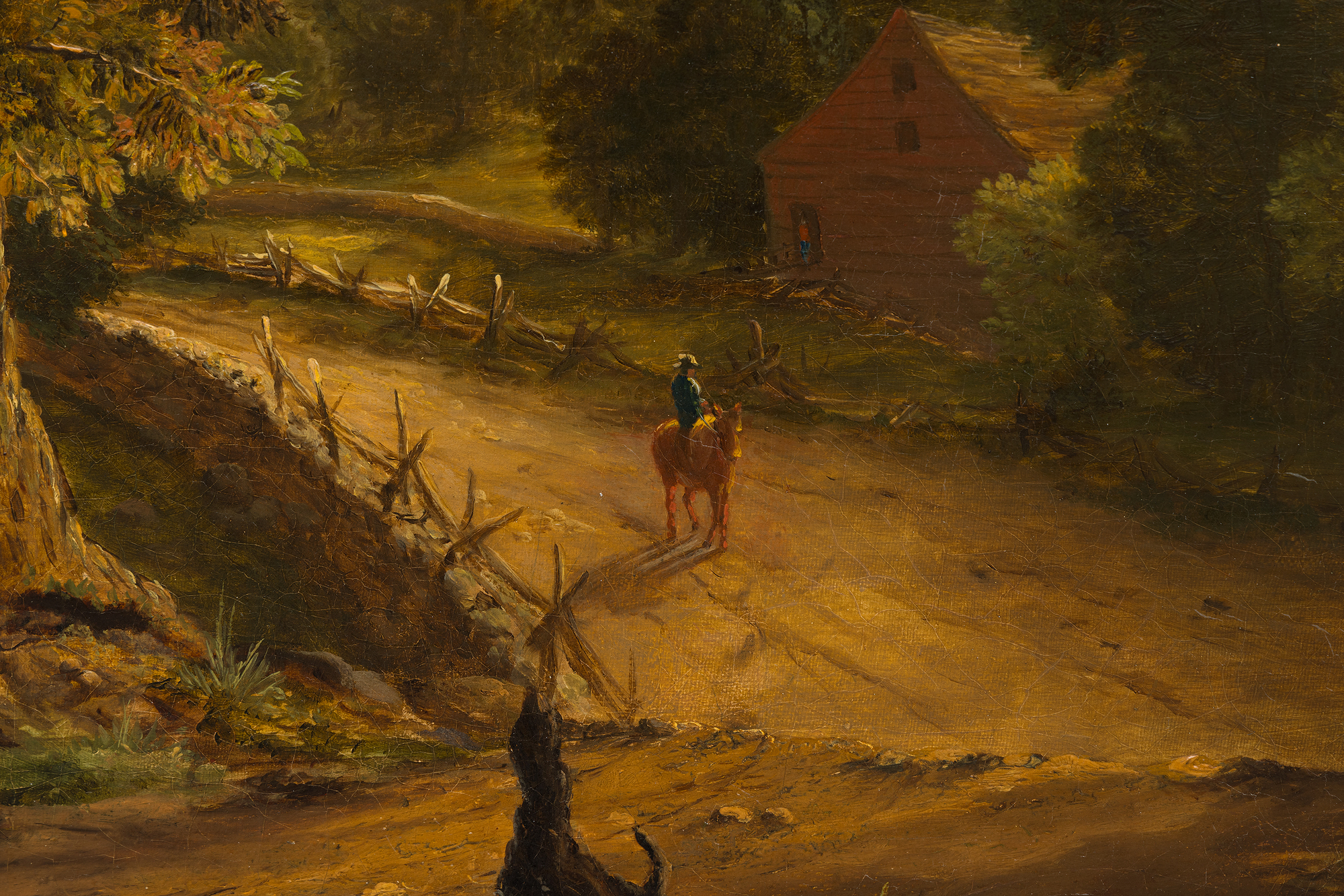
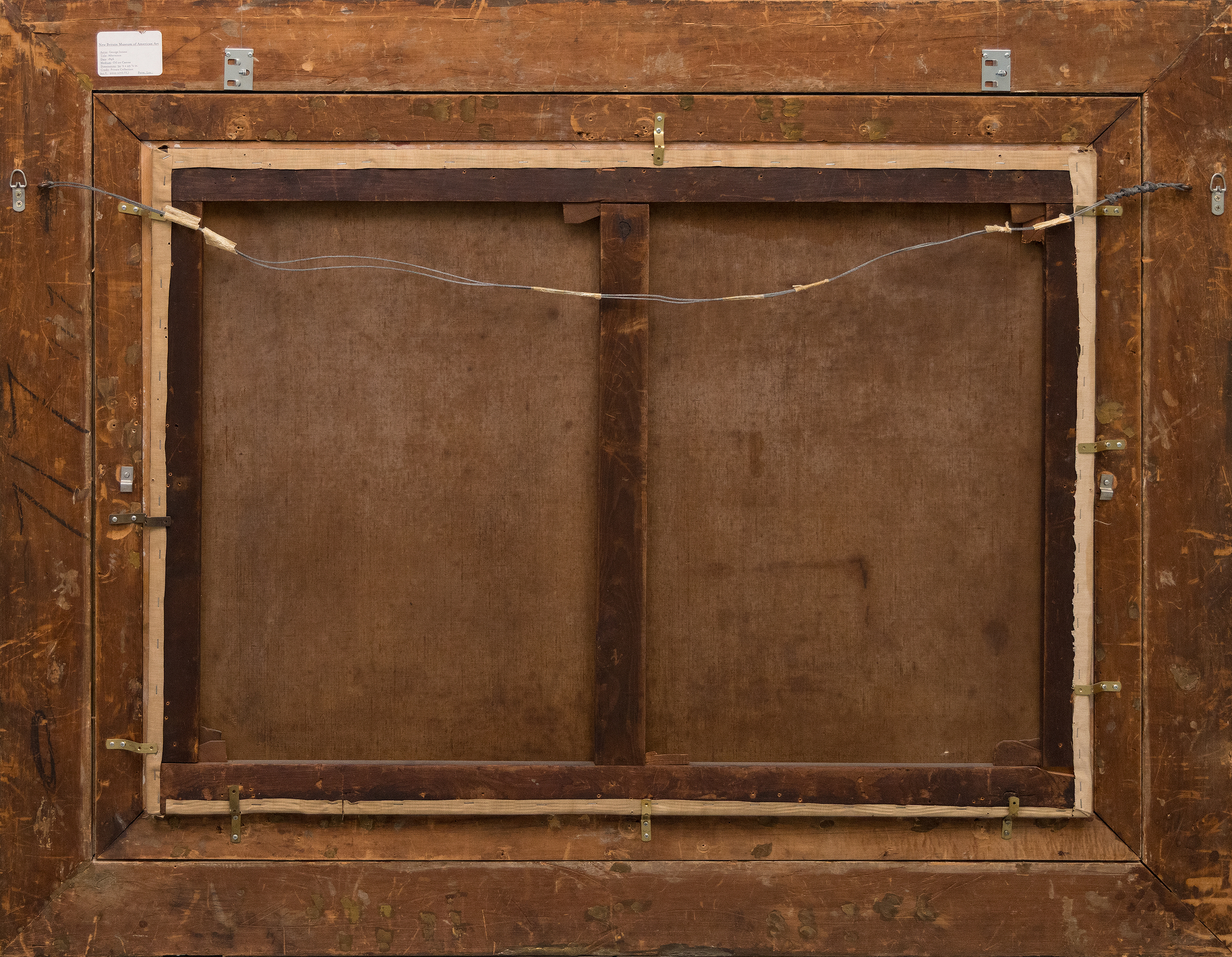
Nachmittag184634 1/2 x 49 1/4 in.(87,63 x 125,1 cm) Öl auf Leinwand
Provenienz
C. Gardinier, Fultonville, New York, 1846
Emerson McMillin, New York
American Art Association, New York, McMillin-Auktion, 20. bis 23. Januar 1913, Nr. 182,
George H. Ainslie Galleries, New York
Agnes L. Dana, Bernardsville, New Jersey
O. Rundle Gilbert Auctioneer, New York, Dana Estate Sale, 16. Mai 1959
Adamson-Duvannes Gallery, Beverly Hills, Kalifornien
Privatsammlung, Kalifornien
Privatsammlung, Virginia
Privatsammlung
Ausstellung
New York, American Art Union, Jahresausstellung, 1846, Nr. 6, ...Mehr.....als „Landschaft – Nachmittag“
New York, National Academy of Design, 21. Jahresausstellung, 1846, Nr. 143, als „Landschaft, ein amerikanischer Sommernachmittag“
Literaturhinweise
LeRoy Ireland, Illustrierter Werkkatalog, 1965, S. 9, Nr. 16, abgebildet
Nicolai Cikovsky Jr., Das Leben und Werk von George Inness, Doktorarbeit.
1965, Nr. 6, illustriert
Michael Quick, George Inness, Catalogue Raissonne: Band I, Farbtafel
...WENIGER.....
Afternoon ist ein seltenes Frühwerk von George Inness, das entstand, als der Künstler erst 21 Jahre alt war und gerade dabei war, die Grundlagen seiner Karriere zu legen. Obwohl Inness weitgehend Autodidakt war, befand er sich Mitte der 1840er Jahre in einer Phase des Wandels und studierte an der National Academy of Design in New York, wo er die Werke von Malern der Hudson River School wie Thomas Cole und Asher Durand genau studierte. In dieser Zeit fand 1844 seine erste öffentliche Ausstellung in der Akademie statt, gefolgt von der Eröffnung seines eigenen Ateliers im Jahr 1848, wodurch „Afternoon“ genau in die prägenden Jahre fällt, in denen sich seine künstlerische Stimme zu entwickeln begann.


Das Gemälde spiegelt auch den subtilen Einfluss des französischen Landschaftsmalers Regis Francois Gignoux wider, bei dem der junge Inness studierte, bevor er 1851 seine erste Reise nach Europa unternahm. Diese frühe Ausbildung trug dazu bei, die atmosphärische Sensibilität und den poetischen Naturalismus zu formen, die später seinen reifen Stil prägen sollten.


Afternoon hat eine bedeutende Provenienz, da es sich im Besitz mehrerer bedeutender New Yorker des 19. und frühen 20. Jahrhunderts befand, darunter der Politiker Cornelius Gardiner, der Finanzier und Philanthrop Emerson McMillian und später die Philanthropin Agnes Ladson Dana. Diese Herkunft in Verbindung mit dem außergewöhnlich frühen Entstehungsdatum des Gemäldes macht es zu einem besonders bedeutenden Beispiel für den Beginn von Inness' bleibendem Beitrag zur amerikanischen Landschaftsmalerei.
Fragen Sie