Zurück

CAMILLE PISSARRO (1830-1903)

$235,000

 
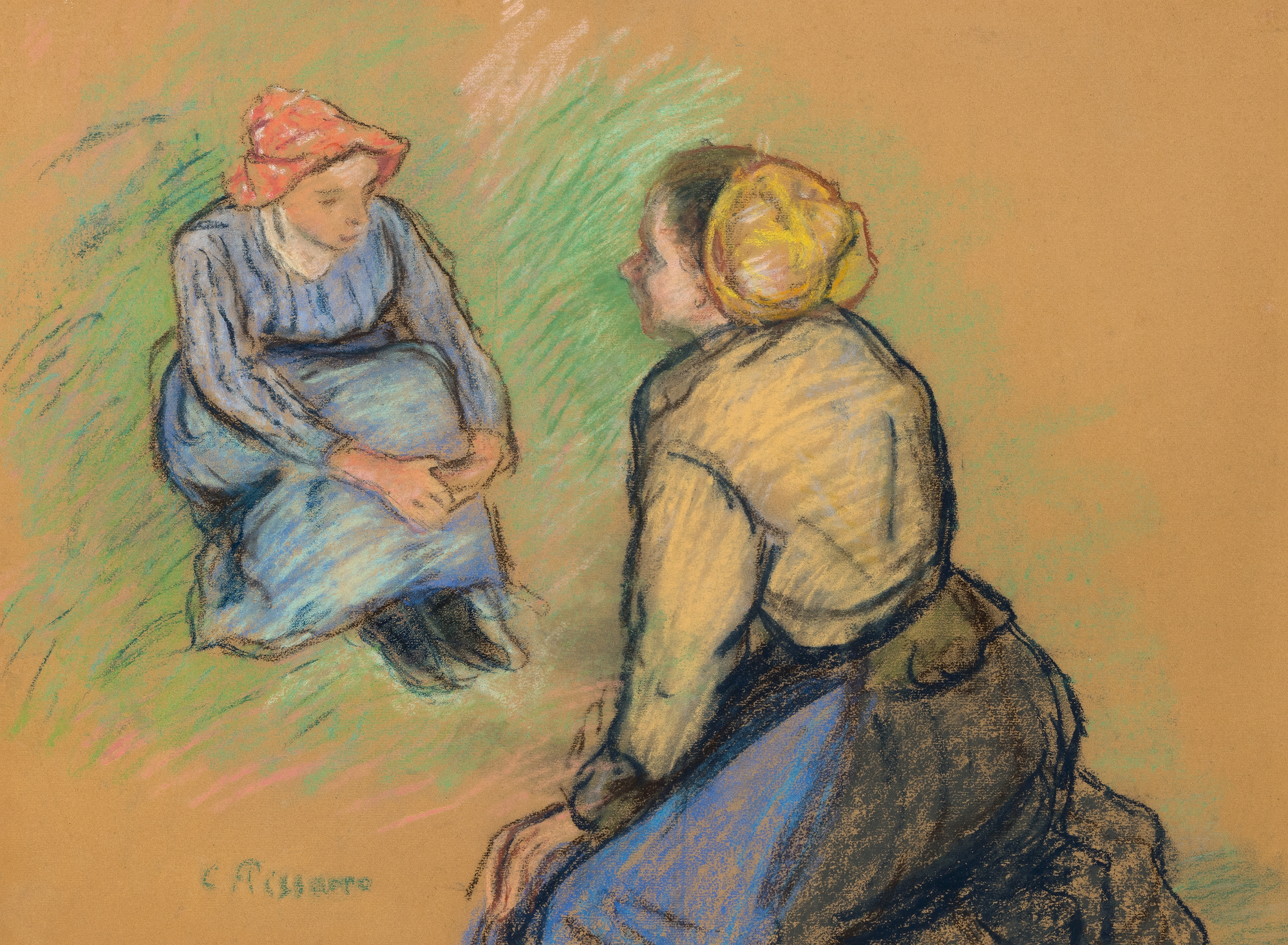
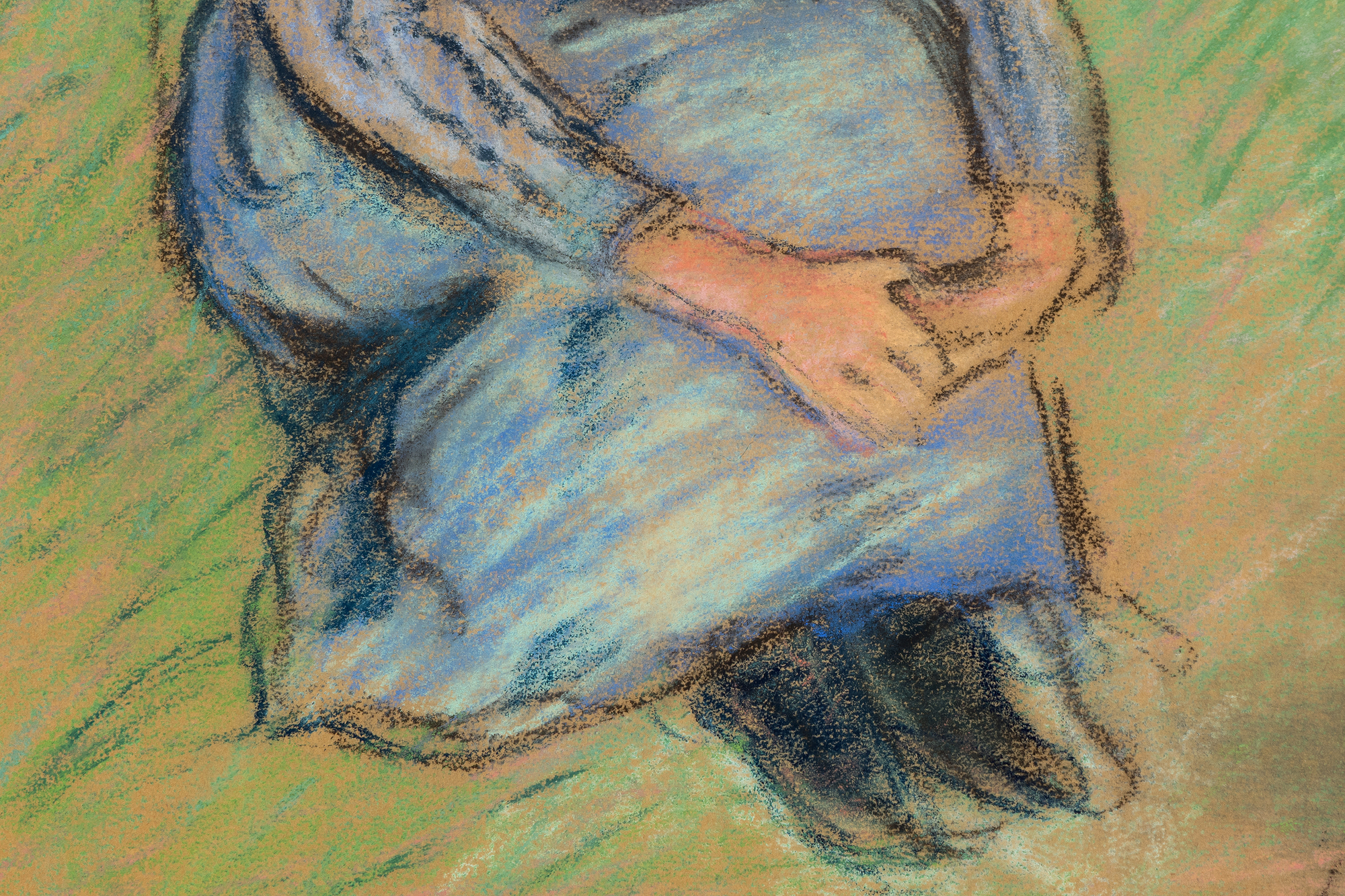
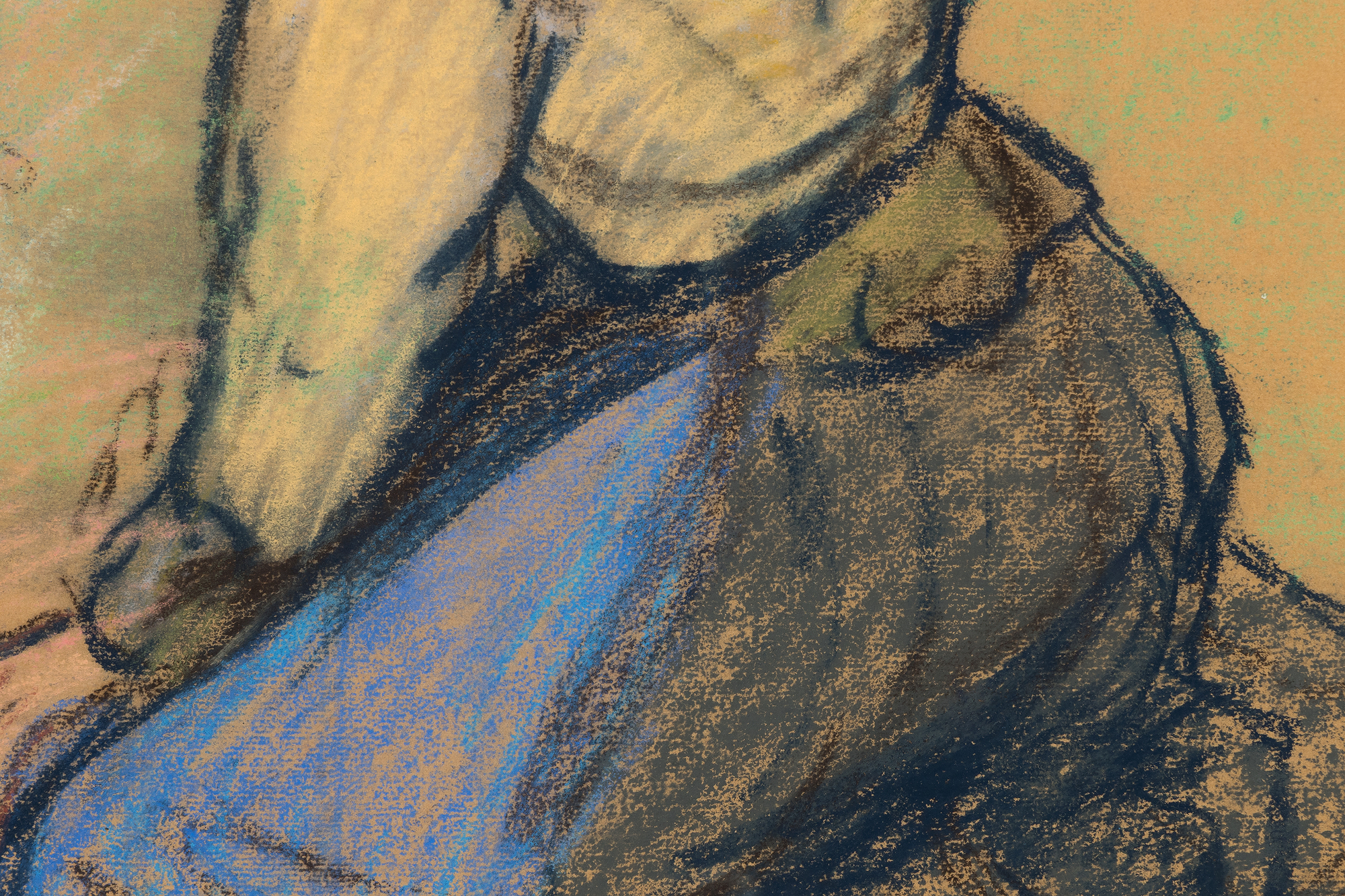
<div>Camille Pissarro’s<em> Paysannes assises </em>(c. 1880) is a richly colored, large-scale pastel that distills the artist’s humanism and modernity into an intimate, everyday encounter. Two peasant women sit in quiet conversation, their bodies described with confident contour and softened planes of color that feel both immediate and tender. The warm tone of the paper becomes an active field, allowing passages of blue, green, and rose to breathe around the figures, while Pissarro’s unmistakably painterly strokes—alternately feathered and emphatic—give the scene texture, light, and lived presence. Bright yet restrained, the work is iconically Pissarro: direct, unsentimental, and deeply attentive to rural life. </div><br><br><div> </div><br><br><div>Often called the backbone of Impressionism, Pissarro was the movement’s most consistent, experimental, and unifying force. He was the only artist to exhibit in all eight Impressionist exhibitions from 1874 to 1886, and his generosity as a mentor shaped the next generation—Cézanne, Gauguin, Seurat, and Signac among them. In pastel, a medium prized for its speed and chromatic intensity, Pissarro found an especially apt vehicle for capturing fleeting effects and the immediacy of observation, without sacrificing structure or psychological nuance. </div><br><br><div> </div><br><br><div>The enduring importance of his work is underscored by recent museum attention, including the Denver Art Museum’s major exhibition positioning him as “the first Impressionist” (<em>The Honest Eye: Camille Pissarro's Impressionism</em>, October 26, 2025 – February 8, 2026), the first significant U.S. survey of the artist in four decades. <em>Paysannes assises</em> also resonates with closely related figure studies in major collections, such as examples at LACMA and The Morgan Library, affirming the centrality of these pastoral subjects within Pissarro’s practice and within Impressionism itself. </div> <div>Camille Pissarro’s<em> Paysannes assises </em>(c. 1880) is a richly colored, large-scale pastel that distills the artist’s humanism and modernity into an intimate, everyday encounter. Two peasant women sit in quiet conversation, their bodies described with confident contour and softened planes of color that feel both immediate and tender. The warm tone of the paper becomes an active field, allowing passages of blue, green, and rose to breathe around the figures, while Pissarro’s unmistakably painterly strokes—alternately feathered and emphatic—give the scene texture, light, and lived presence. Bright yet restrained, the work is iconically Pissarro: direct, unsentimental, and deeply attentive to rural life. </div><br><br><div> </div><br><br><div>Often called the backbone of Impressionism, Pissarro was the movement’s most consistent, experimental, and unifying force. He was the only artist to exhibit in all eight Impressionist exhibitions from 1874 to 1886, and his generosity as a mentor shaped the next generation—Cézanne, Gauguin, Seurat, and Signac among them. In pastel, a medium prized for its speed and chromatic intensity, Pissarro found an especially apt vehicle for capturing fleeting effects and the immediacy of observation, without sacrificing structure or psychological nuance. </div><br><br><div> </div><br><br><div>The enduring importance of his work is underscored by recent museum attention, including the Denver Art Museum’s major exhibition positioning him as “the first Impressionist” (<em>The Honest Eye: Camille Pissarro's Impressionism</em>, October 26, 2025 – February 8, 2026), the first significant U.S. survey of the artist in four decades. <em>Paysannes assises</em> also resonates with closely related figure studies in major collections, such as examples at LACMA and The Morgan Library, affirming the centrality of these pastoral subjects within Pissarro’s practice and within Impressionism itself. </div> <div>Camille Pissarro’s<em> Paysannes assises </em>(c. 1880) is a richly colored, large-scale pastel that distills the artist’s humanism and modernity into an intimate, everyday encounter. Two peasant women sit in quiet conversation, their bodies described with confident contour and softened planes of color that feel both immediate and tender. The warm tone of the paper becomes an active field, allowing passages of blue, green, and rose to breathe around the figures, while Pissarro’s unmistakably painterly strokes—alternately feathered and emphatic—give the scene texture, light, and lived presence. Bright yet restrained, the work is iconically Pissarro: direct, unsentimental, and deeply attentive to rural life. </div><br><br><div> </div><br><br><div>Often called the backbone of Impressionism, Pissarro was the movement’s most consistent, experimental, and unifying force. He was the only artist to exhibit in all eight Impressionist exhibitions from 1874 to 1886, and his generosity as a mentor shaped the next generation—Cézanne, Gauguin, Seurat, and Signac among them. In pastel, a medium prized for its speed and chromatic intensity, Pissarro found an especially apt vehicle for capturing fleeting effects and the immediacy of observation, without sacrificing structure or psychological nuance. </div><br><br><div> </div><br><br><div>The enduring importance of his work is underscored by recent museum attention, including the Denver Art Museum’s major exhibition positioning him as “the first Impressionist” (<em>The Honest Eye: Camille Pissarro's Impressionism</em>, October 26, 2025 – February 8, 2026), the first significant U.S. survey of the artist in four decades. <em>Paysannes assises</em> also resonates with closely related figure studies in major collections, such as examples at LACMA and The Morgan Library, affirming the centrality of these pastoral subjects within Pissarro’s practice and within Impressionism itself. </div> <div>Camille Pissarro’s<em> Paysannes assises </em>(c. 1880) is a richly colored, large-scale pastel that distills the artist’s humanism and modernity into an intimate, everyday encounter. Two peasant women sit in quiet conversation, their bodies described with confident contour and softened planes of color that feel both immediate and tender. The warm tone of the paper becomes an active field, allowing passages of blue, green, and rose to breathe around the figures, while Pissarro’s unmistakably painterly strokes—alternately feathered and emphatic—give the scene texture, light, and lived presence. Bright yet restrained, the work is iconically Pissarro: direct, unsentimental, and deeply attentive to rural life. </div><br><br><div> </div><br><br><div>Often called the backbone of Impressionism, Pissarro was the movement’s most consistent, experimental, and unifying force. He was the only artist to exhibit in all eight Impressionist exhibitions from 1874 to 1886, and his generosity as a mentor shaped the next generation—Cézanne, Gauguin, Seurat, and Signac among them. In pastel, a medium prized for its speed and chromatic intensity, Pissarro found an especially apt vehicle for capturing fleeting effects and the immediacy of observation, without sacrificing structure or psychological nuance. </div><br><br><div> </div><br><br><div>The enduring importance of his work is underscored by recent museum attention, including the Denver Art Museum’s major exhibition positioning him as “the first Impressionist” (<em>The Honest Eye: Camille Pissarro's Impressionism</em>, October 26, 2025 – February 8, 2026), the first significant U.S. survey of the artist in four decades. <em>Paysannes assises</em> also resonates with closely related figure studies in major collections, such as examples at LACMA and The Morgan Library, affirming the centrality of these pastoral subjects within Pissarro’s practice and within Impressionism itself. </div> <div>Camille Pissarro’s<em> Paysannes assises </em>(c. 1880) is a richly colored, large-scale pastel that distills the artist’s humanism and modernity into an intimate, everyday encounter. Two peasant women sit in quiet conversation, their bodies described with confident contour and softened planes of color that feel both immediate and tender. The warm tone of the paper becomes an active field, allowing passages of blue, green, and rose to breathe around the figures, while Pissarro’s unmistakably painterly strokes—alternately feathered and emphatic—give the scene texture, light, and lived presence. Bright yet restrained, the work is iconically Pissarro: direct, unsentimental, and deeply attentive to rural life. </div><br><br><div> </div><br><br><div>Often called the backbone of Impressionism, Pissarro was the movement’s most consistent, experimental, and unifying force. He was the only artist to exhibit in all eight Impressionist exhibitions from 1874 to 1886, and his generosity as a mentor shaped the next generation—Cézanne, Gauguin, Seurat, and Signac among them. In pastel, a medium prized for its speed and chromatic intensity, Pissarro found an especially apt vehicle for capturing fleeting effects and the immediacy of observation, without sacrificing structure or psychological nuance. </div><br><br><div> </div><br><br><div>The enduring importance of his work is underscored by recent museum attention, including the Denver Art Museum’s major exhibition positioning him as “the first Impressionist” (<em>The Honest Eye: Camille Pissarro's Impressionism</em>, October 26, 2025 – February 8, 2026), the first significant U.S. survey of the artist in four decades. <em>Paysannes assises</em> also resonates with closely related figure studies in major collections, such as examples at LACMA and The Morgan Library, affirming the centrality of these pastoral subjects within Pissarro’s practice and within Impressionism itself. </div> <div>Camille Pissarro’s<em> Paysannes assises </em>(c. 1880) is a richly colored, large-scale pastel that distills the artist’s humanism and modernity into an intimate, everyday encounter. Two peasant women sit in quiet conversation, their bodies described with confident contour and softened planes of color that feel both immediate and tender. The warm tone of the paper becomes an active field, allowing passages of blue, green, and rose to breathe around the figures, while Pissarro’s unmistakably painterly strokes—alternately feathered and emphatic—give the scene texture, light, and lived presence. Bright yet restrained, the work is iconically Pissarro: direct, unsentimental, and deeply attentive to rural life. </div><br><br><div> </div><br><br><div>Often called the backbone of Impressionism, Pissarro was the movement’s most consistent, experimental, and unifying force. He was the only artist to exhibit in all eight Impressionist exhibitions from 1874 to 1886, and his generosity as a mentor shaped the next generation—Cézanne, Gauguin, Seurat, and Signac among them. In pastel, a medium prized for its speed and chromatic intensity, Pissarro found an especially apt vehicle for capturing fleeting effects and the immediacy of observation, without sacrificing structure or psychological nuance. </div><br><br><div> </div><br><br><div>The enduring importance of his work is underscored by recent museum attention, including the Denver Art Museum’s major exhibition positioning him as “the first Impressionist” (<em>The Honest Eye: Camille Pissarro's Impressionism</em>, October 26, 2025 – February 8, 2026), the first significant U.S. survey of the artist in four decades. <em>Paysannes assises</em> also resonates with closely related figure studies in major collections, such as examples at LACMA and The Morgan Library, affirming the centrality of these pastoral subjects within Pissarro’s practice and within Impressionism itself. </div> <div>Camille Pissarro’s<em> Paysannes assises </em>(c. 1880) is a richly colored, large-scale pastel that distills the artist’s humanism and modernity into an intimate, everyday encounter. Two peasant women sit in quiet conversation, their bodies described with confident contour and softened planes of color that feel both immediate and tender. The warm tone of the paper becomes an active field, allowing passages of blue, green, and rose to breathe around the figures, while Pissarro’s unmistakably painterly strokes—alternately feathered and emphatic—give the scene texture, light, and lived presence. Bright yet restrained, the work is iconically Pissarro: direct, unsentimental, and deeply attentive to rural life. </div><br><br><div> </div><br><br><div>Often called the backbone of Impressionism, Pissarro was the movement’s most consistent, experimental, and unifying force. He was the only artist to exhibit in all eight Impressionist exhibitions from 1874 to 1886, and his generosity as a mentor shaped the next generation—Cézanne, Gauguin, Seurat, and Signac among them. In pastel, a medium prized for its speed and chromatic intensity, Pissarro found an especially apt vehicle for capturing fleeting effects and the immediacy of observation, without sacrificing structure or psychological nuance. </div><br><br><div> </div><br><br><div>The enduring importance of his work is underscored by recent museum attention, including the Denver Art Museum’s major exhibition positioning him as “the first Impressionist” (<em>The Honest Eye: Camille Pissarro's Impressionism</em>, October 26, 2025 – February 8, 2026), the first significant U.S. survey of the artist in four decades. <em>Paysannes assises</em> also resonates with closely related figure studies in major collections, such as examples at LACMA and The Morgan Library, affirming the centrality of these pastoral subjects within Pissarro’s practice and within Impressionism itself. </div>
Paysannes Assisesum 188016 x 22 Zoll(40,64 x 55,88 cm) Kreide auf Papier
Provenienz
Erna Stiebel Sammlung
Christie’s, New York, 11. Mai 1995, Los 231 (aus dem Nachlass von Erna Stiebel)
Paolo Dal Bosco, Trient, erworben bei der oben genannten Auktion
Pandolfini Casa d'Aste: Dienstag, 29. Oktober 2019, Los 00004, Wiederentdeckte Schätze – Meisterwerke der Impressionisten und Moderne (aus einer Privatsammlung)
Privatsammlung, London, erworben bei der oben genannten Auktion
Literaturhinweise
Dieses Werk wird in den demnächst erscheinenden digitalen Werkverzeichnis von Pissarro aufgenommen.
 
Camille Pissarros „Paysannes assises“ (ca. 1880) ist ein farbenprächtiges, großformatiges Pastellgemälde, das den Humanismus und die Modernität des Künstlers in einer intimen, alltäglichen Begegnung zum Ausdruck bringt. Zwei Bäuerinnen sitzen in ruhiger Unterhaltung beieinander, ihre Körper sind mit selbstbewussten Konturen und weichen Farbflächen dargestellt, die sowohl unmittelbar als auch zart wirken. Der warme Ton des Papiers wird zu einem aktiven Feld, das den Figuren Raum zum Atmen lässt, während Pissarros unverkennbare malerische Pinselstriche – mal federleicht, mal nachdrücklich – der Szene Textur, Licht und lebendige Präsenz verleihen. Hell und doch zurückhaltend, ist das Werk typisch für Pissarro: direkt, unsentimental und mit großer Aufmerksamkeit für das ländliche Leben.


Pissarro, der oft als Rückgrat des Impressionismus bezeichnet wird, war die beständigste, experimentierfreudigste und verbindendste Kraft der Bewegung. Er war der einzige Künstler, der von 1874 bis 1886 an allen acht Impressionistenausstellungen teilnahm, und seine Großzügigkeit als Mentor prägte die nächste Generation – darunter Cézanne, Gauguin, Seurat und Signac. In Pastellfarben, einem Medium, das wegen seiner Schnelligkeit und chromatischen Intensität geschätzt wird, fand Pissarro ein besonders geeignetes Mittel, um flüchtige Effekte und die Unmittelbarkeit der Beobachtung einzufangen, ohne dabei Struktur oder psychologische Nuancen zu opfern.


Die anhaltende Bedeutung seines Werks wird durch die jüngste Aufmerksamkeit der Museen unterstrichen, darunter die große Ausstellung des Denver Art Museum, die ihn als „den ersten Impressionisten” positioniert (The Honest Eye: Camille Pissarro's Impressionism, 26. Oktober 2025 – 8. Februar 2026), die erste bedeutende US-amerikanische Werkschau des Künstlers seit vier Jahrzehnten. Paysannes assises steht auch in Resonanz mit eng verwandten Figurenstudien in bedeutenden Sammlungen, wie beispielsweise im LACMA und in der Morgan Library, und bestätigt die zentrale Bedeutung dieser pastoralen Motive in Pissarros Schaffen und im Impressionismus selbst.
Fragen Sie