Atrás

MAURICE DE VLAMINCK (1876-1958)

$90,000

 
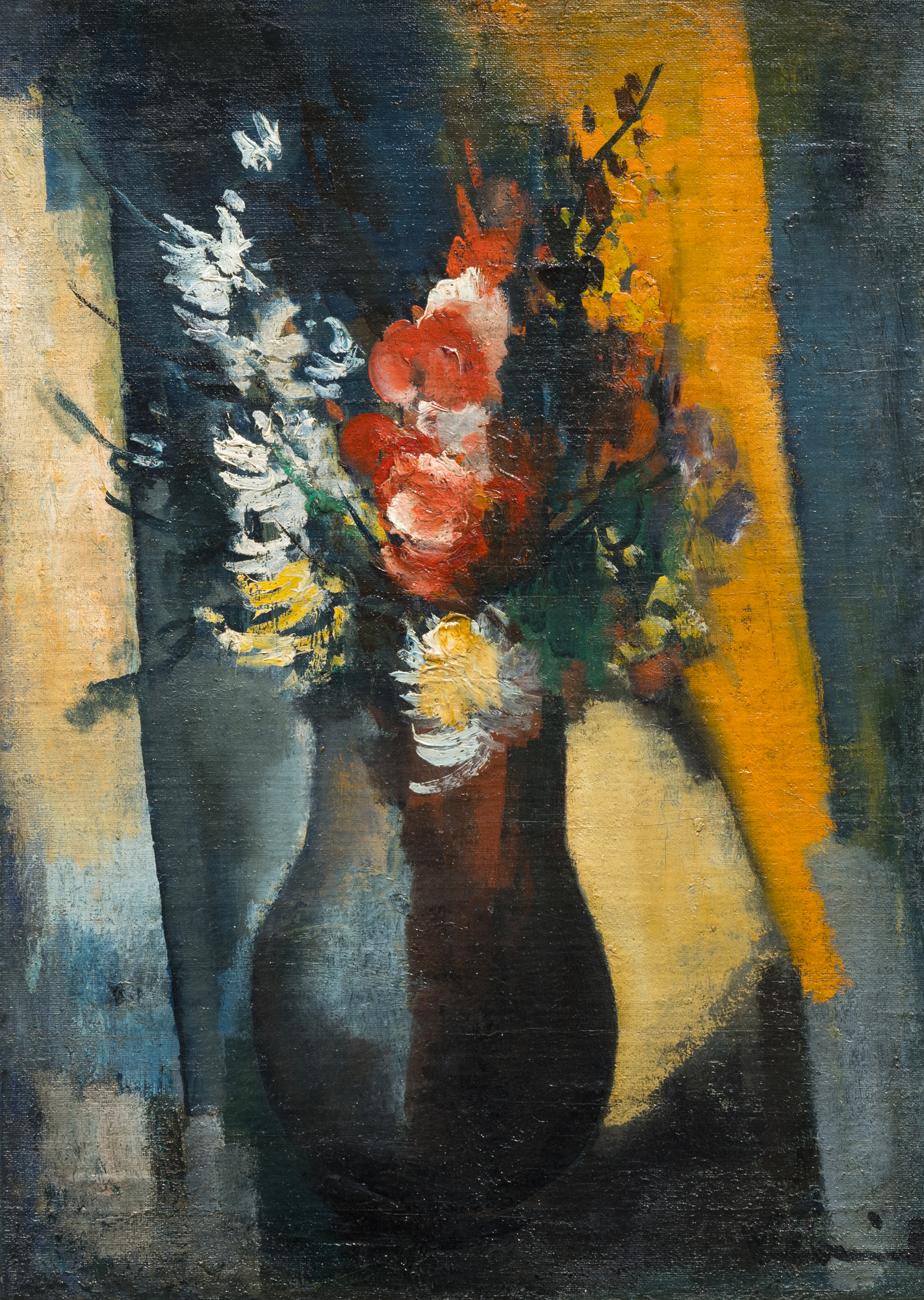
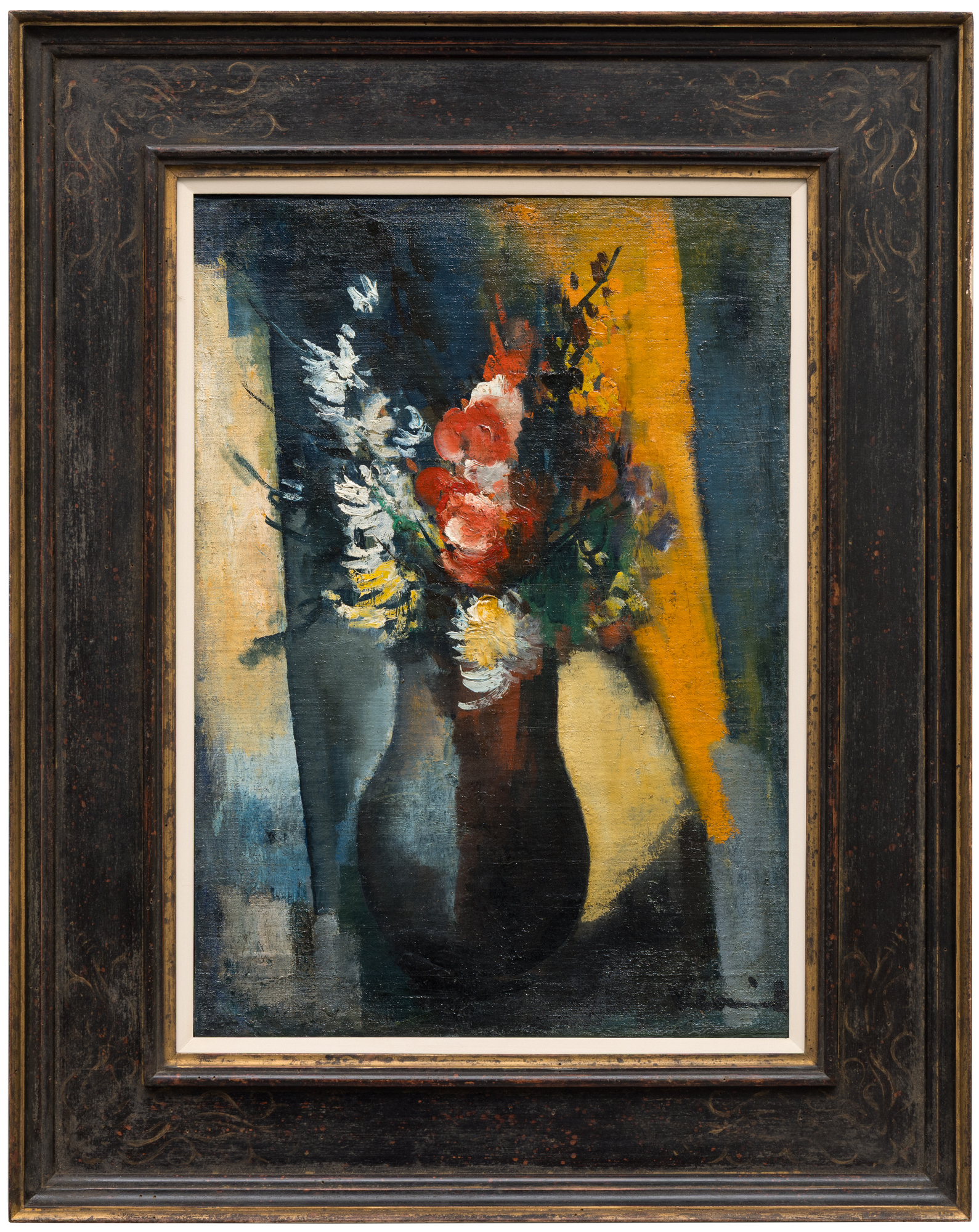
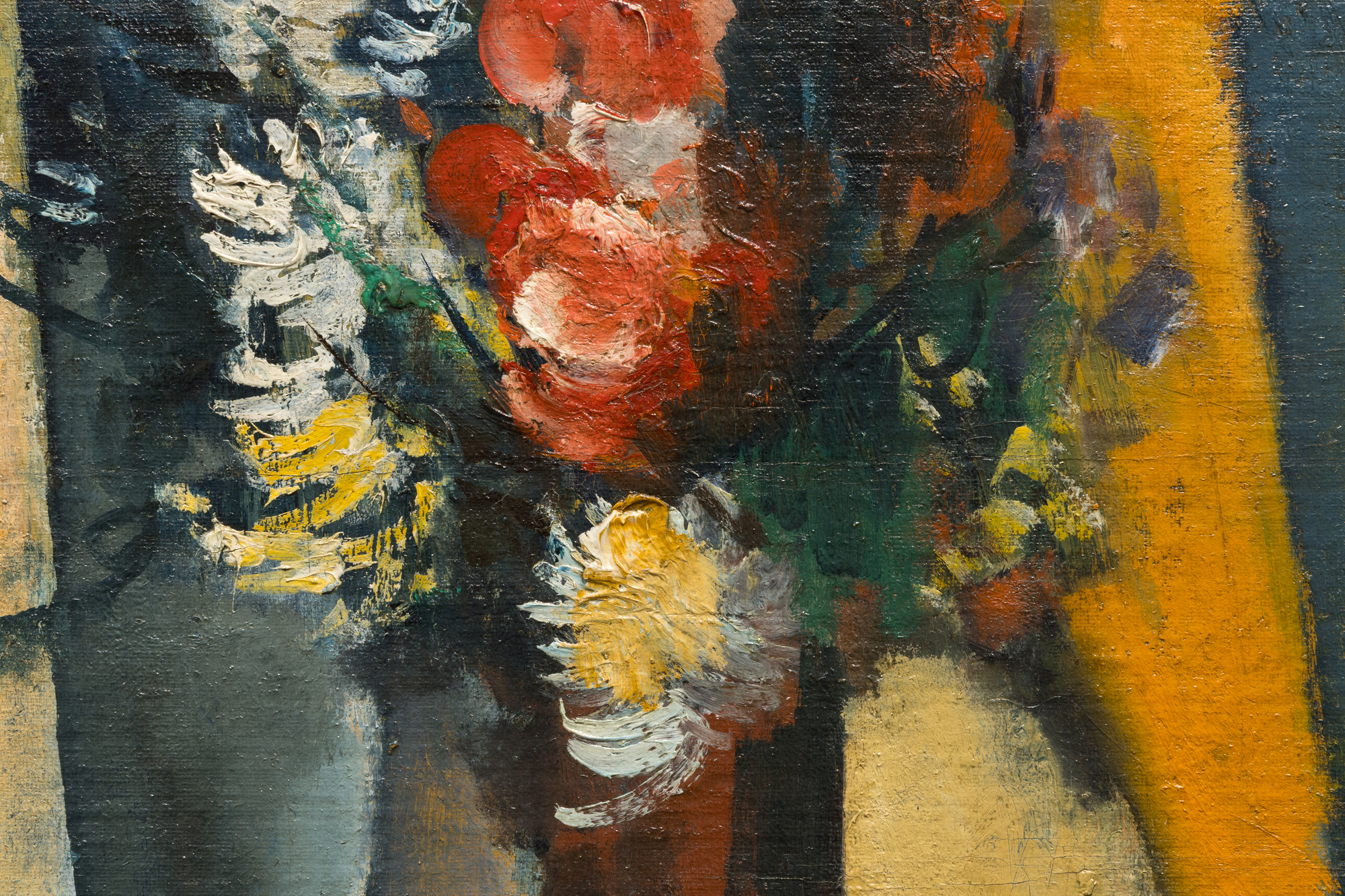
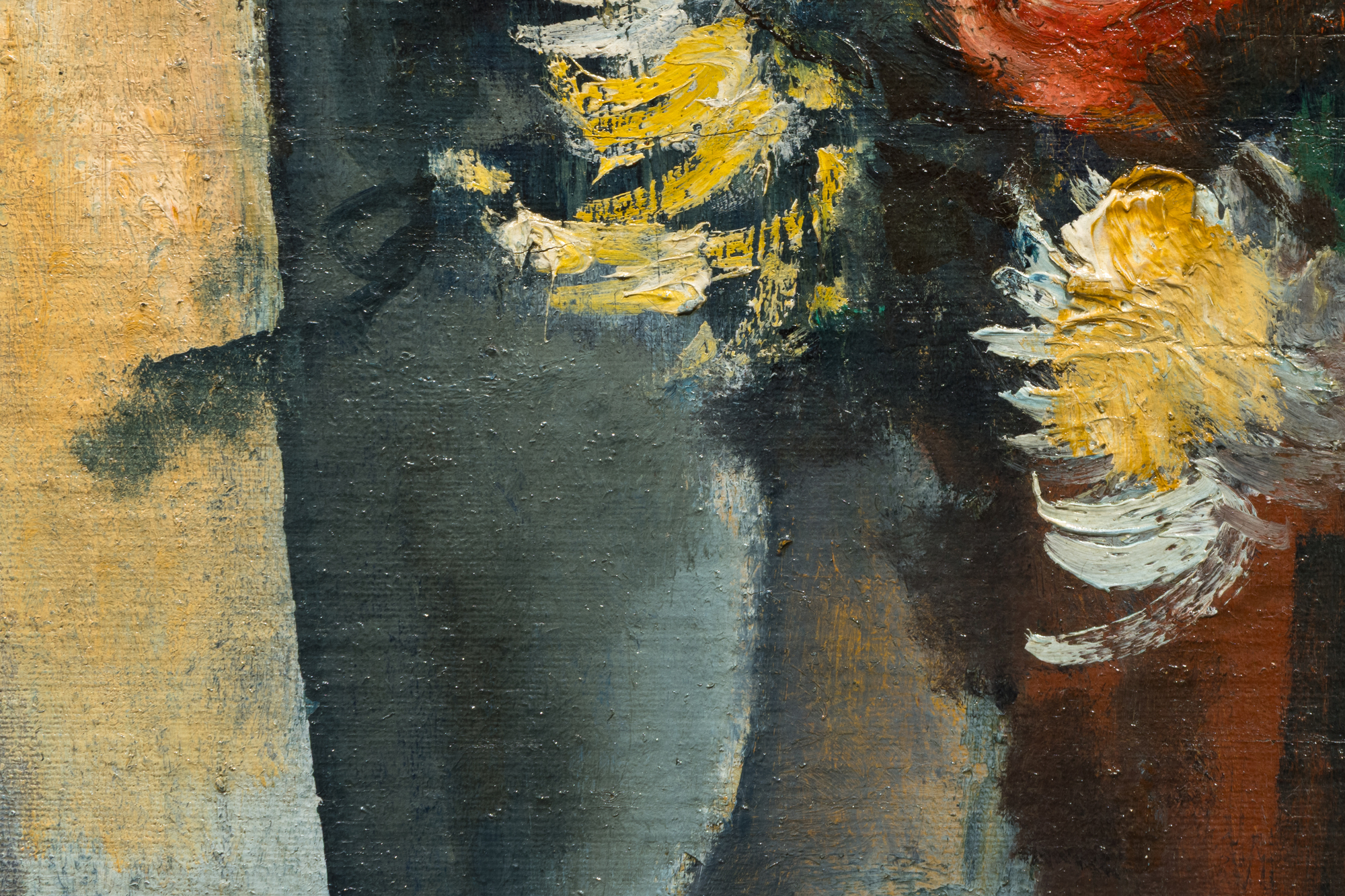
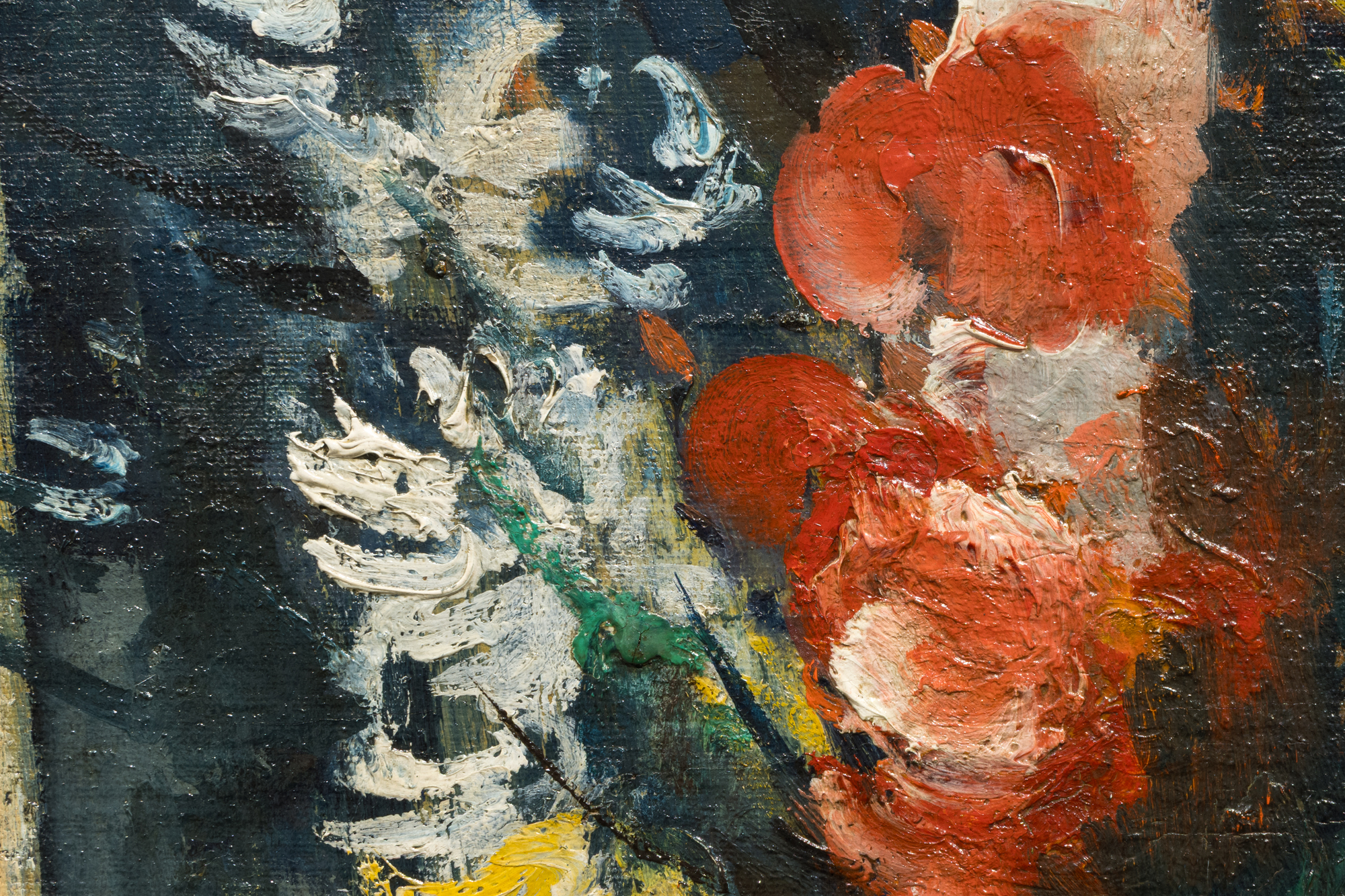
<div>Maurice de Vlaminck’s<em> Fleurs dans un vase</em> (1910-11) is a prime-period still life that channels the artist’s Fauvist sensibilites into an image of exuberant, painterly force. A dynamic spray of blooms in vibrant reds, yellows, and whites flourishes from a dark vase, in a stark contrast of forms and color, creating an almost sculptural effect. With vigorous, directional brushstrokes, Vlaminck animates petals and foliage into a rhythmic surge, turning a traditional tabletop motif into a study of movement, texture, and intensity.</div><br><br><div> </div><br><br><div>As one of the core founders of Fauvism, Vlaminck was celebrated for his radical, non-naturalistic use of color, and this work retains that avant-garde approach. Cool blues and greys against saturated oranges, and the faceted planes of the backgroud heighten contrast and create a dynamic composition.  The paint surface remains boldly worked, emphasizing the physicality of oil on canvas and the immediacy of the artist’s hand.</div><br><br><div> </div><br><br><div>The painting is accompanied by a certificate of authenticity by the Wildenstein Institute for the catalogue of Maurice de Vlaminck’s works. Renewed international attention to Vlaminck’s achievements, including a recent retrospective at Museum Barberini in Potsdam - the first in nearly a century -has reaffirmed his vital role in the development of modern painting.<em> Fleurs dans un vase </em>captures that legacy: unapologetically modern and powered by color as expression. </div> <div>Maurice de Vlaminck’s<em> Fleurs dans un vase</em> (1910-11) is a prime-period still life that channels the artist’s Fauvist sensibilites into an image of exuberant, painterly force. A dynamic spray of blooms in vibrant reds, yellows, and whites flourishes from a dark vase, in a stark contrast of forms and color, creating an almost sculptural effect. With vigorous, directional brushstrokes, Vlaminck animates petals and foliage into a rhythmic surge, turning a traditional tabletop motif into a study of movement, texture, and intensity.</div><br><br><div> </div><br><br><div>As one of the core founders of Fauvism, Vlaminck was celebrated for his radical, non-naturalistic use of color, and this work retains that avant-garde approach. Cool blues and greys against saturated oranges, and the faceted planes of the backgroud heighten contrast and create a dynamic composition.  The paint surface remains boldly worked, emphasizing the physicality of oil on canvas and the immediacy of the artist’s hand.</div><br><br><div> </div><br><br><div>The painting is accompanied by a certificate of authenticity by the Wildenstein Institute for the catalogue of Maurice de Vlaminck’s works. Renewed international attention to Vlaminck’s achievements, including a recent retrospective at Museum Barberini in Potsdam - the first in nearly a century -has reaffirmed his vital role in the development of modern painting.<em> Fleurs dans un vase </em>captures that legacy: unapologetically modern and powered by color as expression. </div> <div>Maurice de Vlaminck’s<em> Fleurs dans un vase</em> (1910-11) is a prime-period still life that channels the artist’s Fauvist sensibilites into an image of exuberant, painterly force. A dynamic spray of blooms in vibrant reds, yellows, and whites flourishes from a dark vase, in a stark contrast of forms and color, creating an almost sculptural effect. With vigorous, directional brushstrokes, Vlaminck animates petals and foliage into a rhythmic surge, turning a traditional tabletop motif into a study of movement, texture, and intensity.</div><br><br><div> </div><br><br><div>As one of the core founders of Fauvism, Vlaminck was celebrated for his radical, non-naturalistic use of color, and this work retains that avant-garde approach. Cool blues and greys against saturated oranges, and the faceted planes of the backgroud heighten contrast and create a dynamic composition.  The paint surface remains boldly worked, emphasizing the physicality of oil on canvas and the immediacy of the artist’s hand.</div><br><br><div> </div><br><br><div>The painting is accompanied by a certificate of authenticity by the Wildenstein Institute for the catalogue of Maurice de Vlaminck’s works. Renewed international attention to Vlaminck’s achievements, including a recent retrospective at Museum Barberini in Potsdam - the first in nearly a century -has reaffirmed his vital role in the development of modern painting.<em> Fleurs dans un vase </em>captures that legacy: unapologetically modern and powered by color as expression. </div> <div>Maurice de Vlaminck’s<em> Fleurs dans un vase</em> (1910-11) is a prime-period still life that channels the artist’s Fauvist sensibilites into an image of exuberant, painterly force. A dynamic spray of blooms in vibrant reds, yellows, and whites flourishes from a dark vase, in a stark contrast of forms and color, creating an almost sculptural effect. With vigorous, directional brushstrokes, Vlaminck animates petals and foliage into a rhythmic surge, turning a traditional tabletop motif into a study of movement, texture, and intensity.</div><br><br><div> </div><br><br><div>As one of the core founders of Fauvism, Vlaminck was celebrated for his radical, non-naturalistic use of color, and this work retains that avant-garde approach. Cool blues and greys against saturated oranges, and the faceted planes of the backgroud heighten contrast and create a dynamic composition.  The paint surface remains boldly worked, emphasizing the physicality of oil on canvas and the immediacy of the artist’s hand.</div><br><br><div> </div><br><br><div>The painting is accompanied by a certificate of authenticity by the Wildenstein Institute for the catalogue of Maurice de Vlaminck’s works. Renewed international attention to Vlaminck’s achievements, including a recent retrospective at Museum Barberini in Potsdam - the first in nearly a century -has reaffirmed his vital role in the development of modern painting.<em> Fleurs dans un vase </em>captures that legacy: unapologetically modern and powered by color as expression. </div> <div>Maurice de Vlaminck’s<em> Fleurs dans un vase</em> (1910-11) is a prime-period still life that channels the artist’s Fauvist sensibilites into an image of exuberant, painterly force. A dynamic spray of blooms in vibrant reds, yellows, and whites flourishes from a dark vase, in a stark contrast of forms and color, creating an almost sculptural effect. With vigorous, directional brushstrokes, Vlaminck animates petals and foliage into a rhythmic surge, turning a traditional tabletop motif into a study of movement, texture, and intensity.</div><br><br><div> </div><br><br><div>As one of the core founders of Fauvism, Vlaminck was celebrated for his radical, non-naturalistic use of color, and this work retains that avant-garde approach. Cool blues and greys against saturated oranges, and the faceted planes of the backgroud heighten contrast and create a dynamic composition.  The paint surface remains boldly worked, emphasizing the physicality of oil on canvas and the immediacy of the artist’s hand.</div><br><br><div> </div><br><br><div>The painting is accompanied by a certificate of authenticity by the Wildenstein Institute for the catalogue of Maurice de Vlaminck’s works. Renewed international attention to Vlaminck’s achievements, including a recent retrospective at Museum Barberini in Potsdam - the first in nearly a century -has reaffirmed his vital role in the development of modern painting.<em> Fleurs dans un vase </em>captures that legacy: unapologetically modern and powered by color as expression. </div> <div>Maurice de Vlaminck’s<em> Fleurs dans un vase</em> (1910-11) is a prime-period still life that channels the artist’s Fauvist sensibilites into an image of exuberant, painterly force. A dynamic spray of blooms in vibrant reds, yellows, and whites flourishes from a dark vase, in a stark contrast of forms and color, creating an almost sculptural effect. With vigorous, directional brushstrokes, Vlaminck animates petals and foliage into a rhythmic surge, turning a traditional tabletop motif into a study of movement, texture, and intensity.</div><br><br><div> </div><br><br><div>As one of the core founders of Fauvism, Vlaminck was celebrated for his radical, non-naturalistic use of color, and this work retains that avant-garde approach. Cool blues and greys against saturated oranges, and the faceted planes of the backgroud heighten contrast and create a dynamic composition.  The paint surface remains boldly worked, emphasizing the physicality of oil on canvas and the immediacy of the artist’s hand.</div><br><br><div> </div><br><br><div>The painting is accompanied by a certificate of authenticity by the Wildenstein Institute for the catalogue of Maurice de Vlaminck’s works. Renewed international attention to Vlaminck’s achievements, including a recent retrospective at Museum Barberini in Potsdam - the first in nearly a century -has reaffirmed his vital role in the development of modern painting.<em> Fleurs dans un vase </em>captures that legacy: unapologetically modern and powered by color as expression. </div> <div>Maurice de Vlaminck’s<em> Fleurs dans un vase</em> (1910-11) is a prime-period still life that channels the artist’s Fauvist sensibilites into an image of exuberant, painterly force. A dynamic spray of blooms in vibrant reds, yellows, and whites flourishes from a dark vase, in a stark contrast of forms and color, creating an almost sculptural effect. With vigorous, directional brushstrokes, Vlaminck animates petals and foliage into a rhythmic surge, turning a traditional tabletop motif into a study of movement, texture, and intensity.</div><br><br><div> </div><br><br><div>As one of the core founders of Fauvism, Vlaminck was celebrated for his radical, non-naturalistic use of color, and this work retains that avant-garde approach. Cool blues and greys against saturated oranges, and the faceted planes of the backgroud heighten contrast and create a dynamic composition.  The paint surface remains boldly worked, emphasizing the physicality of oil on canvas and the immediacy of the artist’s hand.</div><br><br><div> </div><br><br><div>The painting is accompanied by a certificate of authenticity by the Wildenstein Institute for the catalogue of Maurice de Vlaminck’s works. Renewed international attention to Vlaminck’s achievements, including a recent retrospective at Museum Barberini in Potsdam - the first in nearly a century -has reaffirmed his vital role in the development of modern painting.<em> Fleurs dans un vase </em>captures that legacy: unapologetically modern and powered by color as expression. </div> <div>Maurice de Vlaminck’s<em> Fleurs dans un vase</em> (1910-11) is a prime-period still life that channels the artist’s Fauvist sensibilites into an image of exuberant, painterly force. A dynamic spray of blooms in vibrant reds, yellows, and whites flourishes from a dark vase, in a stark contrast of forms and color, creating an almost sculptural effect. With vigorous, directional brushstrokes, Vlaminck animates petals and foliage into a rhythmic surge, turning a traditional tabletop motif into a study of movement, texture, and intensity.</div><br><br><div> </div><br><br><div>As one of the core founders of Fauvism, Vlaminck was celebrated for his radical, non-naturalistic use of color, and this work retains that avant-garde approach. Cool blues and greys against saturated oranges, and the faceted planes of the backgroud heighten contrast and create a dynamic composition.  The paint surface remains boldly worked, emphasizing the physicality of oil on canvas and the immediacy of the artist’s hand.</div><br><br><div> </div><br><br><div>The painting is accompanied by a certificate of authenticity by the Wildenstein Institute for the catalogue of Maurice de Vlaminck’s works. Renewed international attention to Vlaminck’s achievements, including a recent retrospective at Museum Barberini in Potsdam - the first in nearly a century -has reaffirmed his vital role in the development of modern painting.<em> Fleurs dans un vase </em>captures that legacy: unapologetically modern and powered by color as expression. </div> <div>Maurice de Vlaminck’s<em> Fleurs dans un vase</em> (1910-11) is a prime-period still life that channels the artist’s Fauvist sensibilites into an image of exuberant, painterly force. A dynamic spray of blooms in vibrant reds, yellows, and whites flourishes from a dark vase, in a stark contrast of forms and color, creating an almost sculptural effect. With vigorous, directional brushstrokes, Vlaminck animates petals and foliage into a rhythmic surge, turning a traditional tabletop motif into a study of movement, texture, and intensity.</div><br><br><div> </div><br><br><div>As one of the core founders of Fauvism, Vlaminck was celebrated for his radical, non-naturalistic use of color, and this work retains that avant-garde approach. Cool blues and greys against saturated oranges, and the faceted planes of the backgroud heighten contrast and create a dynamic composition.  The paint surface remains boldly worked, emphasizing the physicality of oil on canvas and the immediacy of the artist’s hand.</div><br><br><div> </div><br><br><div>The painting is accompanied by a certificate of authenticity by the Wildenstein Institute for the catalogue of Maurice de Vlaminck’s works. Renewed international attention to Vlaminck’s achievements, including a recent retrospective at Museum Barberini in Potsdam - the first in nearly a century -has reaffirmed his vital role in the development of modern painting.<em> Fleurs dans un vase </em>captures that legacy: unapologetically modern and powered by color as expression. </div> <div>Maurice de Vlaminck’s<em> Fleurs dans un vase</em> (1910-11) is a prime-period still life that channels the artist’s Fauvist sensibilites into an image of exuberant, painterly force. A dynamic spray of blooms in vibrant reds, yellows, and whites flourishes from a dark vase, in a stark contrast of forms and color, creating an almost sculptural effect. With vigorous, directional brushstrokes, Vlaminck animates petals and foliage into a rhythmic surge, turning a traditional tabletop motif into a study of movement, texture, and intensity.</div><br><br><div> </div><br><br><div>As one of the core founders of Fauvism, Vlaminck was celebrated for his radical, non-naturalistic use of color, and this work retains that avant-garde approach. Cool blues and greys against saturated oranges, and the faceted planes of the backgroud heighten contrast and create a dynamic composition.  The paint surface remains boldly worked, emphasizing the physicality of oil on canvas and the immediacy of the artist’s hand.</div><br><br><div> </div><br><br><div>The painting is accompanied by a certificate of authenticity by the Wildenstein Institute for the catalogue of Maurice de Vlaminck’s works. Renewed international attention to Vlaminck’s achievements, including a recent retrospective at Museum Barberini in Potsdam - the first in nearly a century -has reaffirmed his vital role in the development of modern painting.<em> Fleurs dans un vase </em>captures that legacy: unapologetically modern and powered by color as expression. </div>
Flores en un jarrón1910-1121 1/4 x 15 pulgadas(53,98 x 38,1 cm) Óleo sobre lienzo
Procedencia
Colección privada, Alemania
Koller Auktionen AG: viernes, 19 de junio de 2009, lote 03233, Auktion A149 - Schweizer Kunst, moderne Kunst, moderne Graphik und zeitgenössische Kunst
Colección privada, Europa, adquirida de la anterior
 
Fleurs dans un vase (1910-11), de Maurice de Vlaminck, es un bodegón de su época dorada que canaliza la sensibilidad fauvista del artista en una imagen de exuberante fuerza pictórica. Un dinámico ramillete de flores en vivos tonos rojos, amarillos y blancos florece en un jarrón oscuro, en un marcado contraste de formas y colores, creando un efecto casi escultórico. Con pinceladas vigorosas y direccionales, Vlaminck anima los pétalos y el follaje en una oleada rítmica, convirtiendo un motivo tradicional de mesa en un estudio de movimiento, textura e intensidad.


Como uno de los fundadores principales del fauvismo, Vlaminck fue célebre por su uso radical y no naturalista del color, y esta obra conserva ese enfoque vanguardista. Los fríos azules y grises contrastan con los naranjas saturados, y los planos facetados del fondo aumentan el contraste y crean una composición dinámica. La superficie pictórica sigue estando trabajada con audacia, lo que enfatiza la fisicidad del óleo sobre lienzo y la inmediatez de la mano del artista.


La pintura va acompañada de un certificado de autenticidad del Instituto Wildenstein para el catálogo de obras de Maurice de Vlaminck. La renovada atención internacional hacia los logros de Vlaminck, incluida una reciente retrospectiva en el Museo Barberini de Potsdam, la primera en casi un siglo, ha reafirmado su papel fundamental en el desarrollo de la pintura moderna. Fleurs dans un vase captura ese legado: descaradamente moderno e impulsado por el color como expresión.
Preguntar