Précédent

MAURICE DE VLAMINCK (1876-1958)

$90,000

 
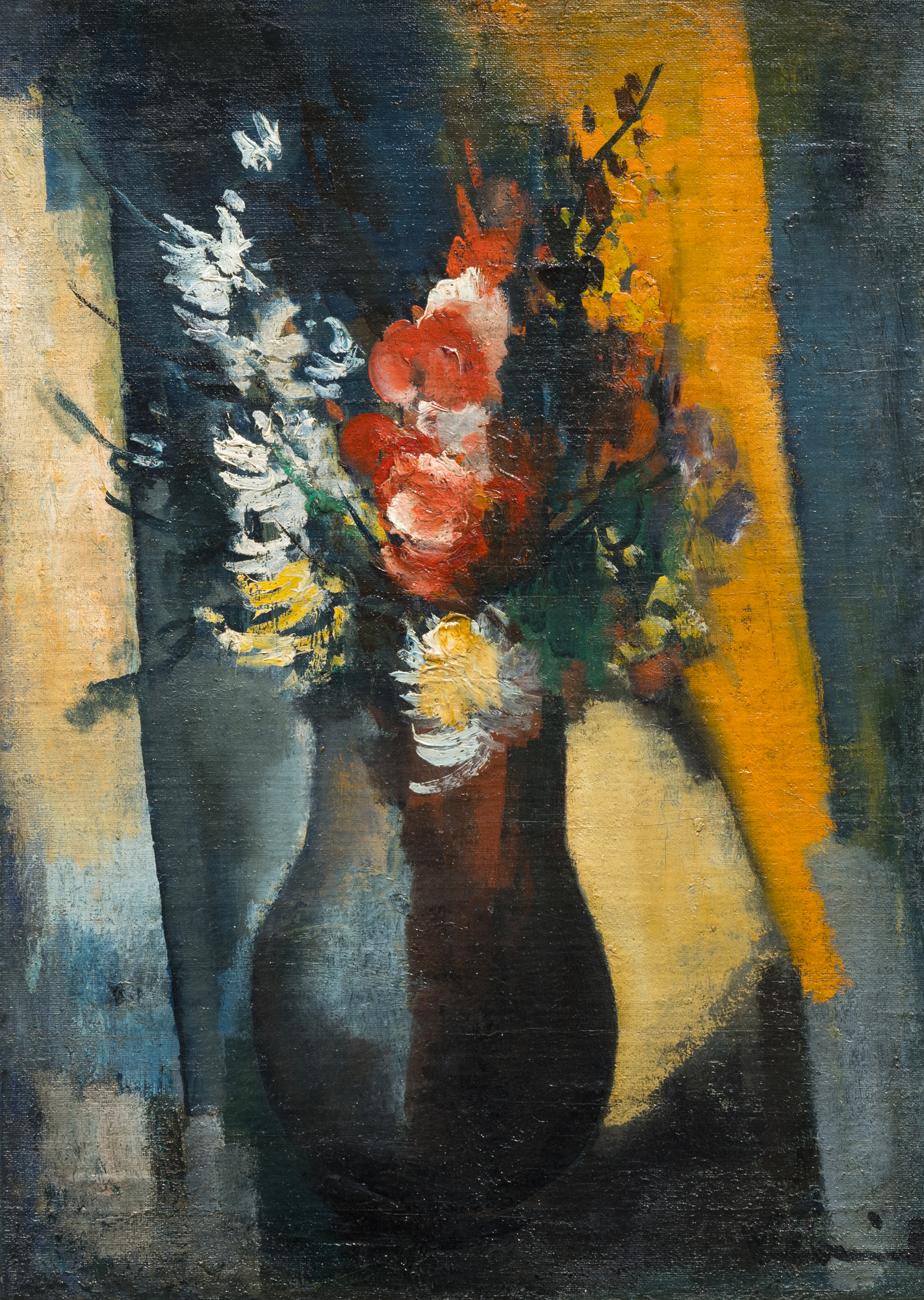
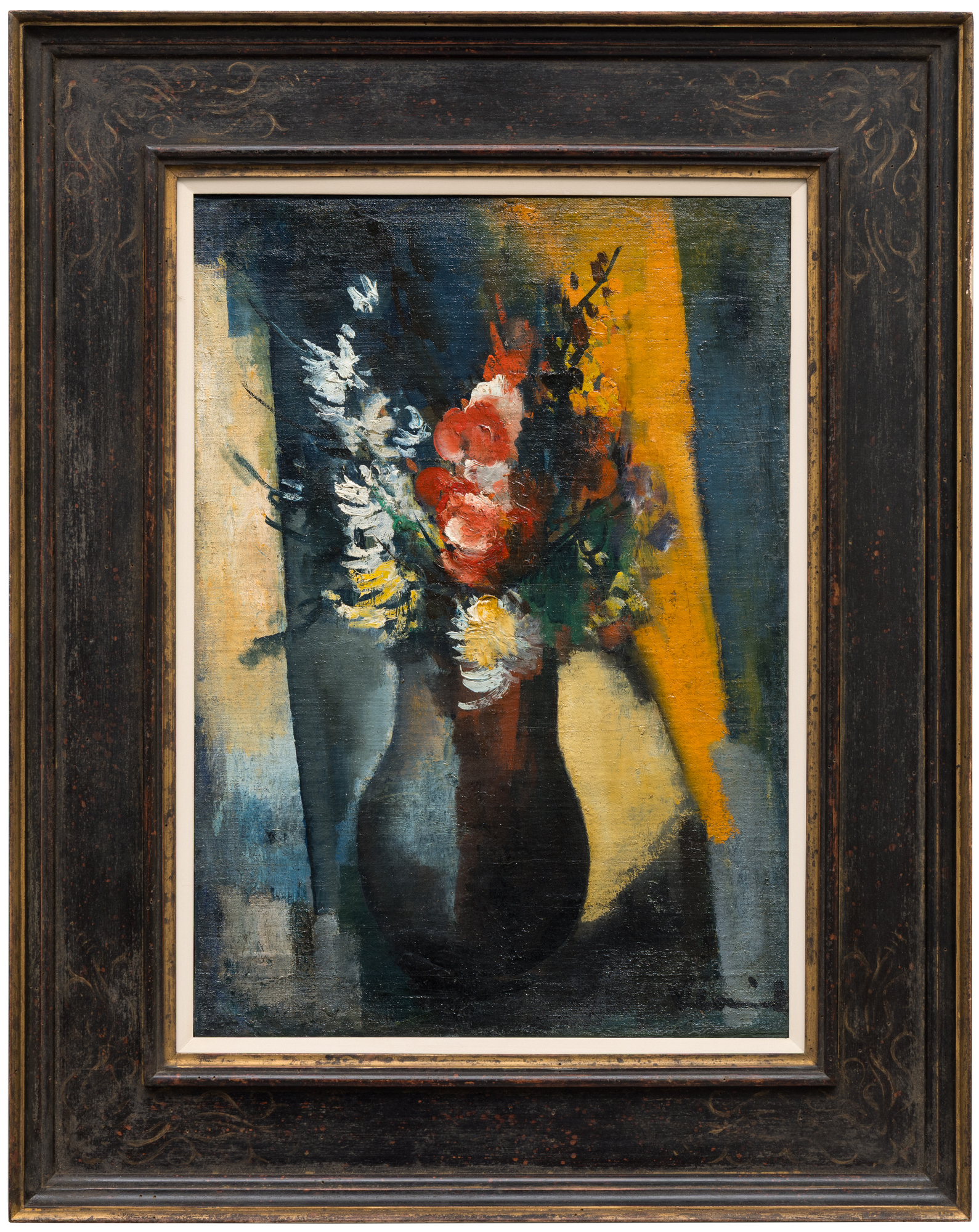
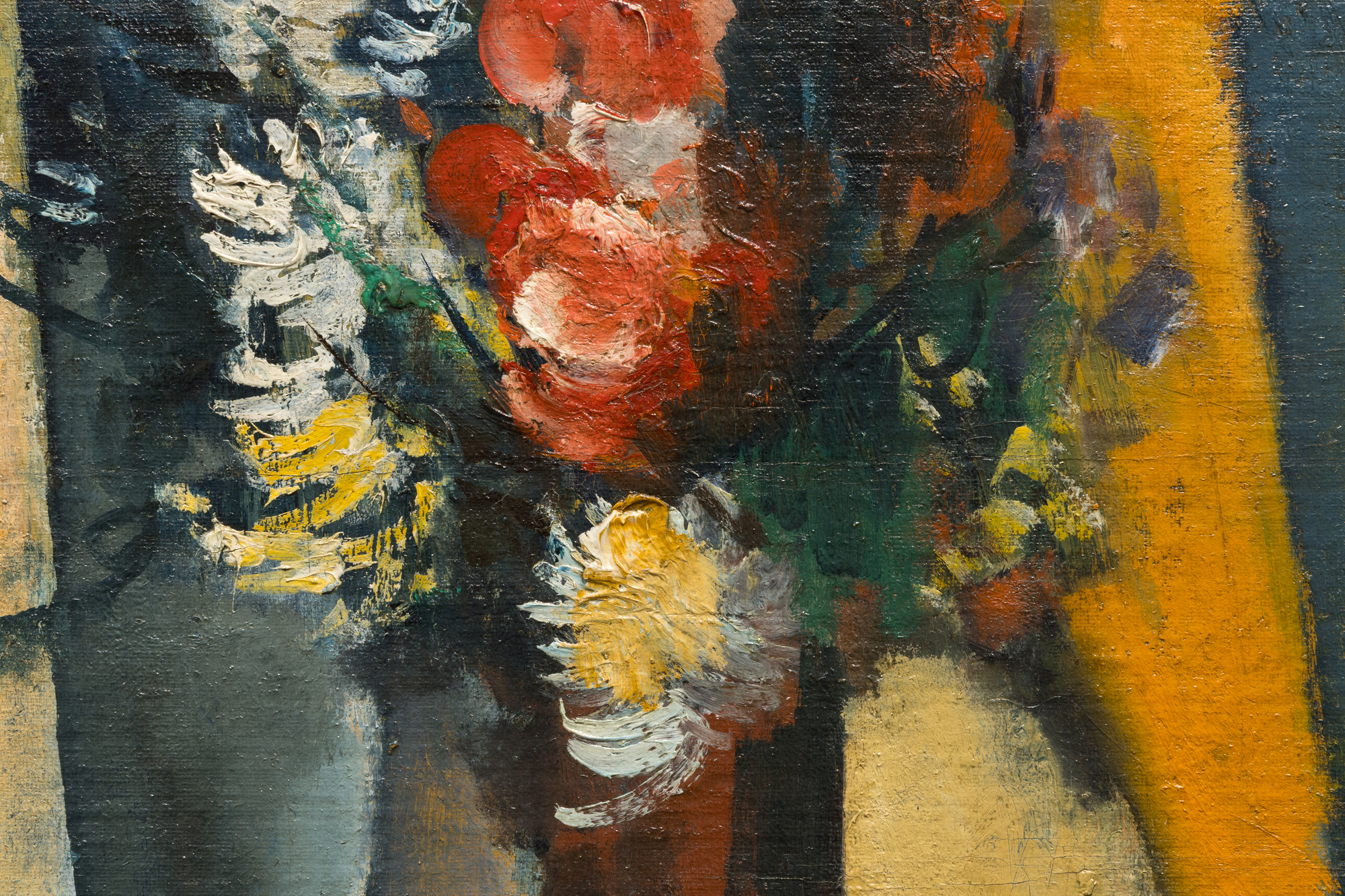
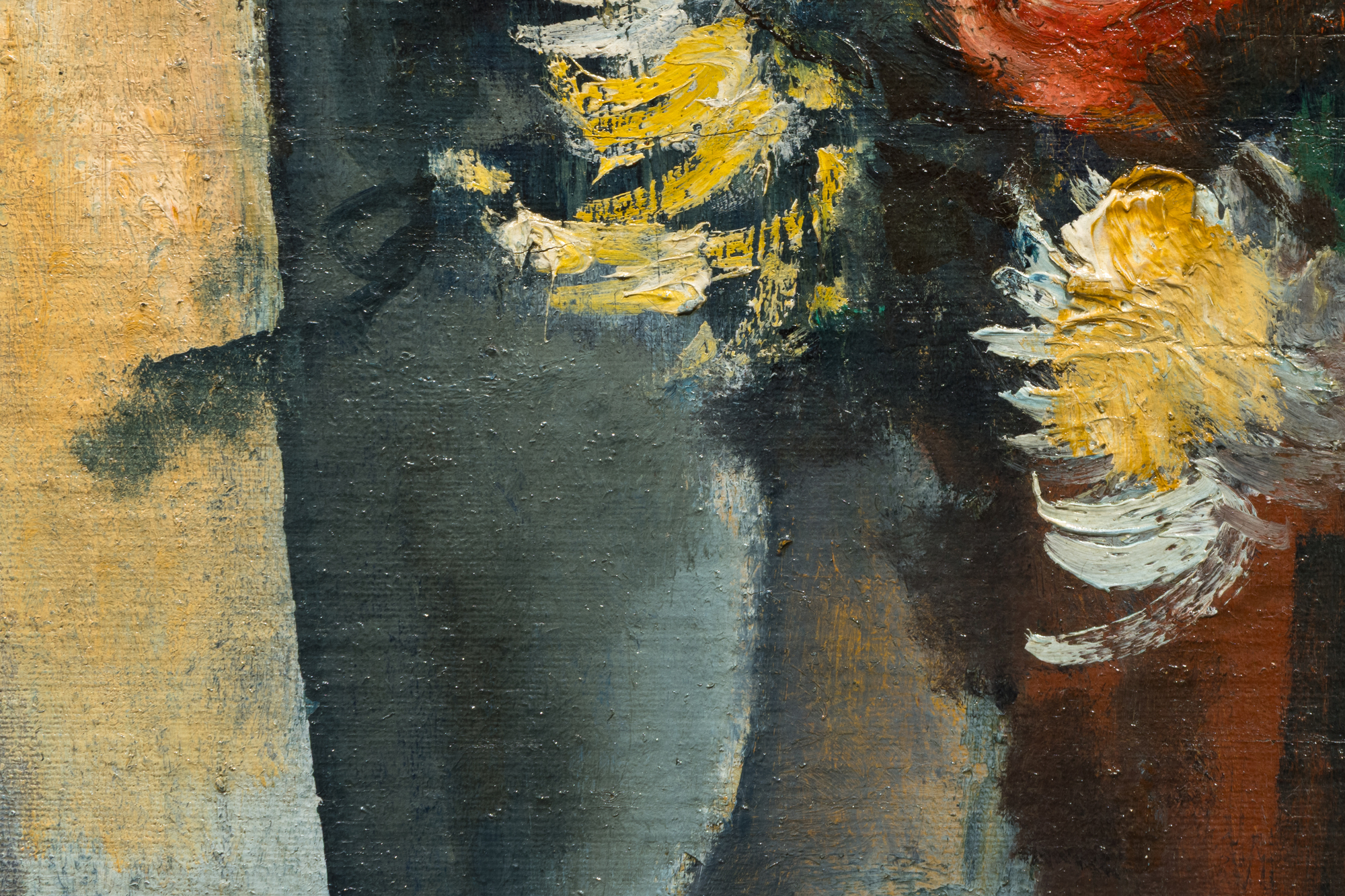
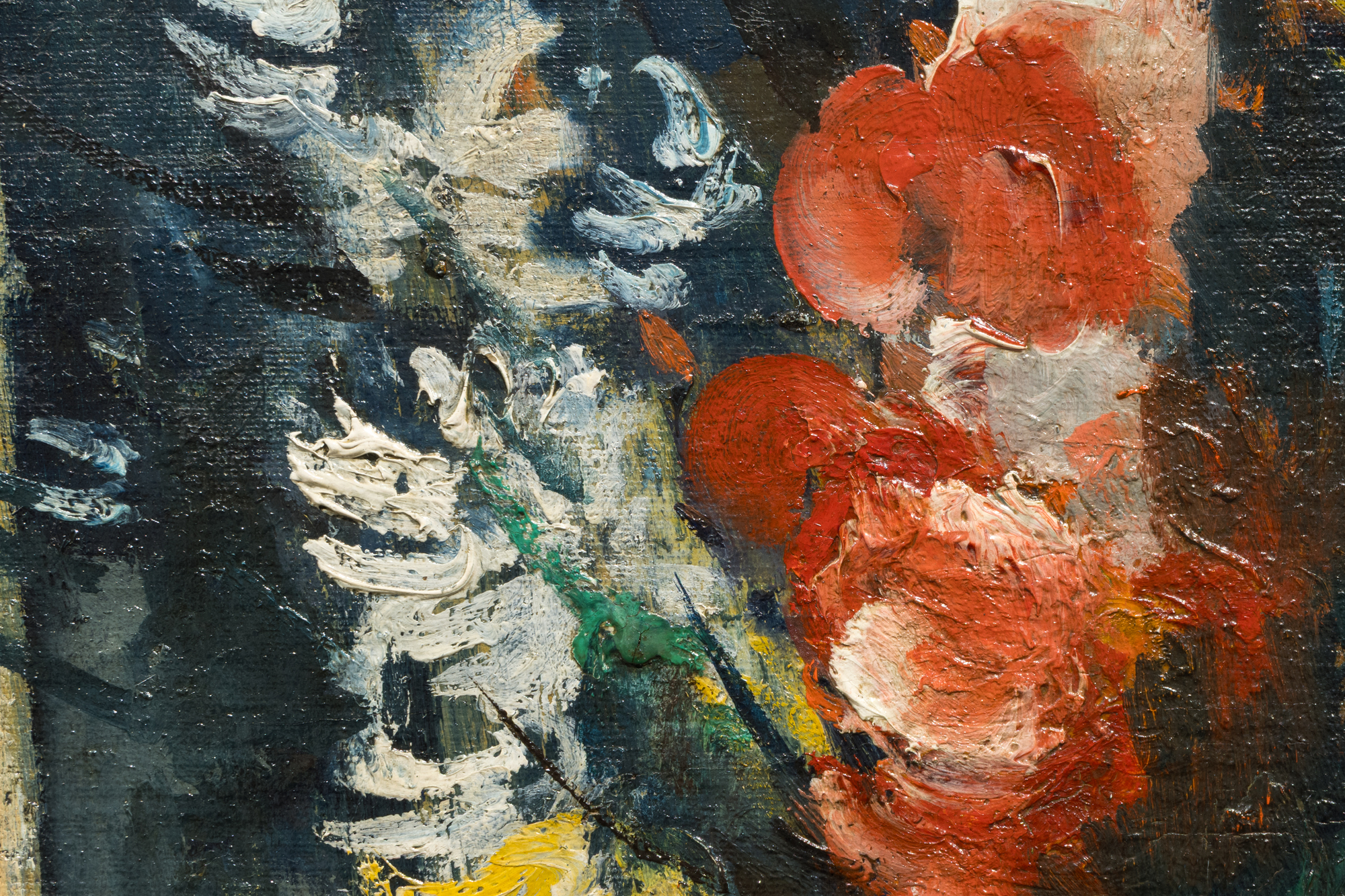
<div>Maurice de Vlaminck’s<em> Fleurs dans un vase</em> (1910-11) is a prime-period still life that channels the artist’s Fauvist sensibilites into an image of exuberant, painterly force. A dynamic spray of blooms in vibrant reds, yellows, and whites flourishes from a dark vase, in a stark contrast of forms and color, creating an almost sculptural effect. With vigorous, directional brushstrokes, Vlaminck animates petals and foliage into a rhythmic surge, turning a traditional tabletop motif into a study of movement, texture, and intensity.</div><br><br><div> </div><br><br><div>As one of the core founders of Fauvism, Vlaminck was celebrated for his radical, non-naturalistic use of color, and this work retains that avant-garde approach. Cool blues and greys against saturated oranges, and the faceted planes of the backgroud heighten contrast and create a dynamic composition.  The paint surface remains boldly worked, emphasizing the physicality of oil on canvas and the immediacy of the artist’s hand.</div><br><br><div> </div><br><br><div>The painting is accompanied by a certificate of authenticity by the Wildenstein Institute for the catalogue of Maurice de Vlaminck’s works. Renewed international attention to Vlaminck’s achievements, including a recent retrospective at Museum Barberini in Potsdam - the first in nearly a century -has reaffirmed his vital role in the development of modern painting.<em> Fleurs dans un vase </em>captures that legacy: unapologetically modern and powered by color as expression. </div> <div>Maurice de Vlaminck’s<em> Fleurs dans un vase</em> (1910-11) is a prime-period still life that channels the artist’s Fauvist sensibilites into an image of exuberant, painterly force. A dynamic spray of blooms in vibrant reds, yellows, and whites flourishes from a dark vase, in a stark contrast of forms and color, creating an almost sculptural effect. With vigorous, directional brushstrokes, Vlaminck animates petals and foliage into a rhythmic surge, turning a traditional tabletop motif into a study of movement, texture, and intensity.</div><br><br><div> </div><br><br><div>As one of the core founders of Fauvism, Vlaminck was celebrated for his radical, non-naturalistic use of color, and this work retains that avant-garde approach. Cool blues and greys against saturated oranges, and the faceted planes of the backgroud heighten contrast and create a dynamic composition.  The paint surface remains boldly worked, emphasizing the physicality of oil on canvas and the immediacy of the artist’s hand.</div><br><br><div> </div><br><br><div>The painting is accompanied by a certificate of authenticity by the Wildenstein Institute for the catalogue of Maurice de Vlaminck’s works. Renewed international attention to Vlaminck’s achievements, including a recent retrospective at Museum Barberini in Potsdam - the first in nearly a century -has reaffirmed his vital role in the development of modern painting.<em> Fleurs dans un vase </em>captures that legacy: unapologetically modern and powered by color as expression. </div> <div>Maurice de Vlaminck’s<em> Fleurs dans un vase</em> (1910-11) is a prime-period still life that channels the artist’s Fauvist sensibilites into an image of exuberant, painterly force. A dynamic spray of blooms in vibrant reds, yellows, and whites flourishes from a dark vase, in a stark contrast of forms and color, creating an almost sculptural effect. With vigorous, directional brushstrokes, Vlaminck animates petals and foliage into a rhythmic surge, turning a traditional tabletop motif into a study of movement, texture, and intensity.</div><br><br><div> </div><br><br><div>As one of the core founders of Fauvism, Vlaminck was celebrated for his radical, non-naturalistic use of color, and this work retains that avant-garde approach. Cool blues and greys against saturated oranges, and the faceted planes of the backgroud heighten contrast and create a dynamic composition.  The paint surface remains boldly worked, emphasizing the physicality of oil on canvas and the immediacy of the artist’s hand.</div><br><br><div> </div><br><br><div>The painting is accompanied by a certificate of authenticity by the Wildenstein Institute for the catalogue of Maurice de Vlaminck’s works. Renewed international attention to Vlaminck’s achievements, including a recent retrospective at Museum Barberini in Potsdam - the first in nearly a century -has reaffirmed his vital role in the development of modern painting.<em> Fleurs dans un vase </em>captures that legacy: unapologetically modern and powered by color as expression. </div> <div>Maurice de Vlaminck’s<em> Fleurs dans un vase</em> (1910-11) is a prime-period still life that channels the artist’s Fauvist sensibilites into an image of exuberant, painterly force. A dynamic spray of blooms in vibrant reds, yellows, and whites flourishes from a dark vase, in a stark contrast of forms and color, creating an almost sculptural effect. With vigorous, directional brushstrokes, Vlaminck animates petals and foliage into a rhythmic surge, turning a traditional tabletop motif into a study of movement, texture, and intensity.</div><br><br><div> </div><br><br><div>As one of the core founders of Fauvism, Vlaminck was celebrated for his radical, non-naturalistic use of color, and this work retains that avant-garde approach. Cool blues and greys against saturated oranges, and the faceted planes of the backgroud heighten contrast and create a dynamic composition.  The paint surface remains boldly worked, emphasizing the physicality of oil on canvas and the immediacy of the artist’s hand.</div><br><br><div> </div><br><br><div>The painting is accompanied by a certificate of authenticity by the Wildenstein Institute for the catalogue of Maurice de Vlaminck’s works. Renewed international attention to Vlaminck’s achievements, including a recent retrospective at Museum Barberini in Potsdam - the first in nearly a century -has reaffirmed his vital role in the development of modern painting.<em> Fleurs dans un vase </em>captures that legacy: unapologetically modern and powered by color as expression. </div> <div>Maurice de Vlaminck’s<em> Fleurs dans un vase</em> (1910-11) is a prime-period still life that channels the artist’s Fauvist sensibilites into an image of exuberant, painterly force. A dynamic spray of blooms in vibrant reds, yellows, and whites flourishes from a dark vase, in a stark contrast of forms and color, creating an almost sculptural effect. With vigorous, directional brushstrokes, Vlaminck animates petals and foliage into a rhythmic surge, turning a traditional tabletop motif into a study of movement, texture, and intensity.</div><br><br><div> </div><br><br><div>As one of the core founders of Fauvism, Vlaminck was celebrated for his radical, non-naturalistic use of color, and this work retains that avant-garde approach. Cool blues and greys against saturated oranges, and the faceted planes of the backgroud heighten contrast and create a dynamic composition.  The paint surface remains boldly worked, emphasizing the physicality of oil on canvas and the immediacy of the artist’s hand.</div><br><br><div> </div><br><br><div>The painting is accompanied by a certificate of authenticity by the Wildenstein Institute for the catalogue of Maurice de Vlaminck’s works. Renewed international attention to Vlaminck’s achievements, including a recent retrospective at Museum Barberini in Potsdam - the first in nearly a century -has reaffirmed his vital role in the development of modern painting.<em> Fleurs dans un vase </em>captures that legacy: unapologetically modern and powered by color as expression. </div> <div>Maurice de Vlaminck’s<em> Fleurs dans un vase</em> (1910-11) is a prime-period still life that channels the artist’s Fauvist sensibilites into an image of exuberant, painterly force. A dynamic spray of blooms in vibrant reds, yellows, and whites flourishes from a dark vase, in a stark contrast of forms and color, creating an almost sculptural effect. With vigorous, directional brushstrokes, Vlaminck animates petals and foliage into a rhythmic surge, turning a traditional tabletop motif into a study of movement, texture, and intensity.</div><br><br><div> </div><br><br><div>As one of the core founders of Fauvism, Vlaminck was celebrated for his radical, non-naturalistic use of color, and this work retains that avant-garde approach. Cool blues and greys against saturated oranges, and the faceted planes of the backgroud heighten contrast and create a dynamic composition.  The paint surface remains boldly worked, emphasizing the physicality of oil on canvas and the immediacy of the artist’s hand.</div><br><br><div> </div><br><br><div>The painting is accompanied by a certificate of authenticity by the Wildenstein Institute for the catalogue of Maurice de Vlaminck’s works. Renewed international attention to Vlaminck’s achievements, including a recent retrospective at Museum Barberini in Potsdam - the first in nearly a century -has reaffirmed his vital role in the development of modern painting.<em> Fleurs dans un vase </em>captures that legacy: unapologetically modern and powered by color as expression. </div> <div>Maurice de Vlaminck’s<em> Fleurs dans un vase</em> (1910-11) is a prime-period still life that channels the artist’s Fauvist sensibilites into an image of exuberant, painterly force. A dynamic spray of blooms in vibrant reds, yellows, and whites flourishes from a dark vase, in a stark contrast of forms and color, creating an almost sculptural effect. With vigorous, directional brushstrokes, Vlaminck animates petals and foliage into a rhythmic surge, turning a traditional tabletop motif into a study of movement, texture, and intensity.</div><br><br><div> </div><br><br><div>As one of the core founders of Fauvism, Vlaminck was celebrated for his radical, non-naturalistic use of color, and this work retains that avant-garde approach. Cool blues and greys against saturated oranges, and the faceted planes of the backgroud heighten contrast and create a dynamic composition.  The paint surface remains boldly worked, emphasizing the physicality of oil on canvas and the immediacy of the artist’s hand.</div><br><br><div> </div><br><br><div>The painting is accompanied by a certificate of authenticity by the Wildenstein Institute for the catalogue of Maurice de Vlaminck’s works. Renewed international attention to Vlaminck’s achievements, including a recent retrospective at Museum Barberini in Potsdam - the first in nearly a century -has reaffirmed his vital role in the development of modern painting.<em> Fleurs dans un vase </em>captures that legacy: unapologetically modern and powered by color as expression. </div> <div>Maurice de Vlaminck’s<em> Fleurs dans un vase</em> (1910-11) is a prime-period still life that channels the artist’s Fauvist sensibilites into an image of exuberant, painterly force. A dynamic spray of blooms in vibrant reds, yellows, and whites flourishes from a dark vase, in a stark contrast of forms and color, creating an almost sculptural effect. With vigorous, directional brushstrokes, Vlaminck animates petals and foliage into a rhythmic surge, turning a traditional tabletop motif into a study of movement, texture, and intensity.</div><br><br><div> </div><br><br><div>As one of the core founders of Fauvism, Vlaminck was celebrated for his radical, non-naturalistic use of color, and this work retains that avant-garde approach. Cool blues and greys against saturated oranges, and the faceted planes of the backgroud heighten contrast and create a dynamic composition.  The paint surface remains boldly worked, emphasizing the physicality of oil on canvas and the immediacy of the artist’s hand.</div><br><br><div> </div><br><br><div>The painting is accompanied by a certificate of authenticity by the Wildenstein Institute for the catalogue of Maurice de Vlaminck’s works. Renewed international attention to Vlaminck’s achievements, including a recent retrospective at Museum Barberini in Potsdam - the first in nearly a century -has reaffirmed his vital role in the development of modern painting.<em> Fleurs dans un vase </em>captures that legacy: unapologetically modern and powered by color as expression. </div> <div>Maurice de Vlaminck’s<em> Fleurs dans un vase</em> (1910-11) is a prime-period still life that channels the artist’s Fauvist sensibilites into an image of exuberant, painterly force. A dynamic spray of blooms in vibrant reds, yellows, and whites flourishes from a dark vase, in a stark contrast of forms and color, creating an almost sculptural effect. With vigorous, directional brushstrokes, Vlaminck animates petals and foliage into a rhythmic surge, turning a traditional tabletop motif into a study of movement, texture, and intensity.</div><br><br><div> </div><br><br><div>As one of the core founders of Fauvism, Vlaminck was celebrated for his radical, non-naturalistic use of color, and this work retains that avant-garde approach. Cool blues and greys against saturated oranges, and the faceted planes of the backgroud heighten contrast and create a dynamic composition.  The paint surface remains boldly worked, emphasizing the physicality of oil on canvas and the immediacy of the artist’s hand.</div><br><br><div> </div><br><br><div>The painting is accompanied by a certificate of authenticity by the Wildenstein Institute for the catalogue of Maurice de Vlaminck’s works. Renewed international attention to Vlaminck’s achievements, including a recent retrospective at Museum Barberini in Potsdam - the first in nearly a century -has reaffirmed his vital role in the development of modern painting.<em> Fleurs dans un vase </em>captures that legacy: unapologetically modern and powered by color as expression. </div> <div>Maurice de Vlaminck’s<em> Fleurs dans un vase</em> (1910-11) is a prime-period still life that channels the artist’s Fauvist sensibilites into an image of exuberant, painterly force. A dynamic spray of blooms in vibrant reds, yellows, and whites flourishes from a dark vase, in a stark contrast of forms and color, creating an almost sculptural effect. With vigorous, directional brushstrokes, Vlaminck animates petals and foliage into a rhythmic surge, turning a traditional tabletop motif into a study of movement, texture, and intensity.</div><br><br><div> </div><br><br><div>As one of the core founders of Fauvism, Vlaminck was celebrated for his radical, non-naturalistic use of color, and this work retains that avant-garde approach. Cool blues and greys against saturated oranges, and the faceted planes of the backgroud heighten contrast and create a dynamic composition.  The paint surface remains boldly worked, emphasizing the physicality of oil on canvas and the immediacy of the artist’s hand.</div><br><br><div> </div><br><br><div>The painting is accompanied by a certificate of authenticity by the Wildenstein Institute for the catalogue of Maurice de Vlaminck’s works. Renewed international attention to Vlaminck’s achievements, including a recent retrospective at Museum Barberini in Potsdam - the first in nearly a century -has reaffirmed his vital role in the development of modern painting.<em> Fleurs dans un vase </em>captures that legacy: unapologetically modern and powered by color as expression. </div>
Fleurs dans un vase1910-1121 1/4 x 15 po(53,98 x 38,1 cm) huile sur toile
Provenance
Collection privée, Allemagne
Koller Auktionen AG : vendredi 19 juin 2009, lot 03233, Auktion A149 - Schweizer Kunst, moderne Kunst, moderne Graphik und zeitgenössische Kunst
Collection privée, Europe, acquise auprès de la source ci-dessus
 
Fleurs dans un vase (1910-11) de Maurice de Vlaminck est une nature morte de la période de maturité de l'artiste qui traduit sa sensibilité fauviste en une image d'une force picturale exubérante. Un bouquet dynamique de fleurs aux couleurs vives, rouges, jaunes et blanches, s'épanouit dans un vase sombre, créant un contraste saisissant entre les formes et les couleurs et produisant un effet presque sculptural. Avec des coups de pinceau vigoureux et directionnels, Vlaminck anime les pétales et le feuillage dans une vague rythmique, transformant un motif traditionnel de table en une étude du mouvement, de la texture et de l'intensité.


En tant que l'un des fondateurs du fauvisme, Vlaminck était célèbre pour son utilisation radicale et non naturaliste de la couleur, et cette œuvre conserve cette approche avant-gardiste. Les bleus et les gris froids contrastent avec les oranges saturés, et les plans facettés de l'arrière-plan accentuent le contraste et créent une composition dynamique. La surface picturale reste travaillée avec audace, soulignant la physicalité de l'huile sur toile et l'immédiateté de la main de l'artiste.


Le tableau est accompagné d'un certificat d'authenticité délivré par l'Institut Wildenstein pour le catalogue des œuvres de Maurice de Vlaminck. Le regain d'intérêt international pour les réalisations de Vlaminck, notamment grâce à une récente rétrospective au musée Barberini de Potsdam - la première depuis près d'un siècle - a réaffirmé son rôle essentiel dans le développement de la peinture moderne. Fleurs dans un vase capture cet héritage : résolument moderne et animé par la couleur comme moyen d'expression.
demander