العودة

موريس دي فيلمينك(1876-1958)

$90,000

 
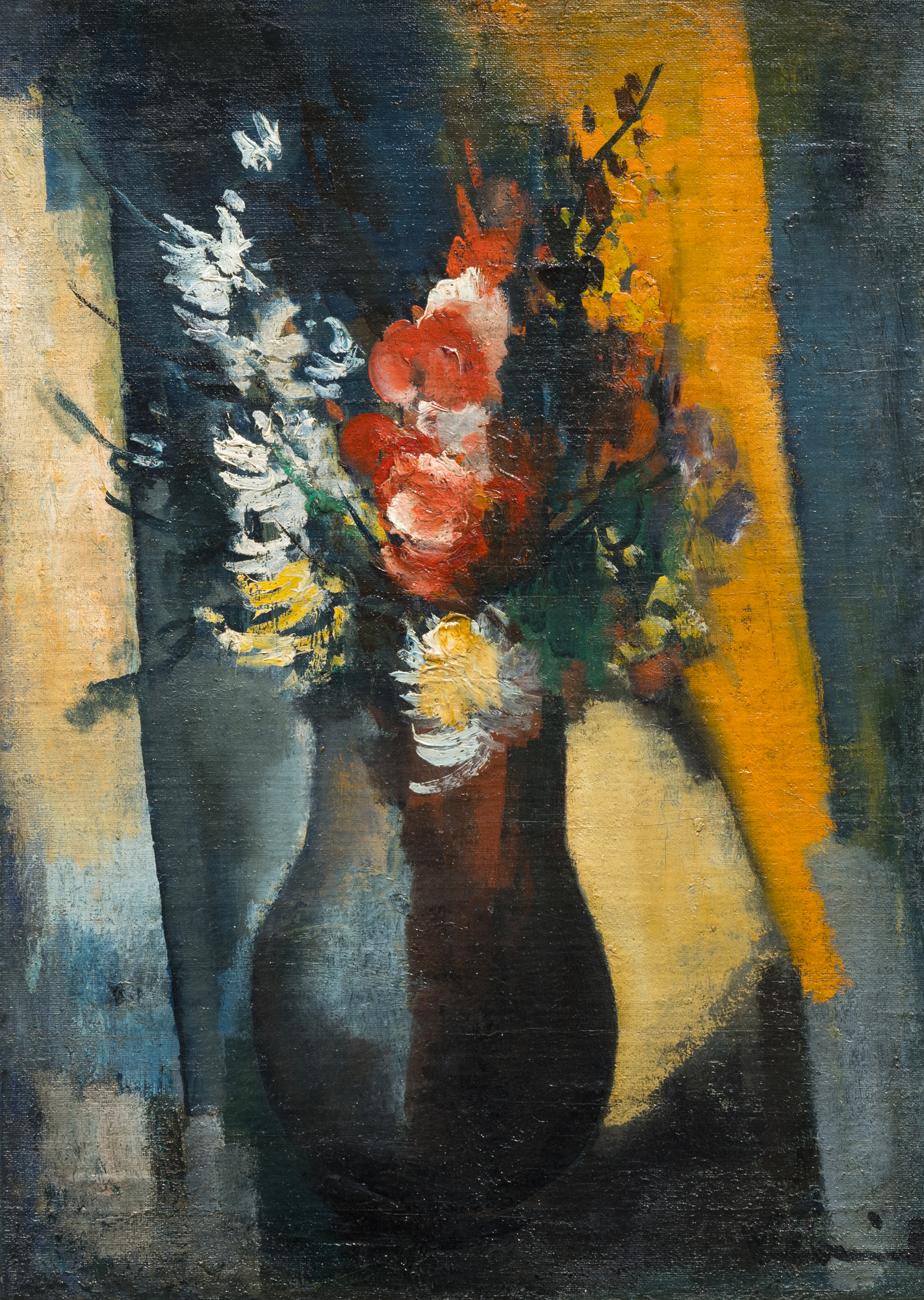
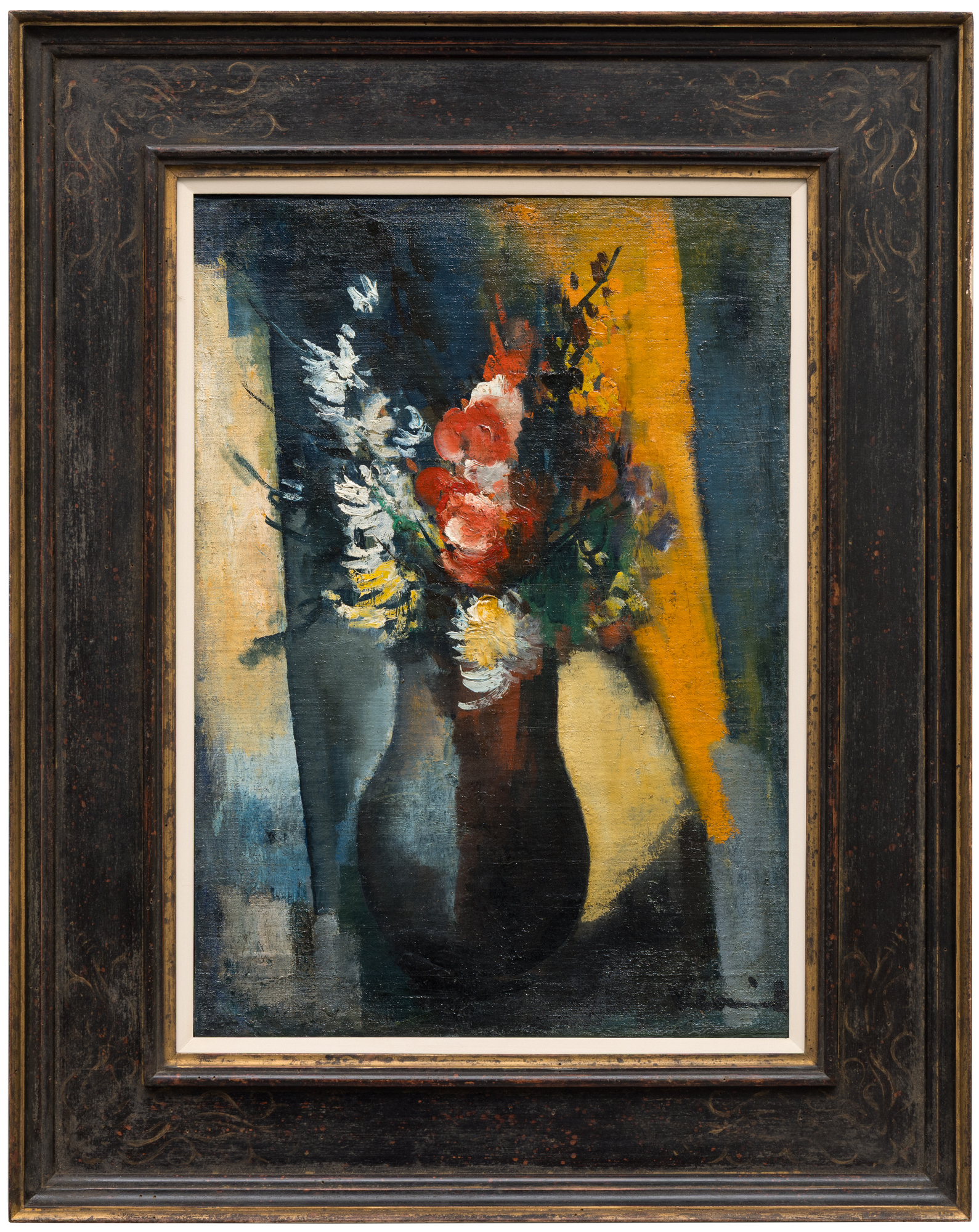
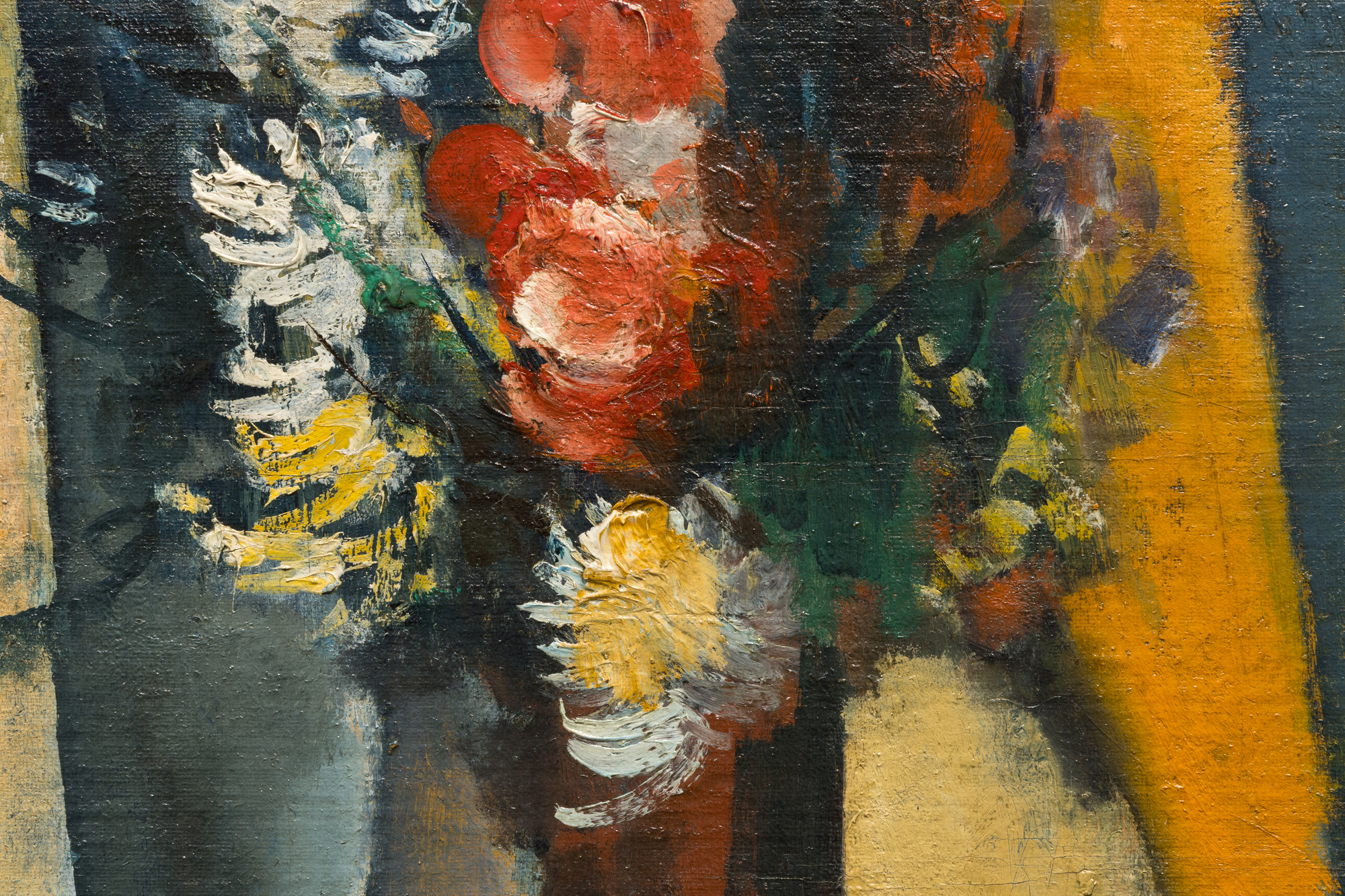
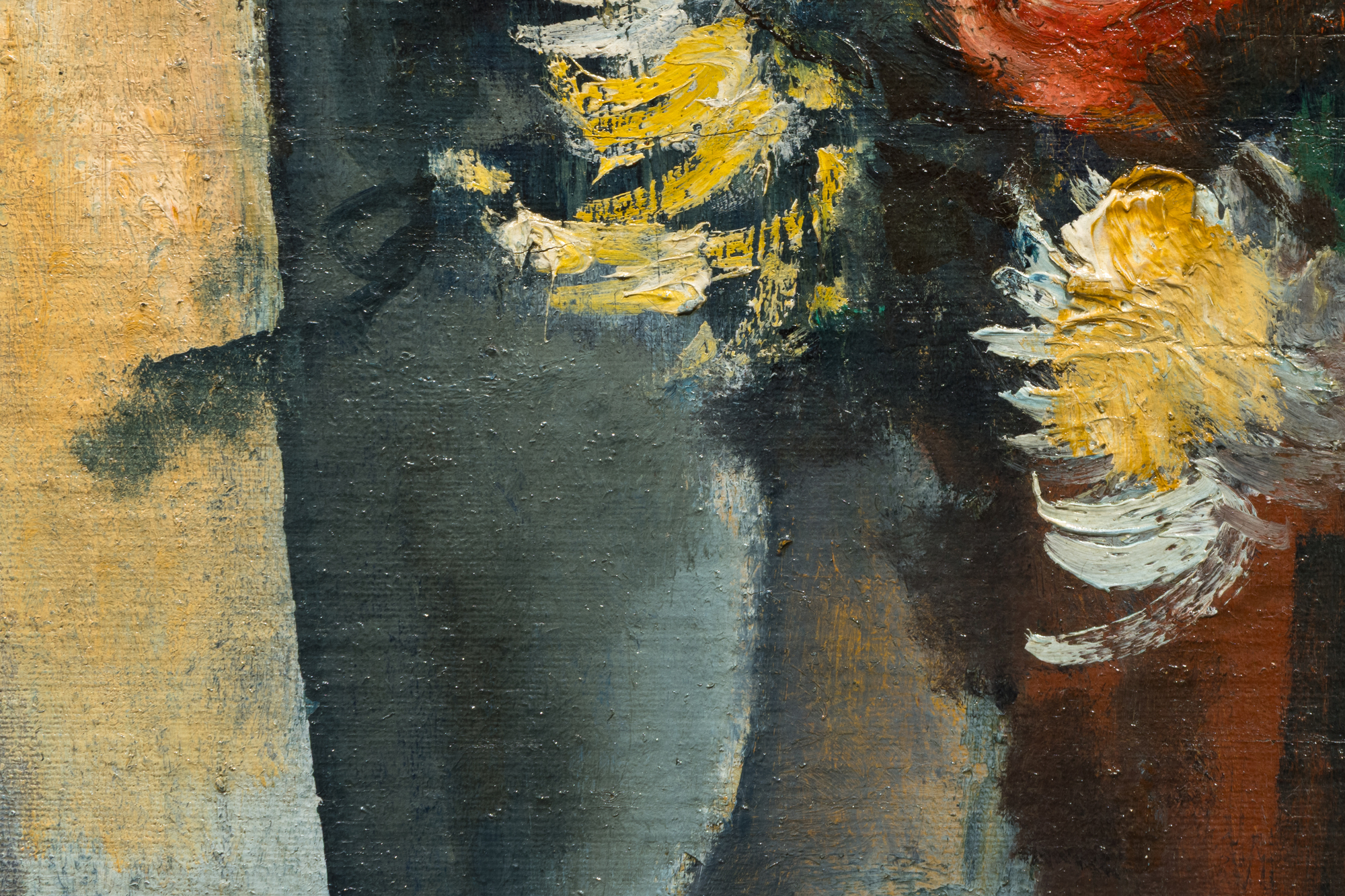
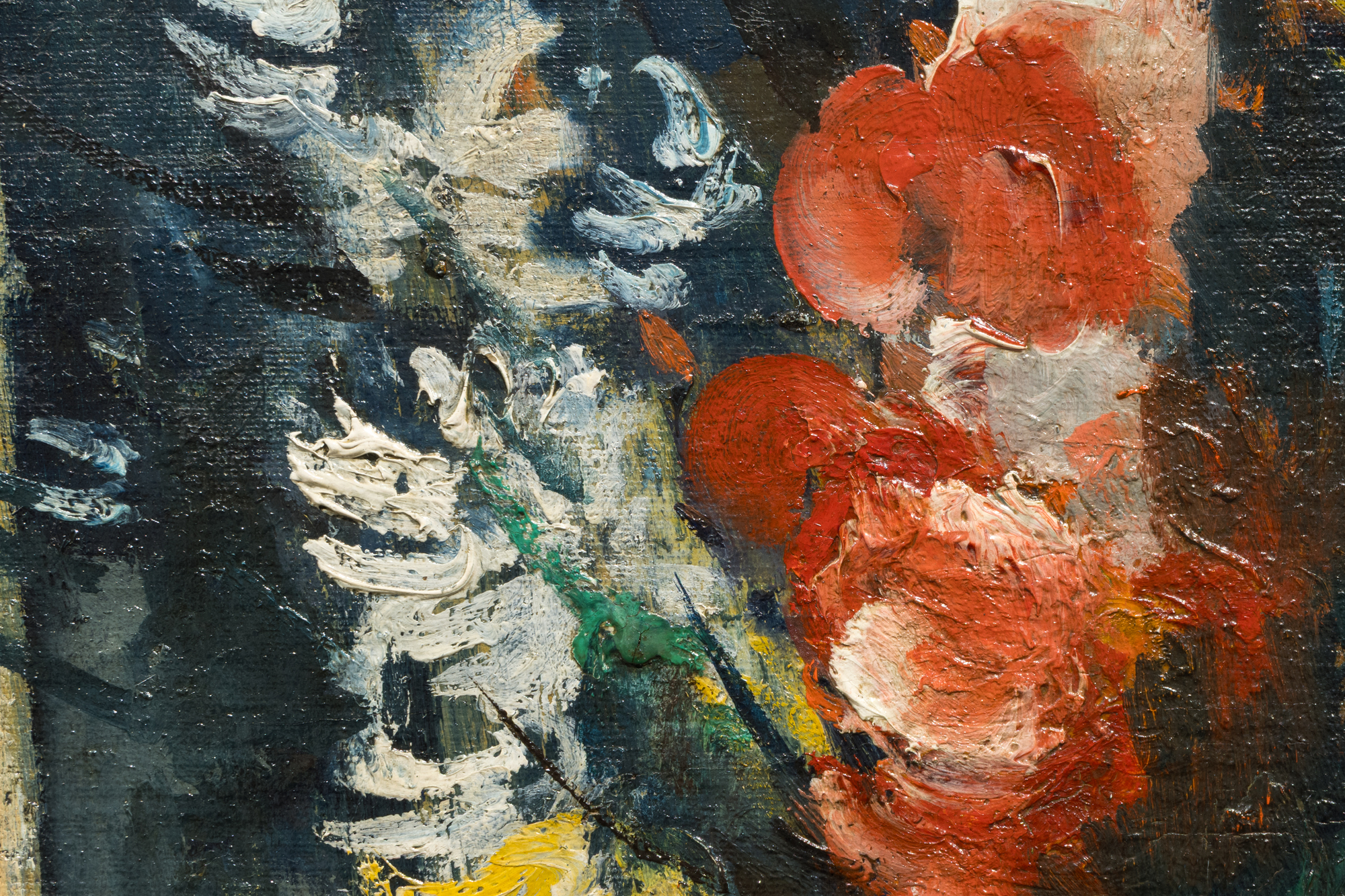
<div>Maurice de Vlaminck’s<em> Fleurs dans un vase</em> (1910-11) is a prime-period still life that channels the artist’s Fauvist sensibilites into an image of exuberant, painterly force. A dynamic spray of blooms in vibrant reds, yellows, and whites flourishes from a dark vase, in a stark contrast of forms and color, creating an almost sculptural effect. With vigorous, directional brushstrokes, Vlaminck animates petals and foliage into a rhythmic surge, turning a traditional tabletop motif into a study of movement, texture, and intensity.</div><br><br><div> </div><br><br><div>As one of the core founders of Fauvism, Vlaminck was celebrated for his radical, non-naturalistic use of color, and this work retains that avant-garde approach. Cool blues and greys against saturated oranges, and the faceted planes of the backgroud heighten contrast and create a dynamic composition.  The paint surface remains boldly worked, emphasizing the physicality of oil on canvas and the immediacy of the artist’s hand.</div><br><br><div> </div><br><br><div>The painting is accompanied by a certificate of authenticity by the Wildenstein Institute for the catalogue of Maurice de Vlaminck’s works. Renewed international attention to Vlaminck’s achievements, including a recent retrospective at Museum Barberini in Potsdam - the first in nearly a century -has reaffirmed his vital role in the development of modern painting.<em> Fleurs dans un vase </em>captures that legacy: unapologetically modern and powered by color as expression. </div> <div>Maurice de Vlaminck’s<em> Fleurs dans un vase</em> (1910-11) is a prime-period still life that channels the artist’s Fauvist sensibilites into an image of exuberant, painterly force. A dynamic spray of blooms in vibrant reds, yellows, and whites flourishes from a dark vase, in a stark contrast of forms and color, creating an almost sculptural effect. With vigorous, directional brushstrokes, Vlaminck animates petals and foliage into a rhythmic surge, turning a traditional tabletop motif into a study of movement, texture, and intensity.</div><br><br><div> </div><br><br><div>As one of the core founders of Fauvism, Vlaminck was celebrated for his radical, non-naturalistic use of color, and this work retains that avant-garde approach. Cool blues and greys against saturated oranges, and the faceted planes of the backgroud heighten contrast and create a dynamic composition.  The paint surface remains boldly worked, emphasizing the physicality of oil on canvas and the immediacy of the artist’s hand.</div><br><br><div> </div><br><br><div>The painting is accompanied by a certificate of authenticity by the Wildenstein Institute for the catalogue of Maurice de Vlaminck’s works. Renewed international attention to Vlaminck’s achievements, including a recent retrospective at Museum Barberini in Potsdam - the first in nearly a century -has reaffirmed his vital role in the development of modern painting.<em> Fleurs dans un vase </em>captures that legacy: unapologetically modern and powered by color as expression. </div> <div>Maurice de Vlaminck’s<em> Fleurs dans un vase</em> (1910-11) is a prime-period still life that channels the artist’s Fauvist sensibilites into an image of exuberant, painterly force. A dynamic spray of blooms in vibrant reds, yellows, and whites flourishes from a dark vase, in a stark contrast of forms and color, creating an almost sculptural effect. With vigorous, directional brushstrokes, Vlaminck animates petals and foliage into a rhythmic surge, turning a traditional tabletop motif into a study of movement, texture, and intensity.</div><br><br><div> </div><br><br><div>As one of the core founders of Fauvism, Vlaminck was celebrated for his radical, non-naturalistic use of color, and this work retains that avant-garde approach. Cool blues and greys against saturated oranges, and the faceted planes of the backgroud heighten contrast and create a dynamic composition.  The paint surface remains boldly worked, emphasizing the physicality of oil on canvas and the immediacy of the artist’s hand.</div><br><br><div> </div><br><br><div>The painting is accompanied by a certificate of authenticity by the Wildenstein Institute for the catalogue of Maurice de Vlaminck’s works. Renewed international attention to Vlaminck’s achievements, including a recent retrospective at Museum Barberini in Potsdam - the first in nearly a century -has reaffirmed his vital role in the development of modern painting.<em> Fleurs dans un vase </em>captures that legacy: unapologetically modern and powered by color as expression. </div> <div>Maurice de Vlaminck’s<em> Fleurs dans un vase</em> (1910-11) is a prime-period still life that channels the artist’s Fauvist sensibilites into an image of exuberant, painterly force. A dynamic spray of blooms in vibrant reds, yellows, and whites flourishes from a dark vase, in a stark contrast of forms and color, creating an almost sculptural effect. With vigorous, directional brushstrokes, Vlaminck animates petals and foliage into a rhythmic surge, turning a traditional tabletop motif into a study of movement, texture, and intensity.</div><br><br><div> </div><br><br><div>As one of the core founders of Fauvism, Vlaminck was celebrated for his radical, non-naturalistic use of color, and this work retains that avant-garde approach. Cool blues and greys against saturated oranges, and the faceted planes of the backgroud heighten contrast and create a dynamic composition.  The paint surface remains boldly worked, emphasizing the physicality of oil on canvas and the immediacy of the artist’s hand.</div><br><br><div> </div><br><br><div>The painting is accompanied by a certificate of authenticity by the Wildenstein Institute for the catalogue of Maurice de Vlaminck’s works. Renewed international attention to Vlaminck’s achievements, including a recent retrospective at Museum Barberini in Potsdam - the first in nearly a century -has reaffirmed his vital role in the development of modern painting.<em> Fleurs dans un vase </em>captures that legacy: unapologetically modern and powered by color as expression. </div> <div>Maurice de Vlaminck’s<em> Fleurs dans un vase</em> (1910-11) is a prime-period still life that channels the artist’s Fauvist sensibilites into an image of exuberant, painterly force. A dynamic spray of blooms in vibrant reds, yellows, and whites flourishes from a dark vase, in a stark contrast of forms and color, creating an almost sculptural effect. With vigorous, directional brushstrokes, Vlaminck animates petals and foliage into a rhythmic surge, turning a traditional tabletop motif into a study of movement, texture, and intensity.</div><br><br><div> </div><br><br><div>As one of the core founders of Fauvism, Vlaminck was celebrated for his radical, non-naturalistic use of color, and this work retains that avant-garde approach. Cool blues and greys against saturated oranges, and the faceted planes of the backgroud heighten contrast and create a dynamic composition.  The paint surface remains boldly worked, emphasizing the physicality of oil on canvas and the immediacy of the artist’s hand.</div><br><br><div> </div><br><br><div>The painting is accompanied by a certificate of authenticity by the Wildenstein Institute for the catalogue of Maurice de Vlaminck’s works. Renewed international attention to Vlaminck’s achievements, including a recent retrospective at Museum Barberini in Potsdam - the first in nearly a century -has reaffirmed his vital role in the development of modern painting.<em> Fleurs dans un vase </em>captures that legacy: unapologetically modern and powered by color as expression. </div> <div>Maurice de Vlaminck’s<em> Fleurs dans un vase</em> (1910-11) is a prime-period still life that channels the artist’s Fauvist sensibilites into an image of exuberant, painterly force. A dynamic spray of blooms in vibrant reds, yellows, and whites flourishes from a dark vase, in a stark contrast of forms and color, creating an almost sculptural effect. With vigorous, directional brushstrokes, Vlaminck animates petals and foliage into a rhythmic surge, turning a traditional tabletop motif into a study of movement, texture, and intensity.</div><br><br><div> </div><br><br><div>As one of the core founders of Fauvism, Vlaminck was celebrated for his radical, non-naturalistic use of color, and this work retains that avant-garde approach. Cool blues and greys against saturated oranges, and the faceted planes of the backgroud heighten contrast and create a dynamic composition.  The paint surface remains boldly worked, emphasizing the physicality of oil on canvas and the immediacy of the artist’s hand.</div><br><br><div> </div><br><br><div>The painting is accompanied by a certificate of authenticity by the Wildenstein Institute for the catalogue of Maurice de Vlaminck’s works. Renewed international attention to Vlaminck’s achievements, including a recent retrospective at Museum Barberini in Potsdam - the first in nearly a century -has reaffirmed his vital role in the development of modern painting.<em> Fleurs dans un vase </em>captures that legacy: unapologetically modern and powered by color as expression. </div> <div>Maurice de Vlaminck’s<em> Fleurs dans un vase</em> (1910-11) is a prime-period still life that channels the artist’s Fauvist sensibilites into an image of exuberant, painterly force. A dynamic spray of blooms in vibrant reds, yellows, and whites flourishes from a dark vase, in a stark contrast of forms and color, creating an almost sculptural effect. With vigorous, directional brushstrokes, Vlaminck animates petals and foliage into a rhythmic surge, turning a traditional tabletop motif into a study of movement, texture, and intensity.</div><br><br><div> </div><br><br><div>As one of the core founders of Fauvism, Vlaminck was celebrated for his radical, non-naturalistic use of color, and this work retains that avant-garde approach. Cool blues and greys against saturated oranges, and the faceted planes of the backgroud heighten contrast and create a dynamic composition.  The paint surface remains boldly worked, emphasizing the physicality of oil on canvas and the immediacy of the artist’s hand.</div><br><br><div> </div><br><br><div>The painting is accompanied by a certificate of authenticity by the Wildenstein Institute for the catalogue of Maurice de Vlaminck’s works. Renewed international attention to Vlaminck’s achievements, including a recent retrospective at Museum Barberini in Potsdam - the first in nearly a century -has reaffirmed his vital role in the development of modern painting.<em> Fleurs dans un vase </em>captures that legacy: unapologetically modern and powered by color as expression. </div> <div>Maurice de Vlaminck’s<em> Fleurs dans un vase</em> (1910-11) is a prime-period still life that channels the artist’s Fauvist sensibilites into an image of exuberant, painterly force. A dynamic spray of blooms in vibrant reds, yellows, and whites flourishes from a dark vase, in a stark contrast of forms and color, creating an almost sculptural effect. With vigorous, directional brushstrokes, Vlaminck animates petals and foliage into a rhythmic surge, turning a traditional tabletop motif into a study of movement, texture, and intensity.</div><br><br><div> </div><br><br><div>As one of the core founders of Fauvism, Vlaminck was celebrated for his radical, non-naturalistic use of color, and this work retains that avant-garde approach. Cool blues and greys against saturated oranges, and the faceted planes of the backgroud heighten contrast and create a dynamic composition.  The paint surface remains boldly worked, emphasizing the physicality of oil on canvas and the immediacy of the artist’s hand.</div><br><br><div> </div><br><br><div>The painting is accompanied by a certificate of authenticity by the Wildenstein Institute for the catalogue of Maurice de Vlaminck’s works. Renewed international attention to Vlaminck’s achievements, including a recent retrospective at Museum Barberini in Potsdam - the first in nearly a century -has reaffirmed his vital role in the development of modern painting.<em> Fleurs dans un vase </em>captures that legacy: unapologetically modern and powered by color as expression. </div> <div>Maurice de Vlaminck’s<em> Fleurs dans un vase</em> (1910-11) is a prime-period still life that channels the artist’s Fauvist sensibilites into an image of exuberant, painterly force. A dynamic spray of blooms in vibrant reds, yellows, and whites flourishes from a dark vase, in a stark contrast of forms and color, creating an almost sculptural effect. With vigorous, directional brushstrokes, Vlaminck animates petals and foliage into a rhythmic surge, turning a traditional tabletop motif into a study of movement, texture, and intensity.</div><br><br><div> </div><br><br><div>As one of the core founders of Fauvism, Vlaminck was celebrated for his radical, non-naturalistic use of color, and this work retains that avant-garde approach. Cool blues and greys against saturated oranges, and the faceted planes of the backgroud heighten contrast and create a dynamic composition.  The paint surface remains boldly worked, emphasizing the physicality of oil on canvas and the immediacy of the artist’s hand.</div><br><br><div> </div><br><br><div>The painting is accompanied by a certificate of authenticity by the Wildenstein Institute for the catalogue of Maurice de Vlaminck’s works. Renewed international attention to Vlaminck’s achievements, including a recent retrospective at Museum Barberini in Potsdam - the first in nearly a century -has reaffirmed his vital role in the development of modern painting.<em> Fleurs dans un vase </em>captures that legacy: unapologetically modern and powered by color as expression. </div> <div>Maurice de Vlaminck’s<em> Fleurs dans un vase</em> (1910-11) is a prime-period still life that channels the artist’s Fauvist sensibilites into an image of exuberant, painterly force. A dynamic spray of blooms in vibrant reds, yellows, and whites flourishes from a dark vase, in a stark contrast of forms and color, creating an almost sculptural effect. With vigorous, directional brushstrokes, Vlaminck animates petals and foliage into a rhythmic surge, turning a traditional tabletop motif into a study of movement, texture, and intensity.</div><br><br><div> </div><br><br><div>As one of the core founders of Fauvism, Vlaminck was celebrated for his radical, non-naturalistic use of color, and this work retains that avant-garde approach. Cool blues and greys against saturated oranges, and the faceted planes of the backgroud heighten contrast and create a dynamic composition.  The paint surface remains boldly worked, emphasizing the physicality of oil on canvas and the immediacy of the artist’s hand.</div><br><br><div> </div><br><br><div>The painting is accompanied by a certificate of authenticity by the Wildenstein Institute for the catalogue of Maurice de Vlaminck’s works. Renewed international attention to Vlaminck’s achievements, including a recent retrospective at Museum Barberini in Potsdam - the first in nearly a century -has reaffirmed his vital role in the development of modern painting.<em> Fleurs dans un vase </em>captures that legacy: unapologetically modern and powered by color as expression. </div>
زهور في مزهرية1910-1121 1/4 × 15 بوصة(53.98 × 38.1 سم) زيت على قماش
الاصل
مجموعة خاصة، ألمانيا
Koller Auktionen AG: الجمعة، 19 يونيو 2009، القطعة 03233، Auktion A149 - Schweizer Kunst، moderne Kunst، moderne Graphik und zeitgenössische Kunst
مجموعة خاصة، أوروبا، تم الحصول عليها من المذكور أعلاه
 
لوحة "زهور في مزهرية" (1910-11) لموريس دي فلامينك هي لوحة طبيعية من الفترة الذهبية للفنان، تعكس حساسية الفنان الفوفية في صورة غنية بالقوة التصويرية. تنبثق باقة زهور ديناميكية بألوان حمراء وصفراء وبيضاء زاهية من مزهرية داكنة، في تباين صارخ بين الأشكال والألوان، مما يخلق تأثيرًا شبه نحتي. بضربات فرشاة قوية وموجهة، ينعش فلامينك البتلات والأوراق في موجة إيقاعية، محولاً موضوع الطاولة التقليدي إلى دراسة للحركة والملمس والكثافة.


بصفته أحد مؤسسي الفوفية، اشتهر فلامينك باستخدامه الجذري وغير الطبيعي للألوان، وتحتفظ هذه العمل بهذه المقاربة الطليعية. تزيد الألوان الزرقاء والرمادية الباردة مقابل الألوان البرتقالية المشبعة، والأسطح المتعددة الأوجه في الخلفية من التباين وتخلق تركيبة ديناميكية. تظل سطح اللوحة مرسومة بجرأة، مما يؤكد على الطبيعة المادية للزيت على القماش وفورية يد الفنان.


اللوحة مصحوبة بشهادة أصالة من معهد ويلدنشتاين لكتالوج أعمال موريس دي فلامينك. أعاد الاهتمام الدولي المتجدد بإنجازات فلامينك، بما في ذلك معرض استعادي أقيم مؤخرًا في متحف باربيريني في بوتسدام - الأول منذ ما يقرب من قرن - تأكيد دوره الحيوي في تطور الرسم الحديث. تلتقط لوحة "زهور في مزهرية" هذا الإرث: حديثة بلا اعتذار ومدعومة بالألوان كوسيلة للتعبير.
الاستفسار