GEORGIA O'KEEFFE (1887-1986)

$7,950,000

 
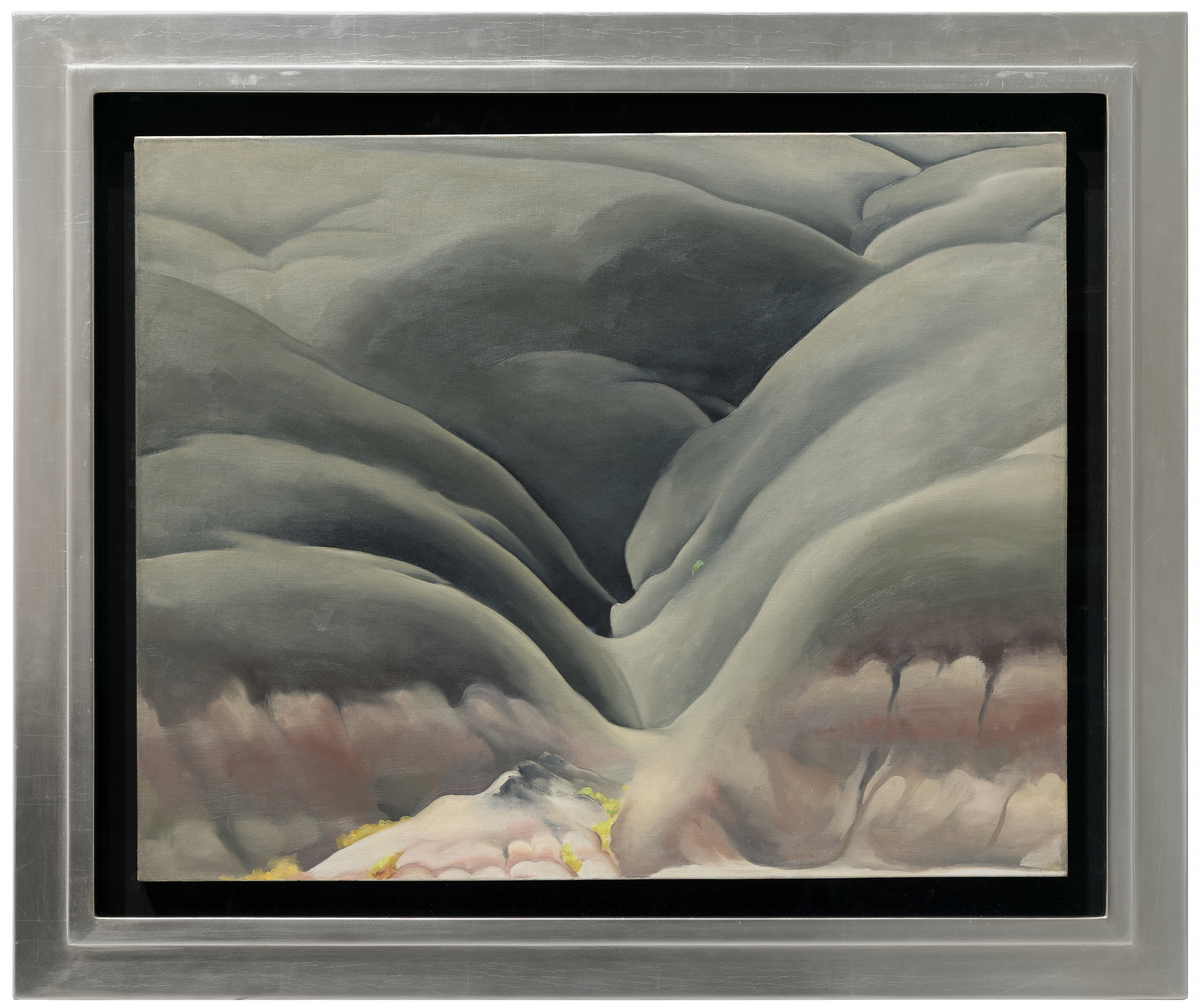
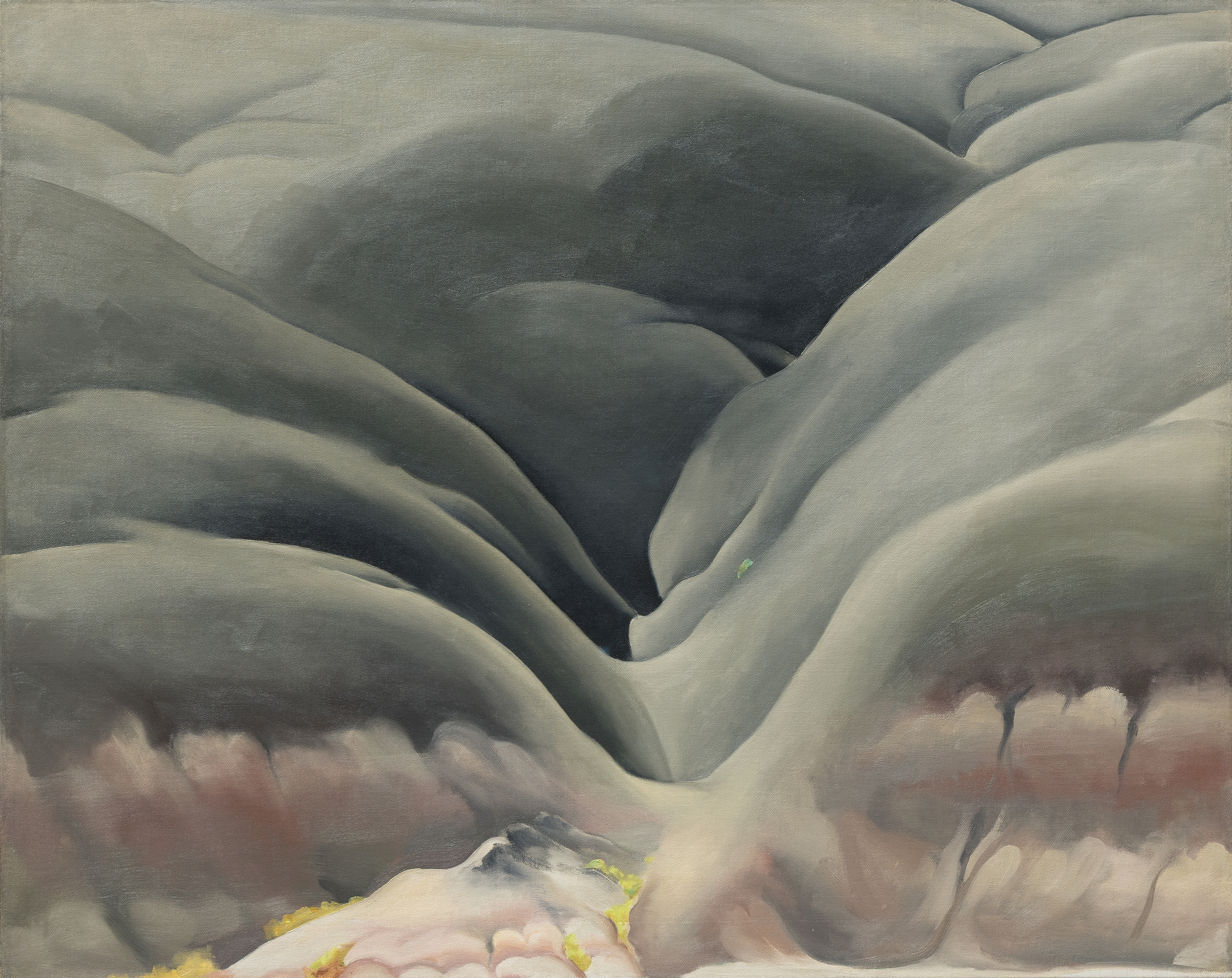
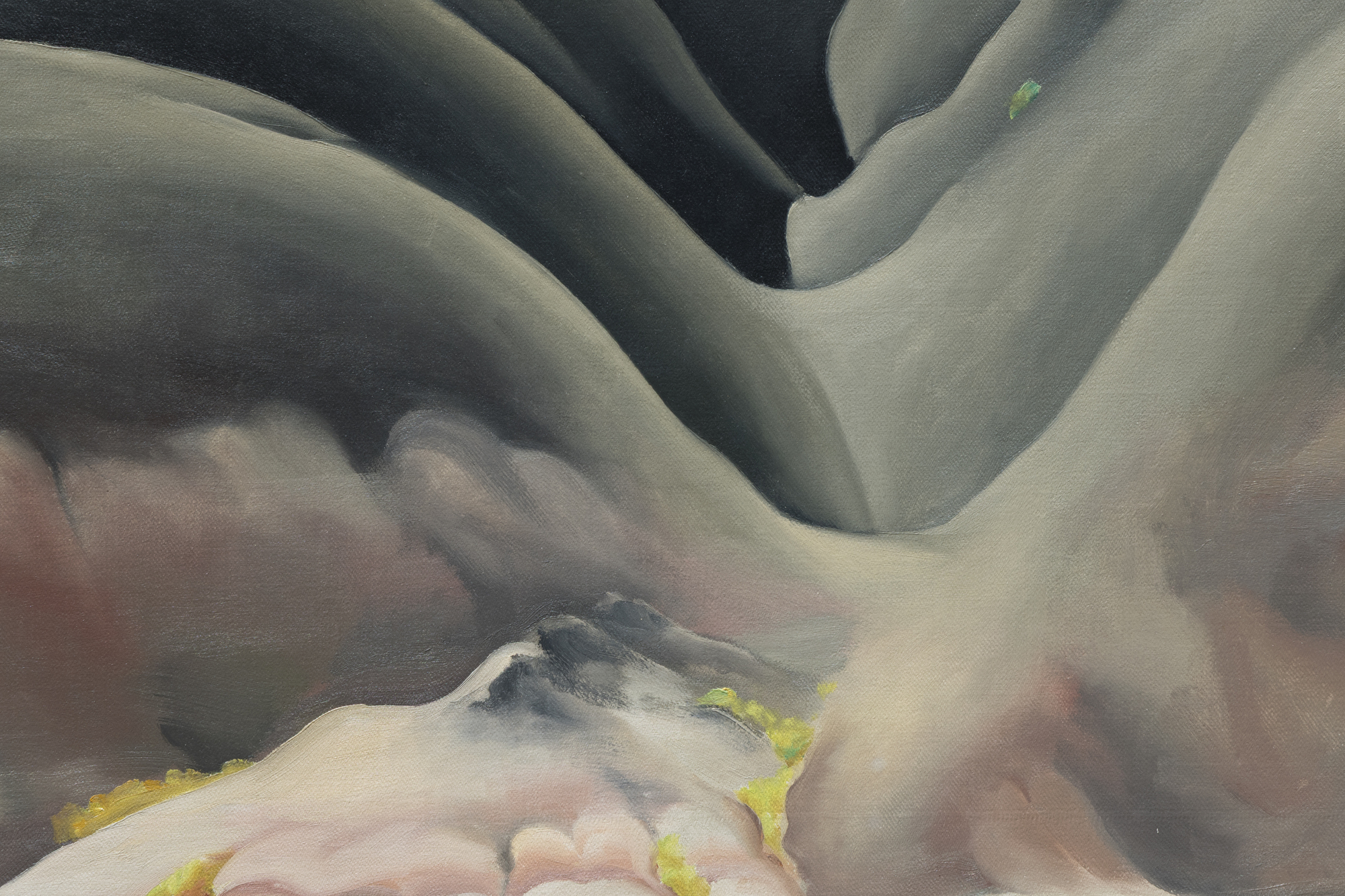
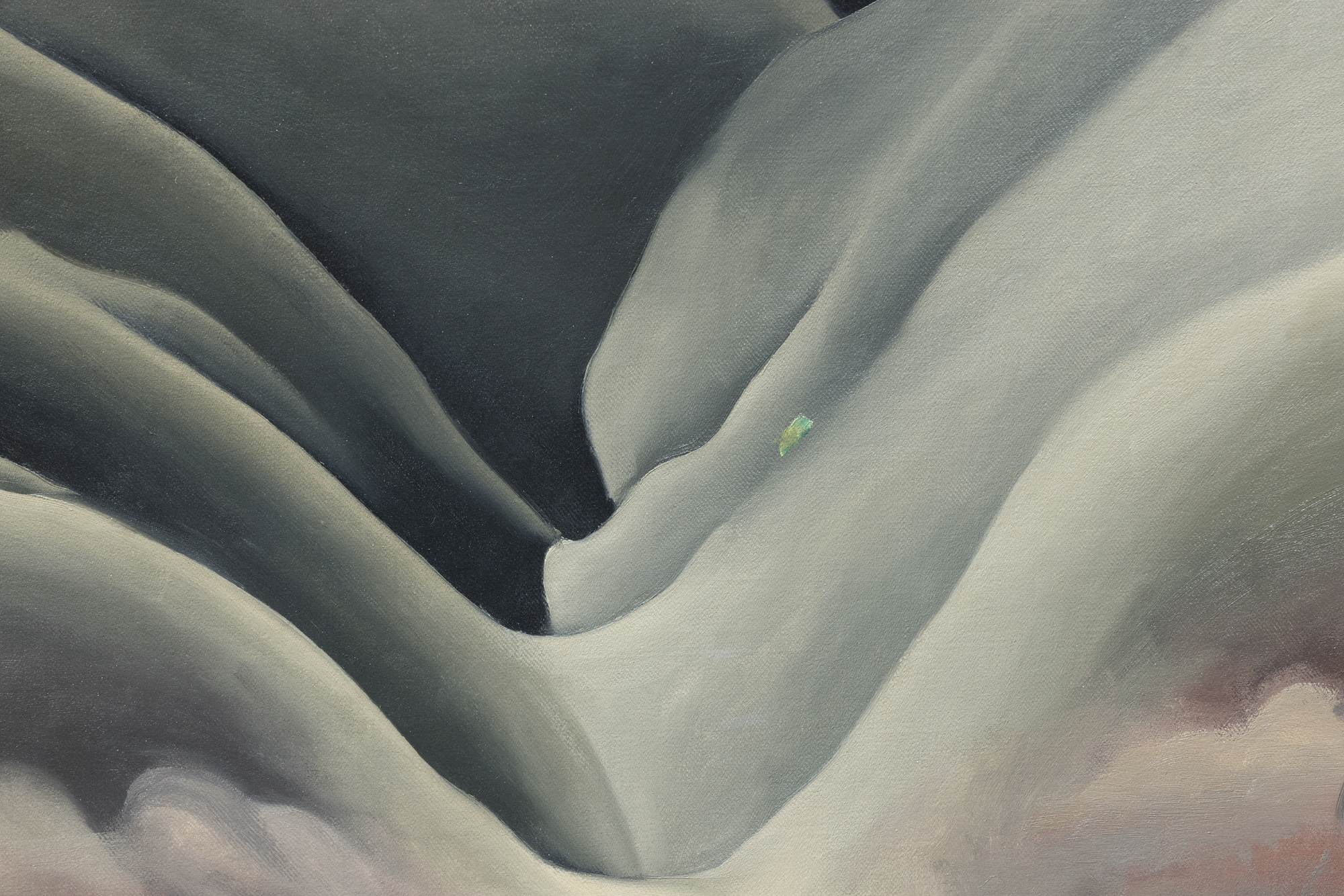
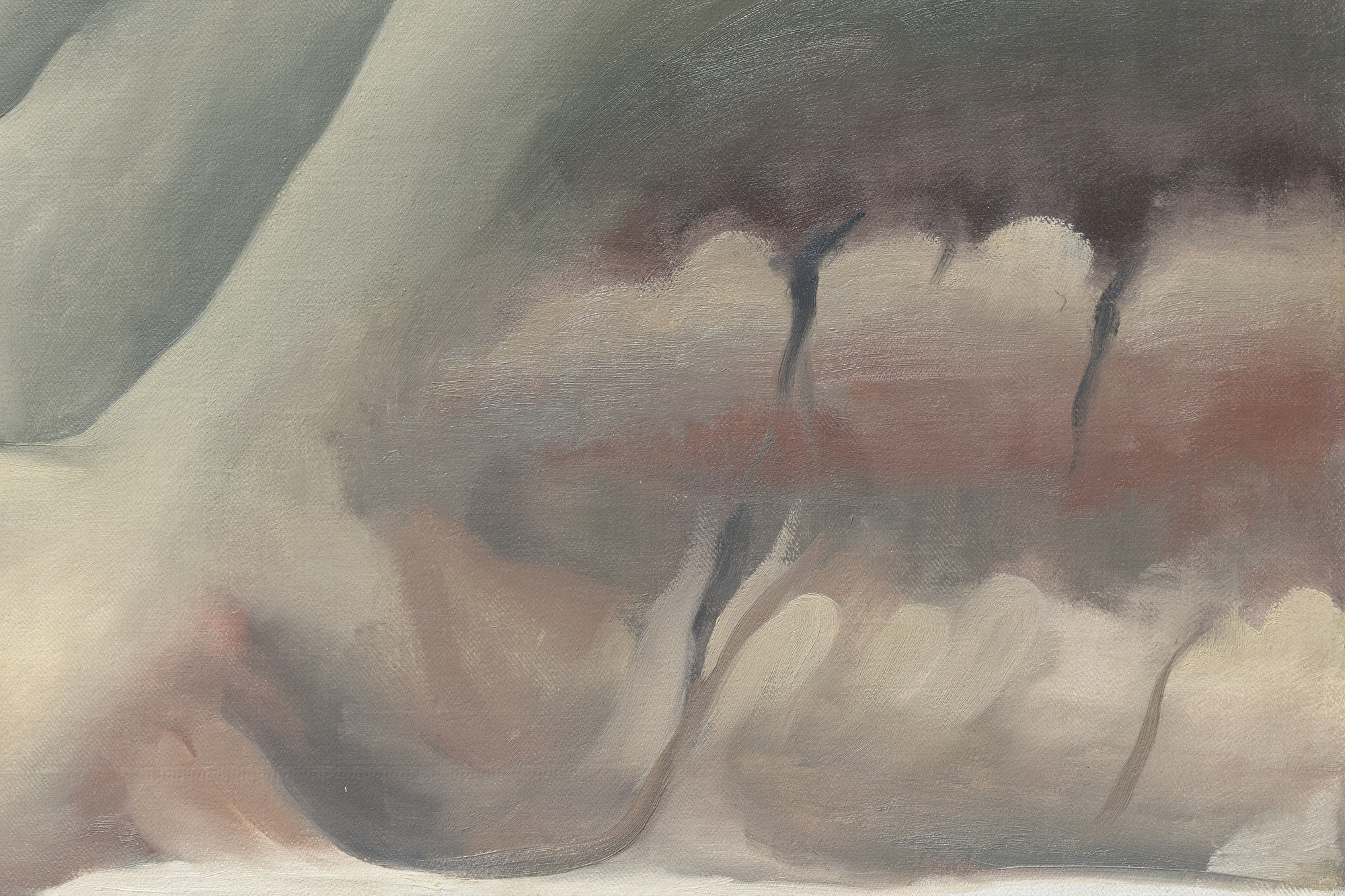
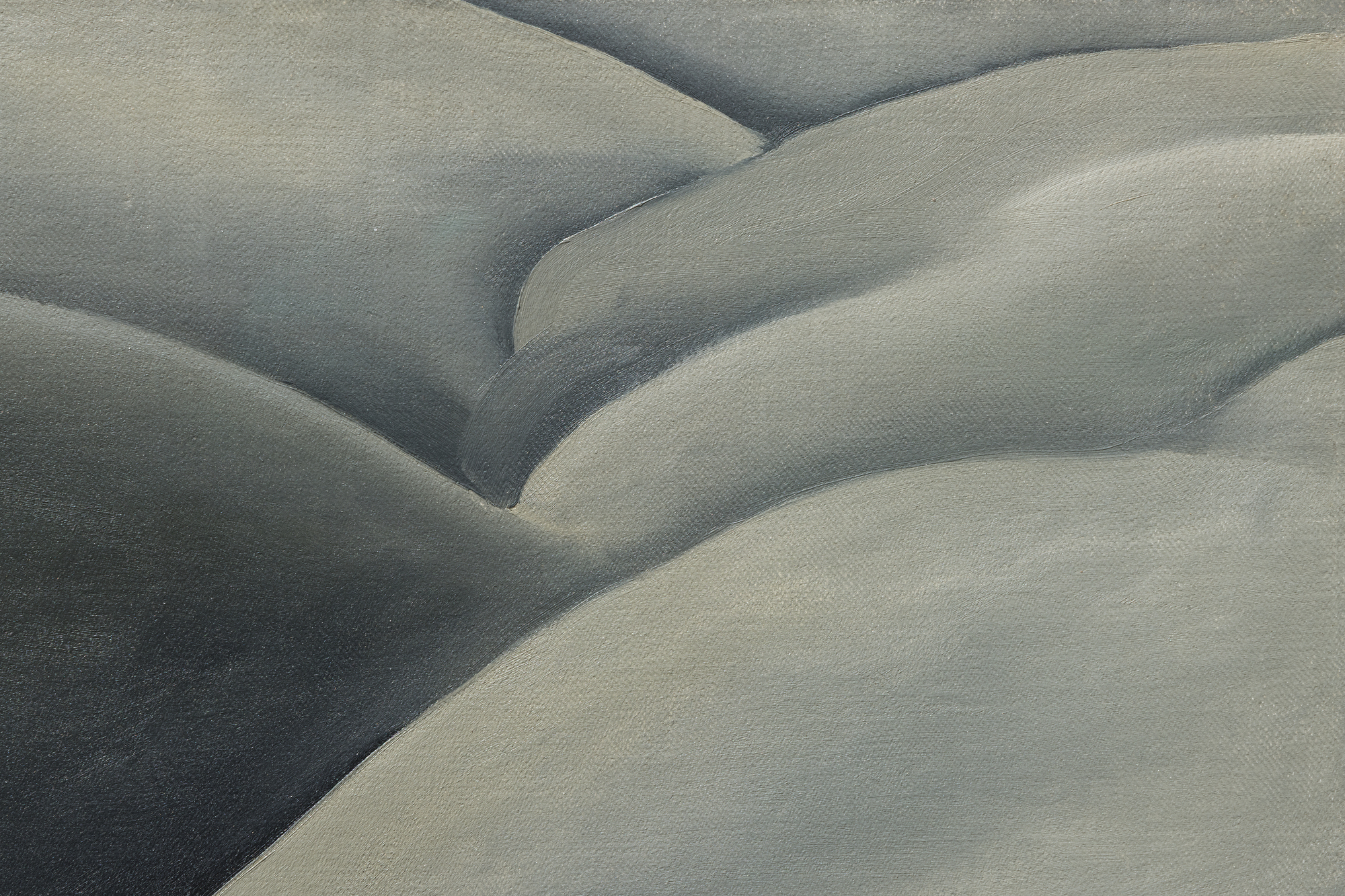
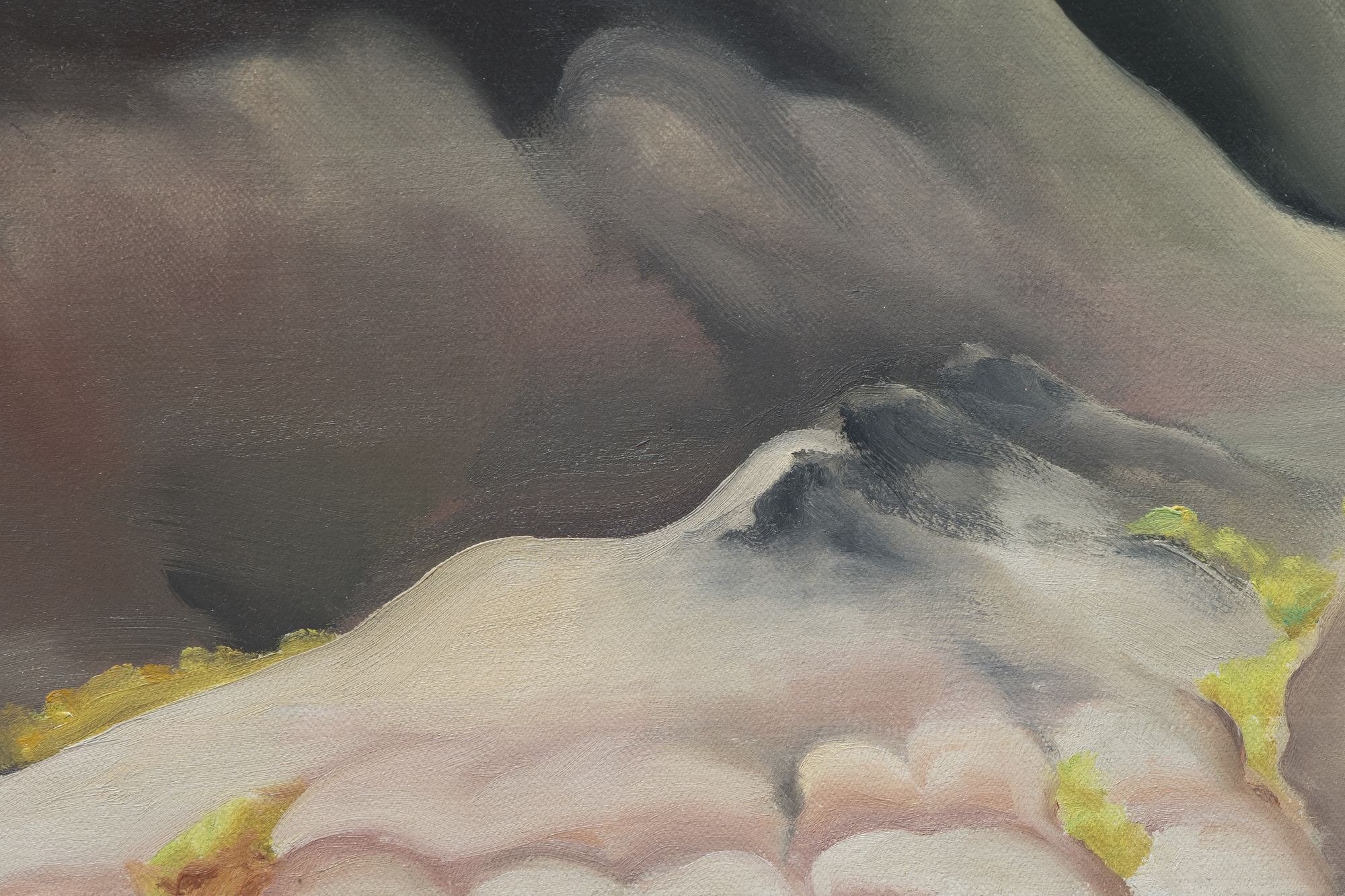
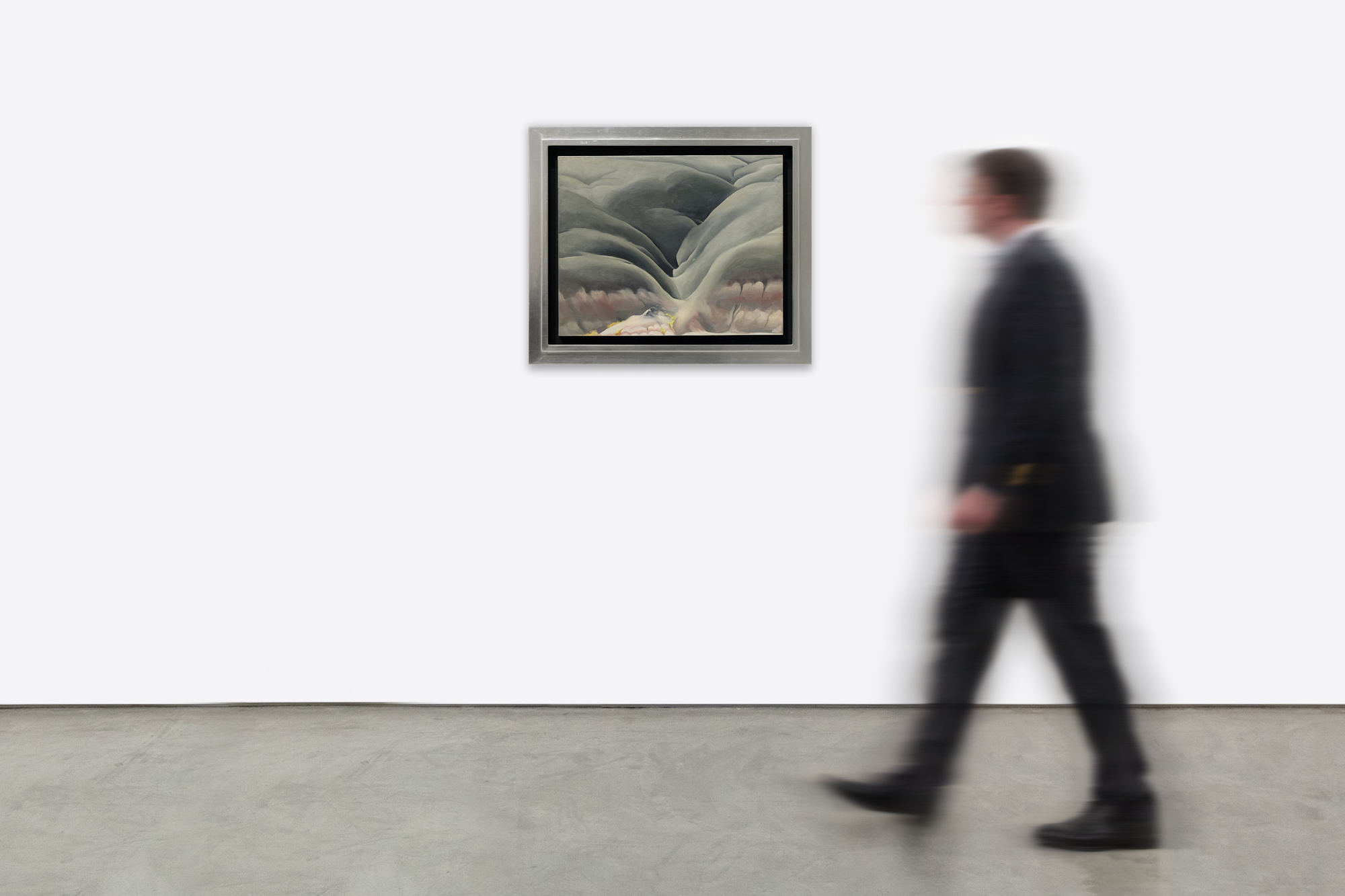
<div>Georgia O’Keeffe’s <em>Black Place II</em> (1945) belongs to one of the most profound and austere series of her career, inspired by repeated journeys to the Bisti Badlands, a remote, otherworldly area of northwestern New Mexico that she called the Black Place. Deeply compelled by this landscape, O’Keeffe often camped there so she could study its shifting forms and tonal subtleties at different hours of the day. In this work, she reduces the scene to its essentials: two massive hills pressing together, no visible horizon, and a composition defined by gravity, stillness, and quiet monumentality. The sweeping, interlocking forms create a sense of scale that feels both intimate and immense, evoking a landscape experienced as presence rather than panorama. </div><br><br><div> </div><br><br><div>Works from the Black Place series are exceptionally rare. Of the fourteen canvases O’Keeffe painted, only four remain in private hands; the remainder are held by major institutions including The Metropolitan Museum of Art, SFMOMA, and the Art Institute of Chicago. As a result, opportunities to encounter a work from this group outside of museum collections are exceedingly uncommon. </div><br><br><div> </div><br><br><div><em>Black Place II </em>has an illustrious lineage, from its earliest days in the holdings of Alfred Stieglitz’s famous New York gallery, An American Place, to the noted Philadelphia philanthropist and collector Daniel Dietrich, to the collection of Jan T. and Marica Vilcek. The painting’s legacy is further underscored by its unusually long institutional life. It was shown as early as 1946 at Stieglitz’s An American Place, and has continued to appear in major institutional retrospectives, including exhibitions at the Centre Pompidou and, most recently, the Museum of Fine Arts, Boston. This sustained public and scholarly attention has firmly established the importance of the Black Place paintings within O’Keeffe’s oeuvre. </div> <div>Georgia O’Keeffe’s <em>Black Place II</em> (1945) belongs to one of the most profound and austere series of her career, inspired by repeated journeys to the Bisti Badlands, a remote, otherworldly area of northwestern New Mexico that she called the Black Place. Deeply compelled by this landscape, O’Keeffe often camped there so she could study its shifting forms and tonal subtleties at different hours of the day. In this work, she reduces the scene to its essentials: two massive hills pressing together, no visible horizon, and a composition defined by gravity, stillness, and quiet monumentality. The sweeping, interlocking forms create a sense of scale that feels both intimate and immense, evoking a landscape experienced as presence rather than panorama. </div><br><br><div> </div><br><br><div>Works from the Black Place series are exceptionally rare. Of the fourteen canvases O’Keeffe painted, only four remain in private hands; the remainder are held by major institutions including The Metropolitan Museum of Art, SFMOMA, and the Art Institute of Chicago. As a result, opportunities to encounter a work from this group outside of museum collections are exceedingly uncommon. </div><br><br><div> </div><br><br><div><em>Black Place II </em>has an illustrious lineage, from its earliest days in the holdings of Alfred Stieglitz’s famous New York gallery, An American Place, to the noted Philadelphia philanthropist and collector Daniel Dietrich, to the collection of Jan T. and Marica Vilcek. The painting’s legacy is further underscored by its unusually long institutional life. It was shown as early as 1946 at Stieglitz’s An American Place, and has continued to appear in major institutional retrospectives, including exhibitions at the Centre Pompidou and, most recently, the Museum of Fine Arts, Boston. This sustained public and scholarly attention has firmly established the importance of the Black Place paintings within O’Keeffe’s oeuvre. </div> <div>Georgia O’Keeffe’s <em>Black Place II</em> (1945) belongs to one of the most profound and austere series of her career, inspired by repeated journeys to the Bisti Badlands, a remote, otherworldly area of northwestern New Mexico that she called the Black Place. Deeply compelled by this landscape, O’Keeffe often camped there so she could study its shifting forms and tonal subtleties at different hours of the day. In this work, she reduces the scene to its essentials: two massive hills pressing together, no visible horizon, and a composition defined by gravity, stillness, and quiet monumentality. The sweeping, interlocking forms create a sense of scale that feels both intimate and immense, evoking a landscape experienced as presence rather than panorama. </div><br><br><div> </div><br><br><div>Works from the Black Place series are exceptionally rare. Of the fourteen canvases O’Keeffe painted, only four remain in private hands; the remainder are held by major institutions including The Metropolitan Museum of Art, SFMOMA, and the Art Institute of Chicago. As a result, opportunities to encounter a work from this group outside of museum collections are exceedingly uncommon. </div><br><br><div> </div><br><br><div><em>Black Place II </em>has an illustrious lineage, from its earliest days in the holdings of Alfred Stieglitz’s famous New York gallery, An American Place, to the noted Philadelphia philanthropist and collector Daniel Dietrich, to the collection of Jan T. and Marica Vilcek. The painting’s legacy is further underscored by its unusually long institutional life. It was shown as early as 1946 at Stieglitz’s An American Place, and has continued to appear in major institutional retrospectives, including exhibitions at the Centre Pompidou and, most recently, the Museum of Fine Arts, Boston. This sustained public and scholarly attention has firmly established the importance of the Black Place paintings within O’Keeffe’s oeuvre. </div> <div>Georgia O’Keeffe’s <em>Black Place II</em> (1945) belongs to one of the most profound and austere series of her career, inspired by repeated journeys to the Bisti Badlands, a remote, otherworldly area of northwestern New Mexico that she called the Black Place. Deeply compelled by this landscape, O’Keeffe often camped there so she could study its shifting forms and tonal subtleties at different hours of the day. In this work, she reduces the scene to its essentials: two massive hills pressing together, no visible horizon, and a composition defined by gravity, stillness, and quiet monumentality. The sweeping, interlocking forms create a sense of scale that feels both intimate and immense, evoking a landscape experienced as presence rather than panorama. </div><br><br><div> </div><br><br><div>Works from the Black Place series are exceptionally rare. Of the fourteen canvases O’Keeffe painted, only four remain in private hands; the remainder are held by major institutions including The Metropolitan Museum of Art, SFMOMA, and the Art Institute of Chicago. As a result, opportunities to encounter a work from this group outside of museum collections are exceedingly uncommon. </div><br><br><div> </div><br><br><div><em>Black Place II </em>has an illustrious lineage, from its earliest days in the holdings of Alfred Stieglitz’s famous New York gallery, An American Place, to the noted Philadelphia philanthropist and collector Daniel Dietrich, to the collection of Jan T. and Marica Vilcek. The painting’s legacy is further underscored by its unusually long institutional life. It was shown as early as 1946 at Stieglitz’s An American Place, and has continued to appear in major institutional retrospectives, including exhibitions at the Centre Pompidou and, most recently, the Museum of Fine Arts, Boston. This sustained public and scholarly attention has firmly established the importance of the Black Place paintings within O’Keeffe’s oeuvre. </div> <div>Georgia O’Keeffe’s <em>Black Place II</em> (1945) belongs to one of the most profound and austere series of her career, inspired by repeated journeys to the Bisti Badlands, a remote, otherworldly area of northwestern New Mexico that she called the Black Place. Deeply compelled by this landscape, O’Keeffe often camped there so she could study its shifting forms and tonal subtleties at different hours of the day. In this work, she reduces the scene to its essentials: two massive hills pressing together, no visible horizon, and a composition defined by gravity, stillness, and quiet monumentality. The sweeping, interlocking forms create a sense of scale that feels both intimate and immense, evoking a landscape experienced as presence rather than panorama. </div><br><br><div> </div><br><br><div>Works from the Black Place series are exceptionally rare. Of the fourteen canvases O’Keeffe painted, only four remain in private hands; the remainder are held by major institutions including The Metropolitan Museum of Art, SFMOMA, and the Art Institute of Chicago. As a result, opportunities to encounter a work from this group outside of museum collections are exceedingly uncommon. </div><br><br><div> </div><br><br><div><em>Black Place II </em>has an illustrious lineage, from its earliest days in the holdings of Alfred Stieglitz’s famous New York gallery, An American Place, to the noted Philadelphia philanthropist and collector Daniel Dietrich, to the collection of Jan T. and Marica Vilcek. The painting’s legacy is further underscored by its unusually long institutional life. It was shown as early as 1946 at Stieglitz’s An American Place, and has continued to appear in major institutional retrospectives, including exhibitions at the Centre Pompidou and, most recently, the Museum of Fine Arts, Boston. This sustained public and scholarly attention has firmly established the importance of the Black Place paintings within O’Keeffe’s oeuvre. </div> <div>Georgia O’Keeffe’s <em>Black Place II</em> (1945) belongs to one of the most profound and austere series of her career, inspired by repeated journeys to the Bisti Badlands, a remote, otherworldly area of northwestern New Mexico that she called the Black Place. Deeply compelled by this landscape, O’Keeffe often camped there so she could study its shifting forms and tonal subtleties at different hours of the day. In this work, she reduces the scene to its essentials: two massive hills pressing together, no visible horizon, and a composition defined by gravity, stillness, and quiet monumentality. The sweeping, interlocking forms create a sense of scale that feels both intimate and immense, evoking a landscape experienced as presence rather than panorama. </div><br><br><div> </div><br><br><div>Works from the Black Place series are exceptionally rare. Of the fourteen canvases O’Keeffe painted, only four remain in private hands; the remainder are held by major institutions including The Metropolitan Museum of Art, SFMOMA, and the Art Institute of Chicago. As a result, opportunities to encounter a work from this group outside of museum collections are exceedingly uncommon. </div><br><br><div> </div><br><br><div><em>Black Place II </em>has an illustrious lineage, from its earliest days in the holdings of Alfred Stieglitz’s famous New York gallery, An American Place, to the noted Philadelphia philanthropist and collector Daniel Dietrich, to the collection of Jan T. and Marica Vilcek. The painting’s legacy is further underscored by its unusually long institutional life. It was shown as early as 1946 at Stieglitz’s An American Place, and has continued to appear in major institutional retrospectives, including exhibitions at the Centre Pompidou and, most recently, the Museum of Fine Arts, Boston. This sustained public and scholarly attention has firmly established the importance of the Black Place paintings within O’Keeffe’s oeuvre. </div> <div>Georgia O’Keeffe’s <em>Black Place II</em> (1945) belongs to one of the most profound and austere series of her career, inspired by repeated journeys to the Bisti Badlands, a remote, otherworldly area of northwestern New Mexico that she called the Black Place. Deeply compelled by this landscape, O’Keeffe often camped there so she could study its shifting forms and tonal subtleties at different hours of the day. In this work, she reduces the scene to its essentials: two massive hills pressing together, no visible horizon, and a composition defined by gravity, stillness, and quiet monumentality. The sweeping, interlocking forms create a sense of scale that feels both intimate and immense, evoking a landscape experienced as presence rather than panorama. </div><br><br><div> </div><br><br><div>Works from the Black Place series are exceptionally rare. Of the fourteen canvases O’Keeffe painted, only four remain in private hands; the remainder are held by major institutions including The Metropolitan Museum of Art, SFMOMA, and the Art Institute of Chicago. As a result, opportunities to encounter a work from this group outside of museum collections are exceedingly uncommon. </div><br><br><div> </div><br><br><div><em>Black Place II </em>has an illustrious lineage, from its earliest days in the holdings of Alfred Stieglitz’s famous New York gallery, An American Place, to the noted Philadelphia philanthropist and collector Daniel Dietrich, to the collection of Jan T. and Marica Vilcek. The painting’s legacy is further underscored by its unusually long institutional life. It was shown as early as 1946 at Stieglitz’s An American Place, and has continued to appear in major institutional retrospectives, including exhibitions at the Centre Pompidou and, most recently, the Museum of Fine Arts, Boston. This sustained public and scholarly attention has firmly established the importance of the Black Place paintings within O’Keeffe’s oeuvre. </div> <div>Georgia O’Keeffe’s <em>Black Place II</em> (1945) belongs to one of the most profound and austere series of her career, inspired by repeated journeys to the Bisti Badlands, a remote, otherworldly area of northwestern New Mexico that she called the Black Place. Deeply compelled by this landscape, O’Keeffe often camped there so she could study its shifting forms and tonal subtleties at different hours of the day. In this work, she reduces the scene to its essentials: two massive hills pressing together, no visible horizon, and a composition defined by gravity, stillness, and quiet monumentality. The sweeping, interlocking forms create a sense of scale that feels both intimate and immense, evoking a landscape experienced as presence rather than panorama. </div><br><br><div> </div><br><br><div>Works from the Black Place series are exceptionally rare. Of the fourteen canvases O’Keeffe painted, only four remain in private hands; the remainder are held by major institutions including The Metropolitan Museum of Art, SFMOMA, and the Art Institute of Chicago. As a result, opportunities to encounter a work from this group outside of museum collections are exceedingly uncommon. </div><br><br><div> </div><br><br><div><em>Black Place II </em>has an illustrious lineage, from its earliest days in the holdings of Alfred Stieglitz’s famous New York gallery, An American Place, to the noted Philadelphia philanthropist and collector Daniel Dietrich, to the collection of Jan T. and Marica Vilcek. The painting’s legacy is further underscored by its unusually long institutional life. It was shown as early as 1946 at Stieglitz’s An American Place, and has continued to appear in major institutional retrospectives, including exhibitions at the Centre Pompidou and, most recently, the Museum of Fine Arts, Boston. This sustained public and scholarly attention has firmly established the importance of the Black Place paintings within O’Keeffe’s oeuvre. </div> <div>Georgia O’Keeffe’s <em>Black Place II</em> (1945) belongs to one of the most profound and austere series of her career, inspired by repeated journeys to the Bisti Badlands, a remote, otherworldly area of northwestern New Mexico that she called the Black Place. Deeply compelled by this landscape, O’Keeffe often camped there so she could study its shifting forms and tonal subtleties at different hours of the day. In this work, she reduces the scene to its essentials: two massive hills pressing together, no visible horizon, and a composition defined by gravity, stillness, and quiet monumentality. The sweeping, interlocking forms create a sense of scale that feels both intimate and immense, evoking a landscape experienced as presence rather than panorama. </div><br><br><div> </div><br><br><div>Works from the Black Place series are exceptionally rare. Of the fourteen canvases O’Keeffe painted, only four remain in private hands; the remainder are held by major institutions including The Metropolitan Museum of Art, SFMOMA, and the Art Institute of Chicago. As a result, opportunities to encounter a work from this group outside of museum collections are exceedingly uncommon. </div><br><br><div> </div><br><br><div><em>Black Place II </em>has an illustrious lineage, from its earliest days in the holdings of Alfred Stieglitz’s famous New York gallery, An American Place, to the noted Philadelphia philanthropist and collector Daniel Dietrich, to the collection of Jan T. and Marica Vilcek. The painting’s legacy is further underscored by its unusually long institutional life. It was shown as early as 1946 at Stieglitz’s An American Place, and has continued to appear in major institutional retrospectives, including exhibitions at the Centre Pompidou and, most recently, the Museum of Fine Arts, Boston. This sustained public and scholarly attention has firmly established the importance of the Black Place paintings within O’Keeffe’s oeuvre. </div> <div>Georgia O’Keeffe’s <em>Black Place II</em> (1945) belongs to one of the most profound and austere series of her career, inspired by repeated journeys to the Bisti Badlands, a remote, otherworldly area of northwestern New Mexico that she called the Black Place. Deeply compelled by this landscape, O’Keeffe often camped there so she could study its shifting forms and tonal subtleties at different hours of the day. In this work, she reduces the scene to its essentials: two massive hills pressing together, no visible horizon, and a composition defined by gravity, stillness, and quiet monumentality. The sweeping, interlocking forms create a sense of scale that feels both intimate and immense, evoking a landscape experienced as presence rather than panorama. </div><br><br><div> </div><br><br><div>Works from the Black Place series are exceptionally rare. Of the fourteen canvases O’Keeffe painted, only four remain in private hands; the remainder are held by major institutions including The Metropolitan Museum of Art, SFMOMA, and the Art Institute of Chicago. As a result, opportunities to encounter a work from this group outside of museum collections are exceedingly uncommon. </div><br><br><div> </div><br><br><div><em>Black Place II </em>has an illustrious lineage, from its earliest days in the holdings of Alfred Stieglitz’s famous New York gallery, An American Place, to the noted Philadelphia philanthropist and collector Daniel Dietrich, to the collection of Jan T. and Marica Vilcek. The painting’s legacy is further underscored by its unusually long institutional life. It was shown as early as 1946 at Stieglitz’s An American Place, and has continued to appear in major institutional retrospectives, including exhibitions at the Centre Pompidou and, most recently, the Museum of Fine Arts, Boston. This sustained public and scholarly attention has firmly established the importance of the Black Place paintings within O’Keeffe’s oeuvre. </div>
Black Place II194561 x 76 cm(60,96 x 76,2 x 2,54 cm) huile sur toile
Provenance
An American Place, New York
Downtown Gallery, New York
Katrina McCormick Barnes, Denver, Colorado
Medill McCormick Barnes, acquis par succession en 1971
Washburn Gallery, New York
Hirschl & Adler Galleries, New York
Daniel Dietrich, Philadelphie, jusqu'en 1985
Hirschl & Adler Galleries, New York
The Owings Gallery, Santa Fe, Nouveau-Mexique
Collection privée, Santa Fe, Nouveau-Mexique, 2000
The Owings Gallery, Santa Fe, Nouveau-Mexique
Jan T. et Marica Vilcek, New York, 2011–2015
Privé
...Plus.....Collection e, offerte par les personnes susmentionnées
Exposition
New York, An American Place, Georgia O’Keeffe, du 4 février au 27 mars 1946, n° 10
New York, Whitney Museum of American Art, Exposition annuelle de peinture américaine contemporaine, du 13 novembre 1948 au 2 janvier 1949
Dallas, Texas, Musée des Beaux-Arts de Dallas, Exposition de peintures de Georgia O’Keeffe, du 1er au 22 février 1953, puis à : Delray Beach, Floride, Mayo Hill Galleries, du 16 mars au 11 avril 1953
New York, Galeries Hirschl & Adler, « Acquisitions récentes majeures : peintures américaines de la fin du XIXe et du début du XXe siècle », du 2 au 23 février 1972
New York, Washburn Gallery, « Mind over Matter : Painters of the Immanent Things », du 20 septembre au 21 octobre 1972
New York, Hirschl & Adler Galleries, Georgia O’Keeffe : Sélection de peintures et d’œuvres sur papier, du 26 avril au 6 juin 1986, puis à Dallas, au Texas, Gerald Peters Gallery, du 14 juin au 14 juillet 1986
Santa Fe, Nouveau-Mexique, Musée Georgia O’Keeffe, « Georgia O’Keeffe au Nouveau-Mexique : Architecture, Katsinam et la terre », du 17 mai au septembre 2013 (institution organisatrice), exposition itinérante à : Montclair, New Jersey, Musée d’art de Montclair, 28 septembre 2012 – 20 janvier 2013, Denver, Colorado, Denver Art Museum, 10 février – 28 avril 2013
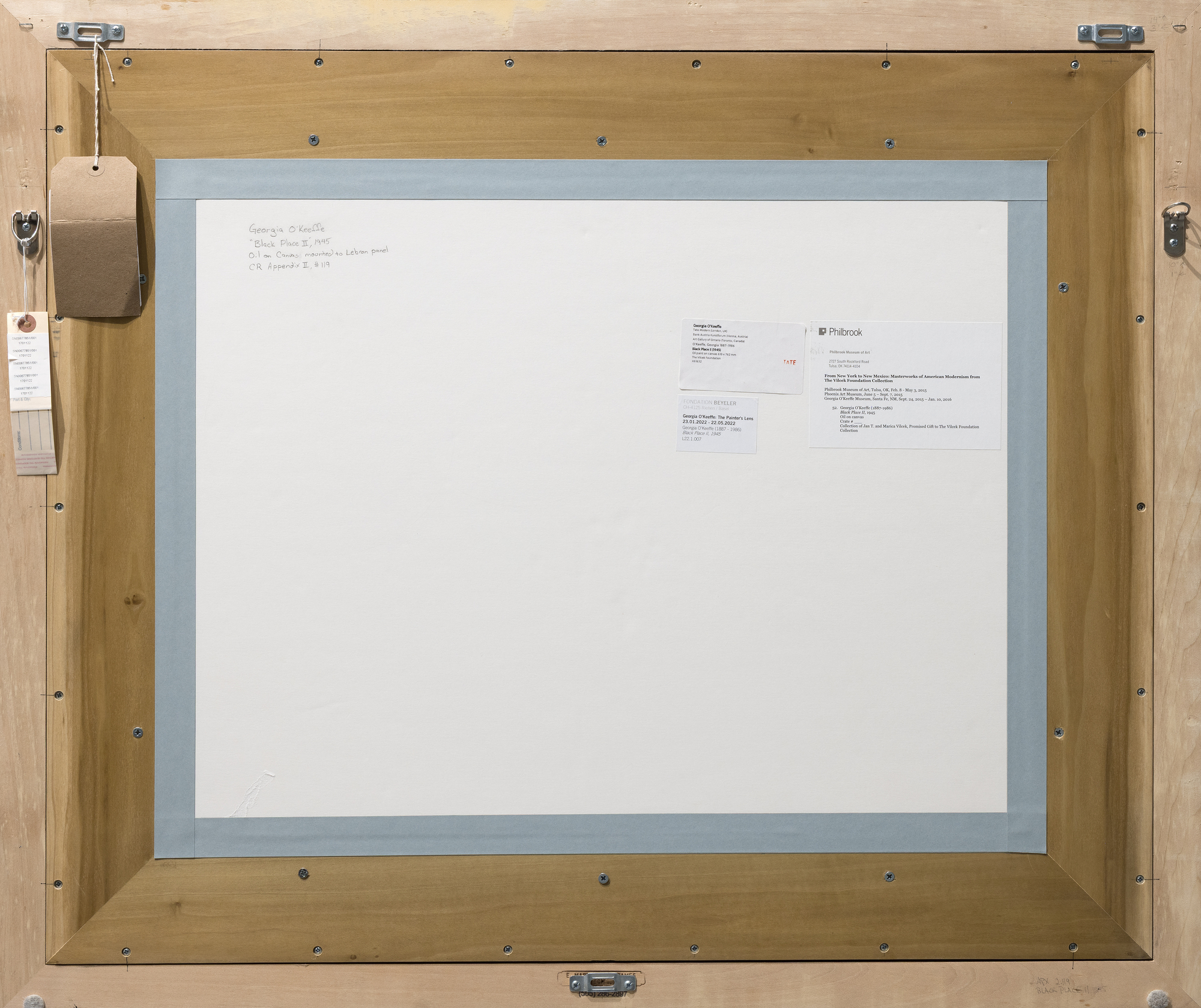
Tulsa, Oklahoma, Philbrook Museum of Art, Phoenix, « De New York au Nouveau-Mexique : chefs-d’œuvre du modernisme américain issus de la collection de la Fondation Vilcek », du 8 février au 3 mai 2015, puis en tournée à : Arizona, Phoenix Art Museum, du 7 juin au 7 septembre 2015, Santa Fe, Nouveau-Mexique, Georgia O’Keeffe Museum, 25 septembre 2015 – 10 janvier 2016
Santa Fe, Nouveau-Mexique, Musée Georgia O’Keeffe, prêt prolongé, janvier – avril 2016
Londres, Tate Modern, Georgia O’Keeffe, du 6 juillet au 30 octobre 2016, puis à Vienne, Bank Austria Kunstform, du 7 décembre 2016 au 26 mars 2016, Toronto, Art Gallery of Ontario, du 22 avril au 30 juillet 2017
Santa Fe, Nouveau-Mexique, Musée Georgia O’Keeffe, « The Black Place : Georgia O’Keeffe et Michael Namingha », du 28 avril au 20 août 2018
Corpus Christi, Texas, Musée d'art du sud du Texas, Chefs-d'œuvre du modernisme américain issus de la collection Vilcek d'art américain, du 13 septembre 2018 au 6 janvier 2019
Wichita, Kansas, Wichita Art Museum, Georgia O’Keeffe : Art, Image, Style, du 30 mars au 23 juin 2019, puis à : Reno, Nevada, Nevada Museum of Art, du 20 juillet au 20 octobre 2019, West Palm Beach, Floride, Norton Museum of Art, 21 novembre 2019 – 9 février 2020
Paris, Centre Pompidou : Georgia O’Keeffe, du 8 septembre au 6 décembre 2021, puis à Bâle, en Suisse, à la Fondation Beyeler, du 23 janvier au 22 mai 2022
Newport, Rhode Island, Musée d'art de Newport, Georgia O’Keeffe : « Things I Had No Words For », du 16 juillet au 16 octobre 2022
San Diego, Californie, Musée d'art de San Diego, « O’Keeffe et Moore », du 13 mai au 27 août 2023, puis à : Albuquerque, Nouveau-Mexique, Musée d'Albuquerque, du 30 septembre au 31 décembre 2023, Montréal, Canada, Musée des beaux-arts de Montréal, du 10 février - 2 juin 2024, Boston, Massachusetts, Musée des beaux-arts, 13 octobre 2024 – 20 janvier 2025
Littérature
Robert M. Coates, « Les galeries d'art contemporaines, dont le Whitney », The New
Yorker XXII, 16 février 1946, p. 84
« Expositions à New York – Georgia O’Keeffe », Art Outlook de MKR, avril 1946, p. 1, 3 (illustré)
Musée Whitney d'art américain, Exposition annuelle de peinture américaine contemporaine, New York, 1948, n° 105
Musée des Beaux-Arts de Dallas, Exposition de peintures de Georgia O’Keeffe, Dallas, 1953, n° 22
Hirschl & Adler Galleries, Acquisitions récentes majeures : Peintures américaines de la fin du XIXe et du début du XXe siècle, New York, 1972, n° 52 (illustré)
Washburn Gallery, Mind over Matter : Painters of the Immanent Things, New York, 1972, n° 7, p. 3 (illustré)
Hilton Kramer, « Artists Looking West : les nouvelles expositions des galeries A.C.A. présentent un large éventail de styles et de techniques », The New York Times, 23 septembre 1972, p. L27
James R. Mellow, « Paysages : le réel et l’imaginaire – dans l’art américain », The New York Times, 8 octobre 1972, p. D27
John Perreault, « Quelqu’un veut-il de tout cet art ? », The Village Voice, 5 octobre 1972, p. 29
Sanford Schwartz, « New York Letter », Art International XVI, décembre 1972, p. 61
Hirschl & Adler, Georgia O’Keeffe : Peintures et œuvres sur papier choisies, New York, 1986, n° 28 (illustrée et en couverture)
Sharyn Udall, *Contested Terrain: Myth and Meanings in Southwest Art*, Albuquerque, 1996, pl. 8, pp. xi, 120-134, 174 (illustré et en couverture)
Barbara Buhler Lynes, Georgia O’Keeffe : Catalogue raisonné. Tome 2, New Haven, Washington, D.C. et Abiquiu, Nouveau-Mexique, 1999, n° 119, p. 1107 (illustré)
Barbara Buhler Lynes et Carolyn Kastner, Georgia O’Keeffe au Nouveau-Mexique : Architecture, Katsinam et la terre, Santa Fe, NM, 2012, pl. 49, p. 140 (illustré)
Dan Bischoff, « Le sens du lieu chez l'artiste Georgia O'Keeffe », Star-Ledger, 30 septembre 2012
Martha Schwendener, « L'esprit des objets culturels », The New York Times, 4 janvier,
2013, p. NJ11
Ray Mark Rinaldi, « L'art western inspiré par Georgia O'Keeffe arrive au Denver Art Museum »,
Denver Post, 15 février 2013
William C. Agee et Lewis Kachur, Chefs-d’œuvre du modernisme américain : de la collection Vilcek
Recueil, Londres, 2013, p. 11, 160-161, 235, 240, 267 (illustré)
Tanya Barson et Erin B. Coe, Georgia O’Keeffe, Londres, 2016, p. 178, 255 (illustré)
Marta Ruis del Arbol, Georgia O’Keeffe, Paris, 2021, n° 75, p. 40, 206-207, 312 (illustré)
Anita Feldman, Hannah Higham, Jennifer Laurent, Barbara Buhler Lynes, Ariel Plotek et Chris Stephens, O’Keeffe and Moore, San Diego, 2023, p. 142 (illustré)
...MOINS.....
L’œuvre Black Place II (1945) de Georgia O’Keeffe s’inscrit dans l’une des séries les plus profondes et les plus austères de sa carrière, inspirée par ses nombreux voyages dans les Bisti Badlands, une région isolée et surnaturelle du nord-ouest du Nouveau-Mexique qu’elle appelait le « Black Place ». Profondément fascinée par ce paysage, O’Keeffe y campait souvent afin d’étudier ses formes changeantes et ses nuances de tons à différentes heures de la journée. Dans cette œuvre, elle réduit la scène à l’essentiel : deux collines massives se pressant l’une contre l’autre, aucun horizon visible, et une composition définie par la gravité, l’immobilité et une monumentalité sereine. Les formes amples et entrelacées créent une impression d’échelle à la fois intime et immense, évoquant un paysage vécu comme une présence plutôt que comme un panorama.


Les œuvres de la série Black Place sont exceptionnellement rares. Sur les quatorze toiles peintes par O’Keeffe, seules quatre sont encore en mains privées ; les autres sont conservées par de grandes institutions, notamment le Metropolitan Museum of Art, le SFMOMA et l’Art Institute of Chicago. Il est donc extrêmement rare d’avoir l’occasion de découvrir une œuvre de ce groupe en dehors des collections des musées.


Black Place II possède une lignée prestigieuse, depuis ses débuts dans les collections de la célèbre galerie new-yorkaise d’Alfred Stieglitz, An American Place, jusqu’au célèbre philanthrope et collectionneur de Philadelphie Daniel Dietrich, puis à la collection de Jan T. et Marica Vilcek. L’héritage de ce tableau est encore souligné par son parcours institutionnel exceptionnellement long. Elle a été exposée dès 1946 à An American Place, la galerie de Stieglitz, et a continué à figurer dans de grandes rétrospectives institutionnelles, notamment au Centre Pompidou et, plus récemment, au Museum of Fine Arts de Boston. Cette attention soutenue du public et des spécialistes a fermement établi l’importance des peintures Black Place au sein de l’œuvre d’O’Keeffe.
demander