JASPER JOHNS (né en 1930)

 
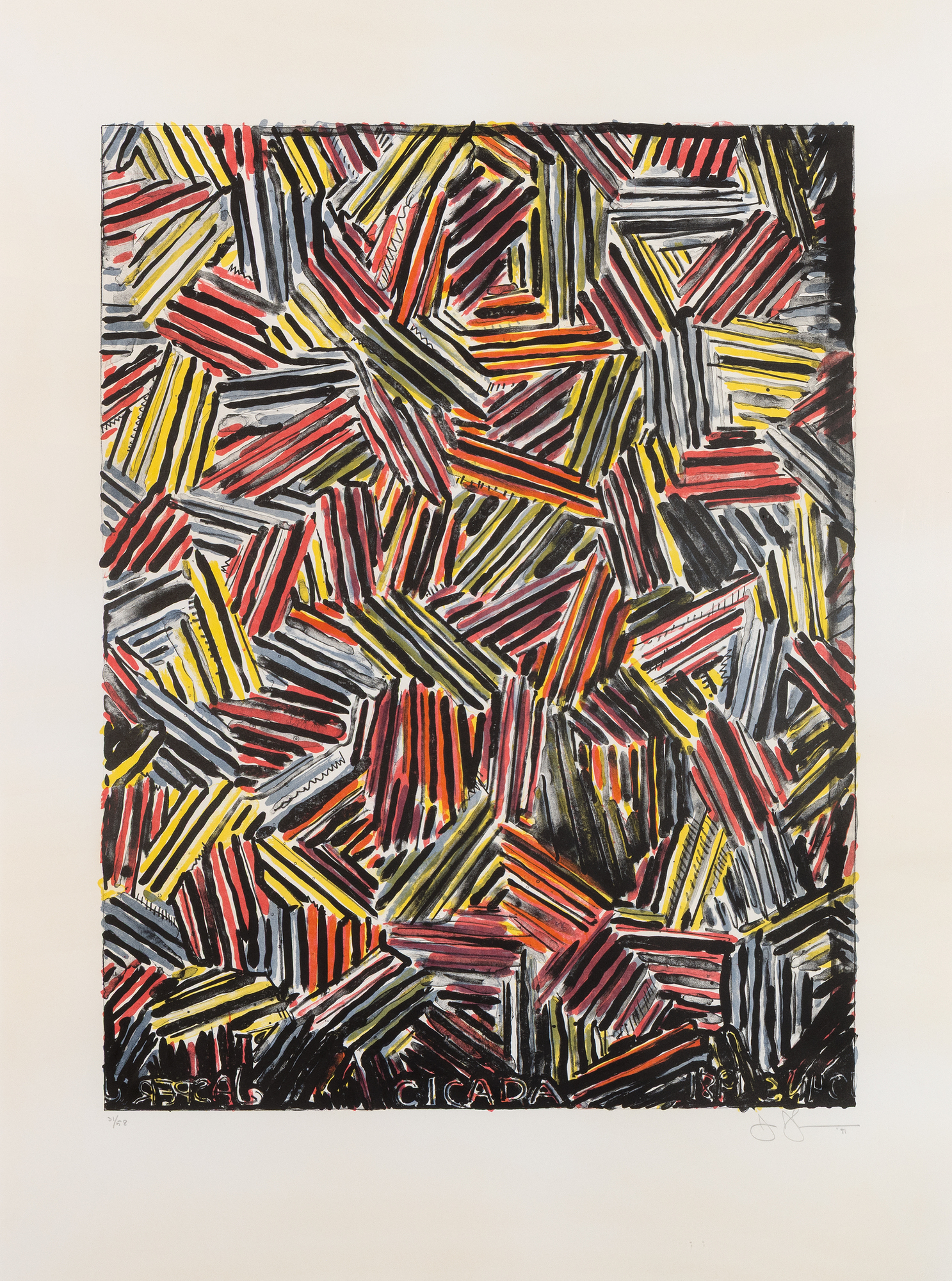
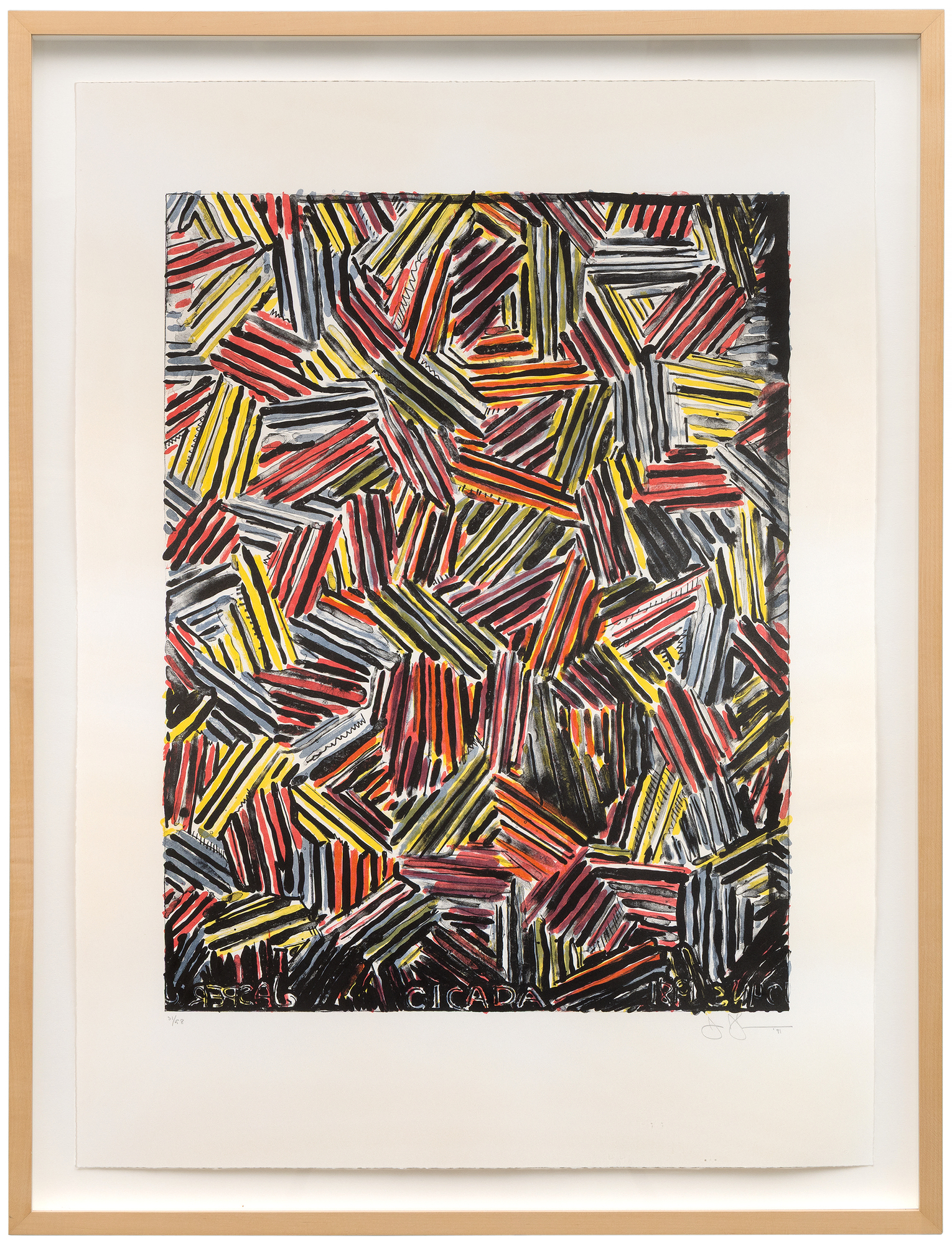
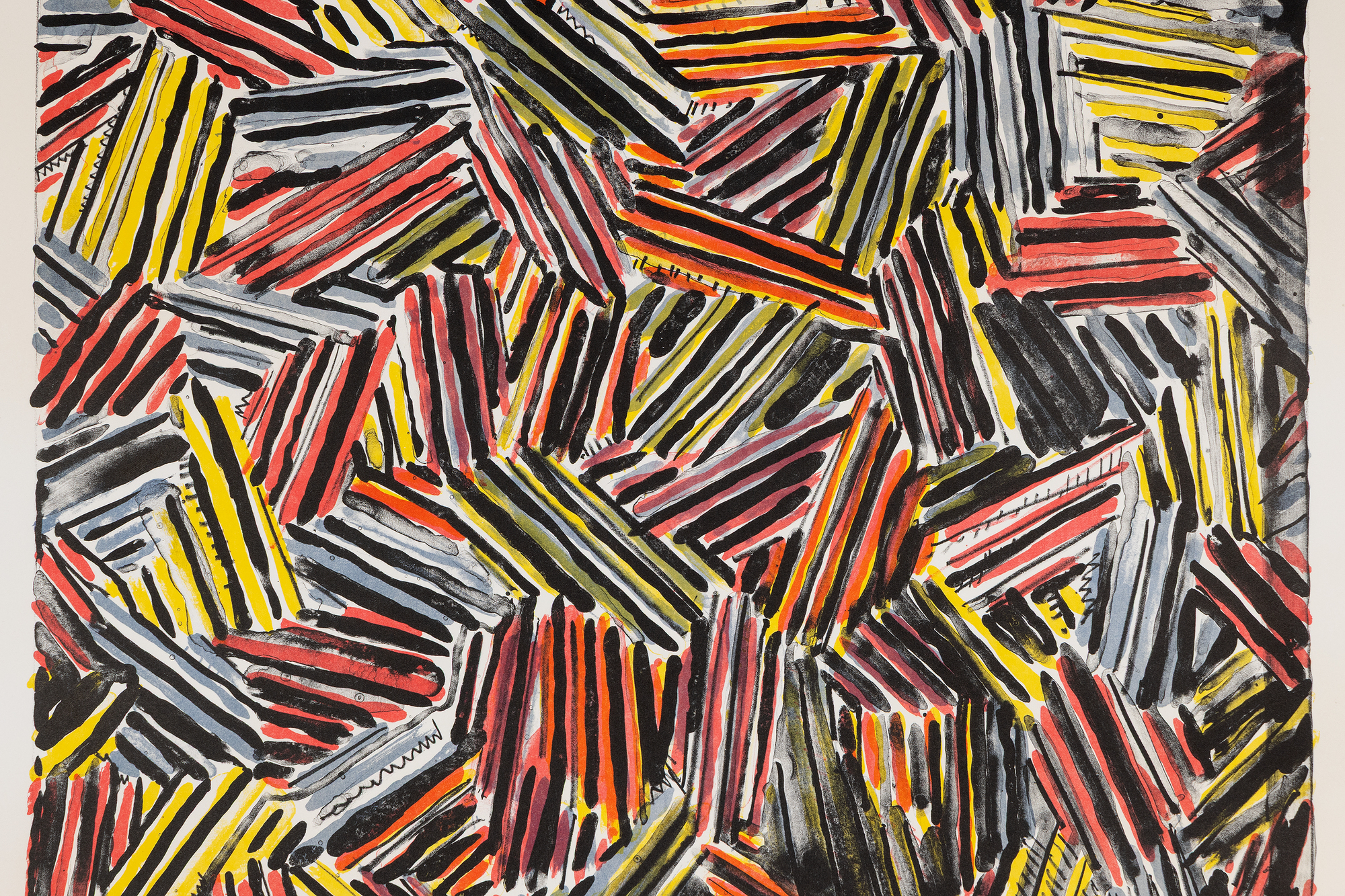
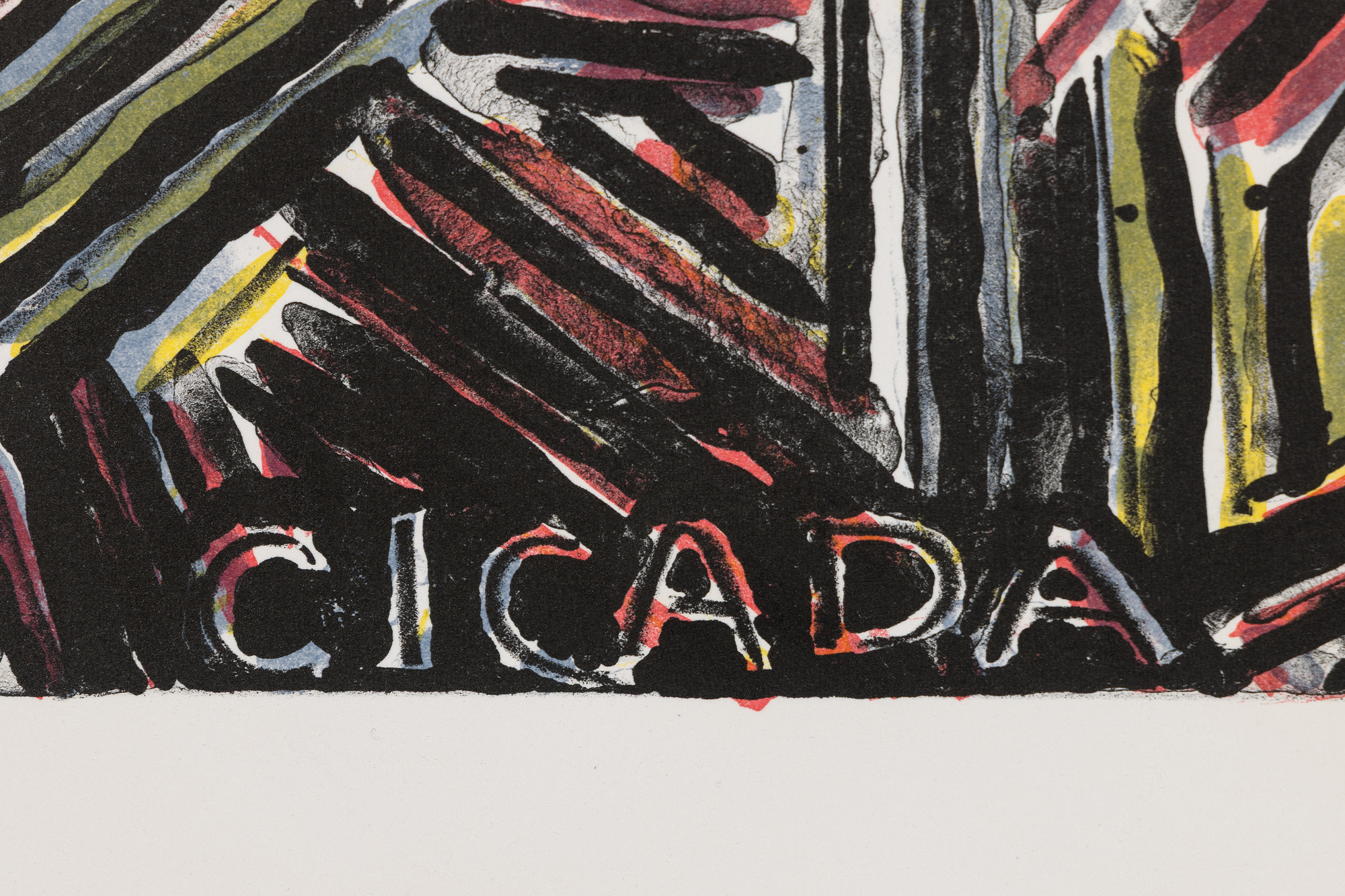
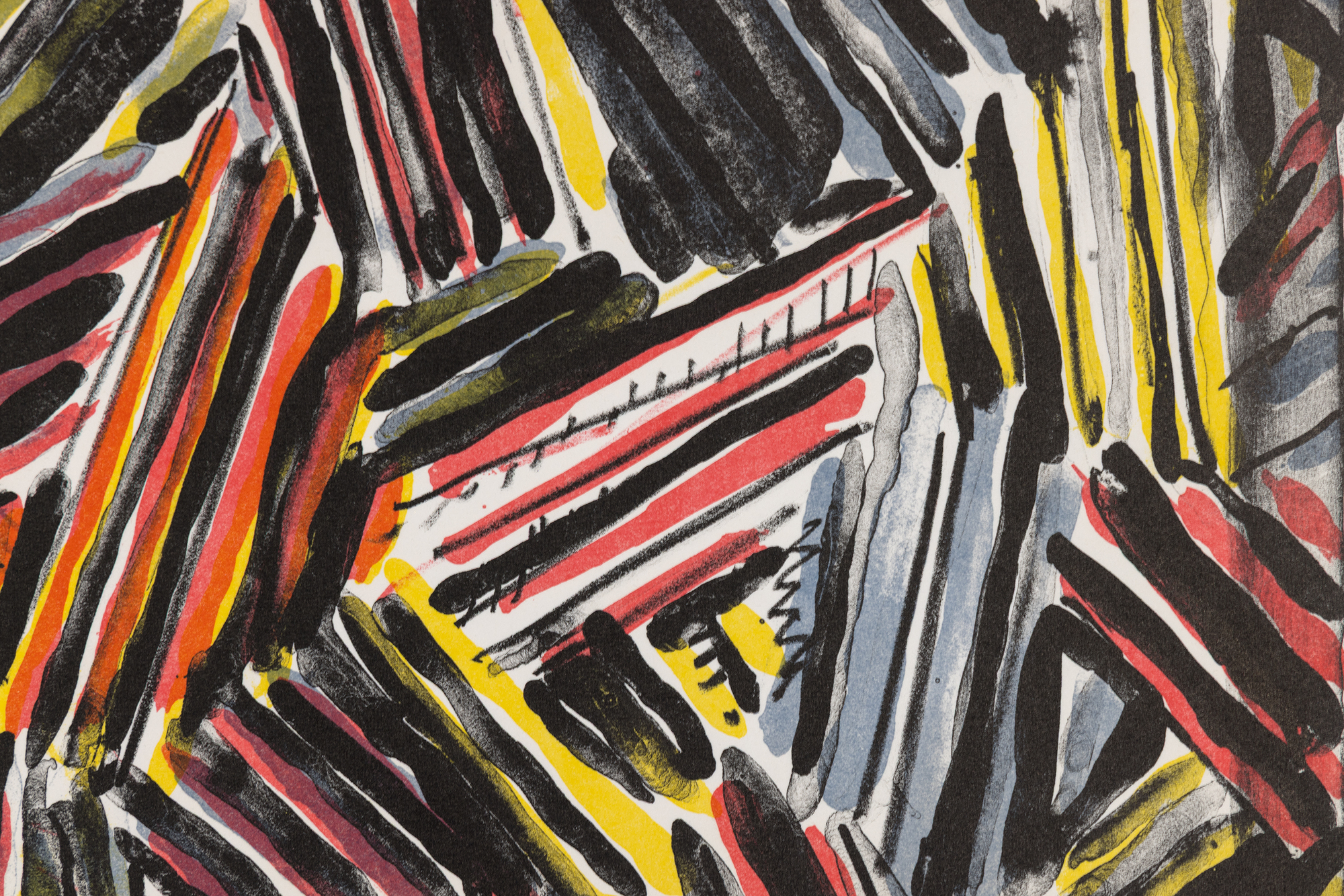
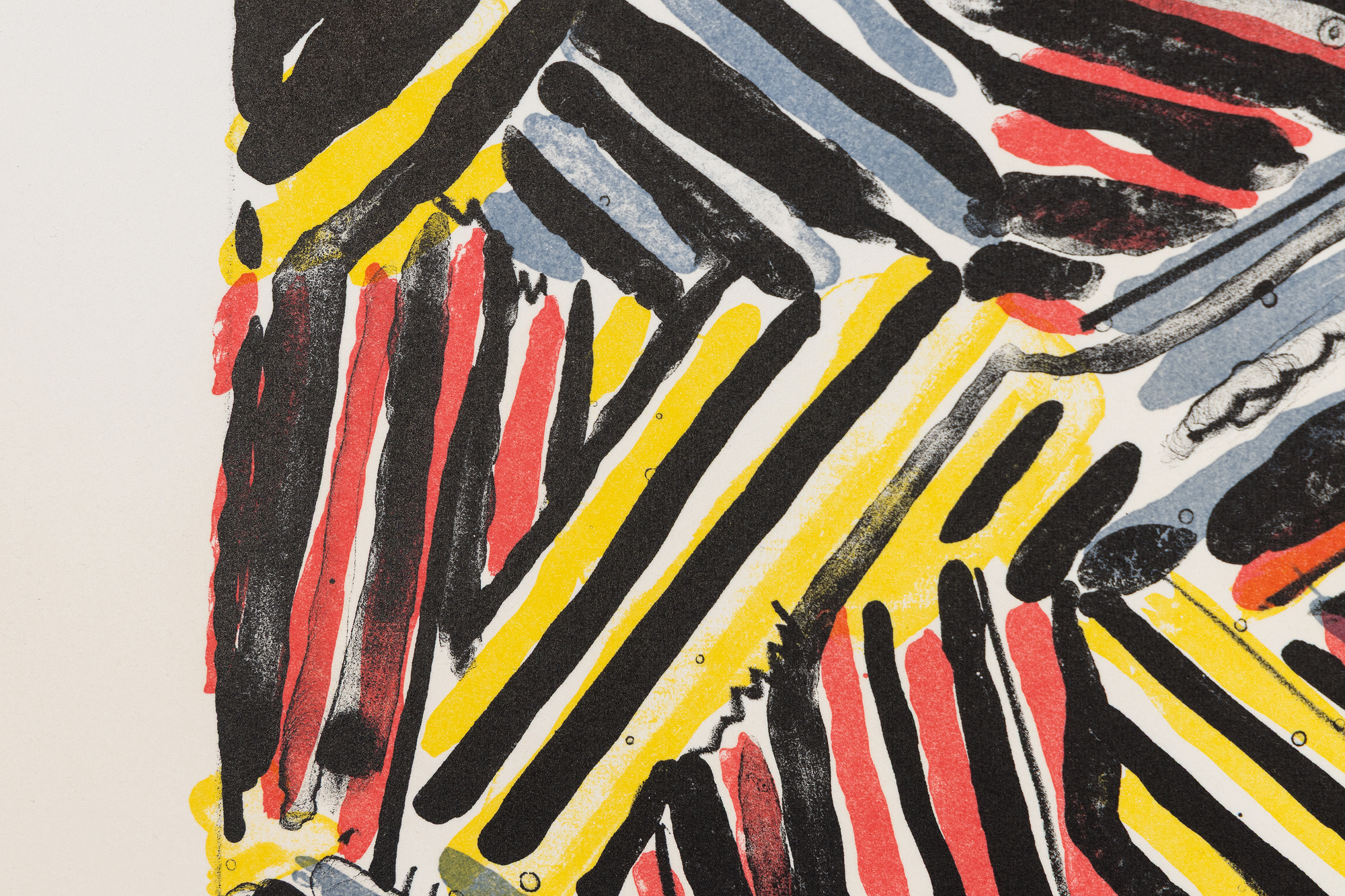
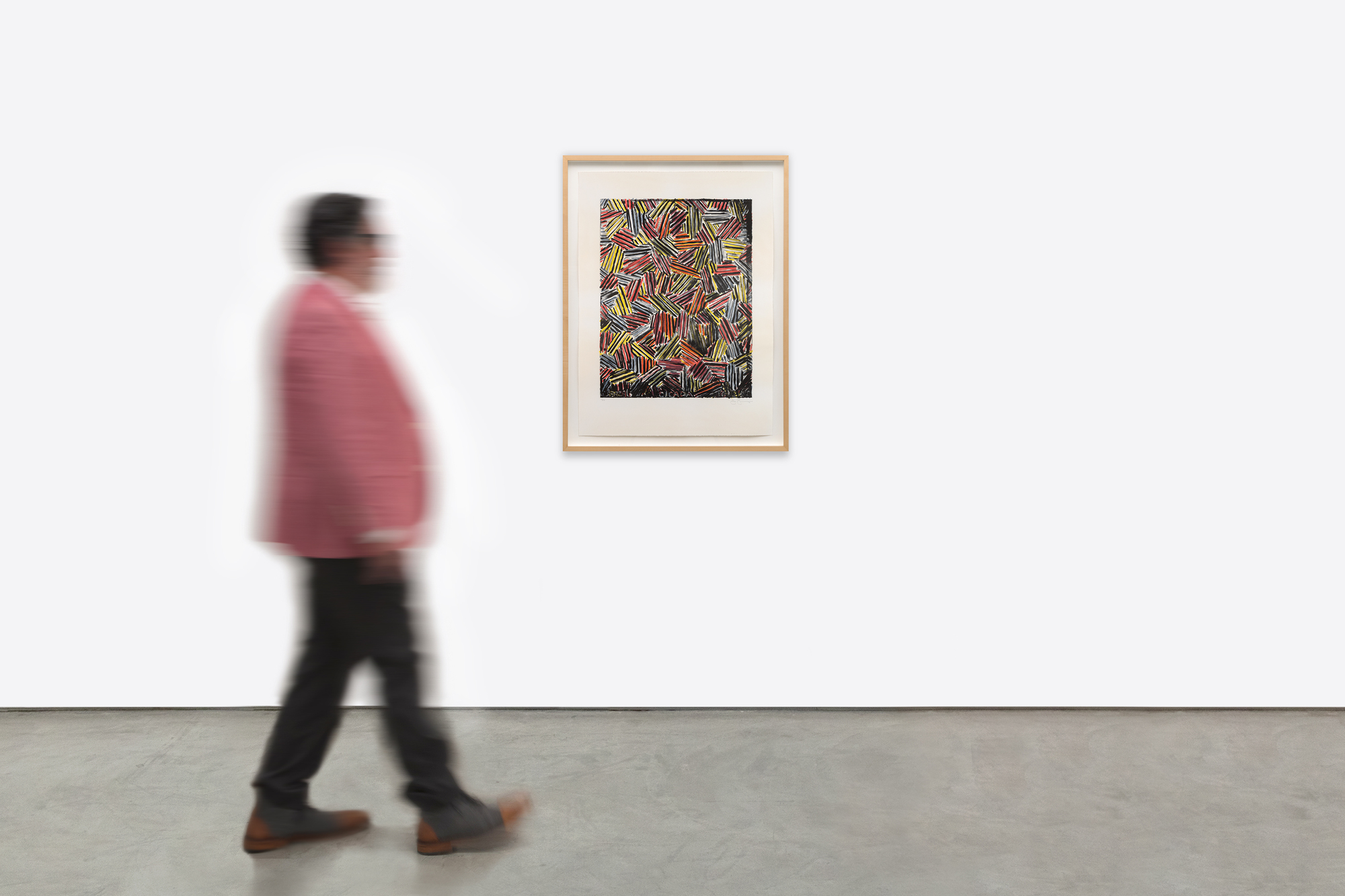
<div><font face=Lato size=3 color=black>Jasper Johns’ <em>Cicada</em> (1981) is a color lithograph published by Gemini G.E.L. in an edition of 58. The title evokes the insect’s cyclical emergence, echoing Johns’s interest in recurrence and transformation.</font></div><br><br><div> </div><br><br><div><font face=Lato size=3 color=black>Created during his “crosshatch” period (1972–83), the work exemplifies his move from flags and targets toward abstract systems of mark-making. Through layered color and texture, Johns explores the possibilities of lithography as a medium of repetition and variation.</font></div><br><br><div> </div><br><br><div><font face=Lato size=3 color=black>Impressions of <em>Cicada</em> are held in the collections of the Museum of Modern Art and the Whitney Museum of American Art, underscoring its importance within Johns’s printmaking practice.</font></div> <div><font face=Lato size=3 color=black>Jasper Johns’ <em>Cicada</em> (1981) is a color lithograph published by Gemini G.E.L. in an edition of 58. The title evokes the insect’s cyclical emergence, echoing Johns’s interest in recurrence and transformation.</font></div><br><br><div> </div><br><br><div><font face=Lato size=3 color=black>Created during his “crosshatch” period (1972–83), the work exemplifies his move from flags and targets toward abstract systems of mark-making. Through layered color and texture, Johns explores the possibilities of lithography as a medium of repetition and variation.</font></div><br><br><div> </div><br><br><div><font face=Lato size=3 color=black>Impressions of <em>Cicada</em> are held in the collections of the Museum of Modern Art and the Whitney Museum of American Art, underscoring its importance within Johns’s printmaking practice.</font></div> <div><font face=Lato size=3 color=black>Jasper Johns’ <em>Cicada</em> (1981) is a color lithograph published by Gemini G.E.L. in an edition of 58. The title evokes the insect’s cyclical emergence, echoing Johns’s interest in recurrence and transformation.</font></div><br><br><div> </div><br><br><div><font face=Lato size=3 color=black>Created during his “crosshatch” period (1972–83), the work exemplifies his move from flags and targets toward abstract systems of mark-making. Through layered color and texture, Johns explores the possibilities of lithography as a medium of repetition and variation.</font></div><br><br><div> </div><br><br><div><font face=Lato size=3 color=black>Impressions of <em>Cicada</em> are held in the collections of the Museum of Modern Art and the Whitney Museum of American Art, underscoring its importance within Johns’s printmaking practice.</font></div> <div><font face=Lato size=3 color=black>Jasper Johns’ <em>Cicada</em> (1981) is a color lithograph published by Gemini G.E.L. in an edition of 58. The title evokes the insect’s cyclical emergence, echoing Johns’s interest in recurrence and transformation.</font></div><br><br><div> </div><br><br><div><font face=Lato size=3 color=black>Created during his “crosshatch” period (1972–83), the work exemplifies his move from flags and targets toward abstract systems of mark-making. Through layered color and texture, Johns explores the possibilities of lithography as a medium of repetition and variation.</font></div><br><br><div> </div><br><br><div><font face=Lato size=3 color=black>Impressions of <em>Cicada</em> are held in the collections of the Museum of Modern Art and the Whitney Museum of American Art, underscoring its importance within Johns’s printmaking practice.</font></div> <div><font face=Lato size=3 color=black>Jasper Johns’ <em>Cicada</em> (1981) is a color lithograph published by Gemini G.E.L. in an edition of 58. The title evokes the insect’s cyclical emergence, echoing Johns’s interest in recurrence and transformation.</font></div><br><br><div> </div><br><br><div><font face=Lato size=3 color=black>Created during his “crosshatch” period (1972–83), the work exemplifies his move from flags and targets toward abstract systems of mark-making. Through layered color and texture, Johns explores the possibilities of lithography as a medium of repetition and variation.</font></div><br><br><div> </div><br><br><div><font face=Lato size=3 color=black>Impressions of <em>Cicada</em> are held in the collections of the Museum of Modern Art and the Whitney Museum of American Art, underscoring its importance within Johns’s printmaking practice.</font></div> <div><font face=Lato size=3 color=black>Jasper Johns’ <em>Cicada</em> (1981) is a color lithograph published by Gemini G.E.L. in an edition of 58. The title evokes the insect’s cyclical emergence, echoing Johns’s interest in recurrence and transformation.</font></div><br><br><div> </div><br><br><div><font face=Lato size=3 color=black>Created during his “crosshatch” period (1972–83), the work exemplifies his move from flags and targets toward abstract systems of mark-making. Through layered color and texture, Johns explores the possibilities of lithography as a medium of repetition and variation.</font></div><br><br><div> </div><br><br><div><font face=Lato size=3 color=black>Impressions of <em>Cicada</em> are held in the collections of the Museum of Modern Art and the Whitney Museum of American Art, underscoring its importance within Johns’s printmaking practice.</font></div> <div><font face=Lato size=3 color=black>Jasper Johns’ <em>Cicada</em> (1981) is a color lithograph published by Gemini G.E.L. in an edition of 58. The title evokes the insect’s cyclical emergence, echoing Johns’s interest in recurrence and transformation.</font></div><br><br><div> </div><br><br><div><font face=Lato size=3 color=black>Created during his “crosshatch” period (1972–83), the work exemplifies his move from flags and targets toward abstract systems of mark-making. Through layered color and texture, Johns explores the possibilities of lithography as a medium of repetition and variation.</font></div><br><br><div> </div><br><br><div><font face=Lato size=3 color=black>Impressions of <em>Cicada</em> are held in the collections of the Museum of Modern Art and the Whitney Museum of American Art, underscoring its importance within Johns’s printmaking practice.</font></div> <div><font face=Lato size=3 color=black>Jasper Johns’ <em>Cicada</em> (1981) is a color lithograph published by Gemini G.E.L. in an edition of 58. The title evokes the insect’s cyclical emergence, echoing Johns’s interest in recurrence and transformation.</font></div><br><br><div> </div><br><br><div><font face=Lato size=3 color=black>Created during his “crosshatch” period (1972–83), the work exemplifies his move from flags and targets toward abstract systems of mark-making. Through layered color and texture, Johns explores the possibilities of lithography as a medium of repetition and variation.</font></div><br><br><div> </div><br><br><div><font face=Lato size=3 color=black>Impressions of <em>Cicada</em> are held in the collections of the Museum of Modern Art and the Whitney Museum of American Art, underscoring its importance within Johns’s printmaking practice.</font></div> <div><font face=Lato size=3 color=black>Jasper Johns’ <em>Cicada</em> (1981) is a color lithograph published by Gemini G.E.L. in an edition of 58. The title evokes the insect’s cyclical emergence, echoing Johns’s interest in recurrence and transformation.</font></div><br><br><div> </div><br><br><div><font face=Lato size=3 color=black>Created during his “crosshatch” period (1972–83), the work exemplifies his move from flags and targets toward abstract systems of mark-making. Through layered color and texture, Johns explores the possibilities of lithography as a medium of repetition and variation.</font></div><br><br><div> </div><br><br><div><font face=Lato size=3 color=black>Impressions of <em>Cicada</em> are held in the collections of the Museum of Modern Art and the Whitney Museum of American Art, underscoring its importance within Johns’s printmaking practice.</font></div> <div><font face=Lato size=3 color=black>Jasper Johns’ <em>Cicada</em> (1981) is a color lithograph published by Gemini G.E.L. in an edition of 58. The title evokes the insect’s cyclical emergence, echoing Johns’s interest in recurrence and transformation.</font></div><br><br><div> </div><br><br><div><font face=Lato size=3 color=black>Created during his “crosshatch” period (1972–83), the work exemplifies his move from flags and targets toward abstract systems of mark-making. Through layered color and texture, Johns explores the possibilities of lithography as a medium of repetition and variation.</font></div><br><br><div> </div><br><br><div><font face=Lato size=3 color=black>Impressions of <em>Cicada</em> are held in the collections of the Museum of Modern Art and the Whitney Museum of American Art, underscoring its importance within Johns’s printmaking practice.</font></div>
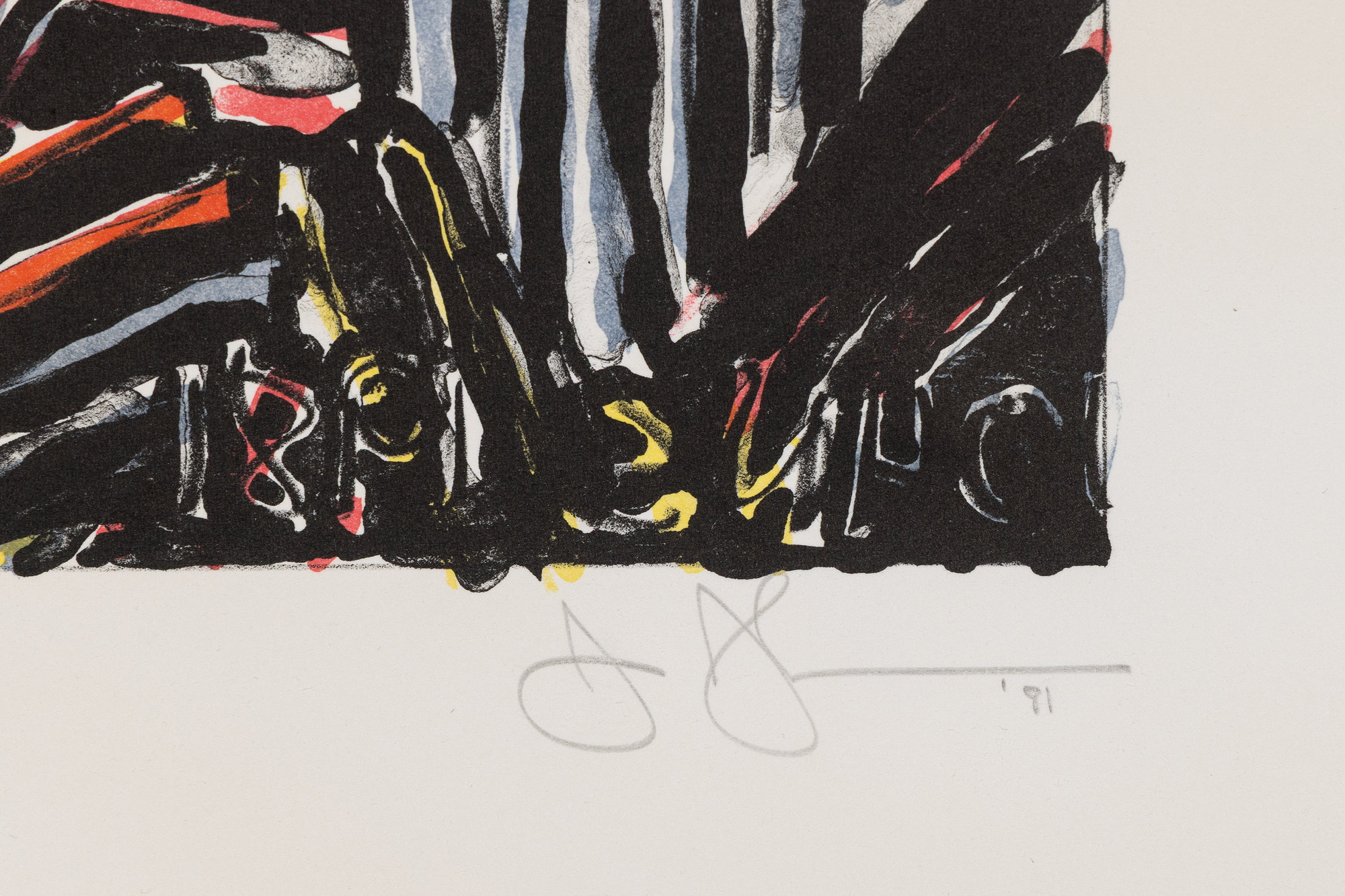
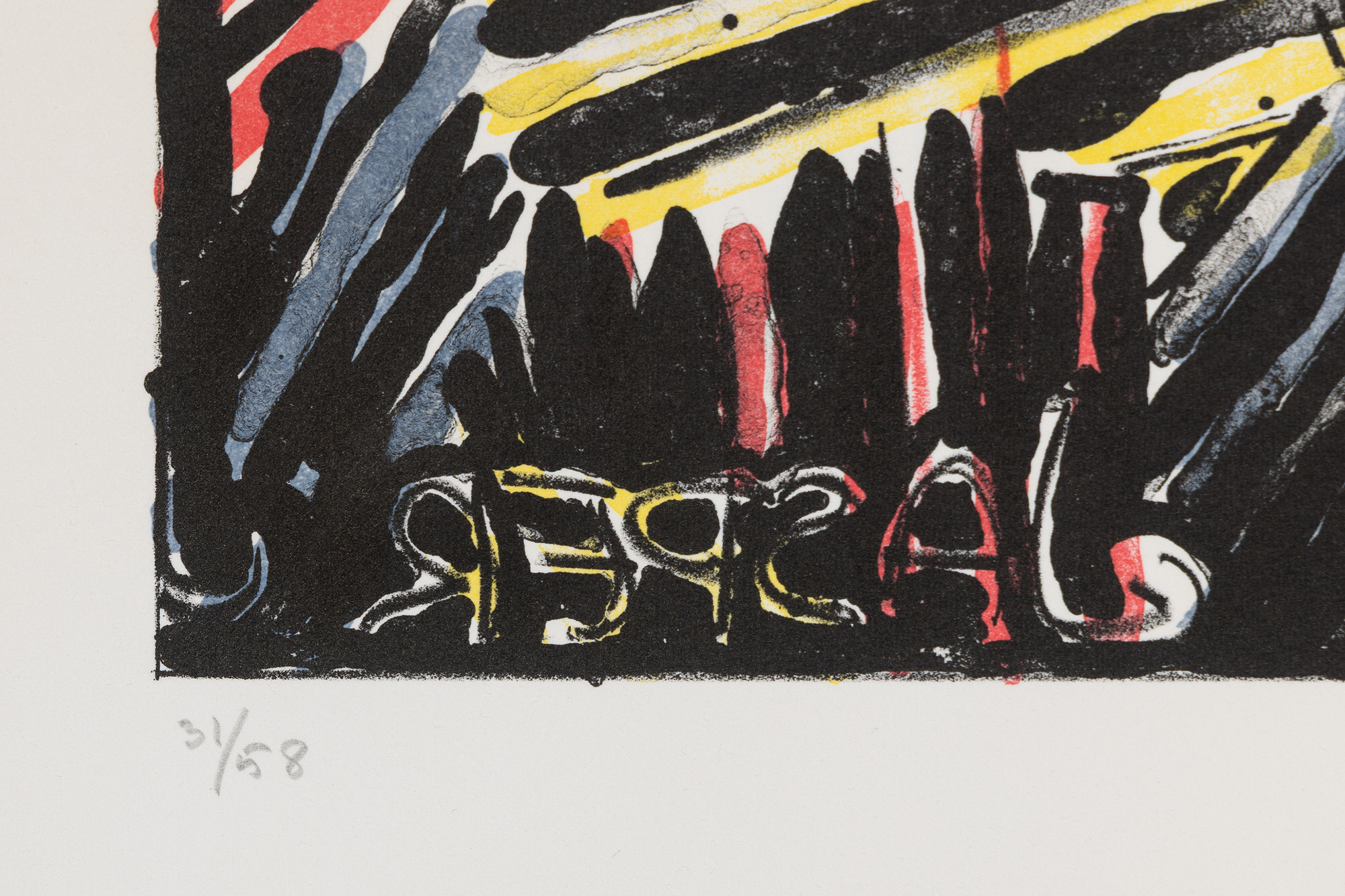
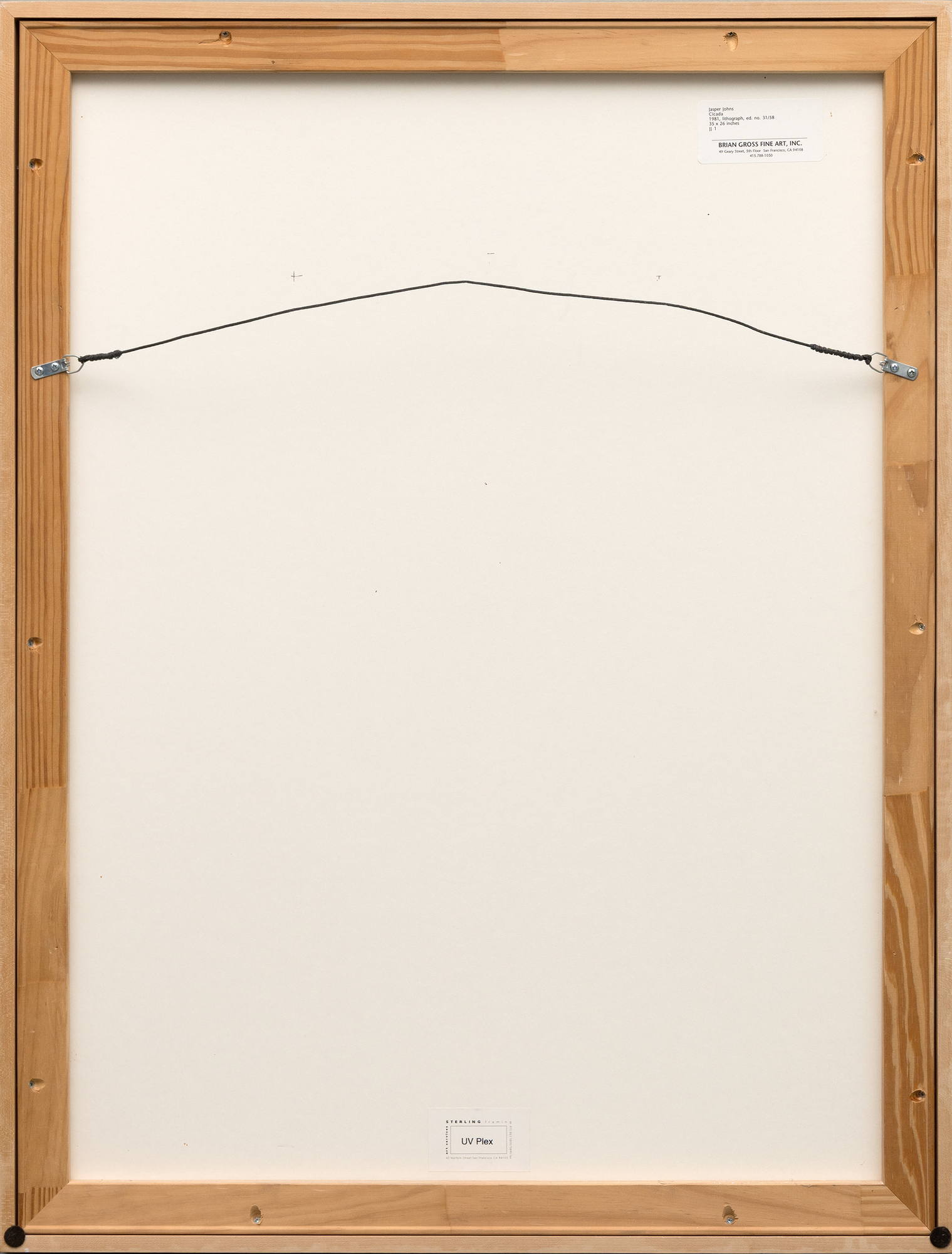
Cigale198135 x 26 in.(88.9 x 66.04 cm) lithographie en couleur
Provenance
Brian Gross Fine Art
Collection privée
Heather James Fine Art
La Cigale (1981) de Jasper Johns est une lithographie en couleur publiée par Gemini G.E.L. dans une édition de 58 exemplaires. Le titre évoque l'émergence cyclique de l'insecte, faisant écho à l'intérêt de Johns pour la récurrence et la transformation.


Créée pendant sa période "crosshatch" (1972-83), l'œuvre illustre son passage des drapeaux et des cibles à des systèmes abstraits de création de marques. Grâce à des couches de couleur et de texture, Johns explore les possibilités de la lithographie en tant que support de répétition et de variation.


Impressions of Cicada fait partie des collections du Museum of Modern Art et du Whitney Museum of American Art, ce qui souligne l'importance de cette œuvre dans la pratique de l'estampe de Johns.
demander