Précédent

WILLIAM MERRITT CHASE(1849-1916)

 
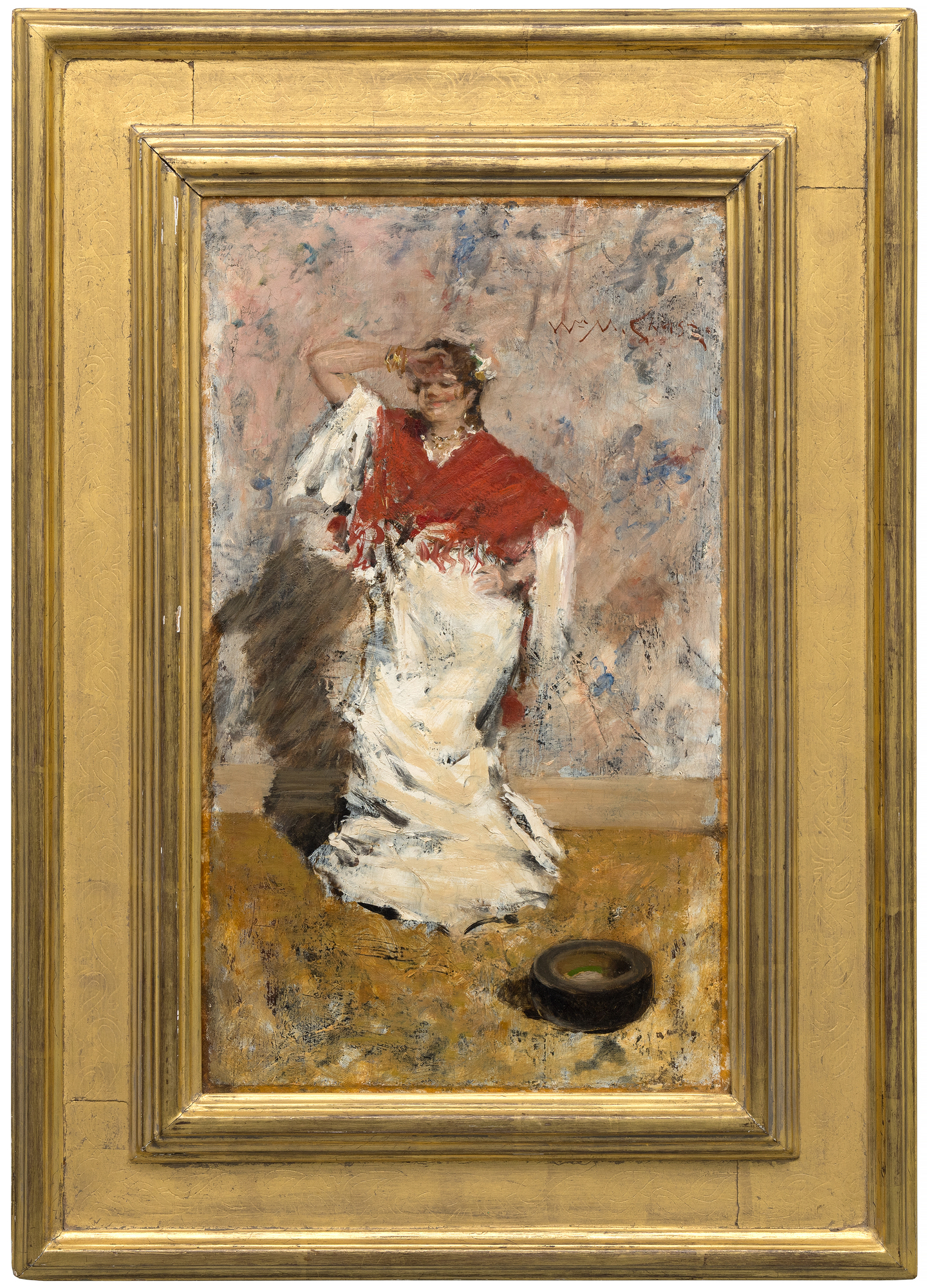
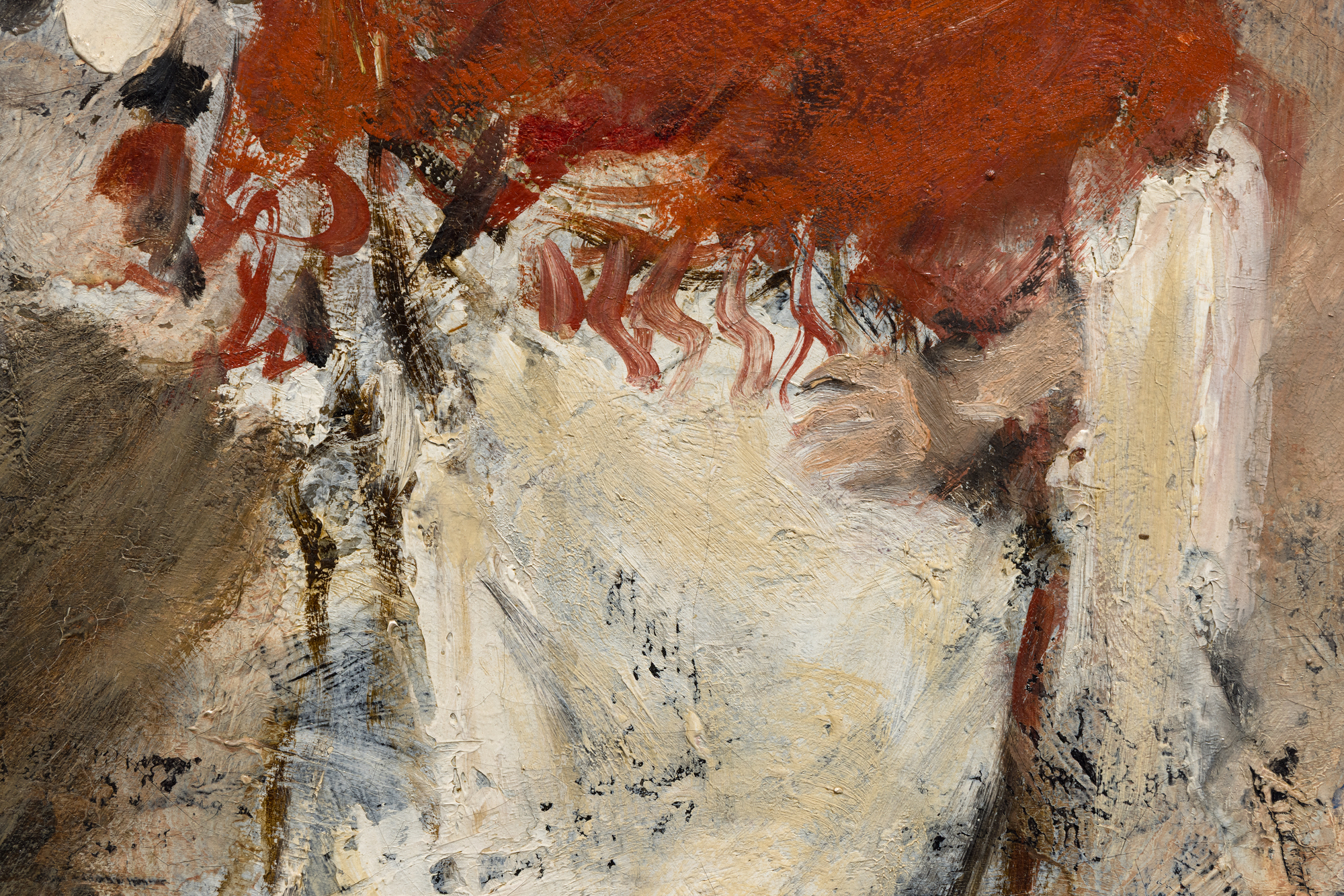
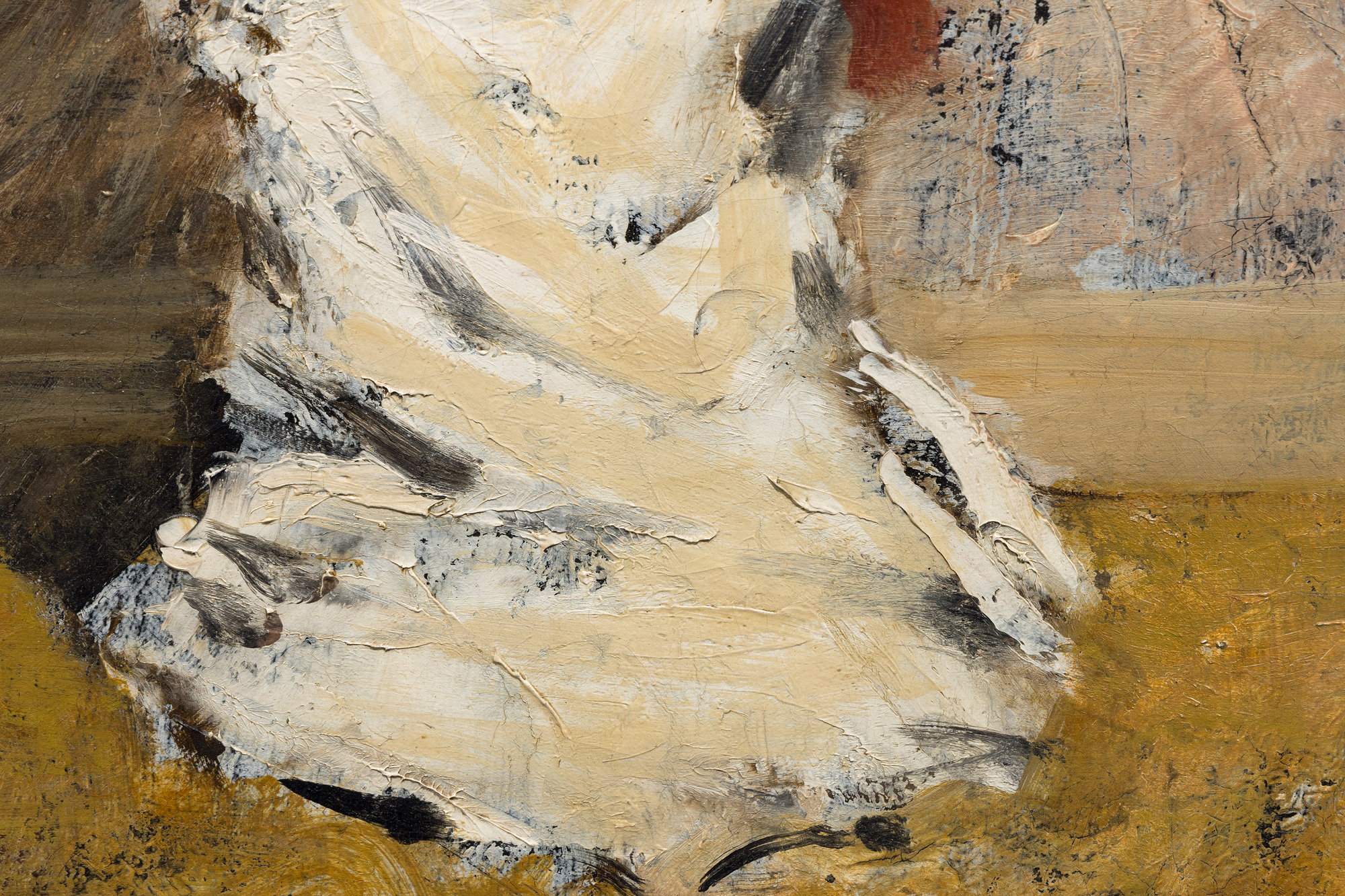
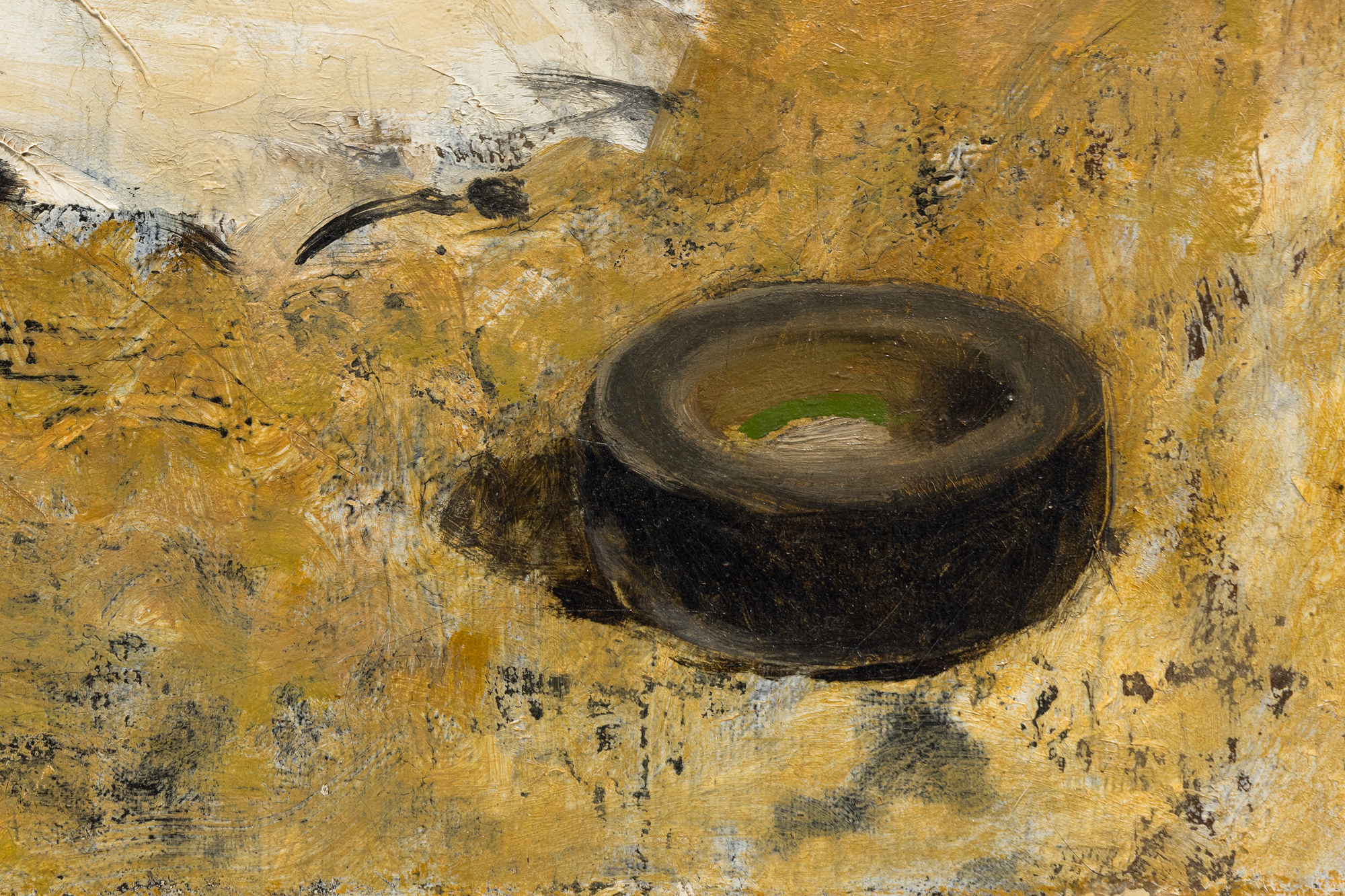
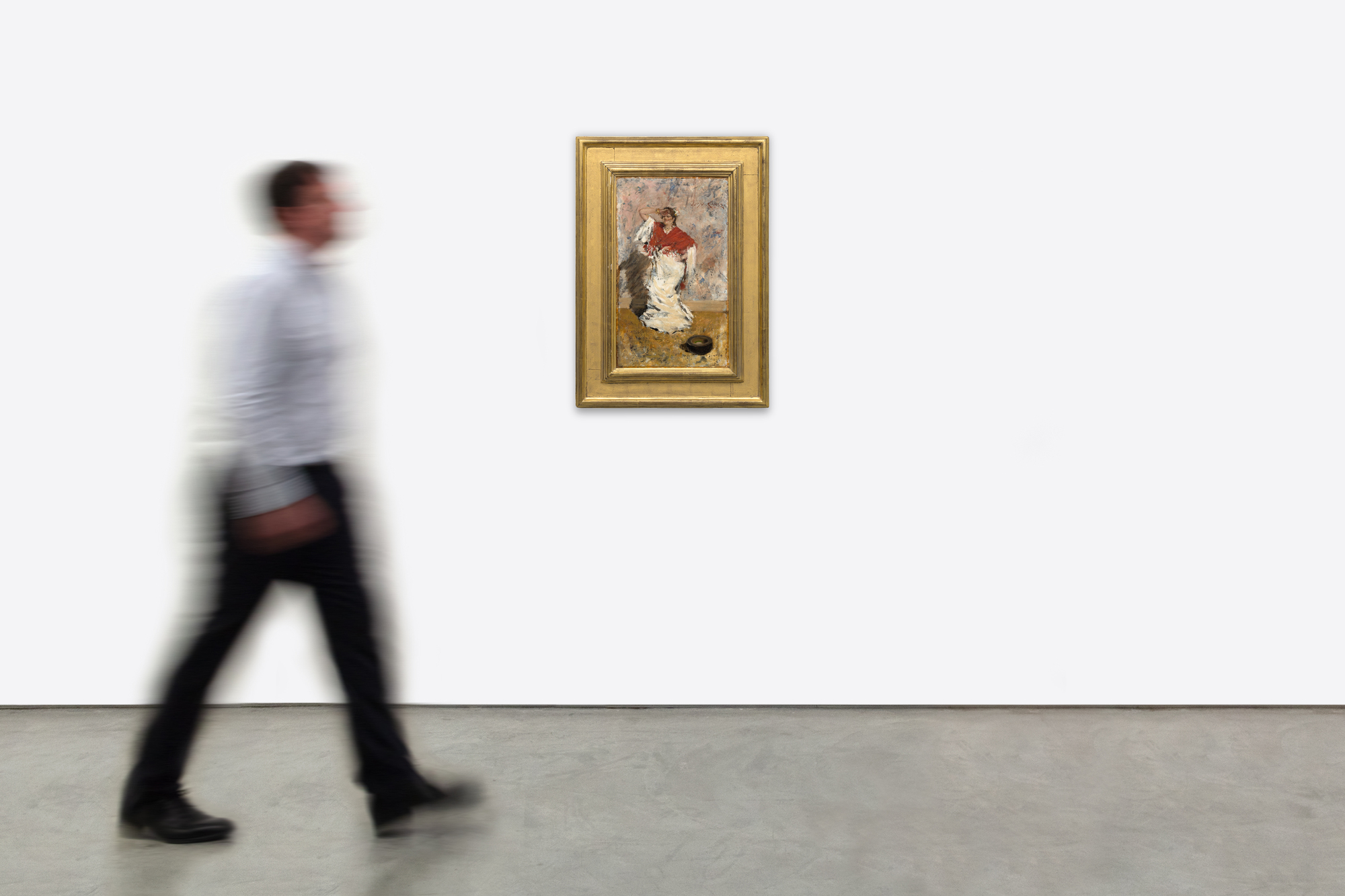
<div><font face=Lato size=3 color=black><em>Dancing Girl</em> dates from 1881 to 1882, a dynamic and exploratory moment in William Merritt Chase’s career when he was actively engaging with European subjects and broadening the expressive range of American painting. The work is included in the Chase catalogue raisonne and reflects the artists fascination with Spanish themes, which many American painters of the period encountered firsthand while studying the masters in the Prado and absorbing the culture, costume, and movement of Spain. Although the painting was later mislabeled by an early owner as an Italian street scene, Chase was in Spain during the summer when this work was created, firmly situating it within his Spanish period.</font></div> <br> <br><div> </div> <br> <br><div><font face=Lato size=3 color=black>The animated single figure captures a woman in motion, a subject that is notably rare within Chases oeuvre and distinct from the more contemplative female figures that dominate his most valuable works. His auction record painting, <em>I Think I Am Ready Now</em> from around 1883, shares the focus on a single female figure from the same period, underscoring the importance of this moment in his artistic development. The present work also relates closely to important institutional examples, including <em>Carmencita</em> from 1885 in the Metropolitan Museum of Art and <em>A Tambourine Player</em> in the Montclair Art Museum, both of which highlight Chases sustained interest in dancers and Spanish costume.</font></div> <br> <br><div> </div> <br> <br><div><font face=Lato size=3 color=black>The painting was held on long term loan to the Museum of Fine Arts Boston from 1906 to 1922, affirming its early institutional recognition. Chase’s Spanish works should be viewed in dialogue with those of John Singer Sargent, whom he met in 1881 while Sargent was developing studies for <em>El Jaleo</em>, as both artists looked to Velázquez for inspiration. <em>Dancing Girl</em> stands as a spirited and uncommon example of Chase portraying a woman at play, capturing movement, rhythm, and cultural immediacy at the height of his European engagement.</font></div> <br> <br><div> </div> <div><font face=Lato size=3 color=black><em>Dancing Girl</em> dates from 1881 to 1882, a dynamic and exploratory moment in William Merritt Chase’s career when he was actively engaging with European subjects and broadening the expressive range of American painting. The work is included in the Chase catalogue raisonne and reflects the artists fascination with Spanish themes, which many American painters of the period encountered firsthand while studying the masters in the Prado and absorbing the culture, costume, and movement of Spain. Although the painting was later mislabeled by an early owner as an Italian street scene, Chase was in Spain during the summer when this work was created, firmly situating it within his Spanish period.</font></div> <br> <br><div> </div> <br> <br><div><font face=Lato size=3 color=black>The animated single figure captures a woman in motion, a subject that is notably rare within Chases oeuvre and distinct from the more contemplative female figures that dominate his most valuable works. His auction record painting, <em>I Think I Am Ready Now</em> from around 1883, shares the focus on a single female figure from the same period, underscoring the importance of this moment in his artistic development. The present work also relates closely to important institutional examples, including <em>Carmencita</em> from 1885 in the Metropolitan Museum of Art and <em>A Tambourine Player</em> in the Montclair Art Museum, both of which highlight Chases sustained interest in dancers and Spanish costume.</font></div> <br> <br><div> </div> <br> <br><div><font face=Lato size=3 color=black>The painting was held on long term loan to the Museum of Fine Arts Boston from 1906 to 1922, affirming its early institutional recognition. Chase’s Spanish works should be viewed in dialogue with those of John Singer Sargent, whom he met in 1881 while Sargent was developing studies for <em>El Jaleo</em>, as both artists looked to Velázquez for inspiration. <em>Dancing Girl</em> stands as a spirited and uncommon example of Chase portraying a woman at play, capturing movement, rhythm, and cultural immediacy at the height of his European engagement.</font></div> <br> <br><div> </div> <div><font face=Lato size=3 color=black><em>Dancing Girl</em> dates from 1881 to 1882, a dynamic and exploratory moment in William Merritt Chase’s career when he was actively engaging with European subjects and broadening the expressive range of American painting. The work is included in the Chase catalogue raisonne and reflects the artists fascination with Spanish themes, which many American painters of the period encountered firsthand while studying the masters in the Prado and absorbing the culture, costume, and movement of Spain. Although the painting was later mislabeled by an early owner as an Italian street scene, Chase was in Spain during the summer when this work was created, firmly situating it within his Spanish period.</font></div> <br> <br><div> </div> <br> <br><div><font face=Lato size=3 color=black>The animated single figure captures a woman in motion, a subject that is notably rare within Chases oeuvre and distinct from the more contemplative female figures that dominate his most valuable works. His auction record painting, <em>I Think I Am Ready Now</em> from around 1883, shares the focus on a single female figure from the same period, underscoring the importance of this moment in his artistic development. The present work also relates closely to important institutional examples, including <em>Carmencita</em> from 1885 in the Metropolitan Museum of Art and <em>A Tambourine Player</em> in the Montclair Art Museum, both of which highlight Chases sustained interest in dancers and Spanish costume.</font></div> <br> <br><div> </div> <br> <br><div><font face=Lato size=3 color=black>The painting was held on long term loan to the Museum of Fine Arts Boston from 1906 to 1922, affirming its early institutional recognition. Chase’s Spanish works should be viewed in dialogue with those of John Singer Sargent, whom he met in 1881 while Sargent was developing studies for <em>El Jaleo</em>, as both artists looked to Velázquez for inspiration. <em>Dancing Girl</em> stands as a spirited and uncommon example of Chase portraying a woman at play, capturing movement, rhythm, and cultural immediacy at the height of his European engagement.</font></div> <br> <br><div> </div> <div><font face=Lato size=3 color=black><em>Dancing Girl</em> dates from 1881 to 1882, a dynamic and exploratory moment in William Merritt Chase’s career when he was actively engaging with European subjects and broadening the expressive range of American painting. The work is included in the Chase catalogue raisonne and reflects the artists fascination with Spanish themes, which many American painters of the period encountered firsthand while studying the masters in the Prado and absorbing the culture, costume, and movement of Spain. Although the painting was later mislabeled by an early owner as an Italian street scene, Chase was in Spain during the summer when this work was created, firmly situating it within his Spanish period.</font></div> <br> <br><div> </div> <br> <br><div><font face=Lato size=3 color=black>The animated single figure captures a woman in motion, a subject that is notably rare within Chases oeuvre and distinct from the more contemplative female figures that dominate his most valuable works. His auction record painting, <em>I Think I Am Ready Now</em> from around 1883, shares the focus on a single female figure from the same period, underscoring the importance of this moment in his artistic development. The present work also relates closely to important institutional examples, including <em>Carmencita</em> from 1885 in the Metropolitan Museum of Art and <em>A Tambourine Player</em> in the Montclair Art Museum, both of which highlight Chases sustained interest in dancers and Spanish costume.</font></div> <br> <br><div> </div> <br> <br><div><font face=Lato size=3 color=black>The painting was held on long term loan to the Museum of Fine Arts Boston from 1906 to 1922, affirming its early institutional recognition. Chase’s Spanish works should be viewed in dialogue with those of John Singer Sargent, whom he met in 1881 while Sargent was developing studies for <em>El Jaleo</em>, as both artists looked to Velázquez for inspiration. <em>Dancing Girl</em> stands as a spirited and uncommon example of Chase portraying a woman at play, capturing movement, rhythm, and cultural immediacy at the height of his European engagement.</font></div> <br> <br><div> </div> <div><font face=Lato size=3 color=black><em>Dancing Girl</em> dates from 1881 to 1882, a dynamic and exploratory moment in William Merritt Chase’s career when he was actively engaging with European subjects and broadening the expressive range of American painting. The work is included in the Chase catalogue raisonne and reflects the artists fascination with Spanish themes, which many American painters of the period encountered firsthand while studying the masters in the Prado and absorbing the culture, costume, and movement of Spain. Although the painting was later mislabeled by an early owner as an Italian street scene, Chase was in Spain during the summer when this work was created, firmly situating it within his Spanish period.</font></div> <br> <br><div> </div> <br> <br><div><font face=Lato size=3 color=black>The animated single figure captures a woman in motion, a subject that is notably rare within Chases oeuvre and distinct from the more contemplative female figures that dominate his most valuable works. His auction record painting, <em>I Think I Am Ready Now</em> from around 1883, shares the focus on a single female figure from the same period, underscoring the importance of this moment in his artistic development. The present work also relates closely to important institutional examples, including <em>Carmencita</em> from 1885 in the Metropolitan Museum of Art and <em>A Tambourine Player</em> in the Montclair Art Museum, both of which highlight Chases sustained interest in dancers and Spanish costume.</font></div> <br> <br><div> </div> <br> <br><div><font face=Lato size=3 color=black>The painting was held on long term loan to the Museum of Fine Arts Boston from 1906 to 1922, affirming its early institutional recognition. Chase’s Spanish works should be viewed in dialogue with those of John Singer Sargent, whom he met in 1881 while Sargent was developing studies for <em>El Jaleo</em>, as both artists looked to Velázquez for inspiration. <em>Dancing Girl</em> stands as a spirited and uncommon example of Chase portraying a woman at play, capturing movement, rhythm, and cultural immediacy at the height of his European engagement.</font></div> <br> <br><div> </div> <div><font face=Lato size=3 color=black><em>Dancing Girl</em> dates from 1881 to 1882, a dynamic and exploratory moment in William Merritt Chase’s career when he was actively engaging with European subjects and broadening the expressive range of American painting. The work is included in the Chase catalogue raisonne and reflects the artists fascination with Spanish themes, which many American painters of the period encountered firsthand while studying the masters in the Prado and absorbing the culture, costume, and movement of Spain. Although the painting was later mislabeled by an early owner as an Italian street scene, Chase was in Spain during the summer when this work was created, firmly situating it within his Spanish period.</font></div> <br> <br><div> </div> <br> <br><div><font face=Lato size=3 color=black>The animated single figure captures a woman in motion, a subject that is notably rare within Chases oeuvre and distinct from the more contemplative female figures that dominate his most valuable works. His auction record painting, <em>I Think I Am Ready Now</em> from around 1883, shares the focus on a single female figure from the same period, underscoring the importance of this moment in his artistic development. The present work also relates closely to important institutional examples, including <em>Carmencita</em> from 1885 in the Metropolitan Museum of Art and <em>A Tambourine Player</em> in the Montclair Art Museum, both of which highlight Chases sustained interest in dancers and Spanish costume.</font></div> <br> <br><div> </div> <br> <br><div><font face=Lato size=3 color=black>The painting was held on long term loan to the Museum of Fine Arts Boston from 1906 to 1922, affirming its early institutional recognition. Chase’s Spanish works should be viewed in dialogue with those of John Singer Sargent, whom he met in 1881 while Sargent was developing studies for <em>El Jaleo</em>, as both artists looked to Velázquez for inspiration. <em>Dancing Girl</em> stands as a spirited and uncommon example of Chase portraying a woman at play, capturing movement, rhythm, and cultural immediacy at the height of his European engagement.</font></div> <br> <br><div> </div> <div><font face=Lato size=3 color=black><em>Dancing Girl</em> dates from 1881 to 1882, a dynamic and exploratory moment in William Merritt Chase’s career when he was actively engaging with European subjects and broadening the expressive range of American painting. The work is included in the Chase catalogue raisonne and reflects the artists fascination with Spanish themes, which many American painters of the period encountered firsthand while studying the masters in the Prado and absorbing the culture, costume, and movement of Spain. Although the painting was later mislabeled by an early owner as an Italian street scene, Chase was in Spain during the summer when this work was created, firmly situating it within his Spanish period.</font></div> <br> <br><div> </div> <br> <br><div><font face=Lato size=3 color=black>The animated single figure captures a woman in motion, a subject that is notably rare within Chases oeuvre and distinct from the more contemplative female figures that dominate his most valuable works. His auction record painting, <em>I Think I Am Ready Now</em> from around 1883, shares the focus on a single female figure from the same period, underscoring the importance of this moment in his artistic development. The present work also relates closely to important institutional examples, including <em>Carmencita</em> from 1885 in the Metropolitan Museum of Art and <em>A Tambourine Player</em> in the Montclair Art Museum, both of which highlight Chases sustained interest in dancers and Spanish costume.</font></div> <br> <br><div> </div> <br> <br><div><font face=Lato size=3 color=black>The painting was held on long term loan to the Museum of Fine Arts Boston from 1906 to 1922, affirming its early institutional recognition. Chase’s Spanish works should be viewed in dialogue with those of John Singer Sargent, whom he met in 1881 while Sargent was developing studies for <em>El Jaleo</em>, as both artists looked to Velázquez for inspiration. <em>Dancing Girl</em> stands as a spirited and uncommon example of Chase portraying a woman at play, capturing movement, rhythm, and cultural immediacy at the height of his European engagement.</font></div> <br> <br><div> </div> <div><font face=Lato size=3 color=black><em>Dancing Girl</em> dates from 1881 to 1882, a dynamic and exploratory moment in William Merritt Chase’s career when he was actively engaging with European subjects and broadening the expressive range of American painting. The work is included in the Chase catalogue raisonne and reflects the artists fascination with Spanish themes, which many American painters of the period encountered firsthand while studying the masters in the Prado and absorbing the culture, costume, and movement of Spain. Although the painting was later mislabeled by an early owner as an Italian street scene, Chase was in Spain during the summer when this work was created, firmly situating it within his Spanish period.</font></div> <br> <br><div> </div> <br> <br><div><font face=Lato size=3 color=black>The animated single figure captures a woman in motion, a subject that is notably rare within Chases oeuvre and distinct from the more contemplative female figures that dominate his most valuable works. His auction record painting, <em>I Think I Am Ready Now</em> from around 1883, shares the focus on a single female figure from the same period, underscoring the importance of this moment in his artistic development. The present work also relates closely to important institutional examples, including <em>Carmencita</em> from 1885 in the Metropolitan Museum of Art and <em>A Tambourine Player</em> in the Montclair Art Museum, both of which highlight Chases sustained interest in dancers and Spanish costume.</font></div> <br> <br><div> </div> <br> <br><div><font face=Lato size=3 color=black>The painting was held on long term loan to the Museum of Fine Arts Boston from 1906 to 1922, affirming its early institutional recognition. Chase’s Spanish works should be viewed in dialogue with those of John Singer Sargent, whom he met in 1881 while Sargent was developing studies for <em>El Jaleo</em>, as both artists looked to Velázquez for inspiration. <em>Dancing Girl</em> stands as a spirited and uncommon example of Chase portraying a woman at play, capturing movement, rhythm, and cultural immediacy at the height of his European engagement.</font></div> <br> <br><div> </div> <div><font face=Lato size=3 color=black><em>Dancing Girl</em> dates from 1881 to 1882, a dynamic and exploratory moment in William Merritt Chase’s career when he was actively engaging with European subjects and broadening the expressive range of American painting. The work is included in the Chase catalogue raisonne and reflects the artists fascination with Spanish themes, which many American painters of the period encountered firsthand while studying the masters in the Prado and absorbing the culture, costume, and movement of Spain. Although the painting was later mislabeled by an early owner as an Italian street scene, Chase was in Spain during the summer when this work was created, firmly situating it within his Spanish period.</font></div> <br> <br><div> </div> <br> <br><div><font face=Lato size=3 color=black>The animated single figure captures a woman in motion, a subject that is notably rare within Chases oeuvre and distinct from the more contemplative female figures that dominate his most valuable works. His auction record painting, <em>I Think I Am Ready Now</em> from around 1883, shares the focus on a single female figure from the same period, underscoring the importance of this moment in his artistic development. The present work also relates closely to important institutional examples, including <em>Carmencita</em> from 1885 in the Metropolitan Museum of Art and <em>A Tambourine Player</em> in the Montclair Art Museum, both of which highlight Chases sustained interest in dancers and Spanish costume.</font></div> <br> <br><div> </div> <br> <br><div><font face=Lato size=3 color=black>The painting was held on long term loan to the Museum of Fine Arts Boston from 1906 to 1922, affirming its early institutional recognition. Chase’s Spanish works should be viewed in dialogue with those of John Singer Sargent, whom he met in 1881 while Sargent was developing studies for <em>El Jaleo</em>, as both artists looked to Velázquez for inspiration. <em>Dancing Girl</em> stands as a spirited and uncommon example of Chase portraying a woman at play, capturing movement, rhythm, and cultural immediacy at the height of his European engagement.</font></div> <br> <br><div> </div> <div><font face=Lato size=3 color=black><em>Dancing Girl</em> dates from 1881 to 1882, a dynamic and exploratory moment in William Merritt Chase’s career when he was actively engaging with European subjects and broadening the expressive range of American painting. The work is included in the Chase catalogue raisonne and reflects the artists fascination with Spanish themes, which many American painters of the period encountered firsthand while studying the masters in the Prado and absorbing the culture, costume, and movement of Spain. Although the painting was later mislabeled by an early owner as an Italian street scene, Chase was in Spain during the summer when this work was created, firmly situating it within his Spanish period.</font></div> <br> <br><div> </div> <br> <br><div><font face=Lato size=3 color=black>The animated single figure captures a woman in motion, a subject that is notably rare within Chases oeuvre and distinct from the more contemplative female figures that dominate his most valuable works. His auction record painting, <em>I Think I Am Ready Now</em> from around 1883, shares the focus on a single female figure from the same period, underscoring the importance of this moment in his artistic development. The present work also relates closely to important institutional examples, including <em>Carmencita</em> from 1885 in the Metropolitan Museum of Art and <em>A Tambourine Player</em> in the Montclair Art Museum, both of which highlight Chases sustained interest in dancers and Spanish costume.</font></div> <br> <br><div> </div> <br> <br><div><font face=Lato size=3 color=black>The painting was held on long term loan to the Museum of Fine Arts Boston from 1906 to 1922, affirming its early institutional recognition. Chase’s Spanish works should be viewed in dialogue with those of John Singer Sargent, whom he met in 1881 while Sargent was developing studies for <em>El Jaleo</em>, as both artists looked to Velázquez for inspiration. <em>Dancing Girl</em> stands as a spirited and uncommon example of Chase portraying a woman at play, capturing movement, rhythm, and cultural immediacy at the height of his European engagement.</font></div> <br> <br><div> </div>
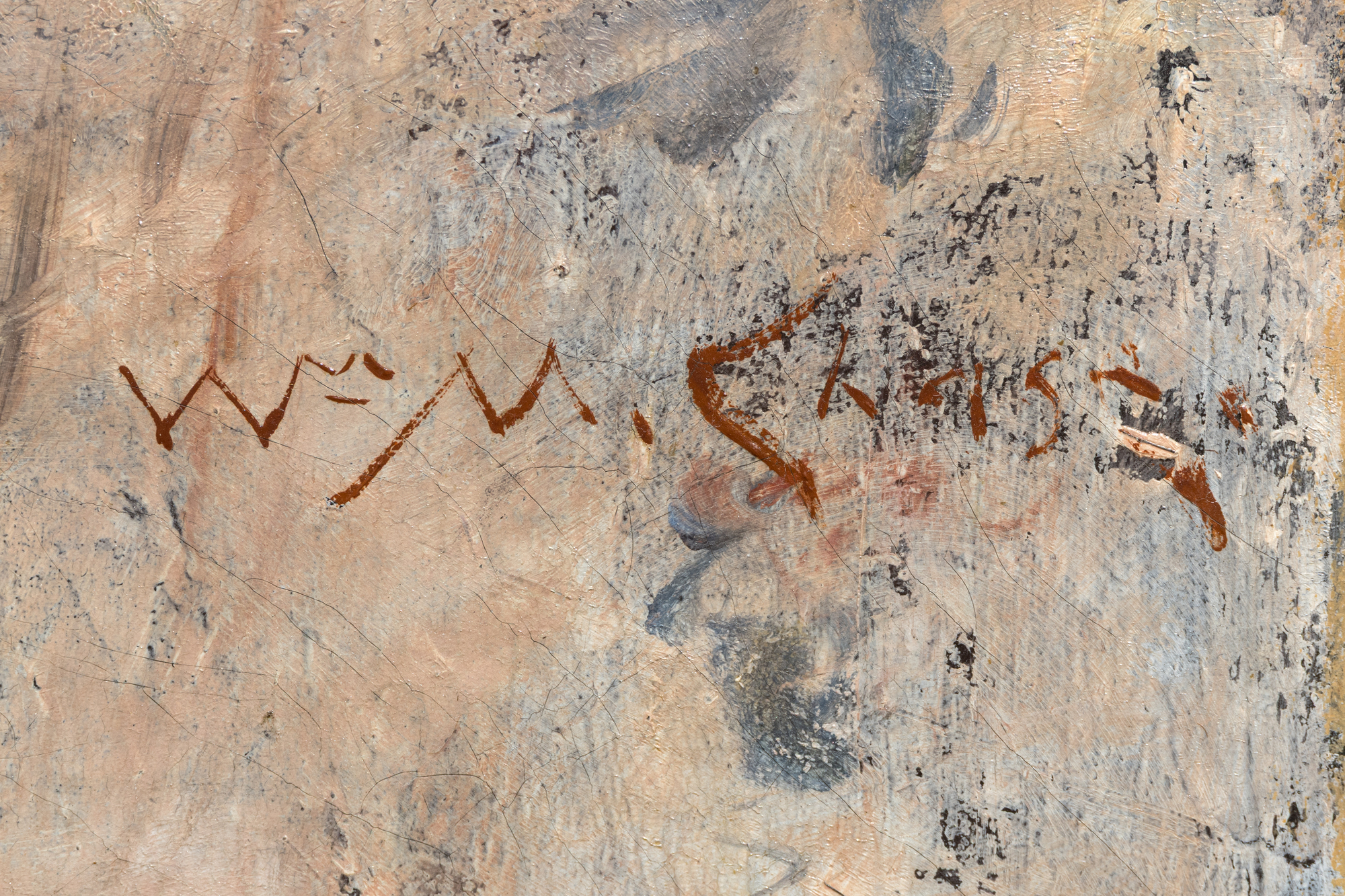
Danseuse1881-8226 x 15 1/2 po(66,04 x 39,37 cm) huile sur toile
Provenance
Chase Studio New York, vers 1881
(probablement) au Boston Art Club, 1886
Mme W.B. Sewall, Boston, 1906
Musée des Beaux-Arts, Boston (prêt de Mme W.B. Sewall, du 2 novembre 1906 au 30 octobre 1913)
Rufus L. Sewall
Harold I. Sewall et William G. Sewal
Musée des Beaux-Arts, Boston (prêt, du 30 octobre 1913 au 5 juillet 1922)
Collection privée, Boston
Collection privée, New York
Collection privée, Boston, acquise auprès de la collection ci-dessus
Exposition
Boston, Massachusetts, Boston Art Club, Exposition de tableaux, ...Plus.....Études et croquis de M. Wm. M. Chase, de New York, 18 novembre-4 décembre 1886, n° 57, Danseuse espagnole
Littérature
Ronald Pisano, William Merritt Chase : Portraits à l'huile, New York, 2006, n° OP.99 sous le titre « Danseuse de rue, Italie (Étude d'une femme ; jeune fille dansant) ».
...MOINS.....
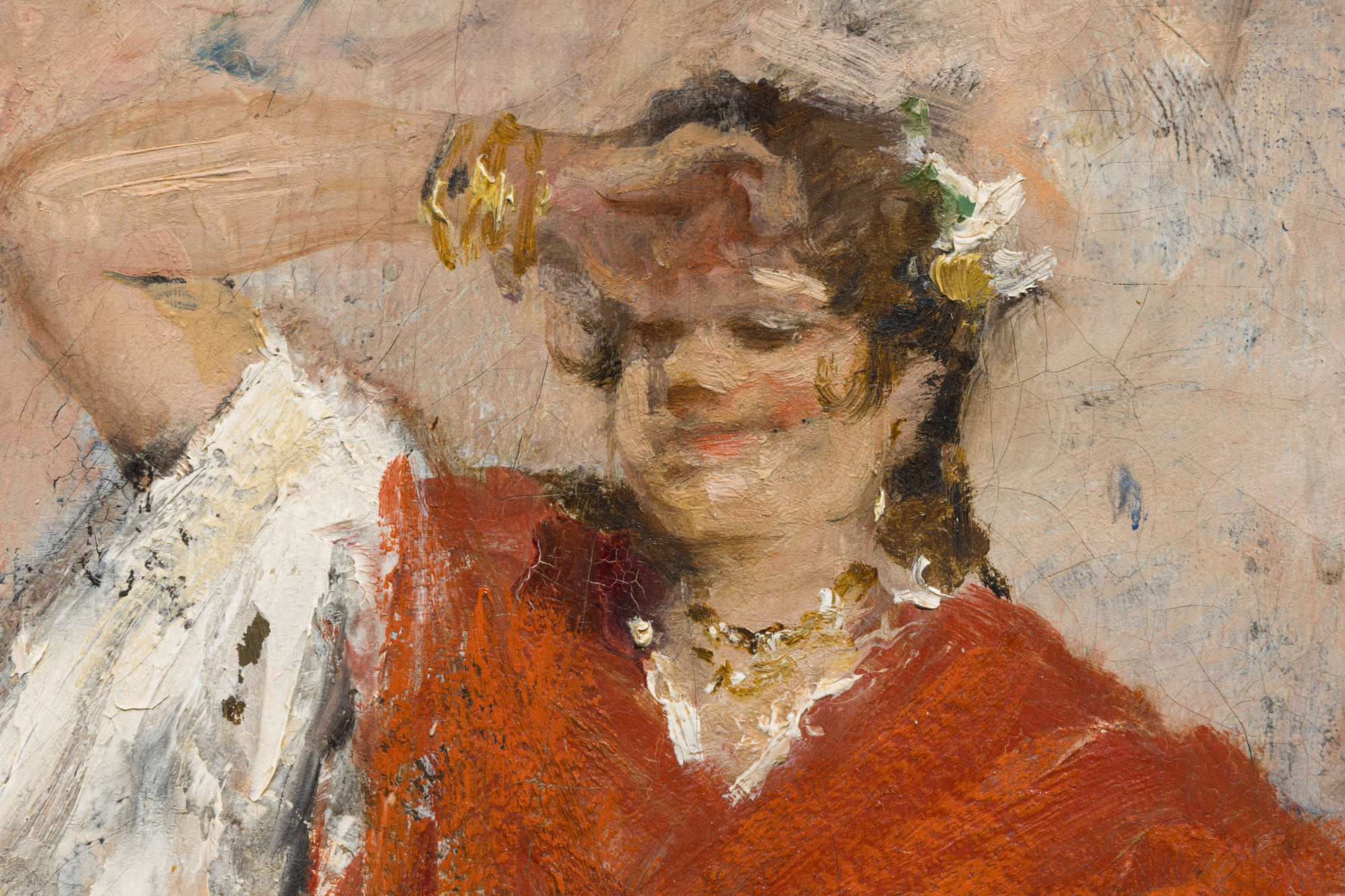
Dancing Girl date de 1881 à 1882, une période dynamique et exploratoire dans la carrière de William Merritt Chase, alors qu'il s'intéressait activement aux sujets européens et élargissait la palette expressive de la peinture américaine. L'œuvre figure dans le catalogue raisonné de Chase et reflète la fascination de l'artiste pour les thèmes espagnols, que de nombreux peintres américains de l'époque ont découverts en étudiant les maîtres du Prado et en s'imprégnant de la culture, des costumes et des mouvements de l'Espagne. Bien que le tableau ait été plus tard étiqueté à tort par l'un de ses premiers propriétaires comme une scène de rue italienne, Chase se trouvait en Espagne pendant l'été où cette œuvre a été créée, ce qui la situe clairement dans sa période espagnole.


Cette figure animée représente une femme en mouvement, un sujet particulièrement rare dans l'œuvre de Chase et qui se distingue des figures féminines plus contemplatives qui dominent ses œuvres les plus précieuses. Son tableau le plus cher vendu aux enchères, I Think I Am Ready Now, datant de 1883 environ, partage le même intérêt pour une figure féminine unique de la même période, soulignant l'importance de ce moment dans son développement artistique. La présente œuvre est également étroitement liée à d'importants exemples institutionnels, notamment Carmencita de 1885 au Metropolitan Museum of Art et A Tambourine Player au Montclair Art Museum, qui soulignent tous deux l'intérêt soutenu de Chase pour les danseuses et les costumes espagnols.


Le tableau a fait l'objet d'un prêt à long terme au Museum of Fine Arts de Boston de 1906 à 1922, ce qui confirme sa reconnaissance institutionnelle précoce. Les œuvres espagnoles de Chase doivent être considérées en parallèle avec celles de John Singer Sargent, qu'il a rencontré en 1881 alors que Sargent développait des études pour El Jaleo, car les deux artistes s'inspiraient de Velázquez. Dancing Girl est un exemple vivant et inhabituel de Chase représentant une femme en train de jouer, capturant le mouvement, le rythme et l'immédiateté culturelle à l'apogée de son engagement européen.


demander