Précédent

GIULIO CESARE PROCACCINI(1574-1621)

$1,700,000

 
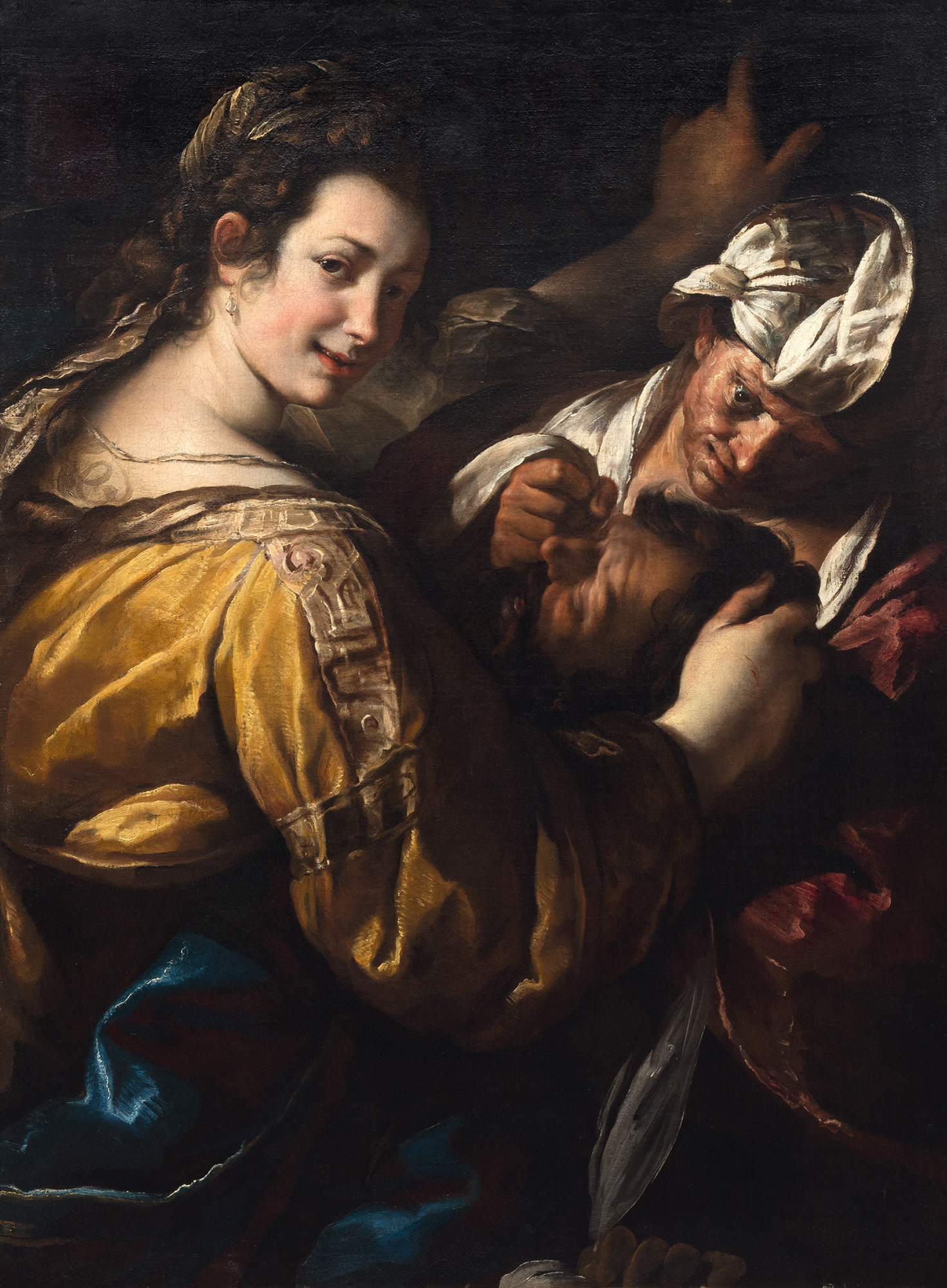
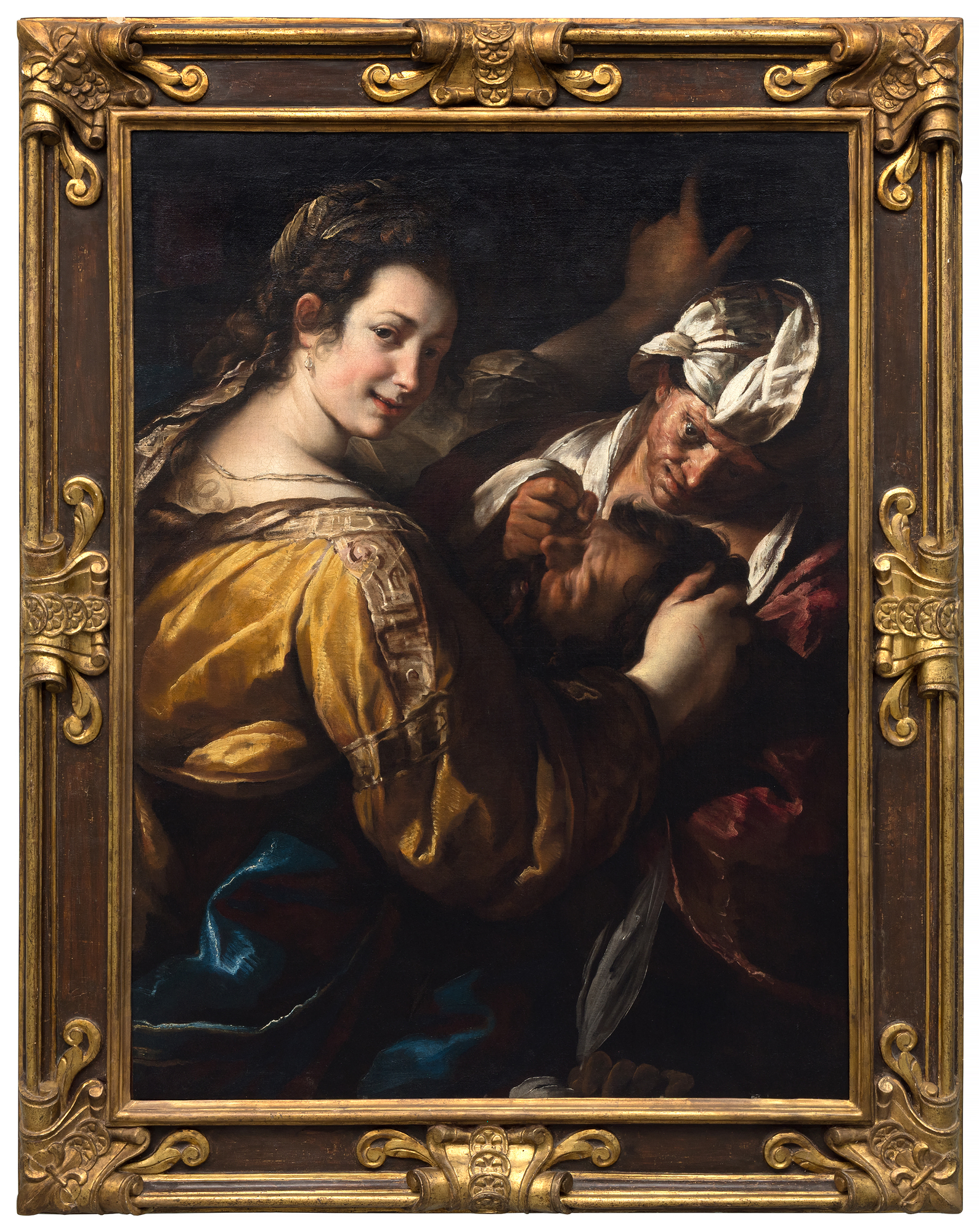
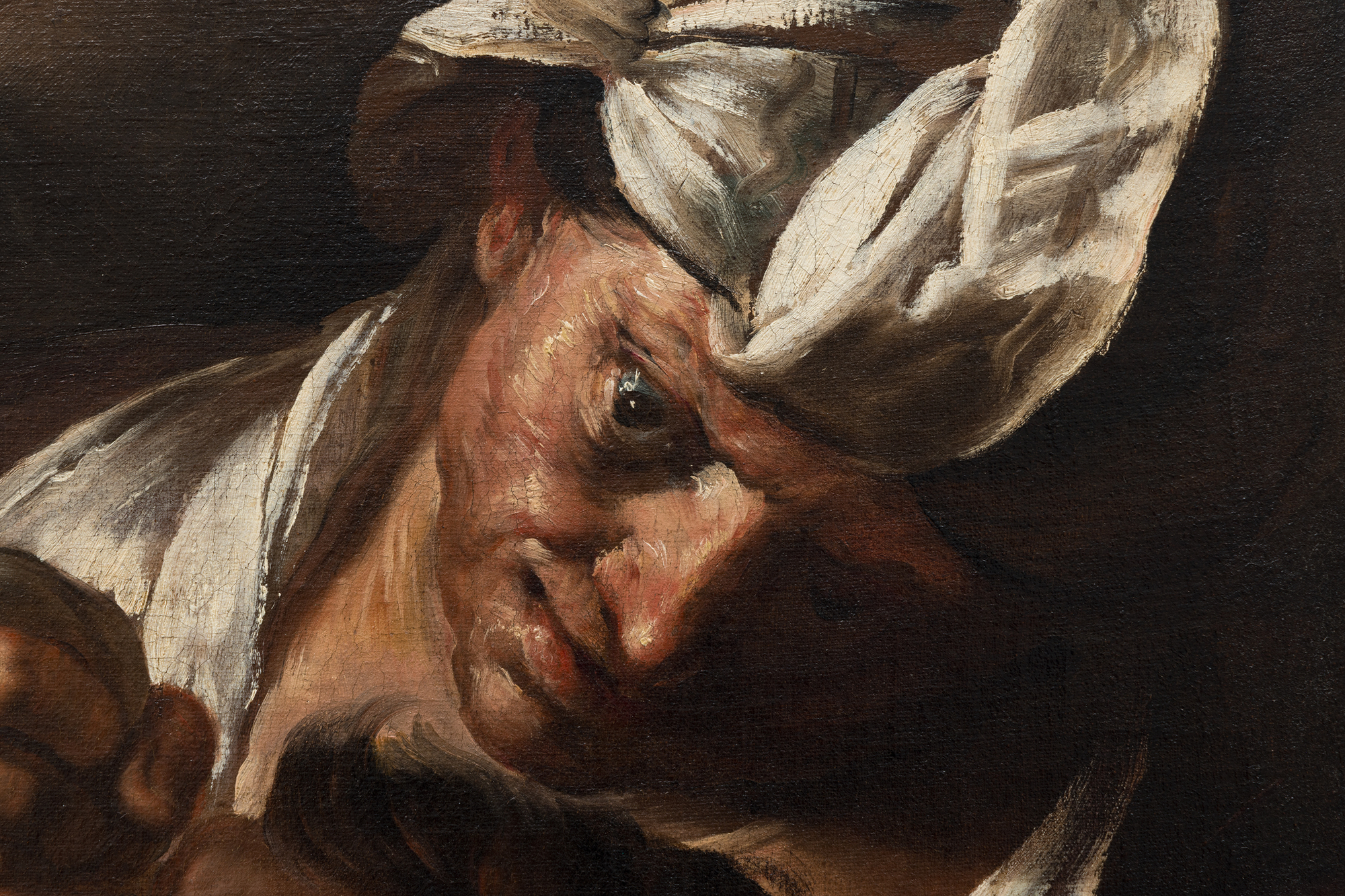
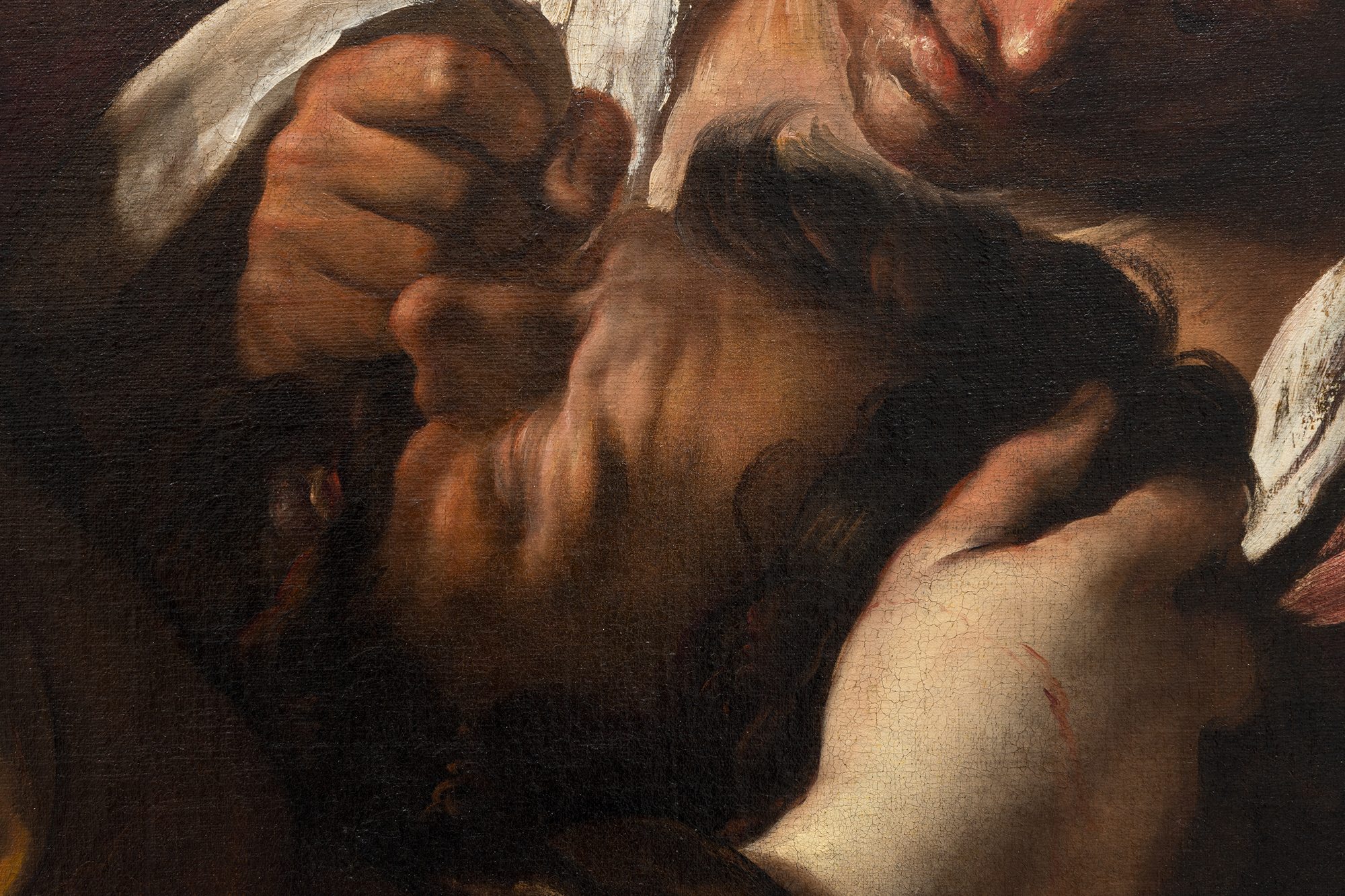
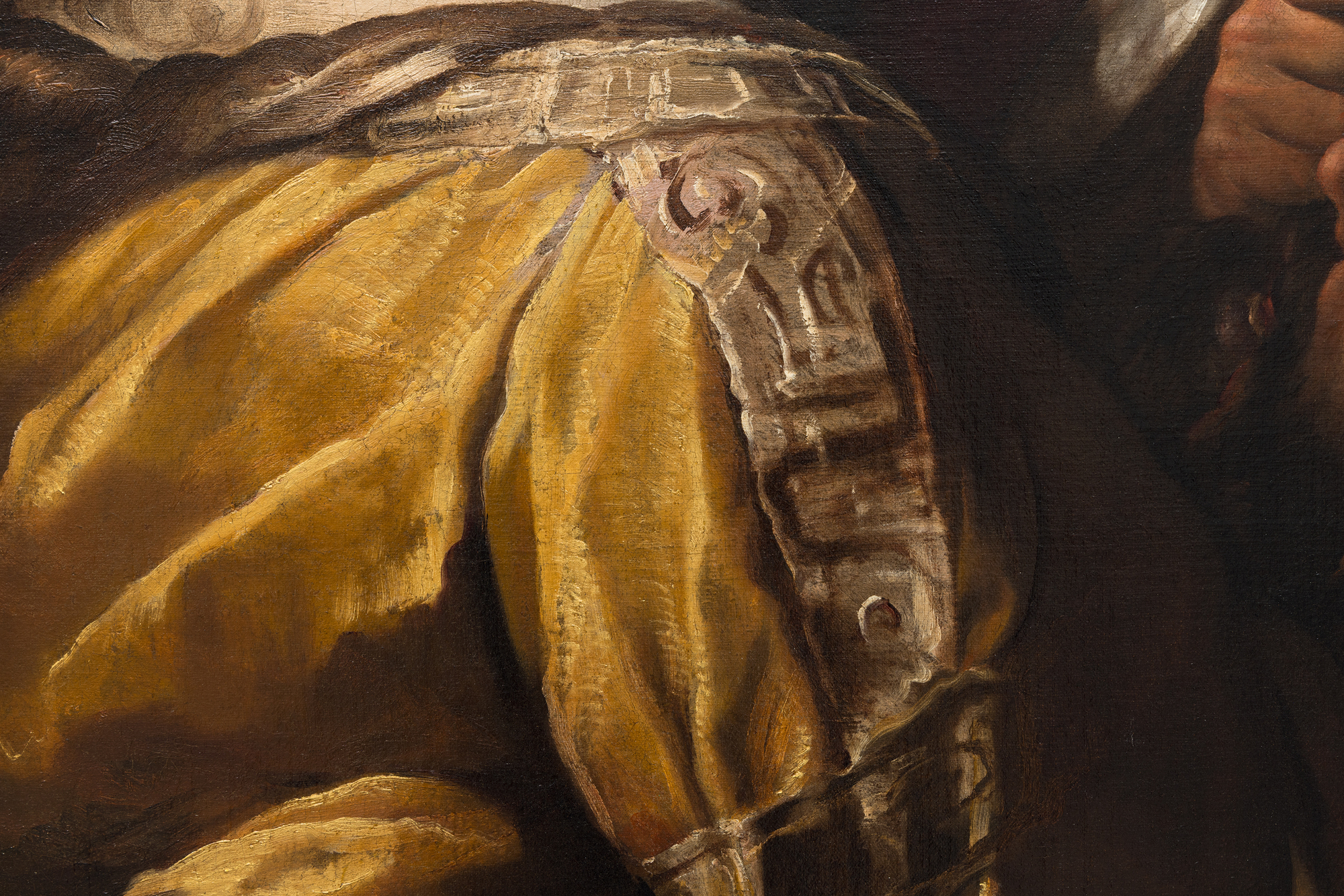
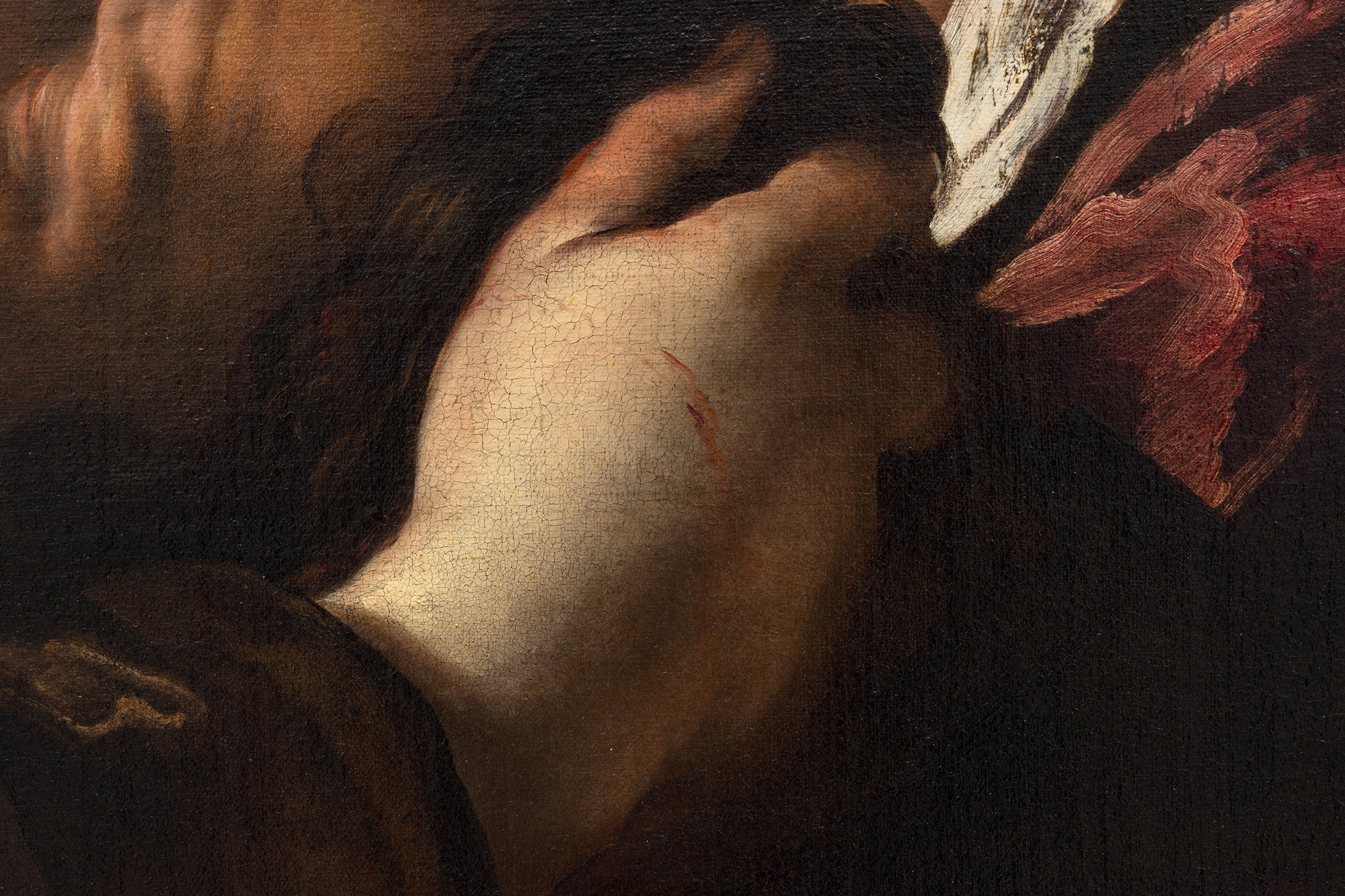
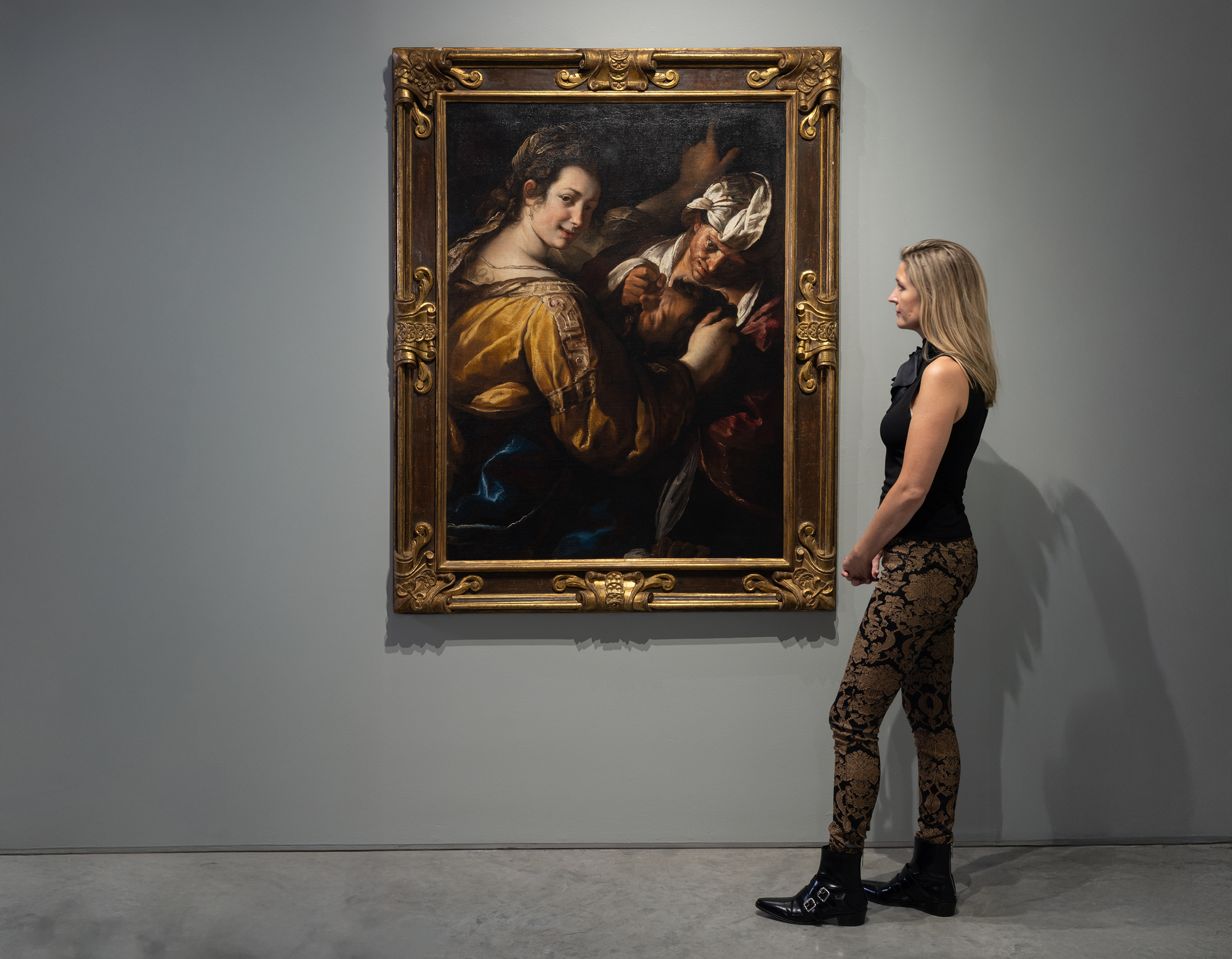
<div><font face=Lato size=3 color=black>A rare and important painting by Giulio Cesare Procaccini depicting the legendary Judith Beheading Holofernes—a subject that has captivated artists from Caravaggio and Artemisia Gentileschi to Kehinde Wiley and Robert Longo. The dramatic biblical scene, rendered with striking chiaroscuro, exemplifies Procaccini’s mastery of light and emotion and his engagement with one of art history’s most enduring themes of justice and triumph.</font></div><br><br><div><font face=Lato size=3 color=black> </font></div><br><br><div><font face=Lato size=3 color=black>This work holds exceptional provenance, having been commissioned by Giovanni Carlo Doria, one of Genoa’s most prominent collectors whose holdings included works by Leonardo da Vinci, Titian, and Van Dyck, remaining in the Doria family collection for approximately 300 years. It is recorded in the artist’s catalogue raisonné and has an extensive literature history.</font></div><br><br><div><font face=Lato size=3 color=black> </font></div><br><br><div><font face=Lato size=3 color=black>Comparable compositions by Procaccini appear in major museum collections such as the National Gallery of Art, Washington, D.C., and the Hermitage Museum, Saint Petersburg.  This painting represents a rare opportunity to acquire a museum-caliber example of the artist’s work, distinguished by both its art historical significance and exceptional provenance.</font></div><br><br><div><font color=black> </font></div> <div><font face=Lato size=3 color=black>A rare and important painting by Giulio Cesare Procaccini depicting the legendary Judith Beheading Holofernes—a subject that has captivated artists from Caravaggio and Artemisia Gentileschi to Kehinde Wiley and Robert Longo. The dramatic biblical scene, rendered with striking chiaroscuro, exemplifies Procaccini’s mastery of light and emotion and his engagement with one of art history’s most enduring themes of justice and triumph.</font></div><br><br><div><font face=Lato size=3 color=black> </font></div><br><br><div><font face=Lato size=3 color=black>This work holds exceptional provenance, having been commissioned by Giovanni Carlo Doria, one of Genoa’s most prominent collectors whose holdings included works by Leonardo da Vinci, Titian, and Van Dyck, remaining in the Doria family collection for approximately 300 years. It is recorded in the artist’s catalogue raisonné and has an extensive literature history.</font></div><br><br><div><font face=Lato size=3 color=black> </font></div><br><br><div><font face=Lato size=3 color=black>Comparable compositions by Procaccini appear in major museum collections such as the National Gallery of Art, Washington, D.C., and the Hermitage Museum, Saint Petersburg.  This painting represents a rare opportunity to acquire a museum-caliber example of the artist’s work, distinguished by both its art historical significance and exceptional provenance.</font></div><br><br><div><font color=black> </font></div> <div><font face=Lato size=3 color=black>A rare and important painting by Giulio Cesare Procaccini depicting the legendary Judith Beheading Holofernes—a subject that has captivated artists from Caravaggio and Artemisia Gentileschi to Kehinde Wiley and Robert Longo. The dramatic biblical scene, rendered with striking chiaroscuro, exemplifies Procaccini’s mastery of light and emotion and his engagement with one of art history’s most enduring themes of justice and triumph.</font></div><br><br><div><font face=Lato size=3 color=black> </font></div><br><br><div><font face=Lato size=3 color=black>This work holds exceptional provenance, having been commissioned by Giovanni Carlo Doria, one of Genoa’s most prominent collectors whose holdings included works by Leonardo da Vinci, Titian, and Van Dyck, remaining in the Doria family collection for approximately 300 years. It is recorded in the artist’s catalogue raisonné and has an extensive literature history.</font></div><br><br><div><font face=Lato size=3 color=black> </font></div><br><br><div><font face=Lato size=3 color=black>Comparable compositions by Procaccini appear in major museum collections such as the National Gallery of Art, Washington, D.C., and the Hermitage Museum, Saint Petersburg.  This painting represents a rare opportunity to acquire a museum-caliber example of the artist’s work, distinguished by both its art historical significance and exceptional provenance.</font></div><br><br><div><font color=black> </font></div> <div><font face=Lato size=3 color=black>A rare and important painting by Giulio Cesare Procaccini depicting the legendary Judith Beheading Holofernes—a subject that has captivated artists from Caravaggio and Artemisia Gentileschi to Kehinde Wiley and Robert Longo. The dramatic biblical scene, rendered with striking chiaroscuro, exemplifies Procaccini’s mastery of light and emotion and his engagement with one of art history’s most enduring themes of justice and triumph.</font></div><br><br><div><font face=Lato size=3 color=black> </font></div><br><br><div><font face=Lato size=3 color=black>This work holds exceptional provenance, having been commissioned by Giovanni Carlo Doria, one of Genoa’s most prominent collectors whose holdings included works by Leonardo da Vinci, Titian, and Van Dyck, remaining in the Doria family collection for approximately 300 years. It is recorded in the artist’s catalogue raisonné and has an extensive literature history.</font></div><br><br><div><font face=Lato size=3 color=black> </font></div><br><br><div><font face=Lato size=3 color=black>Comparable compositions by Procaccini appear in major museum collections such as the National Gallery of Art, Washington, D.C., and the Hermitage Museum, Saint Petersburg.  This painting represents a rare opportunity to acquire a museum-caliber example of the artist’s work, distinguished by both its art historical significance and exceptional provenance.</font></div><br><br><div><font color=black> </font></div> <div><font face=Lato size=3 color=black>A rare and important painting by Giulio Cesare Procaccini depicting the legendary Judith Beheading Holofernes—a subject that has captivated artists from Caravaggio and Artemisia Gentileschi to Kehinde Wiley and Robert Longo. The dramatic biblical scene, rendered with striking chiaroscuro, exemplifies Procaccini’s mastery of light and emotion and his engagement with one of art history’s most enduring themes of justice and triumph.</font></div><br><br><div><font face=Lato size=3 color=black> </font></div><br><br><div><font face=Lato size=3 color=black>This work holds exceptional provenance, having been commissioned by Giovanni Carlo Doria, one of Genoa’s most prominent collectors whose holdings included works by Leonardo da Vinci, Titian, and Van Dyck, remaining in the Doria family collection for approximately 300 years. It is recorded in the artist’s catalogue raisonné and has an extensive literature history.</font></div><br><br><div><font face=Lato size=3 color=black> </font></div><br><br><div><font face=Lato size=3 color=black>Comparable compositions by Procaccini appear in major museum collections such as the National Gallery of Art, Washington, D.C., and the Hermitage Museum, Saint Petersburg.  This painting represents a rare opportunity to acquire a museum-caliber example of the artist’s work, distinguished by both its art historical significance and exceptional provenance.</font></div><br><br><div><font color=black> </font></div> <div><font face=Lato size=3 color=black>A rare and important painting by Giulio Cesare Procaccini depicting the legendary Judith Beheading Holofernes—a subject that has captivated artists from Caravaggio and Artemisia Gentileschi to Kehinde Wiley and Robert Longo. The dramatic biblical scene, rendered with striking chiaroscuro, exemplifies Procaccini’s mastery of light and emotion and his engagement with one of art history’s most enduring themes of justice and triumph.</font></div><br><br><div><font face=Lato size=3 color=black> </font></div><br><br><div><font face=Lato size=3 color=black>This work holds exceptional provenance, having been commissioned by Giovanni Carlo Doria, one of Genoa’s most prominent collectors whose holdings included works by Leonardo da Vinci, Titian, and Van Dyck, remaining in the Doria family collection for approximately 300 years. It is recorded in the artist’s catalogue raisonné and has an extensive literature history.</font></div><br><br><div><font face=Lato size=3 color=black> </font></div><br><br><div><font face=Lato size=3 color=black>Comparable compositions by Procaccini appear in major museum collections such as the National Gallery of Art, Washington, D.C., and the Hermitage Museum, Saint Petersburg.  This painting represents a rare opportunity to acquire a museum-caliber example of the artist’s work, distinguished by both its art historical significance and exceptional provenance.</font></div><br><br><div><font color=black> </font></div> <div><font face=Lato size=3 color=black>A rare and important painting by Giulio Cesare Procaccini depicting the legendary Judith Beheading Holofernes—a subject that has captivated artists from Caravaggio and Artemisia Gentileschi to Kehinde Wiley and Robert Longo. The dramatic biblical scene, rendered with striking chiaroscuro, exemplifies Procaccini’s mastery of light and emotion and his engagement with one of art history’s most enduring themes of justice and triumph.</font></div><br><br><div><font face=Lato size=3 color=black> </font></div><br><br><div><font face=Lato size=3 color=black>This work holds exceptional provenance, having been commissioned by Giovanni Carlo Doria, one of Genoa’s most prominent collectors whose holdings included works by Leonardo da Vinci, Titian, and Van Dyck, remaining in the Doria family collection for approximately 300 years. It is recorded in the artist’s catalogue raisonné and has an extensive literature history.</font></div><br><br><div><font face=Lato size=3 color=black> </font></div><br><br><div><font face=Lato size=3 color=black>Comparable compositions by Procaccini appear in major museum collections such as the National Gallery of Art, Washington, D.C., and the Hermitage Museum, Saint Petersburg.  This painting represents a rare opportunity to acquire a museum-caliber example of the artist’s work, distinguished by both its art historical significance and exceptional provenance.</font></div><br><br><div><font color=black> </font></div> <div><font face=Lato size=3 color=black>A rare and important painting by Giulio Cesare Procaccini depicting the legendary Judith Beheading Holofernes—a subject that has captivated artists from Caravaggio and Artemisia Gentileschi to Kehinde Wiley and Robert Longo. The dramatic biblical scene, rendered with striking chiaroscuro, exemplifies Procaccini’s mastery of light and emotion and his engagement with one of art history’s most enduring themes of justice and triumph.</font></div><br><br><div><font face=Lato size=3 color=black> </font></div><br><br><div><font face=Lato size=3 color=black>This work holds exceptional provenance, having been commissioned by Giovanni Carlo Doria, one of Genoa’s most prominent collectors whose holdings included works by Leonardo da Vinci, Titian, and Van Dyck, remaining in the Doria family collection for approximately 300 years. It is recorded in the artist’s catalogue raisonné and has an extensive literature history.</font></div><br><br><div><font face=Lato size=3 color=black> </font></div><br><br><div><font face=Lato size=3 color=black>Comparable compositions by Procaccini appear in major museum collections such as the National Gallery of Art, Washington, D.C., and the Hermitage Museum, Saint Petersburg.  This painting represents a rare opportunity to acquire a museum-caliber example of the artist’s work, distinguished by both its art historical significance and exceptional provenance.</font></div><br><br><div><font color=black> </font></div> <div><font face=Lato size=3 color=black>A rare and important painting by Giulio Cesare Procaccini depicting the legendary Judith Beheading Holofernes—a subject that has captivated artists from Caravaggio and Artemisia Gentileschi to Kehinde Wiley and Robert Longo. The dramatic biblical scene, rendered with striking chiaroscuro, exemplifies Procaccini’s mastery of light and emotion and his engagement with one of art history’s most enduring themes of justice and triumph.</font></div><br><br><div><font face=Lato size=3 color=black> </font></div><br><br><div><font face=Lato size=3 color=black>This work holds exceptional provenance, having been commissioned by Giovanni Carlo Doria, one of Genoa’s most prominent collectors whose holdings included works by Leonardo da Vinci, Titian, and Van Dyck, remaining in the Doria family collection for approximately 300 years. It is recorded in the artist’s catalogue raisonné and has an extensive literature history.</font></div><br><br><div><font face=Lato size=3 color=black> </font></div><br><br><div><font face=Lato size=3 color=black>Comparable compositions by Procaccini appear in major museum collections such as the National Gallery of Art, Washington, D.C., and the Hermitage Museum, Saint Petersburg.  This painting represents a rare opportunity to acquire a museum-caliber example of the artist’s work, distinguished by both its art historical significance and exceptional provenance.</font></div><br><br><div><font color=black> </font></div> <div><font face=Lato size=3 color=black>A rare and important painting by Giulio Cesare Procaccini depicting the legendary Judith Beheading Holofernes—a subject that has captivated artists from Caravaggio and Artemisia Gentileschi to Kehinde Wiley and Robert Longo. The dramatic biblical scene, rendered with striking chiaroscuro, exemplifies Procaccini’s mastery of light and emotion and his engagement with one of art history’s most enduring themes of justice and triumph.</font></div><br><br><div><font face=Lato size=3 color=black> </font></div><br><br><div><font face=Lato size=3 color=black>This work holds exceptional provenance, having been commissioned by Giovanni Carlo Doria, one of Genoa’s most prominent collectors whose holdings included works by Leonardo da Vinci, Titian, and Van Dyck, remaining in the Doria family collection for approximately 300 years. It is recorded in the artist’s catalogue raisonné and has an extensive literature history.</font></div><br><br><div><font face=Lato size=3 color=black> </font></div><br><br><div><font face=Lato size=3 color=black>Comparable compositions by Procaccini appear in major museum collections such as the National Gallery of Art, Washington, D.C., and the Hermitage Museum, Saint Petersburg.  This painting represents a rare opportunity to acquire a museum-caliber example of the artist’s work, distinguished by both its art historical significance and exceptional provenance.</font></div><br><br><div><font color=black> </font></div>
Judith avec la tête d'Holopherne52 x 38 3/4 pouces(132,08 x 98,43 cm) huile sur toile
Provenance
Commandé par Giovan Carlo Doria (1576-1625), Gênes, vers 1617-1621
Transmis par héritage à son fils, Agostino Doria (1615-1640), Gênes, 1625-1640
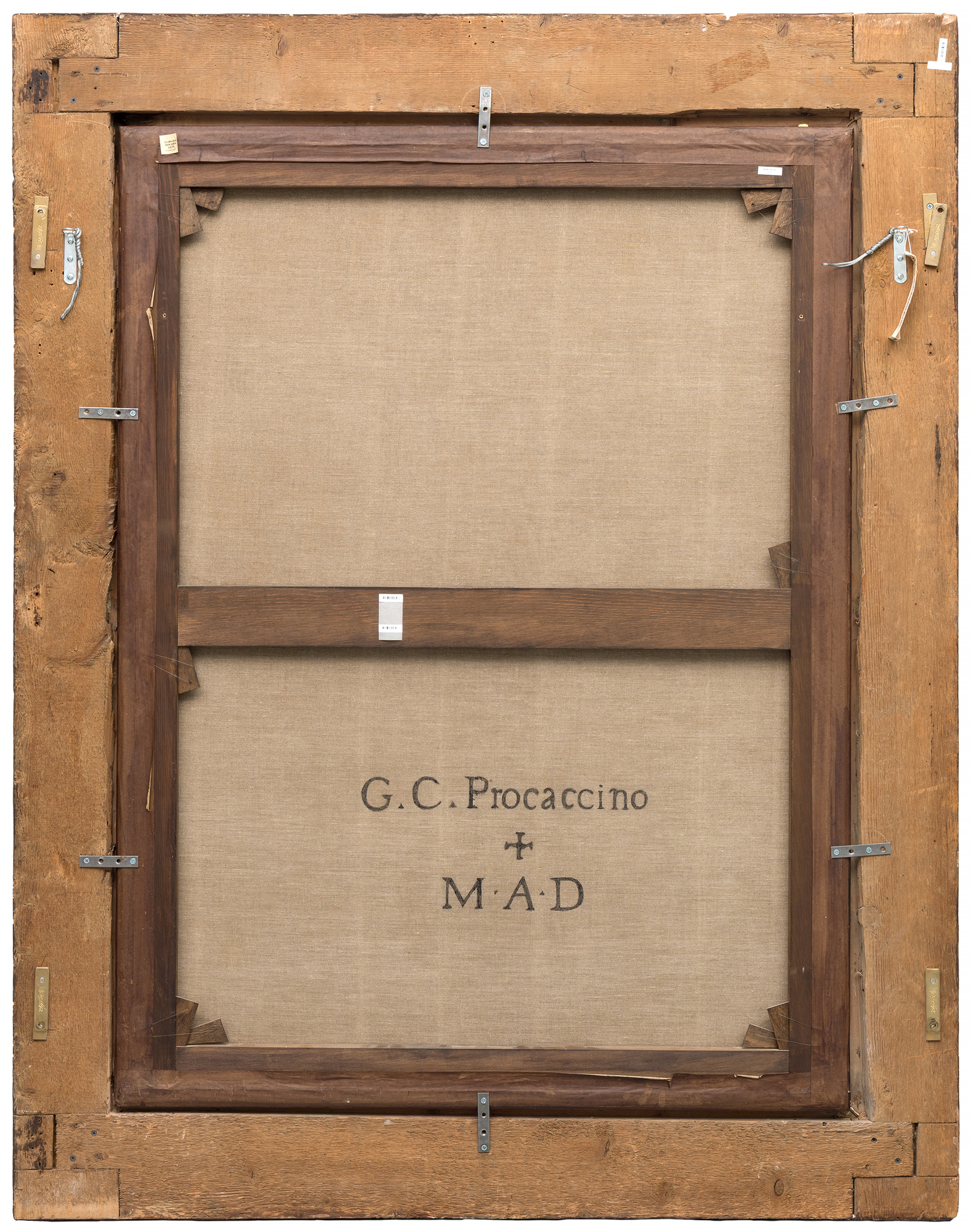
Transmis par héritage à son oncle paternel, Marcantonio Doria (1572-1651), Gênes (ses initiales sont inscrites au dos de la toile originale), 1641
Transmis par héritage à son fils, Niccolò Doria (1599-1688), Gênes, 1651
Hérité par Marcantonio IV Doria (1765-1837), prince d'Angri, Gênes, vers 1780
Transmis par héritage à son fils, Francesco Doria (1797-1874)
Transmis par héritage à son fils, Marcanton
...Plus.....Io V Doria (1824-1870)
Par descendance à son fils, Ernesto Doria (1863-1933)
Par descendance à son fils, Marcantonio VI Doria (1904-1985) et sa première épouse Anna Rosa Bues (1872-1906)
Collection privée, Genève
Sotheby's, Londres, Propriété d'un gentleman titré, 8 juillet 1992, lot 89
avec Whitfield Fine Art, Londres, 1994
Mark Fisch et Rachel Davidson (collection Fisch Davidson), acquis auprès des précédents, 1995
Sotheby's, New York, 26 janvier 2023, lot 2
Collection privée, acquise auprès de la personne susmentionnée
Christie's, New York, 31 janvier 2024, lot 41
Collection privée
Exposition
New York, Hall & Knight, Procaccini en Amérique, 15 octobre - 23 novembre 2002, n° 10
Littérature
Carlo Giuseppe Ratti, Instruzione di quanto puó vedersi di piú bello in Genova in pittura, scultura, ed architettura ecc., Gênes, 1780, p. 332
Hugh Brigstocke, « Critiques littéraires : L'Attività Scultorea di Giulio Cesare Procaccini. Documenti e testimonianze, par Giacomo Berra : Procaccino. Cerano. Morazzone. Dipinti lombardi del primo Seicento dalle civiche collezioni Genovesi », dans The Burlington Magazine, vol. 136, n° 1090, janvier 1994, fig. 36, p. 34-35, illustré.
Hugh Brigstocke, Procaccini in America, New York, 2002, n° cat. 10, pl. 76, p. 41, 98-101, 130-131, 137, 139, 191, illustré en couleur
Valeria Farina, Giovan Carlo Doria, Promotore delle arti a Genova nel primo Seicento, 2002, p. 201, 207
Francesco Maria Ferro, « Postille a Giulio Cesare Procaccini », dans Arte lombarda del secondo millennio : Saggi in onore di Gian Alberto Dell'Acqua, Milan, 2003, p. 43.
Valeria Farina, « Gio. Carlo Doria (1576-1625) », dans L'età di Rubens : Dimore, committenti e collezionisti genovesi, catalogue d'exposition, P. Boccardo (éd.), Milan, 2004, fig. 2, p. 191, illustré.
Federico Frangi, Daniele Crespi : La giovinezza ritrovata, Segrate, 2012, p. 80, note de bas de page 19.
Alessandro Morandotti, dans Museo Lechi, primi studi e riscoperte, Brescia, 2012, n° cat. 14, p. 60
Ornella D’Albo, « Sulla fama del ‘Correggio Insubre’. Un primo squardo alla fortuna di Giulio Cesare Procaccini nelle collezioni europee tra Seicento e Ottocento », dans Lombardia ed Europa: Incroci di storia e cultura, Milan, 2014, p. 205.
Odette D’Albo, Giulio Cesare Procaccini, per un catalogo dei dipinti, thèse de doctorat, Université catholique de Milan, 2016, n° de catalogue 96, p. 280, illustré.
Hugh Brigstocke et Ornella D’Albo, Giulio Cesare Procaccini, Vie et œuvre, Turin, 2020, p. 41, 354, 372, 437-438, n° cat. 104, p. 137, illustré en couleur.
Ornella D'Albo, « Giulio Cesare Procaccini e Genova, in Napoli, Genova e Milano. Scambi artistici e culturali tra città legate alle Spagna (1610-1640) », dans Atti del convegno di studi di Torino e Genova, Milan, 2020, fig. 7, p. 259-260, 265.
Andrea Orlando, Giulio Cesare Procaccini. La « Giuditta Doria » e Genova, imprimé à titre privé, 2023
...MOINS.....
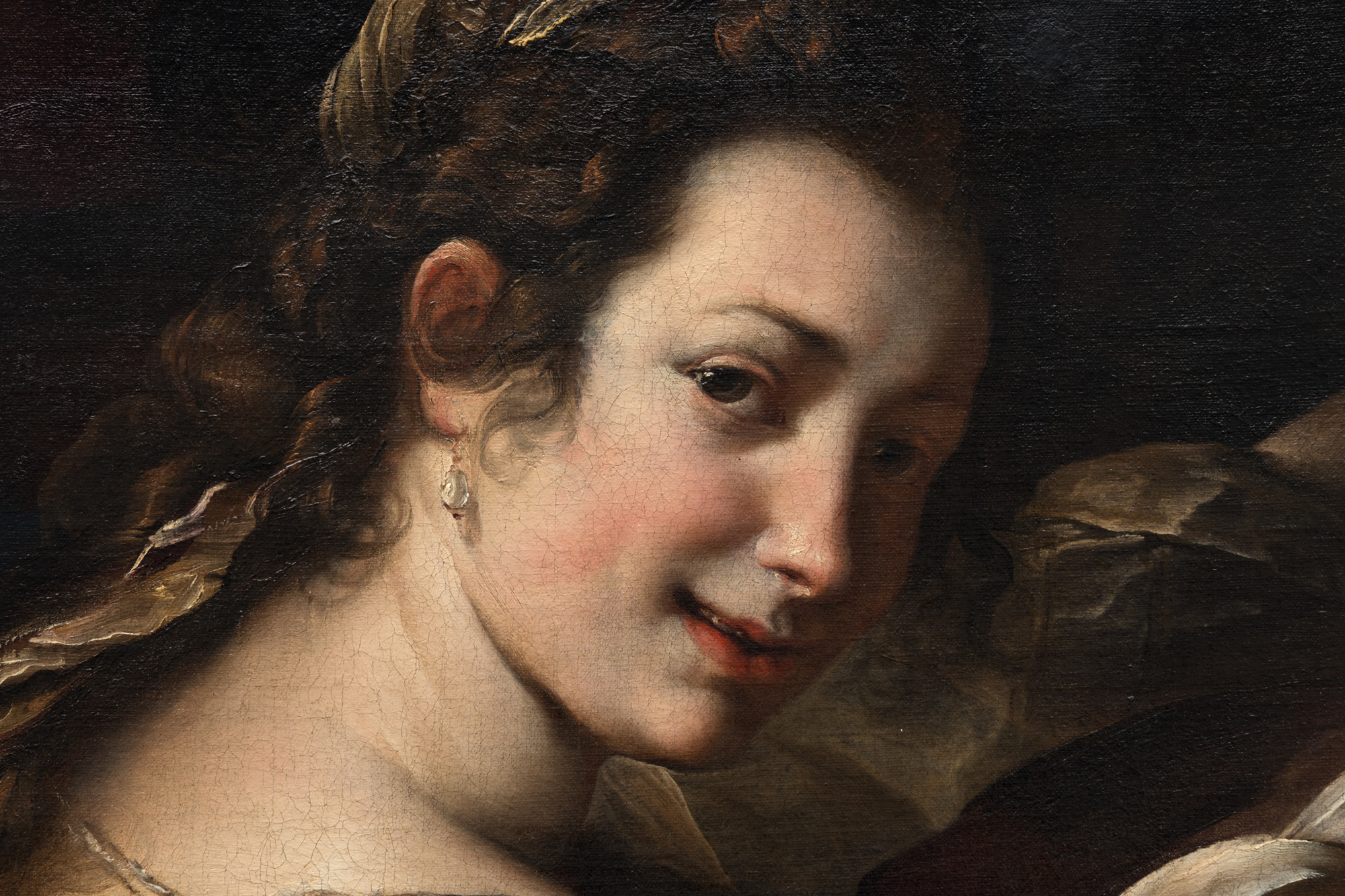
Une peinture rare et importante de Giulio Cesare Procaccini représentant la légendaire Judith décapitant Holopherne, un sujet qui a captivé des artistes tels que Caravaggio, Artemisia Gentileschi, Kehinde Wiley et Robert Longo. Cette scène biblique dramatique, rendue avec un clair-obscur saisissant, illustre la maîtrise de Procaccini en matière de lumière et d'émotion, ainsi que son engagement envers l'un des thèmes les plus durables de l'histoire de l'art : la justice et le triomphe.


Cette œuvre possède une provenance exceptionnelle, ayant été commandée par Giovanni Carlo Doria, l'un des collectionneurs les plus éminents de Gênes, dont la collection comprenait des œuvres de Léonard de Vinci, du Titien et de Van Dyck, et est restée dans la collection de la famille Doria pendant environ 300 ans. Elle est répertoriée dans le catalogue raisonné de l'artiste et fait l'objet d'une littérature abondante.


Des compositions comparables de Procaccini figurent dans les collections de grands musées tels que la National Gallery of Art, à Washington, D.C., et le musée de l'Ermitage, à Saint-Pétersbourg. Ce tableau représente une occasion rare d'acquérir une œuvre de l'artiste digne d'un musée, qui se distingue à la fois par son importance dans l'histoire de l'art et par sa provenance exceptionnelle.


demander