Précédent

FRANK WESTON BENSON(1862-1951)

 
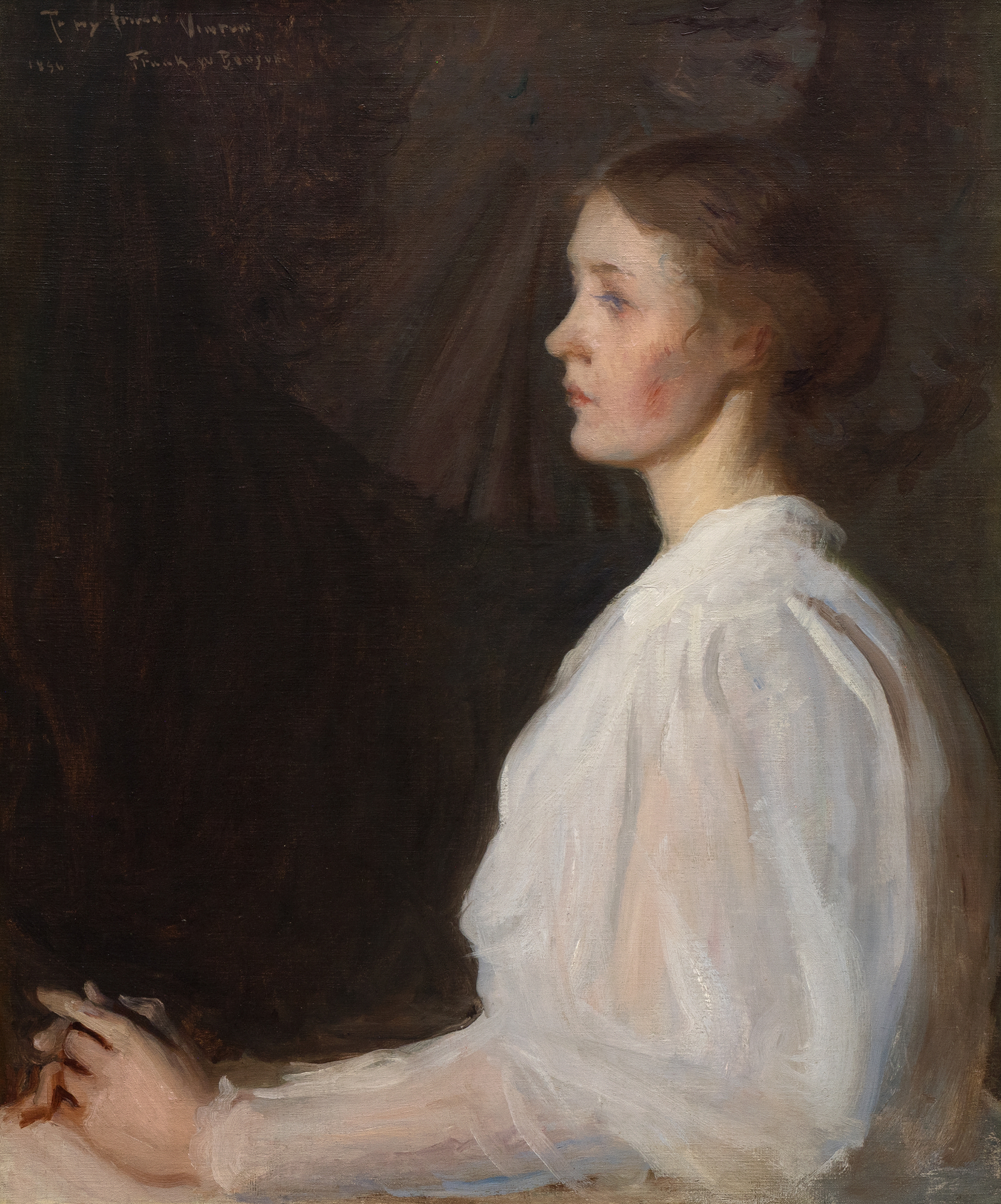
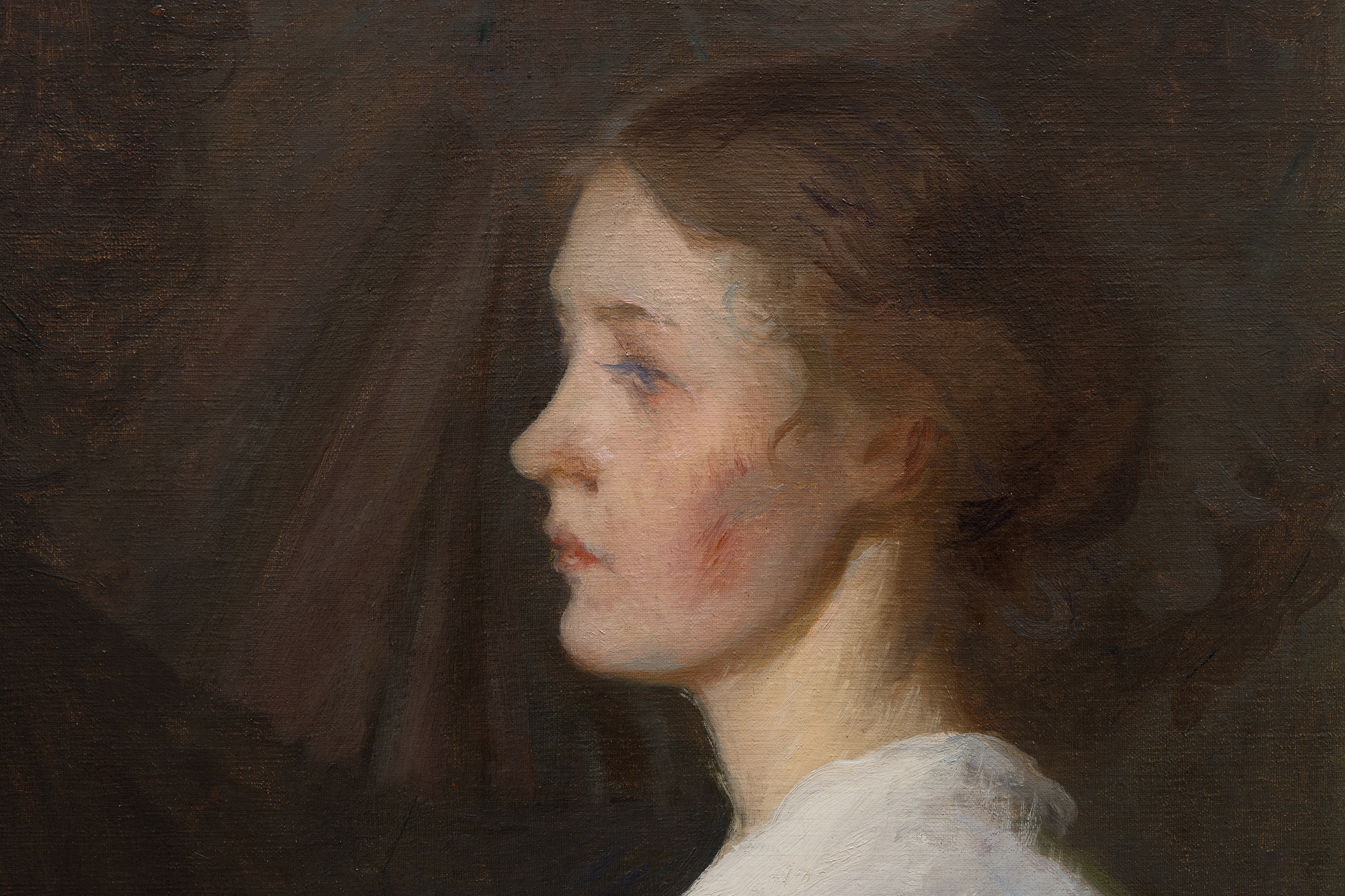
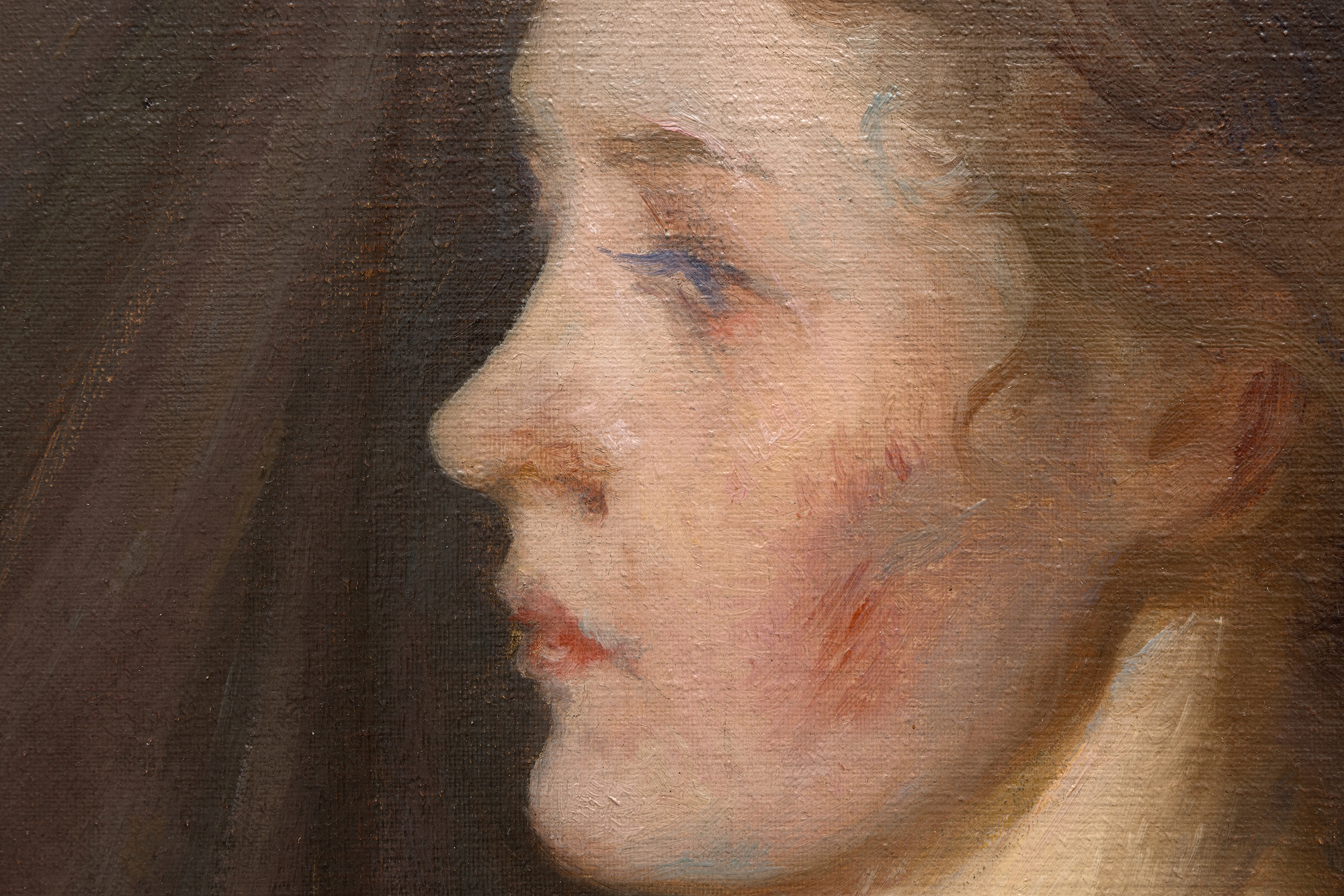
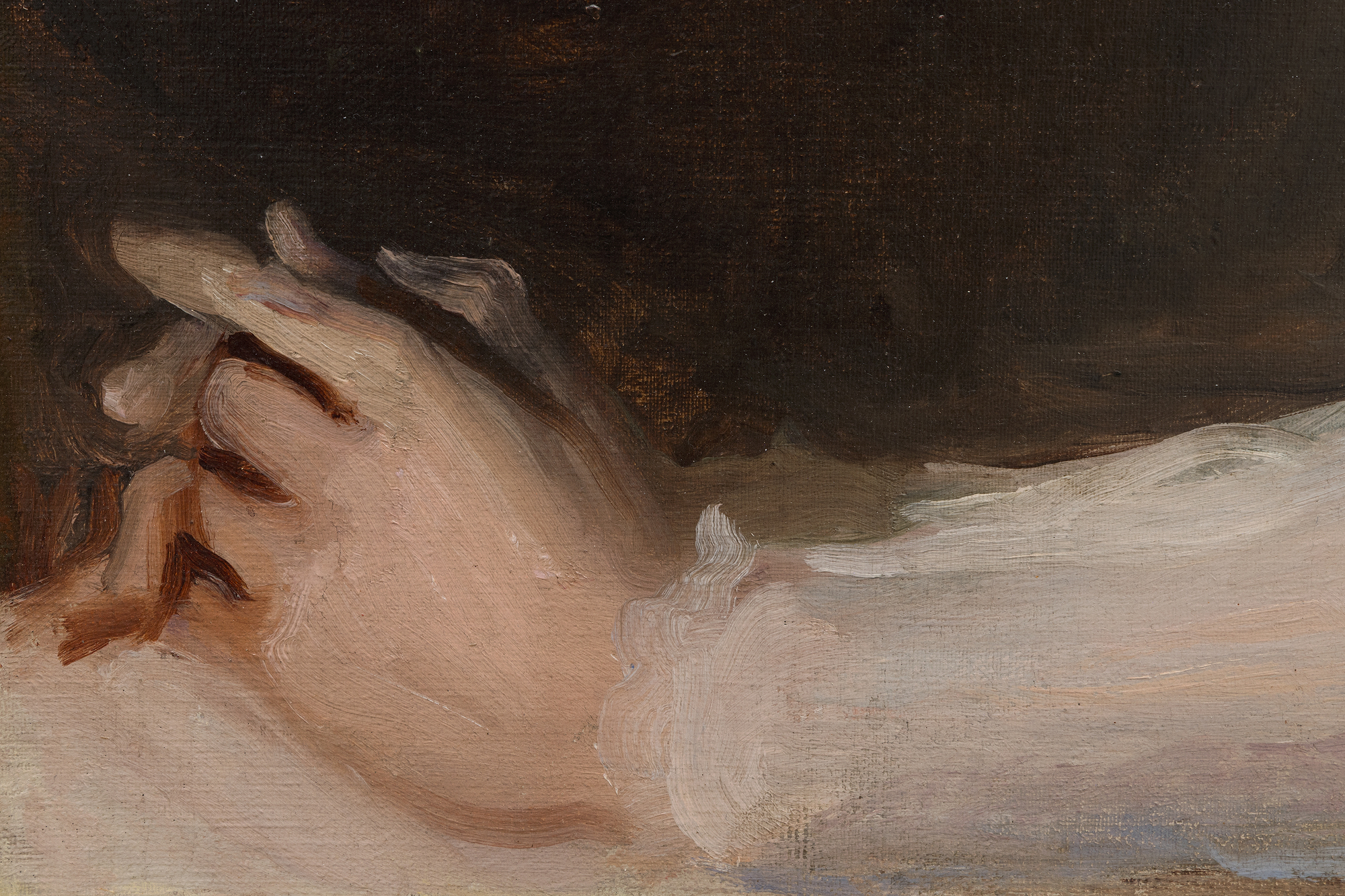
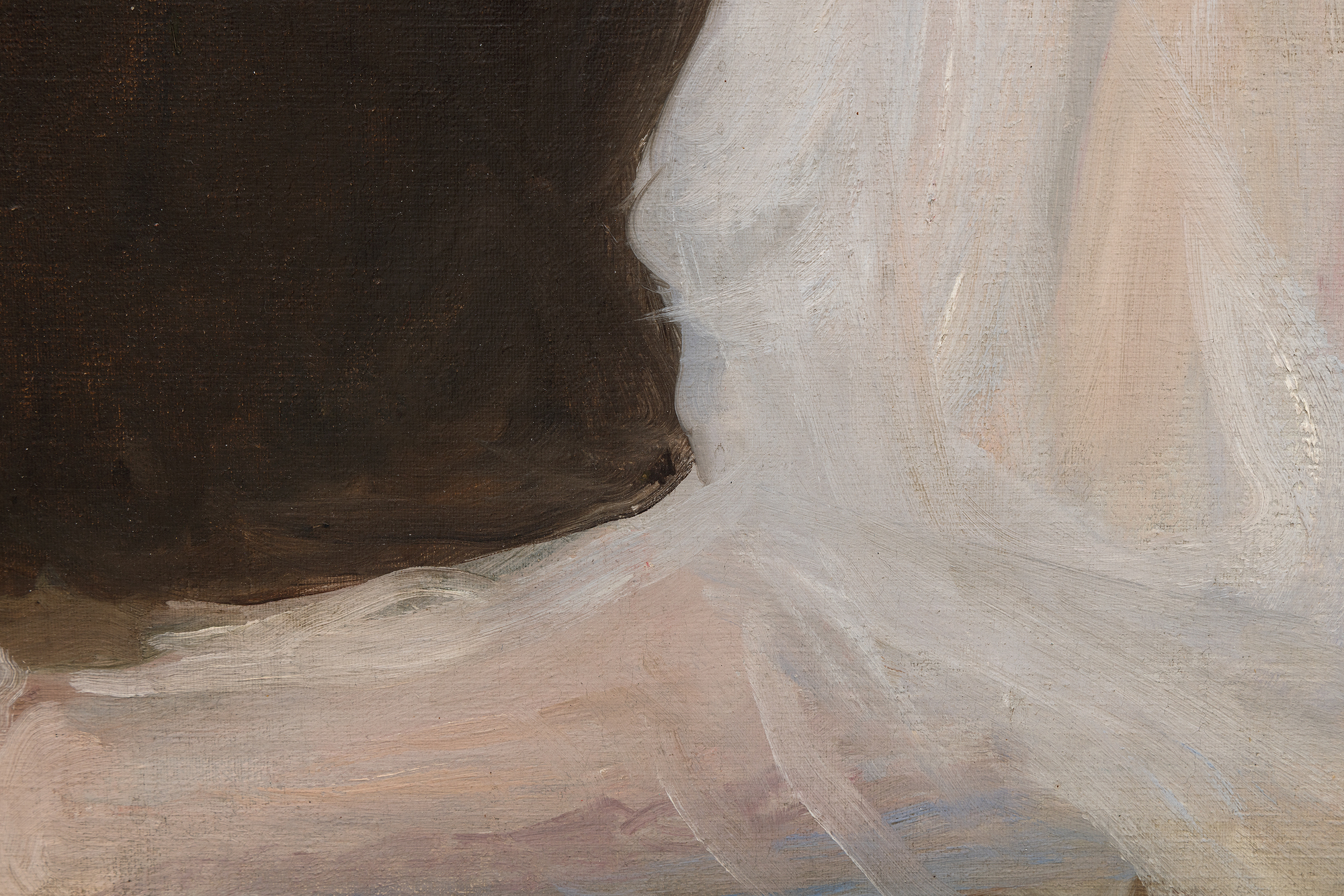
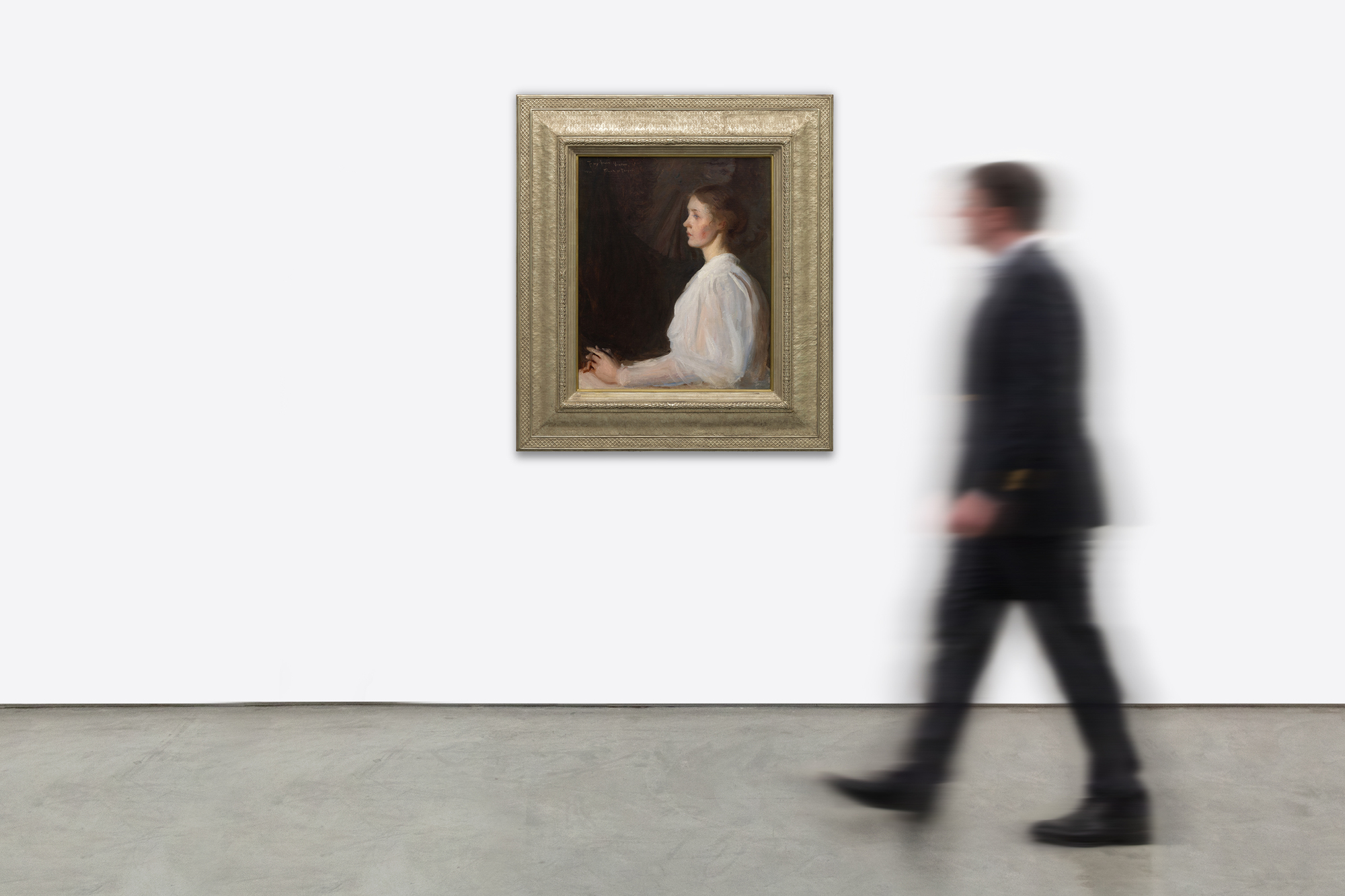
<div><font face=Lato size=3 color=black><em>Girl in White (Seated Figure)</em> from 1896 is an elegant example of Frank Bensons gift for intimate portraiture, rendered with a refined palette and a masterful command of light and texture. The painting was originally a personal gift from Benson to his friend and fellow American artist Frederick P. Vinton, remaining in the Vinton family before later entering the distinguished collection of Paul Magriel, a renowned collector and scholar of American art. This early provenance underscores the works longstanding appreciation among artists and connoisseurs alike.</font></div><br><br><div> </div><br><br><div><font face=Lato size=3 color=black>The portrait relates closely to similar half-figure studies held in major institutional collections, including the Museum of Fine Arts Boston, the Farnsworth Art Museum, and the National Gallery of Art in Washington, D.C., all of which highlight Bensons importance within the American Impressionist tradition. In this work, the sitter is shown in profile against a simple, reduced background that allows the subtleties of color and drapery to command full attention. The warm, luminous modeling of the skin and the delicate, gossamer like fabric of the dress are heightened by Benson's economical use of tone, creating a sense of quiet focus and graceful restraint.</font></div><br><br><div> </div><br><br><div><font face=Lato size=3 color=black>Together, these qualities reveal the depth of Bensons skill during the 1890s and affirm <em>Girl in White (Seated Figure)</em> as a beautifully preserved and emotionally resonant example of his portrait practice.</font></div> <div><font face=Lato size=3 color=black><em>Girl in White (Seated Figure)</em> from 1896 is an elegant example of Frank Bensons gift for intimate portraiture, rendered with a refined palette and a masterful command of light and texture. The painting was originally a personal gift from Benson to his friend and fellow American artist Frederick P. Vinton, remaining in the Vinton family before later entering the distinguished collection of Paul Magriel, a renowned collector and scholar of American art. This early provenance underscores the works longstanding appreciation among artists and connoisseurs alike.</font></div><br><br><div> </div><br><br><div><font face=Lato size=3 color=black>The portrait relates closely to similar half-figure studies held in major institutional collections, including the Museum of Fine Arts Boston, the Farnsworth Art Museum, and the National Gallery of Art in Washington, D.C., all of which highlight Bensons importance within the American Impressionist tradition. In this work, the sitter is shown in profile against a simple, reduced background that allows the subtleties of color and drapery to command full attention. The warm, luminous modeling of the skin and the delicate, gossamer like fabric of the dress are heightened by Benson's economical use of tone, creating a sense of quiet focus and graceful restraint.</font></div><br><br><div> </div><br><br><div><font face=Lato size=3 color=black>Together, these qualities reveal the depth of Bensons skill during the 1890s and affirm <em>Girl in White (Seated Figure)</em> as a beautifully preserved and emotionally resonant example of his portrait practice.</font></div> <div><font face=Lato size=3 color=black><em>Girl in White (Seated Figure)</em> from 1896 is an elegant example of Frank Bensons gift for intimate portraiture, rendered with a refined palette and a masterful command of light and texture. The painting was originally a personal gift from Benson to his friend and fellow American artist Frederick P. Vinton, remaining in the Vinton family before later entering the distinguished collection of Paul Magriel, a renowned collector and scholar of American art. This early provenance underscores the works longstanding appreciation among artists and connoisseurs alike.</font></div><br><br><div> </div><br><br><div><font face=Lato size=3 color=black>The portrait relates closely to similar half-figure studies held in major institutional collections, including the Museum of Fine Arts Boston, the Farnsworth Art Museum, and the National Gallery of Art in Washington, D.C., all of which highlight Bensons importance within the American Impressionist tradition. In this work, the sitter is shown in profile against a simple, reduced background that allows the subtleties of color and drapery to command full attention. The warm, luminous modeling of the skin and the delicate, gossamer like fabric of the dress are heightened by Benson's economical use of tone, creating a sense of quiet focus and graceful restraint.</font></div><br><br><div> </div><br><br><div><font face=Lato size=3 color=black>Together, these qualities reveal the depth of Bensons skill during the 1890s and affirm <em>Girl in White (Seated Figure)</em> as a beautifully preserved and emotionally resonant example of his portrait practice.</font></div> <div><font face=Lato size=3 color=black><em>Girl in White (Seated Figure)</em> from 1896 is an elegant example of Frank Bensons gift for intimate portraiture, rendered with a refined palette and a masterful command of light and texture. The painting was originally a personal gift from Benson to his friend and fellow American artist Frederick P. Vinton, remaining in the Vinton family before later entering the distinguished collection of Paul Magriel, a renowned collector and scholar of American art. This early provenance underscores the works longstanding appreciation among artists and connoisseurs alike.</font></div><br><br><div> </div><br><br><div><font face=Lato size=3 color=black>The portrait relates closely to similar half-figure studies held in major institutional collections, including the Museum of Fine Arts Boston, the Farnsworth Art Museum, and the National Gallery of Art in Washington, D.C., all of which highlight Bensons importance within the American Impressionist tradition. In this work, the sitter is shown in profile against a simple, reduced background that allows the subtleties of color and drapery to command full attention. The warm, luminous modeling of the skin and the delicate, gossamer like fabric of the dress are heightened by Benson's economical use of tone, creating a sense of quiet focus and graceful restraint.</font></div><br><br><div> </div><br><br><div><font face=Lato size=3 color=black>Together, these qualities reveal the depth of Bensons skill during the 1890s and affirm <em>Girl in White (Seated Figure)</em> as a beautifully preserved and emotionally resonant example of his portrait practice.</font></div> <div><font face=Lato size=3 color=black><em>Girl in White (Seated Figure)</em> from 1896 is an elegant example of Frank Bensons gift for intimate portraiture, rendered with a refined palette and a masterful command of light and texture. The painting was originally a personal gift from Benson to his friend and fellow American artist Frederick P. Vinton, remaining in the Vinton family before later entering the distinguished collection of Paul Magriel, a renowned collector and scholar of American art. This early provenance underscores the works longstanding appreciation among artists and connoisseurs alike.</font></div><br><br><div> </div><br><br><div><font face=Lato size=3 color=black>The portrait relates closely to similar half-figure studies held in major institutional collections, including the Museum of Fine Arts Boston, the Farnsworth Art Museum, and the National Gallery of Art in Washington, D.C., all of which highlight Bensons importance within the American Impressionist tradition. In this work, the sitter is shown in profile against a simple, reduced background that allows the subtleties of color and drapery to command full attention. The warm, luminous modeling of the skin and the delicate, gossamer like fabric of the dress are heightened by Benson's economical use of tone, creating a sense of quiet focus and graceful restraint.</font></div><br><br><div> </div><br><br><div><font face=Lato size=3 color=black>Together, these qualities reveal the depth of Bensons skill during the 1890s and affirm <em>Girl in White (Seated Figure)</em> as a beautifully preserved and emotionally resonant example of his portrait practice.</font></div> <div><font face=Lato size=3 color=black><em>Girl in White (Seated Figure)</em> from 1896 is an elegant example of Frank Bensons gift for intimate portraiture, rendered with a refined palette and a masterful command of light and texture. The painting was originally a personal gift from Benson to his friend and fellow American artist Frederick P. Vinton, remaining in the Vinton family before later entering the distinguished collection of Paul Magriel, a renowned collector and scholar of American art. This early provenance underscores the works longstanding appreciation among artists and connoisseurs alike.</font></div><br><br><div> </div><br><br><div><font face=Lato size=3 color=black>The portrait relates closely to similar half-figure studies held in major institutional collections, including the Museum of Fine Arts Boston, the Farnsworth Art Museum, and the National Gallery of Art in Washington, D.C., all of which highlight Bensons importance within the American Impressionist tradition. In this work, the sitter is shown in profile against a simple, reduced background that allows the subtleties of color and drapery to command full attention. The warm, luminous modeling of the skin and the delicate, gossamer like fabric of the dress are heightened by Benson's economical use of tone, creating a sense of quiet focus and graceful restraint.</font></div><br><br><div> </div><br><br><div><font face=Lato size=3 color=black>Together, these qualities reveal the depth of Bensons skill during the 1890s and affirm <em>Girl in White (Seated Figure)</em> as a beautifully preserved and emotionally resonant example of his portrait practice.</font></div> <div><font face=Lato size=3 color=black><em>Girl in White (Seated Figure)</em> from 1896 is an elegant example of Frank Bensons gift for intimate portraiture, rendered with a refined palette and a masterful command of light and texture. The painting was originally a personal gift from Benson to his friend and fellow American artist Frederick P. Vinton, remaining in the Vinton family before later entering the distinguished collection of Paul Magriel, a renowned collector and scholar of American art. This early provenance underscores the works longstanding appreciation among artists and connoisseurs alike.</font></div><br><br><div> </div><br><br><div><font face=Lato size=3 color=black>The portrait relates closely to similar half-figure studies held in major institutional collections, including the Museum of Fine Arts Boston, the Farnsworth Art Museum, and the National Gallery of Art in Washington, D.C., all of which highlight Bensons importance within the American Impressionist tradition. In this work, the sitter is shown in profile against a simple, reduced background that allows the subtleties of color and drapery to command full attention. The warm, luminous modeling of the skin and the delicate, gossamer like fabric of the dress are heightened by Benson's economical use of tone, creating a sense of quiet focus and graceful restraint.</font></div><br><br><div> </div><br><br><div><font face=Lato size=3 color=black>Together, these qualities reveal the depth of Bensons skill during the 1890s and affirm <em>Girl in White (Seated Figure)</em> as a beautifully preserved and emotionally resonant example of his portrait practice.</font></div>
Fille en blanc (figure assise)189676,2 x 63,5 cm(76,2 x 63,5 cm) huile sur toile
Provenance
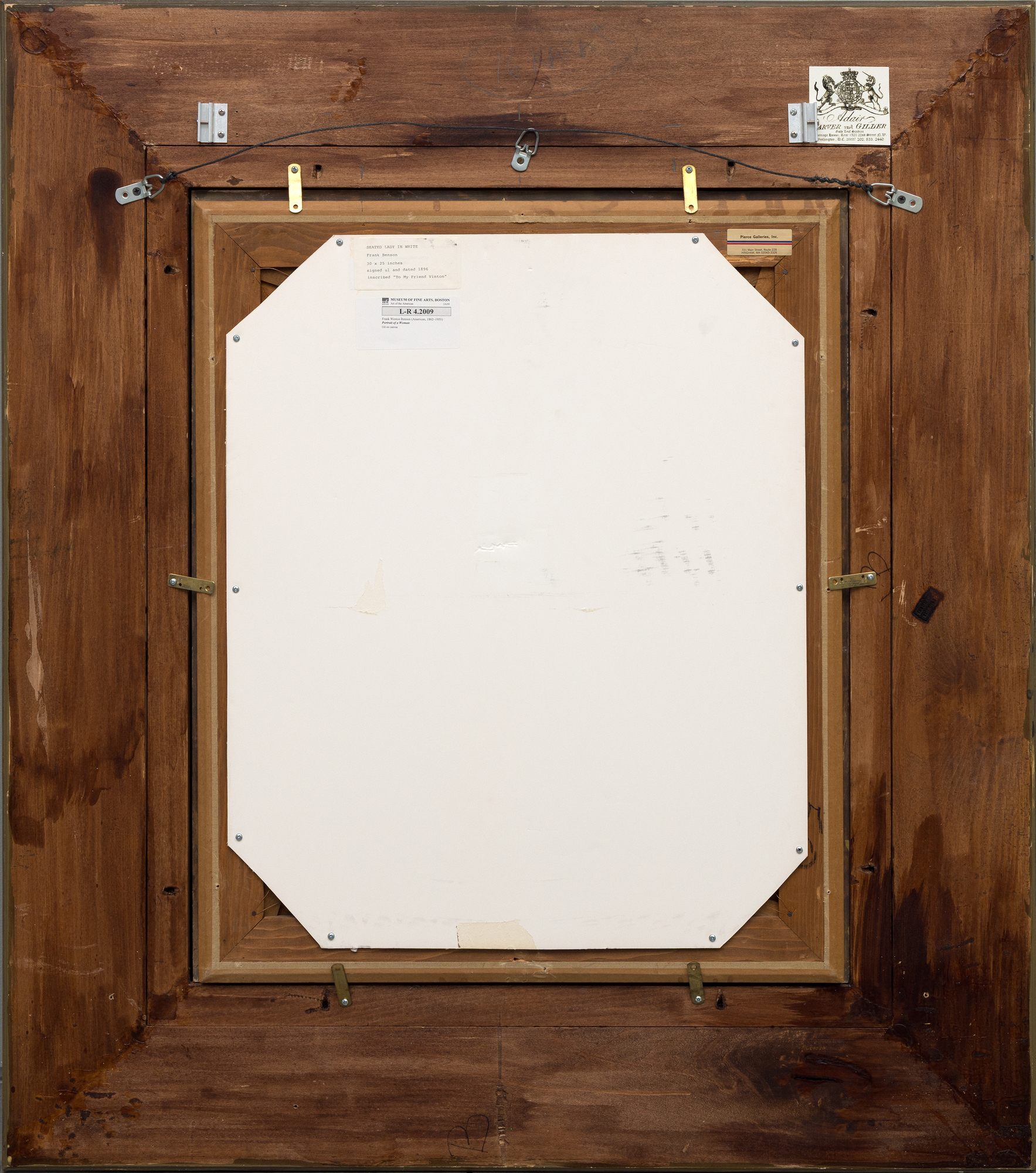
Frederick P. Vinton (artiste), offert par l'artiste
Famille Vinton, par descendance de l'artiste susmentionné
Collection Paul Magriel, New York, New York, jusqu'en 1970
Collection privée, Massachusetts, jusqu'en 2001
Collection privée
Littérature
Faith Andrews Bedford, L'art de Frank W. Benson, impressionniste américain, Salem, Massachusetts, 1999, p. 18, fig. 5
La Fille en blanc (figure assise) de 1896 est un exemple élégant du talent de Frank Benson pour les portraits intimes, rendu avec une palette raffinée et une maîtrise magistrale de la lumière et de la texture. À l'origine, ce tableau était un cadeau personnel de Benson à son ami et collègue artiste américain Frederick P. Vinton. Il est resté dans la famille Vinton avant d'entrer dans la prestigieuse collection de Paul Magriel, collectionneur et spécialiste renommé de l'art américain. Cette provenance ancienne souligne l'appréciation de longue date de l'œuvre par les artistes et les connaisseurs.


Le portrait est étroitement lié à des études similaires en demi-figure conservées dans de grandes collections institutionnelles, notamment au Museum of Fine Arts de Boston, au Farnsworth Art Museum et à la National Gallery of Art de Washington, D.C., qui soulignent toutes l'importance de Benson dans la tradition impressionniste américaine. Dans cette œuvre, le modèle est représenté de profil sur un fond simple et réduit qui permet aux subtilités de la couleur et du drapé d'attirer toute l'attention. Le modelé chaud et lumineux de la peau et le tissu délicat et vaporeux de la robe sont mis en valeur par l'utilisation parcimonieuse des tons par Benson, créant un sentiment de concentration tranquille et de retenue gracieuse.


Ensemble, ces qualités révèlent la profondeur du talent de Benson dans les années 1890 et confirment que Girl in White (Seated Figure) est un exemple magnifiquement préservé et émouvant de son art du portrait.
demander