Précédent

GEORGE INNESS(1825-1894)

 
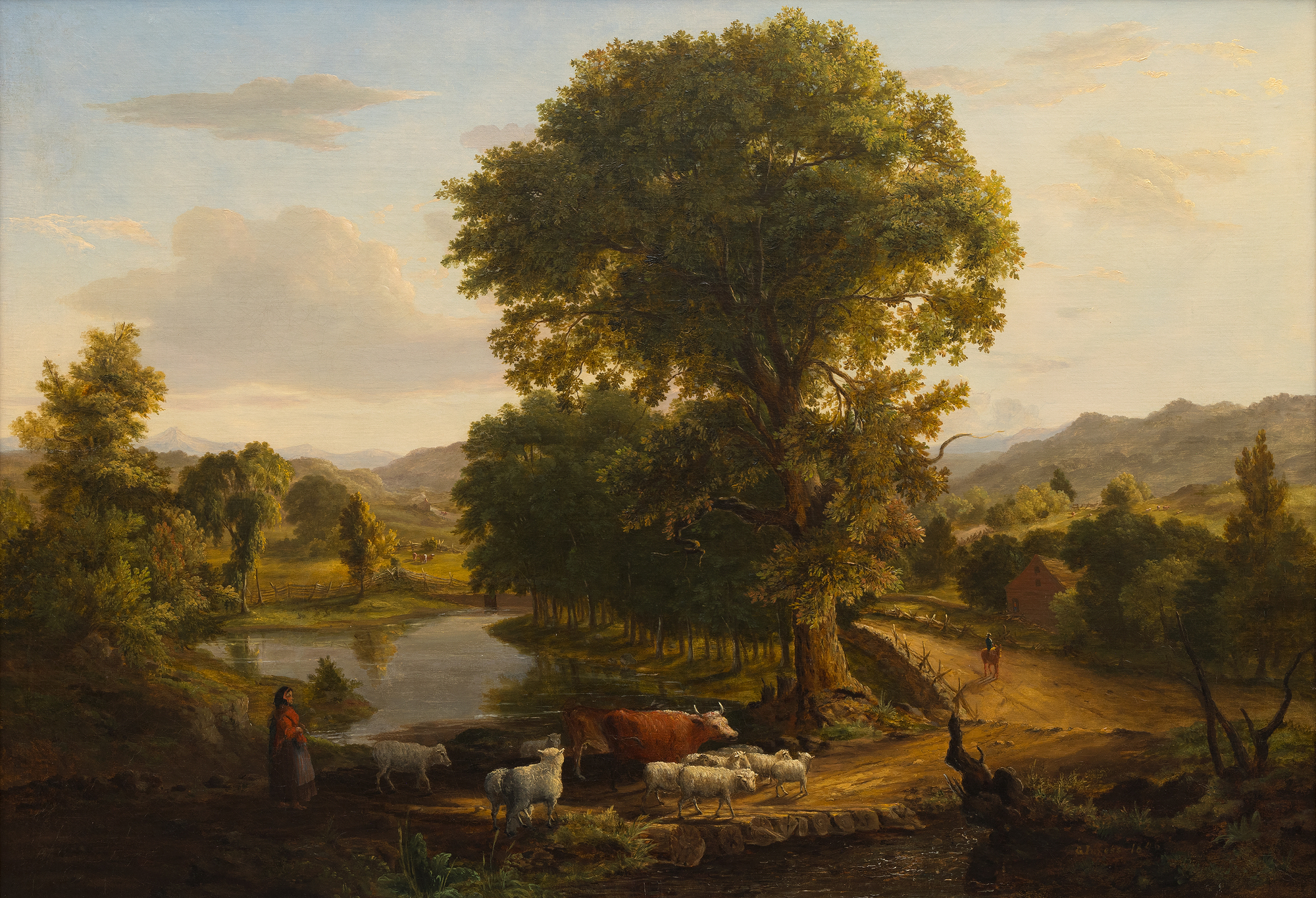
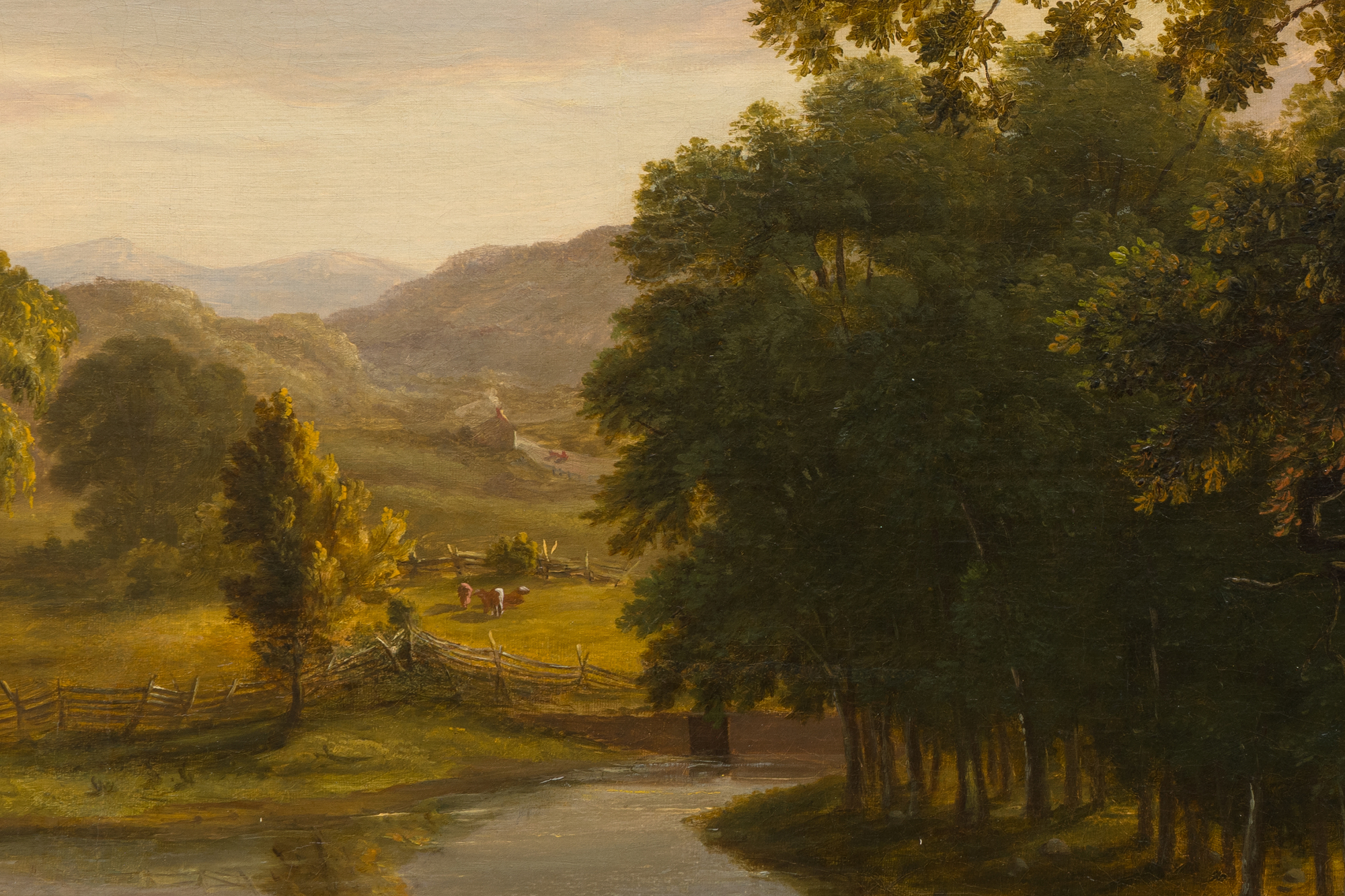
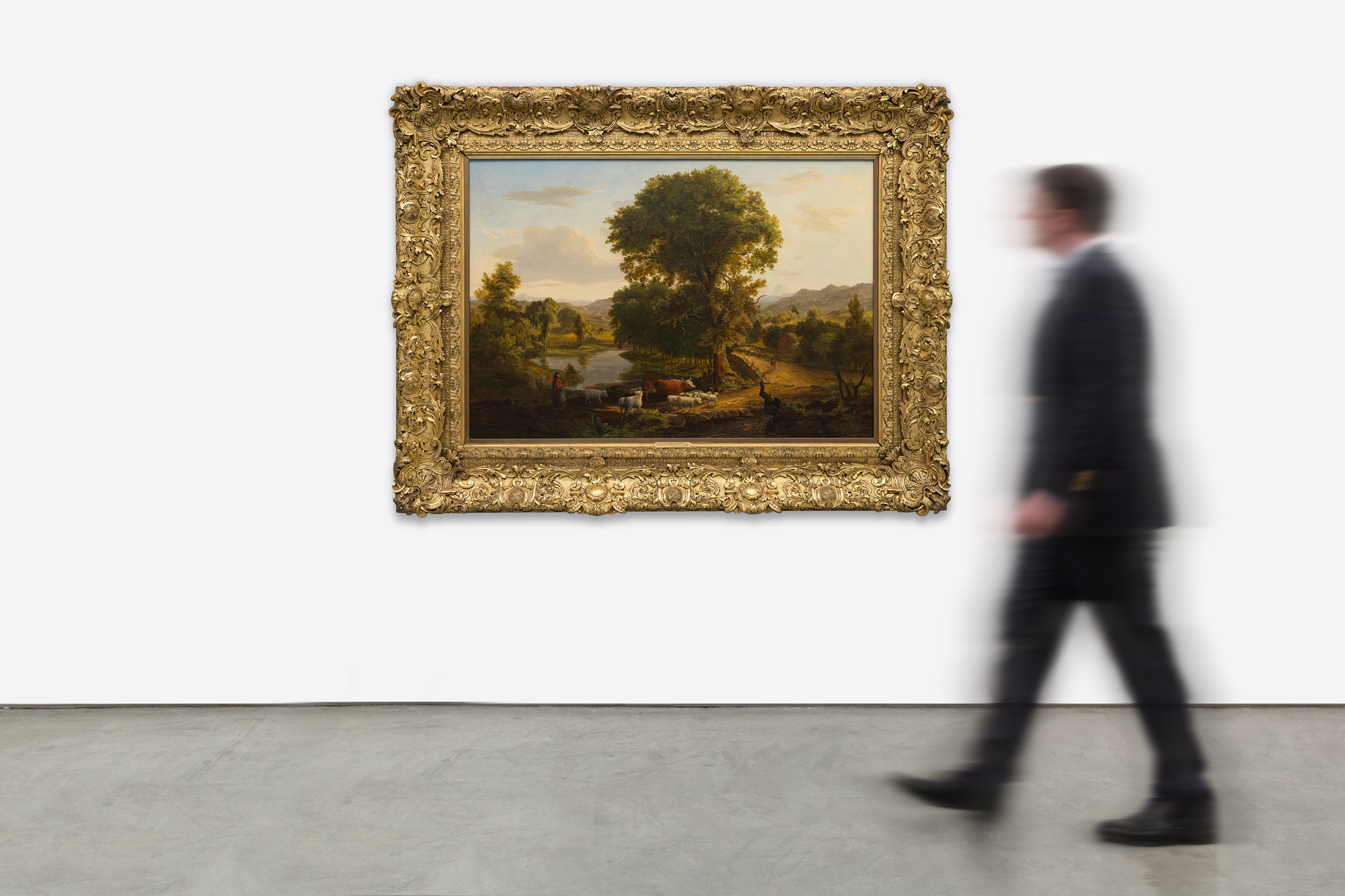
<div><font face=Lato size=3 color=black><em>Afternoon</em> is a rare early painting by George Inness, created when the artist was only twenty one and actively shaping the foundations of his career. Although largely self-taught, Inness was immersed in a transformative period during the mid-eighteen forties, studying at the National Academy of Design in New York where he closely observed the work of Hudson River School painters such as Thomas Cole and Asher Durand. This moment marked his first public exhibitions at the Academy in 1844, followed by the opening of his own studio in 1848, placing <em>Afternoon</em> squarely within the formative years in which his artistic voice began to emerge.</font></div><br><br><div> </div><br><br><div><font face=Lato size=3 color=black>The painting also reflects the subtle influence of French landscaper Regis Francois Gignoux, under whom the young Inness studied before making his first trip to Europe in 1851. This early training helped shape the atmospheric sensitivity and poetic naturalism that would later define his mature style.</font></div><br><br><div> </div><br><br><div><font face=Lato size=3 color=black><em>Afternoon</em> carries distinguished provenance, having passed through the collections of several important nineteenth and early twentieth century New Yorkers, including politician Cornelius Gardiner, financier and philanthropist Emerson McMillian, and later the philanthropist Agnes Ladson Dana. This lineage, combined with the paintings exceptional early date, makes it an especially significant example from the beginning of Innesss enduring contribution to American landscape painting.</font></div> <div><font face=Lato size=3 color=black><em>Afternoon</em> is a rare early painting by George Inness, created when the artist was only twenty one and actively shaping the foundations of his career. Although largely self-taught, Inness was immersed in a transformative period during the mid-eighteen forties, studying at the National Academy of Design in New York where he closely observed the work of Hudson River School painters such as Thomas Cole and Asher Durand. This moment marked his first public exhibitions at the Academy in 1844, followed by the opening of his own studio in 1848, placing <em>Afternoon</em> squarely within the formative years in which his artistic voice began to emerge.</font></div><br><br><div> </div><br><br><div><font face=Lato size=3 color=black>The painting also reflects the subtle influence of French landscaper Regis Francois Gignoux, under whom the young Inness studied before making his first trip to Europe in 1851. This early training helped shape the atmospheric sensitivity and poetic naturalism that would later define his mature style.</font></div><br><br><div> </div><br><br><div><font face=Lato size=3 color=black><em>Afternoon</em> carries distinguished provenance, having passed through the collections of several important nineteenth and early twentieth century New Yorkers, including politician Cornelius Gardiner, financier and philanthropist Emerson McMillian, and later the philanthropist Agnes Ladson Dana. This lineage, combined with the paintings exceptional early date, makes it an especially significant example from the beginning of Innesss enduring contribution to American landscape painting.</font></div> <div><font face=Lato size=3 color=black><em>Afternoon</em> is a rare early painting by George Inness, created when the artist was only twenty one and actively shaping the foundations of his career. Although largely self-taught, Inness was immersed in a transformative period during the mid-eighteen forties, studying at the National Academy of Design in New York where he closely observed the work of Hudson River School painters such as Thomas Cole and Asher Durand. This moment marked his first public exhibitions at the Academy in 1844, followed by the opening of his own studio in 1848, placing <em>Afternoon</em> squarely within the formative years in which his artistic voice began to emerge.</font></div><br><br><div> </div><br><br><div><font face=Lato size=3 color=black>The painting also reflects the subtle influence of French landscaper Regis Francois Gignoux, under whom the young Inness studied before making his first trip to Europe in 1851. This early training helped shape the atmospheric sensitivity and poetic naturalism that would later define his mature style.</font></div><br><br><div> </div><br><br><div><font face=Lato size=3 color=black><em>Afternoon</em> carries distinguished provenance, having passed through the collections of several important nineteenth and early twentieth century New Yorkers, including politician Cornelius Gardiner, financier and philanthropist Emerson McMillian, and later the philanthropist Agnes Ladson Dana. This lineage, combined with the paintings exceptional early date, makes it an especially significant example from the beginning of Innesss enduring contribution to American landscape painting.</font></div> <div><font face=Lato size=3 color=black><em>Afternoon</em> is a rare early painting by George Inness, created when the artist was only twenty one and actively shaping the foundations of his career. Although largely self-taught, Inness was immersed in a transformative period during the mid-eighteen forties, studying at the National Academy of Design in New York where he closely observed the work of Hudson River School painters such as Thomas Cole and Asher Durand. This moment marked his first public exhibitions at the Academy in 1844, followed by the opening of his own studio in 1848, placing <em>Afternoon</em> squarely within the formative years in which his artistic voice began to emerge.</font></div><br><br><div> </div><br><br><div><font face=Lato size=3 color=black>The painting also reflects the subtle influence of French landscaper Regis Francois Gignoux, under whom the young Inness studied before making his first trip to Europe in 1851. This early training helped shape the atmospheric sensitivity and poetic naturalism that would later define his mature style.</font></div><br><br><div> </div><br><br><div><font face=Lato size=3 color=black><em>Afternoon</em> carries distinguished provenance, having passed through the collections of several important nineteenth and early twentieth century New Yorkers, including politician Cornelius Gardiner, financier and philanthropist Emerson McMillian, and later the philanthropist Agnes Ladson Dana. This lineage, combined with the paintings exceptional early date, makes it an especially significant example from the beginning of Innesss enduring contribution to American landscape painting.</font></div> <div><font face=Lato size=3 color=black><em>Afternoon</em> is a rare early painting by George Inness, created when the artist was only twenty one and actively shaping the foundations of his career. Although largely self-taught, Inness was immersed in a transformative period during the mid-eighteen forties, studying at the National Academy of Design in New York where he closely observed the work of Hudson River School painters such as Thomas Cole and Asher Durand. This moment marked his first public exhibitions at the Academy in 1844, followed by the opening of his own studio in 1848, placing <em>Afternoon</em> squarely within the formative years in which his artistic voice began to emerge.</font></div><br><br><div> </div><br><br><div><font face=Lato size=3 color=black>The painting also reflects the subtle influence of French landscaper Regis Francois Gignoux, under whom the young Inness studied before making his first trip to Europe in 1851. This early training helped shape the atmospheric sensitivity and poetic naturalism that would later define his mature style.</font></div><br><br><div> </div><br><br><div><font face=Lato size=3 color=black><em>Afternoon</em> carries distinguished provenance, having passed through the collections of several important nineteenth and early twentieth century New Yorkers, including politician Cornelius Gardiner, financier and philanthropist Emerson McMillian, and later the philanthropist Agnes Ladson Dana. This lineage, combined with the paintings exceptional early date, makes it an especially significant example from the beginning of Innesss enduring contribution to American landscape painting.</font></div> <div><font face=Lato size=3 color=black><em>Afternoon</em> is a rare early painting by George Inness, created when the artist was only twenty one and actively shaping the foundations of his career. Although largely self-taught, Inness was immersed in a transformative period during the mid-eighteen forties, studying at the National Academy of Design in New York where he closely observed the work of Hudson River School painters such as Thomas Cole and Asher Durand. This moment marked his first public exhibitions at the Academy in 1844, followed by the opening of his own studio in 1848, placing <em>Afternoon</em> squarely within the formative years in which his artistic voice began to emerge.</font></div><br><br><div> </div><br><br><div><font face=Lato size=3 color=black>The painting also reflects the subtle influence of French landscaper Regis Francois Gignoux, under whom the young Inness studied before making his first trip to Europe in 1851. This early training helped shape the atmospheric sensitivity and poetic naturalism that would later define his mature style.</font></div><br><br><div> </div><br><br><div><font face=Lato size=3 color=black><em>Afternoon</em> carries distinguished provenance, having passed through the collections of several important nineteenth and early twentieth century New Yorkers, including politician Cornelius Gardiner, financier and philanthropist Emerson McMillian, and later the philanthropist Agnes Ladson Dana. This lineage, combined with the paintings exceptional early date, makes it an especially significant example from the beginning of Innesss enduring contribution to American landscape painting.</font></div> <div><font face=Lato size=3 color=black><em>Afternoon</em> is a rare early painting by George Inness, created when the artist was only twenty one and actively shaping the foundations of his career. Although largely self-taught, Inness was immersed in a transformative period during the mid-eighteen forties, studying at the National Academy of Design in New York where he closely observed the work of Hudson River School painters such as Thomas Cole and Asher Durand. This moment marked his first public exhibitions at the Academy in 1844, followed by the opening of his own studio in 1848, placing <em>Afternoon</em> squarely within the formative years in which his artistic voice began to emerge.</font></div><br><br><div> </div><br><br><div><font face=Lato size=3 color=black>The painting also reflects the subtle influence of French landscaper Regis Francois Gignoux, under whom the young Inness studied before making his first trip to Europe in 1851. This early training helped shape the atmospheric sensitivity and poetic naturalism that would later define his mature style.</font></div><br><br><div> </div><br><br><div><font face=Lato size=3 color=black><em>Afternoon</em> carries distinguished provenance, having passed through the collections of several important nineteenth and early twentieth century New Yorkers, including politician Cornelius Gardiner, financier and philanthropist Emerson McMillian, and later the philanthropist Agnes Ladson Dana. This lineage, combined with the paintings exceptional early date, makes it an especially significant example from the beginning of Innesss enduring contribution to American landscape painting.</font></div>
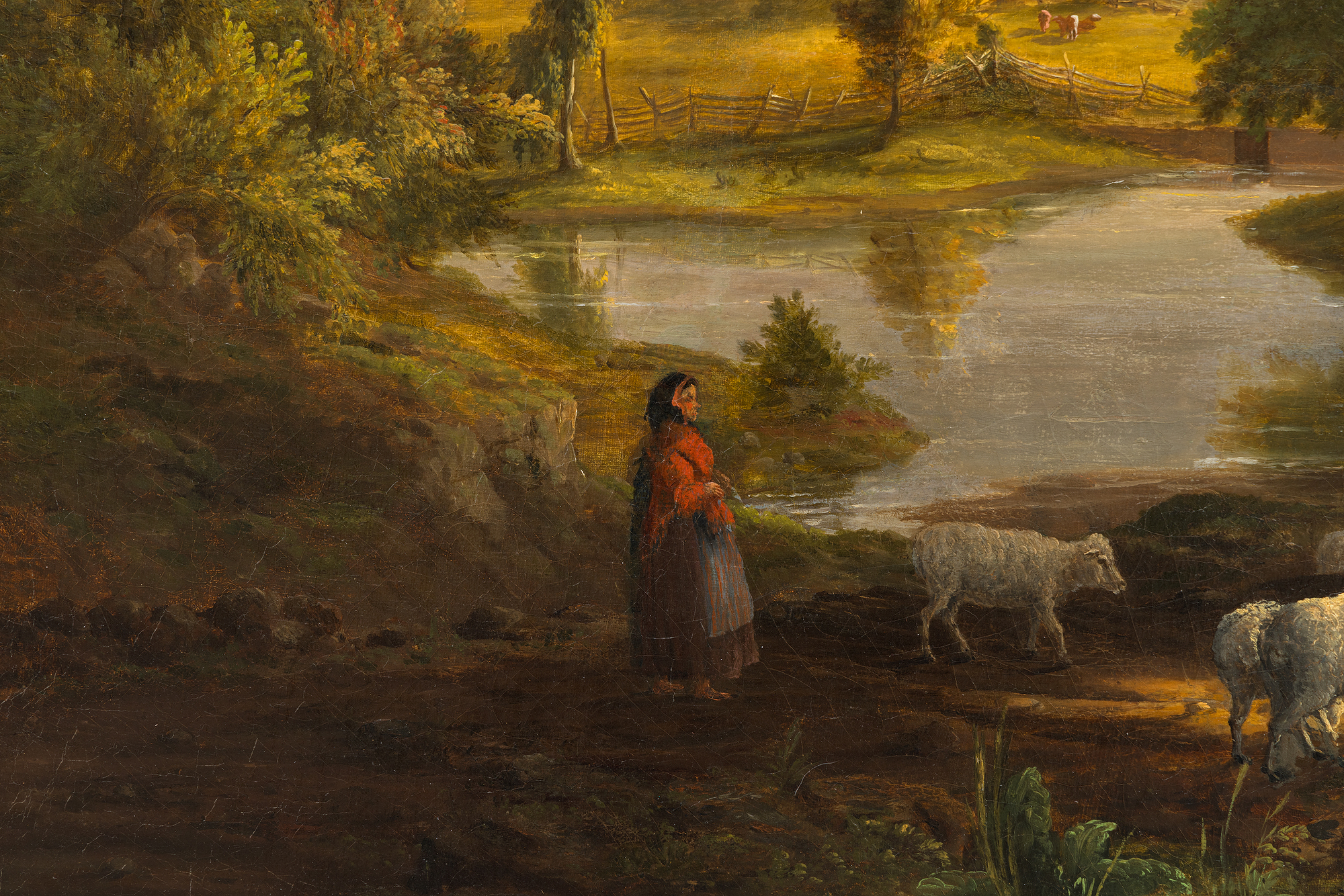
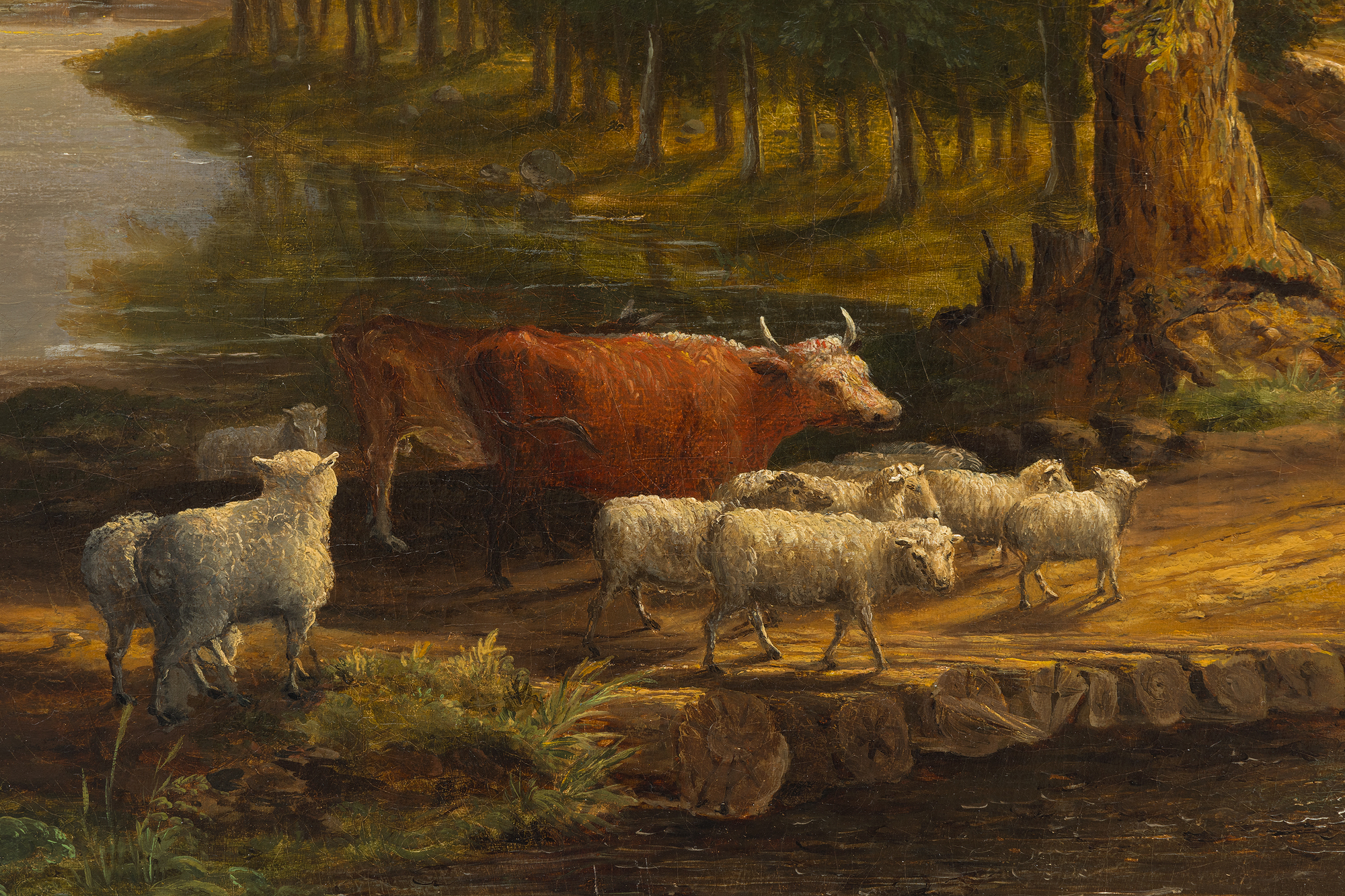
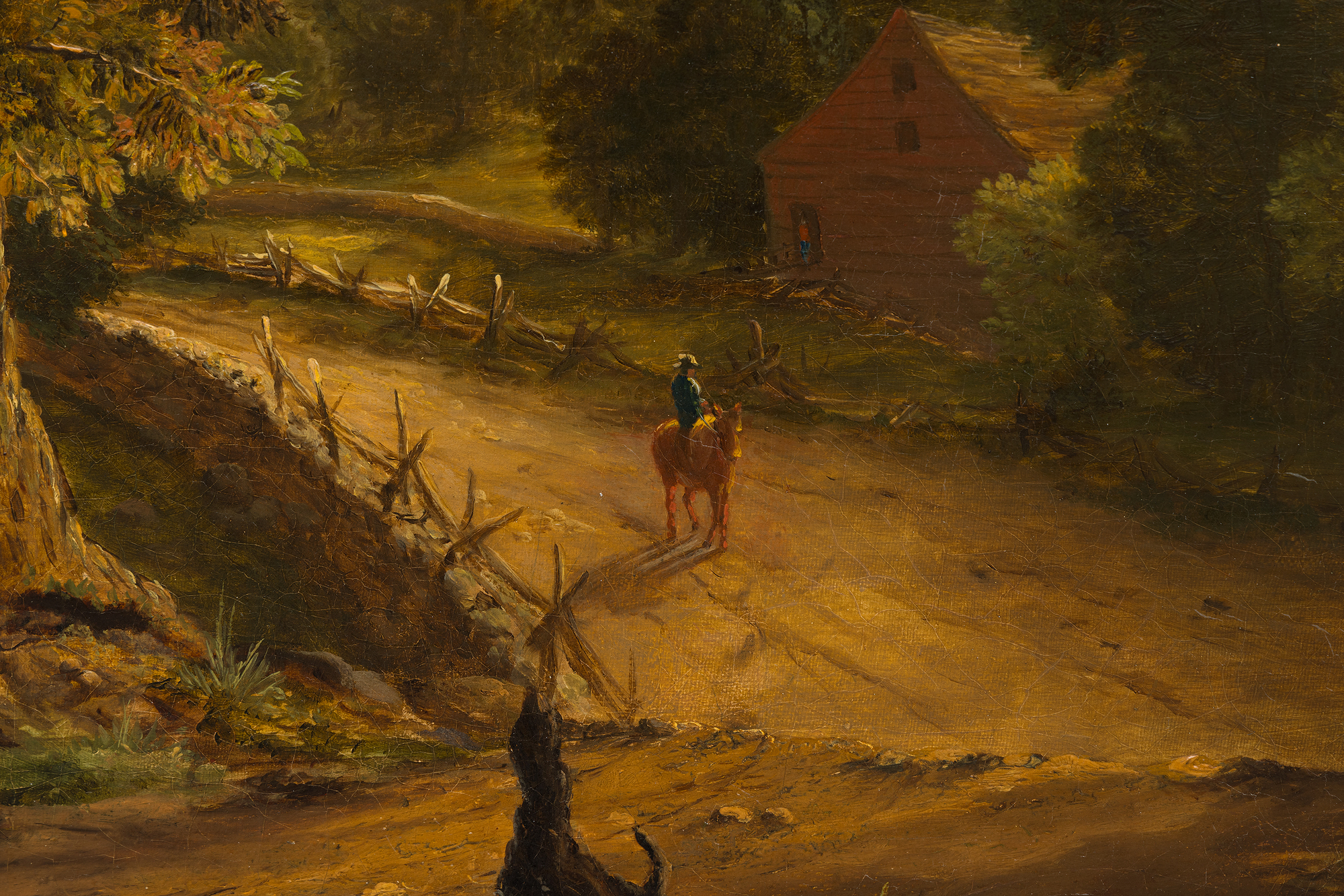
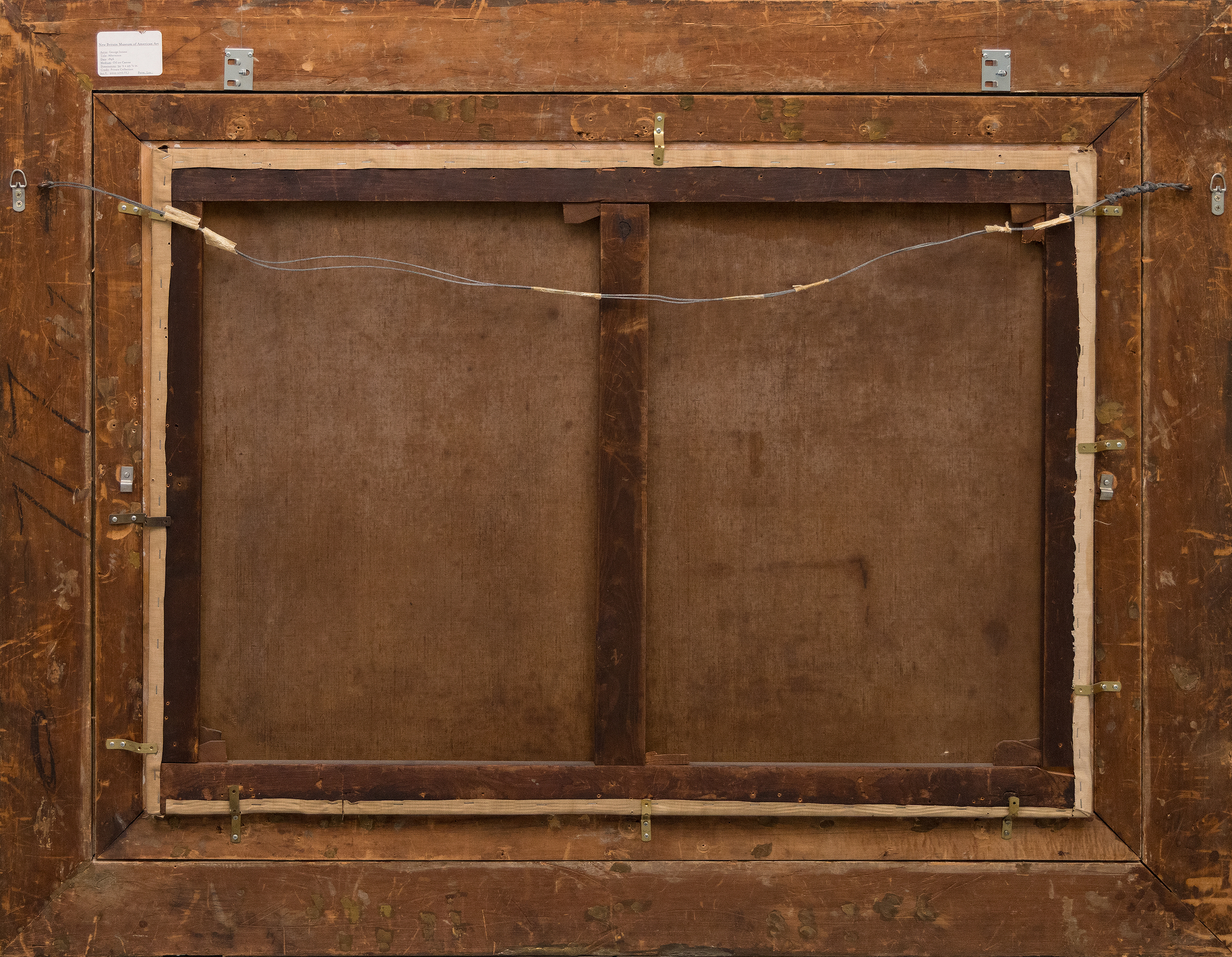
Après-midi184634 1/2 x 49 1/4 po(87,63 x 125,1 cm) huile sur toile
Provenance
C. Gardinier, Fultonville, New York, 1846
Emerson McMillin, New York
American Art Association, New York, vente McMillin, 20-23 janvier 1913, n° 182,
George H. Ainslie Galleries, New York
Agnes L. Dana, Bernardsville, New Jersey
O. Rundle Gilbert Auctioneer, New York, vente de la succession Dana, 16 mai 1959
Adamson-Duvannes Gallery, Beverly Hills, Californie
Collection privée, Californie
Collection privée, Virginie
Collection privée
Exposition
New York, American Art Union, Exposition annuelle, 1846, n° 6, ...Plus.....comme « Paysage - Après-midi »
New York, National Academy of Design, 21e exposition annuelle, 1846, n° 143, sous le titre « Paysage, un après-midi d'été américain ».
Littérature
LeRoy Ireland, Catalogue raisonné illustré, 1965, p. 9, n° 16, illustré
Nicolai Cikovsky, Jr., La vie et l'œuvre de George Inness, thèse de doctorat.
1965, n° 6, illustré
Michael Quick, George Inness, Catalogue raisonné : Volume I, planche en couleurs
...MOINS.....
Afternoon est l'une des rares peintures de jeunesse de George Inness, réalisée alors que l'artiste n'avait que vingt et un ans et qu'il était en train de poser les bases de sa carrière. Bien qu'essentiellement autodidacte, Inness a connu une période de transformation au milieu des années 1840, lorsqu'il a étudié à la National Academy of Design de New York, où il a observé de près le travail des peintres de l'école de l'Hudson River, tels que Thomas Cole et Asher Durand. Cette période a été marquée par ses premières expositions publiques à l'Académie en 1844, suivies de l'ouverture de son propre atelier en 1848, ce qui place Afternoon en plein dans les années formatrices au cours desquelles sa voix artistique a commencé à s'affirmer.


Le tableau reflète également l'influence subtile du paysagiste français Régis François Gignoux, auprès duquel le jeune Inness a étudié avant de faire son premier voyage en Europe en 1851. Cette formation précoce a contribué à façonner la sensibilité atmosphérique et le naturalisme poétique qui définiront plus tard son style mature.


Afternoon a une provenance distinguée, ayant fait partie des collections de plusieurs New-Yorkais importants du XIXe et du début du XXe siècle, notamment le politicien Cornelius Gardiner, le financier et philanthrope Emerson McMillian, puis la philanthrope Agnes Ladson Dana. Cette lignée, combinée à la date exceptionnellement précoce de la peinture, en fait un exemple particulièrement significatif du début de la contribution durable d'Inness à la peinture de paysage américaine.
demander