アンディ・ウォーホル (1928-1987)

$475,000

 
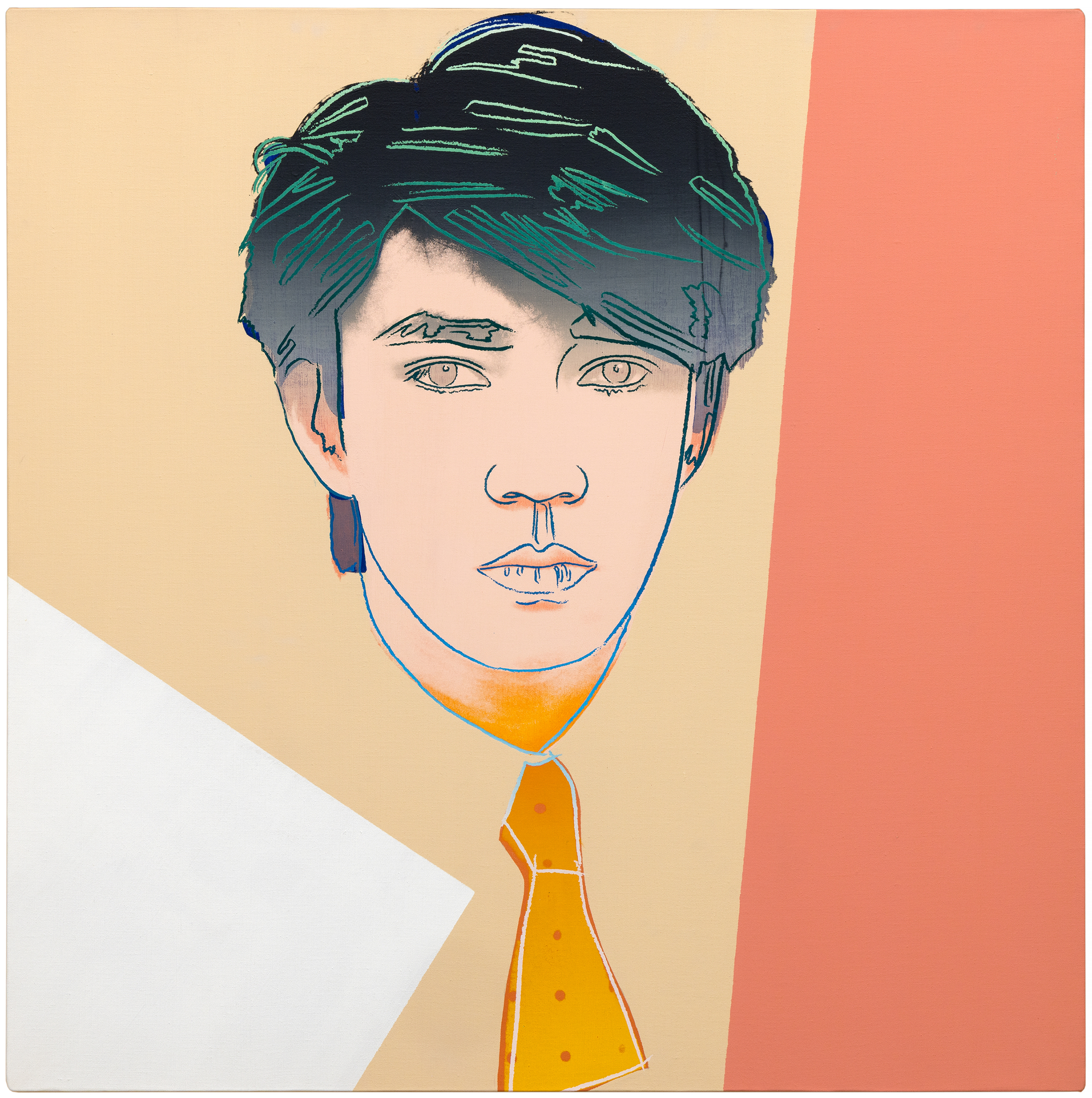
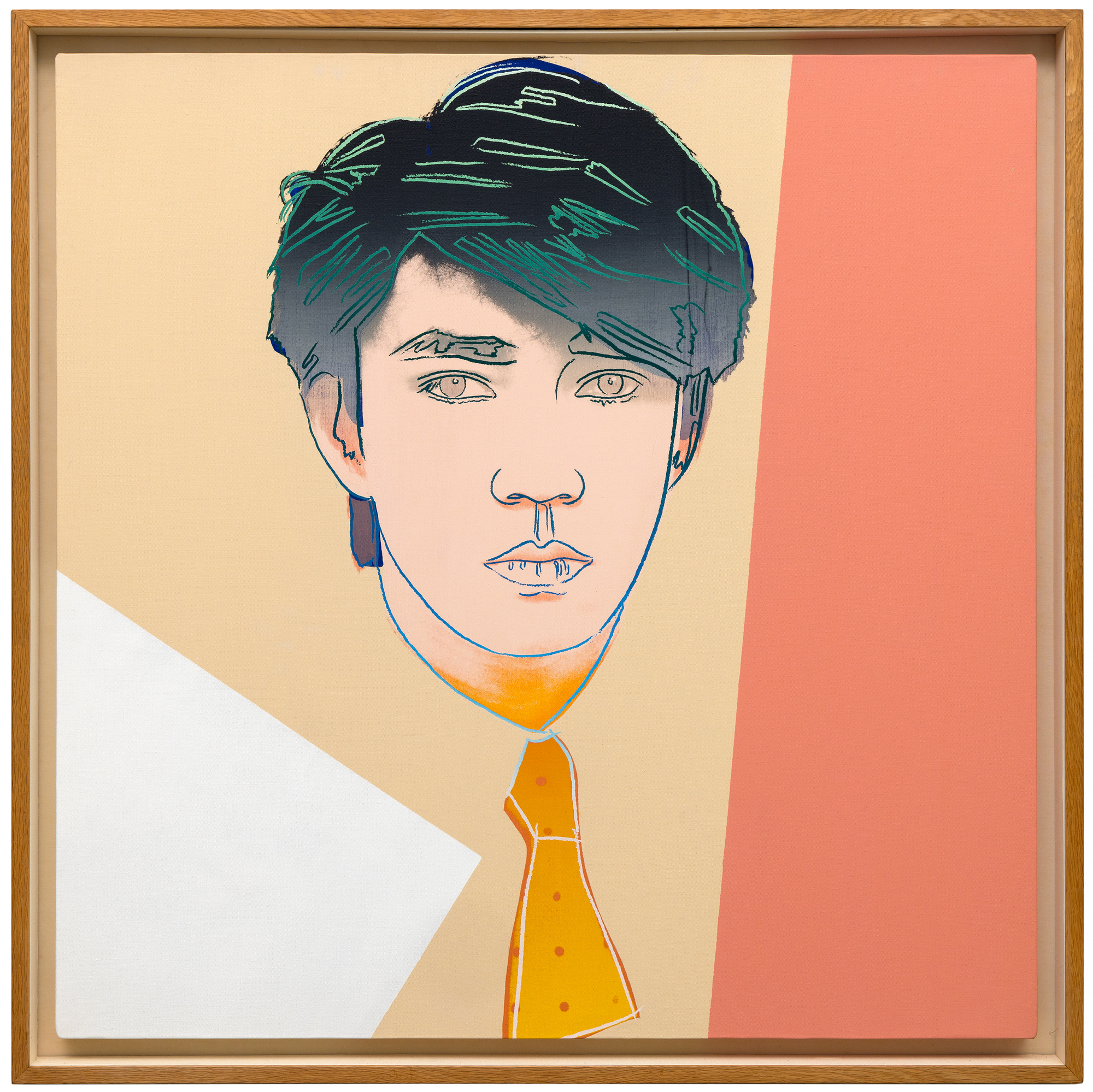
<div><font color=black>Andy Warhol’s “<em>Ryuichi Sakamoto”</em> from 1983, a vibrant 40 by 40 inch canvas, captures the Japanese composer and electronic-music pioneer in the artist’s signature Pop-Art idiom, transforming a celebrity photograph into a study of color, repetition, and glamour. </font></div><br><br><div> </div><br><br><div><font color=black>The composition highlights Sakamoto’s stylized face, rendered with precise silkscreen outlines. His dark, textured hair is set against a peach panel, intersected by a white triangular section. Warhol enhanced the silkscreen process with hand-drawn touches that heighten Sakamoto’s facial features. Blending mechanical and manual techniques gives the portrait both the polish of a silkscreen print and the tactility of a painting.</font></div><br><br><div><font color=black>By the 1980s, Ryuichi Sakamoto was celebrated worldwide as co-founder of Yellow Magic Orchestra and for his pioneering solo work in electronic, orchestral, and film-score composition. By choosing one of the few non-Western, male subjects in Warhol’s roster, he acknowledged Sakamoto’s global influence and beauty, making this portrait especially rare in the artist’s oeuvre. Part of a broader series of celebrity portraits alongside icons like Mick Jagger, Debbie Harry, and Prince, “<em>Ryuichi Sakamoto”</em> exemplifies Warhol’s fascination with fame as commodity, screen-printing public personas to interrogate the intersection of art, commerce, and media.</font></div><br><br><div> </div><br><br><div><font color=black>A lithographic version of this painting is held by the Tate London and the National Galleries of Scotland, affirming its cultural significance.</font></div><br><br><div> </div><br><br><div><font color=black>This work stands as both a vibrant homage to one of music’s most innovative figures and a testament to Warhol’s enduring exploration of image-making. Its bold palette and iconic subject continue to resonate in contemporary collections seeking a nexus of music history, Pop-Art heritage, and cross-cultural dialogue.</font></div> <div><font color=black>Andy Warhol’s “<em>Ryuichi Sakamoto”</em> from 1983, a vibrant 40 by 40 inch canvas, captures the Japanese composer and electronic-music pioneer in the artist’s signature Pop-Art idiom, transforming a celebrity photograph into a study of color, repetition, and glamour. </font></div><br><br><div> </div><br><br><div><font color=black>The composition highlights Sakamoto’s stylized face, rendered with precise silkscreen outlines. His dark, textured hair is set against a peach panel, intersected by a white triangular section. Warhol enhanced the silkscreen process with hand-drawn touches that heighten Sakamoto’s facial features. Blending mechanical and manual techniques gives the portrait both the polish of a silkscreen print and the tactility of a painting.</font></div><br><br><div><font color=black>By the 1980s, Ryuichi Sakamoto was celebrated worldwide as co-founder of Yellow Magic Orchestra and for his pioneering solo work in electronic, orchestral, and film-score composition. By choosing one of the few non-Western, male subjects in Warhol’s roster, he acknowledged Sakamoto’s global influence and beauty, making this portrait especially rare in the artist’s oeuvre. Part of a broader series of celebrity portraits alongside icons like Mick Jagger, Debbie Harry, and Prince, “<em>Ryuichi Sakamoto”</em> exemplifies Warhol’s fascination with fame as commodity, screen-printing public personas to interrogate the intersection of art, commerce, and media.</font></div><br><br><div> </div><br><br><div><font color=black>A lithographic version of this painting is held by the Tate London and the National Galleries of Scotland, affirming its cultural significance.</font></div><br><br><div> </div><br><br><div><font color=black>This work stands as both a vibrant homage to one of music’s most innovative figures and a testament to Warhol’s enduring exploration of image-making. Its bold palette and iconic subject continue to resonate in contemporary collections seeking a nexus of music history, Pop-Art heritage, and cross-cultural dialogue.</font></div> <div><font color=black>Andy Warhol’s “<em>Ryuichi Sakamoto”</em> from 1983, a vibrant 40 by 40 inch canvas, captures the Japanese composer and electronic-music pioneer in the artist’s signature Pop-Art idiom, transforming a celebrity photograph into a study of color, repetition, and glamour. </font></div><br><br><div> </div><br><br><div><font color=black>The composition highlights Sakamoto’s stylized face, rendered with precise silkscreen outlines. His dark, textured hair is set against a peach panel, intersected by a white triangular section. Warhol enhanced the silkscreen process with hand-drawn touches that heighten Sakamoto’s facial features. Blending mechanical and manual techniques gives the portrait both the polish of a silkscreen print and the tactility of a painting.</font></div><br><br><div><font color=black>By the 1980s, Ryuichi Sakamoto was celebrated worldwide as co-founder of Yellow Magic Orchestra and for his pioneering solo work in electronic, orchestral, and film-score composition. By choosing one of the few non-Western, male subjects in Warhol’s roster, he acknowledged Sakamoto’s global influence and beauty, making this portrait especially rare in the artist’s oeuvre. Part of a broader series of celebrity portraits alongside icons like Mick Jagger, Debbie Harry, and Prince, “<em>Ryuichi Sakamoto”</em> exemplifies Warhol’s fascination with fame as commodity, screen-printing public personas to interrogate the intersection of art, commerce, and media.</font></div><br><br><div> </div><br><br><div><font color=black>A lithographic version of this painting is held by the Tate London and the National Galleries of Scotland, affirming its cultural significance.</font></div><br><br><div> </div><br><br><div><font color=black>This work stands as both a vibrant homage to one of music’s most innovative figures and a testament to Warhol’s enduring exploration of image-making. Its bold palette and iconic subject continue to resonate in contemporary collections seeking a nexus of music history, Pop-Art heritage, and cross-cultural dialogue.</font></div> <div><font color=black>Andy Warhol’s “<em>Ryuichi Sakamoto”</em> from 1983, a vibrant 40 by 40 inch canvas, captures the Japanese composer and electronic-music pioneer in the artist’s signature Pop-Art idiom, transforming a celebrity photograph into a study of color, repetition, and glamour. </font></div><br><br><div> </div><br><br><div><font color=black>The composition highlights Sakamoto’s stylized face, rendered with precise silkscreen outlines. His dark, textured hair is set against a peach panel, intersected by a white triangular section. Warhol enhanced the silkscreen process with hand-drawn touches that heighten Sakamoto’s facial features. Blending mechanical and manual techniques gives the portrait both the polish of a silkscreen print and the tactility of a painting.</font></div><br><br><div><font color=black>By the 1980s, Ryuichi Sakamoto was celebrated worldwide as co-founder of Yellow Magic Orchestra and for his pioneering solo work in electronic, orchestral, and film-score composition. By choosing one of the few non-Western, male subjects in Warhol’s roster, he acknowledged Sakamoto’s global influence and beauty, making this portrait especially rare in the artist’s oeuvre. Part of a broader series of celebrity portraits alongside icons like Mick Jagger, Debbie Harry, and Prince, “<em>Ryuichi Sakamoto”</em> exemplifies Warhol’s fascination with fame as commodity, screen-printing public personas to interrogate the intersection of art, commerce, and media.</font></div><br><br><div> </div><br><br><div><font color=black>A lithographic version of this painting is held by the Tate London and the National Galleries of Scotland, affirming its cultural significance.</font></div><br><br><div> </div><br><br><div><font color=black>This work stands as both a vibrant homage to one of music’s most innovative figures and a testament to Warhol’s enduring exploration of image-making. Its bold palette and iconic subject continue to resonate in contemporary collections seeking a nexus of music history, Pop-Art heritage, and cross-cultural dialogue.</font></div> <div><font color=black>Andy Warhol’s “<em>Ryuichi Sakamoto”</em> from 1983, a vibrant 40 by 40 inch canvas, captures the Japanese composer and electronic-music pioneer in the artist’s signature Pop-Art idiom, transforming a celebrity photograph into a study of color, repetition, and glamour. </font></div><br><br><div> </div><br><br><div><font color=black>The composition highlights Sakamoto’s stylized face, rendered with precise silkscreen outlines. His dark, textured hair is set against a peach panel, intersected by a white triangular section. Warhol enhanced the silkscreen process with hand-drawn touches that heighten Sakamoto’s facial features. Blending mechanical and manual techniques gives the portrait both the polish of a silkscreen print and the tactility of a painting.</font></div><br><br><div><font color=black>By the 1980s, Ryuichi Sakamoto was celebrated worldwide as co-founder of Yellow Magic Orchestra and for his pioneering solo work in electronic, orchestral, and film-score composition. By choosing one of the few non-Western, male subjects in Warhol’s roster, he acknowledged Sakamoto’s global influence and beauty, making this portrait especially rare in the artist’s oeuvre. Part of a broader series of celebrity portraits alongside icons like Mick Jagger, Debbie Harry, and Prince, “<em>Ryuichi Sakamoto”</em> exemplifies Warhol’s fascination with fame as commodity, screen-printing public personas to interrogate the intersection of art, commerce, and media.</font></div><br><br><div> </div><br><br><div><font color=black>A lithographic version of this painting is held by the Tate London and the National Galleries of Scotland, affirming its cultural significance.</font></div><br><br><div> </div><br><br><div><font color=black>This work stands as both a vibrant homage to one of music’s most innovative figures and a testament to Warhol’s enduring exploration of image-making. Its bold palette and iconic subject continue to resonate in contemporary collections seeking a nexus of music history, Pop-Art heritage, and cross-cultural dialogue.</font></div> <div><font color=black>Andy Warhol’s “<em>Ryuichi Sakamoto”</em> from 1983, a vibrant 40 by 40 inch canvas, captures the Japanese composer and electronic-music pioneer in the artist’s signature Pop-Art idiom, transforming a celebrity photograph into a study of color, repetition, and glamour. </font></div><br><br><div> </div><br><br><div><font color=black>The composition highlights Sakamoto’s stylized face, rendered with precise silkscreen outlines. His dark, textured hair is set against a peach panel, intersected by a white triangular section. Warhol enhanced the silkscreen process with hand-drawn touches that heighten Sakamoto’s facial features. Blending mechanical and manual techniques gives the portrait both the polish of a silkscreen print and the tactility of a painting.</font></div><br><br><div><font color=black>By the 1980s, Ryuichi Sakamoto was celebrated worldwide as co-founder of Yellow Magic Orchestra and for his pioneering solo work in electronic, orchestral, and film-score composition. By choosing one of the few non-Western, male subjects in Warhol’s roster, he acknowledged Sakamoto’s global influence and beauty, making this portrait especially rare in the artist’s oeuvre. Part of a broader series of celebrity portraits alongside icons like Mick Jagger, Debbie Harry, and Prince, “<em>Ryuichi Sakamoto”</em> exemplifies Warhol’s fascination with fame as commodity, screen-printing public personas to interrogate the intersection of art, commerce, and media.</font></div><br><br><div> </div><br><br><div><font color=black>A lithographic version of this painting is held by the Tate London and the National Galleries of Scotland, affirming its cultural significance.</font></div><br><br><div> </div><br><br><div><font color=black>This work stands as both a vibrant homage to one of music’s most innovative figures and a testament to Warhol’s enduring exploration of image-making. Its bold palette and iconic subject continue to resonate in contemporary collections seeking a nexus of music history, Pop-Art heritage, and cross-cultural dialogue.</font></div> <div><font color=black>Andy Warhol’s “<em>Ryuichi Sakamoto”</em> from 1983, a vibrant 40 by 40 inch canvas, captures the Japanese composer and electronic-music pioneer in the artist’s signature Pop-Art idiom, transforming a celebrity photograph into a study of color, repetition, and glamour. </font></div><br><br><div> </div><br><br><div><font color=black>The composition highlights Sakamoto’s stylized face, rendered with precise silkscreen outlines. His dark, textured hair is set against a peach panel, intersected by a white triangular section. Warhol enhanced the silkscreen process with hand-drawn touches that heighten Sakamoto’s facial features. Blending mechanical and manual techniques gives the portrait both the polish of a silkscreen print and the tactility of a painting.</font></div><br><br><div><font color=black>By the 1980s, Ryuichi Sakamoto was celebrated worldwide as co-founder of Yellow Magic Orchestra and for his pioneering solo work in electronic, orchestral, and film-score composition. By choosing one of the few non-Western, male subjects in Warhol’s roster, he acknowledged Sakamoto’s global influence and beauty, making this portrait especially rare in the artist’s oeuvre. Part of a broader series of celebrity portraits alongside icons like Mick Jagger, Debbie Harry, and Prince, “<em>Ryuichi Sakamoto”</em> exemplifies Warhol’s fascination with fame as commodity, screen-printing public personas to interrogate the intersection of art, commerce, and media.</font></div><br><br><div> </div><br><br><div><font color=black>A lithographic version of this painting is held by the Tate London and the National Galleries of Scotland, affirming its cultural significance.</font></div><br><br><div> </div><br><br><div><font color=black>This work stands as both a vibrant homage to one of music’s most innovative figures and a testament to Warhol’s enduring exploration of image-making. Its bold palette and iconic subject continue to resonate in contemporary collections seeking a nexus of music history, Pop-Art heritage, and cross-cultural dialogue.</font></div> <div><font color=black>Andy Warhol’s “<em>Ryuichi Sakamoto”</em> from 1983, a vibrant 40 by 40 inch canvas, captures the Japanese composer and electronic-music pioneer in the artist’s signature Pop-Art idiom, transforming a celebrity photograph into a study of color, repetition, and glamour. </font></div><br><br><div> </div><br><br><div><font color=black>The composition highlights Sakamoto’s stylized face, rendered with precise silkscreen outlines. His dark, textured hair is set against a peach panel, intersected by a white triangular section. Warhol enhanced the silkscreen process with hand-drawn touches that heighten Sakamoto’s facial features. Blending mechanical and manual techniques gives the portrait both the polish of a silkscreen print and the tactility of a painting.</font></div><br><br><div><font color=black>By the 1980s, Ryuichi Sakamoto was celebrated worldwide as co-founder of Yellow Magic Orchestra and for his pioneering solo work in electronic, orchestral, and film-score composition. By choosing one of the few non-Western, male subjects in Warhol’s roster, he acknowledged Sakamoto’s global influence and beauty, making this portrait especially rare in the artist’s oeuvre. Part of a broader series of celebrity portraits alongside icons like Mick Jagger, Debbie Harry, and Prince, “<em>Ryuichi Sakamoto”</em> exemplifies Warhol’s fascination with fame as commodity, screen-printing public personas to interrogate the intersection of art, commerce, and media.</font></div><br><br><div> </div><br><br><div><font color=black>A lithographic version of this painting is held by the Tate London and the National Galleries of Scotland, affirming its cultural significance.</font></div><br><br><div> </div><br><br><div><font color=black>This work stands as both a vibrant homage to one of music’s most innovative figures and a testament to Warhol’s enduring exploration of image-making. Its bold palette and iconic subject continue to resonate in contemporary collections seeking a nexus of music history, Pop-Art heritage, and cross-cultural dialogue.</font></div> <div><font color=black>Andy Warhol’s “<em>Ryuichi Sakamoto”</em> from 1983, a vibrant 40 by 40 inch canvas, captures the Japanese composer and electronic-music pioneer in the artist’s signature Pop-Art idiom, transforming a celebrity photograph into a study of color, repetition, and glamour. </font></div><br><br><div> </div><br><br><div><font color=black>The composition highlights Sakamoto’s stylized face, rendered with precise silkscreen outlines. His dark, textured hair is set against a peach panel, intersected by a white triangular section. Warhol enhanced the silkscreen process with hand-drawn touches that heighten Sakamoto’s facial features. Blending mechanical and manual techniques gives the portrait both the polish of a silkscreen print and the tactility of a painting.</font></div><br><br><div><font color=black>By the 1980s, Ryuichi Sakamoto was celebrated worldwide as co-founder of Yellow Magic Orchestra and for his pioneering solo work in electronic, orchestral, and film-score composition. By choosing one of the few non-Western, male subjects in Warhol’s roster, he acknowledged Sakamoto’s global influence and beauty, making this portrait especially rare in the artist’s oeuvre. Part of a broader series of celebrity portraits alongside icons like Mick Jagger, Debbie Harry, and Prince, “<em>Ryuichi Sakamoto”</em> exemplifies Warhol’s fascination with fame as commodity, screen-printing public personas to interrogate the intersection of art, commerce, and media.</font></div><br><br><div> </div><br><br><div><font color=black>A lithographic version of this painting is held by the Tate London and the National Galleries of Scotland, affirming its cultural significance.</font></div><br><br><div> </div><br><br><div><font color=black>This work stands as both a vibrant homage to one of music’s most innovative figures and a testament to Warhol’s enduring exploration of image-making. Its bold palette and iconic subject continue to resonate in contemporary collections seeking a nexus of music history, Pop-Art heritage, and cross-cultural dialogue.</font></div> <div><font color=black>Andy Warhol’s “<em>Ryuichi Sakamoto”</em> from 1983, a vibrant 40 by 40 inch canvas, captures the Japanese composer and electronic-music pioneer in the artist’s signature Pop-Art idiom, transforming a celebrity photograph into a study of color, repetition, and glamour. </font></div><br><br><div> </div><br><br><div><font color=black>The composition highlights Sakamoto’s stylized face, rendered with precise silkscreen outlines. His dark, textured hair is set against a peach panel, intersected by a white triangular section. Warhol enhanced the silkscreen process with hand-drawn touches that heighten Sakamoto’s facial features. Blending mechanical and manual techniques gives the portrait both the polish of a silkscreen print and the tactility of a painting.</font></div><br><br><div><font color=black>By the 1980s, Ryuichi Sakamoto was celebrated worldwide as co-founder of Yellow Magic Orchestra and for his pioneering solo work in electronic, orchestral, and film-score composition. By choosing one of the few non-Western, male subjects in Warhol’s roster, he acknowledged Sakamoto’s global influence and beauty, making this portrait especially rare in the artist’s oeuvre. Part of a broader series of celebrity portraits alongside icons like Mick Jagger, Debbie Harry, and Prince, “<em>Ryuichi Sakamoto”</em> exemplifies Warhol’s fascination with fame as commodity, screen-printing public personas to interrogate the intersection of art, commerce, and media.</font></div><br><br><div> </div><br><br><div><font color=black>A lithographic version of this painting is held by the Tate London and the National Galleries of Scotland, affirming its cultural significance.</font></div><br><br><div> </div><br><br><div><font color=black>This work stands as both a vibrant homage to one of music’s most innovative figures and a testament to Warhol’s enduring exploration of image-making. Its bold palette and iconic subject continue to resonate in contemporary collections seeking a nexus of music history, Pop-Art heritage, and cross-cultural dialogue.</font></div>
坂本龍一198339 3/4 x 39 3/4 x 1 1/2 in.(100.97 x 100.97 x 3.81 cm)アクリル、シルクスクリーン、キャンバス
出所
協和発酵キリン(日本
個人蔵
マレット・インターナショナル、東京、2017年7月13日、ロット230
プライベートコレクション
サザビーズ・ニューヨーク2023年9月28日(木)、ロット245
プライベートコレクション
アンディ・ウォーホルの1983年作「坂本龍一」は、40×40インチの鮮やかなキャンバスに、日本の作曲家であり電子音楽の先駆者を、アーティスト特有のポップアート様式で捉えた作品である。有名人の写真を色彩、反復、華やかさの研究へと昇華させている。


この構図は、精密なシルクスクリーン輪郭で表現された坂本龍一の様式化された顔を際立たせている。彼の黒く質感のある髪は桃色のパネルを背景に、白い三角形の領域と交差している。ウォーホルは手描きによるタッチでシルクスクリーン技法を強化し、坂本の顔の特徴を際立たせている。機械的技法と手作業技法の融合により、この肖像画はシルクスクリーン印刷の洗練さと絵画の触覚性を併せ持つ。


1980年代までに、坂本龍一はイエロー・マジック・オーケストラの共同創設者としての名声と、電子音楽・オーケストラ・映画音楽における先駆的なソロ作品で世界的に称賛されていた。ウォーホルが制作した肖像画の中で数少ない非西洋人男性被写体を選んだことは、坂本の世界的な影響力と美しさを認めた証であり、この肖像画をアーティストの作品群の中でも特に稀有なものとしている。 ミック・ジャガー、デビー・ハリー、プリンスといったアイコンたちと共に制作された著名人肖像シリーズの一環である「坂本龍一」は、名声を商品として捉えるウォーホルの関心、そして芸術・商業・メディアの交差点を問うために公の人物をシルクスクリーンで描く手法を体現している。


この絵画のリトグラフ版はテート・ロンドンとスコットランド国立美術館が所蔵しており、その文化的意義を裏付けている。


本作品は、音楽界で最も革新的な人物への鮮烈なオマージュであると同時に、ウォーホルが追求し続けたイメージ制作の証でもある。その大胆な色彩と象徴的な主題は、音楽史・ポップアートの遺産・異文化対話の接点を求める現代コレクションにおいて、今なお共鳴を続けている。
お 問い合わせ