GEORGIA O'KEEFFE (1887-1986)

$7,950,000

 
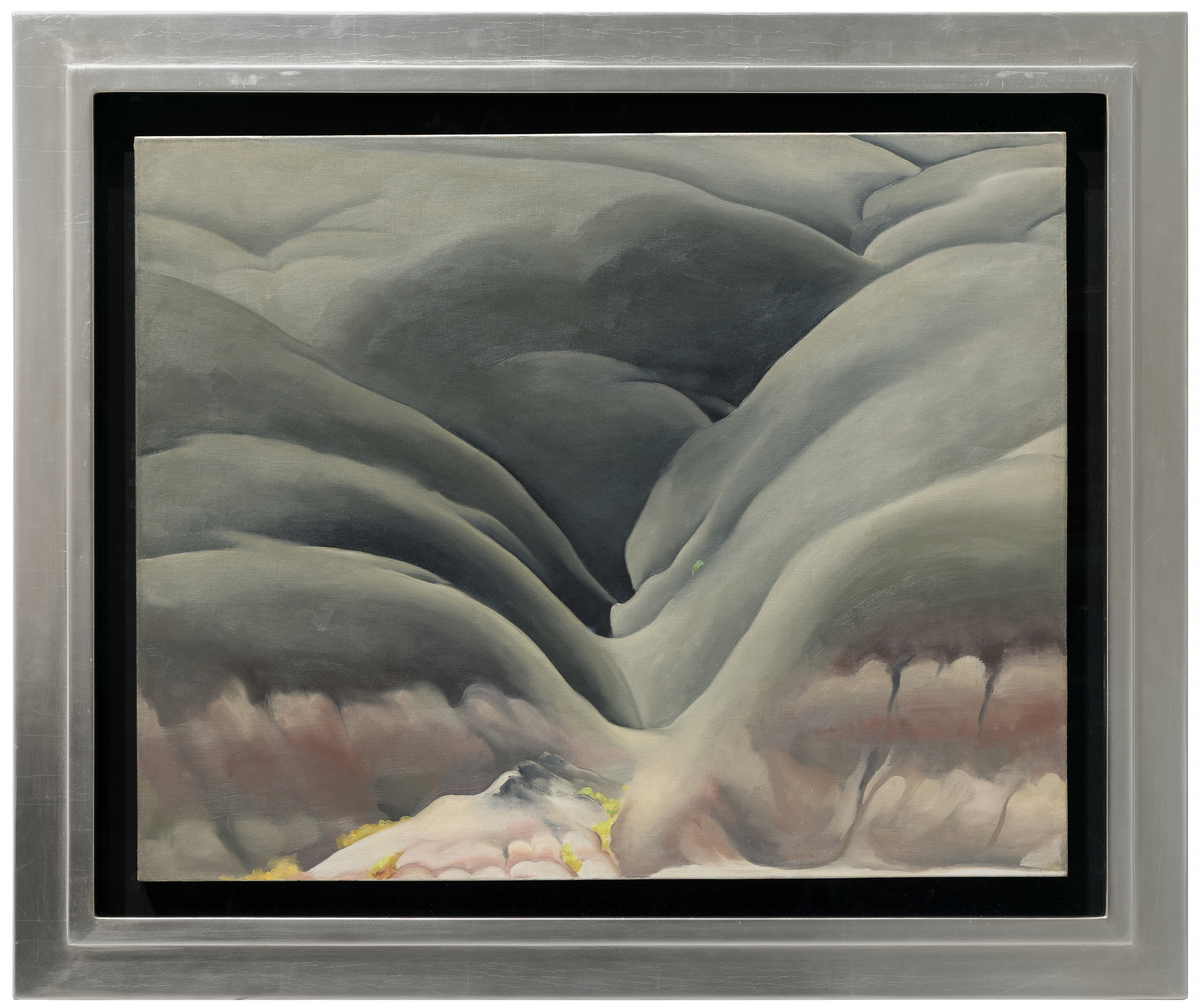
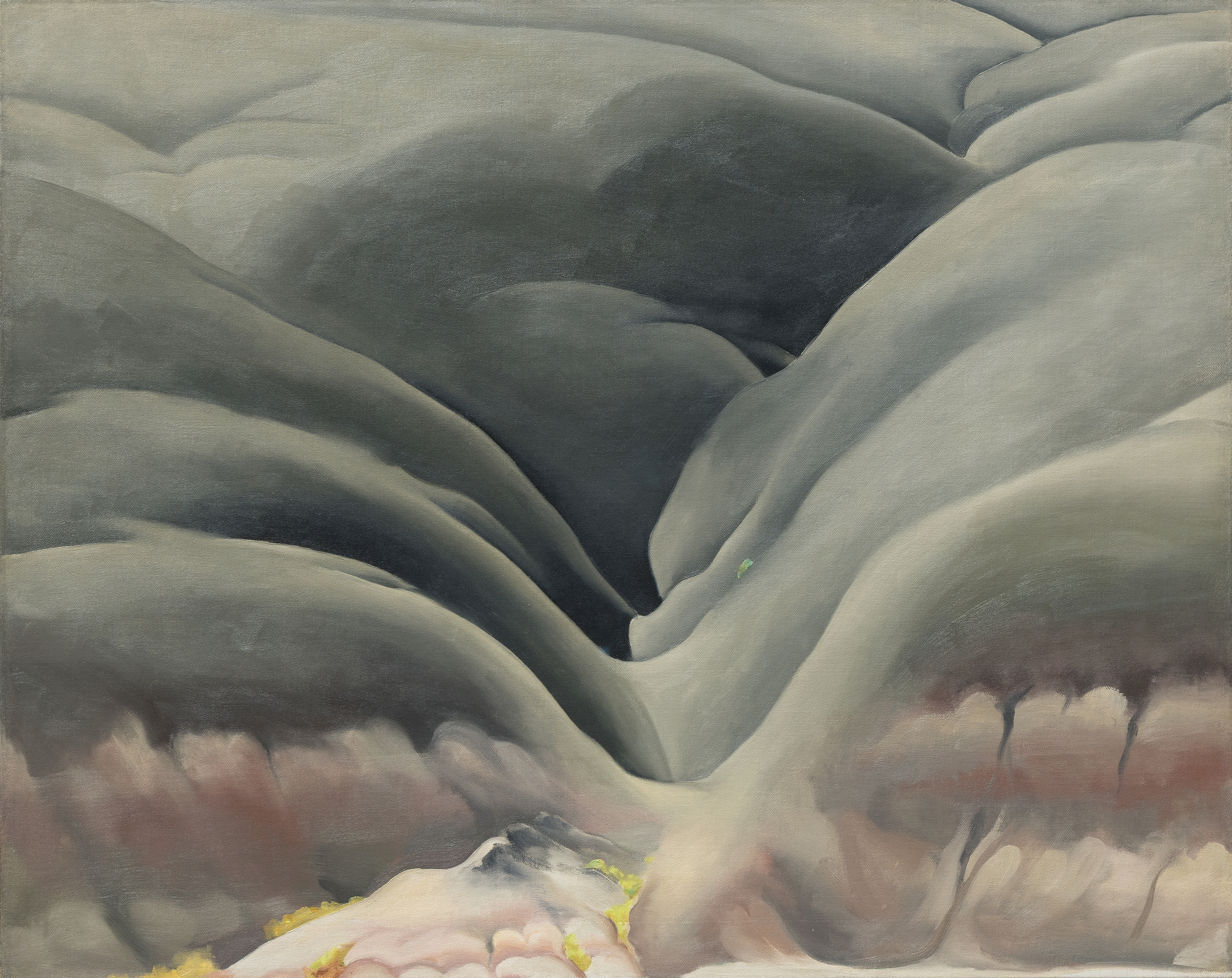
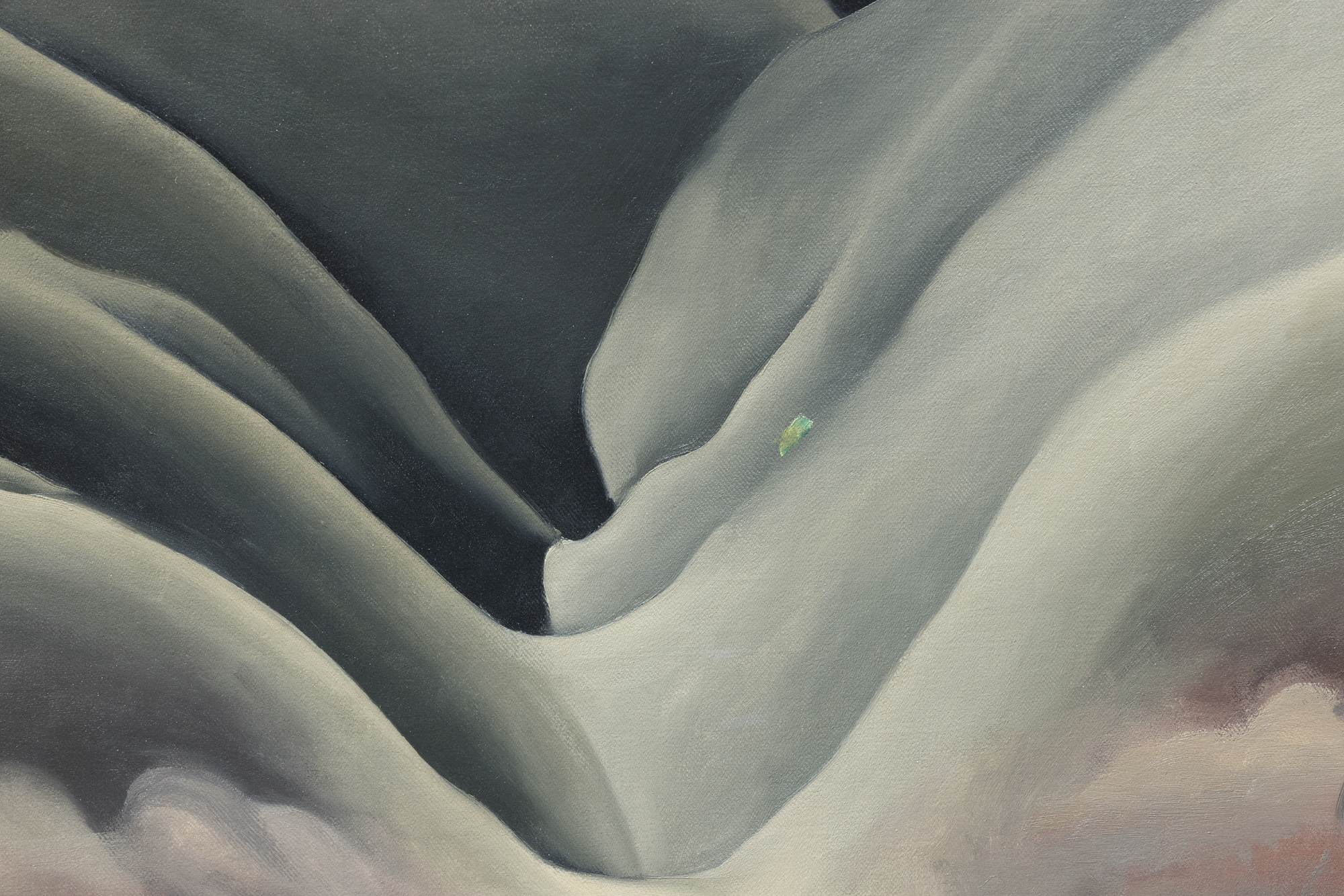
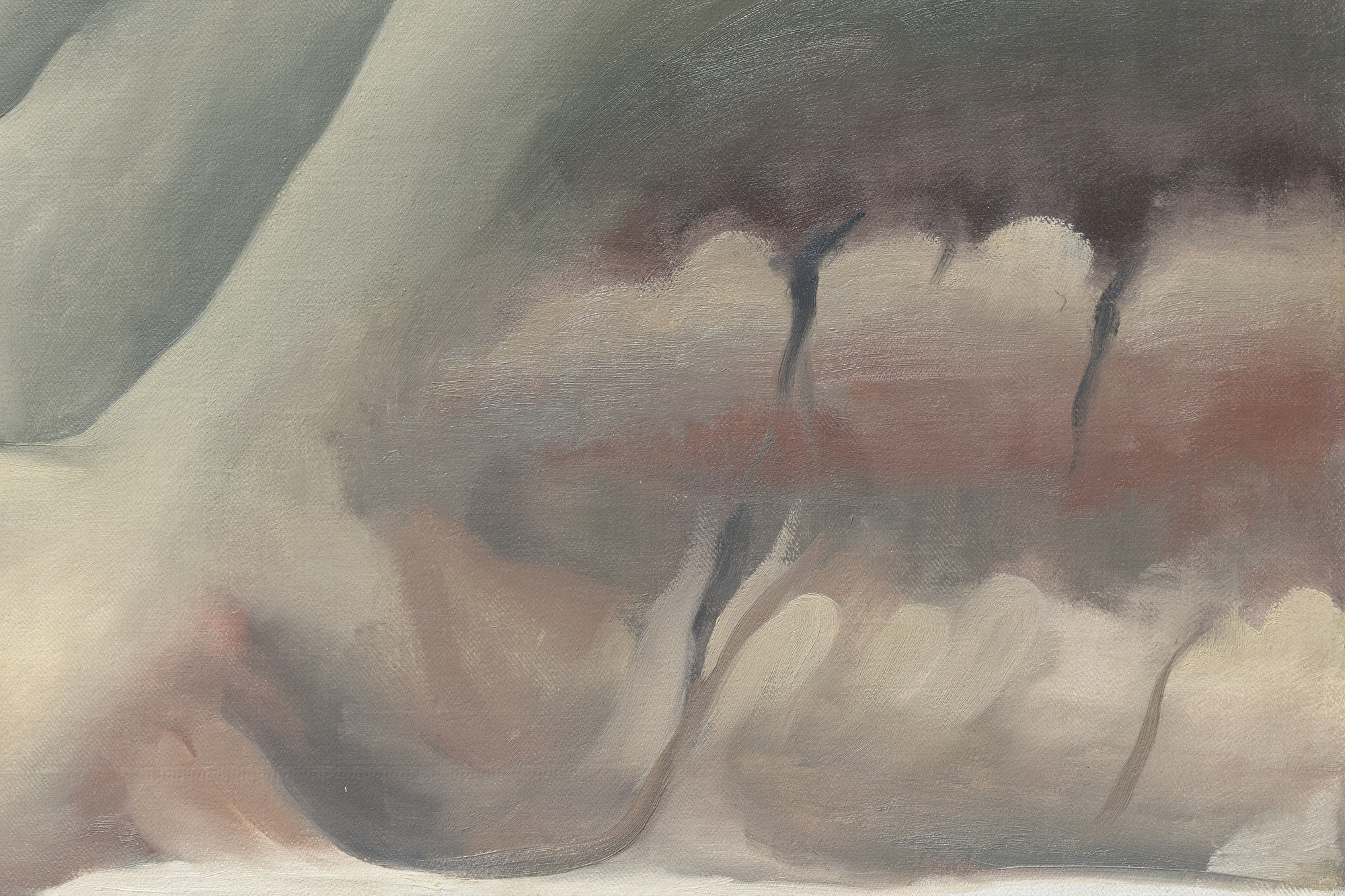
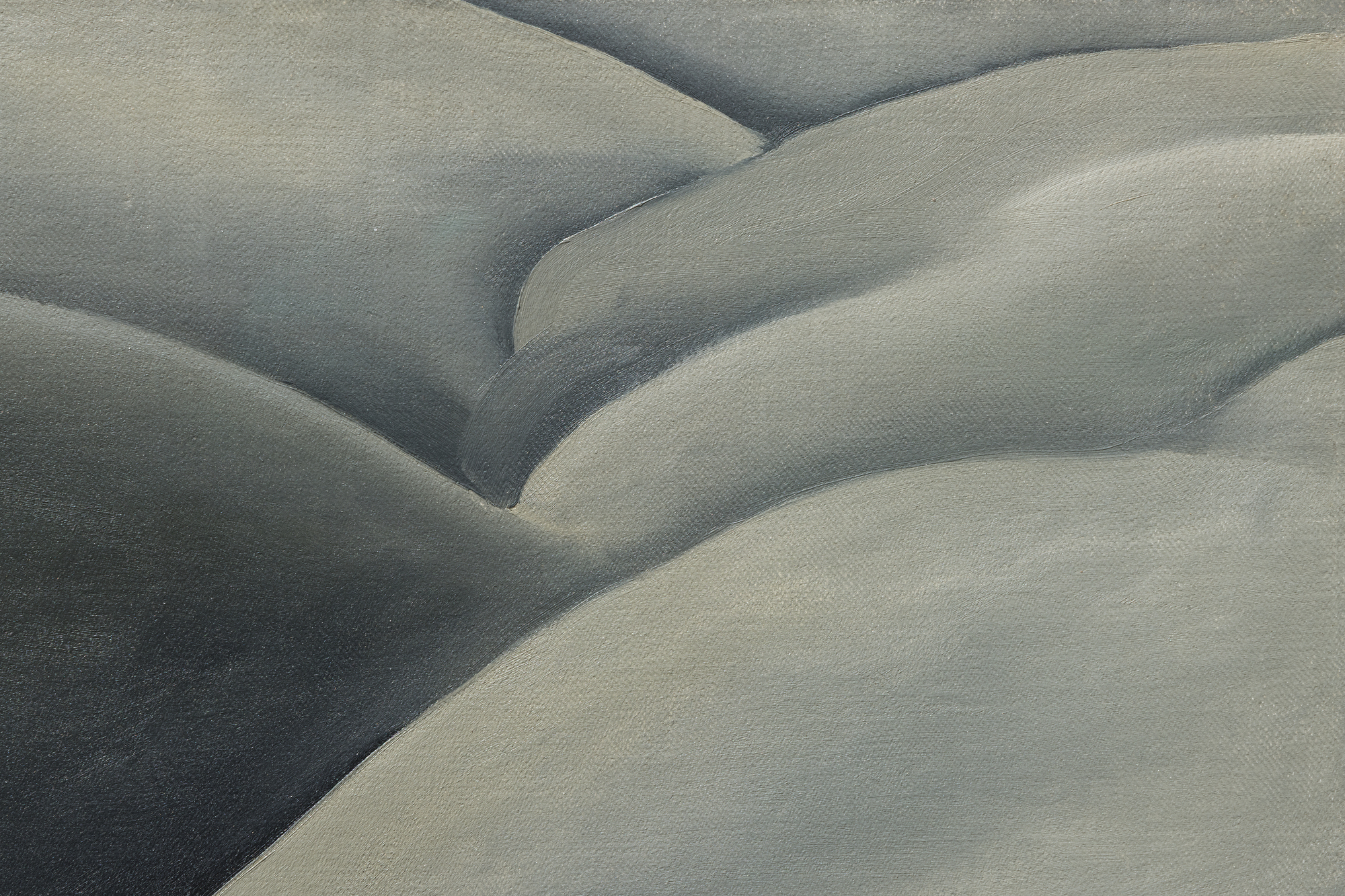
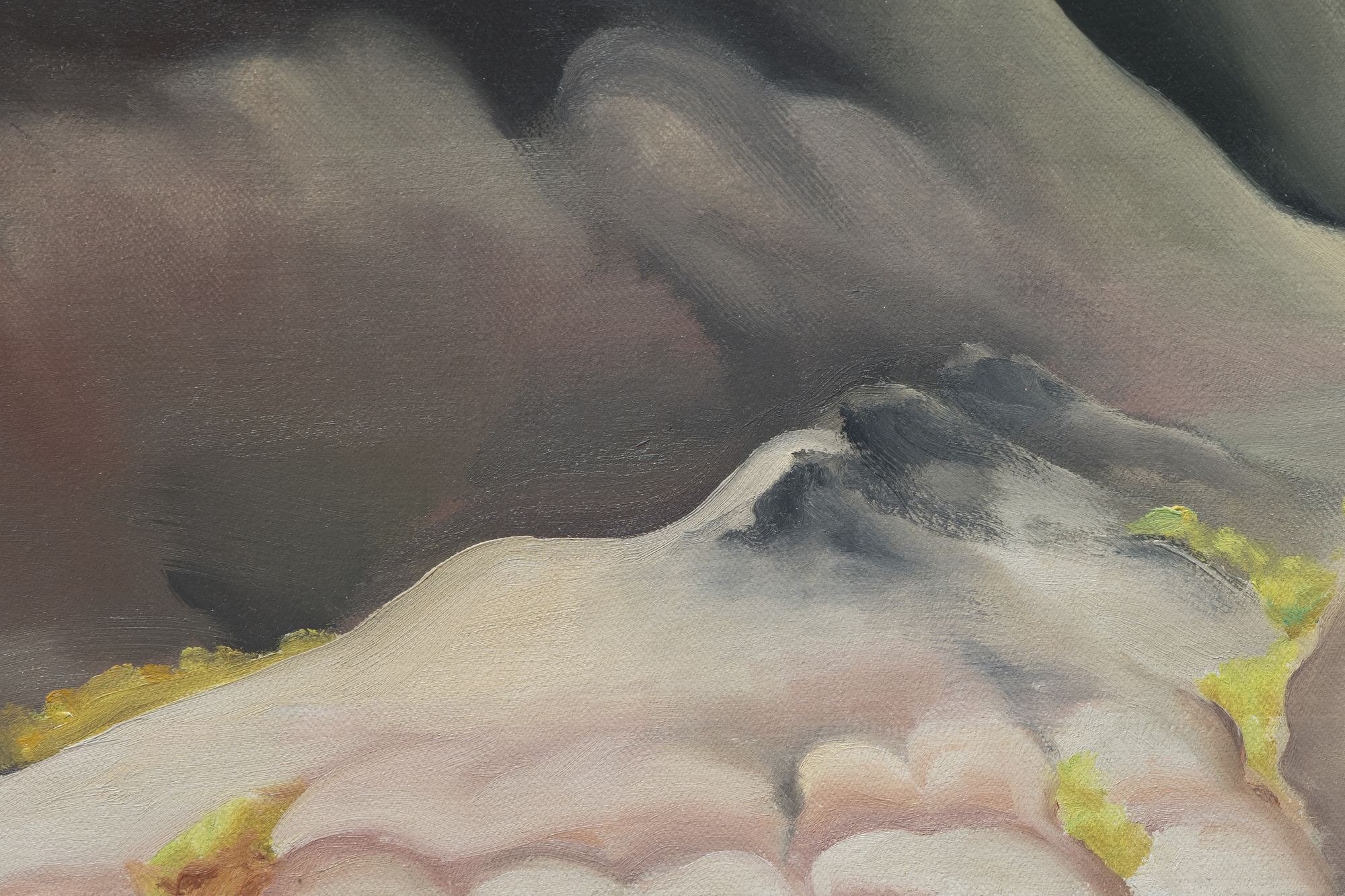
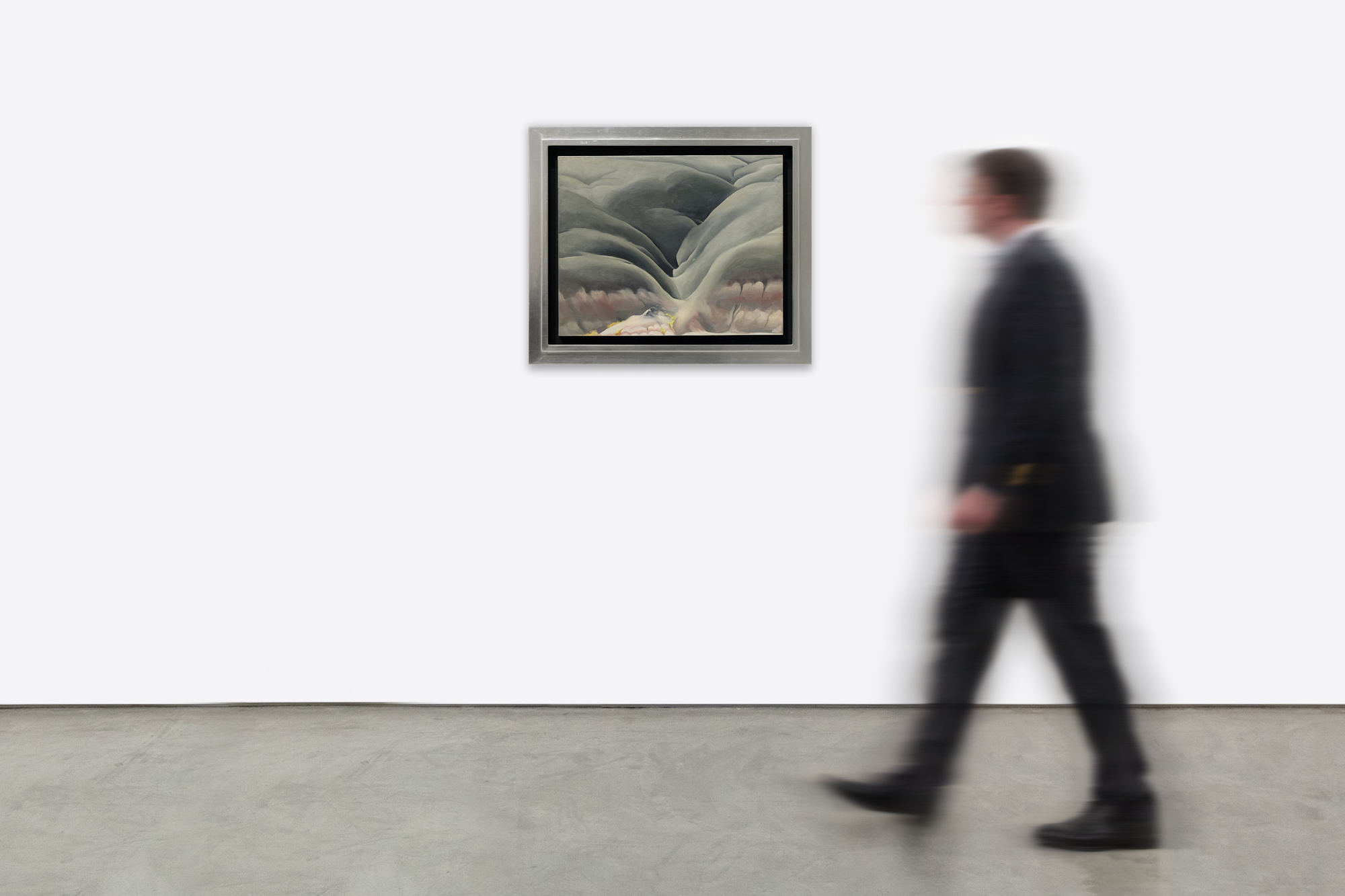
<div>Georgia O’Keeffe’s <em>Black Place II</em> (1945) belongs to one of the most profound and austere series of her career, inspired by repeated journeys to the Bisti Badlands, a remote, otherworldly area of northwestern New Mexico that she called the Black Place. Deeply compelled by this landscape, O’Keeffe often camped there so she could study its shifting forms and tonal subtleties at different hours of the day. In this work, she reduces the scene to its essentials: two massive hills pressing together, no visible horizon, and a composition defined by gravity, stillness, and quiet monumentality. The sweeping, interlocking forms create a sense of scale that feels both intimate and immense, evoking a landscape experienced as presence rather than panorama. </div><br><br><div> </div><br><br><div>Works from the Black Place series are exceptionally rare. Of the fourteen canvases O’Keeffe painted, only four remain in private hands; the remainder are held by major institutions including The Metropolitan Museum of Art, SFMOMA, and the Art Institute of Chicago. As a result, opportunities to encounter a work from this group outside of museum collections are exceedingly uncommon. </div><br><br><div> </div><br><br><div><em>Black Place II </em>has an illustrious lineage, from its earliest days in the holdings of Alfred Stieglitz’s famous New York gallery, An American Place, to the noted Philadelphia philanthropist and collector Daniel Dietrich, to the collection of Jan T. and Marica Vilcek. The painting’s legacy is further underscored by its unusually long institutional life. It was shown as early as 1946 at Stieglitz’s An American Place, and has continued to appear in major institutional retrospectives, including exhibitions at the Centre Pompidou and, most recently, the Museum of Fine Arts, Boston. This sustained public and scholarly attention has firmly established the importance of the Black Place paintings within O’Keeffe’s oeuvre. </div> <div>Georgia O’Keeffe’s <em>Black Place II</em> (1945) belongs to one of the most profound and austere series of her career, inspired by repeated journeys to the Bisti Badlands, a remote, otherworldly area of northwestern New Mexico that she called the Black Place. Deeply compelled by this landscape, O’Keeffe often camped there so she could study its shifting forms and tonal subtleties at different hours of the day. In this work, she reduces the scene to its essentials: two massive hills pressing together, no visible horizon, and a composition defined by gravity, stillness, and quiet monumentality. The sweeping, interlocking forms create a sense of scale that feels both intimate and immense, evoking a landscape experienced as presence rather than panorama. </div><br><br><div> </div><br><br><div>Works from the Black Place series are exceptionally rare. Of the fourteen canvases O’Keeffe painted, only four remain in private hands; the remainder are held by major institutions including The Metropolitan Museum of Art, SFMOMA, and the Art Institute of Chicago. As a result, opportunities to encounter a work from this group outside of museum collections are exceedingly uncommon. </div><br><br><div> </div><br><br><div><em>Black Place II </em>has an illustrious lineage, from its earliest days in the holdings of Alfred Stieglitz’s famous New York gallery, An American Place, to the noted Philadelphia philanthropist and collector Daniel Dietrich, to the collection of Jan T. and Marica Vilcek. The painting’s legacy is further underscored by its unusually long institutional life. It was shown as early as 1946 at Stieglitz’s An American Place, and has continued to appear in major institutional retrospectives, including exhibitions at the Centre Pompidou and, most recently, the Museum of Fine Arts, Boston. This sustained public and scholarly attention has firmly established the importance of the Black Place paintings within O’Keeffe’s oeuvre. </div> <div>Georgia O’Keeffe’s <em>Black Place II</em> (1945) belongs to one of the most profound and austere series of her career, inspired by repeated journeys to the Bisti Badlands, a remote, otherworldly area of northwestern New Mexico that she called the Black Place. Deeply compelled by this landscape, O’Keeffe often camped there so she could study its shifting forms and tonal subtleties at different hours of the day. In this work, she reduces the scene to its essentials: two massive hills pressing together, no visible horizon, and a composition defined by gravity, stillness, and quiet monumentality. The sweeping, interlocking forms create a sense of scale that feels both intimate and immense, evoking a landscape experienced as presence rather than panorama. </div><br><br><div> </div><br><br><div>Works from the Black Place series are exceptionally rare. Of the fourteen canvases O’Keeffe painted, only four remain in private hands; the remainder are held by major institutions including The Metropolitan Museum of Art, SFMOMA, and the Art Institute of Chicago. As a result, opportunities to encounter a work from this group outside of museum collections are exceedingly uncommon. </div><br><br><div> </div><br><br><div><em>Black Place II </em>has an illustrious lineage, from its earliest days in the holdings of Alfred Stieglitz’s famous New York gallery, An American Place, to the noted Philadelphia philanthropist and collector Daniel Dietrich, to the collection of Jan T. and Marica Vilcek. The painting’s legacy is further underscored by its unusually long institutional life. It was shown as early as 1946 at Stieglitz’s An American Place, and has continued to appear in major institutional retrospectives, including exhibitions at the Centre Pompidou and, most recently, the Museum of Fine Arts, Boston. This sustained public and scholarly attention has firmly established the importance of the Black Place paintings within O’Keeffe’s oeuvre. </div> <div>Georgia O’Keeffe’s <em>Black Place II</em> (1945) belongs to one of the most profound and austere series of her career, inspired by repeated journeys to the Bisti Badlands, a remote, otherworldly area of northwestern New Mexico that she called the Black Place. Deeply compelled by this landscape, O’Keeffe often camped there so she could study its shifting forms and tonal subtleties at different hours of the day. In this work, she reduces the scene to its essentials: two massive hills pressing together, no visible horizon, and a composition defined by gravity, stillness, and quiet monumentality. The sweeping, interlocking forms create a sense of scale that feels both intimate and immense, evoking a landscape experienced as presence rather than panorama. </div><br><br><div> </div><br><br><div>Works from the Black Place series are exceptionally rare. Of the fourteen canvases O’Keeffe painted, only four remain in private hands; the remainder are held by major institutions including The Metropolitan Museum of Art, SFMOMA, and the Art Institute of Chicago. As a result, opportunities to encounter a work from this group outside of museum collections are exceedingly uncommon. </div><br><br><div> </div><br><br><div><em>Black Place II </em>has an illustrious lineage, from its earliest days in the holdings of Alfred Stieglitz’s famous New York gallery, An American Place, to the noted Philadelphia philanthropist and collector Daniel Dietrich, to the collection of Jan T. and Marica Vilcek. The painting’s legacy is further underscored by its unusually long institutional life. It was shown as early as 1946 at Stieglitz’s An American Place, and has continued to appear in major institutional retrospectives, including exhibitions at the Centre Pompidou and, most recently, the Museum of Fine Arts, Boston. This sustained public and scholarly attention has firmly established the importance of the Black Place paintings within O’Keeffe’s oeuvre. </div> <div>Georgia O’Keeffe’s <em>Black Place II</em> (1945) belongs to one of the most profound and austere series of her career, inspired by repeated journeys to the Bisti Badlands, a remote, otherworldly area of northwestern New Mexico that she called the Black Place. Deeply compelled by this landscape, O’Keeffe often camped there so she could study its shifting forms and tonal subtleties at different hours of the day. In this work, she reduces the scene to its essentials: two massive hills pressing together, no visible horizon, and a composition defined by gravity, stillness, and quiet monumentality. The sweeping, interlocking forms create a sense of scale that feels both intimate and immense, evoking a landscape experienced as presence rather than panorama. </div><br><br><div> </div><br><br><div>Works from the Black Place series are exceptionally rare. Of the fourteen canvases O’Keeffe painted, only four remain in private hands; the remainder are held by major institutions including The Metropolitan Museum of Art, SFMOMA, and the Art Institute of Chicago. As a result, opportunities to encounter a work from this group outside of museum collections are exceedingly uncommon. </div><br><br><div> </div><br><br><div><em>Black Place II </em>has an illustrious lineage, from its earliest days in the holdings of Alfred Stieglitz’s famous New York gallery, An American Place, to the noted Philadelphia philanthropist and collector Daniel Dietrich, to the collection of Jan T. and Marica Vilcek. The painting’s legacy is further underscored by its unusually long institutional life. It was shown as early as 1946 at Stieglitz’s An American Place, and has continued to appear in major institutional retrospectives, including exhibitions at the Centre Pompidou and, most recently, the Museum of Fine Arts, Boston. This sustained public and scholarly attention has firmly established the importance of the Black Place paintings within O’Keeffe’s oeuvre. </div> <div>Georgia O’Keeffe’s <em>Black Place II</em> (1945) belongs to one of the most profound and austere series of her career, inspired by repeated journeys to the Bisti Badlands, a remote, otherworldly area of northwestern New Mexico that she called the Black Place. Deeply compelled by this landscape, O’Keeffe often camped there so she could study its shifting forms and tonal subtleties at different hours of the day. In this work, she reduces the scene to its essentials: two massive hills pressing together, no visible horizon, and a composition defined by gravity, stillness, and quiet monumentality. The sweeping, interlocking forms create a sense of scale that feels both intimate and immense, evoking a landscape experienced as presence rather than panorama. </div><br><br><div> </div><br><br><div>Works from the Black Place series are exceptionally rare. Of the fourteen canvases O’Keeffe painted, only four remain in private hands; the remainder are held by major institutions including The Metropolitan Museum of Art, SFMOMA, and the Art Institute of Chicago. As a result, opportunities to encounter a work from this group outside of museum collections are exceedingly uncommon. </div><br><br><div> </div><br><br><div><em>Black Place II </em>has an illustrious lineage, from its earliest days in the holdings of Alfred Stieglitz’s famous New York gallery, An American Place, to the noted Philadelphia philanthropist and collector Daniel Dietrich, to the collection of Jan T. and Marica Vilcek. The painting’s legacy is further underscored by its unusually long institutional life. It was shown as early as 1946 at Stieglitz’s An American Place, and has continued to appear in major institutional retrospectives, including exhibitions at the Centre Pompidou and, most recently, the Museum of Fine Arts, Boston. This sustained public and scholarly attention has firmly established the importance of the Black Place paintings within O’Keeffe’s oeuvre. </div> <div>Georgia O’Keeffe’s <em>Black Place II</em> (1945) belongs to one of the most profound and austere series of her career, inspired by repeated journeys to the Bisti Badlands, a remote, otherworldly area of northwestern New Mexico that she called the Black Place. Deeply compelled by this landscape, O’Keeffe often camped there so she could study its shifting forms and tonal subtleties at different hours of the day. In this work, she reduces the scene to its essentials: two massive hills pressing together, no visible horizon, and a composition defined by gravity, stillness, and quiet monumentality. The sweeping, interlocking forms create a sense of scale that feels both intimate and immense, evoking a landscape experienced as presence rather than panorama. </div><br><br><div> </div><br><br><div>Works from the Black Place series are exceptionally rare. Of the fourteen canvases O’Keeffe painted, only four remain in private hands; the remainder are held by major institutions including The Metropolitan Museum of Art, SFMOMA, and the Art Institute of Chicago. As a result, opportunities to encounter a work from this group outside of museum collections are exceedingly uncommon. </div><br><br><div> </div><br><br><div><em>Black Place II </em>has an illustrious lineage, from its earliest days in the holdings of Alfred Stieglitz’s famous New York gallery, An American Place, to the noted Philadelphia philanthropist and collector Daniel Dietrich, to the collection of Jan T. and Marica Vilcek. The painting’s legacy is further underscored by its unusually long institutional life. It was shown as early as 1946 at Stieglitz’s An American Place, and has continued to appear in major institutional retrospectives, including exhibitions at the Centre Pompidou and, most recently, the Museum of Fine Arts, Boston. This sustained public and scholarly attention has firmly established the importance of the Black Place paintings within O’Keeffe’s oeuvre. </div> <div>Georgia O’Keeffe’s <em>Black Place II</em> (1945) belongs to one of the most profound and austere series of her career, inspired by repeated journeys to the Bisti Badlands, a remote, otherworldly area of northwestern New Mexico that she called the Black Place. Deeply compelled by this landscape, O’Keeffe often camped there so she could study its shifting forms and tonal subtleties at different hours of the day. In this work, she reduces the scene to its essentials: two massive hills pressing together, no visible horizon, and a composition defined by gravity, stillness, and quiet monumentality. The sweeping, interlocking forms create a sense of scale that feels both intimate and immense, evoking a landscape experienced as presence rather than panorama. </div><br><br><div> </div><br><br><div>Works from the Black Place series are exceptionally rare. Of the fourteen canvases O’Keeffe painted, only four remain in private hands; the remainder are held by major institutions including The Metropolitan Museum of Art, SFMOMA, and the Art Institute of Chicago. As a result, opportunities to encounter a work from this group outside of museum collections are exceedingly uncommon. </div><br><br><div> </div><br><br><div><em>Black Place II </em>has an illustrious lineage, from its earliest days in the holdings of Alfred Stieglitz’s famous New York gallery, An American Place, to the noted Philadelphia philanthropist and collector Daniel Dietrich, to the collection of Jan T. and Marica Vilcek. The painting’s legacy is further underscored by its unusually long institutional life. It was shown as early as 1946 at Stieglitz’s An American Place, and has continued to appear in major institutional retrospectives, including exhibitions at the Centre Pompidou and, most recently, the Museum of Fine Arts, Boston. This sustained public and scholarly attention has firmly established the importance of the Black Place paintings within O’Keeffe’s oeuvre. </div> <div>Georgia O’Keeffe’s <em>Black Place II</em> (1945) belongs to one of the most profound and austere series of her career, inspired by repeated journeys to the Bisti Badlands, a remote, otherworldly area of northwestern New Mexico that she called the Black Place. Deeply compelled by this landscape, O’Keeffe often camped there so she could study its shifting forms and tonal subtleties at different hours of the day. In this work, she reduces the scene to its essentials: two massive hills pressing together, no visible horizon, and a composition defined by gravity, stillness, and quiet monumentality. The sweeping, interlocking forms create a sense of scale that feels both intimate and immense, evoking a landscape experienced as presence rather than panorama. </div><br><br><div> </div><br><br><div>Works from the Black Place series are exceptionally rare. Of the fourteen canvases O’Keeffe painted, only four remain in private hands; the remainder are held by major institutions including The Metropolitan Museum of Art, SFMOMA, and the Art Institute of Chicago. As a result, opportunities to encounter a work from this group outside of museum collections are exceedingly uncommon. </div><br><br><div> </div><br><br><div><em>Black Place II </em>has an illustrious lineage, from its earliest days in the holdings of Alfred Stieglitz’s famous New York gallery, An American Place, to the noted Philadelphia philanthropist and collector Daniel Dietrich, to the collection of Jan T. and Marica Vilcek. The painting’s legacy is further underscored by its unusually long institutional life. It was shown as early as 1946 at Stieglitz’s An American Place, and has continued to appear in major institutional retrospectives, including exhibitions at the Centre Pompidou and, most recently, the Museum of Fine Arts, Boston. This sustained public and scholarly attention has firmly established the importance of the Black Place paintings within O’Keeffe’s oeuvre. </div> <div>Georgia O’Keeffe’s <em>Black Place II</em> (1945) belongs to one of the most profound and austere series of her career, inspired by repeated journeys to the Bisti Badlands, a remote, otherworldly area of northwestern New Mexico that she called the Black Place. Deeply compelled by this landscape, O’Keeffe often camped there so she could study its shifting forms and tonal subtleties at different hours of the day. In this work, she reduces the scene to its essentials: two massive hills pressing together, no visible horizon, and a composition defined by gravity, stillness, and quiet monumentality. The sweeping, interlocking forms create a sense of scale that feels both intimate and immense, evoking a landscape experienced as presence rather than panorama. </div><br><br><div> </div><br><br><div>Works from the Black Place series are exceptionally rare. Of the fourteen canvases O’Keeffe painted, only four remain in private hands; the remainder are held by major institutions including The Metropolitan Museum of Art, SFMOMA, and the Art Institute of Chicago. As a result, opportunities to encounter a work from this group outside of museum collections are exceedingly uncommon. </div><br><br><div> </div><br><br><div><em>Black Place II </em>has an illustrious lineage, from its earliest days in the holdings of Alfred Stieglitz’s famous New York gallery, An American Place, to the noted Philadelphia philanthropist and collector Daniel Dietrich, to the collection of Jan T. and Marica Vilcek. The painting’s legacy is further underscored by its unusually long institutional life. It was shown as early as 1946 at Stieglitz’s An American Place, and has continued to appear in major institutional retrospectives, including exhibitions at the Centre Pompidou and, most recently, the Museum of Fine Arts, Boston. This sustained public and scholarly attention has firmly established the importance of the Black Place paintings within O’Keeffe’s oeuvre. </div>
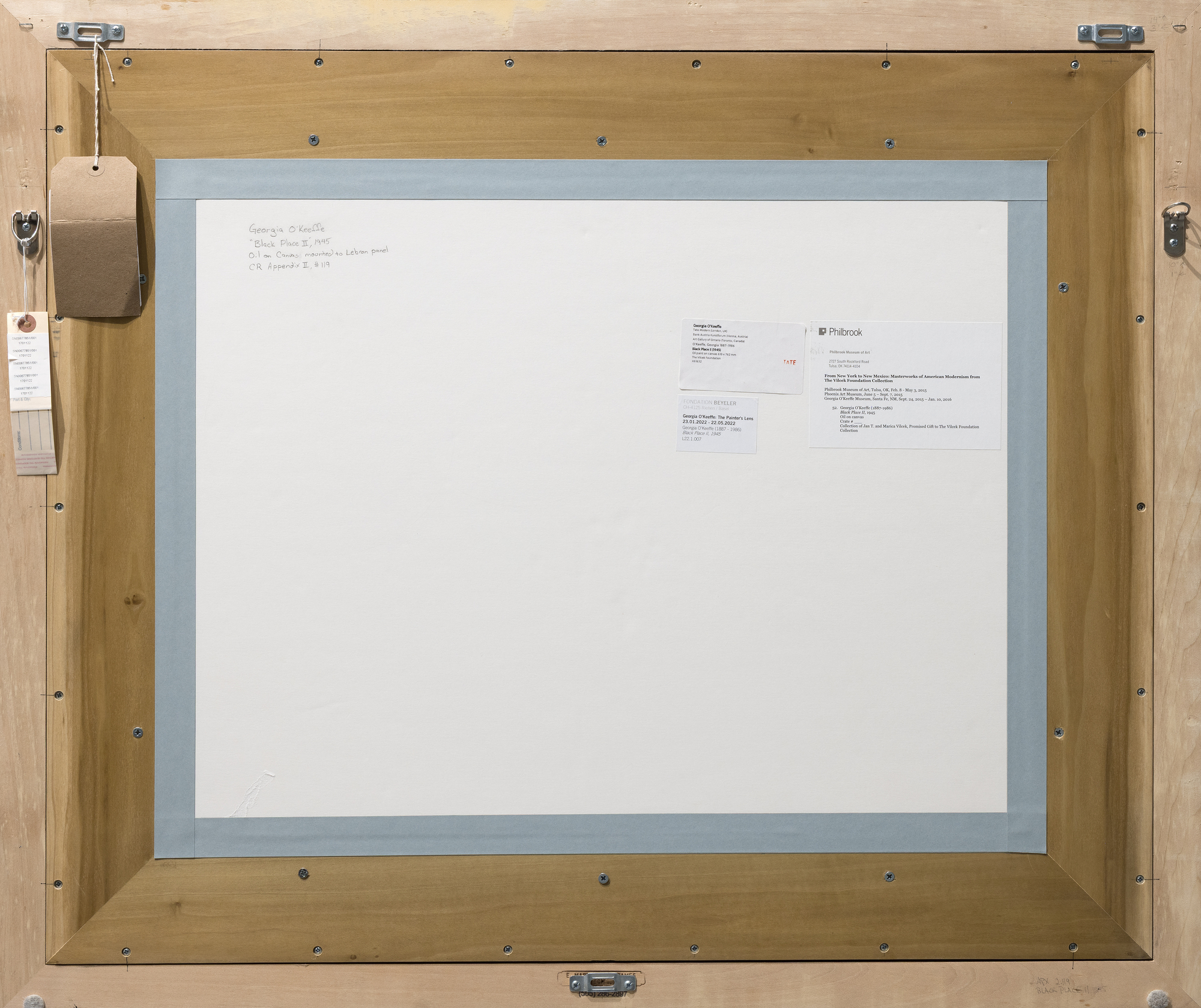
ブラック・プレイス II194524 x 30 インチ(60.96 x 76.2 x 2.54 cm) キャンバスに油彩
出所
アン・アメリカン・プレイス、ニューヨーク
ダウンタウン・ギャラリー、ニューヨーク
カトリーナ・マコーミック・バーンズ、コロラド州デンバー
メディル・マコーミック・バーンズ、1971年に相続により取得
ウォッシュバーン・ギャラリー、ニューヨーク
ハーシュル&アドラー・ギャラリー、ニューヨーク
ダニエル・ディートリッヒ、フィラデルフィア、1985年まで
ハーシュル&アドラー・ギャラリー、ニューヨーク
オーウィングス・ギャラリー、ニューメキシコ州サンタフェ
個人コレクション、ニューメキシコ州サンタフェ、2000年
オーウィングス・ギャラリー、ニューメキシコ州サンタフェ
ヤン・T・ヴィルチェクおよびマリカ・ヴィルチェク、ニューヨーク、2011–2015年
個人所蔵
...もっとその。。。上記の寄贈によるコレクション
展示会
『ニューヨーク、アメリカの場所』、ジョージア・オキーフ、1946年2月4日~3月27日、No. 10
ニューヨーク、ホイットニー・アメリカン・アート・ミュージアム、「現代アメリカ絵画年次展」、1948年11月13日~1949年1月2日
テキサス州ダラス、ダラス美術館、「ジョージア・オキーフ絵画展」、1953年2月1日~2月22日、巡回先:フロリダ州デルレイビーチ、メイヨー・ヒル・ギャラリー、1953年3月16日~4月11日
ニューヨーク、ハーシュル&アドラー・ギャラリー、「近年の重要収蔵品:19世紀後半から20世紀初頭のアメリカ絵画」、1972年2月2日~23日
ニューヨーク、ウォッシュバーン・ギャラリー、「精神は物質に勝る:内在するものを描く画家たち」、1972年9月20日~10月21日
ニューヨーク、ハーシュル&アドラー・ギャラリーにて、ジョージア・オキーフ展「選りすぐりの絵画と紙作品」が1986年4月26日から6月6日まで開催され、その後、テキサス州ダラス、ジェラルド・ピーターズ・ギャラリーにて1986年6月14日から7月14日まで巡回展が行われた。
ニューメキシコ州サンタフェ、ジョージア・オキーフ美術館、「ニューメキシコのジョージア・オキーフ:建築、カツィナ、そして大地」、2013年5月17日~9月(主催機関)、巡回先:ニュージャージー州モントクレア、モントクレア美術館、2012年9月28日 – 2013年1月20日、コロラド州デンバー、デンバー美術館、2013年2月10日~4月28日
オクラホマ州タルサ、フィルブルック美術館、フェニックス、「ニューヨークからニューメキシコへ:ヴィルチェク財団コレクションによるアメリカ・モダニズムの傑作展」、2015年2月8日~5月3日、巡回先:アリゾナ州、フェニックス美術館、2015年6月7日~9月7日、ニューメキシコ州サンタフェ、ジョージア・オキーフ美術館、2015年9月25日 ~2016年1月10日
ニューメキシコ州サンタフェ、ジョージア・オキーフ美術館、長期貸出、2016年1月~4月
ロンドン、テート・モダン、ジョージア・オキーフ展、2016年7月6日~10月30日、その後、ウィーン、バンク・オーストリア・クンストフォルムへ巡回、2016年12月7日~2017年3月26日、トロント、オンタリオ・アート・ギャラリー、2017年4月22日~7月30日
ニューメキシコ州サンタフェ、ジョージア・オキーフ美術館、「ザ・ブラック・プレイス:ジョージア・オキーフとマイケル・ナミンガ」、2018年4月28日~8月20日
テキサス州コーパス・クリスティ、サウス・テキサス美術館、「ヴィルチェク・アメリカ美術コレクション所蔵 アメリカ・モダニズムの傑作展」、2018年9月13日~2019年1月6日
カンザス州ウィチタ、ウィチタ美術館、「ジョージア・オキーフ:アート、イメージ、スタイル」、2019年3月30日~6月23日、巡回先:ネバダ州リノ、ネバダ美術館、2019年7月20日~10月20日、フロリダ州ウェストパームビーチ、ノートン美術館、2019年11月21日 ~2020年2月9日
パリ、ポンピドゥー・センター ジョージア・オキーフ展、2021年9月8日~12月6日、巡回先:スイス・バーゼル、ベイラー財団、2022年1月23日~5月22日
ロードアイランド州ニューポート、ニューポート美術館、ジョージア・オキーフ展「言葉にできなかったものたち」、2022年7月16日~10月16日
カリフォルニア州サンディエゴ、サンディエゴ美術館、「オキーフとムーア」展、2023年5月13日~8月27日、巡回先:ニューメキシコ州アルバカーキ、アルバカーキ美術館、2023年9月30日~12月31日、カナダ・モントリオール、モントリオール美術館、2024年2月10日 ~2024年6月2日、マサチューセッツ州ボストン、ボストン美術館、2024年10月13日~2025年1月20日
文学
ロバート・M・コーツ、「美術館――ホイットニーを含む同時代の美術館」、『ザ・ニュー・
『ヨーカー』第22号、1946年2月16日、84ページ
「ニューヨークの展覧会――ジョージア・オキーフ」、『MKR’s Art Outlook』、1946年4月号、1ページ、3ページ(図版掲載)
ホイットニー・アメリカン・アート・ミュージアム、現代アメリカ絵画年次展、ニューヨーク、1948年、作品番号105
ダラス美術館、『ジョージア・オキーフ絵画展』、ダラス、1953年、作品番号22
ヒルシュル&アドラー・ギャラリー『重要近年の収蔵品:19世紀後半から20世紀初頭のアメリカ絵画』、ニューヨーク、1972年、No. 52(図版掲載)
ウォッシュバーン・ギャラリー、『Mind over Matter: Painters of the Immanent Things』、ニューヨーク、1972年、No. 7、3頁(図版掲載)
ヒルトン・クレイマー「西を望むアーティストたち:A.C.A.ギャラリーの新展覧会が幅広いスタイルと表現手法を披露」『ニューヨーク・タイムズ』1972年9月23日、L27面
ジェームズ・R・メロウ「風景:現実と想像――アメリカ美術における」『ニューヨーク・タイムズ』1972年10月8日、D27面
ジョン・ペロー、「あの芸術作品、誰か欲しい人はいる?」、『ザ・ヴィレッジ・ボイス』、1972年10月5日、29ページ
サンフォード・シュワルツ、「ニューヨーク・レター」、『アート・インターナショナル』第16号、1972年12月、61ページ
Hirschl & Adler, 『ジョージア・オキーフ:選集 絵画および紙作品』, ニューヨーク, 1986年, 作品番号28(図版掲載、表紙にも掲載)
シャリン・ユーダル『Contested Terrain: Myth and Meanings in Southwest Art』アルバカーキ、1996年、図版8、xi頁、120-134頁、174頁(図版掲載、表紙にも掲載)
バーバラ・ビューラー・ラインズ編『ジョージア・オキーフ:作品総覧』第2巻、ニューヘイブン、ワシントンD.C.、およびニューメキシコ州アビキュー、1999年、作品番号119、1107ページ(図版掲載)
バーバラ・ビューラー・ラインズ&キャロリン・カストナー著『ニューメキシコにおけるジョージア・オキーフ:建築、カツィナ、そして大地』、ニューメキシコ州サンタフェ、2012年、図版49、140ページ(図版掲載)
ダン・ビショフ、「芸術家ジョージア・オキーフの『場所への感覚』」、『スター・レジャー』、2012年9月30日
マーサ・シュウェンデナー「文化遺産の精神」、『ニューヨーク・タイムズ』、1月4日、
2013年、p. NJ11
レイ・マーク・リナルディ、「ジョージア・オキーフに触発された西部美術がデンバー美術館にやってくる」
デンバー・ポスト、2013年2月15日
ウィリアム・C・アギーとルイス・カチュール著『アメリカ・モダニズムの傑作:ヴィルチェク・コレクションより』
『コレクション』、ロンドン、2013年、11頁、160–161頁、235頁、240頁、267頁(図版あり)
ターニャ・バーソン&エリン・B・コー『ジョージア・オキーフ』、ロンドン、2016年、178頁、255頁(図版)
マルタ・ルイス・デル・アルボル『ジョージア・オキーフ、パリ』、2021年、第75号、40頁、206-207頁、312頁(図版掲載)
アニタ・フェルドマン、ハンナ・ハイアム、ジェニファー・ローラン、バーバラ・ビューラー・ラインズ、アリエル・プロテック、クリス・スティーブンス、『O’Keeffe and Moore』、サンディエゴ、2023年、142ページ(図版付き)
...少ない。。。
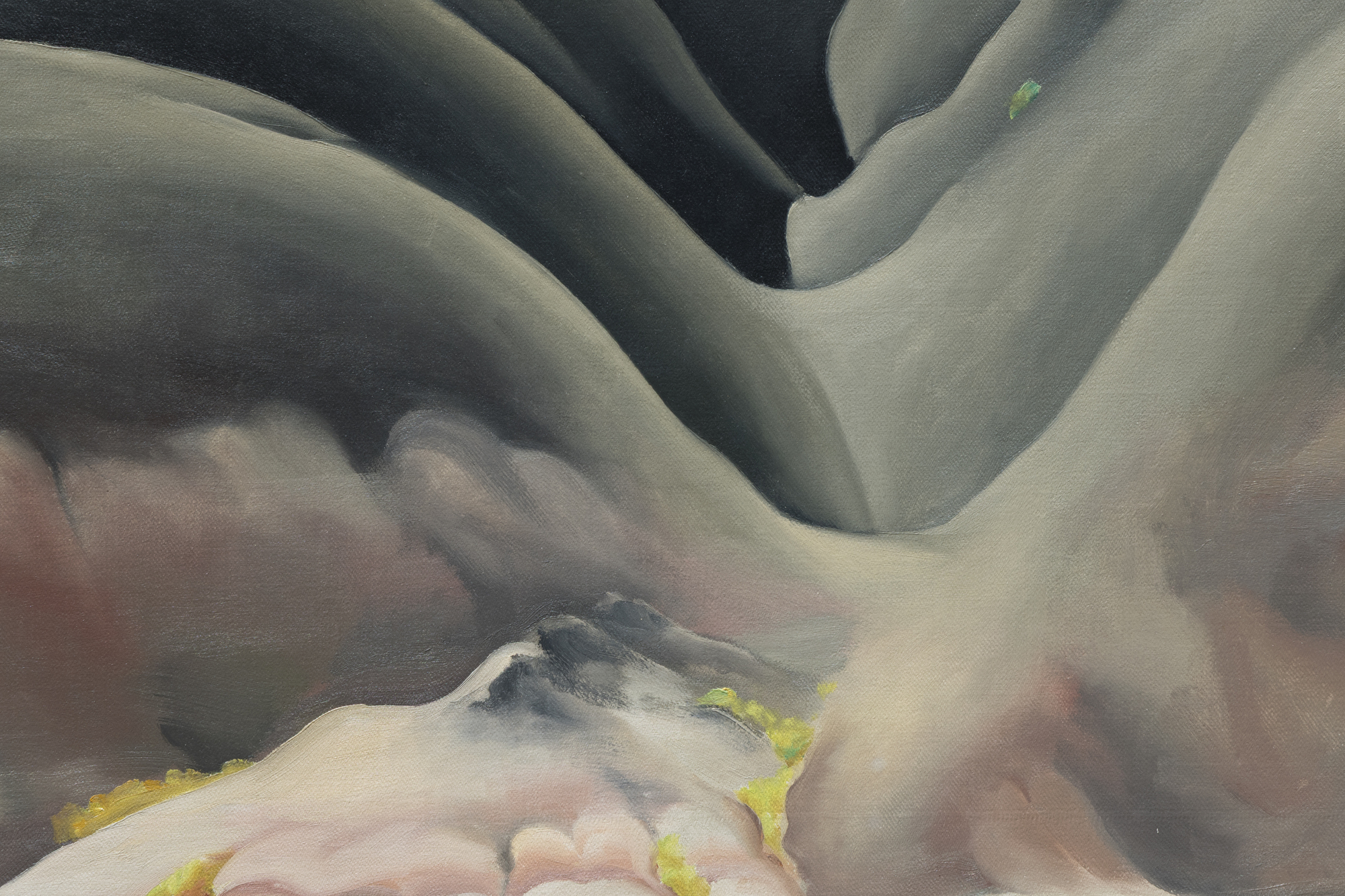
ジョージア・オキーフの『ブラック・プレイス II』(1945年)は、彼女のキャリアの中でも最も深遠かつ厳格なシリーズの一つに属する作品である。このシリーズは、彼女が「ブラック・プレイス」と呼んだ、ニューメキシコ州北西部の辺境にあり、別世界のような雰囲気を持つビスティ・バッドランズへの度重なる旅から着想を得たものである。この風景に深く魅了されたオキーフは、一日のさまざまな時間帯におけるその移ろいゆく姿や色調の微妙な変化を研究するため、しばしば現地でキャンプを張った。 本作において、彼女は風景をその本質へと還元している。互いに押し合う二つの巨大な丘、視界に捉えられない地平線、そして重力、静寂、そして静謐な荘厳さによって定義される構図。雄大に広がり、互いに絡み合う形態は、親密さと広大さを併せ持つスケール感を生み出し、パノラマというよりも「存在」として体験される風景を喚起する。


『ブラック・プレイス』シリーズの作品は極めて希少である。オキーフが描いた14点のキャンバスのうち、個人所有に残っているのはわずか4点のみであり、残りはメトロポリタン美術館、SFMOMA、シカゴ美術館などの主要な機関が所蔵している。その結果、美術館のコレクション以外でこのシリーズの作品に出会う機会は極めて稀である。


『ブラック・プレイスII』は、アルフレッド・スティーグリッツのニューヨークの著名なギャラリー「アン・アメリカン・プレイス」での初期の所蔵から、フィラデルフィアの著名な慈善家兼コレクターであるダニエル・ディートリッヒを経て、ヤン・T・ヴィルチェクとマリカ・ヴィルチェクのコレクションに至るまで、輝かしい来歴を誇ります。この絵画の遺産は、異例に長い美術館での展示歴によってさらに際立っています。 1946年には早くもスティグリッツの「アン・アメリカン・プレイス」で展示され、ポンピドゥー・センターや、最近ではボストン美術館での展覧会を含む主要な機関による回顧展で継続的に展示されてきた。こうした長年にわたる一般および学術界からの注目により、『ブラック・プレイス』連作がオキーフの作品群において重要な位置を占めることが確固たるものとなっている。
お 問い合わせ