レイ・パーカー(1922-1990)

 
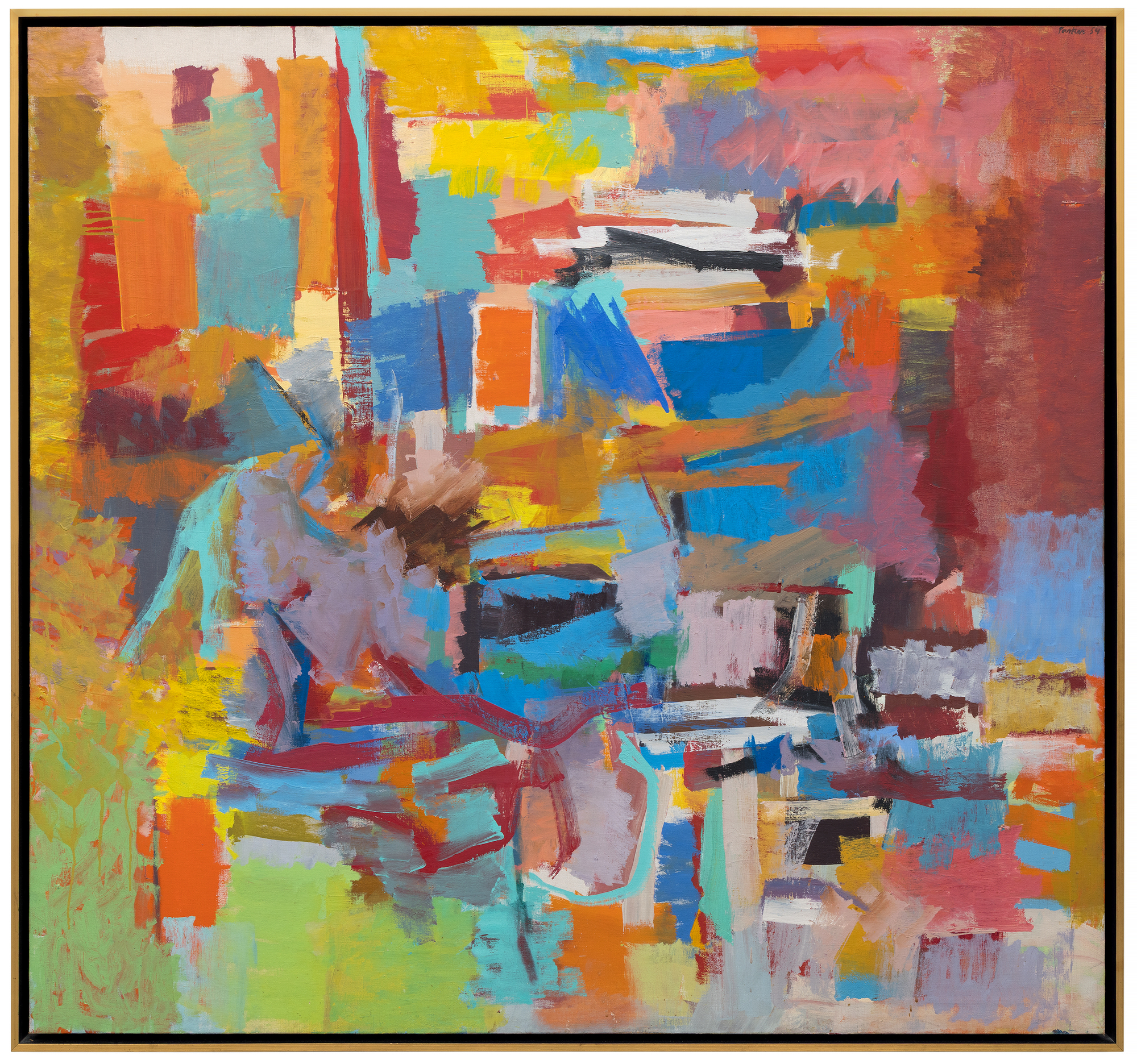
<div><font face=Lato size=3 color=black>Painted in 1954, this "Untitled" canvas exemplifies Ray Parker’s early engagement with Abstract Expressionism, a moment when he was forging a language of bold color and gestural immediacy. Parker worked directly on unstretched canvas, building the composition through broad, saturated brushstrokes that retain a sense of spontaneity and improvisation. The edges of form remain fluid, emphasizing the immediacy of his process. </font></div><br><br><div> </div><br><br><div><font face=Lato size=3 color=black>Although Parker would later become best known for his “Simple Paintings,” these early works are both rare and foundational, bridging the raw energy of Abstract Expressionism with the clarity of form that defined his mature style. With fewer than 310 works recorded at auction and very few from the 1950s, canvases of this scale and date seldom appear on the market. A related early abstraction, "Untitled" (1956), is in the collection of the Whitney Museum of American Art. "Untitled" (1954) represents a significant example of Parker’s innovative contribution to postwar American painting. </font></div> <div><font face=Lato size=3 color=black>Painted in 1954, this "Untitled" canvas exemplifies Ray Parker’s early engagement with Abstract Expressionism, a moment when he was forging a language of bold color and gestural immediacy. Parker worked directly on unstretched canvas, building the composition through broad, saturated brushstrokes that retain a sense of spontaneity and improvisation. The edges of form remain fluid, emphasizing the immediacy of his process. </font></div><br><br><div> </div><br><br><div><font face=Lato size=3 color=black>Although Parker would later become best known for his “Simple Paintings,” these early works are both rare and foundational, bridging the raw energy of Abstract Expressionism with the clarity of form that defined his mature style. With fewer than 310 works recorded at auction and very few from the 1950s, canvases of this scale and date seldom appear on the market. A related early abstraction, "Untitled" (1956), is in the collection of the Whitney Museum of American Art. "Untitled" (1954) represents a significant example of Parker’s innovative contribution to postwar American painting. </font></div> <div><font face=Lato size=3 color=black>Painted in 1954, this "Untitled" canvas exemplifies Ray Parker’s early engagement with Abstract Expressionism, a moment when he was forging a language of bold color and gestural immediacy. Parker worked directly on unstretched canvas, building the composition through broad, saturated brushstrokes that retain a sense of spontaneity and improvisation. The edges of form remain fluid, emphasizing the immediacy of his process. </font></div><br><br><div> </div><br><br><div><font face=Lato size=3 color=black>Although Parker would later become best known for his “Simple Paintings,” these early works are both rare and foundational, bridging the raw energy of Abstract Expressionism with the clarity of form that defined his mature style. With fewer than 310 works recorded at auction and very few from the 1950s, canvases of this scale and date seldom appear on the market. A related early abstraction, "Untitled" (1956), is in the collection of the Whitney Museum of American Art. "Untitled" (1954) represents a significant example of Parker’s innovative contribution to postwar American painting. </font></div> <div><font face=Lato size=3 color=black>Painted in 1954, this "Untitled" canvas exemplifies Ray Parker’s early engagement with Abstract Expressionism, a moment when he was forging a language of bold color and gestural immediacy. Parker worked directly on unstretched canvas, building the composition through broad, saturated brushstrokes that retain a sense of spontaneity and improvisation. The edges of form remain fluid, emphasizing the immediacy of his process. </font></div><br><br><div> </div><br><br><div><font face=Lato size=3 color=black>Although Parker would later become best known for his “Simple Paintings,” these early works are both rare and foundational, bridging the raw energy of Abstract Expressionism with the clarity of form that defined his mature style. With fewer than 310 works recorded at auction and very few from the 1950s, canvases of this scale and date seldom appear on the market. A related early abstraction, "Untitled" (1956), is in the collection of the Whitney Museum of American Art. "Untitled" (1954) represents a significant example of Parker’s innovative contribution to postwar American painting. </font></div> <div><font face=Lato size=3 color=black>Painted in 1954, this "Untitled" canvas exemplifies Ray Parker’s early engagement with Abstract Expressionism, a moment when he was forging a language of bold color and gestural immediacy. Parker worked directly on unstretched canvas, building the composition through broad, saturated brushstrokes that retain a sense of spontaneity and improvisation. The edges of form remain fluid, emphasizing the immediacy of his process. </font></div><br><br><div> </div><br><br><div><font face=Lato size=3 color=black>Although Parker would later become best known for his “Simple Paintings,” these early works are both rare and foundational, bridging the raw energy of Abstract Expressionism with the clarity of form that defined his mature style. With fewer than 310 works recorded at auction and very few from the 1950s, canvases of this scale and date seldom appear on the market. A related early abstraction, "Untitled" (1956), is in the collection of the Whitney Museum of American Art. "Untitled" (1954) represents a significant example of Parker’s innovative contribution to postwar American painting. </font></div> <div><font face=Lato size=3 color=black>Painted in 1954, this "Untitled" canvas exemplifies Ray Parker’s early engagement with Abstract Expressionism, a moment when he was forging a language of bold color and gestural immediacy. Parker worked directly on unstretched canvas, building the composition through broad, saturated brushstrokes that retain a sense of spontaneity and improvisation. The edges of form remain fluid, emphasizing the immediacy of his process. </font></div><br><br><div> </div><br><br><div><font face=Lato size=3 color=black>Although Parker would later become best known for his “Simple Paintings,” these early works are both rare and foundational, bridging the raw energy of Abstract Expressionism with the clarity of form that defined his mature style. With fewer than 310 works recorded at auction and very few from the 1950s, canvases of this scale and date seldom appear on the market. A related early abstraction, "Untitled" (1956), is in the collection of the Whitney Museum of American Art. "Untitled" (1954) represents a significant example of Parker’s innovative contribution to postwar American painting. </font></div> <div><font face=Lato size=3 color=black>Painted in 1954, this "Untitled" canvas exemplifies Ray Parker’s early engagement with Abstract Expressionism, a moment when he was forging a language of bold color and gestural immediacy. Parker worked directly on unstretched canvas, building the composition through broad, saturated brushstrokes that retain a sense of spontaneity and improvisation. The edges of form remain fluid, emphasizing the immediacy of his process. </font></div><br><br><div> </div><br><br><div><font face=Lato size=3 color=black>Although Parker would later become best known for his “Simple Paintings,” these early works are both rare and foundational, bridging the raw energy of Abstract Expressionism with the clarity of form that defined his mature style. With fewer than 310 works recorded at auction and very few from the 1950s, canvases of this scale and date seldom appear on the market. A related early abstraction, "Untitled" (1956), is in the collection of the Whitney Museum of American Art. "Untitled" (1954) represents a significant example of Parker’s innovative contribution to postwar American painting. </font></div> <div><font face=Lato size=3 color=black>Painted in 1954, this "Untitled" canvas exemplifies Ray Parker’s early engagement with Abstract Expressionism, a moment when he was forging a language of bold color and gestural immediacy. Parker worked directly on unstretched canvas, building the composition through broad, saturated brushstrokes that retain a sense of spontaneity and improvisation. The edges of form remain fluid, emphasizing the immediacy of his process. </font></div><br><br><div> </div><br><br><div><font face=Lato size=3 color=black>Although Parker would later become best known for his “Simple Paintings,” these early works are both rare and foundational, bridging the raw energy of Abstract Expressionism with the clarity of form that defined his mature style. With fewer than 310 works recorded at auction and very few from the 1950s, canvases of this scale and date seldom appear on the market. A related early abstraction, "Untitled" (1956), is in the collection of the Whitney Museum of American Art. "Untitled" (1954) represents a significant example of Parker’s innovative contribution to postwar American painting. </font></div> <div><font face=Lato size=3 color=black>Painted in 1954, this "Untitled" canvas exemplifies Ray Parker’s early engagement with Abstract Expressionism, a moment when he was forging a language of bold color and gestural immediacy. Parker worked directly on unstretched canvas, building the composition through broad, saturated brushstrokes that retain a sense of spontaneity and improvisation. The edges of form remain fluid, emphasizing the immediacy of his process. </font></div><br><br><div> </div><br><br><div><font face=Lato size=3 color=black>Although Parker would later become best known for his “Simple Paintings,” these early works are both rare and foundational, bridging the raw energy of Abstract Expressionism with the clarity of form that defined his mature style. With fewer than 310 works recorded at auction and very few from the 1950s, canvases of this scale and date seldom appear on the market. A related early abstraction, "Untitled" (1956), is in the collection of the Whitney Museum of American Art. "Untitled" (1954) represents a significant example of Parker’s innovative contribution to postwar American painting. </font></div> <div><font face=Lato size=3 color=black>Painted in 1954, this "Untitled" canvas exemplifies Ray Parker’s early engagement with Abstract Expressionism, a moment when he was forging a language of bold color and gestural immediacy. Parker worked directly on unstretched canvas, building the composition through broad, saturated brushstrokes that retain a sense of spontaneity and improvisation. The edges of form remain fluid, emphasizing the immediacy of his process. </font></div><br><br><div> </div><br><br><div><font face=Lato size=3 color=black>Although Parker would later become best known for his “Simple Paintings,” these early works are both rare and foundational, bridging the raw energy of Abstract Expressionism with the clarity of form that defined his mature style. With fewer than 310 works recorded at auction and very few from the 1950s, canvases of this scale and date seldom appear on the market. A related early abstraction, "Untitled" (1956), is in the collection of the Whitney Museum of American Art. "Untitled" (1954) represents a significant example of Parker’s innovative contribution to postwar American painting. </font></div>
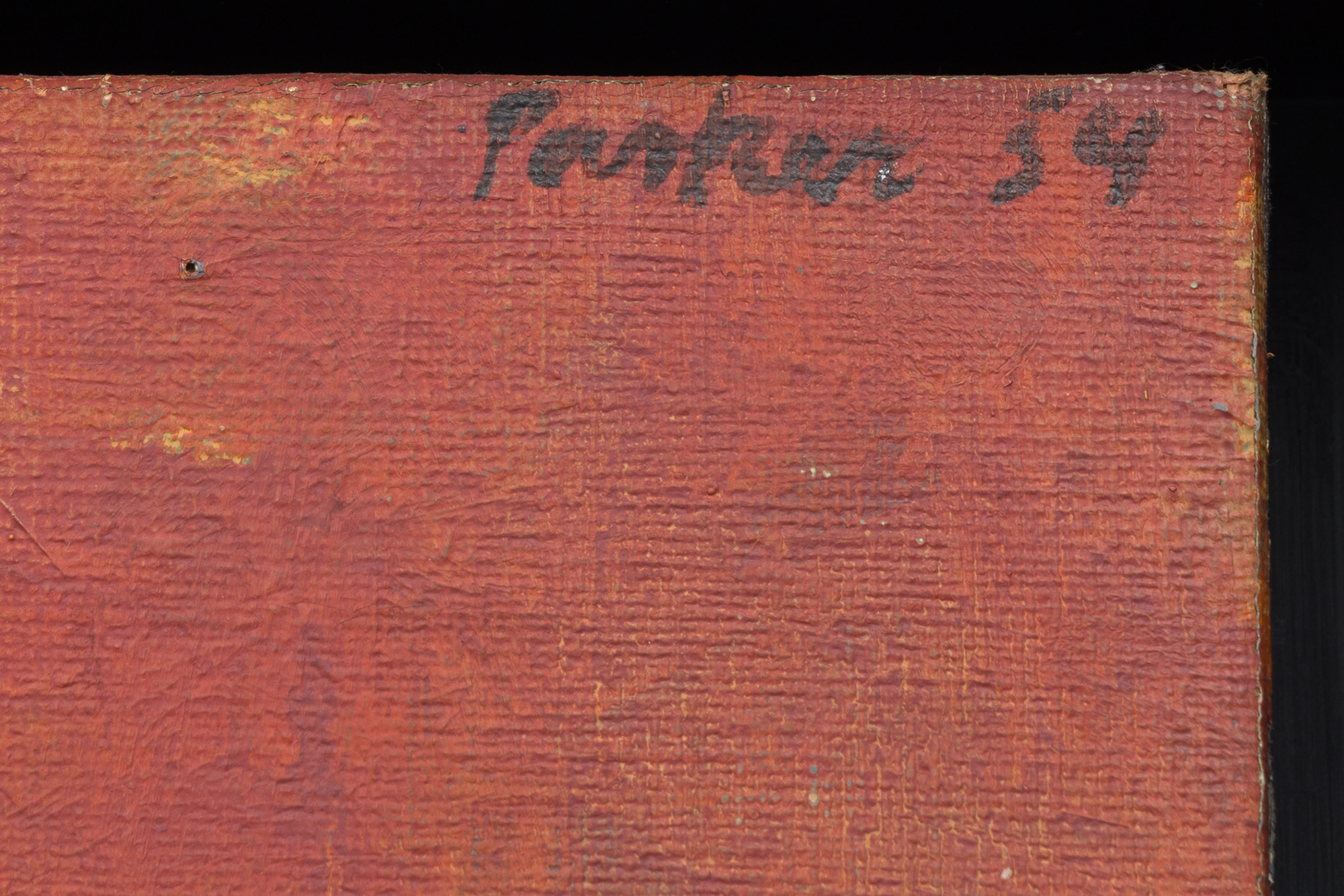
無題195452 1/4 x 56 x 1 インチ(132.72 x 142.24 x 2.54 cm) 油彩・キャンバス
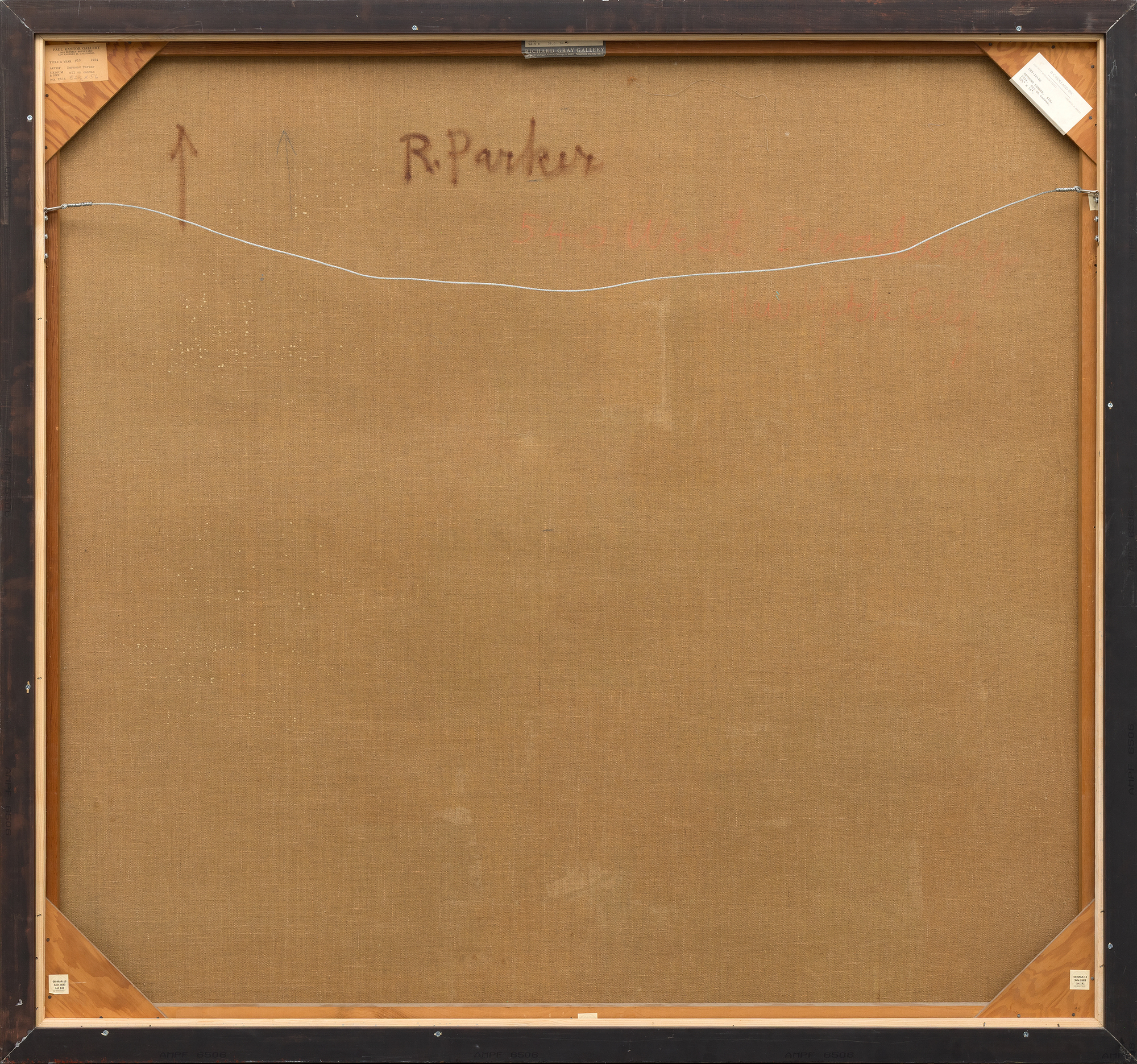
出所
クリスティーズ・プライベートセールス
個人コレクション、上記より購入
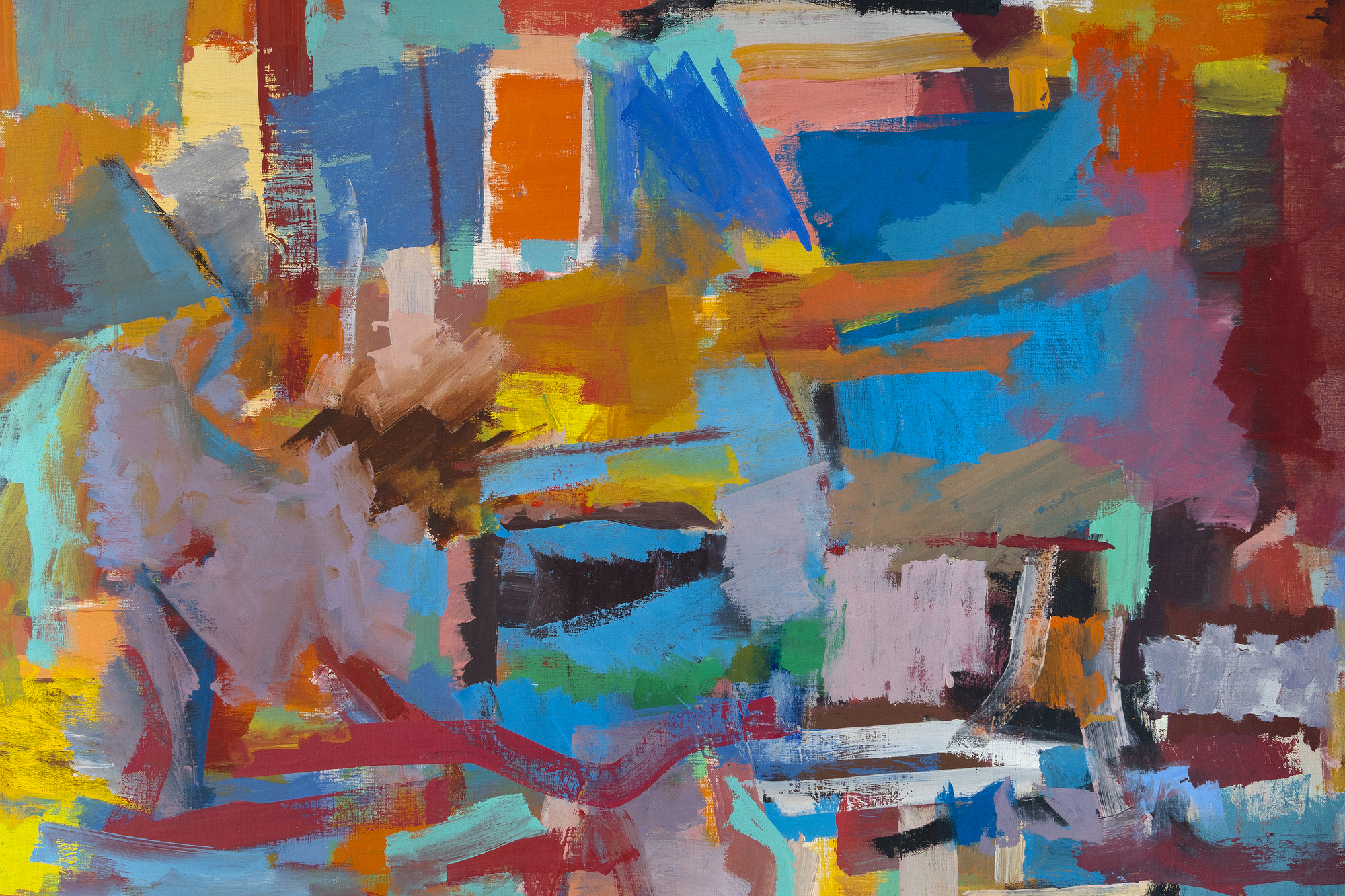
1954年に制作されたこの「無題」のキャンバスは、レイ・パーカーが抽象表現主義と向き合った初期の作品を代表する。この時期、彼は大胆な色彩とジェスチャーの即時性という独自の表現言語を確立しつつあった。パーカーは未張りのキャンバスに直接描き、大胆で濃密な筆致で構図を構築。その筆致には即興性と即時の感覚が保たれている。形の縁は流動的なまま残され、制作プロセスの即時性が強調されている。


後に「シンプル・ペインティング」で最も知られるようになるパーカーだが、これらの初期作品は稀少かつ基礎的であり、抽象表現主義の生のエネルギーと、彼の成熟した様式を定義づけた形態の明快さを橋渡ししている。オークション記録が310点未満、1950年代の作品が極めて少ない中、この規模と年代のキャンバスが市場に出現することは稀である。 関連する初期抽象作品「無題」(1956年)はホイットニー美術館所蔵である。「無題」(1954年)は、戦後アメリカ絵画におけるパーカーの革新的な貢献を示す重要な作品である。
お 問い合わせ