戻る

ポール・シニャック(PAUL SIGNAC) 1863-1935

 
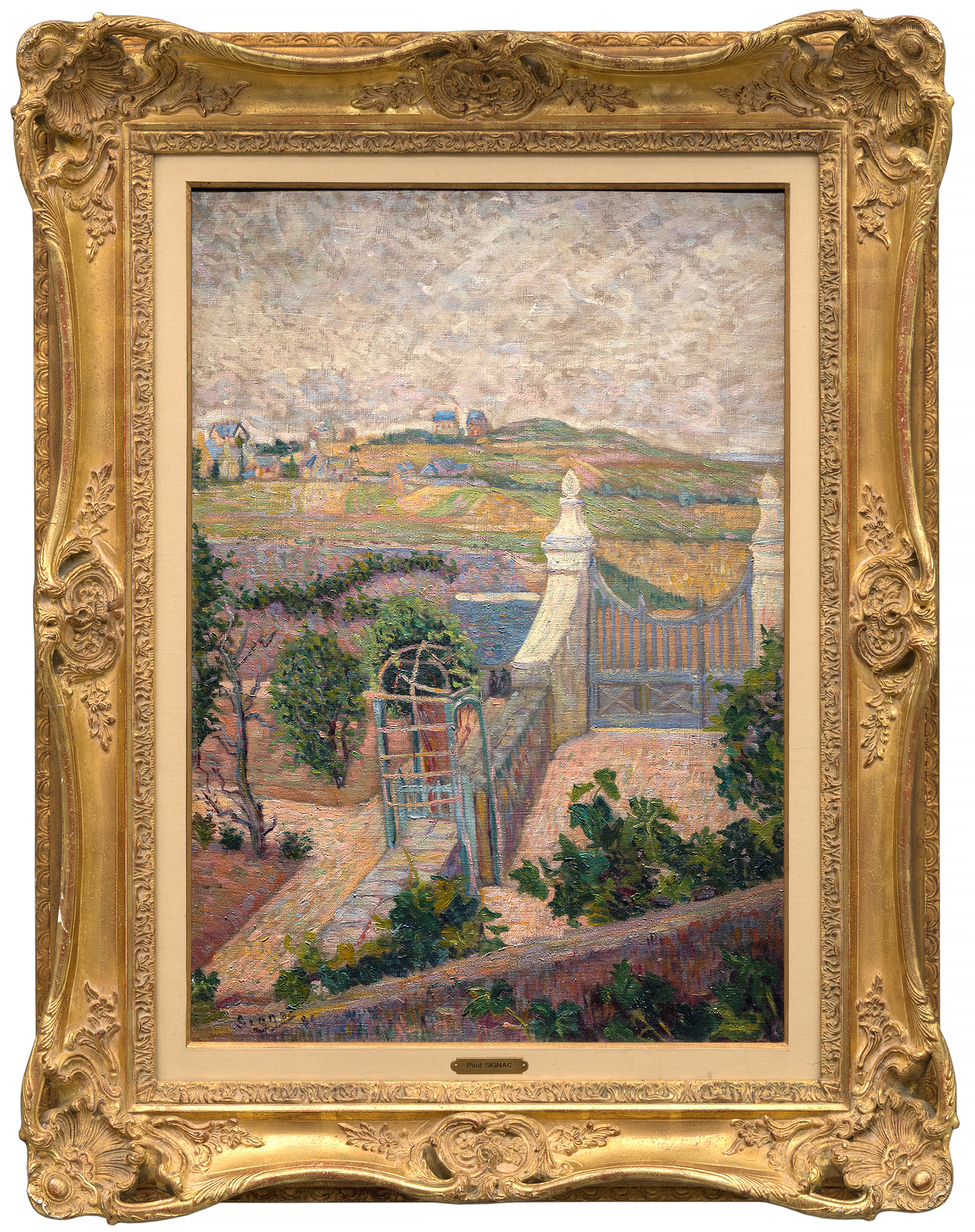
<div><font face=Lato size=3 color=black>Paul Signac’s <em>Saint-Briac. D’une fenêtre</em> (1885) captures the quiet beauty of the Breton landscape at a pivotal moment in the artist’s evolution from Impressionism to Neo-Impressionism. Painted during one of his frequent stays in Saint-Briac-sur-Mer, a coastal village in Brittany, this work reflects Signac’s early fascination with the play of light, color, and atmosphere before his full embrace of </font><font<br>face=HelveticaNeue size=3 color="#191919">Pointilist </font><font face=Lato<br>size=3 color=black>technique. The composition, framed as if viewed from a window, balances structured geometry with painterly spontaneity, suggesting the artist’s growing concern with order and harmony in nature.</font></div><br><br><div> </div><br><br><div><font face=Lato size=3 color=black>The work once belonged to the French composer and conductor Jules Rivière and has been discussed in major art historical texts, including <em>Connaissance des Arts</em> (1956), Sophie Monneret’s <em>L’Impressionisme et son époque</em> (1980), and Françoise Cachin’s <em>Signac: Catalogue raisonné de l’oeuvre peint</em> (2000), where it is illustrated as entry no. 102. Comparable examples from the same Saint-Briac series are housed in the Metropolitan Museum of Art, the Art Institute of Chicago, and the Carnegie Museum of Art. Collectively, these works reveal Signac’s transition toward the structured luminosity that would soon define Neo-Impressionism and secure his place among the leading innovators of modern painting.</font></div> <div><font face=Lato size=3 color=black>Paul Signac’s <em>Saint-Briac. D’une fenêtre</em> (1885) captures the quiet beauty of the Breton landscape at a pivotal moment in the artist’s evolution from Impressionism to Neo-Impressionism. Painted during one of his frequent stays in Saint-Briac-sur-Mer, a coastal village in Brittany, this work reflects Signac’s early fascination with the play of light, color, and atmosphere before his full embrace of </font><font<br>face=HelveticaNeue size=3 color="#191919">Pointilist </font><font face=Lato<br>size=3 color=black>technique. The composition, framed as if viewed from a window, balances structured geometry with painterly spontaneity, suggesting the artist’s growing concern with order and harmony in nature.</font></div><br><br><div> </div><br><br><div><font face=Lato size=3 color=black>The work once belonged to the French composer and conductor Jules Rivière and has been discussed in major art historical texts, including <em>Connaissance des Arts</em> (1956), Sophie Monneret’s <em>L’Impressionisme et son époque</em> (1980), and Françoise Cachin’s <em>Signac: Catalogue raisonné de l’oeuvre peint</em> (2000), where it is illustrated as entry no. 102. Comparable examples from the same Saint-Briac series are housed in the Metropolitan Museum of Art, the Art Institute of Chicago, and the Carnegie Museum of Art. Collectively, these works reveal Signac’s transition toward the structured luminosity that would soon define Neo-Impressionism and secure his place among the leading innovators of modern painting.</font></div> <div><font face=Lato size=3 color=black>Paul Signac’s <em>Saint-Briac. D’une fenêtre</em> (1885) captures the quiet beauty of the Breton landscape at a pivotal moment in the artist’s evolution from Impressionism to Neo-Impressionism. Painted during one of his frequent stays in Saint-Briac-sur-Mer, a coastal village in Brittany, this work reflects Signac’s early fascination with the play of light, color, and atmosphere before his full embrace of </font><font<br>face=HelveticaNeue size=3 color="#191919">Pointilist </font><font face=Lato<br>size=3 color=black>technique. The composition, framed as if viewed from a window, balances structured geometry with painterly spontaneity, suggesting the artist’s growing concern with order and harmony in nature.</font></div><br><br><div> </div><br><br><div><font face=Lato size=3 color=black>The work once belonged to the French composer and conductor Jules Rivière and has been discussed in major art historical texts, including <em>Connaissance des Arts</em> (1956), Sophie Monneret’s <em>L’Impressionisme et son époque</em> (1980), and Françoise Cachin’s <em>Signac: Catalogue raisonné de l’oeuvre peint</em> (2000), where it is illustrated as entry no. 102. Comparable examples from the same Saint-Briac series are housed in the Metropolitan Museum of Art, the Art Institute of Chicago, and the Carnegie Museum of Art. Collectively, these works reveal Signac’s transition toward the structured luminosity that would soon define Neo-Impressionism and secure his place among the leading innovators of modern painting.</font></div> <div><font face=Lato size=3 color=black>Paul Signac’s <em>Saint-Briac. D’une fenêtre</em> (1885) captures the quiet beauty of the Breton landscape at a pivotal moment in the artist’s evolution from Impressionism to Neo-Impressionism. Painted during one of his frequent stays in Saint-Briac-sur-Mer, a coastal village in Brittany, this work reflects Signac’s early fascination with the play of light, color, and atmosphere before his full embrace of </font><font<br>face=HelveticaNeue size=3 color="#191919">Pointilist </font><font face=Lato<br>size=3 color=black>technique. The composition, framed as if viewed from a window, balances structured geometry with painterly spontaneity, suggesting the artist’s growing concern with order and harmony in nature.</font></div><br><br><div> </div><br><br><div><font face=Lato size=3 color=black>The work once belonged to the French composer and conductor Jules Rivière and has been discussed in major art historical texts, including <em>Connaissance des Arts</em> (1956), Sophie Monneret’s <em>L’Impressionisme et son époque</em> (1980), and Françoise Cachin’s <em>Signac: Catalogue raisonné de l’oeuvre peint</em> (2000), where it is illustrated as entry no. 102. Comparable examples from the same Saint-Briac series are housed in the Metropolitan Museum of Art, the Art Institute of Chicago, and the Carnegie Museum of Art. Collectively, these works reveal Signac’s transition toward the structured luminosity that would soon define Neo-Impressionism and secure his place among the leading innovators of modern painting.</font></div> <div><font face=Lato size=3 color=black>Paul Signac’s <em>Saint-Briac. D’une fenêtre</em> (1885) captures the quiet beauty of the Breton landscape at a pivotal moment in the artist’s evolution from Impressionism to Neo-Impressionism. Painted during one of his frequent stays in Saint-Briac-sur-Mer, a coastal village in Brittany, this work reflects Signac’s early fascination with the play of light, color, and atmosphere before his full embrace of </font><font<br>face=HelveticaNeue size=3 color="#191919">Pointilist </font><font face=Lato<br>size=3 color=black>technique. The composition, framed as if viewed from a window, balances structured geometry with painterly spontaneity, suggesting the artist’s growing concern with order and harmony in nature.</font></div><br><br><div> </div><br><br><div><font face=Lato size=3 color=black>The work once belonged to the French composer and conductor Jules Rivière and has been discussed in major art historical texts, including <em>Connaissance des Arts</em> (1956), Sophie Monneret’s <em>L’Impressionisme et son époque</em> (1980), and Françoise Cachin’s <em>Signac: Catalogue raisonné de l’oeuvre peint</em> (2000), where it is illustrated as entry no. 102. Comparable examples from the same Saint-Briac series are housed in the Metropolitan Museum of Art, the Art Institute of Chicago, and the Carnegie Museum of Art. Collectively, these works reveal Signac’s transition toward the structured luminosity that would soon define Neo-Impressionism and secure his place among the leading innovators of modern painting.</font></div> <div><font face=Lato size=3 color=black>Paul Signac’s <em>Saint-Briac. D’une fenêtre</em> (1885) captures the quiet beauty of the Breton landscape at a pivotal moment in the artist’s evolution from Impressionism to Neo-Impressionism. Painted during one of his frequent stays in Saint-Briac-sur-Mer, a coastal village in Brittany, this work reflects Signac’s early fascination with the play of light, color, and atmosphere before his full embrace of </font><font<br>face=HelveticaNeue size=3 color="#191919">Pointilist </font><font face=Lato<br>size=3 color=black>technique. The composition, framed as if viewed from a window, balances structured geometry with painterly spontaneity, suggesting the artist’s growing concern with order and harmony in nature.</font></div><br><br><div> </div><br><br><div><font face=Lato size=3 color=black>The work once belonged to the French composer and conductor Jules Rivière and has been discussed in major art historical texts, including <em>Connaissance des Arts</em> (1956), Sophie Monneret’s <em>L’Impressionisme et son époque</em> (1980), and Françoise Cachin’s <em>Signac: Catalogue raisonné de l’oeuvre peint</em> (2000), where it is illustrated as entry no. 102. Comparable examples from the same Saint-Briac series are housed in the Metropolitan Museum of Art, the Art Institute of Chicago, and the Carnegie Museum of Art. Collectively, these works reveal Signac’s transition toward the structured luminosity that would soon define Neo-Impressionism and secure his place among the leading innovators of modern painting.</font></div> <div><font face=Lato size=3 color=black>Paul Signac’s <em>Saint-Briac. D’une fenêtre</em> (1885) captures the quiet beauty of the Breton landscape at a pivotal moment in the artist’s evolution from Impressionism to Neo-Impressionism. Painted during one of his frequent stays in Saint-Briac-sur-Mer, a coastal village in Brittany, this work reflects Signac’s early fascination with the play of light, color, and atmosphere before his full embrace of </font><font<br>face=HelveticaNeue size=3 color="#191919">Pointilist </font><font face=Lato<br>size=3 color=black>technique. The composition, framed as if viewed from a window, balances structured geometry with painterly spontaneity, suggesting the artist’s growing concern with order and harmony in nature.</font></div><br><br><div> </div><br><br><div><font face=Lato size=3 color=black>The work once belonged to the French composer and conductor Jules Rivière and has been discussed in major art historical texts, including <em>Connaissance des Arts</em> (1956), Sophie Monneret’s <em>L’Impressionisme et son époque</em> (1980), and Françoise Cachin’s <em>Signac: Catalogue raisonné de l’oeuvre peint</em> (2000), where it is illustrated as entry no. 102. Comparable examples from the same Saint-Briac series are housed in the Metropolitan Museum of Art, the Art Institute of Chicago, and the Carnegie Museum of Art. Collectively, these works reveal Signac’s transition toward the structured luminosity that would soon define Neo-Impressionism and secure his place among the leading innovators of modern painting.</font></div> <div><font face=Lato size=3 color=black>Paul Signac’s <em>Saint-Briac. D’une fenêtre</em> (1885) captures the quiet beauty of the Breton landscape at a pivotal moment in the artist’s evolution from Impressionism to Neo-Impressionism. Painted during one of his frequent stays in Saint-Briac-sur-Mer, a coastal village in Brittany, this work reflects Signac’s early fascination with the play of light, color, and atmosphere before his full embrace of </font><font<br>face=HelveticaNeue size=3 color="#191919">Pointilist </font><font face=Lato<br>size=3 color=black>technique. The composition, framed as if viewed from a window, balances structured geometry with painterly spontaneity, suggesting the artist’s growing concern with order and harmony in nature.</font></div><br><br><div> </div><br><br><div><font face=Lato size=3 color=black>The work once belonged to the French composer and conductor Jules Rivière and has been discussed in major art historical texts, including <em>Connaissance des Arts</em> (1956), Sophie Monneret’s <em>L’Impressionisme et son époque</em> (1980), and Françoise Cachin’s <em>Signac: Catalogue raisonné de l’oeuvre peint</em> (2000), where it is illustrated as entry no. 102. Comparable examples from the same Saint-Briac series are housed in the Metropolitan Museum of Art, the Art Institute of Chicago, and the Carnegie Museum of Art. Collectively, these works reveal Signac’s transition toward the structured luminosity that would soon define Neo-Impressionism and secure his place among the leading innovators of modern painting.</font></div> <div><font face=Lato size=3 color=black>Paul Signac’s <em>Saint-Briac. D’une fenêtre</em> (1885) captures the quiet beauty of the Breton landscape at a pivotal moment in the artist’s evolution from Impressionism to Neo-Impressionism. Painted during one of his frequent stays in Saint-Briac-sur-Mer, a coastal village in Brittany, this work reflects Signac’s early fascination with the play of light, color, and atmosphere before his full embrace of </font><font<br>face=HelveticaNeue size=3 color="#191919">Pointilist </font><font face=Lato<br>size=3 color=black>technique. The composition, framed as if viewed from a window, balances structured geometry with painterly spontaneity, suggesting the artist’s growing concern with order and harmony in nature.</font></div><br><br><div> </div><br><br><div><font face=Lato size=3 color=black>The work once belonged to the French composer and conductor Jules Rivière and has been discussed in major art historical texts, including <em>Connaissance des Arts</em> (1956), Sophie Monneret’s <em>L’Impressionisme et son époque</em> (1980), and Françoise Cachin’s <em>Signac: Catalogue raisonné de l’oeuvre peint</em> (2000), where it is illustrated as entry no. 102. Comparable examples from the same Saint-Briac series are housed in the Metropolitan Museum of Art, the Art Institute of Chicago, and the Carnegie Museum of Art. Collectively, these works reveal Signac’s transition toward the structured luminosity that would soon define Neo-Impressionism and secure his place among the leading innovators of modern painting.</font></div>
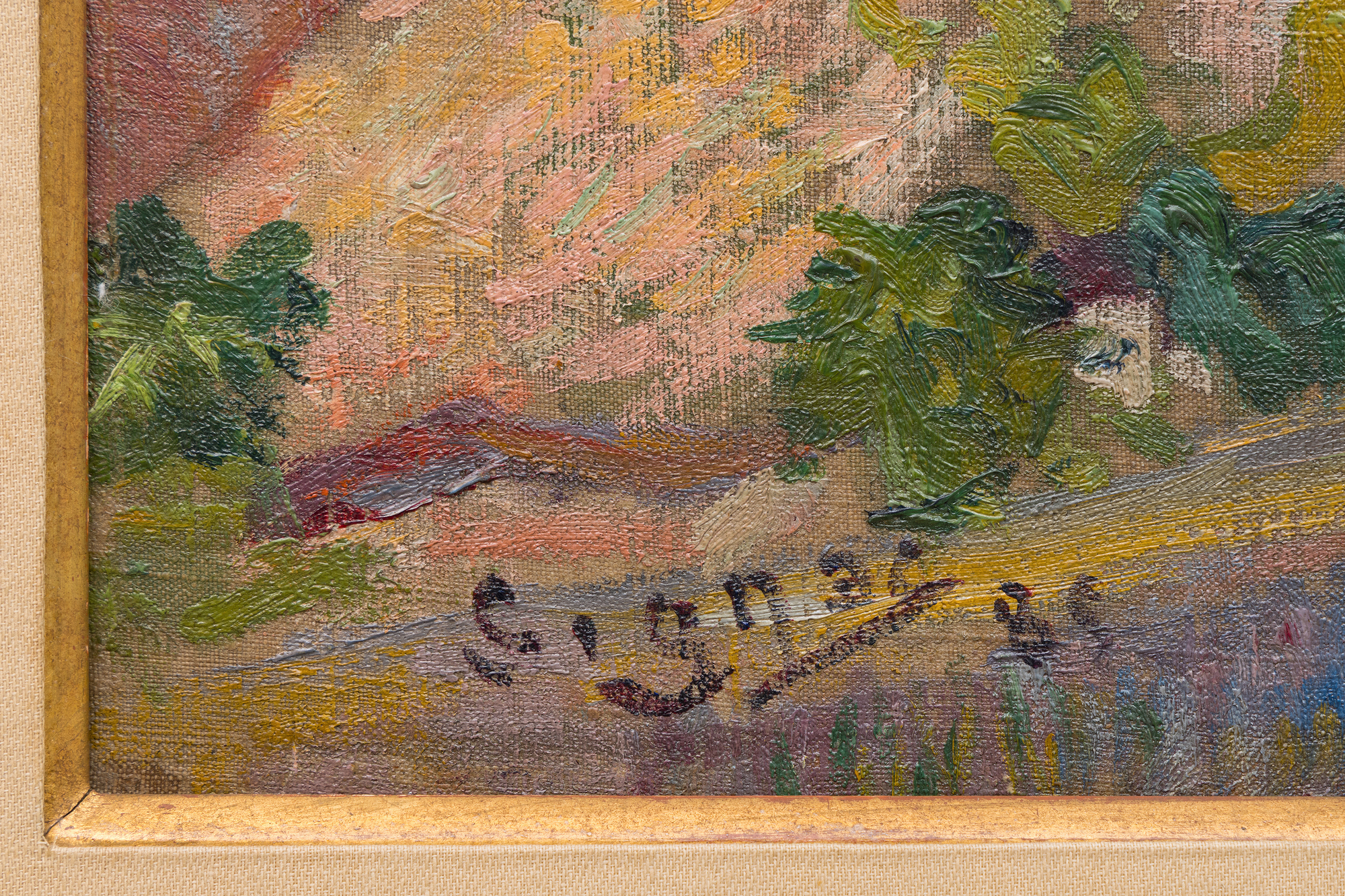
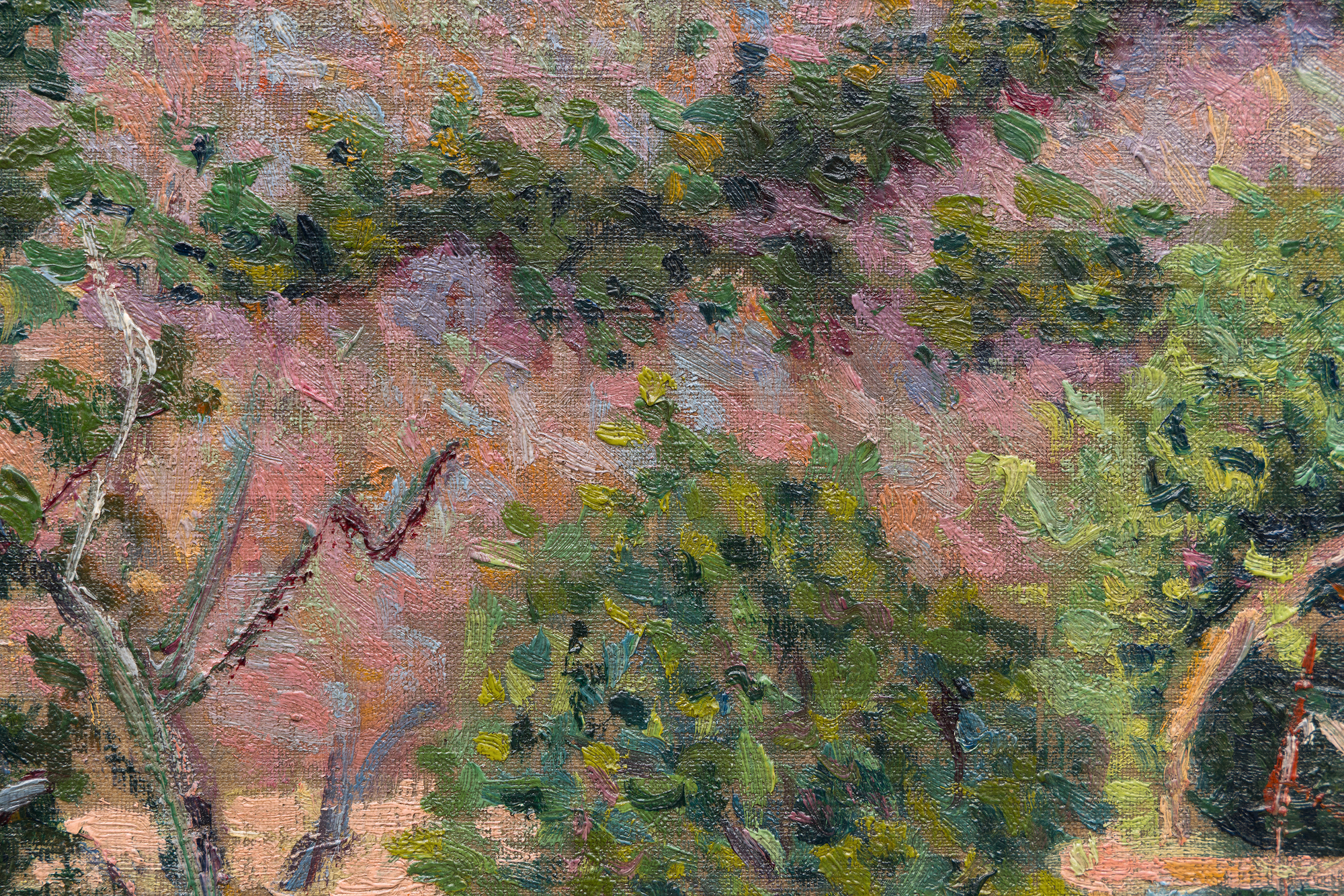
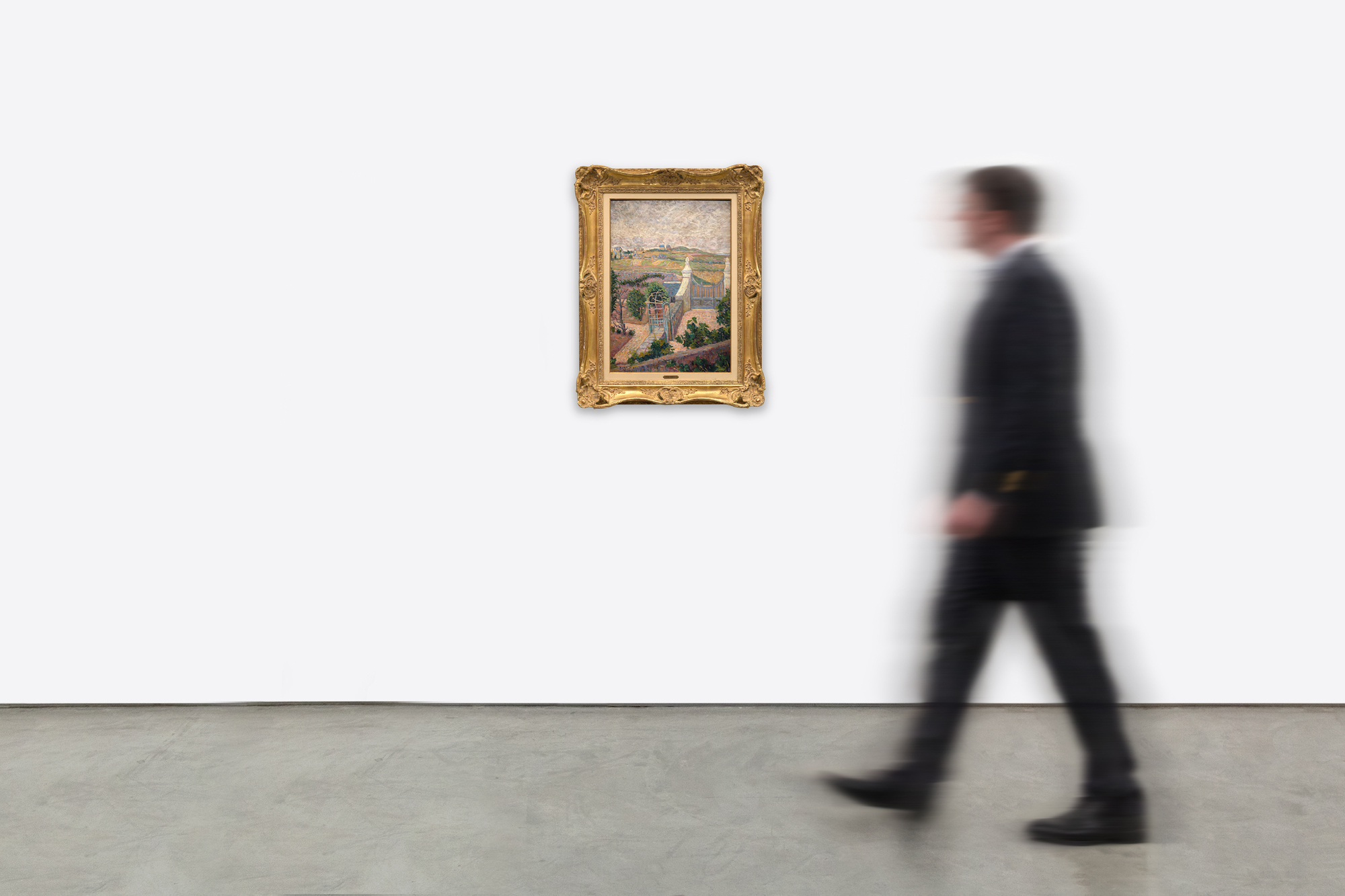
サン=ブリアックある風188525 1/2 x 18 1/8 in.(64.77 x 46.04 cm)キャンバスに油彩
出所
ジュール・リヴィエール、カーニュ
パリ、オテル・ドルオ、1956年3月23日、ロット103
プライベートコレクション、上記より入手
パリ、オテル・ドルーオ、1990年6月19日、出品番号130
スイス、プライベートコレクション
ハンペル・ファインアート・オークション、ミュンヘン、2017年4月29日、ロット6
個人コレクション、上記より入手
ハンペル・ファインアート・オークション、ミュンヘン、2018年9月26日、ロット602
プライベートコレクション、上記より入手
サザビーズ・ニューヨーク2023年11月14日(火)、ロット306
プライベートコレクション
...もっとその。。。以上
展示会
ニューヨーク、アメリカン・アート・ギャラリー、パリの印象派による油彩とパステルの作品、1886年、70号、18頁(タイトルは「私の窓から)
文学
フランシス・ソアとアシェット『芸術のコンネサンス』パリ、1956年、61ページ。
ソフィー・モンヌレ『印象派とその時代』国際辞典第2巻、パリ、1980年、255ページ
オテル・ドルーオ、『オテル・ドルーオ・ガゼット』XLIV巻、パリ、1990年、21号
Françoise Cachin, Signac.Catalogue raisonné de l'oeuvre peint, Paris, 2000, no.
...少ない。。。
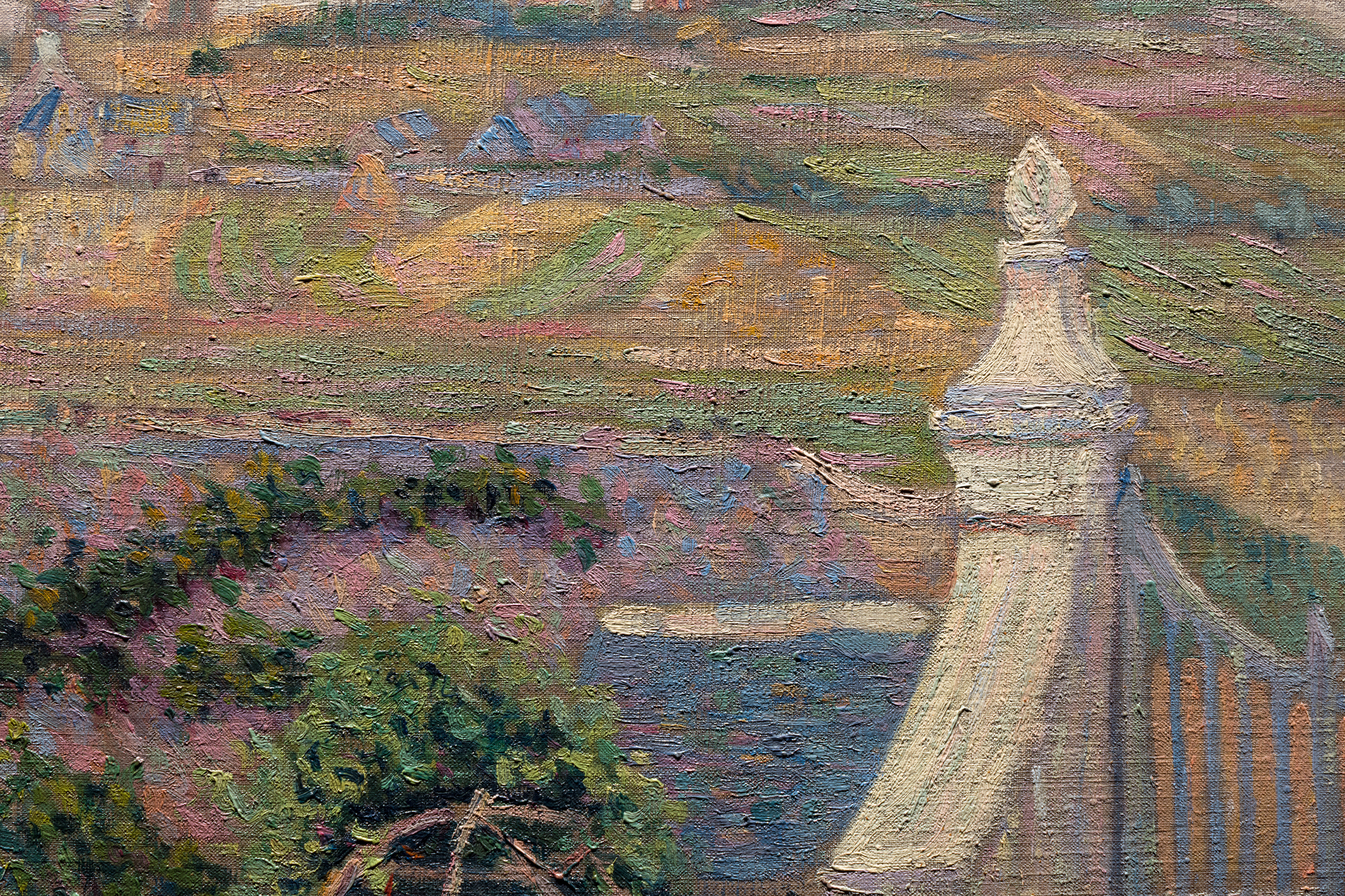
ポール・シニャックのサン=ブリアック。D'une fenêtre』(1885年)は、印象派から新印象派へと画家が変貌を遂げる極めて重要な時期に、ブルトンの風景の静かな美しさを捉えた作品である。ブルターニュの海岸沿いの村、サン=ブリアック=シュル=メールに頻繁に滞在していた時期に描かれたこの作品は、点描画の技法を完全に受け入れる前の、光、色彩、雰囲気の戯れに対するシニャックの初期の魅力を反映している。窓から眺めるように額装された構図は、構造化された幾何学と絵画的な自発性のバランスを保ち、自然界の秩序と調和に対する画家の関心の高まりを示唆している。


この作品はかつてフランスの作曲家・指揮者のジュール・リヴィエールが所有していたもので、『Connaissance des Arts』(1956年)、ソフィー・モンヌレの『L'Impressionisme et son époque』(1980年)、フランソワーズ・カシャンの『Signac』など、主要な美術史のテキストで論じられている:Catalogue raisonné de l'oeuvre peint (2000)があり、No.102.同じサン=ブリアックのシリーズから、メトロポリタン美術館、シカゴ美術館、カーネギー美術館に同様の作品が所蔵されている。これらの作品を総合すると、シニャックがやがて新印象派を特徴づける構造化された輝きへと移行し、近代絵画の主要な革新者の一人としての地位を確実なものにしたことがわかる。
お 問い合わせ