戻る

マルク・シャガール (1887-1985)

$795,000

 
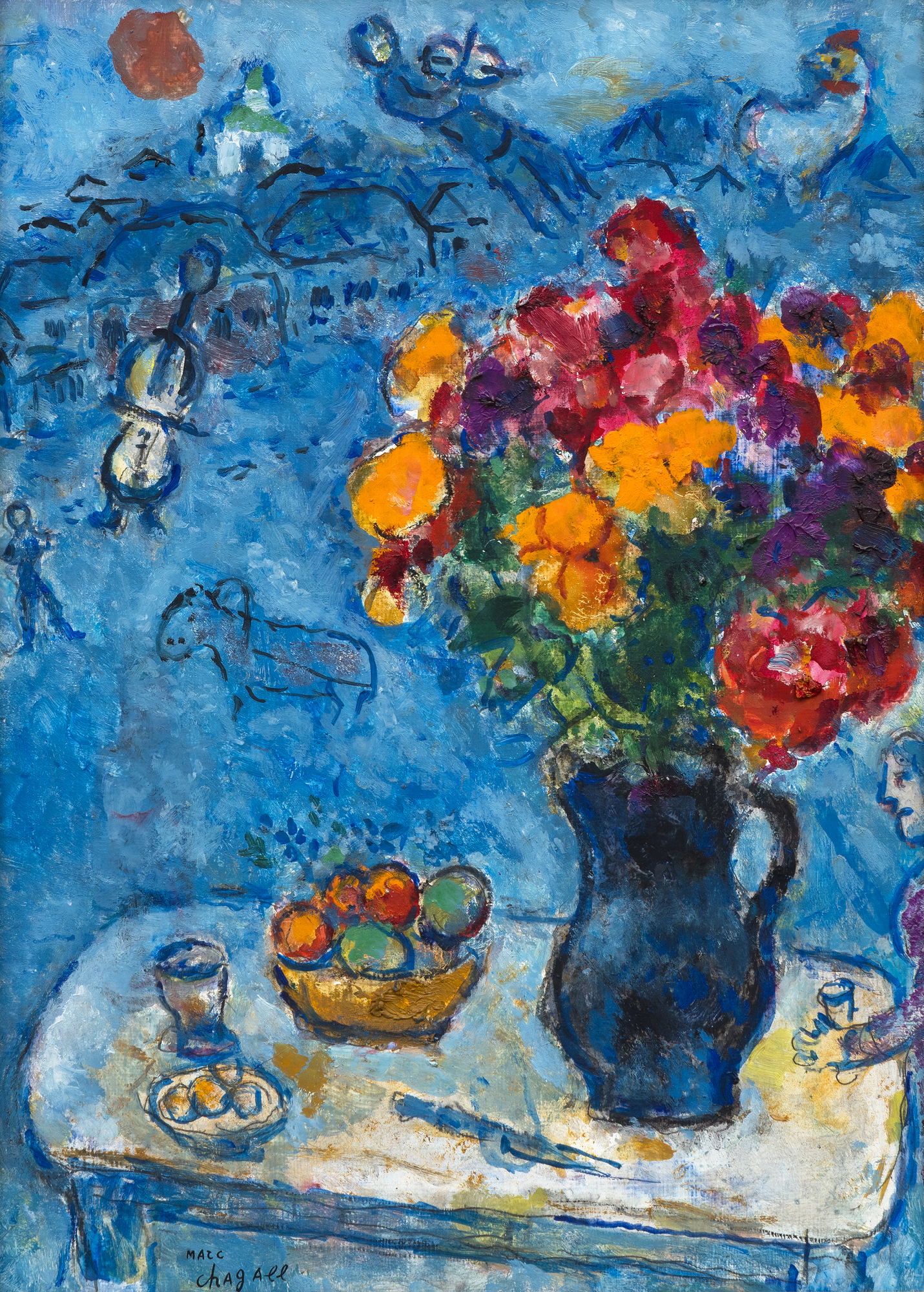
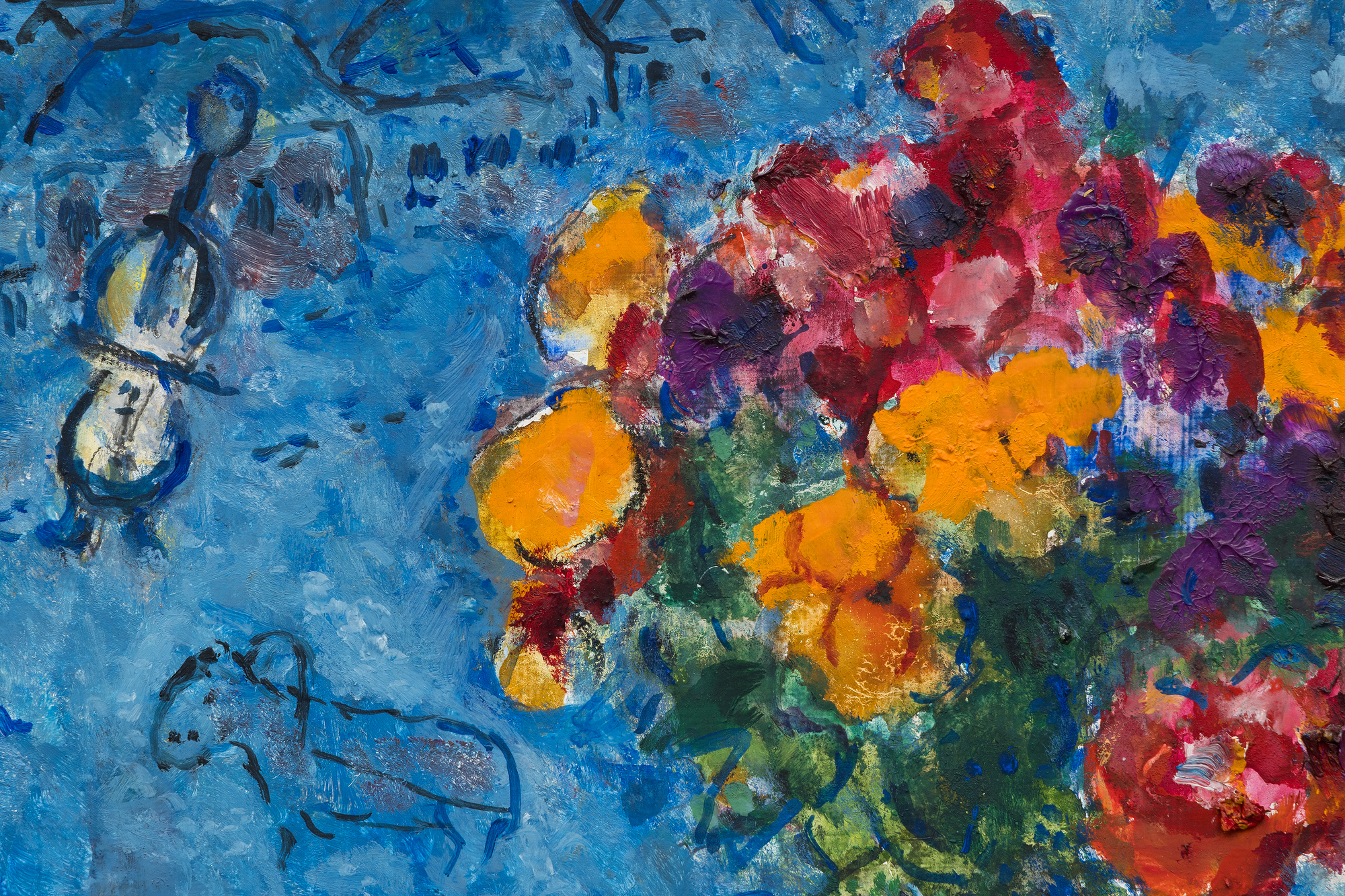
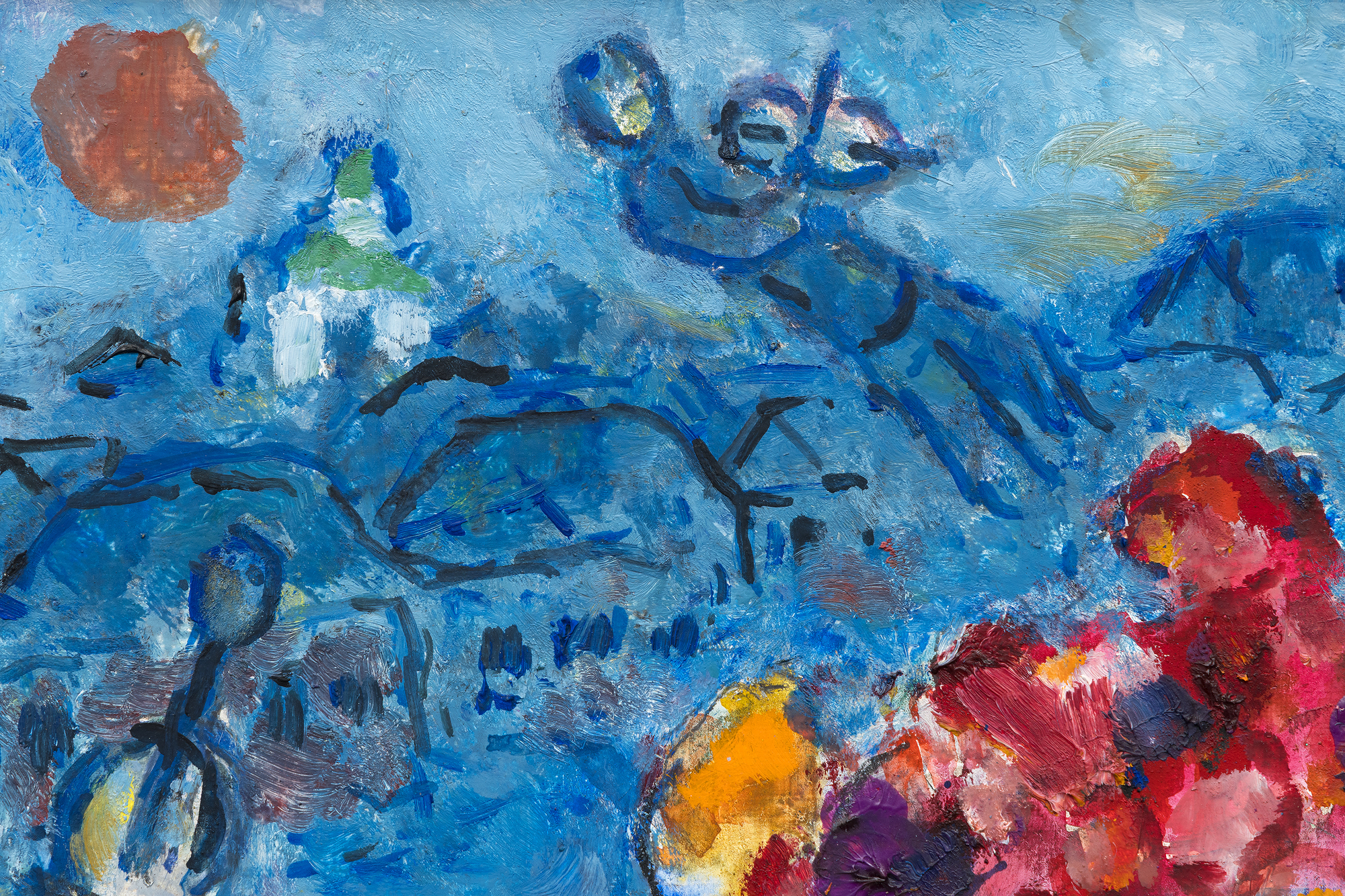
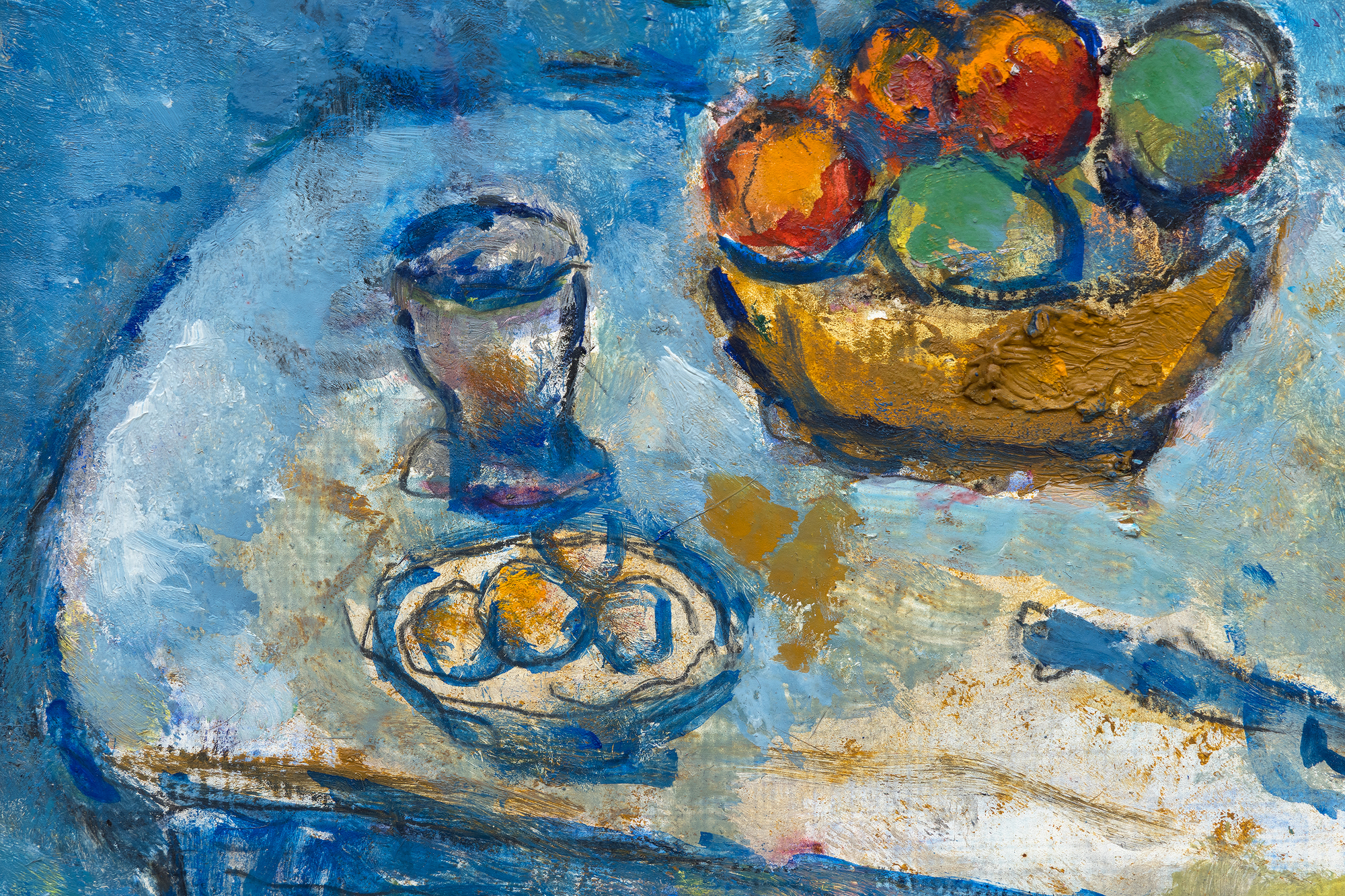
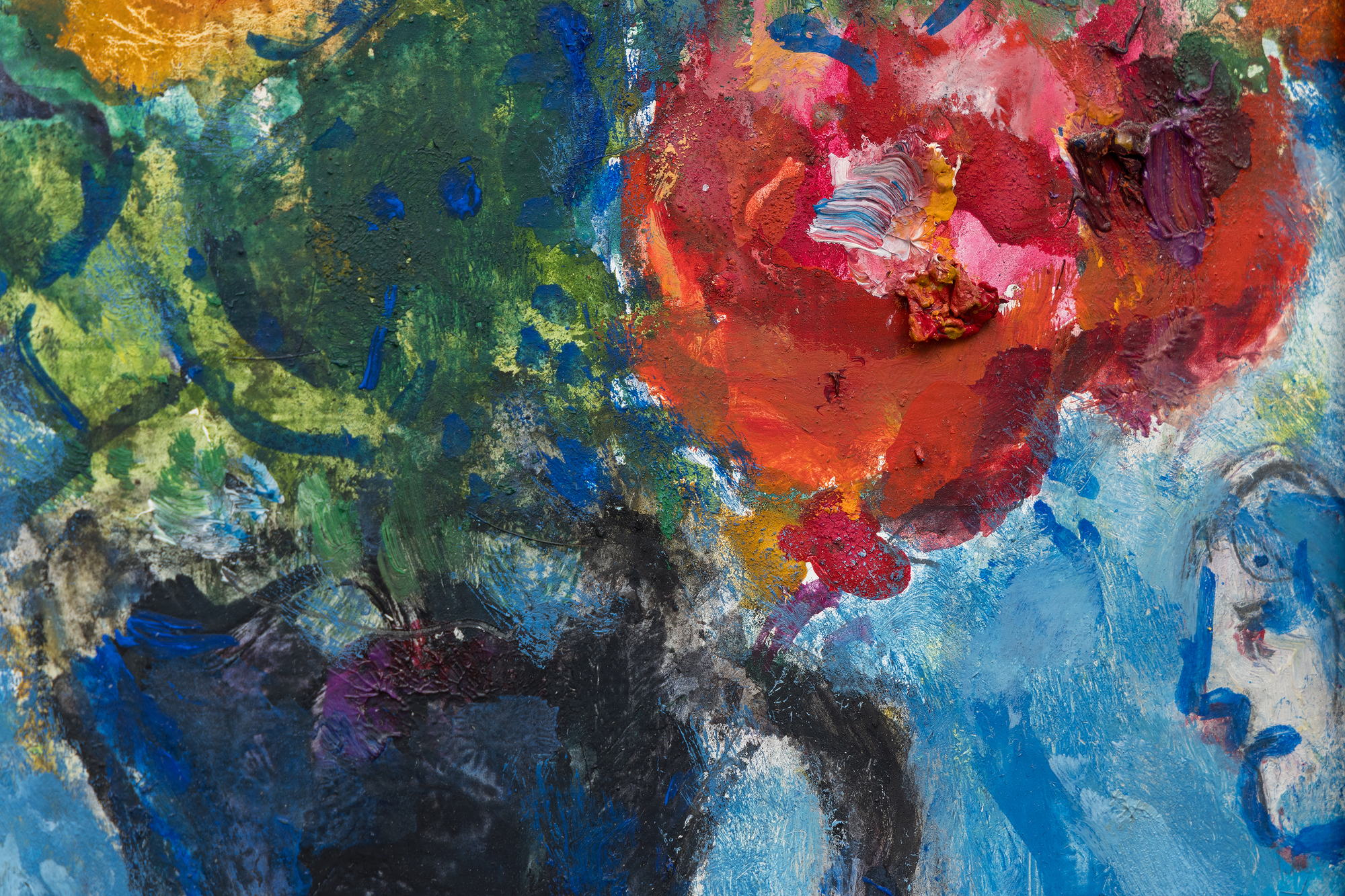
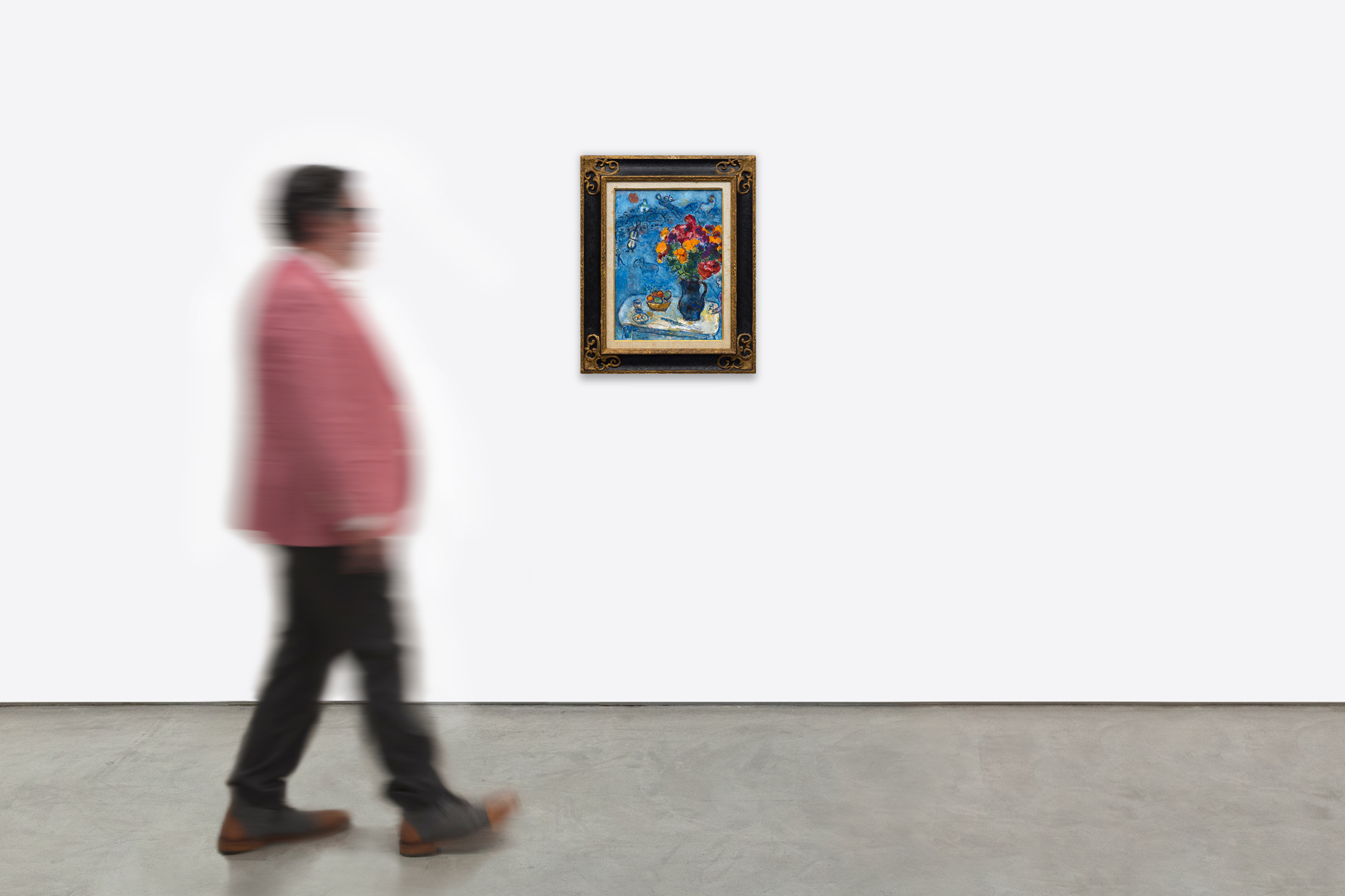
<div><font face=Lato size=3 color=black>Marc Chagall’s <em>Sur la table</em> is a radiant celebration of color, memory, and imagination. Bathed in a deep blue palette, the painting brings together several of the artist’s most beloved motifs: a rooster, violinist, goat, and exuberant bouquet. The composition is animated with Chagall’s signature sense of movement and dreamlike harmony, creating a world where everyday life, folklore, and love coexist in vibrant equilibrium.</font></div><br><br><div> </div><br><br><div><font face=Lato size=3 color=black>Painted in a richly productive period just after Chagall’s return to his homeland in the early 1970s, <em>Sur la table</em> reflects the renewed emotional and visual energy that came from reconnecting with his roots in Vitebsk, represented here by the white domed church in the distance. The expansive bouquet, one of Chagall’s enduring symbols of love for his first wife, Bella, dominates the foreground and infuses the work with emotional warmth and vitality.</font></div><br><br><div> </div><br><br><div><font face=Lato size=3 color=black>The painting remained in Chagall’s own collection and estate until after his death in 1985, underscoring its personal significance. Authenticated by the Comité Marc Chagall, <em>Sur la table</em> belongs to a lineage of floral and symbolic compositions that define his mature work.</font></div> <div><font face=Lato size=3 color=black>Marc Chagall’s <em>Sur la table</em> is a radiant celebration of color, memory, and imagination. Bathed in a deep blue palette, the painting brings together several of the artist’s most beloved motifs: a rooster, violinist, goat, and exuberant bouquet. The composition is animated with Chagall’s signature sense of movement and dreamlike harmony, creating a world where everyday life, folklore, and love coexist in vibrant equilibrium.</font></div><br><br><div> </div><br><br><div><font face=Lato size=3 color=black>Painted in a richly productive period just after Chagall’s return to his homeland in the early 1970s, <em>Sur la table</em> reflects the renewed emotional and visual energy that came from reconnecting with his roots in Vitebsk, represented here by the white domed church in the distance. The expansive bouquet, one of Chagall’s enduring symbols of love for his first wife, Bella, dominates the foreground and infuses the work with emotional warmth and vitality.</font></div><br><br><div> </div><br><br><div><font face=Lato size=3 color=black>The painting remained in Chagall’s own collection and estate until after his death in 1985, underscoring its personal significance. Authenticated by the Comité Marc Chagall, <em>Sur la table</em> belongs to a lineage of floral and symbolic compositions that define his mature work.</font></div> <div><font face=Lato size=3 color=black>Marc Chagall’s <em>Sur la table</em> is a radiant celebration of color, memory, and imagination. Bathed in a deep blue palette, the painting brings together several of the artist’s most beloved motifs: a rooster, violinist, goat, and exuberant bouquet. The composition is animated with Chagall’s signature sense of movement and dreamlike harmony, creating a world where everyday life, folklore, and love coexist in vibrant equilibrium.</font></div><br><br><div> </div><br><br><div><font face=Lato size=3 color=black>Painted in a richly productive period just after Chagall’s return to his homeland in the early 1970s, <em>Sur la table</em> reflects the renewed emotional and visual energy that came from reconnecting with his roots in Vitebsk, represented here by the white domed church in the distance. The expansive bouquet, one of Chagall’s enduring symbols of love for his first wife, Bella, dominates the foreground and infuses the work with emotional warmth and vitality.</font></div><br><br><div> </div><br><br><div><font face=Lato size=3 color=black>The painting remained in Chagall’s own collection and estate until after his death in 1985, underscoring its personal significance. Authenticated by the Comité Marc Chagall, <em>Sur la table</em> belongs to a lineage of floral and symbolic compositions that define his mature work.</font></div> <div><font face=Lato size=3 color=black>Marc Chagall’s <em>Sur la table</em> is a radiant celebration of color, memory, and imagination. Bathed in a deep blue palette, the painting brings together several of the artist’s most beloved motifs: a rooster, violinist, goat, and exuberant bouquet. The composition is animated with Chagall’s signature sense of movement and dreamlike harmony, creating a world where everyday life, folklore, and love coexist in vibrant equilibrium.</font></div><br><br><div> </div><br><br><div><font face=Lato size=3 color=black>Painted in a richly productive period just after Chagall’s return to his homeland in the early 1970s, <em>Sur la table</em> reflects the renewed emotional and visual energy that came from reconnecting with his roots in Vitebsk, represented here by the white domed church in the distance. The expansive bouquet, one of Chagall’s enduring symbols of love for his first wife, Bella, dominates the foreground and infuses the work with emotional warmth and vitality.</font></div><br><br><div> </div><br><br><div><font face=Lato size=3 color=black>The painting remained in Chagall’s own collection and estate until after his death in 1985, underscoring its personal significance. Authenticated by the Comité Marc Chagall, <em>Sur la table</em> belongs to a lineage of floral and symbolic compositions that define his mature work.</font></div> <div><font face=Lato size=3 color=black>Marc Chagall’s <em>Sur la table</em> is a radiant celebration of color, memory, and imagination. Bathed in a deep blue palette, the painting brings together several of the artist’s most beloved motifs: a rooster, violinist, goat, and exuberant bouquet. The composition is animated with Chagall’s signature sense of movement and dreamlike harmony, creating a world where everyday life, folklore, and love coexist in vibrant equilibrium.</font></div><br><br><div> </div><br><br><div><font face=Lato size=3 color=black>Painted in a richly productive period just after Chagall’s return to his homeland in the early 1970s, <em>Sur la table</em> reflects the renewed emotional and visual energy that came from reconnecting with his roots in Vitebsk, represented here by the white domed church in the distance. The expansive bouquet, one of Chagall’s enduring symbols of love for his first wife, Bella, dominates the foreground and infuses the work with emotional warmth and vitality.</font></div><br><br><div> </div><br><br><div><font face=Lato size=3 color=black>The painting remained in Chagall’s own collection and estate until after his death in 1985, underscoring its personal significance. Authenticated by the Comité Marc Chagall, <em>Sur la table</em> belongs to a lineage of floral and symbolic compositions that define his mature work.</font></div> <div><font face=Lato size=3 color=black>Marc Chagall’s <em>Sur la table</em> is a radiant celebration of color, memory, and imagination. Bathed in a deep blue palette, the painting brings together several of the artist’s most beloved motifs: a rooster, violinist, goat, and exuberant bouquet. The composition is animated with Chagall’s signature sense of movement and dreamlike harmony, creating a world where everyday life, folklore, and love coexist in vibrant equilibrium.</font></div><br><br><div> </div><br><br><div><font face=Lato size=3 color=black>Painted in a richly productive period just after Chagall’s return to his homeland in the early 1970s, <em>Sur la table</em> reflects the renewed emotional and visual energy that came from reconnecting with his roots in Vitebsk, represented here by the white domed church in the distance. The expansive bouquet, one of Chagall’s enduring symbols of love for his first wife, Bella, dominates the foreground and infuses the work with emotional warmth and vitality.</font></div><br><br><div> </div><br><br><div><font face=Lato size=3 color=black>The painting remained in Chagall’s own collection and estate until after his death in 1985, underscoring its personal significance. Authenticated by the Comité Marc Chagall, <em>Sur la table</em> belongs to a lineage of floral and symbolic compositions that define his mature work.</font></div> <div><font face=Lato size=3 color=black>Marc Chagall’s <em>Sur la table</em> is a radiant celebration of color, memory, and imagination. Bathed in a deep blue palette, the painting brings together several of the artist’s most beloved motifs: a rooster, violinist, goat, and exuberant bouquet. The composition is animated with Chagall’s signature sense of movement and dreamlike harmony, creating a world where everyday life, folklore, and love coexist in vibrant equilibrium.</font></div><br><br><div> </div><br><br><div><font face=Lato size=3 color=black>Painted in a richly productive period just after Chagall’s return to his homeland in the early 1970s, <em>Sur la table</em> reflects the renewed emotional and visual energy that came from reconnecting with his roots in Vitebsk, represented here by the white domed church in the distance. The expansive bouquet, one of Chagall’s enduring symbols of love for his first wife, Bella, dominates the foreground and infuses the work with emotional warmth and vitality.</font></div><br><br><div> </div><br><br><div><font face=Lato size=3 color=black>The painting remained in Chagall’s own collection and estate until after his death in 1985, underscoring its personal significance. Authenticated by the Comité Marc Chagall, <em>Sur la table</em> belongs to a lineage of floral and symbolic compositions that define his mature work.</font></div> <div><font face=Lato size=3 color=black>Marc Chagall’s <em>Sur la table</em> is a radiant celebration of color, memory, and imagination. Bathed in a deep blue palette, the painting brings together several of the artist’s most beloved motifs: a rooster, violinist, goat, and exuberant bouquet. The composition is animated with Chagall’s signature sense of movement and dreamlike harmony, creating a world where everyday life, folklore, and love coexist in vibrant equilibrium.</font></div><br><br><div> </div><br><br><div><font face=Lato size=3 color=black>Painted in a richly productive period just after Chagall’s return to his homeland in the early 1970s, <em>Sur la table</em> reflects the renewed emotional and visual energy that came from reconnecting with his roots in Vitebsk, represented here by the white domed church in the distance. The expansive bouquet, one of Chagall’s enduring symbols of love for his first wife, Bella, dominates the foreground and infuses the work with emotional warmth and vitality.</font></div><br><br><div> </div><br><br><div><font face=Lato size=3 color=black>The painting remained in Chagall’s own collection and estate until after his death in 1985, underscoring its personal significance. Authenticated by the Comité Marc Chagall, <em>Sur la table</em> belongs to a lineage of floral and symbolic compositions that define his mature work.</font></div> <div><font face=Lato size=3 color=black>Marc Chagall’s <em>Sur la table</em> is a radiant celebration of color, memory, and imagination. Bathed in a deep blue palette, the painting brings together several of the artist’s most beloved motifs: a rooster, violinist, goat, and exuberant bouquet. The composition is animated with Chagall’s signature sense of movement and dreamlike harmony, creating a world where everyday life, folklore, and love coexist in vibrant equilibrium.</font></div><br><br><div> </div><br><br><div><font face=Lato size=3 color=black>Painted in a richly productive period just after Chagall’s return to his homeland in the early 1970s, <em>Sur la table</em> reflects the renewed emotional and visual energy that came from reconnecting with his roots in Vitebsk, represented here by the white domed church in the distance. The expansive bouquet, one of Chagall’s enduring symbols of love for his first wife, Bella, dominates the foreground and infuses the work with emotional warmth and vitality.</font></div><br><br><div> </div><br><br><div><font face=Lato size=3 color=black>The painting remained in Chagall’s own collection and estate until after his death in 1985, underscoring its personal significance. Authenticated by the Comité Marc Chagall, <em>Sur la table</em> belongs to a lineage of floral and symbolic compositions that define his mature work.</font></div> <div><font face=Lato size=3 color=black>Marc Chagall’s <em>Sur la table</em> is a radiant celebration of color, memory, and imagination. Bathed in a deep blue palette, the painting brings together several of the artist’s most beloved motifs: a rooster, violinist, goat, and exuberant bouquet. The composition is animated with Chagall’s signature sense of movement and dreamlike harmony, creating a world where everyday life, folklore, and love coexist in vibrant equilibrium.</font></div><br><br><div> </div><br><br><div><font face=Lato size=3 color=black>Painted in a richly productive period just after Chagall’s return to his homeland in the early 1970s, <em>Sur la table</em> reflects the renewed emotional and visual energy that came from reconnecting with his roots in Vitebsk, represented here by the white domed church in the distance. The expansive bouquet, one of Chagall’s enduring symbols of love for his first wife, Bella, dominates the foreground and infuses the work with emotional warmth and vitality.</font></div><br><br><div> </div><br><br><div><font face=Lato size=3 color=black>The painting remained in Chagall’s own collection and estate until after his death in 1985, underscoring its personal significance. Authenticated by the Comité Marc Chagall, <em>Sur la table</em> belongs to a lineage of floral and symbolic compositions that define his mature work.</font></div>
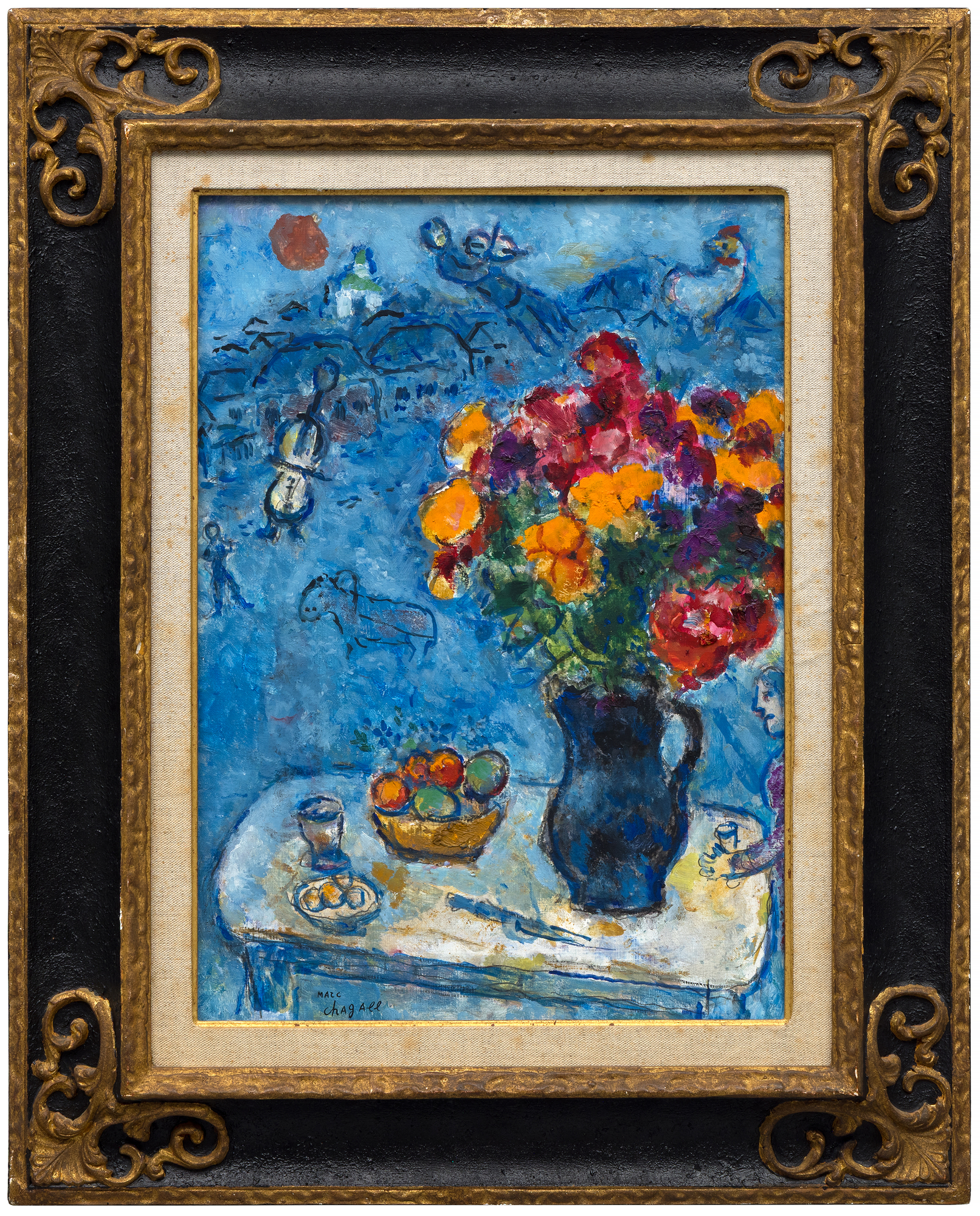
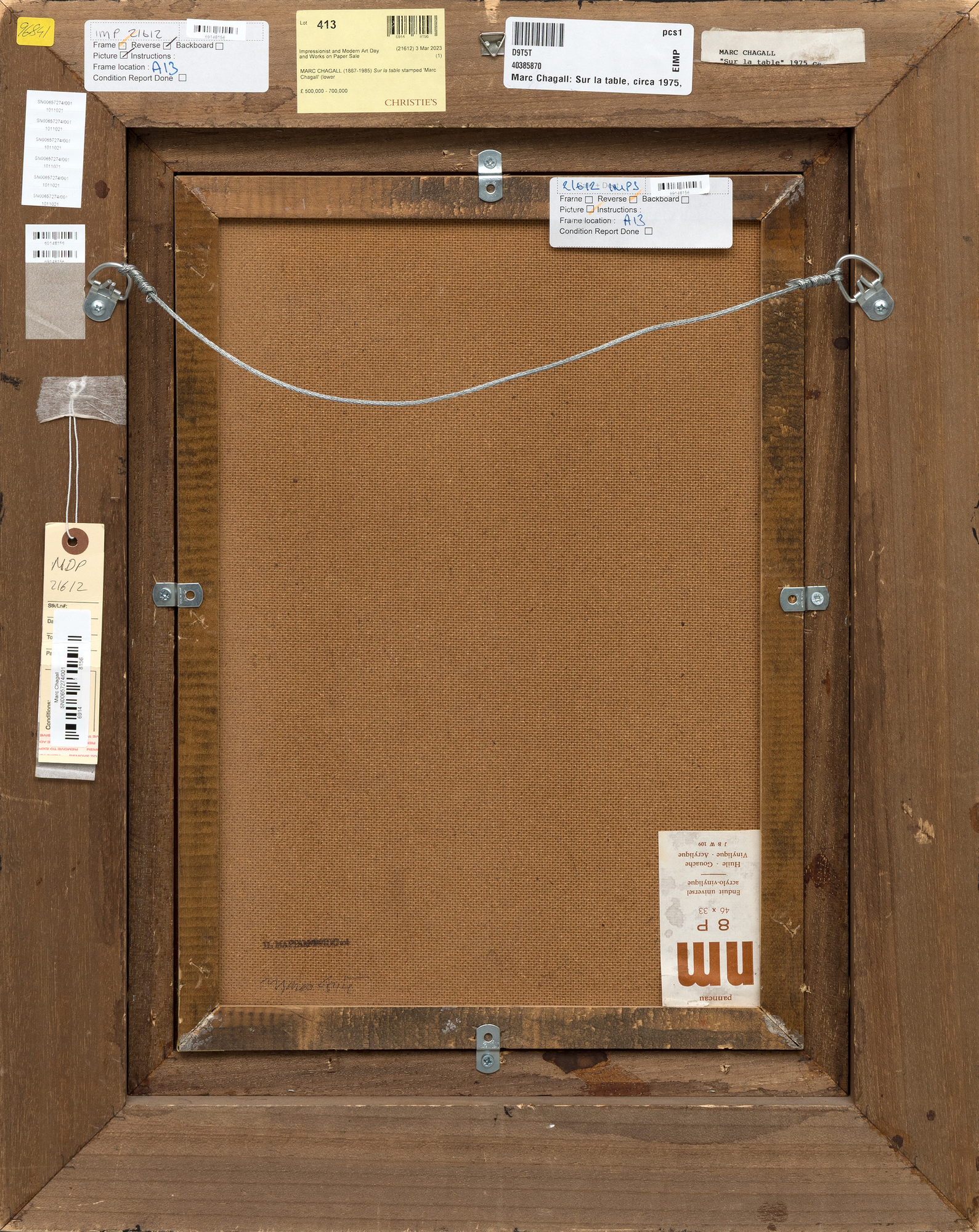
テーブルの上1975年頃17 3/4 x 12 3/4 インチ(45.09 x 32.39 cm) 板に油彩
出所
アーティストの遺産
コンティーニ・アート・ギャラリー(メストレ)
個人コレクション(パドヴァ)
ガレリア・イル・マッパモンド(ミラノ)
個人コレクション(ミラノ)
個人コレクション(上記より取得)
マルク・シャガールの『食卓の上』は、色彩と記憶と想像力を讃える輝かしい祝祭である。深い青のパレットに包まれたこの絵画には、雄鶏、バイオリニスト、山羊、そして華やかな花束など、作家が最も愛したモチーフの数々が集結している。シャガール特有の躍動感と夢幻的な調和が構図に息吹を与え、日常生活と民俗伝承、そして愛が鮮やかな均衡の中で共存する世界を創り出している。


1970年代初頭に故郷へ帰還した直後の創作意欲が旺盛な時期に描かれた本作『食卓の上』は、ヴィテブスクのルーツとの再接続から生まれた新たな情感と視覚的エネルギーを反映している。遠景に浮かぶ白いドームの教会が、そのルーツを象徴している。 前景を支配する巨大な花束は、シャガールが最初の妻ベラへの愛を象徴する不朽のモチーフであり、作品全体に情感あふれる温もりと生命力を吹き込んでいる。


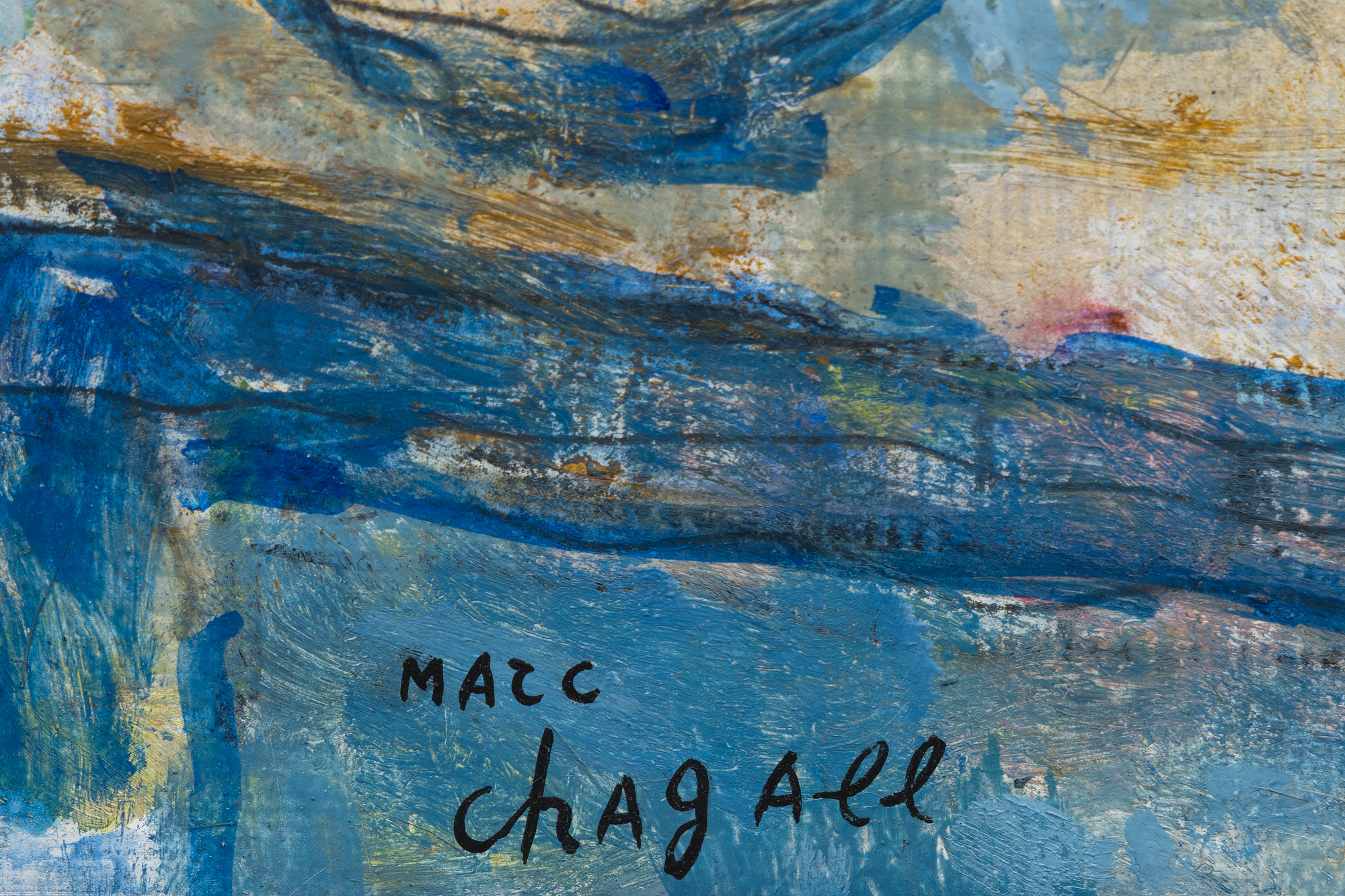
この作品は1985年のシャガール没後まで彼自身のコレクションと遺産に留まり、その個人的意義を物語っている。マルク・シャガール委員会により真正性が認められた『食卓の上』は、彼の成熟期を定義づける花と象徴を題材とした一連の作品群に属する。
お 問い合わせ