戻る

ジョージ・イネス (1825-1894)

 
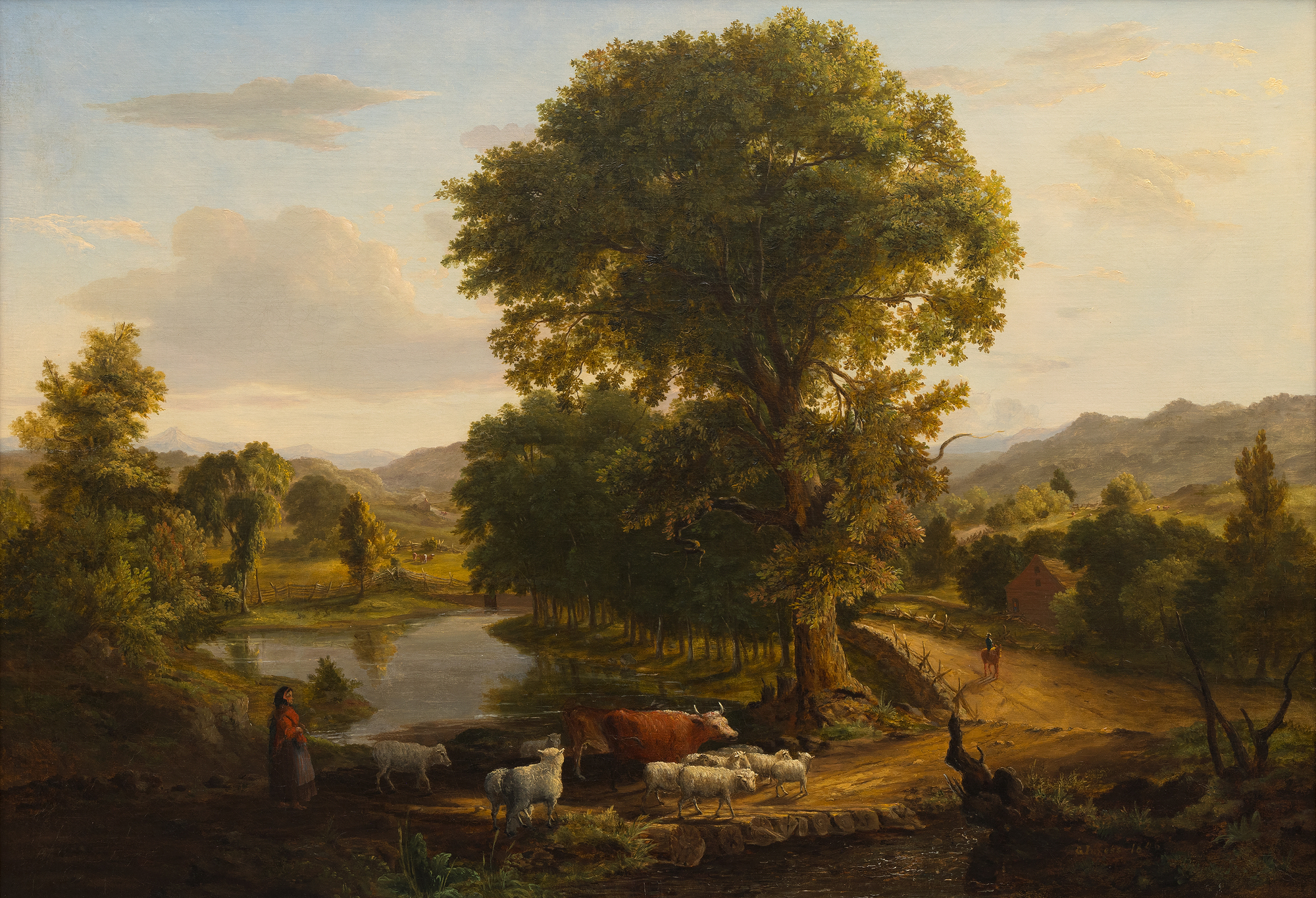
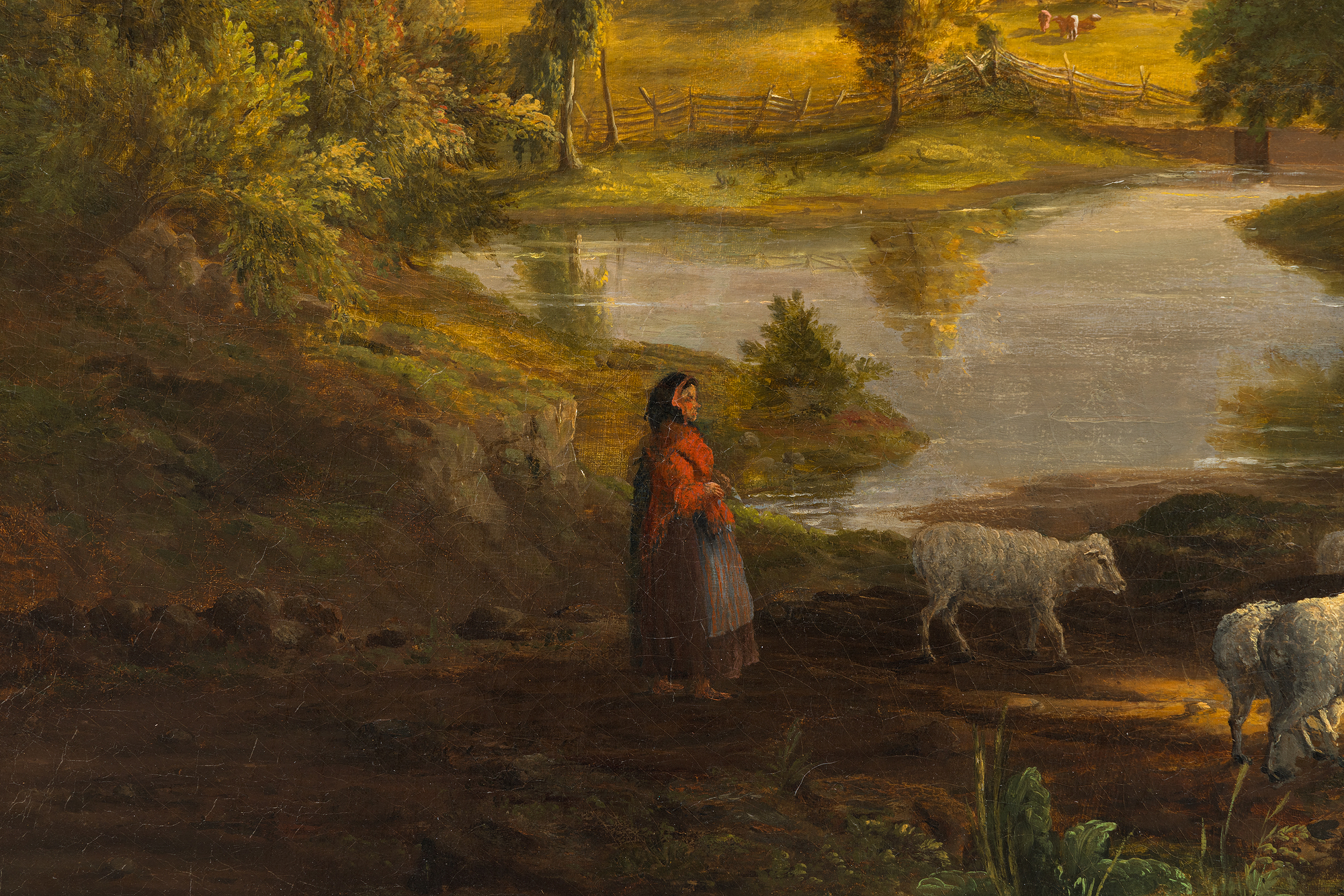
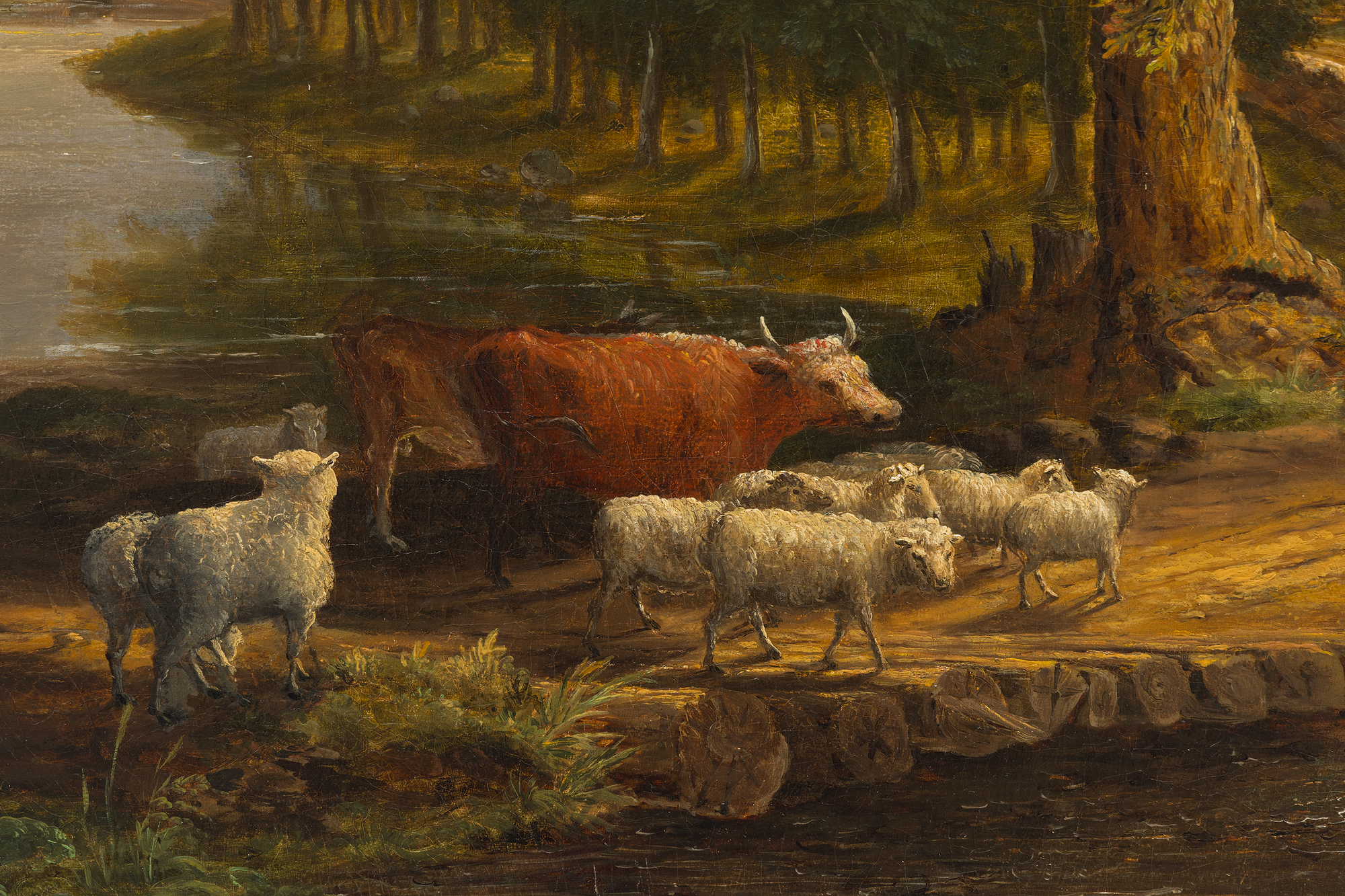
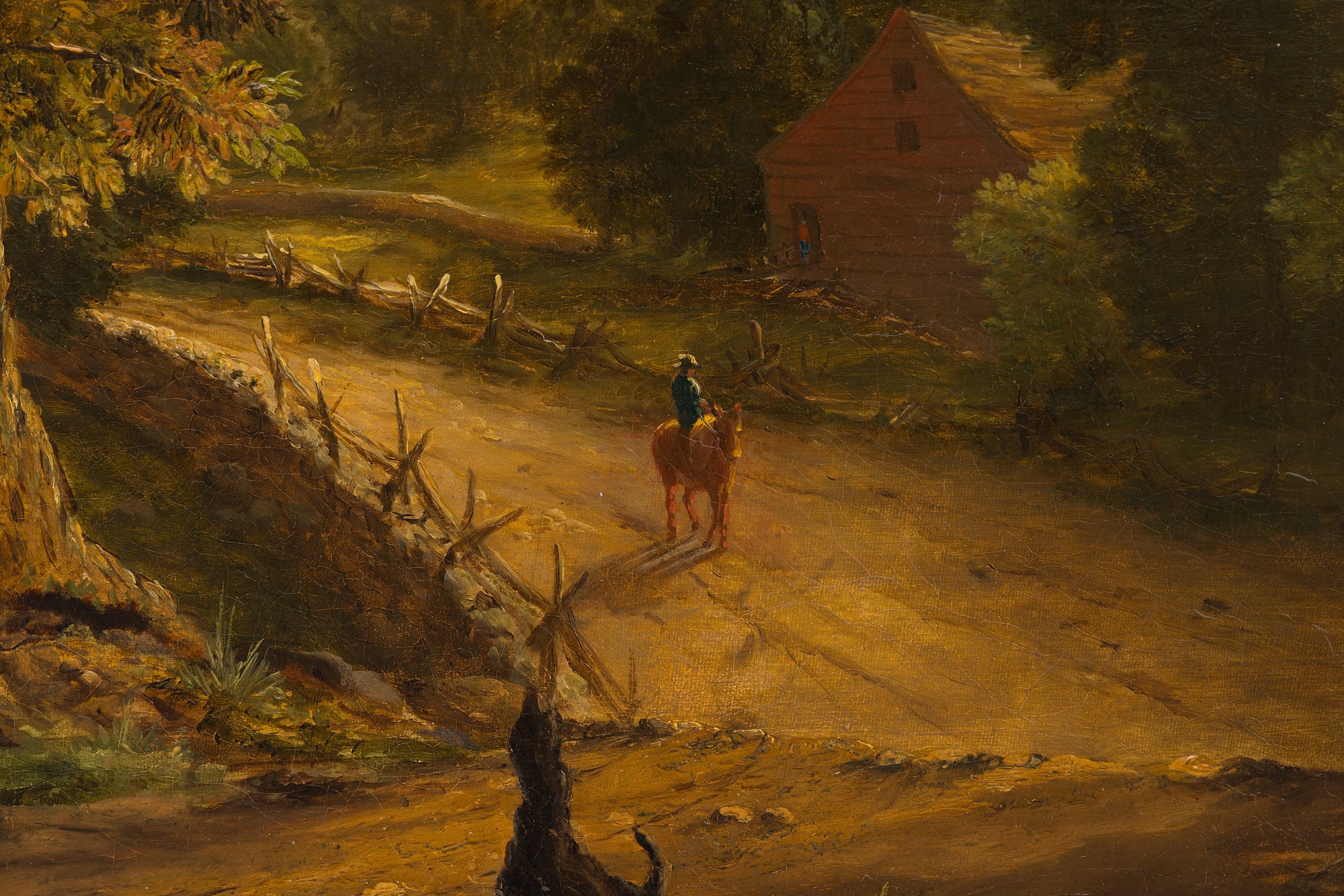
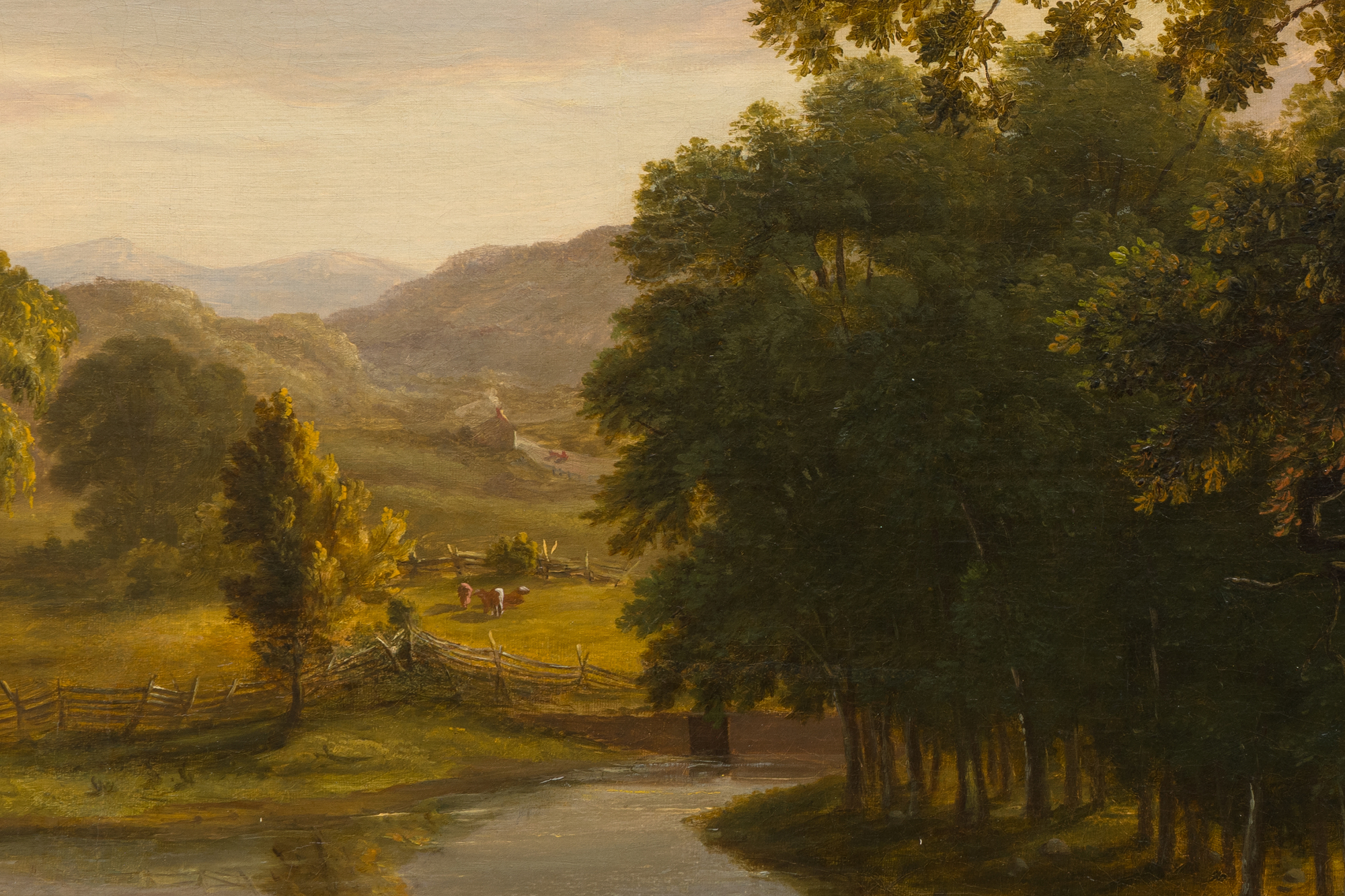
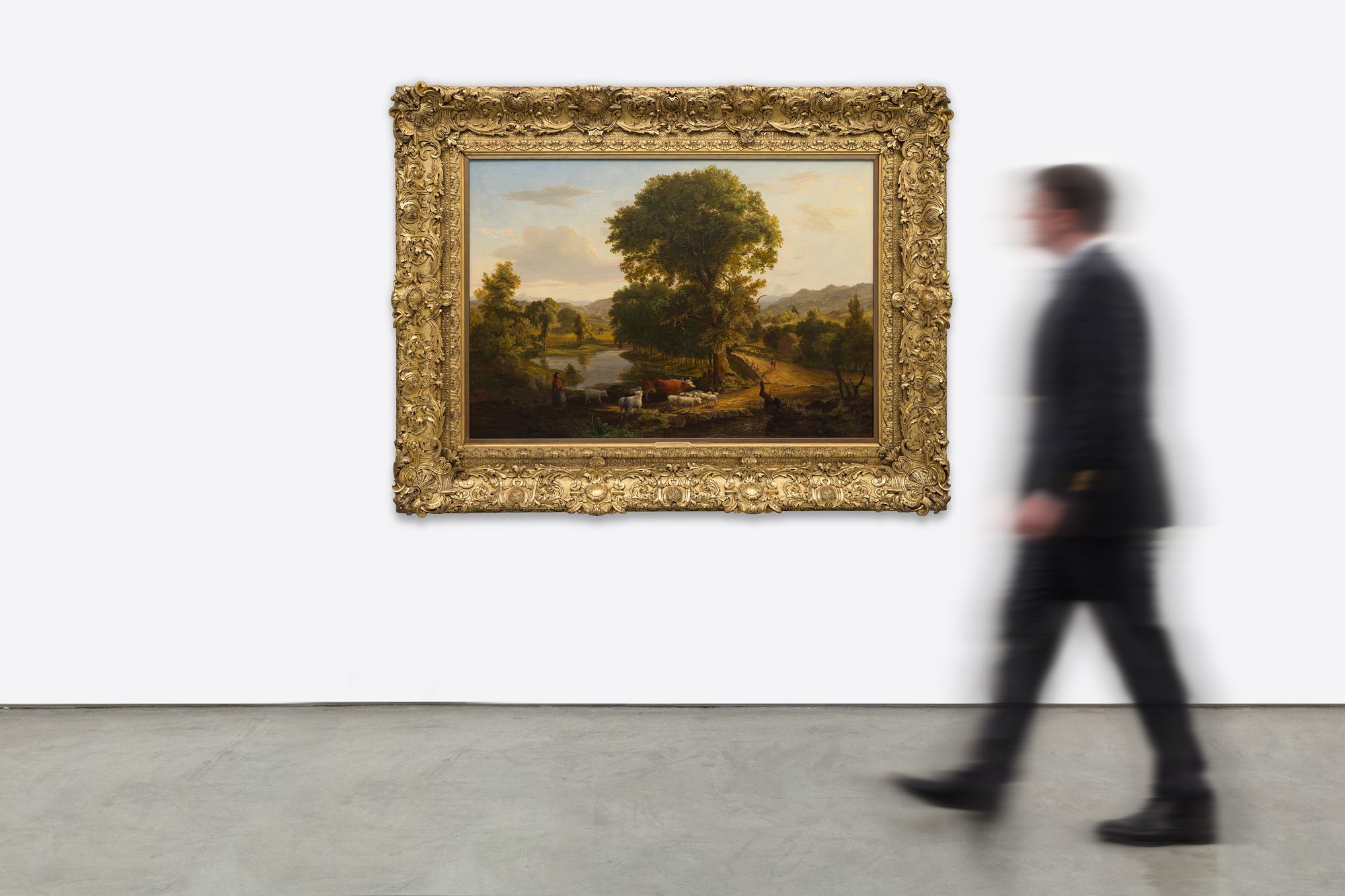
<div><font face=Lato size=3 color=black><em>Afternoon</em> is a rare early painting by George Inness, created when the artist was only twenty one and actively shaping the foundations of his career. Although largely self-taught, Inness was immersed in a transformative period during the mid-eighteen forties, studying at the National Academy of Design in New York where he closely observed the work of Hudson River School painters such as Thomas Cole and Asher Durand. This moment marked his first public exhibitions at the Academy in 1844, followed by the opening of his own studio in 1848, placing <em>Afternoon</em> squarely within the formative years in which his artistic voice began to emerge.</font></div><br><br><div> </div><br><br><div><font face=Lato size=3 color=black>The painting also reflects the subtle influence of French landscaper Regis Francois Gignoux, under whom the young Inness studied before making his first trip to Europe in 1851. This early training helped shape the atmospheric sensitivity and poetic naturalism that would later define his mature style.</font></div><br><br><div> </div><br><br><div><font face=Lato size=3 color=black><em>Afternoon</em> carries distinguished provenance, having passed through the collections of several important nineteenth and early twentieth century New Yorkers, including politician Cornelius Gardiner, financier and philanthropist Emerson McMillian, and later the philanthropist Agnes Ladson Dana. This lineage, combined with the paintings exceptional early date, makes it an especially significant example from the beginning of Innesss enduring contribution to American landscape painting.</font></div> <div><font face=Lato size=3 color=black><em>Afternoon</em> is a rare early painting by George Inness, created when the artist was only twenty one and actively shaping the foundations of his career. Although largely self-taught, Inness was immersed in a transformative period during the mid-eighteen forties, studying at the National Academy of Design in New York where he closely observed the work of Hudson River School painters such as Thomas Cole and Asher Durand. This moment marked his first public exhibitions at the Academy in 1844, followed by the opening of his own studio in 1848, placing <em>Afternoon</em> squarely within the formative years in which his artistic voice began to emerge.</font></div><br><br><div> </div><br><br><div><font face=Lato size=3 color=black>The painting also reflects the subtle influence of French landscaper Regis Francois Gignoux, under whom the young Inness studied before making his first trip to Europe in 1851. This early training helped shape the atmospheric sensitivity and poetic naturalism that would later define his mature style.</font></div><br><br><div> </div><br><br><div><font face=Lato size=3 color=black><em>Afternoon</em> carries distinguished provenance, having passed through the collections of several important nineteenth and early twentieth century New Yorkers, including politician Cornelius Gardiner, financier and philanthropist Emerson McMillian, and later the philanthropist Agnes Ladson Dana. This lineage, combined with the paintings exceptional early date, makes it an especially significant example from the beginning of Innesss enduring contribution to American landscape painting.</font></div> <div><font face=Lato size=3 color=black><em>Afternoon</em> is a rare early painting by George Inness, created when the artist was only twenty one and actively shaping the foundations of his career. Although largely self-taught, Inness was immersed in a transformative period during the mid-eighteen forties, studying at the National Academy of Design in New York where he closely observed the work of Hudson River School painters such as Thomas Cole and Asher Durand. This moment marked his first public exhibitions at the Academy in 1844, followed by the opening of his own studio in 1848, placing <em>Afternoon</em> squarely within the formative years in which his artistic voice began to emerge.</font></div><br><br><div> </div><br><br><div><font face=Lato size=3 color=black>The painting also reflects the subtle influence of French landscaper Regis Francois Gignoux, under whom the young Inness studied before making his first trip to Europe in 1851. This early training helped shape the atmospheric sensitivity and poetic naturalism that would later define his mature style.</font></div><br><br><div> </div><br><br><div><font face=Lato size=3 color=black><em>Afternoon</em> carries distinguished provenance, having passed through the collections of several important nineteenth and early twentieth century New Yorkers, including politician Cornelius Gardiner, financier and philanthropist Emerson McMillian, and later the philanthropist Agnes Ladson Dana. This lineage, combined with the paintings exceptional early date, makes it an especially significant example from the beginning of Innesss enduring contribution to American landscape painting.</font></div> <div><font face=Lato size=3 color=black><em>Afternoon</em> is a rare early painting by George Inness, created when the artist was only twenty one and actively shaping the foundations of his career. Although largely self-taught, Inness was immersed in a transformative period during the mid-eighteen forties, studying at the National Academy of Design in New York where he closely observed the work of Hudson River School painters such as Thomas Cole and Asher Durand. This moment marked his first public exhibitions at the Academy in 1844, followed by the opening of his own studio in 1848, placing <em>Afternoon</em> squarely within the formative years in which his artistic voice began to emerge.</font></div><br><br><div> </div><br><br><div><font face=Lato size=3 color=black>The painting also reflects the subtle influence of French landscaper Regis Francois Gignoux, under whom the young Inness studied before making his first trip to Europe in 1851. This early training helped shape the atmospheric sensitivity and poetic naturalism that would later define his mature style.</font></div><br><br><div> </div><br><br><div><font face=Lato size=3 color=black><em>Afternoon</em> carries distinguished provenance, having passed through the collections of several important nineteenth and early twentieth century New Yorkers, including politician Cornelius Gardiner, financier and philanthropist Emerson McMillian, and later the philanthropist Agnes Ladson Dana. This lineage, combined with the paintings exceptional early date, makes it an especially significant example from the beginning of Innesss enduring contribution to American landscape painting.</font></div> <div><font face=Lato size=3 color=black><em>Afternoon</em> is a rare early painting by George Inness, created when the artist was only twenty one and actively shaping the foundations of his career. Although largely self-taught, Inness was immersed in a transformative period during the mid-eighteen forties, studying at the National Academy of Design in New York where he closely observed the work of Hudson River School painters such as Thomas Cole and Asher Durand. This moment marked his first public exhibitions at the Academy in 1844, followed by the opening of his own studio in 1848, placing <em>Afternoon</em> squarely within the formative years in which his artistic voice began to emerge.</font></div><br><br><div> </div><br><br><div><font face=Lato size=3 color=black>The painting also reflects the subtle influence of French landscaper Regis Francois Gignoux, under whom the young Inness studied before making his first trip to Europe in 1851. This early training helped shape the atmospheric sensitivity and poetic naturalism that would later define his mature style.</font></div><br><br><div> </div><br><br><div><font face=Lato size=3 color=black><em>Afternoon</em> carries distinguished provenance, having passed through the collections of several important nineteenth and early twentieth century New Yorkers, including politician Cornelius Gardiner, financier and philanthropist Emerson McMillian, and later the philanthropist Agnes Ladson Dana. This lineage, combined with the paintings exceptional early date, makes it an especially significant example from the beginning of Innesss enduring contribution to American landscape painting.</font></div> <div><font face=Lato size=3 color=black><em>Afternoon</em> is a rare early painting by George Inness, created when the artist was only twenty one and actively shaping the foundations of his career. Although largely self-taught, Inness was immersed in a transformative period during the mid-eighteen forties, studying at the National Academy of Design in New York where he closely observed the work of Hudson River School painters such as Thomas Cole and Asher Durand. This moment marked his first public exhibitions at the Academy in 1844, followed by the opening of his own studio in 1848, placing <em>Afternoon</em> squarely within the formative years in which his artistic voice began to emerge.</font></div><br><br><div> </div><br><br><div><font face=Lato size=3 color=black>The painting also reflects the subtle influence of French landscaper Regis Francois Gignoux, under whom the young Inness studied before making his first trip to Europe in 1851. This early training helped shape the atmospheric sensitivity and poetic naturalism that would later define his mature style.</font></div><br><br><div> </div><br><br><div><font face=Lato size=3 color=black><em>Afternoon</em> carries distinguished provenance, having passed through the collections of several important nineteenth and early twentieth century New Yorkers, including politician Cornelius Gardiner, financier and philanthropist Emerson McMillian, and later the philanthropist Agnes Ladson Dana. This lineage, combined with the paintings exceptional early date, makes it an especially significant example from the beginning of Innesss enduring contribution to American landscape painting.</font></div> <div><font face=Lato size=3 color=black><em>Afternoon</em> is a rare early painting by George Inness, created when the artist was only twenty one and actively shaping the foundations of his career. Although largely self-taught, Inness was immersed in a transformative period during the mid-eighteen forties, studying at the National Academy of Design in New York where he closely observed the work of Hudson River School painters such as Thomas Cole and Asher Durand. This moment marked his first public exhibitions at the Academy in 1844, followed by the opening of his own studio in 1848, placing <em>Afternoon</em> squarely within the formative years in which his artistic voice began to emerge.</font></div><br><br><div> </div><br><br><div><font face=Lato size=3 color=black>The painting also reflects the subtle influence of French landscaper Regis Francois Gignoux, under whom the young Inness studied before making his first trip to Europe in 1851. This early training helped shape the atmospheric sensitivity and poetic naturalism that would later define his mature style.</font></div><br><br><div> </div><br><br><div><font face=Lato size=3 color=black><em>Afternoon</em> carries distinguished provenance, having passed through the collections of several important nineteenth and early twentieth century New Yorkers, including politician Cornelius Gardiner, financier and philanthropist Emerson McMillian, and later the philanthropist Agnes Ladson Dana. This lineage, combined with the paintings exceptional early date, makes it an especially significant example from the beginning of Innesss enduring contribution to American landscape painting.</font></div> <div><font face=Lato size=3 color=black><em>Afternoon</em> is a rare early painting by George Inness, created when the artist was only twenty one and actively shaping the foundations of his career. Although largely self-taught, Inness was immersed in a transformative period during the mid-eighteen forties, studying at the National Academy of Design in New York where he closely observed the work of Hudson River School painters such as Thomas Cole and Asher Durand. This moment marked his first public exhibitions at the Academy in 1844, followed by the opening of his own studio in 1848, placing <em>Afternoon</em> squarely within the formative years in which his artistic voice began to emerge.</font></div><br><br><div> </div><br><br><div><font face=Lato size=3 color=black>The painting also reflects the subtle influence of French landscaper Regis Francois Gignoux, under whom the young Inness studied before making his first trip to Europe in 1851. This early training helped shape the atmospheric sensitivity and poetic naturalism that would later define his mature style.</font></div><br><br><div> </div><br><br><div><font face=Lato size=3 color=black><em>Afternoon</em> carries distinguished provenance, having passed through the collections of several important nineteenth and early twentieth century New Yorkers, including politician Cornelius Gardiner, financier and philanthropist Emerson McMillian, and later the philanthropist Agnes Ladson Dana. This lineage, combined with the paintings exceptional early date, makes it an especially significant example from the beginning of Innesss enduring contribution to American landscape painting.</font></div> <div><font face=Lato size=3 color=black><em>Afternoon</em> is a rare early painting by George Inness, created when the artist was only twenty one and actively shaping the foundations of his career. Although largely self-taught, Inness was immersed in a transformative period during the mid-eighteen forties, studying at the National Academy of Design in New York where he closely observed the work of Hudson River School painters such as Thomas Cole and Asher Durand. This moment marked his first public exhibitions at the Academy in 1844, followed by the opening of his own studio in 1848, placing <em>Afternoon</em> squarely within the formative years in which his artistic voice began to emerge.</font></div><br><br><div> </div><br><br><div><font face=Lato size=3 color=black>The painting also reflects the subtle influence of French landscaper Regis Francois Gignoux, under whom the young Inness studied before making his first trip to Europe in 1851. This early training helped shape the atmospheric sensitivity and poetic naturalism that would later define his mature style.</font></div><br><br><div> </div><br><br><div><font face=Lato size=3 color=black><em>Afternoon</em> carries distinguished provenance, having passed through the collections of several important nineteenth and early twentieth century New Yorkers, including politician Cornelius Gardiner, financier and philanthropist Emerson McMillian, and later the philanthropist Agnes Ladson Dana. This lineage, combined with the paintings exceptional early date, makes it an especially significant example from the beginning of Innesss enduring contribution to American landscape painting.</font></div> <div><font face=Lato size=3 color=black><em>Afternoon</em> is a rare early painting by George Inness, created when the artist was only twenty one and actively shaping the foundations of his career. Although largely self-taught, Inness was immersed in a transformative period during the mid-eighteen forties, studying at the National Academy of Design in New York where he closely observed the work of Hudson River School painters such as Thomas Cole and Asher Durand. This moment marked his first public exhibitions at the Academy in 1844, followed by the opening of his own studio in 1848, placing <em>Afternoon</em> squarely within the formative years in which his artistic voice began to emerge.</font></div><br><br><div> </div><br><br><div><font face=Lato size=3 color=black>The painting also reflects the subtle influence of French landscaper Regis Francois Gignoux, under whom the young Inness studied before making his first trip to Europe in 1851. This early training helped shape the atmospheric sensitivity and poetic naturalism that would later define his mature style.</font></div><br><br><div> </div><br><br><div><font face=Lato size=3 color=black><em>Afternoon</em> carries distinguished provenance, having passed through the collections of several important nineteenth and early twentieth century New Yorkers, including politician Cornelius Gardiner, financier and philanthropist Emerson McMillian, and later the philanthropist Agnes Ladson Dana. This lineage, combined with the paintings exceptional early date, makes it an especially significant example from the beginning of Innesss enduring contribution to American landscape painting.</font></div>
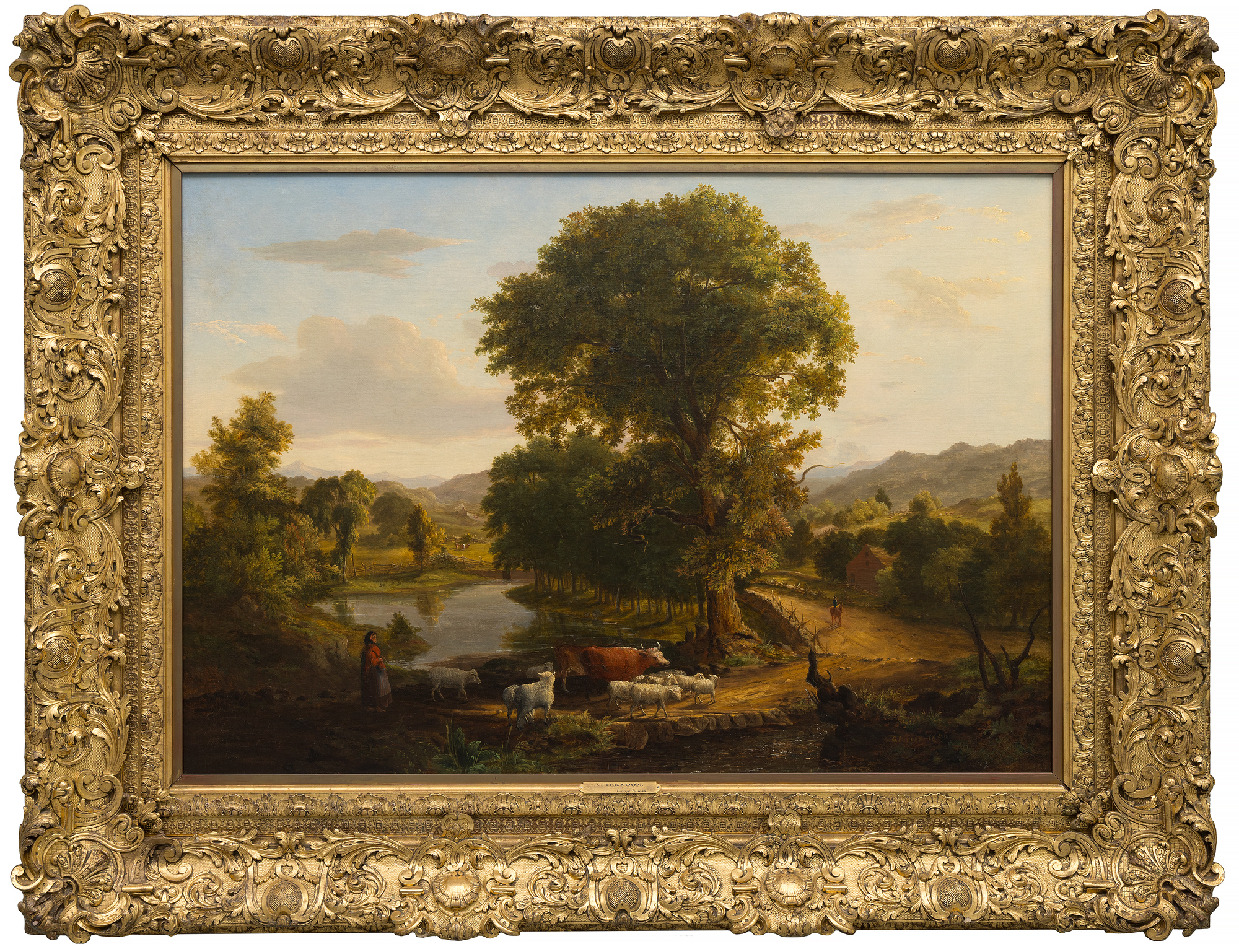
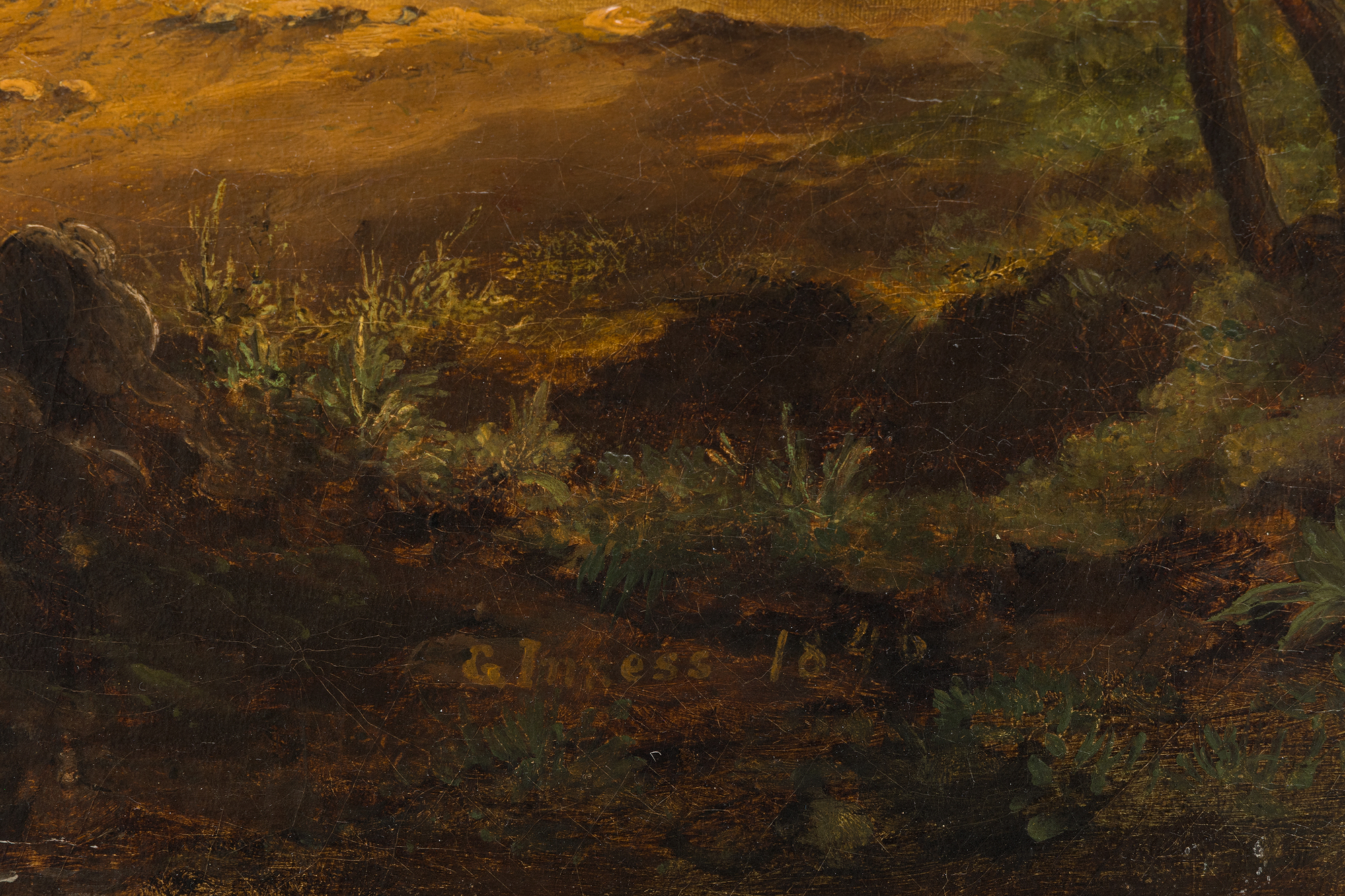
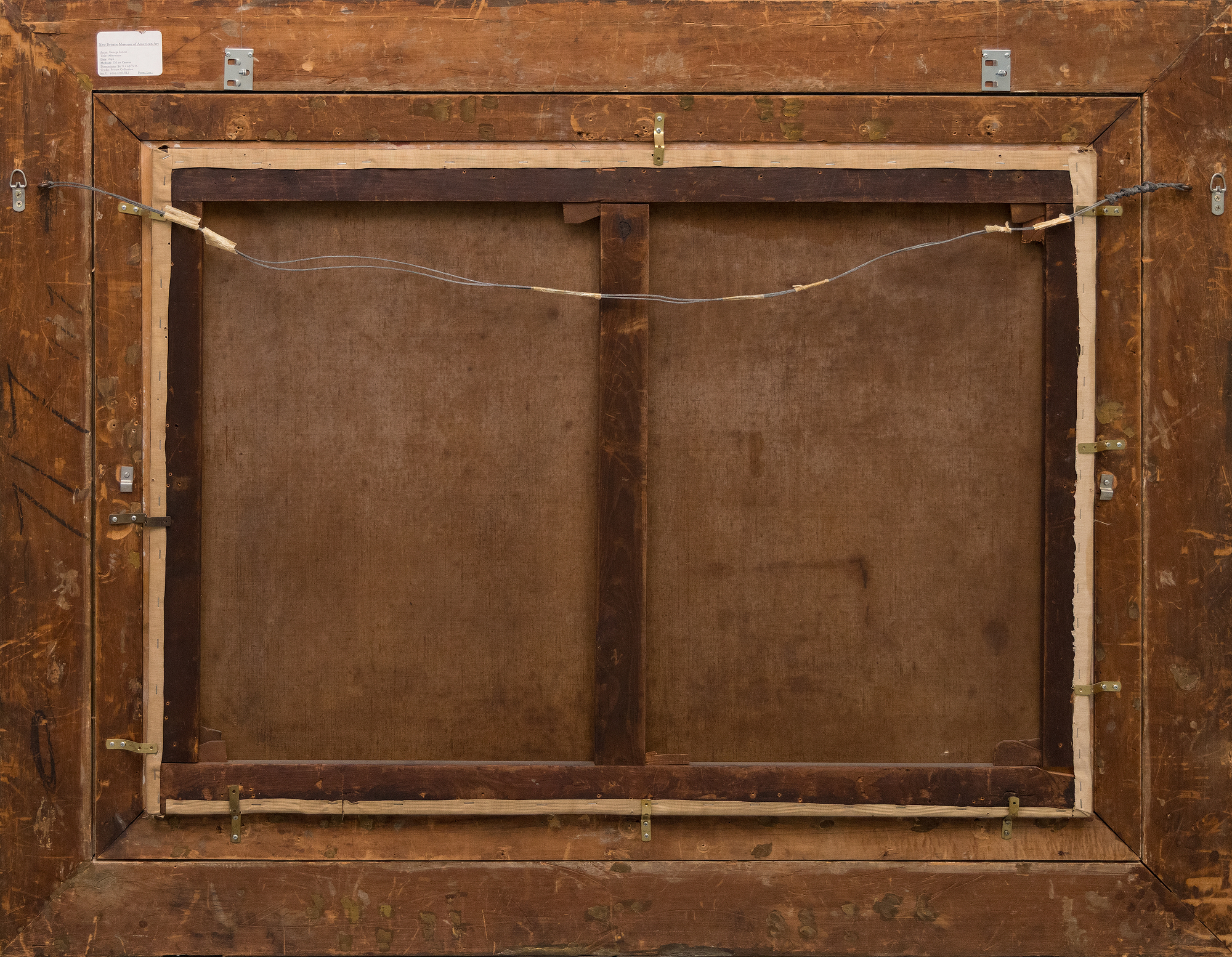
午後184634 1/2 x 49 1/4 インチ(87.63 x 125.1 cm) 油彩・キャンバス
出所
C. ガーディニア、フルトンビル、ニューヨーク、1846年
エマーソン・マクミリン、ニューヨーク
アメリカン・アート協会、ニューヨーク、マクミリン競売、1913年1月20日~23日、番号182、
ジョージ・H・エインズリー・ギャラリー、ニューヨーク
アグネス・L・ダナ、バーナーズビル、ニュージャージー州
O. ランドル・ギルバート競売人、ニューヨーク、ダナ家遺産競売、1959年5月16日
アダムソン=デュヴァネス・ギャラリー、ビバリーヒルズ、カリフォルニア州
個人コレクション、カリフォルニア州
個人コレクション、バージニア州
個人コレクション
展示会
ニューヨーク、アメリカン・アート・ユニオン、年次展覧会、1846年、作品番号6 ...もっとその。。。「風景―午後」として
ニューヨーク、全米デザインアカデミー、第21回年次展覧会、1846年、作品番号143、「風景、アメリカの夏の午後」として
文学
ルロイ・アイルランド、図版付き作品総覧、1965年、9ページ、作品番号16、図版付き
ニコライ・チコフスキー・ジュニア著『ジョージ・イネスの生涯と作品』博士論文
1965年、第6号、図版付き
マイケル・クイック、ジョージ・イネス、作品総覧:第1巻、カラー図版
...少ない。。。
『午後』はジョージ・イネスによる稀少な初期作品であり、彼がわずか21歳でキャリアの基盤を築きつつあった時期に制作された。主に独学であったイネスは、1840年代半ばという変革期にニューヨークの国立デザインアカデミーで学び、トーマス・コールやアッシャー・デュランドといったハドソン川派画家の作品を間近で観察する環境にあった。 この転機は、1844年にアカデミーで初めて公の展示会を開催し、1848年に自身のスタジオを開設したことでした。そのため、「午後」は、彼の芸術的表現が芽生え始めた形成期に制作された作品と言えます。


この絵画は、1851年に初めてヨーロッパを訪れる前に、若いイネスが師事したフランスの風景画家、レジス・フランソワ・ジニュの微妙な影響も反映しています。この初期の訓練は、後に彼の成熟したスタイルを特徴づける、雰囲気に対する感性と詩的な自然主義の形成に貢献しました。


『午後』は、政治家コーネリアス・ガーディナー、金融家であり慈善家でもあるエマーソン・マクミリアン、そして後に慈善家アグネス・ラドソン・ダナなど、19 世紀から 20 世紀初頭にかけてのニューヨークの著名な収集家たちのコレクションを経て、由緒ある来歴を誇っています。この来歴と、この絵画の非常に早い制作時期が相まって、イネスがアメリカの風景画に永続的な貢献を始めた初期の、特に重要な作品となっています。
お 問い合わせ