卡米尔·皮萨罗(1830-1903)

 
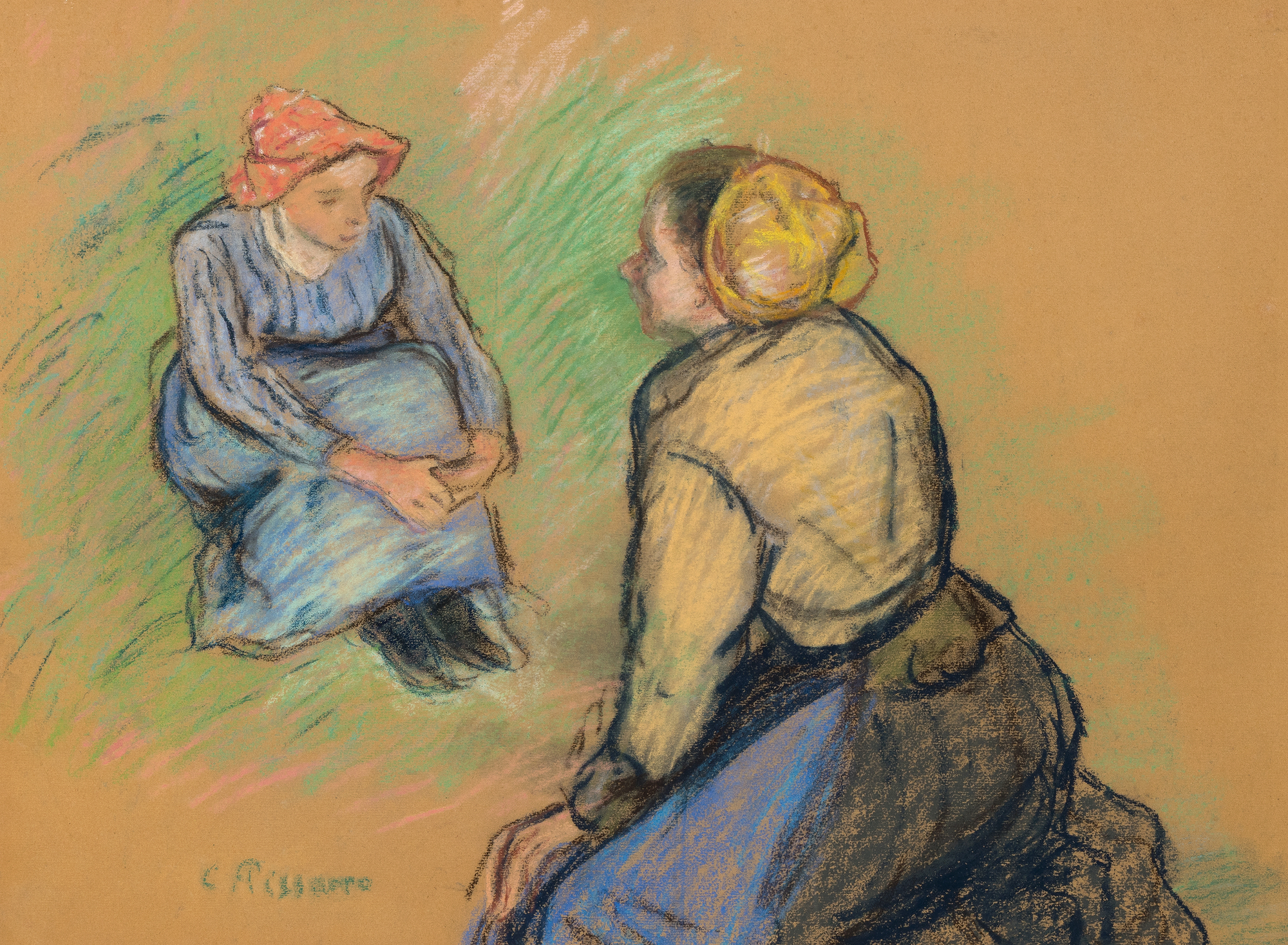
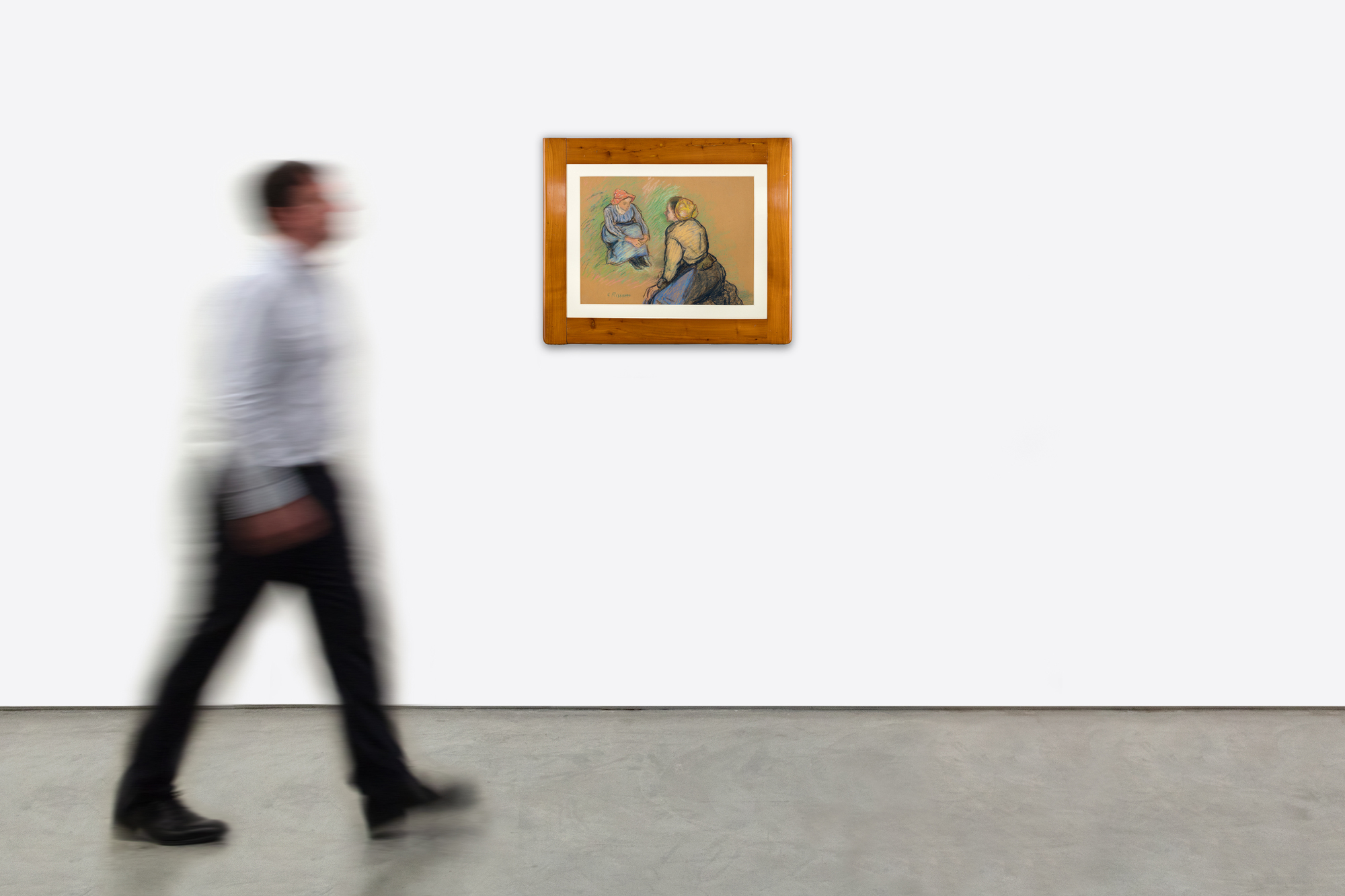
<div>Camille Pissarro’s<em> Paysannes assises </em>(c. 1880) is a richly colored, large-scale pastel that distills the artist’s humanism and modernity into an intimate, everyday encounter. Two peasant women sit in quiet conversation, their bodies described with confident contour and softened planes of color that feel both immediate and tender. The warm tone of the paper becomes an active field, allowing passages of blue, green, and rose to breathe around the figures, while Pissarro’s unmistakably painterly strokes—alternately feathered and emphatic—give the scene texture, light, and lived presence. Bright yet restrained, the work is iconically Pissarro: direct, unsentimental, and deeply attentive to rural life. </div><br><br><div> </div><br><br><div>Often called the backbone of Impressionism, Pissarro was the movement’s most consistent, experimental, and unifying force. He was the only artist to exhibit in all eight Impressionist exhibitions from 1874 to 1886, and his generosity as a mentor shaped the next generation—Cézanne, Gauguin, Seurat, and Signac among them. In pastel, a medium prized for its speed and chromatic intensity, Pissarro found an especially apt vehicle for capturing fleeting effects and the immediacy of observation, without sacrificing structure or psychological nuance. </div><br><br><div> </div><br><br><div>The enduring importance of his work is underscored by recent museum attention, including the Denver Art Museum’s major exhibition positioning him as “the first Impressionist” (<em>The Honest Eye: Camille Pissarro's Impressionism</em>, October 26, 2025 – February 8, 2026), the first significant U.S. survey of the artist in four decades. <em>Paysannes assises</em> also resonates with closely related figure studies in major collections, such as examples at LACMA and The Morgan Library, affirming the centrality of these pastoral subjects within Pissarro’s practice and within Impressionism itself. </div> <div>Camille Pissarro’s<em> Paysannes assises </em>(c. 1880) is a richly colored, large-scale pastel that distills the artist’s humanism and modernity into an intimate, everyday encounter. Two peasant women sit in quiet conversation, their bodies described with confident contour and softened planes of color that feel both immediate and tender. The warm tone of the paper becomes an active field, allowing passages of blue, green, and rose to breathe around the figures, while Pissarro’s unmistakably painterly strokes—alternately feathered and emphatic—give the scene texture, light, and lived presence. Bright yet restrained, the work is iconically Pissarro: direct, unsentimental, and deeply attentive to rural life. </div><br><br><div> </div><br><br><div>Often called the backbone of Impressionism, Pissarro was the movement’s most consistent, experimental, and unifying force. He was the only artist to exhibit in all eight Impressionist exhibitions from 1874 to 1886, and his generosity as a mentor shaped the next generation—Cézanne, Gauguin, Seurat, and Signac among them. In pastel, a medium prized for its speed and chromatic intensity, Pissarro found an especially apt vehicle for capturing fleeting effects and the immediacy of observation, without sacrificing structure or psychological nuance. </div><br><br><div> </div><br><br><div>The enduring importance of his work is underscored by recent museum attention, including the Denver Art Museum’s major exhibition positioning him as “the first Impressionist” (<em>The Honest Eye: Camille Pissarro's Impressionism</em>, October 26, 2025 – February 8, 2026), the first significant U.S. survey of the artist in four decades. <em>Paysannes assises</em> also resonates with closely related figure studies in major collections, such as examples at LACMA and The Morgan Library, affirming the centrality of these pastoral subjects within Pissarro’s practice and within Impressionism itself. </div> <div>Camille Pissarro’s<em> Paysannes assises </em>(c. 1880) is a richly colored, large-scale pastel that distills the artist’s humanism and modernity into an intimate, everyday encounter. Two peasant women sit in quiet conversation, their bodies described with confident contour and softened planes of color that feel both immediate and tender. The warm tone of the paper becomes an active field, allowing passages of blue, green, and rose to breathe around the figures, while Pissarro’s unmistakably painterly strokes—alternately feathered and emphatic—give the scene texture, light, and lived presence. Bright yet restrained, the work is iconically Pissarro: direct, unsentimental, and deeply attentive to rural life. </div><br><br><div> </div><br><br><div>Often called the backbone of Impressionism, Pissarro was the movement’s most consistent, experimental, and unifying force. He was the only artist to exhibit in all eight Impressionist exhibitions from 1874 to 1886, and his generosity as a mentor shaped the next generation—Cézanne, Gauguin, Seurat, and Signac among them. In pastel, a medium prized for its speed and chromatic intensity, Pissarro found an especially apt vehicle for capturing fleeting effects and the immediacy of observation, without sacrificing structure or psychological nuance. </div><br><br><div> </div><br><br><div>The enduring importance of his work is underscored by recent museum attention, including the Denver Art Museum’s major exhibition positioning him as “the first Impressionist” (<em>The Honest Eye: Camille Pissarro's Impressionism</em>, October 26, 2025 – February 8, 2026), the first significant U.S. survey of the artist in four decades. <em>Paysannes assises</em> also resonates with closely related figure studies in major collections, such as examples at LACMA and The Morgan Library, affirming the centrality of these pastoral subjects within Pissarro’s practice and within Impressionism itself. </div> <div>Camille Pissarro’s<em> Paysannes assises </em>(c. 1880) is a richly colored, large-scale pastel that distills the artist’s humanism and modernity into an intimate, everyday encounter. Two peasant women sit in quiet conversation, their bodies described with confident contour and softened planes of color that feel both immediate and tender. The warm tone of the paper becomes an active field, allowing passages of blue, green, and rose to breathe around the figures, while Pissarro’s unmistakably painterly strokes—alternately feathered and emphatic—give the scene texture, light, and lived presence. Bright yet restrained, the work is iconically Pissarro: direct, unsentimental, and deeply attentive to rural life. </div><br><br><div> </div><br><br><div>Often called the backbone of Impressionism, Pissarro was the movement’s most consistent, experimental, and unifying force. He was the only artist to exhibit in all eight Impressionist exhibitions from 1874 to 1886, and his generosity as a mentor shaped the next generation—Cézanne, Gauguin, Seurat, and Signac among them. In pastel, a medium prized for its speed and chromatic intensity, Pissarro found an especially apt vehicle for capturing fleeting effects and the immediacy of observation, without sacrificing structure or psychological nuance. </div><br><br><div> </div><br><br><div>The enduring importance of his work is underscored by recent museum attention, including the Denver Art Museum’s major exhibition positioning him as “the first Impressionist” (<em>The Honest Eye: Camille Pissarro's Impressionism</em>, October 26, 2025 – February 8, 2026), the first significant U.S. survey of the artist in four decades. <em>Paysannes assises</em> also resonates with closely related figure studies in major collections, such as examples at LACMA and The Morgan Library, affirming the centrality of these pastoral subjects within Pissarro’s practice and within Impressionism itself. </div> <div>Camille Pissarro’s<em> Paysannes assises </em>(c. 1880) is a richly colored, large-scale pastel that distills the artist’s humanism and modernity into an intimate, everyday encounter. Two peasant women sit in quiet conversation, their bodies described with confident contour and softened planes of color that feel both immediate and tender. The warm tone of the paper becomes an active field, allowing passages of blue, green, and rose to breathe around the figures, while Pissarro’s unmistakably painterly strokes—alternately feathered and emphatic—give the scene texture, light, and lived presence. Bright yet restrained, the work is iconically Pissarro: direct, unsentimental, and deeply attentive to rural life. </div><br><br><div> </div><br><br><div>Often called the backbone of Impressionism, Pissarro was the movement’s most consistent, experimental, and unifying force. He was the only artist to exhibit in all eight Impressionist exhibitions from 1874 to 1886, and his generosity as a mentor shaped the next generation—Cézanne, Gauguin, Seurat, and Signac among them. In pastel, a medium prized for its speed and chromatic intensity, Pissarro found an especially apt vehicle for capturing fleeting effects and the immediacy of observation, without sacrificing structure or psychological nuance. </div><br><br><div> </div><br><br><div>The enduring importance of his work is underscored by recent museum attention, including the Denver Art Museum’s major exhibition positioning him as “the first Impressionist” (<em>The Honest Eye: Camille Pissarro's Impressionism</em>, October 26, 2025 – February 8, 2026), the first significant U.S. survey of the artist in four decades. <em>Paysannes assises</em> also resonates with closely related figure studies in major collections, such as examples at LACMA and The Morgan Library, affirming the centrality of these pastoral subjects within Pissarro’s practice and within Impressionism itself. </div> <div>Camille Pissarro’s<em> Paysannes assises </em>(c. 1880) is a richly colored, large-scale pastel that distills the artist’s humanism and modernity into an intimate, everyday encounter. Two peasant women sit in quiet conversation, their bodies described with confident contour and softened planes of color that feel both immediate and tender. The warm tone of the paper becomes an active field, allowing passages of blue, green, and rose to breathe around the figures, while Pissarro’s unmistakably painterly strokes—alternately feathered and emphatic—give the scene texture, light, and lived presence. Bright yet restrained, the work is iconically Pissarro: direct, unsentimental, and deeply attentive to rural life. </div><br><br><div> </div><br><br><div>Often called the backbone of Impressionism, Pissarro was the movement’s most consistent, experimental, and unifying force. He was the only artist to exhibit in all eight Impressionist exhibitions from 1874 to 1886, and his generosity as a mentor shaped the next generation—Cézanne, Gauguin, Seurat, and Signac among them. In pastel, a medium prized for its speed and chromatic intensity, Pissarro found an especially apt vehicle for capturing fleeting effects and the immediacy of observation, without sacrificing structure or psychological nuance. </div><br><br><div> </div><br><br><div>The enduring importance of his work is underscored by recent museum attention, including the Denver Art Museum’s major exhibition positioning him as “the first Impressionist” (<em>The Honest Eye: Camille Pissarro's Impressionism</em>, October 26, 2025 – February 8, 2026), the first significant U.S. survey of the artist in four decades. <em>Paysannes assises</em> also resonates with closely related figure studies in major collections, such as examples at LACMA and The Morgan Library, affirming the centrality of these pastoral subjects within Pissarro’s practice and within Impressionism itself. </div> <div>Camille Pissarro’s<em> Paysannes assises </em>(c. 1880) is a richly colored, large-scale pastel that distills the artist’s humanism and modernity into an intimate, everyday encounter. Two peasant women sit in quiet conversation, their bodies described with confident contour and softened planes of color that feel both immediate and tender. The warm tone of the paper becomes an active field, allowing passages of blue, green, and rose to breathe around the figures, while Pissarro’s unmistakably painterly strokes—alternately feathered and emphatic—give the scene texture, light, and lived presence. Bright yet restrained, the work is iconically Pissarro: direct, unsentimental, and deeply attentive to rural life. </div><br><br><div> </div><br><br><div>Often called the backbone of Impressionism, Pissarro was the movement’s most consistent, experimental, and unifying force. He was the only artist to exhibit in all eight Impressionist exhibitions from 1874 to 1886, and his generosity as a mentor shaped the next generation—Cézanne, Gauguin, Seurat, and Signac among them. In pastel, a medium prized for its speed and chromatic intensity, Pissarro found an especially apt vehicle for capturing fleeting effects and the immediacy of observation, without sacrificing structure or psychological nuance. </div><br><br><div> </div><br><br><div>The enduring importance of his work is underscored by recent museum attention, including the Denver Art Museum’s major exhibition positioning him as “the first Impressionist” (<em>The Honest Eye: Camille Pissarro's Impressionism</em>, October 26, 2025 – February 8, 2026), the first significant U.S. survey of the artist in four decades. <em>Paysannes assises</em> also resonates with closely related figure studies in major collections, such as examples at LACMA and The Morgan Library, affirming the centrality of these pastoral subjects within Pissarro’s practice and within Impressionism itself. </div> <div>Camille Pissarro’s<em> Paysannes assises </em>(c. 1880) is a richly colored, large-scale pastel that distills the artist’s humanism and modernity into an intimate, everyday encounter. Two peasant women sit in quiet conversation, their bodies described with confident contour and softened planes of color that feel both immediate and tender. The warm tone of the paper becomes an active field, allowing passages of blue, green, and rose to breathe around the figures, while Pissarro’s unmistakably painterly strokes—alternately feathered and emphatic—give the scene texture, light, and lived presence. Bright yet restrained, the work is iconically Pissarro: direct, unsentimental, and deeply attentive to rural life. </div><br><br><div> </div><br><br><div>Often called the backbone of Impressionism, Pissarro was the movement’s most consistent, experimental, and unifying force. He was the only artist to exhibit in all eight Impressionist exhibitions from 1874 to 1886, and his generosity as a mentor shaped the next generation—Cézanne, Gauguin, Seurat, and Signac among them. In pastel, a medium prized for its speed and chromatic intensity, Pissarro found an especially apt vehicle for capturing fleeting effects and the immediacy of observation, without sacrificing structure or psychological nuance. </div><br><br><div> </div><br><br><div>The enduring importance of his work is underscored by recent museum attention, including the Denver Art Museum’s major exhibition positioning him as “the first Impressionist” (<em>The Honest Eye: Camille Pissarro's Impressionism</em>, October 26, 2025 – February 8, 2026), the first significant U.S. survey of the artist in four decades. <em>Paysannes assises</em> also resonates with closely related figure studies in major collections, such as examples at LACMA and The Morgan Library, affirming the centrality of these pastoral subjects within Pissarro’s practice and within Impressionism itself. </div> <div>Camille Pissarro’s<em> Paysannes assises </em>(c. 1880) is a richly colored, large-scale pastel that distills the artist’s humanism and modernity into an intimate, everyday encounter. Two peasant women sit in quiet conversation, their bodies described with confident contour and softened planes of color that feel both immediate and tender. The warm tone of the paper becomes an active field, allowing passages of blue, green, and rose to breathe around the figures, while Pissarro’s unmistakably painterly strokes—alternately feathered and emphatic—give the scene texture, light, and lived presence. Bright yet restrained, the work is iconically Pissarro: direct, unsentimental, and deeply attentive to rural life. </div><br><br><div> </div><br><br><div>Often called the backbone of Impressionism, Pissarro was the movement’s most consistent, experimental, and unifying force. He was the only artist to exhibit in all eight Impressionist exhibitions from 1874 to 1886, and his generosity as a mentor shaped the next generation—Cézanne, Gauguin, Seurat, and Signac among them. In pastel, a medium prized for its speed and chromatic intensity, Pissarro found an especially apt vehicle for capturing fleeting effects and the immediacy of observation, without sacrificing structure or psychological nuance. </div><br><br><div> </div><br><br><div>The enduring importance of his work is underscored by recent museum attention, including the Denver Art Museum’s major exhibition positioning him as “the first Impressionist” (<em>The Honest Eye: Camille Pissarro's Impressionism</em>, October 26, 2025 – February 8, 2026), the first significant U.S. survey of the artist in four decades. <em>Paysannes assises</em> also resonates with closely related figure studies in major collections, such as examples at LACMA and The Morgan Library, affirming the centrality of these pastoral subjects within Pissarro’s practice and within Impressionism itself. </div> <div>Camille Pissarro’s<em> Paysannes assises </em>(c. 1880) is a richly colored, large-scale pastel that distills the artist’s humanism and modernity into an intimate, everyday encounter. Two peasant women sit in quiet conversation, their bodies described with confident contour and softened planes of color that feel both immediate and tender. The warm tone of the paper becomes an active field, allowing passages of blue, green, and rose to breathe around the figures, while Pissarro’s unmistakably painterly strokes—alternately feathered and emphatic—give the scene texture, light, and lived presence. Bright yet restrained, the work is iconically Pissarro: direct, unsentimental, and deeply attentive to rural life. </div><br><br><div> </div><br><br><div>Often called the backbone of Impressionism, Pissarro was the movement’s most consistent, experimental, and unifying force. He was the only artist to exhibit in all eight Impressionist exhibitions from 1874 to 1886, and his generosity as a mentor shaped the next generation—Cézanne, Gauguin, Seurat, and Signac among them. In pastel, a medium prized for its speed and chromatic intensity, Pissarro found an especially apt vehicle for capturing fleeting effects and the immediacy of observation, without sacrificing structure or psychological nuance. </div><br><br><div> </div><br><br><div>The enduring importance of his work is underscored by recent museum attention, including the Denver Art Museum’s major exhibition positioning him as “the first Impressionist” (<em>The Honest Eye: Camille Pissarro's Impressionism</em>, October 26, 2025 – February 8, 2026), the first significant U.S. survey of the artist in four decades. <em>Paysannes assises</em> also resonates with closely related figure studies in major collections, such as examples at LACMA and The Morgan Library, affirming the centrality of these pastoral subjects within Pissarro’s practice and within Impressionism itself. </div>
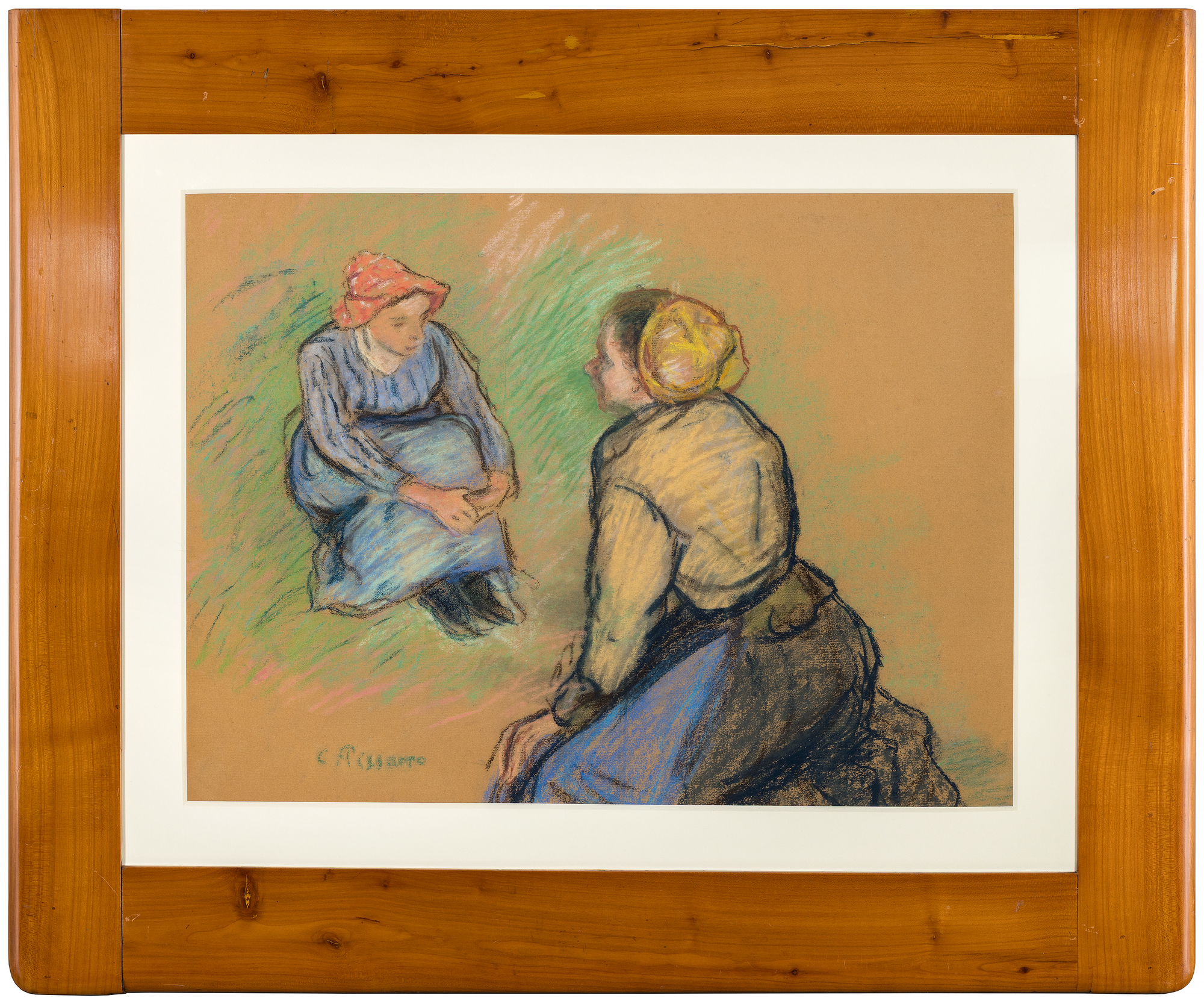
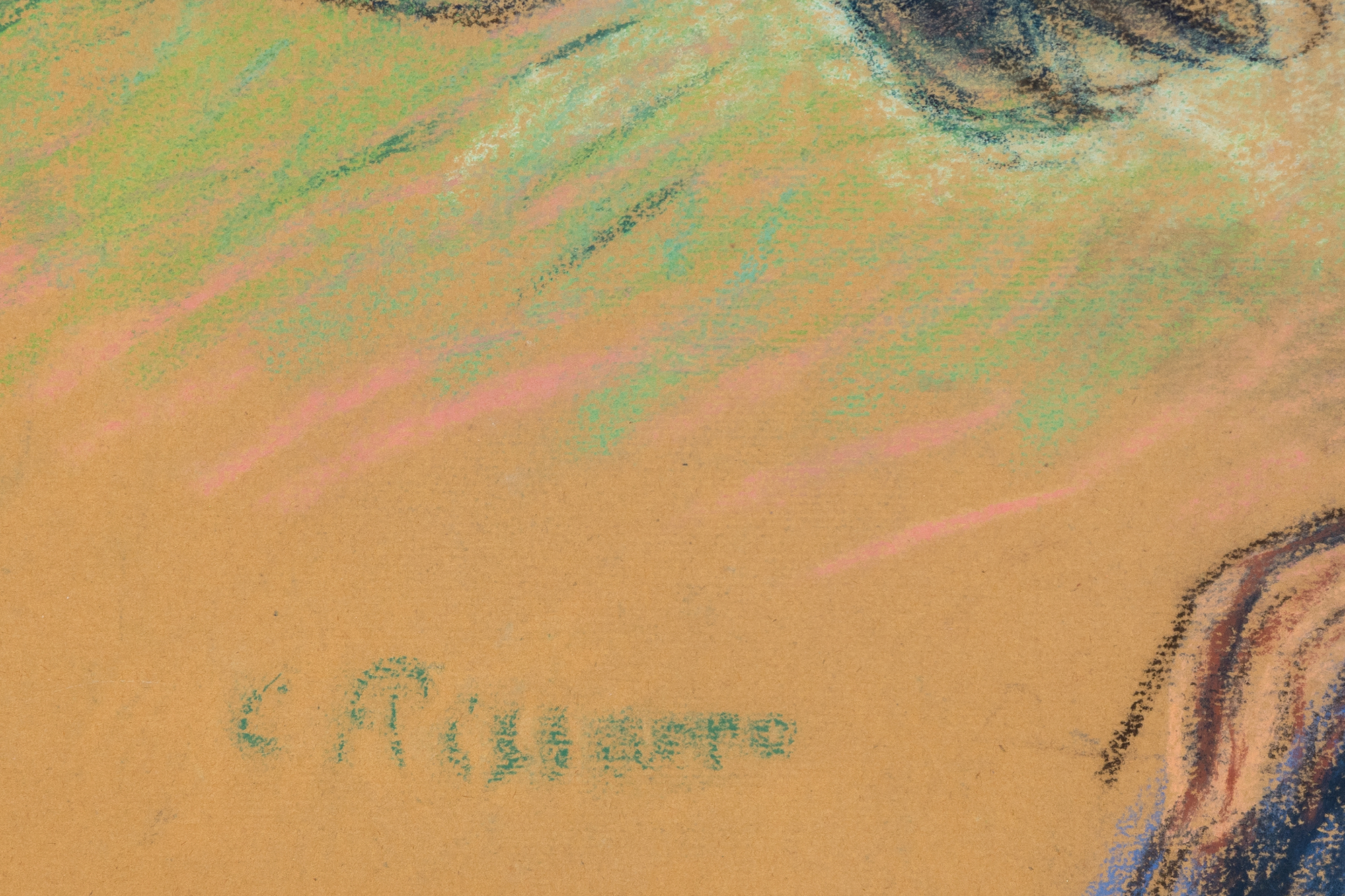
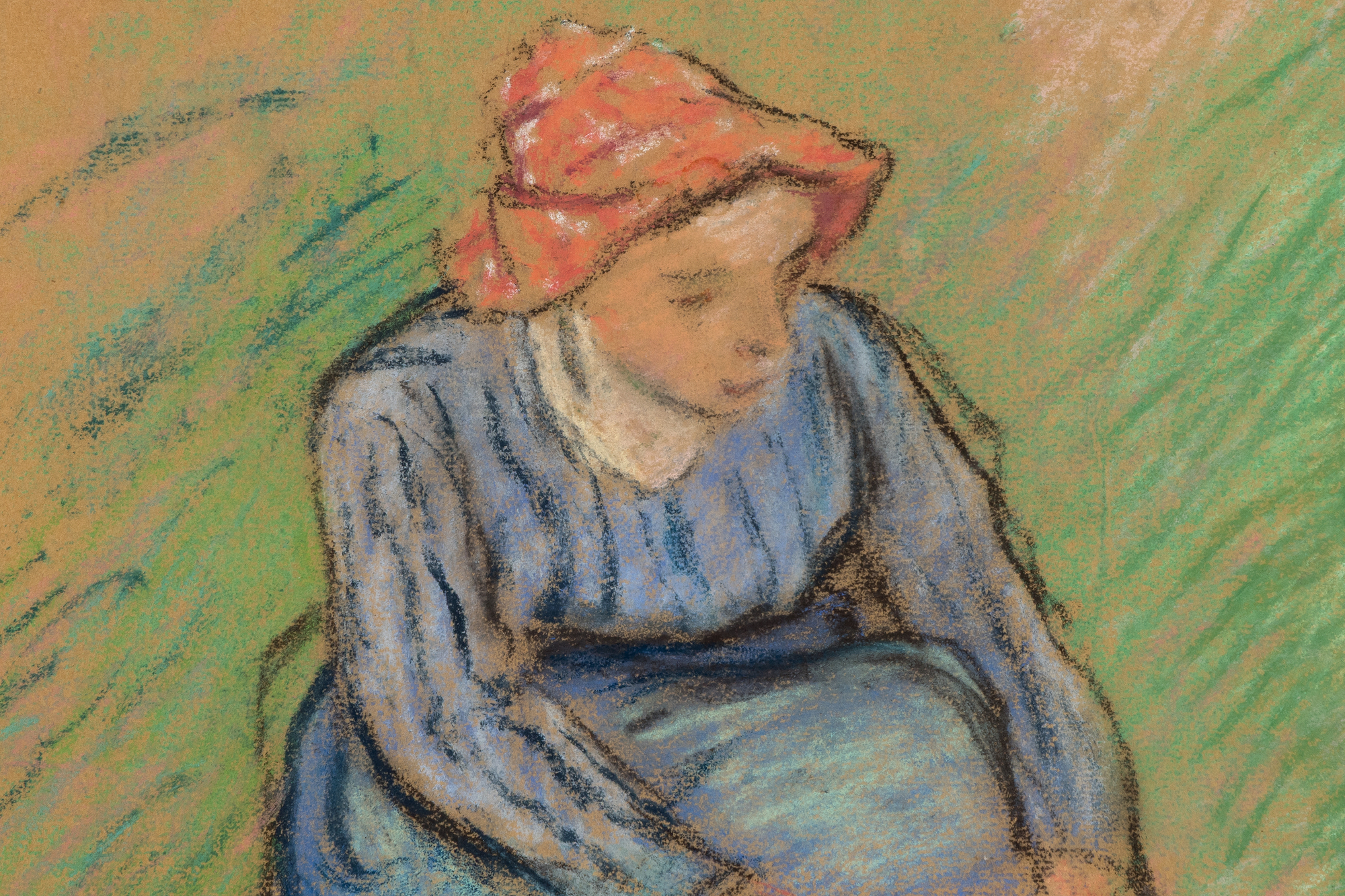
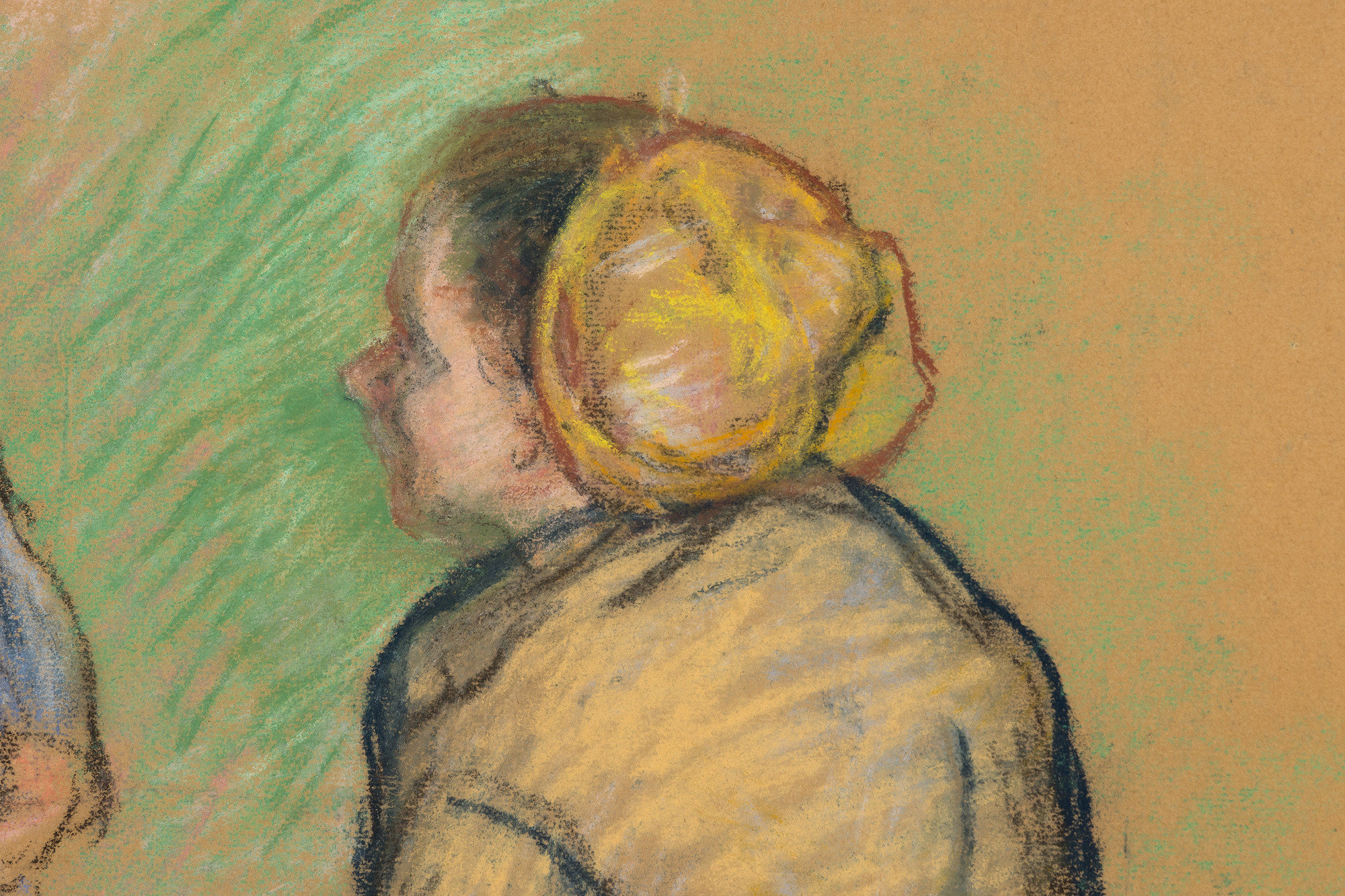
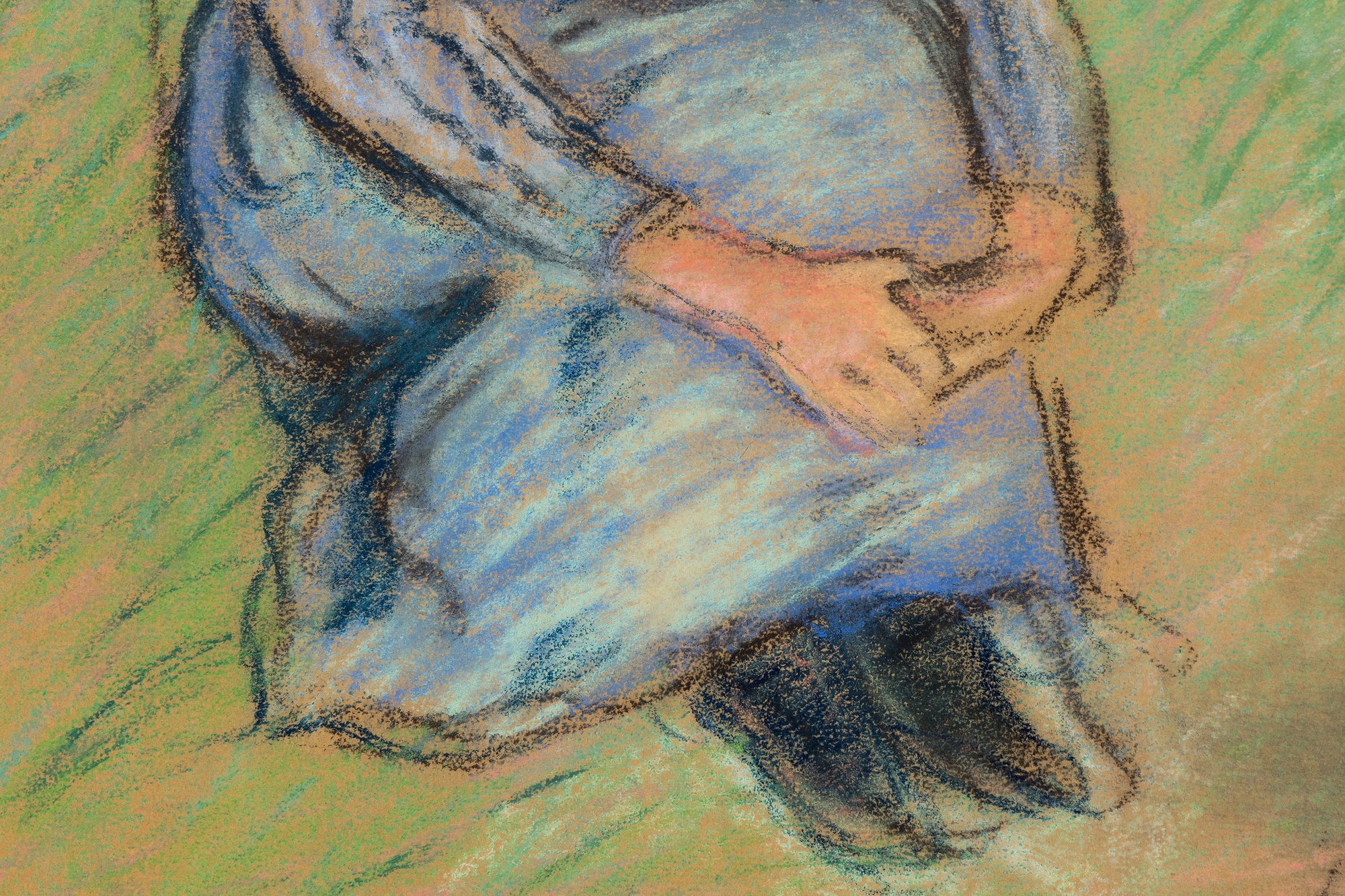
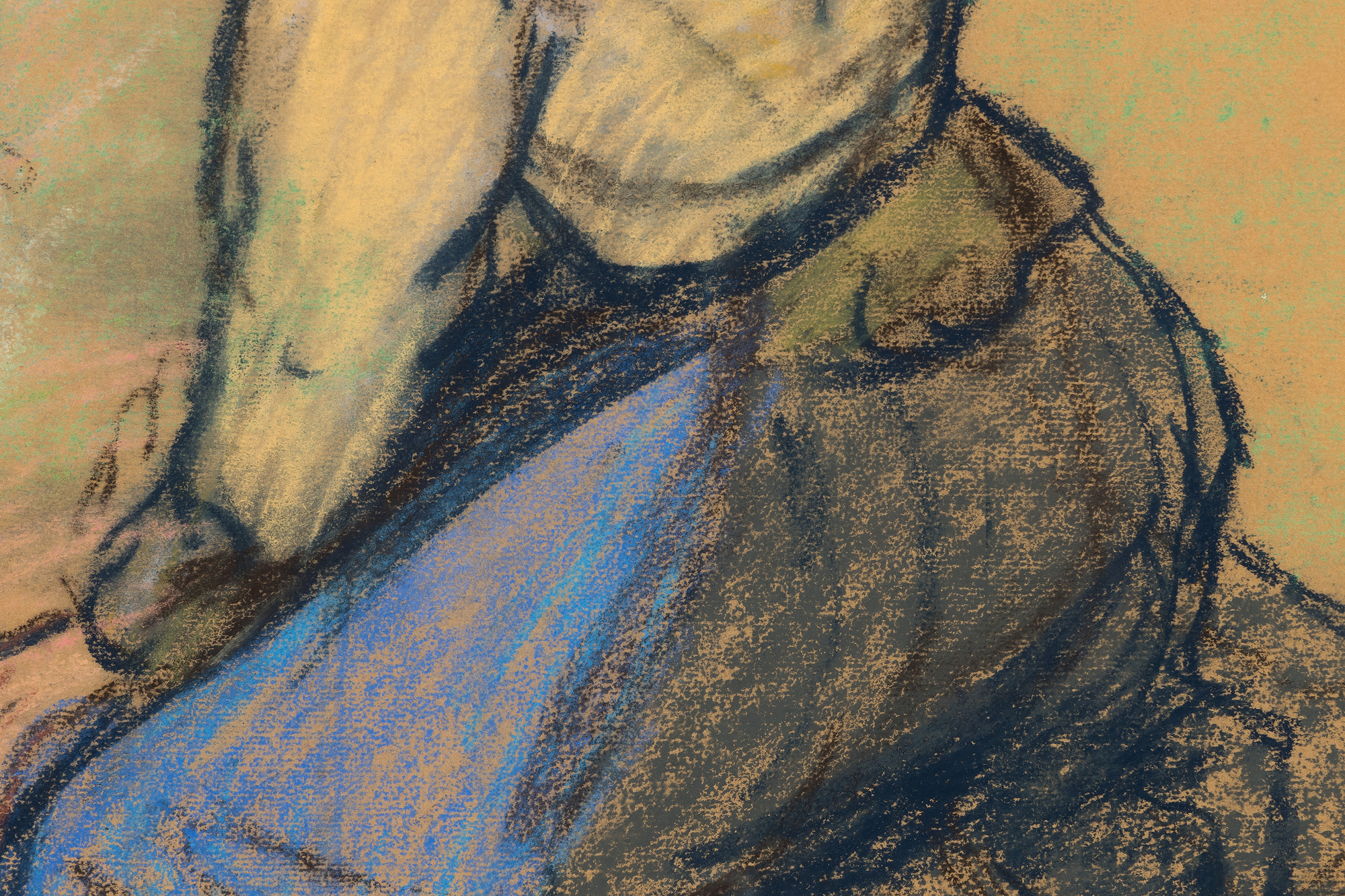
农妇坐像约1880年16 x 22 英寸(40.64 x 55.88 厘米) 纸上蜡笔画
种源
埃尔娜·施蒂贝尔藏品
佳士得纽约,1995年5月11日,第231号拍品(出自埃尔娜·施蒂贝尔遗产)
保罗·达尔·博斯科,特伦托,购自上述拍卖会
潘多尔菲尼拍卖行:2019年10月29日星期二,拍品编号00004,重见天日的珍宝——印象派与现代大师杰作(源自私人收藏)
私人收藏,伦敦,购自上述拍卖会
文学
本作品将收录于即将出版的《毕沙罗数字作品全集》
 
卡米耶·毕沙罗的《坐着的农妇》(约1880年)是一幅色彩浓郁的大型粉彩画,将艺术家人文主义精神与现代性凝练于亲密的日常场景之中。两位农妇静坐交谈,她们的身体以自信的轮廓线勾勒,柔和的色块既鲜明又温柔。 纸张的暖调成为活跃的画布,让蓝、绿、粉的色块在人物周围自由呼吸,而毕沙罗标志性的笔触——时而如羽毛般轻柔,时而充满力度——为场景赋予质感、光影与鲜活的存在感。作品明亮而克制,堪称毕沙罗的典范之作:直白、不矫饰,且对乡村生活怀有深切的关注。


常被誉为印象派支柱的毕沙罗,是该流派最坚定的实验者与凝聚力量。他是1874至1886年间八届印象派联展中唯一全程参展的艺术家,其慷慨的导师风范更塑造了塞尚、高更、修拉、西涅克等新生代艺术家。 在粉彩媒介中——这种以创作速度与色彩浓度著称的技法——毕沙罗找到了捕捉转瞬即逝的视觉效果与即时观察的绝佳载体,同时完美保留了画面结构与心理层次的细腻表现。


近期博物馆的关注凸显了其作品的永恒价值,丹佛艺术博物馆大型特展《诚挚之眼:卡米耶·毕沙罗的印象主义》(2025年10月26日-2026年2月8日)将其定位为"首位印象派画家",这是四十年间美国首次举办的毕沙罗重要回顾展。 《坐着的农妇》亦与各大馆藏中密切相关的人物研究作品产生共鸣,例如洛杉矶郡立艺术博物馆和摩根图书馆的藏品,这进一步印证了这类田园题材在毕沙罗创作实践乃至整个印象派艺术中的核心地位。
询问