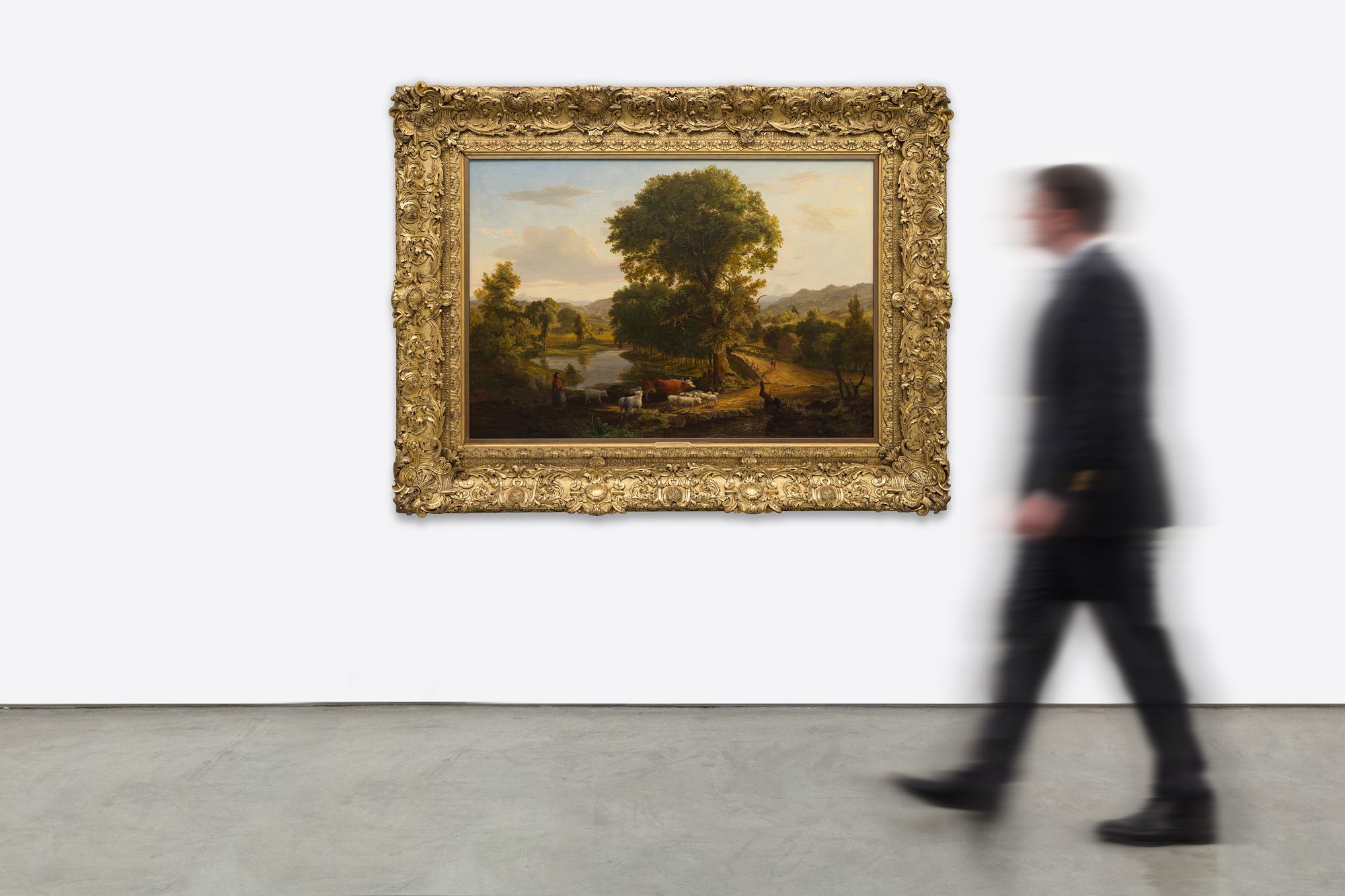
乔治·英尼斯(1825-1894)

$300,000

 
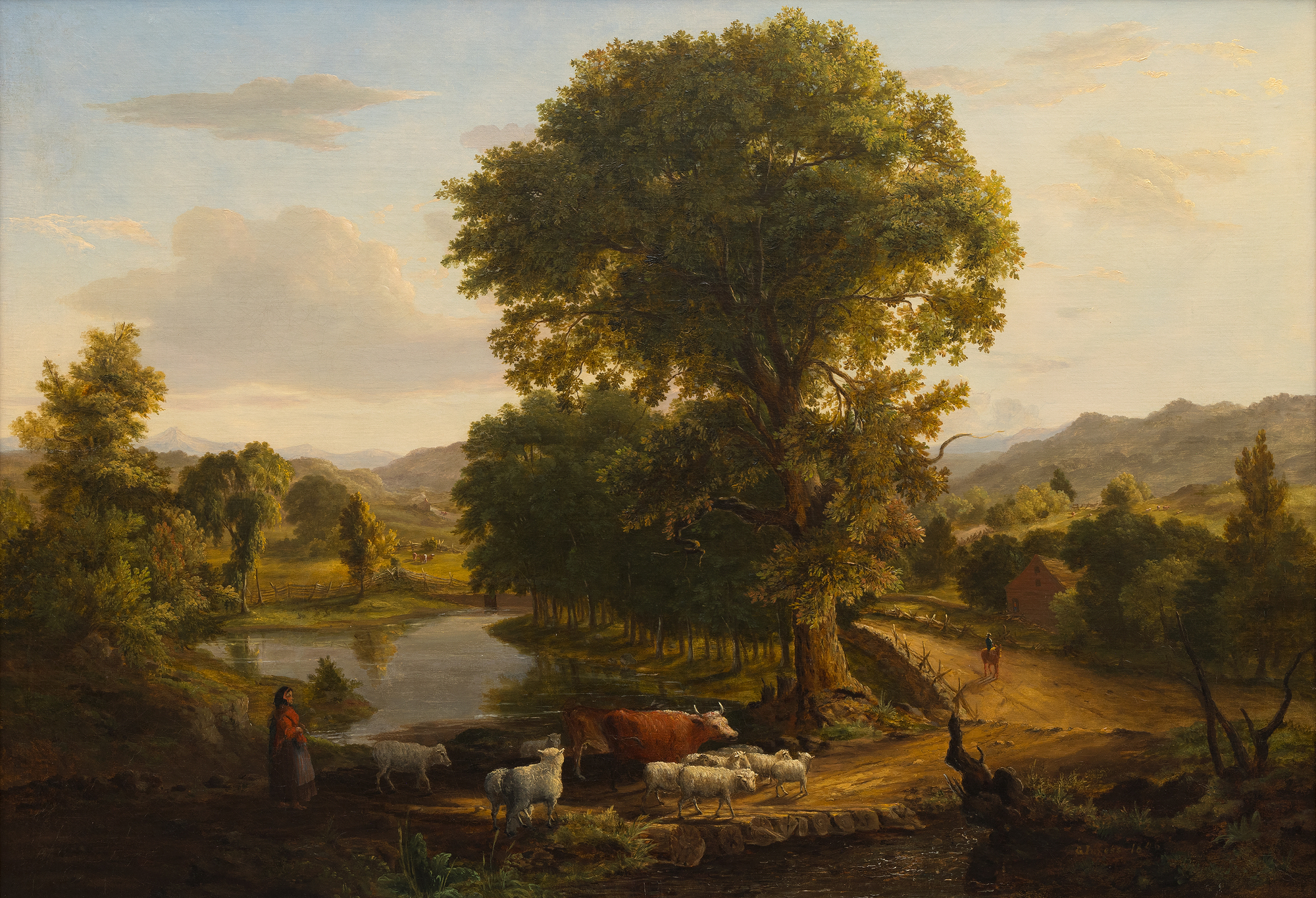
<div><font face=Lato size=3 color=black><em>Afternoon</em> is a rare early painting by George Inness, created when the artist was only twenty one and actively shaping the foundations of his career. Although largely self-taught, Inness was immersed in a transformative period during the mid-eighteen forties, studying at the National Academy of Design in New York where he closely observed the work of Hudson River School painters such as Thomas Cole and Asher Durand. This moment marked his first public exhibitions at the Academy in 1844, followed by the opening of his own studio in 1848, placing <em>Afternoon</em> squarely within the formative years in which his artistic voice began to emerge.</font></div><br><br><div> </div><br><br><div><font face=Lato size=3 color=black>The painting also reflects the subtle influence of French landscaper Regis Francois Gignoux, under whom the young Inness studied before making his first trip to Europe in 1851. This early training helped shape the atmospheric sensitivity and poetic naturalism that would later define his mature style.</font></div><br><br><div> </div><br><br><div><font face=Lato size=3 color=black><em>Afternoon</em> carries distinguished provenance, having passed through the collections of several important nineteenth and early twentieth century New Yorkers, including politician Cornelius Gardiner, financier and philanthropist Emerson McMillian, and later the philanthropist Agnes Ladson Dana. This lineage, combined with the paintings exceptional early date, makes it an especially significant example from the beginning of Innesss enduring contribution to American landscape painting.</font></div> <div><font face=Lato size=3 color=black><em>Afternoon</em> is a rare early painting by George Inness, created when the artist was only twenty one and actively shaping the foundations of his career. Although largely self-taught, Inness was immersed in a transformative period during the mid-eighteen forties, studying at the National Academy of Design in New York where he closely observed the work of Hudson River School painters such as Thomas Cole and Asher Durand. This moment marked his first public exhibitions at the Academy in 1844, followed by the opening of his own studio in 1848, placing <em>Afternoon</em> squarely within the formative years in which his artistic voice began to emerge.</font></div><br><br><div> </div><br><br><div><font face=Lato size=3 color=black>The painting also reflects the subtle influence of French landscaper Regis Francois Gignoux, under whom the young Inness studied before making his first trip to Europe in 1851. This early training helped shape the atmospheric sensitivity and poetic naturalism that would later define his mature style.</font></div><br><br><div> </div><br><br><div><font face=Lato size=3 color=black><em>Afternoon</em> carries distinguished provenance, having passed through the collections of several important nineteenth and early twentieth century New Yorkers, including politician Cornelius Gardiner, financier and philanthropist Emerson McMillian, and later the philanthropist Agnes Ladson Dana. This lineage, combined with the paintings exceptional early date, makes it an especially significant example from the beginning of Innesss enduring contribution to American landscape painting.</font></div> <div><font face=Lato size=3 color=black><em>Afternoon</em> is a rare early painting by George Inness, created when the artist was only twenty one and actively shaping the foundations of his career. Although largely self-taught, Inness was immersed in a transformative period during the mid-eighteen forties, studying at the National Academy of Design in New York where he closely observed the work of Hudson River School painters such as Thomas Cole and Asher Durand. This moment marked his first public exhibitions at the Academy in 1844, followed by the opening of his own studio in 1848, placing <em>Afternoon</em> squarely within the formative years in which his artistic voice began to emerge.</font></div><br><br><div> </div><br><br><div><font face=Lato size=3 color=black>The painting also reflects the subtle influence of French landscaper Regis Francois Gignoux, under whom the young Inness studied before making his first trip to Europe in 1851. This early training helped shape the atmospheric sensitivity and poetic naturalism that would later define his mature style.</font></div><br><br><div> </div><br><br><div><font face=Lato size=3 color=black><em>Afternoon</em> carries distinguished provenance, having passed through the collections of several important nineteenth and early twentieth century New Yorkers, including politician Cornelius Gardiner, financier and philanthropist Emerson McMillian, and later the philanthropist Agnes Ladson Dana. This lineage, combined with the paintings exceptional early date, makes it an especially significant example from the beginning of Innesss enduring contribution to American landscape painting.</font></div> <div><font face=Lato size=3 color=black><em>Afternoon</em> is a rare early painting by George Inness, created when the artist was only twenty one and actively shaping the foundations of his career. Although largely self-taught, Inness was immersed in a transformative period during the mid-eighteen forties, studying at the National Academy of Design in New York where he closely observed the work of Hudson River School painters such as Thomas Cole and Asher Durand. This moment marked his first public exhibitions at the Academy in 1844, followed by the opening of his own studio in 1848, placing <em>Afternoon</em> squarely within the formative years in which his artistic voice began to emerge.</font></div><br><br><div> </div><br><br><div><font face=Lato size=3 color=black>The painting also reflects the subtle influence of French landscaper Regis Francois Gignoux, under whom the young Inness studied before making his first trip to Europe in 1851. This early training helped shape the atmospheric sensitivity and poetic naturalism that would later define his mature style.</font></div><br><br><div> </div><br><br><div><font face=Lato size=3 color=black><em>Afternoon</em> carries distinguished provenance, having passed through the collections of several important nineteenth and early twentieth century New Yorkers, including politician Cornelius Gardiner, financier and philanthropist Emerson McMillian, and later the philanthropist Agnes Ladson Dana. This lineage, combined with the paintings exceptional early date, makes it an especially significant example from the beginning of Innesss enduring contribution to American landscape painting.</font></div> <div><font face=Lato size=3 color=black><em>Afternoon</em> is a rare early painting by George Inness, created when the artist was only twenty one and actively shaping the foundations of his career. Although largely self-taught, Inness was immersed in a transformative period during the mid-eighteen forties, studying at the National Academy of Design in New York where he closely observed the work of Hudson River School painters such as Thomas Cole and Asher Durand. This moment marked his first public exhibitions at the Academy in 1844, followed by the opening of his own studio in 1848, placing <em>Afternoon</em> squarely within the formative years in which his artistic voice began to emerge.</font></div><br><br><div> </div><br><br><div><font face=Lato size=3 color=black>The painting also reflects the subtle influence of French landscaper Regis Francois Gignoux, under whom the young Inness studied before making his first trip to Europe in 1851. This early training helped shape the atmospheric sensitivity and poetic naturalism that would later define his mature style.</font></div><br><br><div> </div><br><br><div><font face=Lato size=3 color=black><em>Afternoon</em> carries distinguished provenance, having passed through the collections of several important nineteenth and early twentieth century New Yorkers, including politician Cornelius Gardiner, financier and philanthropist Emerson McMillian, and later the philanthropist Agnes Ladson Dana. This lineage, combined with the paintings exceptional early date, makes it an especially significant example from the beginning of Innesss enduring contribution to American landscape painting.</font></div> <div><font face=Lato size=3 color=black><em>Afternoon</em> is a rare early painting by George Inness, created when the artist was only twenty one and actively shaping the foundations of his career. Although largely self-taught, Inness was immersed in a transformative period during the mid-eighteen forties, studying at the National Academy of Design in New York where he closely observed the work of Hudson River School painters such as Thomas Cole and Asher Durand. This moment marked his first public exhibitions at the Academy in 1844, followed by the opening of his own studio in 1848, placing <em>Afternoon</em> squarely within the formative years in which his artistic voice began to emerge.</font></div><br><br><div> </div><br><br><div><font face=Lato size=3 color=black>The painting also reflects the subtle influence of French landscaper Regis Francois Gignoux, under whom the young Inness studied before making his first trip to Europe in 1851. This early training helped shape the atmospheric sensitivity and poetic naturalism that would later define his mature style.</font></div><br><br><div> </div><br><br><div><font face=Lato size=3 color=black><em>Afternoon</em> carries distinguished provenance, having passed through the collections of several important nineteenth and early twentieth century New Yorkers, including politician Cornelius Gardiner, financier and philanthropist Emerson McMillian, and later the philanthropist Agnes Ladson Dana. This lineage, combined with the paintings exceptional early date, makes it an especially significant example from the beginning of Innesss enduring contribution to American landscape painting.</font></div> <div><font face=Lato size=3 color=black><em>Afternoon</em> is a rare early painting by George Inness, created when the artist was only twenty one and actively shaping the foundations of his career. Although largely self-taught, Inness was immersed in a transformative period during the mid-eighteen forties, studying at the National Academy of Design in New York where he closely observed the work of Hudson River School painters such as Thomas Cole and Asher Durand. This moment marked his first public exhibitions at the Academy in 1844, followed by the opening of his own studio in 1848, placing <em>Afternoon</em> squarely within the formative years in which his artistic voice began to emerge.</font></div><br><br><div> </div><br><br><div><font face=Lato size=3 color=black>The painting also reflects the subtle influence of French landscaper Regis Francois Gignoux, under whom the young Inness studied before making his first trip to Europe in 1851. This early training helped shape the atmospheric sensitivity and poetic naturalism that would later define his mature style.</font></div><br><br><div> </div><br><br><div><font face=Lato size=3 color=black><em>Afternoon</em> carries distinguished provenance, having passed through the collections of several important nineteenth and early twentieth century New Yorkers, including politician Cornelius Gardiner, financier and philanthropist Emerson McMillian, and later the philanthropist Agnes Ladson Dana. This lineage, combined with the paintings exceptional early date, makes it an especially significant example from the beginning of Innesss enduring contribution to American landscape painting.</font></div> <div><font face=Lato size=3 color=black><em>Afternoon</em> is a rare early painting by George Inness, created when the artist was only twenty one and actively shaping the foundations of his career. Although largely self-taught, Inness was immersed in a transformative period during the mid-eighteen forties, studying at the National Academy of Design in New York where he closely observed the work of Hudson River School painters such as Thomas Cole and Asher Durand. This moment marked his first public exhibitions at the Academy in 1844, followed by the opening of his own studio in 1848, placing <em>Afternoon</em> squarely within the formative years in which his artistic voice began to emerge.</font></div><br><br><div> </div><br><br><div><font face=Lato size=3 color=black>The painting also reflects the subtle influence of French landscaper Regis Francois Gignoux, under whom the young Inness studied before making his first trip to Europe in 1851. This early training helped shape the atmospheric sensitivity and poetic naturalism that would later define his mature style.</font></div><br><br><div> </div><br><br><div><font face=Lato size=3 color=black><em>Afternoon</em> carries distinguished provenance, having passed through the collections of several important nineteenth and early twentieth century New Yorkers, including politician Cornelius Gardiner, financier and philanthropist Emerson McMillian, and later the philanthropist Agnes Ladson Dana. This lineage, combined with the paintings exceptional early date, makes it an especially significant example from the beginning of Innesss enduring contribution to American landscape painting.</font></div> <div><font face=Lato size=3 color=black><em>Afternoon</em> is a rare early painting by George Inness, created when the artist was only twenty one and actively shaping the foundations of his career. Although largely self-taught, Inness was immersed in a transformative period during the mid-eighteen forties, studying at the National Academy of Design in New York where he closely observed the work of Hudson River School painters such as Thomas Cole and Asher Durand. This moment marked his first public exhibitions at the Academy in 1844, followed by the opening of his own studio in 1848, placing <em>Afternoon</em> squarely within the formative years in which his artistic voice began to emerge.</font></div><br><br><div> </div><br><br><div><font face=Lato size=3 color=black>The painting also reflects the subtle influence of French landscaper Regis Francois Gignoux, under whom the young Inness studied before making his first trip to Europe in 1851. This early training helped shape the atmospheric sensitivity and poetic naturalism that would later define his mature style.</font></div><br><br><div> </div><br><br><div><font face=Lato size=3 color=black><em>Afternoon</em> carries distinguished provenance, having passed through the collections of several important nineteenth and early twentieth century New Yorkers, including politician Cornelius Gardiner, financier and philanthropist Emerson McMillian, and later the philanthropist Agnes Ladson Dana. This lineage, combined with the paintings exceptional early date, makes it an especially significant example from the beginning of Innesss enduring contribution to American landscape painting.</font></div> <div><font face=Lato size=3 color=black><em>Afternoon</em> is a rare early painting by George Inness, created when the artist was only twenty one and actively shaping the foundations of his career. Although largely self-taught, Inness was immersed in a transformative period during the mid-eighteen forties, studying at the National Academy of Design in New York where he closely observed the work of Hudson River School painters such as Thomas Cole and Asher Durand. This moment marked his first public exhibitions at the Academy in 1844, followed by the opening of his own studio in 1848, placing <em>Afternoon</em> squarely within the formative years in which his artistic voice began to emerge.</font></div><br><br><div> </div><br><br><div><font face=Lato size=3 color=black>The painting also reflects the subtle influence of French landscaper Regis Francois Gignoux, under whom the young Inness studied before making his first trip to Europe in 1851. This early training helped shape the atmospheric sensitivity and poetic naturalism that would later define his mature style.</font></div><br><br><div> </div><br><br><div><font face=Lato size=3 color=black><em>Afternoon</em> carries distinguished provenance, having passed through the collections of several important nineteenth and early twentieth century New Yorkers, including politician Cornelius Gardiner, financier and philanthropist Emerson McMillian, and later the philanthropist Agnes Ladson Dana. This lineage, combined with the paintings exceptional early date, makes it an especially significant example from the beginning of Innesss enduring contribution to American landscape painting.</font></div>
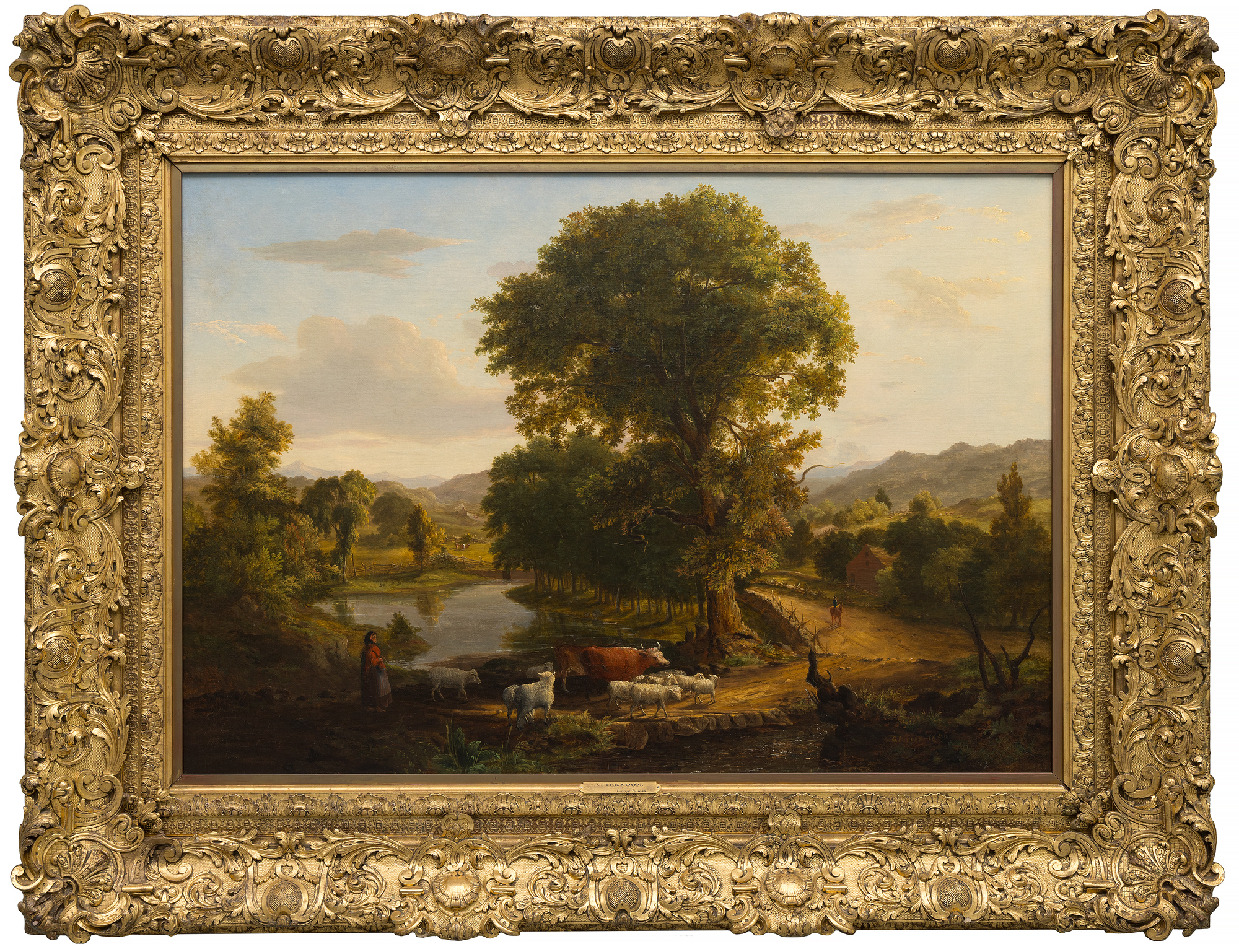
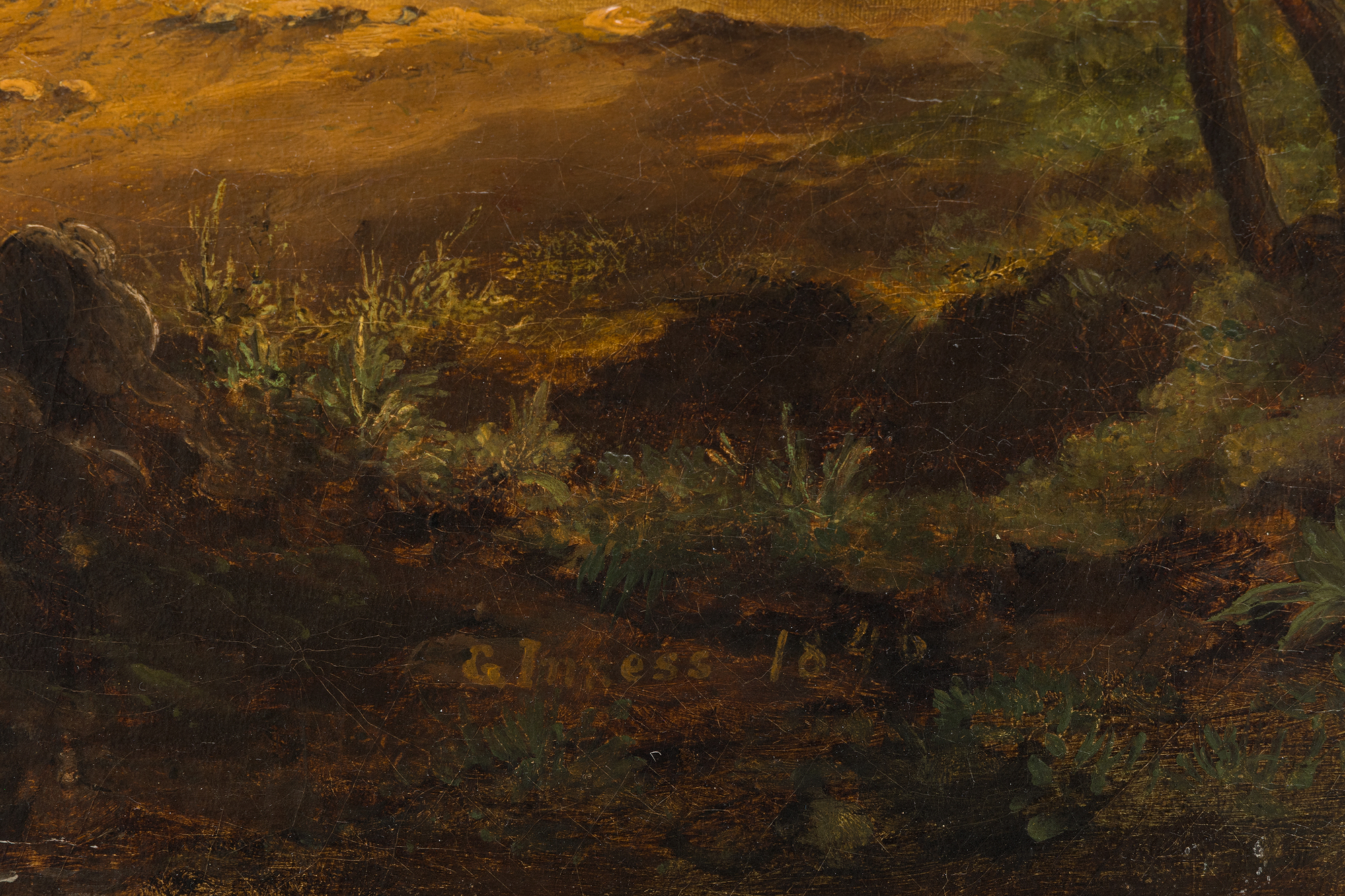
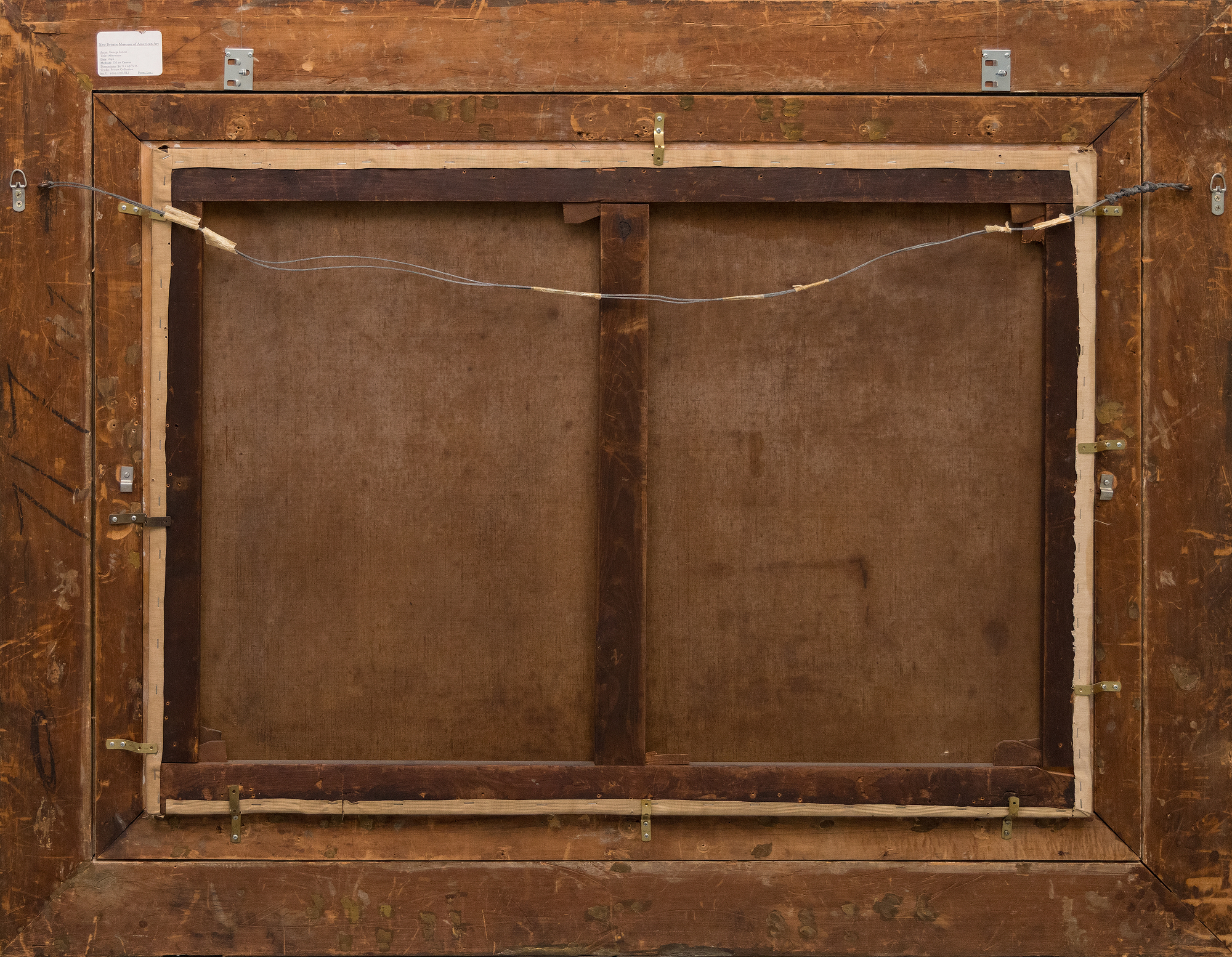
下午184634 1/2 x 49 1/4 英寸(87.63 x 125.1 厘米) 布面油画
种源
C. 加迪尼尔,富尔顿维尔,纽约,1846年
爱默生·麦克米林,纽约
美国艺术协会,纽约,麦克米林拍卖会,1913年1月20-23日,编号182
乔治·H·安斯利画廊,纽约
阿格尼斯·L·达纳,新泽西州伯纳兹维尔
O·朗德尔·吉尔伯特拍卖行,纽约,达纳遗产拍卖会,1959年5月16日
亚当森-杜瓦内画廊,加利福尼亚州比佛利山庄
私人收藏,加利福尼亚州
私人收藏,弗吉尼亚州
私人收藏
展会信息
纽约,美国艺术联盟,年度展览,1846年,编号6,a...更。。。《风景——午后》
纽约,国家设计学院,第21届年度展览,1846年,编号143,题为《风景,美国夏日的午后》
文学
勒罗伊·爱尔兰,《插图作品全集》,1965年,第9页,编号16,附图
小尼古拉·齐科夫斯基,《乔治·英尼斯的生平与作品》,博士学位论文。
1965年,第6期,附图
迈克尔·奎克,乔治·因尼斯,《作品目录:第一卷》,彩色插页
...少。。。
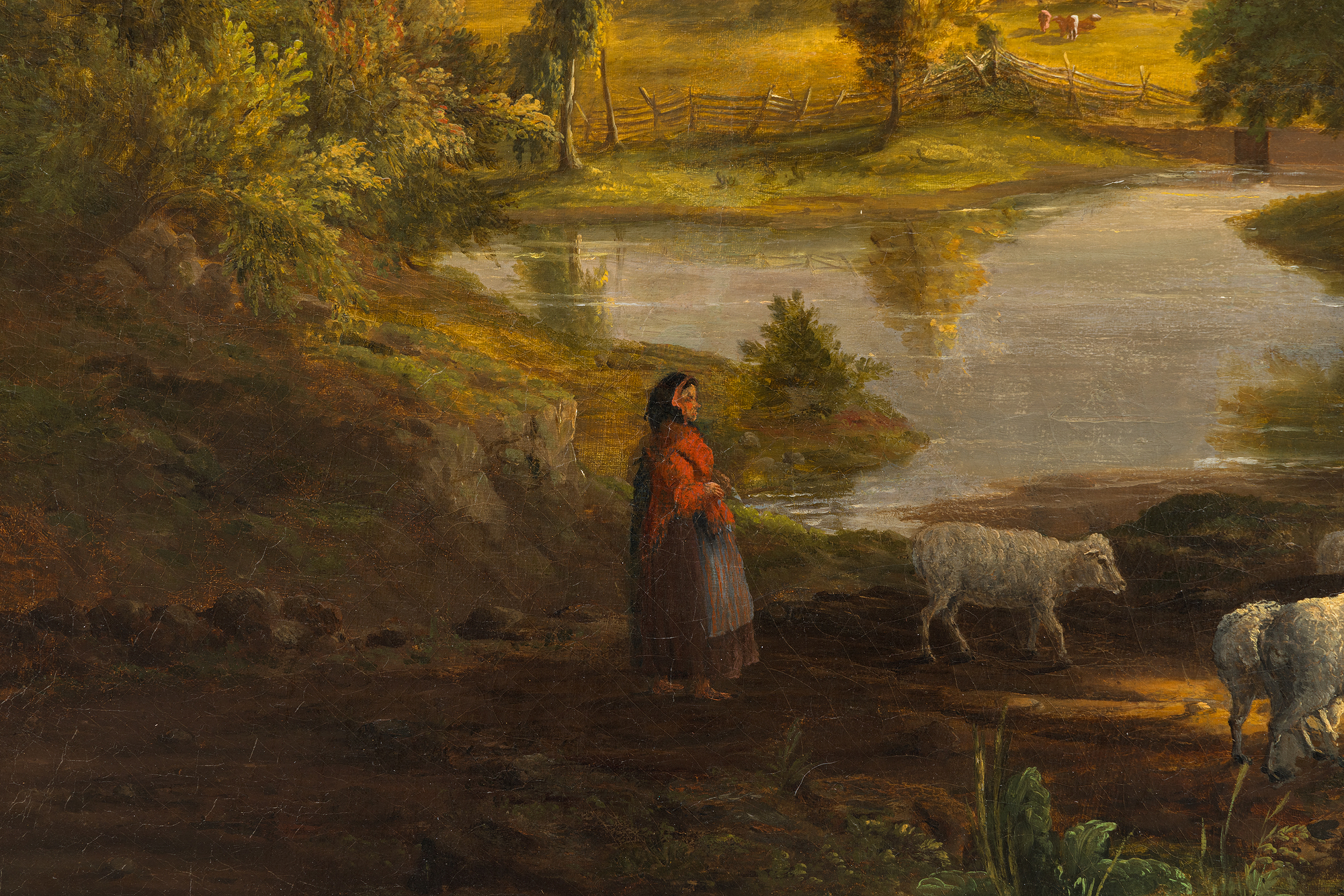
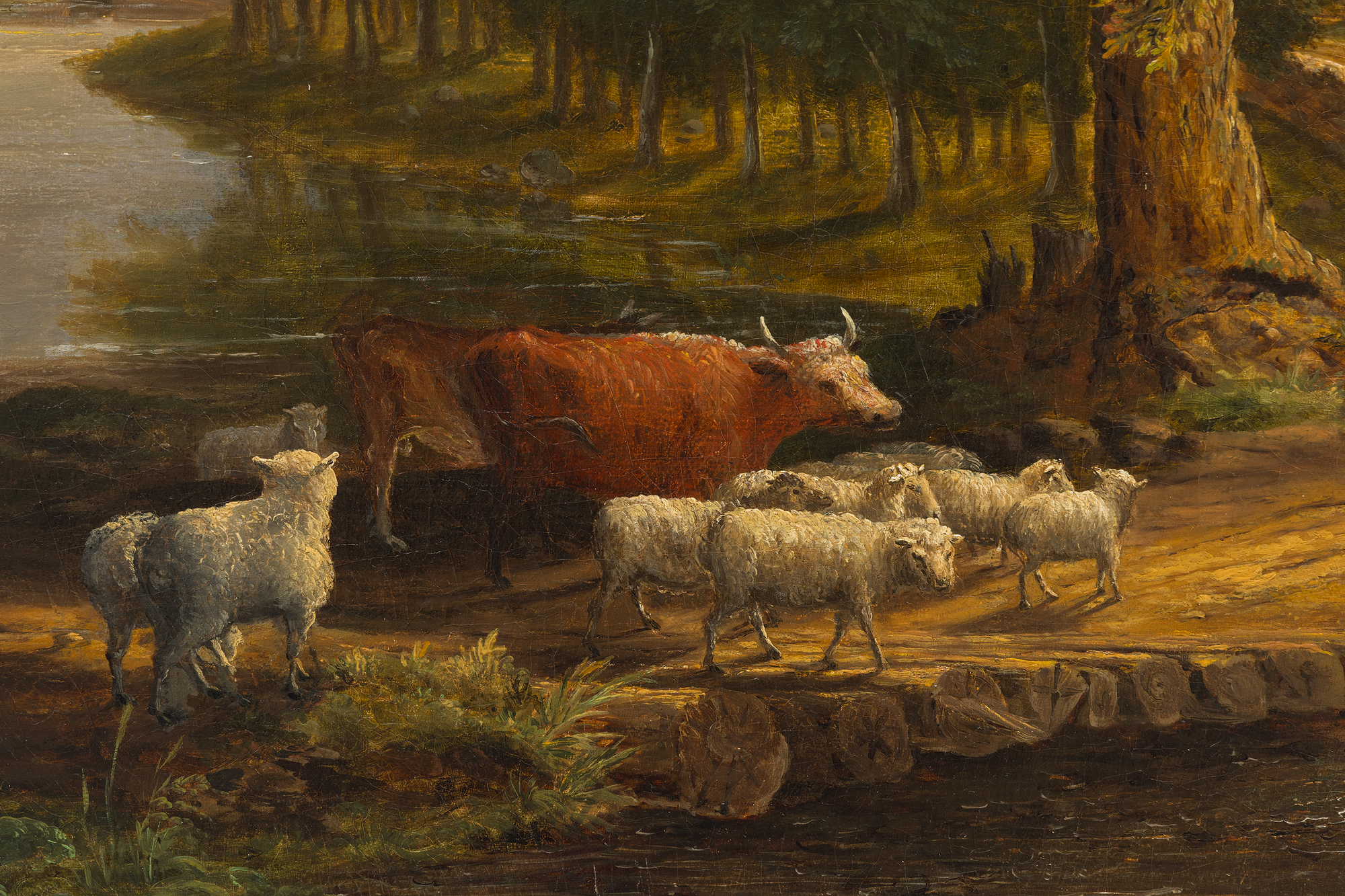
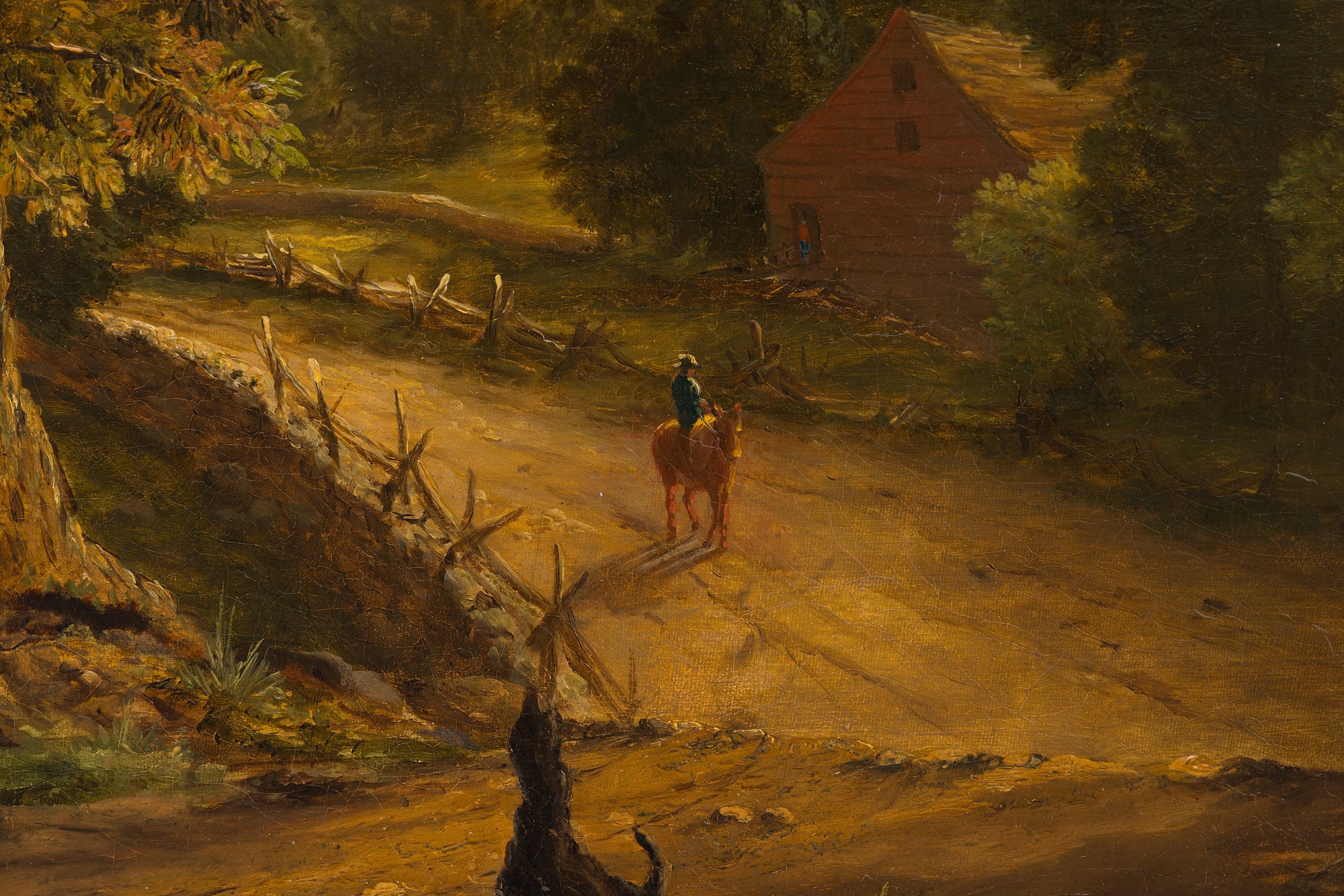
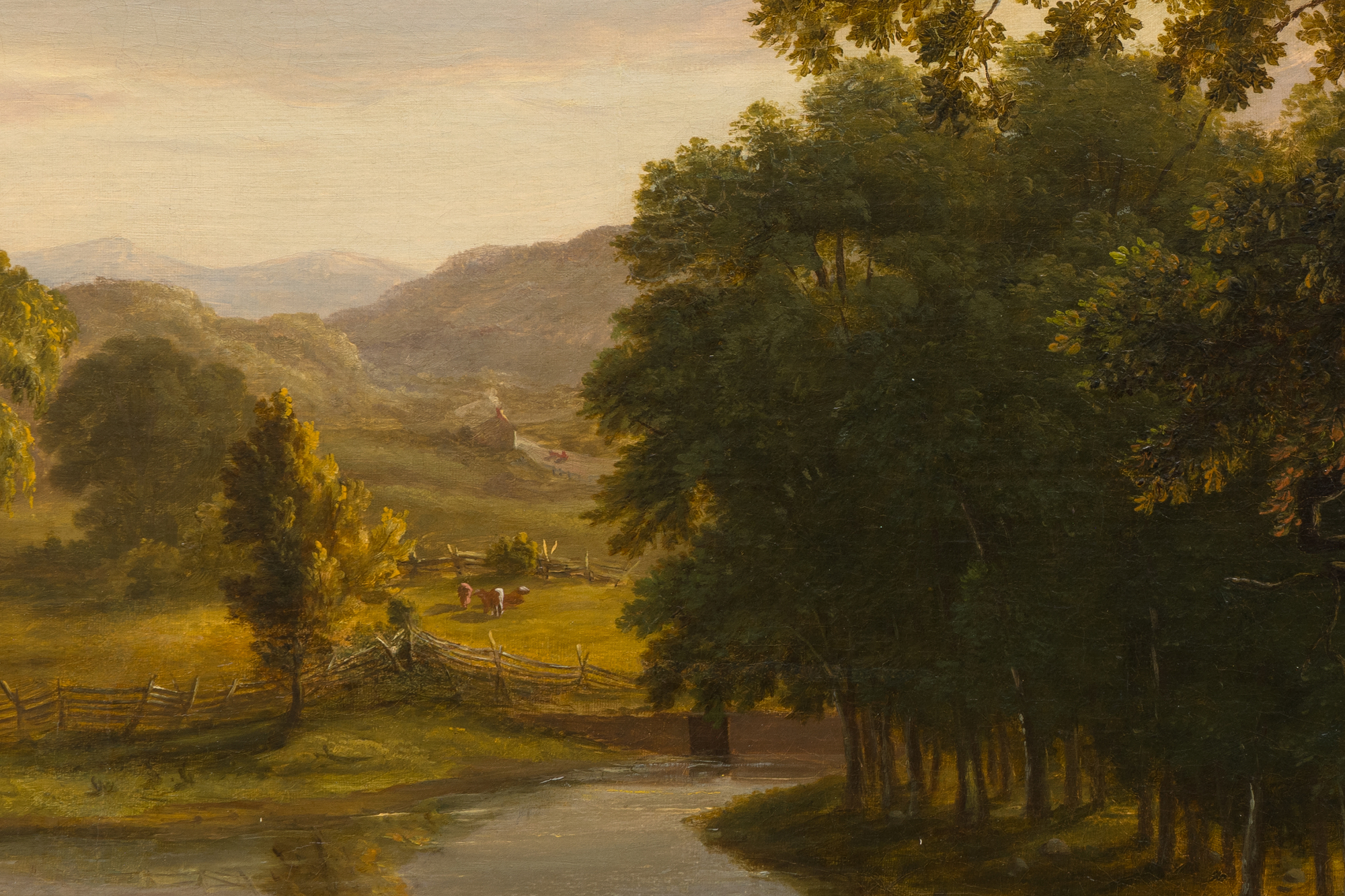
《午后》是乔治·英尼斯罕见的早期画作,创作于艺术家二十一岁之际,正值其职业生涯奠基的关键时期。尽管主要靠自学成才,英尼斯在1840年代中期经历了深刻的转型阶段——他在纽约国家设计学院求学期间,近距离研习了托马斯·科尔、阿舍·杜兰德等哈德逊河画派大师的作品。 1844年他在该学院首次公开展出作品,1848年开设个人工作室,使《午后》恰处于其艺术风格初现的形成期。


画作亦隐现法国风景画家雷吉斯·弗朗索瓦·吉尼奥的微妙影响——年轻的英尼斯在1851年首次赴欧前曾师从于他。这段早期训练塑造了他对氛围的敏锐感知与诗意自然主义风格,这些特质后来成为其成熟画风的标志。


《午后》拥有显赫的传承脉络,曾辗转于多位十九至二十世纪初纽约名流的收藏之手,包括政治家科尼利厄斯·加德纳、金融家兼慈善家艾默生·麦克米利安,以及后来的慈善家艾格尼丝·拉德森·达纳。这份传承与作品早期的创作年代相结合,使其成为印尼斯对美国风景画作出持久贡献的开端时期尤为重要的代表作。
询问