马里诺·马里尼·恩茨(1901-1980)

$55,000

 
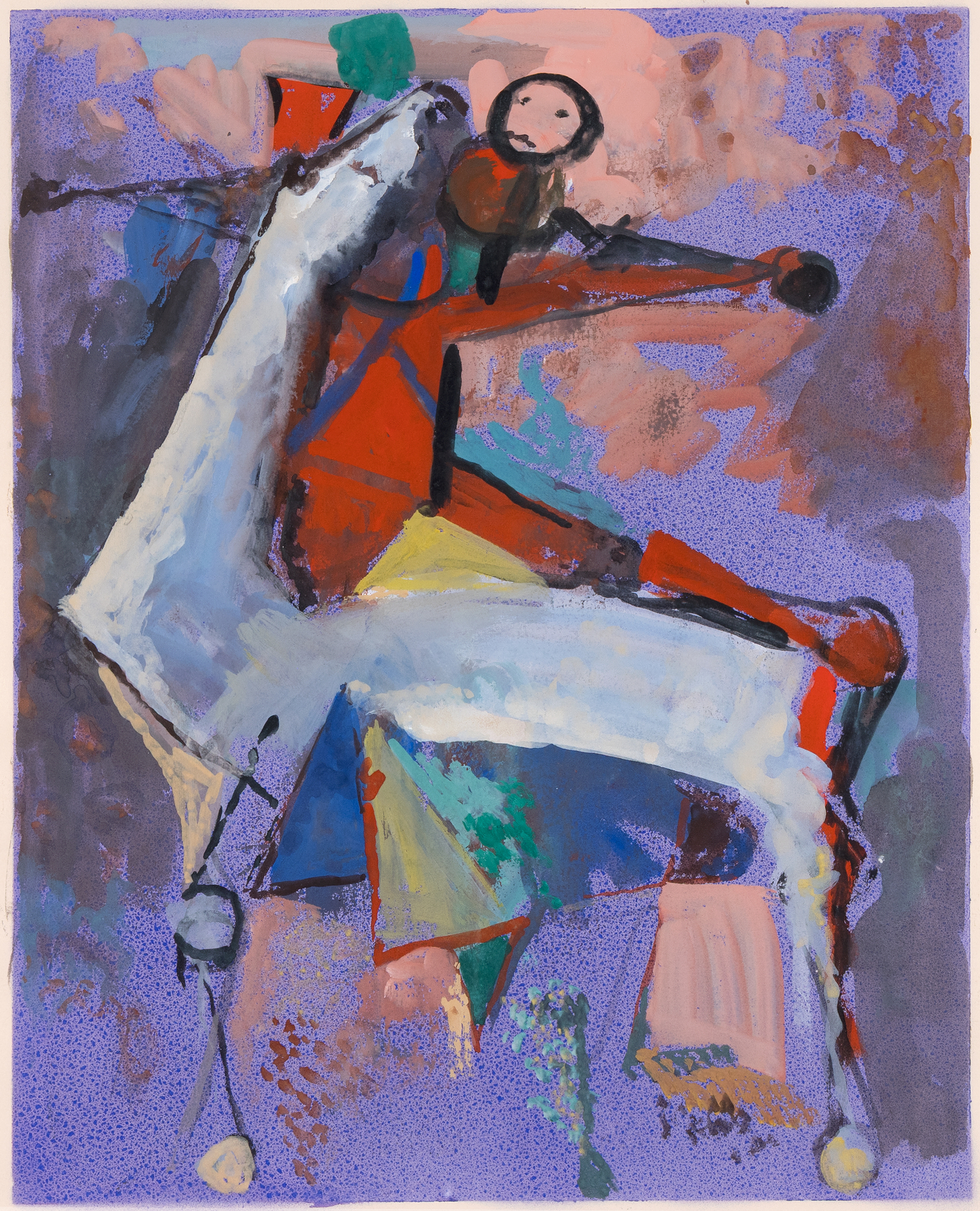
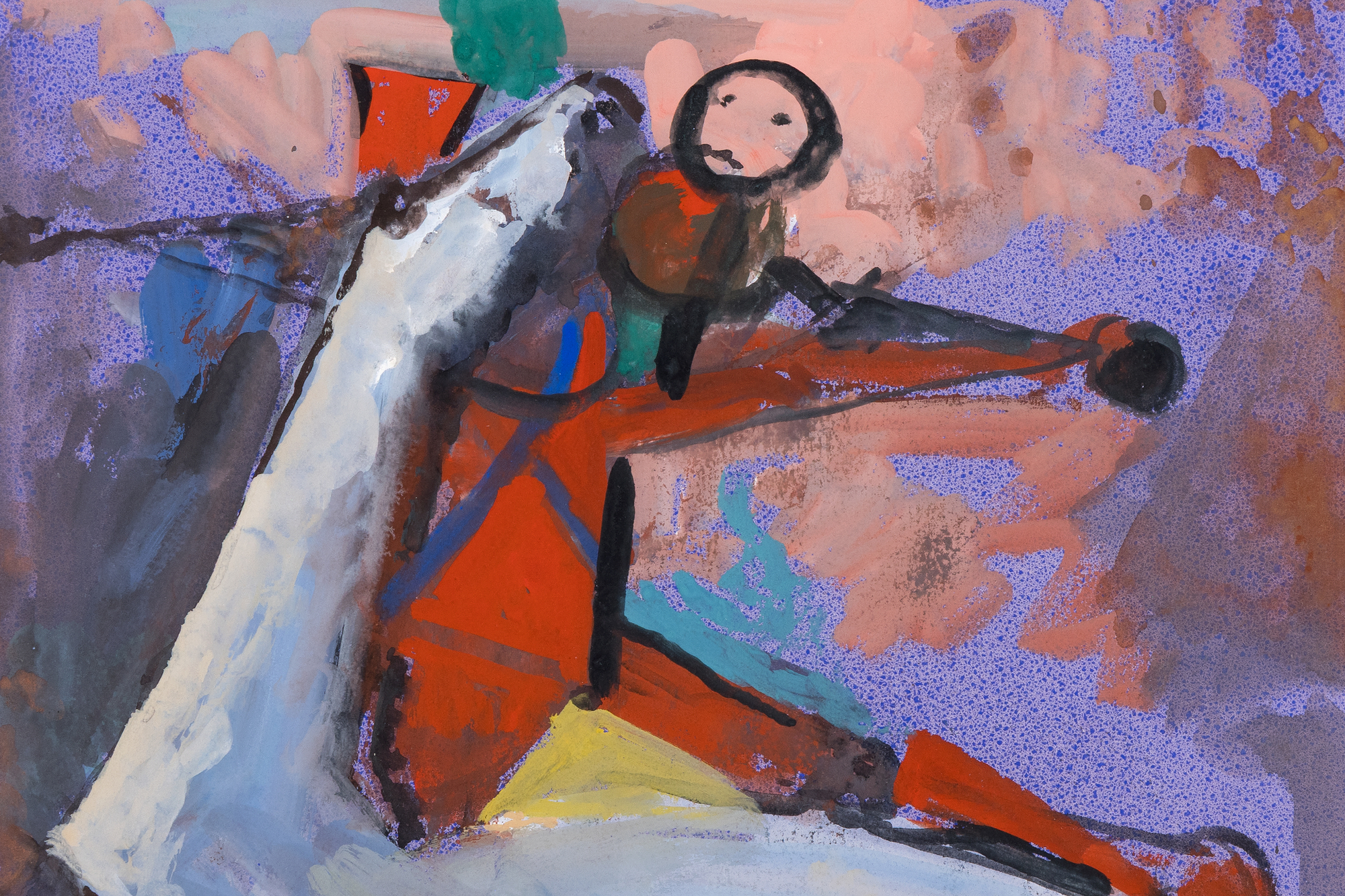
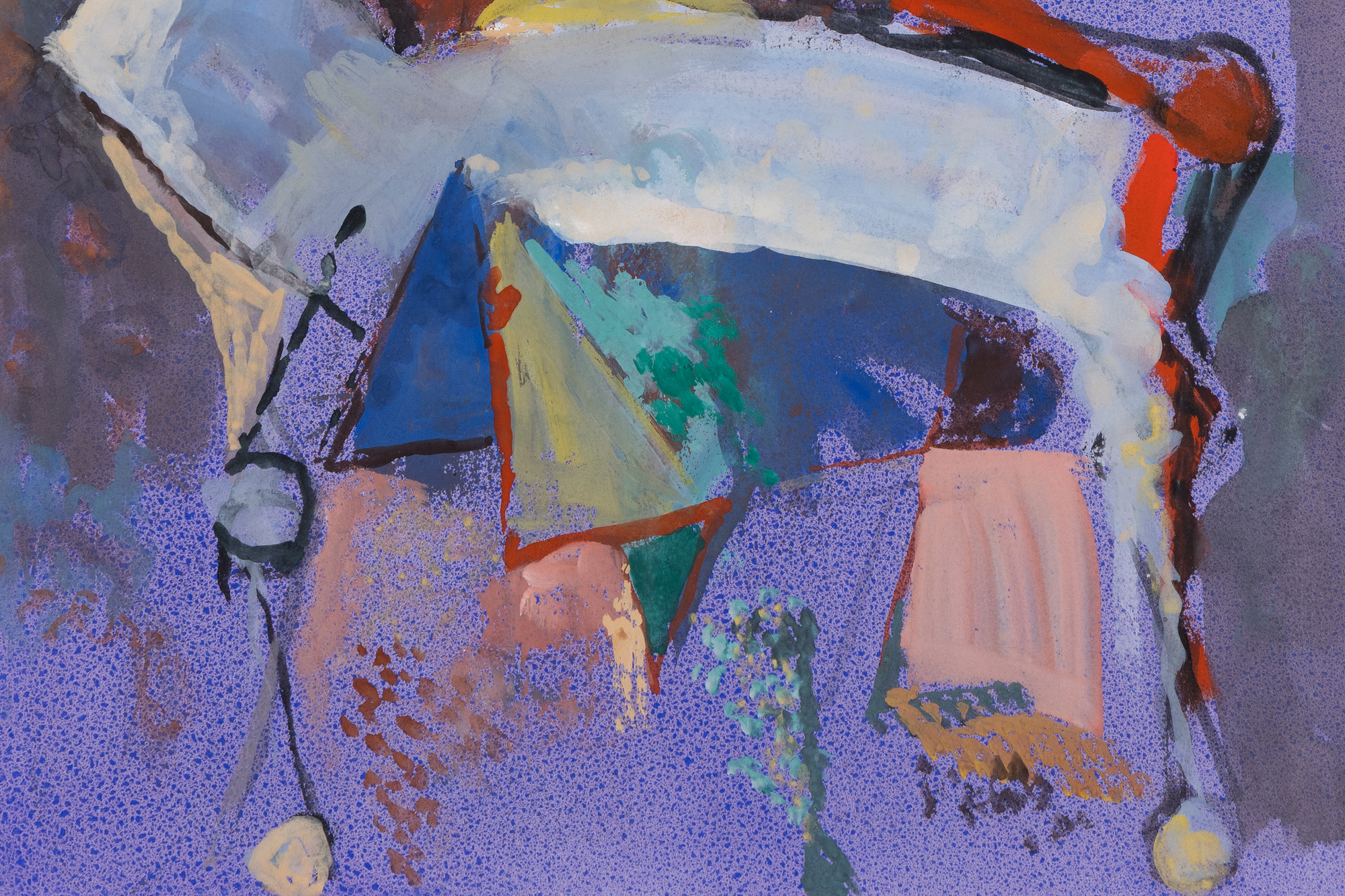
<div>Marino Marini’s <em>Marino from Shakespeare I</em> (1977) is a vivid and psychologically charged work on paper, executed in tempera over aquatint and drawn from the artist’s celebrated Marino from Shakespeare portfolio. In this variation, the equestrian figure is pushed to the foreground, its white, angular horse rearing across the composition with a sense of precarious motion. The rider is pared down to a mask-like head and simplified body, a formal reduction that places the figure in a state of fragile balance between control and collapse. </div><br><br><div> </div><br><br><div>The chromatic structure is bold and instinctive. Fields of violet, coral, and blue form a textured ground, against which the stark white of the horse and the warm reds and oranges of the rider assert themselves with dramatic clarity. Marini’s use of tempera over aquatint allows him to combine tonal depth with painterly immediacy: granular passages of aquatint dissolve into expressive sweeps of color, while linear accents stabilize the composition just enough to prevent it from tipping into chaos. </div><br><br><div> </div><br><br><div>As in many of his most significant works, the equestrian motif functions symbolically rather than narratively. Though inspired in spirit by Shakespeare, the image does not illustrate a specific text, instead channeling the emotional intensity and existential unease associated with tragic drama. Marini famously described his horse-and-rider figures as expressions of modern anxiety, stating, “My equestrian figures are symbols of the anguish that I feel when I survey contemporary events.” Here, that anguish is palpable in the strained geometry, unstable balance, and urgent movement of the forms. The print stands as a compelling demonstration of Marini’s ability to translate his sculptural language into graphic form, using color and gesture to confront the fragility of human authority and control. </div> <div>Marino Marini’s <em>Marino from Shakespeare I</em> (1977) is a vivid and psychologically charged work on paper, executed in tempera over aquatint and drawn from the artist’s celebrated Marino from Shakespeare portfolio. In this variation, the equestrian figure is pushed to the foreground, its white, angular horse rearing across the composition with a sense of precarious motion. The rider is pared down to a mask-like head and simplified body, a formal reduction that places the figure in a state of fragile balance between control and collapse. </div><br><br><div> </div><br><br><div>The chromatic structure is bold and instinctive. Fields of violet, coral, and blue form a textured ground, against which the stark white of the horse and the warm reds and oranges of the rider assert themselves with dramatic clarity. Marini’s use of tempera over aquatint allows him to combine tonal depth with painterly immediacy: granular passages of aquatint dissolve into expressive sweeps of color, while linear accents stabilize the composition just enough to prevent it from tipping into chaos. </div><br><br><div> </div><br><br><div>As in many of his most significant works, the equestrian motif functions symbolically rather than narratively. Though inspired in spirit by Shakespeare, the image does not illustrate a specific text, instead channeling the emotional intensity and existential unease associated with tragic drama. Marini famously described his horse-and-rider figures as expressions of modern anxiety, stating, “My equestrian figures are symbols of the anguish that I feel when I survey contemporary events.” Here, that anguish is palpable in the strained geometry, unstable balance, and urgent movement of the forms. The print stands as a compelling demonstration of Marini’s ability to translate his sculptural language into graphic form, using color and gesture to confront the fragility of human authority and control. </div> <div>Marino Marini’s <em>Marino from Shakespeare I</em> (1977) is a vivid and psychologically charged work on paper, executed in tempera over aquatint and drawn from the artist’s celebrated Marino from Shakespeare portfolio. In this variation, the equestrian figure is pushed to the foreground, its white, angular horse rearing across the composition with a sense of precarious motion. The rider is pared down to a mask-like head and simplified body, a formal reduction that places the figure in a state of fragile balance between control and collapse. </div><br><br><div> </div><br><br><div>The chromatic structure is bold and instinctive. Fields of violet, coral, and blue form a textured ground, against which the stark white of the horse and the warm reds and oranges of the rider assert themselves with dramatic clarity. Marini’s use of tempera over aquatint allows him to combine tonal depth with painterly immediacy: granular passages of aquatint dissolve into expressive sweeps of color, while linear accents stabilize the composition just enough to prevent it from tipping into chaos. </div><br><br><div> </div><br><br><div>As in many of his most significant works, the equestrian motif functions symbolically rather than narratively. Though inspired in spirit by Shakespeare, the image does not illustrate a specific text, instead channeling the emotional intensity and existential unease associated with tragic drama. Marini famously described his horse-and-rider figures as expressions of modern anxiety, stating, “My equestrian figures are symbols of the anguish that I feel when I survey contemporary events.” Here, that anguish is palpable in the strained geometry, unstable balance, and urgent movement of the forms. The print stands as a compelling demonstration of Marini’s ability to translate his sculptural language into graphic form, using color and gesture to confront the fragility of human authority and control. </div> <div>Marino Marini’s <em>Marino from Shakespeare I</em> (1977) is a vivid and psychologically charged work on paper, executed in tempera over aquatint and drawn from the artist’s celebrated Marino from Shakespeare portfolio. In this variation, the equestrian figure is pushed to the foreground, its white, angular horse rearing across the composition with a sense of precarious motion. The rider is pared down to a mask-like head and simplified body, a formal reduction that places the figure in a state of fragile balance between control and collapse. </div><br><br><div> </div><br><br><div>The chromatic structure is bold and instinctive. Fields of violet, coral, and blue form a textured ground, against which the stark white of the horse and the warm reds and oranges of the rider assert themselves with dramatic clarity. Marini’s use of tempera over aquatint allows him to combine tonal depth with painterly immediacy: granular passages of aquatint dissolve into expressive sweeps of color, while linear accents stabilize the composition just enough to prevent it from tipping into chaos. </div><br><br><div> </div><br><br><div>As in many of his most significant works, the equestrian motif functions symbolically rather than narratively. Though inspired in spirit by Shakespeare, the image does not illustrate a specific text, instead channeling the emotional intensity and existential unease associated with tragic drama. Marini famously described his horse-and-rider figures as expressions of modern anxiety, stating, “My equestrian figures are symbols of the anguish that I feel when I survey contemporary events.” Here, that anguish is palpable in the strained geometry, unstable balance, and urgent movement of the forms. The print stands as a compelling demonstration of Marini’s ability to translate his sculptural language into graphic form, using color and gesture to confront the fragility of human authority and control. </div> <div>Marino Marini’s <em>Marino from Shakespeare I</em> (1977) is a vivid and psychologically charged work on paper, executed in tempera over aquatint and drawn from the artist’s celebrated Marino from Shakespeare portfolio. In this variation, the equestrian figure is pushed to the foreground, its white, angular horse rearing across the composition with a sense of precarious motion. The rider is pared down to a mask-like head and simplified body, a formal reduction that places the figure in a state of fragile balance between control and collapse. </div><br><br><div> </div><br><br><div>The chromatic structure is bold and instinctive. Fields of violet, coral, and blue form a textured ground, against which the stark white of the horse and the warm reds and oranges of the rider assert themselves with dramatic clarity. Marini’s use of tempera over aquatint allows him to combine tonal depth with painterly immediacy: granular passages of aquatint dissolve into expressive sweeps of color, while linear accents stabilize the composition just enough to prevent it from tipping into chaos. </div><br><br><div> </div><br><br><div>As in many of his most significant works, the equestrian motif functions symbolically rather than narratively. Though inspired in spirit by Shakespeare, the image does not illustrate a specific text, instead channeling the emotional intensity and existential unease associated with tragic drama. Marini famously described his horse-and-rider figures as expressions of modern anxiety, stating, “My equestrian figures are symbols of the anguish that I feel when I survey contemporary events.” Here, that anguish is palpable in the strained geometry, unstable balance, and urgent movement of the forms. The print stands as a compelling demonstration of Marini’s ability to translate his sculptural language into graphic form, using color and gesture to confront the fragility of human authority and control. </div> <div>Marino Marini’s <em>Marino from Shakespeare I</em> (1977) is a vivid and psychologically charged work on paper, executed in tempera over aquatint and drawn from the artist’s celebrated Marino from Shakespeare portfolio. In this variation, the equestrian figure is pushed to the foreground, its white, angular horse rearing across the composition with a sense of precarious motion. The rider is pared down to a mask-like head and simplified body, a formal reduction that places the figure in a state of fragile balance between control and collapse. </div><br><br><div> </div><br><br><div>The chromatic structure is bold and instinctive. Fields of violet, coral, and blue form a textured ground, against which the stark white of the horse and the warm reds and oranges of the rider assert themselves with dramatic clarity. Marini’s use of tempera over aquatint allows him to combine tonal depth with painterly immediacy: granular passages of aquatint dissolve into expressive sweeps of color, while linear accents stabilize the composition just enough to prevent it from tipping into chaos. </div><br><br><div> </div><br><br><div>As in many of his most significant works, the equestrian motif functions symbolically rather than narratively. Though inspired in spirit by Shakespeare, the image does not illustrate a specific text, instead channeling the emotional intensity and existential unease associated with tragic drama. Marini famously described his horse-and-rider figures as expressions of modern anxiety, stating, “My equestrian figures are symbols of the anguish that I feel when I survey contemporary events.” Here, that anguish is palpable in the strained geometry, unstable balance, and urgent movement of the forms. The print stands as a compelling demonstration of Marini’s ability to translate his sculptural language into graphic form, using color and gesture to confront the fragility of human authority and control. </div> <div>Marino Marini’s <em>Marino from Shakespeare I</em> (1977) is a vivid and psychologically charged work on paper, executed in tempera over aquatint and drawn from the artist’s celebrated Marino from Shakespeare portfolio. In this variation, the equestrian figure is pushed to the foreground, its white, angular horse rearing across the composition with a sense of precarious motion. The rider is pared down to a mask-like head and simplified body, a formal reduction that places the figure in a state of fragile balance between control and collapse. </div><br><br><div> </div><br><br><div>The chromatic structure is bold and instinctive. Fields of violet, coral, and blue form a textured ground, against which the stark white of the horse and the warm reds and oranges of the rider assert themselves with dramatic clarity. Marini’s use of tempera over aquatint allows him to combine tonal depth with painterly immediacy: granular passages of aquatint dissolve into expressive sweeps of color, while linear accents stabilize the composition just enough to prevent it from tipping into chaos. </div><br><br><div> </div><br><br><div>As in many of his most significant works, the equestrian motif functions symbolically rather than narratively. Though inspired in spirit by Shakespeare, the image does not illustrate a specific text, instead channeling the emotional intensity and existential unease associated with tragic drama. Marini famously described his horse-and-rider figures as expressions of modern anxiety, stating, “My equestrian figures are symbols of the anguish that I feel when I survey contemporary events.” Here, that anguish is palpable in the strained geometry, unstable balance, and urgent movement of the forms. The print stands as a compelling demonstration of Marini’s ability to translate his sculptural language into graphic form, using color and gesture to confront the fragility of human authority and control. </div> <div>Marino Marini’s <em>Marino from Shakespeare I</em> (1977) is a vivid and psychologically charged work on paper, executed in tempera over aquatint and drawn from the artist’s celebrated Marino from Shakespeare portfolio. In this variation, the equestrian figure is pushed to the foreground, its white, angular horse rearing across the composition with a sense of precarious motion. The rider is pared down to a mask-like head and simplified body, a formal reduction that places the figure in a state of fragile balance between control and collapse. </div><br><br><div> </div><br><br><div>The chromatic structure is bold and instinctive. Fields of violet, coral, and blue form a textured ground, against which the stark white of the horse and the warm reds and oranges of the rider assert themselves with dramatic clarity. Marini’s use of tempera over aquatint allows him to combine tonal depth with painterly immediacy: granular passages of aquatint dissolve into expressive sweeps of color, while linear accents stabilize the composition just enough to prevent it from tipping into chaos. </div><br><br><div> </div><br><br><div>As in many of his most significant works, the equestrian motif functions symbolically rather than narratively. Though inspired in spirit by Shakespeare, the image does not illustrate a specific text, instead channeling the emotional intensity and existential unease associated with tragic drama. Marini famously described his horse-and-rider figures as expressions of modern anxiety, stating, “My equestrian figures are symbols of the anguish that I feel when I survey contemporary events.” Here, that anguish is palpable in the strained geometry, unstable balance, and urgent movement of the forms. The print stands as a compelling demonstration of Marini’s ability to translate his sculptural language into graphic form, using color and gesture to confront the fragility of human authority and control. </div> <div>Marino Marini’s <em>Marino from Shakespeare I</em> (1977) is a vivid and psychologically charged work on paper, executed in tempera over aquatint and drawn from the artist’s celebrated Marino from Shakespeare portfolio. In this variation, the equestrian figure is pushed to the foreground, its white, angular horse rearing across the composition with a sense of precarious motion. The rider is pared down to a mask-like head and simplified body, a formal reduction that places the figure in a state of fragile balance between control and collapse. </div><br><br><div> </div><br><br><div>The chromatic structure is bold and instinctive. Fields of violet, coral, and blue form a textured ground, against which the stark white of the horse and the warm reds and oranges of the rider assert themselves with dramatic clarity. Marini’s use of tempera over aquatint allows him to combine tonal depth with painterly immediacy: granular passages of aquatint dissolve into expressive sweeps of color, while linear accents stabilize the composition just enough to prevent it from tipping into chaos. </div><br><br><div> </div><br><br><div>As in many of his most significant works, the equestrian motif functions symbolically rather than narratively. Though inspired in spirit by Shakespeare, the image does not illustrate a specific text, instead channeling the emotional intensity and existential unease associated with tragic drama. Marini famously described his horse-and-rider figures as expressions of modern anxiety, stating, “My equestrian figures are symbols of the anguish that I feel when I survey contemporary events.” Here, that anguish is palpable in the strained geometry, unstable balance, and urgent movement of the forms. The print stands as a compelling demonstration of Marini’s ability to translate his sculptural language into graphic form, using color and gesture to confront the fragility of human authority and control. </div> <div>Marino Marini’s <em>Marino from Shakespeare I</em> (1977) is a vivid and psychologically charged work on paper, executed in tempera over aquatint and drawn from the artist’s celebrated Marino from Shakespeare portfolio. In this variation, the equestrian figure is pushed to the foreground, its white, angular horse rearing across the composition with a sense of precarious motion. The rider is pared down to a mask-like head and simplified body, a formal reduction that places the figure in a state of fragile balance between control and collapse. </div><br><br><div> </div><br><br><div>The chromatic structure is bold and instinctive. Fields of violet, coral, and blue form a textured ground, against which the stark white of the horse and the warm reds and oranges of the rider assert themselves with dramatic clarity. Marini’s use of tempera over aquatint allows him to combine tonal depth with painterly immediacy: granular passages of aquatint dissolve into expressive sweeps of color, while linear accents stabilize the composition just enough to prevent it from tipping into chaos. </div><br><br><div> </div><br><br><div>As in many of his most significant works, the equestrian motif functions symbolically rather than narratively. Though inspired in spirit by Shakespeare, the image does not illustrate a specific text, instead channeling the emotional intensity and existential unease associated with tragic drama. Marini famously described his horse-and-rider figures as expressions of modern anxiety, stating, “My equestrian figures are symbols of the anguish that I feel when I survey contemporary events.” Here, that anguish is palpable in the strained geometry, unstable balance, and urgent movement of the forms. The print stands as a compelling demonstration of Marini’s ability to translate his sculptural language into graphic form, using color and gesture to confront the fragility of human authority and control. </div>
马里诺,莎士比亚一世1977图像尺寸:19 1/8 × 15 1/2 英寸(48.58 x 39.37 厘米) 蛋彩画覆于纸上凹版蚀刻
种源
马里诺·马里尼基金会,皮斯托亚
私人收藏,购自上述机构,2006年
苏富比拍卖行,纽约,2023年11月14日,拍品编号117
私人收藏,购自上述机构
文学
皮埃尔·卡塞编,《马里诺·马里尼》,米兰,1999年,第94页,附图
马里诺·马里尼的《莎士比亚中的马里诺I》(1977)是一幅生动而充满心理张力的纸上作品,采用蛋彩画技法绘制于水彩蚀刻版上,源自艺术家著名的《莎士比亚中的马里诺》系列作品集。 此变体中,骑马者被推至前景,其白色棱角马匹在画面中扬蹄腾跃,呈现出摇摇欲坠的动态感。骑手被简化为面具般的头部与简略躯体,这种形式上的精炼使人物处于掌控与崩溃间的脆弱平衡。


色彩结构大胆而本能。 紫罗兰、珊瑚与蓝色的色域构成纹理丰富的底色,其上纯白骏马与骑手温暖的红橙色调以戏剧性的明晰度凸显。马里尼运用蛋彩画覆盖蚀刻版画的技术,将色调深度与绘画的即兴感相融合:蚀刻版画的颗粒质感渐次消融于富有表现力的色彩挥洒中,而线性强调则恰到好处地稳定构图,避免画面陷入混乱。


如同其诸多重要作品,马术主题在此具有象征意义而非叙事功能。虽受莎士比亚精神启迪,画面并未具体演绎文本,而是传递出悲剧戏剧特有的情感张力与存在焦虑。马里尼曾著名地将他的马与骑手形象描述为现代焦虑的表达:"我的马术人物是当代事件引发的痛苦的象征。" 此处,这种痛苦通过扭曲的几何形态、不稳的平衡感与急促的动态表现得淋漓尽致。这幅版画有力地展现了马里尼将雕塑语言转化为平面艺术的能力——他运用色彩与姿态直面人类权威与控制力的脆弱本质。
询问