返回

莱恩-马普-德雷克斯勒(1928-1999)

$475,000

 
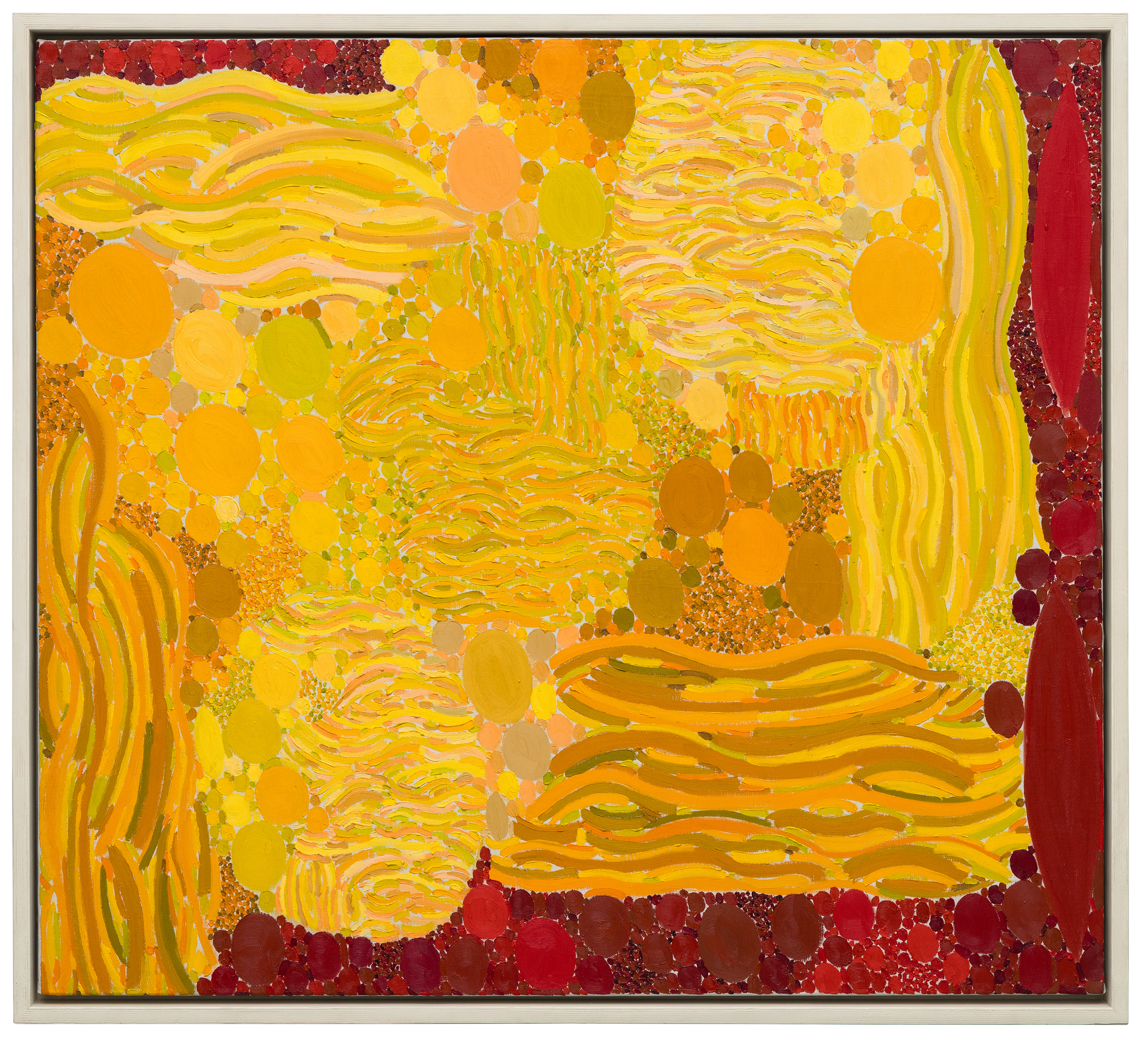
<div><font face=Lato size=3 color=black>Lynne Mapp Drexler’s <em>Spring Sun</em> (1971) exemplifies the vibrant, lyrical abstraction that has brought her renewed recognition in recent years. Composed of concentric circles, cascading brushstrokes, and radiant hues of yellow, orange, and red, the canvas pulses with the rhythm of light and season. Drexler’s painterly vocabulary—layering gestural strokes over pointillist clusters—creates a dynamic surface that evokes both natural phenomena and musical structure, reflecting her lifelong love of symphonic composition.</font></div><br><br><div><font face=Lato size=3> </font></div><br><br><div><font face=Lato size=3 color=black>Painted in 1971, <em>Spring Sun</em> belongs to an important moment in Drexler’s career when she was synthesizing her studies under Hans Hofmann and Robert Motherwell into a personal visual language rooted in color and pattern. The immersive composition suggests not only the brilliance of spring sunlight but also the expressive intensity with which Drexler approached abstraction.</font></div><br><br><div><font face=Lato size=3> </font></div><br><br><div><font face=Lato size=3 color=black>Her contributions have been increasingly recognized by major institutions. The Portland Museum of Art presented a landmark retrospective, <em>Lynne Drexler: Color Notes</em> (2022–2023), and her work has also been exhibited at MoMA PS1 and the Parrish Art Museum. <em>Spring Sun</em> demonstrates why Drexler is now regarded as a vital figure within the second generation of Abstract Expressionists, whose bold use of color and structure continues to resonate with contemporary audiences.</font></div> <div><font face=Lato size=3 color=black>Lynne Mapp Drexler’s <em>Spring Sun</em> (1971) exemplifies the vibrant, lyrical abstraction that has brought her renewed recognition in recent years. Composed of concentric circles, cascading brushstrokes, and radiant hues of yellow, orange, and red, the canvas pulses with the rhythm of light and season. Drexler’s painterly vocabulary—layering gestural strokes over pointillist clusters—creates a dynamic surface that evokes both natural phenomena and musical structure, reflecting her lifelong love of symphonic composition.</font></div><br><br><div><font face=Lato size=3> </font></div><br><br><div><font face=Lato size=3 color=black>Painted in 1971, <em>Spring Sun</em> belongs to an important moment in Drexler’s career when she was synthesizing her studies under Hans Hofmann and Robert Motherwell into a personal visual language rooted in color and pattern. The immersive composition suggests not only the brilliance of spring sunlight but also the expressive intensity with which Drexler approached abstraction.</font></div><br><br><div><font face=Lato size=3> </font></div><br><br><div><font face=Lato size=3 color=black>Her contributions have been increasingly recognized by major institutions. The Portland Museum of Art presented a landmark retrospective, <em>Lynne Drexler: Color Notes</em> (2022–2023), and her work has also been exhibited at MoMA PS1 and the Parrish Art Museum. <em>Spring Sun</em> demonstrates why Drexler is now regarded as a vital figure within the second generation of Abstract Expressionists, whose bold use of color and structure continues to resonate with contemporary audiences.</font></div> <div><font face=Lato size=3 color=black>Lynne Mapp Drexler’s <em>Spring Sun</em> (1971) exemplifies the vibrant, lyrical abstraction that has brought her renewed recognition in recent years. Composed of concentric circles, cascading brushstrokes, and radiant hues of yellow, orange, and red, the canvas pulses with the rhythm of light and season. Drexler’s painterly vocabulary—layering gestural strokes over pointillist clusters—creates a dynamic surface that evokes both natural phenomena and musical structure, reflecting her lifelong love of symphonic composition.</font></div><br><br><div><font face=Lato size=3> </font></div><br><br><div><font face=Lato size=3 color=black>Painted in 1971, <em>Spring Sun</em> belongs to an important moment in Drexler’s career when she was synthesizing her studies under Hans Hofmann and Robert Motherwell into a personal visual language rooted in color and pattern. The immersive composition suggests not only the brilliance of spring sunlight but also the expressive intensity with which Drexler approached abstraction.</font></div><br><br><div><font face=Lato size=3> </font></div><br><br><div><font face=Lato size=3 color=black>Her contributions have been increasingly recognized by major institutions. The Portland Museum of Art presented a landmark retrospective, <em>Lynne Drexler: Color Notes</em> (2022–2023), and her work has also been exhibited at MoMA PS1 and the Parrish Art Museum. <em>Spring Sun</em> demonstrates why Drexler is now regarded as a vital figure within the second generation of Abstract Expressionists, whose bold use of color and structure continues to resonate with contemporary audiences.</font></div> <div><font face=Lato size=3 color=black>Lynne Mapp Drexler’s <em>Spring Sun</em> (1971) exemplifies the vibrant, lyrical abstraction that has brought her renewed recognition in recent years. Composed of concentric circles, cascading brushstrokes, and radiant hues of yellow, orange, and red, the canvas pulses with the rhythm of light and season. Drexler’s painterly vocabulary—layering gestural strokes over pointillist clusters—creates a dynamic surface that evokes both natural phenomena and musical structure, reflecting her lifelong love of symphonic composition.</font></div><br><br><div><font face=Lato size=3> </font></div><br><br><div><font face=Lato size=3 color=black>Painted in 1971, <em>Spring Sun</em> belongs to an important moment in Drexler’s career when she was synthesizing her studies under Hans Hofmann and Robert Motherwell into a personal visual language rooted in color and pattern. The immersive composition suggests not only the brilliance of spring sunlight but also the expressive intensity with which Drexler approached abstraction.</font></div><br><br><div><font face=Lato size=3> </font></div><br><br><div><font face=Lato size=3 color=black>Her contributions have been increasingly recognized by major institutions. The Portland Museum of Art presented a landmark retrospective, <em>Lynne Drexler: Color Notes</em> (2022–2023), and her work has also been exhibited at MoMA PS1 and the Parrish Art Museum. <em>Spring Sun</em> demonstrates why Drexler is now regarded as a vital figure within the second generation of Abstract Expressionists, whose bold use of color and structure continues to resonate with contemporary audiences.</font></div> <div><font face=Lato size=3 color=black>Lynne Mapp Drexler’s <em>Spring Sun</em> (1971) exemplifies the vibrant, lyrical abstraction that has brought her renewed recognition in recent years. Composed of concentric circles, cascading brushstrokes, and radiant hues of yellow, orange, and red, the canvas pulses with the rhythm of light and season. Drexler’s painterly vocabulary—layering gestural strokes over pointillist clusters—creates a dynamic surface that evokes both natural phenomena and musical structure, reflecting her lifelong love of symphonic composition.</font></div><br><br><div><font face=Lato size=3> </font></div><br><br><div><font face=Lato size=3 color=black>Painted in 1971, <em>Spring Sun</em> belongs to an important moment in Drexler’s career when she was synthesizing her studies under Hans Hofmann and Robert Motherwell into a personal visual language rooted in color and pattern. The immersive composition suggests not only the brilliance of spring sunlight but also the expressive intensity with which Drexler approached abstraction.</font></div><br><br><div><font face=Lato size=3> </font></div><br><br><div><font face=Lato size=3 color=black>Her contributions have been increasingly recognized by major institutions. The Portland Museum of Art presented a landmark retrospective, <em>Lynne Drexler: Color Notes</em> (2022–2023), and her work has also been exhibited at MoMA PS1 and the Parrish Art Museum. <em>Spring Sun</em> demonstrates why Drexler is now regarded as a vital figure within the second generation of Abstract Expressionists, whose bold use of color and structure continues to resonate with contemporary audiences.</font></div> <div><font face=Lato size=3 color=black>Lynne Mapp Drexler’s <em>Spring Sun</em> (1971) exemplifies the vibrant, lyrical abstraction that has brought her renewed recognition in recent years. Composed of concentric circles, cascading brushstrokes, and radiant hues of yellow, orange, and red, the canvas pulses with the rhythm of light and season. Drexler’s painterly vocabulary—layering gestural strokes over pointillist clusters—creates a dynamic surface that evokes both natural phenomena and musical structure, reflecting her lifelong love of symphonic composition.</font></div><br><br><div><font face=Lato size=3> </font></div><br><br><div><font face=Lato size=3 color=black>Painted in 1971, <em>Spring Sun</em> belongs to an important moment in Drexler’s career when she was synthesizing her studies under Hans Hofmann and Robert Motherwell into a personal visual language rooted in color and pattern. The immersive composition suggests not only the brilliance of spring sunlight but also the expressive intensity with which Drexler approached abstraction.</font></div><br><br><div><font face=Lato size=3> </font></div><br><br><div><font face=Lato size=3 color=black>Her contributions have been increasingly recognized by major institutions. The Portland Museum of Art presented a landmark retrospective, <em>Lynne Drexler: Color Notes</em> (2022–2023), and her work has also been exhibited at MoMA PS1 and the Parrish Art Museum. <em>Spring Sun</em> demonstrates why Drexler is now regarded as a vital figure within the second generation of Abstract Expressionists, whose bold use of color and structure continues to resonate with contemporary audiences.</font></div> <div><font face=Lato size=3 color=black>Lynne Mapp Drexler’s <em>Spring Sun</em> (1971) exemplifies the vibrant, lyrical abstraction that has brought her renewed recognition in recent years. Composed of concentric circles, cascading brushstrokes, and radiant hues of yellow, orange, and red, the canvas pulses with the rhythm of light and season. Drexler’s painterly vocabulary—layering gestural strokes over pointillist clusters—creates a dynamic surface that evokes both natural phenomena and musical structure, reflecting her lifelong love of symphonic composition.</font></div><br><br><div><font face=Lato size=3> </font></div><br><br><div><font face=Lato size=3 color=black>Painted in 1971, <em>Spring Sun</em> belongs to an important moment in Drexler’s career when she was synthesizing her studies under Hans Hofmann and Robert Motherwell into a personal visual language rooted in color and pattern. The immersive composition suggests not only the brilliance of spring sunlight but also the expressive intensity with which Drexler approached abstraction.</font></div><br><br><div><font face=Lato size=3> </font></div><br><br><div><font face=Lato size=3 color=black>Her contributions have been increasingly recognized by major institutions. The Portland Museum of Art presented a landmark retrospective, <em>Lynne Drexler: Color Notes</em> (2022–2023), and her work has also been exhibited at MoMA PS1 and the Parrish Art Museum. <em>Spring Sun</em> demonstrates why Drexler is now regarded as a vital figure within the second generation of Abstract Expressionists, whose bold use of color and structure continues to resonate with contemporary audiences.</font></div> <div><font face=Lato size=3 color=black>Lynne Mapp Drexler’s <em>Spring Sun</em> (1971) exemplifies the vibrant, lyrical abstraction that has brought her renewed recognition in recent years. Composed of concentric circles, cascading brushstrokes, and radiant hues of yellow, orange, and red, the canvas pulses with the rhythm of light and season. Drexler’s painterly vocabulary—layering gestural strokes over pointillist clusters—creates a dynamic surface that evokes both natural phenomena and musical structure, reflecting her lifelong love of symphonic composition.</font></div><br><br><div><font face=Lato size=3> </font></div><br><br><div><font face=Lato size=3 color=black>Painted in 1971, <em>Spring Sun</em> belongs to an important moment in Drexler’s career when she was synthesizing her studies under Hans Hofmann and Robert Motherwell into a personal visual language rooted in color and pattern. The immersive composition suggests not only the brilliance of spring sunlight but also the expressive intensity with which Drexler approached abstraction.</font></div><br><br><div><font face=Lato size=3> </font></div><br><br><div><font face=Lato size=3 color=black>Her contributions have been increasingly recognized by major institutions. The Portland Museum of Art presented a landmark retrospective, <em>Lynne Drexler: Color Notes</em> (2022–2023), and her work has also been exhibited at MoMA PS1 and the Parrish Art Museum. <em>Spring Sun</em> demonstrates why Drexler is now regarded as a vital figure within the second generation of Abstract Expressionists, whose bold use of color and structure continues to resonate with contemporary audiences.</font></div> <div><font face=Lato size=3 color=black>Lynne Mapp Drexler’s <em>Spring Sun</em> (1971) exemplifies the vibrant, lyrical abstraction that has brought her renewed recognition in recent years. Composed of concentric circles, cascading brushstrokes, and radiant hues of yellow, orange, and red, the canvas pulses with the rhythm of light and season. Drexler’s painterly vocabulary—layering gestural strokes over pointillist clusters—creates a dynamic surface that evokes both natural phenomena and musical structure, reflecting her lifelong love of symphonic composition.</font></div><br><br><div><font face=Lato size=3> </font></div><br><br><div><font face=Lato size=3 color=black>Painted in 1971, <em>Spring Sun</em> belongs to an important moment in Drexler’s career when she was synthesizing her studies under Hans Hofmann and Robert Motherwell into a personal visual language rooted in color and pattern. The immersive composition suggests not only the brilliance of spring sunlight but also the expressive intensity with which Drexler approached abstraction.</font></div><br><br><div><font face=Lato size=3> </font></div><br><br><div><font face=Lato size=3 color=black>Her contributions have been increasingly recognized by major institutions. The Portland Museum of Art presented a landmark retrospective, <em>Lynne Drexler: Color Notes</em> (2022–2023), and her work has also been exhibited at MoMA PS1 and the Parrish Art Museum. <em>Spring Sun</em> demonstrates why Drexler is now regarded as a vital figure within the second generation of Abstract Expressionists, whose bold use of color and structure continues to resonate with contemporary audiences.</font></div> <div><font face=Lato size=3 color=black>Lynne Mapp Drexler’s <em>Spring Sun</em> (1971) exemplifies the vibrant, lyrical abstraction that has brought her renewed recognition in recent years. Composed of concentric circles, cascading brushstrokes, and radiant hues of yellow, orange, and red, the canvas pulses with the rhythm of light and season. Drexler’s painterly vocabulary—layering gestural strokes over pointillist clusters—creates a dynamic surface that evokes both natural phenomena and musical structure, reflecting her lifelong love of symphonic composition.</font></div><br><br><div><font face=Lato size=3> </font></div><br><br><div><font face=Lato size=3 color=black>Painted in 1971, <em>Spring Sun</em> belongs to an important moment in Drexler’s career when she was synthesizing her studies under Hans Hofmann and Robert Motherwell into a personal visual language rooted in color and pattern. The immersive composition suggests not only the brilliance of spring sunlight but also the expressive intensity with which Drexler approached abstraction.</font></div><br><br><div><font face=Lato size=3> </font></div><br><br><div><font face=Lato size=3 color=black>Her contributions have been increasingly recognized by major institutions. The Portland Museum of Art presented a landmark retrospective, <em>Lynne Drexler: Color Notes</em> (2022–2023), and her work has also been exhibited at MoMA PS1 and the Parrish Art Museum. <em>Spring Sun</em> demonstrates why Drexler is now regarded as a vital figure within the second generation of Abstract Expressionists, whose bold use of color and structure continues to resonate with contemporary audiences.</font></div>
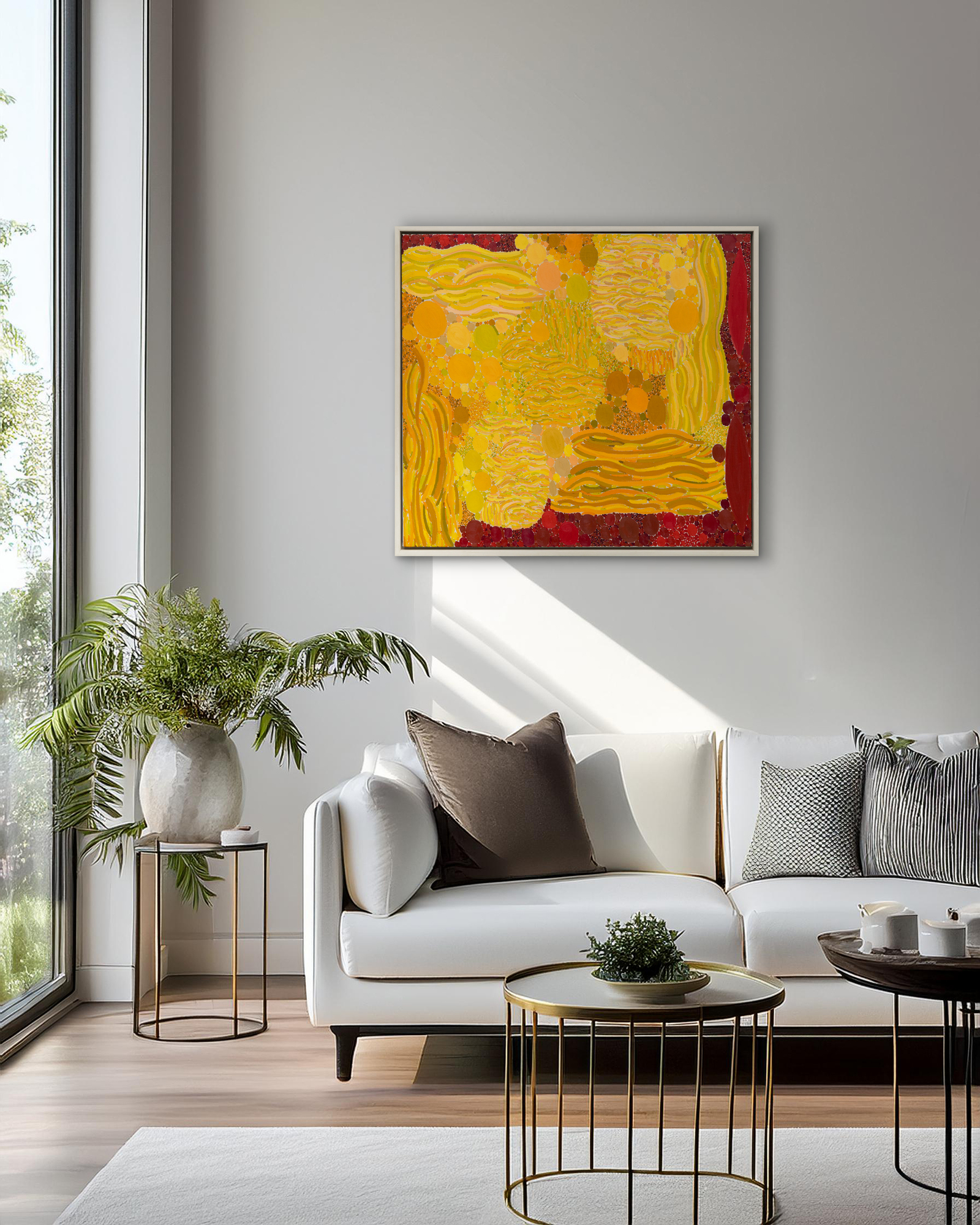
春日暖阳197135 5/8 x 39 3/4 x 1 英寸(90.36 x 100.97 x 2.54 厘米) 布面油画
种源
艺术家工作室,纽约州纽约市春街
约翰·赫尔特伯格遗产,由上述机构遗赠
私人收藏,通过伊莱恩·韦施勒,2013年
私人收藏,缅因州,2025年
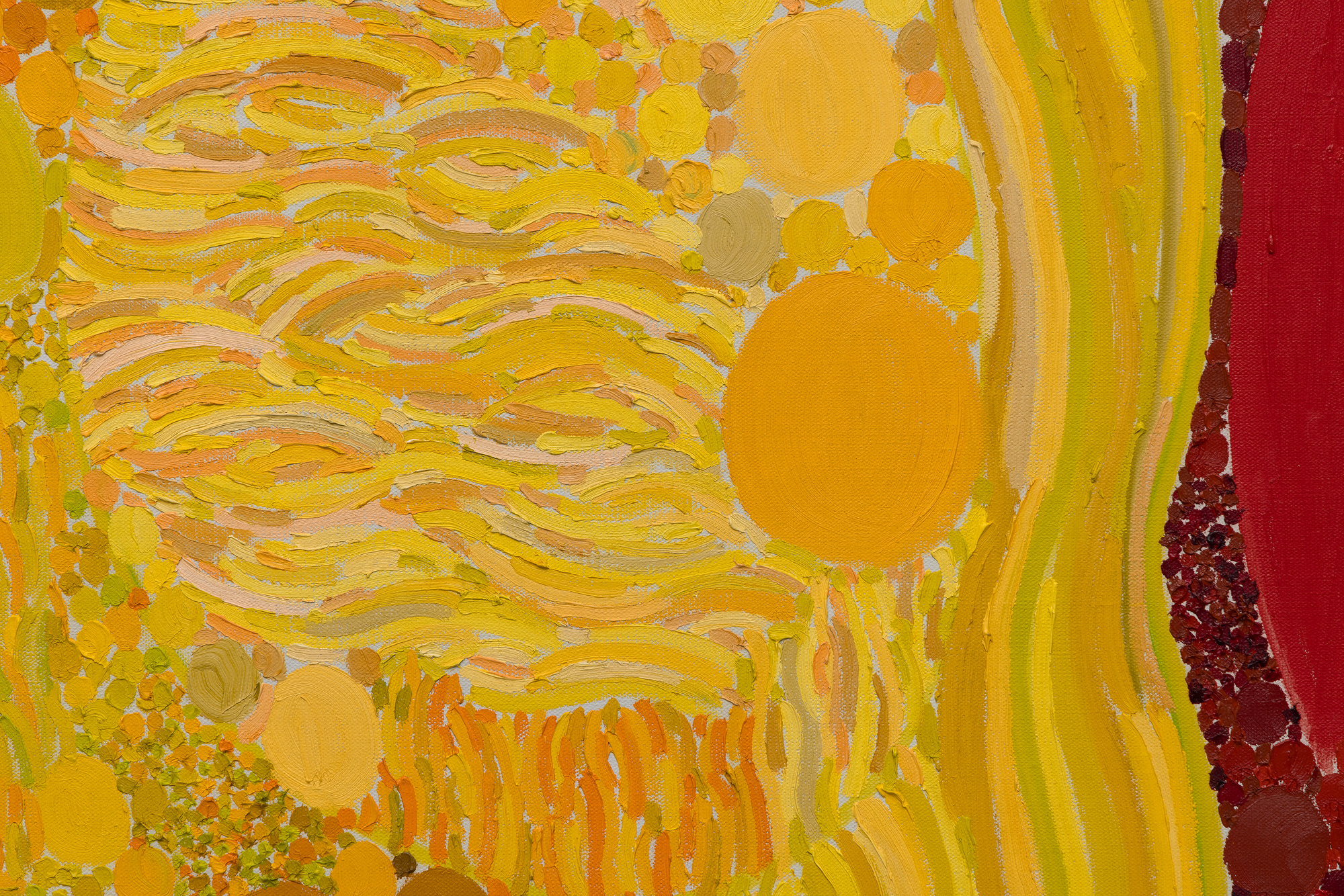
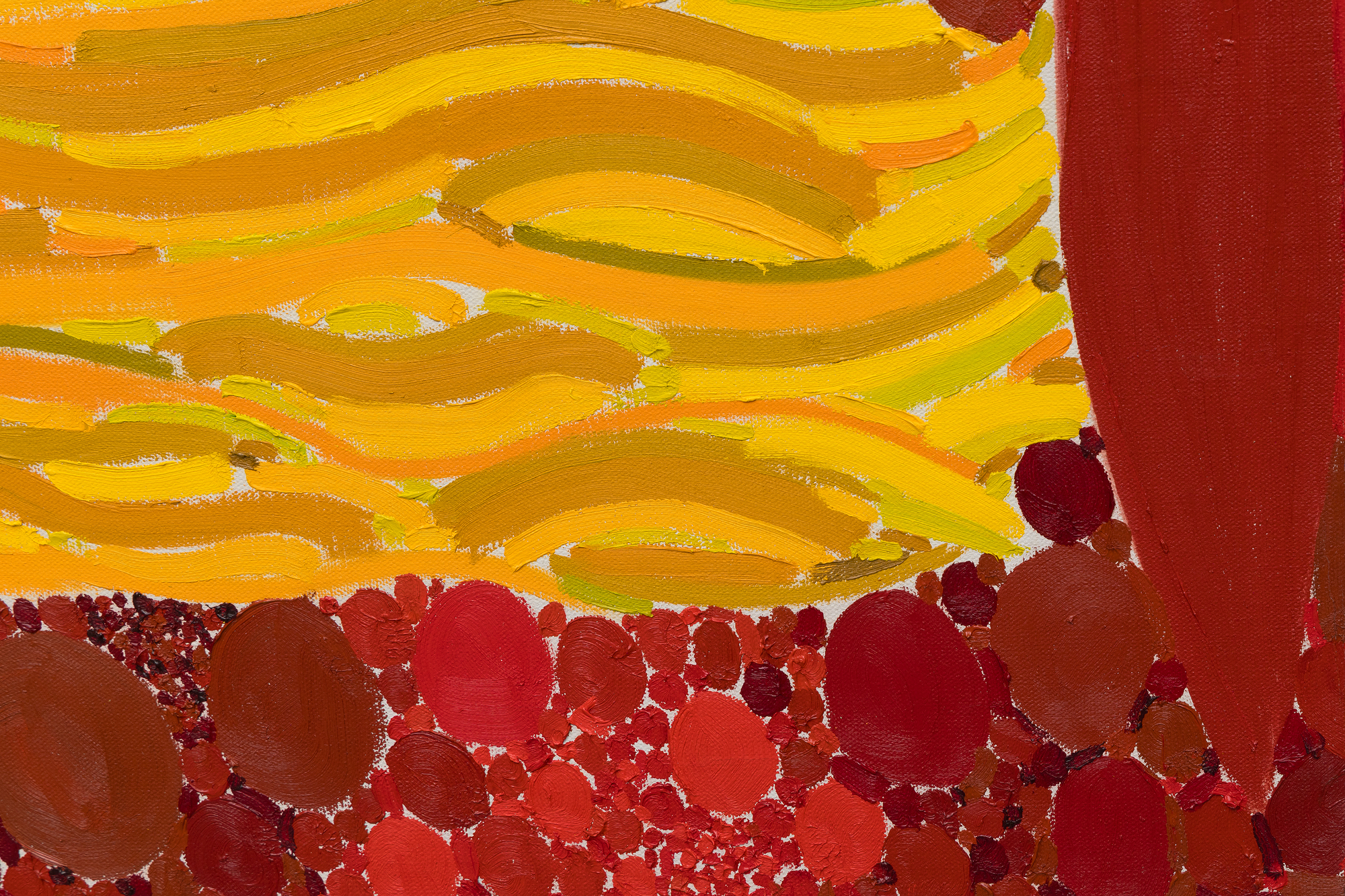
琳恩·马普·德雷克斯勒的《春日阳光》(1971)堪称其近年重获赞誉的鲜活抒情抽象风格典范。画面由同心圆、倾泻的笔触以及明艳的黄、橙、红色调构成,整幅画布跃动着光影与季节的韵律。 德雷克斯勒的绘画语汇——将即兴笔触叠加于点彩主义色块之上——营造出充满张力的画面,既唤起自然现象的联想,又呈现音乐般的结构,折射出她毕生对交响乐创作的热爱。


创作于1971年的《春日阳光》标志着德雷克斯勒艺术生涯的重要转折点:她将汉斯·霍夫曼与罗伯特·马瑟韦尔的艺术精髓熔铸成以色彩与纹样为根基的个人视觉语言。这幅沉浸式作品不仅展现春日阳光的璀璨,更彰显了艺术家投身抽象艺术的强烈表现力。


其艺术成就正获得各大机构的日益认可。 波特兰美术馆举办了里程碑式的回顾展《琳恩·德雷克斯勒:色彩笔记》(2022-2023),其作品亦曾在纽约现代艺术博物馆PS1分馆及帕里什艺术博物馆展出。《春日阳光》彰显了德雷克斯勒为何被视为抽象表现主义第二代核心人物——她对色彩与结构的大胆运用,至今仍与当代观众产生强烈共鸣。
询问