返回

乔安娜·普塞特-达特·达特·恩茨(第1947年)

 
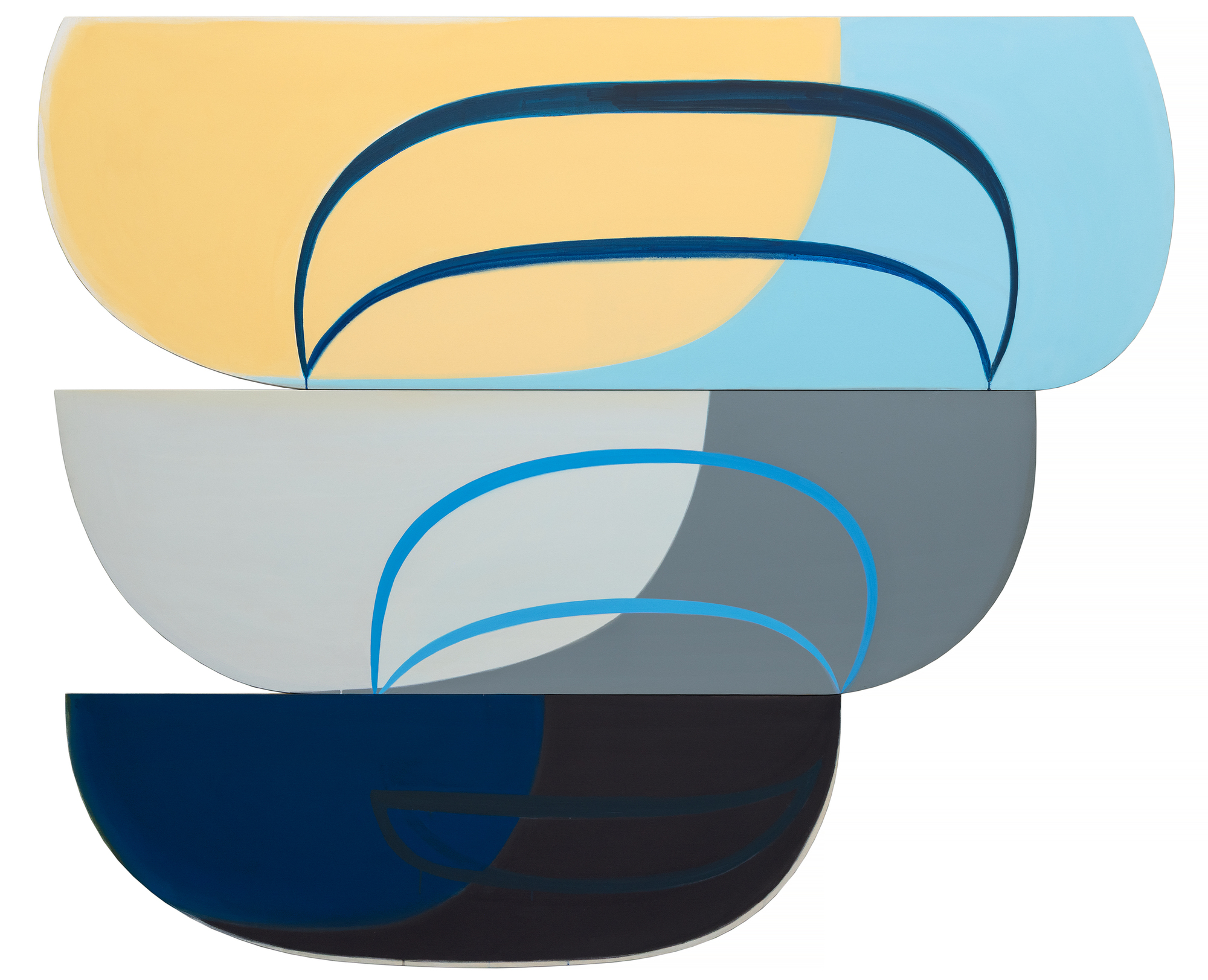
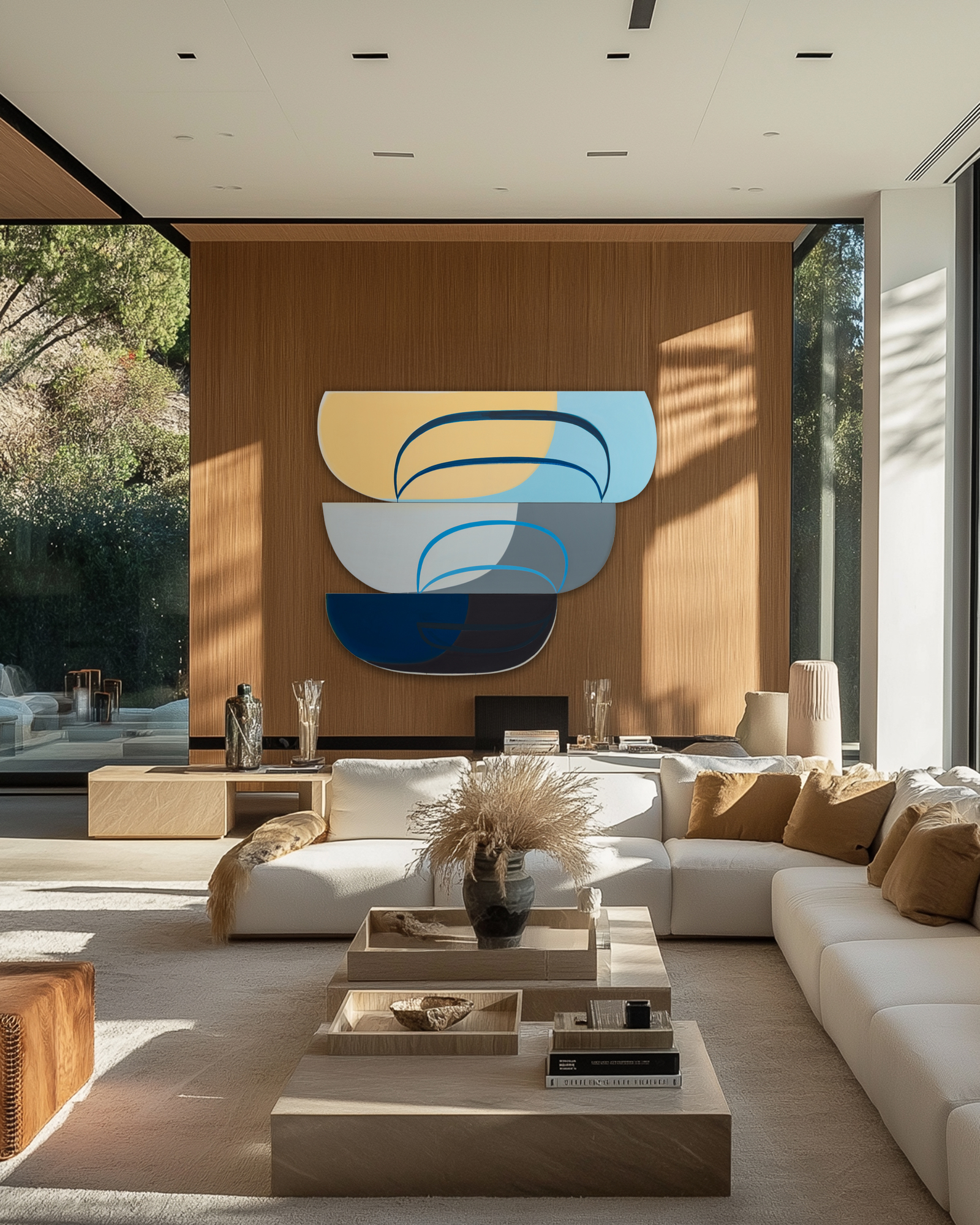
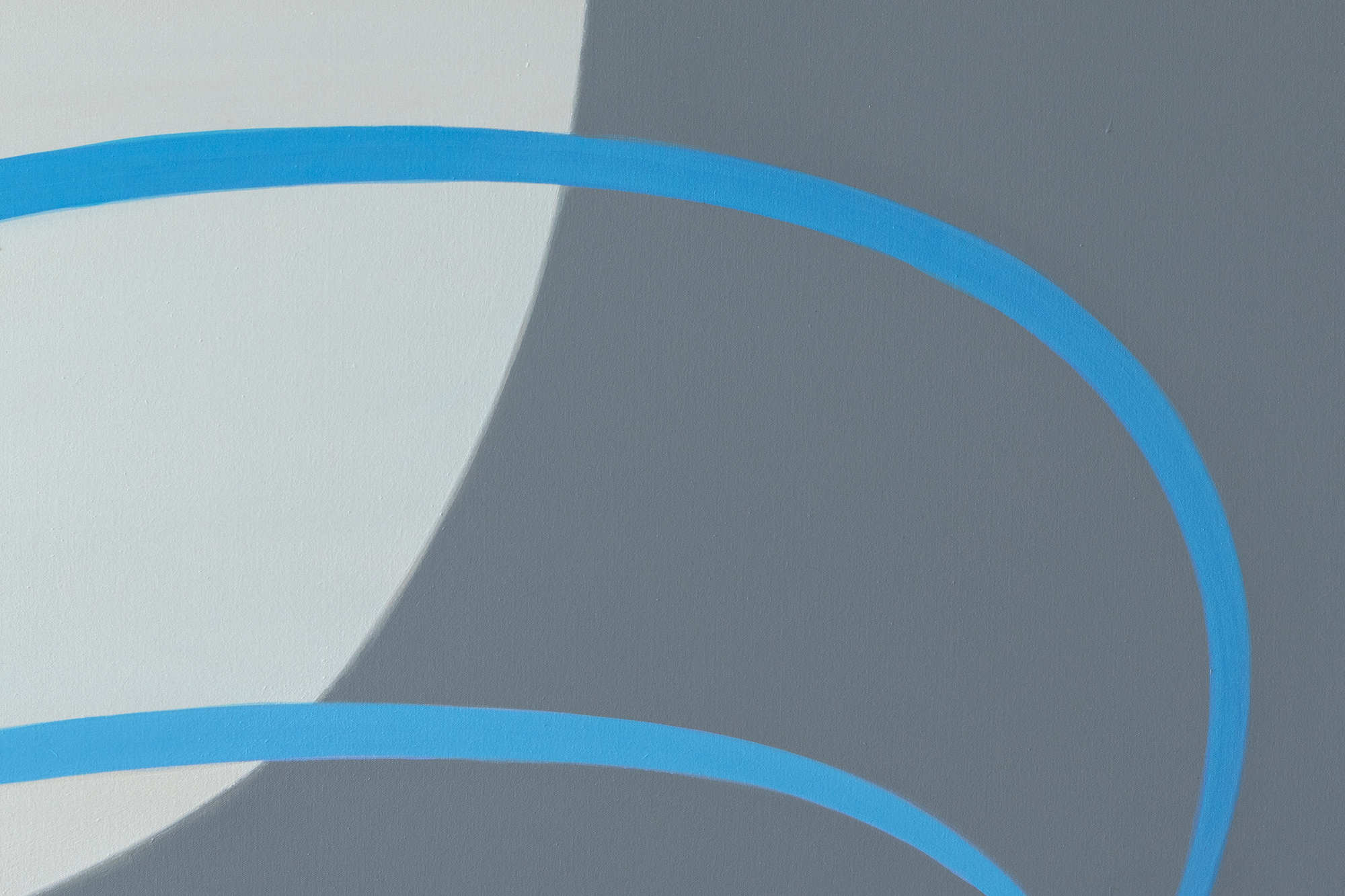
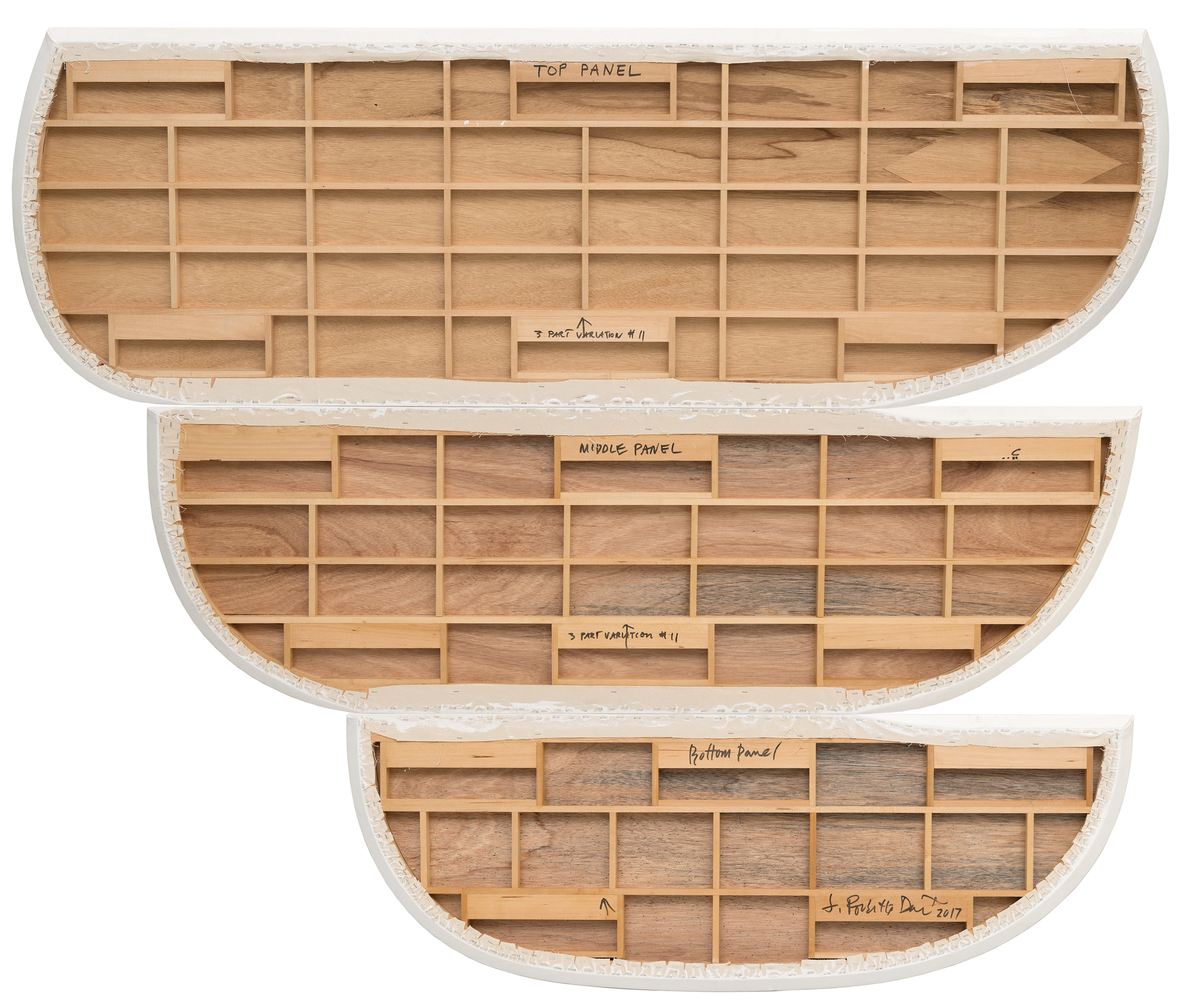
<div>Joanna Pousette-Dart’s 3 Part Variation No. 11 (2017) is composed of three stacked, curvilinear canvases—forms that resemble canoe hulls or slices of a circle—rising in scale from bottom to top. Each panel has its own restrained palette of blues, yellows, and grays, distinct yet resonant with the others. The proportions and curves echo from one to the next, yet no two forms are alike. </div><br><br><div> </div><br><br><div>Within each panel, broad areas of flat color are bisected by rounded shapes whose outer contours align with the painting’s edge. Layered over these are linear arabesque-like structures that visually rhyme—but never directly repeat—the panels’ curves, creating a dynamic interplay between inner drawing and outer shape. The result is both lyrical and precise, a composition where subtle variations generate a complex harmony. </div><br><br><div> </div><br><br><div>The beauty of 3 Part Variation No. 11 lies in these relationships: how forms mirror, diverge, and converge across the three canvases. The effect is meditative, like a visual equation that is at once architectural and deeply personal. </div> <div>Joanna Pousette-Dart’s 3 Part Variation No. 11 (2017) is composed of three stacked, curvilinear canvases—forms that resemble canoe hulls or slices of a circle—rising in scale from bottom to top. Each panel has its own restrained palette of blues, yellows, and grays, distinct yet resonant with the others. The proportions and curves echo from one to the next, yet no two forms are alike. </div><br><br><div> </div><br><br><div>Within each panel, broad areas of flat color are bisected by rounded shapes whose outer contours align with the painting’s edge. Layered over these are linear arabesque-like structures that visually rhyme—but never directly repeat—the panels’ curves, creating a dynamic interplay between inner drawing and outer shape. The result is both lyrical and precise, a composition where subtle variations generate a complex harmony. </div><br><br><div> </div><br><br><div>The beauty of 3 Part Variation No. 11 lies in these relationships: how forms mirror, diverge, and converge across the three canvases. The effect is meditative, like a visual equation that is at once architectural and deeply personal. </div> <div>Joanna Pousette-Dart’s 3 Part Variation No. 11 (2017) is composed of three stacked, curvilinear canvases—forms that resemble canoe hulls or slices of a circle—rising in scale from bottom to top. Each panel has its own restrained palette of blues, yellows, and grays, distinct yet resonant with the others. The proportions and curves echo from one to the next, yet no two forms are alike. </div><br><br><div> </div><br><br><div>Within each panel, broad areas of flat color are bisected by rounded shapes whose outer contours align with the painting’s edge. Layered over these are linear arabesque-like structures that visually rhyme—but never directly repeat—the panels’ curves, creating a dynamic interplay between inner drawing and outer shape. The result is both lyrical and precise, a composition where subtle variations generate a complex harmony. </div><br><br><div> </div><br><br><div>The beauty of 3 Part Variation No. 11 lies in these relationships: how forms mirror, diverge, and converge across the three canvases. The effect is meditative, like a visual equation that is at once architectural and deeply personal. </div> <div>Joanna Pousette-Dart’s 3 Part Variation No. 11 (2017) is composed of three stacked, curvilinear canvases—forms that resemble canoe hulls or slices of a circle—rising in scale from bottom to top. Each panel has its own restrained palette of blues, yellows, and grays, distinct yet resonant with the others. The proportions and curves echo from one to the next, yet no two forms are alike. </div><br><br><div> </div><br><br><div>Within each panel, broad areas of flat color are bisected by rounded shapes whose outer contours align with the painting’s edge. Layered over these are linear arabesque-like structures that visually rhyme—but never directly repeat—the panels’ curves, creating a dynamic interplay between inner drawing and outer shape. The result is both lyrical and precise, a composition where subtle variations generate a complex harmony. </div><br><br><div> </div><br><br><div>The beauty of 3 Part Variation No. 11 lies in these relationships: how forms mirror, diverge, and converge across the three canvases. The effect is meditative, like a visual equation that is at once architectural and deeply personal. </div> <div>Joanna Pousette-Dart’s 3 Part Variation No. 11 (2017) is composed of three stacked, curvilinear canvases—forms that resemble canoe hulls or slices of a circle—rising in scale from bottom to top. Each panel has its own restrained palette of blues, yellows, and grays, distinct yet resonant with the others. The proportions and curves echo from one to the next, yet no two forms are alike. </div><br><br><div> </div><br><br><div>Within each panel, broad areas of flat color are bisected by rounded shapes whose outer contours align with the painting’s edge. Layered over these are linear arabesque-like structures that visually rhyme—but never directly repeat—the panels’ curves, creating a dynamic interplay between inner drawing and outer shape. The result is both lyrical and precise, a composition where subtle variations generate a complex harmony. </div><br><br><div> </div><br><br><div>The beauty of 3 Part Variation No. 11 lies in these relationships: how forms mirror, diverge, and converge across the three canvases. The effect is meditative, like a visual equation that is at once architectural and deeply personal. </div> <div>Joanna Pousette-Dart’s 3 Part Variation No. 11 (2017) is composed of three stacked, curvilinear canvases—forms that resemble canoe hulls or slices of a circle—rising in scale from bottom to top. Each panel has its own restrained palette of blues, yellows, and grays, distinct yet resonant with the others. The proportions and curves echo from one to the next, yet no two forms are alike. </div><br><br><div> </div><br><br><div>Within each panel, broad areas of flat color are bisected by rounded shapes whose outer contours align with the painting’s edge. Layered over these are linear arabesque-like structures that visually rhyme—but never directly repeat—the panels’ curves, creating a dynamic interplay between inner drawing and outer shape. The result is both lyrical and precise, a composition where subtle variations generate a complex harmony. </div><br><br><div> </div><br><br><div>The beauty of 3 Part Variation No. 11 lies in these relationships: how forms mirror, diverge, and converge across the three canvases. The effect is meditative, like a visual equation that is at once architectural and deeply personal. </div> <div>Joanna Pousette-Dart’s 3 Part Variation No. 11 (2017) is composed of three stacked, curvilinear canvases—forms that resemble canoe hulls or slices of a circle—rising in scale from bottom to top. Each panel has its own restrained palette of blues, yellows, and grays, distinct yet resonant with the others. The proportions and curves echo from one to the next, yet no two forms are alike. </div><br><br><div> </div><br><br><div>Within each panel, broad areas of flat color are bisected by rounded shapes whose outer contours align with the painting’s edge. Layered over these are linear arabesque-like structures that visually rhyme—but never directly repeat—the panels’ curves, creating a dynamic interplay between inner drawing and outer shape. The result is both lyrical and precise, a composition where subtle variations generate a complex harmony. </div><br><br><div> </div><br><br><div>The beauty of 3 Part Variation No. 11 lies in these relationships: how forms mirror, diverge, and converge across the three canvases. The effect is meditative, like a visual equation that is at once architectural and deeply personal. </div> <div>Joanna Pousette-Dart’s 3 Part Variation No. 11 (2017) is composed of three stacked, curvilinear canvases—forms that resemble canoe hulls or slices of a circle—rising in scale from bottom to top. Each panel has its own restrained palette of blues, yellows, and grays, distinct yet resonant with the others. The proportions and curves echo from one to the next, yet no two forms are alike. </div><br><br><div> </div><br><br><div>Within each panel, broad areas of flat color are bisected by rounded shapes whose outer contours align with the painting’s edge. Layered over these are linear arabesque-like structures that visually rhyme—but never directly repeat—the panels’ curves, creating a dynamic interplay between inner drawing and outer shape. The result is both lyrical and precise, a composition where subtle variations generate a complex harmony. </div><br><br><div> </div><br><br><div>The beauty of 3 Part Variation No. 11 lies in these relationships: how forms mirror, diverge, and converge across the three canvases. The effect is meditative, like a visual equation that is at once architectural and deeply personal. </div> <div>Joanna Pousette-Dart’s 3 Part Variation No. 11 (2017) is composed of three stacked, curvilinear canvases—forms that resemble canoe hulls or slices of a circle—rising in scale from bottom to top. Each panel has its own restrained palette of blues, yellows, and grays, distinct yet resonant with the others. The proportions and curves echo from one to the next, yet no two forms are alike. </div><br><br><div> </div><br><br><div>Within each panel, broad areas of flat color are bisected by rounded shapes whose outer contours align with the painting’s edge. Layered over these are linear arabesque-like structures that visually rhyme—but never directly repeat—the panels’ curves, creating a dynamic interplay between inner drawing and outer shape. The result is both lyrical and precise, a composition where subtle variations generate a complex harmony. </div><br><br><div> </div><br><br><div>The beauty of 3 Part Variation No. 11 lies in these relationships: how forms mirror, diverge, and converge across the three canvases. The effect is meditative, like a visual equation that is at once architectural and deeply personal. </div> <div>Joanna Pousette-Dart’s 3 Part Variation No. 11 (2017) is composed of three stacked, curvilinear canvases—forms that resemble canoe hulls or slices of a circle—rising in scale from bottom to top. Each panel has its own restrained palette of blues, yellows, and grays, distinct yet resonant with the others. The proportions and curves echo from one to the next, yet no two forms are alike. </div><br><br><div> </div><br><br><div>Within each panel, broad areas of flat color are bisected by rounded shapes whose outer contours align with the painting’s edge. Layered over these are linear arabesque-like structures that visually rhyme—but never directly repeat—the panels’ curves, creating a dynamic interplay between inner drawing and outer shape. The result is both lyrical and precise, a composition where subtle variations generate a complex harmony. </div><br><br><div> </div><br><br><div>The beauty of 3 Part Variation No. 11 lies in these relationships: how forms mirror, diverge, and converge across the three canvases. The effect is meditative, like a visual equation that is at once architectural and deeply personal. </div>
三部变奏曲第十一号201776 3/4 x 91 1/2 x 1 1/12 英寸(194.31 x 232.41 x 3.81 厘米) 丙烯、帆布、木板
种源
艺术家收藏
私人收藏,直接购自艺术家
乔安娜·普塞特-达特的《三部变奏曲第11号》(2017)由三幅叠置的曲线形画布构成——其形态宛若独木舟船体或圆形切片——自下而上渐次升高。每幅画板皆采用克制的蓝、黄、灰三色调,既各自独立又相互呼应。 比例与曲线在画布间相互呼应,却无两幅形态完全相同。


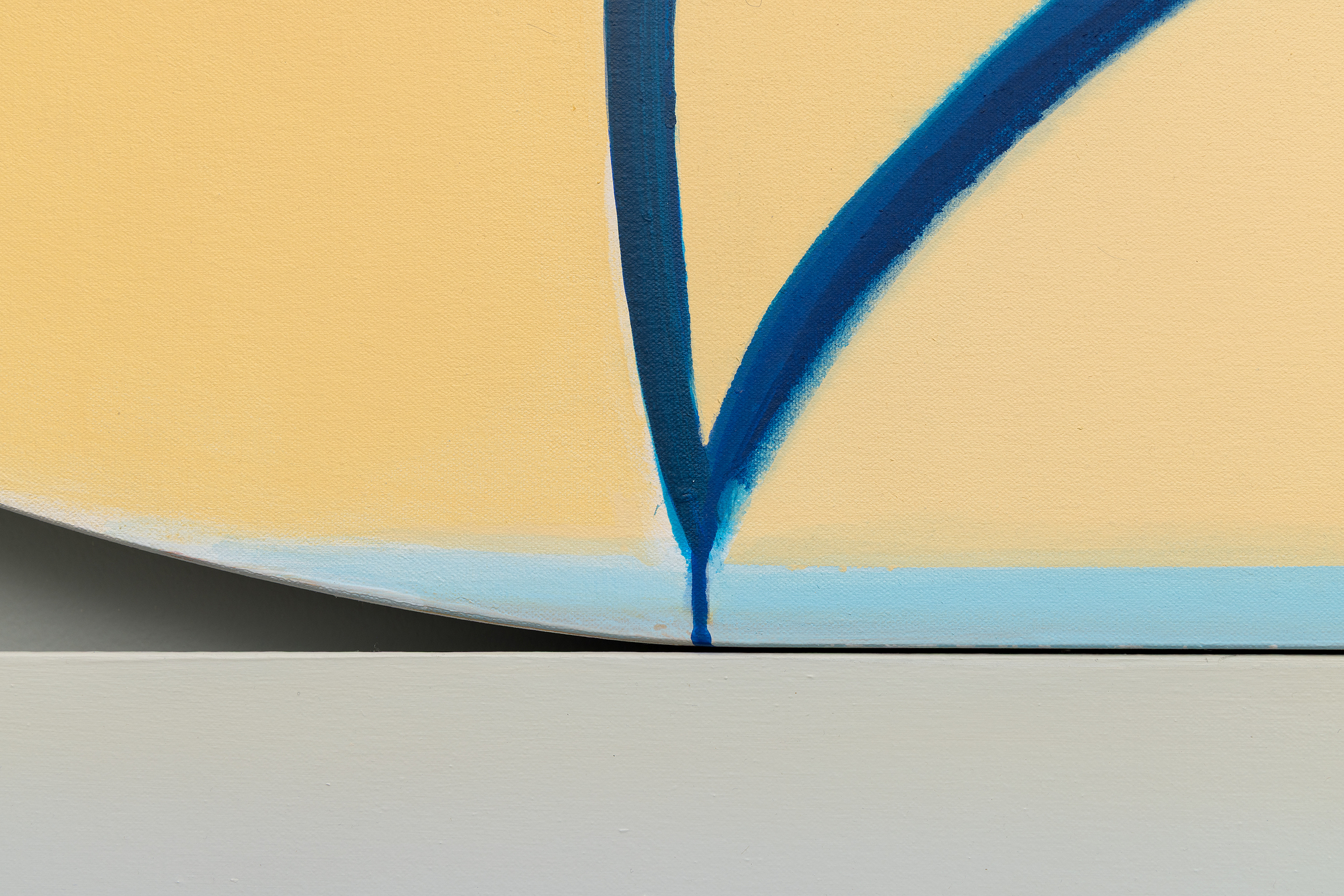
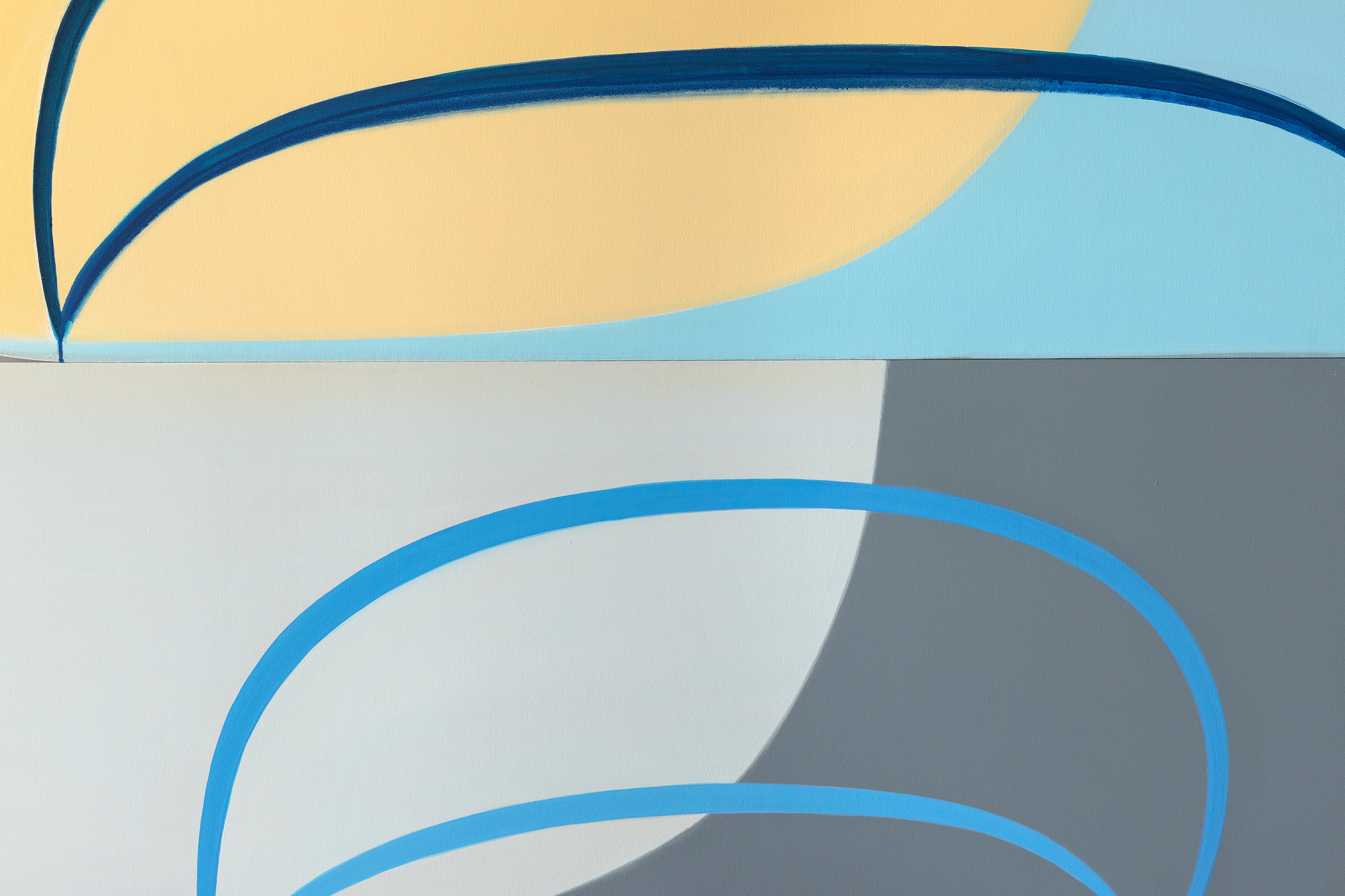
每幅画布内,大面积的平面色彩被圆润的轮廓分割,其外缘与画布边界精准对齐。其上叠加着线性阿拉伯式纹样结构,在视觉上与画布曲线形成韵律共鸣——却从不直接重复——从而在内在线条与外在形态间营造出动态互动。 最终呈现的效果既如诗般优美又精准严谨,微妙变化在构图中交织出复杂的和谐。


《三部变奏曲第11号》的精妙之处正在于此:三幅画布间形态如何相互映照、分歧与交汇。其效果令人沉思,宛如一道既具建筑美学又饱含个人印记的视觉方程式。
询问