返回

卡米尔·皮萨罗(1830-1903)

 
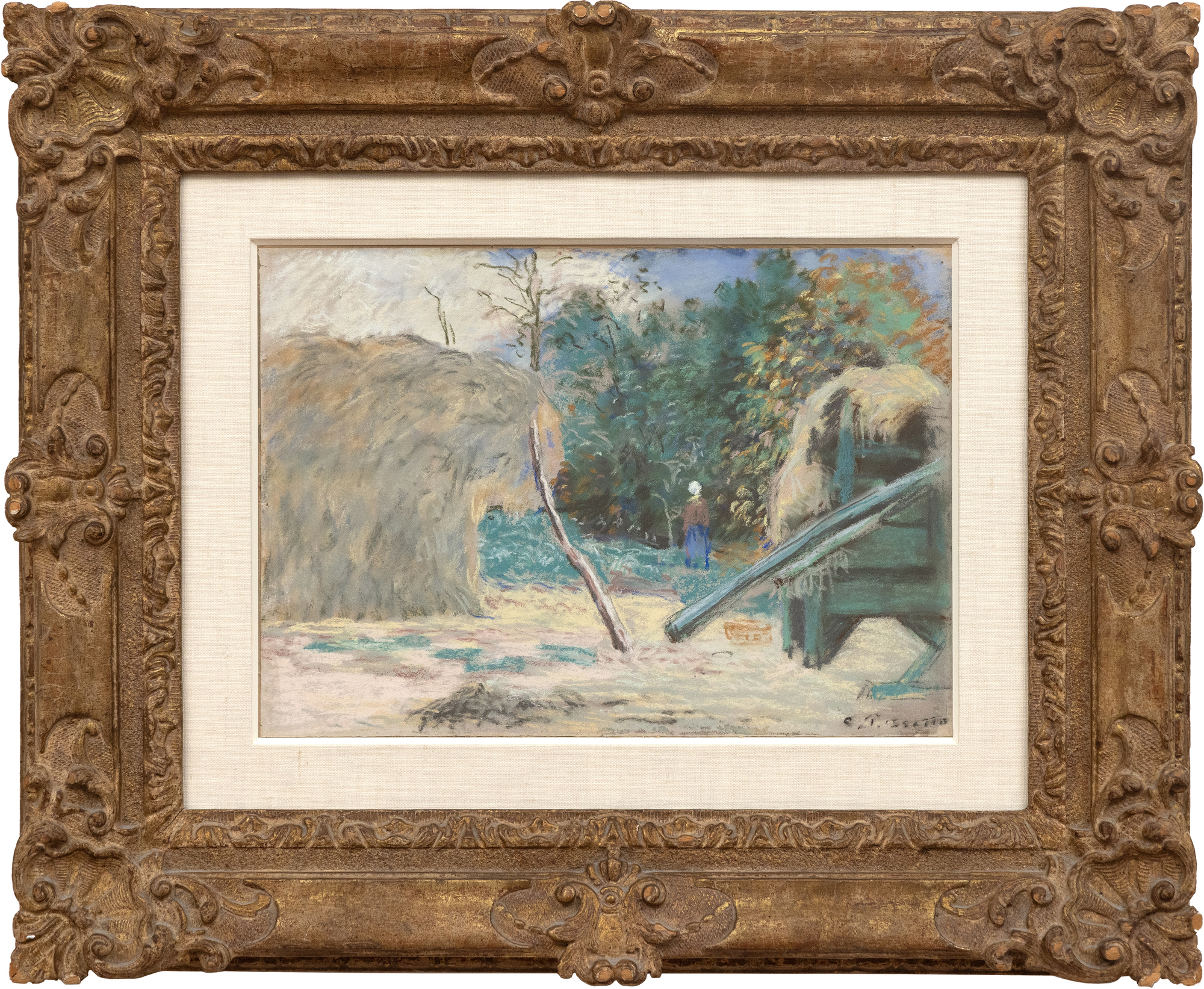
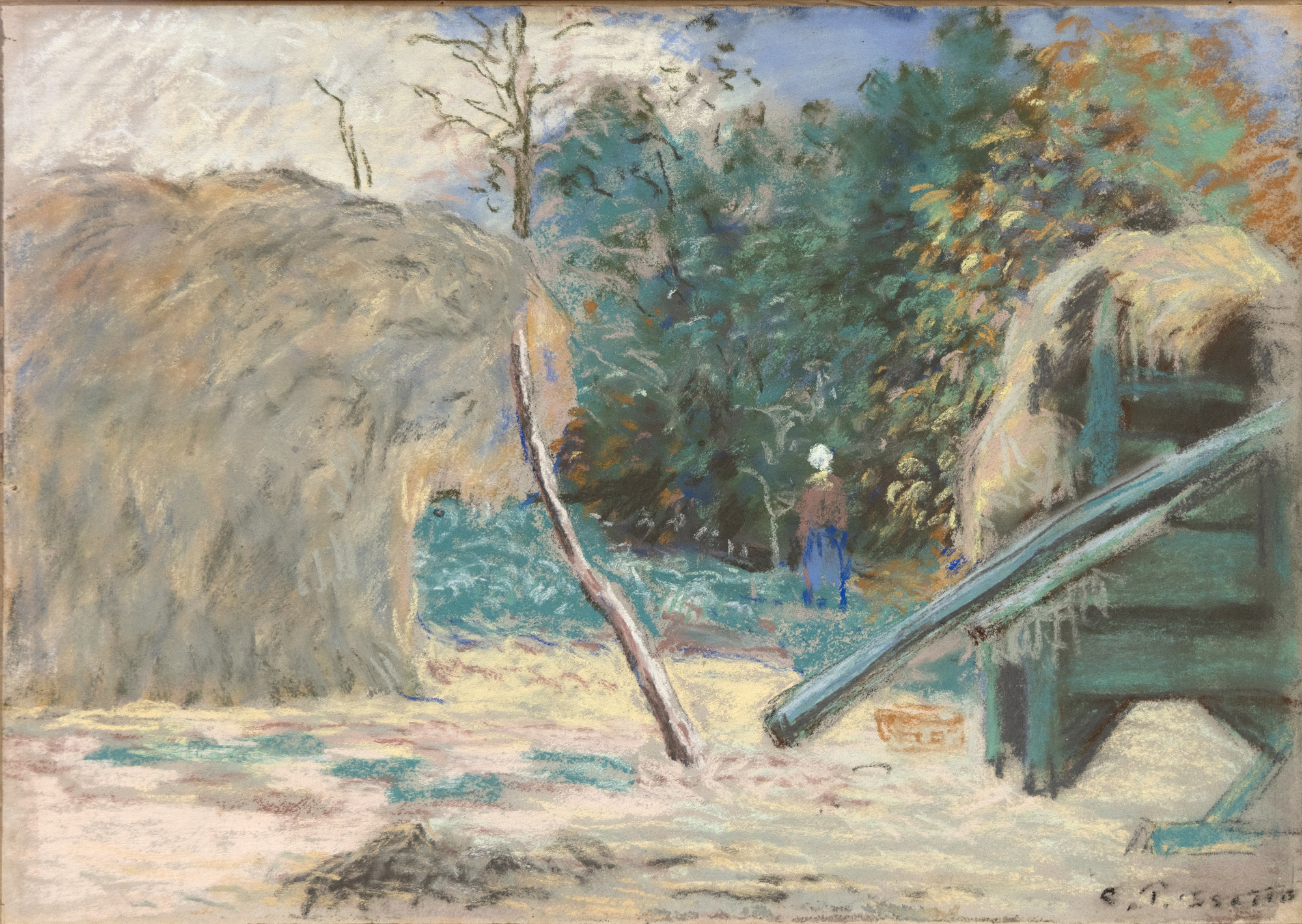
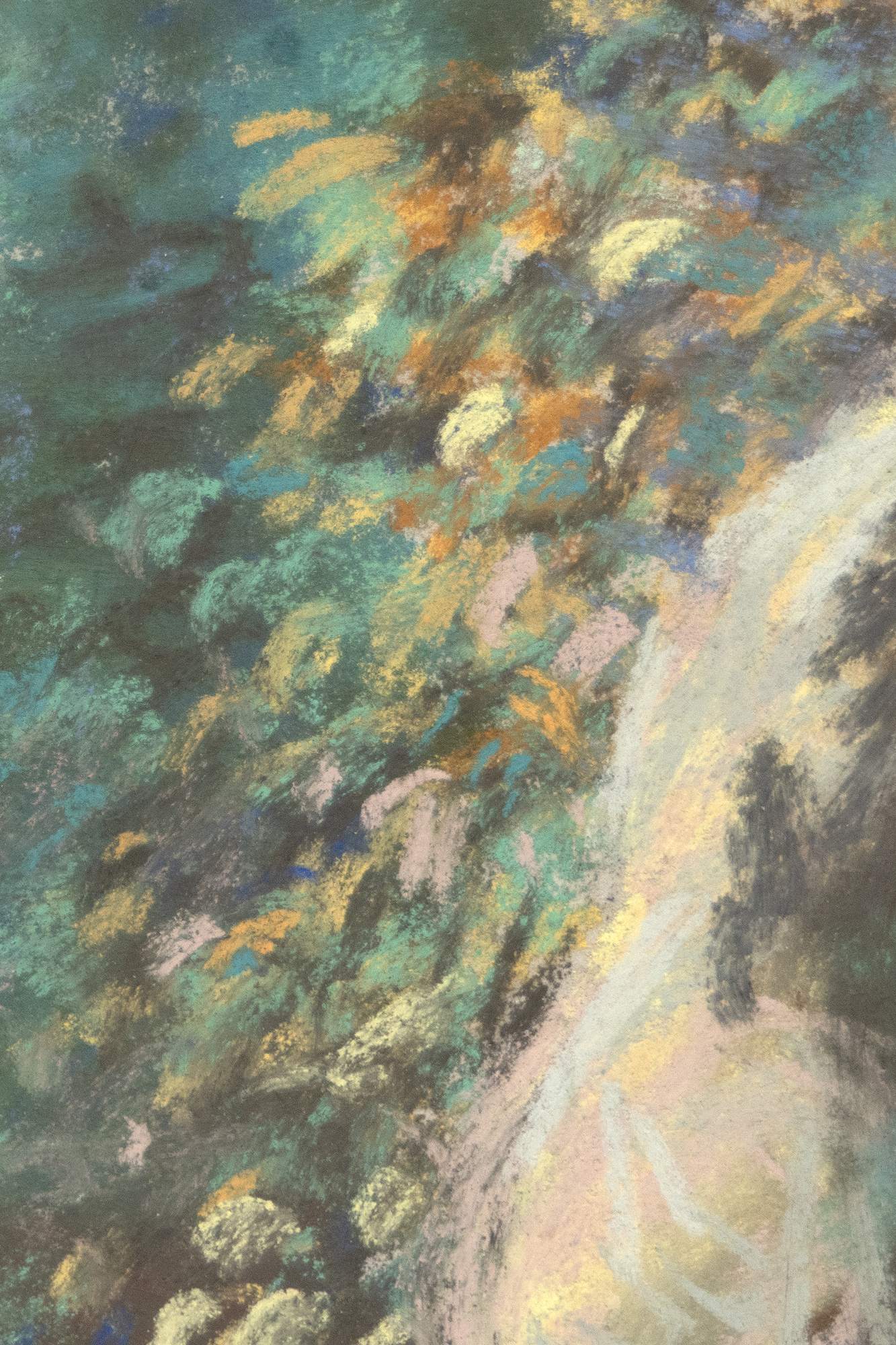
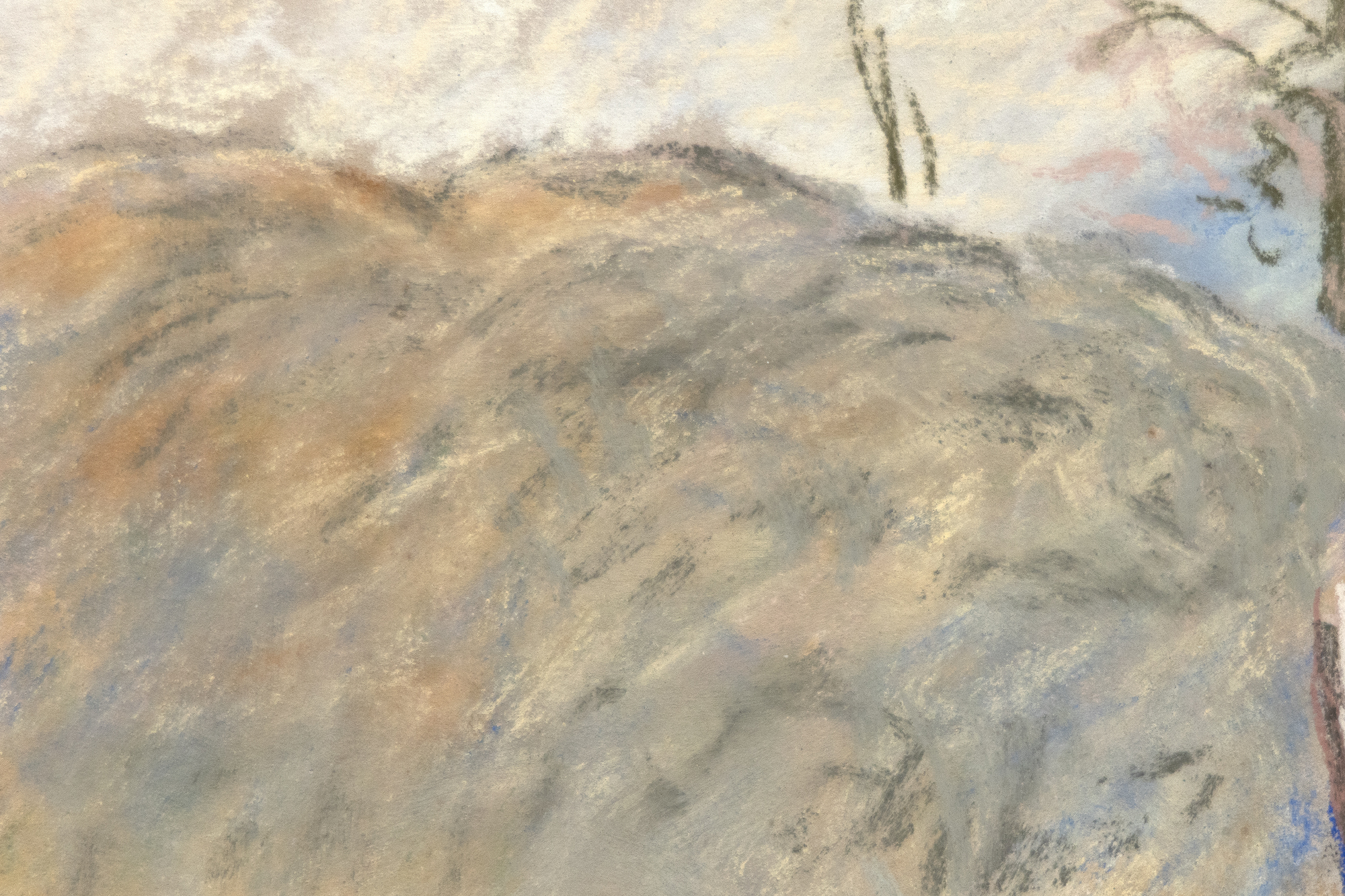
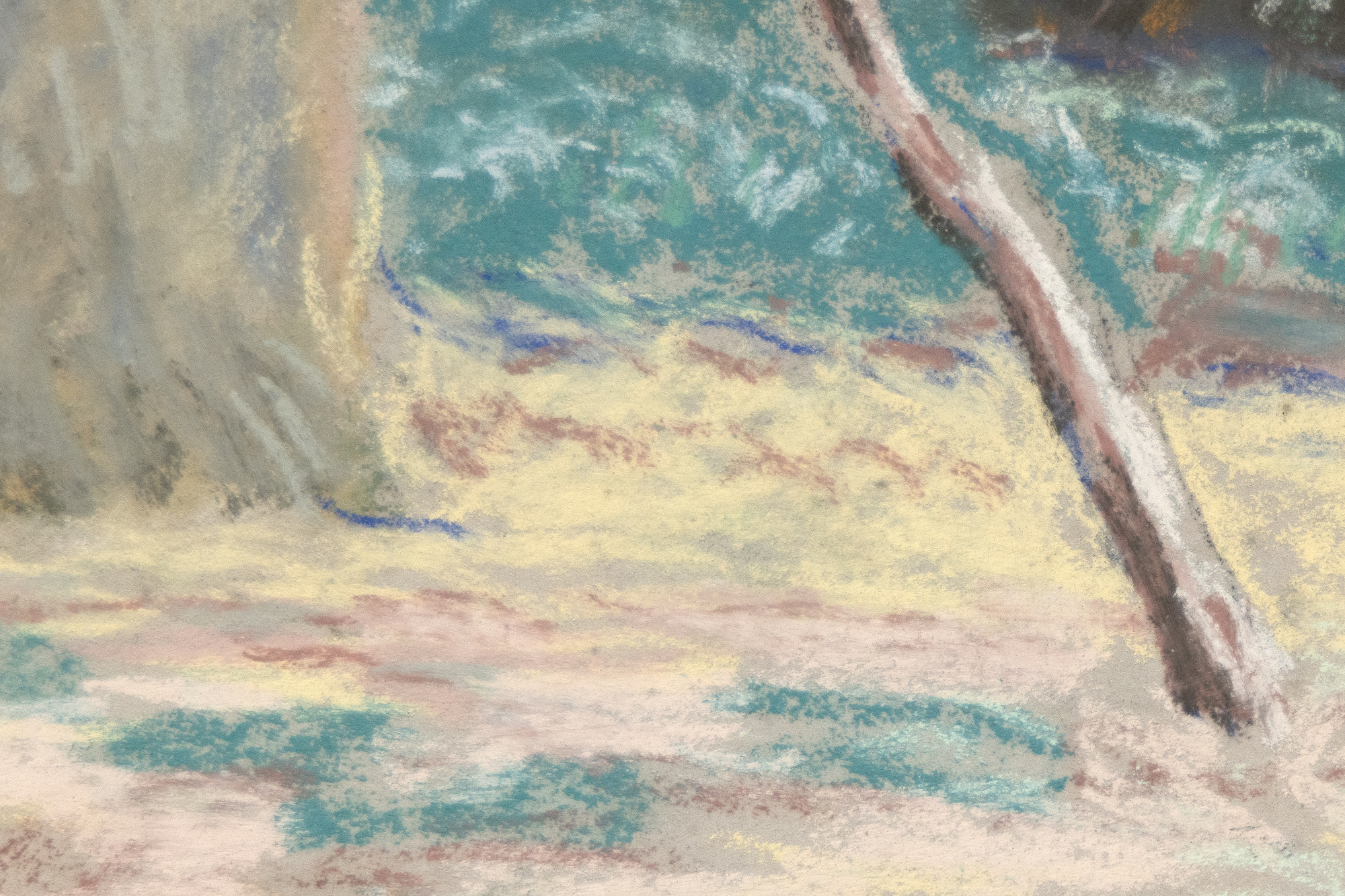
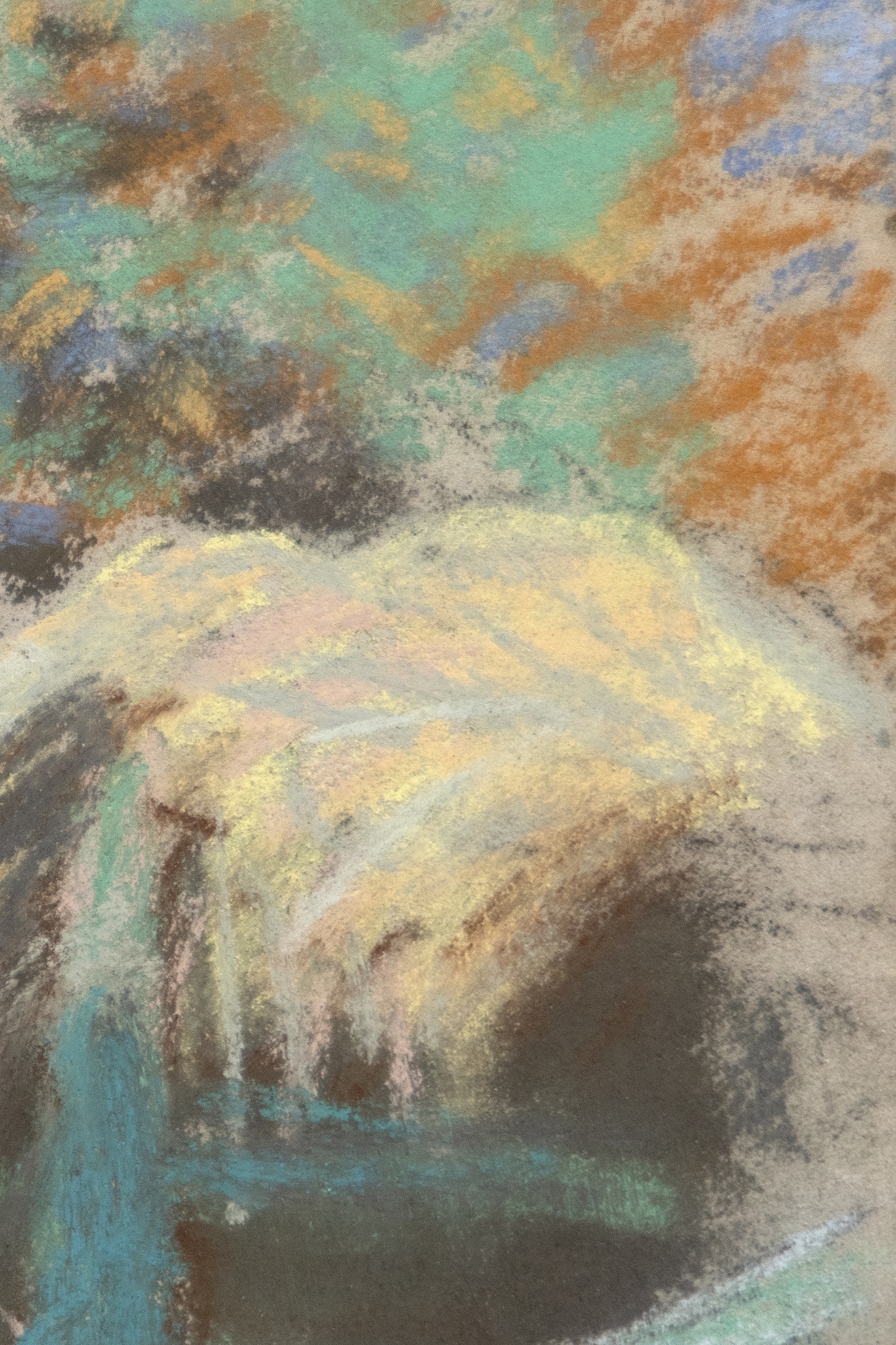
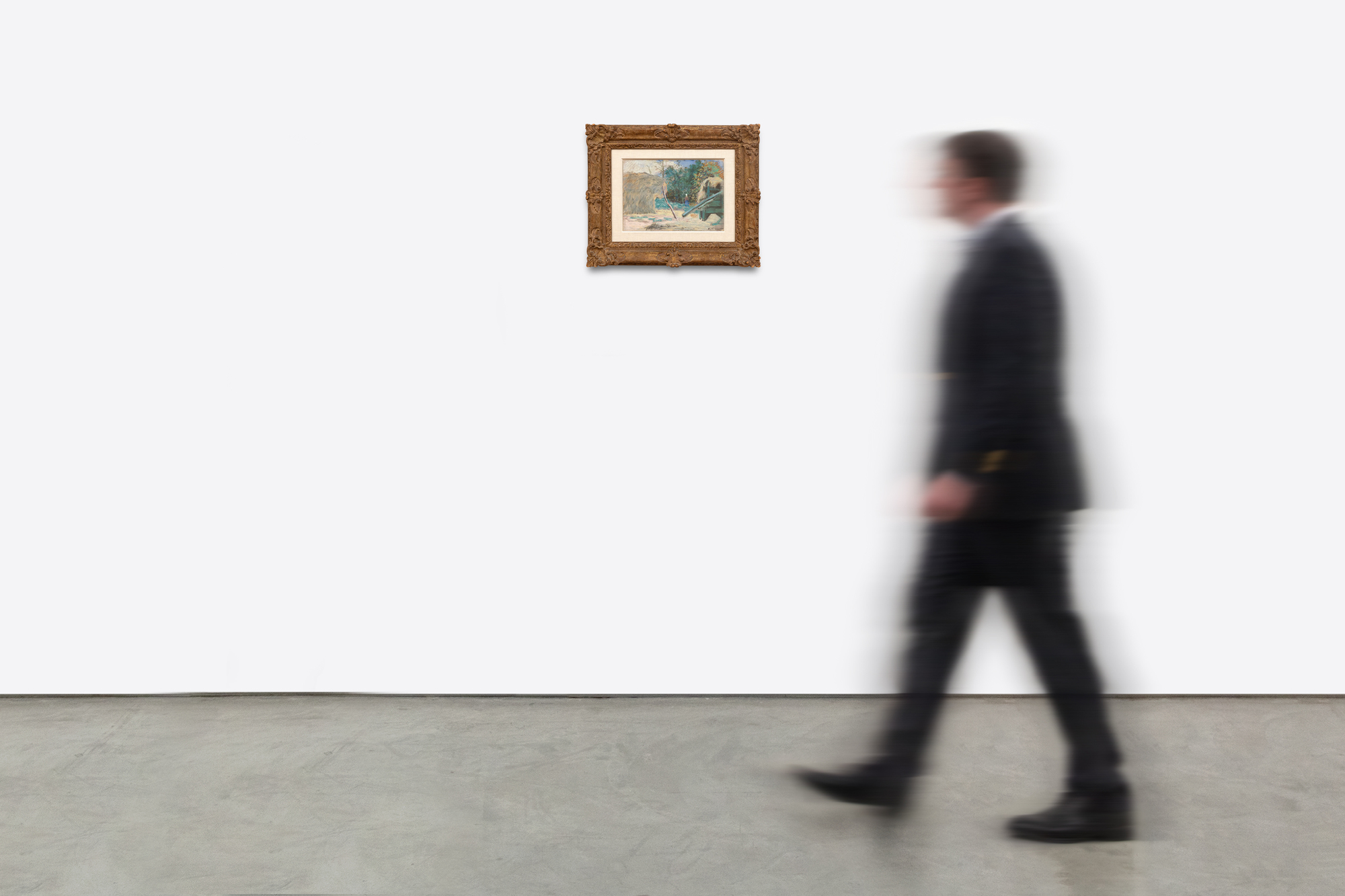
<div>Camille Pissarro’s<em> Paysage avec batteuse à Montfoucault </em>(c. 1875) is an exceptionally vivid pastel that unites the artist’s keen observation of rural life with the Impressionists’ fascination for light, atmosphere, and immediacy. Executed at a moment when Pissarro was deeply engaged with agrarian subjects, the composition centers on a working landscape—haystacks and farm structures set against dense foliage—where a solitary figure anchors the scene in lived experience. The motif is quintessentially Impressionist: an unembellished view of the modern, “seen” world, and a fleeting moment of real life recorded with speed and sensitivity. </div><br><br><div> </div><br><br><div>Pastel, with its directness and chromatic intensity, proved uniquely efficient for Impressionist artists seeking to capture transient light effects and faithful likenesses without the slower procedures of oil. Here, Pissarro exploits the medium’s strengths brilliantly. Soft, powdery passages dissolve edges into atmosphere, while firmer, painterly strokes build structure and texture across the hay, timber, and ground. The surface retains a remarkable freshness, with color that remains luminous and varied—cool blues and greens offset by warm straw, ochres, and sunlit highlights—allowing the viewer to experience the work’s original spontaneity. </div><br><br><div> </div><br><br><div>This work’s significance is underscored by its recent exhibition history: it was shown in 2020 at the J. Paul Getty Museum in<em> Powder and Light: Pastels in Late Nineteenth Century</em>, a focused exploration of how artists of the period embraced pastel as both experimental and modern. Beautifully preserved,<em> Paysage avec batteuse à Montfoucault </em>offers a direct encounter with Pissarro’s touch—each stroke visible, each tonal shift purposeful—capturing the countryside not as an ideal, but as a place of work, weather, and changing light. </div> <div>Camille Pissarro’s<em> Paysage avec batteuse à Montfoucault </em>(c. 1875) is an exceptionally vivid pastel that unites the artist’s keen observation of rural life with the Impressionists’ fascination for light, atmosphere, and immediacy. Executed at a moment when Pissarro was deeply engaged with agrarian subjects, the composition centers on a working landscape—haystacks and farm structures set against dense foliage—where a solitary figure anchors the scene in lived experience. The motif is quintessentially Impressionist: an unembellished view of the modern, “seen” world, and a fleeting moment of real life recorded with speed and sensitivity. </div><br><br><div> </div><br><br><div>Pastel, with its directness and chromatic intensity, proved uniquely efficient for Impressionist artists seeking to capture transient light effects and faithful likenesses without the slower procedures of oil. Here, Pissarro exploits the medium’s strengths brilliantly. Soft, powdery passages dissolve edges into atmosphere, while firmer, painterly strokes build structure and texture across the hay, timber, and ground. The surface retains a remarkable freshness, with color that remains luminous and varied—cool blues and greens offset by warm straw, ochres, and sunlit highlights—allowing the viewer to experience the work’s original spontaneity. </div><br><br><div> </div><br><br><div>This work’s significance is underscored by its recent exhibition history: it was shown in 2020 at the J. Paul Getty Museum in<em> Powder and Light: Pastels in Late Nineteenth Century</em>, a focused exploration of how artists of the period embraced pastel as both experimental and modern. Beautifully preserved,<em> Paysage avec batteuse à Montfoucault </em>offers a direct encounter with Pissarro’s touch—each stroke visible, each tonal shift purposeful—capturing the countryside not as an ideal, but as a place of work, weather, and changing light. </div> <div>Camille Pissarro’s<em> Paysage avec batteuse à Montfoucault </em>(c. 1875) is an exceptionally vivid pastel that unites the artist’s keen observation of rural life with the Impressionists’ fascination for light, atmosphere, and immediacy. Executed at a moment when Pissarro was deeply engaged with agrarian subjects, the composition centers on a working landscape—haystacks and farm structures set against dense foliage—where a solitary figure anchors the scene in lived experience. The motif is quintessentially Impressionist: an unembellished view of the modern, “seen” world, and a fleeting moment of real life recorded with speed and sensitivity. </div><br><br><div> </div><br><br><div>Pastel, with its directness and chromatic intensity, proved uniquely efficient for Impressionist artists seeking to capture transient light effects and faithful likenesses without the slower procedures of oil. Here, Pissarro exploits the medium’s strengths brilliantly. Soft, powdery passages dissolve edges into atmosphere, while firmer, painterly strokes build structure and texture across the hay, timber, and ground. The surface retains a remarkable freshness, with color that remains luminous and varied—cool blues and greens offset by warm straw, ochres, and sunlit highlights—allowing the viewer to experience the work’s original spontaneity. </div><br><br><div> </div><br><br><div>This work’s significance is underscored by its recent exhibition history: it was shown in 2020 at the J. Paul Getty Museum in<em> Powder and Light: Pastels in Late Nineteenth Century</em>, a focused exploration of how artists of the period embraced pastel as both experimental and modern. Beautifully preserved,<em> Paysage avec batteuse à Montfoucault </em>offers a direct encounter with Pissarro’s touch—each stroke visible, each tonal shift purposeful—capturing the countryside not as an ideal, but as a place of work, weather, and changing light. </div> <div>Camille Pissarro’s<em> Paysage avec batteuse à Montfoucault </em>(c. 1875) is an exceptionally vivid pastel that unites the artist’s keen observation of rural life with the Impressionists’ fascination for light, atmosphere, and immediacy. Executed at a moment when Pissarro was deeply engaged with agrarian subjects, the composition centers on a working landscape—haystacks and farm structures set against dense foliage—where a solitary figure anchors the scene in lived experience. The motif is quintessentially Impressionist: an unembellished view of the modern, “seen” world, and a fleeting moment of real life recorded with speed and sensitivity. </div><br><br><div> </div><br><br><div>Pastel, with its directness and chromatic intensity, proved uniquely efficient for Impressionist artists seeking to capture transient light effects and faithful likenesses without the slower procedures of oil. Here, Pissarro exploits the medium’s strengths brilliantly. Soft, powdery passages dissolve edges into atmosphere, while firmer, painterly strokes build structure and texture across the hay, timber, and ground. The surface retains a remarkable freshness, with color that remains luminous and varied—cool blues and greens offset by warm straw, ochres, and sunlit highlights—allowing the viewer to experience the work’s original spontaneity. </div><br><br><div> </div><br><br><div>This work’s significance is underscored by its recent exhibition history: it was shown in 2020 at the J. Paul Getty Museum in<em> Powder and Light: Pastels in Late Nineteenth Century</em>, a focused exploration of how artists of the period embraced pastel as both experimental and modern. Beautifully preserved,<em> Paysage avec batteuse à Montfoucault </em>offers a direct encounter with Pissarro’s touch—each stroke visible, each tonal shift purposeful—capturing the countryside not as an ideal, but as a place of work, weather, and changing light. </div> <div>Camille Pissarro’s<em> Paysage avec batteuse à Montfoucault </em>(c. 1875) is an exceptionally vivid pastel that unites the artist’s keen observation of rural life with the Impressionists’ fascination for light, atmosphere, and immediacy. Executed at a moment when Pissarro was deeply engaged with agrarian subjects, the composition centers on a working landscape—haystacks and farm structures set against dense foliage—where a solitary figure anchors the scene in lived experience. The motif is quintessentially Impressionist: an unembellished view of the modern, “seen” world, and a fleeting moment of real life recorded with speed and sensitivity. </div><br><br><div> </div><br><br><div>Pastel, with its directness and chromatic intensity, proved uniquely efficient for Impressionist artists seeking to capture transient light effects and faithful likenesses without the slower procedures of oil. Here, Pissarro exploits the medium’s strengths brilliantly. Soft, powdery passages dissolve edges into atmosphere, while firmer, painterly strokes build structure and texture across the hay, timber, and ground. The surface retains a remarkable freshness, with color that remains luminous and varied—cool blues and greens offset by warm straw, ochres, and sunlit highlights—allowing the viewer to experience the work’s original spontaneity. </div><br><br><div> </div><br><br><div>This work’s significance is underscored by its recent exhibition history: it was shown in 2020 at the J. Paul Getty Museum in<em> Powder and Light: Pastels in Late Nineteenth Century</em>, a focused exploration of how artists of the period embraced pastel as both experimental and modern. Beautifully preserved,<em> Paysage avec batteuse à Montfoucault </em>offers a direct encounter with Pissarro’s touch—each stroke visible, each tonal shift purposeful—capturing the countryside not as an ideal, but as a place of work, weather, and changing light. </div> <div>Camille Pissarro’s<em> Paysage avec batteuse à Montfoucault </em>(c. 1875) is an exceptionally vivid pastel that unites the artist’s keen observation of rural life with the Impressionists’ fascination for light, atmosphere, and immediacy. Executed at a moment when Pissarro was deeply engaged with agrarian subjects, the composition centers on a working landscape—haystacks and farm structures set against dense foliage—where a solitary figure anchors the scene in lived experience. The motif is quintessentially Impressionist: an unembellished view of the modern, “seen” world, and a fleeting moment of real life recorded with speed and sensitivity. </div><br><br><div> </div><br><br><div>Pastel, with its directness and chromatic intensity, proved uniquely efficient for Impressionist artists seeking to capture transient light effects and faithful likenesses without the slower procedures of oil. Here, Pissarro exploits the medium’s strengths brilliantly. Soft, powdery passages dissolve edges into atmosphere, while firmer, painterly strokes build structure and texture across the hay, timber, and ground. The surface retains a remarkable freshness, with color that remains luminous and varied—cool blues and greens offset by warm straw, ochres, and sunlit highlights—allowing the viewer to experience the work’s original spontaneity. </div><br><br><div> </div><br><br><div>This work’s significance is underscored by its recent exhibition history: it was shown in 2020 at the J. Paul Getty Museum in<em> Powder and Light: Pastels in Late Nineteenth Century</em>, a focused exploration of how artists of the period embraced pastel as both experimental and modern. Beautifully preserved,<em> Paysage avec batteuse à Montfoucault </em>offers a direct encounter with Pissarro’s touch—each stroke visible, each tonal shift purposeful—capturing the countryside not as an ideal, but as a place of work, weather, and changing light. </div> <div>Camille Pissarro’s<em> Paysage avec batteuse à Montfoucault </em>(c. 1875) is an exceptionally vivid pastel that unites the artist’s keen observation of rural life with the Impressionists’ fascination for light, atmosphere, and immediacy. Executed at a moment when Pissarro was deeply engaged with agrarian subjects, the composition centers on a working landscape—haystacks and farm structures set against dense foliage—where a solitary figure anchors the scene in lived experience. The motif is quintessentially Impressionist: an unembellished view of the modern, “seen” world, and a fleeting moment of real life recorded with speed and sensitivity. </div><br><br><div> </div><br><br><div>Pastel, with its directness and chromatic intensity, proved uniquely efficient for Impressionist artists seeking to capture transient light effects and faithful likenesses without the slower procedures of oil. Here, Pissarro exploits the medium’s strengths brilliantly. Soft, powdery passages dissolve edges into atmosphere, while firmer, painterly strokes build structure and texture across the hay, timber, and ground. The surface retains a remarkable freshness, with color that remains luminous and varied—cool blues and greens offset by warm straw, ochres, and sunlit highlights—allowing the viewer to experience the work’s original spontaneity. </div><br><br><div> </div><br><br><div>This work’s significance is underscored by its recent exhibition history: it was shown in 2020 at the J. Paul Getty Museum in<em> Powder and Light: Pastels in Late Nineteenth Century</em>, a focused exploration of how artists of the period embraced pastel as both experimental and modern. Beautifully preserved,<em> Paysage avec batteuse à Montfoucault </em>offers a direct encounter with Pissarro’s touch—each stroke visible, each tonal shift purposeful—capturing the countryside not as an ideal, but as a place of work, weather, and changing light. </div> <div>Camille Pissarro’s<em> Paysage avec batteuse à Montfoucault </em>(c. 1875) is an exceptionally vivid pastel that unites the artist’s keen observation of rural life with the Impressionists’ fascination for light, atmosphere, and immediacy. Executed at a moment when Pissarro was deeply engaged with agrarian subjects, the composition centers on a working landscape—haystacks and farm structures set against dense foliage—where a solitary figure anchors the scene in lived experience. The motif is quintessentially Impressionist: an unembellished view of the modern, “seen” world, and a fleeting moment of real life recorded with speed and sensitivity. </div><br><br><div> </div><br><br><div>Pastel, with its directness and chromatic intensity, proved uniquely efficient for Impressionist artists seeking to capture transient light effects and faithful likenesses without the slower procedures of oil. Here, Pissarro exploits the medium’s strengths brilliantly. Soft, powdery passages dissolve edges into atmosphere, while firmer, painterly strokes build structure and texture across the hay, timber, and ground. The surface retains a remarkable freshness, with color that remains luminous and varied—cool blues and greens offset by warm straw, ochres, and sunlit highlights—allowing the viewer to experience the work’s original spontaneity. </div><br><br><div> </div><br><br><div>This work’s significance is underscored by its recent exhibition history: it was shown in 2020 at the J. Paul Getty Museum in<em> Powder and Light: Pastels in Late Nineteenth Century</em>, a focused exploration of how artists of the period embraced pastel as both experimental and modern. Beautifully preserved,<em> Paysage avec batteuse à Montfoucault </em>offers a direct encounter with Pissarro’s touch—each stroke visible, each tonal shift purposeful—capturing the countryside not as an ideal, but as a place of work, weather, and changing light. </div> <div>Camille Pissarro’s<em> Paysage avec batteuse à Montfoucault </em>(c. 1875) is an exceptionally vivid pastel that unites the artist’s keen observation of rural life with the Impressionists’ fascination for light, atmosphere, and immediacy. Executed at a moment when Pissarro was deeply engaged with agrarian subjects, the composition centers on a working landscape—haystacks and farm structures set against dense foliage—where a solitary figure anchors the scene in lived experience. The motif is quintessentially Impressionist: an unembellished view of the modern, “seen” world, and a fleeting moment of real life recorded with speed and sensitivity. </div><br><br><div> </div><br><br><div>Pastel, with its directness and chromatic intensity, proved uniquely efficient for Impressionist artists seeking to capture transient light effects and faithful likenesses without the slower procedures of oil. Here, Pissarro exploits the medium’s strengths brilliantly. Soft, powdery passages dissolve edges into atmosphere, while firmer, painterly strokes build structure and texture across the hay, timber, and ground. The surface retains a remarkable freshness, with color that remains luminous and varied—cool blues and greens offset by warm straw, ochres, and sunlit highlights—allowing the viewer to experience the work’s original spontaneity. </div><br><br><div> </div><br><br><div>This work’s significance is underscored by its recent exhibition history: it was shown in 2020 at the J. Paul Getty Museum in<em> Powder and Light: Pastels in Late Nineteenth Century</em>, a focused exploration of how artists of the period embraced pastel as both experimental and modern. Beautifully preserved,<em> Paysage avec batteuse à Montfoucault </em>offers a direct encounter with Pissarro’s touch—each stroke visible, each tonal shift purposeful—capturing the countryside not as an ideal, but as a place of work, weather, and changing light. </div> <div>Camille Pissarro’s<em> Paysage avec batteuse à Montfoucault </em>(c. 1875) is an exceptionally vivid pastel that unites the artist’s keen observation of rural life with the Impressionists’ fascination for light, atmosphere, and immediacy. Executed at a moment when Pissarro was deeply engaged with agrarian subjects, the composition centers on a working landscape—haystacks and farm structures set against dense foliage—where a solitary figure anchors the scene in lived experience. The motif is quintessentially Impressionist: an unembellished view of the modern, “seen” world, and a fleeting moment of real life recorded with speed and sensitivity. </div><br><br><div> </div><br><br><div>Pastel, with its directness and chromatic intensity, proved uniquely efficient for Impressionist artists seeking to capture transient light effects and faithful likenesses without the slower procedures of oil. Here, Pissarro exploits the medium’s strengths brilliantly. Soft, powdery passages dissolve edges into atmosphere, while firmer, painterly strokes build structure and texture across the hay, timber, and ground. The surface retains a remarkable freshness, with color that remains luminous and varied—cool blues and greens offset by warm straw, ochres, and sunlit highlights—allowing the viewer to experience the work’s original spontaneity. </div><br><br><div> </div><br><br><div>This work’s significance is underscored by its recent exhibition history: it was shown in 2020 at the J. Paul Getty Museum in<em> Powder and Light: Pastels in Late Nineteenth Century</em>, a focused exploration of how artists of the period embraced pastel as both experimental and modern. Beautifully preserved,<em> Paysage avec batteuse à Montfoucault </em>offers a direct encounter with Pissarro’s touch—each stroke visible, each tonal shift purposeful—capturing the countryside not as an ideal, but as a place of work, weather, and changing light. </div>
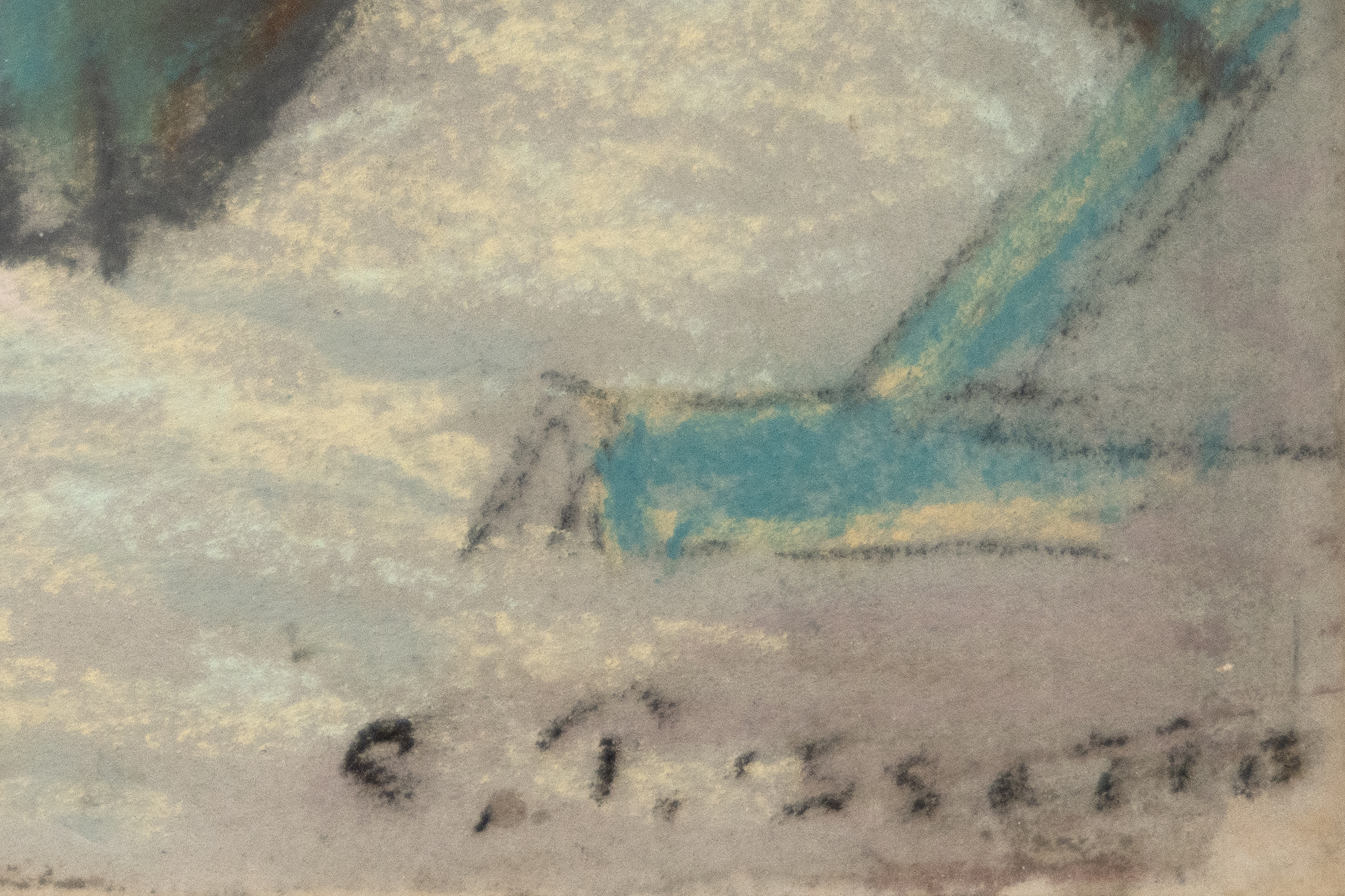
蒙特福柯的 "打仗 "方式c.187510 3/8 x 14 3/4 in.(26.35 x 37.47 cm)纸上粉笔画,铺在木板上
种源
匿名拍卖,巴黎德鲁奥酒店,1936年2月24日,第38号拍卖品
佩尔斯画廊,纽约
由前主人获得,约1960年
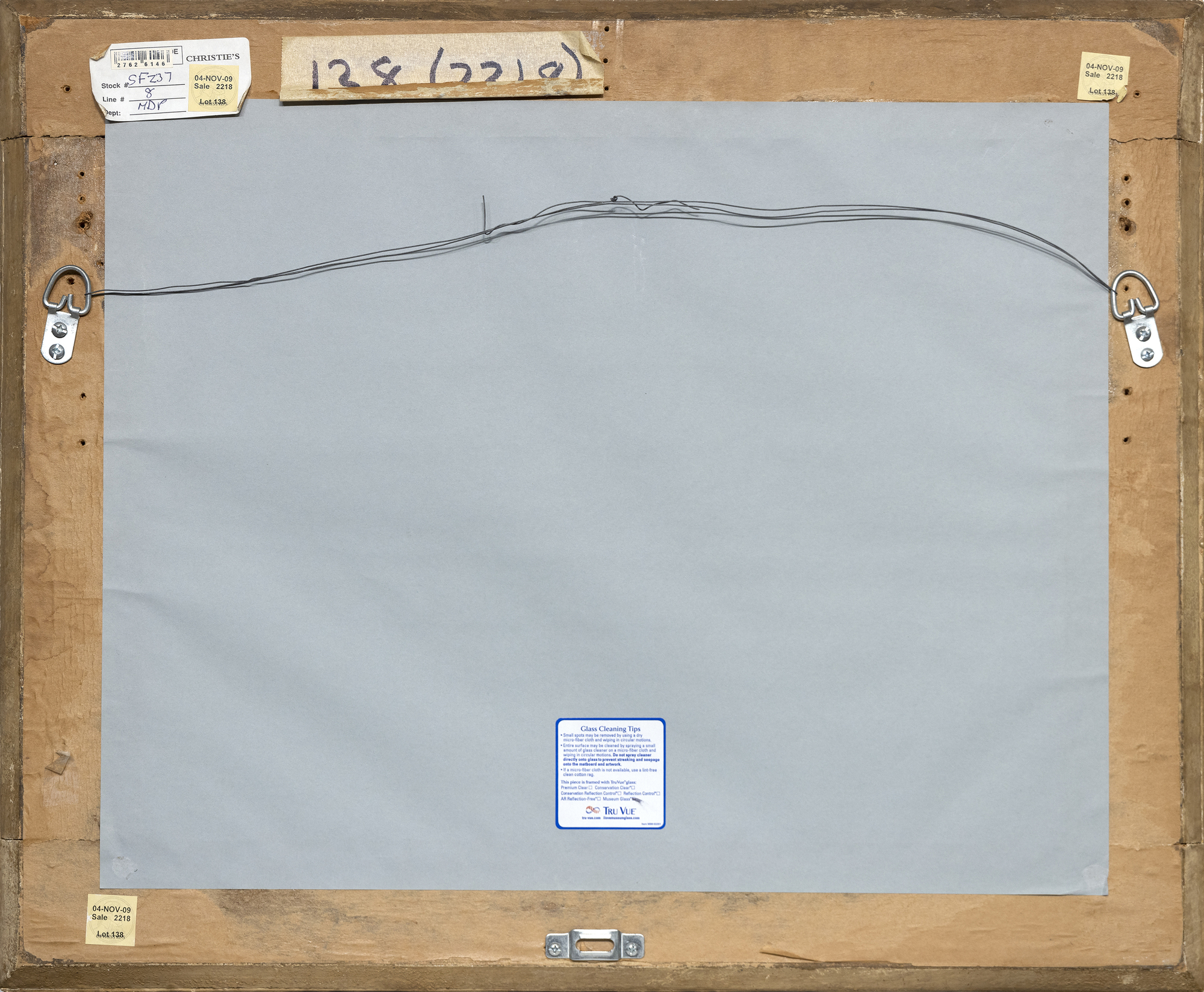
佳士得2218号现场拍卖会,2009年11月4日,第138号拍卖品
私人收藏,从上述拍卖中获得
展会信息
纽约,Perls画廊,日期不详,编号84a
J.保罗-盖蒂博物馆,德加:"俄罗斯舞者 "和粉彩艺术",2016年5月3日至10月23日
J.保罗-盖蒂博物馆,"粉彩中的农民:让-弗朗索瓦-米莱和粉彩复兴,2019年10月29日-2020年5月10日
J.保罗-盖蒂博物馆
...更。。。盖蒂博物馆,"粉与光:十九世纪末的粉彩画",2020年7月28日-2022年8月31日
文学
L.R. Pissarro和L. Venturi,Camille Pissarro,Son art-son oeuvre,巴黎,1939年,第一卷,第291页,第1529号(有插图,第二卷第294号)。
...少。。。
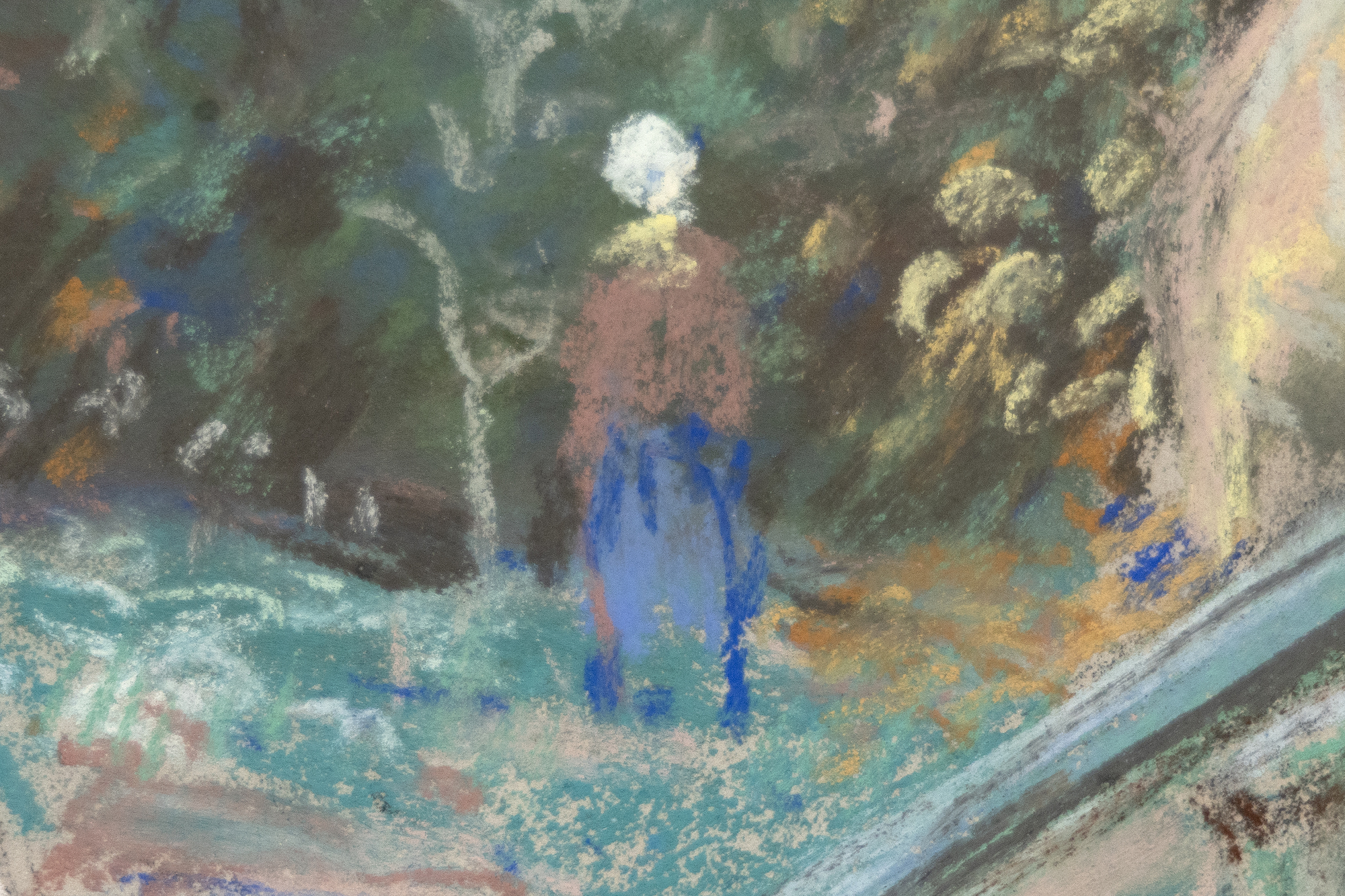
卡米耶·毕沙罗的《蒙福科的打谷机风景》(约1875年)是一幅极富生动的粉彩画,它将艺术家对乡村生活的敏锐观察与印象派对光线、氛围和即兴表现的迷恋完美融合。 创作于毕沙罗深耕农耕题材的时期,画面以劳动场景为核心——干草堆与农舍建筑映衬着茂密树丛,孤身劳作的身影将场景锚定于真实生活体验。此主题堪称印象派精髓:对现代"可见"世界的朴实呈现,以迅捷敏锐的笔触捕捉转瞬即逝的真实生活瞬间。


粉彩画凭借其直观性与色彩强度,成为印象派艺术家捕捉瞬息光影与真实形貌的独特媒介,无需油画的繁复工序。此处毕沙罗精妙运用了这种媒介的优势。 柔和的粉状笔触将边缘融于氛围之中,而更坚实的绘画笔触则在干草、木材和地面上构建出结构与质感。画面保持着惊人的新鲜感,色彩依然明亮多变——冷色调的蓝绿色与温暖的麦秆色、赭石色及阳光下的高光形成对比——让观者得以体验作品原始的即兴创作感。


该作品近期参展经历凸显其重要性:2020年于盖蒂博物馆"粉彩与光影:十九世纪末粉彩画"特展中亮相,该展览聚焦同时代艺术家如何将粉彩视为实验性与现代性的媒介。 《蒙富科的打谷机风景》保存完好,让观众得以直观感受毕沙罗的笔触——每道笔触清晰可见,每处色调变化皆有深意——它捕捉的乡村并非理想化的风景,而是充满劳作、天气与光影变幻的真实空间。
询问