
返回

阿尔森·克拉克(1876-1949)

$100,000

 
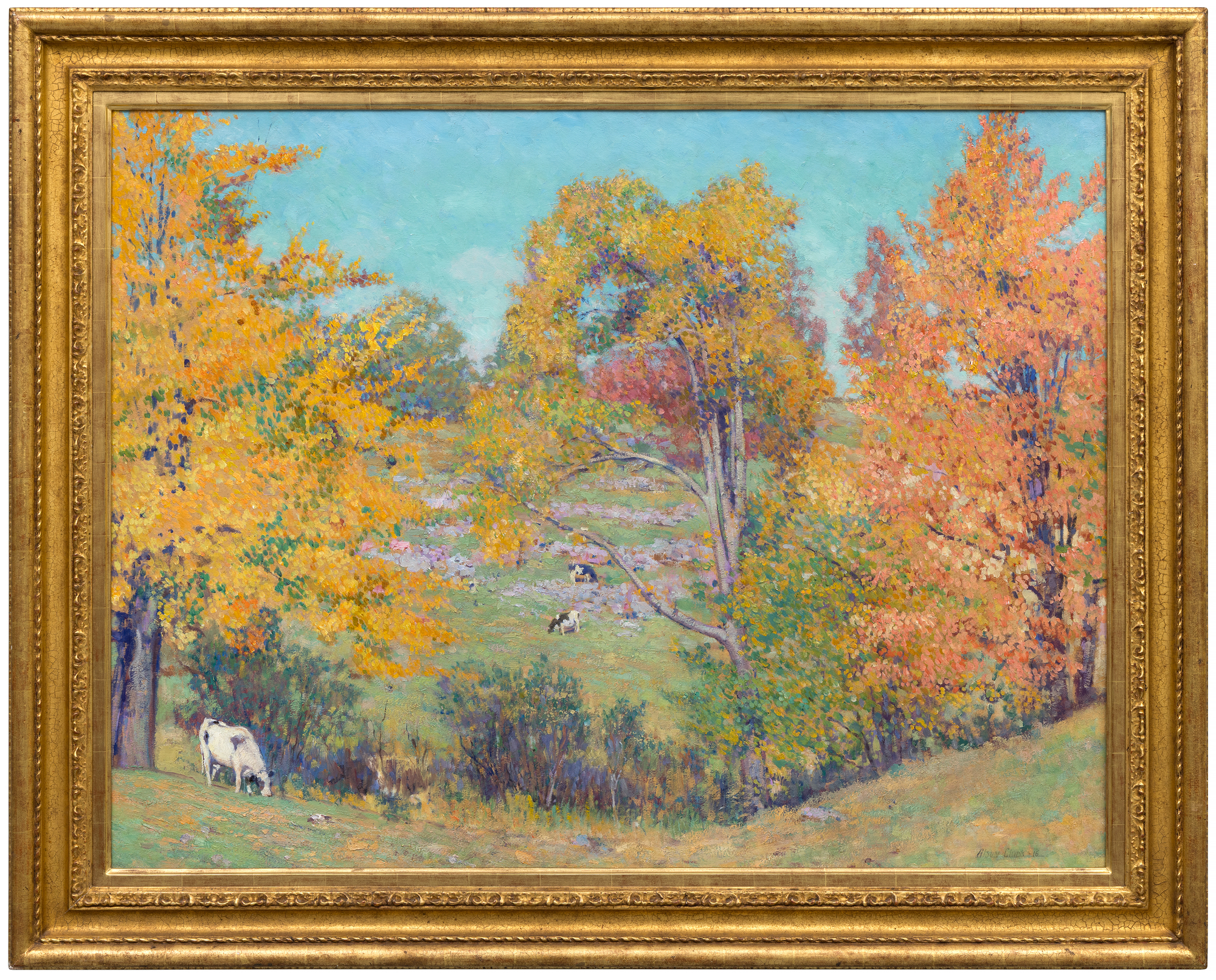
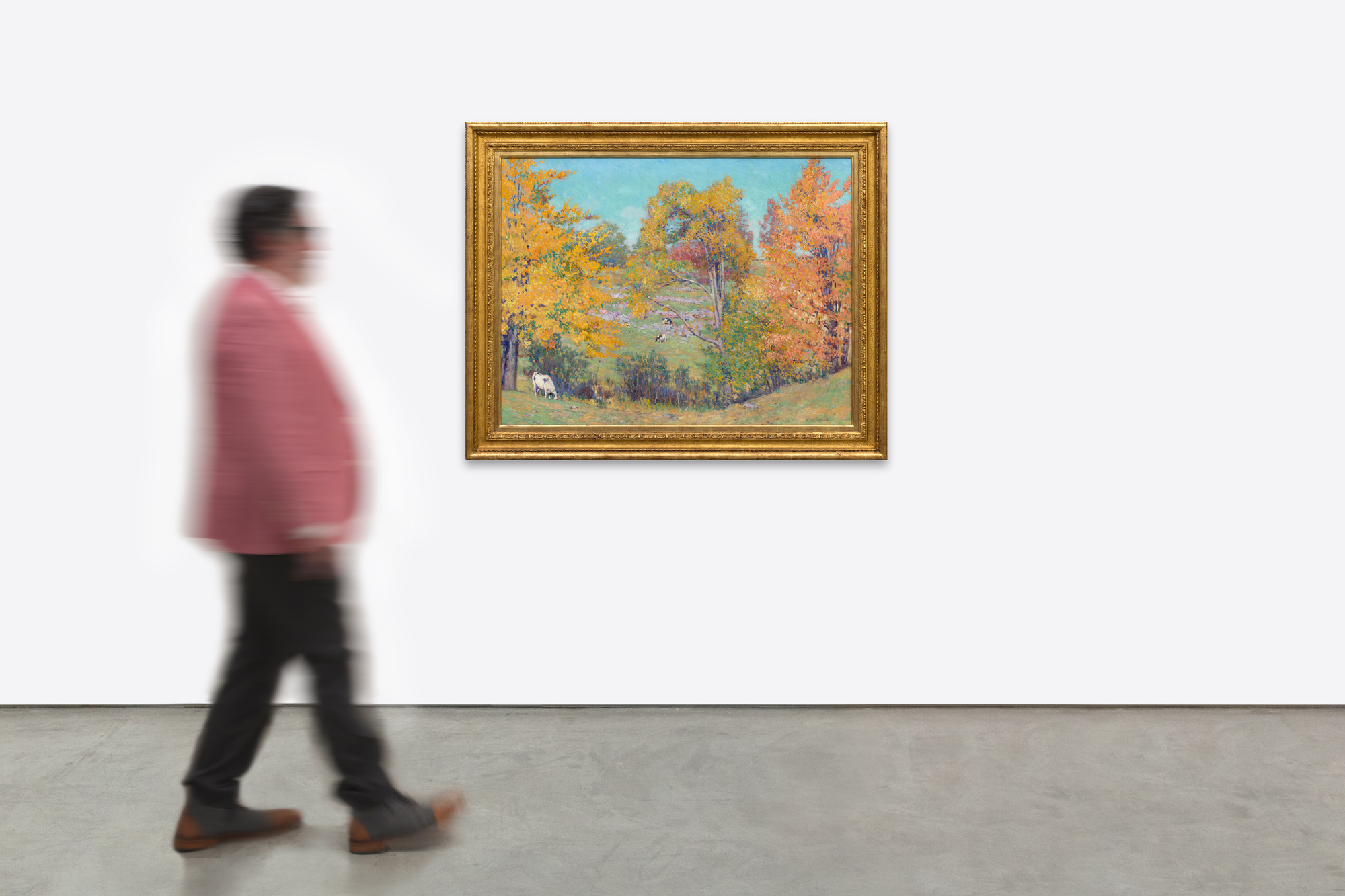
<div>Alson Clark’s <em>Autumn, St. Lawrence River</em> (1916) is a celebration of seasonal color and painterly assurance, created during a highly productive summer spent along the St. Lawrence River. Painted at a moment of peak confidence, the work follows closely on the artist’s major success at the Panama–Pacific International Exposition, where Clark filled an entire exhibition room with his paintings—an achievement that firmly established his reputation and momentum at this stage of his career. </div><br><br><div> </div><br><br><div>The composition unfolds across a gently rolling landscape animated by the brilliance of early autumn. Trees blaze with saturated yellows, oranges, and soft reds, their foliage rendered in broken, impressionistic strokes against a clear, luminous blue sky. Clark’s confident handling of paint allows color to carry form, creating a sense of depth through overlapping passages. Small grazing cattle dot the hillside, providing scale and a quiet note of pastoral life that anchors the composition without interrupting its chromatic rhythm. </div><br><br><div> </div><br><br><div>Clark was celebrated for his ability to fuse American landscape painting with lessons drawn from European Impressionism, and this work exemplifies that synthesis. The surface remains lively and tactile, with visible brushwork that conveys movement and atmosphere while maintaining compositional harmony. <em>Autumn, St. Lawrence River </em>reflects not only the artist’s mastery of color and light, but also the assured vision of a painter fully at ease with his subject, transforming a specific place and moment into a timeless expression of seasonal abundance. </div> <div>Alson Clark’s <em>Autumn, St. Lawrence River</em> (1916) is a celebration of seasonal color and painterly assurance, created during a highly productive summer spent along the St. Lawrence River. Painted at a moment of peak confidence, the work follows closely on the artist’s major success at the Panama–Pacific International Exposition, where Clark filled an entire exhibition room with his paintings—an achievement that firmly established his reputation and momentum at this stage of his career. </div><br><br><div> </div><br><br><div>The composition unfolds across a gently rolling landscape animated by the brilliance of early autumn. Trees blaze with saturated yellows, oranges, and soft reds, their foliage rendered in broken, impressionistic strokes against a clear, luminous blue sky. Clark’s confident handling of paint allows color to carry form, creating a sense of depth through overlapping passages. Small grazing cattle dot the hillside, providing scale and a quiet note of pastoral life that anchors the composition without interrupting its chromatic rhythm. </div><br><br><div> </div><br><br><div>Clark was celebrated for his ability to fuse American landscape painting with lessons drawn from European Impressionism, and this work exemplifies that synthesis. The surface remains lively and tactile, with visible brushwork that conveys movement and atmosphere while maintaining compositional harmony. <em>Autumn, St. Lawrence River </em>reflects not only the artist’s mastery of color and light, but also the assured vision of a painter fully at ease with his subject, transforming a specific place and moment into a timeless expression of seasonal abundance. </div> <div>Alson Clark’s <em>Autumn, St. Lawrence River</em> (1916) is a celebration of seasonal color and painterly assurance, created during a highly productive summer spent along the St. Lawrence River. Painted at a moment of peak confidence, the work follows closely on the artist’s major success at the Panama–Pacific International Exposition, where Clark filled an entire exhibition room with his paintings—an achievement that firmly established his reputation and momentum at this stage of his career. </div><br><br><div> </div><br><br><div>The composition unfolds across a gently rolling landscape animated by the brilliance of early autumn. Trees blaze with saturated yellows, oranges, and soft reds, their foliage rendered in broken, impressionistic strokes against a clear, luminous blue sky. Clark’s confident handling of paint allows color to carry form, creating a sense of depth through overlapping passages. Small grazing cattle dot the hillside, providing scale and a quiet note of pastoral life that anchors the composition without interrupting its chromatic rhythm. </div><br><br><div> </div><br><br><div>Clark was celebrated for his ability to fuse American landscape painting with lessons drawn from European Impressionism, and this work exemplifies that synthesis. The surface remains lively and tactile, with visible brushwork that conveys movement and atmosphere while maintaining compositional harmony. <em>Autumn, St. Lawrence River </em>reflects not only the artist’s mastery of color and light, but also the assured vision of a painter fully at ease with his subject, transforming a specific place and moment into a timeless expression of seasonal abundance. </div> <div>Alson Clark’s <em>Autumn, St. Lawrence River</em> (1916) is a celebration of seasonal color and painterly assurance, created during a highly productive summer spent along the St. Lawrence River. Painted at a moment of peak confidence, the work follows closely on the artist’s major success at the Panama–Pacific International Exposition, where Clark filled an entire exhibition room with his paintings—an achievement that firmly established his reputation and momentum at this stage of his career. </div><br><br><div> </div><br><br><div>The composition unfolds across a gently rolling landscape animated by the brilliance of early autumn. Trees blaze with saturated yellows, oranges, and soft reds, their foliage rendered in broken, impressionistic strokes against a clear, luminous blue sky. Clark’s confident handling of paint allows color to carry form, creating a sense of depth through overlapping passages. Small grazing cattle dot the hillside, providing scale and a quiet note of pastoral life that anchors the composition without interrupting its chromatic rhythm. </div><br><br><div> </div><br><br><div>Clark was celebrated for his ability to fuse American landscape painting with lessons drawn from European Impressionism, and this work exemplifies that synthesis. The surface remains lively and tactile, with visible brushwork that conveys movement and atmosphere while maintaining compositional harmony. <em>Autumn, St. Lawrence River </em>reflects not only the artist’s mastery of color and light, but also the assured vision of a painter fully at ease with his subject, transforming a specific place and moment into a timeless expression of seasonal abundance. </div> <div>Alson Clark’s <em>Autumn, St. Lawrence River</em> (1916) is a celebration of seasonal color and painterly assurance, created during a highly productive summer spent along the St. Lawrence River. Painted at a moment of peak confidence, the work follows closely on the artist’s major success at the Panama–Pacific International Exposition, where Clark filled an entire exhibition room with his paintings—an achievement that firmly established his reputation and momentum at this stage of his career. </div><br><br><div> </div><br><br><div>The composition unfolds across a gently rolling landscape animated by the brilliance of early autumn. Trees blaze with saturated yellows, oranges, and soft reds, their foliage rendered in broken, impressionistic strokes against a clear, luminous blue sky. Clark’s confident handling of paint allows color to carry form, creating a sense of depth through overlapping passages. Small grazing cattle dot the hillside, providing scale and a quiet note of pastoral life that anchors the composition without interrupting its chromatic rhythm. </div><br><br><div> </div><br><br><div>Clark was celebrated for his ability to fuse American landscape painting with lessons drawn from European Impressionism, and this work exemplifies that synthesis. The surface remains lively and tactile, with visible brushwork that conveys movement and atmosphere while maintaining compositional harmony. <em>Autumn, St. Lawrence River </em>reflects not only the artist’s mastery of color and light, but also the assured vision of a painter fully at ease with his subject, transforming a specific place and moment into a timeless expression of seasonal abundance. </div> <div>Alson Clark’s <em>Autumn, St. Lawrence River</em> (1916) is a celebration of seasonal color and painterly assurance, created during a highly productive summer spent along the St. Lawrence River. Painted at a moment of peak confidence, the work follows closely on the artist’s major success at the Panama–Pacific International Exposition, where Clark filled an entire exhibition room with his paintings—an achievement that firmly established his reputation and momentum at this stage of his career. </div><br><br><div> </div><br><br><div>The composition unfolds across a gently rolling landscape animated by the brilliance of early autumn. Trees blaze with saturated yellows, oranges, and soft reds, their foliage rendered in broken, impressionistic strokes against a clear, luminous blue sky. Clark’s confident handling of paint allows color to carry form, creating a sense of depth through overlapping passages. Small grazing cattle dot the hillside, providing scale and a quiet note of pastoral life that anchors the composition without interrupting its chromatic rhythm. </div><br><br><div> </div><br><br><div>Clark was celebrated for his ability to fuse American landscape painting with lessons drawn from European Impressionism, and this work exemplifies that synthesis. The surface remains lively and tactile, with visible brushwork that conveys movement and atmosphere while maintaining compositional harmony. <em>Autumn, St. Lawrence River </em>reflects not only the artist’s mastery of color and light, but also the assured vision of a painter fully at ease with his subject, transforming a specific place and moment into a timeless expression of seasonal abundance. </div> <div>Alson Clark’s <em>Autumn, St. Lawrence River</em> (1916) is a celebration of seasonal color and painterly assurance, created during a highly productive summer spent along the St. Lawrence River. Painted at a moment of peak confidence, the work follows closely on the artist’s major success at the Panama–Pacific International Exposition, where Clark filled an entire exhibition room with his paintings—an achievement that firmly established his reputation and momentum at this stage of his career. </div><br><br><div> </div><br><br><div>The composition unfolds across a gently rolling landscape animated by the brilliance of early autumn. Trees blaze with saturated yellows, oranges, and soft reds, their foliage rendered in broken, impressionistic strokes against a clear, luminous blue sky. Clark’s confident handling of paint allows color to carry form, creating a sense of depth through overlapping passages. Small grazing cattle dot the hillside, providing scale and a quiet note of pastoral life that anchors the composition without interrupting its chromatic rhythm. </div><br><br><div> </div><br><br><div>Clark was celebrated for his ability to fuse American landscape painting with lessons drawn from European Impressionism, and this work exemplifies that synthesis. The surface remains lively and tactile, with visible brushwork that conveys movement and atmosphere while maintaining compositional harmony. <em>Autumn, St. Lawrence River </em>reflects not only the artist’s mastery of color and light, but also the assured vision of a painter fully at ease with his subject, transforming a specific place and moment into a timeless expression of seasonal abundance. </div> <div>Alson Clark’s <em>Autumn, St. Lawrence River</em> (1916) is a celebration of seasonal color and painterly assurance, created during a highly productive summer spent along the St. Lawrence River. Painted at a moment of peak confidence, the work follows closely on the artist’s major success at the Panama–Pacific International Exposition, where Clark filled an entire exhibition room with his paintings—an achievement that firmly established his reputation and momentum at this stage of his career. </div><br><br><div> </div><br><br><div>The composition unfolds across a gently rolling landscape animated by the brilliance of early autumn. Trees blaze with saturated yellows, oranges, and soft reds, their foliage rendered in broken, impressionistic strokes against a clear, luminous blue sky. Clark’s confident handling of paint allows color to carry form, creating a sense of depth through overlapping passages. Small grazing cattle dot the hillside, providing scale and a quiet note of pastoral life that anchors the composition without interrupting its chromatic rhythm. </div><br><br><div> </div><br><br><div>Clark was celebrated for his ability to fuse American landscape painting with lessons drawn from European Impressionism, and this work exemplifies that synthesis. The surface remains lively and tactile, with visible brushwork that conveys movement and atmosphere while maintaining compositional harmony. <em>Autumn, St. Lawrence River </em>reflects not only the artist’s mastery of color and light, but also the assured vision of a painter fully at ease with his subject, transforming a specific place and moment into a timeless expression of seasonal abundance. </div> <div>Alson Clark’s <em>Autumn, St. Lawrence River</em> (1916) is a celebration of seasonal color and painterly assurance, created during a highly productive summer spent along the St. Lawrence River. Painted at a moment of peak confidence, the work follows closely on the artist’s major success at the Panama–Pacific International Exposition, where Clark filled an entire exhibition room with his paintings—an achievement that firmly established his reputation and momentum at this stage of his career. </div><br><br><div> </div><br><br><div>The composition unfolds across a gently rolling landscape animated by the brilliance of early autumn. Trees blaze with saturated yellows, oranges, and soft reds, their foliage rendered in broken, impressionistic strokes against a clear, luminous blue sky. Clark’s confident handling of paint allows color to carry form, creating a sense of depth through overlapping passages. Small grazing cattle dot the hillside, providing scale and a quiet note of pastoral life that anchors the composition without interrupting its chromatic rhythm. </div><br><br><div> </div><br><br><div>Clark was celebrated for his ability to fuse American landscape painting with lessons drawn from European Impressionism, and this work exemplifies that synthesis. The surface remains lively and tactile, with visible brushwork that conveys movement and atmosphere while maintaining compositional harmony. <em>Autumn, St. Lawrence River </em>reflects not only the artist’s mastery of color and light, but also the assured vision of a painter fully at ease with his subject, transforming a specific place and moment into a timeless expression of seasonal abundance. </div> <div>Alson Clark’s <em>Autumn, St. Lawrence River</em> (1916) is a celebration of seasonal color and painterly assurance, created during a highly productive summer spent along the St. Lawrence River. Painted at a moment of peak confidence, the work follows closely on the artist’s major success at the Panama–Pacific International Exposition, where Clark filled an entire exhibition room with his paintings—an achievement that firmly established his reputation and momentum at this stage of his career. </div><br><br><div> </div><br><br><div>The composition unfolds across a gently rolling landscape animated by the brilliance of early autumn. Trees blaze with saturated yellows, oranges, and soft reds, their foliage rendered in broken, impressionistic strokes against a clear, luminous blue sky. Clark’s confident handling of paint allows color to carry form, creating a sense of depth through overlapping passages. Small grazing cattle dot the hillside, providing scale and a quiet note of pastoral life that anchors the composition without interrupting its chromatic rhythm. </div><br><br><div> </div><br><br><div>Clark was celebrated for his ability to fuse American landscape painting with lessons drawn from European Impressionism, and this work exemplifies that synthesis. The surface remains lively and tactile, with visible brushwork that conveys movement and atmosphere while maintaining compositional harmony. <em>Autumn, St. Lawrence River </em>reflects not only the artist’s mastery of color and light, but also the assured vision of a painter fully at ease with his subject, transforming a specific place and moment into a timeless expression of seasonal abundance. </div>
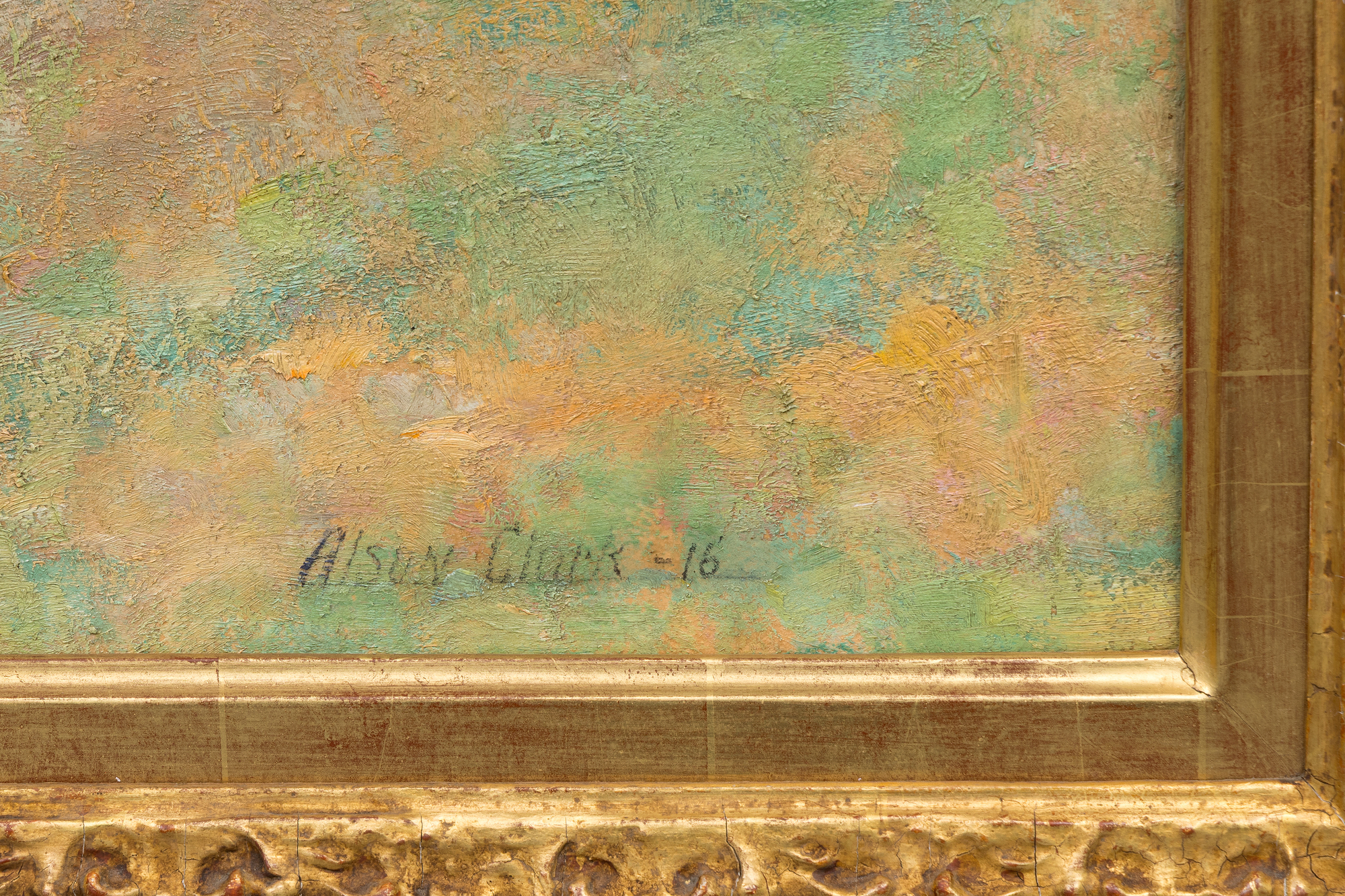
秋日,圣劳伦斯河1916年35 x 46 英寸(88.9 x 116.84 厘米) 木板油画
种源
艺术家埃尔温·施罗德(
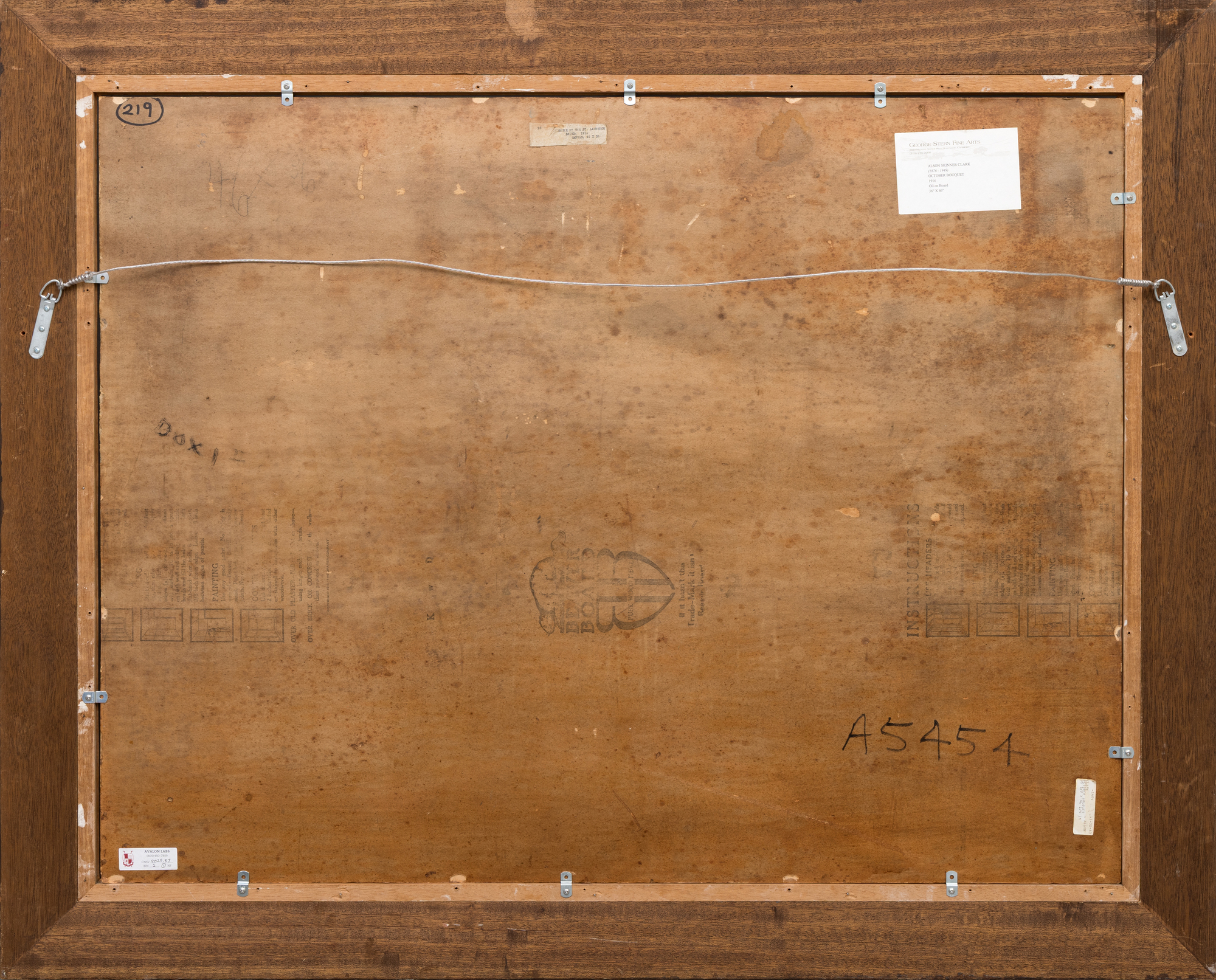
)遗产 彼得森画廊,加利福尼亚州比佛利山庄(作《十月花束》)
与乔治·斯特恩美术馆联合展出,加利福尼亚州西好莱坞(作《十月花束》)
赫里蒂奇拍卖行,加利福尼亚州比佛利山庄,艺术签名拍卖会,2012年3月20日,拍品编号87023
私人收藏,加利福尼亚州,由上述机构购得
文学
让·斯特恩,阿尔森·S·克拉克,加利福尼亚州比佛利山庄,1983年,第79页,编号33(附图)
阿尔森·克拉克的《圣劳伦斯河之秋》(1916年)是季节色彩与绘画自信的礼赞,创作于他在圣劳伦斯河畔度过的丰产之夏。这幅作品诞生于艺术家创作自信的巅峰时期,紧随其在巴拿马太平洋国际博览会的重大成功之后——当时克拉克用自己的画作填满整个展厅,这一成就为他当时的艺术生涯奠定了声誉与发展势头。


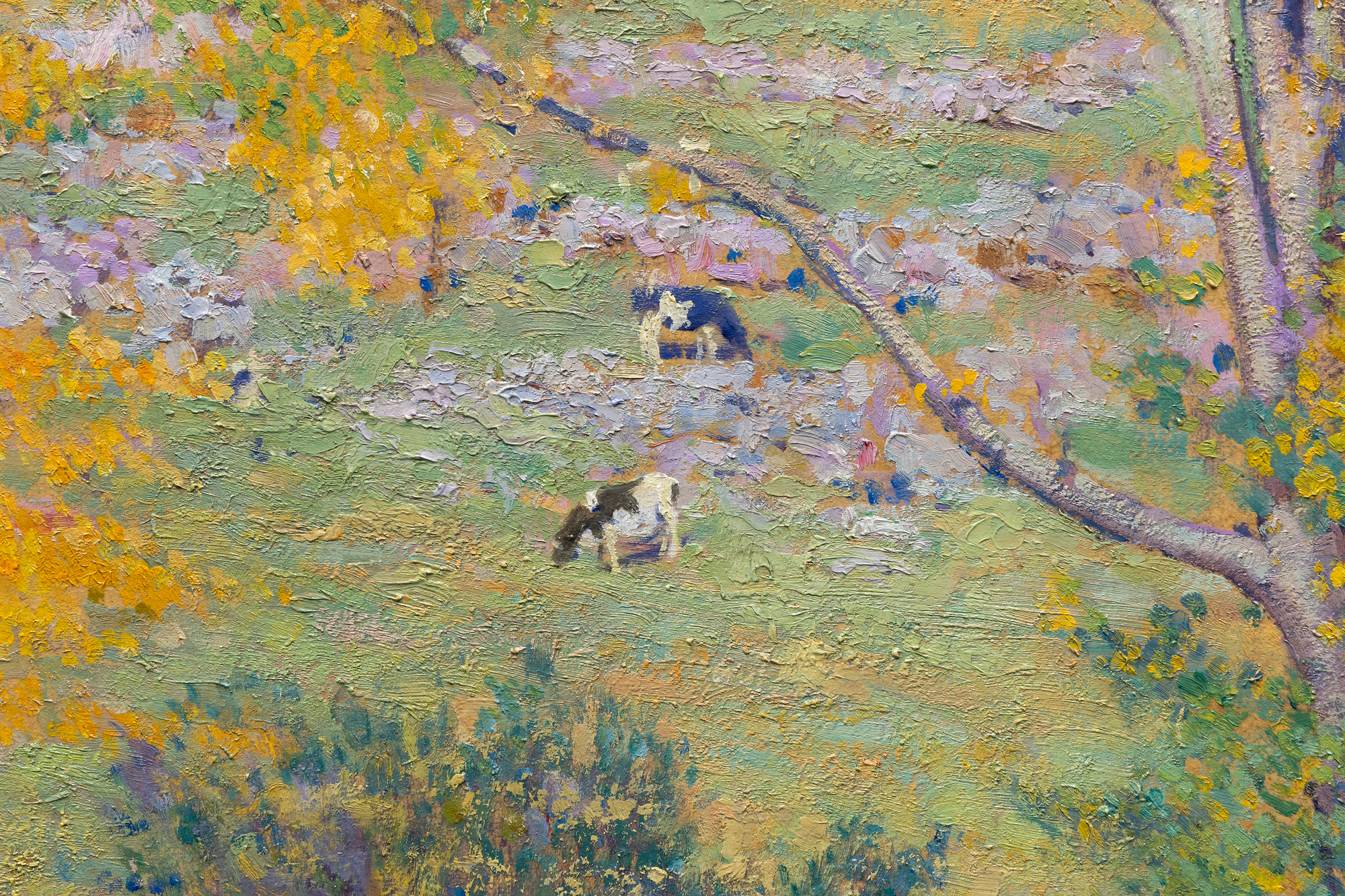
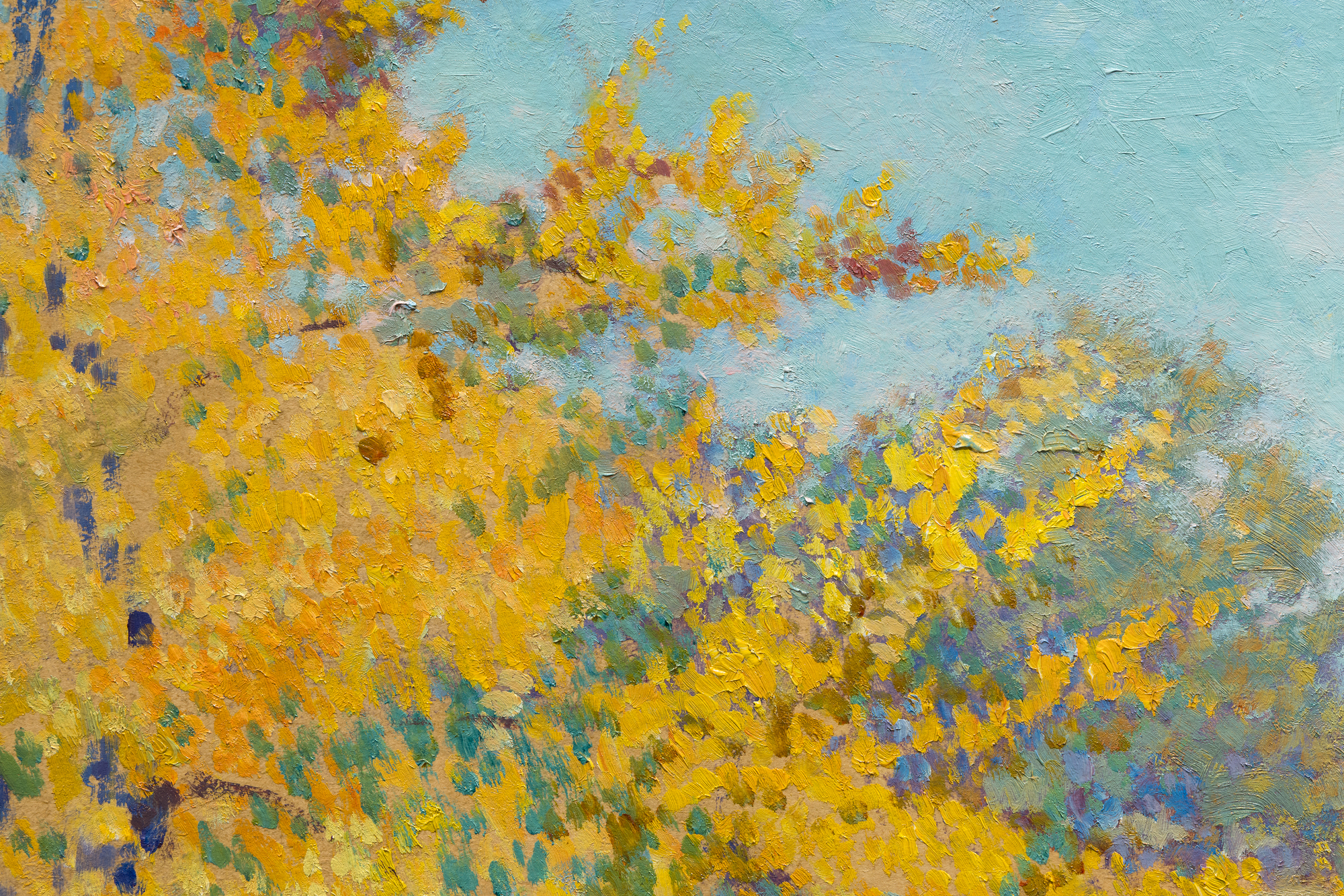
画面展开于起伏平缓的秋日山野,初秋的绚烂为大地注入生机。树木燃烧着饱和的黄、橙与柔红,枝叶以断续的印象派笔触勾勒,映衬着澄澈明亮的蓝天。克拉克以自信的笔触让色彩承载形态,通过重叠的色块营造出空间纵深感。 山坡上零星点缀着吃草的牛群,既提供了尺度参照,又以田园生活的静谧音符稳固画面基调,却未曾打破色彩的韵律。


克拉克以融合美国风景画传统与欧洲印象派技法而闻名,此作正是这种融合的典范。画面保持鲜活的触感,可见的笔触既传递动态与氛围,又维持着构图的和谐。 《圣劳伦斯河之秋》不仅展现了艺术家对色彩与光影的驾驭,更体现了画家对创作主题的娴熟掌控——他将特定时空中的景致升华为永恒的季节丰饶图景,成就了这幅自信从容的杰作。
询问