返回

约翰·马林(1870-1953)

$85,000

 
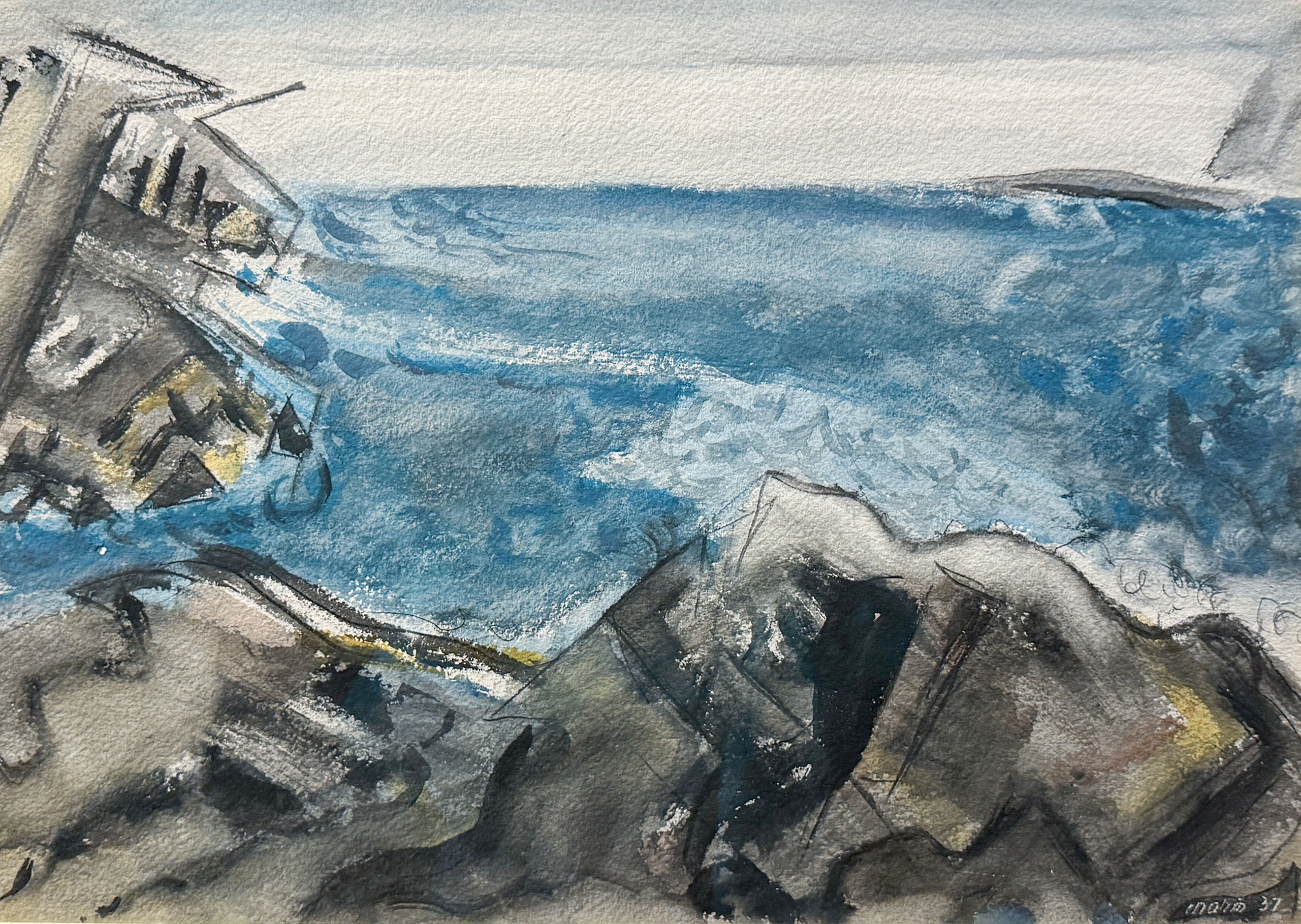
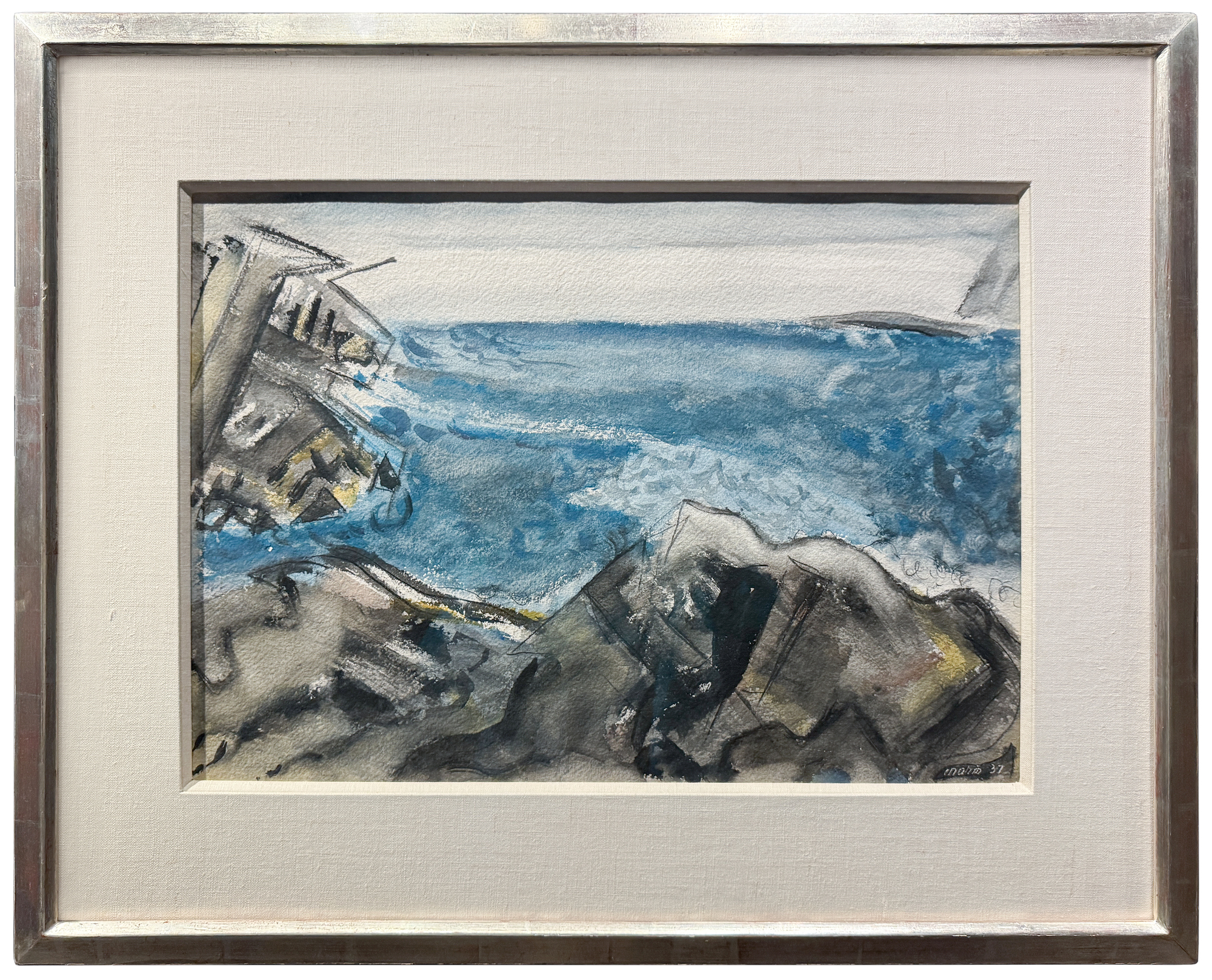
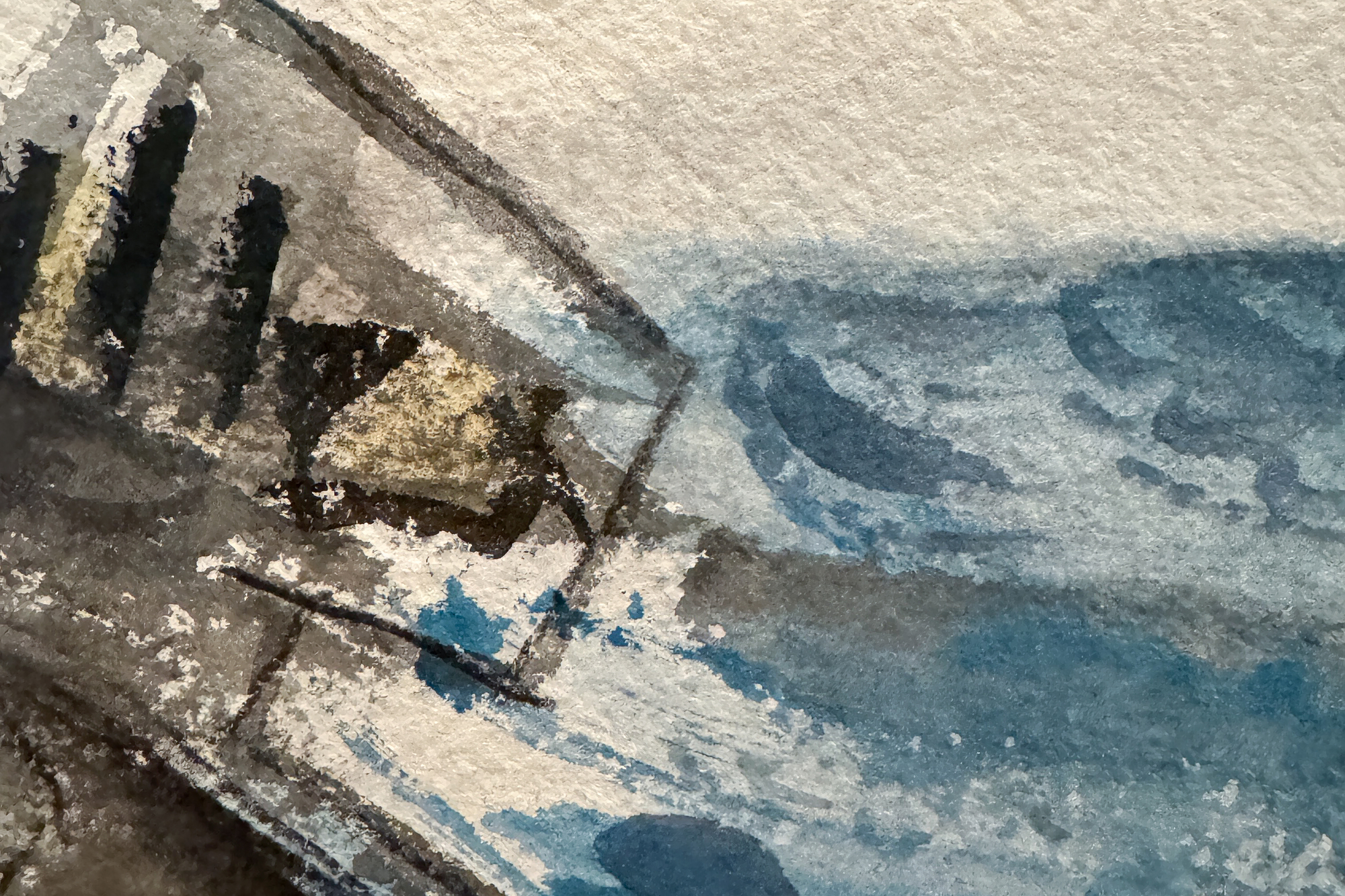
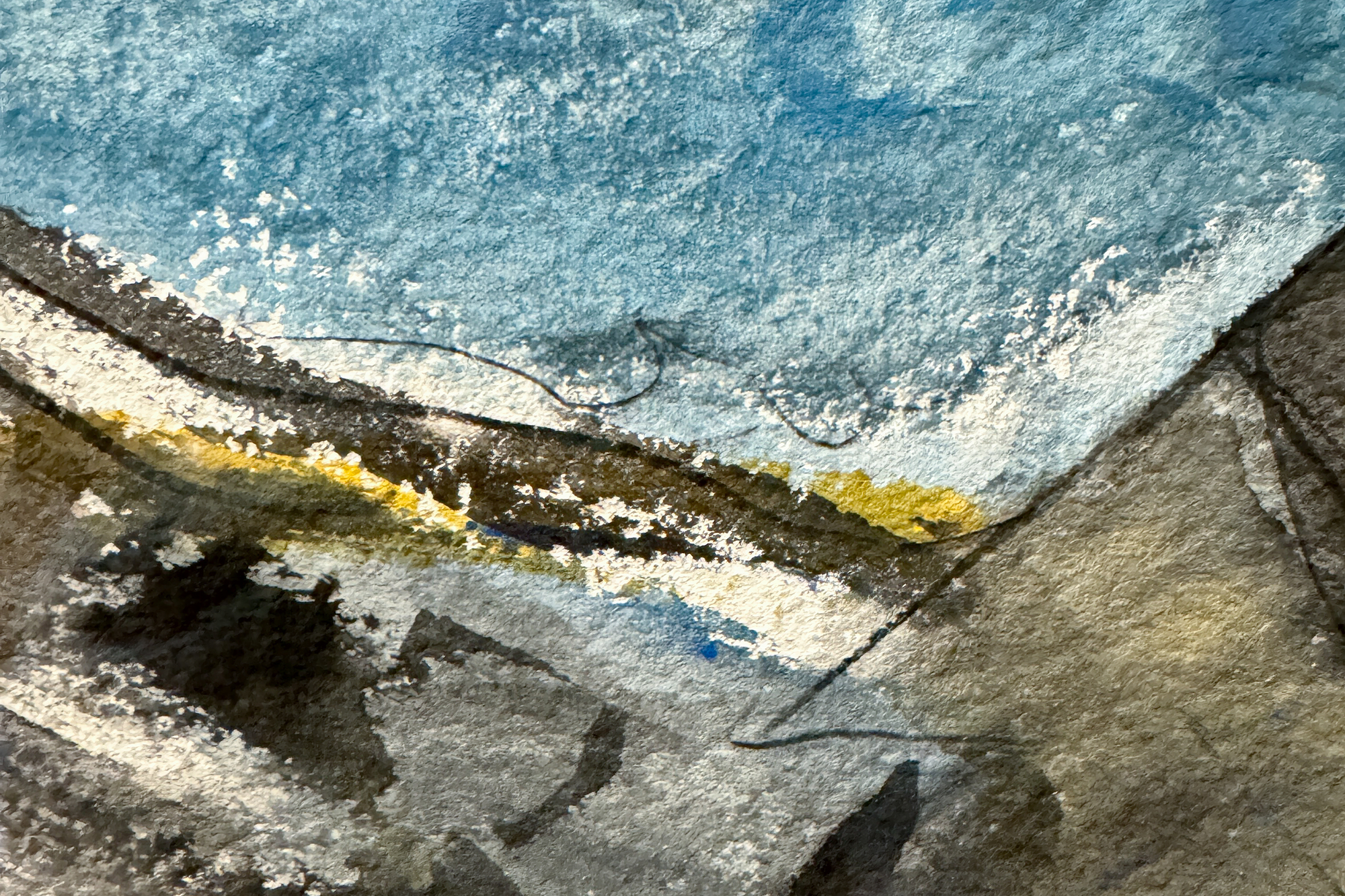
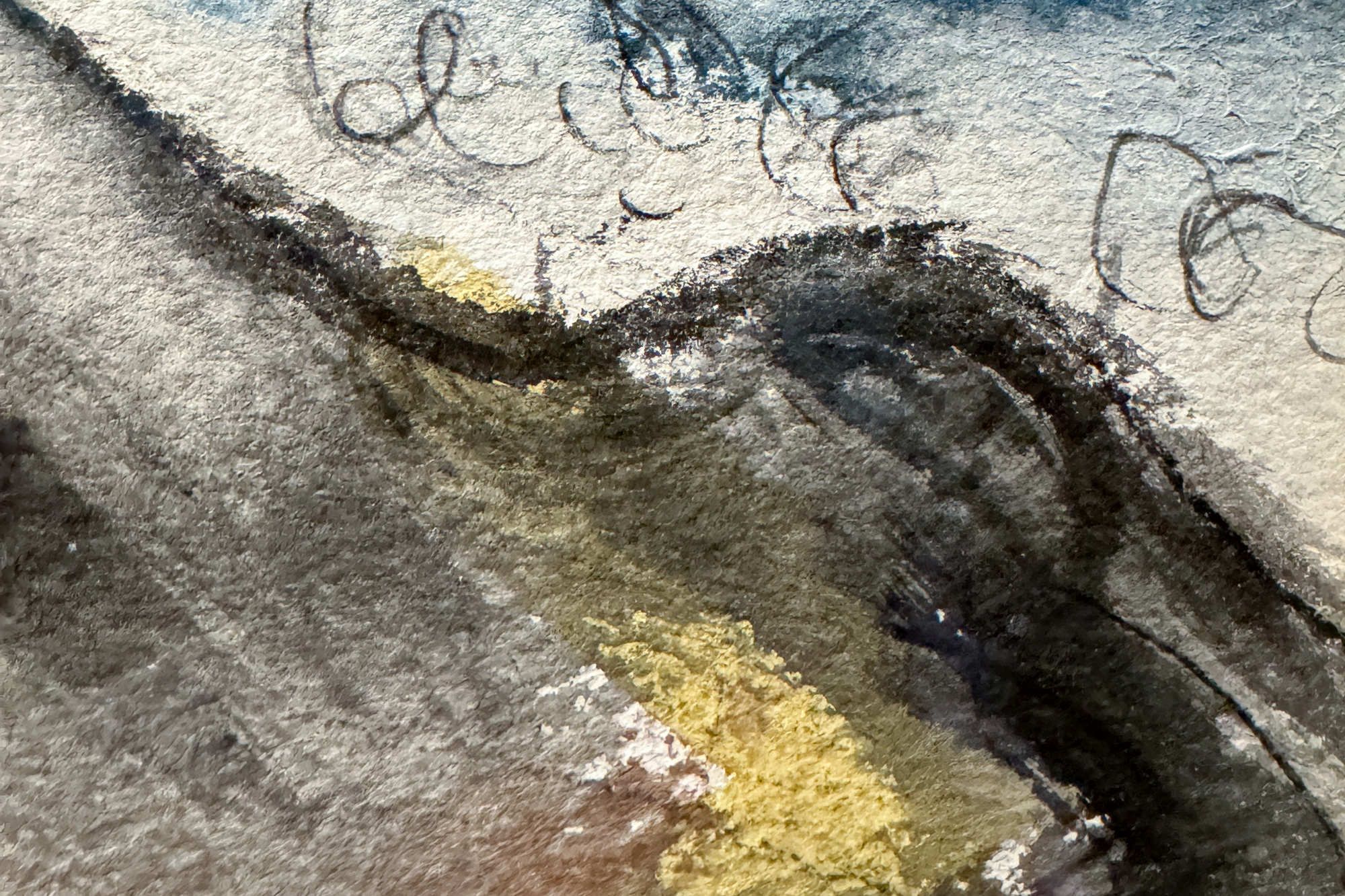
<div>John Marin’s "Sea Movement, Maine" (1937) exemplifies his dynamic approach to watercolor, a medium he transformed into one of the most expressive vehicles of early American modernism. Painted during his mature period, the work captures the restless energy of the Maine coast—a subject Marin returned to repeatedly as a source of inspiration. Quick, gestural strokes convey the surging sea and jagged rocks, while washes of deep blue, gray, and black evoke both immediacy and atmosphere. Marin’s hallmark ability to fuse abstraction with observation is evident here: the composition is at once faithful to the rhythms of the natural world and liberated in its expressive freedom. </div><br><br><div> </div><br><br><div>The significance of this work is underscored by its inclusion in Sheldon Reich’s 1970 catalogue raisonné (no. 37.19) and its exhibition history in two museum shows, affirming its place within Marin’s celebrated body of Maine seascapes. "Sea Movement, Maine" stands as a vivid testament to the artist’s lifelong pursuit of translating nature’s vitality into painterly form. </div> <div>John Marin’s "Sea Movement, Maine" (1937) exemplifies his dynamic approach to watercolor, a medium he transformed into one of the most expressive vehicles of early American modernism. Painted during his mature period, the work captures the restless energy of the Maine coast—a subject Marin returned to repeatedly as a source of inspiration. Quick, gestural strokes convey the surging sea and jagged rocks, while washes of deep blue, gray, and black evoke both immediacy and atmosphere. Marin’s hallmark ability to fuse abstraction with observation is evident here: the composition is at once faithful to the rhythms of the natural world and liberated in its expressive freedom. </div><br><br><div> </div><br><br><div>The significance of this work is underscored by its inclusion in Sheldon Reich’s 1970 catalogue raisonné (no. 37.19) and its exhibition history in two museum shows, affirming its place within Marin’s celebrated body of Maine seascapes. "Sea Movement, Maine" stands as a vivid testament to the artist’s lifelong pursuit of translating nature’s vitality into painterly form. </div> <div>John Marin’s "Sea Movement, Maine" (1937) exemplifies his dynamic approach to watercolor, a medium he transformed into one of the most expressive vehicles of early American modernism. Painted during his mature period, the work captures the restless energy of the Maine coast—a subject Marin returned to repeatedly as a source of inspiration. Quick, gestural strokes convey the surging sea and jagged rocks, while washes of deep blue, gray, and black evoke both immediacy and atmosphere. Marin’s hallmark ability to fuse abstraction with observation is evident here: the composition is at once faithful to the rhythms of the natural world and liberated in its expressive freedom. </div><br><br><div> </div><br><br><div>The significance of this work is underscored by its inclusion in Sheldon Reich’s 1970 catalogue raisonné (no. 37.19) and its exhibition history in two museum shows, affirming its place within Marin’s celebrated body of Maine seascapes. "Sea Movement, Maine" stands as a vivid testament to the artist’s lifelong pursuit of translating nature’s vitality into painterly form. </div> <div>John Marin’s "Sea Movement, Maine" (1937) exemplifies his dynamic approach to watercolor, a medium he transformed into one of the most expressive vehicles of early American modernism. Painted during his mature period, the work captures the restless energy of the Maine coast—a subject Marin returned to repeatedly as a source of inspiration. Quick, gestural strokes convey the surging sea and jagged rocks, while washes of deep blue, gray, and black evoke both immediacy and atmosphere. Marin’s hallmark ability to fuse abstraction with observation is evident here: the composition is at once faithful to the rhythms of the natural world and liberated in its expressive freedom. </div><br><br><div> </div><br><br><div>The significance of this work is underscored by its inclusion in Sheldon Reich’s 1970 catalogue raisonné (no. 37.19) and its exhibition history in two museum shows, affirming its place within Marin’s celebrated body of Maine seascapes. "Sea Movement, Maine" stands as a vivid testament to the artist’s lifelong pursuit of translating nature’s vitality into painterly form. </div> <div>John Marin’s "Sea Movement, Maine" (1937) exemplifies his dynamic approach to watercolor, a medium he transformed into one of the most expressive vehicles of early American modernism. Painted during his mature period, the work captures the restless energy of the Maine coast—a subject Marin returned to repeatedly as a source of inspiration. Quick, gestural strokes convey the surging sea and jagged rocks, while washes of deep blue, gray, and black evoke both immediacy and atmosphere. Marin’s hallmark ability to fuse abstraction with observation is evident here: the composition is at once faithful to the rhythms of the natural world and liberated in its expressive freedom. </div><br><br><div> </div><br><br><div>The significance of this work is underscored by its inclusion in Sheldon Reich’s 1970 catalogue raisonné (no. 37.19) and its exhibition history in two museum shows, affirming its place within Marin’s celebrated body of Maine seascapes. "Sea Movement, Maine" stands as a vivid testament to the artist’s lifelong pursuit of translating nature’s vitality into painterly form. </div> <div>John Marin’s "Sea Movement, Maine" (1937) exemplifies his dynamic approach to watercolor, a medium he transformed into one of the most expressive vehicles of early American modernism. Painted during his mature period, the work captures the restless energy of the Maine coast—a subject Marin returned to repeatedly as a source of inspiration. Quick, gestural strokes convey the surging sea and jagged rocks, while washes of deep blue, gray, and black evoke both immediacy and atmosphere. Marin’s hallmark ability to fuse abstraction with observation is evident here: the composition is at once faithful to the rhythms of the natural world and liberated in its expressive freedom. </div><br><br><div> </div><br><br><div>The significance of this work is underscored by its inclusion in Sheldon Reich’s 1970 catalogue raisonné (no. 37.19) and its exhibition history in two museum shows, affirming its place within Marin’s celebrated body of Maine seascapes. "Sea Movement, Maine" stands as a vivid testament to the artist’s lifelong pursuit of translating nature’s vitality into painterly form. </div> <div>John Marin’s "Sea Movement, Maine" (1937) exemplifies his dynamic approach to watercolor, a medium he transformed into one of the most expressive vehicles of early American modernism. Painted during his mature period, the work captures the restless energy of the Maine coast—a subject Marin returned to repeatedly as a source of inspiration. Quick, gestural strokes convey the surging sea and jagged rocks, while washes of deep blue, gray, and black evoke both immediacy and atmosphere. Marin’s hallmark ability to fuse abstraction with observation is evident here: the composition is at once faithful to the rhythms of the natural world and liberated in its expressive freedom. </div><br><br><div> </div><br><br><div>The significance of this work is underscored by its inclusion in Sheldon Reich’s 1970 catalogue raisonné (no. 37.19) and its exhibition history in two museum shows, affirming its place within Marin’s celebrated body of Maine seascapes. "Sea Movement, Maine" stands as a vivid testament to the artist’s lifelong pursuit of translating nature’s vitality into painterly form. </div> <div>John Marin’s "Sea Movement, Maine" (1937) exemplifies his dynamic approach to watercolor, a medium he transformed into one of the most expressive vehicles of early American modernism. Painted during his mature period, the work captures the restless energy of the Maine coast—a subject Marin returned to repeatedly as a source of inspiration. Quick, gestural strokes convey the surging sea and jagged rocks, while washes of deep blue, gray, and black evoke both immediacy and atmosphere. Marin’s hallmark ability to fuse abstraction with observation is evident here: the composition is at once faithful to the rhythms of the natural world and liberated in its expressive freedom. </div><br><br><div> </div><br><br><div>The significance of this work is underscored by its inclusion in Sheldon Reich’s 1970 catalogue raisonné (no. 37.19) and its exhibition history in two museum shows, affirming its place within Marin’s celebrated body of Maine seascapes. "Sea Movement, Maine" stands as a vivid testament to the artist’s lifelong pursuit of translating nature’s vitality into painterly form. </div> <div>John Marin’s "Sea Movement, Maine" (1937) exemplifies his dynamic approach to watercolor, a medium he transformed into one of the most expressive vehicles of early American modernism. Painted during his mature period, the work captures the restless energy of the Maine coast—a subject Marin returned to repeatedly as a source of inspiration. Quick, gestural strokes convey the surging sea and jagged rocks, while washes of deep blue, gray, and black evoke both immediacy and atmosphere. Marin’s hallmark ability to fuse abstraction with observation is evident here: the composition is at once faithful to the rhythms of the natural world and liberated in its expressive freedom. </div><br><br><div> </div><br><br><div>The significance of this work is underscored by its inclusion in Sheldon Reich’s 1970 catalogue raisonné (no. 37.19) and its exhibition history in two museum shows, affirming its place within Marin’s celebrated body of Maine seascapes. "Sea Movement, Maine" stands as a vivid testament to the artist’s lifelong pursuit of translating nature’s vitality into painterly form. </div> <div>John Marin’s "Sea Movement, Maine" (1937) exemplifies his dynamic approach to watercolor, a medium he transformed into one of the most expressive vehicles of early American modernism. Painted during his mature period, the work captures the restless energy of the Maine coast—a subject Marin returned to repeatedly as a source of inspiration. Quick, gestural strokes convey the surging sea and jagged rocks, while washes of deep blue, gray, and black evoke both immediacy and atmosphere. Marin’s hallmark ability to fuse abstraction with observation is evident here: the composition is at once faithful to the rhythms of the natural world and liberated in its expressive freedom. </div><br><br><div> </div><br><br><div>The significance of this work is underscored by its inclusion in Sheldon Reich’s 1970 catalogue raisonné (no. 37.19) and its exhibition history in two museum shows, affirming its place within Marin’s celebrated body of Maine seascapes. "Sea Movement, Maine" stands as a vivid testament to the artist’s lifelong pursuit of translating nature’s vitality into painterly form. </div>
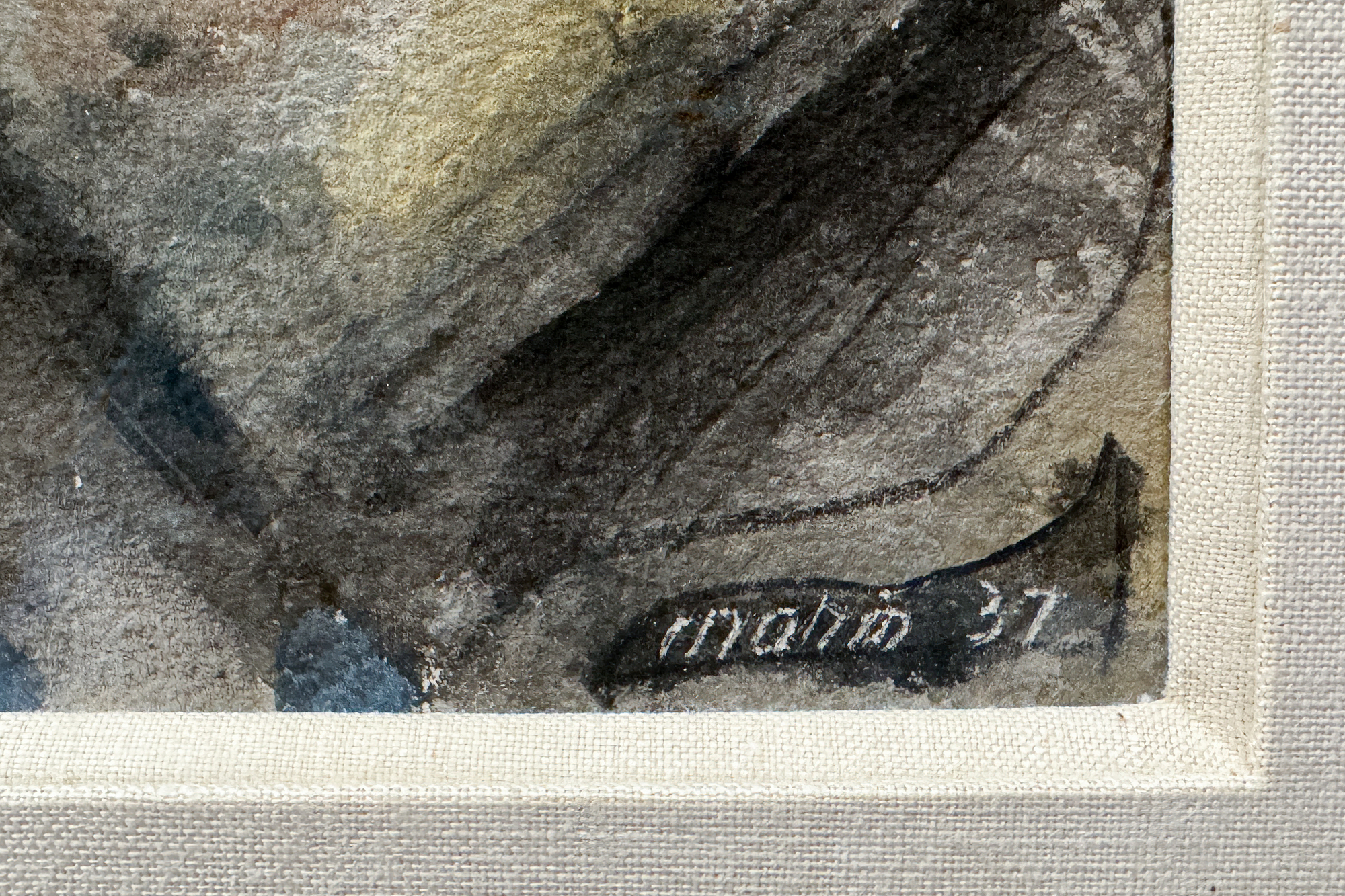
海之动,缅因州193715 1/2 x 20 1/2 英寸(39.37 x 52.07 厘米) 水彩画于纸上
种源

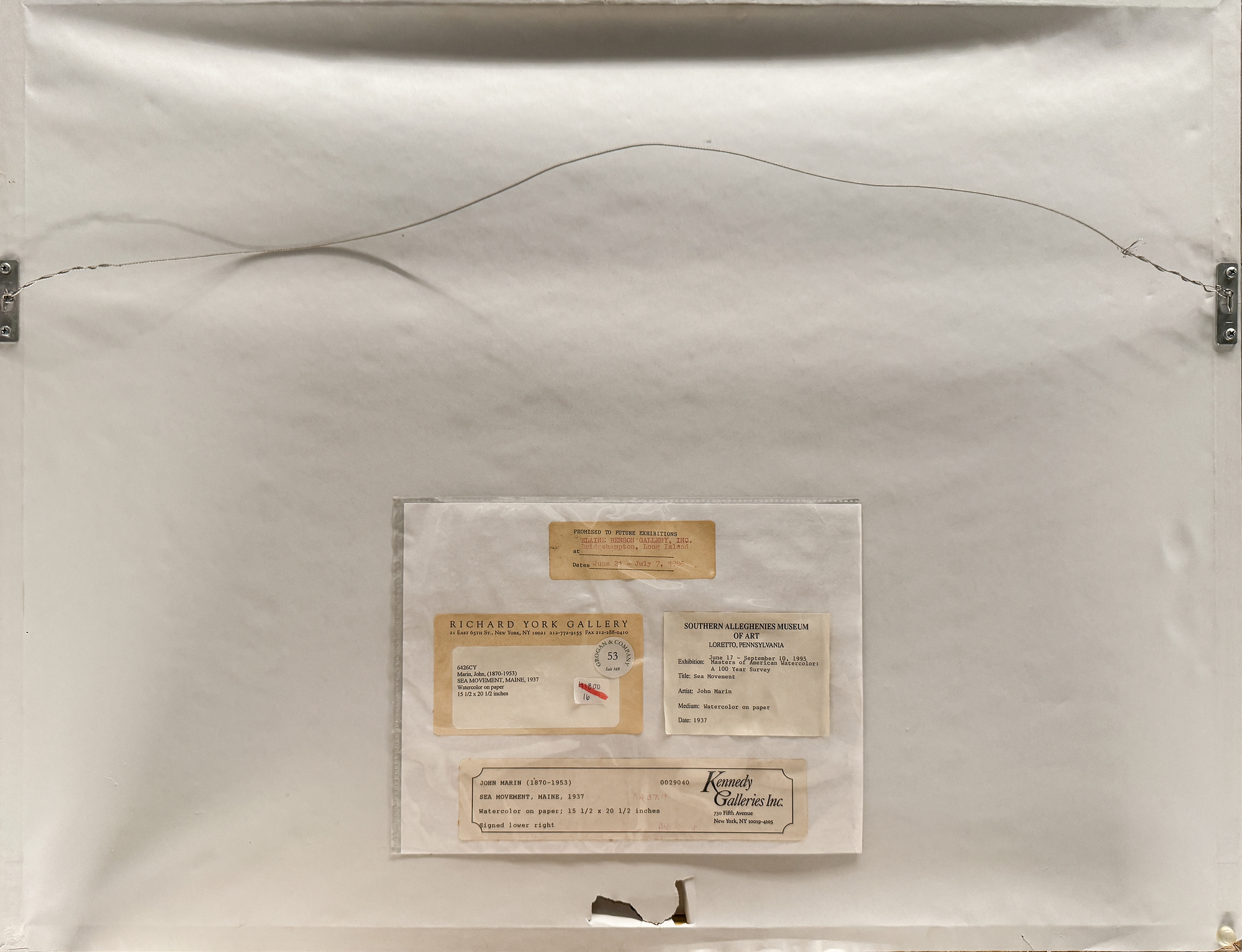
艺术家詹姆斯·麦克莱恩·布朗特遗产拍卖 肯尼迪画廊,纽约
理查德·约克画廊,纽约
缅因视角:新英格兰绅士藏品
格罗根公司,2019年11月17日,拍品编号53
私人收藏
展会信息
纽约,威拉德画廊,约翰·马林1930年代绘画展,1965年3月2日至4月3日
宾夕法尼亚州洛雷托,南阿勒格尼艺术博物馆,美国水彩大师:百年纪念展,1995年6月17日至9月10日
缅因州沃特维尔,科尔比学院艺术博物馆,约翰·马林在缅因州
...更。。。1998年6月24日至9月27日,第13号
文学
谢尔顿·赖希:《约翰·马林:风格分析与作品全集》,1970年,第2卷,第37.19号。
...少。。。
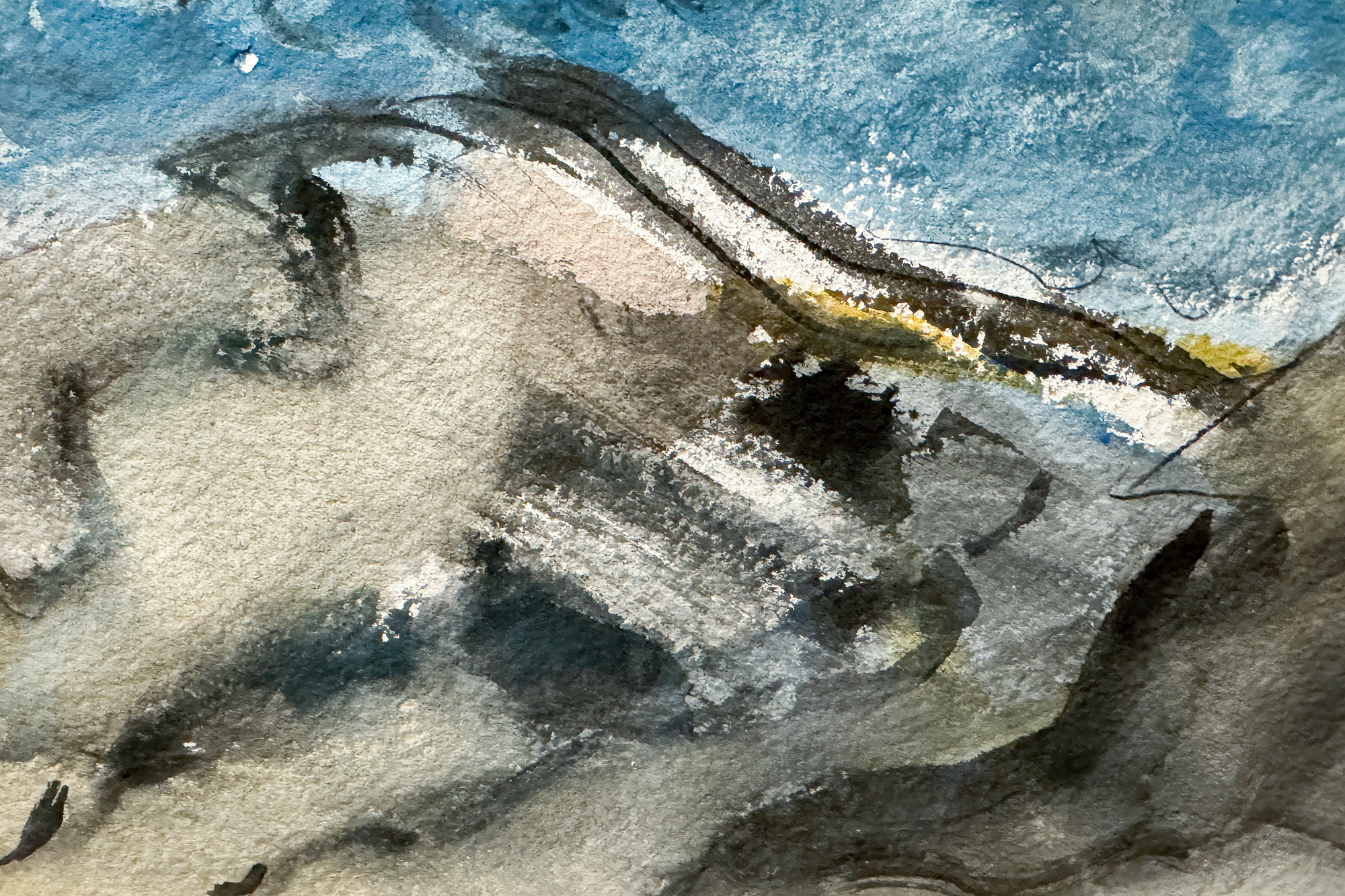
约翰·马林的《缅因州海浪》(1937年)彰显了他对水彩画的动态处理手法——这种媒介经他之手,成为早期美国现代主义最具表现力的载体之一。这幅创作于其成熟时期的作品,捕捉了缅因海岸永不停息的能量,而这片海岸正是马林反复汲取灵感之源。 迅捷的笔触勾勒出翻涌的海浪与嶙峋的岩石,深蓝、灰与黑的晕染既营造出临场感又渲染出氛围。马林标志性的抽象与写实融合技法在此显露无遗:画面既忠实于自然世界的韵律,又在表现力上获得解放。


此作被收录于谢尔顿·赖希1970年出版的《作品全集》(编号37.19),并历经两场博物馆展览,其重要性由此得到印证,确立了它在马林备受赞誉的缅因州海景画作中的地位。《缅因州海浪》生动见证了艺术家毕生致力于将自然的生机转化为绘画形式的追求。
询问