返回

日语

$9,500

 
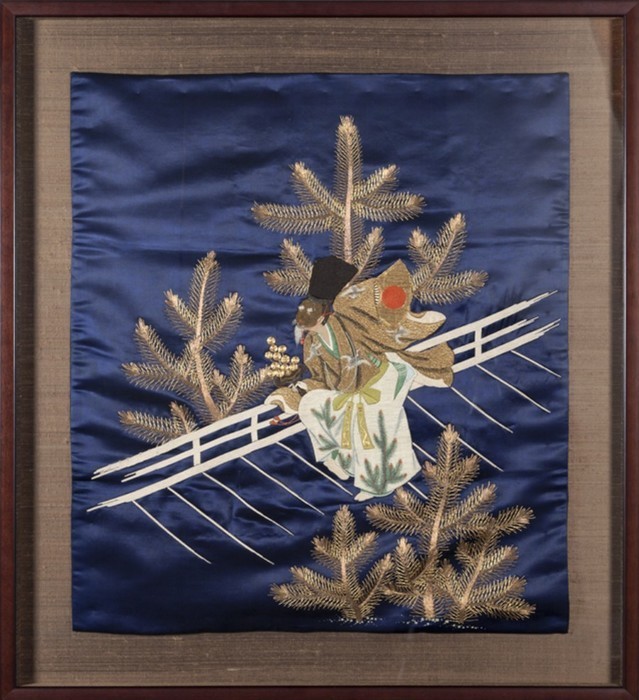
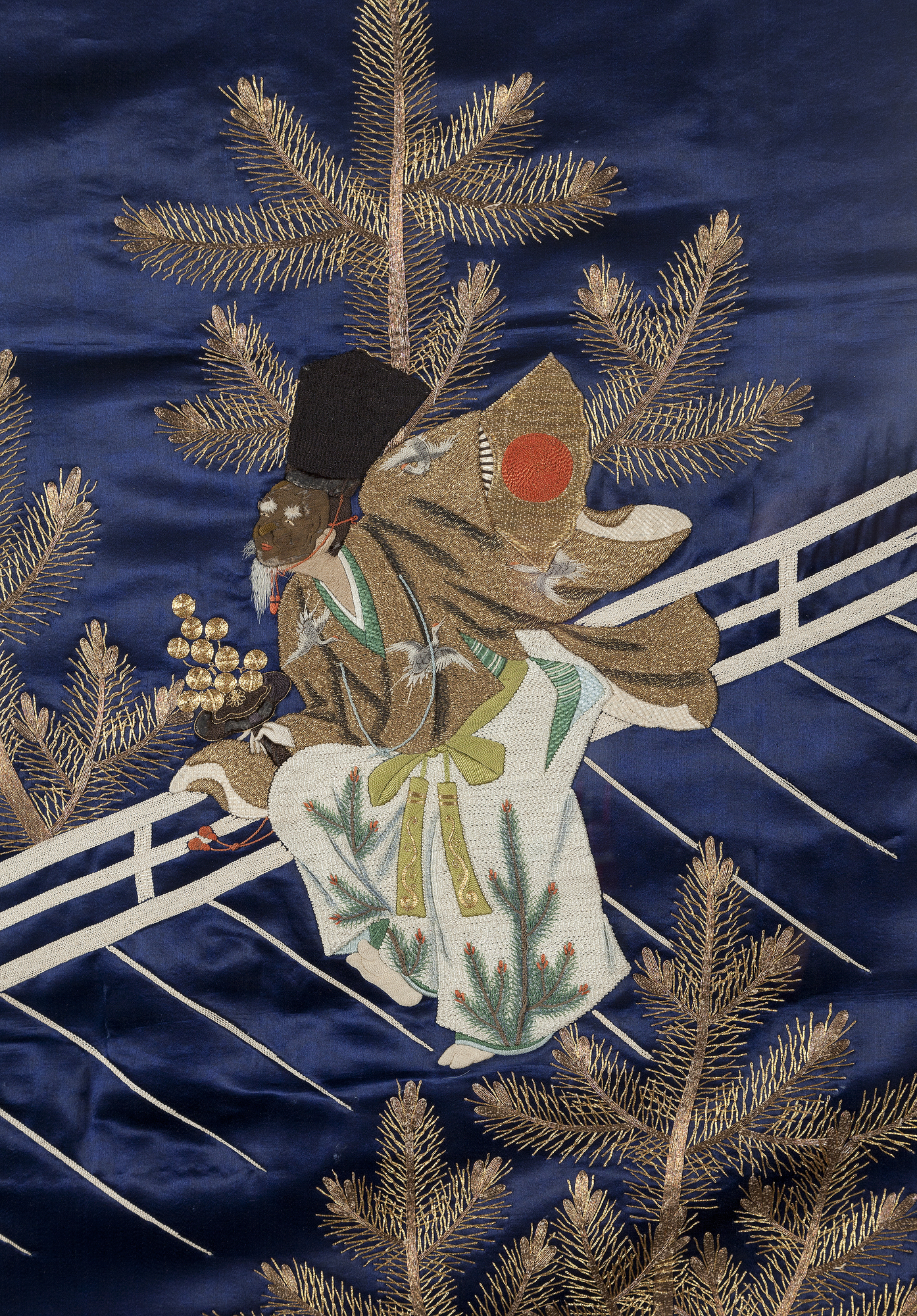
Here, a Noh actor in full costume and mask is crossing the wing of a Noh stage. The stage is flanked by pine trees, and pines are also a motif on his kimono. Typically a pine tree is painted on the back wall of Noh stages to represent the tree through which this theatrical form was, by legend, passed down from heaven to mankind. In Japanese culture, the evergreen pine has come to be an important symbol of longevity and steadfastness.<br><br>The practice of laying fukusa over presents placed on wooden or lacquer trays became wide spread during the Edo period, (17th to 19th century). What begun as a functional practice to protect gifts from the elements, took on a decorative life of its own. Well-to-do families owned large numbers of fukusa and often commissioned famous artists of the<br>time to design exclusively for them. The drawings were then created by such techniques as tie-dying, stenciling, slit embroidery, tapestry, painting with embroidery and combinations of all methods. Each time a fukusa was required, it was chosen not only for the occasion but also for the season, the gift itself, and the status of the donor and the recipient. Fukusa were also part of the brides’ trousseau and could be given on the occasion of a wedding. Fukusa were made of square or oblong pieces of silk, lined and often embellished with tassels, and sometimes bearing the monogram or family crest on the reverse. Etiquette decreed that the fukusa were not usually to be considered part of the gift itself and were to be returned covering a token gift or an acknowledgement of the gift. However, some recipients such as bureaucrats, who accepted gifts from people currying favors, elected to keep the fukusa along with the gifts they covered, thus adding to their own store of gift covers. Here, a Noh actor in full costume and mask is crossing the wing of a Noh stage. The stage is flanked by pine trees, and pines are also a motif on his kimono. Typically a pine tree is painted on the back wall of Noh stages to represent the tree through which this theatrical form was, by legend, passed down from heaven to mankind. In Japanese culture, the evergreen pine has come to be an important symbol of longevity and steadfastness.<br><br>The practice of laying fukusa over presents placed on wooden or lacquer trays became wide spread during the Edo period, (17th to 19th century). What begun as a functional practice to protect gifts from the elements, took on a decorative life of its own. Well-to-do families owned large numbers of fukusa and often commissioned famous artists of the<br>time to design exclusively for them. The drawings were then created by such techniques as tie-dying, stenciling, slit embroidery, tapestry, painting with embroidery and combinations of all methods. Each time a fukusa was required, it was chosen not only for the occasion but also for the season, the gift itself, and the status of the donor and the recipient. Fukusa were also part of the brides’ trousseau and could be given on the occasion of a wedding. Fukusa were made of square or oblong pieces of silk, lined and often embellished with tassels, and sometimes bearing the monogram or family crest on the reverse. Etiquette decreed that the fukusa were not usually to be considered part of the gift itself and were to be returned covering a token gift or an acknowledgement of the gift. However, some recipients such as bureaucrats, who accepted gifts from people currying favors, elected to keep the fukusa along with the gifts they covered, thus adding to their own store of gift covers.
能乐演员明治时期(1868-1912)27.5 x 25 英寸(69.85 x 63.5 厘米) 金线与丝线绣于绢上
种源
希瑟·詹姆斯美术, 加利福尼亚州
此处,一位身着全套戏服并佩戴面具的能乐演员正横穿能乐舞台的侧翼。舞台两侧矗立着松树,其和服上亦饰有松树纹样。传统上,能乐舞台的后墙绘有松树图案,象征着传说中将这种戏剧形式从天界传授给人类的松树。 在日式美学中,常青的松树逐渐成为长寿与坚韧的重要象征。

江户时代(17至19世纪)期间,将覆袈裟(fukusa)铺于木制或漆器托盘上承载礼物的习俗广泛流行。 这项最初为保护礼品免受外界影响的功能性实践,逐渐发展出独立的装饰价值。富裕家庭常收藏大量福袱,并委托当时知名艺术家
专属设计。图案通过扎染、拓印、裂绣、挂毯、绣绘及综合技法等多种工艺呈现。 每次选用福袱时,不仅需契合场合,更要考量季节、礼品性质及赠收双方的身份地位。福袱亦是新娘嫁妆的组成部分,可作为婚礼赠礼。其制式为方形或长方形丝绸,内衬衬里,常饰以流苏,背面有时缀有姓名缩写或家徽。 礼仪规定,覆袄通常不被视为礼物本身,应包裹回赠的象征性礼品或答谢信函后归还。但某些收礼者——如接受权贵馈赠的官僚——会将覆袄与所包裹的礼物一同留存,从而扩充自己的礼袋收藏。
询问