返回

约翰·辛格·萨根特·恩茨(1856-1925)

 
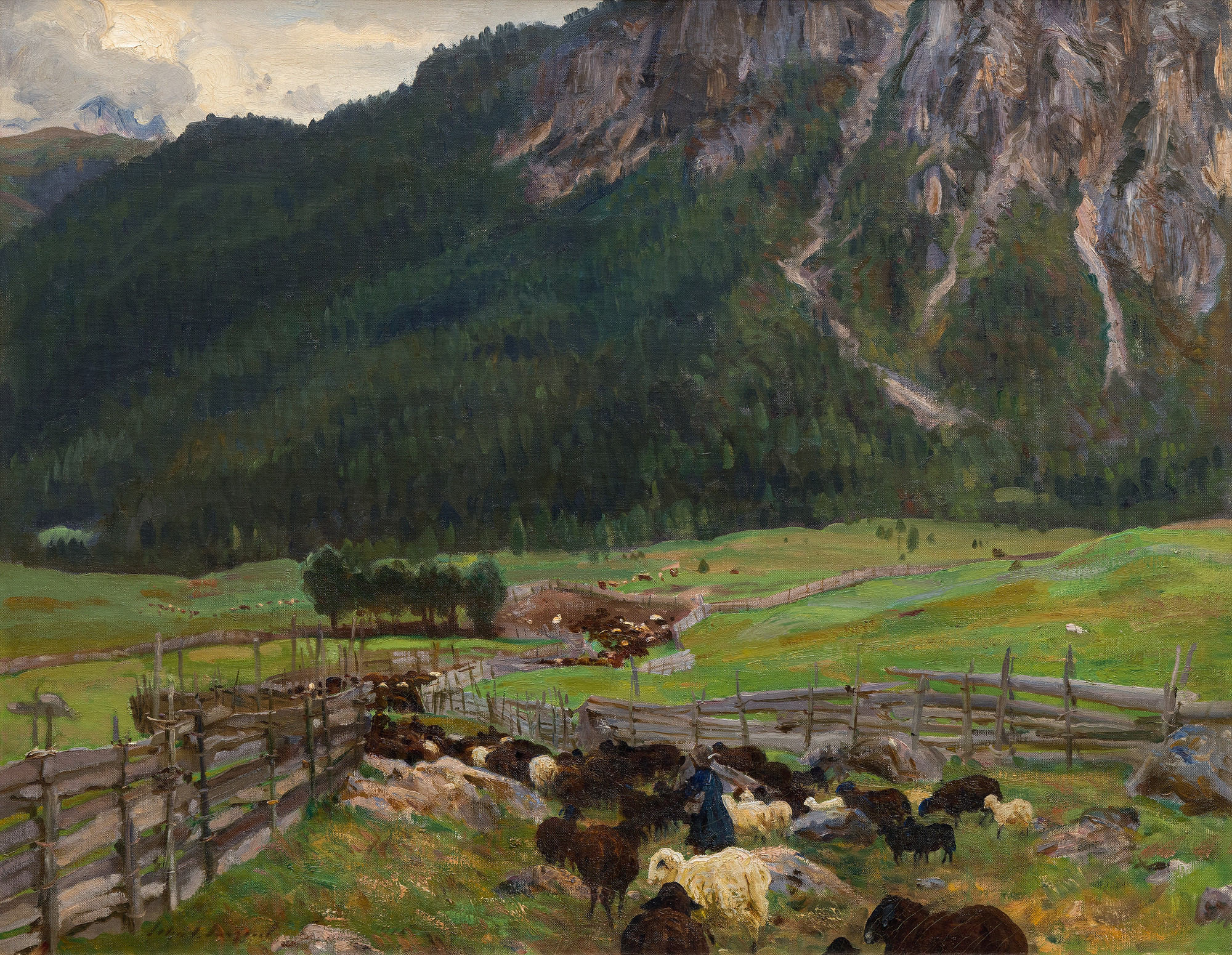
<div><font face=Lato size=3>Painted during John Singer Sargent's trip to the Austrian Tyrol in the summer of 1914, this work captures a moment of profound historical tension as Austria declared war on Serbia that July, placing Sargent at the threshold of the First World War. The painting offers a strikingly intimate and unexpected view of the Alpine landscape, framed from within a sheep pen with the mountain itself largely cropped from sight. This choice of vantage point shifts the viewers focus to the meeting point of the valley and the rising slope, where deep verdant greens anchor the composition and an overcast sky suggests a subtle sense of unease beyond the tranquil pastoral foreground.</font></div><br><br><div> </div><br><br><div><font face=Lato size=3>The work is included in the Sargent catalogue raisonne by Richard Ormond and Elaine Kilmurray, confirming its secure place within the artists documented production. Sargent created several related works during his 1914 stay in the Tyrol across both oil and watercolor, including <em>Tyrolese Interior </em>at The Metropolitan Museum of Art, <em>Woodsheds Tyrol</em> at the Art Institute of Chicago, and <em>Trout Stream</em> <em>in the Tyrol</em> at the de Young Museum. Together these works demonstrate Sargent's sustained engagement with the region and its distinctive light, atmosphere, and rural architecture during this pivotal year.</font></div><br><br><div> </div><br><br><div><font face=Lato size=3>This painting also carries distinguished provenance, having been previously held in the collection of Henry Clay Frick, the American industrialist and founder of the Frick Collection, before being given as a gift to his friend and lawyer Louis Cass Ledyard, who also served as counsel to J P Morgan. Its rarity within Sargents mature Tyrolean subjects is further underscored by the small number of comparable works that have reached the market, with only one closely related painting from this period, A Tyrolese Crucifix from 1915, having appeared at auction in recent decades.</font></div><br><br><div> </div><br><br><div><font face=Lato size=3>Sargents work continues to receive major institutional recognition, including the forthcoming exhibition Sargent Dazzling Paris at the Musee d Orsay in 2025 to 2026, reaffirming the ongoing relevance of his mature European landscapes within the broader narrative of early twentieth century art.</font></div> <div><font face=Lato size=3>Painted during John Singer Sargent's trip to the Austrian Tyrol in the summer of 1914, this work captures a moment of profound historical tension as Austria declared war on Serbia that July, placing Sargent at the threshold of the First World War. The painting offers a strikingly intimate and unexpected view of the Alpine landscape, framed from within a sheep pen with the mountain itself largely cropped from sight. This choice of vantage point shifts the viewers focus to the meeting point of the valley and the rising slope, where deep verdant greens anchor the composition and an overcast sky suggests a subtle sense of unease beyond the tranquil pastoral foreground.</font></div><br><br><div> </div><br><br><div><font face=Lato size=3>The work is included in the Sargent catalogue raisonne by Richard Ormond and Elaine Kilmurray, confirming its secure place within the artists documented production. Sargent created several related works during his 1914 stay in the Tyrol across both oil and watercolor, including <em>Tyrolese Interior </em>at The Metropolitan Museum of Art, <em>Woodsheds Tyrol</em> at the Art Institute of Chicago, and <em>Trout Stream</em> <em>in the Tyrol</em> at the de Young Museum. Together these works demonstrate Sargent's sustained engagement with the region and its distinctive light, atmosphere, and rural architecture during this pivotal year.</font></div><br><br><div> </div><br><br><div><font face=Lato size=3>This painting also carries distinguished provenance, having been previously held in the collection of Henry Clay Frick, the American industrialist and founder of the Frick Collection, before being given as a gift to his friend and lawyer Louis Cass Ledyard, who also served as counsel to J P Morgan. Its rarity within Sargents mature Tyrolean subjects is further underscored by the small number of comparable works that have reached the market, with only one closely related painting from this period, A Tyrolese Crucifix from 1915, having appeared at auction in recent decades.</font></div><br><br><div> </div><br><br><div><font face=Lato size=3>Sargents work continues to receive major institutional recognition, including the forthcoming exhibition Sargent Dazzling Paris at the Musee d Orsay in 2025 to 2026, reaffirming the ongoing relevance of his mature European landscapes within the broader narrative of early twentieth century art.</font></div> <div><font face=Lato size=3>Painted during John Singer Sargent's trip to the Austrian Tyrol in the summer of 1914, this work captures a moment of profound historical tension as Austria declared war on Serbia that July, placing Sargent at the threshold of the First World War. The painting offers a strikingly intimate and unexpected view of the Alpine landscape, framed from within a sheep pen with the mountain itself largely cropped from sight. This choice of vantage point shifts the viewers focus to the meeting point of the valley and the rising slope, where deep verdant greens anchor the composition and an overcast sky suggests a subtle sense of unease beyond the tranquil pastoral foreground.</font></div><br><br><div> </div><br><br><div><font face=Lato size=3>The work is included in the Sargent catalogue raisonne by Richard Ormond and Elaine Kilmurray, confirming its secure place within the artists documented production. Sargent created several related works during his 1914 stay in the Tyrol across both oil and watercolor, including <em>Tyrolese Interior </em>at The Metropolitan Museum of Art, <em>Woodsheds Tyrol</em> at the Art Institute of Chicago, and <em>Trout Stream</em> <em>in the Tyrol</em> at the de Young Museum. Together these works demonstrate Sargent's sustained engagement with the region and its distinctive light, atmosphere, and rural architecture during this pivotal year.</font></div><br><br><div> </div><br><br><div><font face=Lato size=3>This painting also carries distinguished provenance, having been previously held in the collection of Henry Clay Frick, the American industrialist and founder of the Frick Collection, before being given as a gift to his friend and lawyer Louis Cass Ledyard, who also served as counsel to J P Morgan. Its rarity within Sargents mature Tyrolean subjects is further underscored by the small number of comparable works that have reached the market, with only one closely related painting from this period, A Tyrolese Crucifix from 1915, having appeared at auction in recent decades.</font></div><br><br><div> </div><br><br><div><font face=Lato size=3>Sargents work continues to receive major institutional recognition, including the forthcoming exhibition Sargent Dazzling Paris at the Musee d Orsay in 2025 to 2026, reaffirming the ongoing relevance of his mature European landscapes within the broader narrative of early twentieth century art.</font></div> <div><font face=Lato size=3>Painted during John Singer Sargent's trip to the Austrian Tyrol in the summer of 1914, this work captures a moment of profound historical tension as Austria declared war on Serbia that July, placing Sargent at the threshold of the First World War. The painting offers a strikingly intimate and unexpected view of the Alpine landscape, framed from within a sheep pen with the mountain itself largely cropped from sight. This choice of vantage point shifts the viewers focus to the meeting point of the valley and the rising slope, where deep verdant greens anchor the composition and an overcast sky suggests a subtle sense of unease beyond the tranquil pastoral foreground.</font></div><br><br><div> </div><br><br><div><font face=Lato size=3>The work is included in the Sargent catalogue raisonne by Richard Ormond and Elaine Kilmurray, confirming its secure place within the artists documented production. Sargent created several related works during his 1914 stay in the Tyrol across both oil and watercolor, including <em>Tyrolese Interior </em>at The Metropolitan Museum of Art, <em>Woodsheds Tyrol</em> at the Art Institute of Chicago, and <em>Trout Stream</em> <em>in the Tyrol</em> at the de Young Museum. Together these works demonstrate Sargent's sustained engagement with the region and its distinctive light, atmosphere, and rural architecture during this pivotal year.</font></div><br><br><div> </div><br><br><div><font face=Lato size=3>This painting also carries distinguished provenance, having been previously held in the collection of Henry Clay Frick, the American industrialist and founder of the Frick Collection, before being given as a gift to his friend and lawyer Louis Cass Ledyard, who also served as counsel to J P Morgan. Its rarity within Sargents mature Tyrolean subjects is further underscored by the small number of comparable works that have reached the market, with only one closely related painting from this period, A Tyrolese Crucifix from 1915, having appeared at auction in recent decades.</font></div><br><br><div> </div><br><br><div><font face=Lato size=3>Sargents work continues to receive major institutional recognition, including the forthcoming exhibition Sargent Dazzling Paris at the Musee d Orsay in 2025 to 2026, reaffirming the ongoing relevance of his mature European landscapes within the broader narrative of early twentieth century art.</font></div> <div><font face=Lato size=3>Painted during John Singer Sargent's trip to the Austrian Tyrol in the summer of 1914, this work captures a moment of profound historical tension as Austria declared war on Serbia that July, placing Sargent at the threshold of the First World War. The painting offers a strikingly intimate and unexpected view of the Alpine landscape, framed from within a sheep pen with the mountain itself largely cropped from sight. This choice of vantage point shifts the viewers focus to the meeting point of the valley and the rising slope, where deep verdant greens anchor the composition and an overcast sky suggests a subtle sense of unease beyond the tranquil pastoral foreground.</font></div><br><br><div> </div><br><br><div><font face=Lato size=3>The work is included in the Sargent catalogue raisonne by Richard Ormond and Elaine Kilmurray, confirming its secure place within the artists documented production. Sargent created several related works during his 1914 stay in the Tyrol across both oil and watercolor, including <em>Tyrolese Interior </em>at The Metropolitan Museum of Art, <em>Woodsheds Tyrol</em> at the Art Institute of Chicago, and <em>Trout Stream</em> <em>in the Tyrol</em> at the de Young Museum. Together these works demonstrate Sargent's sustained engagement with the region and its distinctive light, atmosphere, and rural architecture during this pivotal year.</font></div><br><br><div> </div><br><br><div><font face=Lato size=3>This painting also carries distinguished provenance, having been previously held in the collection of Henry Clay Frick, the American industrialist and founder of the Frick Collection, before being given as a gift to his friend and lawyer Louis Cass Ledyard, who also served as counsel to J P Morgan. Its rarity within Sargents mature Tyrolean subjects is further underscored by the small number of comparable works that have reached the market, with only one closely related painting from this period, A Tyrolese Crucifix from 1915, having appeared at auction in recent decades.</font></div><br><br><div> </div><br><br><div><font face=Lato size=3>Sargents work continues to receive major institutional recognition, including the forthcoming exhibition Sargent Dazzling Paris at the Musee d Orsay in 2025 to 2026, reaffirming the ongoing relevance of his mature European landscapes within the broader narrative of early twentieth century art.</font></div> <div><font face=Lato size=3>Painted during John Singer Sargent's trip to the Austrian Tyrol in the summer of 1914, this work captures a moment of profound historical tension as Austria declared war on Serbia that July, placing Sargent at the threshold of the First World War. The painting offers a strikingly intimate and unexpected view of the Alpine landscape, framed from within a sheep pen with the mountain itself largely cropped from sight. This choice of vantage point shifts the viewers focus to the meeting point of the valley and the rising slope, where deep verdant greens anchor the composition and an overcast sky suggests a subtle sense of unease beyond the tranquil pastoral foreground.</font></div><br><br><div> </div><br><br><div><font face=Lato size=3>The work is included in the Sargent catalogue raisonne by Richard Ormond and Elaine Kilmurray, confirming its secure place within the artists documented production. Sargent created several related works during his 1914 stay in the Tyrol across both oil and watercolor, including <em>Tyrolese Interior </em>at The Metropolitan Museum of Art, <em>Woodsheds Tyrol</em> at the Art Institute of Chicago, and <em>Trout Stream</em> <em>in the Tyrol</em> at the de Young Museum. Together these works demonstrate Sargent's sustained engagement with the region and its distinctive light, atmosphere, and rural architecture during this pivotal year.</font></div><br><br><div> </div><br><br><div><font face=Lato size=3>This painting also carries distinguished provenance, having been previously held in the collection of Henry Clay Frick, the American industrialist and founder of the Frick Collection, before being given as a gift to his friend and lawyer Louis Cass Ledyard, who also served as counsel to J P Morgan. Its rarity within Sargents mature Tyrolean subjects is further underscored by the small number of comparable works that have reached the market, with only one closely related painting from this period, A Tyrolese Crucifix from 1915, having appeared at auction in recent decades.</font></div><br><br><div> </div><br><br><div><font face=Lato size=3>Sargents work continues to receive major institutional recognition, including the forthcoming exhibition Sargent Dazzling Paris at the Musee d Orsay in 2025 to 2026, reaffirming the ongoing relevance of his mature European landscapes within the broader narrative of early twentieth century art.</font></div> <div><font face=Lato size=3>Painted during John Singer Sargent's trip to the Austrian Tyrol in the summer of 1914, this work captures a moment of profound historical tension as Austria declared war on Serbia that July, placing Sargent at the threshold of the First World War. The painting offers a strikingly intimate and unexpected view of the Alpine landscape, framed from within a sheep pen with the mountain itself largely cropped from sight. This choice of vantage point shifts the viewers focus to the meeting point of the valley and the rising slope, where deep verdant greens anchor the composition and an overcast sky suggests a subtle sense of unease beyond the tranquil pastoral foreground.</font></div><br><br><div> </div><br><br><div><font face=Lato size=3>The work is included in the Sargent catalogue raisonne by Richard Ormond and Elaine Kilmurray, confirming its secure place within the artists documented production. Sargent created several related works during his 1914 stay in the Tyrol across both oil and watercolor, including <em>Tyrolese Interior </em>at The Metropolitan Museum of Art, <em>Woodsheds Tyrol</em> at the Art Institute of Chicago, and <em>Trout Stream</em> <em>in the Tyrol</em> at the de Young Museum. Together these works demonstrate Sargent's sustained engagement with the region and its distinctive light, atmosphere, and rural architecture during this pivotal year.</font></div><br><br><div> </div><br><br><div><font face=Lato size=3>This painting also carries distinguished provenance, having been previously held in the collection of Henry Clay Frick, the American industrialist and founder of the Frick Collection, before being given as a gift to his friend and lawyer Louis Cass Ledyard, who also served as counsel to J P Morgan. Its rarity within Sargents mature Tyrolean subjects is further underscored by the small number of comparable works that have reached the market, with only one closely related painting from this period, A Tyrolese Crucifix from 1915, having appeared at auction in recent decades.</font></div><br><br><div> </div><br><br><div><font face=Lato size=3>Sargents work continues to receive major institutional recognition, including the forthcoming exhibition Sargent Dazzling Paris at the Musee d Orsay in 2025 to 2026, reaffirming the ongoing relevance of his mature European landscapes within the broader narrative of early twentieth century art.</font></div>
蒂罗尔山区的山羊圈1914-15年28 1/4 x 36 英寸(71.12 x 91.44 厘米) 布面油画
种源
克诺德勒画廊,艺术家直接委托,1915年
亨利·克莱·弗里克,纽约州纽约市,1916年
路易斯·卡斯·莱迪亚德,天赋之作
马萨诸塞州收藏,约1985年
私人收藏
展会信息
纽约州纽约市,克诺德勒画廊,1915年,由艺术家借展
得克萨斯州休斯顿市,梅雷迪思·朗画廊,1980年代
纽约州纽约市,阿德尔森画廊,约1990年
文学
纳撒尼尔·普塞特-达特与李·伍德沃德·齐格勒,《杰出美国艺术家:约翰·辛格·萨金特》,纽约,1924年,无出版地,含插图
威廉·豪·唐斯,《约翰·辛格·萨金特》
...更。。。《约翰·辛格·萨金特传:其生平与作品》,波士顿,1925年,第248、300页。
理查德·奥蒙德与伊莱恩·基尔默里合著,《约翰·辛格·萨金特:绘画全集第九卷:人物与风景,1914–1925》,伦敦,2017年,编号1758。
...少。。。
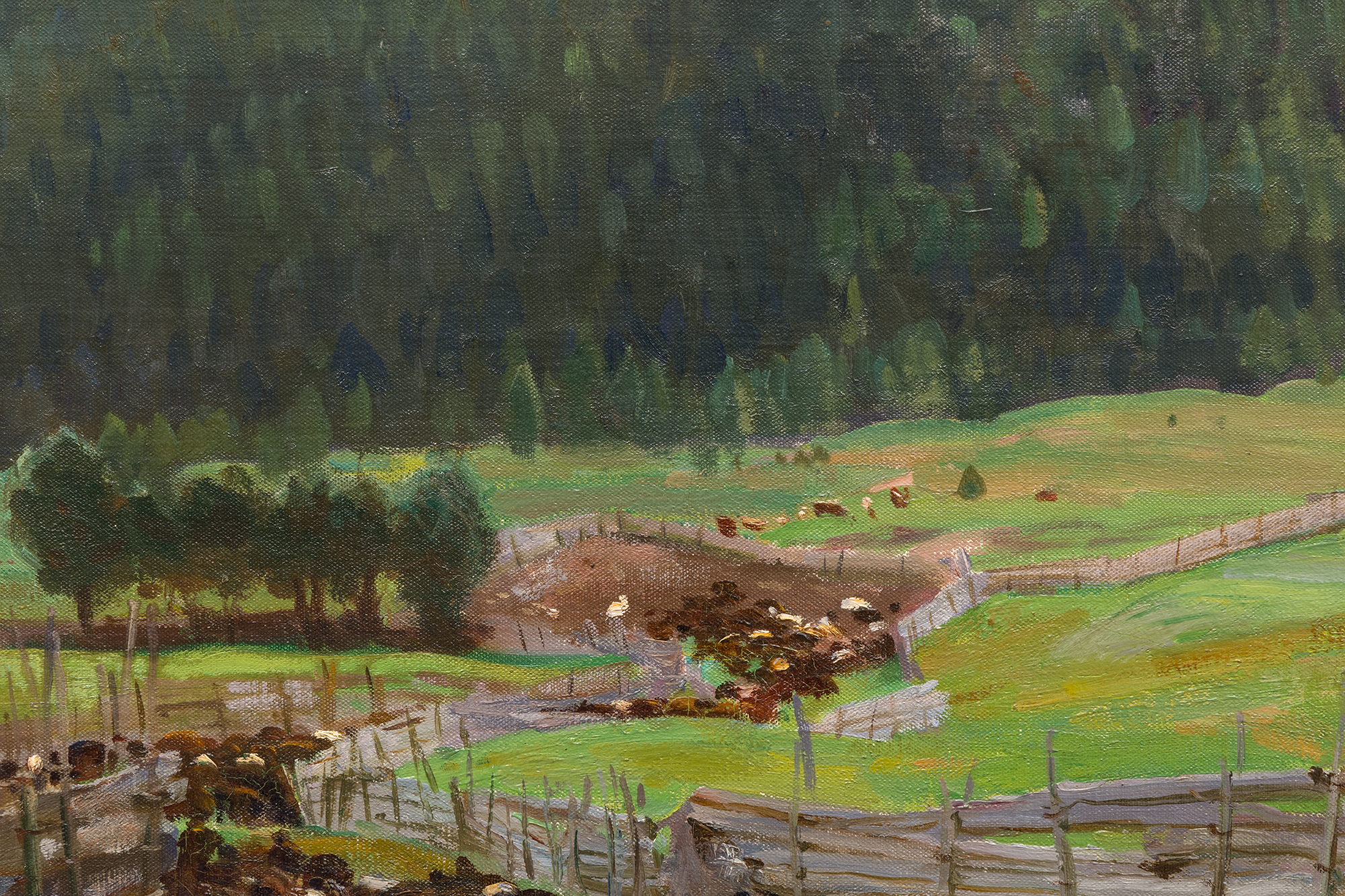
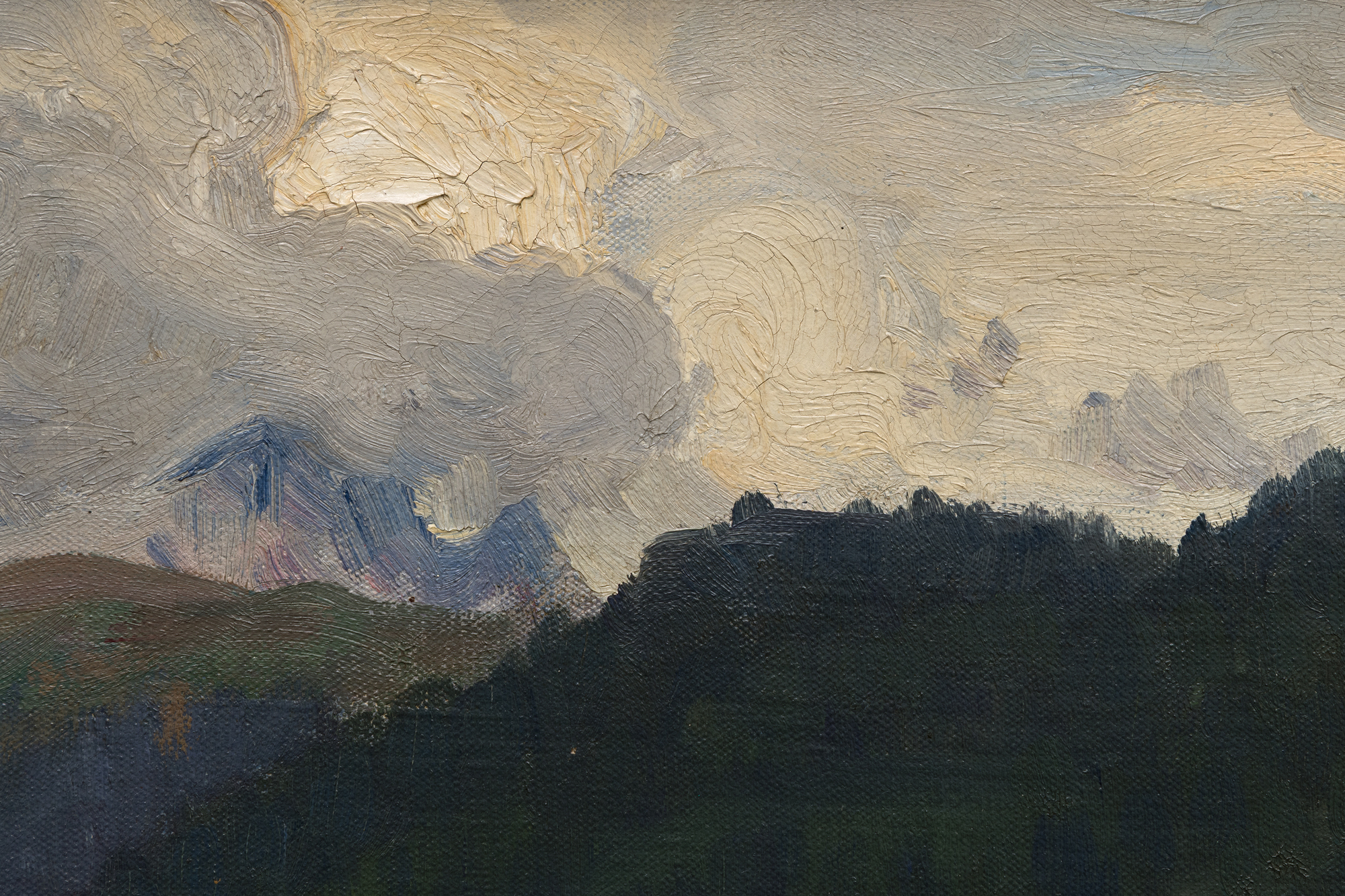
这幅作品创作于1914年夏季,当时约翰·辛格·萨金特正在奥地利蒂罗尔地区旅行。画面捕捉了历史的紧张时刻——同年七月奥地利向塞尔维亚宣战,使萨金特置身于第一次世界大战的临界点。 画作以羊圈为视角框取阿尔卑斯山景,山体主体被大幅裁切,呈现出令人惊叹的亲密视角与意外构图。这种视角选择将观者视线引向山谷与坡地的交汇处:浓郁的翠绿色调稳固画面基调,阴云密布的天空则在宁静田园前景之外,隐约透出微妙的不安感。


该作品被收录于理查德·奥蒙德与伊莱恩·基尔默雷合编的《萨金特作品全集》,确证其在艺术家已知创作中的可靠地位。1914年萨金特旅居蒂罗尔期间创作了多幅相关油画与水彩作品,包括大都会艺术博物馆藏《蒂罗尔室内景》、芝加哥艺术学院藏《蒂罗尔栈木棚》及德扬博物馆藏《蒂罗尔鳟鱼溪》。 这些作品共同展现了萨金特在这一关键年份对该地区独特光影、氛围及乡村建筑的持续关注。


本画作传承显赫,曾为美国实业家、弗里克收藏馆创始人亨利·克莱·弗里克所藏,后赠予其友人兼律师路易斯·卡斯·莱迪亚德——此人亦曾担任摩根大通的法律顾问。 萨金特成熟期蒂罗尔题材作品本就稀少,而同类作品流入市场的数量更是寥寥无几——近几十年来仅有一幅同期相关画作《蒂罗尔十字架》(1915年)现身拍卖会。


萨金特作品持续获得重要机构认可,包括2025至2026年奥赛博物馆即将举办的"萨金特:惊艳巴黎"特展,这再次印证了其成熟期欧洲风景画在二十世纪早期艺术宏大叙事中的持续影响力。
询问