返回

PAUL SIGNAC (1863-1935)

$3,750,000

 
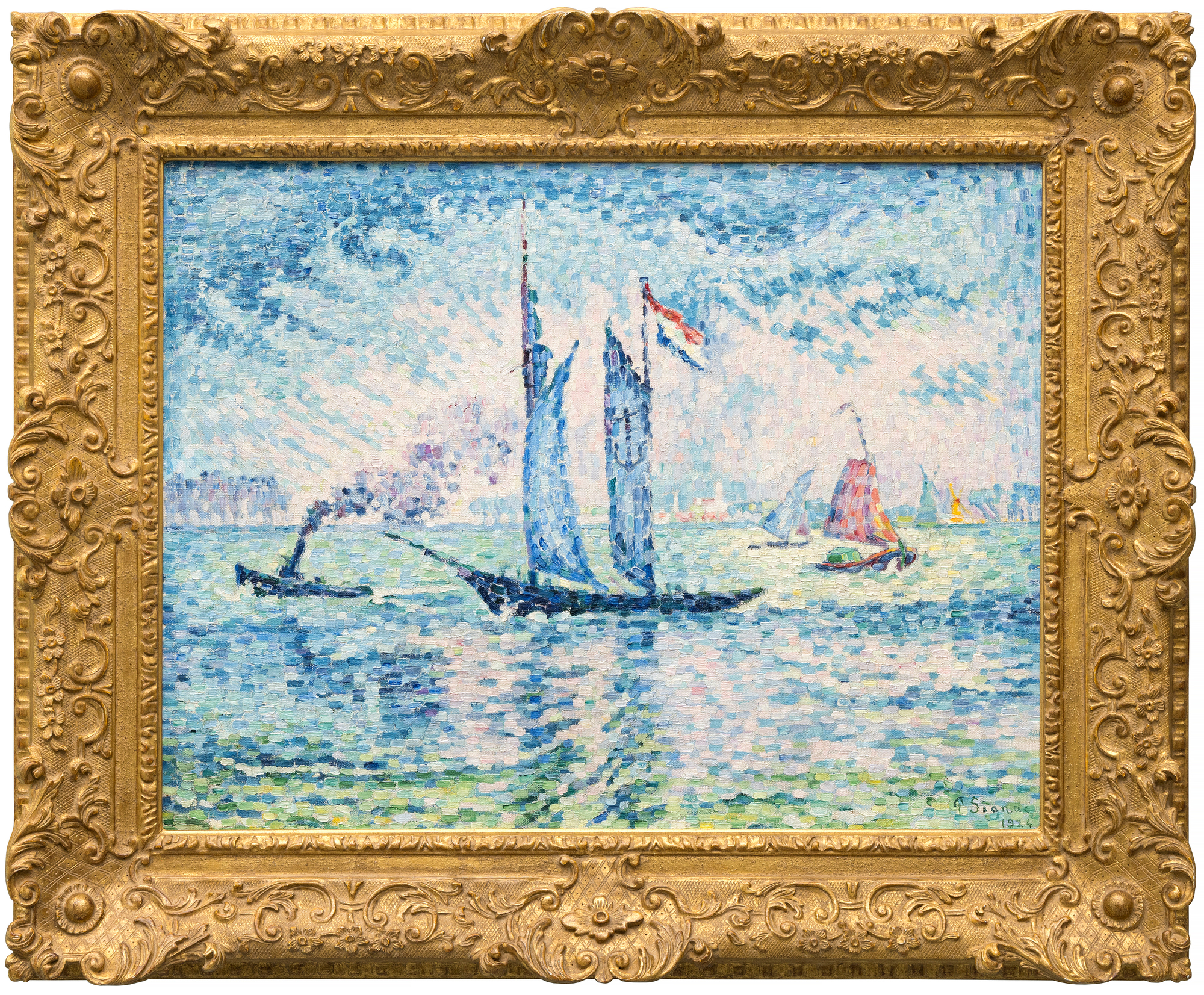
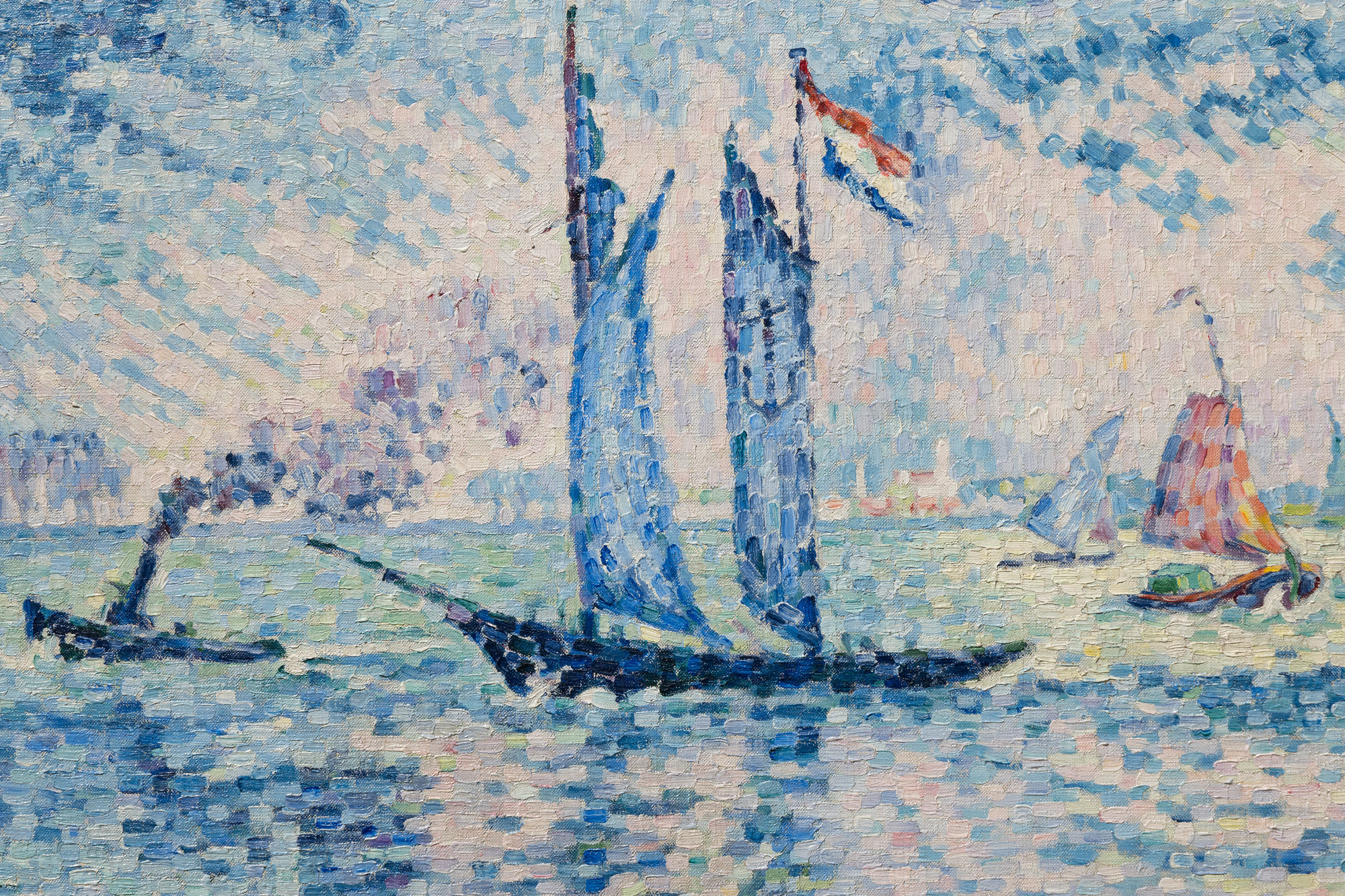
<div>Paul Signac’s "Pilote de la Meuse" (1924) is a refined late masterpiece that unites his devotion to color theory with his lifelong love of sailing. The composition is rigorously constructed around a highly structured framework of verticals and horizontals—the horizon line, the river’s surface, and the upright masts establish a sense of order and clarity. This geometry is gently softened by subtle diagonals: the angled masts, the slanted smokestack of a distant tugboat, and the wind-filled sails introduce movement and visual counterpoint without disrupting the overall balance.</div><br><br><div> </div><br><br><div>Executed in predominantly blue and green tones, the painting exemplifies Signac’s evolved Neo-Impressionist technique. While he and Georges Seurat pioneered pointillism as a scientific, color-theory-driven alternative to Impressionism, Signac’s later works from the 1910s and 1920s mark a decisive shift. Here, the earlier tight dots give way to broader, rectangular “mosaic strokes,” allowing color to carry greater physical presence and expressive freedom. The water in the foreground becomes a vibrant checkerboard of shifting hues, conveying turbulent weather, moving light, and wind-driven currents.</div><br><br><div> </div><br><br><div>A single prominent sailboat dominates the scene, accompanied by a few smaller vessels and the tugboat in the distance, whose swirling smoke animates the sky. This restrained yet dynamic marine subject reflects Signac’s deep personal connection to sailing—he owned 32 boats and traveled extensively by water.</div><br><br><div> </div><br><br><div>Similar maritime scenes from this mature period are held in major institutional collections, including the Minneapolis Institute of Art, The Metropolitan Museum of Art, and the Musée d’Orsay, underscoring the significance of this composition within Signac’s final artistic phase.</div><br><br><div> </div><br><br><div>The painting is accompanied by exceptional archival material: nine typed onion skins by Edmond Sussfeld; three autograph letters signed by Paul Signac; two autograph letters and the original invoice from the merchant Léon Marseille; and a certificate of authenticity from Mrs. Marina Ferretti-Bocquillon, providing outstanding historical context and provenance.</div> <div>Paul Signac’s "Pilote de la Meuse" (1924) is a refined late masterpiece that unites his devotion to color theory with his lifelong love of sailing. The composition is rigorously constructed around a highly structured framework of verticals and horizontals—the horizon line, the river’s surface, and the upright masts establish a sense of order and clarity. This geometry is gently softened by subtle diagonals: the angled masts, the slanted smokestack of a distant tugboat, and the wind-filled sails introduce movement and visual counterpoint without disrupting the overall balance.</div><br><br><div> </div><br><br><div>Executed in predominantly blue and green tones, the painting exemplifies Signac’s evolved Neo-Impressionist technique. While he and Georges Seurat pioneered pointillism as a scientific, color-theory-driven alternative to Impressionism, Signac’s later works from the 1910s and 1920s mark a decisive shift. Here, the earlier tight dots give way to broader, rectangular “mosaic strokes,” allowing color to carry greater physical presence and expressive freedom. The water in the foreground becomes a vibrant checkerboard of shifting hues, conveying turbulent weather, moving light, and wind-driven currents.</div><br><br><div> </div><br><br><div>A single prominent sailboat dominates the scene, accompanied by a few smaller vessels and the tugboat in the distance, whose swirling smoke animates the sky. This restrained yet dynamic marine subject reflects Signac’s deep personal connection to sailing—he owned 32 boats and traveled extensively by water.</div><br><br><div> </div><br><br><div>Similar maritime scenes from this mature period are held in major institutional collections, including the Minneapolis Institute of Art, The Metropolitan Museum of Art, and the Musée d’Orsay, underscoring the significance of this composition within Signac’s final artistic phase.</div><br><br><div> </div><br><br><div>The painting is accompanied by exceptional archival material: nine typed onion skins by Edmond Sussfeld; three autograph letters signed by Paul Signac; two autograph letters and the original invoice from the merchant Léon Marseille; and a certificate of authenticity from Mrs. Marina Ferretti-Bocquillon, providing outstanding historical context and provenance.</div> <div>Paul Signac’s "Pilote de la Meuse" (1924) is a refined late masterpiece that unites his devotion to color theory with his lifelong love of sailing. The composition is rigorously constructed around a highly structured framework of verticals and horizontals—the horizon line, the river’s surface, and the upright masts establish a sense of order and clarity. This geometry is gently softened by subtle diagonals: the angled masts, the slanted smokestack of a distant tugboat, and the wind-filled sails introduce movement and visual counterpoint without disrupting the overall balance.</div><br><br><div> </div><br><br><div>Executed in predominantly blue and green tones, the painting exemplifies Signac’s evolved Neo-Impressionist technique. While he and Georges Seurat pioneered pointillism as a scientific, color-theory-driven alternative to Impressionism, Signac’s later works from the 1910s and 1920s mark a decisive shift. Here, the earlier tight dots give way to broader, rectangular “mosaic strokes,” allowing color to carry greater physical presence and expressive freedom. The water in the foreground becomes a vibrant checkerboard of shifting hues, conveying turbulent weather, moving light, and wind-driven currents.</div><br><br><div> </div><br><br><div>A single prominent sailboat dominates the scene, accompanied by a few smaller vessels and the tugboat in the distance, whose swirling smoke animates the sky. This restrained yet dynamic marine subject reflects Signac’s deep personal connection to sailing—he owned 32 boats and traveled extensively by water.</div><br><br><div> </div><br><br><div>Similar maritime scenes from this mature period are held in major institutional collections, including the Minneapolis Institute of Art, The Metropolitan Museum of Art, and the Musée d’Orsay, underscoring the significance of this composition within Signac’s final artistic phase.</div><br><br><div> </div><br><br><div>The painting is accompanied by exceptional archival material: nine typed onion skins by Edmond Sussfeld; three autograph letters signed by Paul Signac; two autograph letters and the original invoice from the merchant Léon Marseille; and a certificate of authenticity from Mrs. Marina Ferretti-Bocquillon, providing outstanding historical context and provenance.</div> <div>Paul Signac’s "Pilote de la Meuse" (1924) is a refined late masterpiece that unites his devotion to color theory with his lifelong love of sailing. The composition is rigorously constructed around a highly structured framework of verticals and horizontals—the horizon line, the river’s surface, and the upright masts establish a sense of order and clarity. This geometry is gently softened by subtle diagonals: the angled masts, the slanted smokestack of a distant tugboat, and the wind-filled sails introduce movement and visual counterpoint without disrupting the overall balance.</div><br><br><div> </div><br><br><div>Executed in predominantly blue and green tones, the painting exemplifies Signac’s evolved Neo-Impressionist technique. While he and Georges Seurat pioneered pointillism as a scientific, color-theory-driven alternative to Impressionism, Signac’s later works from the 1910s and 1920s mark a decisive shift. Here, the earlier tight dots give way to broader, rectangular “mosaic strokes,” allowing color to carry greater physical presence and expressive freedom. The water in the foreground becomes a vibrant checkerboard of shifting hues, conveying turbulent weather, moving light, and wind-driven currents.</div><br><br><div> </div><br><br><div>A single prominent sailboat dominates the scene, accompanied by a few smaller vessels and the tugboat in the distance, whose swirling smoke animates the sky. This restrained yet dynamic marine subject reflects Signac’s deep personal connection to sailing—he owned 32 boats and traveled extensively by water.</div><br><br><div> </div><br><br><div>Similar maritime scenes from this mature period are held in major institutional collections, including the Minneapolis Institute of Art, The Metropolitan Museum of Art, and the Musée d’Orsay, underscoring the significance of this composition within Signac’s final artistic phase.</div><br><br><div> </div><br><br><div>The painting is accompanied by exceptional archival material: nine typed onion skins by Edmond Sussfeld; three autograph letters signed by Paul Signac; two autograph letters and the original invoice from the merchant Léon Marseille; and a certificate of authenticity from Mrs. Marina Ferretti-Bocquillon, providing outstanding historical context and provenance.</div> <div>Paul Signac’s "Pilote de la Meuse" (1924) is a refined late masterpiece that unites his devotion to color theory with his lifelong love of sailing. The composition is rigorously constructed around a highly structured framework of verticals and horizontals—the horizon line, the river’s surface, and the upright masts establish a sense of order and clarity. This geometry is gently softened by subtle diagonals: the angled masts, the slanted smokestack of a distant tugboat, and the wind-filled sails introduce movement and visual counterpoint without disrupting the overall balance.</div><br><br><div> </div><br><br><div>Executed in predominantly blue and green tones, the painting exemplifies Signac’s evolved Neo-Impressionist technique. While he and Georges Seurat pioneered pointillism as a scientific, color-theory-driven alternative to Impressionism, Signac’s later works from the 1910s and 1920s mark a decisive shift. Here, the earlier tight dots give way to broader, rectangular “mosaic strokes,” allowing color to carry greater physical presence and expressive freedom. The water in the foreground becomes a vibrant checkerboard of shifting hues, conveying turbulent weather, moving light, and wind-driven currents.</div><br><br><div> </div><br><br><div>A single prominent sailboat dominates the scene, accompanied by a few smaller vessels and the tugboat in the distance, whose swirling smoke animates the sky. This restrained yet dynamic marine subject reflects Signac’s deep personal connection to sailing—he owned 32 boats and traveled extensively by water.</div><br><br><div> </div><br><br><div>Similar maritime scenes from this mature period are held in major institutional collections, including the Minneapolis Institute of Art, The Metropolitan Museum of Art, and the Musée d’Orsay, underscoring the significance of this composition within Signac’s final artistic phase.</div><br><br><div> </div><br><br><div>The painting is accompanied by exceptional archival material: nine typed onion skins by Edmond Sussfeld; three autograph letters signed by Paul Signac; two autograph letters and the original invoice from the merchant Léon Marseille; and a certificate of authenticity from Mrs. Marina Ferretti-Bocquillon, providing outstanding historical context and provenance.</div> <div>Paul Signac’s "Pilote de la Meuse" (1924) is a refined late masterpiece that unites his devotion to color theory with his lifelong love of sailing. The composition is rigorously constructed around a highly structured framework of verticals and horizontals—the horizon line, the river’s surface, and the upright masts establish a sense of order and clarity. This geometry is gently softened by subtle diagonals: the angled masts, the slanted smokestack of a distant tugboat, and the wind-filled sails introduce movement and visual counterpoint without disrupting the overall balance.</div><br><br><div> </div><br><br><div>Executed in predominantly blue and green tones, the painting exemplifies Signac’s evolved Neo-Impressionist technique. While he and Georges Seurat pioneered pointillism as a scientific, color-theory-driven alternative to Impressionism, Signac’s later works from the 1910s and 1920s mark a decisive shift. Here, the earlier tight dots give way to broader, rectangular “mosaic strokes,” allowing color to carry greater physical presence and expressive freedom. The water in the foreground becomes a vibrant checkerboard of shifting hues, conveying turbulent weather, moving light, and wind-driven currents.</div><br><br><div> </div><br><br><div>A single prominent sailboat dominates the scene, accompanied by a few smaller vessels and the tugboat in the distance, whose swirling smoke animates the sky. This restrained yet dynamic marine subject reflects Signac’s deep personal connection to sailing—he owned 32 boats and traveled extensively by water.</div><br><br><div> </div><br><br><div>Similar maritime scenes from this mature period are held in major institutional collections, including the Minneapolis Institute of Art, The Metropolitan Museum of Art, and the Musée d’Orsay, underscoring the significance of this composition within Signac’s final artistic phase.</div><br><br><div> </div><br><br><div>The painting is accompanied by exceptional archival material: nine typed onion skins by Edmond Sussfeld; three autograph letters signed by Paul Signac; two autograph letters and the original invoice from the merchant Léon Marseille; and a certificate of authenticity from Mrs. Marina Ferretti-Bocquillon, providing outstanding historical context and provenance.</div> <div>Paul Signac’s "Pilote de la Meuse" (1924) is a refined late masterpiece that unites his devotion to color theory with his lifelong love of sailing. The composition is rigorously constructed around a highly structured framework of verticals and horizontals—the horizon line, the river’s surface, and the upright masts establish a sense of order and clarity. This geometry is gently softened by subtle diagonals: the angled masts, the slanted smokestack of a distant tugboat, and the wind-filled sails introduce movement and visual counterpoint without disrupting the overall balance.</div><br><br><div> </div><br><br><div>Executed in predominantly blue and green tones, the painting exemplifies Signac’s evolved Neo-Impressionist technique. While he and Georges Seurat pioneered pointillism as a scientific, color-theory-driven alternative to Impressionism, Signac’s later works from the 1910s and 1920s mark a decisive shift. Here, the earlier tight dots give way to broader, rectangular “mosaic strokes,” allowing color to carry greater physical presence and expressive freedom. The water in the foreground becomes a vibrant checkerboard of shifting hues, conveying turbulent weather, moving light, and wind-driven currents.</div><br><br><div> </div><br><br><div>A single prominent sailboat dominates the scene, accompanied by a few smaller vessels and the tugboat in the distance, whose swirling smoke animates the sky. This restrained yet dynamic marine subject reflects Signac’s deep personal connection to sailing—he owned 32 boats and traveled extensively by water.</div><br><br><div> </div><br><br><div>Similar maritime scenes from this mature period are held in major institutional collections, including the Minneapolis Institute of Art, The Metropolitan Museum of Art, and the Musée d’Orsay, underscoring the significance of this composition within Signac’s final artistic phase.</div><br><br><div> </div><br><br><div>The painting is accompanied by exceptional archival material: nine typed onion skins by Edmond Sussfeld; three autograph letters signed by Paul Signac; two autograph letters and the original invoice from the merchant Léon Marseille; and a certificate of authenticity from Mrs. Marina Ferretti-Bocquillon, providing outstanding historical context and provenance.</div>
默兹河飞行员192419 3/4 x 25 1/2 英寸(50.17 x 64.77 厘米) 布面油画
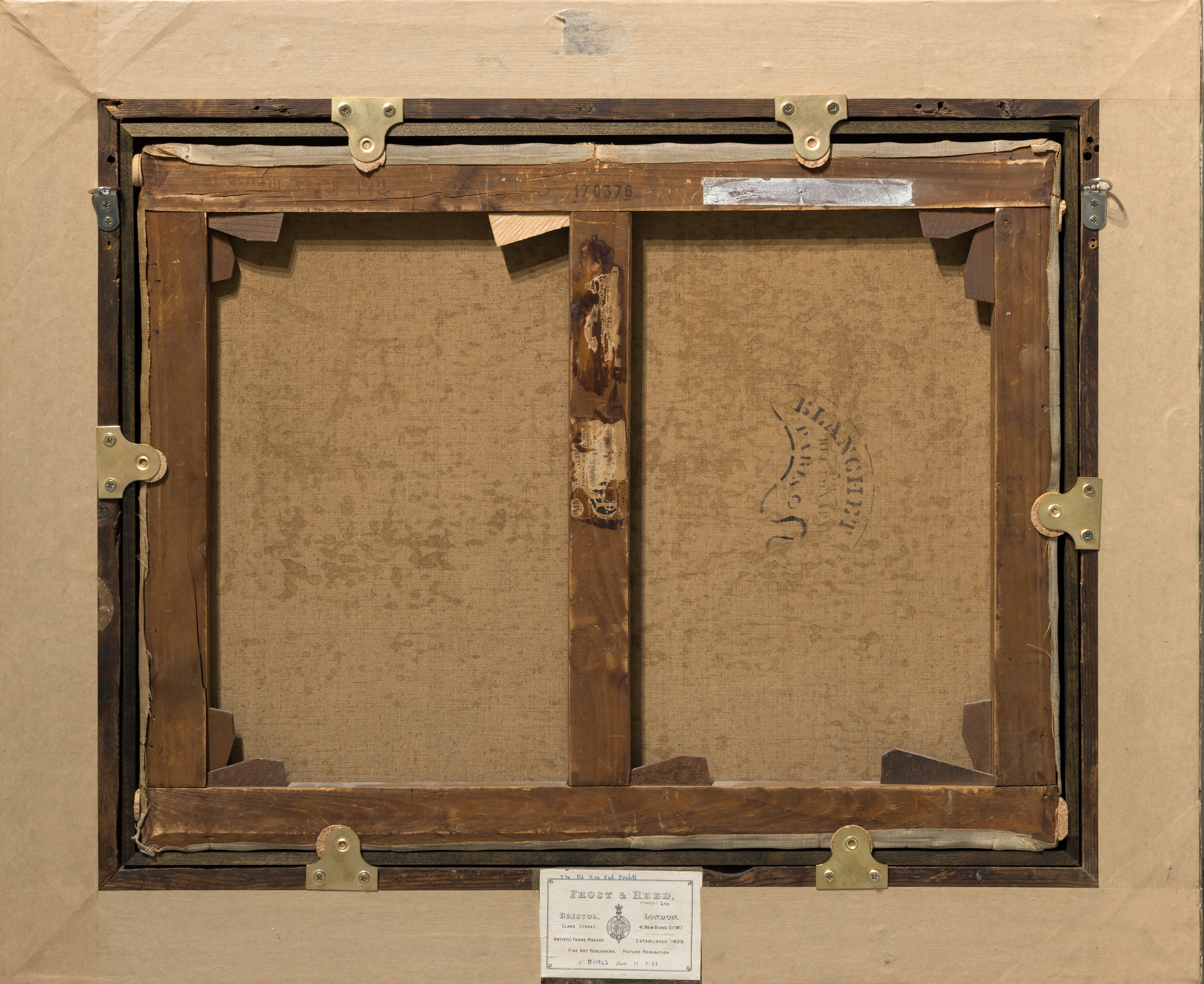
种源
巴黎马赛画廊
埃德蒙·苏斯菲尔德收藏
私人收藏,由上述藏家传承
欧洲私人收藏
巴黎德鲁奥拍卖行估价,2022年11月18日,拍品编号00003(埃德蒙·苏斯菲尔德收藏)
伦敦私人收藏,购自上述拍卖会
展会信息
巴黎,伯恩海姆-琼画廊,保罗·西涅克展,1930年5月19日至30日,编号40
巴黎,小皇宫,保罗·西涅克展,1934年,编号35
维罗弗莱,柯罗纪念沙龙第十三届展览,1965年
文学
伯恩海姆-让画廊,保罗·西涅克作品展,5月19日星期一至...更。。。 1930年5月30日,星期五,《巴黎画报》,1930年,第40期(附图)
弗朗索瓦丝·卡尚,《西尼亚克:绘画作品全集》,巴黎,2000年,编号565,第323页(附图)
...少。。。
保罗·西涅克的《默兹河上的船长》(1924)是其晚年精炼的杰作,将他对色彩理论的执着与毕生对航海的热爱融为一体。 画面构图严谨,以高度结构化的垂直与水平线条为骨架——地平线、河面与竖立的桅杆共同营造出秩序与明晰感。微妙的斜线则柔化了这种几何张力:倾斜的桅杆、远方拖船的倾斜烟囱以及鼓起的风帆,在引入动态与视觉对比的同时,完美保持了整体平衡。


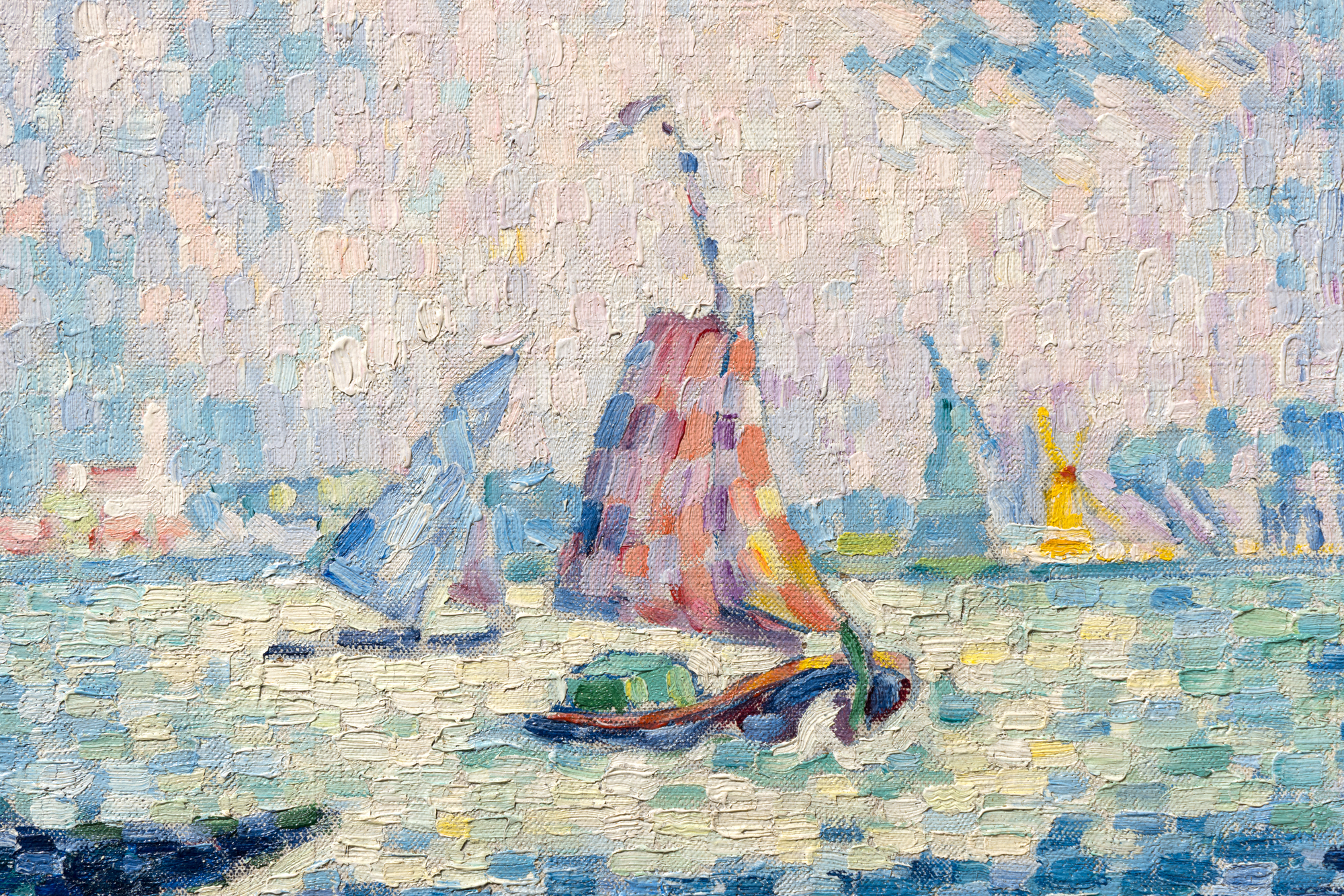
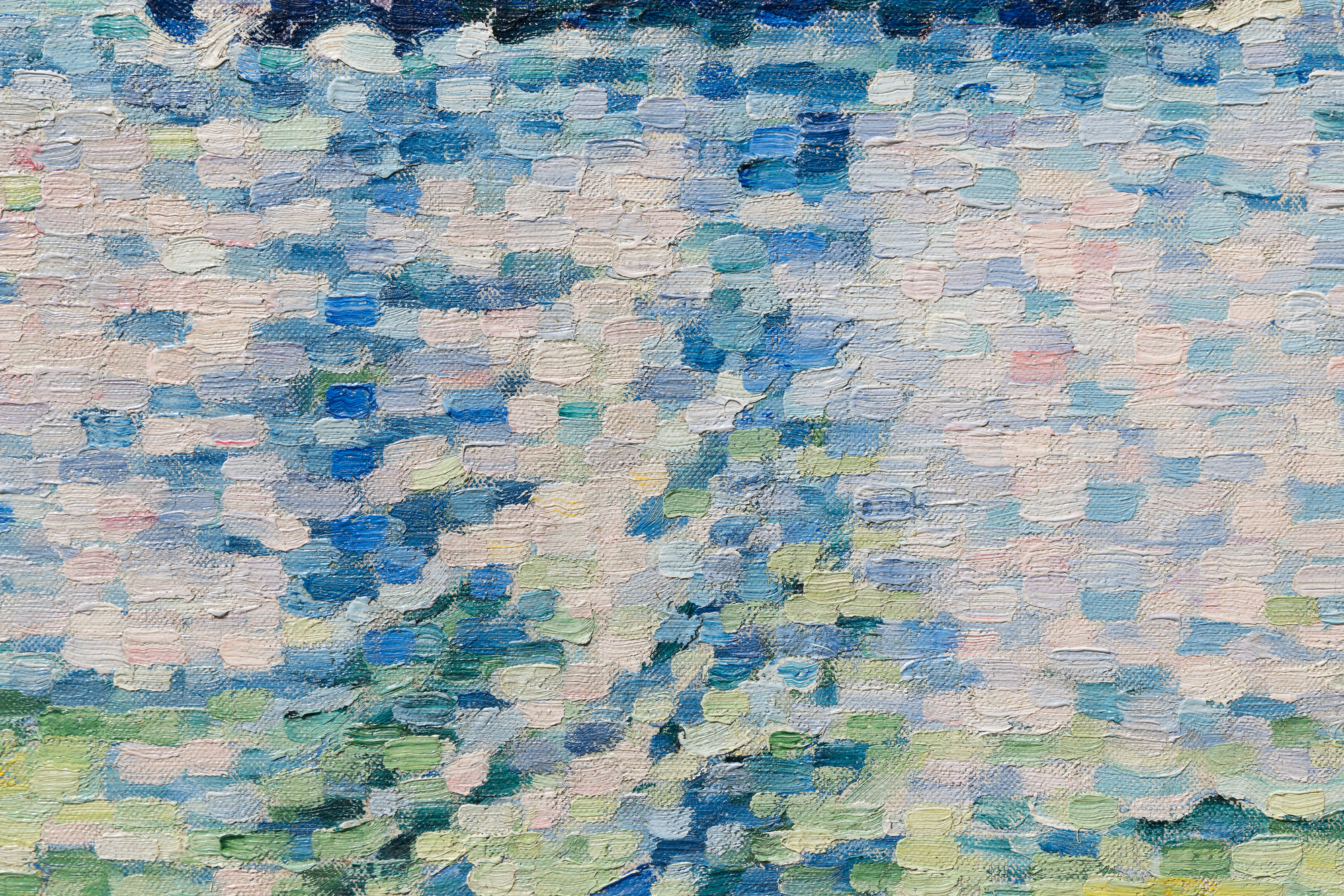
画作以蓝绿调为主色,彰显了西涅克新印象派技法的演进。尽管他与乔治·修拉曾以科学色彩理论为基础开创点彩派作为印象派的替代形式,但西涅克1910至1920年代的后期作品标志着决定性的转变。 此处,早期的紧密点状笔触让位于更宽阔的矩形"马赛克笔触",使色彩获得更强烈的实体感与表现自由。前景中的水面化作变幻莫测的色调棋盘,传递出汹涌的天气、流动的光影与风驱的洋流。


一艘醒目的帆船主宰画面,几艘小船相伴,远处的拖船袅袅烟雾为天空增添生机。 这幅克制而充满动感的海洋题材作品,折射出西涅克与航海的深厚渊源——他生前拥有32艘船只,并以水路进行广泛旅行。


其成熟期创作的同类海景画作被明尼阿波利斯艺术博物馆、大都会艺术博物馆及奥赛博物馆等重要机构收藏,彰显了此作在西涅克艺术生涯终期的非凡地位。


本画作附有珍贵档案资料:埃德蒙·苏斯菲尔德撰写的九份洋葱皮纸打字稿;保罗·西涅克亲笔签名的三封信函;商人莱昂·马赛尔的两封亲笔信及原始发票;以及玛丽娜·费雷蒂-博基永夫人出具的真迹认证书,共同构筑了无可比拟的历史脉络与传承谱系。
询问