العودة

كلود [مونيه] (1840-1926)

$7,500,000

 
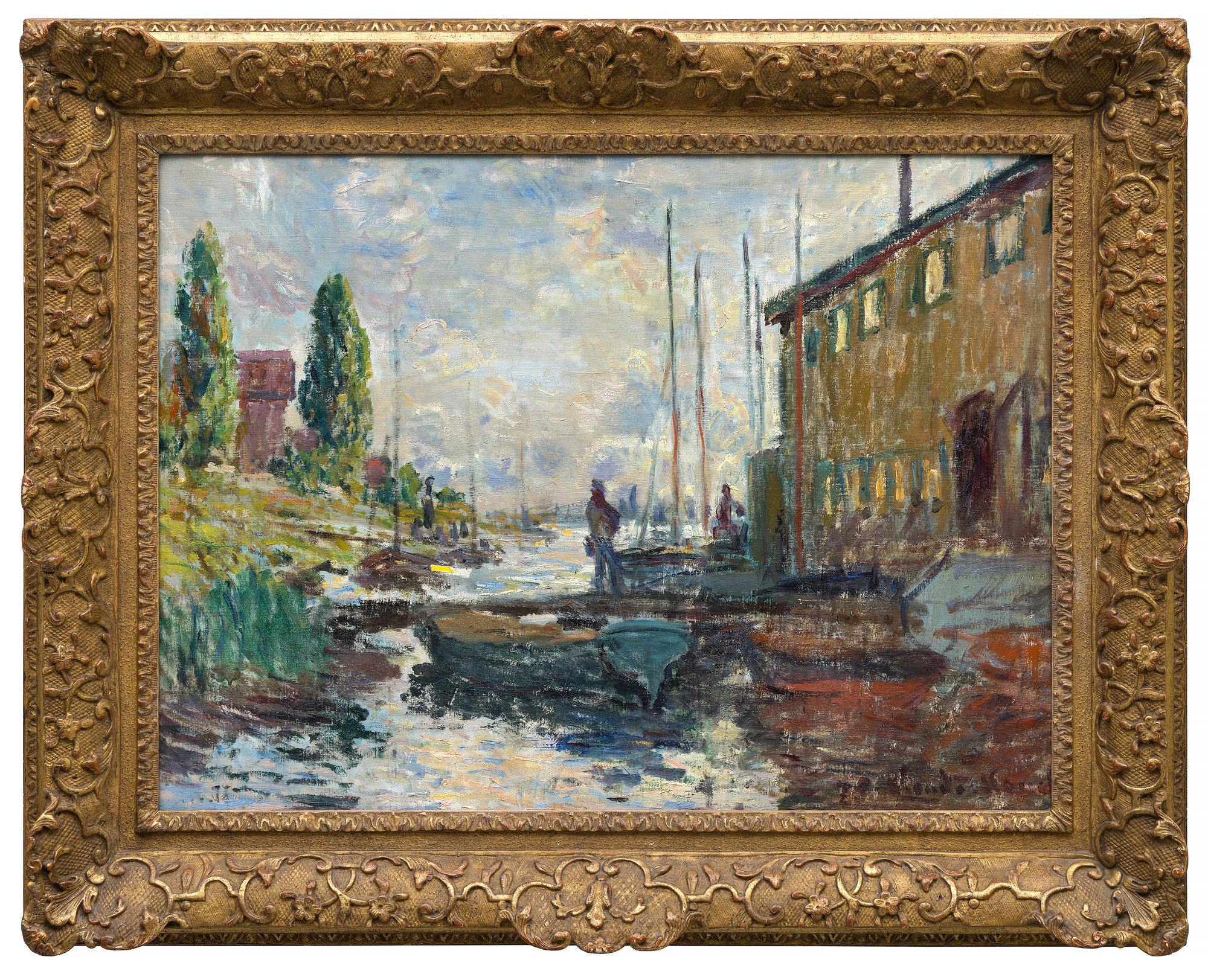
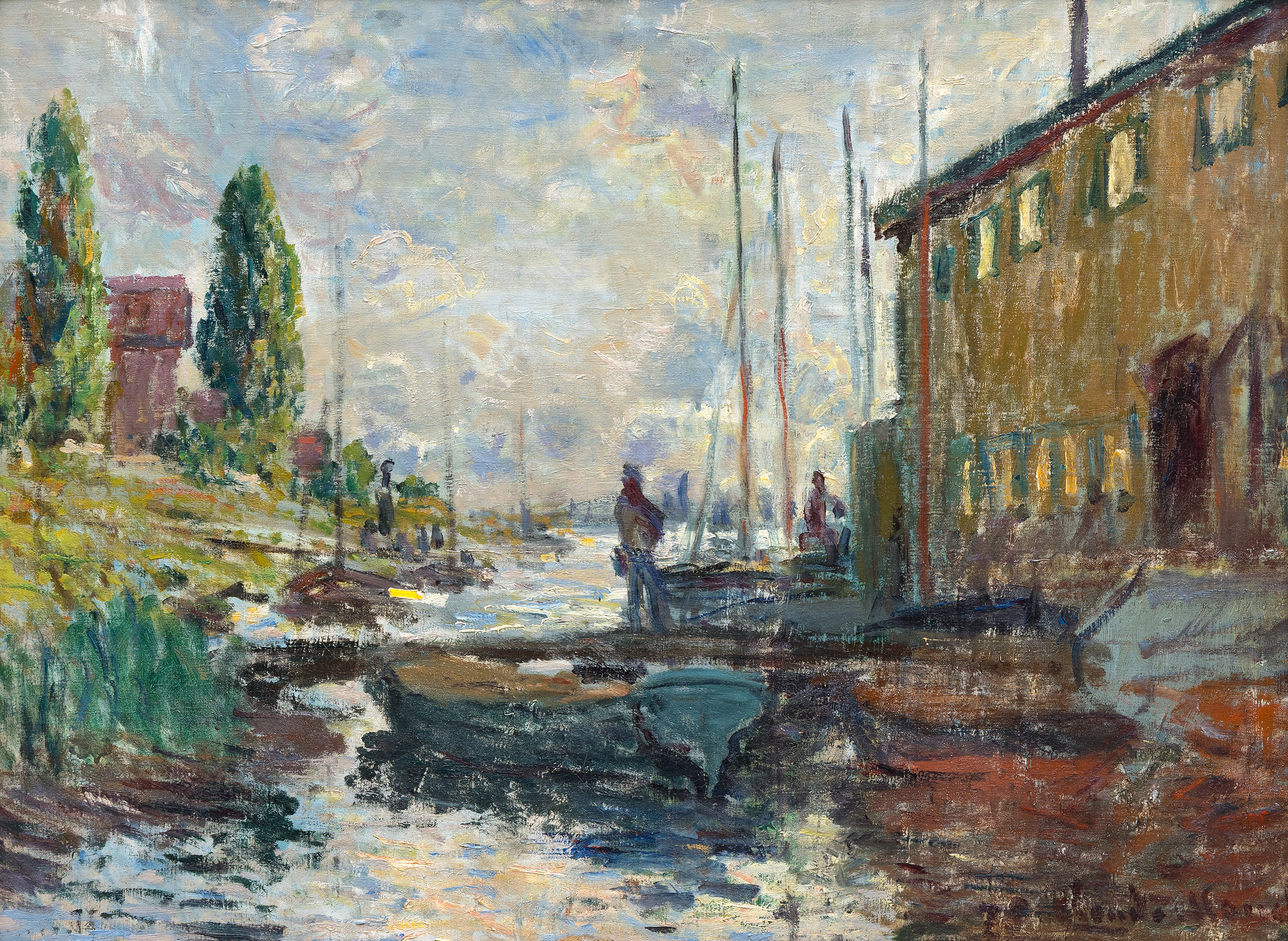
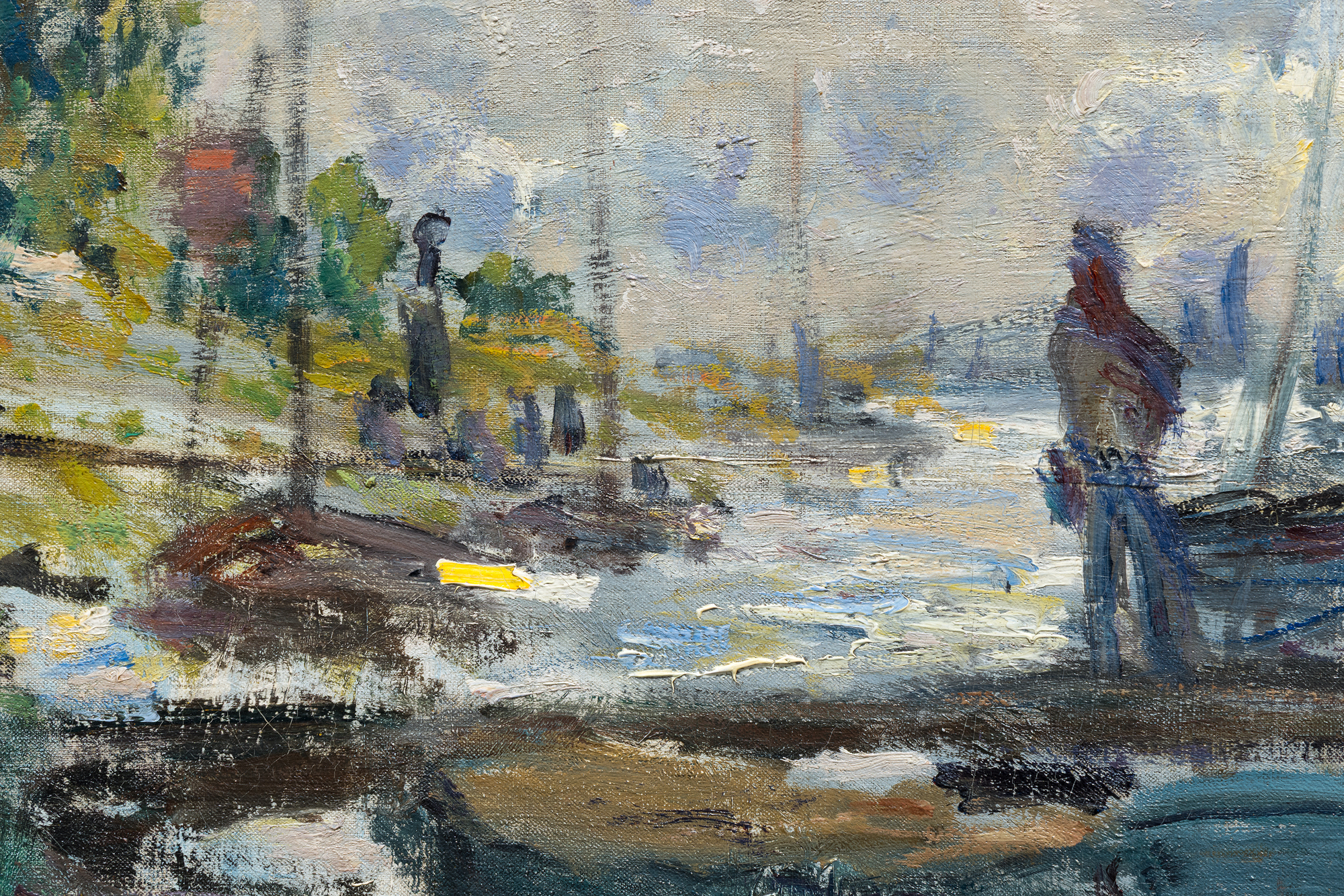
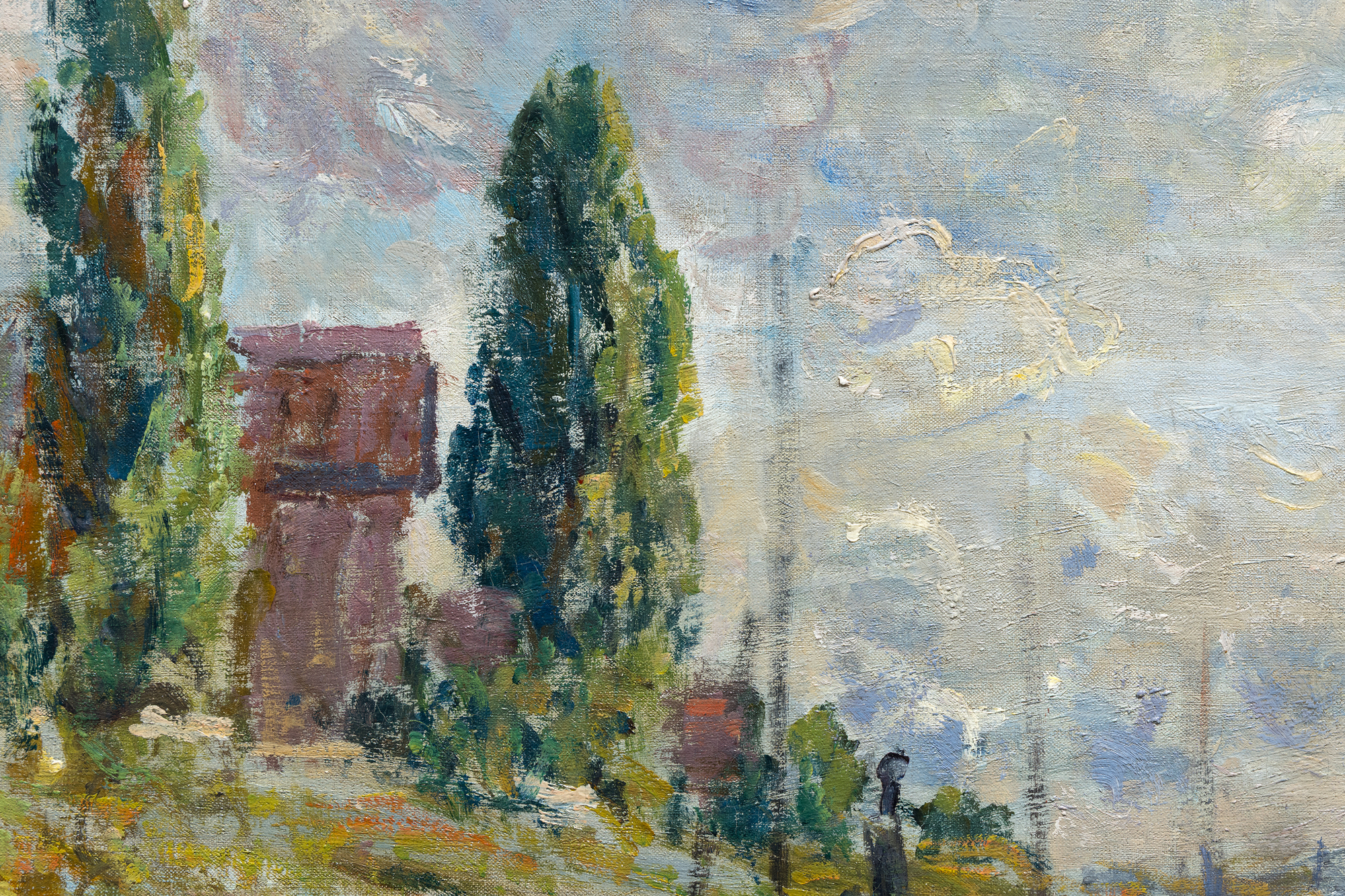
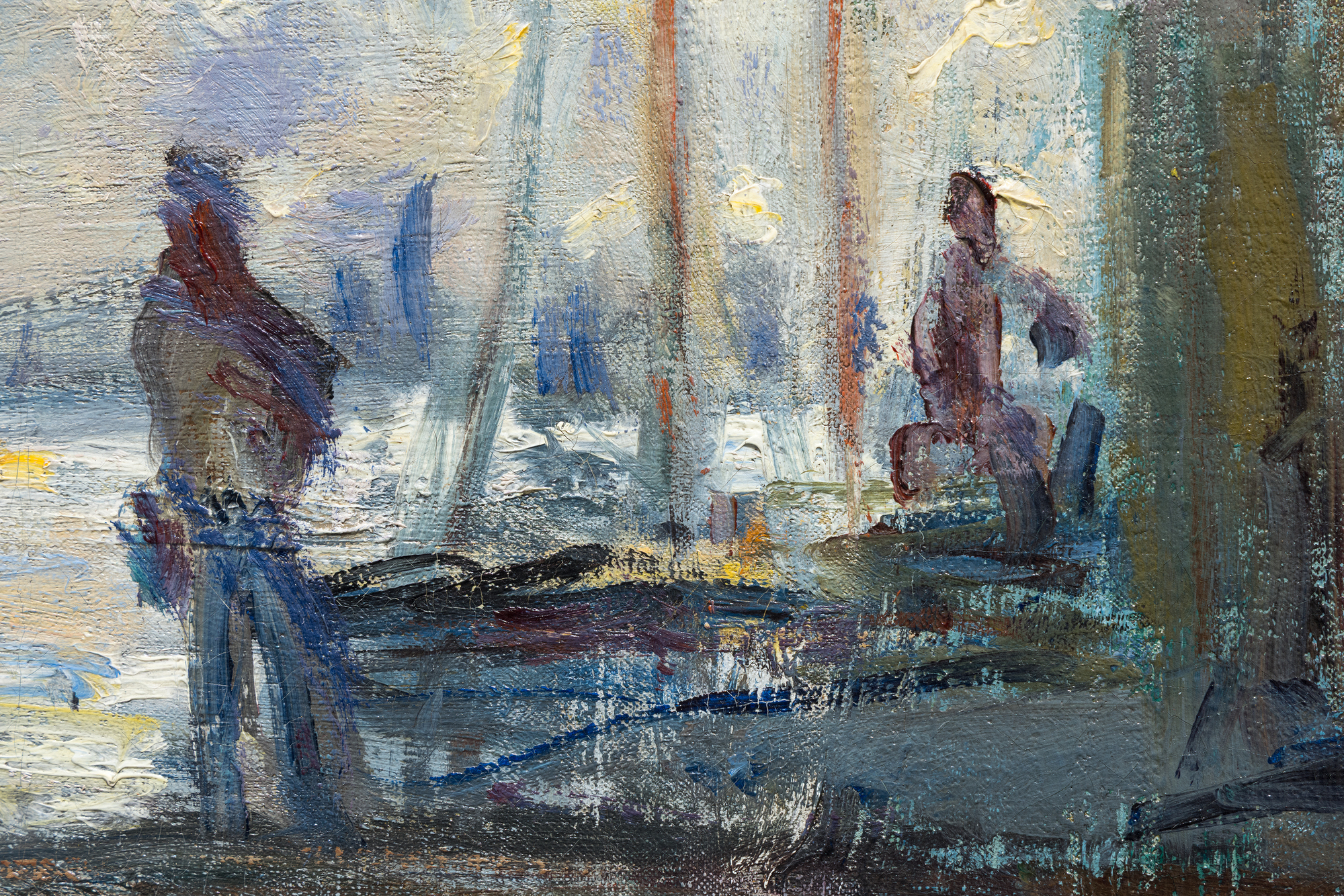
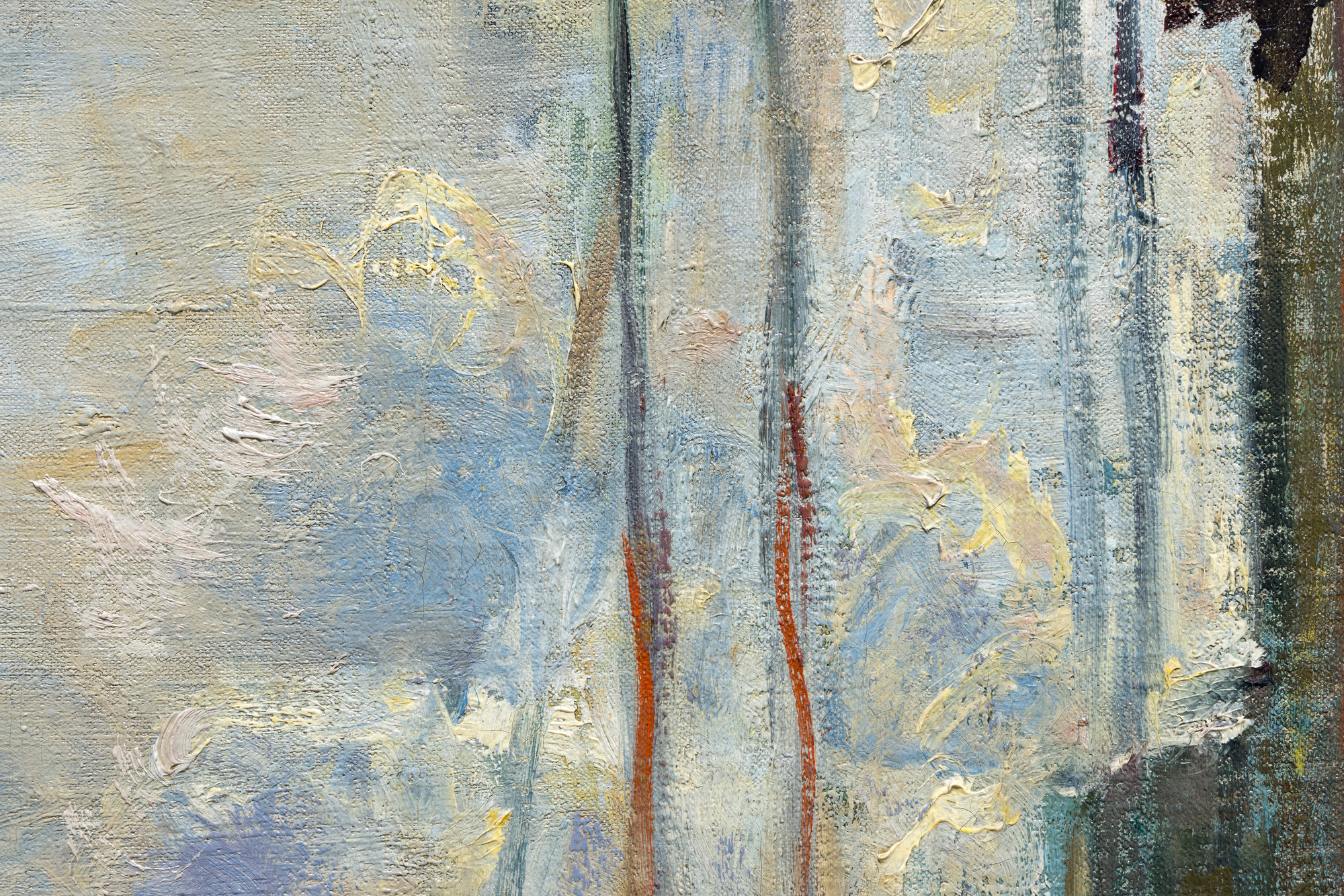
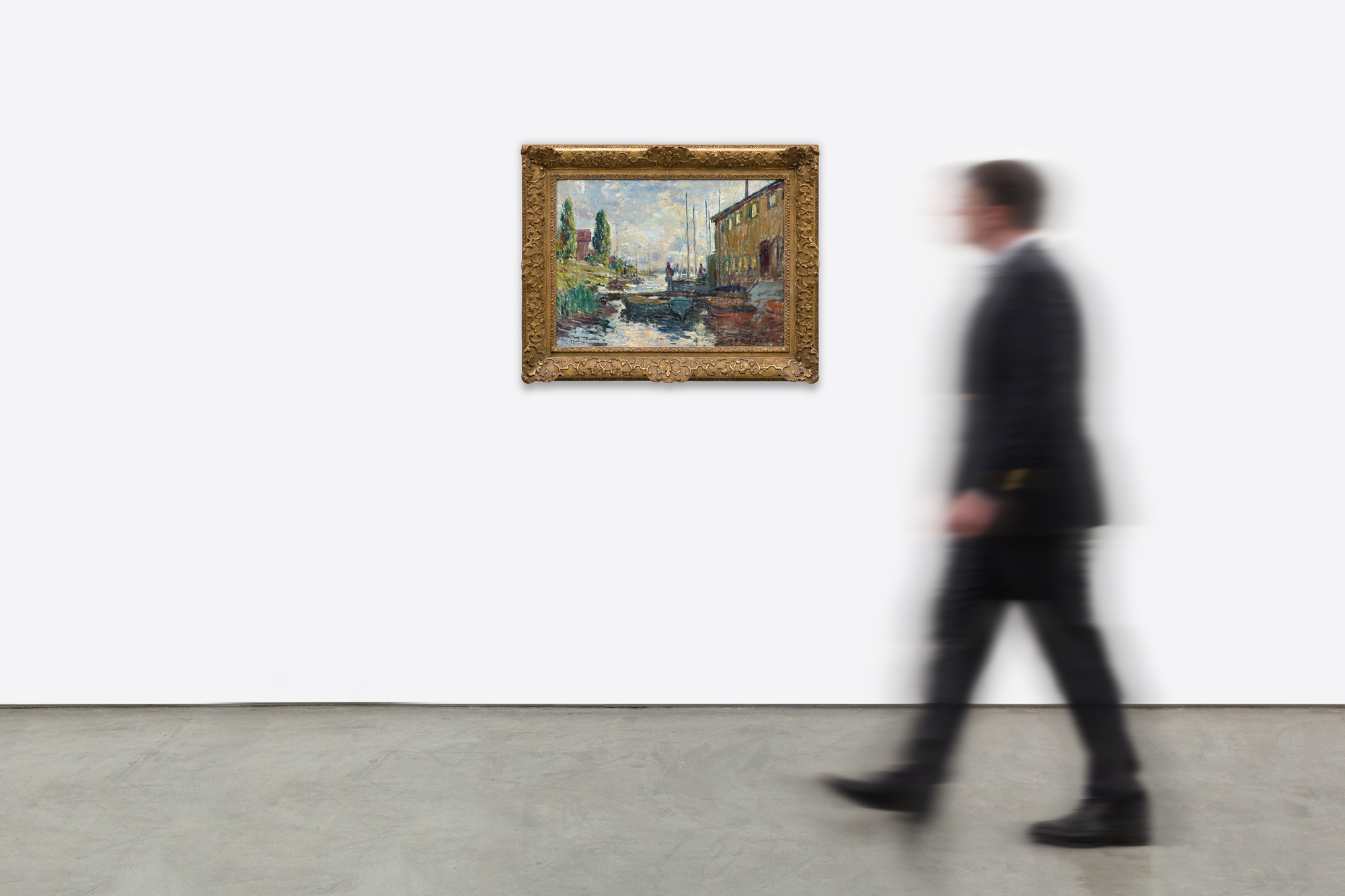
<div>Claude Monet’s <em>Le bassin d’Argenteuil</em> (1875) is a luminous example from one of the most pivotal periods of his career, painted in the late spring or summer of 1875, just one year after the groundbreaking first Impressionist exhibition. Set along the Seine at Argenteuil, the composition captures a quiet basin animated by small boats, figures, and reflections, rendered with loose, expressive brushwork that conveys the fleeting effects of light and atmosphere. The gentle diffusion of water and sky creates a shimmering surface, perfectly suited to Monet’s plein air practice and his desire to record perception in the moment. </div><br><br><div> </div><br><br><div>Argenteuil was central to the crystallization of Impressionism, marking a time when its ideas, subject matter, and collaborative spirit fully coalesced. Between 1871 and 1878, Monet’s presence there drew fellow artists including Renoir, Manet, Sisley, and Caillebotte, fostering an environment of shared experimentation and innovation. </div><br><br><div> </div><br><br><div>The painting’s early provenance further enhances its significance. It was owned by Oscar A. H. Schmitz, the German writer and intellectual known for his writings on Jungian psychology and his discerning collection of 19th-century art. Following Schmitz’s unexpected death in 1933, the collection was sent to the Kunstmuseum Basel. In 1936, the art dealer Wildenstein & Co. took over 62 works from the collection and organized a major exhibition and sale in Paris and New York.<em> Le bassin d’Argenteuil</em> is included in the Daniel Wildenstein catalogue raisonné (1996), vol. II, p. 153, as no. 371, and is published in eight books. </div> <div>Claude Monet’s <em>Le bassin d’Argenteuil</em> (1875) is a luminous example from one of the most pivotal periods of his career, painted in the late spring or summer of 1875, just one year after the groundbreaking first Impressionist exhibition. Set along the Seine at Argenteuil, the composition captures a quiet basin animated by small boats, figures, and reflections, rendered with loose, expressive brushwork that conveys the fleeting effects of light and atmosphere. The gentle diffusion of water and sky creates a shimmering surface, perfectly suited to Monet’s plein air practice and his desire to record perception in the moment. </div><br><br><div> </div><br><br><div>Argenteuil was central to the crystallization of Impressionism, marking a time when its ideas, subject matter, and collaborative spirit fully coalesced. Between 1871 and 1878, Monet’s presence there drew fellow artists including Renoir, Manet, Sisley, and Caillebotte, fostering an environment of shared experimentation and innovation. </div><br><br><div> </div><br><br><div>The painting’s early provenance further enhances its significance. It was owned by Oscar A. H. Schmitz, the German writer and intellectual known for his writings on Jungian psychology and his discerning collection of 19th-century art. Following Schmitz’s unexpected death in 1933, the collection was sent to the Kunstmuseum Basel. In 1936, the art dealer Wildenstein & Co. took over 62 works from the collection and organized a major exhibition and sale in Paris and New York.<em> Le bassin d’Argenteuil</em> is included in the Daniel Wildenstein catalogue raisonné (1996), vol. II, p. 153, as no. 371, and is published in eight books. </div> <div>Claude Monet’s <em>Le bassin d’Argenteuil</em> (1875) is a luminous example from one of the most pivotal periods of his career, painted in the late spring or summer of 1875, just one year after the groundbreaking first Impressionist exhibition. Set along the Seine at Argenteuil, the composition captures a quiet basin animated by small boats, figures, and reflections, rendered with loose, expressive brushwork that conveys the fleeting effects of light and atmosphere. The gentle diffusion of water and sky creates a shimmering surface, perfectly suited to Monet’s plein air practice and his desire to record perception in the moment. </div><br><br><div> </div><br><br><div>Argenteuil was central to the crystallization of Impressionism, marking a time when its ideas, subject matter, and collaborative spirit fully coalesced. Between 1871 and 1878, Monet’s presence there drew fellow artists including Renoir, Manet, Sisley, and Caillebotte, fostering an environment of shared experimentation and innovation. </div><br><br><div> </div><br><br><div>The painting’s early provenance further enhances its significance. It was owned by Oscar A. H. Schmitz, the German writer and intellectual known for his writings on Jungian psychology and his discerning collection of 19th-century art. Following Schmitz’s unexpected death in 1933, the collection was sent to the Kunstmuseum Basel. In 1936, the art dealer Wildenstein & Co. took over 62 works from the collection and organized a major exhibition and sale in Paris and New York.<em> Le bassin d’Argenteuil</em> is included in the Daniel Wildenstein catalogue raisonné (1996), vol. II, p. 153, as no. 371, and is published in eight books. </div> <div>Claude Monet’s <em>Le bassin d’Argenteuil</em> (1875) is a luminous example from one of the most pivotal periods of his career, painted in the late spring or summer of 1875, just one year after the groundbreaking first Impressionist exhibition. Set along the Seine at Argenteuil, the composition captures a quiet basin animated by small boats, figures, and reflections, rendered with loose, expressive brushwork that conveys the fleeting effects of light and atmosphere. The gentle diffusion of water and sky creates a shimmering surface, perfectly suited to Monet’s plein air practice and his desire to record perception in the moment. </div><br><br><div> </div><br><br><div>Argenteuil was central to the crystallization of Impressionism, marking a time when its ideas, subject matter, and collaborative spirit fully coalesced. Between 1871 and 1878, Monet’s presence there drew fellow artists including Renoir, Manet, Sisley, and Caillebotte, fostering an environment of shared experimentation and innovation. </div><br><br><div> </div><br><br><div>The painting’s early provenance further enhances its significance. It was owned by Oscar A. H. Schmitz, the German writer and intellectual known for his writings on Jungian psychology and his discerning collection of 19th-century art. Following Schmitz’s unexpected death in 1933, the collection was sent to the Kunstmuseum Basel. In 1936, the art dealer Wildenstein & Co. took over 62 works from the collection and organized a major exhibition and sale in Paris and New York.<em> Le bassin d’Argenteuil</em> is included in the Daniel Wildenstein catalogue raisonné (1996), vol. II, p. 153, as no. 371, and is published in eight books. </div> <div>Claude Monet’s <em>Le bassin d’Argenteuil</em> (1875) is a luminous example from one of the most pivotal periods of his career, painted in the late spring or summer of 1875, just one year after the groundbreaking first Impressionist exhibition. Set along the Seine at Argenteuil, the composition captures a quiet basin animated by small boats, figures, and reflections, rendered with loose, expressive brushwork that conveys the fleeting effects of light and atmosphere. The gentle diffusion of water and sky creates a shimmering surface, perfectly suited to Monet’s plein air practice and his desire to record perception in the moment. </div><br><br><div> </div><br><br><div>Argenteuil was central to the crystallization of Impressionism, marking a time when its ideas, subject matter, and collaborative spirit fully coalesced. Between 1871 and 1878, Monet’s presence there drew fellow artists including Renoir, Manet, Sisley, and Caillebotte, fostering an environment of shared experimentation and innovation. </div><br><br><div> </div><br><br><div>The painting’s early provenance further enhances its significance. It was owned by Oscar A. H. Schmitz, the German writer and intellectual known for his writings on Jungian psychology and his discerning collection of 19th-century art. Following Schmitz’s unexpected death in 1933, the collection was sent to the Kunstmuseum Basel. In 1936, the art dealer Wildenstein & Co. took over 62 works from the collection and organized a major exhibition and sale in Paris and New York.<em> Le bassin d’Argenteuil</em> is included in the Daniel Wildenstein catalogue raisonné (1996), vol. II, p. 153, as no. 371, and is published in eight books. </div> <div>Claude Monet’s <em>Le bassin d’Argenteuil</em> (1875) is a luminous example from one of the most pivotal periods of his career, painted in the late spring or summer of 1875, just one year after the groundbreaking first Impressionist exhibition. Set along the Seine at Argenteuil, the composition captures a quiet basin animated by small boats, figures, and reflections, rendered with loose, expressive brushwork that conveys the fleeting effects of light and atmosphere. The gentle diffusion of water and sky creates a shimmering surface, perfectly suited to Monet’s plein air practice and his desire to record perception in the moment. </div><br><br><div> </div><br><br><div>Argenteuil was central to the crystallization of Impressionism, marking a time when its ideas, subject matter, and collaborative spirit fully coalesced. Between 1871 and 1878, Monet’s presence there drew fellow artists including Renoir, Manet, Sisley, and Caillebotte, fostering an environment of shared experimentation and innovation. </div><br><br><div> </div><br><br><div>The painting’s early provenance further enhances its significance. It was owned by Oscar A. H. Schmitz, the German writer and intellectual known for his writings on Jungian psychology and his discerning collection of 19th-century art. Following Schmitz’s unexpected death in 1933, the collection was sent to the Kunstmuseum Basel. In 1936, the art dealer Wildenstein & Co. took over 62 works from the collection and organized a major exhibition and sale in Paris and New York.<em> Le bassin d’Argenteuil</em> is included in the Daniel Wildenstein catalogue raisonné (1996), vol. II, p. 153, as no. 371, and is published in eight books. </div> <div>Claude Monet’s <em>Le bassin d’Argenteuil</em> (1875) is a luminous example from one of the most pivotal periods of his career, painted in the late spring or summer of 1875, just one year after the groundbreaking first Impressionist exhibition. Set along the Seine at Argenteuil, the composition captures a quiet basin animated by small boats, figures, and reflections, rendered with loose, expressive brushwork that conveys the fleeting effects of light and atmosphere. The gentle diffusion of water and sky creates a shimmering surface, perfectly suited to Monet’s plein air practice and his desire to record perception in the moment. </div><br><br><div> </div><br><br><div>Argenteuil was central to the crystallization of Impressionism, marking a time when its ideas, subject matter, and collaborative spirit fully coalesced. Between 1871 and 1878, Monet’s presence there drew fellow artists including Renoir, Manet, Sisley, and Caillebotte, fostering an environment of shared experimentation and innovation. </div><br><br><div> </div><br><br><div>The painting’s early provenance further enhances its significance. It was owned by Oscar A. H. Schmitz, the German writer and intellectual known for his writings on Jungian psychology and his discerning collection of 19th-century art. Following Schmitz’s unexpected death in 1933, the collection was sent to the Kunstmuseum Basel. In 1936, the art dealer Wildenstein & Co. took over 62 works from the collection and organized a major exhibition and sale in Paris and New York.<em> Le bassin d’Argenteuil</em> is included in the Daniel Wildenstein catalogue raisonné (1996), vol. II, p. 153, as no. 371, and is published in eight books. </div> <div>Claude Monet’s <em>Le bassin d’Argenteuil</em> (1875) is a luminous example from one of the most pivotal periods of his career, painted in the late spring or summer of 1875, just one year after the groundbreaking first Impressionist exhibition. Set along the Seine at Argenteuil, the composition captures a quiet basin animated by small boats, figures, and reflections, rendered with loose, expressive brushwork that conveys the fleeting effects of light and atmosphere. The gentle diffusion of water and sky creates a shimmering surface, perfectly suited to Monet’s plein air practice and his desire to record perception in the moment. </div><br><br><div> </div><br><br><div>Argenteuil was central to the crystallization of Impressionism, marking a time when its ideas, subject matter, and collaborative spirit fully coalesced. Between 1871 and 1878, Monet’s presence there drew fellow artists including Renoir, Manet, Sisley, and Caillebotte, fostering an environment of shared experimentation and innovation. </div><br><br><div> </div><br><br><div>The painting’s early provenance further enhances its significance. It was owned by Oscar A. H. Schmitz, the German writer and intellectual known for his writings on Jungian psychology and his discerning collection of 19th-century art. Following Schmitz’s unexpected death in 1933, the collection was sent to the Kunstmuseum Basel. In 1936, the art dealer Wildenstein & Co. took over 62 works from the collection and organized a major exhibition and sale in Paris and New York.<em> Le bassin d’Argenteuil</em> is included in the Daniel Wildenstein catalogue raisonné (1996), vol. II, p. 153, as no. 371, and is published in eight books. </div> <div>Claude Monet’s <em>Le bassin d’Argenteuil</em> (1875) is a luminous example from one of the most pivotal periods of his career, painted in the late spring or summer of 1875, just one year after the groundbreaking first Impressionist exhibition. Set along the Seine at Argenteuil, the composition captures a quiet basin animated by small boats, figures, and reflections, rendered with loose, expressive brushwork that conveys the fleeting effects of light and atmosphere. The gentle diffusion of water and sky creates a shimmering surface, perfectly suited to Monet’s plein air practice and his desire to record perception in the moment. </div><br><br><div> </div><br><br><div>Argenteuil was central to the crystallization of Impressionism, marking a time when its ideas, subject matter, and collaborative spirit fully coalesced. Between 1871 and 1878, Monet’s presence there drew fellow artists including Renoir, Manet, Sisley, and Caillebotte, fostering an environment of shared experimentation and innovation. </div><br><br><div> </div><br><br><div>The painting’s early provenance further enhances its significance. It was owned by Oscar A. H. Schmitz, the German writer and intellectual known for his writings on Jungian psychology and his discerning collection of 19th-century art. Following Schmitz’s unexpected death in 1933, the collection was sent to the Kunstmuseum Basel. In 1936, the art dealer Wildenstein & Co. took over 62 works from the collection and organized a major exhibition and sale in Paris and New York.<em> Le bassin d’Argenteuil</em> is included in the Daniel Wildenstein catalogue raisonné (1996), vol. II, p. 153, as no. 371, and is published in eight books. </div> <div>Claude Monet’s <em>Le bassin d’Argenteuil</em> (1875) is a luminous example from one of the most pivotal periods of his career, painted in the late spring or summer of 1875, just one year after the groundbreaking first Impressionist exhibition. Set along the Seine at Argenteuil, the composition captures a quiet basin animated by small boats, figures, and reflections, rendered with loose, expressive brushwork that conveys the fleeting effects of light and atmosphere. The gentle diffusion of water and sky creates a shimmering surface, perfectly suited to Monet’s plein air practice and his desire to record perception in the moment. </div><br><br><div> </div><br><br><div>Argenteuil was central to the crystallization of Impressionism, marking a time when its ideas, subject matter, and collaborative spirit fully coalesced. Between 1871 and 1878, Monet’s presence there drew fellow artists including Renoir, Manet, Sisley, and Caillebotte, fostering an environment of shared experimentation and innovation. </div><br><br><div> </div><br><br><div>The painting’s early provenance further enhances its significance. It was owned by Oscar A. H. Schmitz, the German writer and intellectual known for his writings on Jungian psychology and his discerning collection of 19th-century art. Following Schmitz’s unexpected death in 1933, the collection was sent to the Kunstmuseum Basel. In 1936, the art dealer Wildenstein & Co. took over 62 works from the collection and organized a major exhibition and sale in Paris and New York.<em> Le bassin d’Argenteuil</em> is included in the Daniel Wildenstein catalogue raisonné (1996), vol. II, p. 153, as no. 371, and is published in eight books. </div>
حوض أرجنتويل187521 3/4 × 29 1/4 بوصة(55.25 × 74.3 سم) زيت على قماش
الاصل
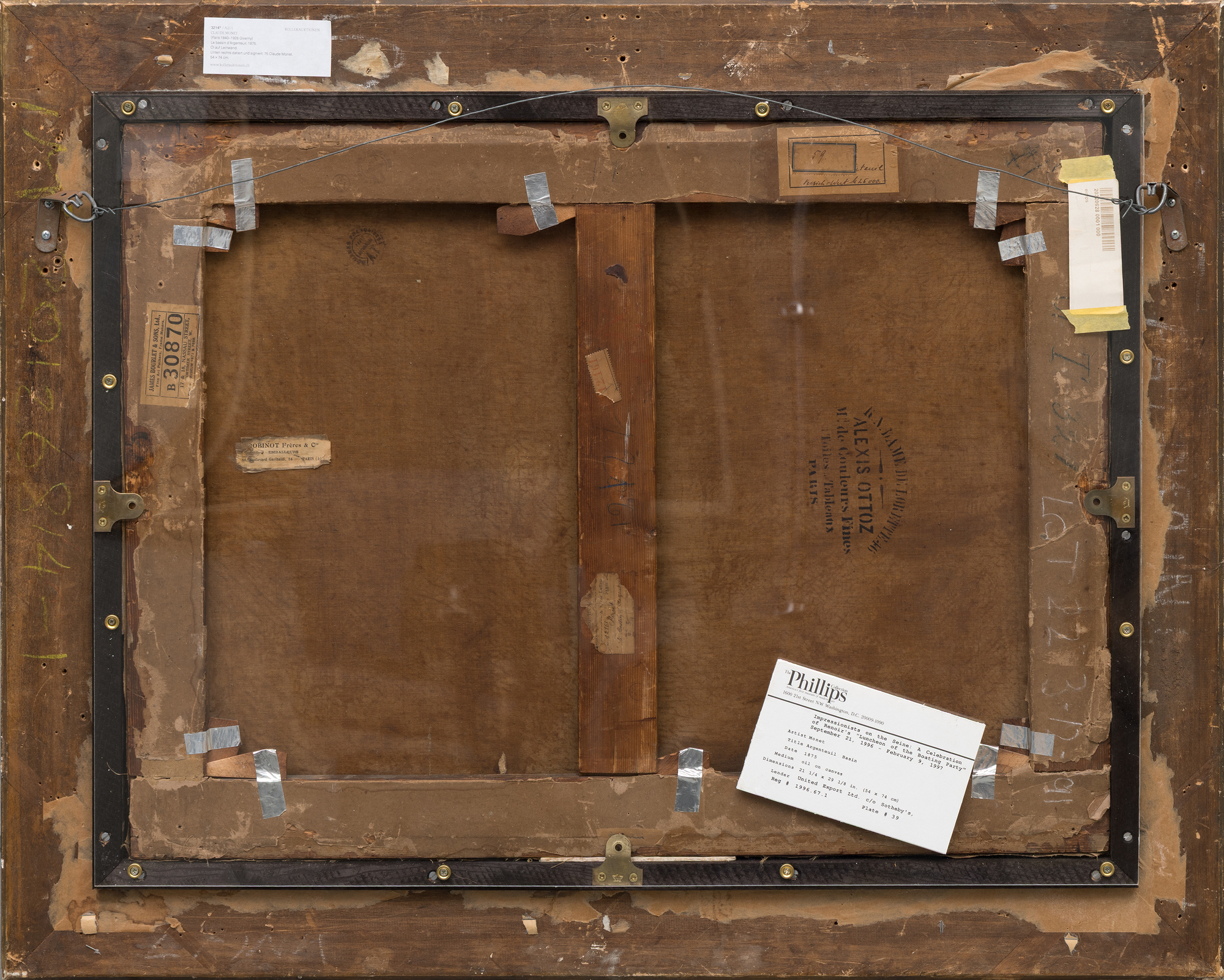
مع Galerie Bernheim-Jeune، باريس، رقم 12161 (ملصق على الظهر)
مجموعة أوسكار شميتز، دريسدن، 1904
Kunsthaus Zürich، معار من عام 1931 من مجموعة أوسكار شميتز
Kunstmuseum Basel، معار من عام 1934 من مجموعة أوسكار شميتز
Wildenstein & Co.، لندن، من عام 1936
السيد إي. و. فاتوريني، بريطانيا العظمى، 1940
سوثبيز، لندن، 16 أبريل 1975، القطعة 25
مجموعة خاصة، إنجلترا
سوثبيز، لندن، 3 ديسمبر 1991، القطعة 22
مجموعة خاصة، لندن، تم الحصول عليها في المزاد المذكور أعلاه
... اكثر...على
مجموعة خاصة، أوروبا
Koller Auktionen AG، زيورخ، 29 نوفمبر 2024، القطعة 03214
مجموعة خاصة، لندن، تم الحصول عليها في المزاد المذكور أعلاه
معرض
زيورخ، Kunsthaus Zürich، Sammlung Oscar Schmitz، 14 يناير - 14 فبراير 1932، رقم 35/47
بالينغن، ستادتهال، كلود مونيه، 18 يونيو - 31 أغسطس 1992، رقم 6
واشنطن العاصمة، مجموعة فيليبس، الانطباعيون على نهر السين: احتفال بـ "غداء حفلة القوارب" لرينوار، 21 سبتمبر 1996 - 2 فبراير 1997، رقم 39
الادب
دانيال وايلدنشتاين، مونيه. كتالوج شامل. Werkverzeichnis، بون، 1996، المجلد الثاني، ص. 153، رقم 371 (مصوّر)
بول فيشتر، "Die Sammlung Schmitz" (مجموعة شميتز)، Kunst und Künstler: Illustrierte Monatsschrift für bildende Kunst und Kunstgewerbe (الفن والفنانون: مجلة شهرية مصورة للفنون التشكيلية والفنون الحرفية)، برلين، أكتوبر 1909، ص. 21.
كارل شيفلر، "مجموعة أوسكار شميتز في دريسدن"، Kunst und Künstler: Illustrierte Monatsschrift für bildende Kunst und Kunstgewerbe، برلين، 1920/21، ص. 186
ماري دورموي، "مجموعة شميتز في دريسدن"، L’Amour de l’art، باريس، أكتوبر 1926، ص. 342
دانيال وايلدنشتاين، مونيه، الحياة والأعمال، لوزان/باريس، 1974، المجلد الأول، ص 237، 272 (مصورة)
جويل إيزاكسون، الملاحظة والتأمل. كلود مونيه، أكسفورد، 1978، ص. 95، 207 (مصورة)
بول هايز تاكر، مونيه في أرجنتويل، نيو هافن/لندن، 1982، ص. 120 (الصورة رقم XXI)
دانيال وايلدنشتاين، مونيه، الحياة والأعمال، لوزان/باريس، 1991، المجلد الخامس، ص. 30 (مصورة)
... اقل...
تعد لوحة "Le bassin d’Argenteuil" (1875) لكلود مونيه مثالاً ساطعاً على إحدى أكثر الفترات أهمية في مسيرته الفنية، وقد رسمها في أواخر الربيع أو صيف عام 1875، بعد عام واحد فقط من المعرض الرائد الأول للانطباعيين. تقع اللوحة على ضفاف نهر السين في أرجنتويل، وتلتقط تركيبة هادئة للحوض تضفي عليها القوارب الصغيرة والأشخاص والانعكاسات الحيوية، وقد تم رسمها بضربات فرشاة حرة ومعبرة تنقل التأثيرات العابرة للضوء والجو. يخلق الانتشار اللطيف للماء والسماء سطحًا متلألئًا، يتناسب تمامًا مع ممارسة مونيه للرسم في الهواء الطلق ورغبته في تسجيل الإدراك في اللحظة.


كانت أرجنتويل مركزية في بلورة الانطباعية، حيث شهدت فترة اندماج أفكارها وموضوعاتها وروحها التعاونية بشكل كامل. بين عامي 1871 و 1878، جذب وجود مونيه هناك زملاءه الفنانين، بما في ذلك رينوار ومانيه وسيسلي وكايلبوت، مما عزز بيئة من التجريب والابتكار المشترك.


تزيد الأصول المبكرة للوحة من أهميتها. كانت مملوكة لأوسكار أ. هـ. شميتز، الكاتب والمفكر الألماني المعروف بكتاباته عن علم النفس اليونغياني ومجموعته الفنية المتميزة من القرن التاسع عشر. بعد وفاة شميتز المفاجئة في عام 1933، تم إرسال المجموعة إلى متحف الفنون في بازل. في عام 1936، استحوذت شركة Wildenstein & Co. لتجارة الأعمال الفنية على 62 عملاً من المجموعة ونظمت معرضاً كبيراً وبيعاً في باريس ونيويورك. تم إدراج لوحة Le bassin d’Argenteuil في كتالوج دانيال ويلدنشتاين (1996)، المجلد الثاني، ص. 153، برقم 371، ونُشرت في ثمانية كتب.
الاستفسار