Précédent

ALFRED SISLEY (1839-1899)

$1,350,000

 
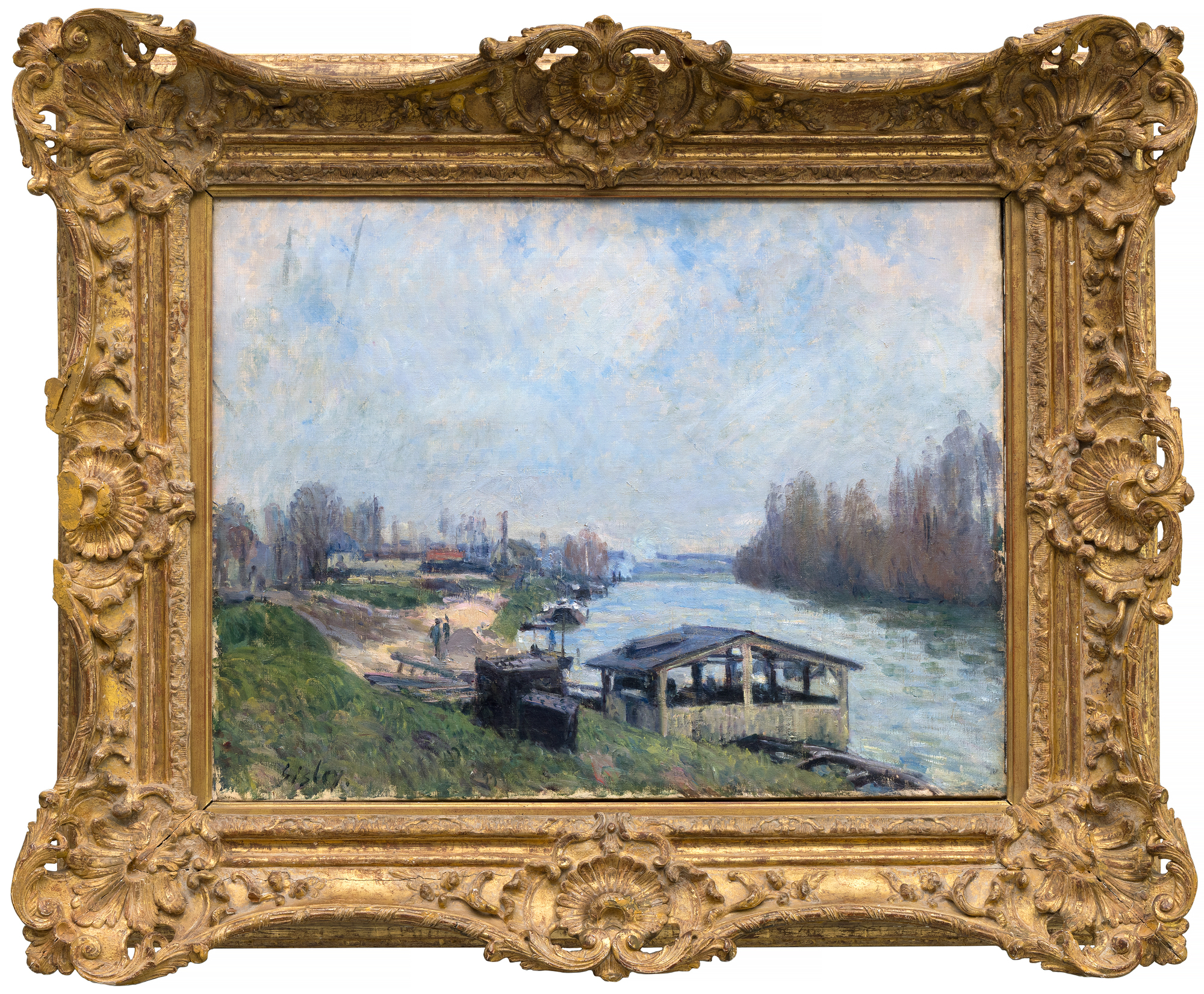
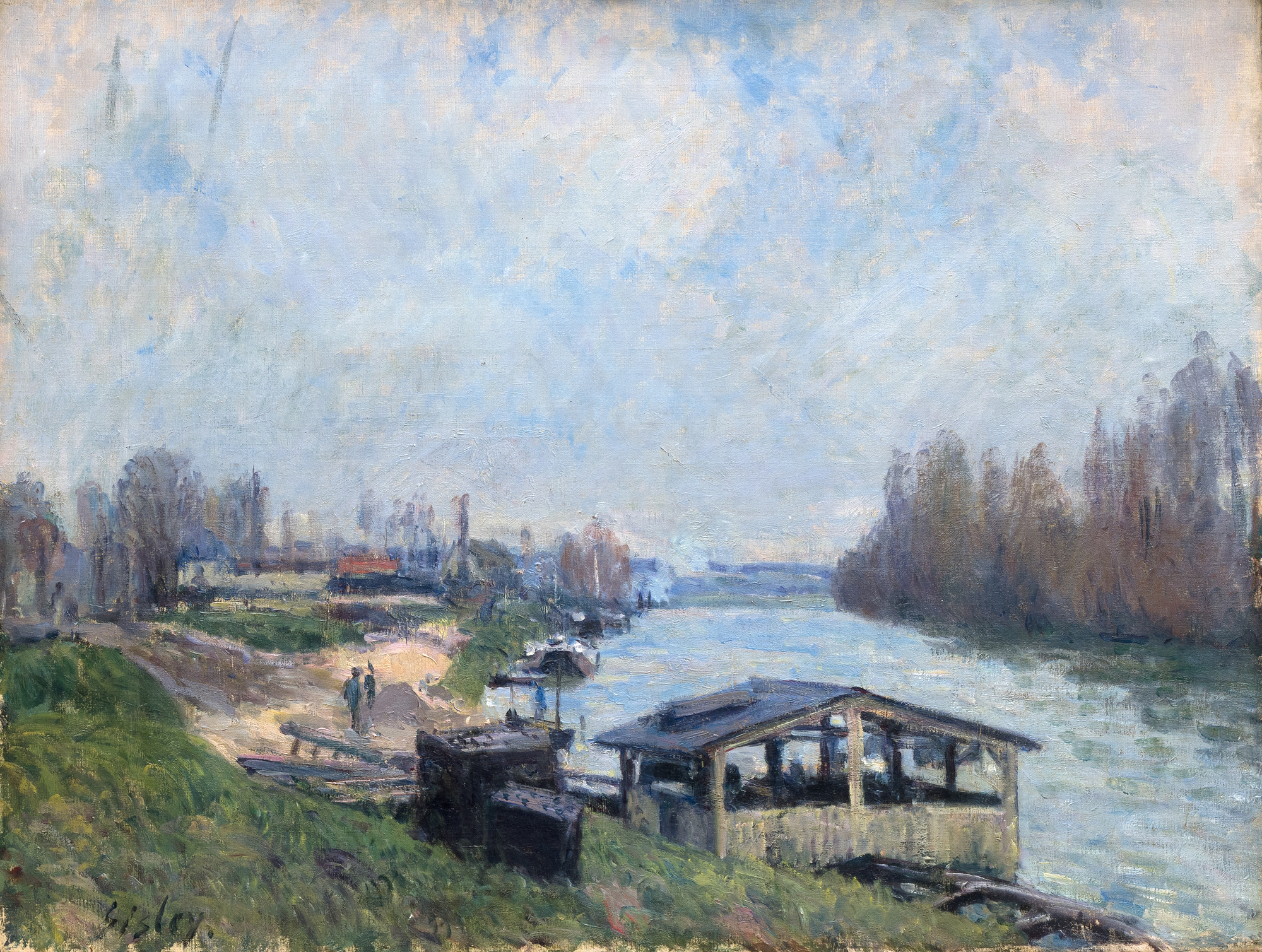
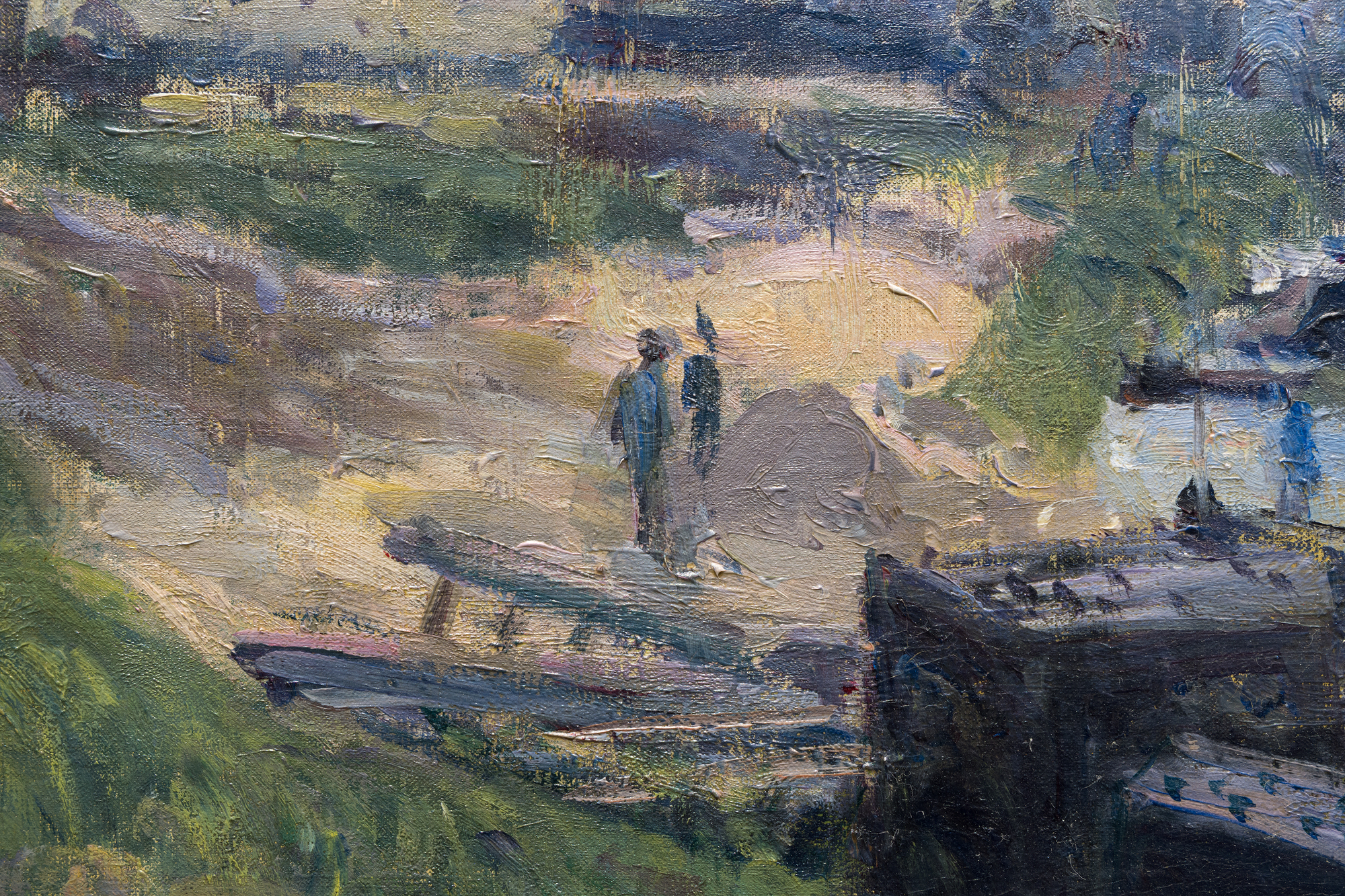
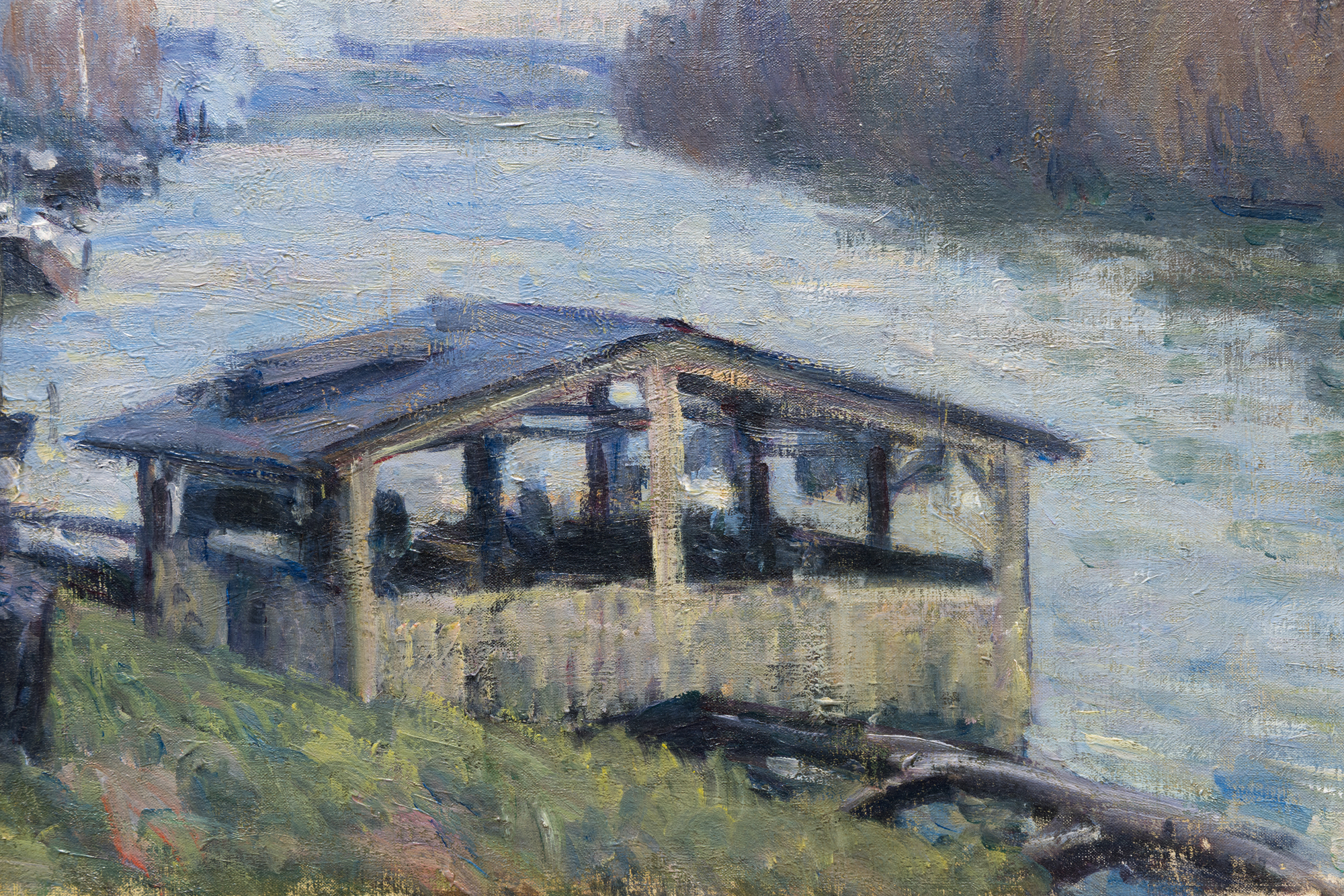
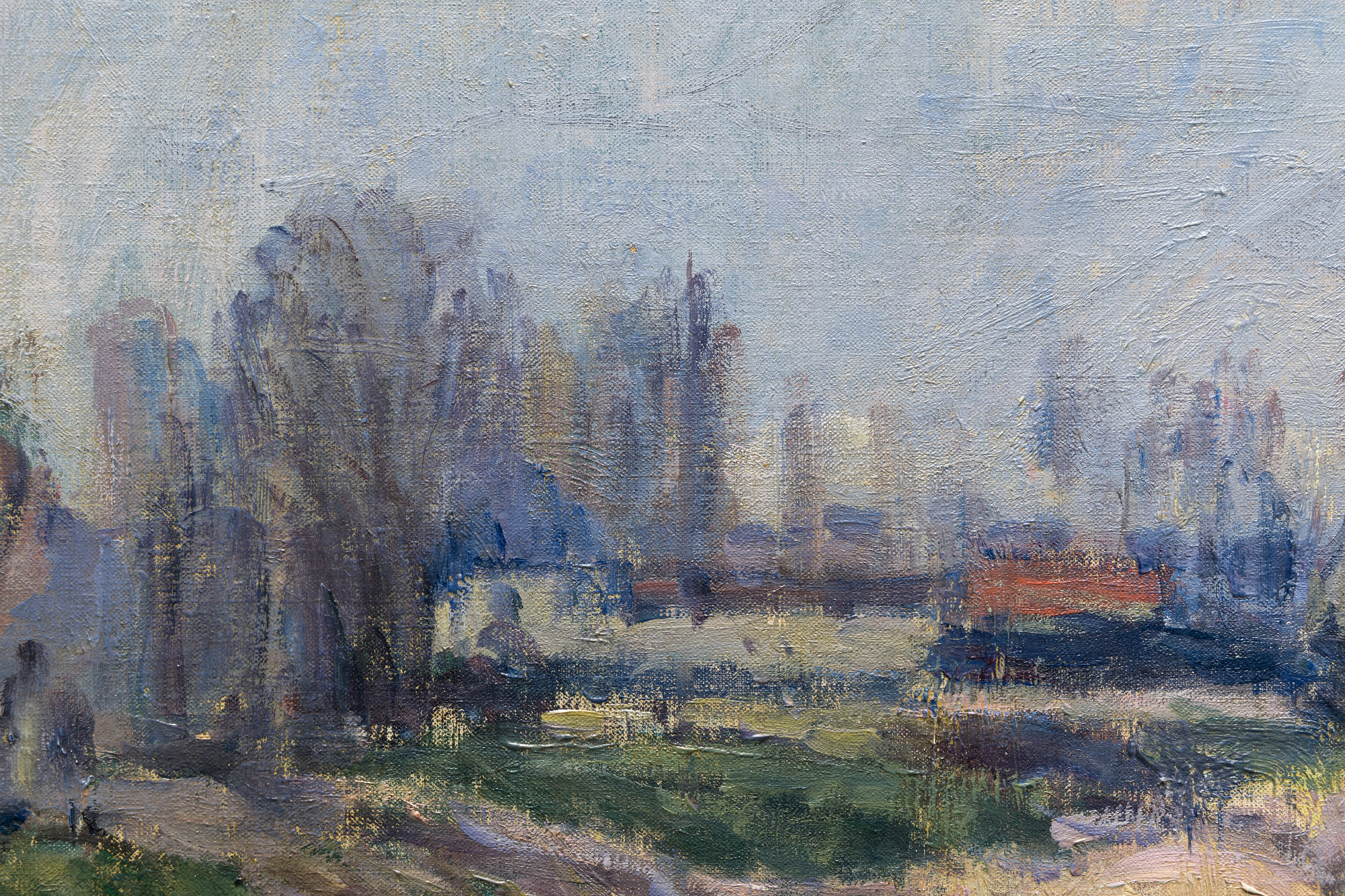
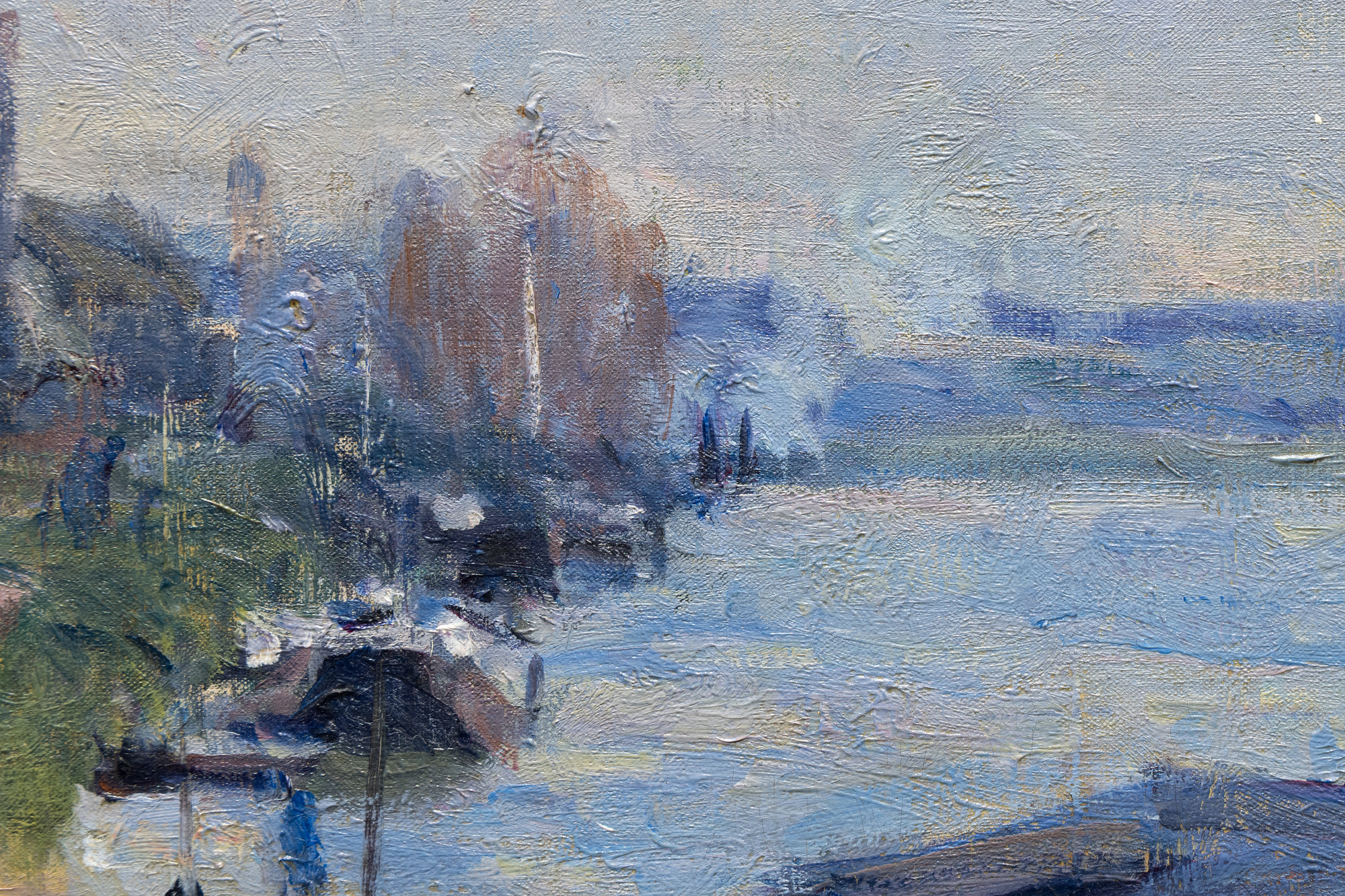
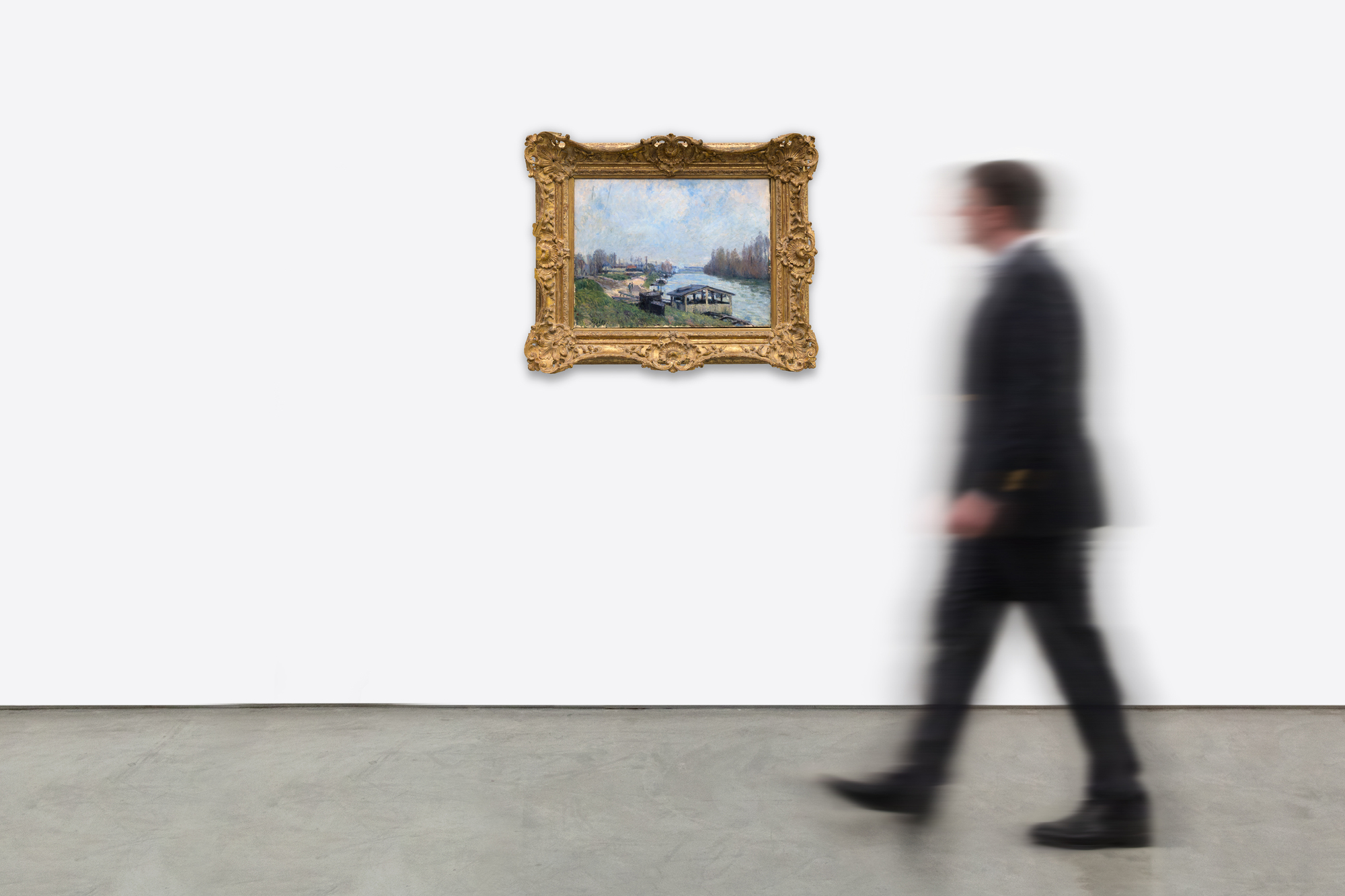
<div>Alfred Sisley’s <em>Le Lavoir de Billancourt</em> (1879) is a superb example of the artist’s lifelong devotion to painting directly before nature, and to the quiet drama of landscape in flux. Often described as the “purest” plein air painter of the Impressionist circle, Sisley maintained an almost exclusive relationship with landscape, attending to the subtlest changes of season, weather, and time of day. His river scenes in particular have long been compared to Monet’s for their sensitivity to water—its shifting reflections, softened edges, and the way light dissolves form into atmosphere. </div><br><br><div> </div><br><br><div>Painted along the Seine at Billancourt—an industrial town west of Paris—this work belongs to the sequence of views Sisley produced after the upheavals of 1871, when he moved his family first to Louveciennes and later to nearby Marly-le-Roi. The Seine valley offered him an ever-renewing motif: looping river bends, villages threaded along the banks, and a landscape marked by both history and modern life. Here, the floating washing house (a lavoir) sits low on the water, a practical structure where locals could wash clothes directly in the river for a small fee. Sisley transforms this everyday subject into an evocation of lived place, where human activity is integrated seamlessly into the broader rhythms of sky and current. </div><br><br><div> </div><br><br><div>The 1870s are widely recognized as Sisley’s “golden period”—when his work speaks in a distinctly personal voice rather than under the overt influence of Corot, Courbet, or even early Monet. After ceasing to exhibit at the Salon after 1877, his compositions grew more complex and less dependent on traditional recession and linear perspective, shifting instead toward interlocking patterns and the expressive energy of his brushwork. In<em> Le Lavoir de Billancourt</em>, layers of pigment are built up in quick, multidirectional strokes, creating a richly textured surface saturated with color and air. This heightened spontaneity aligns with contemporary praise for Sisley’s ability to seize passing moments—clouds, breeze, and trembling foliage—so that space and light feel inseparable, and the scene remains vibrantly in motion. The painting is recorded in the François Dault<em> Alfred Sisley: catalogue raisonné de l'oeuvre peint</em> (1959) as no. 315. </div> <div>Alfred Sisley’s <em>Le Lavoir de Billancourt</em> (1879) is a superb example of the artist’s lifelong devotion to painting directly before nature, and to the quiet drama of landscape in flux. Often described as the “purest” plein air painter of the Impressionist circle, Sisley maintained an almost exclusive relationship with landscape, attending to the subtlest changes of season, weather, and time of day. His river scenes in particular have long been compared to Monet’s for their sensitivity to water—its shifting reflections, softened edges, and the way light dissolves form into atmosphere. </div><br><br><div> </div><br><br><div>Painted along the Seine at Billancourt—an industrial town west of Paris—this work belongs to the sequence of views Sisley produced after the upheavals of 1871, when he moved his family first to Louveciennes and later to nearby Marly-le-Roi. The Seine valley offered him an ever-renewing motif: looping river bends, villages threaded along the banks, and a landscape marked by both history and modern life. Here, the floating washing house (a lavoir) sits low on the water, a practical structure where locals could wash clothes directly in the river for a small fee. Sisley transforms this everyday subject into an evocation of lived place, where human activity is integrated seamlessly into the broader rhythms of sky and current. </div><br><br><div> </div><br><br><div>The 1870s are widely recognized as Sisley’s “golden period”—when his work speaks in a distinctly personal voice rather than under the overt influence of Corot, Courbet, or even early Monet. After ceasing to exhibit at the Salon after 1877, his compositions grew more complex and less dependent on traditional recession and linear perspective, shifting instead toward interlocking patterns and the expressive energy of his brushwork. In<em> Le Lavoir de Billancourt</em>, layers of pigment are built up in quick, multidirectional strokes, creating a richly textured surface saturated with color and air. This heightened spontaneity aligns with contemporary praise for Sisley’s ability to seize passing moments—clouds, breeze, and trembling foliage—so that space and light feel inseparable, and the scene remains vibrantly in motion. The painting is recorded in the François Dault<em> Alfred Sisley: catalogue raisonné de l'oeuvre peint</em> (1959) as no. 315. </div> <div>Alfred Sisley’s <em>Le Lavoir de Billancourt</em> (1879) is a superb example of the artist’s lifelong devotion to painting directly before nature, and to the quiet drama of landscape in flux. Often described as the “purest” plein air painter of the Impressionist circle, Sisley maintained an almost exclusive relationship with landscape, attending to the subtlest changes of season, weather, and time of day. His river scenes in particular have long been compared to Monet’s for their sensitivity to water—its shifting reflections, softened edges, and the way light dissolves form into atmosphere. </div><br><br><div> </div><br><br><div>Painted along the Seine at Billancourt—an industrial town west of Paris—this work belongs to the sequence of views Sisley produced after the upheavals of 1871, when he moved his family first to Louveciennes and later to nearby Marly-le-Roi. The Seine valley offered him an ever-renewing motif: looping river bends, villages threaded along the banks, and a landscape marked by both history and modern life. Here, the floating washing house (a lavoir) sits low on the water, a practical structure where locals could wash clothes directly in the river for a small fee. Sisley transforms this everyday subject into an evocation of lived place, where human activity is integrated seamlessly into the broader rhythms of sky and current. </div><br><br><div> </div><br><br><div>The 1870s are widely recognized as Sisley’s “golden period”—when his work speaks in a distinctly personal voice rather than under the overt influence of Corot, Courbet, or even early Monet. After ceasing to exhibit at the Salon after 1877, his compositions grew more complex and less dependent on traditional recession and linear perspective, shifting instead toward interlocking patterns and the expressive energy of his brushwork. In<em> Le Lavoir de Billancourt</em>, layers of pigment are built up in quick, multidirectional strokes, creating a richly textured surface saturated with color and air. This heightened spontaneity aligns with contemporary praise for Sisley’s ability to seize passing moments—clouds, breeze, and trembling foliage—so that space and light feel inseparable, and the scene remains vibrantly in motion. The painting is recorded in the François Dault<em> Alfred Sisley: catalogue raisonné de l'oeuvre peint</em> (1959) as no. 315. </div> <div>Alfred Sisley’s <em>Le Lavoir de Billancourt</em> (1879) is a superb example of the artist’s lifelong devotion to painting directly before nature, and to the quiet drama of landscape in flux. Often described as the “purest” plein air painter of the Impressionist circle, Sisley maintained an almost exclusive relationship with landscape, attending to the subtlest changes of season, weather, and time of day. His river scenes in particular have long been compared to Monet’s for their sensitivity to water—its shifting reflections, softened edges, and the way light dissolves form into atmosphere. </div><br><br><div> </div><br><br><div>Painted along the Seine at Billancourt—an industrial town west of Paris—this work belongs to the sequence of views Sisley produced after the upheavals of 1871, when he moved his family first to Louveciennes and later to nearby Marly-le-Roi. The Seine valley offered him an ever-renewing motif: looping river bends, villages threaded along the banks, and a landscape marked by both history and modern life. Here, the floating washing house (a lavoir) sits low on the water, a practical structure where locals could wash clothes directly in the river for a small fee. Sisley transforms this everyday subject into an evocation of lived place, where human activity is integrated seamlessly into the broader rhythms of sky and current. </div><br><br><div> </div><br><br><div>The 1870s are widely recognized as Sisley’s “golden period”—when his work speaks in a distinctly personal voice rather than under the overt influence of Corot, Courbet, or even early Monet. After ceasing to exhibit at the Salon after 1877, his compositions grew more complex and less dependent on traditional recession and linear perspective, shifting instead toward interlocking patterns and the expressive energy of his brushwork. In<em> Le Lavoir de Billancourt</em>, layers of pigment are built up in quick, multidirectional strokes, creating a richly textured surface saturated with color and air. This heightened spontaneity aligns with contemporary praise for Sisley’s ability to seize passing moments—clouds, breeze, and trembling foliage—so that space and light feel inseparable, and the scene remains vibrantly in motion. The painting is recorded in the François Dault<em> Alfred Sisley: catalogue raisonné de l'oeuvre peint</em> (1959) as no. 315. </div> <div>Alfred Sisley’s <em>Le Lavoir de Billancourt</em> (1879) is a superb example of the artist’s lifelong devotion to painting directly before nature, and to the quiet drama of landscape in flux. Often described as the “purest” plein air painter of the Impressionist circle, Sisley maintained an almost exclusive relationship with landscape, attending to the subtlest changes of season, weather, and time of day. His river scenes in particular have long been compared to Monet’s for their sensitivity to water—its shifting reflections, softened edges, and the way light dissolves form into atmosphere. </div><br><br><div> </div><br><br><div>Painted along the Seine at Billancourt—an industrial town west of Paris—this work belongs to the sequence of views Sisley produced after the upheavals of 1871, when he moved his family first to Louveciennes and later to nearby Marly-le-Roi. The Seine valley offered him an ever-renewing motif: looping river bends, villages threaded along the banks, and a landscape marked by both history and modern life. Here, the floating washing house (a lavoir) sits low on the water, a practical structure where locals could wash clothes directly in the river for a small fee. Sisley transforms this everyday subject into an evocation of lived place, where human activity is integrated seamlessly into the broader rhythms of sky and current. </div><br><br><div> </div><br><br><div>The 1870s are widely recognized as Sisley’s “golden period”—when his work speaks in a distinctly personal voice rather than under the overt influence of Corot, Courbet, or even early Monet. After ceasing to exhibit at the Salon after 1877, his compositions grew more complex and less dependent on traditional recession and linear perspective, shifting instead toward interlocking patterns and the expressive energy of his brushwork. In<em> Le Lavoir de Billancourt</em>, layers of pigment are built up in quick, multidirectional strokes, creating a richly textured surface saturated with color and air. This heightened spontaneity aligns with contemporary praise for Sisley’s ability to seize passing moments—clouds, breeze, and trembling foliage—so that space and light feel inseparable, and the scene remains vibrantly in motion. The painting is recorded in the François Dault<em> Alfred Sisley: catalogue raisonné de l'oeuvre peint</em> (1959) as no. 315. </div> <div>Alfred Sisley’s <em>Le Lavoir de Billancourt</em> (1879) is a superb example of the artist’s lifelong devotion to painting directly before nature, and to the quiet drama of landscape in flux. Often described as the “purest” plein air painter of the Impressionist circle, Sisley maintained an almost exclusive relationship with landscape, attending to the subtlest changes of season, weather, and time of day. His river scenes in particular have long been compared to Monet’s for their sensitivity to water—its shifting reflections, softened edges, and the way light dissolves form into atmosphere. </div><br><br><div> </div><br><br><div>Painted along the Seine at Billancourt—an industrial town west of Paris—this work belongs to the sequence of views Sisley produced after the upheavals of 1871, when he moved his family first to Louveciennes and later to nearby Marly-le-Roi. The Seine valley offered him an ever-renewing motif: looping river bends, villages threaded along the banks, and a landscape marked by both history and modern life. Here, the floating washing house (a lavoir) sits low on the water, a practical structure where locals could wash clothes directly in the river for a small fee. Sisley transforms this everyday subject into an evocation of lived place, where human activity is integrated seamlessly into the broader rhythms of sky and current. </div><br><br><div> </div><br><br><div>The 1870s are widely recognized as Sisley’s “golden period”—when his work speaks in a distinctly personal voice rather than under the overt influence of Corot, Courbet, or even early Monet. After ceasing to exhibit at the Salon after 1877, his compositions grew more complex and less dependent on traditional recession and linear perspective, shifting instead toward interlocking patterns and the expressive energy of his brushwork. In<em> Le Lavoir de Billancourt</em>, layers of pigment are built up in quick, multidirectional strokes, creating a richly textured surface saturated with color and air. This heightened spontaneity aligns with contemporary praise for Sisley’s ability to seize passing moments—clouds, breeze, and trembling foliage—so that space and light feel inseparable, and the scene remains vibrantly in motion. The painting is recorded in the François Dault<em> Alfred Sisley: catalogue raisonné de l'oeuvre peint</em> (1959) as no. 315. </div> <div>Alfred Sisley’s <em>Le Lavoir de Billancourt</em> (1879) is a superb example of the artist’s lifelong devotion to painting directly before nature, and to the quiet drama of landscape in flux. Often described as the “purest” plein air painter of the Impressionist circle, Sisley maintained an almost exclusive relationship with landscape, attending to the subtlest changes of season, weather, and time of day. His river scenes in particular have long been compared to Monet’s for their sensitivity to water—its shifting reflections, softened edges, and the way light dissolves form into atmosphere. </div><br><br><div> </div><br><br><div>Painted along the Seine at Billancourt—an industrial town west of Paris—this work belongs to the sequence of views Sisley produced after the upheavals of 1871, when he moved his family first to Louveciennes and later to nearby Marly-le-Roi. The Seine valley offered him an ever-renewing motif: looping river bends, villages threaded along the banks, and a landscape marked by both history and modern life. Here, the floating washing house (a lavoir) sits low on the water, a practical structure where locals could wash clothes directly in the river for a small fee. Sisley transforms this everyday subject into an evocation of lived place, where human activity is integrated seamlessly into the broader rhythms of sky and current. </div><br><br><div> </div><br><br><div>The 1870s are widely recognized as Sisley’s “golden period”—when his work speaks in a distinctly personal voice rather than under the overt influence of Corot, Courbet, or even early Monet. After ceasing to exhibit at the Salon after 1877, his compositions grew more complex and less dependent on traditional recession and linear perspective, shifting instead toward interlocking patterns and the expressive energy of his brushwork. In<em> Le Lavoir de Billancourt</em>, layers of pigment are built up in quick, multidirectional strokes, creating a richly textured surface saturated with color and air. This heightened spontaneity aligns with contemporary praise for Sisley’s ability to seize passing moments—clouds, breeze, and trembling foliage—so that space and light feel inseparable, and the scene remains vibrantly in motion. The painting is recorded in the François Dault<em> Alfred Sisley: catalogue raisonné de l'oeuvre peint</em> (1959) as no. 315. </div> <div>Alfred Sisley’s <em>Le Lavoir de Billancourt</em> (1879) is a superb example of the artist’s lifelong devotion to painting directly before nature, and to the quiet drama of landscape in flux. Often described as the “purest” plein air painter of the Impressionist circle, Sisley maintained an almost exclusive relationship with landscape, attending to the subtlest changes of season, weather, and time of day. His river scenes in particular have long been compared to Monet’s for their sensitivity to water—its shifting reflections, softened edges, and the way light dissolves form into atmosphere. </div><br><br><div> </div><br><br><div>Painted along the Seine at Billancourt—an industrial town west of Paris—this work belongs to the sequence of views Sisley produced after the upheavals of 1871, when he moved his family first to Louveciennes and later to nearby Marly-le-Roi. The Seine valley offered him an ever-renewing motif: looping river bends, villages threaded along the banks, and a landscape marked by both history and modern life. Here, the floating washing house (a lavoir) sits low on the water, a practical structure where locals could wash clothes directly in the river for a small fee. Sisley transforms this everyday subject into an evocation of lived place, where human activity is integrated seamlessly into the broader rhythms of sky and current. </div><br><br><div> </div><br><br><div>The 1870s are widely recognized as Sisley’s “golden period”—when his work speaks in a distinctly personal voice rather than under the overt influence of Corot, Courbet, or even early Monet. After ceasing to exhibit at the Salon after 1877, his compositions grew more complex and less dependent on traditional recession and linear perspective, shifting instead toward interlocking patterns and the expressive energy of his brushwork. In<em> Le Lavoir de Billancourt</em>, layers of pigment are built up in quick, multidirectional strokes, creating a richly textured surface saturated with color and air. This heightened spontaneity aligns with contemporary praise for Sisley’s ability to seize passing moments—clouds, breeze, and trembling foliage—so that space and light feel inseparable, and the scene remains vibrantly in motion. The painting is recorded in the François Dault<em> Alfred Sisley: catalogue raisonné de l'oeuvre peint</em> (1959) as no. 315. </div> <div>Alfred Sisley’s <em>Le Lavoir de Billancourt</em> (1879) is a superb example of the artist’s lifelong devotion to painting directly before nature, and to the quiet drama of landscape in flux. Often described as the “purest” plein air painter of the Impressionist circle, Sisley maintained an almost exclusive relationship with landscape, attending to the subtlest changes of season, weather, and time of day. His river scenes in particular have long been compared to Monet’s for their sensitivity to water—its shifting reflections, softened edges, and the way light dissolves form into atmosphere. </div><br><br><div> </div><br><br><div>Painted along the Seine at Billancourt—an industrial town west of Paris—this work belongs to the sequence of views Sisley produced after the upheavals of 1871, when he moved his family first to Louveciennes and later to nearby Marly-le-Roi. The Seine valley offered him an ever-renewing motif: looping river bends, villages threaded along the banks, and a landscape marked by both history and modern life. Here, the floating washing house (a lavoir) sits low on the water, a practical structure where locals could wash clothes directly in the river for a small fee. Sisley transforms this everyday subject into an evocation of lived place, where human activity is integrated seamlessly into the broader rhythms of sky and current. </div><br><br><div> </div><br><br><div>The 1870s are widely recognized as Sisley’s “golden period”—when his work speaks in a distinctly personal voice rather than under the overt influence of Corot, Courbet, or even early Monet. After ceasing to exhibit at the Salon after 1877, his compositions grew more complex and less dependent on traditional recession and linear perspective, shifting instead toward interlocking patterns and the expressive energy of his brushwork. In<em> Le Lavoir de Billancourt</em>, layers of pigment are built up in quick, multidirectional strokes, creating a richly textured surface saturated with color and air. This heightened spontaneity aligns with contemporary praise for Sisley’s ability to seize passing moments—clouds, breeze, and trembling foliage—so that space and light feel inseparable, and the scene remains vibrantly in motion. The painting is recorded in the François Dault<em> Alfred Sisley: catalogue raisonné de l'oeuvre peint</em> (1959) as no. 315. </div> <div>Alfred Sisley’s <em>Le Lavoir de Billancourt</em> (1879) is a superb example of the artist’s lifelong devotion to painting directly before nature, and to the quiet drama of landscape in flux. Often described as the “purest” plein air painter of the Impressionist circle, Sisley maintained an almost exclusive relationship with landscape, attending to the subtlest changes of season, weather, and time of day. His river scenes in particular have long been compared to Monet’s for their sensitivity to water—its shifting reflections, softened edges, and the way light dissolves form into atmosphere. </div><br><br><div> </div><br><br><div>Painted along the Seine at Billancourt—an industrial town west of Paris—this work belongs to the sequence of views Sisley produced after the upheavals of 1871, when he moved his family first to Louveciennes and later to nearby Marly-le-Roi. The Seine valley offered him an ever-renewing motif: looping river bends, villages threaded along the banks, and a landscape marked by both history and modern life. Here, the floating washing house (a lavoir) sits low on the water, a practical structure where locals could wash clothes directly in the river for a small fee. Sisley transforms this everyday subject into an evocation of lived place, where human activity is integrated seamlessly into the broader rhythms of sky and current. </div><br><br><div> </div><br><br><div>The 1870s are widely recognized as Sisley’s “golden period”—when his work speaks in a distinctly personal voice rather than under the overt influence of Corot, Courbet, or even early Monet. After ceasing to exhibit at the Salon after 1877, his compositions grew more complex and less dependent on traditional recession and linear perspective, shifting instead toward interlocking patterns and the expressive energy of his brushwork. In<em> Le Lavoir de Billancourt</em>, layers of pigment are built up in quick, multidirectional strokes, creating a richly textured surface saturated with color and air. This heightened spontaneity aligns with contemporary praise for Sisley’s ability to seize passing moments—clouds, breeze, and trembling foliage—so that space and light feel inseparable, and the scene remains vibrantly in motion. The painting is recorded in the François Dault<em> Alfred Sisley: catalogue raisonné de l'oeuvre peint</em> (1959) as no. 315. </div>
Le Lavoir de Billancourt187950,8 x 65,09 cm(50,8 x 65,09 cm) huile sur toile
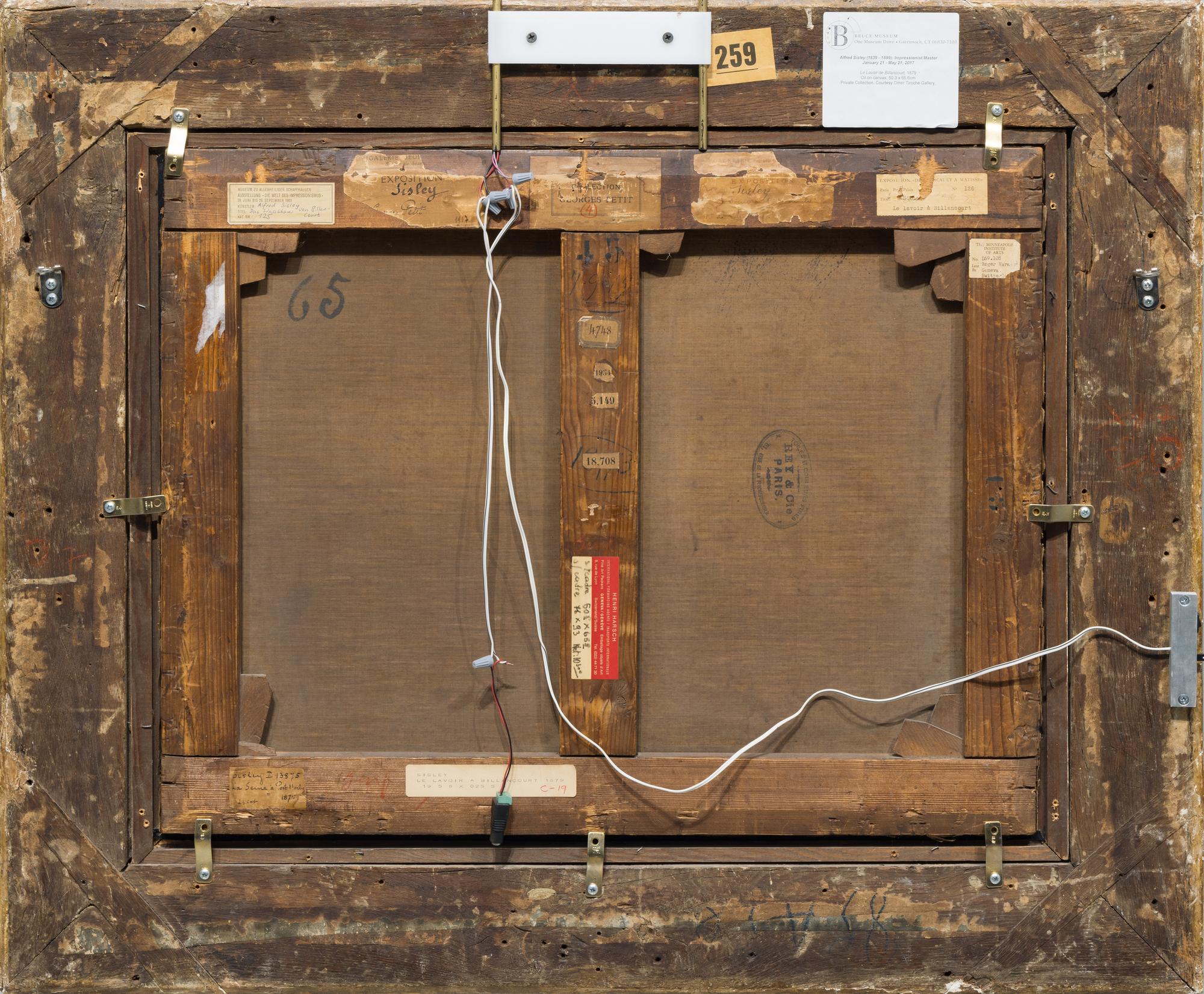
Provenance
Henri Poidatz, Paris
Galerie Georges Petit, Paris, 27 avril 1900, lot 79
Georges Petit, acquis lors de la vente ci-dessus
Vente : Galerie Georges Petit, Paris, 4-5 mars 1921, lot 113
Comte de Lanscay, Paris
Hôtel Drouot, Paris, 6 avril 1922, lot 16
Eugène Blot, Paris, acquis lors de la vente susmentionnée
Dr Arthur Charpentier, Paris
Collection privée, Suisse, acquis vers 1950
Collection privée, provenant de la collection ci-dessus
Collection privée, Europe
Sotheby's New York, 6 mai 2015, lot
...Plus.....250
Collection privée, Londres, acquise lors de la vente susmentionnée
Exposition
Paris, Galerie Georges Petit, Alfred Sisley, 1917, n° 83
Paris, Durand-Ruel, Tableaux de Sisley, 1930, n° 23
Paris, Galerie d'Art Braun, Sisley, 1933, n° 13
Berne, Musée des Beaux-Arts, Alfred Sisley, 1958, n° 38
Paris, Musée du Petit-Palais, De Géricault à Matisse, Chefs-d'œuvre des collections Suisse, 1959, n° 126
Schaffhouse, Musée Zu Allerheiligen, Die Welt des Impressionnismus, 1963, n° 125
Minneapolis, Minneapolis Institute of Arts, Le passé redécouvert : la peinture française de 1800 à 1900, 1969
 
Littérature
Maximilien Gauthier, « Hommage à Sisley », dans L'Art vivant, 1933, n° 170, p. 116 (illustré)
François Daulte, Alfred Sisley, Catalogue raisonné de l'œuvre peint, Paris, 1959, n° 315 (illustré)
Jacques Lassaigne & Slyvie Gache-Patin, Sisley, Paris, 1982, p. 31 (illustré)
Mary Anne Stevens, éd., Alfred Sisley, Londres, 1992, p. 154
Sylvie Brame & François Lorenceau, Alfred Sisley : Catalogue critique des peintures et des pastels, Paris, 2021, p. 155, 488 (illustré)
...MOINS.....
Le Lavoir de Billancourt (1879) d'Alfred Sisley est un superbe exemple du dévouement de l'artiste à la peinture directement devant la nature et au drame tranquille d'un paysage en constante évolution. Souvent décrit comme le peintre « le plus pur » du cercle impressionniste, Sisley entretenait une relation presque exclusive avec le paysage, attentif aux changements les plus subtils des saisons, du temps et des heures de la journée. Ses scènes fluviales, en particulier, ont longtemps été comparées à celles de Monet pour leur sensibilité à l'eau, ses reflets changeants, ses contours adoucis et la façon dont la lumière dissout les formes dans l'atmosphère.


Peinte le long de la Seine à Billancourt, une ville industrielle à l'ouest de Paris, cette œuvre fait partie de la série de vues réalisées par Sisley après les bouleversements de 1871, lorsqu'il déménagea avec sa famille d'abord à Louveciennes, puis à Marly-le-Roi, non loin de là. La vallée de la Seine lui offrait un motif sans cesse renouvelé : les méandres du fleuve, les villages qui s'étiraient le long des berges et un paysage marqué à la fois par l'histoire et la vie moderne. Ici, le lavoir flottant, une structure pratique où les habitants pouvaient laver leur linge directement dans la rivière moyennant une modique somme, est ancré dans l'eau. Sisley transforme ce sujet quotidien en une évocation d'un lieu de vie, où l'activité humaine s'intègre parfaitement dans les rythmes plus larges du ciel et du courant.


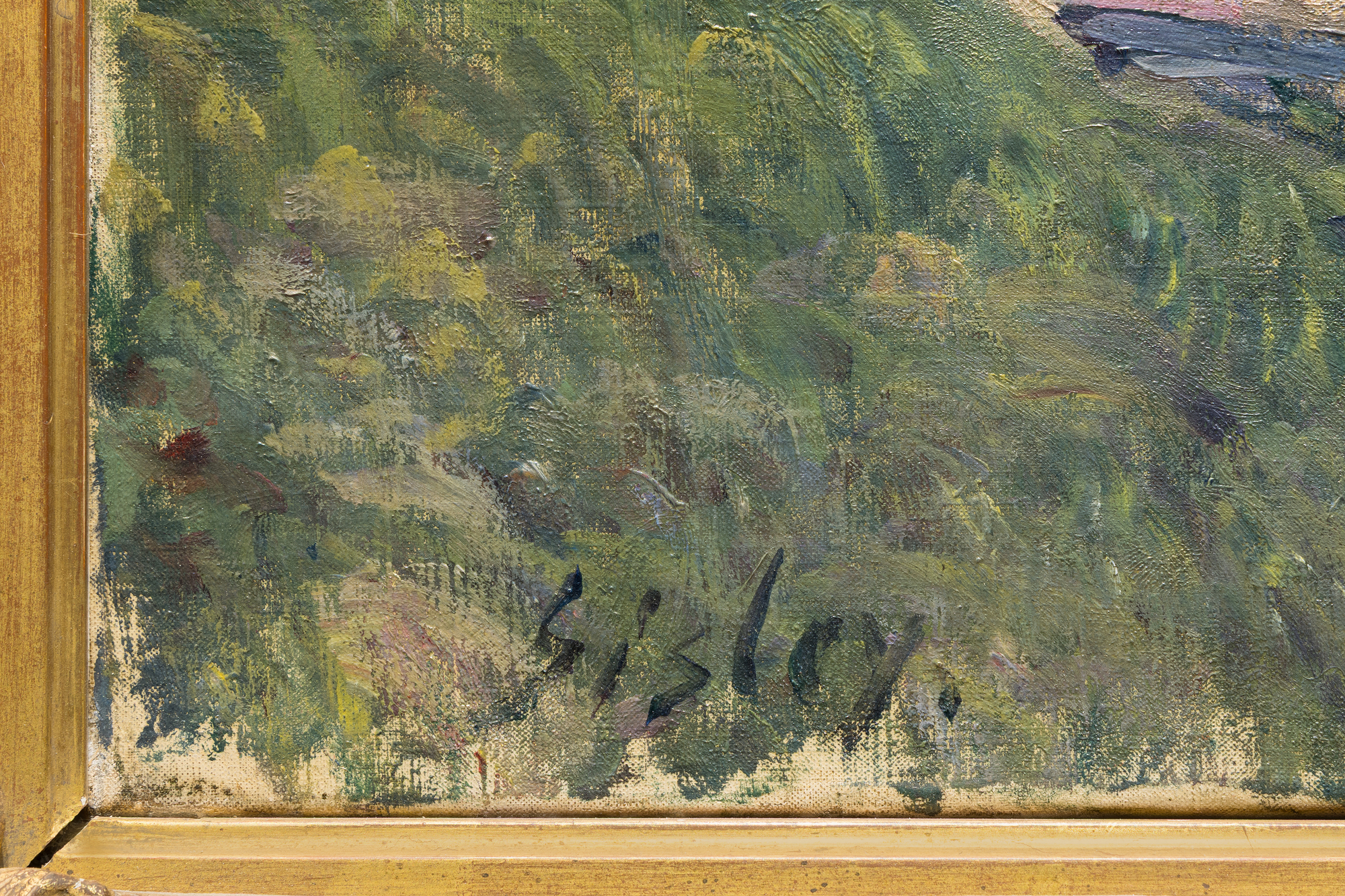
Les années 1870 sont largement reconnues comme la « période dorée » de Sisley, lorsque son œuvre s'exprime d'une voix distinctement personnelle plutôt que sous l'influence manifeste de Corot, Courbet ou même du jeune Monet. Après avoir cessé d'exposer au Salon après 1877, ses compositions sont devenues plus complexes et moins dépendantes de la perspective traditionnelle en retrait et linéaire, s'orientant plutôt vers des motifs entrelacés et l'énergie expressive de son coup de pinceau. Dans Le Lavoir de Billancourt, les couches de pigments sont superposées à l'aide de coups de pinceau rapides et multidirectionnels, créant une surface richement texturée, saturée de couleur et d'air. Cette spontanéité accrue correspond à l'éloge contemporain de la capacité de Sisley à saisir les moments fugaces - nuages, brise et feuillage tremblant - de sorte que l'espace et la lumière semblent indissociables et que la scène reste vivante et en mouvement. Le tableau est répertorié dans le catalogue raisonné de l'œuvre peinte de François Dault, Alfred Sisley (1959), sous le numéro 315.
demander