Galerie Jackson Hole Walkthrough 2023

PUBLIÉ DANS : Visites de galeries

Située dans la beauté sauvage de Jackson Hole, dans le Wyoming, avec les parcs nationaux en toile de fond, Heather James Jackson a apporté des œuvres d'art et des services du plus haut calibre à l'Intermountain West depuis plus d'une décennie.

Répondant à la communauté unique qui fait de Jackson Hole une destination inégalée pour la culture américaine et le plein air, Heather James s'efforce de fournir une sélection inégalée d'œuvres d'art et de services de gants blancs pour les habitants et les visiteurs.

ANDREW WYETH - Star Route - aquarelle sur papier - 21 1/4 x 29 po.

WYETH ANDREW

RICHARD SERRA - Cape Breton Horizontal Reversal No. 16 - litho-crayon sur deux feuilles de papier fait à la main - 19 3/4 x 55 7/8 in.

RICHARD SERRA

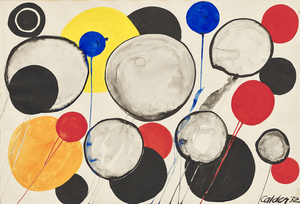
Rouge Mouille d'Alexander Calder présente un fond de cercles rouges, certains se dispersant comme des explosions, créant un sentiment d'expansion énergétique, et d'autres s'écoulant vers le bas comme s'il s'agissait des traînées d'un feu d'artifice. Cette toile de fond animée est ornée de nombreuses boules rondes opaques, principalement noires, mais parsemées de sphères bleues, rouges et d'un jaune subtil. L'emplacement stratégique des sphères colorées par rapport aux rouges explosifs capture l'émerveillement et le spectacle d'un feu d'artifice, transformant la peinture en une métaphore visuelle de cet événement éblouissant et festif. L'œuvre d'art résonne avec l'excitation et la vivacité, encapsulant sa beauté éphémère dans un support statique.

ALEXANDRE CALDER

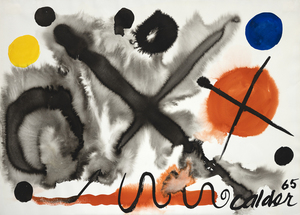
© 2023 Calder Foundation, New York / Artists Rights Society (ARS), New York<br>Two Crosses by Alexander Calder is a striking work on paper, blending transparent watercolor and gouache, showcasing his signature repertoire of shapes and symbols. At its heart lies a large, black 'X' on a fluid, grayish wash, and nearby, a smaller, opaque black cross overlapping a semi-opaque red ball, and to its left, a roundish transparent wash patch hosts a black crescent shape. Several spheres in black provide accompaniment, and the artist's favored primary colors, and at the lower margin, his charming undulating line. Calder's sparing use of watercolor allows the paper's white to showcase the forms and symbols, creating a dynamic, impactful artwork where simplicity and the interplay of transparent and opaque elements captivate the viewer.

ALEXANDRE CALDER

"Wigwam rouge et jaune", une captivante peinture à la gouache d'Alexander Calder, est une exploration vibrante du design et de la couleur. Dominée par un treillis de lignes diagonales se croisant près de leur point culminant, la composition dégage un équilibre dynamique. Calder introduit un élément de fantaisie avec des losanges rouges et jaunes, qui confèrent à l'œuvre un caractère ludique et créent une atmosphère de fête. Les boules rouges au sommet des lignes de droite évoquent une impression de fantaisie, tandis que les petites sphères grises au sommet des lignes de gauche offrent un contraste et un équilibre. La fusion magistrale de la simplicité et des éléments de conception essentiels de Calder fait de Wigwam rouge et jaune un délice visuel.

ALEXANDRE CALDER

© 2023 Calder Foundation, New York / Artists Rights Society (ARS), New York

ALEXANDRE CALDER

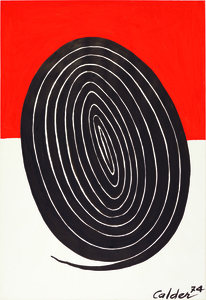
ALEXANDER CALDER - The Oval Spiral - gouache et encre sur papier - 43 1/4 x 29 1/2 in.

ALEXANDRE CALDER

HARRY BERTOIA - Untitled (Sounding Sculpture) - cuivre au béryllium et bronze avec base en bois - 36 1/2 x 8 x 8 in.

BERTOIA HARRY

HARRY BERTOIA - Willow Sculpture - acier inoxydable - 61 1/2 x 39 x 39 in.

BERTOIA HARRY

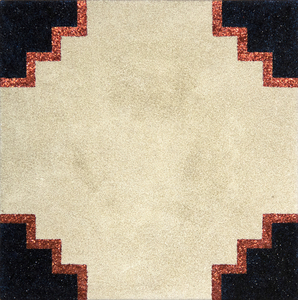
The essential and dramatic declaration “Let there be light” of Genesis is not so far removed from Mary Corse’s recollection of the moment in 1968 when the late afternoon sun electrified the reflective road markings of Malibu as she drove east. In an instant, the glowing asphalt markings provided the oracle she needed to realize she could ‘put light in the painting and not just make a picture of light’.  Using the same glass microbeads utilized by road maintenance services, she layers and embeds the prismatic material in bands and geometric configurations creating nuanced glimmering abstract fields which shift as the viewer moves in relationship to the work. Move to one side and dimness brightens to light. Walk back and forth and you might feel a rippling effect from its shimmering, prismatic effects.<br><br>A photographic image of a Mary Corse microsphere painting is not only a dull representation, but it also misses the point – it is experience dependent art that requires participation to ‘be’.  Of course, “Untitled” (1975) defies that one-point static perspective and instead, depends upon a real time, interactive art experience which heightens awareness of the body in space as the viewer experiences shifts of retinal stimulation, sensation and feeling. It is a rare bird.  Unusually petite at two-foot square, its design, geometry and color belie her earlier revelation that led to a devotion to her usual reductive palette. Instead, it is a bold statement in sequined color, its center field bounded at the corners by a sparkling red stepped motif that separates it from its starry night sky corner spandrels. It may not include a star motif, but it has the glamour and presence that belongs along Hollywood’s Walk of Fame.

MARY CORSE

<div>Andy Warhol’s <em>Mao</em> (1972) is one of the artist’s most iconic and provocative screenprints, reflecting his fascination with the intersection of political power and celebrity culture. This impression, numbered 244/250, comes from the regular edition of 250, in addition to 50 artist’s proofs. Warhol based the image on the widely circulated official portrait of Chairman Mao Zedong, a figure whose likeness was omnipresent in China during the Cultural Revolution. By reimagining the image through his vivid Pop palette, Warhol transformed a symbol of political authority into a mass-produced cultural icon. </div><br><br><div> </div><br><br><div>In this version, Mao’s face is rendered in a striking deep blue, offset by a green shirt and set against a turquoise background. The bold chromatic choices infuse the portrait with both drama and irony, destabilizing the original propagandistic authority of the image. Warhol further heightens this tension by juxtaposing flat, mechanical silkscreen layers with painterly flourishes, blurring the line between mass production and individual expression. </div><br><br><div> </div><br><br><div>The <em>Mao </em>series marked a new chapter in Warhol’s career in the 1970s, shifting from Hollywood stars to figures of global influence. Today, these works are regarded as essential statements on the nature of power, fame, and the pervasive reach of the image in contemporary culture. </div>

ANDY WARHOL (EN)

De la fin des années 1950 au milieu des années 1960, les premières contributions de Ray Parker à la peinture Color Field se distinguent remarquablement par leur qualité vibrante et fraîche. Parker disposait deux ou plusieurs blocs de couleur robustes et rugueux en utilisant une technique vigoureuse et brusque sur de grandes toiles préparées avec du gesso. Ces blocs, rendus dans des couleurs saturées mais subtilement vibrantes, font preuve d'une énergie distincte. Si les compositions de Parker peuvent rappeler celles de Rothko, la manière dont la couleur est délivrée - solidement et vigoureusement - les distingue. Tout en conservant l'ampleur et le dynamisme de l'école de New York, l'œuvre de Parker s'en écarte en renonçant à l'intensité émotionnelle souvent associée à l'expressionnisme abstrait et en adoptant une vision du mouvement dépourvue de son pathos typique.

RAY PARKER

RUSSELL YOUNG (EN)

This well preserved bell is one of the largest known bronzes from the Southeast Asian Bronze Age, generally named after the Dongson site in North Vietnam.  The swirling band design is finely and crisply cast. Dongson bronze drums were also reported in South China, Thailand, Laos, West Malaysia, and Indonesia and as Far East as Western Iranian Java. <br><br>The Dong Son culture is a Bronze age culture including all of southeast Asia and into the Indo-Malaya Archipelago from about 1000 to 1 BC. Centered on the Red River Valley of Vietnam, the Dong Son were sophisticated agriculturalists, raising rice and buffalo. Dong Son probably arose from local Neolithic cultures, such as Phung Nguyen and Dong Dau phases. Dong Son is identified with the Van Lang ruling dynasty, the first ruling dynasty of Vietnam. By the second century BC, impacts from the Han Dynasty in China were being felt and according to historic records, the Dong Son were absorbed into the Han Dynasty territory.

ASIE DU SUD-EST

<div><font face=Lato size=3 color=black>Wayne Thiebaud’s <em>Breakfast</em>, from an edition of 50, demonstrates the artist’s signature blend of Pop-inflected realism and painterly intimacy. Executed in colored drypoint, the work captures the simple subject of a morning meal with a remarkable freshness: hatching lines soften and blur the composition, creating a pastel-like effect that distinguishes it from the crispness of commercial print design. Though slightly faded, the impression retains the playful chromatic sensibility and softly modeled shadowing that became hallmarks of Thiebaud’s style.</font></div><br><br><div><font face=Lato size=3> </font></div><br><br><div><font face=Lato size=3 color=black>Since the early 1960s, Thiebaud has been celebrated for his depictions of food—cakes, pies, gumball machines, and diner counters—rendered not as literal meals but as cultural icons, at once nostalgic and idealized. In <em>Breakfast</em>, the modest meal is transformed into a subject of contemplation and delight, celebrating the pleasures of everyday American life while evoking memory and desire. The combination of precision and informality speaks to Thiebaud’s ability to merge the immediacy of drawing with the enduring resonance of painting.</font></div><br><br><div><font face=Lato size=3> </font></div><br><br><div><font face=Lato size=3 color=black>Institutional recognition of the work’s importance is reflected in its inclusion within the National Gallery of Art, Washington, affirming its role within Thiebaud’s larger project of elevating common objects into images of enduring cultural significance.</font></div>

WAYNE THIEBAUD

RUSSELL YOUNG - Mick Jagger (Sympathy for the Devil) - acrylique, encre à base d'huile, sérigraphie avec poussière de diamant sur lin - 62 x 48 pouces.

RUSSELL YOUNG (EN)

ELLSWORTH KELLY - Untitled, (from portfolio Eight by Eight to celebrate the Temporary Contemporary) - lithographie sur papier arches - 28 3/4 x 40 3/4 in.

ELLSWORTH KELLY (EN)

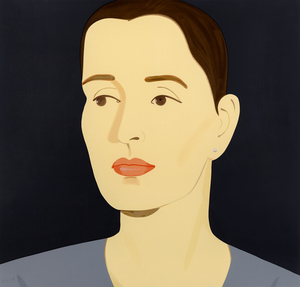
ALEX KATZ - Vivien - sérigraphie sur panneau de musée - 39 x 41 in.

ALEX KATZ (EN)

RUSSELL YOUNG - Beatlemania - sérigraphie à l'acrylique, à l'encre à base d'huile et à la poussière de diamant sur lin - 91 x 152 cm

RUSSELL YOUNG (EN)

RUSSELL YOUNG - Portrait d'Elizabeth Taylor - sérigraphie sur lin - 157 x 122 cm

RUSSELL YOUNG (EN)

RUSSELL YOUNG - Kurt Cobain - peinture acrylique, émail et sérigraphie à la poussière de diamant sur lin - 157 x 122 cm

RUSSELL YOUNG (EN)

RUSSELL YOUNG - Brando Bike - sérigraphie sur lin - 157 x 122 cm

RUSSELL YOUNG (EN)

ELLSWORTH KELLY - Red Curve (Black State) - lithographie en couleur - 10 x 7 1/2 in.

ELLSWORTH KELLY (EN)

JOSEF ALBERS - Formulation : Articulation - sérigraphie - 12 x 11 3/4 po ch.

ALBERS JOSEF

JOSEF ALBERS - Formulation : Articulation - sérigraphie - gauche : 10 x 17 1/2 po. droite : 6 x 10 1/2 po.

ALBERS JOSEF

LAWRENCE SCHILLER - End of the Day, Marilyn Monroe, "Something's Got to Give" - tirage à la gélatine argentique - 20 x 24 in.

LAURENT SCHILLER