GEORGIA O'KEEFFE (1887-1986)

$7,950,000

 
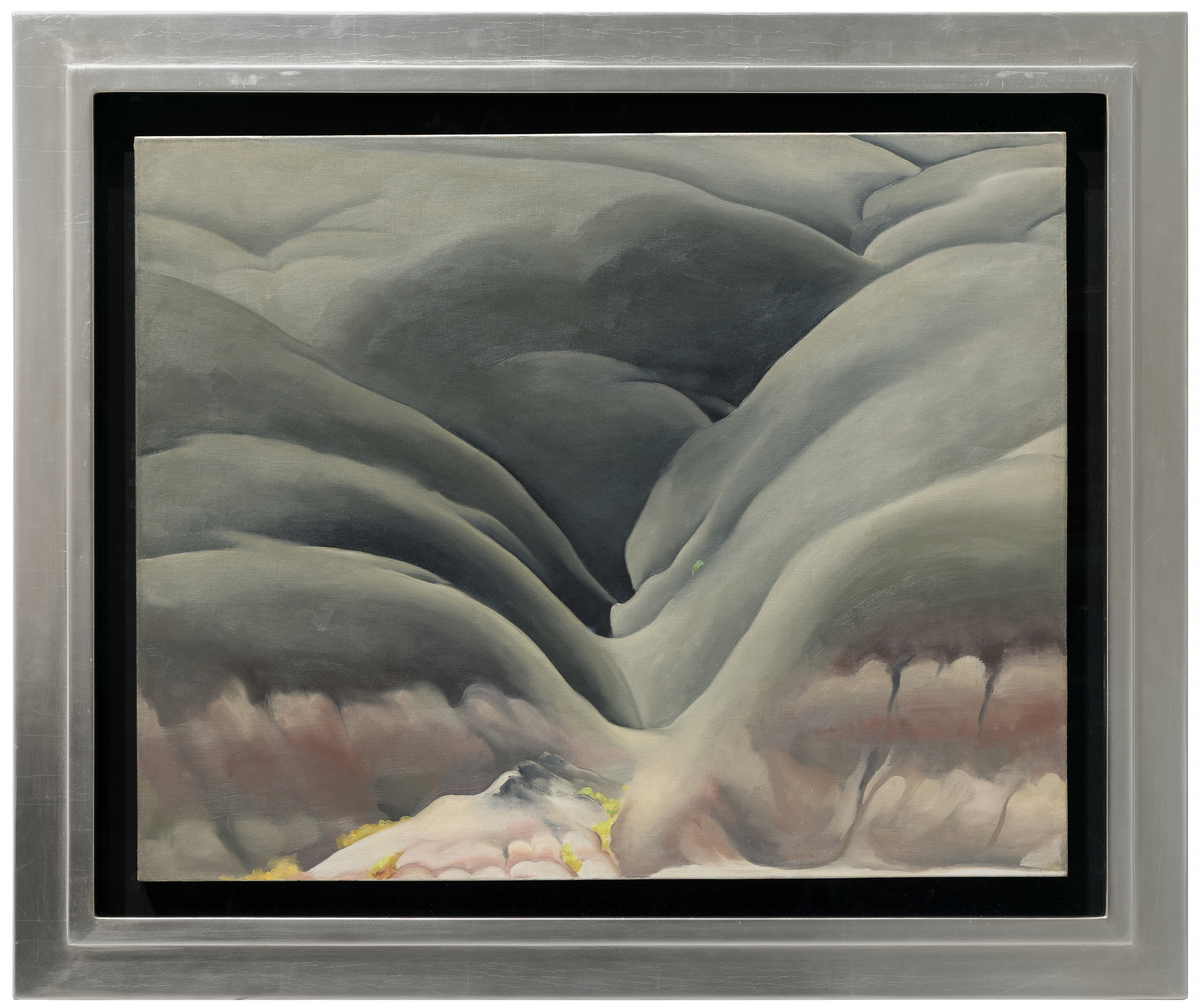
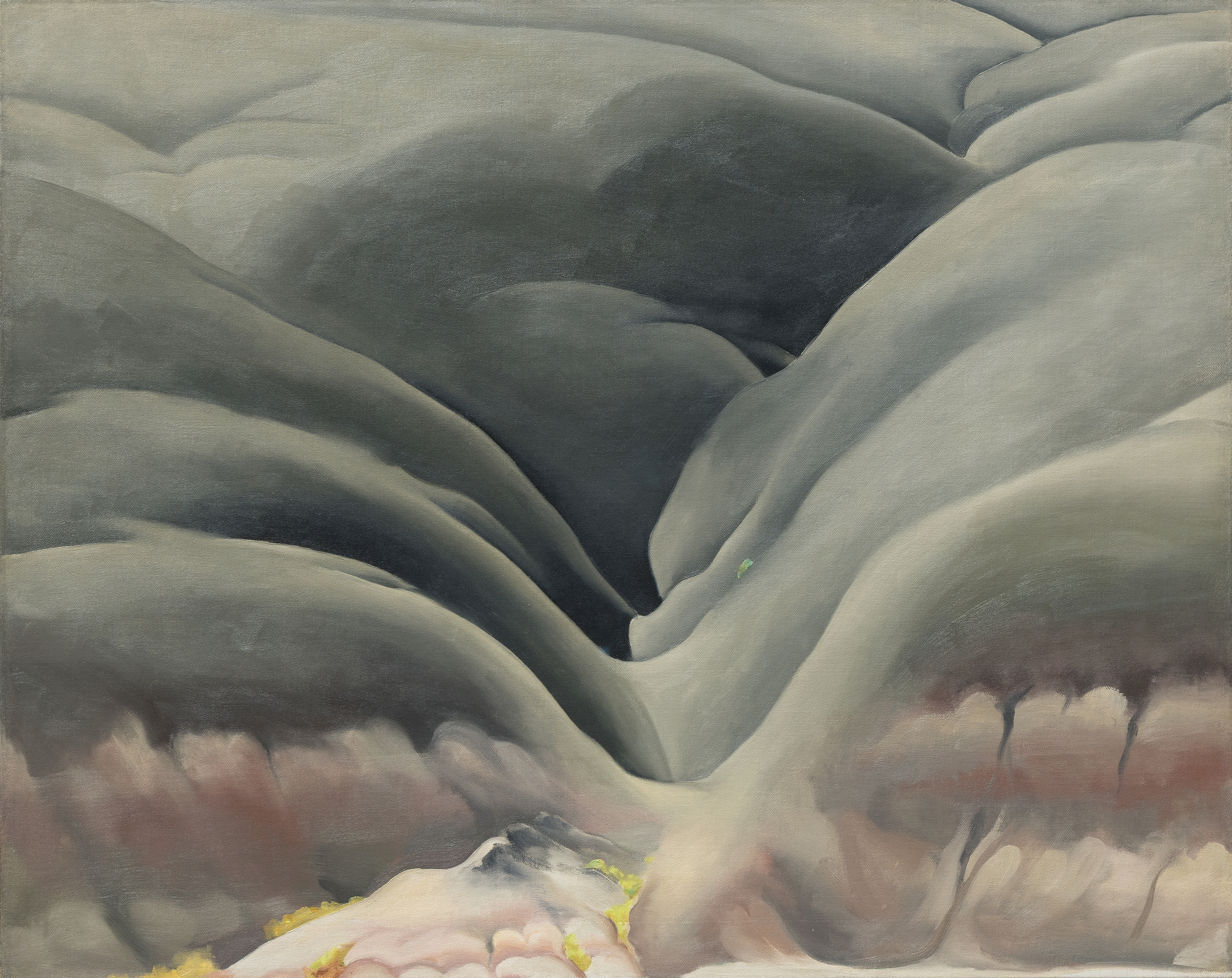
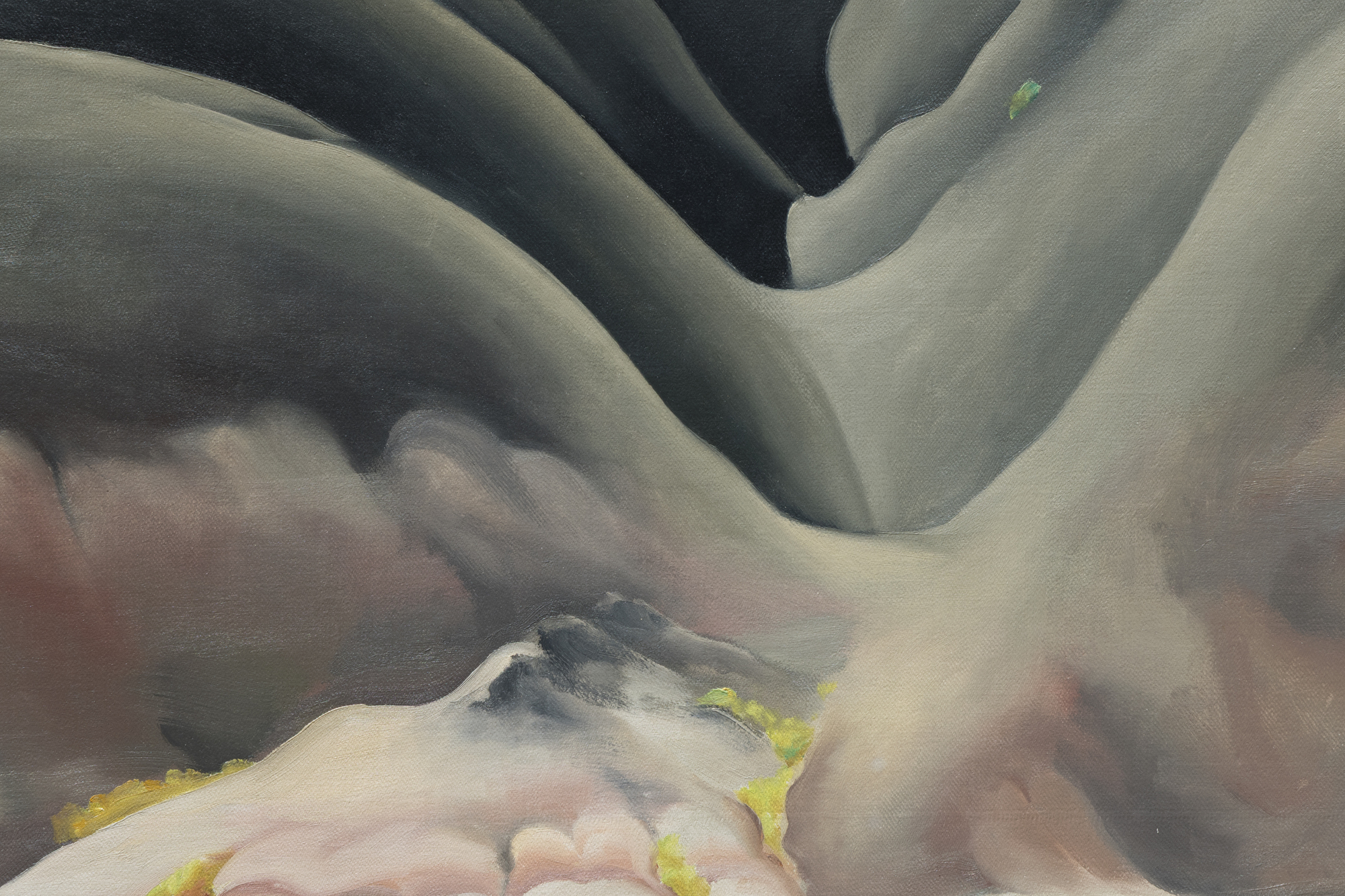
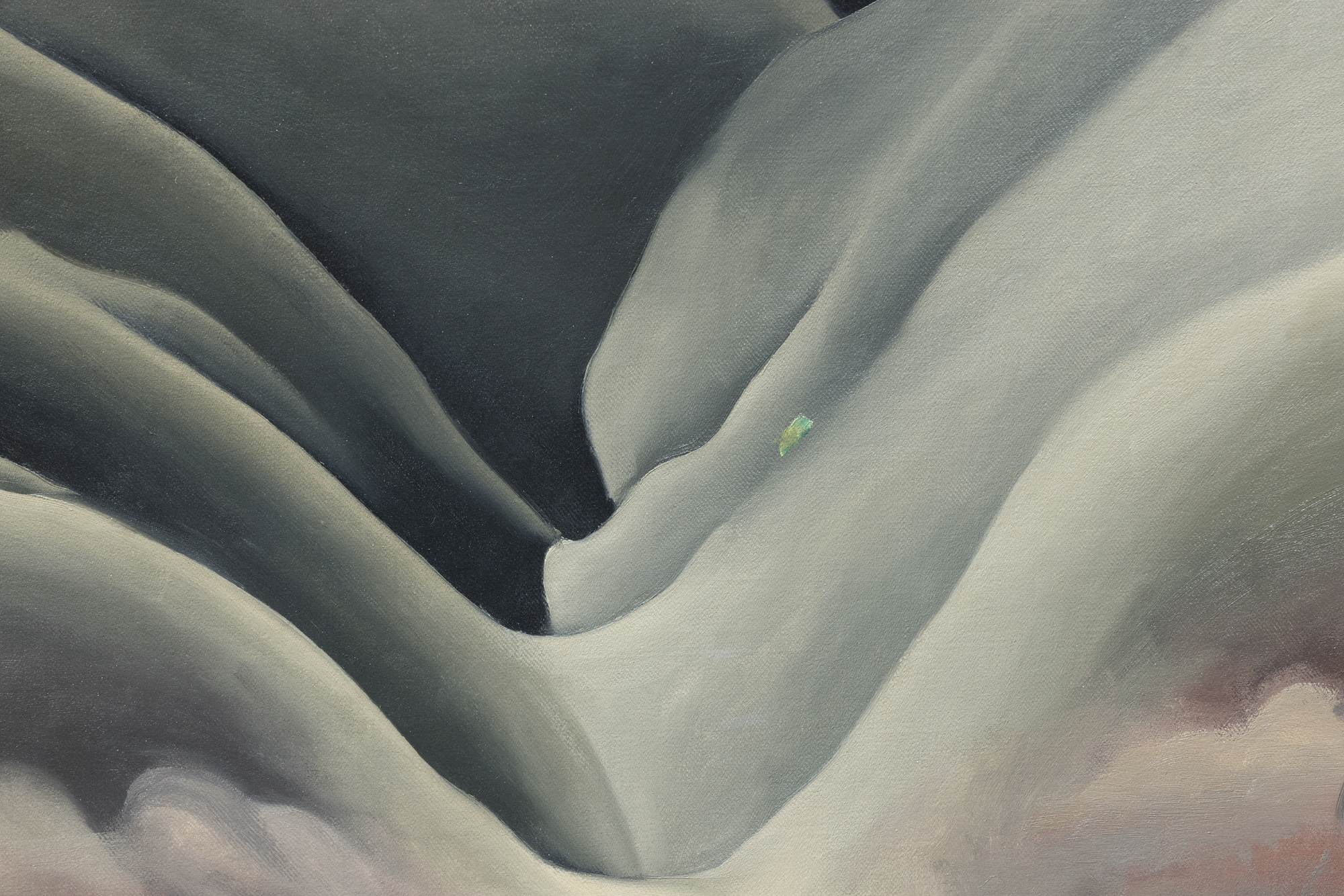
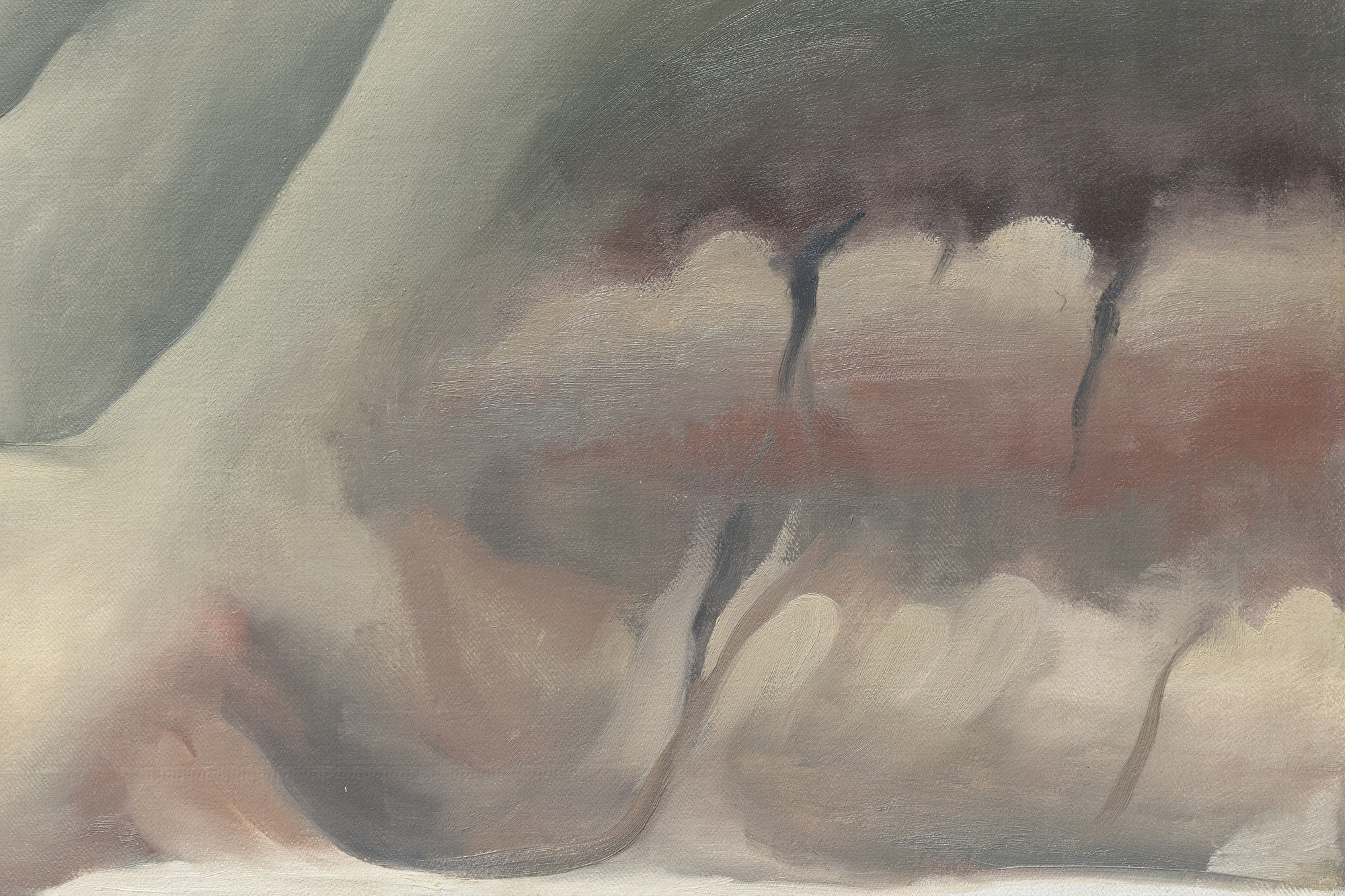
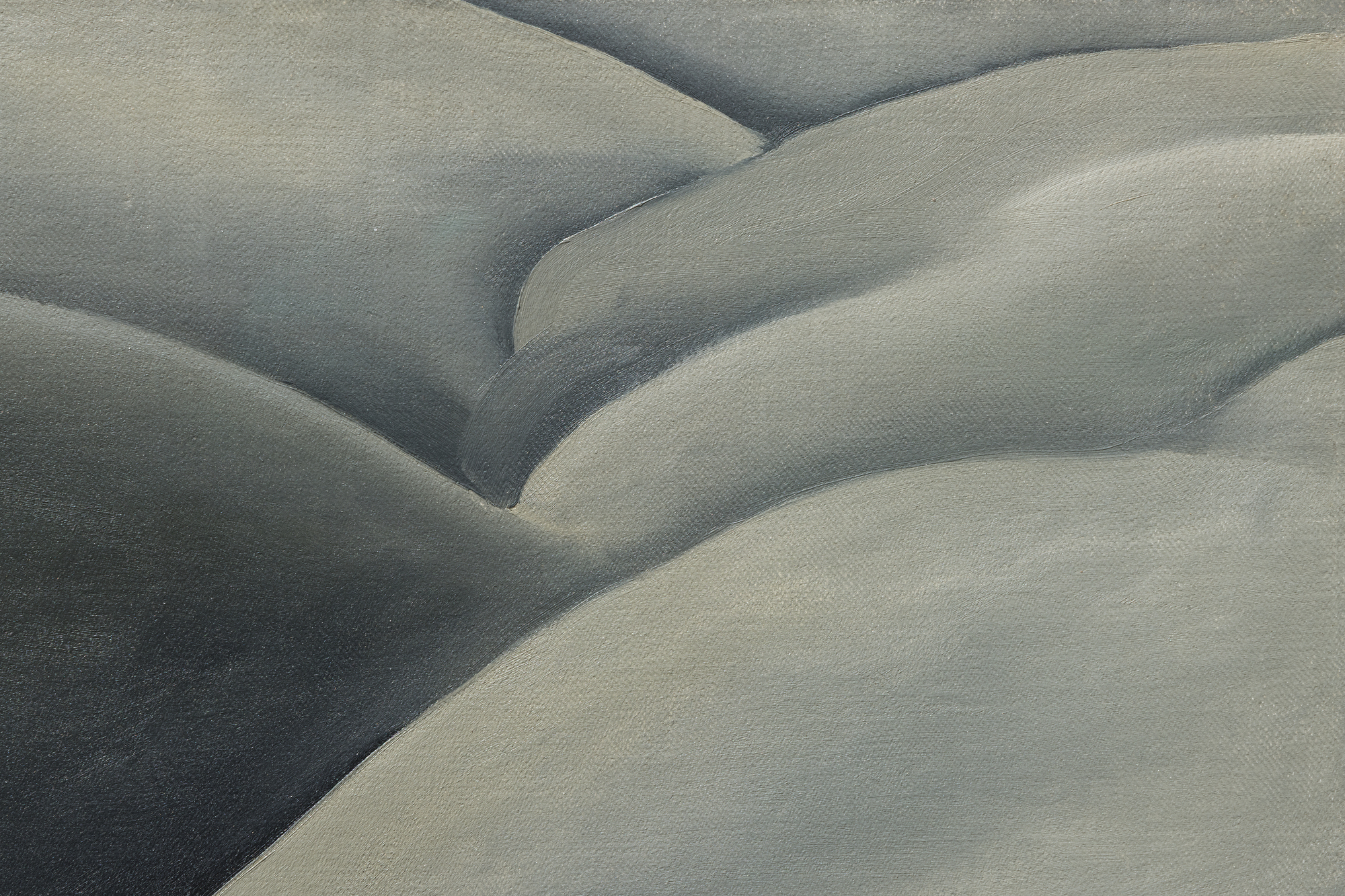
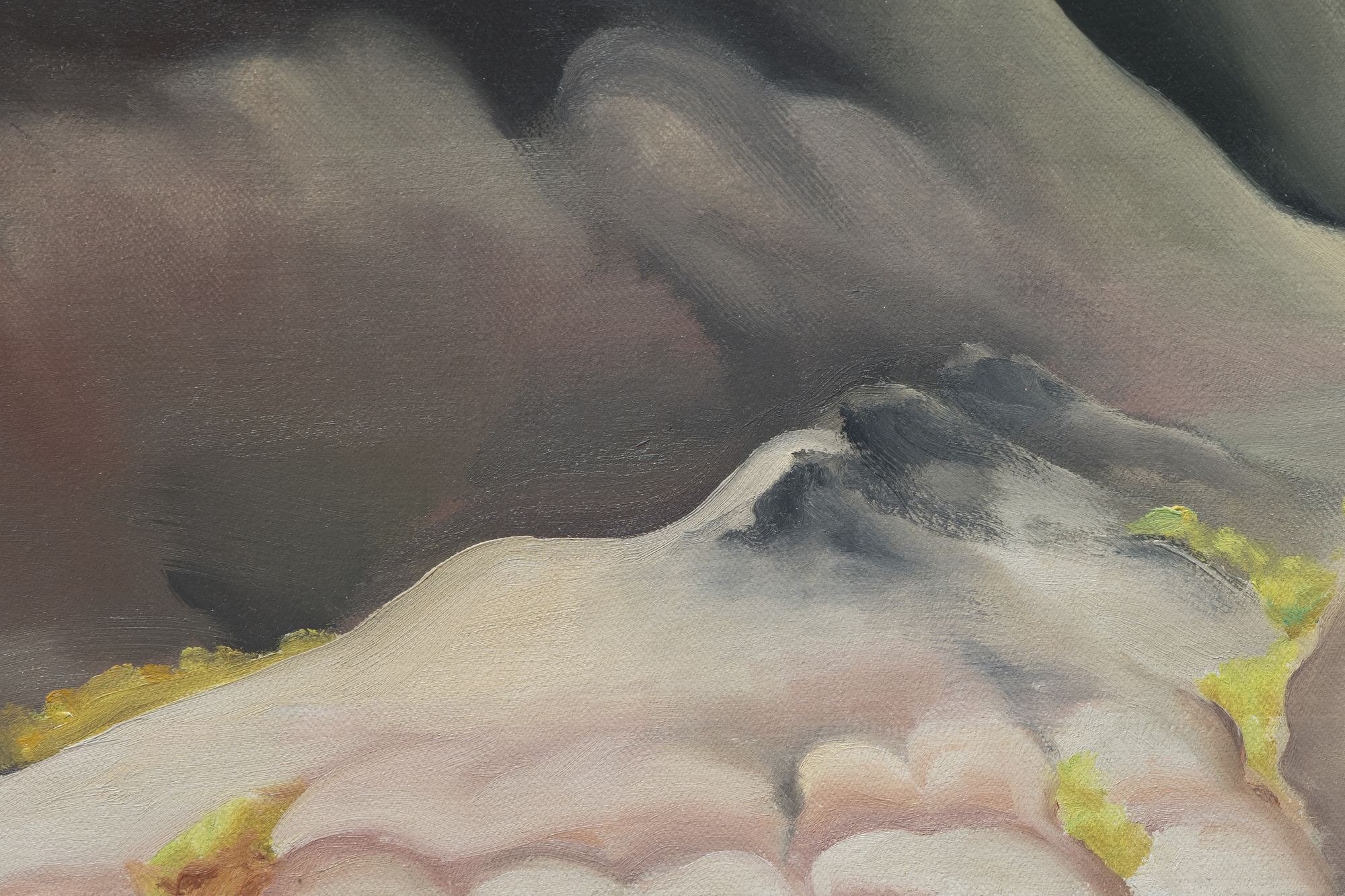
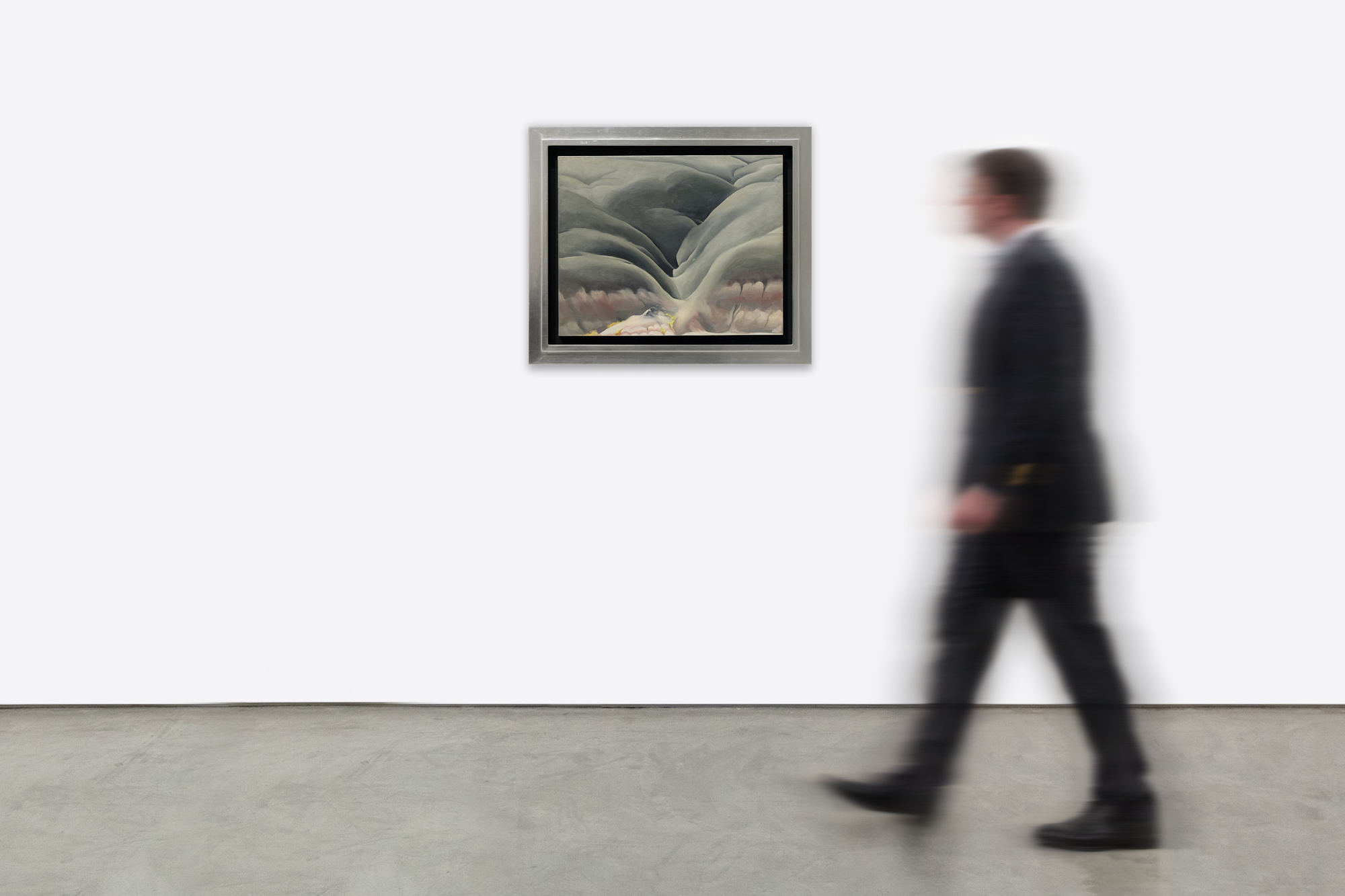
<div>Georgia O’Keeffe’s <em>Black Place II</em> (1945) belongs to one of the most profound and austere series of her career, inspired by repeated journeys to the Bisti Badlands, a remote, otherworldly area of northwestern New Mexico that she called the Black Place. Deeply compelled by this landscape, O’Keeffe often camped there so she could study its shifting forms and tonal subtleties at different hours of the day. In this work, she reduces the scene to its essentials: two massive hills pressing together, no visible horizon, and a composition defined by gravity, stillness, and quiet monumentality. The sweeping, interlocking forms create a sense of scale that feels both intimate and immense, evoking a landscape experienced as presence rather than panorama. </div><br><br><div> </div><br><br><div>Works from the Black Place series are exceptionally rare. Of the fourteen canvases O’Keeffe painted, only four remain in private hands; the remainder are held by major institutions including The Metropolitan Museum of Art, SFMOMA, and the Art Institute of Chicago. As a result, opportunities to encounter a work from this group outside of museum collections are exceedingly uncommon. </div><br><br><div> </div><br><br><div><em>Black Place II </em>has an illustrious lineage, from its earliest days in the holdings of Alfred Stieglitz’s famous New York gallery, An American Place, to the noted Philadelphia philanthropist and collector Daniel Dietrich, to the collection of Jan T. and Marica Vilcek. The painting’s legacy is further underscored by its unusually long institutional life. It was shown as early as 1946 at Stieglitz’s An American Place, and has continued to appear in major institutional retrospectives, including exhibitions at the Centre Pompidou and, most recently, the Museum of Fine Arts, Boston. This sustained public and scholarly attention has firmly established the importance of the Black Place paintings within O’Keeffe’s oeuvre. </div> <div>Georgia O’Keeffe’s <em>Black Place II</em> (1945) belongs to one of the most profound and austere series of her career, inspired by repeated journeys to the Bisti Badlands, a remote, otherworldly area of northwestern New Mexico that she called the Black Place. Deeply compelled by this landscape, O’Keeffe often camped there so she could study its shifting forms and tonal subtleties at different hours of the day. In this work, she reduces the scene to its essentials: two massive hills pressing together, no visible horizon, and a composition defined by gravity, stillness, and quiet monumentality. The sweeping, interlocking forms create a sense of scale that feels both intimate and immense, evoking a landscape experienced as presence rather than panorama. </div><br><br><div> </div><br><br><div>Works from the Black Place series are exceptionally rare. Of the fourteen canvases O’Keeffe painted, only four remain in private hands; the remainder are held by major institutions including The Metropolitan Museum of Art, SFMOMA, and the Art Institute of Chicago. As a result, opportunities to encounter a work from this group outside of museum collections are exceedingly uncommon. </div><br><br><div> </div><br><br><div><em>Black Place II </em>has an illustrious lineage, from its earliest days in the holdings of Alfred Stieglitz’s famous New York gallery, An American Place, to the noted Philadelphia philanthropist and collector Daniel Dietrich, to the collection of Jan T. and Marica Vilcek. The painting’s legacy is further underscored by its unusually long institutional life. It was shown as early as 1946 at Stieglitz’s An American Place, and has continued to appear in major institutional retrospectives, including exhibitions at the Centre Pompidou and, most recently, the Museum of Fine Arts, Boston. This sustained public and scholarly attention has firmly established the importance of the Black Place paintings within O’Keeffe’s oeuvre. </div> <div>Georgia O’Keeffe’s <em>Black Place II</em> (1945) belongs to one of the most profound and austere series of her career, inspired by repeated journeys to the Bisti Badlands, a remote, otherworldly area of northwestern New Mexico that she called the Black Place. Deeply compelled by this landscape, O’Keeffe often camped there so she could study its shifting forms and tonal subtleties at different hours of the day. In this work, she reduces the scene to its essentials: two massive hills pressing together, no visible horizon, and a composition defined by gravity, stillness, and quiet monumentality. The sweeping, interlocking forms create a sense of scale that feels both intimate and immense, evoking a landscape experienced as presence rather than panorama. </div><br><br><div> </div><br><br><div>Works from the Black Place series are exceptionally rare. Of the fourteen canvases O’Keeffe painted, only four remain in private hands; the remainder are held by major institutions including The Metropolitan Museum of Art, SFMOMA, and the Art Institute of Chicago. As a result, opportunities to encounter a work from this group outside of museum collections are exceedingly uncommon. </div><br><br><div> </div><br><br><div><em>Black Place II </em>has an illustrious lineage, from its earliest days in the holdings of Alfred Stieglitz’s famous New York gallery, An American Place, to the noted Philadelphia philanthropist and collector Daniel Dietrich, to the collection of Jan T. and Marica Vilcek. The painting’s legacy is further underscored by its unusually long institutional life. It was shown as early as 1946 at Stieglitz’s An American Place, and has continued to appear in major institutional retrospectives, including exhibitions at the Centre Pompidou and, most recently, the Museum of Fine Arts, Boston. This sustained public and scholarly attention has firmly established the importance of the Black Place paintings within O’Keeffe’s oeuvre. </div> <div>Georgia O’Keeffe’s <em>Black Place II</em> (1945) belongs to one of the most profound and austere series of her career, inspired by repeated journeys to the Bisti Badlands, a remote, otherworldly area of northwestern New Mexico that she called the Black Place. Deeply compelled by this landscape, O’Keeffe often camped there so she could study its shifting forms and tonal subtleties at different hours of the day. In this work, she reduces the scene to its essentials: two massive hills pressing together, no visible horizon, and a composition defined by gravity, stillness, and quiet monumentality. The sweeping, interlocking forms create a sense of scale that feels both intimate and immense, evoking a landscape experienced as presence rather than panorama. </div><br><br><div> </div><br><br><div>Works from the Black Place series are exceptionally rare. Of the fourteen canvases O’Keeffe painted, only four remain in private hands; the remainder are held by major institutions including The Metropolitan Museum of Art, SFMOMA, and the Art Institute of Chicago. As a result, opportunities to encounter a work from this group outside of museum collections are exceedingly uncommon. </div><br><br><div> </div><br><br><div><em>Black Place II </em>has an illustrious lineage, from its earliest days in the holdings of Alfred Stieglitz’s famous New York gallery, An American Place, to the noted Philadelphia philanthropist and collector Daniel Dietrich, to the collection of Jan T. and Marica Vilcek. The painting’s legacy is further underscored by its unusually long institutional life. It was shown as early as 1946 at Stieglitz’s An American Place, and has continued to appear in major institutional retrospectives, including exhibitions at the Centre Pompidou and, most recently, the Museum of Fine Arts, Boston. This sustained public and scholarly attention has firmly established the importance of the Black Place paintings within O’Keeffe’s oeuvre. </div> <div>Georgia O’Keeffe’s <em>Black Place II</em> (1945) belongs to one of the most profound and austere series of her career, inspired by repeated journeys to the Bisti Badlands, a remote, otherworldly area of northwestern New Mexico that she called the Black Place. Deeply compelled by this landscape, O’Keeffe often camped there so she could study its shifting forms and tonal subtleties at different hours of the day. In this work, she reduces the scene to its essentials: two massive hills pressing together, no visible horizon, and a composition defined by gravity, stillness, and quiet monumentality. The sweeping, interlocking forms create a sense of scale that feels both intimate and immense, evoking a landscape experienced as presence rather than panorama. </div><br><br><div> </div><br><br><div>Works from the Black Place series are exceptionally rare. Of the fourteen canvases O’Keeffe painted, only four remain in private hands; the remainder are held by major institutions including The Metropolitan Museum of Art, SFMOMA, and the Art Institute of Chicago. As a result, opportunities to encounter a work from this group outside of museum collections are exceedingly uncommon. </div><br><br><div> </div><br><br><div><em>Black Place II </em>has an illustrious lineage, from its earliest days in the holdings of Alfred Stieglitz’s famous New York gallery, An American Place, to the noted Philadelphia philanthropist and collector Daniel Dietrich, to the collection of Jan T. and Marica Vilcek. The painting’s legacy is further underscored by its unusually long institutional life. It was shown as early as 1946 at Stieglitz’s An American Place, and has continued to appear in major institutional retrospectives, including exhibitions at the Centre Pompidou and, most recently, the Museum of Fine Arts, Boston. This sustained public and scholarly attention has firmly established the importance of the Black Place paintings within O’Keeffe’s oeuvre. </div> <div>Georgia O’Keeffe’s <em>Black Place II</em> (1945) belongs to one of the most profound and austere series of her career, inspired by repeated journeys to the Bisti Badlands, a remote, otherworldly area of northwestern New Mexico that she called the Black Place. Deeply compelled by this landscape, O’Keeffe often camped there so she could study its shifting forms and tonal subtleties at different hours of the day. In this work, she reduces the scene to its essentials: two massive hills pressing together, no visible horizon, and a composition defined by gravity, stillness, and quiet monumentality. The sweeping, interlocking forms create a sense of scale that feels both intimate and immense, evoking a landscape experienced as presence rather than panorama. </div><br><br><div> </div><br><br><div>Works from the Black Place series are exceptionally rare. Of the fourteen canvases O’Keeffe painted, only four remain in private hands; the remainder are held by major institutions including The Metropolitan Museum of Art, SFMOMA, and the Art Institute of Chicago. As a result, opportunities to encounter a work from this group outside of museum collections are exceedingly uncommon. </div><br><br><div> </div><br><br><div><em>Black Place II </em>has an illustrious lineage, from its earliest days in the holdings of Alfred Stieglitz’s famous New York gallery, An American Place, to the noted Philadelphia philanthropist and collector Daniel Dietrich, to the collection of Jan T. and Marica Vilcek. The painting’s legacy is further underscored by its unusually long institutional life. It was shown as early as 1946 at Stieglitz’s An American Place, and has continued to appear in major institutional retrospectives, including exhibitions at the Centre Pompidou and, most recently, the Museum of Fine Arts, Boston. This sustained public and scholarly attention has firmly established the importance of the Black Place paintings within O’Keeffe’s oeuvre. </div> <div>Georgia O’Keeffe’s <em>Black Place II</em> (1945) belongs to one of the most profound and austere series of her career, inspired by repeated journeys to the Bisti Badlands, a remote, otherworldly area of northwestern New Mexico that she called the Black Place. Deeply compelled by this landscape, O’Keeffe often camped there so she could study its shifting forms and tonal subtleties at different hours of the day. In this work, she reduces the scene to its essentials: two massive hills pressing together, no visible horizon, and a composition defined by gravity, stillness, and quiet monumentality. The sweeping, interlocking forms create a sense of scale that feels both intimate and immense, evoking a landscape experienced as presence rather than panorama. </div><br><br><div> </div><br><br><div>Works from the Black Place series are exceptionally rare. Of the fourteen canvases O’Keeffe painted, only four remain in private hands; the remainder are held by major institutions including The Metropolitan Museum of Art, SFMOMA, and the Art Institute of Chicago. As a result, opportunities to encounter a work from this group outside of museum collections are exceedingly uncommon. </div><br><br><div> </div><br><br><div><em>Black Place II </em>has an illustrious lineage, from its earliest days in the holdings of Alfred Stieglitz’s famous New York gallery, An American Place, to the noted Philadelphia philanthropist and collector Daniel Dietrich, to the collection of Jan T. and Marica Vilcek. The painting’s legacy is further underscored by its unusually long institutional life. It was shown as early as 1946 at Stieglitz’s An American Place, and has continued to appear in major institutional retrospectives, including exhibitions at the Centre Pompidou and, most recently, the Museum of Fine Arts, Boston. This sustained public and scholarly attention has firmly established the importance of the Black Place paintings within O’Keeffe’s oeuvre. </div> <div>Georgia O’Keeffe’s <em>Black Place II</em> (1945) belongs to one of the most profound and austere series of her career, inspired by repeated journeys to the Bisti Badlands, a remote, otherworldly area of northwestern New Mexico that she called the Black Place. Deeply compelled by this landscape, O’Keeffe often camped there so she could study its shifting forms and tonal subtleties at different hours of the day. In this work, she reduces the scene to its essentials: two massive hills pressing together, no visible horizon, and a composition defined by gravity, stillness, and quiet monumentality. The sweeping, interlocking forms create a sense of scale that feels both intimate and immense, evoking a landscape experienced as presence rather than panorama. </div><br><br><div> </div><br><br><div>Works from the Black Place series are exceptionally rare. Of the fourteen canvases O’Keeffe painted, only four remain in private hands; the remainder are held by major institutions including The Metropolitan Museum of Art, SFMOMA, and the Art Institute of Chicago. As a result, opportunities to encounter a work from this group outside of museum collections are exceedingly uncommon. </div><br><br><div> </div><br><br><div><em>Black Place II </em>has an illustrious lineage, from its earliest days in the holdings of Alfred Stieglitz’s famous New York gallery, An American Place, to the noted Philadelphia philanthropist and collector Daniel Dietrich, to the collection of Jan T. and Marica Vilcek. The painting’s legacy is further underscored by its unusually long institutional life. It was shown as early as 1946 at Stieglitz’s An American Place, and has continued to appear in major institutional retrospectives, including exhibitions at the Centre Pompidou and, most recently, the Museum of Fine Arts, Boston. This sustained public and scholarly attention has firmly established the importance of the Black Place paintings within O’Keeffe’s oeuvre. </div> <div>Georgia O’Keeffe’s <em>Black Place II</em> (1945) belongs to one of the most profound and austere series of her career, inspired by repeated journeys to the Bisti Badlands, a remote, otherworldly area of northwestern New Mexico that she called the Black Place. Deeply compelled by this landscape, O’Keeffe often camped there so she could study its shifting forms and tonal subtleties at different hours of the day. In this work, she reduces the scene to its essentials: two massive hills pressing together, no visible horizon, and a composition defined by gravity, stillness, and quiet monumentality. The sweeping, interlocking forms create a sense of scale that feels both intimate and immense, evoking a landscape experienced as presence rather than panorama. </div><br><br><div> </div><br><br><div>Works from the Black Place series are exceptionally rare. Of the fourteen canvases O’Keeffe painted, only four remain in private hands; the remainder are held by major institutions including The Metropolitan Museum of Art, SFMOMA, and the Art Institute of Chicago. As a result, opportunities to encounter a work from this group outside of museum collections are exceedingly uncommon. </div><br><br><div> </div><br><br><div><em>Black Place II </em>has an illustrious lineage, from its earliest days in the holdings of Alfred Stieglitz’s famous New York gallery, An American Place, to the noted Philadelphia philanthropist and collector Daniel Dietrich, to the collection of Jan T. and Marica Vilcek. The painting’s legacy is further underscored by its unusually long institutional life. It was shown as early as 1946 at Stieglitz’s An American Place, and has continued to appear in major institutional retrospectives, including exhibitions at the Centre Pompidou and, most recently, the Museum of Fine Arts, Boston. This sustained public and scholarly attention has firmly established the importance of the Black Place paintings within O’Keeffe’s oeuvre. </div> <div>Georgia O’Keeffe’s <em>Black Place II</em> (1945) belongs to one of the most profound and austere series of her career, inspired by repeated journeys to the Bisti Badlands, a remote, otherworldly area of northwestern New Mexico that she called the Black Place. Deeply compelled by this landscape, O’Keeffe often camped there so she could study its shifting forms and tonal subtleties at different hours of the day. In this work, she reduces the scene to its essentials: two massive hills pressing together, no visible horizon, and a composition defined by gravity, stillness, and quiet monumentality. The sweeping, interlocking forms create a sense of scale that feels both intimate and immense, evoking a landscape experienced as presence rather than panorama. </div><br><br><div> </div><br><br><div>Works from the Black Place series are exceptionally rare. Of the fourteen canvases O’Keeffe painted, only four remain in private hands; the remainder are held by major institutions including The Metropolitan Museum of Art, SFMOMA, and the Art Institute of Chicago. As a result, opportunities to encounter a work from this group outside of museum collections are exceedingly uncommon. </div><br><br><div> </div><br><br><div><em>Black Place II </em>has an illustrious lineage, from its earliest days in the holdings of Alfred Stieglitz’s famous New York gallery, An American Place, to the noted Philadelphia philanthropist and collector Daniel Dietrich, to the collection of Jan T. and Marica Vilcek. The painting’s legacy is further underscored by its unusually long institutional life. It was shown as early as 1946 at Stieglitz’s An American Place, and has continued to appear in major institutional retrospectives, including exhibitions at the Centre Pompidou and, most recently, the Museum of Fine Arts, Boston. This sustained public and scholarly attention has firmly established the importance of the Black Place paintings within O’Keeffe’s oeuvre. </div>
《黑地 II》194524 x 30 英寸(60.96 x 76.2 x 2.54 厘米) 布面油画
种源
“美国之地”画廊,纽约
“市中心”画廊,纽约
卡特里娜·麦考密克·巴恩斯,科罗拉多州丹佛市
梅迪尔·麦考密克·巴恩斯,1971年通过继承获得
沃什伯恩画廊,纽约
赫希尔与阿德勒画廊,纽约
丹尼尔·迪特里希,费城,至1985年
赫希尔与阿德勒画廊,纽约
欧文斯画廊,新墨西哥州圣菲
私人收藏,新墨西哥州圣菲,2000年
欧文斯画廊,新墨西哥州圣菲
扬·T. 和玛丽卡·维尔切克,纽约,2011–2015
私人收藏
...更。。。该藏品由上述人士捐赠
展会信息
《纽约,一个美国之地》,乔治亚·奥基夫,1946年2月4日—3月27日,编号10
纽约,惠特尼美国艺术博物馆,美国当代绘画年度展,1948年11月13日 – 1949年1月2日
得克萨斯州达拉斯市,达拉斯美术博物馆,乔治亚·奥基夫画展,1953年2月1日至2月22日,随后巡展至:佛罗里达州德尔雷海滩,梅奥希尔画廊,1953年3月16日至4月11日
纽约,赫希尔与阿德勒画廊,重要近期藏品:19世纪末至20世纪初美国绘画,1972年2月2日至23日
纽约,沃什伯恩画廊,《心胜于物:内在事物的画家们》,1972年9月20日至10月21日
纽约,赫希尔与阿德勒画廊,乔治亚·奥基夫:精选油画与纸上作品展,1986年4月26日至6月6日;随后巡展至:得克萨斯州达拉斯,杰拉尔德·彼得斯画廊,1986年6月14日至7月14日
新墨西哥州圣菲,乔治亚·奥基夫博物馆,《乔治亚·奥基夫在新墨西哥:建筑、卡钦族与大地》,2013年5月17日至9月(主办机构),巡展至:新泽西州蒙克莱尔,蒙克莱尔艺术博物馆,2012年9月28日 – 2013年1月20日,科罗拉多州丹佛市,丹佛艺术博物馆,2013年2月10日 – 4月28日
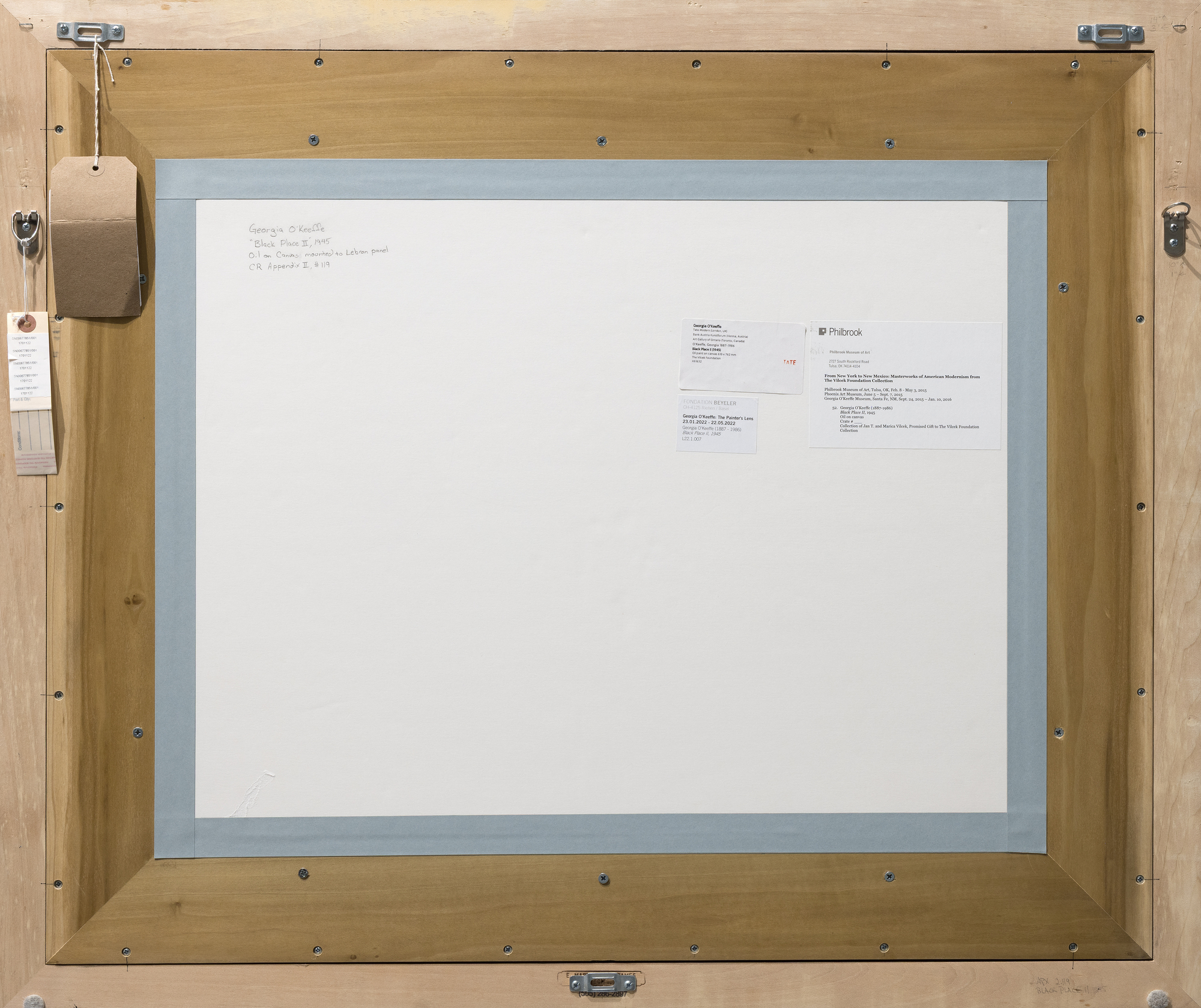
俄克拉荷马州塔尔萨市,菲尔布鲁克艺术博物馆;亚利桑那州菲尼克斯市,菲尔布鲁克艺术博物馆;《从纽约到新墨西哥:维尔切克基金会藏美国现代主义杰作展》,2015年2月8日至5月3日;巡展至:亚利桑那州,菲尼克斯艺术博物馆,2015年6月7日至9月7日;新墨西哥州圣菲市,乔治亚·奥基夫博物馆,2015年9月25日 – 2016年1月10日
新墨西哥州圣塔菲,乔治亚·奥基夫博物馆,长期借展,2016年1月至4月
伦敦,泰特现代美术馆,乔治亚·奥基夫,2016年7月6日至10月30日;随后巡展至维也纳,奥地利银行艺术中心,2016年12月7日至2017年3月26日;多伦多,安大略艺术馆,2017年4月22日至7月30日
新墨西哥州圣菲,乔治亚·奥基夫博物馆,《黑色之地:乔治亚·奥基夫与迈克尔·纳明加》,2018年4月28日至8月20日
得克萨斯州科珀斯克里斯蒂,南得克萨斯艺术博物馆,《维尔切克美国艺术收藏:美国现代主义杰作展》,2018年9月13日 – 2019年1月6日
堪萨斯州威奇托市,威奇托艺术博物馆,《乔治亚·奥基夫:艺术、形象、风格》,2019年3月30日—6月23日;巡展至:内华达州里诺市,内华达艺术博物馆,2019年7月20日—10月20日;佛罗里达州西棕榈滩市,诺顿艺术博物馆,2019年11月21日 – 2020年2月9日
巴黎,蓬皮杜艺术中心,乔治亚·奥基夫展,2021年9月8日—12月6日;巡展至:瑞士巴塞尔,拜耶勒基金会,2022年1月23日—5月22日
罗德岛州纽波特,纽波特艺术博物馆,乔治亚·奥基夫:“那些我无法言说的东西”,2022年7月16日至10月16日
加利福尼亚州圣地亚哥,圣地亚哥艺术博物馆,《奥基夫与摩尔》展,2023年5月13日至8月27日,巡展至:新墨西哥州阿尔伯克基,阿尔伯克基博物馆,2023年9月30日至12月31日;加拿大蒙特利尔,蒙特利尔美术馆,2024年2月10日 —2024年6月2日,马萨诸塞州波士顿,波士顿美术博物馆,2024年10月13日—2025年1月20日
文学
罗伯特·M·科茨,《艺术画廊——当代画廊,包括惠特尼美术馆》,《新》
《约克人》第22卷,1946年2月16日,第84页
“纽约展览——乔治亚·奥基夫”,《MKR艺术展望》,1946年4月,第1、3页(附图)
惠特尼美国艺术博物馆,美国当代绘画年度展,纽约,1948年,编号105
达拉斯美术博物馆,《乔治亚·奥基夫绘画展》,达拉斯,1953年,编号22
赫希尔与阿德勒画廊,《重要近期藏品:19世纪末至20世纪初美国绘画》,纽约,1972年,第52号(附图)
沃什伯恩画廊,《心胜于物:内在事物的画家们》,纽约,1972年,第7号,第3页(附图)
希尔顿·克雷默,《向西眺望的艺术家:A.C.A.画廊新展呈现多种风格与媒介》,《纽约时报》,1972年9月23日,第L27页
詹姆斯·R·梅洛,《风景:现实与想象——在美国艺术中》,《纽约时报》,1972年10月8日,第D27版
约翰·佩罗,《“有人想要这些艺术品吗?”》,《村声》,1972年10月5日,第29页
桑福德·施瓦茨,《纽约来信》,《国际艺术》第十六卷,1972年12月,第61页
Hirschl & Adler,《乔治亚·奥基夫:精选油画与纸上作品》,纽约,1986年,第28号(附图,并刊载于封面)
莎琳·乌达尔,《争议之地:西南艺术中的神话与意义》,阿尔伯克基,1996年,图版8,第xi页、120-134页、174页(内文插图及封面)
芭芭拉·布勒·莱恩斯,《乔治亚·奥基夫:作品全集》。第二卷,新黑文、华盛顿特区及新墨西哥州阿比奎,1999年,编号119,第1107页(附图)
芭芭拉·布勒·莱恩斯与卡罗琳·卡斯特纳,《乔治亚·欧姬芙在新墨西哥:建筑、卡茨纳人及大地》,新墨西哥州圣塔菲,2012年,图版49,第140页(附图)
丹·比肖夫,《艺术家乔治亚·奥基夫的地域感》,《星报》,2012年9月30日
玛莎·施文德纳,《文化物件的精神》,《纽约时报》,1月4日,
2013年,第NJ11页
雷·马克·里纳尔迪,《乔治亚·奥基夫受西部艺术启发的作品亮相丹佛艺术博物馆》
《丹佛邮报》,2013年2月15日
威廉·C·阿吉与刘易斯·卡丘尔,《美国现代主义杰作:从维尔切克》
《文集》,伦敦,2013年,第11页、第160–161页、第235页、第240页、第267页(附图)
坦雅·巴尔森与艾琳·B·科,《乔治亚·奥基夫》,伦敦,2016年,第178、255页(附图)
玛尔塔·鲁伊斯·德尔·阿尔博,《乔治亚·奥基夫,巴黎》,2021年,第75期,第40页、第206-207页、第312页(附图)
安妮塔·费尔德曼、汉娜·海厄姆、詹妮弗·劳伦特、芭芭拉·布勒·莱恩斯、阿里尔·普洛特克与克里斯·斯蒂芬斯,《奥基夫与摩尔》,圣地亚哥,2023年,第142页(附图)
...少。。。
乔治亚·奥基夫的《黑色之地 II》(1945)属于她职业生涯中最深刻、最朴素的系列之一,其灵感源于她多次前往比斯蒂荒原的旅程——这是新墨西哥州西北部一片偏远、宛如异世界的区域,她称之为“黑色之地”。奥基夫深受这片景观的吸引,常在那里露营,以便研究它在一天不同时段变幻的形态和色调的微妙变化。 在这幅作品中,她将场景精简至最本质的元素:两座巨型山丘相互挤压,不见地平线,构图由重力、静谧与沉静的宏伟感所定义。那些宏大而相互交织的形态营造出一种既亲密又浩瀚的尺度感,唤起一种作为“存在”而非“全景”所体验的风景。


《黑地》系列作品极为罕见。奥基夫创作的十四幅画作中,仅有四幅仍为私人收藏;其余均由大都会艺术博物馆、旧金山现代艺术博物馆及芝加哥艺术学院等重要机构收藏。因此,在博物馆馆藏之外邂逅该系列作品的机会实属凤毛麟角。


《黑地 II》拥有显赫的传承脉络:从最初由阿尔弗雷德·斯蒂格利茨(Alfred Stieglitz)著名的纽约画廊“美国之地”(An American Place)收藏,到费城知名慈善家兼收藏家丹尼尔·迪特里希(Daniel Dietrich)之手,再到扬·T·维尔切克(Jan T. Vilcek)与玛丽卡·维尔切克(Marica Vilcek)夫妇的收藏。该画作在机构中的长期流转,进一步彰显了其深厚的艺术底蕴。 该画作早在1946年便在斯蒂格利茨的“美国之地”画廊展出,此后持续亮相于各大机构的回顾展,包括蓬皮杜艺术中心的展览,以及最近的波士顿美术博物馆展览。这种持续不断的公众与学术关注,已牢固确立了“黑色之地”系列画作在奥基夫艺术创作中的重要地位。
询问