返回

MARCCHAGALL_nbsp(1887-1985)

 
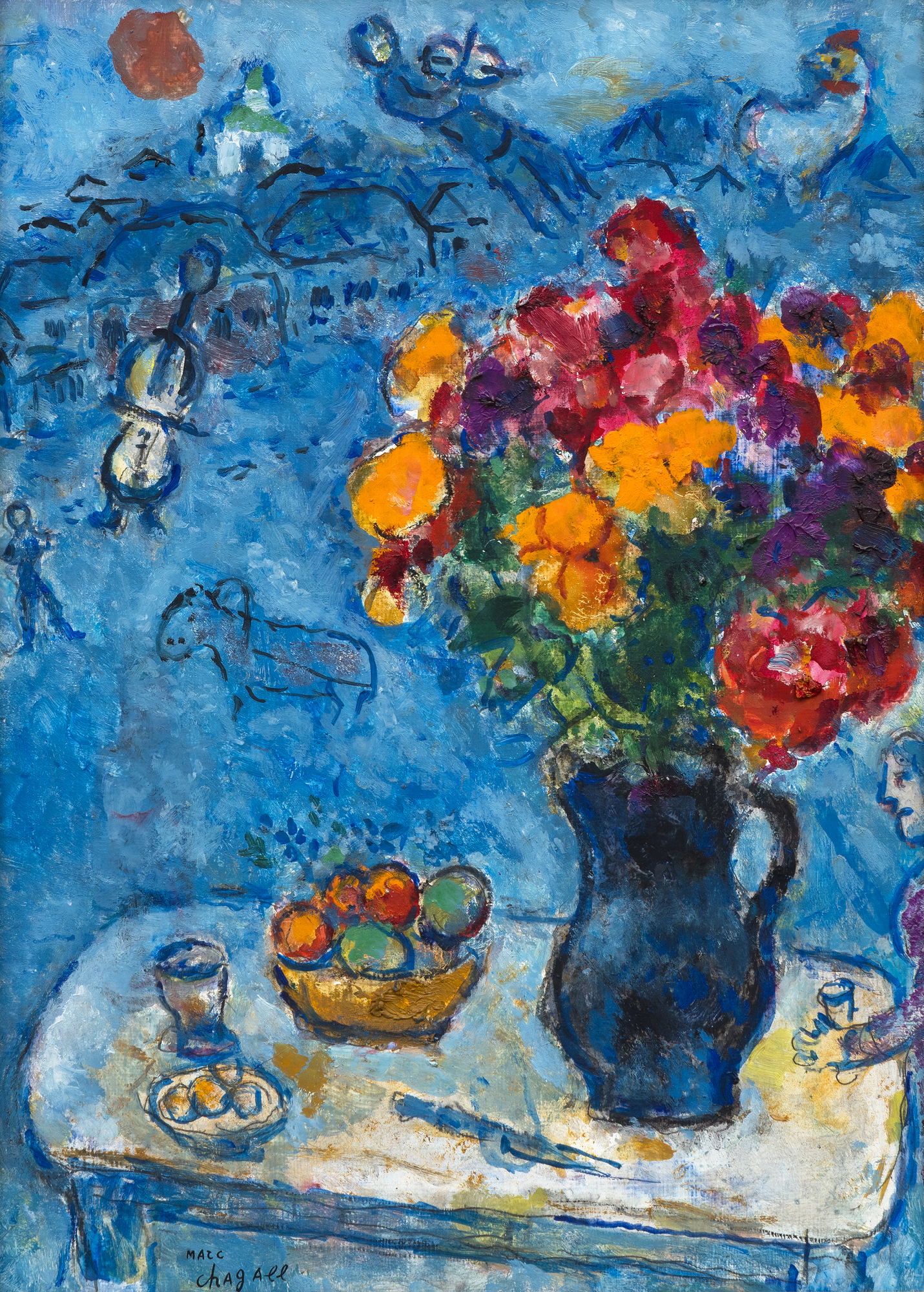
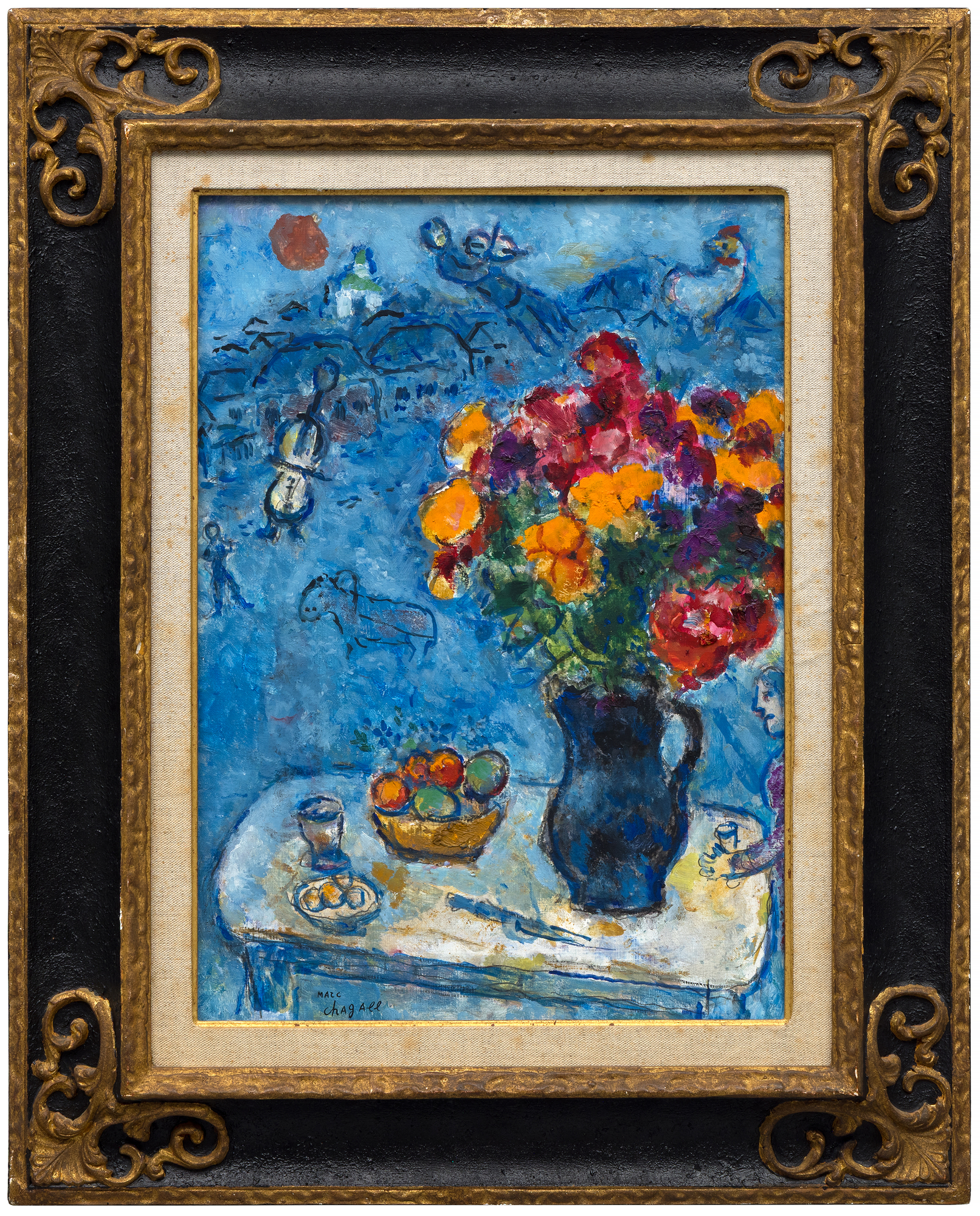
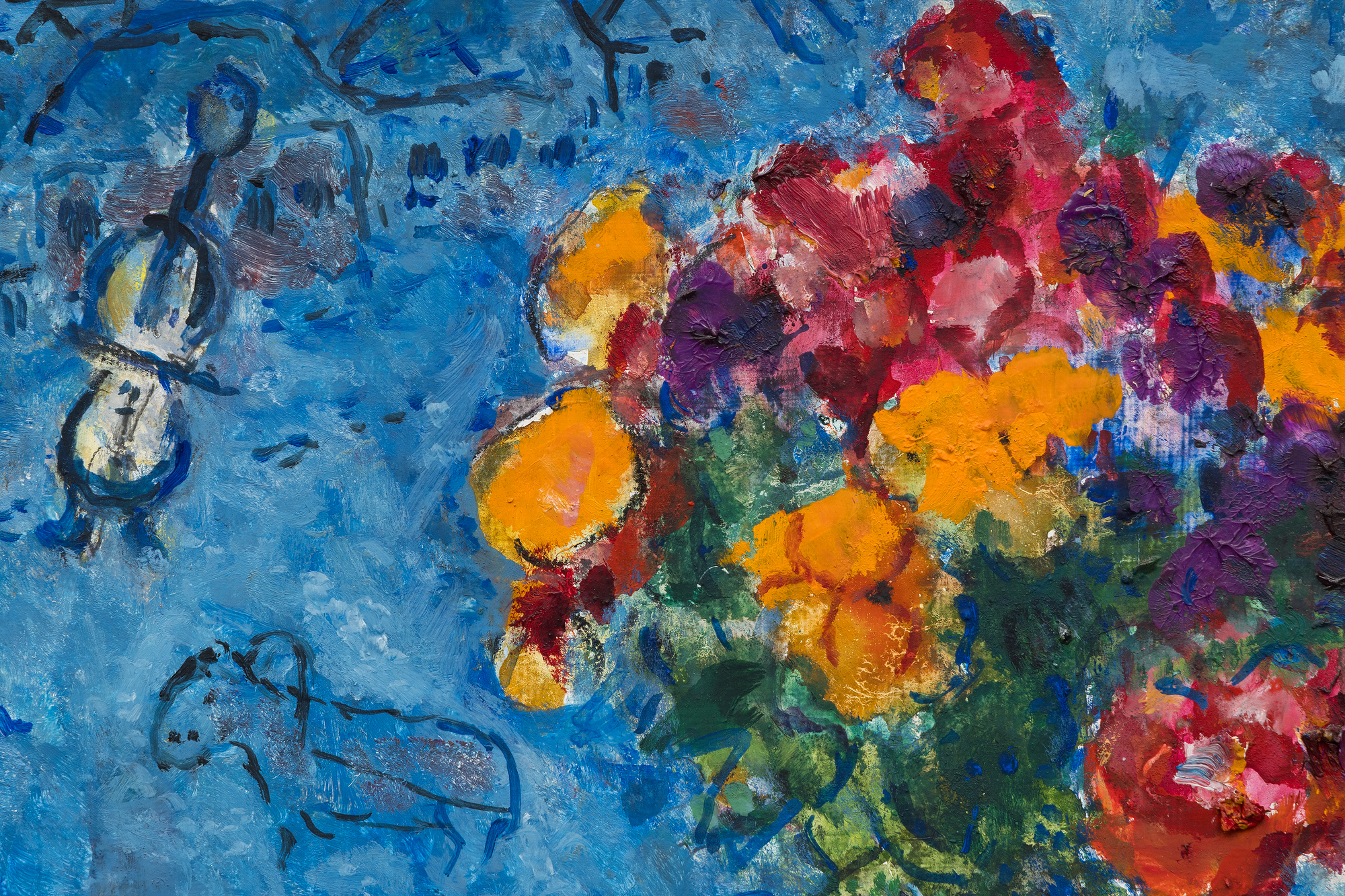
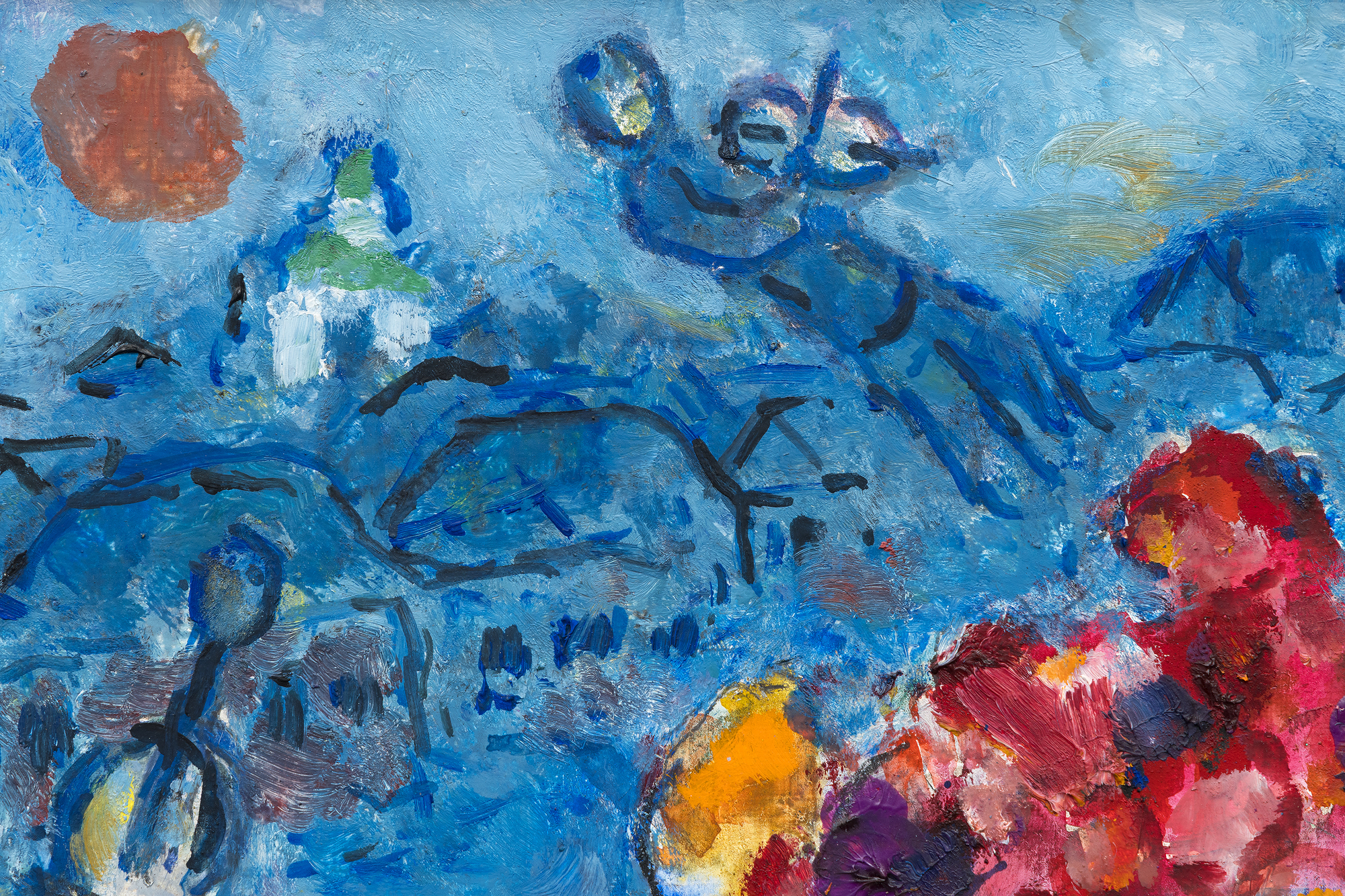
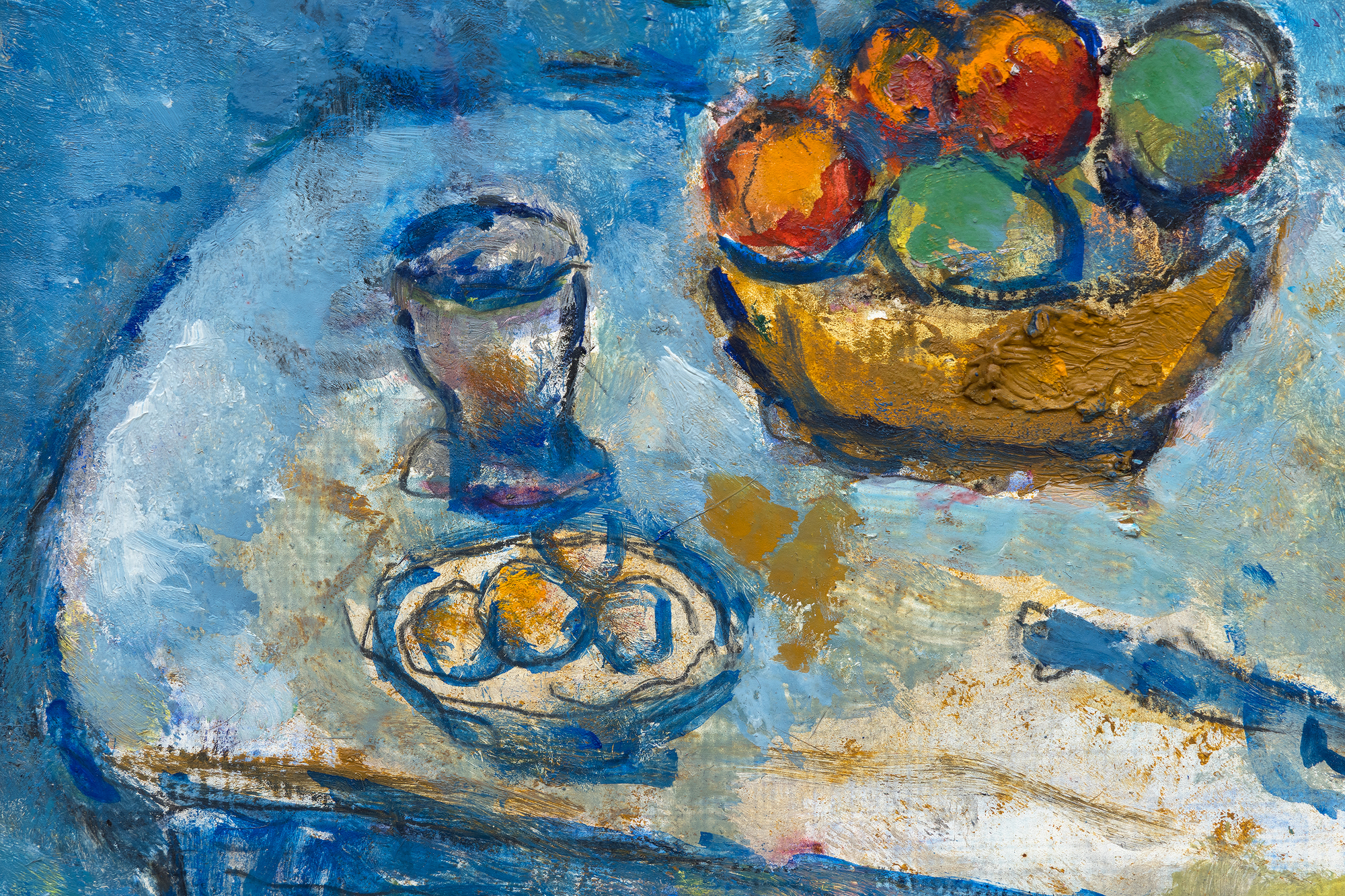
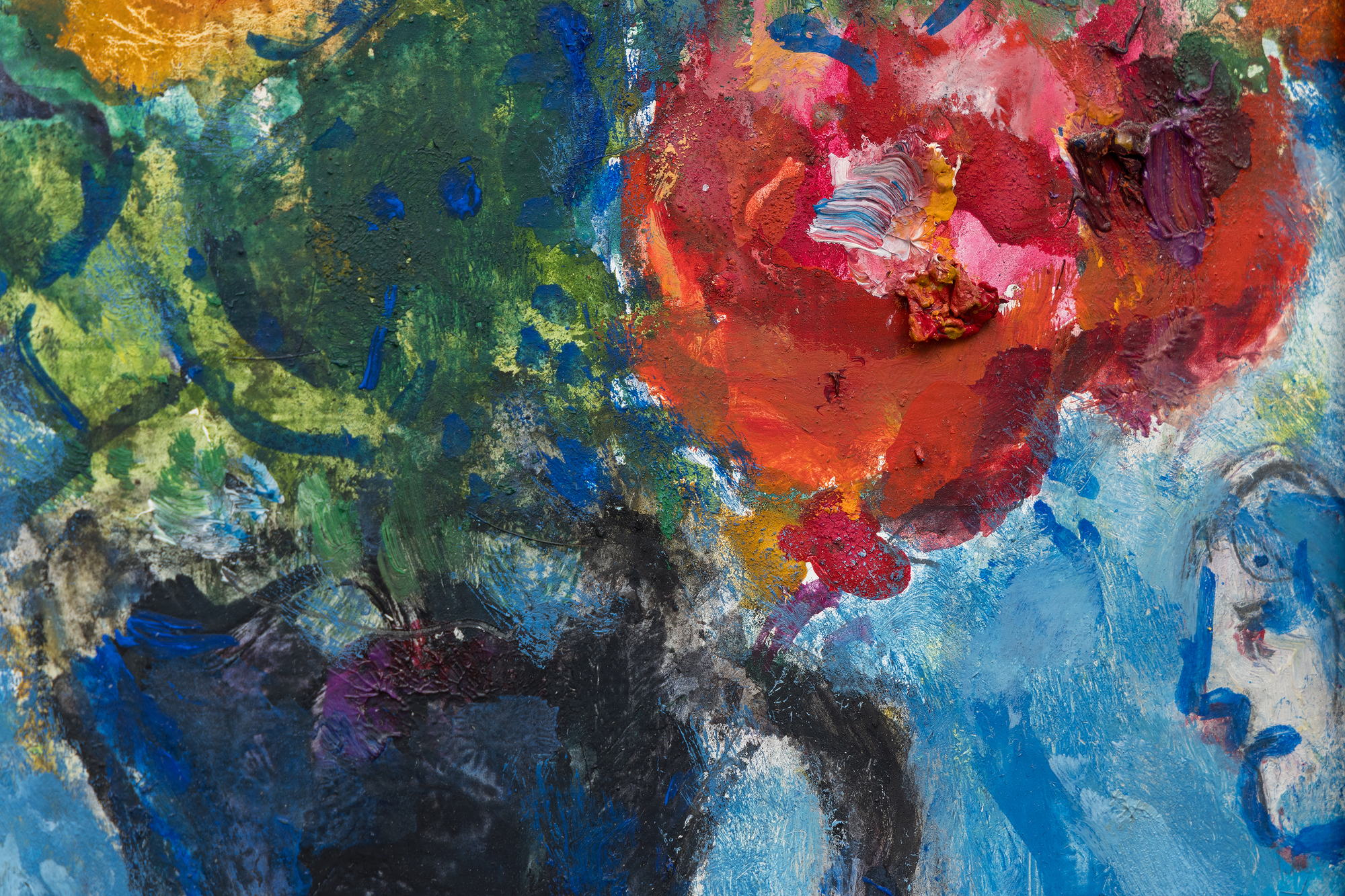
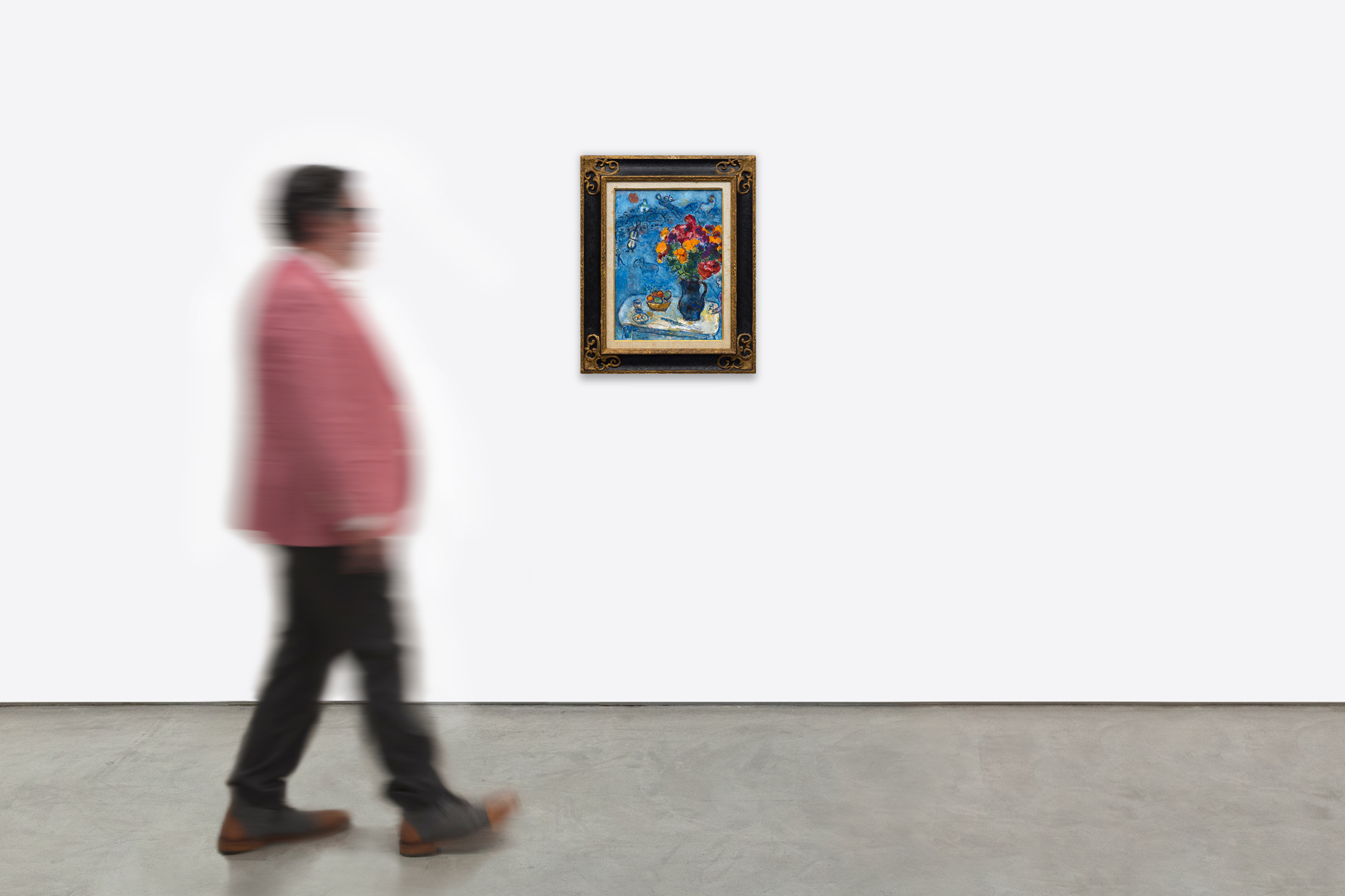
<div><font face=Lato size=3 color=black>Marc Chagall’s <em>Sur la table</em> is a radiant celebration of color, memory, and imagination. Bathed in a deep blue palette, the painting brings together several of the artist’s most beloved motifs: a rooster, violinist, goat, and exuberant bouquet. The composition is animated with Chagall’s signature sense of movement and dreamlike harmony, creating a world where everyday life, folklore, and love coexist in vibrant equilibrium.</font></div><br><br><div> </div><br><br><div><font face=Lato size=3 color=black>Painted in a richly productive period just after Chagall’s return to his homeland in the early 1970s, <em>Sur la table</em> reflects the renewed emotional and visual energy that came from reconnecting with his roots in Vitebsk, represented here by the white domed church in the distance. The expansive bouquet, one of Chagall’s enduring symbols of love for his first wife, Bella, dominates the foreground and infuses the work with emotional warmth and vitality.</font></div><br><br><div> </div><br><br><div><font face=Lato size=3 color=black>The painting remained in Chagall’s own collection and estate until after his death in 1985, underscoring its personal significance. Authenticated by the Comité Marc Chagall, <em>Sur la table</em> belongs to a lineage of floral and symbolic compositions that define his mature work.</font></div> <div><font face=Lato size=3 color=black>Marc Chagall’s <em>Sur la table</em> is a radiant celebration of color, memory, and imagination. Bathed in a deep blue palette, the painting brings together several of the artist’s most beloved motifs: a rooster, violinist, goat, and exuberant bouquet. The composition is animated with Chagall’s signature sense of movement and dreamlike harmony, creating a world where everyday life, folklore, and love coexist in vibrant equilibrium.</font></div><br><br><div> </div><br><br><div><font face=Lato size=3 color=black>Painted in a richly productive period just after Chagall’s return to his homeland in the early 1970s, <em>Sur la table</em> reflects the renewed emotional and visual energy that came from reconnecting with his roots in Vitebsk, represented here by the white domed church in the distance. The expansive bouquet, one of Chagall’s enduring symbols of love for his first wife, Bella, dominates the foreground and infuses the work with emotional warmth and vitality.</font></div><br><br><div> </div><br><br><div><font face=Lato size=3 color=black>The painting remained in Chagall’s own collection and estate until after his death in 1985, underscoring its personal significance. Authenticated by the Comité Marc Chagall, <em>Sur la table</em> belongs to a lineage of floral and symbolic compositions that define his mature work.</font></div> <div><font face=Lato size=3 color=black>Marc Chagall’s <em>Sur la table</em> is a radiant celebration of color, memory, and imagination. Bathed in a deep blue palette, the painting brings together several of the artist’s most beloved motifs: a rooster, violinist, goat, and exuberant bouquet. The composition is animated with Chagall’s signature sense of movement and dreamlike harmony, creating a world where everyday life, folklore, and love coexist in vibrant equilibrium.</font></div><br><br><div> </div><br><br><div><font face=Lato size=3 color=black>Painted in a richly productive period just after Chagall’s return to his homeland in the early 1970s, <em>Sur la table</em> reflects the renewed emotional and visual energy that came from reconnecting with his roots in Vitebsk, represented here by the white domed church in the distance. The expansive bouquet, one of Chagall’s enduring symbols of love for his first wife, Bella, dominates the foreground and infuses the work with emotional warmth and vitality.</font></div><br><br><div> </div><br><br><div><font face=Lato size=3 color=black>The painting remained in Chagall’s own collection and estate until after his death in 1985, underscoring its personal significance. Authenticated by the Comité Marc Chagall, <em>Sur la table</em> belongs to a lineage of floral and symbolic compositions that define his mature work.</font></div> <div><font face=Lato size=3 color=black>Marc Chagall’s <em>Sur la table</em> is a radiant celebration of color, memory, and imagination. Bathed in a deep blue palette, the painting brings together several of the artist’s most beloved motifs: a rooster, violinist, goat, and exuberant bouquet. The composition is animated with Chagall’s signature sense of movement and dreamlike harmony, creating a world where everyday life, folklore, and love coexist in vibrant equilibrium.</font></div><br><br><div> </div><br><br><div><font face=Lato size=3 color=black>Painted in a richly productive period just after Chagall’s return to his homeland in the early 1970s, <em>Sur la table</em> reflects the renewed emotional and visual energy that came from reconnecting with his roots in Vitebsk, represented here by the white domed church in the distance. The expansive bouquet, one of Chagall’s enduring symbols of love for his first wife, Bella, dominates the foreground and infuses the work with emotional warmth and vitality.</font></div><br><br><div> </div><br><br><div><font face=Lato size=3 color=black>The painting remained in Chagall’s own collection and estate until after his death in 1985, underscoring its personal significance. Authenticated by the Comité Marc Chagall, <em>Sur la table</em> belongs to a lineage of floral and symbolic compositions that define his mature work.</font></div> <div><font face=Lato size=3 color=black>Marc Chagall’s <em>Sur la table</em> is a radiant celebration of color, memory, and imagination. Bathed in a deep blue palette, the painting brings together several of the artist’s most beloved motifs: a rooster, violinist, goat, and exuberant bouquet. The composition is animated with Chagall’s signature sense of movement and dreamlike harmony, creating a world where everyday life, folklore, and love coexist in vibrant equilibrium.</font></div><br><br><div> </div><br><br><div><font face=Lato size=3 color=black>Painted in a richly productive period just after Chagall’s return to his homeland in the early 1970s, <em>Sur la table</em> reflects the renewed emotional and visual energy that came from reconnecting with his roots in Vitebsk, represented here by the white domed church in the distance. The expansive bouquet, one of Chagall’s enduring symbols of love for his first wife, Bella, dominates the foreground and infuses the work with emotional warmth and vitality.</font></div><br><br><div> </div><br><br><div><font face=Lato size=3 color=black>The painting remained in Chagall’s own collection and estate until after his death in 1985, underscoring its personal significance. Authenticated by the Comité Marc Chagall, <em>Sur la table</em> belongs to a lineage of floral and symbolic compositions that define his mature work.</font></div> <div><font face=Lato size=3 color=black>Marc Chagall’s <em>Sur la table</em> is a radiant celebration of color, memory, and imagination. Bathed in a deep blue palette, the painting brings together several of the artist’s most beloved motifs: a rooster, violinist, goat, and exuberant bouquet. The composition is animated with Chagall’s signature sense of movement and dreamlike harmony, creating a world where everyday life, folklore, and love coexist in vibrant equilibrium.</font></div><br><br><div> </div><br><br><div><font face=Lato size=3 color=black>Painted in a richly productive period just after Chagall’s return to his homeland in the early 1970s, <em>Sur la table</em> reflects the renewed emotional and visual energy that came from reconnecting with his roots in Vitebsk, represented here by the white domed church in the distance. The expansive bouquet, one of Chagall’s enduring symbols of love for his first wife, Bella, dominates the foreground and infuses the work with emotional warmth and vitality.</font></div><br><br><div> </div><br><br><div><font face=Lato size=3 color=black>The painting remained in Chagall’s own collection and estate until after his death in 1985, underscoring its personal significance. Authenticated by the Comité Marc Chagall, <em>Sur la table</em> belongs to a lineage of floral and symbolic compositions that define his mature work.</font></div> <div><font face=Lato size=3 color=black>Marc Chagall’s <em>Sur la table</em> is a radiant celebration of color, memory, and imagination. Bathed in a deep blue palette, the painting brings together several of the artist’s most beloved motifs: a rooster, violinist, goat, and exuberant bouquet. The composition is animated with Chagall’s signature sense of movement and dreamlike harmony, creating a world where everyday life, folklore, and love coexist in vibrant equilibrium.</font></div><br><br><div> </div><br><br><div><font face=Lato size=3 color=black>Painted in a richly productive period just after Chagall’s return to his homeland in the early 1970s, <em>Sur la table</em> reflects the renewed emotional and visual energy that came from reconnecting with his roots in Vitebsk, represented here by the white domed church in the distance. The expansive bouquet, one of Chagall’s enduring symbols of love for his first wife, Bella, dominates the foreground and infuses the work with emotional warmth and vitality.</font></div><br><br><div> </div><br><br><div><font face=Lato size=3 color=black>The painting remained in Chagall’s own collection and estate until after his death in 1985, underscoring its personal significance. Authenticated by the Comité Marc Chagall, <em>Sur la table</em> belongs to a lineage of floral and symbolic compositions that define his mature work.</font></div> <div><font face=Lato size=3 color=black>Marc Chagall’s <em>Sur la table</em> is a radiant celebration of color, memory, and imagination. Bathed in a deep blue palette, the painting brings together several of the artist’s most beloved motifs: a rooster, violinist, goat, and exuberant bouquet. The composition is animated with Chagall’s signature sense of movement and dreamlike harmony, creating a world where everyday life, folklore, and love coexist in vibrant equilibrium.</font></div><br><br><div> </div><br><br><div><font face=Lato size=3 color=black>Painted in a richly productive period just after Chagall’s return to his homeland in the early 1970s, <em>Sur la table</em> reflects the renewed emotional and visual energy that came from reconnecting with his roots in Vitebsk, represented here by the white domed church in the distance. The expansive bouquet, one of Chagall’s enduring symbols of love for his first wife, Bella, dominates the foreground and infuses the work with emotional warmth and vitality.</font></div><br><br><div> </div><br><br><div><font face=Lato size=3 color=black>The painting remained in Chagall’s own collection and estate until after his death in 1985, underscoring its personal significance. Authenticated by the Comité Marc Chagall, <em>Sur la table</em> belongs to a lineage of floral and symbolic compositions that define his mature work.</font></div> <div><font face=Lato size=3 color=black>Marc Chagall’s <em>Sur la table</em> is a radiant celebration of color, memory, and imagination. Bathed in a deep blue palette, the painting brings together several of the artist’s most beloved motifs: a rooster, violinist, goat, and exuberant bouquet. The composition is animated with Chagall’s signature sense of movement and dreamlike harmony, creating a world where everyday life, folklore, and love coexist in vibrant equilibrium.</font></div><br><br><div> </div><br><br><div><font face=Lato size=3 color=black>Painted in a richly productive period just after Chagall’s return to his homeland in the early 1970s, <em>Sur la table</em> reflects the renewed emotional and visual energy that came from reconnecting with his roots in Vitebsk, represented here by the white domed church in the distance. The expansive bouquet, one of Chagall’s enduring symbols of love for his first wife, Bella, dominates the foreground and infuses the work with emotional warmth and vitality.</font></div><br><br><div> </div><br><br><div><font face=Lato size=3 color=black>The painting remained in Chagall’s own collection and estate until after his death in 1985, underscoring its personal significance. Authenticated by the Comité Marc Chagall, <em>Sur la table</em> belongs to a lineage of floral and symbolic compositions that define his mature work.</font></div> <div><font face=Lato size=3 color=black>Marc Chagall’s <em>Sur la table</em> is a radiant celebration of color, memory, and imagination. Bathed in a deep blue palette, the painting brings together several of the artist’s most beloved motifs: a rooster, violinist, goat, and exuberant bouquet. The composition is animated with Chagall’s signature sense of movement and dreamlike harmony, creating a world where everyday life, folklore, and love coexist in vibrant equilibrium.</font></div><br><br><div> </div><br><br><div><font face=Lato size=3 color=black>Painted in a richly productive period just after Chagall’s return to his homeland in the early 1970s, <em>Sur la table</em> reflects the renewed emotional and visual energy that came from reconnecting with his roots in Vitebsk, represented here by the white domed church in the distance. The expansive bouquet, one of Chagall’s enduring symbols of love for his first wife, Bella, dominates the foreground and infuses the work with emotional warmth and vitality.</font></div><br><br><div> </div><br><br><div><font face=Lato size=3 color=black>The painting remained in Chagall’s own collection and estate until after his death in 1985, underscoring its personal significance. Authenticated by the Comité Marc Chagall, <em>Sur la table</em> belongs to a lineage of floral and symbolic compositions that define his mature work.</font></div>
在桌子上约1975年17 3/4 x 12 3/4 英寸(45.09 x 32.39 厘米) 木板油画
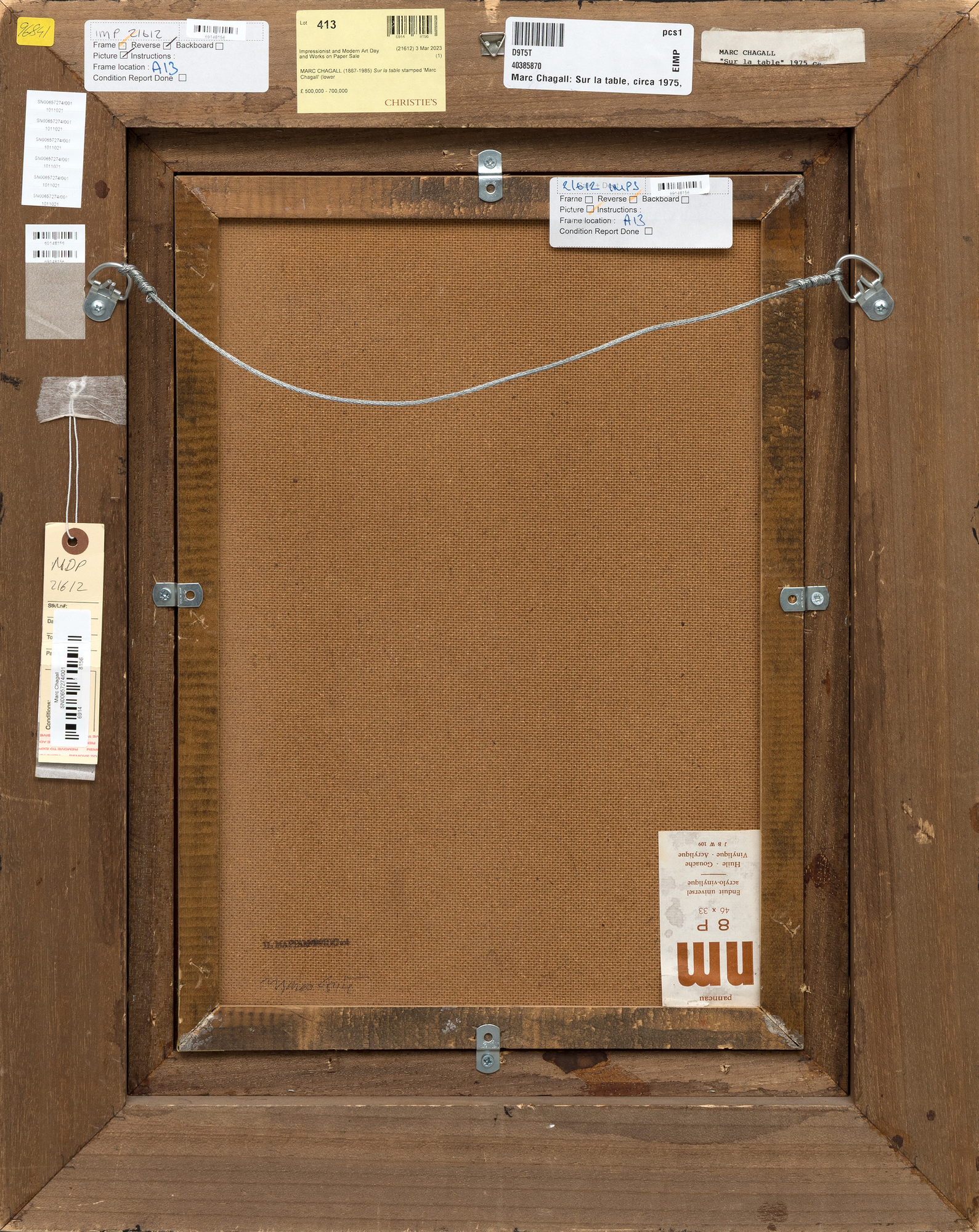
种源
艺术家遗产
康蒂尼艺术画廊,梅斯特雷
私人收藏,帕多瓦
世界地图画廊,米兰
私人收藏,米兰
私人收藏,购自上述机构
马克·夏加尔的《餐桌之上》是一场对色彩、记忆与想象力的璀璨礼赞。整幅画浸润在深邃的蓝色调中,汇聚了艺术家最钟爱的若干意象:公鸡、小提琴手、山羊与绚烂的花束。画面充满夏加尔标志性的动态感与梦幻般的和谐,营造出日常生活、民间传说与爱情共存的鲜活平衡世界。


这幅创作于1970年代初夏加尔重返故土后创作高峰期的作品,折射出艺术家与维捷布斯克故土重逢后焕发的情感与视觉能量——远方白穹教堂正是故土的象征。 占据前景的丰盈花束——夏加尔对首任妻子贝拉永恒爱情的象征——为作品注入情感温度与生命力。


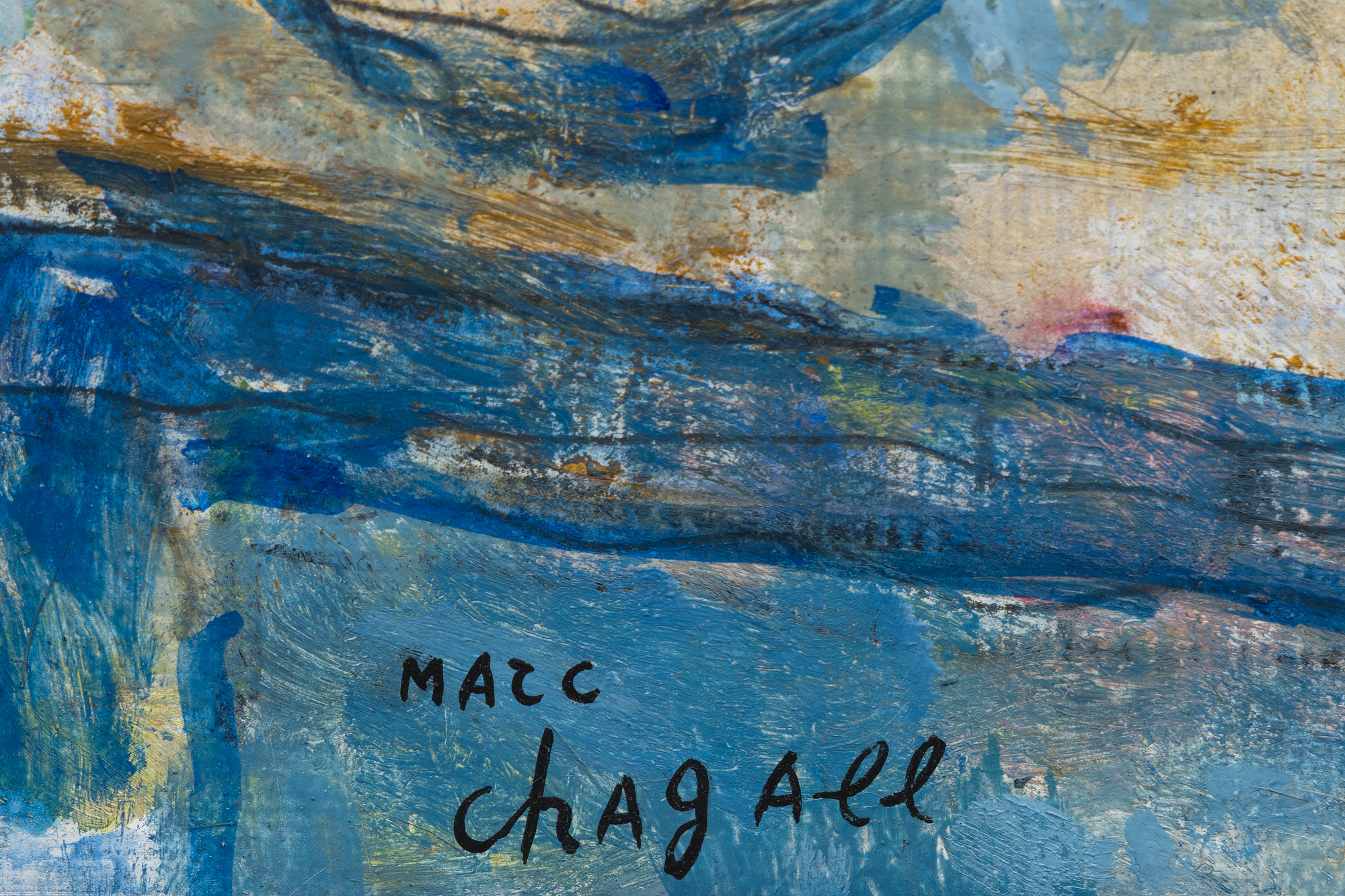
此画作直至1985年夏加尔逝世后仍由其私人收藏,彰显其特殊意义。经马克·夏加尔委员会认证,《餐桌之上》属于定义其成熟期创作的花卉与象征主义画作谱系。
询问