
العودة

ألبرت بيرشتادت (1830-1902)

$1,750,000

 
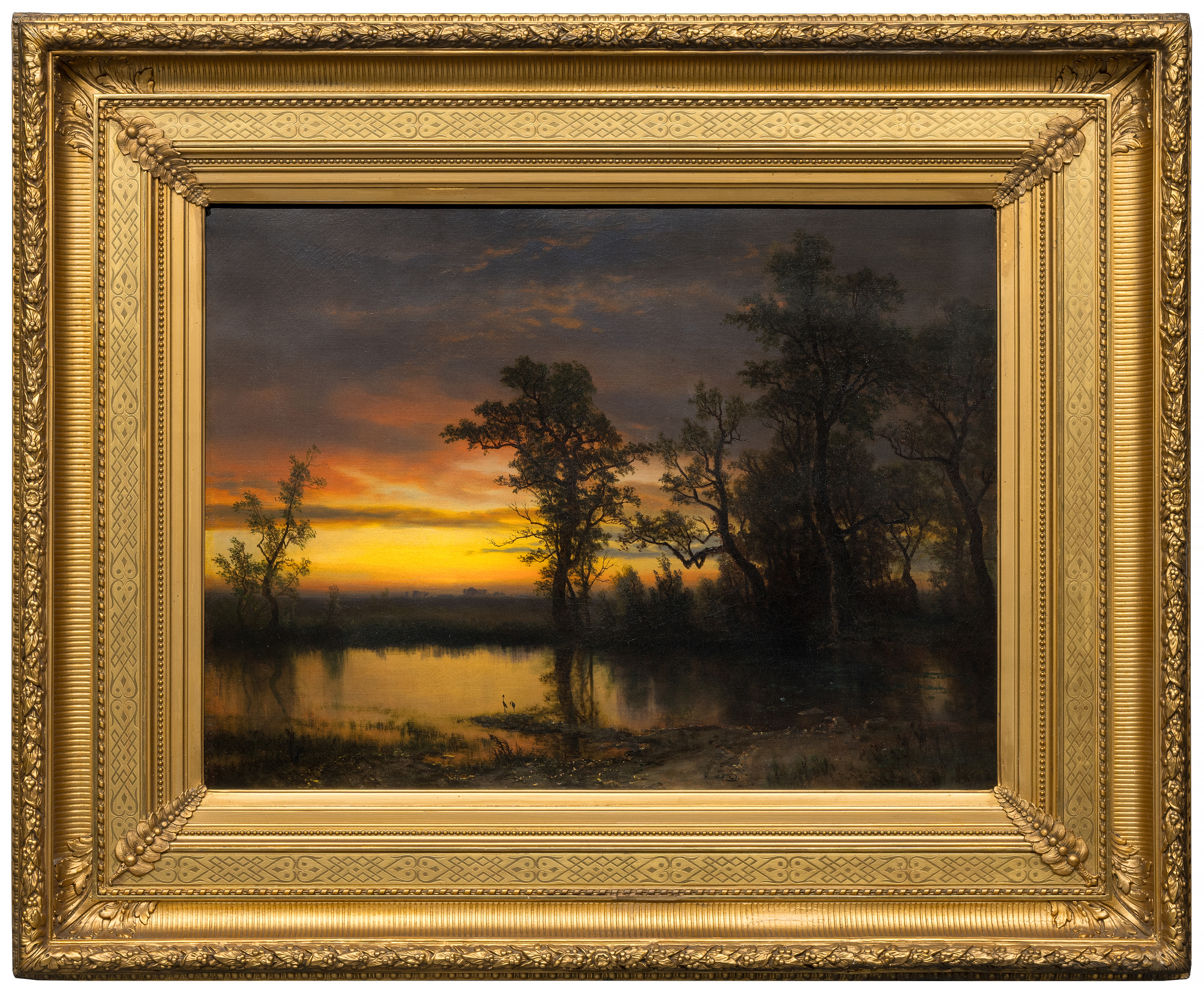
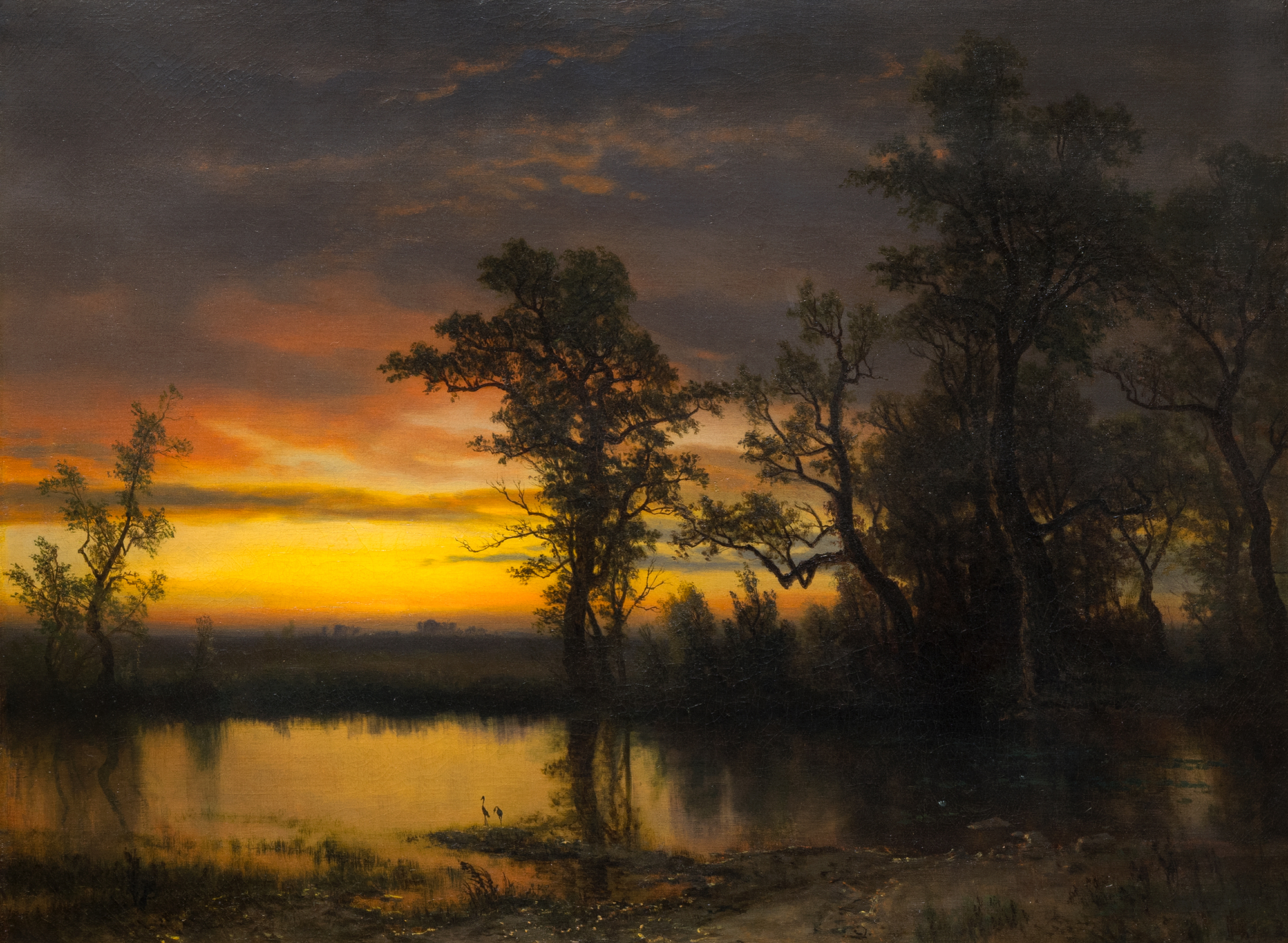
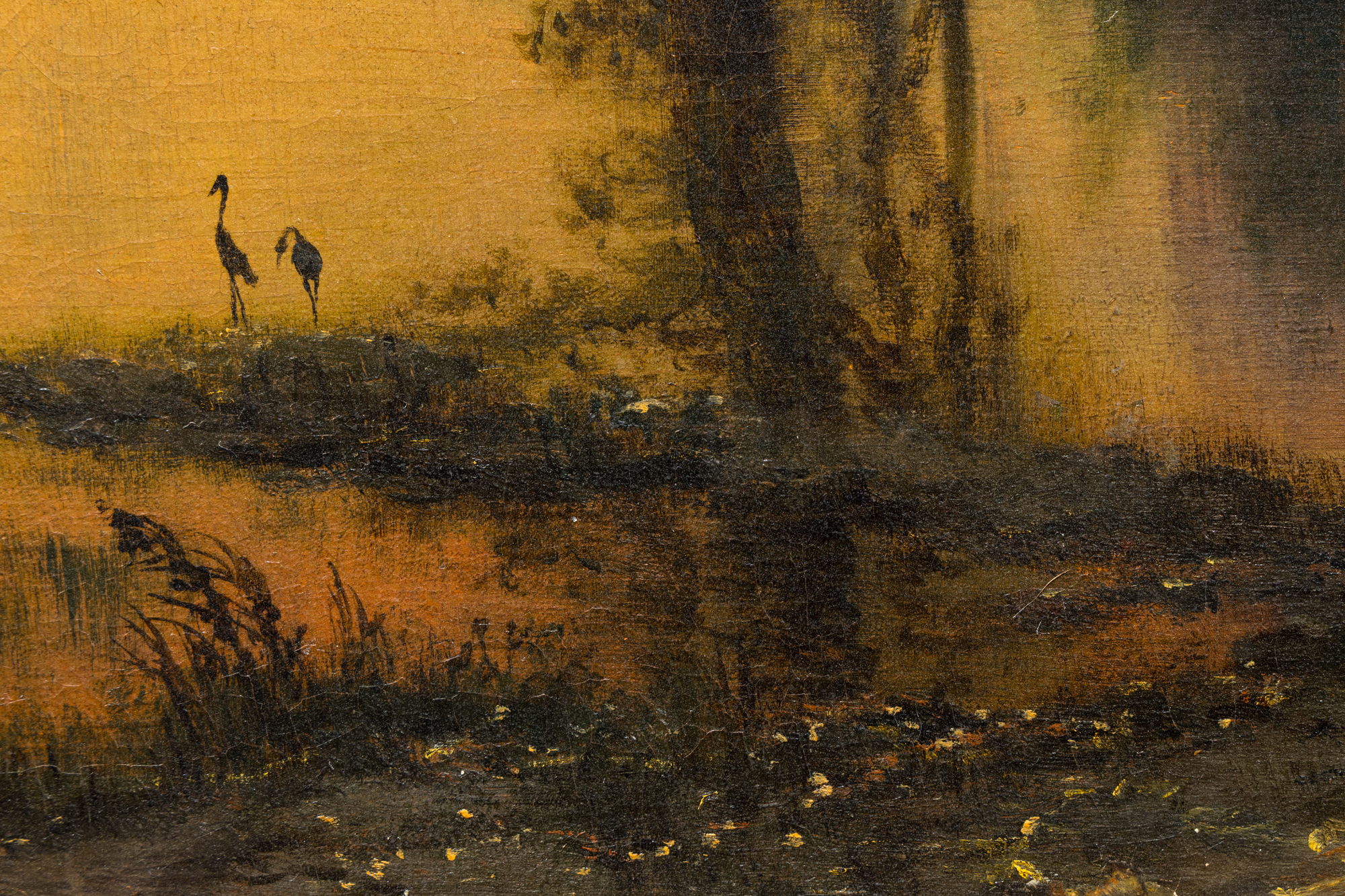
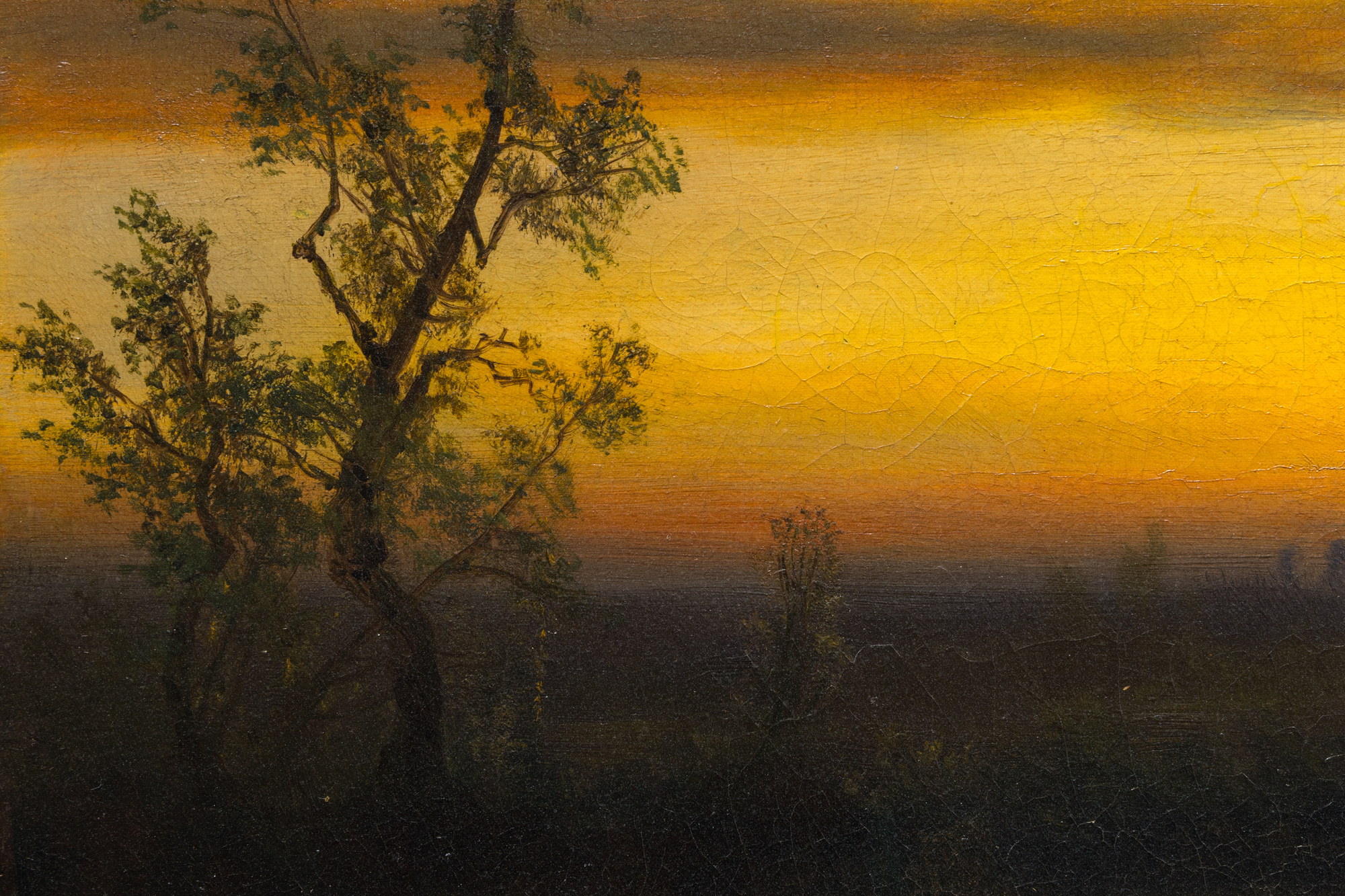
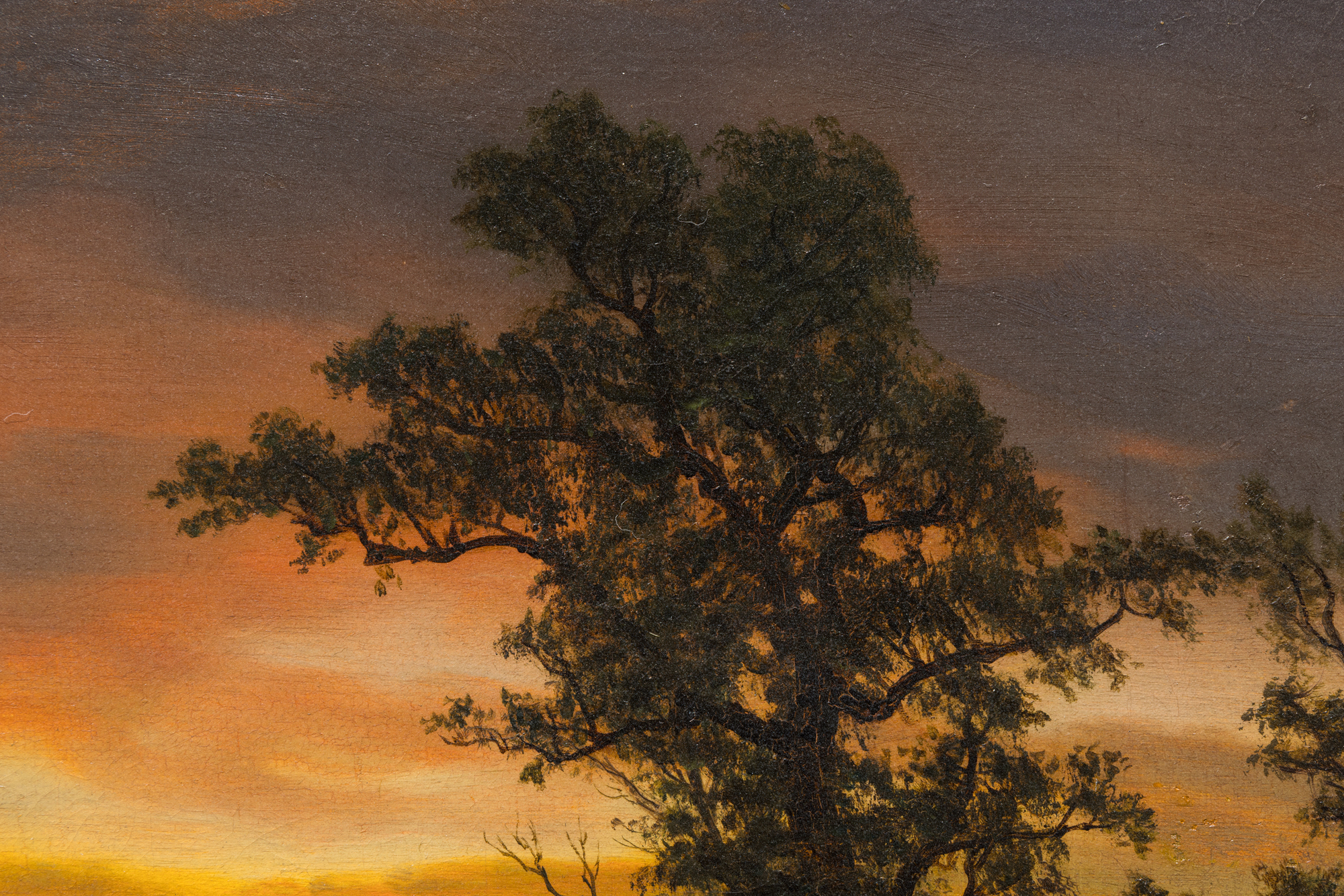
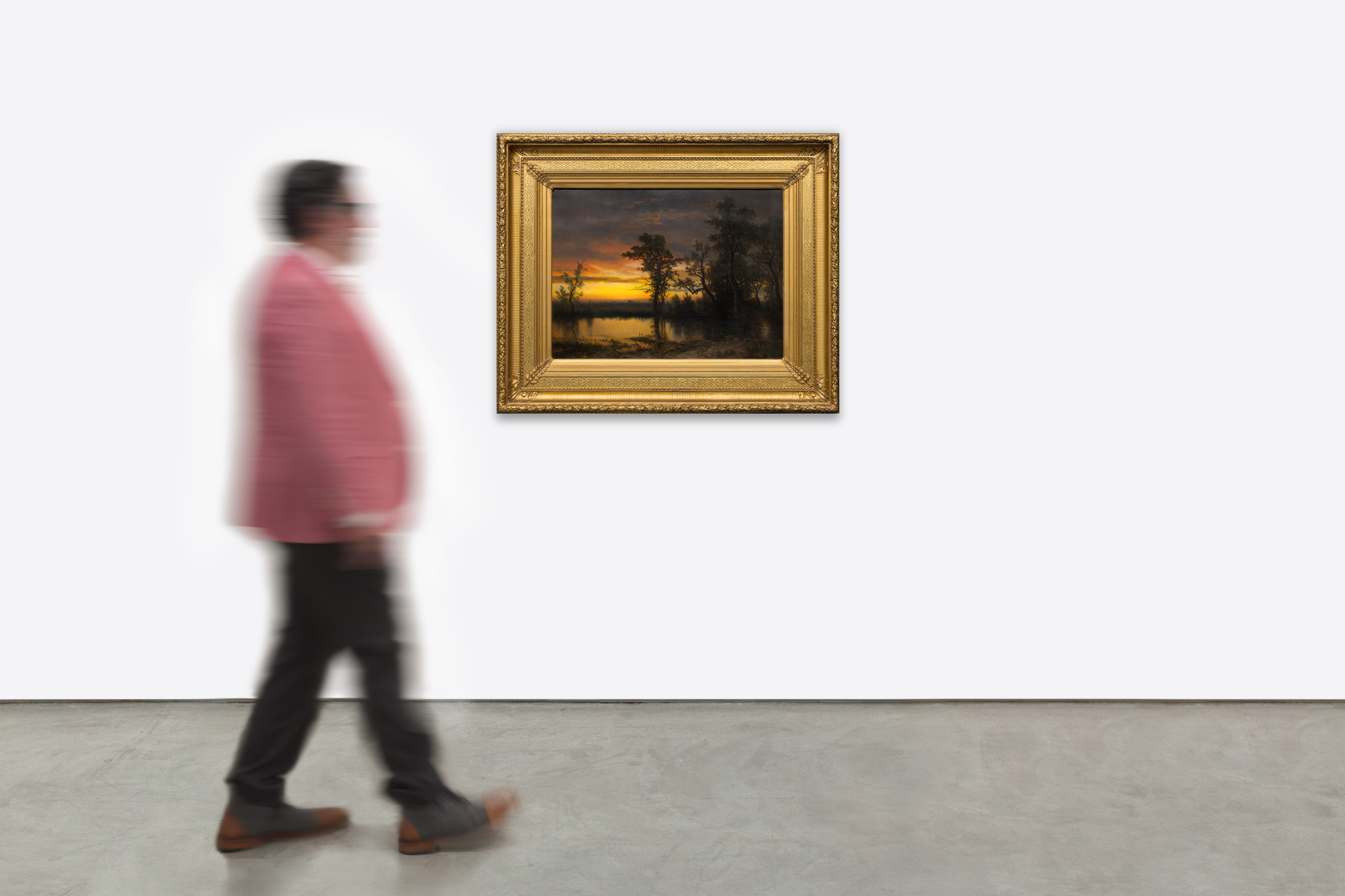
<div>"Twilight on the San Joaquin" (c. 1873) is a luminous oil painting that exemplifies Albert Bierstadt’s mature engagement with the American landscape and his mastery of light effects. Executed in a refined Luminist style, the work emphasizes a tranquil, glowing atmosphere achieved through meticulous detail, subtle tonal transitions, and a carefully controlled palette. The fading light of dusk settles gently over the scene, transforming the San Joaquin River into a reflective plane that anchors the composition and enhances its meditative stillness. </div><br><br><div> </div><br><br><div>The San Joaquin River, which flows through California’s Central Valley before joining the Sacramento River at the Sacramento–San Joaquin Delta, was a subject well suited to Bierstadt’s interest in expansive yet serene vistas. In this painting, the river becomes a conduit for light, capturing the delicate interplay between sky and water at twilight. The result is a harmonious balance between natural grandeur and intimate observation. </div><br><br><div> </div><br><br><div>Bierstadt was a prominent painter associated with the Hudson River School, known for his large, gleaming depictions of the American West. His portrayals of beauty and plenty helped shape the popular image of the West and reassured Americans, still grappling with the aftermath of the Civil War, that their young democracy possessed a grandeur comparable to Europe and would endure. Between 1871 and 1873, Bierstadt lived in California, maintaining a studio in San Francisco, and traveled extensively through the region, producing works that capture its vastness and unique beauty. </div><br><br><div> </div><br><br><div>A closely related twilight scene, "Owens Valley, California" (c. 1872) is in the collection of the McMullen Museum of Art, Boston College. Twilight on the San Joaquin will be included in the forthcoming Albert Bierstadt catalogue raisonné database directed by Melissa Webster Speidel, President of the Bierstadt Foundation. </div> <div>"Twilight on the San Joaquin" (c. 1873) is a luminous oil painting that exemplifies Albert Bierstadt’s mature engagement with the American landscape and his mastery of light effects. Executed in a refined Luminist style, the work emphasizes a tranquil, glowing atmosphere achieved through meticulous detail, subtle tonal transitions, and a carefully controlled palette. The fading light of dusk settles gently over the scene, transforming the San Joaquin River into a reflective plane that anchors the composition and enhances its meditative stillness. </div><br><br><div> </div><br><br><div>The San Joaquin River, which flows through California’s Central Valley before joining the Sacramento River at the Sacramento–San Joaquin Delta, was a subject well suited to Bierstadt’s interest in expansive yet serene vistas. In this painting, the river becomes a conduit for light, capturing the delicate interplay between sky and water at twilight. The result is a harmonious balance between natural grandeur and intimate observation. </div><br><br><div> </div><br><br><div>Bierstadt was a prominent painter associated with the Hudson River School, known for his large, gleaming depictions of the American West. His portrayals of beauty and plenty helped shape the popular image of the West and reassured Americans, still grappling with the aftermath of the Civil War, that their young democracy possessed a grandeur comparable to Europe and would endure. Between 1871 and 1873, Bierstadt lived in California, maintaining a studio in San Francisco, and traveled extensively through the region, producing works that capture its vastness and unique beauty. </div><br><br><div> </div><br><br><div>A closely related twilight scene, "Owens Valley, California" (c. 1872) is in the collection of the McMullen Museum of Art, Boston College. Twilight on the San Joaquin will be included in the forthcoming Albert Bierstadt catalogue raisonné database directed by Melissa Webster Speidel, President of the Bierstadt Foundation. </div> <div>"Twilight on the San Joaquin" (c. 1873) is a luminous oil painting that exemplifies Albert Bierstadt’s mature engagement with the American landscape and his mastery of light effects. Executed in a refined Luminist style, the work emphasizes a tranquil, glowing atmosphere achieved through meticulous detail, subtle tonal transitions, and a carefully controlled palette. The fading light of dusk settles gently over the scene, transforming the San Joaquin River into a reflective plane that anchors the composition and enhances its meditative stillness. </div><br><br><div> </div><br><br><div>The San Joaquin River, which flows through California’s Central Valley before joining the Sacramento River at the Sacramento–San Joaquin Delta, was a subject well suited to Bierstadt’s interest in expansive yet serene vistas. In this painting, the river becomes a conduit for light, capturing the delicate interplay between sky and water at twilight. The result is a harmonious balance between natural grandeur and intimate observation. </div><br><br><div> </div><br><br><div>Bierstadt was a prominent painter associated with the Hudson River School, known for his large, gleaming depictions of the American West. His portrayals of beauty and plenty helped shape the popular image of the West and reassured Americans, still grappling with the aftermath of the Civil War, that their young democracy possessed a grandeur comparable to Europe and would endure. Between 1871 and 1873, Bierstadt lived in California, maintaining a studio in San Francisco, and traveled extensively through the region, producing works that capture its vastness and unique beauty. </div><br><br><div> </div><br><br><div>A closely related twilight scene, "Owens Valley, California" (c. 1872) is in the collection of the McMullen Museum of Art, Boston College. Twilight on the San Joaquin will be included in the forthcoming Albert Bierstadt catalogue raisonné database directed by Melissa Webster Speidel, President of the Bierstadt Foundation. </div> <div>"Twilight on the San Joaquin" (c. 1873) is a luminous oil painting that exemplifies Albert Bierstadt’s mature engagement with the American landscape and his mastery of light effects. Executed in a refined Luminist style, the work emphasizes a tranquil, glowing atmosphere achieved through meticulous detail, subtle tonal transitions, and a carefully controlled palette. The fading light of dusk settles gently over the scene, transforming the San Joaquin River into a reflective plane that anchors the composition and enhances its meditative stillness. </div><br><br><div> </div><br><br><div>The San Joaquin River, which flows through California’s Central Valley before joining the Sacramento River at the Sacramento–San Joaquin Delta, was a subject well suited to Bierstadt’s interest in expansive yet serene vistas. In this painting, the river becomes a conduit for light, capturing the delicate interplay between sky and water at twilight. The result is a harmonious balance between natural grandeur and intimate observation. </div><br><br><div> </div><br><br><div>Bierstadt was a prominent painter associated with the Hudson River School, known for his large, gleaming depictions of the American West. His portrayals of beauty and plenty helped shape the popular image of the West and reassured Americans, still grappling with the aftermath of the Civil War, that their young democracy possessed a grandeur comparable to Europe and would endure. Between 1871 and 1873, Bierstadt lived in California, maintaining a studio in San Francisco, and traveled extensively through the region, producing works that capture its vastness and unique beauty. </div><br><br><div> </div><br><br><div>A closely related twilight scene, "Owens Valley, California" (c. 1872) is in the collection of the McMullen Museum of Art, Boston College. Twilight on the San Joaquin will be included in the forthcoming Albert Bierstadt catalogue raisonné database directed by Melissa Webster Speidel, President of the Bierstadt Foundation. </div> <div>"Twilight on the San Joaquin" (c. 1873) is a luminous oil painting that exemplifies Albert Bierstadt’s mature engagement with the American landscape and his mastery of light effects. Executed in a refined Luminist style, the work emphasizes a tranquil, glowing atmosphere achieved through meticulous detail, subtle tonal transitions, and a carefully controlled palette. The fading light of dusk settles gently over the scene, transforming the San Joaquin River into a reflective plane that anchors the composition and enhances its meditative stillness. </div><br><br><div> </div><br><br><div>The San Joaquin River, which flows through California’s Central Valley before joining the Sacramento River at the Sacramento–San Joaquin Delta, was a subject well suited to Bierstadt’s interest in expansive yet serene vistas. In this painting, the river becomes a conduit for light, capturing the delicate interplay between sky and water at twilight. The result is a harmonious balance between natural grandeur and intimate observation. </div><br><br><div> </div><br><br><div>Bierstadt was a prominent painter associated with the Hudson River School, known for his large, gleaming depictions of the American West. His portrayals of beauty and plenty helped shape the popular image of the West and reassured Americans, still grappling with the aftermath of the Civil War, that their young democracy possessed a grandeur comparable to Europe and would endure. Between 1871 and 1873, Bierstadt lived in California, maintaining a studio in San Francisco, and traveled extensively through the region, producing works that capture its vastness and unique beauty. </div><br><br><div> </div><br><br><div>A closely related twilight scene, "Owens Valley, California" (c. 1872) is in the collection of the McMullen Museum of Art, Boston College. Twilight on the San Joaquin will be included in the forthcoming Albert Bierstadt catalogue raisonné database directed by Melissa Webster Speidel, President of the Bierstadt Foundation. </div> <div>"Twilight on the San Joaquin" (c. 1873) is a luminous oil painting that exemplifies Albert Bierstadt’s mature engagement with the American landscape and his mastery of light effects. Executed in a refined Luminist style, the work emphasizes a tranquil, glowing atmosphere achieved through meticulous detail, subtle tonal transitions, and a carefully controlled palette. The fading light of dusk settles gently over the scene, transforming the San Joaquin River into a reflective plane that anchors the composition and enhances its meditative stillness. </div><br><br><div> </div><br><br><div>The San Joaquin River, which flows through California’s Central Valley before joining the Sacramento River at the Sacramento–San Joaquin Delta, was a subject well suited to Bierstadt’s interest in expansive yet serene vistas. In this painting, the river becomes a conduit for light, capturing the delicate interplay between sky and water at twilight. The result is a harmonious balance between natural grandeur and intimate observation. </div><br><br><div> </div><br><br><div>Bierstadt was a prominent painter associated with the Hudson River School, known for his large, gleaming depictions of the American West. His portrayals of beauty and plenty helped shape the popular image of the West and reassured Americans, still grappling with the aftermath of the Civil War, that their young democracy possessed a grandeur comparable to Europe and would endure. Between 1871 and 1873, Bierstadt lived in California, maintaining a studio in San Francisco, and traveled extensively through the region, producing works that capture its vastness and unique beauty. </div><br><br><div> </div><br><br><div>A closely related twilight scene, "Owens Valley, California" (c. 1872) is in the collection of the McMullen Museum of Art, Boston College. Twilight on the San Joaquin will be included in the forthcoming Albert Bierstadt catalogue raisonné database directed by Melissa Webster Speidel, President of the Bierstadt Foundation. </div> <div>"Twilight on the San Joaquin" (c. 1873) is a luminous oil painting that exemplifies Albert Bierstadt’s mature engagement with the American landscape and his mastery of light effects. Executed in a refined Luminist style, the work emphasizes a tranquil, glowing atmosphere achieved through meticulous detail, subtle tonal transitions, and a carefully controlled palette. The fading light of dusk settles gently over the scene, transforming the San Joaquin River into a reflective plane that anchors the composition and enhances its meditative stillness. </div><br><br><div> </div><br><br><div>The San Joaquin River, which flows through California’s Central Valley before joining the Sacramento River at the Sacramento–San Joaquin Delta, was a subject well suited to Bierstadt’s interest in expansive yet serene vistas. In this painting, the river becomes a conduit for light, capturing the delicate interplay between sky and water at twilight. The result is a harmonious balance between natural grandeur and intimate observation. </div><br><br><div> </div><br><br><div>Bierstadt was a prominent painter associated with the Hudson River School, known for his large, gleaming depictions of the American West. His portrayals of beauty and plenty helped shape the popular image of the West and reassured Americans, still grappling with the aftermath of the Civil War, that their young democracy possessed a grandeur comparable to Europe and would endure. Between 1871 and 1873, Bierstadt lived in California, maintaining a studio in San Francisco, and traveled extensively through the region, producing works that capture its vastness and unique beauty. </div><br><br><div> </div><br><br><div>A closely related twilight scene, "Owens Valley, California" (c. 1872) is in the collection of the McMullen Museum of Art, Boston College. Twilight on the San Joaquin will be included in the forthcoming Albert Bierstadt catalogue raisonné database directed by Melissa Webster Speidel, President of the Bierstadt Foundation. </div> <div>"Twilight on the San Joaquin" (c. 1873) is a luminous oil painting that exemplifies Albert Bierstadt’s mature engagement with the American landscape and his mastery of light effects. Executed in a refined Luminist style, the work emphasizes a tranquil, glowing atmosphere achieved through meticulous detail, subtle tonal transitions, and a carefully controlled palette. The fading light of dusk settles gently over the scene, transforming the San Joaquin River into a reflective plane that anchors the composition and enhances its meditative stillness. </div><br><br><div> </div><br><br><div>The San Joaquin River, which flows through California’s Central Valley before joining the Sacramento River at the Sacramento–San Joaquin Delta, was a subject well suited to Bierstadt’s interest in expansive yet serene vistas. In this painting, the river becomes a conduit for light, capturing the delicate interplay between sky and water at twilight. The result is a harmonious balance between natural grandeur and intimate observation. </div><br><br><div> </div><br><br><div>Bierstadt was a prominent painter associated with the Hudson River School, known for his large, gleaming depictions of the American West. His portrayals of beauty and plenty helped shape the popular image of the West and reassured Americans, still grappling with the aftermath of the Civil War, that their young democracy possessed a grandeur comparable to Europe and would endure. Between 1871 and 1873, Bierstadt lived in California, maintaining a studio in San Francisco, and traveled extensively through the region, producing works that capture its vastness and unique beauty. </div><br><br><div> </div><br><br><div>A closely related twilight scene, "Owens Valley, California" (c. 1872) is in the collection of the McMullen Museum of Art, Boston College. Twilight on the San Joaquin will be included in the forthcoming Albert Bierstadt catalogue raisonné database directed by Melissa Webster Speidel, President of the Bierstadt Foundation. </div> <div>"Twilight on the San Joaquin" (c. 1873) is a luminous oil painting that exemplifies Albert Bierstadt’s mature engagement with the American landscape and his mastery of light effects. Executed in a refined Luminist style, the work emphasizes a tranquil, glowing atmosphere achieved through meticulous detail, subtle tonal transitions, and a carefully controlled palette. The fading light of dusk settles gently over the scene, transforming the San Joaquin River into a reflective plane that anchors the composition and enhances its meditative stillness. </div><br><br><div> </div><br><br><div>The San Joaquin River, which flows through California’s Central Valley before joining the Sacramento River at the Sacramento–San Joaquin Delta, was a subject well suited to Bierstadt’s interest in expansive yet serene vistas. In this painting, the river becomes a conduit for light, capturing the delicate interplay between sky and water at twilight. The result is a harmonious balance between natural grandeur and intimate observation. </div><br><br><div> </div><br><br><div>Bierstadt was a prominent painter associated with the Hudson River School, known for his large, gleaming depictions of the American West. His portrayals of beauty and plenty helped shape the popular image of the West and reassured Americans, still grappling with the aftermath of the Civil War, that their young democracy possessed a grandeur comparable to Europe and would endure. Between 1871 and 1873, Bierstadt lived in California, maintaining a studio in San Francisco, and traveled extensively through the region, producing works that capture its vastness and unique beauty. </div><br><br><div> </div><br><br><div>A closely related twilight scene, "Owens Valley, California" (c. 1872) is in the collection of the McMullen Museum of Art, Boston College. Twilight on the San Joaquin will be included in the forthcoming Albert Bierstadt catalogue raisonné database directed by Melissa Webster Speidel, President of the Bierstadt Foundation. </div> <div>"Twilight on the San Joaquin" (c. 1873) is a luminous oil painting that exemplifies Albert Bierstadt’s mature engagement with the American landscape and his mastery of light effects. Executed in a refined Luminist style, the work emphasizes a tranquil, glowing atmosphere achieved through meticulous detail, subtle tonal transitions, and a carefully controlled palette. The fading light of dusk settles gently over the scene, transforming the San Joaquin River into a reflective plane that anchors the composition and enhances its meditative stillness. </div><br><br><div> </div><br><br><div>The San Joaquin River, which flows through California’s Central Valley before joining the Sacramento River at the Sacramento–San Joaquin Delta, was a subject well suited to Bierstadt’s interest in expansive yet serene vistas. In this painting, the river becomes a conduit for light, capturing the delicate interplay between sky and water at twilight. The result is a harmonious balance between natural grandeur and intimate observation. </div><br><br><div> </div><br><br><div>Bierstadt was a prominent painter associated with the Hudson River School, known for his large, gleaming depictions of the American West. His portrayals of beauty and plenty helped shape the popular image of the West and reassured Americans, still grappling with the aftermath of the Civil War, that their young democracy possessed a grandeur comparable to Europe and would endure. Between 1871 and 1873, Bierstadt lived in California, maintaining a studio in San Francisco, and traveled extensively through the region, producing works that capture its vastness and unique beauty. </div><br><br><div> </div><br><br><div>A closely related twilight scene, "Owens Valley, California" (c. 1872) is in the collection of the McMullen Museum of Art, Boston College. Twilight on the San Joaquin will be included in the forthcoming Albert Bierstadt catalogue raisonné database directed by Melissa Webster Speidel, President of the Bierstadt Foundation. </div>
الغسق على نهر سان جواكينحوالي عام 187322 × 29 1/2 × 3/4 بوصة(55.88 × 74.93 × 1.91 سم) زيت على قماش
الاصل
مجموعة خاصة، ماساتشوستس، قبل عام 1970
مجموعة خاصة، ميدلبورو، ماساتشوستس، عام 1970
مجموعة خاصة، تم الحصول عليها من المجموعة المذكورة أعلاه، عام 2024
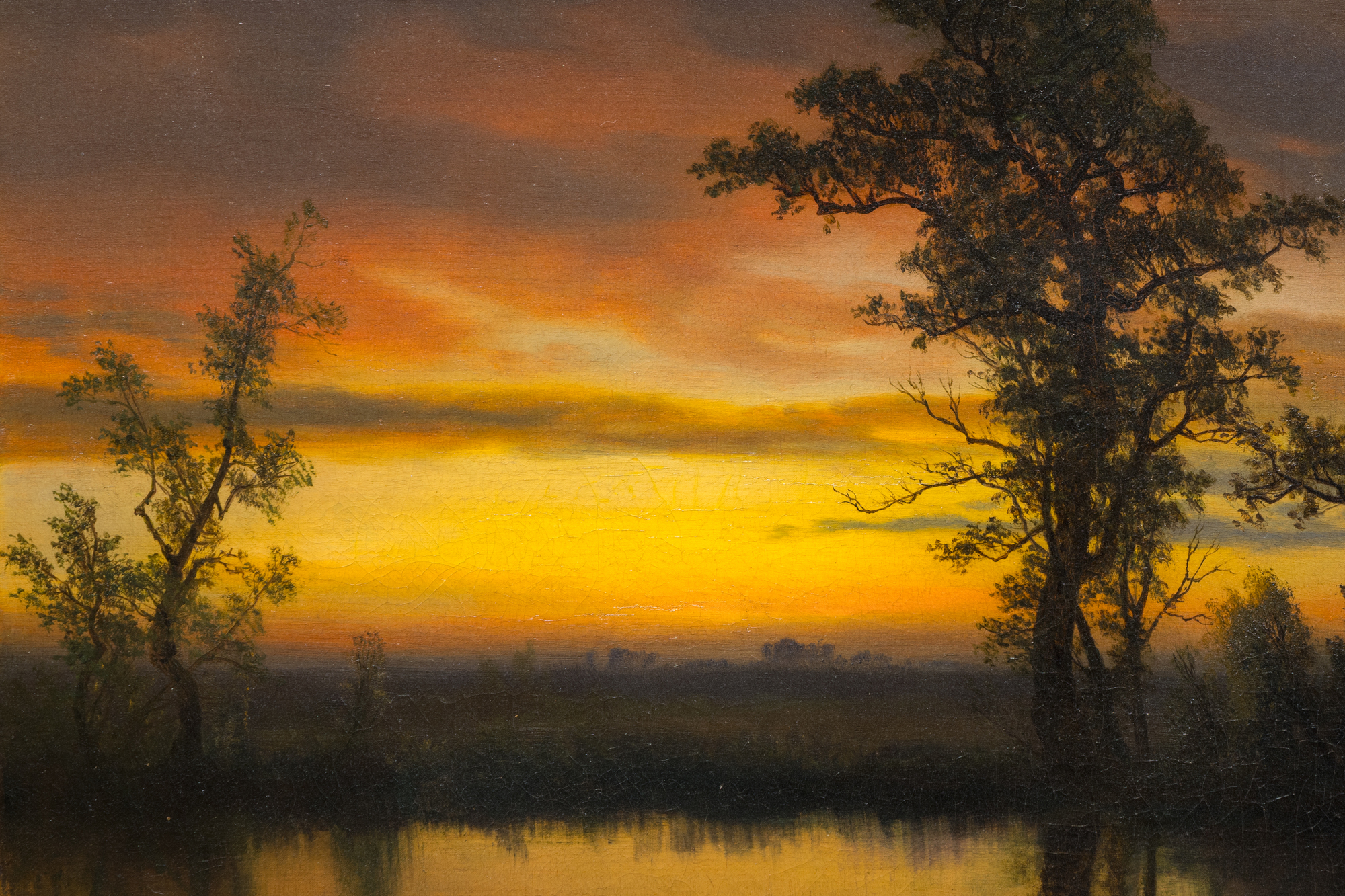
"الشفق على نهر سان جواكين" (حوالي عام 1873) هي لوحة زيتية مشرقة تجسد انخراط ألبرت بيرستادت الناضج في رسم المناظر الطبيعية الأمريكية وإتقانه لتأثيرات الضوء. وقد تم تنفيذ العمل بأسلوب "لومينيست" راقي، حيث يبرز جوًا هادئًا ومتوهجًا تم تحقيقه من خلال التفاصيل الدقيقة، والتحولات اللونية الرقيقة، ولوحة الألوان التي تم التحكم فيها بعناية. يستقر ضوء الغسق الباهت برفق على المشهد، محولاً نهر سان جواكين إلى سطح عاكس يثبت التكوين ويعزز سكونه التأملي.


كان نهر سان جواكين، الذي يتدفق عبر وادي كاليفورنيا المركزي قبل أن يلتقي بنهر ساكرامنتو عند دلتا ساكرامنتو-سان جواكين، موضوعاً مناسباً تماماً لاهتمام بيرستادت بالمناظر الشاسعة والهادئة في آن واحد. في هذه اللوحة، يصبح النهر قناة للضوء، يلتقط التفاعل الرقيق بين السماء والماء عند الغسق. والنتيجة هي توازن متناغم بين عظمة الطبيعة والملاحظة الحميمة.


كان بيرستادت رسامًا بارزًا مرتبطًا بمدرسة نهر هدسون، ومعروفًا بتصويراته الكبيرة المتلألئة للغرب الأمريكي. ساعدت تصويراته للجمال والوفرة في تشكيل الصورة الشعبية للغرب وطمأنت الأمريكيين، الذين كانوا لا يزالون يتصارعون مع تداعيات الحرب الأهلية، بأن ديمقراطيتهم الفتية تمتلك عظمة تضاهي أوروبا وستدوم. بين عامي 1871 و1873، عاش بيرشتات في كاليفورنيا، حيث كان لديه استوديو في سان فرانسيسكو، وسافر كثيرًا عبر المنطقة، وأنتج أعمالًا تجسد اتساعها وجمالها الفريد.


توجد لوحة ذات صلة وثيقة بمشهد الغسق هذا، وهي "وادي أوينز، كاليفورنيا" (حوالي 1872)، ضمن مجموعة متحف ماكمولين للفنون، بوسطن كوليدج. ستُدرج لوحة "الغسق على نهر سان جواكين" في قاعدة بيانات الكتالوج الشامل لأعمال ألبرت بيرستادت المقرر إصدارها قريبًا، والتي تشرف عليها ميليسا ويبستر سبايدل، رئيسة مؤسسة بيرستادت.
الاستفسار