
גב

אלברט בירשטאדט (1830-1902)

$1,750,000

 
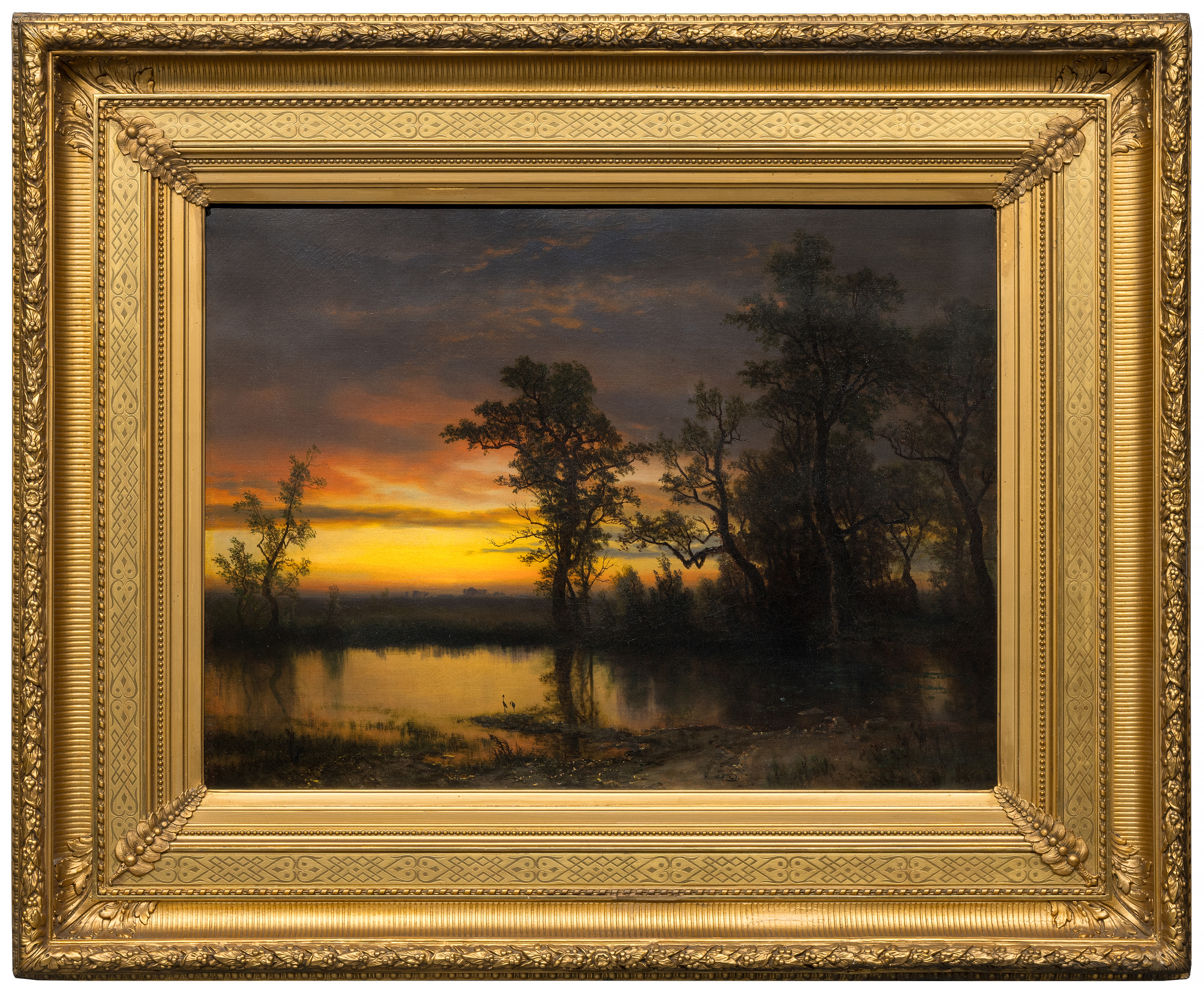
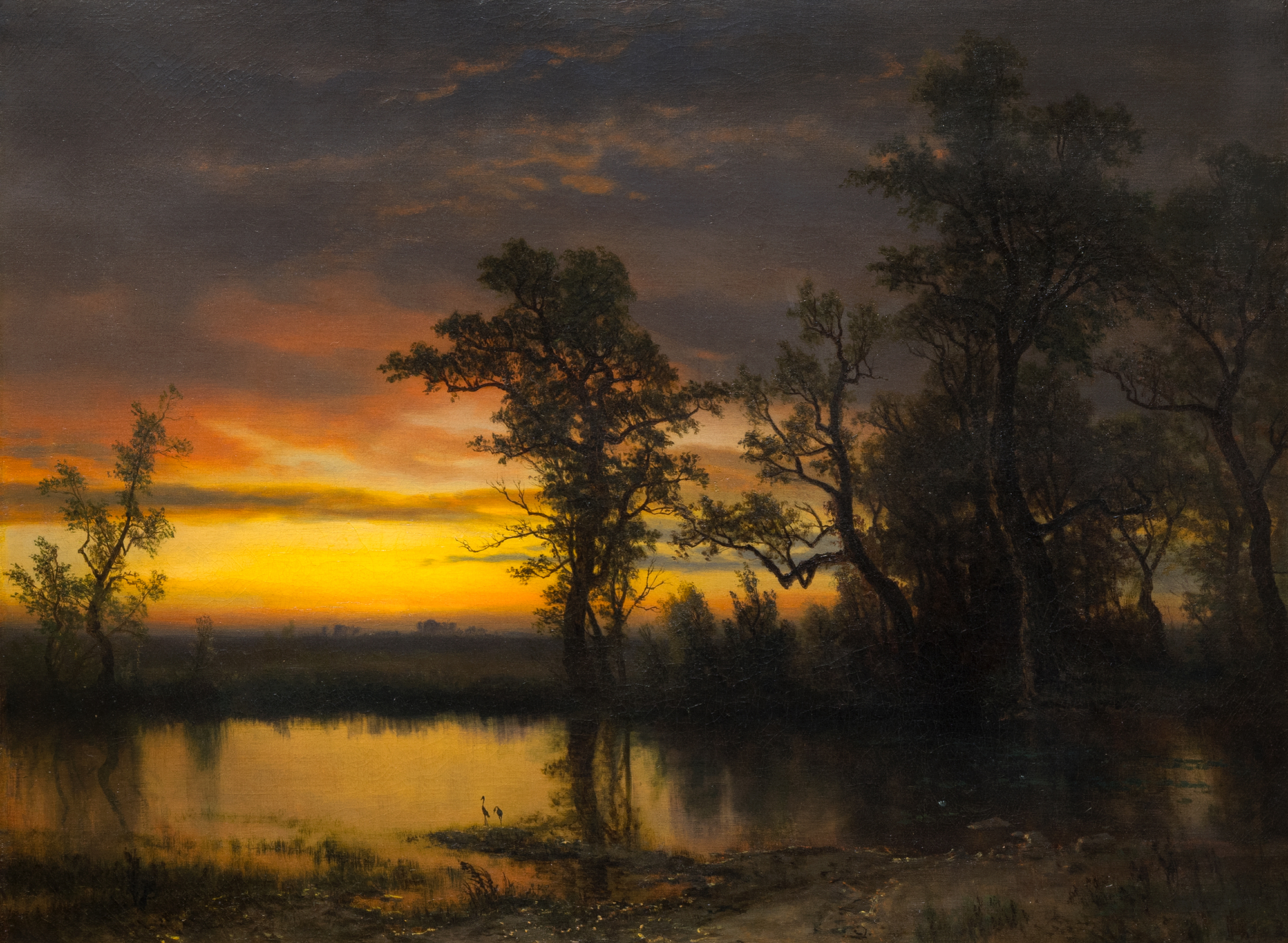
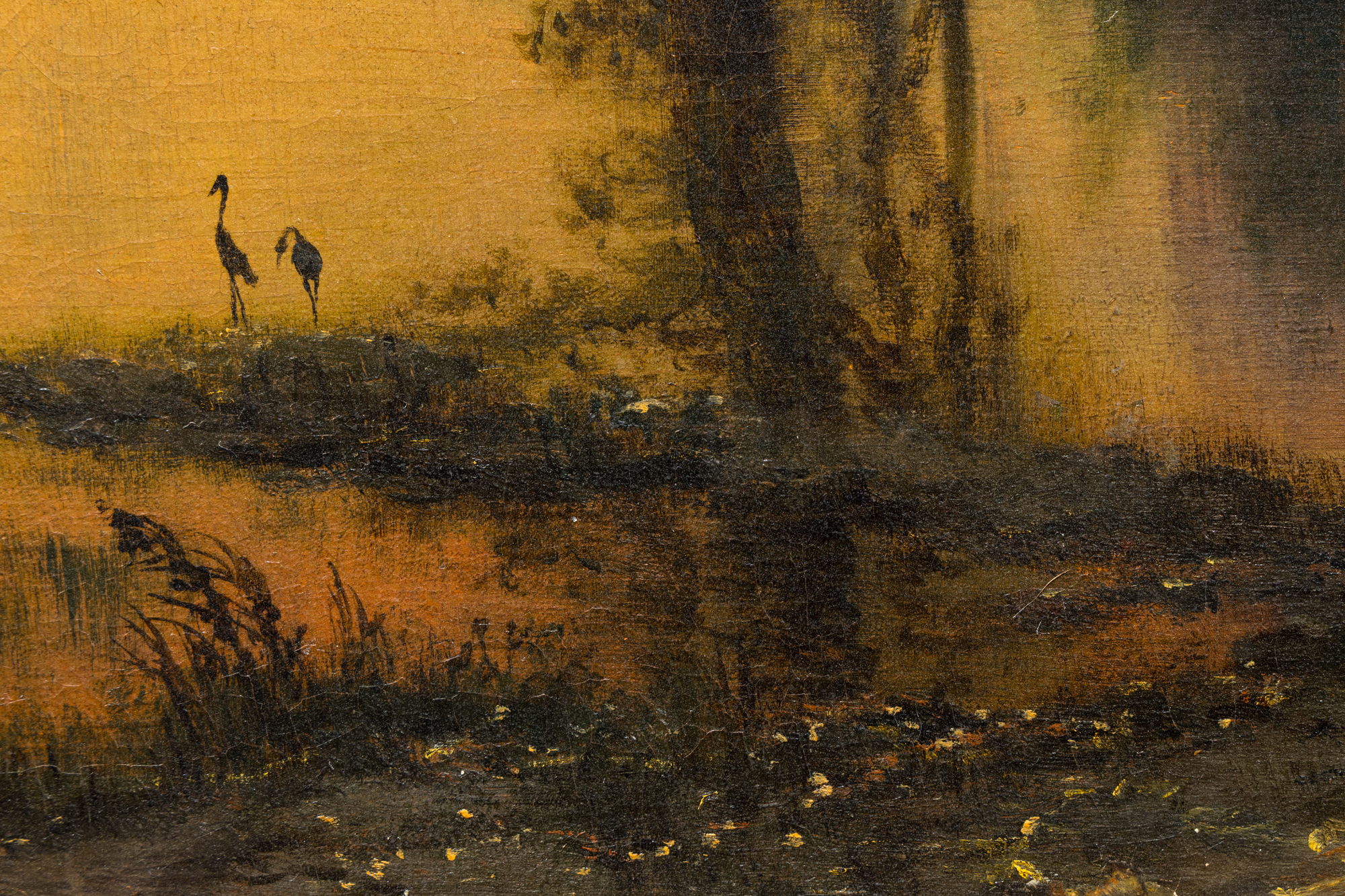
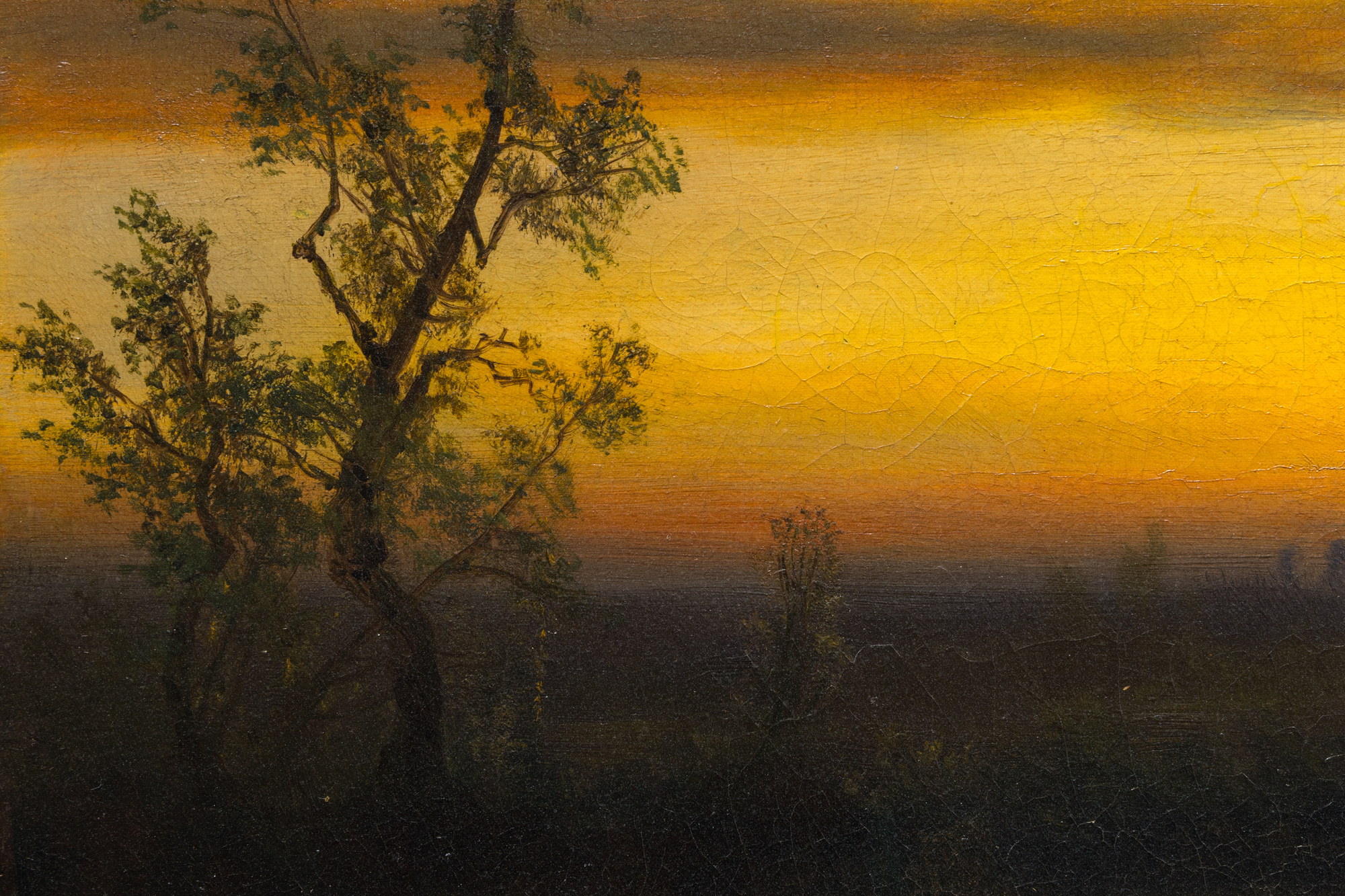
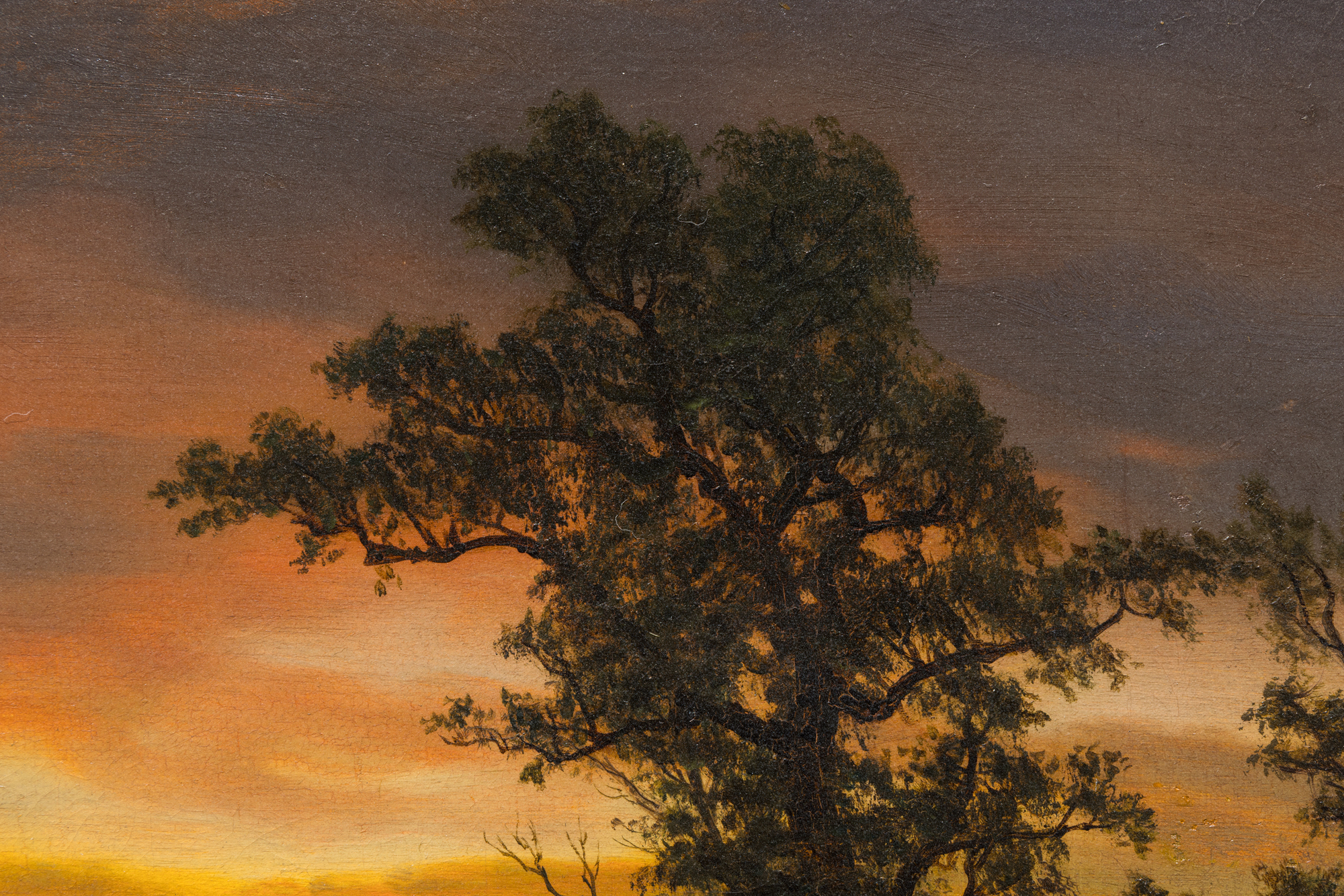
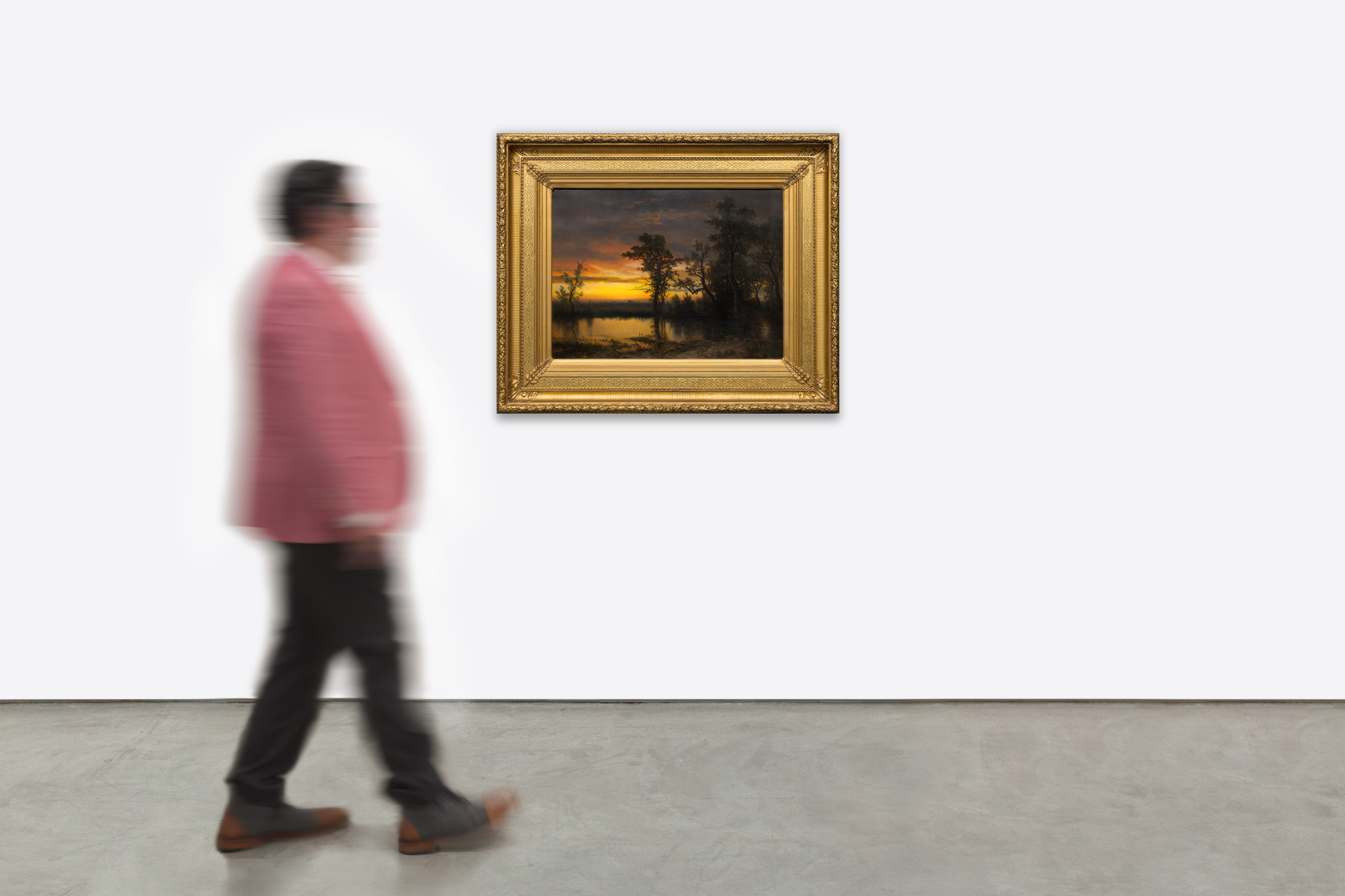
<div>"Twilight on the San Joaquin" (c. 1873) is a luminous oil painting that exemplifies Albert Bierstadt’s mature engagement with the American landscape and his mastery of light effects. Executed in a refined Luminist style, the work emphasizes a tranquil, glowing atmosphere achieved through meticulous detail, subtle tonal transitions, and a carefully controlled palette. The fading light of dusk settles gently over the scene, transforming the San Joaquin River into a reflective plane that anchors the composition and enhances its meditative stillness. </div><br><br><div> </div><br><br><div>The San Joaquin River, which flows through California’s Central Valley before joining the Sacramento River at the Sacramento–San Joaquin Delta, was a subject well suited to Bierstadt’s interest in expansive yet serene vistas. In this painting, the river becomes a conduit for light, capturing the delicate interplay between sky and water at twilight. The result is a harmonious balance between natural grandeur and intimate observation. </div><br><br><div> </div><br><br><div>Bierstadt was a prominent painter associated with the Hudson River School, known for his large, gleaming depictions of the American West. His portrayals of beauty and plenty helped shape the popular image of the West and reassured Americans, still grappling with the aftermath of the Civil War, that their young democracy possessed a grandeur comparable to Europe and would endure. Between 1871 and 1873, Bierstadt lived in California, maintaining a studio in San Francisco, and traveled extensively through the region, producing works that capture its vastness and unique beauty. </div><br><br><div> </div><br><br><div>A closely related twilight scene, "Owens Valley, California" (c. 1872) is in the collection of the McMullen Museum of Art, Boston College. Twilight on the San Joaquin will be included in the forthcoming Albert Bierstadt catalogue raisonné database directed by Melissa Webster Speidel, President of the Bierstadt Foundation. </div> <div>"Twilight on the San Joaquin" (c. 1873) is a luminous oil painting that exemplifies Albert Bierstadt’s mature engagement with the American landscape and his mastery of light effects. Executed in a refined Luminist style, the work emphasizes a tranquil, glowing atmosphere achieved through meticulous detail, subtle tonal transitions, and a carefully controlled palette. The fading light of dusk settles gently over the scene, transforming the San Joaquin River into a reflective plane that anchors the composition and enhances its meditative stillness. </div><br><br><div> </div><br><br><div>The San Joaquin River, which flows through California’s Central Valley before joining the Sacramento River at the Sacramento–San Joaquin Delta, was a subject well suited to Bierstadt’s interest in expansive yet serene vistas. In this painting, the river becomes a conduit for light, capturing the delicate interplay between sky and water at twilight. The result is a harmonious balance between natural grandeur and intimate observation. </div><br><br><div> </div><br><br><div>Bierstadt was a prominent painter associated with the Hudson River School, known for his large, gleaming depictions of the American West. His portrayals of beauty and plenty helped shape the popular image of the West and reassured Americans, still grappling with the aftermath of the Civil War, that their young democracy possessed a grandeur comparable to Europe and would endure. Between 1871 and 1873, Bierstadt lived in California, maintaining a studio in San Francisco, and traveled extensively through the region, producing works that capture its vastness and unique beauty. </div><br><br><div> </div><br><br><div>A closely related twilight scene, "Owens Valley, California" (c. 1872) is in the collection of the McMullen Museum of Art, Boston College. Twilight on the San Joaquin will be included in the forthcoming Albert Bierstadt catalogue raisonné database directed by Melissa Webster Speidel, President of the Bierstadt Foundation. </div> <div>"Twilight on the San Joaquin" (c. 1873) is a luminous oil painting that exemplifies Albert Bierstadt’s mature engagement with the American landscape and his mastery of light effects. Executed in a refined Luminist style, the work emphasizes a tranquil, glowing atmosphere achieved through meticulous detail, subtle tonal transitions, and a carefully controlled palette. The fading light of dusk settles gently over the scene, transforming the San Joaquin River into a reflective plane that anchors the composition and enhances its meditative stillness. </div><br><br><div> </div><br><br><div>The San Joaquin River, which flows through California’s Central Valley before joining the Sacramento River at the Sacramento–San Joaquin Delta, was a subject well suited to Bierstadt’s interest in expansive yet serene vistas. In this painting, the river becomes a conduit for light, capturing the delicate interplay between sky and water at twilight. The result is a harmonious balance between natural grandeur and intimate observation. </div><br><br><div> </div><br><br><div>Bierstadt was a prominent painter associated with the Hudson River School, known for his large, gleaming depictions of the American West. His portrayals of beauty and plenty helped shape the popular image of the West and reassured Americans, still grappling with the aftermath of the Civil War, that their young democracy possessed a grandeur comparable to Europe and would endure. Between 1871 and 1873, Bierstadt lived in California, maintaining a studio in San Francisco, and traveled extensively through the region, producing works that capture its vastness and unique beauty. </div><br><br><div> </div><br><br><div>A closely related twilight scene, "Owens Valley, California" (c. 1872) is in the collection of the McMullen Museum of Art, Boston College. Twilight on the San Joaquin will be included in the forthcoming Albert Bierstadt catalogue raisonné database directed by Melissa Webster Speidel, President of the Bierstadt Foundation. </div> <div>"Twilight on the San Joaquin" (c. 1873) is a luminous oil painting that exemplifies Albert Bierstadt’s mature engagement with the American landscape and his mastery of light effects. Executed in a refined Luminist style, the work emphasizes a tranquil, glowing atmosphere achieved through meticulous detail, subtle tonal transitions, and a carefully controlled palette. The fading light of dusk settles gently over the scene, transforming the San Joaquin River into a reflective plane that anchors the composition and enhances its meditative stillness. </div><br><br><div> </div><br><br><div>The San Joaquin River, which flows through California’s Central Valley before joining the Sacramento River at the Sacramento–San Joaquin Delta, was a subject well suited to Bierstadt’s interest in expansive yet serene vistas. In this painting, the river becomes a conduit for light, capturing the delicate interplay between sky and water at twilight. The result is a harmonious balance between natural grandeur and intimate observation. </div><br><br><div> </div><br><br><div>Bierstadt was a prominent painter associated with the Hudson River School, known for his large, gleaming depictions of the American West. His portrayals of beauty and plenty helped shape the popular image of the West and reassured Americans, still grappling with the aftermath of the Civil War, that their young democracy possessed a grandeur comparable to Europe and would endure. Between 1871 and 1873, Bierstadt lived in California, maintaining a studio in San Francisco, and traveled extensively through the region, producing works that capture its vastness and unique beauty. </div><br><br><div> </div><br><br><div>A closely related twilight scene, "Owens Valley, California" (c. 1872) is in the collection of the McMullen Museum of Art, Boston College. Twilight on the San Joaquin will be included in the forthcoming Albert Bierstadt catalogue raisonné database directed by Melissa Webster Speidel, President of the Bierstadt Foundation. </div> <div>"Twilight on the San Joaquin" (c. 1873) is a luminous oil painting that exemplifies Albert Bierstadt’s mature engagement with the American landscape and his mastery of light effects. Executed in a refined Luminist style, the work emphasizes a tranquil, glowing atmosphere achieved through meticulous detail, subtle tonal transitions, and a carefully controlled palette. The fading light of dusk settles gently over the scene, transforming the San Joaquin River into a reflective plane that anchors the composition and enhances its meditative stillness. </div><br><br><div> </div><br><br><div>The San Joaquin River, which flows through California’s Central Valley before joining the Sacramento River at the Sacramento–San Joaquin Delta, was a subject well suited to Bierstadt’s interest in expansive yet serene vistas. In this painting, the river becomes a conduit for light, capturing the delicate interplay between sky and water at twilight. The result is a harmonious balance between natural grandeur and intimate observation. </div><br><br><div> </div><br><br><div>Bierstadt was a prominent painter associated with the Hudson River School, known for his large, gleaming depictions of the American West. His portrayals of beauty and plenty helped shape the popular image of the West and reassured Americans, still grappling with the aftermath of the Civil War, that their young democracy possessed a grandeur comparable to Europe and would endure. Between 1871 and 1873, Bierstadt lived in California, maintaining a studio in San Francisco, and traveled extensively through the region, producing works that capture its vastness and unique beauty. </div><br><br><div> </div><br><br><div>A closely related twilight scene, "Owens Valley, California" (c. 1872) is in the collection of the McMullen Museum of Art, Boston College. Twilight on the San Joaquin will be included in the forthcoming Albert Bierstadt catalogue raisonné database directed by Melissa Webster Speidel, President of the Bierstadt Foundation. </div> <div>"Twilight on the San Joaquin" (c. 1873) is a luminous oil painting that exemplifies Albert Bierstadt’s mature engagement with the American landscape and his mastery of light effects. Executed in a refined Luminist style, the work emphasizes a tranquil, glowing atmosphere achieved through meticulous detail, subtle tonal transitions, and a carefully controlled palette. The fading light of dusk settles gently over the scene, transforming the San Joaquin River into a reflective plane that anchors the composition and enhances its meditative stillness. </div><br><br><div> </div><br><br><div>The San Joaquin River, which flows through California’s Central Valley before joining the Sacramento River at the Sacramento–San Joaquin Delta, was a subject well suited to Bierstadt’s interest in expansive yet serene vistas. In this painting, the river becomes a conduit for light, capturing the delicate interplay between sky and water at twilight. The result is a harmonious balance between natural grandeur and intimate observation. </div><br><br><div> </div><br><br><div>Bierstadt was a prominent painter associated with the Hudson River School, known for his large, gleaming depictions of the American West. His portrayals of beauty and plenty helped shape the popular image of the West and reassured Americans, still grappling with the aftermath of the Civil War, that their young democracy possessed a grandeur comparable to Europe and would endure. Between 1871 and 1873, Bierstadt lived in California, maintaining a studio in San Francisco, and traveled extensively through the region, producing works that capture its vastness and unique beauty. </div><br><br><div> </div><br><br><div>A closely related twilight scene, "Owens Valley, California" (c. 1872) is in the collection of the McMullen Museum of Art, Boston College. Twilight on the San Joaquin will be included in the forthcoming Albert Bierstadt catalogue raisonné database directed by Melissa Webster Speidel, President of the Bierstadt Foundation. </div> <div>"Twilight on the San Joaquin" (c. 1873) is a luminous oil painting that exemplifies Albert Bierstadt’s mature engagement with the American landscape and his mastery of light effects. Executed in a refined Luminist style, the work emphasizes a tranquil, glowing atmosphere achieved through meticulous detail, subtle tonal transitions, and a carefully controlled palette. The fading light of dusk settles gently over the scene, transforming the San Joaquin River into a reflective plane that anchors the composition and enhances its meditative stillness. </div><br><br><div> </div><br><br><div>The San Joaquin River, which flows through California’s Central Valley before joining the Sacramento River at the Sacramento–San Joaquin Delta, was a subject well suited to Bierstadt’s interest in expansive yet serene vistas. In this painting, the river becomes a conduit for light, capturing the delicate interplay between sky and water at twilight. The result is a harmonious balance between natural grandeur and intimate observation. </div><br><br><div> </div><br><br><div>Bierstadt was a prominent painter associated with the Hudson River School, known for his large, gleaming depictions of the American West. His portrayals of beauty and plenty helped shape the popular image of the West and reassured Americans, still grappling with the aftermath of the Civil War, that their young democracy possessed a grandeur comparable to Europe and would endure. Between 1871 and 1873, Bierstadt lived in California, maintaining a studio in San Francisco, and traveled extensively through the region, producing works that capture its vastness and unique beauty. </div><br><br><div> </div><br><br><div>A closely related twilight scene, "Owens Valley, California" (c. 1872) is in the collection of the McMullen Museum of Art, Boston College. Twilight on the San Joaquin will be included in the forthcoming Albert Bierstadt catalogue raisonné database directed by Melissa Webster Speidel, President of the Bierstadt Foundation. </div> <div>"Twilight on the San Joaquin" (c. 1873) is a luminous oil painting that exemplifies Albert Bierstadt’s mature engagement with the American landscape and his mastery of light effects. Executed in a refined Luminist style, the work emphasizes a tranquil, glowing atmosphere achieved through meticulous detail, subtle tonal transitions, and a carefully controlled palette. The fading light of dusk settles gently over the scene, transforming the San Joaquin River into a reflective plane that anchors the composition and enhances its meditative stillness. </div><br><br><div> </div><br><br><div>The San Joaquin River, which flows through California’s Central Valley before joining the Sacramento River at the Sacramento–San Joaquin Delta, was a subject well suited to Bierstadt’s interest in expansive yet serene vistas. In this painting, the river becomes a conduit for light, capturing the delicate interplay between sky and water at twilight. The result is a harmonious balance between natural grandeur and intimate observation. </div><br><br><div> </div><br><br><div>Bierstadt was a prominent painter associated with the Hudson River School, known for his large, gleaming depictions of the American West. His portrayals of beauty and plenty helped shape the popular image of the West and reassured Americans, still grappling with the aftermath of the Civil War, that their young democracy possessed a grandeur comparable to Europe and would endure. Between 1871 and 1873, Bierstadt lived in California, maintaining a studio in San Francisco, and traveled extensively through the region, producing works that capture its vastness and unique beauty. </div><br><br><div> </div><br><br><div>A closely related twilight scene, "Owens Valley, California" (c. 1872) is in the collection of the McMullen Museum of Art, Boston College. Twilight on the San Joaquin will be included in the forthcoming Albert Bierstadt catalogue raisonné database directed by Melissa Webster Speidel, President of the Bierstadt Foundation. </div> <div>"Twilight on the San Joaquin" (c. 1873) is a luminous oil painting that exemplifies Albert Bierstadt’s mature engagement with the American landscape and his mastery of light effects. Executed in a refined Luminist style, the work emphasizes a tranquil, glowing atmosphere achieved through meticulous detail, subtle tonal transitions, and a carefully controlled palette. The fading light of dusk settles gently over the scene, transforming the San Joaquin River into a reflective plane that anchors the composition and enhances its meditative stillness. </div><br><br><div> </div><br><br><div>The San Joaquin River, which flows through California’s Central Valley before joining the Sacramento River at the Sacramento–San Joaquin Delta, was a subject well suited to Bierstadt’s interest in expansive yet serene vistas. In this painting, the river becomes a conduit for light, capturing the delicate interplay between sky and water at twilight. The result is a harmonious balance between natural grandeur and intimate observation. </div><br><br><div> </div><br><br><div>Bierstadt was a prominent painter associated with the Hudson River School, known for his large, gleaming depictions of the American West. His portrayals of beauty and plenty helped shape the popular image of the West and reassured Americans, still grappling with the aftermath of the Civil War, that their young democracy possessed a grandeur comparable to Europe and would endure. Between 1871 and 1873, Bierstadt lived in California, maintaining a studio in San Francisco, and traveled extensively through the region, producing works that capture its vastness and unique beauty. </div><br><br><div> </div><br><br><div>A closely related twilight scene, "Owens Valley, California" (c. 1872) is in the collection of the McMullen Museum of Art, Boston College. Twilight on the San Joaquin will be included in the forthcoming Albert Bierstadt catalogue raisonné database directed by Melissa Webster Speidel, President of the Bierstadt Foundation. </div> <div>"Twilight on the San Joaquin" (c. 1873) is a luminous oil painting that exemplifies Albert Bierstadt’s mature engagement with the American landscape and his mastery of light effects. Executed in a refined Luminist style, the work emphasizes a tranquil, glowing atmosphere achieved through meticulous detail, subtle tonal transitions, and a carefully controlled palette. The fading light of dusk settles gently over the scene, transforming the San Joaquin River into a reflective plane that anchors the composition and enhances its meditative stillness. </div><br><br><div> </div><br><br><div>The San Joaquin River, which flows through California’s Central Valley before joining the Sacramento River at the Sacramento–San Joaquin Delta, was a subject well suited to Bierstadt’s interest in expansive yet serene vistas. In this painting, the river becomes a conduit for light, capturing the delicate interplay between sky and water at twilight. The result is a harmonious balance between natural grandeur and intimate observation. </div><br><br><div> </div><br><br><div>Bierstadt was a prominent painter associated with the Hudson River School, known for his large, gleaming depictions of the American West. His portrayals of beauty and plenty helped shape the popular image of the West and reassured Americans, still grappling with the aftermath of the Civil War, that their young democracy possessed a grandeur comparable to Europe and would endure. Between 1871 and 1873, Bierstadt lived in California, maintaining a studio in San Francisco, and traveled extensively through the region, producing works that capture its vastness and unique beauty. </div><br><br><div> </div><br><br><div>A closely related twilight scene, "Owens Valley, California" (c. 1872) is in the collection of the McMullen Museum of Art, Boston College. Twilight on the San Joaquin will be included in the forthcoming Albert Bierstadt catalogue raisonné database directed by Melissa Webster Speidel, President of the Bierstadt Foundation. </div>
דמדומים על נהר סן חואקין , בערך 1873, שמן על בד , 55.88 x 74.93 x 1.91 ס"מ
מקור ומקור
אוסף פרטי, מסצ'וסטס, לפני 1970
אוסף פרטי, מידלבורו, מסצ'וסטס, 1970
אוסף פרטי, נרכש מהנ"ל, 2024
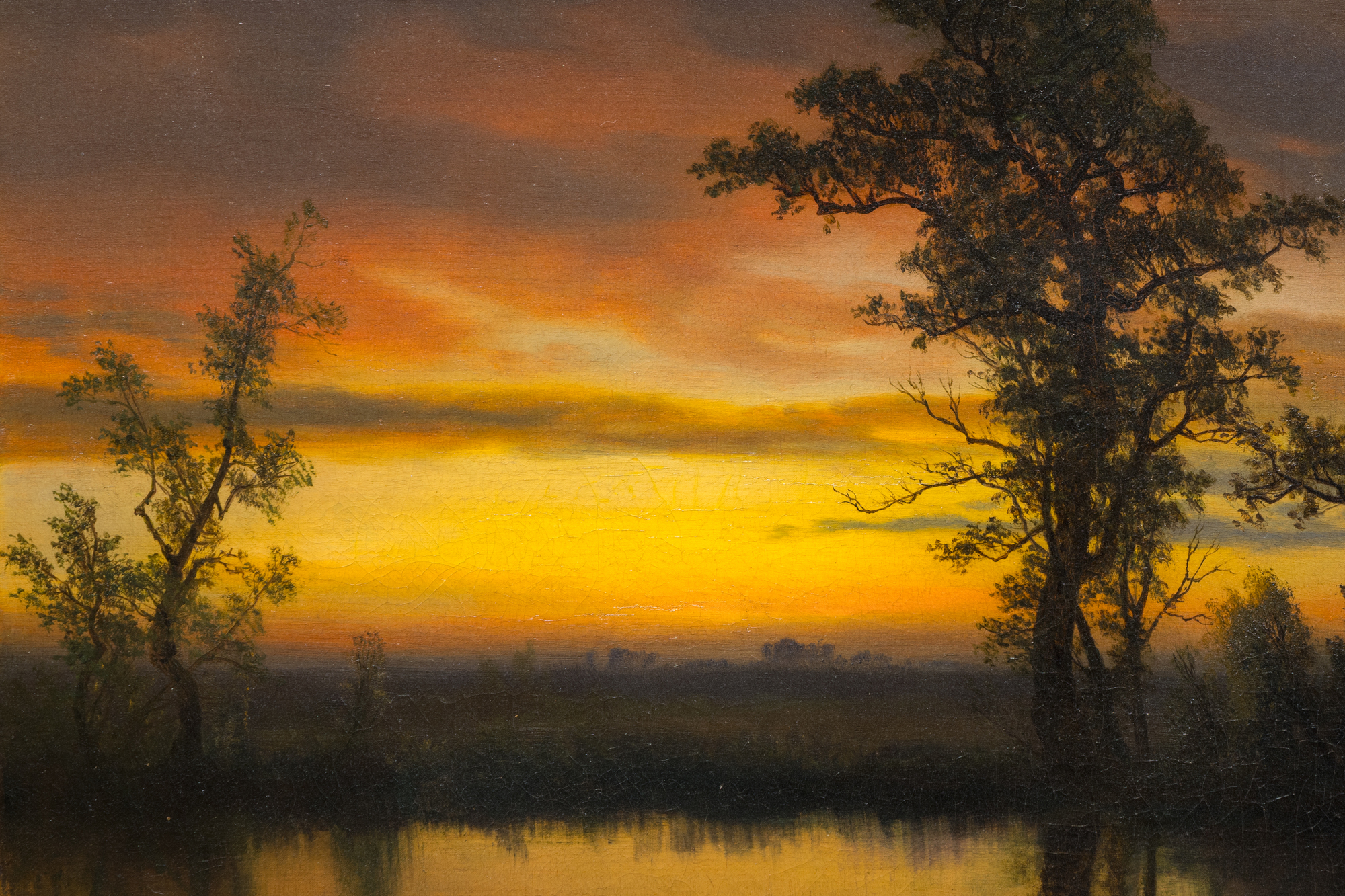
"דמדומים על נהר סן חואקין" (בסביבות 1873) הוא ציור שמן זוהר המדגים את מעורבותו הבוגרת של אלברט בירשטאדט בנוף האמריקאי ואת שליטתו באפקטים של אור. היצירה, המיוצרת בסגנון לומיניסטי מעודן, מדגישה אווירה שלווה וזוהרת המושגת באמצעות פרטים קפדניים, מעברים גווניים עדינים ופלטת צבעים מבוקרת בקפידה. אור הדמדומים הדועך מתפוגג בעדינות על הסצנה, והופך את נהר סן חואקין למישור מחזיר אור שמעגן את הקומפוזיציה ומעצים את הדממה המדיטטיבית שלה.


נהר סן חואקין, הזורם דרך עמק המרכזי של קליפורניה לפני שהוא מתחבר לנהר סקרמנטו בדלתא של סקרמנטו-סן חואקין, היה נושא שהתאים היטב לעניין של בירשטדט בנופים רחבי ידיים אך שלוים. בציור זה, הנהר הופך לתעלה לאור, ולוכד את יחסי הגומלין העדינים בין שמיים למים בדמדומים. התוצאה היא איזון הרמוני בין הוד טבעי להתבוננות אינטימית.


בירשטאדט היה צייר בולט הקשור לאסכולת נהר ההדסון, הידוע בתיאוריו הגדולים והנוצצים של המערב האמריקאי. תיאוריו את היופי והשפע עזרו לעצב את הדימוי הפופולרי של המערב והרגיעו את האמריקאים, שעדיין התמודדו עם תוצאות מלחמת האזרחים, שהדמוקרטיה הצעירה שלהם ניחנה בגדולה דומה לזו של אירופה ותחזיק מעמד. בין השנים 1871 ו-1873, בירשטאדט התגורר בקליפורניה, ניהל סטודיו בסן פרנסיסקו, ונסע רבות ברחבי האזור, ויצר עבודות שלוכדות את מרחביו ויופיו הייחודי.


סצנת דמדומים קשורה קשר הדוק, "אוונס ואלי, קליפורניה" (בסביבות 1872) נמצאת באוסף מוזיאון מקמולן לאמנות, מכללת בוסטון. "דמדומים על נהר סן חואקין" ייכלל במאגר הנתונים הקרוב של אלברט בירשטאדט, בניהולה של מליסה וובסטר ספיידל, נשיאת קרן בירשטאדט.
לברר