
Zurück

ALBERT BIERSTADT (1830-1902)

$1,750,000

 
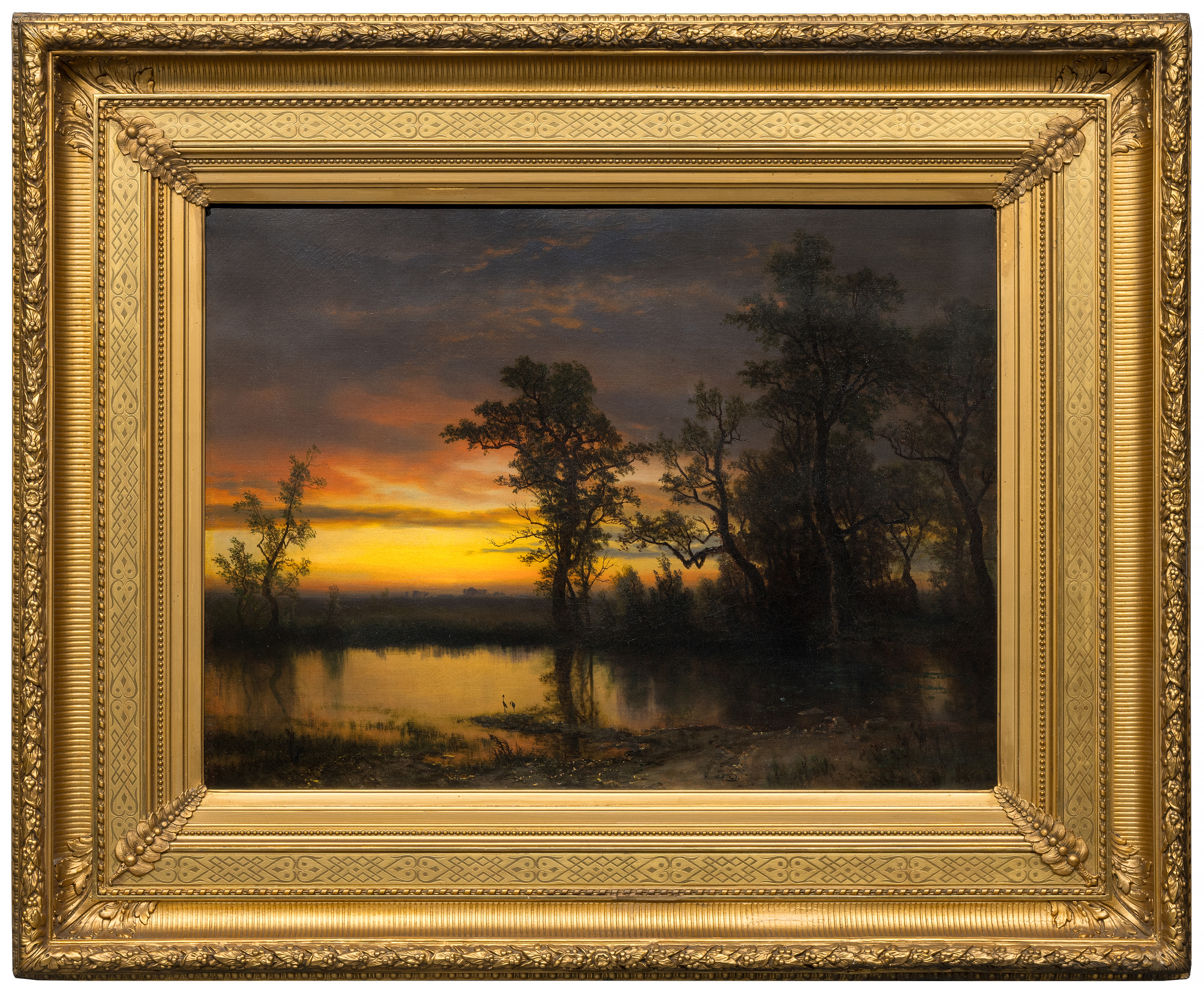
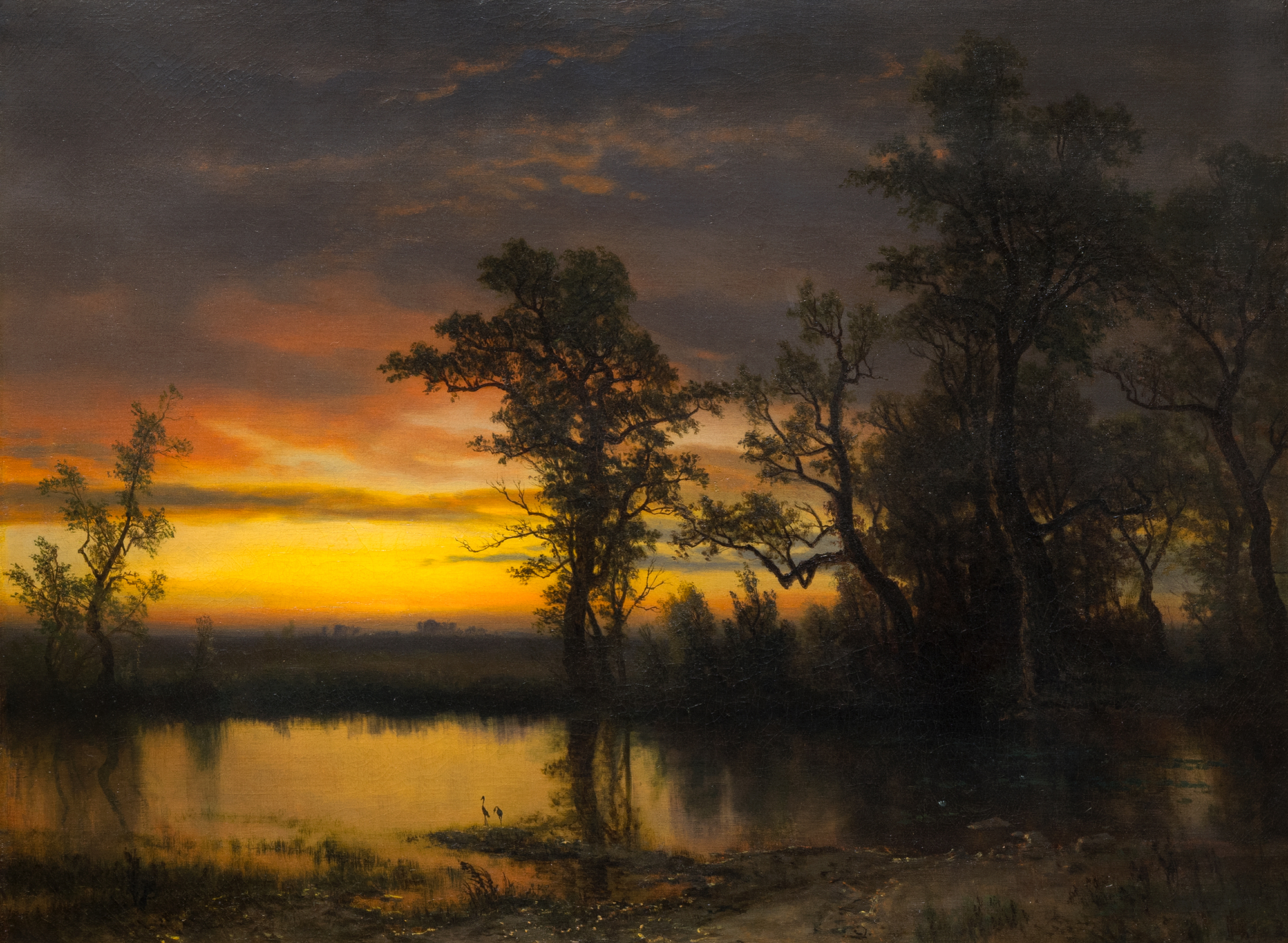
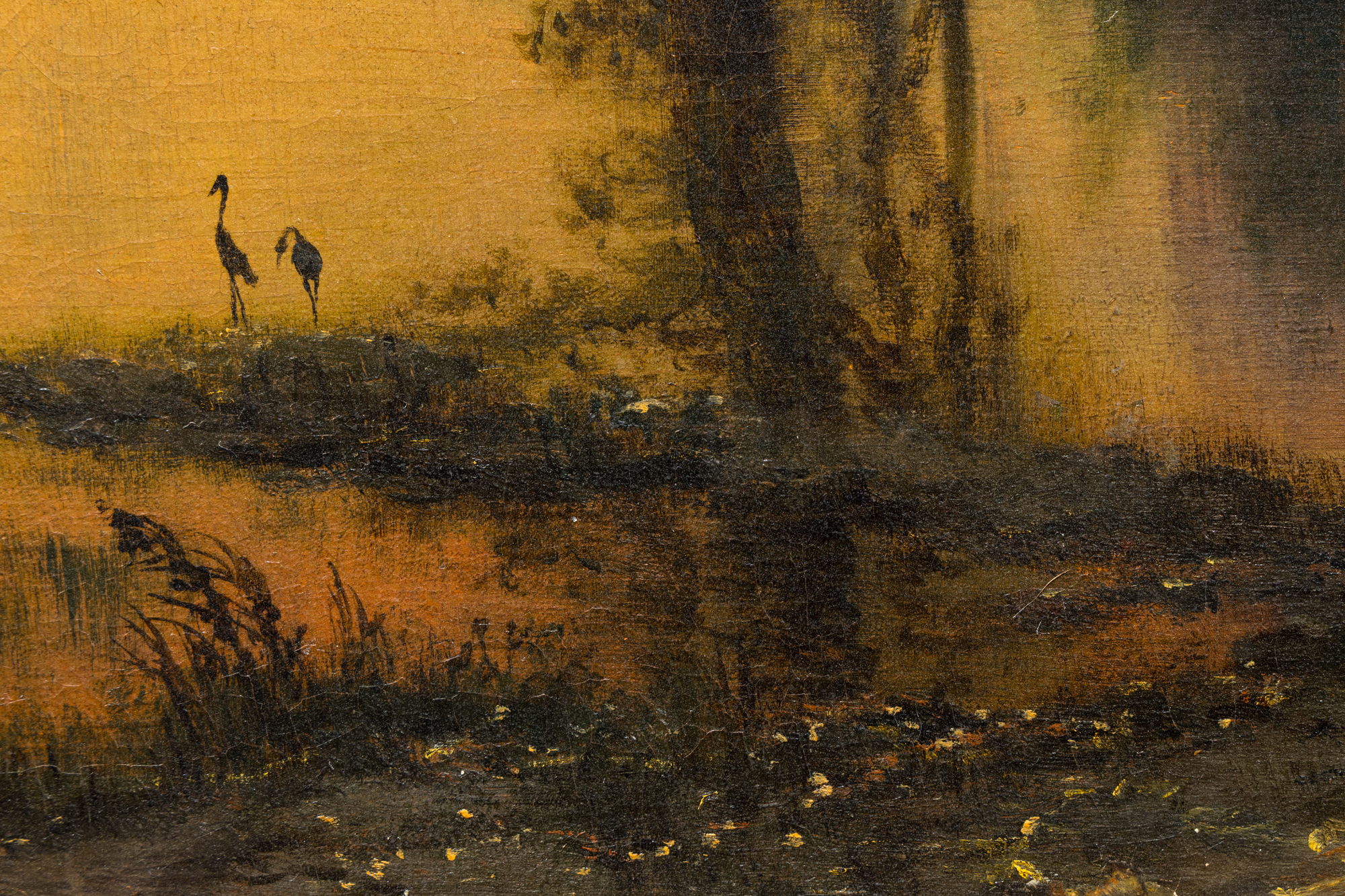
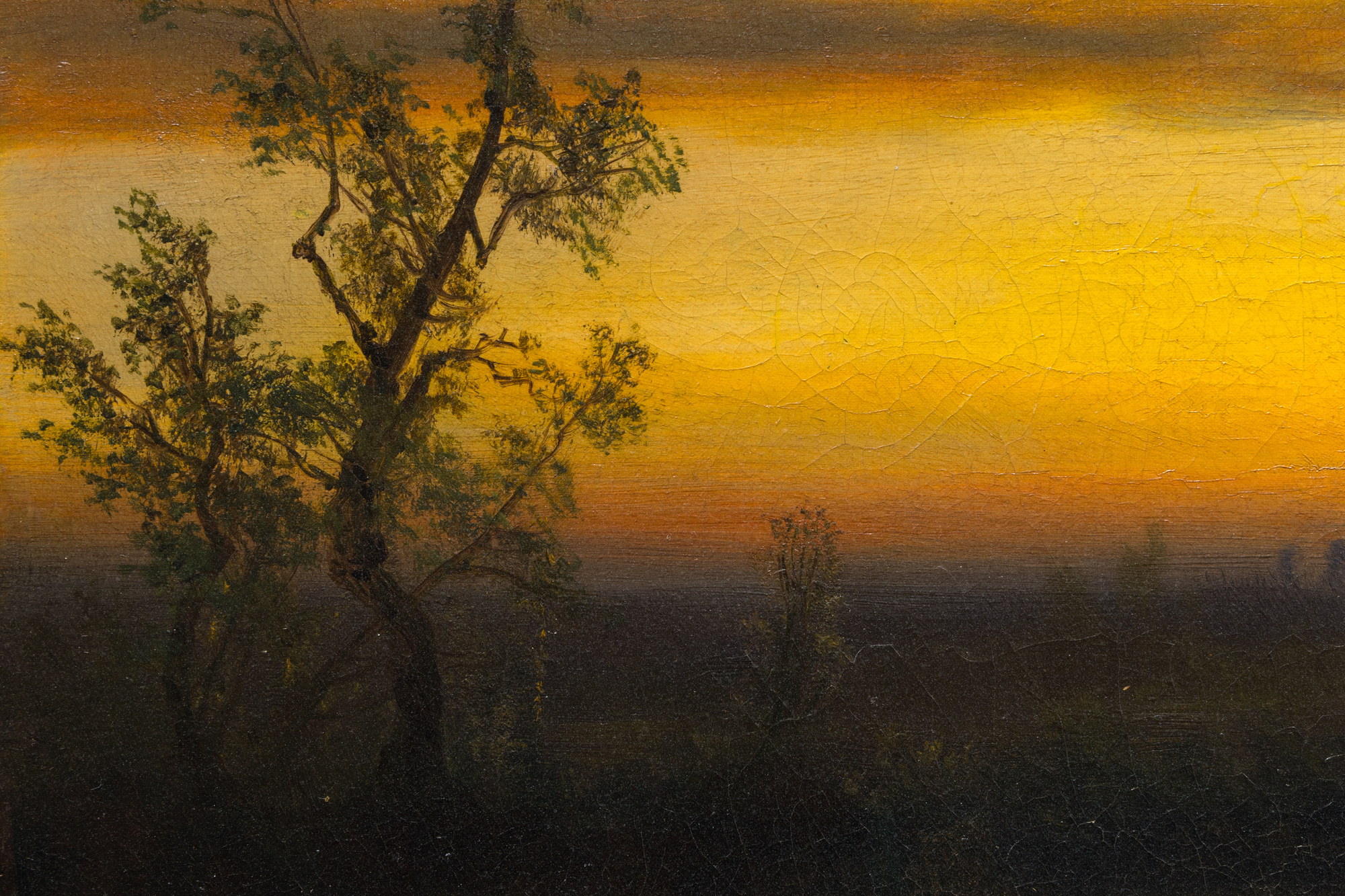
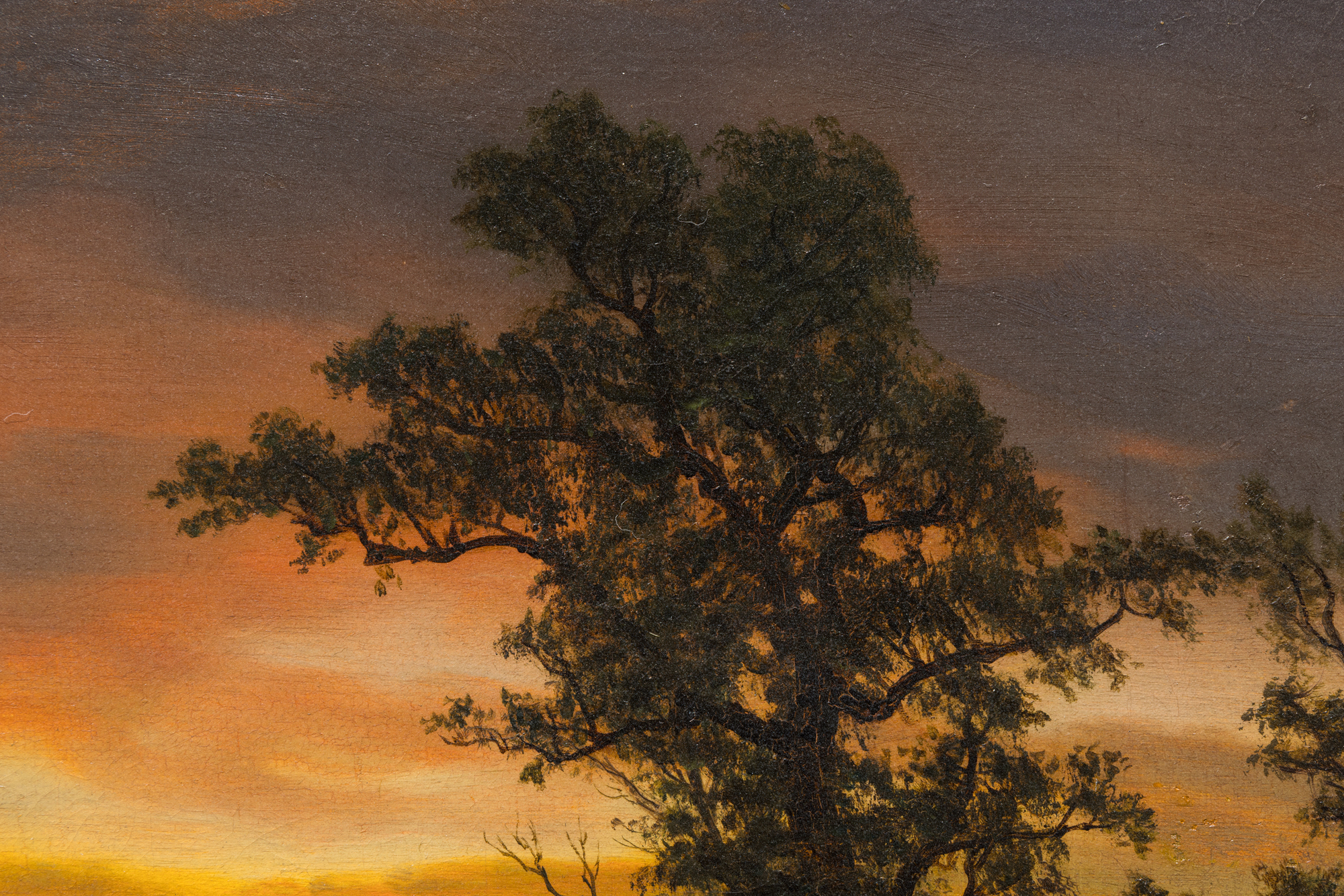
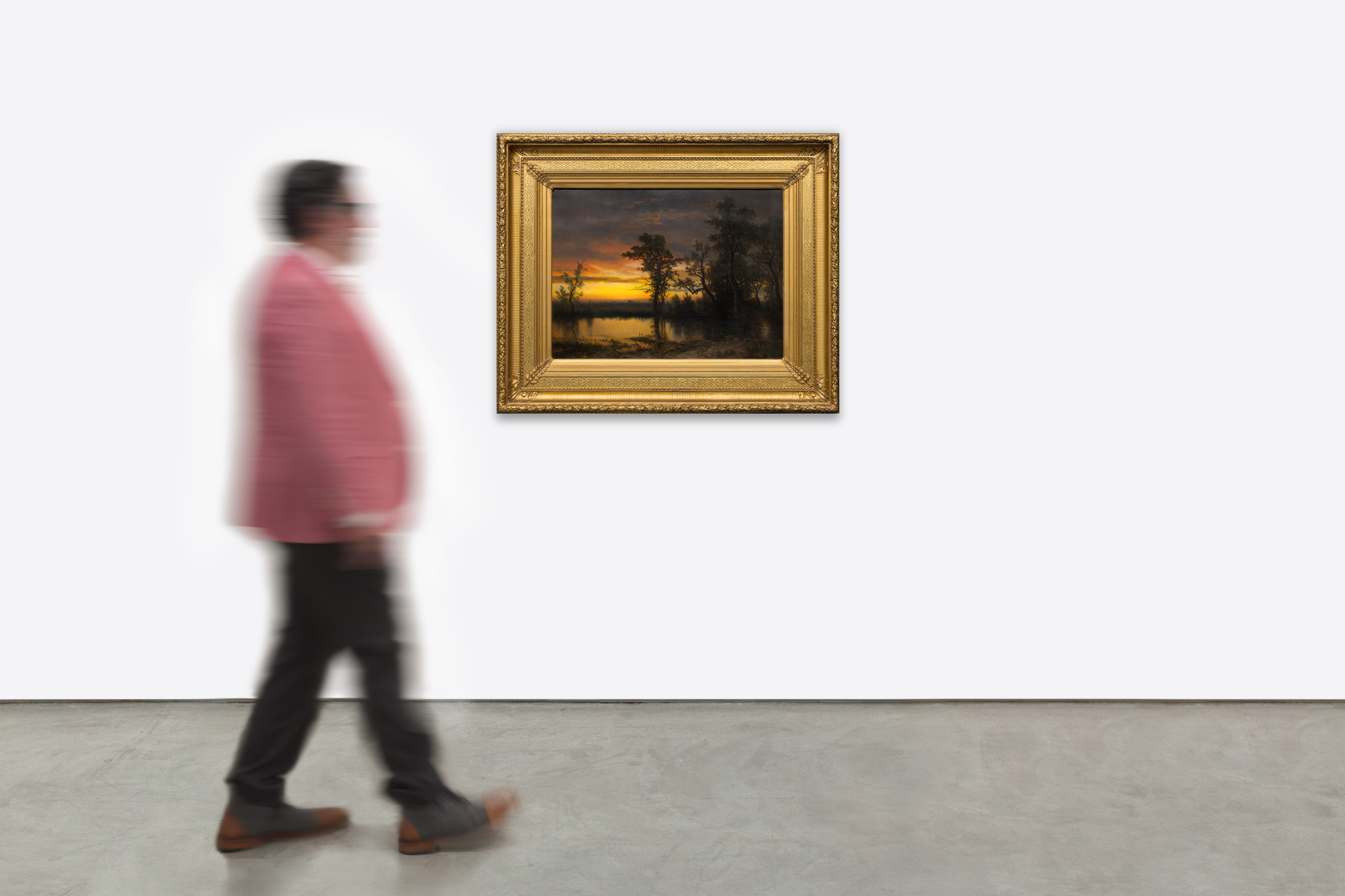
<div>"Twilight on the San Joaquin" (c. 1873) is a luminous oil painting that exemplifies Albert Bierstadt’s mature engagement with the American landscape and his mastery of light effects. Executed in a refined Luminist style, the work emphasizes a tranquil, glowing atmosphere achieved through meticulous detail, subtle tonal transitions, and a carefully controlled palette. The fading light of dusk settles gently over the scene, transforming the San Joaquin River into a reflective plane that anchors the composition and enhances its meditative stillness. </div><br><br><div> </div><br><br><div>The San Joaquin River, which flows through California’s Central Valley before joining the Sacramento River at the Sacramento–San Joaquin Delta, was a subject well suited to Bierstadt’s interest in expansive yet serene vistas. In this painting, the river becomes a conduit for light, capturing the delicate interplay between sky and water at twilight. The result is a harmonious balance between natural grandeur and intimate observation. </div><br><br><div> </div><br><br><div>Bierstadt was a prominent painter associated with the Hudson River School, known for his large, gleaming depictions of the American West. His portrayals of beauty and plenty helped shape the popular image of the West and reassured Americans, still grappling with the aftermath of the Civil War, that their young democracy possessed a grandeur comparable to Europe and would endure. Between 1871 and 1873, Bierstadt lived in California, maintaining a studio in San Francisco, and traveled extensively through the region, producing works that capture its vastness and unique beauty. </div><br><br><div> </div><br><br><div>A closely related twilight scene, "Owens Valley, California" (c. 1872) is in the collection of the McMullen Museum of Art, Boston College. Twilight on the San Joaquin will be included in the forthcoming Albert Bierstadt catalogue raisonné database directed by Melissa Webster Speidel, President of the Bierstadt Foundation. </div> <div>"Twilight on the San Joaquin" (c. 1873) is a luminous oil painting that exemplifies Albert Bierstadt’s mature engagement with the American landscape and his mastery of light effects. Executed in a refined Luminist style, the work emphasizes a tranquil, glowing atmosphere achieved through meticulous detail, subtle tonal transitions, and a carefully controlled palette. The fading light of dusk settles gently over the scene, transforming the San Joaquin River into a reflective plane that anchors the composition and enhances its meditative stillness. </div><br><br><div> </div><br><br><div>The San Joaquin River, which flows through California’s Central Valley before joining the Sacramento River at the Sacramento–San Joaquin Delta, was a subject well suited to Bierstadt’s interest in expansive yet serene vistas. In this painting, the river becomes a conduit for light, capturing the delicate interplay between sky and water at twilight. The result is a harmonious balance between natural grandeur and intimate observation. </div><br><br><div> </div><br><br><div>Bierstadt was a prominent painter associated with the Hudson River School, known for his large, gleaming depictions of the American West. His portrayals of beauty and plenty helped shape the popular image of the West and reassured Americans, still grappling with the aftermath of the Civil War, that their young democracy possessed a grandeur comparable to Europe and would endure. Between 1871 and 1873, Bierstadt lived in California, maintaining a studio in San Francisco, and traveled extensively through the region, producing works that capture its vastness and unique beauty. </div><br><br><div> </div><br><br><div>A closely related twilight scene, "Owens Valley, California" (c. 1872) is in the collection of the McMullen Museum of Art, Boston College. Twilight on the San Joaquin will be included in the forthcoming Albert Bierstadt catalogue raisonné database directed by Melissa Webster Speidel, President of the Bierstadt Foundation. </div> <div>"Twilight on the San Joaquin" (c. 1873) is a luminous oil painting that exemplifies Albert Bierstadt’s mature engagement with the American landscape and his mastery of light effects. Executed in a refined Luminist style, the work emphasizes a tranquil, glowing atmosphere achieved through meticulous detail, subtle tonal transitions, and a carefully controlled palette. The fading light of dusk settles gently over the scene, transforming the San Joaquin River into a reflective plane that anchors the composition and enhances its meditative stillness. </div><br><br><div> </div><br><br><div>The San Joaquin River, which flows through California’s Central Valley before joining the Sacramento River at the Sacramento–San Joaquin Delta, was a subject well suited to Bierstadt’s interest in expansive yet serene vistas. In this painting, the river becomes a conduit for light, capturing the delicate interplay between sky and water at twilight. The result is a harmonious balance between natural grandeur and intimate observation. </div><br><br><div> </div><br><br><div>Bierstadt was a prominent painter associated with the Hudson River School, known for his large, gleaming depictions of the American West. His portrayals of beauty and plenty helped shape the popular image of the West and reassured Americans, still grappling with the aftermath of the Civil War, that their young democracy possessed a grandeur comparable to Europe and would endure. Between 1871 and 1873, Bierstadt lived in California, maintaining a studio in San Francisco, and traveled extensively through the region, producing works that capture its vastness and unique beauty. </div><br><br><div> </div><br><br><div>A closely related twilight scene, "Owens Valley, California" (c. 1872) is in the collection of the McMullen Museum of Art, Boston College. Twilight on the San Joaquin will be included in the forthcoming Albert Bierstadt catalogue raisonné database directed by Melissa Webster Speidel, President of the Bierstadt Foundation. </div> <div>"Twilight on the San Joaquin" (c. 1873) is a luminous oil painting that exemplifies Albert Bierstadt’s mature engagement with the American landscape and his mastery of light effects. Executed in a refined Luminist style, the work emphasizes a tranquil, glowing atmosphere achieved through meticulous detail, subtle tonal transitions, and a carefully controlled palette. The fading light of dusk settles gently over the scene, transforming the San Joaquin River into a reflective plane that anchors the composition and enhances its meditative stillness. </div><br><br><div> </div><br><br><div>The San Joaquin River, which flows through California’s Central Valley before joining the Sacramento River at the Sacramento–San Joaquin Delta, was a subject well suited to Bierstadt’s interest in expansive yet serene vistas. In this painting, the river becomes a conduit for light, capturing the delicate interplay between sky and water at twilight. The result is a harmonious balance between natural grandeur and intimate observation. </div><br><br><div> </div><br><br><div>Bierstadt was a prominent painter associated with the Hudson River School, known for his large, gleaming depictions of the American West. His portrayals of beauty and plenty helped shape the popular image of the West and reassured Americans, still grappling with the aftermath of the Civil War, that their young democracy possessed a grandeur comparable to Europe and would endure. Between 1871 and 1873, Bierstadt lived in California, maintaining a studio in San Francisco, and traveled extensively through the region, producing works that capture its vastness and unique beauty. </div><br><br><div> </div><br><br><div>A closely related twilight scene, "Owens Valley, California" (c. 1872) is in the collection of the McMullen Museum of Art, Boston College. Twilight on the San Joaquin will be included in the forthcoming Albert Bierstadt catalogue raisonné database directed by Melissa Webster Speidel, President of the Bierstadt Foundation. </div> <div>"Twilight on the San Joaquin" (c. 1873) is a luminous oil painting that exemplifies Albert Bierstadt’s mature engagement with the American landscape and his mastery of light effects. Executed in a refined Luminist style, the work emphasizes a tranquil, glowing atmosphere achieved through meticulous detail, subtle tonal transitions, and a carefully controlled palette. The fading light of dusk settles gently over the scene, transforming the San Joaquin River into a reflective plane that anchors the composition and enhances its meditative stillness. </div><br><br><div> </div><br><br><div>The San Joaquin River, which flows through California’s Central Valley before joining the Sacramento River at the Sacramento–San Joaquin Delta, was a subject well suited to Bierstadt’s interest in expansive yet serene vistas. In this painting, the river becomes a conduit for light, capturing the delicate interplay between sky and water at twilight. The result is a harmonious balance between natural grandeur and intimate observation. </div><br><br><div> </div><br><br><div>Bierstadt was a prominent painter associated with the Hudson River School, known for his large, gleaming depictions of the American West. His portrayals of beauty and plenty helped shape the popular image of the West and reassured Americans, still grappling with the aftermath of the Civil War, that their young democracy possessed a grandeur comparable to Europe and would endure. Between 1871 and 1873, Bierstadt lived in California, maintaining a studio in San Francisco, and traveled extensively through the region, producing works that capture its vastness and unique beauty. </div><br><br><div> </div><br><br><div>A closely related twilight scene, "Owens Valley, California" (c. 1872) is in the collection of the McMullen Museum of Art, Boston College. Twilight on the San Joaquin will be included in the forthcoming Albert Bierstadt catalogue raisonné database directed by Melissa Webster Speidel, President of the Bierstadt Foundation. </div> <div>"Twilight on the San Joaquin" (c. 1873) is a luminous oil painting that exemplifies Albert Bierstadt’s mature engagement with the American landscape and his mastery of light effects. Executed in a refined Luminist style, the work emphasizes a tranquil, glowing atmosphere achieved through meticulous detail, subtle tonal transitions, and a carefully controlled palette. The fading light of dusk settles gently over the scene, transforming the San Joaquin River into a reflective plane that anchors the composition and enhances its meditative stillness. </div><br><br><div> </div><br><br><div>The San Joaquin River, which flows through California’s Central Valley before joining the Sacramento River at the Sacramento–San Joaquin Delta, was a subject well suited to Bierstadt’s interest in expansive yet serene vistas. In this painting, the river becomes a conduit for light, capturing the delicate interplay between sky and water at twilight. The result is a harmonious balance between natural grandeur and intimate observation. </div><br><br><div> </div><br><br><div>Bierstadt was a prominent painter associated with the Hudson River School, known for his large, gleaming depictions of the American West. His portrayals of beauty and plenty helped shape the popular image of the West and reassured Americans, still grappling with the aftermath of the Civil War, that their young democracy possessed a grandeur comparable to Europe and would endure. Between 1871 and 1873, Bierstadt lived in California, maintaining a studio in San Francisco, and traveled extensively through the region, producing works that capture its vastness and unique beauty. </div><br><br><div> </div><br><br><div>A closely related twilight scene, "Owens Valley, California" (c. 1872) is in the collection of the McMullen Museum of Art, Boston College. Twilight on the San Joaquin will be included in the forthcoming Albert Bierstadt catalogue raisonné database directed by Melissa Webster Speidel, President of the Bierstadt Foundation. </div> <div>"Twilight on the San Joaquin" (c. 1873) is a luminous oil painting that exemplifies Albert Bierstadt’s mature engagement with the American landscape and his mastery of light effects. Executed in a refined Luminist style, the work emphasizes a tranquil, glowing atmosphere achieved through meticulous detail, subtle tonal transitions, and a carefully controlled palette. The fading light of dusk settles gently over the scene, transforming the San Joaquin River into a reflective plane that anchors the composition and enhances its meditative stillness. </div><br><br><div> </div><br><br><div>The San Joaquin River, which flows through California’s Central Valley before joining the Sacramento River at the Sacramento–San Joaquin Delta, was a subject well suited to Bierstadt’s interest in expansive yet serene vistas. In this painting, the river becomes a conduit for light, capturing the delicate interplay between sky and water at twilight. The result is a harmonious balance between natural grandeur and intimate observation. </div><br><br><div> </div><br><br><div>Bierstadt was a prominent painter associated with the Hudson River School, known for his large, gleaming depictions of the American West. His portrayals of beauty and plenty helped shape the popular image of the West and reassured Americans, still grappling with the aftermath of the Civil War, that their young democracy possessed a grandeur comparable to Europe and would endure. Between 1871 and 1873, Bierstadt lived in California, maintaining a studio in San Francisco, and traveled extensively through the region, producing works that capture its vastness and unique beauty. </div><br><br><div> </div><br><br><div>A closely related twilight scene, "Owens Valley, California" (c. 1872) is in the collection of the McMullen Museum of Art, Boston College. Twilight on the San Joaquin will be included in the forthcoming Albert Bierstadt catalogue raisonné database directed by Melissa Webster Speidel, President of the Bierstadt Foundation. </div> <div>"Twilight on the San Joaquin" (c. 1873) is a luminous oil painting that exemplifies Albert Bierstadt’s mature engagement with the American landscape and his mastery of light effects. Executed in a refined Luminist style, the work emphasizes a tranquil, glowing atmosphere achieved through meticulous detail, subtle tonal transitions, and a carefully controlled palette. The fading light of dusk settles gently over the scene, transforming the San Joaquin River into a reflective plane that anchors the composition and enhances its meditative stillness. </div><br><br><div> </div><br><br><div>The San Joaquin River, which flows through California’s Central Valley before joining the Sacramento River at the Sacramento–San Joaquin Delta, was a subject well suited to Bierstadt’s interest in expansive yet serene vistas. In this painting, the river becomes a conduit for light, capturing the delicate interplay between sky and water at twilight. The result is a harmonious balance between natural grandeur and intimate observation. </div><br><br><div> </div><br><br><div>Bierstadt was a prominent painter associated with the Hudson River School, known for his large, gleaming depictions of the American West. His portrayals of beauty and plenty helped shape the popular image of the West and reassured Americans, still grappling with the aftermath of the Civil War, that their young democracy possessed a grandeur comparable to Europe and would endure. Between 1871 and 1873, Bierstadt lived in California, maintaining a studio in San Francisco, and traveled extensively through the region, producing works that capture its vastness and unique beauty. </div><br><br><div> </div><br><br><div>A closely related twilight scene, "Owens Valley, California" (c. 1872) is in the collection of the McMullen Museum of Art, Boston College. Twilight on the San Joaquin will be included in the forthcoming Albert Bierstadt catalogue raisonné database directed by Melissa Webster Speidel, President of the Bierstadt Foundation. </div> <div>"Twilight on the San Joaquin" (c. 1873) is a luminous oil painting that exemplifies Albert Bierstadt’s mature engagement with the American landscape and his mastery of light effects. Executed in a refined Luminist style, the work emphasizes a tranquil, glowing atmosphere achieved through meticulous detail, subtle tonal transitions, and a carefully controlled palette. The fading light of dusk settles gently over the scene, transforming the San Joaquin River into a reflective plane that anchors the composition and enhances its meditative stillness. </div><br><br><div> </div><br><br><div>The San Joaquin River, which flows through California’s Central Valley before joining the Sacramento River at the Sacramento–San Joaquin Delta, was a subject well suited to Bierstadt’s interest in expansive yet serene vistas. In this painting, the river becomes a conduit for light, capturing the delicate interplay between sky and water at twilight. The result is a harmonious balance between natural grandeur and intimate observation. </div><br><br><div> </div><br><br><div>Bierstadt was a prominent painter associated with the Hudson River School, known for his large, gleaming depictions of the American West. His portrayals of beauty and plenty helped shape the popular image of the West and reassured Americans, still grappling with the aftermath of the Civil War, that their young democracy possessed a grandeur comparable to Europe and would endure. Between 1871 and 1873, Bierstadt lived in California, maintaining a studio in San Francisco, and traveled extensively through the region, producing works that capture its vastness and unique beauty. </div><br><br><div> </div><br><br><div>A closely related twilight scene, "Owens Valley, California" (c. 1872) is in the collection of the McMullen Museum of Art, Boston College. Twilight on the San Joaquin will be included in the forthcoming Albert Bierstadt catalogue raisonné database directed by Melissa Webster Speidel, President of the Bierstadt Foundation. </div> <div>"Twilight on the San Joaquin" (c. 1873) is a luminous oil painting that exemplifies Albert Bierstadt’s mature engagement with the American landscape and his mastery of light effects. Executed in a refined Luminist style, the work emphasizes a tranquil, glowing atmosphere achieved through meticulous detail, subtle tonal transitions, and a carefully controlled palette. The fading light of dusk settles gently over the scene, transforming the San Joaquin River into a reflective plane that anchors the composition and enhances its meditative stillness. </div><br><br><div> </div><br><br><div>The San Joaquin River, which flows through California’s Central Valley before joining the Sacramento River at the Sacramento–San Joaquin Delta, was a subject well suited to Bierstadt’s interest in expansive yet serene vistas. In this painting, the river becomes a conduit for light, capturing the delicate interplay between sky and water at twilight. The result is a harmonious balance between natural grandeur and intimate observation. </div><br><br><div> </div><br><br><div>Bierstadt was a prominent painter associated with the Hudson River School, known for his large, gleaming depictions of the American West. His portrayals of beauty and plenty helped shape the popular image of the West and reassured Americans, still grappling with the aftermath of the Civil War, that their young democracy possessed a grandeur comparable to Europe and would endure. Between 1871 and 1873, Bierstadt lived in California, maintaining a studio in San Francisco, and traveled extensively through the region, producing works that capture its vastness and unique beauty. </div><br><br><div> </div><br><br><div>A closely related twilight scene, "Owens Valley, California" (c. 1872) is in the collection of the McMullen Museum of Art, Boston College. Twilight on the San Joaquin will be included in the forthcoming Albert Bierstadt catalogue raisonné database directed by Melissa Webster Speidel, President of the Bierstadt Foundation. </div>
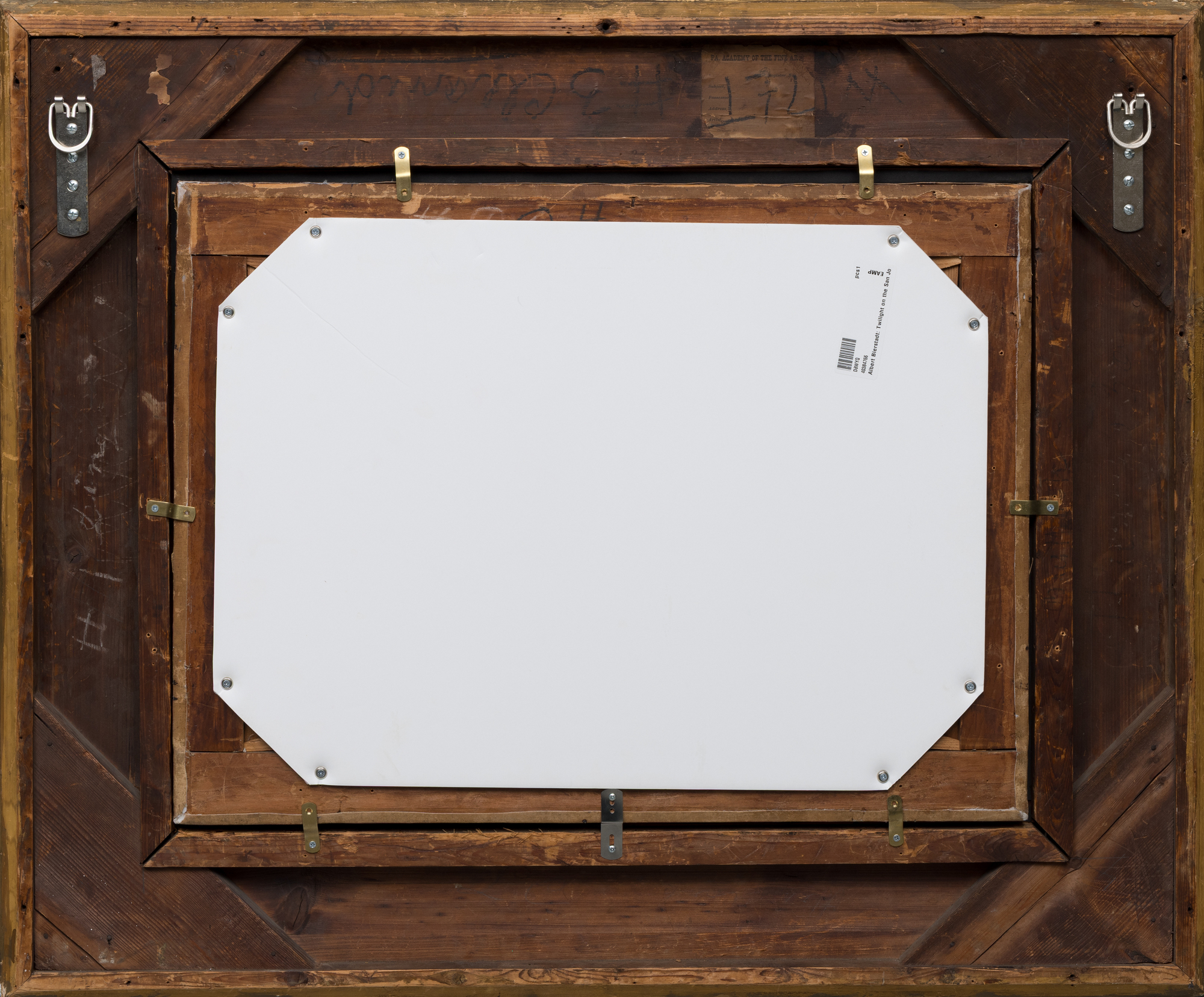
Abenddämmerung am San Joaquinca. 187322 x 29 1/2 x 3/4 Zoll(55,88 x 74,93 x 1,91 cm) Öl auf Leinwand
Provenienz
Privatsammlung, Massachusetts, vor 1970
Privatsammlung, Middleboro, Massachusetts, 1970
Privatsammlung, von der oben genannten Sammlung erworben, 2024
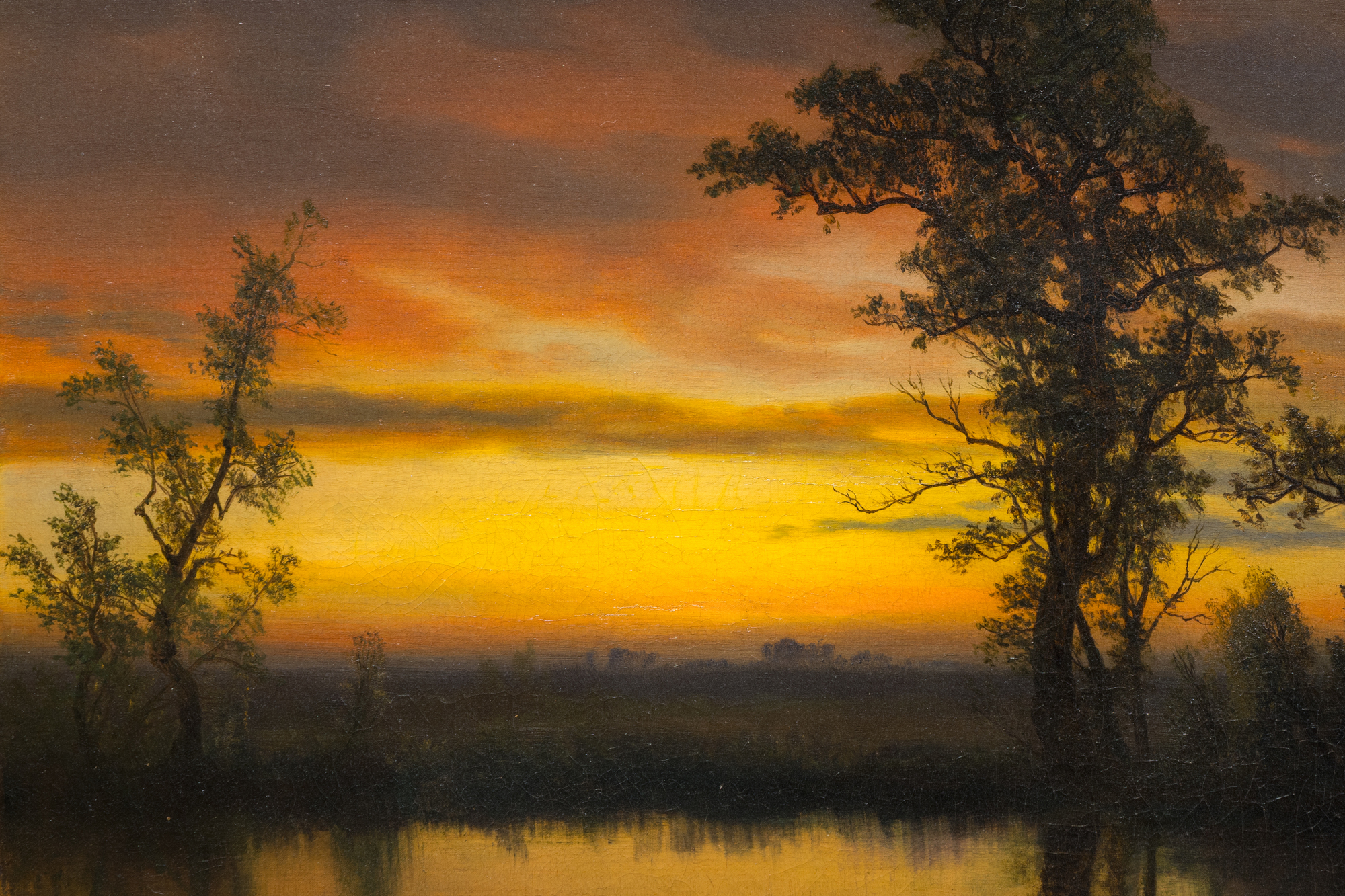
„Twilight on the San Joaquin“ (um 1873) ist ein leuchtendes Ölgemälde, das Albert Bierstadts reife Auseinandersetzung mit der amerikanischen Landschaft und seine meisterhafte Beherrschung von Lichteffekten verdeutlicht. Das in einem raffinierten luministischen Stil ausgeführte Werk betont eine ruhige, strahlende Atmosphäre, die durch akribische Details, subtile Farbverläufe und eine sorgfältig abgestimmte Farbpalette erreicht wird. Das schwindende Licht der Dämmerung legt sich sanft über die Szene und verwandelt den San Joaquin River in eine spiegelnde Fläche, die die Komposition verankert und ihre meditative Stille verstärkt.


Der San Joaquin River, der durch das Central Valley in Kalifornien fließt, bevor er im Sacramento–San Joaquin-Delta in den Sacramento River mündet, war ein Motiv, das Bierstadts Interesse an weitläufigen und zugleich ruhigen Ausblicken perfekt widerspiegelte. In diesem Gemälde wird der Fluss zu einem Lichtleiter, der das zarte Wechselspiel zwischen Himmel und Wasser in der Dämmerung einfängt. Das Ergebnis ist ein harmonisches Gleichgewicht zwischen natürlicher Erhabenheit und intimer Beobachtung.


Bierstadt war ein bedeutender Maler der Hudson-River-School, bekannt für seine großformatigen, strahlenden Darstellungen des amerikanischen Westens. Seine Darstellungen von Schönheit und Überfluss prägten das populäre Bild des Westens und vermittelten den Amerikanern, die noch immer mit den Nachwirkungen des Bürgerkriegs zu kämpfen hatten, die Gewissheit, dass ihre junge Demokratie eine mit Europa vergleichbare Erhabenheit besaß und Bestand haben würde. Zwischen 1871 und 1873 lebte Bierstadt in Kalifornien, unterhielt ein Atelier in San Francisco und bereiste die Region ausgiebig, wobei er Werke schuf, die deren Weite und einzigartige Schönheit einfangen.


Ein eng verwandtes Dämmerungsbild, „Owens Valley, California“ (ca. 1872), befindet sich in der Sammlung des McMullen Museum of Art am Boston College. „Twilight on the San Joaquin“ wird in die bevorstehende Datenbank des Albert-Bierstadt-Werkverzeichnisses aufgenommen, die von Melissa Webster Speidel, Präsidentin der Bierstadt Foundation, geleitet wird.
Fragen Sie