CAMILLE PISSARRO (1830-1903)

 
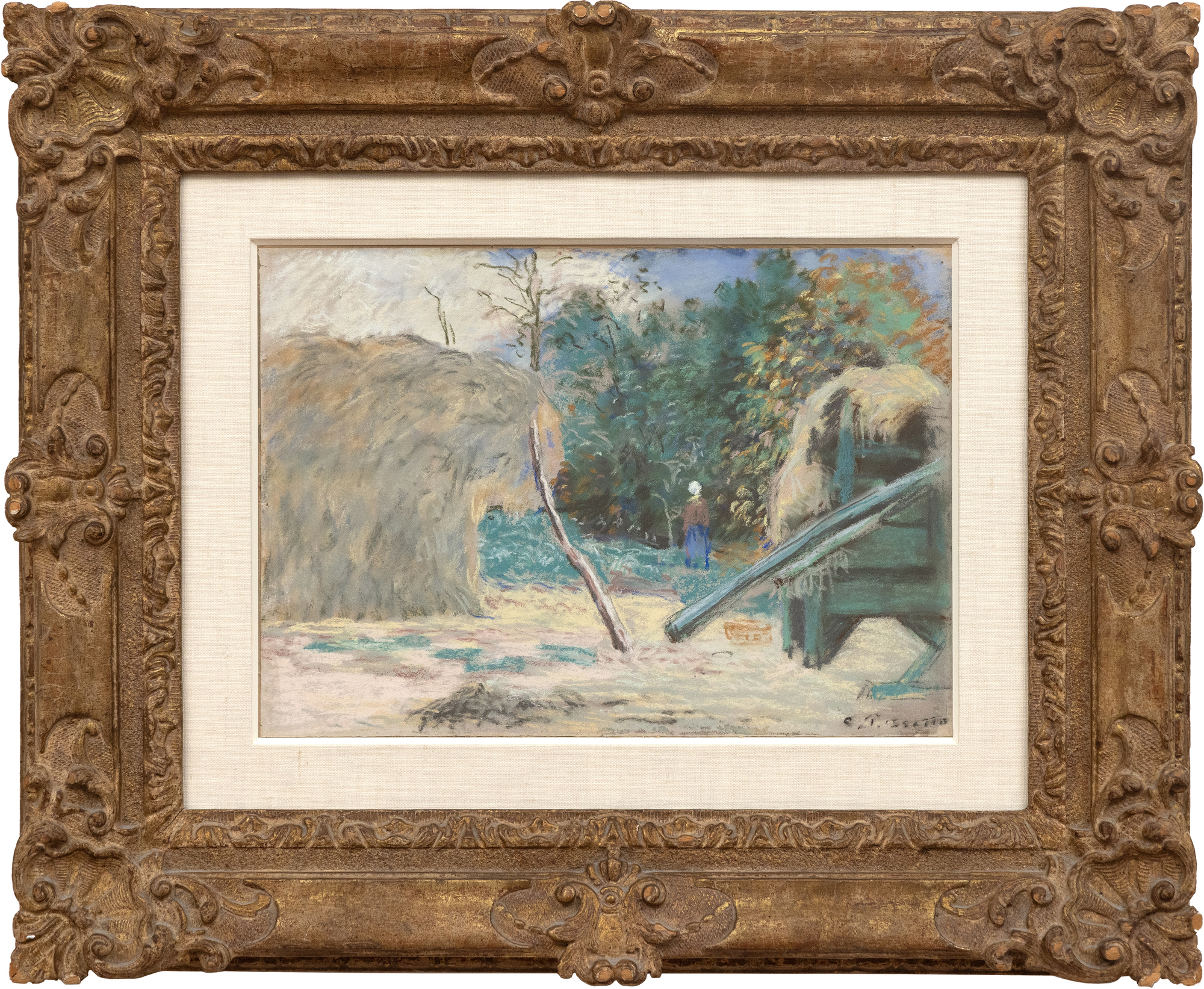
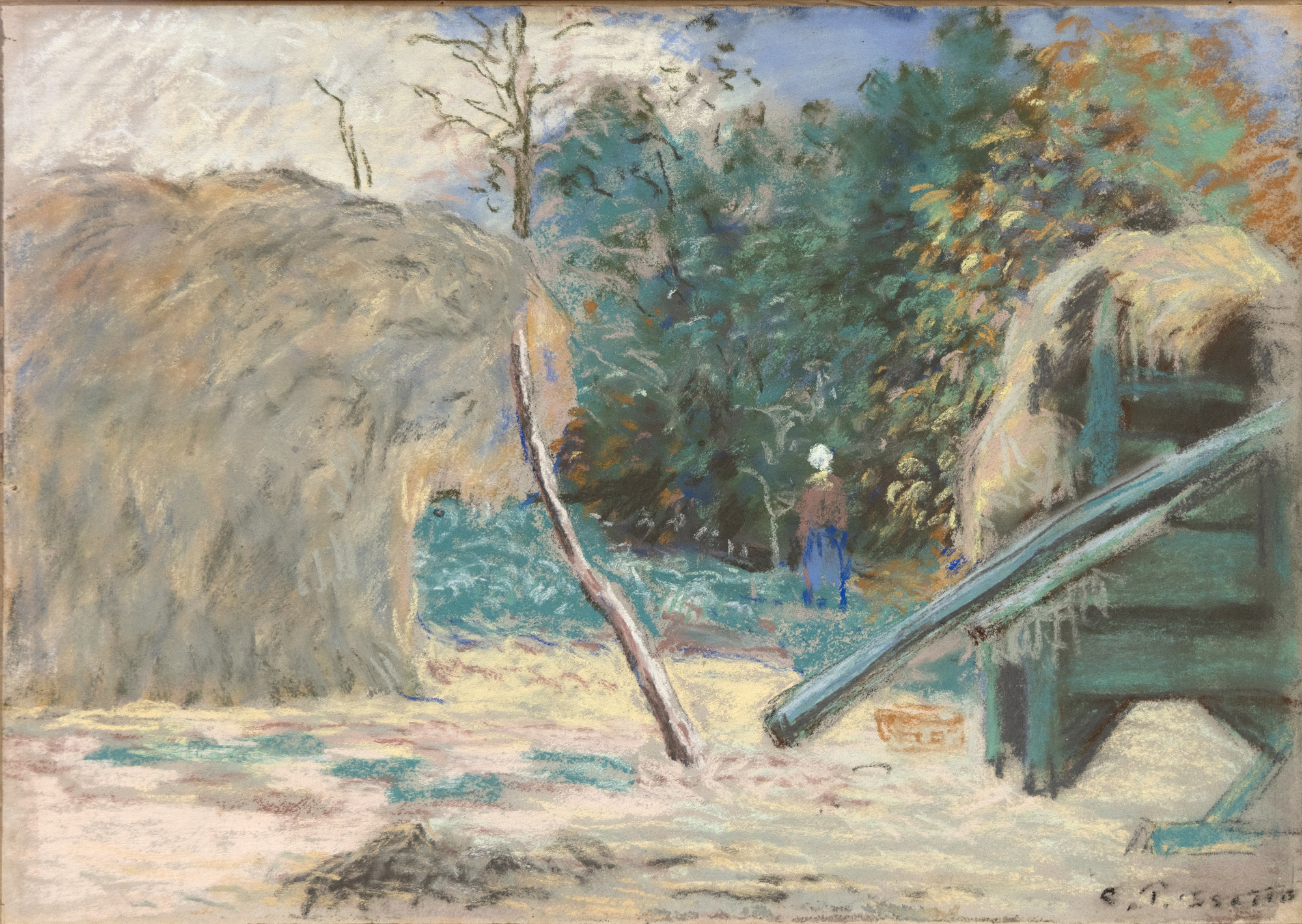
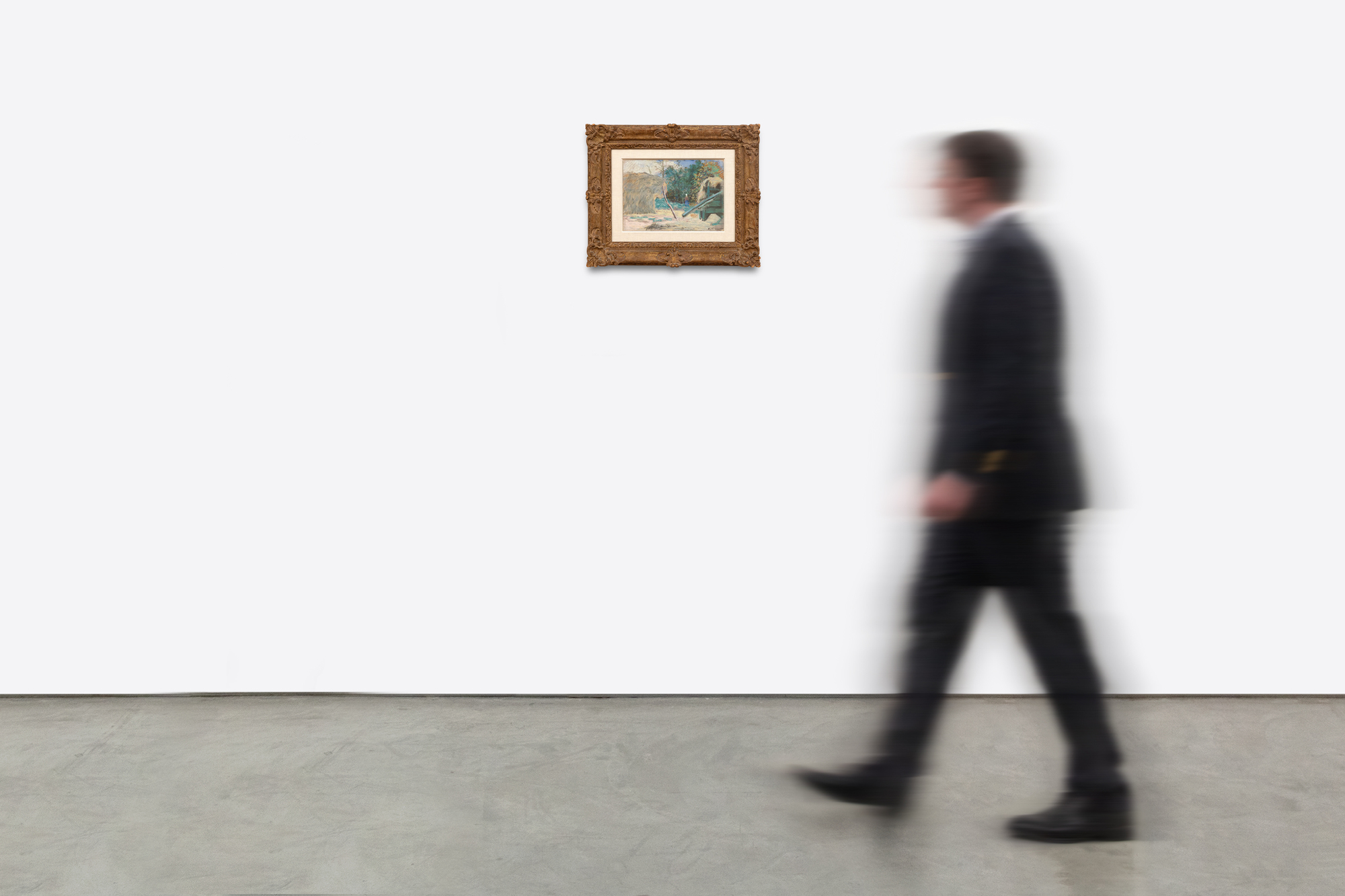
<div>Camille Pissarro’s<em> Paysage avec batteuse à Montfoucault </em>(c. 1875) is an exceptionally vivid pastel that unites the artist’s keen observation of rural life with the Impressionists’ fascination for light, atmosphere, and immediacy. Executed at a moment when Pissarro was deeply engaged with agrarian subjects, the composition centers on a working landscape—haystacks and farm structures set against dense foliage—where a solitary figure anchors the scene in lived experience. The motif is quintessentially Impressionist: an unembellished view of the modern, “seen” world, and a fleeting moment of real life recorded with speed and sensitivity. </div>
<br>
<br><div> </div>
<br>
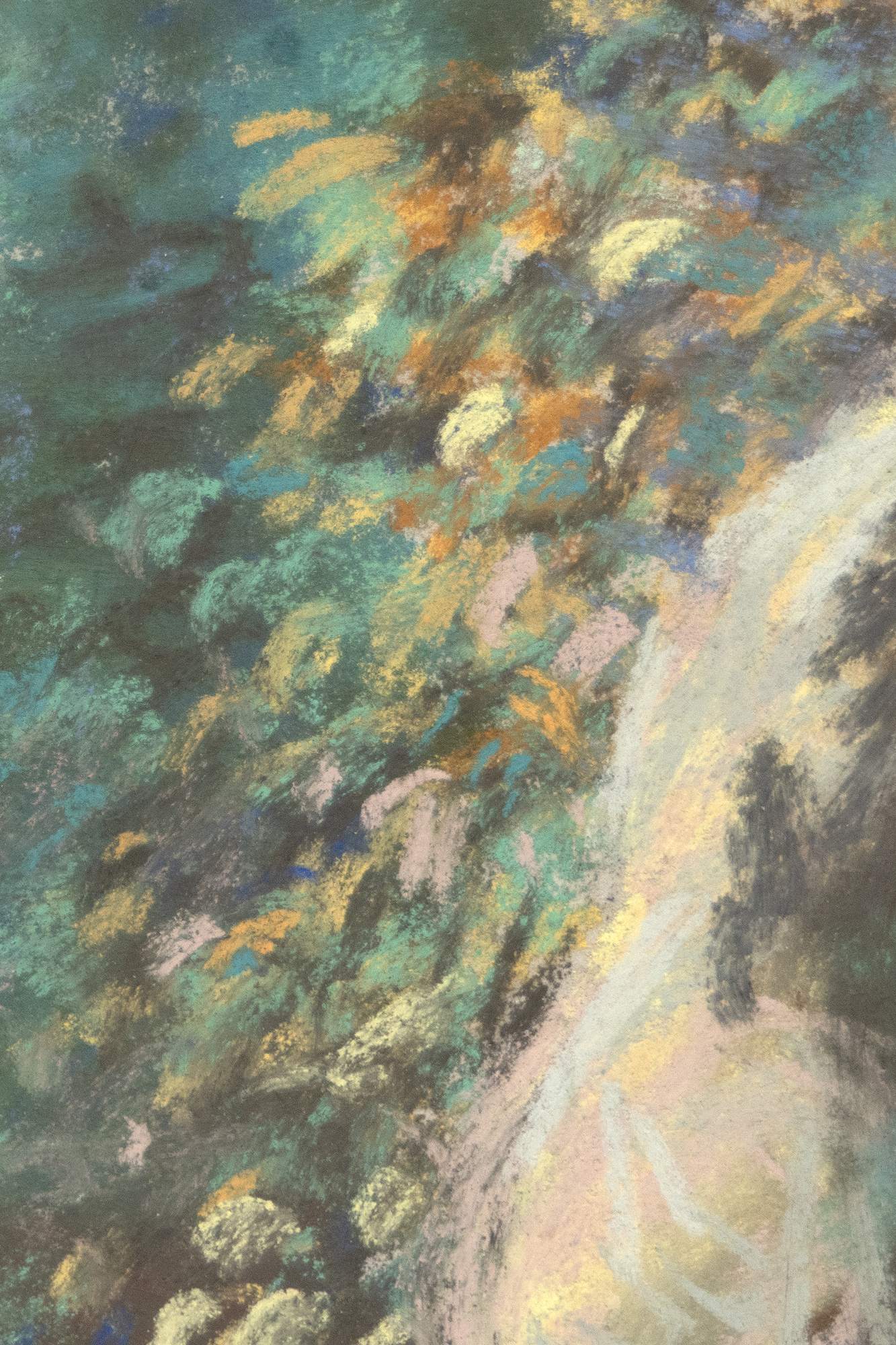
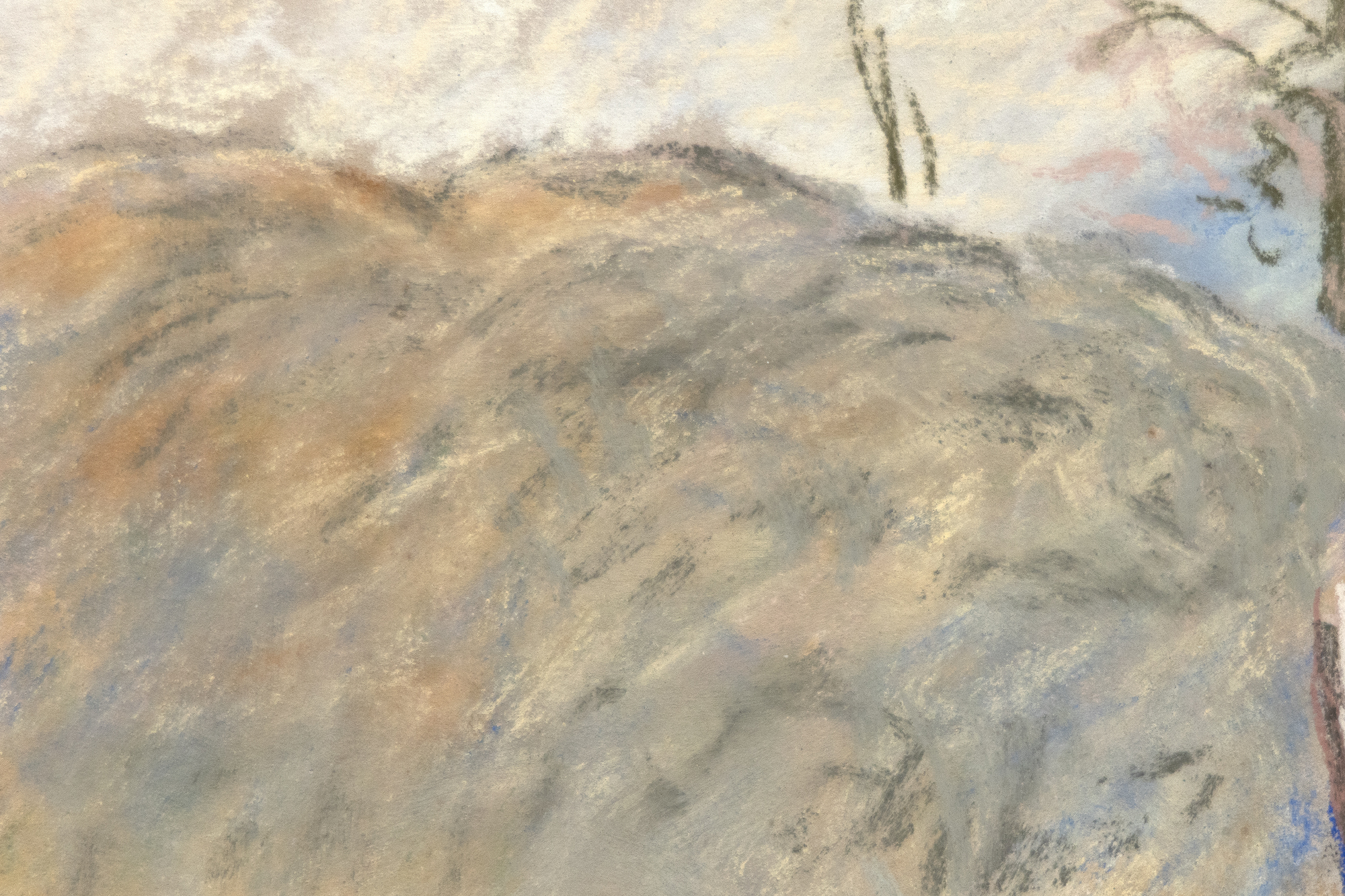
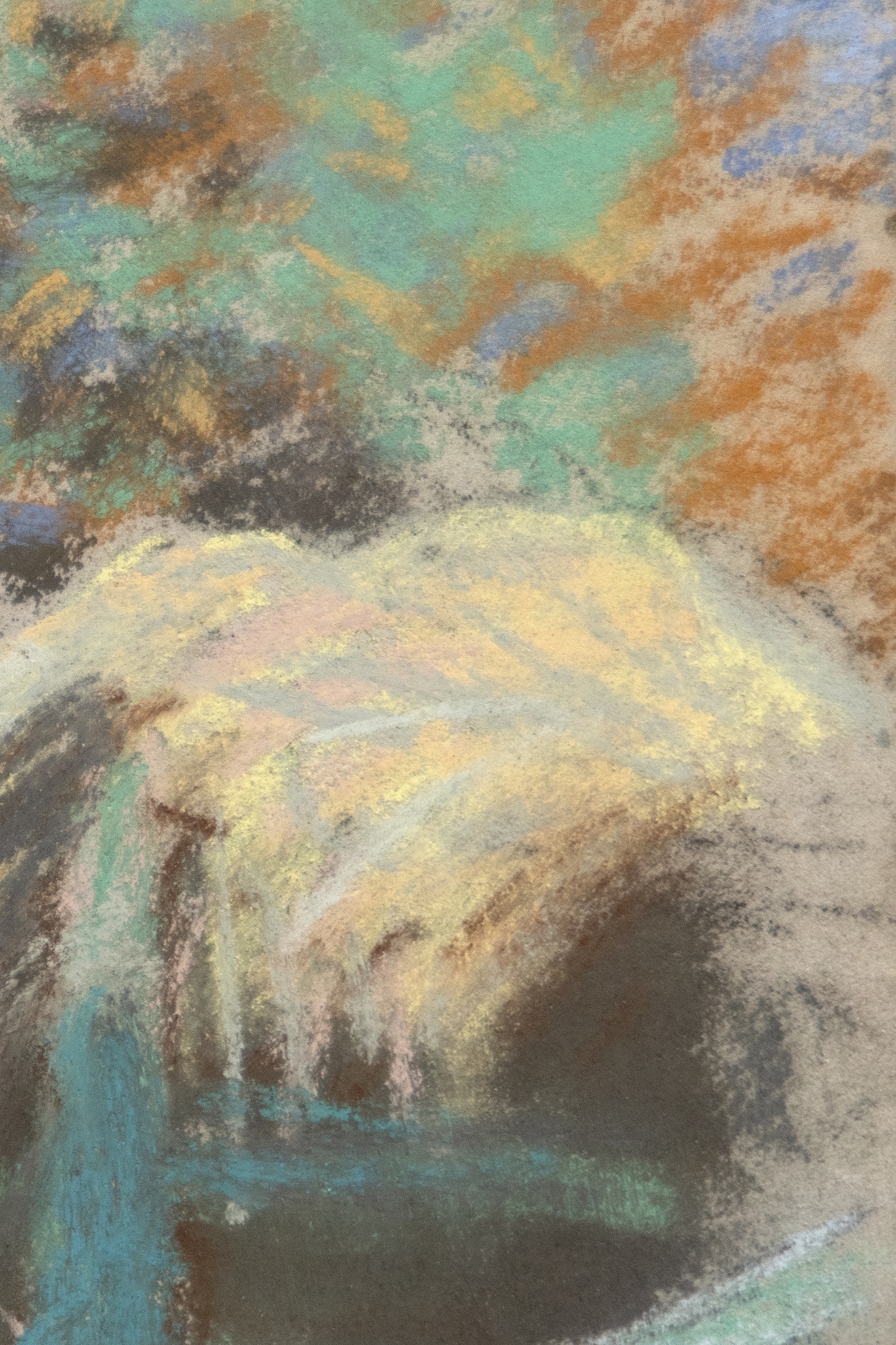
<br><div>Pastel, with its directness and chromatic intensity, proved uniquely efficient for Impressionist artists seeking to capture transient light effects and faithful likenesses without the slower procedures of oil. Here, Pissarro exploits the medium’s strengths brilliantly. Soft, powdery passages dissolve edges into atmosphere, while firmer, painterly strokes build structure and texture across the hay, timber, and ground. The surface retains a remarkable freshness, with color that remains luminous and varied—cool blues and greens offset by warm straw, ochres, and sunlit highlights—allowing the viewer to experience the work’s original spontaneity. </div>
<br>
<br><div> </div>
<br>
<br><div>This work’s significance is underscored by its recent exhibition history: it was shown in 2020 at the J. Paul Getty Museum in<em> Powder and Light: Pastels in Late Nineteenth Century</em>, a focused exploration of how artists of the period embraced pastel as both experimental and modern. Beautifully preserved,<em> Paysage avec batteuse à Montfoucault </em>offers a direct encounter with Pissarro’s touch—each stroke visible, each tonal shift purposeful—capturing the countryside not as an ideal, but as a place of work, weather, and changing light. </div> <div>Camille Pissarro’s<em> Paysage avec batteuse à Montfoucault </em>(c. 1875) is an exceptionally vivid pastel that unites the artist’s keen observation of rural life with the Impressionists’ fascination for light, atmosphere, and immediacy. Executed at a moment when Pissarro was deeply engaged with agrarian subjects, the composition centers on a working landscape—haystacks and farm structures set against dense foliage—where a solitary figure anchors the scene in lived experience. The motif is quintessentially Impressionist: an unembellished view of the modern, “seen” world, and a fleeting moment of real life recorded with speed and sensitivity. </div>
<br>
<br><div> </div>
<br>
<br><div>Pastel, with its directness and chromatic intensity, proved uniquely efficient for Impressionist artists seeking to capture transient light effects and faithful likenesses without the slower procedures of oil. Here, Pissarro exploits the medium’s strengths brilliantly. Soft, powdery passages dissolve edges into atmosphere, while firmer, painterly strokes build structure and texture across the hay, timber, and ground. The surface retains a remarkable freshness, with color that remains luminous and varied—cool blues and greens offset by warm straw, ochres, and sunlit highlights—allowing the viewer to experience the work’s original spontaneity. </div>
<br>
<br><div> </div>
<br>
<br><div>This work’s significance is underscored by its recent exhibition history: it was shown in 2020 at the J. Paul Getty Museum in<em> Powder and Light: Pastels in Late Nineteenth Century</em>, a focused exploration of how artists of the period embraced pastel as both experimental and modern. Beautifully preserved,<em> Paysage avec batteuse à Montfoucault </em>offers a direct encounter with Pissarro’s touch—each stroke visible, each tonal shift purposeful—capturing the countryside not as an ideal, but as a place of work, weather, and changing light. </div> <div>Camille Pissarro’s<em> Paysage avec batteuse à Montfoucault </em>(c. 1875) is an exceptionally vivid pastel that unites the artist’s keen observation of rural life with the Impressionists’ fascination for light, atmosphere, and immediacy. Executed at a moment when Pissarro was deeply engaged with agrarian subjects, the composition centers on a working landscape—haystacks and farm structures set against dense foliage—where a solitary figure anchors the scene in lived experience. The motif is quintessentially Impressionist: an unembellished view of the modern, “seen” world, and a fleeting moment of real life recorded with speed and sensitivity. </div>
<br>
<br><div> </div>
<br>
<br><div>Pastel, with its directness and chromatic intensity, proved uniquely efficient for Impressionist artists seeking to capture transient light effects and faithful likenesses without the slower procedures of oil. Here, Pissarro exploits the medium’s strengths brilliantly. Soft, powdery passages dissolve edges into atmosphere, while firmer, painterly strokes build structure and texture across the hay, timber, and ground. The surface retains a remarkable freshness, with color that remains luminous and varied—cool blues and greens offset by warm straw, ochres, and sunlit highlights—allowing the viewer to experience the work’s original spontaneity. </div>
<br>
<br><div> </div>
<br>
<br><div>This work’s significance is underscored by its recent exhibition history: it was shown in 2020 at the J. Paul Getty Museum in<em> Powder and Light: Pastels in Late Nineteenth Century</em>, a focused exploration of how artists of the period embraced pastel as both experimental and modern. Beautifully preserved,<em> Paysage avec batteuse à Montfoucault </em>offers a direct encounter with Pissarro’s touch—each stroke visible, each tonal shift purposeful—capturing the countryside not as an ideal, but as a place of work, weather, and changing light. </div> <div>Camille Pissarro’s<em> Paysage avec batteuse à Montfoucault </em>(c. 1875) is an exceptionally vivid pastel that unites the artist’s keen observation of rural life with the Impressionists’ fascination for light, atmosphere, and immediacy. Executed at a moment when Pissarro was deeply engaged with agrarian subjects, the composition centers on a working landscape—haystacks and farm structures set against dense foliage—where a solitary figure anchors the scene in lived experience. The motif is quintessentially Impressionist: an unembellished view of the modern, “seen” world, and a fleeting moment of real life recorded with speed and sensitivity. </div>
<br>
<br><div> </div>
<br>
<br><div>Pastel, with its directness and chromatic intensity, proved uniquely efficient for Impressionist artists seeking to capture transient light effects and faithful likenesses without the slower procedures of oil. Here, Pissarro exploits the medium’s strengths brilliantly. Soft, powdery passages dissolve edges into atmosphere, while firmer, painterly strokes build structure and texture across the hay, timber, and ground. The surface retains a remarkable freshness, with color that remains luminous and varied—cool blues and greens offset by warm straw, ochres, and sunlit highlights—allowing the viewer to experience the work’s original spontaneity. </div>
<br>
<br><div> </div>
<br>
<br><div>This work’s significance is underscored by its recent exhibition history: it was shown in 2020 at the J. Paul Getty Museum in<em> Powder and Light: Pastels in Late Nineteenth Century</em>, a focused exploration of how artists of the period embraced pastel as both experimental and modern. Beautifully preserved,<em> Paysage avec batteuse à Montfoucault </em>offers a direct encounter with Pissarro’s touch—each stroke visible, each tonal shift purposeful—capturing the countryside not as an ideal, but as a place of work, weather, and changing light. </div> <div>Camille Pissarro’s<em> Paysage avec batteuse à Montfoucault </em>(c. 1875) is an exceptionally vivid pastel that unites the artist’s keen observation of rural life with the Impressionists’ fascination for light, atmosphere, and immediacy. Executed at a moment when Pissarro was deeply engaged with agrarian subjects, the composition centers on a working landscape—haystacks and farm structures set against dense foliage—where a solitary figure anchors the scene in lived experience. The motif is quintessentially Impressionist: an unembellished view of the modern, “seen” world, and a fleeting moment of real life recorded with speed and sensitivity. </div>
<br>
<br><div> </div>
<br>
<br><div>Pastel, with its directness and chromatic intensity, proved uniquely efficient for Impressionist artists seeking to capture transient light effects and faithful likenesses without the slower procedures of oil. Here, Pissarro exploits the medium’s strengths brilliantly. Soft, powdery passages dissolve edges into atmosphere, while firmer, painterly strokes build structure and texture across the hay, timber, and ground. The surface retains a remarkable freshness, with color that remains luminous and varied—cool blues and greens offset by warm straw, ochres, and sunlit highlights—allowing the viewer to experience the work’s original spontaneity. </div>
<br>
<br><div> </div>
<br>
<br><div>This work’s significance is underscored by its recent exhibition history: it was shown in 2020 at the J. Paul Getty Museum in<em> Powder and Light: Pastels in Late Nineteenth Century</em>, a focused exploration of how artists of the period embraced pastel as both experimental and modern. Beautifully preserved,<em> Paysage avec batteuse à Montfoucault </em>offers a direct encounter with Pissarro’s touch—each stroke visible, each tonal shift purposeful—capturing the countryside not as an ideal, but as a place of work, weather, and changing light. </div> <div>Camille Pissarro’s<em> Paysage avec batteuse à Montfoucault </em>(c. 1875) is an exceptionally vivid pastel that unites the artist’s keen observation of rural life with the Impressionists’ fascination for light, atmosphere, and immediacy. Executed at a moment when Pissarro was deeply engaged with agrarian subjects, the composition centers on a working landscape—haystacks and farm structures set against dense foliage—where a solitary figure anchors the scene in lived experience. The motif is quintessentially Impressionist: an unembellished view of the modern, “seen” world, and a fleeting moment of real life recorded with speed and sensitivity. </div>
<br>
<br><div> </div>
<br>
<br><div>Pastel, with its directness and chromatic intensity, proved uniquely efficient for Impressionist artists seeking to capture transient light effects and faithful likenesses without the slower procedures of oil. Here, Pissarro exploits the medium’s strengths brilliantly. Soft, powdery passages dissolve edges into atmosphere, while firmer, painterly strokes build structure and texture across the hay, timber, and ground. The surface retains a remarkable freshness, with color that remains luminous and varied—cool blues and greens offset by warm straw, ochres, and sunlit highlights—allowing the viewer to experience the work’s original spontaneity. </div>
<br>
<br><div> </div>
<br>
<br><div>This work’s significance is underscored by its recent exhibition history: it was shown in 2020 at the J. Paul Getty Museum in<em> Powder and Light: Pastels in Late Nineteenth Century</em>, a focused exploration of how artists of the period embraced pastel as both experimental and modern. Beautifully preserved,<em> Paysage avec batteuse à Montfoucault </em>offers a direct encounter with Pissarro’s touch—each stroke visible, each tonal shift purposeful—capturing the countryside not as an ideal, but as a place of work, weather, and changing light. </div> <div>Camille Pissarro’s<em> Paysage avec batteuse à Montfoucault </em>(c. 1875) is an exceptionally vivid pastel that unites the artist’s keen observation of rural life with the Impressionists’ fascination for light, atmosphere, and immediacy. Executed at a moment when Pissarro was deeply engaged with agrarian subjects, the composition centers on a working landscape—haystacks and farm structures set against dense foliage—where a solitary figure anchors the scene in lived experience. The motif is quintessentially Impressionist: an unembellished view of the modern, “seen” world, and a fleeting moment of real life recorded with speed and sensitivity. </div>
<br>
<br><div> </div>
<br>
<br><div>Pastel, with its directness and chromatic intensity, proved uniquely efficient for Impressionist artists seeking to capture transient light effects and faithful likenesses without the slower procedures of oil. Here, Pissarro exploits the medium’s strengths brilliantly. Soft, powdery passages dissolve edges into atmosphere, while firmer, painterly strokes build structure and texture across the hay, timber, and ground. The surface retains a remarkable freshness, with color that remains luminous and varied—cool blues and greens offset by warm straw, ochres, and sunlit highlights—allowing the viewer to experience the work’s original spontaneity. </div>
<br>
<br><div> </div>
<br>
<br><div>This work’s significance is underscored by its recent exhibition history: it was shown in 2020 at the J. Paul Getty Museum in<em> Powder and Light: Pastels in Late Nineteenth Century</em>, a focused exploration of how artists of the period embraced pastel as both experimental and modern. Beautifully preserved,<em> Paysage avec batteuse à Montfoucault </em>offers a direct encounter with Pissarro’s touch—each stroke visible, each tonal shift purposeful—capturing the countryside not as an ideal, but as a place of work, weather, and changing light. </div> <div>Camille Pissarro’s<em> Paysage avec batteuse à Montfoucault </em>(c. 1875) is an exceptionally vivid pastel that unites the artist’s keen observation of rural life with the Impressionists’ fascination for light, atmosphere, and immediacy. Executed at a moment when Pissarro was deeply engaged with agrarian subjects, the composition centers on a working landscape—haystacks and farm structures set against dense foliage—where a solitary figure anchors the scene in lived experience. The motif is quintessentially Impressionist: an unembellished view of the modern, “seen” world, and a fleeting moment of real life recorded with speed and sensitivity. </div>
<br>
<br><div> </div>
<br>
<br><div>Pastel, with its directness and chromatic intensity, proved uniquely efficient for Impressionist artists seeking to capture transient light effects and faithful likenesses without the slower procedures of oil. Here, Pissarro exploits the medium’s strengths brilliantly. Soft, powdery passages dissolve edges into atmosphere, while firmer, painterly strokes build structure and texture across the hay, timber, and ground. The surface retains a remarkable freshness, with color that remains luminous and varied—cool blues and greens offset by warm straw, ochres, and sunlit highlights—allowing the viewer to experience the work’s original spontaneity. </div>
<br>
<br><div> </div>
<br>
<br><div>This work’s significance is underscored by its recent exhibition history: it was shown in 2020 at the J. Paul Getty Museum in<em> Powder and Light: Pastels in Late Nineteenth Century</em>, a focused exploration of how artists of the period embraced pastel as both experimental and modern. Beautifully preserved,<em> Paysage avec batteuse à Montfoucault </em>offers a direct encounter with Pissarro’s touch—each stroke visible, each tonal shift purposeful—capturing the countryside not as an ideal, but as a place of work, weather, and changing light. </div> <div>Camille Pissarro’s<em> Paysage avec batteuse à Montfoucault </em>(c. 1875) is an exceptionally vivid pastel that unites the artist’s keen observation of rural life with the Impressionists’ fascination for light, atmosphere, and immediacy. Executed at a moment when Pissarro was deeply engaged with agrarian subjects, the composition centers on a working landscape—haystacks and farm structures set against dense foliage—where a solitary figure anchors the scene in lived experience. The motif is quintessentially Impressionist: an unembellished view of the modern, “seen” world, and a fleeting moment of real life recorded with speed and sensitivity. </div>
<br>
<br><div> </div>
<br>
<br><div>Pastel, with its directness and chromatic intensity, proved uniquely efficient for Impressionist artists seeking to capture transient light effects and faithful likenesses without the slower procedures of oil. Here, Pissarro exploits the medium’s strengths brilliantly. Soft, powdery passages dissolve edges into atmosphere, while firmer, painterly strokes build structure and texture across the hay, timber, and ground. The surface retains a remarkable freshness, with color that remains luminous and varied—cool blues and greens offset by warm straw, ochres, and sunlit highlights—allowing the viewer to experience the work’s original spontaneity. </div>
<br>
<br><div> </div>
<br>
<br><div>This work’s significance is underscored by its recent exhibition history: it was shown in 2020 at the J. Paul Getty Museum in<em> Powder and Light: Pastels in Late Nineteenth Century</em>, a focused exploration of how artists of the period embraced pastel as both experimental and modern. Beautifully preserved,<em> Paysage avec batteuse à Montfoucault </em>offers a direct encounter with Pissarro’s touch—each stroke visible, each tonal shift purposeful—capturing the countryside not as an ideal, but as a place of work, weather, and changing light. </div> <div>Camille Pissarro’s<em> Paysage avec batteuse à Montfoucault </em>(c. 1875) is an exceptionally vivid pastel that unites the artist’s keen observation of rural life with the Impressionists’ fascination for light, atmosphere, and immediacy. Executed at a moment when Pissarro was deeply engaged with agrarian subjects, the composition centers on a working landscape—haystacks and farm structures set against dense foliage—where a solitary figure anchors the scene in lived experience. The motif is quintessentially Impressionist: an unembellished view of the modern, “seen” world, and a fleeting moment of real life recorded with speed and sensitivity. </div>
<br>
<br><div> </div>
<br>
<br><div>Pastel, with its directness and chromatic intensity, proved uniquely efficient for Impressionist artists seeking to capture transient light effects and faithful likenesses without the slower procedures of oil. Here, Pissarro exploits the medium’s strengths brilliantly. Soft, powdery passages dissolve edges into atmosphere, while firmer, painterly strokes build structure and texture across the hay, timber, and ground. The surface retains a remarkable freshness, with color that remains luminous and varied—cool blues and greens offset by warm straw, ochres, and sunlit highlights—allowing the viewer to experience the work’s original spontaneity. </div>
<br>
<br><div> </div>
<br>
<br><div>This work’s significance is underscored by its recent exhibition history: it was shown in 2020 at the J. Paul Getty Museum in<em> Powder and Light: Pastels in Late Nineteenth Century</em>, a focused exploration of how artists of the period embraced pastel as both experimental and modern. Beautifully preserved,<em> Paysage avec batteuse à Montfoucault </em>offers a direct encounter with Pissarro’s touch—each stroke visible, each tonal shift purposeful—capturing the countryside not as an ideal, but as a place of work, weather, and changing light. </div>
Paysage avec batteuse a Montfoucaultc. 187510 3/8 x 14 3/4 in.(26.35 x 37.47 cm) pastel on paper laid down on board
Provenance
Anon. sale, Hotel Drouot, Paris, 24 February, 1936, lot 38
Perls Galleries, New York
Acquired by the previous owner, circa 1960
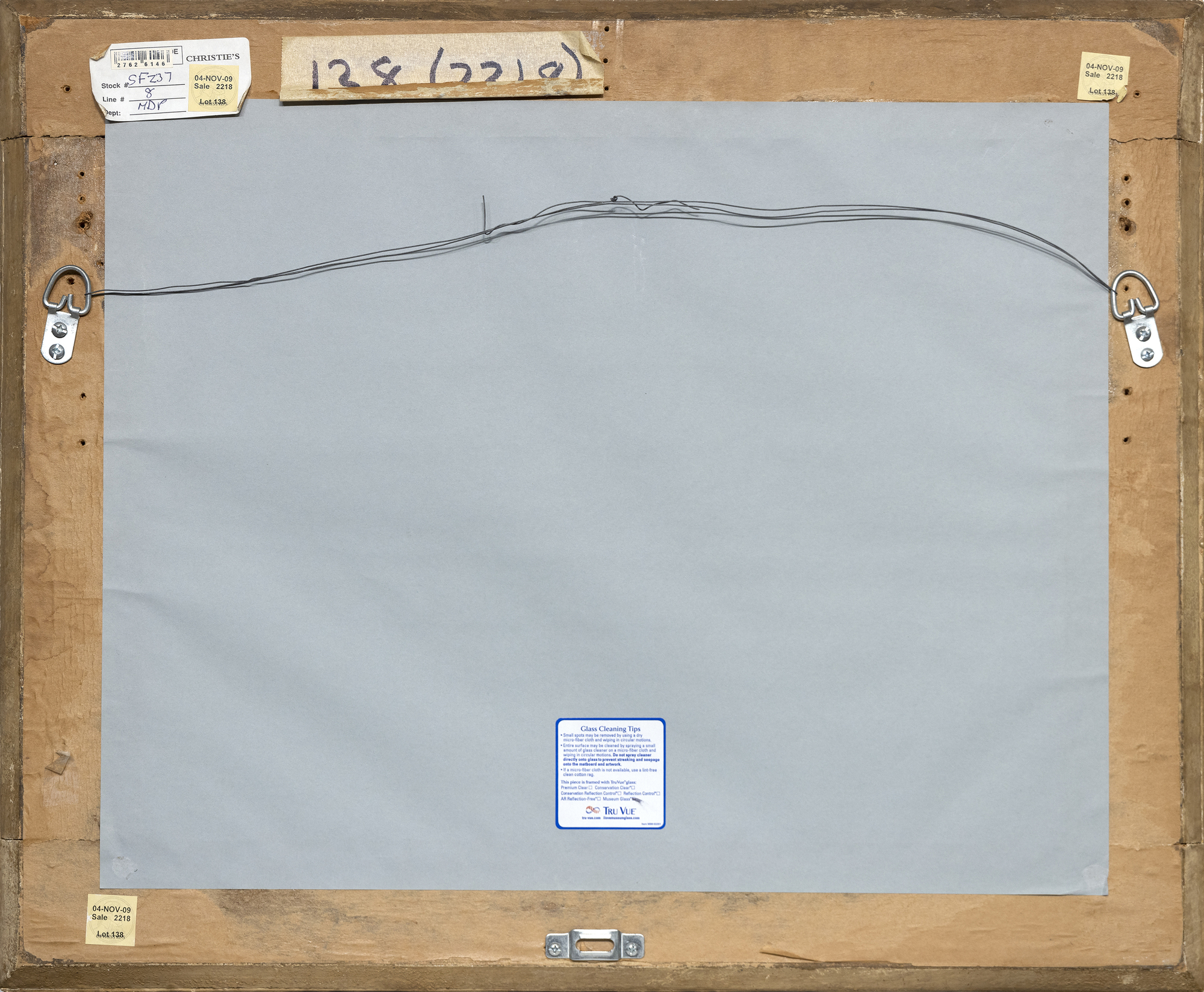
Christie's Live Auction 2218, November 4, 2009, Lot 138
Private Collection, acquired from the above sale
Exhibition
New York, Perls Galleries, date unknown, no. 84a
J. Paul Getty Museum, Degas: "Russian Dancers" and the Art of Pastel", May 3 - October 23, 2016
J. Paul Getty Museum, "Peasants in Pastels: Jean -Francois Millet and the Pastel Revival, October 29, 2019 - May 10, 2020
J. Paul
...More...Getty Museum, “Powder and Light: Pastels in the Late Nineteenth Century”, July 28, 2020-August 31, 2022
Literature
L.R. Pissarro and L. Venturi, Camille Pissarro, Son art-son oeuvre, Paris, 1939, vol. I, p. 291, no. 1529 (illustrated, vol. II pl. 294)
...LESS...
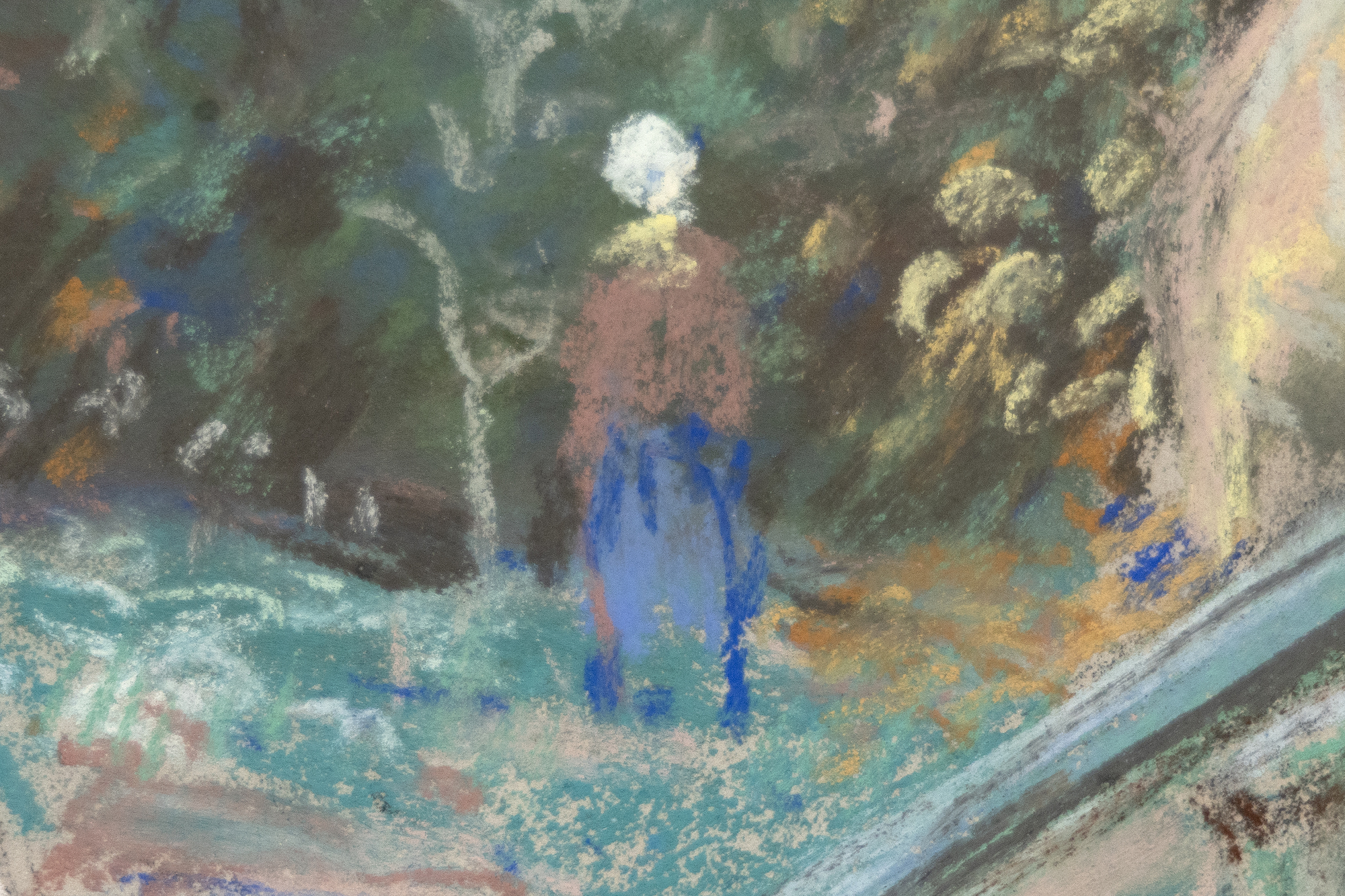
Camille Pissarro’s Paysage avec batteuse à Montfoucault (c. 1875) is an exceptionally vivid pastel that unites the artist’s keen observation of rural life with the Impressionists’ fascination for light, atmosphere, and immediacy. Executed at a moment when Pissarro was deeply engaged with agrarian subjects, the composition centers on a working landscape—haystacks and farm structures set against dense foliage—where a solitary figure anchors the scene in lived experience. The motif is quintessentially Impressionist: an unembellished view of the modern, “seen” world, and a fleeting moment of real life recorded with speed and sensitivity.


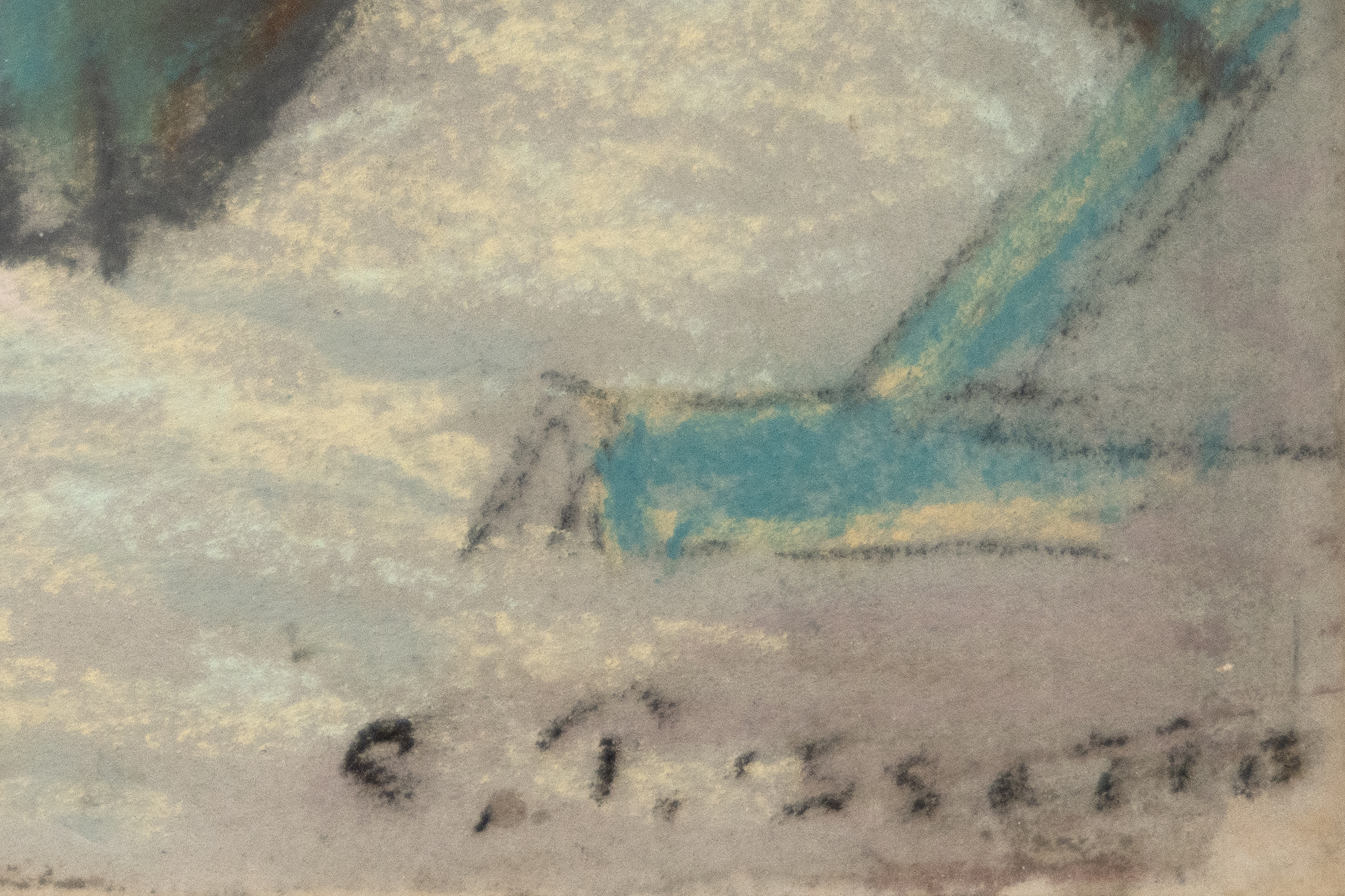
Pastel, with its directness and chromatic intensity, proved uniquely efficient for Impressionist artists seeking to capture transient light effects and faithful likenesses without the slower procedures of oil. Here, Pissarro exploits the medium’s strengths brilliantly. Soft, powdery passages dissolve edges into atmosphere, while firmer, painterly strokes build structure and texture across the hay, timber, and ground. The surface retains a remarkable freshness, with color that remains luminous and varied—cool blues and greens offset by warm straw, ochres, and sunlit highlights—allowing the viewer to experience the work’s original spontaneity.


This work’s significance is underscored by its recent exhibition history: it was shown in 2020 at the J. Paul Getty Museum in Powder and Light: Pastels in Late Nineteenth Century, a focused exploration of how artists of the period embraced pastel as both experimental and modern. Beautifully preserved, Paysage avec batteuse à Montfoucault offers a direct encounter with Pissarro’s touch—each stroke visible, each tonal shift purposeful—capturing the countryside not as an ideal, but as a place of work, weather, and changing light.
Inquire