CLAUDE MONET (1840-1926)

 
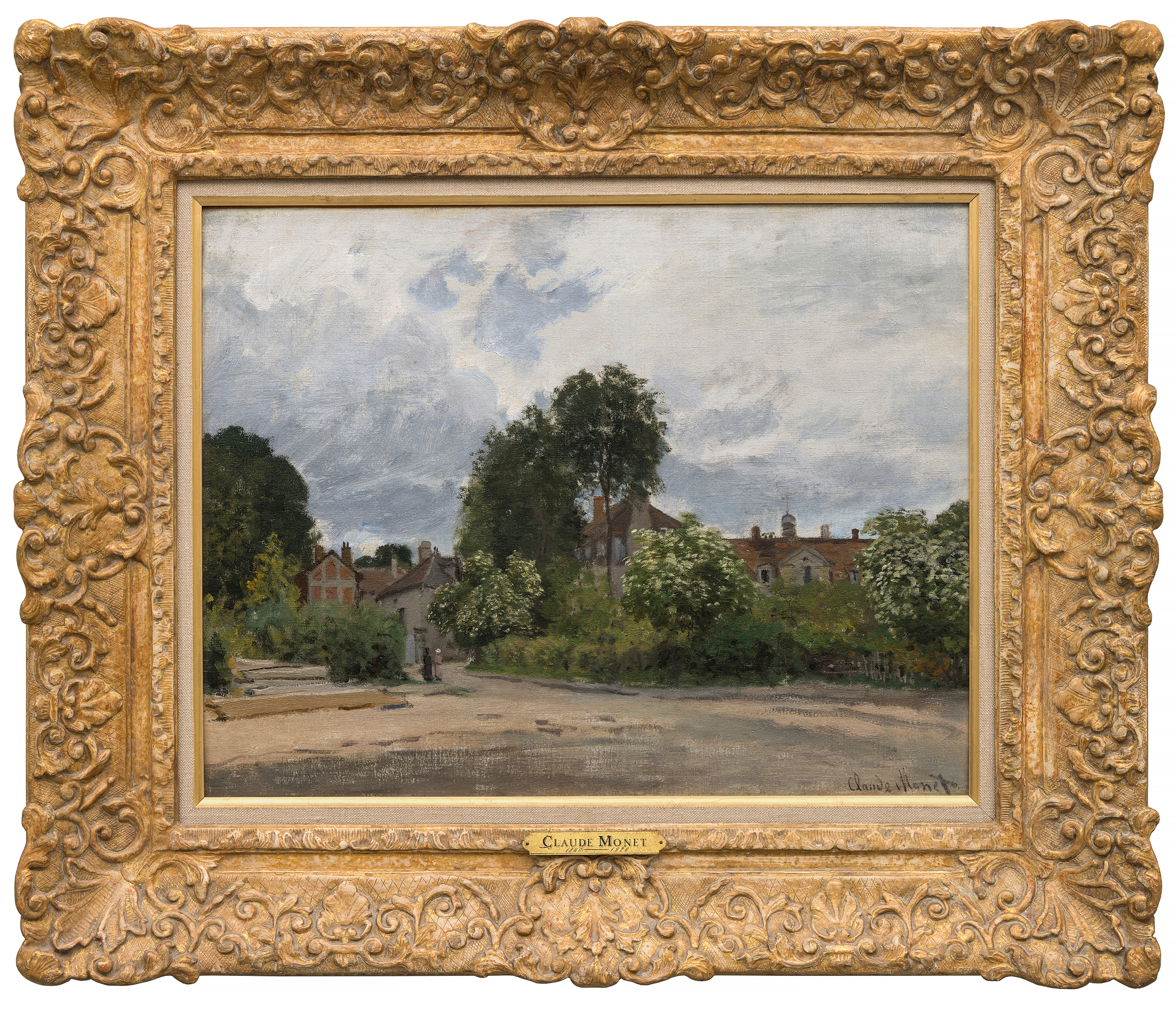
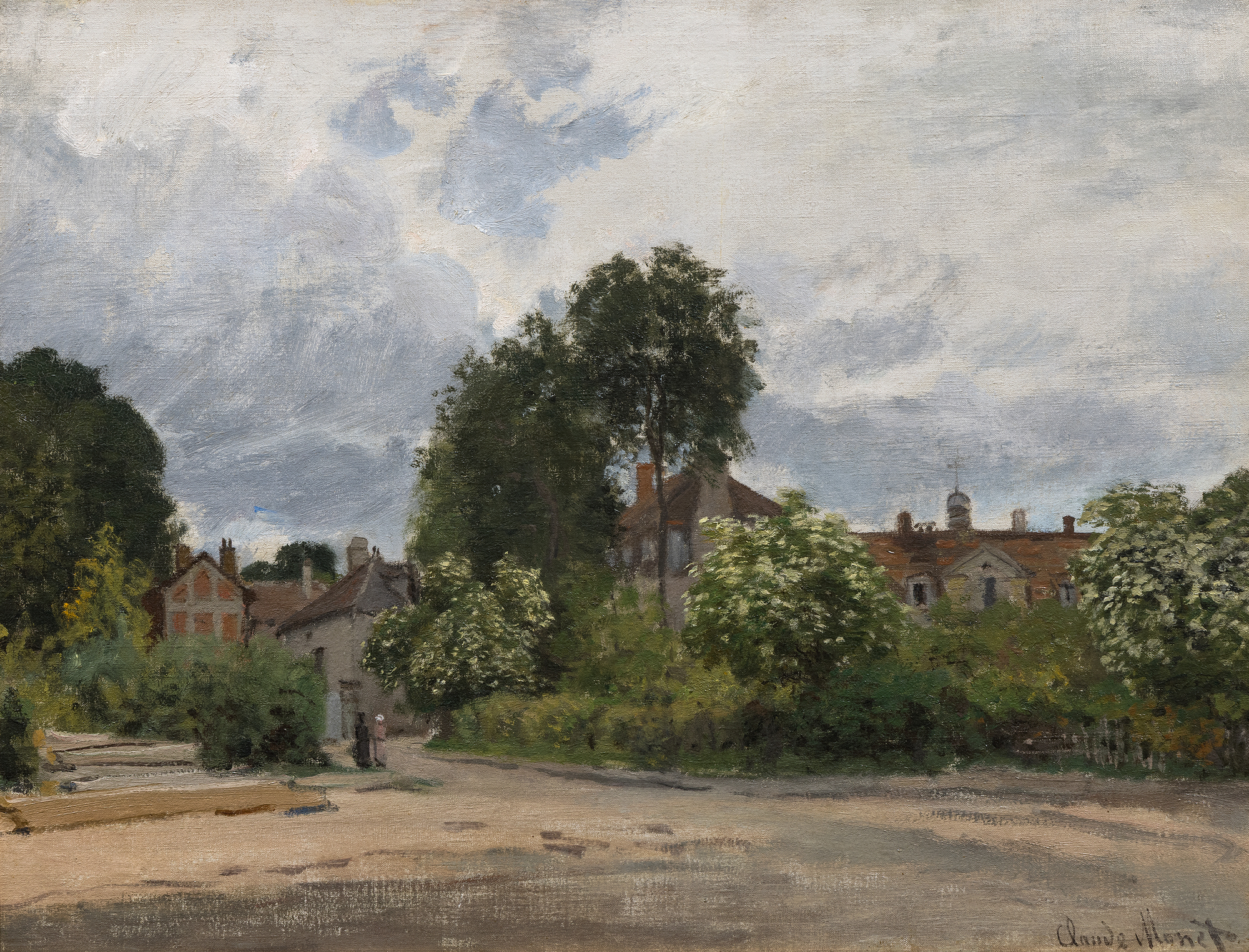
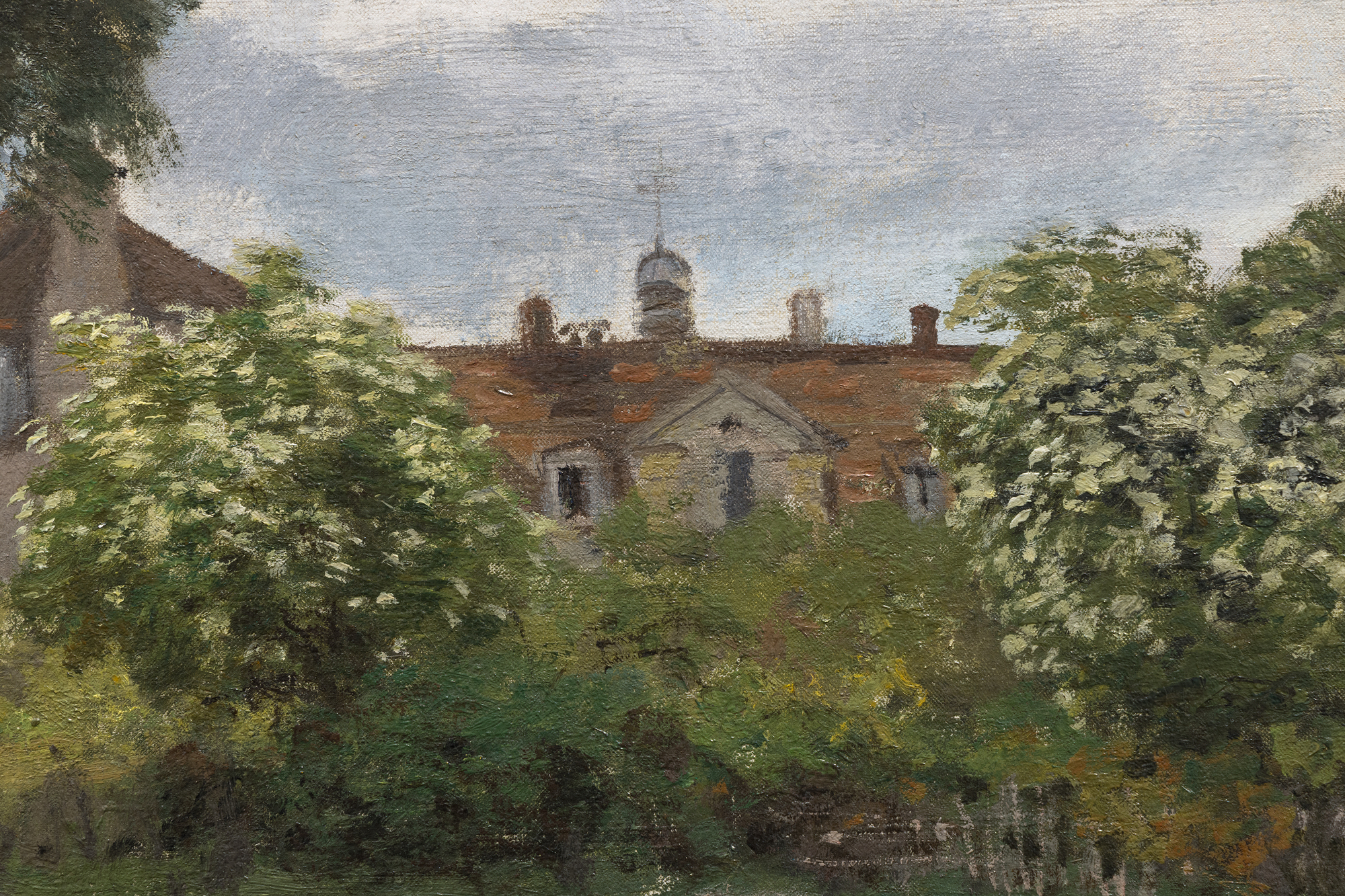
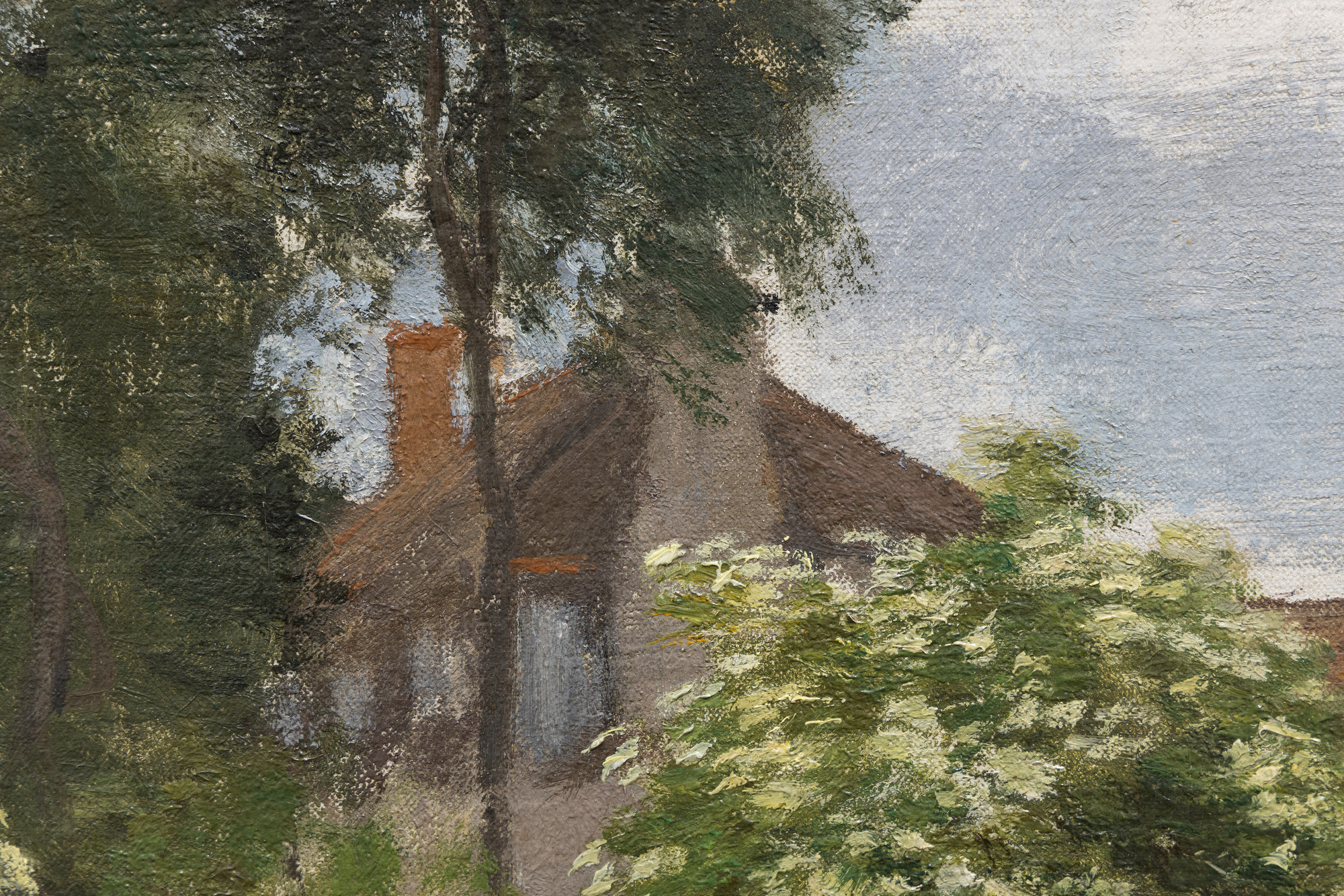
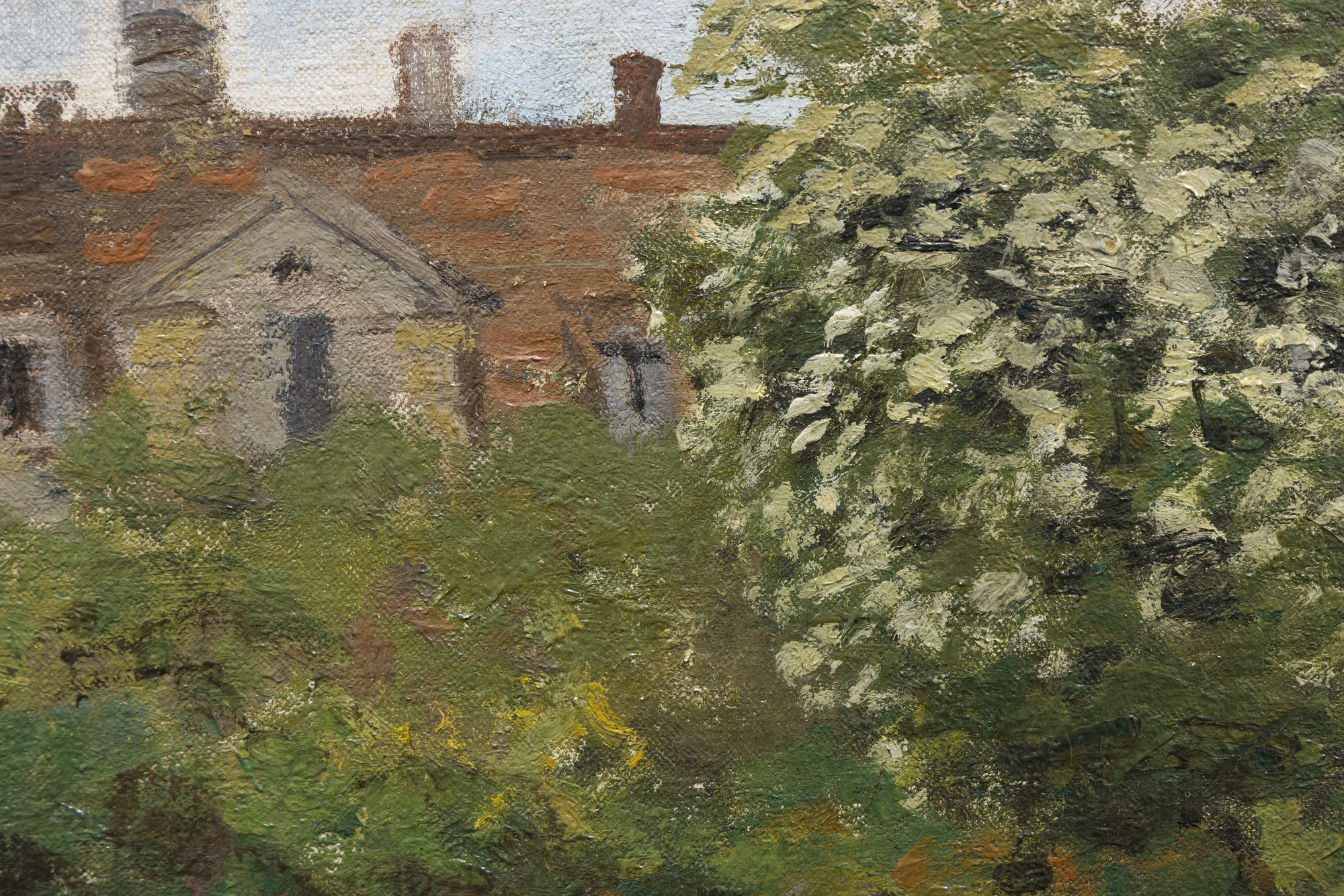
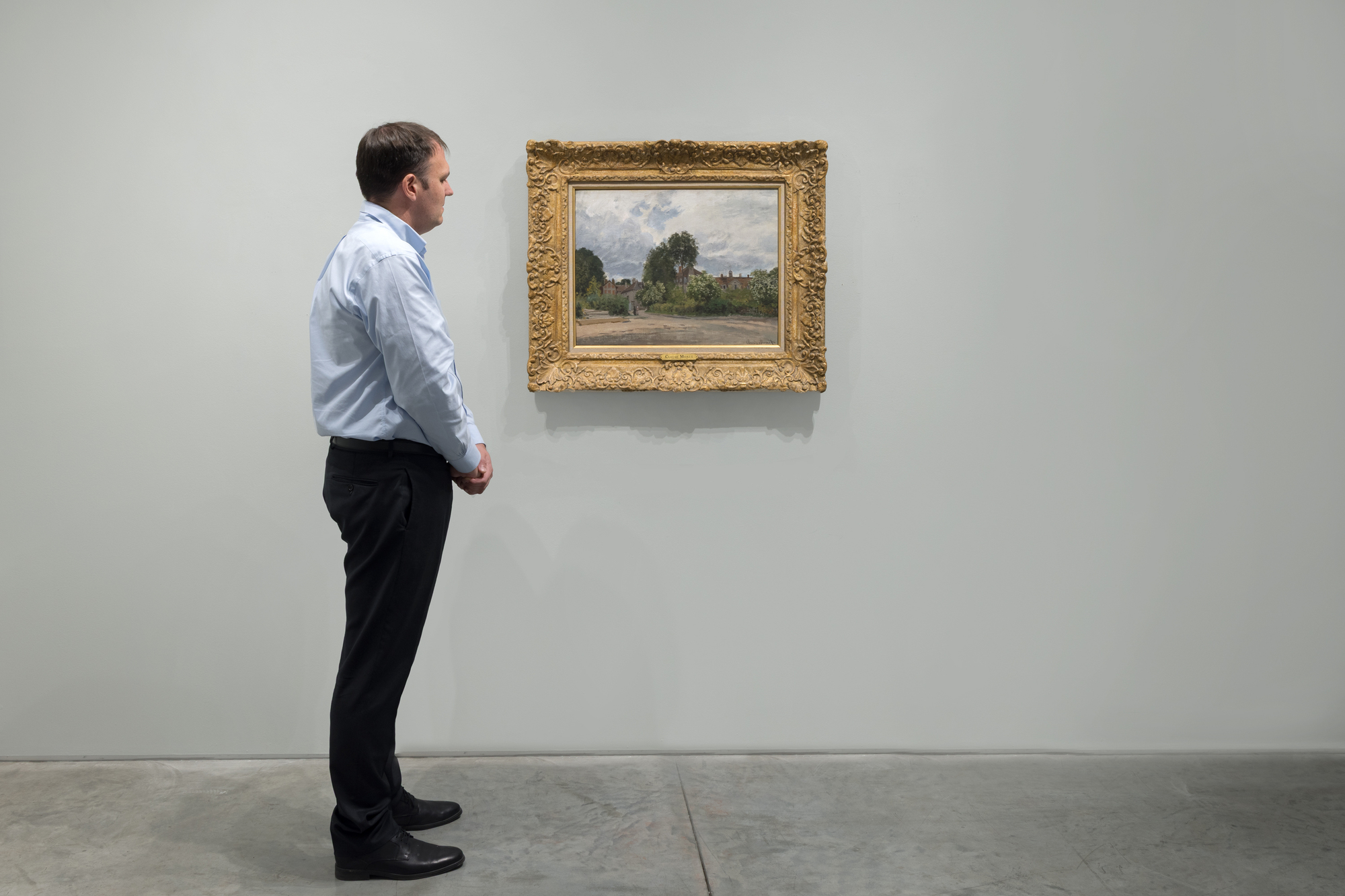
<div><font face=Lato size=3 color="#191919"><em>Argenteuil, l’Hospice</em> from 1872 belongs to one of the most formative chapters in Claude Monet’s career, painted during his early years in Argenteuil where he created nearly one hundred eighty canvases between 1871 and 1878. First owned by Paul Durand Ruel, Monet’s dealer and the most important champion of the Impressionists, the painting is included in the Wildenstein catalogue and was featured in the National Gallery London’s landmark exhibition <em>Monet and Architecture </em>in 2018. Created in the same year as his breakthrough <em>Impression, Sunrise</em>, the work reflects the moment when Monet’s vision for modern landscape took shape and laid the foundation for the movement that would soon be known as Impressionism.</font></div>
<br>
<br><div> </div>
<br>
<br><div><font face=Lato size=3 color="#191919">Monet settled in Argenteuil in late 1871, determined to renew his artistic direction after the upheavals of war and exile. The town offered an enticing blend of historical architecture, modern industry, rustic gardens, and the ever-shifting Seine, all within easy reach of Paris. The Aubrey House, where Monet lived, became a gathering place for Renoir, Manet, Sisley, Caillebotte, and later Pissarro, a setting that fostered both artistic exchange and the planning of the first Impressionist exhibition of 1874. As scholar Paul Hayes Tucker has noted, Argenteuil offered Monet a rare diversity of motifs that he encountered daily, ranging from the charmingly old to the strikingly new.</font></div>
<br>
<br><div> </div>
<br>
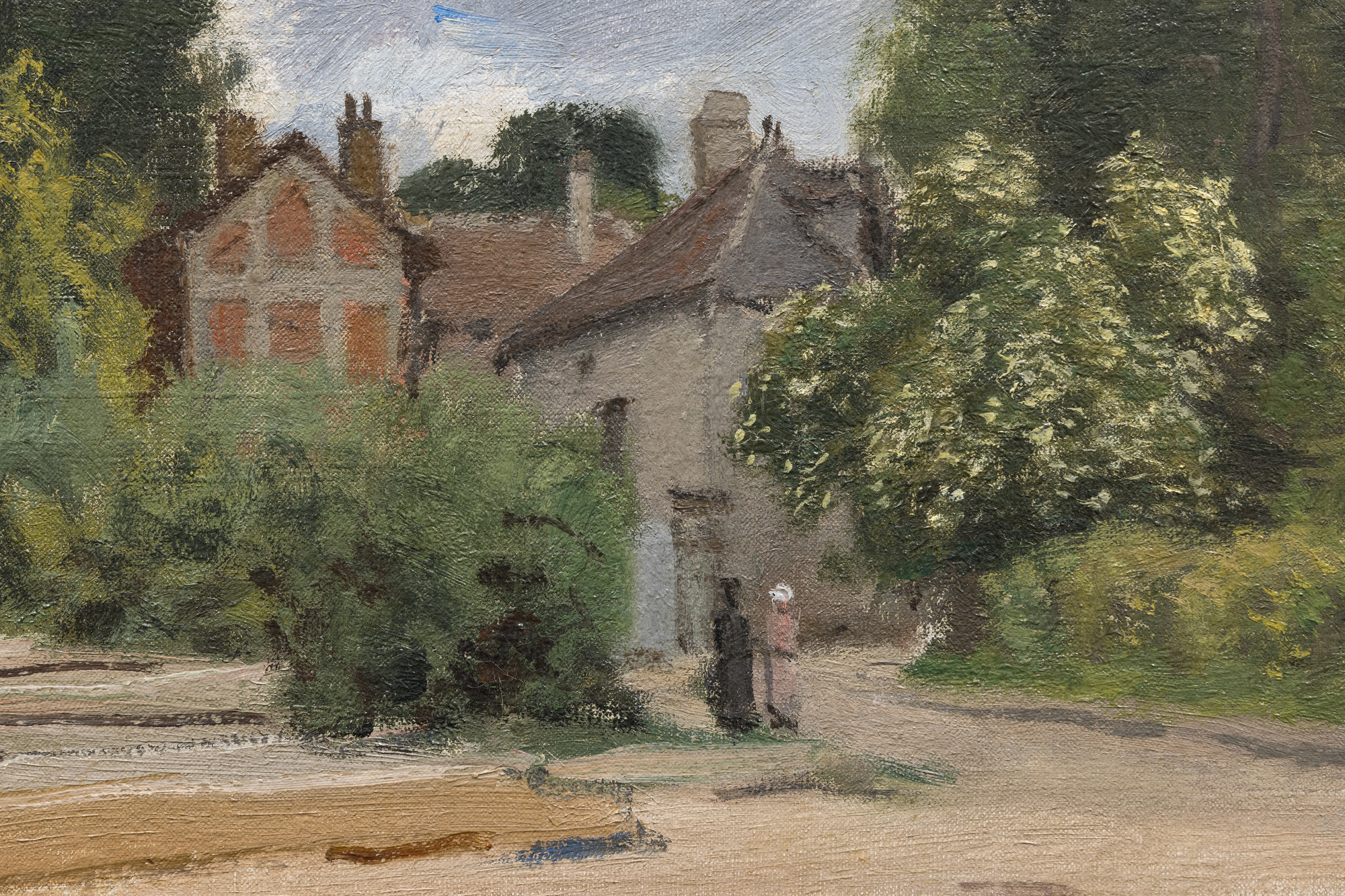
<br><div><font face=Lato size=3 color="#191919">In this painting Monet set his easel on rue Pierre Guienne, with his back to the Aubrey House, and painted the seventeenth century building that served at the time as the hospice of the Porte Saint Denis. The structure appears at right, viewed from the Seine, rendered with a quiet clarity that captures the atmosphere of an early spring day. The palette reflects both a reverence for the site’s history and an appreciation for Eugène Boudin, the friend and mentor who had encouraged Monet to paint the play of air and light years earlier and who joined him for a housewarming at Argenteuil on January 2, 1872. The hospice later became the Musée du Vieil Argenteuil, further reinforcing the historical resonance of the site.</font></div>
<br>
<br><div> </div>
<br>
<br><div><font face=Lato size=3 color="#191919"><em>Argenteuil, l’Hospice</em> stands as one of Monet’s earliest paintings from this crucial period and offers a faithful, atmospheric interpretation of a place deeply intertwined with the origins of Impressionism. Its blend of gentle tonalities, soft spring light, and direct observation reveals the artist’s growing confidence in painting the world as he perceived it, moment by moment, as a new vision for modern landscape art emerged.</font></div> <div><font face=Lato size=3 color="#191919"><em>Argenteuil, l’Hospice</em> from 1872 belongs to one of the most formative chapters in Claude Monet’s career, painted during his early years in Argenteuil where he created nearly one hundred eighty canvases between 1871 and 1878. First owned by Paul Durand Ruel, Monet’s dealer and the most important champion of the Impressionists, the painting is included in the Wildenstein catalogue and was featured in the National Gallery London’s landmark exhibition <em>Monet and Architecture </em>in 2018. Created in the same year as his breakthrough <em>Impression, Sunrise</em>, the work reflects the moment when Monet’s vision for modern landscape took shape and laid the foundation for the movement that would soon be known as Impressionism.</font></div>
<br>
<br><div> </div>
<br>
<br><div><font face=Lato size=3 color="#191919">Monet settled in Argenteuil in late 1871, determined to renew his artistic direction after the upheavals of war and exile. The town offered an enticing blend of historical architecture, modern industry, rustic gardens, and the ever-shifting Seine, all within easy reach of Paris. The Aubrey House, where Monet lived, became a gathering place for Renoir, Manet, Sisley, Caillebotte, and later Pissarro, a setting that fostered both artistic exchange and the planning of the first Impressionist exhibition of 1874. As scholar Paul Hayes Tucker has noted, Argenteuil offered Monet a rare diversity of motifs that he encountered daily, ranging from the charmingly old to the strikingly new.</font></div>
<br>
<br><div> </div>
<br>
<br><div><font face=Lato size=3 color="#191919">In this painting Monet set his easel on rue Pierre Guienne, with his back to the Aubrey House, and painted the seventeenth century building that served at the time as the hospice of the Porte Saint Denis. The structure appears at right, viewed from the Seine, rendered with a quiet clarity that captures the atmosphere of an early spring day. The palette reflects both a reverence for the site’s history and an appreciation for Eugène Boudin, the friend and mentor who had encouraged Monet to paint the play of air and light years earlier and who joined him for a housewarming at Argenteuil on January 2, 1872. The hospice later became the Musée du Vieil Argenteuil, further reinforcing the historical resonance of the site.</font></div>
<br>
<br><div> </div>
<br>
<br><div><font face=Lato size=3 color="#191919"><em>Argenteuil, l’Hospice</em> stands as one of Monet’s earliest paintings from this crucial period and offers a faithful, atmospheric interpretation of a place deeply intertwined with the origins of Impressionism. Its blend of gentle tonalities, soft spring light, and direct observation reveals the artist’s growing confidence in painting the world as he perceived it, moment by moment, as a new vision for modern landscape art emerged.</font></div> <div><font face=Lato size=3 color="#191919"><em>Argenteuil, l’Hospice</em> from 1872 belongs to one of the most formative chapters in Claude Monet’s career, painted during his early years in Argenteuil where he created nearly one hundred eighty canvases between 1871 and 1878. First owned by Paul Durand Ruel, Monet’s dealer and the most important champion of the Impressionists, the painting is included in the Wildenstein catalogue and was featured in the National Gallery London’s landmark exhibition <em>Monet and Architecture </em>in 2018. Created in the same year as his breakthrough <em>Impression, Sunrise</em>, the work reflects the moment when Monet’s vision for modern landscape took shape and laid the foundation for the movement that would soon be known as Impressionism.</font></div>
<br>
<br><div> </div>
<br>
<br><div><font face=Lato size=3 color="#191919">Monet settled in Argenteuil in late 1871, determined to renew his artistic direction after the upheavals of war and exile. The town offered an enticing blend of historical architecture, modern industry, rustic gardens, and the ever-shifting Seine, all within easy reach of Paris. The Aubrey House, where Monet lived, became a gathering place for Renoir, Manet, Sisley, Caillebotte, and later Pissarro, a setting that fostered both artistic exchange and the planning of the first Impressionist exhibition of 1874. As scholar Paul Hayes Tucker has noted, Argenteuil offered Monet a rare diversity of motifs that he encountered daily, ranging from the charmingly old to the strikingly new.</font></div>
<br>
<br><div> </div>
<br>
<br><div><font face=Lato size=3 color="#191919">In this painting Monet set his easel on rue Pierre Guienne, with his back to the Aubrey House, and painted the seventeenth century building that served at the time as the hospice of the Porte Saint Denis. The structure appears at right, viewed from the Seine, rendered with a quiet clarity that captures the atmosphere of an early spring day. The palette reflects both a reverence for the site’s history and an appreciation for Eugène Boudin, the friend and mentor who had encouraged Monet to paint the play of air and light years earlier and who joined him for a housewarming at Argenteuil on January 2, 1872. The hospice later became the Musée du Vieil Argenteuil, further reinforcing the historical resonance of the site.</font></div>
<br>
<br><div> </div>
<br>
<br><div><font face=Lato size=3 color="#191919"><em>Argenteuil, l’Hospice</em> stands as one of Monet’s earliest paintings from this crucial period and offers a faithful, atmospheric interpretation of a place deeply intertwined with the origins of Impressionism. Its blend of gentle tonalities, soft spring light, and direct observation reveals the artist’s growing confidence in painting the world as he perceived it, moment by moment, as a new vision for modern landscape art emerged.</font></div> <div><font face=Lato size=3 color="#191919"><em>Argenteuil, l’Hospice</em> from 1872 belongs to one of the most formative chapters in Claude Monet’s career, painted during his early years in Argenteuil where he created nearly one hundred eighty canvases between 1871 and 1878. First owned by Paul Durand Ruel, Monet’s dealer and the most important champion of the Impressionists, the painting is included in the Wildenstein catalogue and was featured in the National Gallery London’s landmark exhibition <em>Monet and Architecture </em>in 2018. Created in the same year as his breakthrough <em>Impression, Sunrise</em>, the work reflects the moment when Monet’s vision for modern landscape took shape and laid the foundation for the movement that would soon be known as Impressionism.</font></div>
<br>
<br><div> </div>
<br>
<br><div><font face=Lato size=3 color="#191919">Monet settled in Argenteuil in late 1871, determined to renew his artistic direction after the upheavals of war and exile. The town offered an enticing blend of historical architecture, modern industry, rustic gardens, and the ever-shifting Seine, all within easy reach of Paris. The Aubrey House, where Monet lived, became a gathering place for Renoir, Manet, Sisley, Caillebotte, and later Pissarro, a setting that fostered both artistic exchange and the planning of the first Impressionist exhibition of 1874. As scholar Paul Hayes Tucker has noted, Argenteuil offered Monet a rare diversity of motifs that he encountered daily, ranging from the charmingly old to the strikingly new.</font></div>
<br>
<br><div> </div>
<br>
<br><div><font face=Lato size=3 color="#191919">In this painting Monet set his easel on rue Pierre Guienne, with his back to the Aubrey House, and painted the seventeenth century building that served at the time as the hospice of the Porte Saint Denis. The structure appears at right, viewed from the Seine, rendered with a quiet clarity that captures the atmosphere of an early spring day. The palette reflects both a reverence for the site’s history and an appreciation for Eugène Boudin, the friend and mentor who had encouraged Monet to paint the play of air and light years earlier and who joined him for a housewarming at Argenteuil on January 2, 1872. The hospice later became the Musée du Vieil Argenteuil, further reinforcing the historical resonance of the site.</font></div>
<br>
<br><div> </div>
<br>
<br><div><font face=Lato size=3 color="#191919"><em>Argenteuil, l’Hospice</em> stands as one of Monet’s earliest paintings from this crucial period and offers a faithful, atmospheric interpretation of a place deeply intertwined with the origins of Impressionism. Its blend of gentle tonalities, soft spring light, and direct observation reveals the artist’s growing confidence in painting the world as he perceived it, moment by moment, as a new vision for modern landscape art emerged.</font></div> <div><font face=Lato size=3 color="#191919"><em>Argenteuil, l’Hospice</em> from 1872 belongs to one of the most formative chapters in Claude Monet’s career, painted during his early years in Argenteuil where he created nearly one hundred eighty canvases between 1871 and 1878. First owned by Paul Durand Ruel, Monet’s dealer and the most important champion of the Impressionists, the painting is included in the Wildenstein catalogue and was featured in the National Gallery London’s landmark exhibition <em>Monet and Architecture </em>in 2018. Created in the same year as his breakthrough <em>Impression, Sunrise</em>, the work reflects the moment when Monet’s vision for modern landscape took shape and laid the foundation for the movement that would soon be known as Impressionism.</font></div>
<br>
<br><div> </div>
<br>
<br><div><font face=Lato size=3 color="#191919">Monet settled in Argenteuil in late 1871, determined to renew his artistic direction after the upheavals of war and exile. The town offered an enticing blend of historical architecture, modern industry, rustic gardens, and the ever-shifting Seine, all within easy reach of Paris. The Aubrey House, where Monet lived, became a gathering place for Renoir, Manet, Sisley, Caillebotte, and later Pissarro, a setting that fostered both artistic exchange and the planning of the first Impressionist exhibition of 1874. As scholar Paul Hayes Tucker has noted, Argenteuil offered Monet a rare diversity of motifs that he encountered daily, ranging from the charmingly old to the strikingly new.</font></div>
<br>
<br><div> </div>
<br>
<br><div><font face=Lato size=3 color="#191919">In this painting Monet set his easel on rue Pierre Guienne, with his back to the Aubrey House, and painted the seventeenth century building that served at the time as the hospice of the Porte Saint Denis. The structure appears at right, viewed from the Seine, rendered with a quiet clarity that captures the atmosphere of an early spring day. The palette reflects both a reverence for the site’s history and an appreciation for Eugène Boudin, the friend and mentor who had encouraged Monet to paint the play of air and light years earlier and who joined him for a housewarming at Argenteuil on January 2, 1872. The hospice later became the Musée du Vieil Argenteuil, further reinforcing the historical resonance of the site.</font></div>
<br>
<br><div> </div>
<br>
<br><div><font face=Lato size=3 color="#191919"><em>Argenteuil, l’Hospice</em> stands as one of Monet’s earliest paintings from this crucial period and offers a faithful, atmospheric interpretation of a place deeply intertwined with the origins of Impressionism. Its blend of gentle tonalities, soft spring light, and direct observation reveals the artist’s growing confidence in painting the world as he perceived it, moment by moment, as a new vision for modern landscape art emerged.</font></div> <div><font face=Lato size=3 color="#191919"><em>Argenteuil, l’Hospice</em> from 1872 belongs to one of the most formative chapters in Claude Monet’s career, painted during his early years in Argenteuil where he created nearly one hundred eighty canvases between 1871 and 1878. First owned by Paul Durand Ruel, Monet’s dealer and the most important champion of the Impressionists, the painting is included in the Wildenstein catalogue and was featured in the National Gallery London’s landmark exhibition <em>Monet and Architecture </em>in 2018. Created in the same year as his breakthrough <em>Impression, Sunrise</em>, the work reflects the moment when Monet’s vision for modern landscape took shape and laid the foundation for the movement that would soon be known as Impressionism.</font></div>
<br>
<br><div> </div>
<br>
<br><div><font face=Lato size=3 color="#191919">Monet settled in Argenteuil in late 1871, determined to renew his artistic direction after the upheavals of war and exile. The town offered an enticing blend of historical architecture, modern industry, rustic gardens, and the ever-shifting Seine, all within easy reach of Paris. The Aubrey House, where Monet lived, became a gathering place for Renoir, Manet, Sisley, Caillebotte, and later Pissarro, a setting that fostered both artistic exchange and the planning of the first Impressionist exhibition of 1874. As scholar Paul Hayes Tucker has noted, Argenteuil offered Monet a rare diversity of motifs that he encountered daily, ranging from the charmingly old to the strikingly new.</font></div>
<br>
<br><div> </div>
<br>
<br><div><font face=Lato size=3 color="#191919">In this painting Monet set his easel on rue Pierre Guienne, with his back to the Aubrey House, and painted the seventeenth century building that served at the time as the hospice of the Porte Saint Denis. The structure appears at right, viewed from the Seine, rendered with a quiet clarity that captures the atmosphere of an early spring day. The palette reflects both a reverence for the site’s history and an appreciation for Eugène Boudin, the friend and mentor who had encouraged Monet to paint the play of air and light years earlier and who joined him for a housewarming at Argenteuil on January 2, 1872. The hospice later became the Musée du Vieil Argenteuil, further reinforcing the historical resonance of the site.</font></div>
<br>
<br><div> </div>
<br>
<br><div><font face=Lato size=3 color="#191919"><em>Argenteuil, l’Hospice</em> stands as one of Monet’s earliest paintings from this crucial period and offers a faithful, atmospheric interpretation of a place deeply intertwined with the origins of Impressionism. Its blend of gentle tonalities, soft spring light, and direct observation reveals the artist’s growing confidence in painting the world as he perceived it, moment by moment, as a new vision for modern landscape art emerged.</font></div> <div><font face=Lato size=3 color="#191919"><em>Argenteuil, l’Hospice</em> from 1872 belongs to one of the most formative chapters in Claude Monet’s career, painted during his early years in Argenteuil where he created nearly one hundred eighty canvases between 1871 and 1878. First owned by Paul Durand Ruel, Monet’s dealer and the most important champion of the Impressionists, the painting is included in the Wildenstein catalogue and was featured in the National Gallery London’s landmark exhibition <em>Monet and Architecture </em>in 2018. Created in the same year as his breakthrough <em>Impression, Sunrise</em>, the work reflects the moment when Monet’s vision for modern landscape took shape and laid the foundation for the movement that would soon be known as Impressionism.</font></div>
<br>
<br><div> </div>
<br>
<br><div><font face=Lato size=3 color="#191919">Monet settled in Argenteuil in late 1871, determined to renew his artistic direction after the upheavals of war and exile. The town offered an enticing blend of historical architecture, modern industry, rustic gardens, and the ever-shifting Seine, all within easy reach of Paris. The Aubrey House, where Monet lived, became a gathering place for Renoir, Manet, Sisley, Caillebotte, and later Pissarro, a setting that fostered both artistic exchange and the planning of the first Impressionist exhibition of 1874. As scholar Paul Hayes Tucker has noted, Argenteuil offered Monet a rare diversity of motifs that he encountered daily, ranging from the charmingly old to the strikingly new.</font></div>
<br>
<br><div> </div>
<br>
<br><div><font face=Lato size=3 color="#191919">In this painting Monet set his easel on rue Pierre Guienne, with his back to the Aubrey House, and painted the seventeenth century building that served at the time as the hospice of the Porte Saint Denis. The structure appears at right, viewed from the Seine, rendered with a quiet clarity that captures the atmosphere of an early spring day. The palette reflects both a reverence for the site’s history and an appreciation for Eugène Boudin, the friend and mentor who had encouraged Monet to paint the play of air and light years earlier and who joined him for a housewarming at Argenteuil on January 2, 1872. The hospice later became the Musée du Vieil Argenteuil, further reinforcing the historical resonance of the site.</font></div>
<br>
<br><div> </div>
<br>
<br><div><font face=Lato size=3 color="#191919"><em>Argenteuil, l’Hospice</em> stands as one of Monet’s earliest paintings from this crucial period and offers a faithful, atmospheric interpretation of a place deeply intertwined with the origins of Impressionism. Its blend of gentle tonalities, soft spring light, and direct observation reveals the artist’s growing confidence in painting the world as he perceived it, moment by moment, as a new vision for modern landscape art emerged.</font></div> <div><font face=Lato size=3 color="#191919"><em>Argenteuil, l’Hospice</em> from 1872 belongs to one of the most formative chapters in Claude Monet’s career, painted during his early years in Argenteuil where he created nearly one hundred eighty canvases between 1871 and 1878. First owned by Paul Durand Ruel, Monet’s dealer and the most important champion of the Impressionists, the painting is included in the Wildenstein catalogue and was featured in the National Gallery London’s landmark exhibition <em>Monet and Architecture </em>in 2018. Created in the same year as his breakthrough <em>Impression, Sunrise</em>, the work reflects the moment when Monet’s vision for modern landscape took shape and laid the foundation for the movement that would soon be known as Impressionism.</font></div>
<br>
<br><div> </div>
<br>
<br><div><font face=Lato size=3 color="#191919">Monet settled in Argenteuil in late 1871, determined to renew his artistic direction after the upheavals of war and exile. The town offered an enticing blend of historical architecture, modern industry, rustic gardens, and the ever-shifting Seine, all within easy reach of Paris. The Aubrey House, where Monet lived, became a gathering place for Renoir, Manet, Sisley, Caillebotte, and later Pissarro, a setting that fostered both artistic exchange and the planning of the first Impressionist exhibition of 1874. As scholar Paul Hayes Tucker has noted, Argenteuil offered Monet a rare diversity of motifs that he encountered daily, ranging from the charmingly old to the strikingly new.</font></div>
<br>
<br><div> </div>
<br>
<br><div><font face=Lato size=3 color="#191919">In this painting Monet set his easel on rue Pierre Guienne, with his back to the Aubrey House, and painted the seventeenth century building that served at the time as the hospice of the Porte Saint Denis. The structure appears at right, viewed from the Seine, rendered with a quiet clarity that captures the atmosphere of an early spring day. The palette reflects both a reverence for the site’s history and an appreciation for Eugène Boudin, the friend and mentor who had encouraged Monet to paint the play of air and light years earlier and who joined him for a housewarming at Argenteuil on January 2, 1872. The hospice later became the Musée du Vieil Argenteuil, further reinforcing the historical resonance of the site.</font></div>
<br>
<br><div> </div>
<br>
<br><div><font face=Lato size=3 color="#191919"><em>Argenteuil, l’Hospice</em> stands as one of Monet’s earliest paintings from this crucial period and offers a faithful, atmospheric interpretation of a place deeply intertwined with the origins of Impressionism. Its blend of gentle tonalities, soft spring light, and direct observation reveals the artist’s growing confidence in painting the world as he perceived it, moment by moment, as a new vision for modern landscape art emerged.</font></div> <div><font face=Lato size=3 color="#191919"><em>Argenteuil, l’Hospice</em> from 1872 belongs to one of the most formative chapters in Claude Monet’s career, painted during his early years in Argenteuil where he created nearly one hundred eighty canvases between 1871 and 1878. First owned by Paul Durand Ruel, Monet’s dealer and the most important champion of the Impressionists, the painting is included in the Wildenstein catalogue and was featured in the National Gallery London’s landmark exhibition <em>Monet and Architecture </em>in 2018. Created in the same year as his breakthrough <em>Impression, Sunrise</em>, the work reflects the moment when Monet’s vision for modern landscape took shape and laid the foundation for the movement that would soon be known as Impressionism.</font></div>
<br>
<br><div> </div>
<br>
<br><div><font face=Lato size=3 color="#191919">Monet settled in Argenteuil in late 1871, determined to renew his artistic direction after the upheavals of war and exile. The town offered an enticing blend of historical architecture, modern industry, rustic gardens, and the ever-shifting Seine, all within easy reach of Paris. The Aubrey House, where Monet lived, became a gathering place for Renoir, Manet, Sisley, Caillebotte, and later Pissarro, a setting that fostered both artistic exchange and the planning of the first Impressionist exhibition of 1874. As scholar Paul Hayes Tucker has noted, Argenteuil offered Monet a rare diversity of motifs that he encountered daily, ranging from the charmingly old to the strikingly new.</font></div>
<br>
<br><div> </div>
<br>
<br><div><font face=Lato size=3 color="#191919">In this painting Monet set his easel on rue Pierre Guienne, with his back to the Aubrey House, and painted the seventeenth century building that served at the time as the hospice of the Porte Saint Denis. The structure appears at right, viewed from the Seine, rendered with a quiet clarity that captures the atmosphere of an early spring day. The palette reflects both a reverence for the site’s history and an appreciation for Eugène Boudin, the friend and mentor who had encouraged Monet to paint the play of air and light years earlier and who joined him for a housewarming at Argenteuil on January 2, 1872. The hospice later became the Musée du Vieil Argenteuil, further reinforcing the historical resonance of the site.</font></div>
<br>
<br><div> </div>
<br>
<br><div><font face=Lato size=3 color="#191919"><em>Argenteuil, l’Hospice</em> stands as one of Monet’s earliest paintings from this crucial period and offers a faithful, atmospheric interpretation of a place deeply intertwined with the origins of Impressionism. Its blend of gentle tonalities, soft spring light, and direct observation reveals the artist’s growing confidence in painting the world as he perceived it, moment by moment, as a new vision for modern landscape art emerged.</font></div> <div><font face=Lato size=3 color="#191919"><em>Argenteuil, l’Hospice</em> from 1872 belongs to one of the most formative chapters in Claude Monet’s career, painted during his early years in Argenteuil where he created nearly one hundred eighty canvases between 1871 and 1878. First owned by Paul Durand Ruel, Monet’s dealer and the most important champion of the Impressionists, the painting is included in the Wildenstein catalogue and was featured in the National Gallery London’s landmark exhibition <em>Monet and Architecture </em>in 2018. Created in the same year as his breakthrough <em>Impression, Sunrise</em>, the work reflects the moment when Monet’s vision for modern landscape took shape and laid the foundation for the movement that would soon be known as Impressionism.</font></div>
<br>
<br><div> </div>
<br>
<br><div><font face=Lato size=3 color="#191919">Monet settled in Argenteuil in late 1871, determined to renew his artistic direction after the upheavals of war and exile. The town offered an enticing blend of historical architecture, modern industry, rustic gardens, and the ever-shifting Seine, all within easy reach of Paris. The Aubrey House, where Monet lived, became a gathering place for Renoir, Manet, Sisley, Caillebotte, and later Pissarro, a setting that fostered both artistic exchange and the planning of the first Impressionist exhibition of 1874. As scholar Paul Hayes Tucker has noted, Argenteuil offered Monet a rare diversity of motifs that he encountered daily, ranging from the charmingly old to the strikingly new.</font></div>
<br>
<br><div> </div>
<br>
<br><div><font face=Lato size=3 color="#191919">In this painting Monet set his easel on rue Pierre Guienne, with his back to the Aubrey House, and painted the seventeenth century building that served at the time as the hospice of the Porte Saint Denis. The structure appears at right, viewed from the Seine, rendered with a quiet clarity that captures the atmosphere of an early spring day. The palette reflects both a reverence for the site’s history and an appreciation for Eugène Boudin, the friend and mentor who had encouraged Monet to paint the play of air and light years earlier and who joined him for a housewarming at Argenteuil on January 2, 1872. The hospice later became the Musée du Vieil Argenteuil, further reinforcing the historical resonance of the site.</font></div>
<br>
<br><div> </div>
<br>
<br><div><font face=Lato size=3 color="#191919"><em>Argenteuil, l’Hospice</em> stands as one of Monet’s earliest paintings from this crucial period and offers a faithful, atmospheric interpretation of a place deeply intertwined with the origins of Impressionism. Its blend of gentle tonalities, soft spring light, and direct observation reveals the artist’s growing confidence in painting the world as he perceived it, moment by moment, as a new vision for modern landscape art emerged.</font></div>
Argenteuil, l’Hospice187220 x 25 5/8 in.(50.8 x 65.09 cm) oil on canvas
Provenance
Durand-Ruel, Paris (acquired from the artist in September 1872)
Sale: Vente au benefice des Alsaciens-Lorrains Paris, 18-19 April 1873, lot 104
Catholina Lambert, New York
Sale: Plaza Hotel New York, 21-22 February 1916, lot 136 (titled View of Argenteuil)
M. E. Eldridge
Shoeneman Galleries, New York
Wave Gallery, London
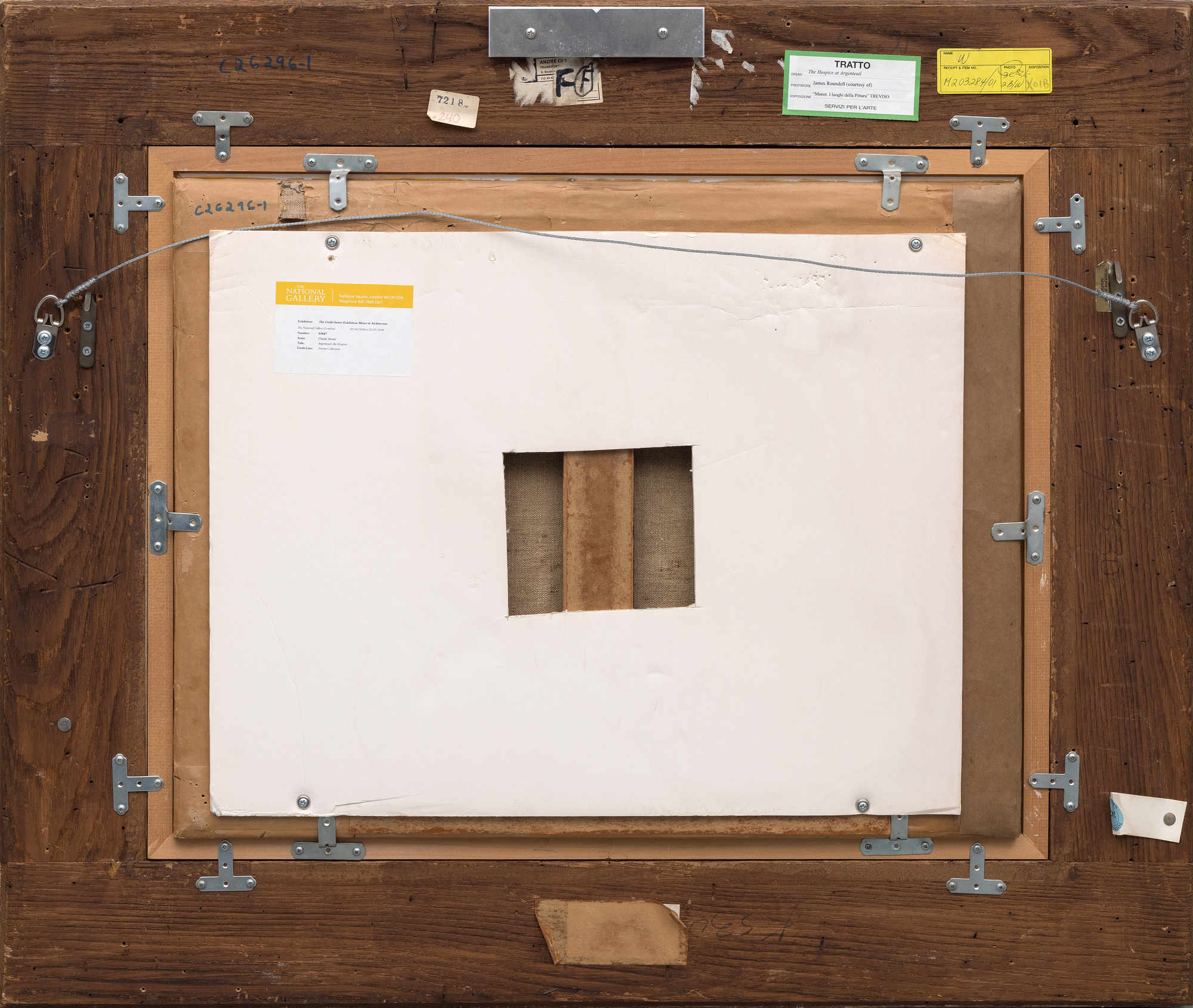
Sale: Sotheby’s New York, 17 November 1998, lot 240
Private Collection (acquired at the above sale)
Private Collection, by descent
Private Collection, Cali
...More...fornia
Exhibition
Treviso, Casa dei Carraresi, Monet: I luoghi della pittura, 29 September 2001-10 February 2002, p. 358, no. 11 (titled Argenteuil, l’ospizio, illustrated)
London, The National Gallery, Monet & Architecture, 9 April-29 July 2018, no. 40 (titled Argenteuil, the Hospice, illustrated, p. 122-23, no. 115)
Literature
D. Wildenstein, Claude Monet: Biographie et Catalogue Raisonné, Paris, 1974, vol. I, pp. 216-17, no. 240 (illustrated)
P. H. Tucker, Monet at Argenteuil, Milan, 1982, pp. 27 & 30, no. 13 (illustrated)
D. Wildenstein, Claude Monet, Catalogue Raisonné, Lausanne, 1991, vol. V (Supplément aux peintures, dessins, pastels, index), p. 27 , no. 240
D. Wildenstein, Monet: Catalogue Raisonné, Paris, 1996, vol. II, p. 105, no. 240 (illustrated)
...LESS...
Argenteuil, l’Hospice from 1872 belongs to one of the most formative chapters in Claude Monet’s career, painted during his early years in Argenteuil where he created nearly one hundred eighty canvases between 1871 and 1878. First owned by Paul Durand Ruel, Monet’s dealer and the most important champion of the Impressionists, the painting is included in the Wildenstein catalogue and was featured in the National Gallery London’s landmark exhibition Monet and Architecture in 2018. Created in the same year as his breakthrough Impression, Sunrise, the work reflects the moment when Monet’s vision for modern landscape took shape and laid the foundation for the movement that would soon be known as Impressionism.


Monet settled in Argenteuil in late 1871, determined to renew his artistic direction after the upheavals of war and exile. The town offered an enticing blend of historical architecture, modern industry, rustic gardens, and the ever-shifting Seine, all within easy reach of Paris. The Aubrey House, where Monet lived, became a gathering place for Renoir, Manet, Sisley, Caillebotte, and later Pissarro, a setting that fostered both artistic exchange and the planning of the first Impressionist exhibition of 1874. As scholar Paul Hayes Tucker has noted, Argenteuil offered Monet a rare diversity of motifs that he encountered daily, ranging from the charmingly old to the strikingly new.


In this painting Monet set his easel on rue Pierre Guienne, with his back to the Aubrey House, and painted the seventeenth century building that served at the time as the hospice of the Porte Saint Denis. The structure appears at right, viewed from the Seine, rendered with a quiet clarity that captures the atmosphere of an early spring day. The palette reflects both a reverence for the site’s history and an appreciation for Eugène Boudin, the friend and mentor who had encouraged Monet to paint the play of air and light years earlier and who joined him for a housewarming at Argenteuil on January 2, 1872. The hospice later became the Musée du Vieil Argenteuil, further reinforcing the historical resonance of the site.


Argenteuil, l’Hospice stands as one of Monet’s earliest paintings from this crucial period and offers a faithful, atmospheric interpretation of a place deeply intertwined with the origins of Impressionism. Its blend of gentle tonalities, soft spring light, and direct observation reveals the artist’s growing confidence in painting the world as he perceived it, moment by moment, as a new vision for modern landscape art emerged.
Inquire