JOANNA POUSETTE-DART (b. 1947)

 
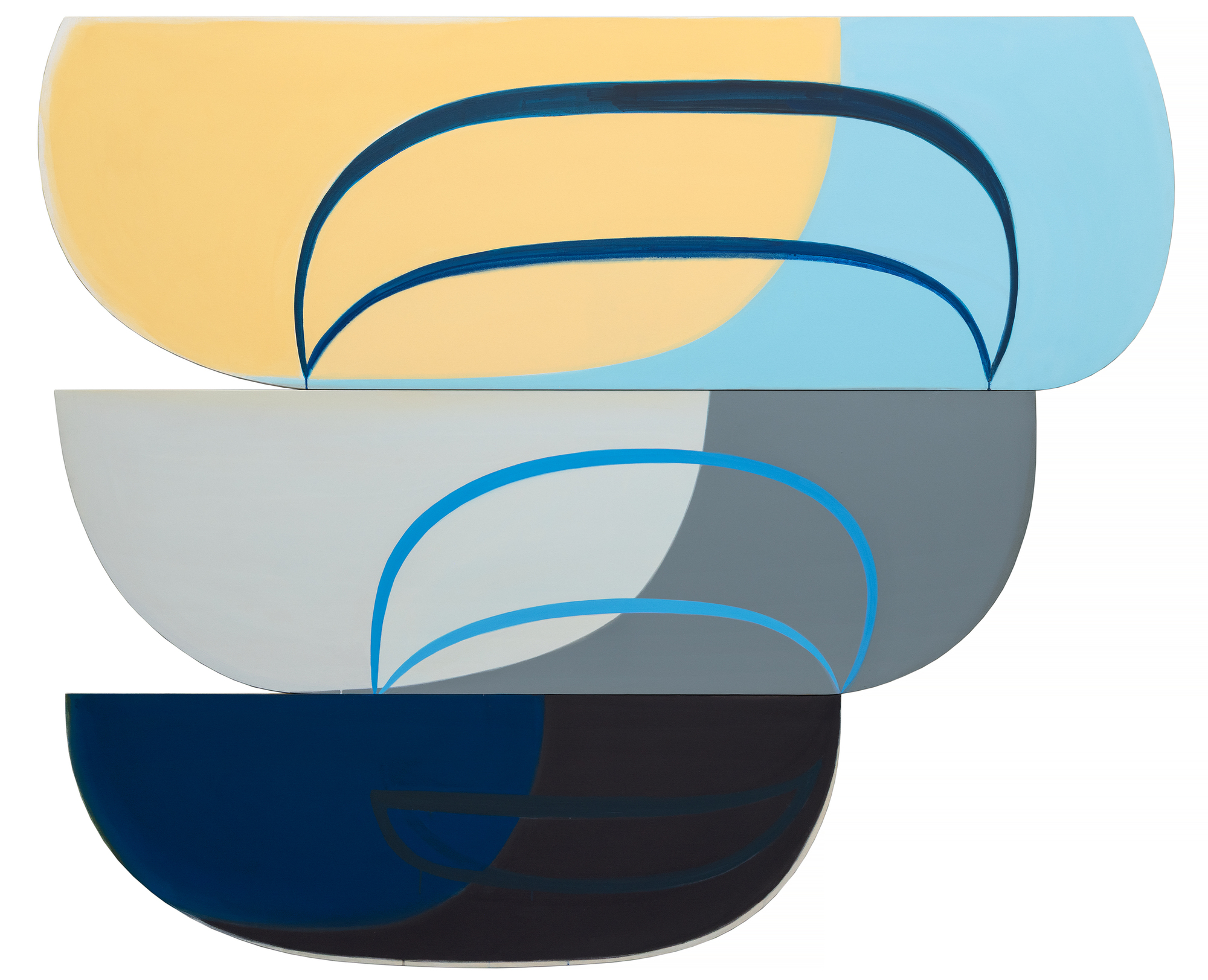
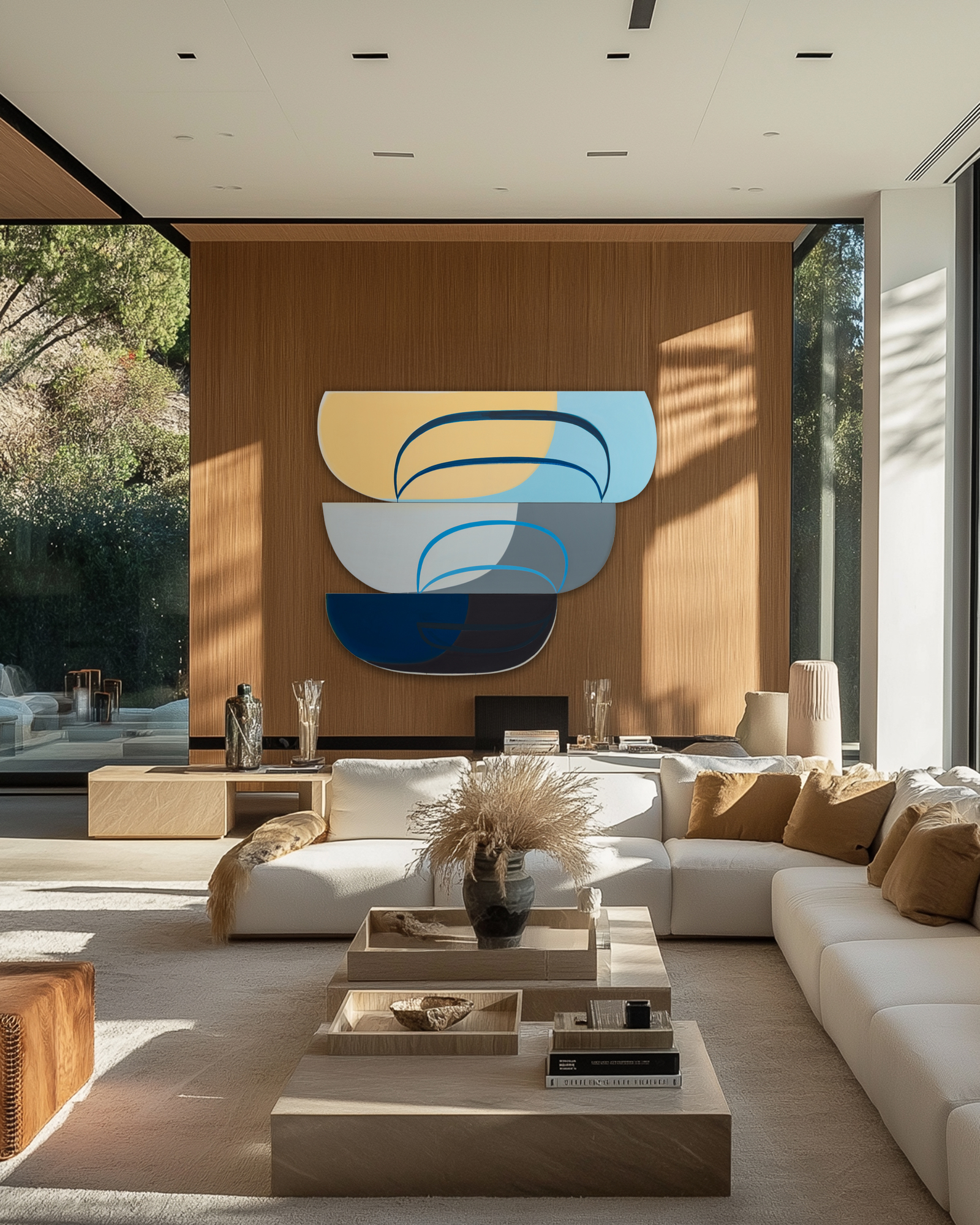
<div>Joanna Pousette-Dart’s 3 Part Variation No. 11 (2017) is composed of three stacked, curvilinear canvases—forms that resemble canoe hulls or slices of a circle—rising in scale from bottom to top. Each panel has its own restrained palette of blues, yellows, and grays, distinct yet resonant with the others. The proportions and curves echo from one to the next, yet no two forms are alike. </div>
<br>
<br><div> </div>
<br>
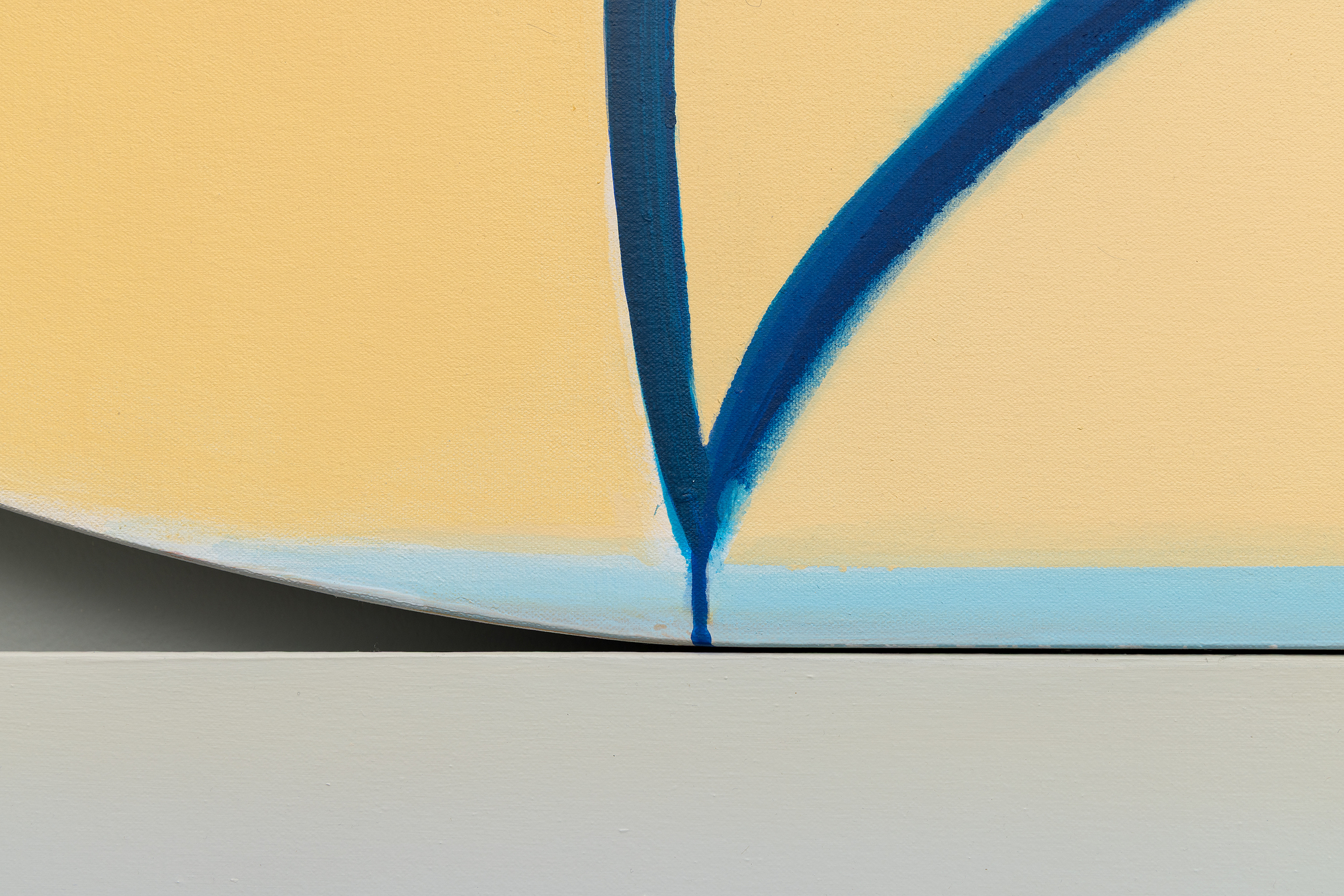
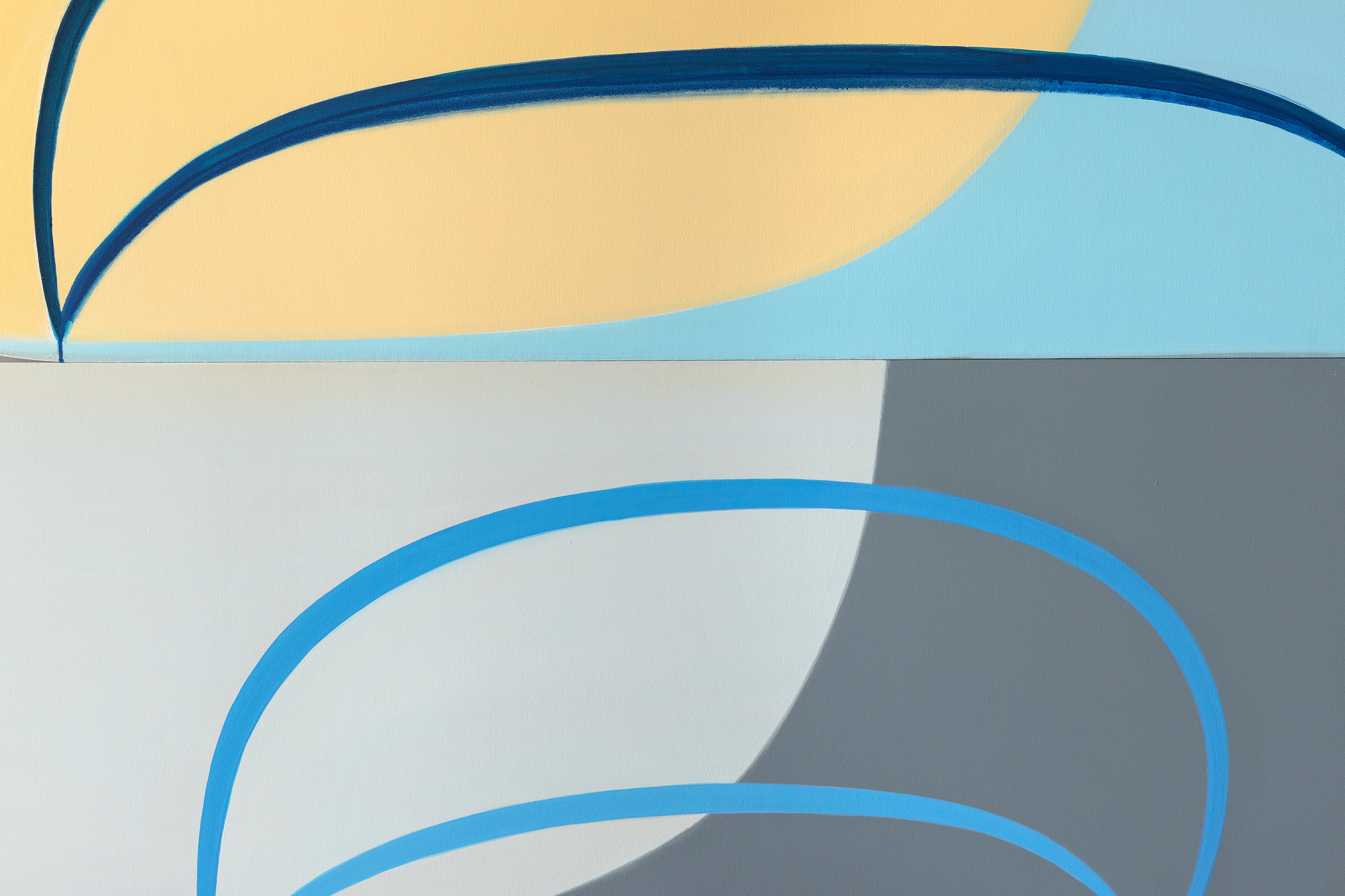
<br><div>Within each panel, broad areas of flat color are bisected by rounded shapes whose outer contours align with the painting’s edge. Layered over these are linear arabesque-like structures that visually rhyme—but never directly repeat—the panels’ curves, creating a dynamic interplay between inner drawing and outer shape. The result is both lyrical and precise, a composition where subtle variations generate a complex harmony. </div>
<br>
<br><div> </div>
<br>
<br><div>The beauty of 3 Part Variation No. 11 lies in these relationships: how forms mirror, diverge, and converge across the three canvases. The effect is meditative, like a visual equation that is at once architectural and deeply personal. </div> <div>Joanna Pousette-Dart’s 3 Part Variation No. 11 (2017) is composed of three stacked, curvilinear canvases—forms that resemble canoe hulls or slices of a circle—rising in scale from bottom to top. Each panel has its own restrained palette of blues, yellows, and grays, distinct yet resonant with the others. The proportions and curves echo from one to the next, yet no two forms are alike. </div>
<br>
<br><div> </div>
<br>
<br><div>Within each panel, broad areas of flat color are bisected by rounded shapes whose outer contours align with the painting’s edge. Layered over these are linear arabesque-like structures that visually rhyme—but never directly repeat—the panels’ curves, creating a dynamic interplay between inner drawing and outer shape. The result is both lyrical and precise, a composition where subtle variations generate a complex harmony. </div>
<br>
<br><div> </div>
<br>
<br><div>The beauty of 3 Part Variation No. 11 lies in these relationships: how forms mirror, diverge, and converge across the three canvases. The effect is meditative, like a visual equation that is at once architectural and deeply personal. </div> <div>Joanna Pousette-Dart’s 3 Part Variation No. 11 (2017) is composed of three stacked, curvilinear canvases—forms that resemble canoe hulls or slices of a circle—rising in scale from bottom to top. Each panel has its own restrained palette of blues, yellows, and grays, distinct yet resonant with the others. The proportions and curves echo from one to the next, yet no two forms are alike. </div>
<br>
<br><div> </div>
<br>
<br><div>Within each panel, broad areas of flat color are bisected by rounded shapes whose outer contours align with the painting’s edge. Layered over these are linear arabesque-like structures that visually rhyme—but never directly repeat—the panels’ curves, creating a dynamic interplay between inner drawing and outer shape. The result is both lyrical and precise, a composition where subtle variations generate a complex harmony. </div>
<br>
<br><div> </div>
<br>
<br><div>The beauty of 3 Part Variation No. 11 lies in these relationships: how forms mirror, diverge, and converge across the three canvases. The effect is meditative, like a visual equation that is at once architectural and deeply personal. </div> <div>Joanna Pousette-Dart’s 3 Part Variation No. 11 (2017) is composed of three stacked, curvilinear canvases—forms that resemble canoe hulls or slices of a circle—rising in scale from bottom to top. Each panel has its own restrained palette of blues, yellows, and grays, distinct yet resonant with the others. The proportions and curves echo from one to the next, yet no two forms are alike. </div>
<br>
<br><div> </div>
<br>
<br><div>Within each panel, broad areas of flat color are bisected by rounded shapes whose outer contours align with the painting’s edge. Layered over these are linear arabesque-like structures that visually rhyme—but never directly repeat—the panels’ curves, creating a dynamic interplay between inner drawing and outer shape. The result is both lyrical and precise, a composition where subtle variations generate a complex harmony. </div>
<br>
<br><div> </div>
<br>
<br><div>The beauty of 3 Part Variation No. 11 lies in these relationships: how forms mirror, diverge, and converge across the three canvases. The effect is meditative, like a visual equation that is at once architectural and deeply personal. </div> <div>Joanna Pousette-Dart’s 3 Part Variation No. 11 (2017) is composed of three stacked, curvilinear canvases—forms that resemble canoe hulls or slices of a circle—rising in scale from bottom to top. Each panel has its own restrained palette of blues, yellows, and grays, distinct yet resonant with the others. The proportions and curves echo from one to the next, yet no two forms are alike. </div>
<br>
<br><div> </div>
<br>
<br><div>Within each panel, broad areas of flat color are bisected by rounded shapes whose outer contours align with the painting’s edge. Layered over these are linear arabesque-like structures that visually rhyme—but never directly repeat—the panels’ curves, creating a dynamic interplay between inner drawing and outer shape. The result is both lyrical and precise, a composition where subtle variations generate a complex harmony. </div>
<br>
<br><div> </div>
<br>
<br><div>The beauty of 3 Part Variation No. 11 lies in these relationships: how forms mirror, diverge, and converge across the three canvases. The effect is meditative, like a visual equation that is at once architectural and deeply personal. </div> <div>Joanna Pousette-Dart’s 3 Part Variation No. 11 (2017) is composed of three stacked, curvilinear canvases—forms that resemble canoe hulls or slices of a circle—rising in scale from bottom to top. Each panel has its own restrained palette of blues, yellows, and grays, distinct yet resonant with the others. The proportions and curves echo from one to the next, yet no two forms are alike. </div>
<br>
<br><div> </div>
<br>
<br><div>Within each panel, broad areas of flat color are bisected by rounded shapes whose outer contours align with the painting’s edge. Layered over these are linear arabesque-like structures that visually rhyme—but never directly repeat—the panels’ curves, creating a dynamic interplay between inner drawing and outer shape. The result is both lyrical and precise, a composition where subtle variations generate a complex harmony. </div>
<br>
<br><div> </div>
<br>
<br><div>The beauty of 3 Part Variation No. 11 lies in these relationships: how forms mirror, diverge, and converge across the three canvases. The effect is meditative, like a visual equation that is at once architectural and deeply personal. </div> <div>Joanna Pousette-Dart’s 3 Part Variation No. 11 (2017) is composed of three stacked, curvilinear canvases—forms that resemble canoe hulls or slices of a circle—rising in scale from bottom to top. Each panel has its own restrained palette of blues, yellows, and grays, distinct yet resonant with the others. The proportions and curves echo from one to the next, yet no two forms are alike. </div>
<br>
<br><div> </div>
<br>
<br><div>Within each panel, broad areas of flat color are bisected by rounded shapes whose outer contours align with the painting’s edge. Layered over these are linear arabesque-like structures that visually rhyme—but never directly repeat—the panels’ curves, creating a dynamic interplay between inner drawing and outer shape. The result is both lyrical and precise, a composition where subtle variations generate a complex harmony. </div>
<br>
<br><div> </div>
<br>
<br><div>The beauty of 3 Part Variation No. 11 lies in these relationships: how forms mirror, diverge, and converge across the three canvases. The effect is meditative, like a visual equation that is at once architectural and deeply personal. </div> <div>Joanna Pousette-Dart’s 3 Part Variation No. 11 (2017) is composed of three stacked, curvilinear canvases—forms that resemble canoe hulls or slices of a circle—rising in scale from bottom to top. Each panel has its own restrained palette of blues, yellows, and grays, distinct yet resonant with the others. The proportions and curves echo from one to the next, yet no two forms are alike. </div>
<br>
<br><div> </div>
<br>
<br><div>Within each panel, broad areas of flat color are bisected by rounded shapes whose outer contours align with the painting’s edge. Layered over these are linear arabesque-like structures that visually rhyme—but never directly repeat—the panels’ curves, creating a dynamic interplay between inner drawing and outer shape. The result is both lyrical and precise, a composition where subtle variations generate a complex harmony. </div>
<br>
<br><div> </div>
<br>
<br><div>The beauty of 3 Part Variation No. 11 lies in these relationships: how forms mirror, diverge, and converge across the three canvases. The effect is meditative, like a visual equation that is at once architectural and deeply personal. </div> <div>Joanna Pousette-Dart’s 3 Part Variation No. 11 (2017) is composed of three stacked, curvilinear canvases—forms that resemble canoe hulls or slices of a circle—rising in scale from bottom to top. Each panel has its own restrained palette of blues, yellows, and grays, distinct yet resonant with the others. The proportions and curves echo from one to the next, yet no two forms are alike. </div>
<br>
<br><div> </div>
<br>
<br><div>Within each panel, broad areas of flat color are bisected by rounded shapes whose outer contours align with the painting’s edge. Layered over these are linear arabesque-like structures that visually rhyme—but never directly repeat—the panels’ curves, creating a dynamic interplay between inner drawing and outer shape. The result is both lyrical and precise, a composition where subtle variations generate a complex harmony. </div>
<br>
<br><div> </div>
<br>
<br><div>The beauty of 3 Part Variation No. 11 lies in these relationships: how forms mirror, diverge, and converge across the three canvases. The effect is meditative, like a visual equation that is at once architectural and deeply personal. </div> <div>Joanna Pousette-Dart’s 3 Part Variation No. 11 (2017) is composed of three stacked, curvilinear canvases—forms that resemble canoe hulls or slices of a circle—rising in scale from bottom to top. Each panel has its own restrained palette of blues, yellows, and grays, distinct yet resonant with the others. The proportions and curves echo from one to the next, yet no two forms are alike. </div>
<br>
<br><div> </div>
<br>
<br><div>Within each panel, broad areas of flat color are bisected by rounded shapes whose outer contours align with the painting’s edge. Layered over these are linear arabesque-like structures that visually rhyme—but never directly repeat—the panels’ curves, creating a dynamic interplay between inner drawing and outer shape. The result is both lyrical and precise, a composition where subtle variations generate a complex harmony. </div>
<br>
<br><div> </div>
<br>
<br><div>The beauty of 3 Part Variation No. 11 lies in these relationships: how forms mirror, diverge, and converge across the three canvases. The effect is meditative, like a visual equation that is at once architectural and deeply personal. </div>
3 Part Variation No. 11201776 3/4 x 91 1/2 x 1 1/12 in.(194.31 x 232.41 x 3.81 cm) acrylic, canvas, wood panels
Provenance
Artist Collection
Private Collection, purchased directly from the artist
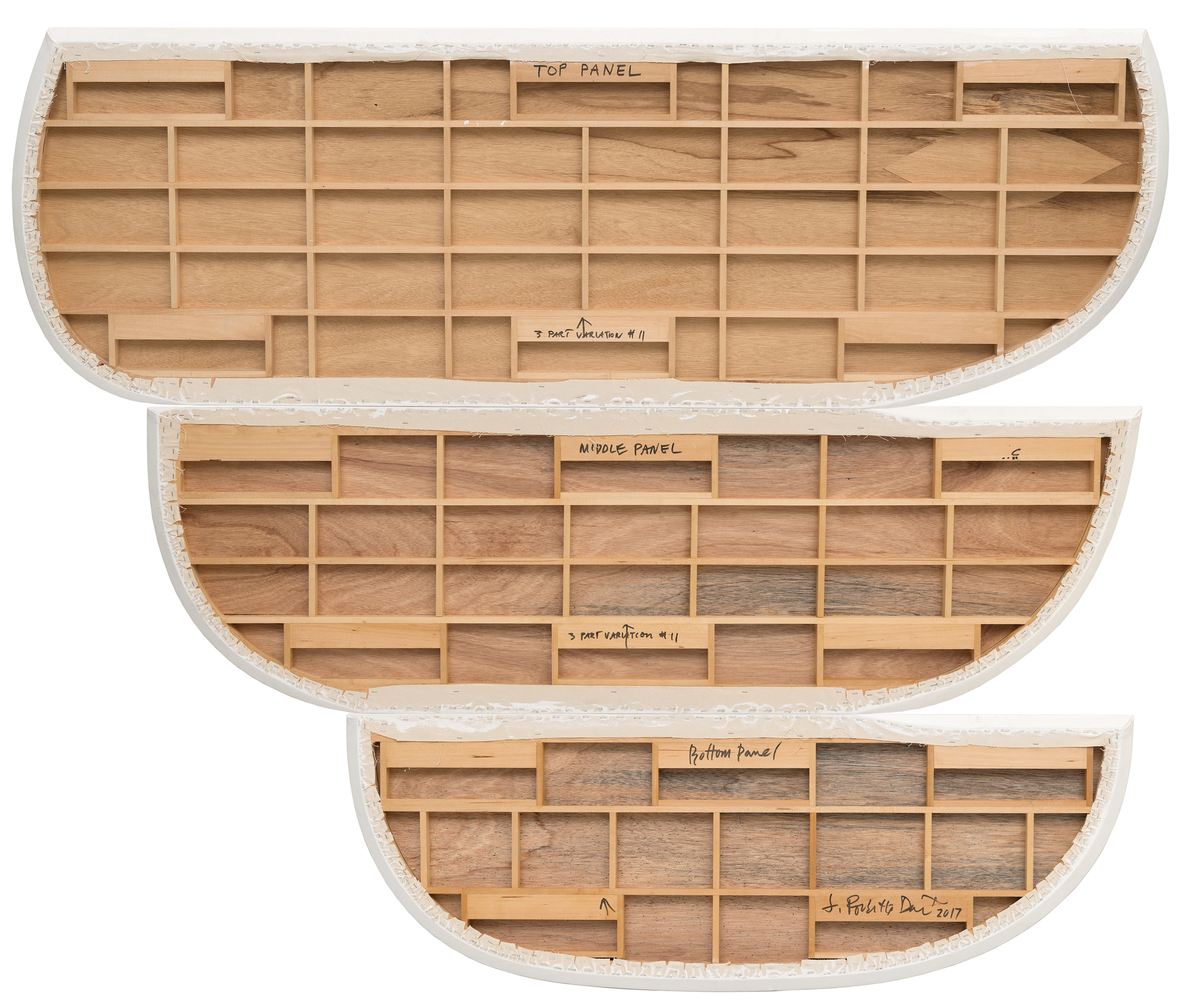
Joanna Pousette-Dart’s 3 Part Variation No. 11 (2017) is composed of three stacked, curvilinear canvases—forms that resemble canoe hulls or slices of a circle—rising in scale from bottom to top. Each panel has its own restrained palette of blues, yellows, and grays, distinct yet resonant with the others. The proportions and curves echo from one to the next, yet no two forms are alike.


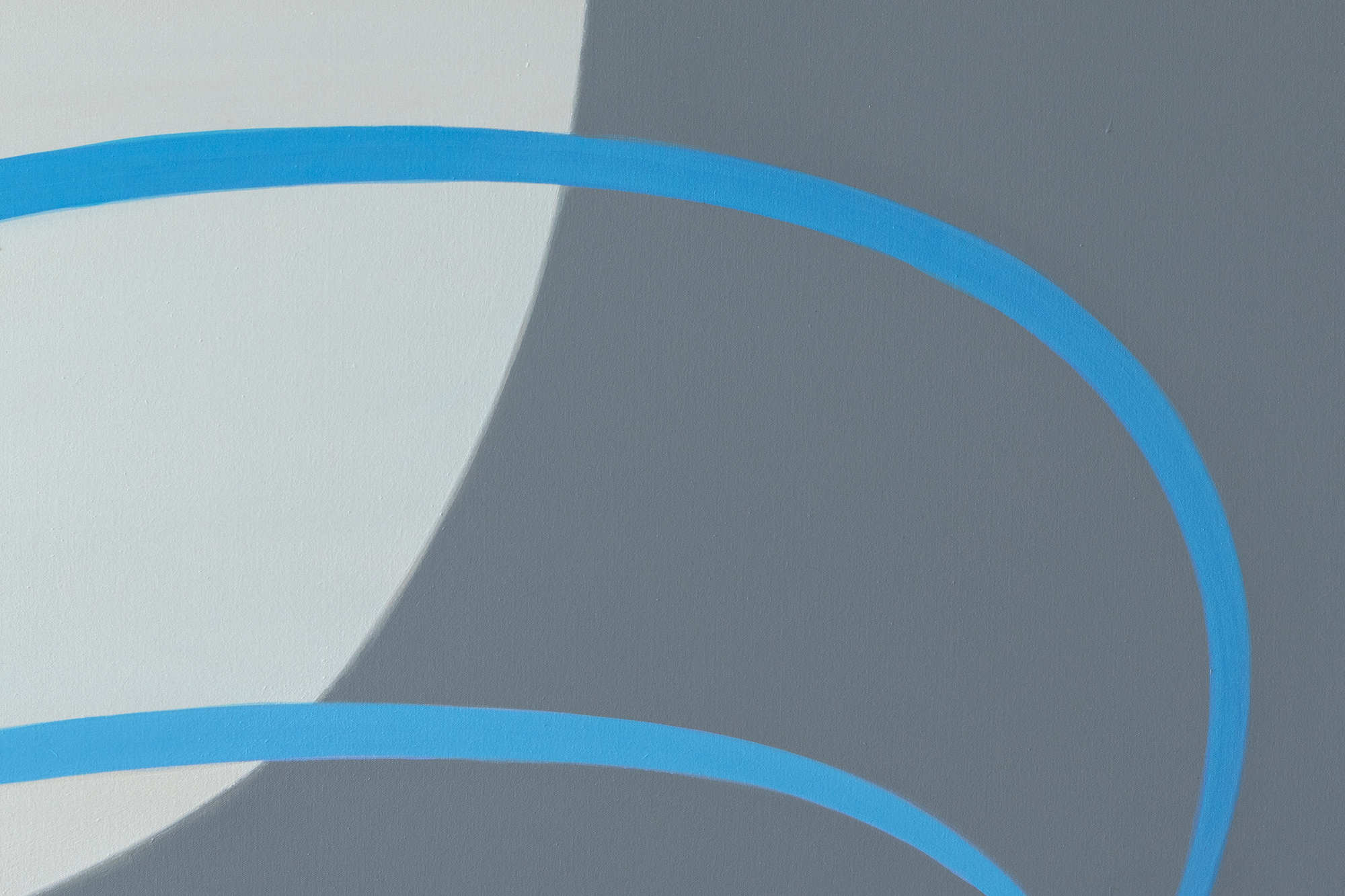
Within each panel, broad areas of flat color are bisected by rounded shapes whose outer contours align with the painting’s edge. Layered over these are linear arabesque-like structures that visually rhyme—but never directly repeat—the panels’ curves, creating a dynamic interplay between inner drawing and outer shape. The result is both lyrical and precise, a composition where subtle variations generate a complex harmony.


The beauty of 3 Part Variation No. 11 lies in these relationships: how forms mirror, diverge, and converge across the three canvases. The effect is meditative, like a visual equation that is at once architectural and deeply personal.
Inquire