Back

MAURICE DE VLAMINCK (1876-1958)

 
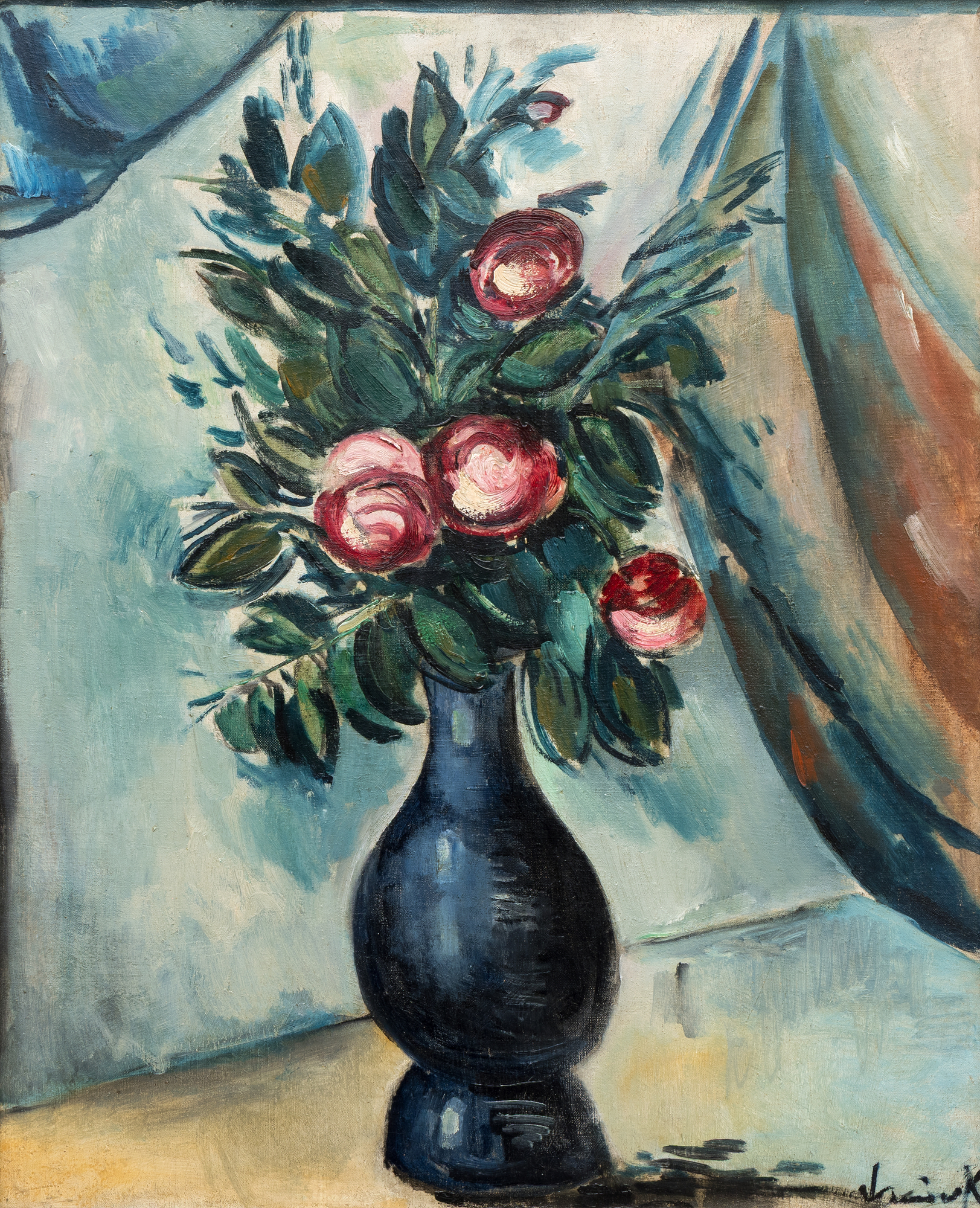
<div>Maurice de Vlaminck’s <em>Bouquet de Pivoines dans un Vase Bleu</em> (1913–14) is a prime-period still life that channels the artist’s Fauvist audacity into an image of exuberant, painterly force. A dense spray of peonies—painted as spiraling bursts of pinks, reds, and creamy whites—pushes outward from a deep blue vase, its rounded form anchoring the composition. With vigorous, directional brushstrokes, Vlaminck animates petals and foliage into a rhythmic surge, turning a traditional tabletop motif into a study of movement, texture, and chromatic intensity. </div>
<br>
<br><div> </div>
<br>
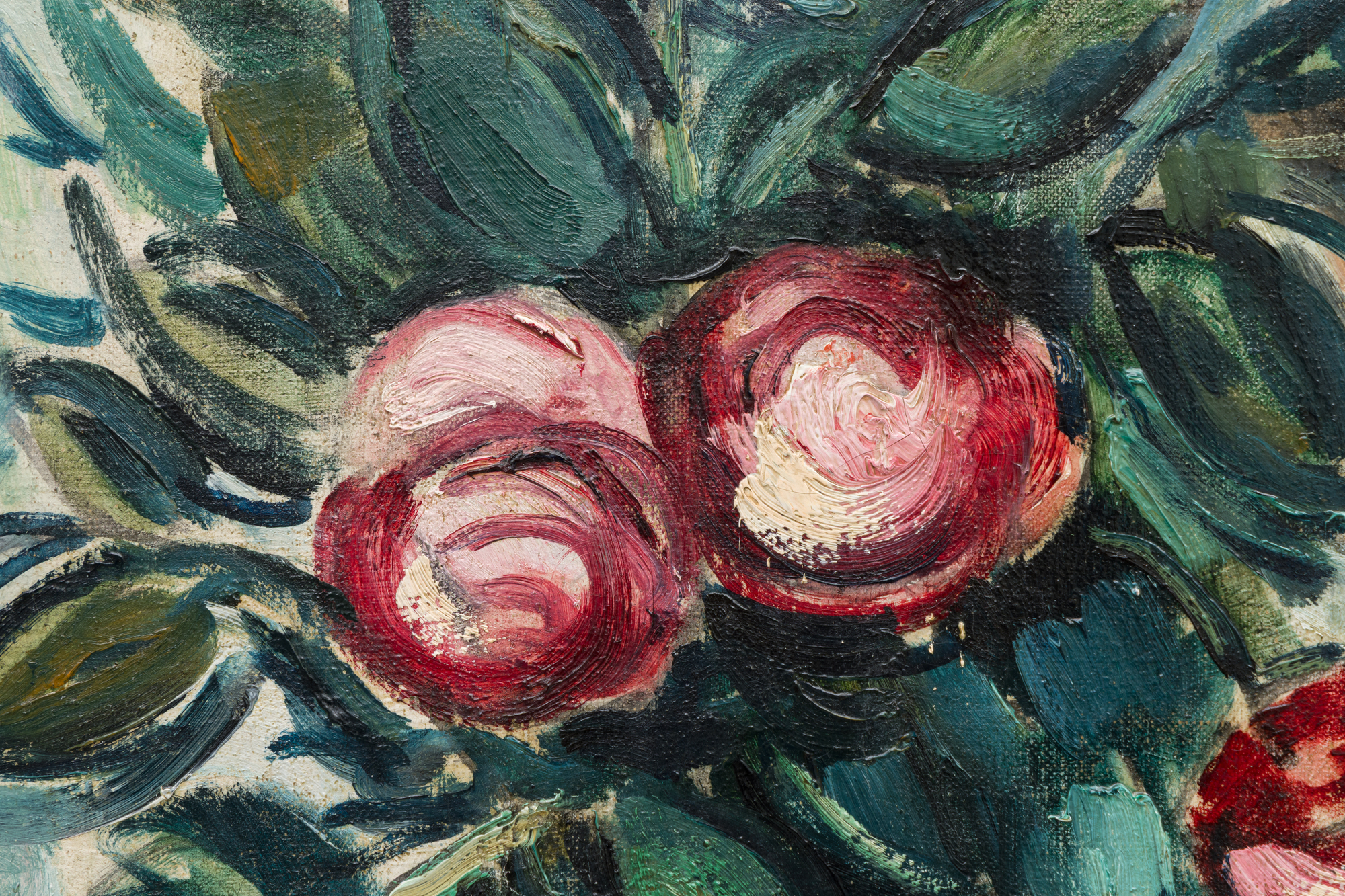
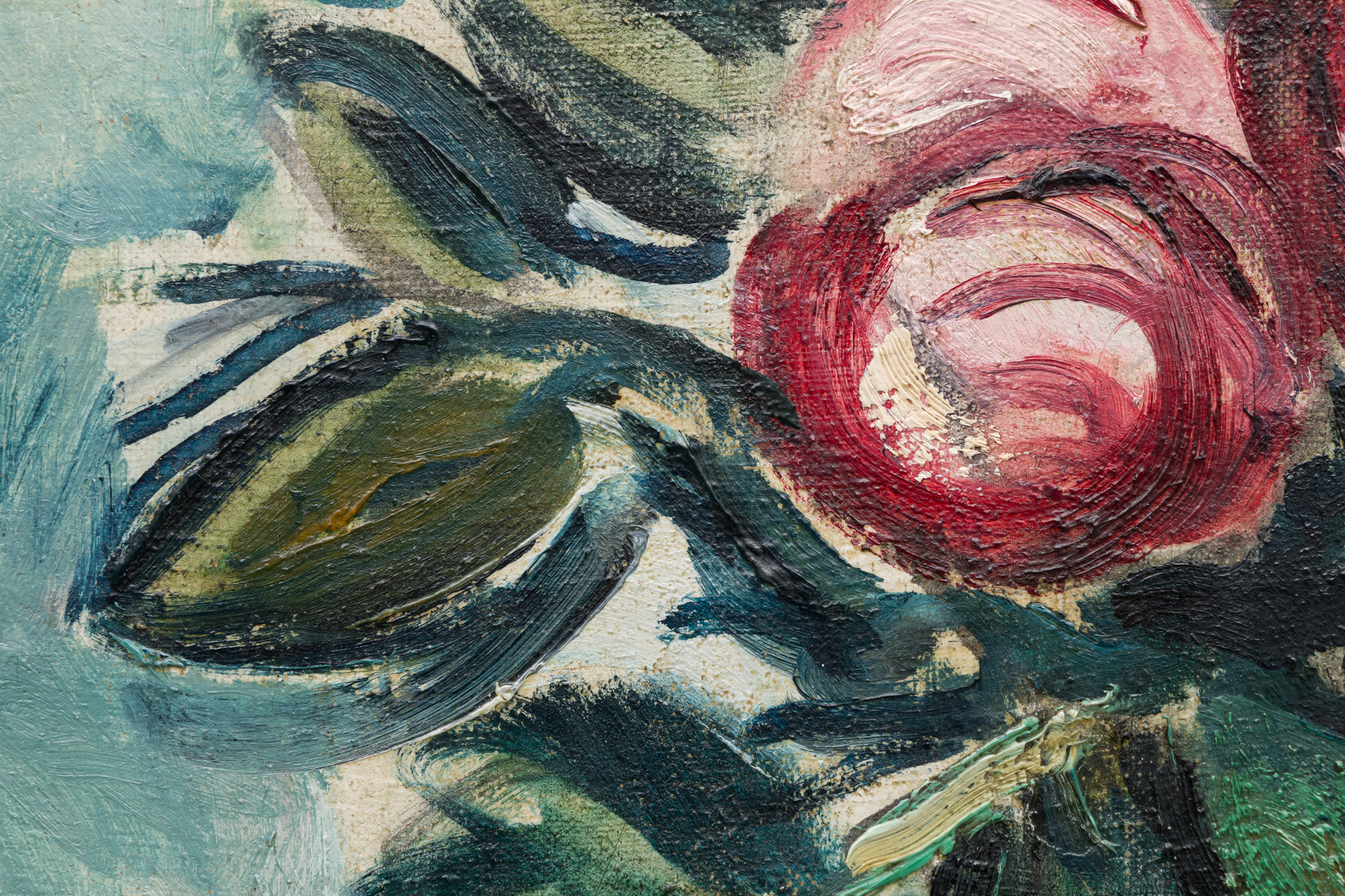
<br><div>As one of the core founders of Fauvism, Vlaminck was celebrated for his radical, non-naturalistic use of color, and this work retains that avant-garde approach. Cool blues and sea-greens collide with hot, saturated reds, while the background drapery and angled planes are simplified into sweeping passages that heighten contrast and speed. The paint surface remains boldly worked, emphasizing the physicality of oil on canvas and the immediacy of the artist’s hand. A prominent signature reinforces the picture’s assertive presence and its sense of completed statement. </div>
<br>
<br><div> </div>
<br>
<br><div>The painting will be included in the forthcoming critical catalogue of Maurice de Vlaminck’s works, currently being prepared by Maïté Vallès-Bled and Godeliève de Vlaminck under the auspices of the Wildenstein Institute. Renewed international attention to Vlaminck’s achievements—including a recent retrospective at Museum Barberini in Potsdam, the first in nearly a century—has reaffirmed his vital role in the development of modern painting. <em>Bouquet de Pivoines dans un Vase Bleu </em>captures that legacy: unapologetically modern and powered by color as expression. </div> <div>Maurice de Vlaminck’s <em>Bouquet de Pivoines dans un Vase Bleu</em> (1913–14) is a prime-period still life that channels the artist’s Fauvist audacity into an image of exuberant, painterly force. A dense spray of peonies—painted as spiraling bursts of pinks, reds, and creamy whites—pushes outward from a deep blue vase, its rounded form anchoring the composition. With vigorous, directional brushstrokes, Vlaminck animates petals and foliage into a rhythmic surge, turning a traditional tabletop motif into a study of movement, texture, and chromatic intensity. </div>
<br>
<br><div> </div>
<br>
<br><div>As one of the core founders of Fauvism, Vlaminck was celebrated for his radical, non-naturalistic use of color, and this work retains that avant-garde approach. Cool blues and sea-greens collide with hot, saturated reds, while the background drapery and angled planes are simplified into sweeping passages that heighten contrast and speed. The paint surface remains boldly worked, emphasizing the physicality of oil on canvas and the immediacy of the artist’s hand. A prominent signature reinforces the picture’s assertive presence and its sense of completed statement. </div>
<br>
<br><div> </div>
<br>
<br><div>The painting will be included in the forthcoming critical catalogue of Maurice de Vlaminck’s works, currently being prepared by Maïté Vallès-Bled and Godeliève de Vlaminck under the auspices of the Wildenstein Institute. Renewed international attention to Vlaminck’s achievements—including a recent retrospective at Museum Barberini in Potsdam, the first in nearly a century—has reaffirmed his vital role in the development of modern painting. <em>Bouquet de Pivoines dans un Vase Bleu </em>captures that legacy: unapologetically modern and powered by color as expression. </div> <div>Maurice de Vlaminck’s <em>Bouquet de Pivoines dans un Vase Bleu</em> (1913–14) is a prime-period still life that channels the artist’s Fauvist audacity into an image of exuberant, painterly force. A dense spray of peonies—painted as spiraling bursts of pinks, reds, and creamy whites—pushes outward from a deep blue vase, its rounded form anchoring the composition. With vigorous, directional brushstrokes, Vlaminck animates petals and foliage into a rhythmic surge, turning a traditional tabletop motif into a study of movement, texture, and chromatic intensity. </div>
<br>
<br><div> </div>
<br>
<br><div>As one of the core founders of Fauvism, Vlaminck was celebrated for his radical, non-naturalistic use of color, and this work retains that avant-garde approach. Cool blues and sea-greens collide with hot, saturated reds, while the background drapery and angled planes are simplified into sweeping passages that heighten contrast and speed. The paint surface remains boldly worked, emphasizing the physicality of oil on canvas and the immediacy of the artist’s hand. A prominent signature reinforces the picture’s assertive presence and its sense of completed statement. </div>
<br>
<br><div> </div>
<br>
<br><div>The painting will be included in the forthcoming critical catalogue of Maurice de Vlaminck’s works, currently being prepared by Maïté Vallès-Bled and Godeliève de Vlaminck under the auspices of the Wildenstein Institute. Renewed international attention to Vlaminck’s achievements—including a recent retrospective at Museum Barberini in Potsdam, the first in nearly a century—has reaffirmed his vital role in the development of modern painting. <em>Bouquet de Pivoines dans un Vase Bleu </em>captures that legacy: unapologetically modern and powered by color as expression. </div> <div>Maurice de Vlaminck’s <em>Bouquet de Pivoines dans un Vase Bleu</em> (1913–14) is a prime-period still life that channels the artist’s Fauvist audacity into an image of exuberant, painterly force. A dense spray of peonies—painted as spiraling bursts of pinks, reds, and creamy whites—pushes outward from a deep blue vase, its rounded form anchoring the composition. With vigorous, directional brushstrokes, Vlaminck animates petals and foliage into a rhythmic surge, turning a traditional tabletop motif into a study of movement, texture, and chromatic intensity. </div>
<br>
<br><div> </div>
<br>
<br><div>As one of the core founders of Fauvism, Vlaminck was celebrated for his radical, non-naturalistic use of color, and this work retains that avant-garde approach. Cool blues and sea-greens collide with hot, saturated reds, while the background drapery and angled planes are simplified into sweeping passages that heighten contrast and speed. The paint surface remains boldly worked, emphasizing the physicality of oil on canvas and the immediacy of the artist’s hand. A prominent signature reinforces the picture’s assertive presence and its sense of completed statement. </div>
<br>
<br><div> </div>
<br>
<br><div>The painting will be included in the forthcoming critical catalogue of Maurice de Vlaminck’s works, currently being prepared by Maïté Vallès-Bled and Godeliève de Vlaminck under the auspices of the Wildenstein Institute. Renewed international attention to Vlaminck’s achievements—including a recent retrospective at Museum Barberini in Potsdam, the first in nearly a century—has reaffirmed his vital role in the development of modern painting. <em>Bouquet de Pivoines dans un Vase Bleu </em>captures that legacy: unapologetically modern and powered by color as expression. </div> <div>Maurice de Vlaminck’s <em>Bouquet de Pivoines dans un Vase Bleu</em> (1913–14) is a prime-period still life that channels the artist’s Fauvist audacity into an image of exuberant, painterly force. A dense spray of peonies—painted as spiraling bursts of pinks, reds, and creamy whites—pushes outward from a deep blue vase, its rounded form anchoring the composition. With vigorous, directional brushstrokes, Vlaminck animates petals and foliage into a rhythmic surge, turning a traditional tabletop motif into a study of movement, texture, and chromatic intensity. </div>
<br>
<br><div> </div>
<br>
<br><div>As one of the core founders of Fauvism, Vlaminck was celebrated for his radical, non-naturalistic use of color, and this work retains that avant-garde approach. Cool blues and sea-greens collide with hot, saturated reds, while the background drapery and angled planes are simplified into sweeping passages that heighten contrast and speed. The paint surface remains boldly worked, emphasizing the physicality of oil on canvas and the immediacy of the artist’s hand. A prominent signature reinforces the picture’s assertive presence and its sense of completed statement. </div>
<br>
<br><div> </div>
<br>
<br><div>The painting will be included in the forthcoming critical catalogue of Maurice de Vlaminck’s works, currently being prepared by Maïté Vallès-Bled and Godeliève de Vlaminck under the auspices of the Wildenstein Institute. Renewed international attention to Vlaminck’s achievements—including a recent retrospective at Museum Barberini in Potsdam, the first in nearly a century—has reaffirmed his vital role in the development of modern painting. <em>Bouquet de Pivoines dans un Vase Bleu </em>captures that legacy: unapologetically modern and powered by color as expression. </div> <div>Maurice de Vlaminck’s <em>Bouquet de Pivoines dans un Vase Bleu</em> (1913–14) is a prime-period still life that channels the artist’s Fauvist audacity into an image of exuberant, painterly force. A dense spray of peonies—painted as spiraling bursts of pinks, reds, and creamy whites—pushes outward from a deep blue vase, its rounded form anchoring the composition. With vigorous, directional brushstrokes, Vlaminck animates petals and foliage into a rhythmic surge, turning a traditional tabletop motif into a study of movement, texture, and chromatic intensity. </div>
<br>
<br><div> </div>
<br>
<br><div>As one of the core founders of Fauvism, Vlaminck was celebrated for his radical, non-naturalistic use of color, and this work retains that avant-garde approach. Cool blues and sea-greens collide with hot, saturated reds, while the background drapery and angled planes are simplified into sweeping passages that heighten contrast and speed. The paint surface remains boldly worked, emphasizing the physicality of oil on canvas and the immediacy of the artist’s hand. A prominent signature reinforces the picture’s assertive presence and its sense of completed statement. </div>
<br>
<br><div> </div>
<br>
<br><div>The painting will be included in the forthcoming critical catalogue of Maurice de Vlaminck’s works, currently being prepared by Maïté Vallès-Bled and Godeliève de Vlaminck under the auspices of the Wildenstein Institute. Renewed international attention to Vlaminck’s achievements—including a recent retrospective at Museum Barberini in Potsdam, the first in nearly a century—has reaffirmed his vital role in the development of modern painting. <em>Bouquet de Pivoines dans un Vase Bleu </em>captures that legacy: unapologetically modern and powered by color as expression. </div> <div>Maurice de Vlaminck’s <em>Bouquet de Pivoines dans un Vase Bleu</em> (1913–14) is a prime-period still life that channels the artist’s Fauvist audacity into an image of exuberant, painterly force. A dense spray of peonies—painted as spiraling bursts of pinks, reds, and creamy whites—pushes outward from a deep blue vase, its rounded form anchoring the composition. With vigorous, directional brushstrokes, Vlaminck animates petals and foliage into a rhythmic surge, turning a traditional tabletop motif into a study of movement, texture, and chromatic intensity. </div>
<br>
<br><div> </div>
<br>
<br><div>As one of the core founders of Fauvism, Vlaminck was celebrated for his radical, non-naturalistic use of color, and this work retains that avant-garde approach. Cool blues and sea-greens collide with hot, saturated reds, while the background drapery and angled planes are simplified into sweeping passages that heighten contrast and speed. The paint surface remains boldly worked, emphasizing the physicality of oil on canvas and the immediacy of the artist’s hand. A prominent signature reinforces the picture’s assertive presence and its sense of completed statement. </div>
<br>
<br><div> </div>
<br>
<br><div>The painting will be included in the forthcoming critical catalogue of Maurice de Vlaminck’s works, currently being prepared by Maïté Vallès-Bled and Godeliève de Vlaminck under the auspices of the Wildenstein Institute. Renewed international attention to Vlaminck’s achievements—including a recent retrospective at Museum Barberini in Potsdam, the first in nearly a century—has reaffirmed his vital role in the development of modern painting. <em>Bouquet de Pivoines dans un Vase Bleu </em>captures that legacy: unapologetically modern and powered by color as expression. </div> <div>Maurice de Vlaminck’s <em>Bouquet de Pivoines dans un Vase Bleu</em> (1913–14) is a prime-period still life that channels the artist’s Fauvist audacity into an image of exuberant, painterly force. A dense spray of peonies—painted as spiraling bursts of pinks, reds, and creamy whites—pushes outward from a deep blue vase, its rounded form anchoring the composition. With vigorous, directional brushstrokes, Vlaminck animates petals and foliage into a rhythmic surge, turning a traditional tabletop motif into a study of movement, texture, and chromatic intensity. </div>
<br>
<br><div> </div>
<br>
<br><div>As one of the core founders of Fauvism, Vlaminck was celebrated for his radical, non-naturalistic use of color, and this work retains that avant-garde approach. Cool blues and sea-greens collide with hot, saturated reds, while the background drapery and angled planes are simplified into sweeping passages that heighten contrast and speed. The paint surface remains boldly worked, emphasizing the physicality of oil on canvas and the immediacy of the artist’s hand. A prominent signature reinforces the picture’s assertive presence and its sense of completed statement. </div>
<br>
<br><div> </div>
<br>
<br><div>The painting will be included in the forthcoming critical catalogue of Maurice de Vlaminck’s works, currently being prepared by Maïté Vallès-Bled and Godeliève de Vlaminck under the auspices of the Wildenstein Institute. Renewed international attention to Vlaminck’s achievements—including a recent retrospective at Museum Barberini in Potsdam, the first in nearly a century—has reaffirmed his vital role in the development of modern painting. <em>Bouquet de Pivoines dans un Vase Bleu </em>captures that legacy: unapologetically modern and powered by color as expression. </div> <div>Maurice de Vlaminck’s <em>Bouquet de Pivoines dans un Vase Bleu</em> (1913–14) is a prime-period still life that channels the artist’s Fauvist audacity into an image of exuberant, painterly force. A dense spray of peonies—painted as spiraling bursts of pinks, reds, and creamy whites—pushes outward from a deep blue vase, its rounded form anchoring the composition. With vigorous, directional brushstrokes, Vlaminck animates petals and foliage into a rhythmic surge, turning a traditional tabletop motif into a study of movement, texture, and chromatic intensity. </div>
<br>
<br><div> </div>
<br>
<br><div>As one of the core founders of Fauvism, Vlaminck was celebrated for his radical, non-naturalistic use of color, and this work retains that avant-garde approach. Cool blues and sea-greens collide with hot, saturated reds, while the background drapery and angled planes are simplified into sweeping passages that heighten contrast and speed. The paint surface remains boldly worked, emphasizing the physicality of oil on canvas and the immediacy of the artist’s hand. A prominent signature reinforces the picture’s assertive presence and its sense of completed statement. </div>
<br>
<br><div> </div>
<br>
<br><div>The painting will be included in the forthcoming critical catalogue of Maurice de Vlaminck’s works, currently being prepared by Maïté Vallès-Bled and Godeliève de Vlaminck under the auspices of the Wildenstein Institute. Renewed international attention to Vlaminck’s achievements—including a recent retrospective at Museum Barberini in Potsdam, the first in nearly a century—has reaffirmed his vital role in the development of modern painting. <em>Bouquet de Pivoines dans un Vase Bleu </em>captures that legacy: unapologetically modern and powered by color as expression. </div> <div>Maurice de Vlaminck’s <em>Bouquet de Pivoines dans un Vase Bleu</em> (1913–14) is a prime-period still life that channels the artist’s Fauvist audacity into an image of exuberant, painterly force. A dense spray of peonies—painted as spiraling bursts of pinks, reds, and creamy whites—pushes outward from a deep blue vase, its rounded form anchoring the composition. With vigorous, directional brushstrokes, Vlaminck animates petals and foliage into a rhythmic surge, turning a traditional tabletop motif into a study of movement, texture, and chromatic intensity. </div>
<br>
<br><div> </div>
<br>
<br><div>As one of the core founders of Fauvism, Vlaminck was celebrated for his radical, non-naturalistic use of color, and this work retains that avant-garde approach. Cool blues and sea-greens collide with hot, saturated reds, while the background drapery and angled planes are simplified into sweeping passages that heighten contrast and speed. The paint surface remains boldly worked, emphasizing the physicality of oil on canvas and the immediacy of the artist’s hand. A prominent signature reinforces the picture’s assertive presence and its sense of completed statement. </div>
<br>
<br><div> </div>
<br>
<br><div>The painting will be included in the forthcoming critical catalogue of Maurice de Vlaminck’s works, currently being prepared by Maïté Vallès-Bled and Godeliève de Vlaminck under the auspices of the Wildenstein Institute. Renewed international attention to Vlaminck’s achievements—including a recent retrospective at Museum Barberini in Potsdam, the first in nearly a century—has reaffirmed his vital role in the development of modern painting. <em>Bouquet de Pivoines dans un Vase Bleu </em>captures that legacy: unapologetically modern and powered by color as expression. </div>
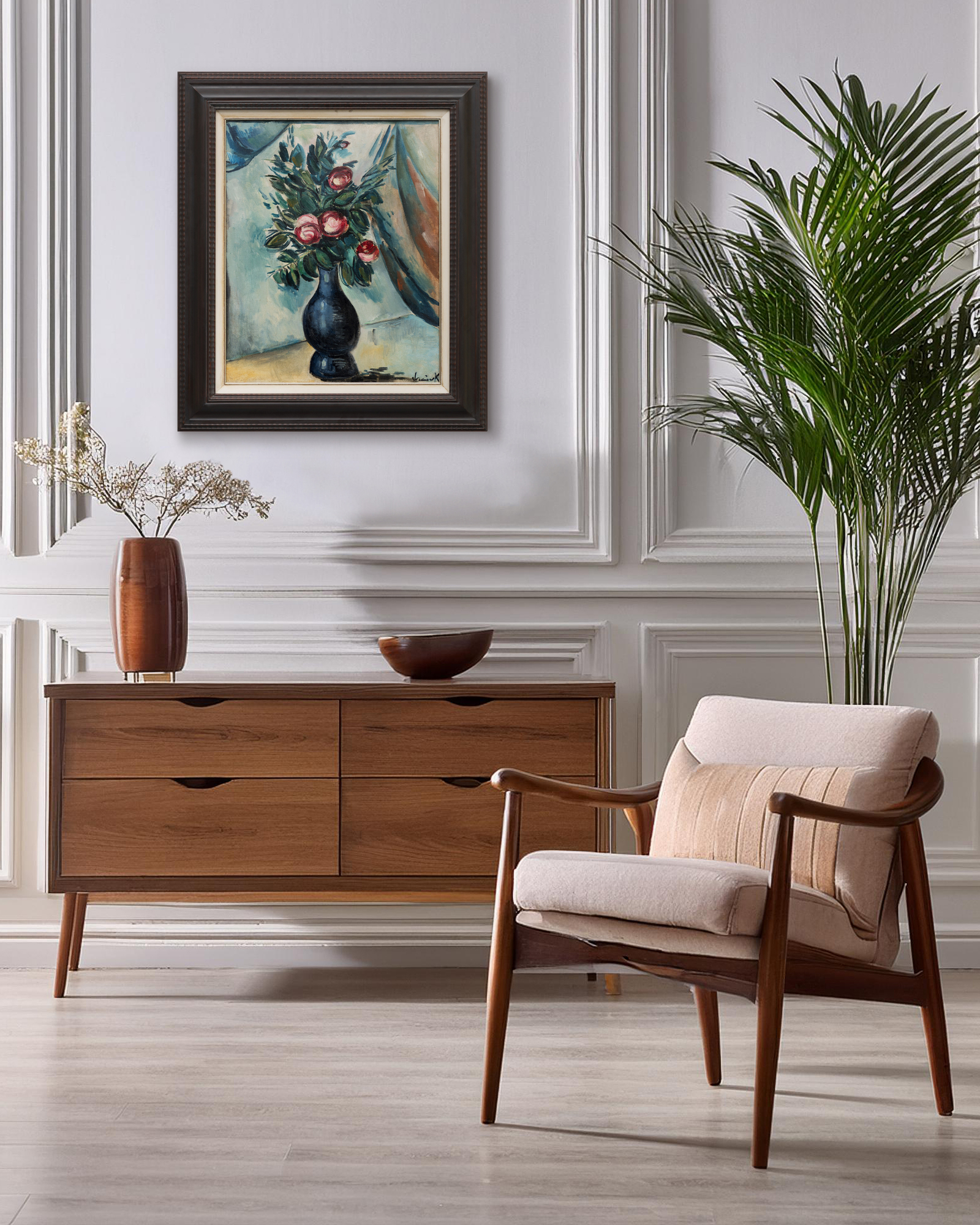
Bouquet de Pivoines dans un Vase Bleu1913-191425 3/4 x 21 1/2 in.(65.41 x 54.61 cm) oil on canvas
Provenance
Galerie Choiseul, Paris
Private Collection, France
Private Collection, Europe, acquired from the above
Exhibition
South Korea, Seoul Arts Centre, Vlaminck,  June 4 – August 21 2017; traveled to
Yamanashi Prefectural Museum of Art, Hiroshima Museum of Art, Kitakyushu Municipal Museum of Art, Kumamoto Prefectural Museum of Art, Shizuoka City Museum of Art
Literature
Maithe Valles-Bled, Maurice de Vlaminck: Regards sur L'oeuvre et sur l'artiste.1907-1958, Seoul, 2017, p. 35-36, pl. 14 (illustrated)
Maithe Valles-Blend, Vlaminck: Regards s
...More...ur l'oeuvre et sur l'artiste, 1907-1958, Hiroshima, 2017, p. 28 (illustrated)
...LESS...
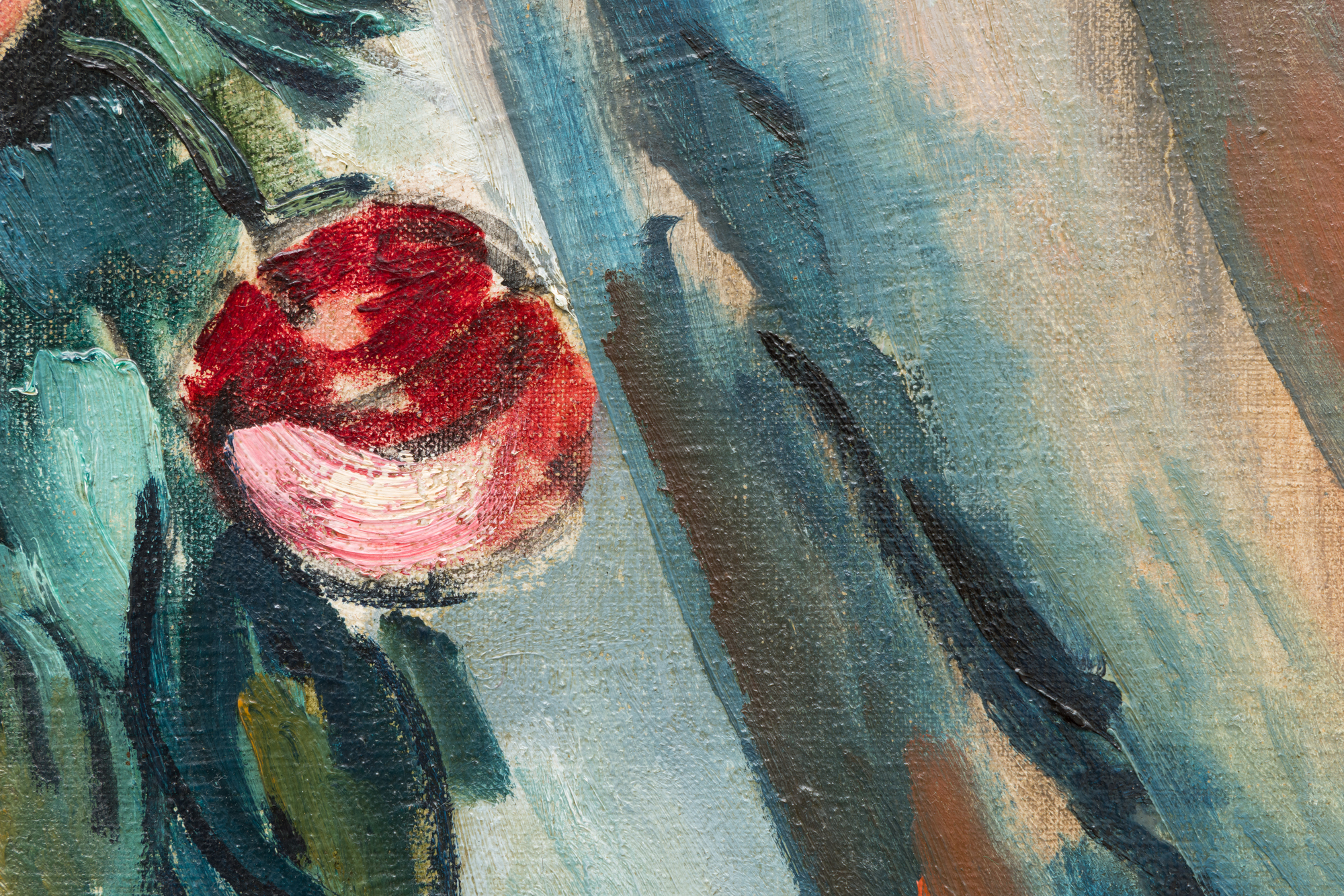
Maurice de Vlaminck’s Bouquet de Pivoines dans un Vase Bleu (1913–14) is a prime-period still life that channels the artist’s Fauvist audacity into an image of exuberant, painterly force. A dense spray of peonies—painted as spiraling bursts of pinks, reds, and creamy whites—pushes outward from a deep blue vase, its rounded form anchoring the composition. With vigorous, directional brushstrokes, Vlaminck animates petals and foliage into a rhythmic surge, turning a traditional tabletop motif into a study of movement, texture, and chromatic intensity.


As one of the core founders of Fauvism, Vlaminck was celebrated for his radical, non-naturalistic use of color, and this work retains that avant-garde approach. Cool blues and sea-greens collide with hot, saturated reds, while the background drapery and angled planes are simplified into sweeping passages that heighten contrast and speed. The paint surface remains boldly worked, emphasizing the physicality of oil on canvas and the immediacy of the artist’s hand. A prominent signature reinforces the picture’s assertive presence and its sense of completed statement.


The painting will be included in the forthcoming critical catalogue of Maurice de Vlaminck’s works, currently being prepared by Maïté Vallès-Bled and Godeliève de Vlaminck under the auspices of the Wildenstein Institute. Renewed international attention to Vlaminck’s achievements—including a recent retrospective at Museum Barberini in Potsdam, the first in nearly a century—has reaffirmed his vital role in the development of modern painting. Bouquet de Pivoines dans un Vase Bleu captures that legacy: unapologetically modern and powered by color as expression.
Inquire