Back

MAURICE DE VLAMINCK (1876-1958)

$90,000

 
<div>Maurice de Vlaminck’s<em> Fleurs dans un vase</em> (1910-11) is a prime-period still life that channels the artist’s Fauvist sensibilites into an image of exuberant, painterly force. A dynamic spray of blooms in vibrant reds, yellows, and whites flourishes from a dark vase, in a stark contrast of forms and color, creating an almost sculptural effect. With vigorous, directional brushstrokes, Vlaminck animates petals and foliage into a rhythmic surge, turning a traditional tabletop motif into a study of movement, texture, and intensity.</div>
<br>
<br><div> </div>
<br>
<br><div>As one of the core founders of Fauvism, Vlaminck was celebrated for his radical, non-naturalistic use of color, and this work retains that avant-garde approach. Cool blues and greys against saturated oranges, and the faceted planes of the backgroud heighten contrast and create a dynamic composition.  The paint surface remains boldly worked, emphasizing the physicality of oil on canvas and the immediacy of the artist’s hand.</div>
<br>
<br><div> </div>
<br>
<br><div>The painting is accompanied by a certificate of authenticity by the Wildenstein Institute for the catalogue of Maurice de Vlaminck’s works. Renewed international attention to Vlaminck’s achievements, including a recent retrospective at Museum Barberini in Potsdam - the first in nearly a century -has reaffirmed his vital role in the development of modern painting.<em> Fleurs dans un vase </em>captures that legacy: unapologetically modern and powered by color as expression. </div> <div>Maurice de Vlaminck’s<em> Fleurs dans un vase</em> (1910-11) is a prime-period still life that channels the artist’s Fauvist sensibilites into an image of exuberant, painterly force. A dynamic spray of blooms in vibrant reds, yellows, and whites flourishes from a dark vase, in a stark contrast of forms and color, creating an almost sculptural effect. With vigorous, directional brushstrokes, Vlaminck animates petals and foliage into a rhythmic surge, turning a traditional tabletop motif into a study of movement, texture, and intensity.</div>
<br>
<br><div> </div>
<br>
<br><div>As one of the core founders of Fauvism, Vlaminck was celebrated for his radical, non-naturalistic use of color, and this work retains that avant-garde approach. Cool blues and greys against saturated oranges, and the faceted planes of the backgroud heighten contrast and create a dynamic composition.  The paint surface remains boldly worked, emphasizing the physicality of oil on canvas and the immediacy of the artist’s hand.</div>
<br>
<br><div> </div>
<br>
<br><div>The painting is accompanied by a certificate of authenticity by the Wildenstein Institute for the catalogue of Maurice de Vlaminck’s works. Renewed international attention to Vlaminck’s achievements, including a recent retrospective at Museum Barberini in Potsdam - the first in nearly a century -has reaffirmed his vital role in the development of modern painting.<em> Fleurs dans un vase </em>captures that legacy: unapologetically modern and powered by color as expression. </div> <div>Maurice de Vlaminck’s<em> Fleurs dans un vase</em> (1910-11) is a prime-period still life that channels the artist’s Fauvist sensibilites into an image of exuberant, painterly force. A dynamic spray of blooms in vibrant reds, yellows, and whites flourishes from a dark vase, in a stark contrast of forms and color, creating an almost sculptural effect. With vigorous, directional brushstrokes, Vlaminck animates petals and foliage into a rhythmic surge, turning a traditional tabletop motif into a study of movement, texture, and intensity.</div>
<br>
<br><div> </div>
<br>
<br><div>As one of the core founders of Fauvism, Vlaminck was celebrated for his radical, non-naturalistic use of color, and this work retains that avant-garde approach. Cool blues and greys against saturated oranges, and the faceted planes of the backgroud heighten contrast and create a dynamic composition.  The paint surface remains boldly worked, emphasizing the physicality of oil on canvas and the immediacy of the artist’s hand.</div>
<br>
<br><div> </div>
<br>
<br><div>The painting is accompanied by a certificate of authenticity by the Wildenstein Institute for the catalogue of Maurice de Vlaminck’s works. Renewed international attention to Vlaminck’s achievements, including a recent retrospective at Museum Barberini in Potsdam - the first in nearly a century -has reaffirmed his vital role in the development of modern painting.<em> Fleurs dans un vase </em>captures that legacy: unapologetically modern and powered by color as expression. </div> <div>Maurice de Vlaminck’s<em> Fleurs dans un vase</em> (1910-11) is a prime-period still life that channels the artist’s Fauvist sensibilites into an image of exuberant, painterly force. A dynamic spray of blooms in vibrant reds, yellows, and whites flourishes from a dark vase, in a stark contrast of forms and color, creating an almost sculptural effect. With vigorous, directional brushstrokes, Vlaminck animates petals and foliage into a rhythmic surge, turning a traditional tabletop motif into a study of movement, texture, and intensity.</div>
<br>
<br><div> </div>
<br>
<br><div>As one of the core founders of Fauvism, Vlaminck was celebrated for his radical, non-naturalistic use of color, and this work retains that avant-garde approach. Cool blues and greys against saturated oranges, and the faceted planes of the backgroud heighten contrast and create a dynamic composition.  The paint surface remains boldly worked, emphasizing the physicality of oil on canvas and the immediacy of the artist’s hand.</div>
<br>
<br><div> </div>
<br>
<br><div>The painting is accompanied by a certificate of authenticity by the Wildenstein Institute for the catalogue of Maurice de Vlaminck’s works. Renewed international attention to Vlaminck’s achievements, including a recent retrospective at Museum Barberini in Potsdam - the first in nearly a century -has reaffirmed his vital role in the development of modern painting.<em> Fleurs dans un vase </em>captures that legacy: unapologetically modern and powered by color as expression. </div> <div>Maurice de Vlaminck’s<em> Fleurs dans un vase</em> (1910-11) is a prime-period still life that channels the artist’s Fauvist sensibilites into an image of exuberant, painterly force. A dynamic spray of blooms in vibrant reds, yellows, and whites flourishes from a dark vase, in a stark contrast of forms and color, creating an almost sculptural effect. With vigorous, directional brushstrokes, Vlaminck animates petals and foliage into a rhythmic surge, turning a traditional tabletop motif into a study of movement, texture, and intensity.</div>
<br>
<br><div> </div>
<br>
<br><div>As one of the core founders of Fauvism, Vlaminck was celebrated for his radical, non-naturalistic use of color, and this work retains that avant-garde approach. Cool blues and greys against saturated oranges, and the faceted planes of the backgroud heighten contrast and create a dynamic composition.  The paint surface remains boldly worked, emphasizing the physicality of oil on canvas and the immediacy of the artist’s hand.</div>
<br>
<br><div> </div>
<br>
<br><div>The painting is accompanied by a certificate of authenticity by the Wildenstein Institute for the catalogue of Maurice de Vlaminck’s works. Renewed international attention to Vlaminck’s achievements, including a recent retrospective at Museum Barberini in Potsdam - the first in nearly a century -has reaffirmed his vital role in the development of modern painting.<em> Fleurs dans un vase </em>captures that legacy: unapologetically modern and powered by color as expression. </div> <div>Maurice de Vlaminck’s<em> Fleurs dans un vase</em> (1910-11) is a prime-period still life that channels the artist’s Fauvist sensibilites into an image of exuberant, painterly force. A dynamic spray of blooms in vibrant reds, yellows, and whites flourishes from a dark vase, in a stark contrast of forms and color, creating an almost sculptural effect. With vigorous, directional brushstrokes, Vlaminck animates petals and foliage into a rhythmic surge, turning a traditional tabletop motif into a study of movement, texture, and intensity.</div>
<br>
<br><div> </div>
<br>
<br><div>As one of the core founders of Fauvism, Vlaminck was celebrated for his radical, non-naturalistic use of color, and this work retains that avant-garde approach. Cool blues and greys against saturated oranges, and the faceted planes of the backgroud heighten contrast and create a dynamic composition.  The paint surface remains boldly worked, emphasizing the physicality of oil on canvas and the immediacy of the artist’s hand.</div>
<br>
<br><div> </div>
<br>
<br><div>The painting is accompanied by a certificate of authenticity by the Wildenstein Institute for the catalogue of Maurice de Vlaminck’s works. Renewed international attention to Vlaminck’s achievements, including a recent retrospective at Museum Barberini in Potsdam - the first in nearly a century -has reaffirmed his vital role in the development of modern painting.<em> Fleurs dans un vase </em>captures that legacy: unapologetically modern and powered by color as expression. </div> <div>Maurice de Vlaminck’s<em> Fleurs dans un vase</em> (1910-11) is a prime-period still life that channels the artist’s Fauvist sensibilites into an image of exuberant, painterly force. A dynamic spray of blooms in vibrant reds, yellows, and whites flourishes from a dark vase, in a stark contrast of forms and color, creating an almost sculptural effect. With vigorous, directional brushstrokes, Vlaminck animates petals and foliage into a rhythmic surge, turning a traditional tabletop motif into a study of movement, texture, and intensity.</div>
<br>
<br><div> </div>
<br>
<br><div>As one of the core founders of Fauvism, Vlaminck was celebrated for his radical, non-naturalistic use of color, and this work retains that avant-garde approach. Cool blues and greys against saturated oranges, and the faceted planes of the backgroud heighten contrast and create a dynamic composition.  The paint surface remains boldly worked, emphasizing the physicality of oil on canvas and the immediacy of the artist’s hand.</div>
<br>
<br><div> </div>
<br>
<br><div>The painting is accompanied by a certificate of authenticity by the Wildenstein Institute for the catalogue of Maurice de Vlaminck’s works. Renewed international attention to Vlaminck’s achievements, including a recent retrospective at Museum Barberini in Potsdam - the first in nearly a century -has reaffirmed his vital role in the development of modern painting.<em> Fleurs dans un vase </em>captures that legacy: unapologetically modern and powered by color as expression. </div> <div>Maurice de Vlaminck’s<em> Fleurs dans un vase</em> (1910-11) is a prime-period still life that channels the artist’s Fauvist sensibilites into an image of exuberant, painterly force. A dynamic spray of blooms in vibrant reds, yellows, and whites flourishes from a dark vase, in a stark contrast of forms and color, creating an almost sculptural effect. With vigorous, directional brushstrokes, Vlaminck animates petals and foliage into a rhythmic surge, turning a traditional tabletop motif into a study of movement, texture, and intensity.</div>
<br>
<br><div> </div>
<br>
<br><div>As one of the core founders of Fauvism, Vlaminck was celebrated for his radical, non-naturalistic use of color, and this work retains that avant-garde approach. Cool blues and greys against saturated oranges, and the faceted planes of the backgroud heighten contrast and create a dynamic composition.  The paint surface remains boldly worked, emphasizing the physicality of oil on canvas and the immediacy of the artist’s hand.</div>
<br>
<br><div> </div>
<br>
<br><div>The painting is accompanied by a certificate of authenticity by the Wildenstein Institute for the catalogue of Maurice de Vlaminck’s works. Renewed international attention to Vlaminck’s achievements, including a recent retrospective at Museum Barberini in Potsdam - the first in nearly a century -has reaffirmed his vital role in the development of modern painting.<em> Fleurs dans un vase </em>captures that legacy: unapologetically modern and powered by color as expression. </div> <div>Maurice de Vlaminck’s<em> Fleurs dans un vase</em> (1910-11) is a prime-period still life that channels the artist’s Fauvist sensibilites into an image of exuberant, painterly force. A dynamic spray of blooms in vibrant reds, yellows, and whites flourishes from a dark vase, in a stark contrast of forms and color, creating an almost sculptural effect. With vigorous, directional brushstrokes, Vlaminck animates petals and foliage into a rhythmic surge, turning a traditional tabletop motif into a study of movement, texture, and intensity.</div>
<br>
<br><div> </div>
<br>
<br><div>As one of the core founders of Fauvism, Vlaminck was celebrated for his radical, non-naturalistic use of color, and this work retains that avant-garde approach. Cool blues and greys against saturated oranges, and the faceted planes of the backgroud heighten contrast and create a dynamic composition.  The paint surface remains boldly worked, emphasizing the physicality of oil on canvas and the immediacy of the artist’s hand.</div>
<br>
<br><div> </div>
<br>
<br><div>The painting is accompanied by a certificate of authenticity by the Wildenstein Institute for the catalogue of Maurice de Vlaminck’s works. Renewed international attention to Vlaminck’s achievements, including a recent retrospective at Museum Barberini in Potsdam - the first in nearly a century -has reaffirmed his vital role in the development of modern painting.<em> Fleurs dans un vase </em>captures that legacy: unapologetically modern and powered by color as expression. </div> <div>Maurice de Vlaminck’s<em> Fleurs dans un vase</em> (1910-11) is a prime-period still life that channels the artist’s Fauvist sensibilites into an image of exuberant, painterly force. A dynamic spray of blooms in vibrant reds, yellows, and whites flourishes from a dark vase, in a stark contrast of forms and color, creating an almost sculptural effect. With vigorous, directional brushstrokes, Vlaminck animates petals and foliage into a rhythmic surge, turning a traditional tabletop motif into a study of movement, texture, and intensity.</div>
<br>
<br><div> </div>
<br>
<br><div>As one of the core founders of Fauvism, Vlaminck was celebrated for his radical, non-naturalistic use of color, and this work retains that avant-garde approach. Cool blues and greys against saturated oranges, and the faceted planes of the backgroud heighten contrast and create a dynamic composition.  The paint surface remains boldly worked, emphasizing the physicality of oil on canvas and the immediacy of the artist’s hand.</div>
<br>
<br><div> </div>
<br>
<br><div>The painting is accompanied by a certificate of authenticity by the Wildenstein Institute for the catalogue of Maurice de Vlaminck’s works. Renewed international attention to Vlaminck’s achievements, including a recent retrospective at Museum Barberini in Potsdam - the first in nearly a century -has reaffirmed his vital role in the development of modern painting.<em> Fleurs dans un vase </em>captures that legacy: unapologetically modern and powered by color as expression. </div>
Fleurs dans un vase1910-1121 1/4 x 15 in.(53.98 x 38.1 cm) oil on canvas
Provenance
Private Collection, Germany
Koller Auktionen AG: Friday, June 19, 2009, lot 03233, Auktion A149 - Schweizer Kunst, moderne Kunst, moderne Graphik und zeitgenössische Kunst
Private Collection, Europe, acquired from the above
 
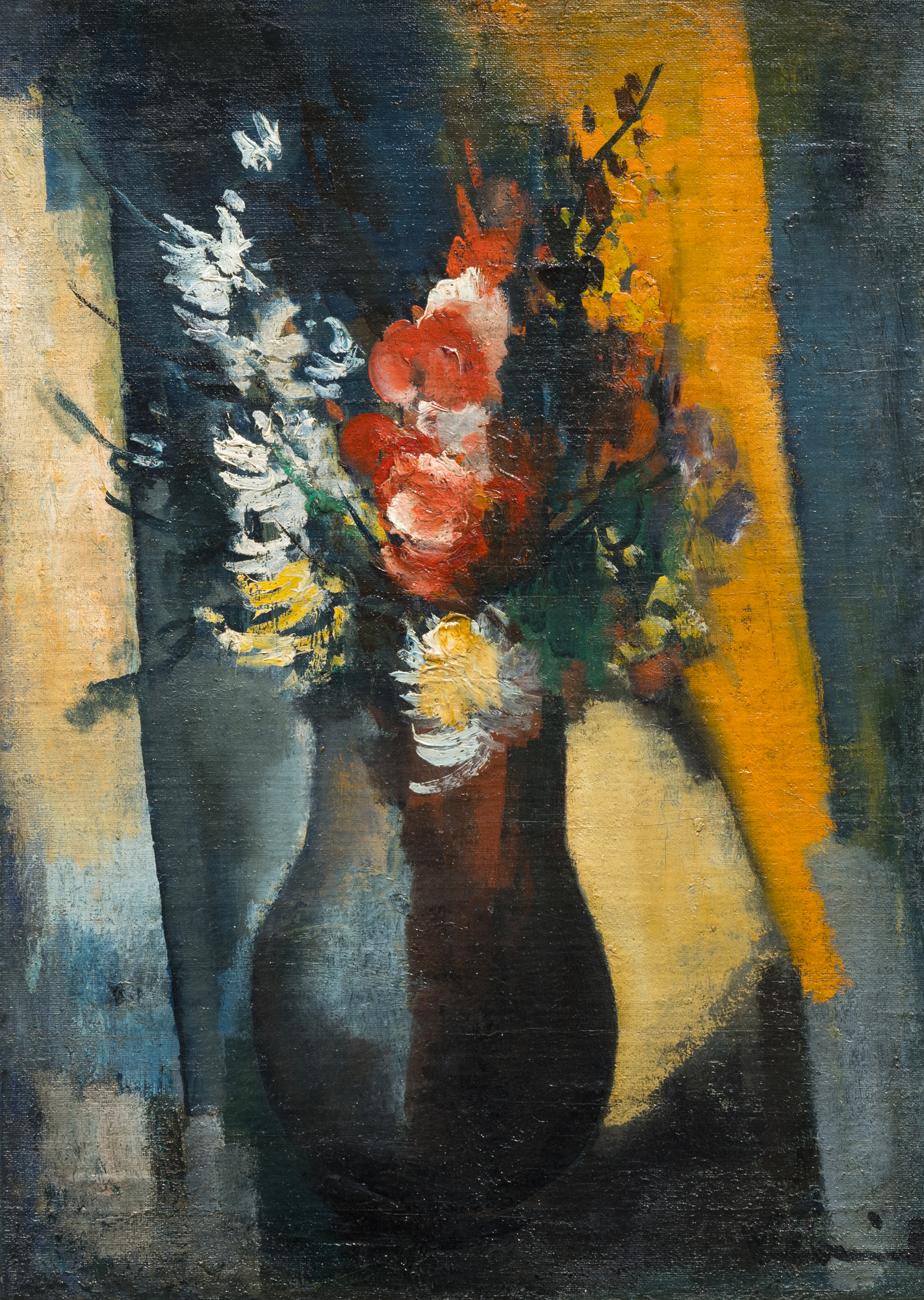
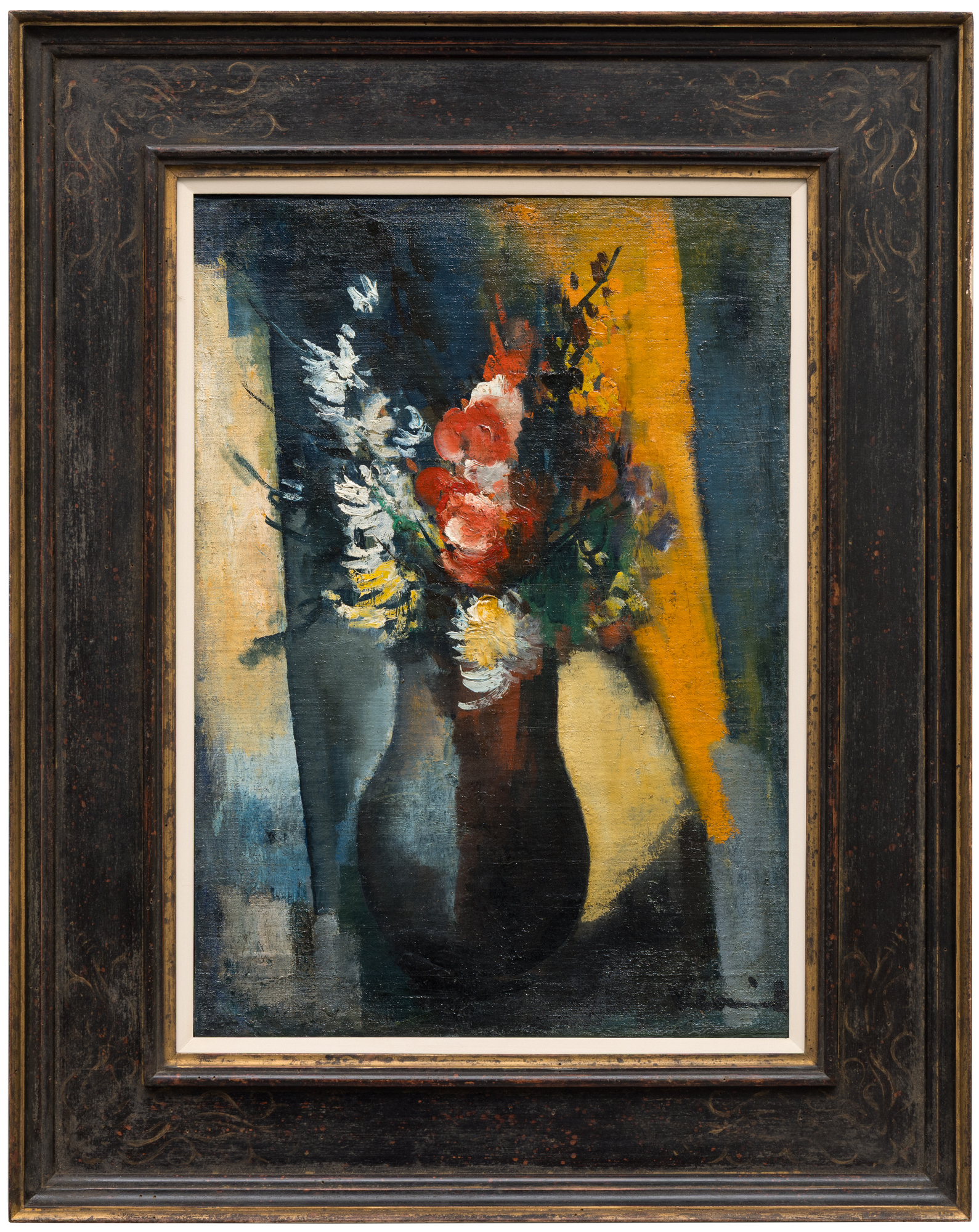
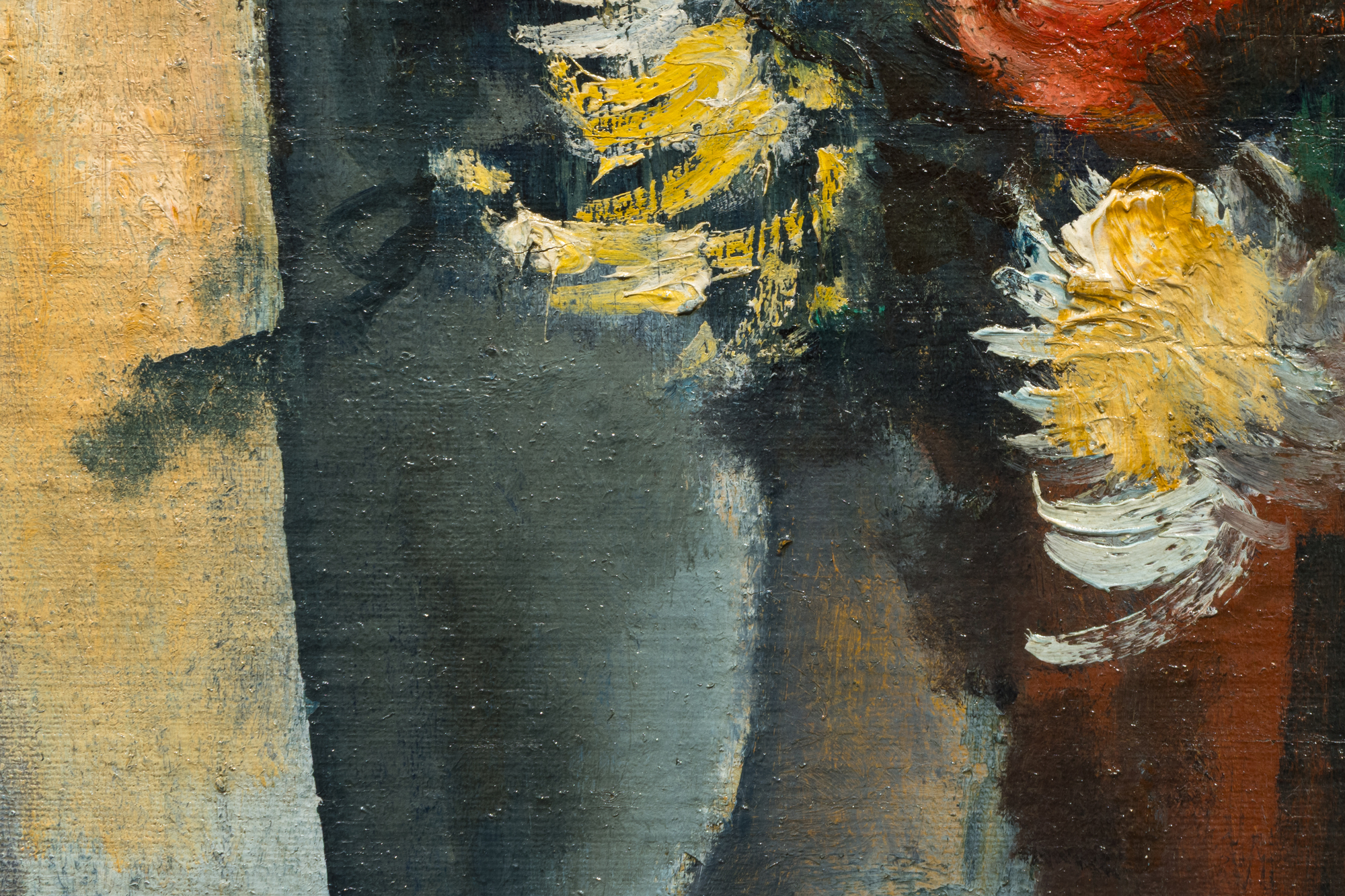
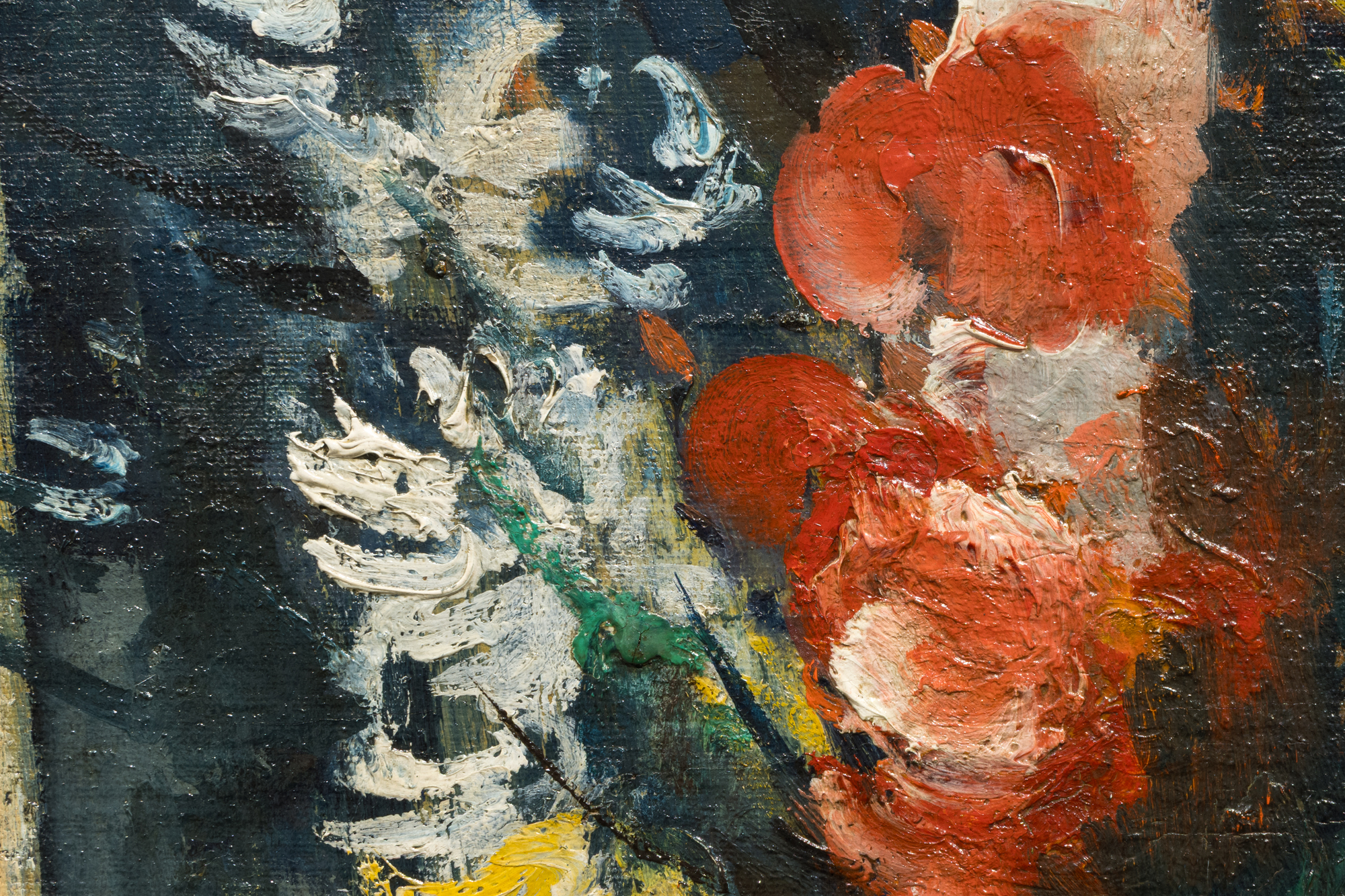
Maurice de Vlaminck’s Fleurs dans un vase (1910-11) is a prime-period still life that channels the artist’s Fauvist sensibilites into an image of exuberant, painterly force. A dynamic spray of blooms in vibrant reds, yellows, and whites flourishes from a dark vase, in a stark contrast of forms and color, creating an almost sculptural effect. With vigorous, directional brushstrokes, Vlaminck animates petals and foliage into a rhythmic surge, turning a traditional tabletop motif into a study of movement, texture, and intensity.


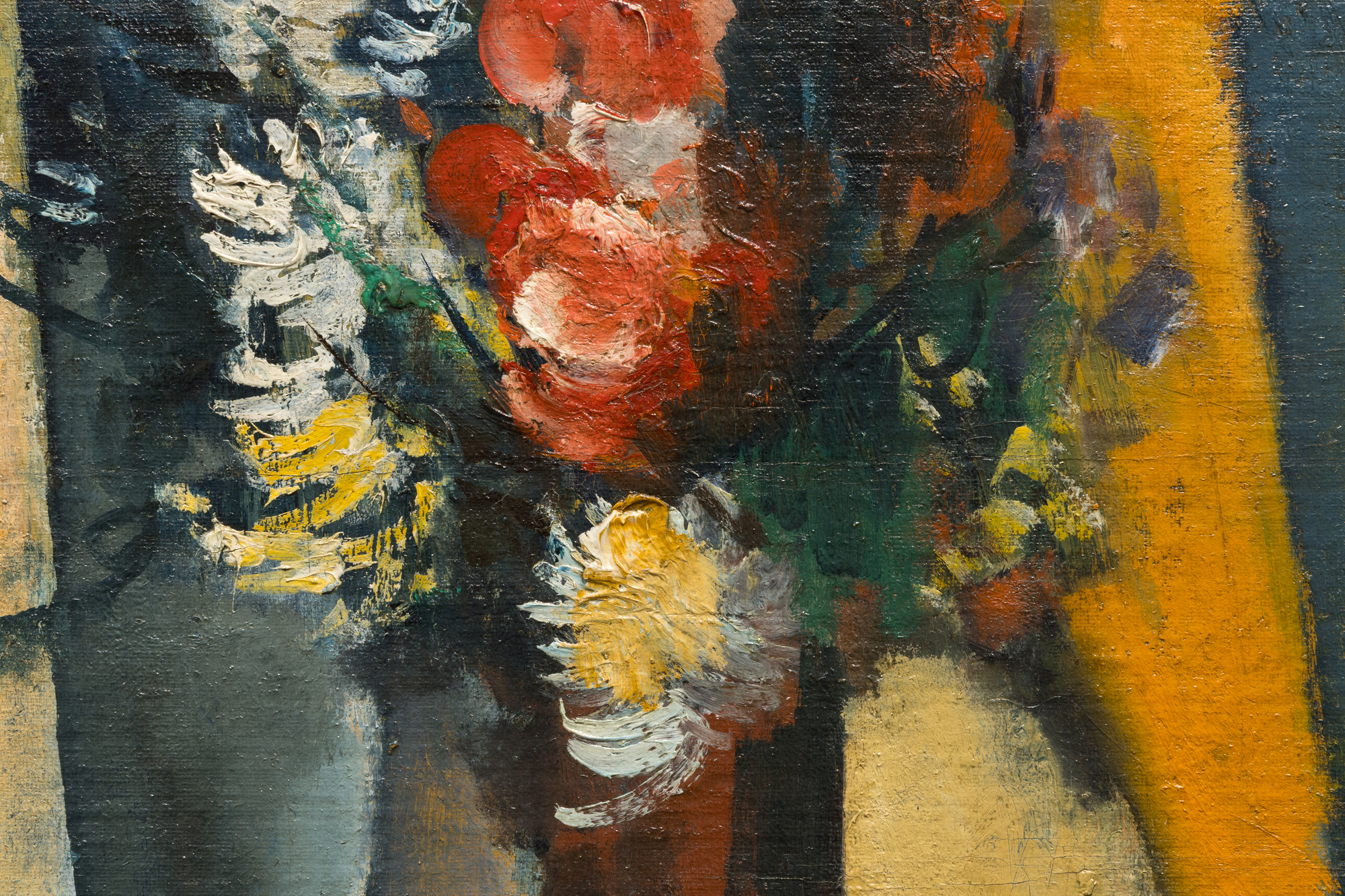
As one of the core founders of Fauvism, Vlaminck was celebrated for his radical, non-naturalistic use of color, and this work retains that avant-garde approach. Cool blues and greys against saturated oranges, and the faceted planes of the backgroud heighten contrast and create a dynamic composition.  The paint surface remains boldly worked, emphasizing the physicality of oil on canvas and the immediacy of the artist’s hand.


The painting is accompanied by a certificate of authenticity by the Wildenstein Institute for the catalogue of Maurice de Vlaminck’s works. Renewed international attention to Vlaminck’s achievements, including a recent retrospective at Museum Barberini in Potsdam - the first in nearly a century -has reaffirmed his vital role in the development of modern painting. Fleurs dans un vase captures that legacy: unapologetically modern and powered by color as expression.
Inquire